

Systematic misestimation of machine learning performance in neuroimaging studies of depression
Open accessThe DOI matches its Crossref record; 27 of the 28 references it cites were found in a registry or an index.
Abstract
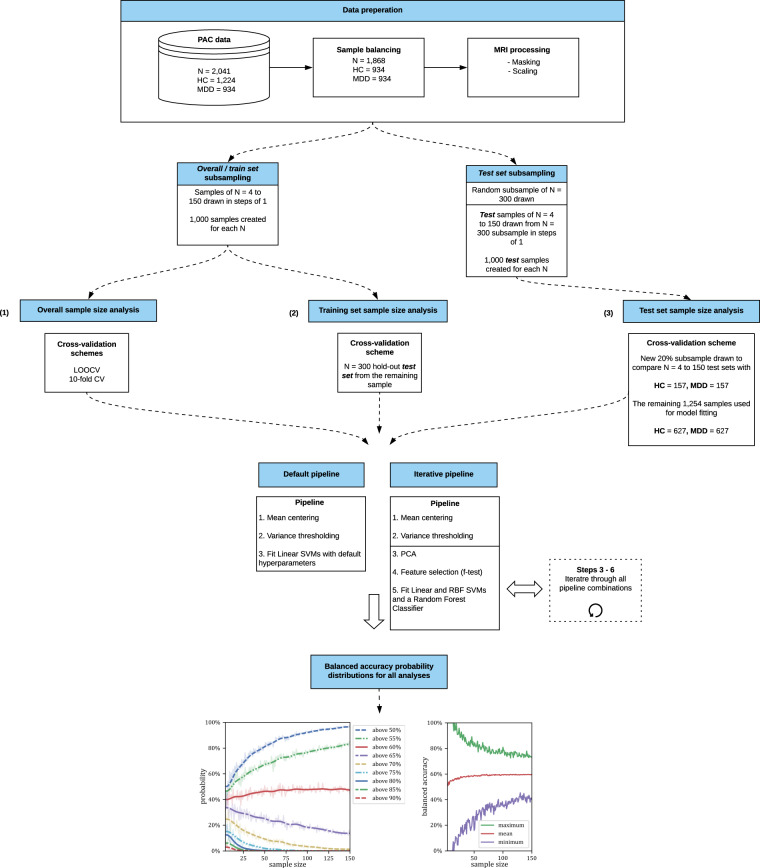
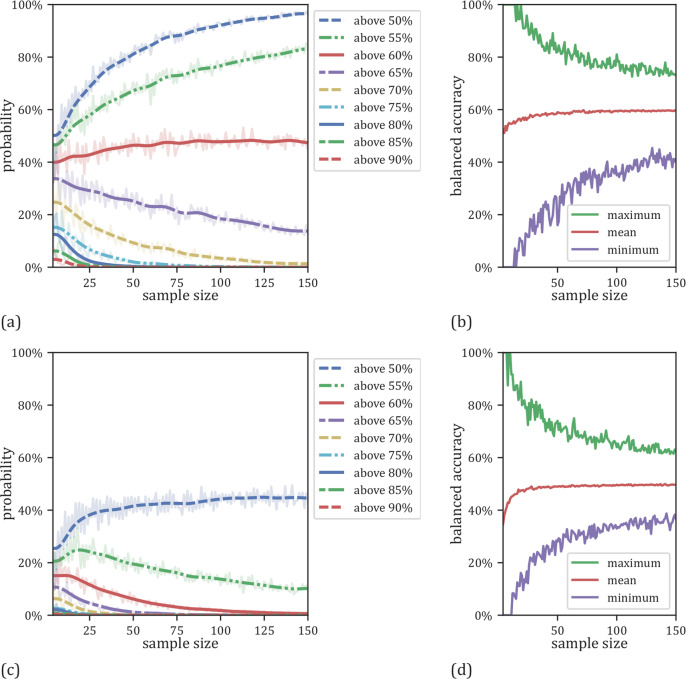
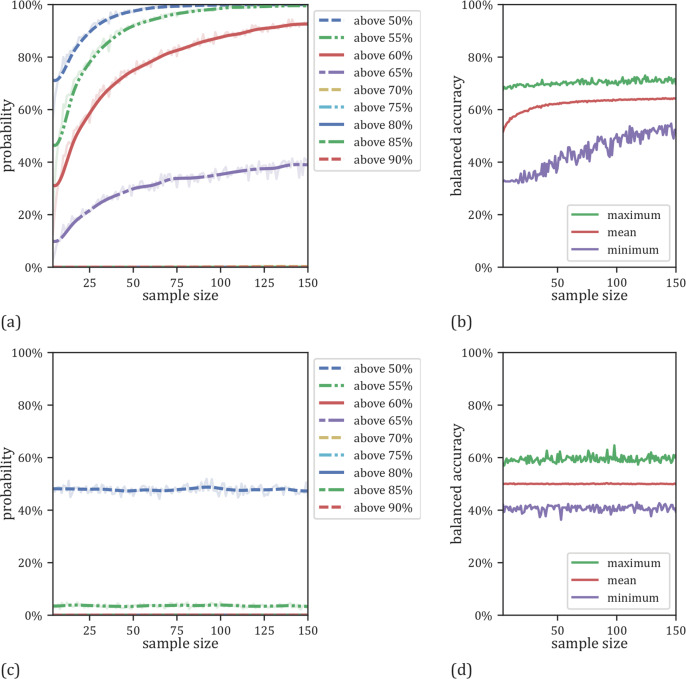
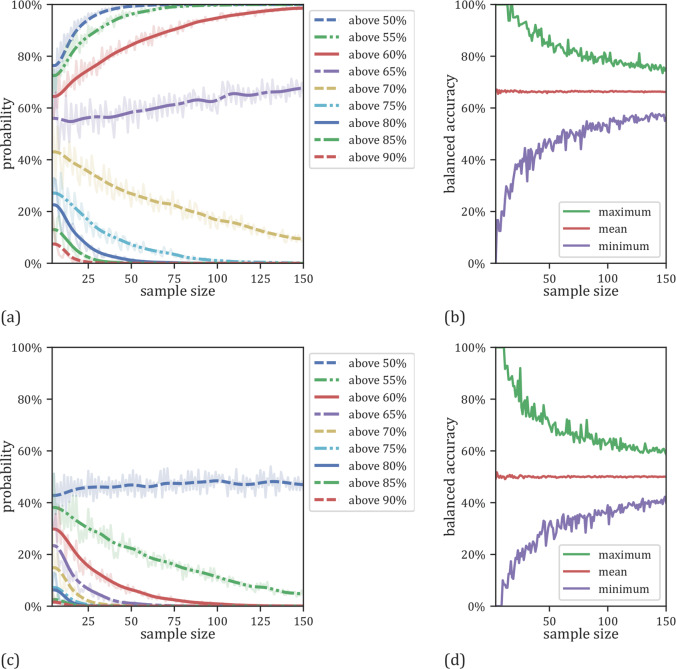
We currently observe a disconcerting phenomenon in machine learning studies in psychiatry: While we would expect larger samples to yield better results due to the availability of more data, larger machine learning studies consistently show much weaker performance than the numerous small-scale studies. Here, we systematically investigated this effect focusing on one of the most heavily studied questions in the field, namely the classification of patients suffering from Major Depressive Disorder (MDD) and healthy controls based on neuroimaging data. Drawing upon structural MRI data from a balanced sample of N = 1868 MDD patients and healthy controls from our recent international Predictive Analytics Competition (PAC), we first trained and tested a classification model on the full dataset which yielded an accuracy of 61%. Next, we mimicked the process by which researchers would draw samples of various sizes ( N = 4 to N = 150) from the population and showed a strong risk of misestimation. Specifically, for small sample sizes ( N = 20), we observe accuracies of up to 95%. For medium sample sizes ( N = 100) accuracies up to 75% were found. Importantly, further investigation showed that sufficiently large test sets effectively protect against performance misestimation whereas larger datasets per se do not. While these results question the validity of a substantial part of the current literature, we outline the relatively low-cost remedy of larger test sets, which is readily available in most cases.
Overview
The claims and statistics of this paper haven’t been checked yet.
Free: it reads the open-access text and checks the first 5 claims that cite a source we can check. Create a free account to check every claim.
Integrity signals
Registry
Cites
Statistics
Figures
Verification
Claims the paper makes
The claims and statistics of this paper haven’t been checked yet.
Free: it reads the open-access text and checks the first 5 claims that cite a source we can check. Create a free account to check every claim.
Claims other papers make about this one
Each is checked against this paper’s own text: does it say what the citing paper says it does?
The cited source says what the claim attributes to it.
In the citing paper
“This is particularly true given recent discussions about how machine learning methods could misestimate results in smaller studies (Flint et al., 2021; Nielsen et al., 2020).”
From Understanding and predicting future relapse in depression from resting state functional connectivity and self-referential processing (2023) · cites this paper as Flint et al., 2021
Self-check
Percentages, sums and reported differences re-computed from the paper’s own numbers.
The self-check needs the paper’s full text.
Citations
Cites
Scikit-learn: Machine Learning in Python
Pedregosa, F., Varoquaux, G., Gramfort, A., Michel, V., Thirion, B., Grisel, O., Blondel, M., Müller, A., Nothman, J., Louppe, G., et al. (2012) · arXiv · doi:10.48550/arxiv.1201.0490 · Cited by 71,016 · cited 1×
“Finally, a linear support-vector machine (SVM) with default parameters (Scikit-learn [22], v0.”
Machine learning: Trends, perspectives, and prospects
Jordan, M. I., & Mitchell, T. M. (2015) · Science · doi:10.1126/science.aaa8415 · Cited by 9,955
Murray, D. D., Suzuki, K., Law, M., Trebicka, J., Neuhaus, J., Wentworth, D., Johnson, M., Vjecha, M. J., Kelleher, A. D., Emery, S., et al. (2015) · PLOS ONE · doi:10.1371/journal.pone.0139981 · Cited by 2,740
Small sample size effects in statistical pattern recognition: Recommendations for practitioners
Raudys, S. J., & Jain, A. K. (1991) · IEEE Transactions on Pattern Analysis and Machine Intelligence · doi:10.1109/34.75512 · Cited by 1,384 · cited 1×
“, measured variables) and a complex classification rule being fit to a dataset [11].”
Wïttchen, H., Wunderlich, U., Gruschwitz, S., & Zaudig, M. (1997) · Max Planck Institute for Plasma Physics · Cited by 1,164
Single subject prediction of brain disorders in neuroimaging: Promises and pitfalls
Arbabshirani, M. R., Plis, S., Sui, J., & Calhoun, V. D. (2017) · NeuroImage · doi:10.1016/j.neuroimage.2016.02.079 · Cited by 912 · cited 3×
“With a median N of less than 100 in many published studies [10], this may seem challenging.”
InfluentialCross-validation failure: Small sample sizes lead to large error bars
Varoquaux, G. (2018) · NeuroImage · doi:10.1016/j.neuroimage.2017.06.061 · Cited by 897 · cited 3×
“Although these findings have sparked in-depth conceptual considerations [15], empirical investigations of this problem have been limited to specific cross-validation schemes and small test set sizes [16].”
Modern modelling techniques are data hungry: a simulation study for predicting dichotomous endpoints
van der Ploeg, T., Austin, P. C., & Steyerberg, E. W. (2014) · BMC Medical Research Methodology · doi:10.1186/1471-2288-14-137 · Cited by 809 · cited 1×
“Recent works have further reiterated this point [12].”
Assessing and tuning brain decoders: Cross-validation, caveats, and guidelines
Varoquaux, G., Raamana, P. R., Engemann, D. A., Hoyos-Idrobo, A., Schwartz, Y., & Thirion, B. (2017) · NeuroImage · doi:10.1016/j.neuroimage.2016.10.038 · Cited by 792 · cited 1×
“observed that LOOCV leads to unstable and biased estimates, concluding that repeated random splits should be preferred [14].”
Understanding heterogeneity in clinical cohorts using normative models: Beyond case-control studies
Marquand, A. F., Rezek, I., Buitelaar, J., & Beckmann, C. F. (2016) · Biological Psychiatry · doi:10.1016/j.biopsych.2015.12.023 · Cited by 683 · cited 1×
“, biotype identification [19] and normative modelling approaches [23]) remains an open question.”
Cited by
Digital medicine and the curse of dimensionality
Berisha, V., Krantsevich, C., Hahn, P. R., Hahn, S., Dasarathy, G., Turaga, P., & Liss, J. (2021) · npj Digital Medicine · doi:10.1038/s41746-021-00521-5 · Cited by 344
“14 ; this is indeed closely related to the fi le-drawer effect that has been observed in several fi elds 17 – 19 .”
BackgroundMethodResultInfluentialDeep learning for small and big data in psychiatry
Koppe, G., Meyer-Lindenberg, A., & Durstewitz, D. (2021) · Neuropsychopharmacology · doi:10.1038/s41386-020-0767-z · Cited by 189
“The larger the test set, of course, the lower will be the uncertainty about the mean PE estimate, i.e., its variance or standard error (see also [80]).”
BackgroundMethodA Systematic Evaluation of Machine Learning–Based Biomarkers for Major Depressive Disorder
Winter, N. R., Blanke, J., Leenings, R., Ernsting, J., Fisch, L., Sarink, K., Barkhau, C., Emden, D., Thiel, K., Flinkenflügel, K., et al. (2024) · JAMA Psychiatry · doi:10.1001/jamapsychiatry.2023.5083 · Cited by 158
Self-citationQin, K., Lei, D., Pinaya, W. H. L., Pan, N., Li, W., Zhu, Z., Sweeney, J. A., Mechelli, A., & Gong, Q. (2022) · EBioMedicine · doi:10.1016/j.ebiom.2022.103977 · Cited by 126
“10 In recent years, the rapid development of multi-site collaborations has increased the availability of large-scale datasets, which is critical for training a reliable and generalizable model.”
BackgroundModern Methods of Diagnostics and Treatment of Neurodegenerative Diseases and Depression
Shusharina, N. N., Yukhnenko, D., Botman, S., Sapunov, V., Savinov, V., Kamyshov, G., Sayapin, D., & Voznyuk, I. A. (2023) · Diagnostics · doi:10.3390/diagnostics13030573 · Cited by 120
“The phenomenon of sustainable overestimation of the effectiveness of machine learning methods developed for use in psychiatry was studied in [132].”
BackgroundReproducibility in Neuroimaging Analysis: Challenges and Solutions
Botvinik‐Nezer, R., & Wager, T. D. (2022) · Biological Psychiatry Cognitive Neuroscience and Neuroimaging · doi:10.1016/j.bpsc.2022.12.006 · Cited by 118
Tomasik, J., Han, S. Y. S., Barton‐Owen, G., Mirea, D.-M., Martin-Key, N. A., Rustogi, N., Lago, S. G., Olmert, T., Cooper, J. D., Özcan, S., et al. (2021) · Translational Psychiatry · doi:10.1038/s41398-020-01181-x · Cited by 81
“A-level 49 (39) 46 (25) 33 (34) 23 (21) 32 (27) 12 (27)”
Repple, J., Gruber, M., Mauritz, M., de Lange, S. C., Winter, N. R., Opel, N., Goltermann, J., Meinert, S., Grotegerd, D., Leehr, E. J., et al. (2022) · Biological Psychiatry · doi:10.1016/j.biopsych.2022.05.031 · Cited by 93
Self-citationPromises and pitfalls of deep neural networks in neuroimaging-based psychiatric research
Eitel, F., Schulz, M.-A., Seiler, M., Walter, H., & Ritter, K. (2021) · Experimental Neurology · doi:10.1016/j.expneurol.2021.113608 · Cited by 80
Performance reserves in brain-imaging-based phenotype prediction
Schulz, M.-A., Bzdok, D., Haufe, S., Haynes, J., & Ritter, K. (2023) · Cell Reports · doi:10.1016/j.celrep.2023.113597 · Cited by 70
“15,20 In line with this hypothesis of overly optimistic reporting, meta-analyses have shown a pronounced inverse trend between prediction accuracy and sample size.”
BackgroundResultPopulation modeling with machine learning can enhance measures of mental health
Dadi, K., Varoquaux, G. P., Houenou, J., Bzdok, D., Thirion, B., & Engemann, D. A. (2021) · GigaScience · doi:10.1093/gigascience/giab071 · Cited by 60
“More-over, simulations and empirical findings suggest that larger testing sets are more effective at mitigating optimistic performance estimates [53, 73].”
Cearns, M., Amare, A. T., Schubert, K. O., Thalamuthu, A., Frank, J., Streit, F., Adli, M., Akula, N., Akiyama, K., Ardau, R., et al. (2022) · The British Journal of Psychiatry · doi:10.1192/bjp.2022.28 · Cited by 62
“31 In addition, increases in R 2 were not explained by changes in the number of predictor variables across models (Pearson ’ s r = 0.17, P = 0.44) (Supplementary Fig.”
InfluentialSelf-citationProgress and trends in neurological disorders research based on deep learning
Iqbal, M. S., Heyat, M. B. B., Parveen, S., Hayat, M. A. B., Roshanzamir, M., Alizadehsani, R., Akhtar, F., Sayeed, E., Hussain, S., Hussein, H. S., et al. (2024) · Computerized Medical Imaging and Graphics · doi:10.1016/j.compmedimag.2024.102400 · Cited by 53
Voppel, A., de Boer, J. N., Brederoo, S., Schnack, H. G., & Sommer, I. E. (2022) · Schizophrenia Bulletin · doi:10.1093/schbul/sbac142 · Cited by 52
Chen, Z., Liu, X., Yang, Q., Wang, Y.-J., Miao, K., Gong, Z., Yu, Y., Leonov, A., Liu, C., Feng, Z., et al. (2023) · JAMA Network Open · doi:10.1001/jamanetworkopen.2023.1671 · Cited by 43
Ji, C., Patil, K. R., Yeo, B. T. T., & Eickhoff, S. B. (2022) · Biological Psychiatry · doi:10.1016/j.biopsych.2022.07.025 · Cited by 44
Self-citationTen quick tips for deep learning in biology
Lee, B. D., Gitter, A., Greene, C. S., Raschka, S., Maguire, F., Titus, A., Kessler, M. D., Lee, A. J., Chevrette, M. G., Stewart, P. A., et al. (2022) · PLoS Computational Biology · doi:10.1371/journal.pcbi.1009803 · Cited by 51
Belov, V., Erwin-Grabner, T., Aghajani, M., Aleman, A., Amod, A. R., Başgöze, Z., Benedetti, F., Besteher, B., Bülow, R., Ching, C. R. K., et al. (2024) · Scientific Reports · doi:10.1038/s41598-023-47934-8 · Cited by 54
“A major contributor to high variability in classification performances is sample size 16,17 .”
BackgroundResultInfluentialSelf-citationSpectral decomposition of EEG microstates in post-traumatic stress disorder
Terpou, B. A., Shaw, S. B., Théberge, J., Férat, V., Michel, C. M., McKinnon, M. C., Lanius, R. A., & Ros, T. (2022) · NeuroImage: Clinical · doi:10.1016/j.nicl.2022.103135 · Cited by 36
“4 More broadly, smaller sample sizes – like that represented here – have been found to inflate 5 classification accuracies (Varoquaux, 2018), with smaller datasets sometimes yielding higher 6 accuracies than larger ones (Flint et al., 2021).”
BackgroundAn uncertainty-aware, shareable, and transparent neural network architecture for brain-age modeling
Hahn, T., Ernsting, J., Winter, N. R., Holstein, V., Leenings, R., Beisemann, M., Fisch, L., Sarink, K., Emden, D., Opel, N., et al. (2022) · Science Advances · doi:10.1126/sciadv.abg9471 · Cited by 47
“Since validation sample sizes below N = 100 may yield a substantial percentage of spuriously inflated performance estimates, the stability of brain-age estimates underlying many brain-age studies might be questioned (13).”
Self-citationTime-sensitive changes in the maternal brain and their influence on mother-child attachment
Nehls, S., Losse, E. M., Enzensberger, C., Frodl, T., & Chechko, N. (2024) · Translational Psychiatry · doi:10.1038/s41398-024-02805-2 · Cited by 48
“In addition, the application of machine learning to small groups such as our sample of postpartum women is prone to over fi tting, likely leading to an overestimation of the model ’ s predictive abilities as the model is excessively tailored to the peculiarities of the small dataset [47 – 49].”
MethodChen, Z., Hu, B., Liu, X., Becker, B., Eickhoff, S. B., Miao, K., Gu, X., Tang, Y., Dai, X., Li, C., et al. (2023) · BMC Medicine · doi:10.1186/s12916-023-02941-4 · Cited by 35
“As a didactic example recently, Marek and colleagues (2022) have provided a quantitatively empirical evidence that thousands of subjects are needed to attain reliable brain-behavior associations, although the intensive discussions or concerns for the high overfitting in neuroimaging-based models with small sample size…”
BackgroundMethodSelf-citationAdvances in Machine Learning and Explainable Artificial Intelligence for Depression Prediction
Byeon, H. (2023) · International Journal of Advanced Computer Science and Applications · doi:10.14569/ijacsa.2023.0140656 · Cited by 35
“Flint et al. (2021)[16] found that a study with a small sample size (n = 20) demonstrated higher accuracy than one with a medium sample size (n = 100), while a study with a large sample size (n = 1,868) showed an accuracy of only 61%.”
BackgroundResultInconsistent Partitioning and Unproductive Feature Associations Yield Idealized Radiomic Models
Gidwani, M., Chang, K., Patel, J., Hoebel, K., Ahmed, S. R., Singh, P., Fuller, C. D., & Kalpathy–Cramer, J. (2022) · Radiology · doi:10.1148/radiol.220715 · Cited by 38
Artificial Intelligence in Cataract Surgery: A Systematic Review
Müller, S., Jain, M., Sachdeva, B., Shah, P. N., Holz, F. G., Finger, R. P., Murali, K., Wintergerst, M. W. M., & Schultz, T. (2024) · Translational Vision Science & Technology · doi:10.1167/tvst.13.4.20 · Cited by 32
Ho, C. S. H., Wang, J., Tay, G. W. N., Ho, R., Husain, S. F., Chiang, S. K., Lin, H., Cheng, X., Li, Z., & Chen, N. (2024) · Asian Journal of Psychiatry · doi:10.1016/j.ajp.2023.103901 · Cited by 36
Porter, A., Fei, S., Damme, K. S. F., Nusslock, R., Gratton, C., & Mittal, V. A. (2023) · Molecular Psychiatry · doi:10.1038/s41380-023-02195-9 · Cited by 33
“Future work should apply stringent guidelines when evaluating the predictive nature of neuroimaging modalities among psychosis.”
MethodLuo, Y., Chen, W.-Y., Qiu, J., & Jia, T. (2022) · Translational Psychiatry · doi:10.1038/s41398-022-02162-y · Cited by 32
“The small size of samples brings a bigger prediction error and a higher risk of overfitting [72].”
BackgroundLee, L., Chen, C.-H., Chang, W., Lee, P., Shyu, K., Chen, M., Hsu, J.-W., Bai, Y., Su, T., & Tu, P. (2021) · European Psychiatry · doi:10.1192/j.eurpsy.2021.2248 · Cited by 28
“In contrast to recent concerns about the biased estimations of classification performance in studies with small samples [23], the present results may provide a robust estimation of SVMs for automatic diagnosis of patients with schizophrenia based on brain-wise FCs.”
BackgroundResultInfluentialChen, Y., Zhao, W., Yi, S., & Liu, J. (2023) · Frontiers in Neuroscience · doi:10.3389/fnins.2023.1174080 · Cited by 28
“This was in line with previous research, which found that small sample size (N = 20) accuracies were up to 95%, while the accuracy of medium sample sizes (N = 100) were up to 75% (Flint et al., 2021).”
ResultPrediction of estimated risk for bipolar disorder using machine learning and structural MRI features
Mikoláš, P., Marxen, M., Riedel, P., Bröckel, K. L., Martini, J., Huth, F., Berndt, C., Vogelbacher, C., Jansen, A., Kircher, T. T. J., et al. (2023) · Psychological Medicine · doi:10.1017/s0033291723001319 · Cited by 31
“As this was a population-based, observational study, the samples in each site were not balanced regarding participants at risk, some were even smaller than the recommended size N > 20 for a test set (Flint et al., 2021; as well as see online Supplementary Table S2).”
Self-citationZhao, L., Liu, J., Zhao, W., Chen, J., Fan, J., Ge, T., & Tu, Y. (2024) · Nature Mental Health · doi:10.1038/s44220-024-00223-3 · Cited by 28
“A proper splitting strategy for data is necessary to obtain a credible estimation for model performance 68 .”
Soldatos, R. F., Cearns, M., Nielsen, M. Ø., Kollias, C. T., Xenaki, L., Stefanatou, P., Ralli, I., Dimitrakopoulos, S., Hatzimanolis, A., Kosteletos, I., et al. (2021) · Schizophrenia Bulletin · doi:10.1093/schbul/sbab107 · Cited by 25
Self-citationSchwarzer, J., Meyhöfer, I., Antonucci, L. A., Kambeitz‐Ilankovic, L., Surmann, M., Bienek, O., Romer, G., Dannlowski, U., Hahn, T., Korda, A. I., et al. (2022) · Neuropsychopharmacology · doi:10.1038/s41386-022-01385-3 · Cited by 25
“Thus, in each CV2 cycle one study site was held out to generate geographical generalization [25, 27, 43, 44].”
MethodSelf-citationSankar, A., Shen, X., Čolić, L., Goldman, D. A., Villa, L. M., Kim, J. A., Pittman, B. P., Scheinost, D., Constable, R. T., & Blumberg, H. P. (2023) · Psychological Medicine · doi:10.1017/s003329172300003x · Cited by 23
“The above findings should be considered preliminary as further testing using larger samples (∼1000) is needed to reduce the risk of machine learning performance misestimation (Flint et al., 2021), and as the predictive networks were tested in an independent sample of fewer than 50 individuals.”
Stein, F., & Kircher, T. T. J. (2025) · Journal of Affective Disorders · doi:10.1016/j.jad.2025.119464 · Cited by 25
Self-citationLin, C., Lee, S., Huang, C.-M., Chen, G.-Y., Chang, W., Liu, H., Ng, S., Lee, T. M. C., & Wu, S. (2022) · Brain Imaging and Behavior · doi:10.1007/s11682-022-00748-0 · Cited by 26
“Furthermore, the small number in our testing data is noteworthy as low testing data could lead to misestimation of model performance (Flint et al., 2021).”
BackgroundChen, X., Ke, P., Huang, Y., Zhou, J., Li, H., Peng, R., Huang, J., Liang, L., Ma, G., Li, X., et al. (2023) · Frontiers in Neuroscience · doi:10.3389/fnins.2023.1140801 · Cited by 26
“Considering that the sample size was not large and different training/testing splits lead to dramatically different rankings of models (Shchur et al., 2019; Flint et al., 2021; Sun et al., 2023), we randomly split training and testing datasets 10 times, repeated the experiments and calculated the averaged performance…”
MethodOrtuño-Miró, S., Molina‐Rodríguez, S., Belmonte, C., & Ibáñez-Ballesteros, J. (2023) · Journal of Neural Engineering · doi:10.1088/1741-2552/acad2b · Cited by 20
“In either case, it is known that CV is compromised by small sample sizes, particularly if there are many predictors, which tend to overestimate predictive accuracy to a variable degree depending on the particularities of the study [14, 119].”
BackgroundIsacsson, N. H., Abdesslem, F. B., Forsell, E., Boman, M., & Kaldo, V. (2024) · Communications Medicine · doi:10.1038/s43856-024-00626-4 · Cited by 20
From multivariate methods to an AI ecosystem
Winter, N. R., Cearns, M., Clark, S. R., Leenings, R., Dannlowski, U., Baune, B. T., & Hahn, T. (2021) · Molecular Psychiatry · doi:10.1038/s41380-021-01116-y · Cited by 23
Self-citationBeliveau, V., Hedeboe, E., Fisher, P. M., Dam, V. H., Jørgensen, M. B., Frøkjær, V. G., Knudsen, G. M., & Ganz, M. (2022) · NeuroImage Clinical · doi:10.1016/j.nicl.2022.103224 · Cited by 19
Ali, F., Wengler, K., He, X., Nguyen, M. H., Parsey, R. V., & DeLorenzo, C. (2022) · Neuroscience Informatics · doi:10.1016/j.neuri.2022.100110 · Cited by 21
Dufumier, B., Gori, P., Petiton, S., Louiset, R., Mangin, J., Grigis, A., & Duchesnay, É. (2024) · NeuroImage · doi:10.1016/j.neuroimage.2024.120665 · Cited by 23
Neural processing of emotional facial stimuli in specific phobia: An fMRI study
Böhnlein, J., Leehr, E. J., Roesmann, K., Sappelt, T., Platte, O., Grotegerd, D., Sindermann, L., Repple, J., Opel, N., Meinert, S., et al. (2021) · Depression and Anxiety · doi:10.1002/da.23191 · Cited by 18
“However, another potential explanation could be that earlier studies had comparably small sample sizes, which might have led to overfitting of the data (Flint et al., 2019) and thus replication with larger samples is needed (Rashid & Calhoun, 2020).”
ResultSelf-citationZhutovsky, P., Zantvoord, J. B., Ensink, J. B. M., den Kelder, R. O., Lindauer, R., & van Wingen, G. A. (2021) · NeuroImage Clinical · doi:10.1016/j.nicl.2021.102898 · Cited by 23
“22 and empirical reasons for why leave-one-out cross-validation is not recommended – especially in the case of small sample sizes – the reported results from this validation scheme should not be the focus of this study (Flint et al., 2021; Poldrack et al., 2019).”
BackgroundOverfitting to ‘predict’ suicidal ideation
Verstynen, T., & Kording, K. P. (2023) · Nature Human Behaviour · doi:10.1038/s41562-023-01560-6 · Cited by 15
“First, the use of LOOCV can inflate the estimated classification accuracy, as well as overall type-I error 4 .”
MethodUsing dynamic graph convolutional network to identify individuals with major depression disorder
Zhou, N., Yuan, Z., Zhou, H., Lyu, D., Wang, F., Wang, M., Lu, Z., Huang, Q., Chen, Y., Huang, H., et al. (2024) · Journal of Affective Disorders · doi:10.1016/j.jad.2024.11.035 · Cited by 18
Recommendations for machine learning benchmarks in neuroimaging
Leenings, R., Winter, N. R., Dannlowski, U., & Hahn, T. (2022) · NeuroImage · doi:10.1016/j.neuroimage.2022.119298 · Cited by 19
Self-citationHecker, L., Wilson, M., van Elst, L. T., & Kornmeier, J. (2022) · Scientific Reports · doi:10.1038/s41598-022-17304-x · Cited by 16
Mulc, D., Vukojević, J., Kalafatic, E., Cifrek, M., Vidović, D., & Jović, A. (2025) · Sensors · doi:10.3390/s25020409 · Cited by 17
“This is a common and consistently reoccurring problem in psychiatry [70].”
Yang, M., & Zou, Y. (2025) · Humanities and Social Sciences Communications · doi:10.1057/s41599-025-05234-8 · Cited by 13
“Many studies apply ML despite small sample sizes, which undermines the reliability and generalizability of complex models (Flint et al., 2019; Vabalas et al., 2019).”
Using the excitation/inhibition ratio to optimize the classification of autism and schizophrenia
Uscătescu, L. C., Hyatt, C. J., Dunn, J., Kronbichler, M., Calhoun, V. D., Corbera, S., Pelphrey, K. A., Pittman, B. P., Pearlson, G. D., & Assaf, M. (2025) · Translational Psychiatry · doi:10.1038/s41398-025-03455-8 · Cited by 16
“While this seems to be generally true also for machine learning [52], the relationship between sample size and classi fi cation accuracy does not appear to be entirely linear [70].”
Whole Person Modeling: a transdisciplinary approach to mental health research
Felsky, D., Cannitelli, A., & Pipitone, J. (2023) · Discover Mental Health · doi:10.1007/s44192-023-00041-6 · Cited by 16
Hilbert, K., Böhnlein, J., Meinke, C., Chavanne, A. V., Langhammer, T., Stumpe, L., Winter, N. R., Leenings, R., Adolph, D., Arolt, V., et al. (2024) · NeuroImage · doi:10.1016/j.neuroimage.2024.120639 · Cited by 19
“…regarding the interpretation of promising results from small samples and re-iterates that some of the prediction accuracies from these studies may result from overestimation due to homogeneous data and weak cross-validation schemes (Varo-quaux, 2018; Varoquaux et al., 2017; Flint et al., 2021).”
BackgroundResultSelf-citationMeyhöfer, I., Sprenger, A., Derad, D., Grotegerd, D., Leenings, R., Leehr, E. J., Breuer, F., Surmann, M., Rolfes, K., Arolt, V., et al. (2024) · Scientific Reports · doi:10.1038/s41598-024-64487-6 · Cited by 13
“…internal (i.e. a hold-out subsample consisting of participants that were not used for training) and external (i.e. an independent dataset) validation in sufficient large data samples 11 to allow for clinically relevant single-subject statements pointing to sensorimotor transformation deficits.”
InfluentialSelf-citationBruin, W. B., Zhutovsky, P., van Wingen, G. A., Bas‐Hoogendam, J. M., Groenewold, N. A., Hilbert, K., Winkler, A. M., Zugman, A., Agosta, F., Åhs, F., et al. (2024) · Nature Mental Health · doi:10.1038/s44220-023-00173-2 · Cited by 14
“Consequently, LOSO-CV generated numerous small test folds that can lead to high variance in estimated performance, and may result in biased classification rates 52,53 .”
Self-citationMelshin, G., DiMaggio, A., Zeramdini, N., Mackinley, M., Palaniyappan, L. K., & Voppel, A. (2025) · NPP—Digital Psychiatry and Neuroscience · doi:10.1038/s44277-025-00040-1 · Cited by 13
“Fully independent training, validation, and test sets are crucial for obtaining reliable performance estimates in real-world settings [44 – 46].”
Chavanne, A. V., Meinke, C., Langhammer, T., Roesmann, K., Böhnlein, J., Gathmann, B., Herrmann, M. J., Junghoefer, M., Klahn, A. L., Schwarzmeier, H., et al. (2023) · Depression and Anxiety · doi:10.1155/2023/8594273 · Cited by 10
“The importance of general sample size and the size of test sets in particular to guard against misestimation of prediction accuracy was underlined in a study using a very large sample of patients with depression to mimic small-scale sampling results in machine-learning classification using structural neuroimaging [18].”
Self-citationLimited clinical validity of univariate resting-state EEG markers for classifying seizure disorders
Faiman, I., Sparks, R. E., Winston, J. S., Brunnhuber, F., Ciulini, N., Young, A. H., & Shotbolt, P. (2023) · Brain Communications · doi:10.1093/braincomms/fcad330 · Cited by 11
Predicting the onset of mental health problems in adolescents
Hou, J., van de Mortel, L. A., Popma, A., Smit, D. J. A., & van Wingen, G. A. (2025) · Psychological Medicine · doi:10.1017/s003329172500087x · Cited by 12
Höller, Y., Urbschat, M. M., Kristofersson, G. K., & Ólafsson, R. P. (2022) · Frontiers in Psychiatry · doi:10.3389/fpsyt.2022.870079 · Cited by 15
“Limitations It was recently shown that machine learning performance in neuroimaging studies of depression overestimate the classification accuracy in small sample sizes (125).”
BackgroundFisch, L., Ernsting, J., Winter, N. R., Holstein, V., Leenings, R., Beisemann, M., Sarink, K., Emden, D., Opel, N., Redlich, R., et al. (2021) · arXiv (Cornell University) · doi:10.48550/arxiv.2103.11695 · Cited by 14
“To avoid performance overestimation (discussed in (Flint et al., 2019)) cross-validation and transfer learning to three different studies – i.e. BiDirect, FOR2107/MACS and IXI – is applied.”
BackgroundMethodSelf-citationHigher amplitudes of visual networks are associated with trait- but not state-depression
Zhang, W., Dutt, R., Lew, D., Barch, D. M., & Bijsterbosch, J. D. (2024) · Psychological Medicine · doi:10.1017/s0033291724003167 · Cited by 9
“These include comparisons between patient and control groups (Flint et al., 2021; Winter et al., 2022), regressions against depression severity scores (Oathes et al., 2015; Yoshida et al., 2017) or personality traits like neuroticism (Braund et al., 2022; Fournier et al., 2017; Steffens et al.,…”
Scaling behaviours of deep learning and linear algorithms for the prediction of stroke severity
(2023) · doi:10.1093/braincomms/fcae007 · Cited by 8
“34 Prediction performance will conceivably increase with data set size independent of the algorithm used.”
van Kleef, R. S., Kaushik, P., Besten, M., Marsman, J.-B. C., Bockting, C. L. H., van Vugt, M., Aleman, A., & van Tol, M.-J. (2023) · Journal of Psychiatric Research · doi:10.1016/j.jpsychires.2023.07.034 · Cited by 7
Huang, C.-C., Low, I., Kao, C.-H., Yu, C.-Y., Su, T., Hsieh, J., Chen, Y., & Chen, L. (2022) · Annual International Conference of the IEEE Engineering in Medicine and Biology Society (EMBC) · doi:10.1109/embc48229.2022.9871238 · Cited by 9
“A recent study reported that some published studies that classify MDD from NC might neglect this issue and achieve extremely high performance [6].”
BackgroundSun, H., Lui, S., Huang, X., Sweeney, J. A., & Gong, Q. (2023) · Schizophrenia Research · doi:10.1016/j.schres.2023.01.014 · Cited by 8
Population modeling with machine learning can enhance measures of mental healthPreprint
Dadi, K., Varoquaux, G. P., Houenou, J., Bzdok, D., Thirion, B., & Engemann, D. A. (2020) · bioRxiv (Cold Spring Harbor Laboratory) · doi:10.1101/2020.08.25.266536 · Cited by 8
Goltermann, J., Winter, N. R., Gruber, M., Fisch, L., Richter, M., Grotegerd, D., Dohm, K., Meinert, S., Leehr, E. J., Böhnlein, J., et al. (2026) · Translational Psychiatry · doi:10.1101/2023.03.29.534696 · Cited by 7
“It has been shown that in complex multivariate modelling of voxel-based associations with psychopathology, even cross-validation-based performance measures are inflated in underpowered studies (Flint et al., 2021).”
BackgroundSelf-citationPoirot, M. G., Boucherie, D. E., Caan, M. W. A., Goya‐Maldonado, R., Belov, V. S., Corruble, E., Colle, R., Couvy‐Duchesne, B., Kamishikiryo, T., Shinzato, H., et al. (2025) · Human Brain Mapping · doi:10.1002/hbm.70053 · Cited by 11
“Notably, reviews by Sajjadian et al. (2021) and Flint et al. (2021) report an inverse correlation between sample size and accuracy, with smaller samples tending to yield higher reported accuracies.”
Goya‐Maldonado, R., Erwin-Grabner, T., Zeng, L., Ching, C. R. K., Aleman, A., Amod, A. R., Başgöze, Z., Benedetti, F., Besteher, B., Brosch, K., et al. (2025) · Molecular Psychiatry · doi:10.1038/s41380-025-03273-w · Cited by 8
“…deep learning model — speci fi cally, DenseNet — to see if it could effectively classify major depressive disorder (MDD) from healthy brains using fi ner-grained, unfolded cortical surface maps, and whether such information, when combined, could offer complementary classi fi catory value compared…”
Self-citationThe curse and opportunity of heterogeneity in the pursuit of psychiatric biomarkers
Schmaal, L. (2023) · World Psychiatry · doi:10.1002/wps.21085 · Cited by 9
Neural representation of consciously seen and unseen information
Esteban, P. R.-S., González, J. A., & Chica, A. B. (2025) · Scientific Reports · doi:10.1038/s41598-025-92490-y · Cited by 6
Yuan, J., Li, Z., Zeng, Q., Li, J., Anjie, W. A. N. G., Zhang, Y., & Zhang, Y. (2026) · Digital Health · doi:10.1177/20552076251408523 · Cited by 8
“39 Similarly, methodological analyses have demonstrated that cross-validation applied to very small datasets produces wide con fi dence intervals for performance estimates, undermining the stability and reliability of model evaluation.”
Periodontitis and respiratory infections – exploring the oral–systemic link
Beniwal, S. S., Caroicar, Y. S., Patil, K., Rawat, A., Said, A. S., Manickavelan, H. V., Desai, A., Jani, H. T., da Costa, R. E. A. R., Cacas, A. C., et al. (2026) · Annals of Medicine and Surgery · doi:10.1097/ms9.0000000000004374 · Cited by 5
“A study by Flint et al (2019) revealed that smaller sample sizes in neuroimaging research led to overestimated performance metrics, highlighting the risks of misestimation [ 121 ] .”
Jiang, C., Lin, B., Ye, X., Yu, Y., Xu, P., Peng, C., Mou, T., Yu, X., Zhao, H., Zhao, M., et al. (2024) · Journal of Affective Disorders · doi:10.1016/j.jad.2024.05.136 · Cited by 5
Dagnew, T. M., Tseng, C.-E. J., Yoo, C., Makary, M. M., Goodheart, A. E., Striar, R., Meyer, T. N., Rattray, A., Kang, L., Wolf, K. A., et al. (2024) · iScience · doi:10.1016/j.isci.2024.110159 · Cited by 7
The effects of locus coeruleus optogenetic stimulation on global spatiotemporal patterns in rats
Anumba, N., Kelberman, M. A., Pan, W., Marriott, A., Zhang, X., Xu, N., Weinshenker, D., & Keilholz, S. D. (2024) · Imaging Neuroscience · doi:10.1162/imag_a_00314 · Cited by 6
Eickhoff, S. B., & Heinrichs, B. (2021) · Der Nervenarzt · doi:10.1007/s00115-021-01197-8 · Cited by 7
Self-citationBrain structural correlates of an impending initial major depressive episode
Kraus, A., Dohm, K., Borgers, T., Goltermann, J., Grotegerd, D., Winter, A., Thiel, K., Flinkenflügel, K., Schürmeyer, N., Hahn, T., et al. (2025) · Neuropsychopharmacology · doi:10.1038/s41386-025-02075-6 · Cited by 5
“As our converter sample was too small to perform predictive machine learning-based approaches [68], we included anomaly detection using Isolation Forest to capture individual variability beyond group-level analyses.”
Self-citationMachine learning-based predictive modeling of depressive symptoms in Chinese adolescents
Ding, L., Wu, Z., Wu, Q., & Li, E. (2025) · Journal of Affective Disorders · doi:10.1016/j.jad.2025.119399 · Cited by 4
Machine learning-enhanced 1NMR for rapid amino acid quantification in monoclonal antibody production
Shi, Y., Fang, K., Wu, S., Wan, Y., Jin, Y., Yang, J., Xie, X., Pan, J., Wang, H., & Qu, H. (2025) · European Journal of Pharmaceutical Sciences · doi:10.1016/j.ejps.2025.107356 · Cited by 4
Hartmann, S., Cearns, M., Pantelis, C., Dwyer, D., Cavve, B. S., Byrne, E. M., Scott, I., Yuen, H. P., Gao, C. X., Allott, K., et al. (2023) · Biological Psychiatry Cognitive Neuroscience and Neuroimaging · doi:10.1016/j.bpsc.2023.11.009 · Cited by 4
Self-citationMcGarry, A. J., Roesler, O., Liscombe, J., Neumann, M., Kothare, H., Hosamath, A., Arbatti, L., Badathala, A., Ruhmel, S., Hansen, B. J., et al. (2025) · Mayo Clinic Proceedings Digital Health · doi:10.1016/j.mcpdig.2025.100224 · Cited by 7
“12,13 Many studies typically analyze a single modality (ie, text or speech) in isolation, as opposed to combining information from multiple modalities for greater discriminative power.”
Borgers, T., Zwiky, E., Klug, M., Enneking, V., Fisch, L., Klein, L., Neutz, L., Leehr, E. J., Opel, N., König, P., et al. (2025) · The British Journal of Psychiatry · doi:10.1192/bjp.2025.71 · Cited by 5
Self-citationBai, Y., Liu, Y., Zhang, Y., & Tolba, A. K. R. (2025) · Frontiers in Psychiatry · doi:10.3389/fpsyt.2025.1468334 · Cited by 4
Muhammad, R., Abbas, Z., & Wang, J. (2025) · Environmental Research · doi:10.1016/j.envres.2025.123104 · Cited by 3
Brain Relatively Inert Network: Taking Adult Attention Deficit Hyperactivity Disorder as an Example
Zhang, H., Zeng, W., Deng, J., Shi, Y., Zhao, L., & Li, Y. (2021) · Frontiers in Neuroscience · doi:10.3389/fnins.2021.771947 · Cited by 3
“Generalization to New York Dataset Sample size has a profound impact on the variability of accuracy and accuracy estimates (Flint et al., 2021).”
BackgroundÖzmen, G., Özşen, S., Paksoy, Y., Güler, Ö., & Tekdemir, R. (2023) · Multimedia Tools and Applications · doi:10.1007/s11042-023-15935-4 · Cited by 4
Delineating a Pathway for the Discovery of Functional Connectome Biomarkers of Autism
Park, S., Thomson, P., Kiar, G., Castellanos, F. X., Milham, M. P., Bernhardt, B. C., & Martino, A. D. (2024) · Advances in neurobiology · doi:10.1007/978-3-031-69491-2_18 · Cited by 5
Jo, W., Kim, H., Park, H., Lee, K., & Jeon, J. (2026) · KSCE Journal of Civil Engineering · doi:10.1016/j.kscej.2026.100648 · Cited by 2
Lees, J., & Delgadillo, J. (2026) · Behaviour Research and Therapy · doi:10.1016/j.brat.2026.105024 · Cited by 1
Toward Personalized Neuroscience: Evaluating Individual‐Level Information in Neural Mass Models
Barkhau, C., Pellengahr, C., Wang, Z., Fisch, L., Leenings, R., Winter, N. R., Ernsting, J., Konowski, M., Grotegerd, D., Meinert, S., et al. (2025) · Human Brain Mapping · doi:10.1002/hbm.70413 · Cited by 2
Self-citationGao, H., Schneider, C. V., Seibel, T., Zhang, C., Cong, F., Mathiak, K., Schneider, K. M., & Mehler, D. M. A. (2026) · NeuroImage · doi:10.1016/j.neuroimage.2026.122207 · Cited by 1
Self-citationTeghipco, A., Kim, H., Rorden, C., Newman‐Norlund, R., Sharif, M. S., Sikorski, D., & Hillis, A. E. (2023) · medRxiv · doi:10.1101/2023.09.13.23295370 · Cited by 2
Puder, L. M., Winter, N. R., Goltermann, J., Meinert, S., Flinkenflügel, K., Krieger, J., Hubbert, J. M., Leenings, R., Fisch, L., Ernsting, J., et al. (2025) · medRxiv · doi:10.1101/2025.10.22.25334871 · Cited by 1
Self-citationA critical reappraisal of predicting suicidal ideation using fMRIPreprint
Verstynen, T., & Kording, K. P. (2021) · arXiv (Cornell University) · doi:10.48550/arxiv.2103.06114
Machine learning and depression
Wang, Y. (2021) · The Meducator · doi:10.35493/medu.40.18
Belov, V. (2023) · eDiss (Georg-August-Universität Göttingen) · doi:10.53846/goediss-9834 · Cited by 1
Metadata
- Authors
- Flint, C., Cearns, M., Opel, N., Redlich, R., Mehler, D. M. A., Emden, D., Winter, N. R., Leenings, R., Eickhoff, S. B., Kircher, T., Krug, A., Nenadic, I., Arolt, V., Clark, S., Baune, B. T., Jiang, X., Dannlowski, U., & Hahn, T.
- Affiliations
- University of Münster (DE)
- The University of Melbourne (AU)
- Forschungszentrum Jülich (DE)
- Philipps University of Marburg (DE)
- The University of Adelaide (AU)
- Corresponding author
- Dannlowski, Udo
- ORCID
- Venue
- Neuropsychopharmacology
- Published
- 2021-05-06
- Volume
- 46
- Issue
- 8
- Pages
- 1510-1517
- ISSN
- 0893-133X (ISSN-L)
- 1740-634X
- PMC
- PMC8209109
- OpenAlex
- W2996053974
- Cited by
- 120
- References
- 28
- Citations by year
- 2026: 17 · 2025: 21 · 2024: 20 · 2023: 26 · 2022: 20 · 2021: 14
- FWCI
- 10.52
- Type
- journal article
- Language
- en
- Open access
- hybrid
- doi.org
- Licence
- cc-by
- creativecommons.org/licenses/by/4.0 (tdm)
- creativecommons.org/licenses/by/4.0 (vor)
- Locations
- Neuropsychopharmacology (publishedVersion, cc-by)
- PubMed Central (publishedVersion, cc-by)
- PubMed (publishedVersion)
- arXiv (Cornell University) (submittedVersion)
- Informationszentrum Lebenswissenschaften (ZB MED) (submittedVersion, cc-by)
- Minerva Access (University of Melbourne) (submittedVersion, cc-by)
- UWA Profiles and Research Repository (UWA) (submittedVersion, cc-by)
- arXiv (Cornell University) (cc-by)
- Funders
- Interdisciplinary Center for Clinical Research (IZKF) of the medical faculty of Münster: SEED 11/18
- Deutsche Forschungsgemeinschaft (KI 588/14–1, KI 588/14–2, KI 588/15-1, KI 588/17-1, KR 3822/5–1, NE 2254/3-1, NE2254/4-1, DA 1151/5–1, DA 1151/5–2, DA 1151/6-1, SFB-TRR58, HA 7070/2–2, HA7070/3, HA7070/4)
- Interdisziplinäres Zentrum für Klinische Forschung, Universitätsklinikum Würzburg (Dan3/012/17)
- Topics
- Life Sciences › Neuroscience › Cognitive Neuroscience › Functional Brain Connectivity Studies
- Health Sciences › Health Professions › Health Information Management › Artificial Intelligence in Healthcare
- Health Sciences › Medicine › Pharmacology (medical) › Treatment of Major Depression
- Keywords
- major depressive disorder, machine learning model performance, sample size, structural MRI, neuroimaging classification, test set size, prediction accuracy
- MeSH terms
- Machine Learning, Depression, Depressive Disorder, Major, Major Depressive Disorder, Humans, Magnetic Resonance Imaging, Neuroimaging
About these checks
Registry, retraction, Cites and statistics results are computed, not judged, with one exception: a printed reference that no index lists is read once by a model before it counts as a citation error. Claims are extracted by a model and kept only when their quote appears verbatim in the text; each cited source is then checked, with a model’s help, for whether it says what the claim relies on. Those verdicts can be wrong — read the claim’s quote and the cited source before relying on one.
Statistics and arithmetic are recomputed, not judged.
Confidence bands are shown only for fields calibrated on our annotated test set. None is calibrated yet, so no band is shown.
What counts as a claim ›How we measure confidence ›How we check this ›
Are you an author, or do you see a problem with this page? Request a review
Data sources
Bibliographic data: Semantic Scholar, OpenAlex, Crossref.
Contains information from the Semantic Scholar Academic Graph Datasets, made available under the ODC Attribution License (ODC-BY 1.0).
Semantic Scholar’s data is described in: Kinney, R., et al. (2023). The Semantic Scholar Open Data Platform. arXiv:2301.10140.
