

WNT signaling modulates PD-L1 expression in the stem cell compartment of triple-negative breast cancer
Open accessThe DOI matches its Crossref record; 50 of the 50 references it cites were found in a registry or an index.
Abstract
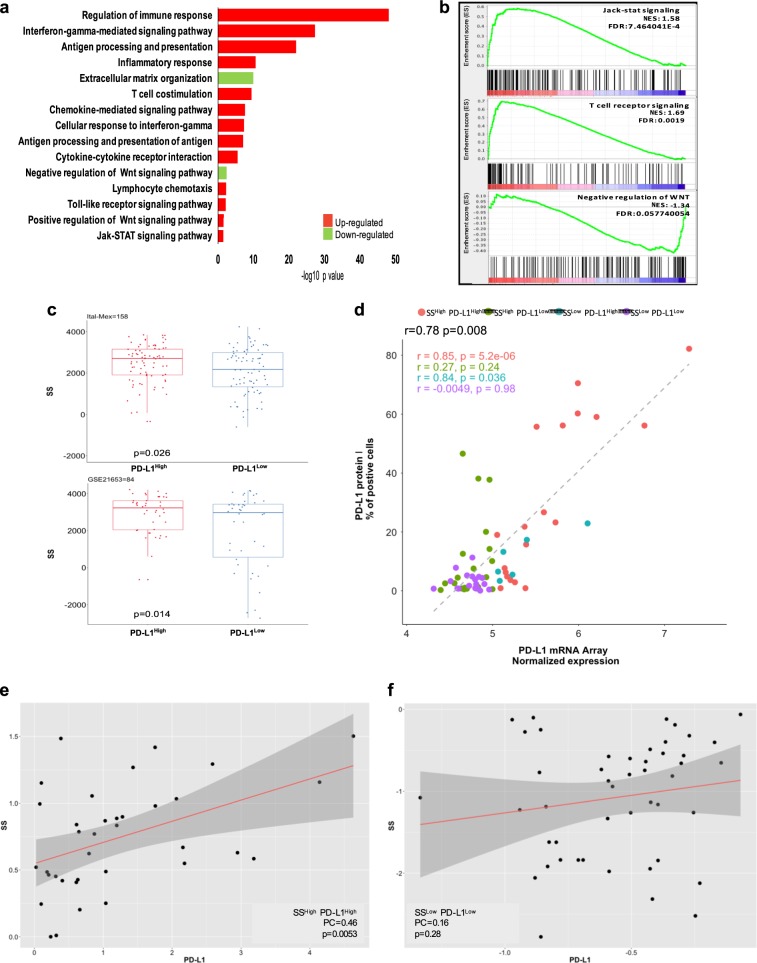
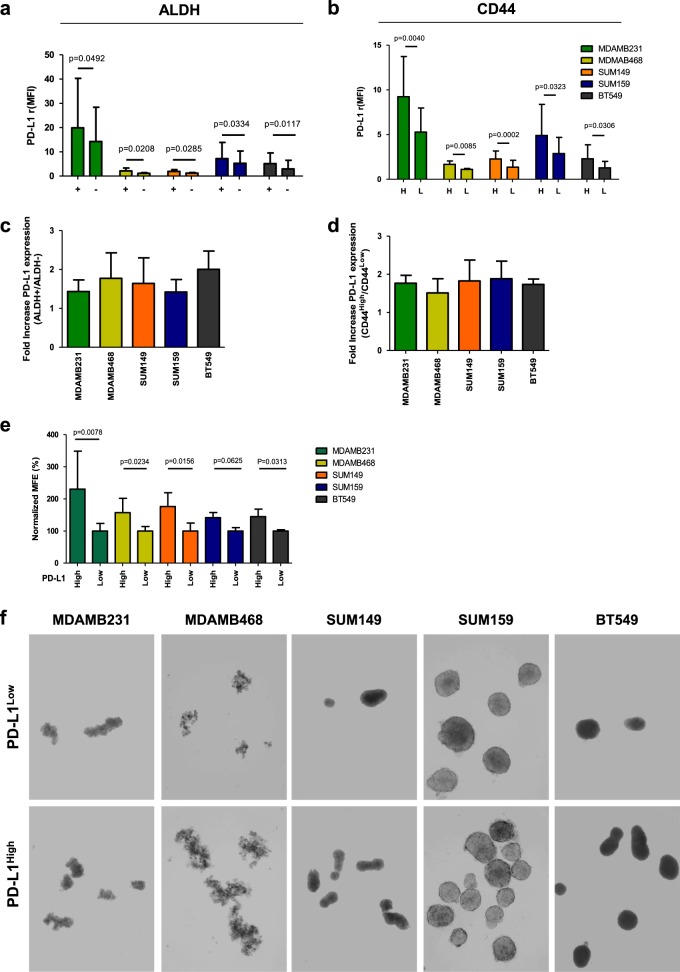
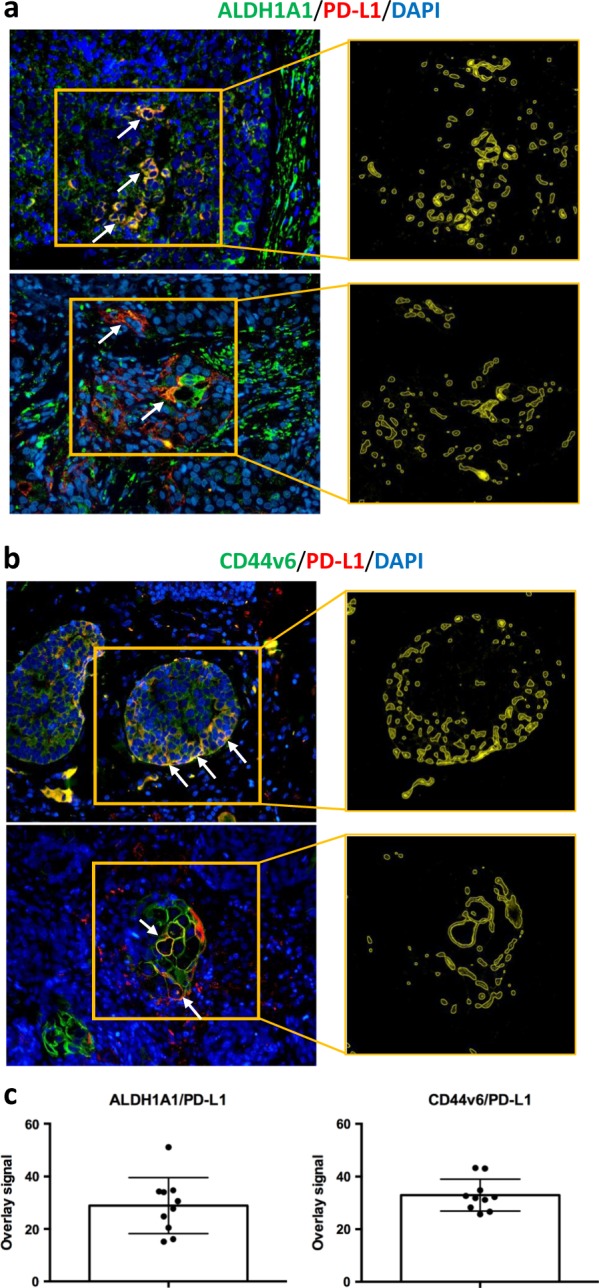
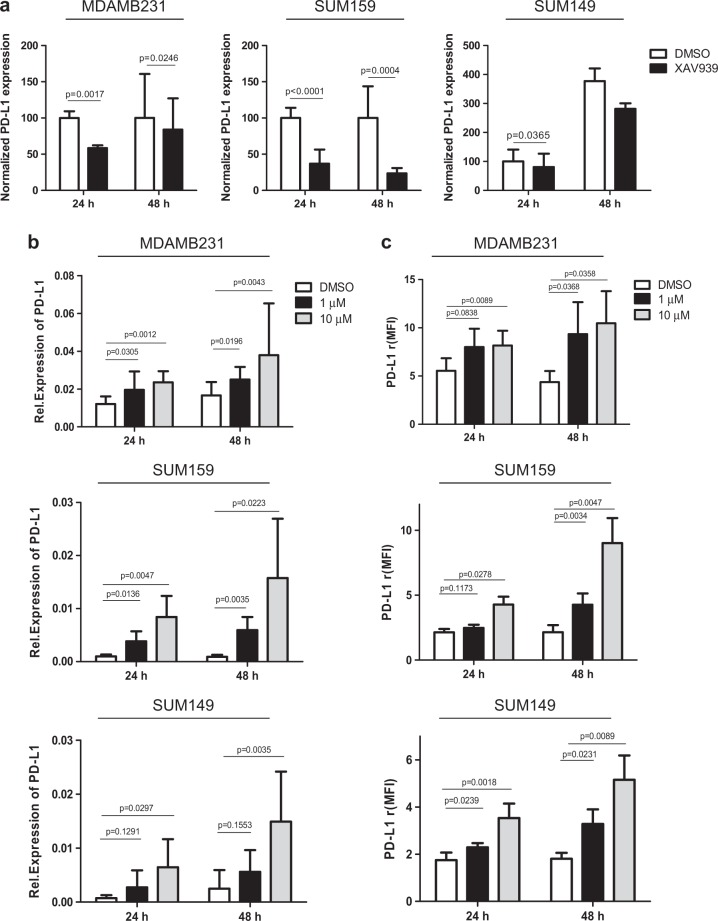
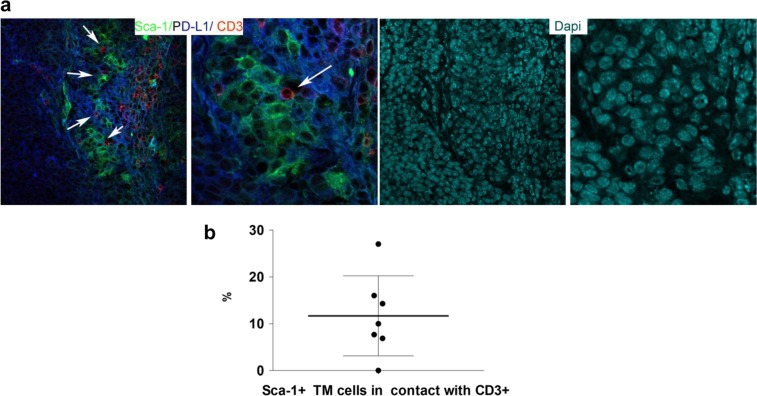
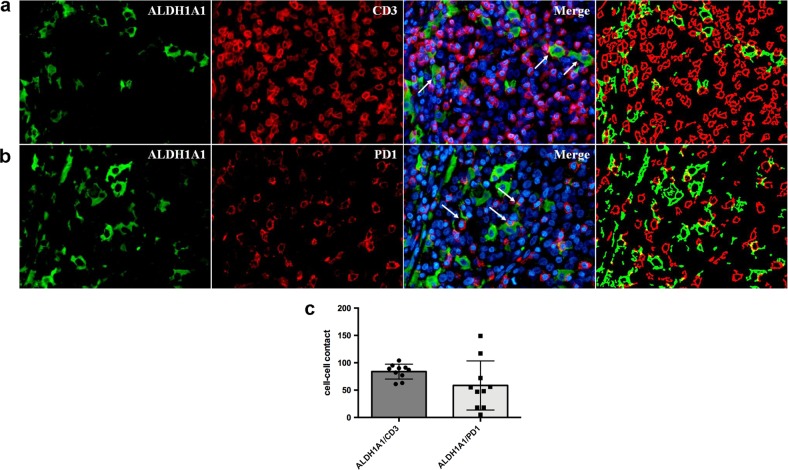
Triple-negative breast cancers (TNBCs) are characterized by a poor prognosis and lack of targeted treatments, and thus, new therapeutic strategies are urgently needed. Inhibitors against programmed death-1 (PD-1)/PD-1 ligand (PD-L1) have shown significant efficacy in various solid cancers, but their activity against TNBCs remains limited. Here, we report that human TNBCs molecularly stratified for high levels of PD-L1 (PD-L1 High ) showed significantly enriched expression of immune and cancer stemness pathways compared with those with low PD-L1 expression (PD-L1 Low ). In addition, the PD-L1 High cases were significantly associated with a high stemness score (SS High ) signature. TNBC cell lines gated for aldehyde dehydrogenase (ALDH) and CD44 stemness markers exhibited increased levels of PD-L1 versus their ALDH-negative and CD44 Low counterparts, and PD-L1 High cells generated significantly more mammospheres than PD-L1 Low cells. Murine mammary SCA-1-positive tumor cells with PD-L1 High expression generated tumors in vivo with higher efficacy than PD-L1 Low cells. Furthermore, treatment of TNBC cells with selective WNT inhibitors or activators downregulated or upregulated PD-L1 expression, respectively, implying a functional cross-talk between WNT activity and PD-L1 expression. Remarkably, human TNBC samples contained tumor elements co-expressing PD-L1 with ALDH1A1 and/or CD44v6. Additionally, both PD-L1-/SCA1-positive and ALDH1A1-positive tumor elements were found in close contact with CD3-, and PD-1-positive T cells in murine and human tumor samples. Overall, our study suggests that PD-L1-positive tumor elements with a stemness phenotype may participate in the complex dynamics of TNBC-related immune evasion, which might be targeted through WNT signaling inhibition.
Overview
The claims and statistics of this paper haven’t been checked yet.
Free: it reads the open-access text and checks the first 5 claims that cite a source we can check. Create a free account to check every claim.
Integrity signals
Registry
Cites
Statistics
Figures
Verification
Claims the paper makes
The claims and statistics of this paper haven’t been checked yet.
Free: it reads the open-access text and checks the first 5 claims that cite a source we can check. Create a free account to check every claim.
Claims other papers make about this one
Each is checked against this paper’s own text: does it say what the citing paper says it does?
The source backs part of the claim, not all of it — or backs it for a different population, condition or comparison.
In the citing paper
“Activating mutations in the Wnt/β-catenin pathway can also induce resistance to ICB through altering the expression of PD-L1 and PD-L2 in a broad group of tumors such as melanoma, breast cancer, adenoid cystic carcinoma, and medulloblastoma (Bockmayr et al., 2018; Castagnoli et al., 2019).”
From Hallmarks of response, resistance, and toxicity to immune checkpoint blockade (2021) · cites this paper as Castagnoli et al., 2019
Experimental — accuracy not yet measured
Self-check
Percentages, sums and reported differences re-computed from the paper’s own numbers.
The self-check needs the paper’s full text.
Citations
Cites
Hallmarks of Cancer: The Next Generation
Hanahan, D., & Weinberg, R. A. (2011) · Cell · doi:10.1016/j.cell.2011.02.013 · Cited by 66,590
Subramanian, A., Tamayo, P., Mootha, V. K., Mukherjee, S., Ebert, B. L., Gillette, M. A., Paulovich, A., Pomeroy, S. L., Golub, T. R., Lander, E. S., et al. (2005) · Proceedings of the National Academy of Sciences · doi:10.1073/pnas.0506580102 · Cited by 53,625 · cited 4×
“The bar plot shows the significant top enrichment scores (−log p value). b GSEA enrichment plots of Jak-stat signaling, T cell receptor signaling, and negative regulation of WNT gene sets in PD-L1High compared with PD-L1Low TNBC cases.”
ResultInfluentialGene Ontology: tool for the unification of biology
Ashburner, M., Ball, C. A., Blake, J. A., Botstein, D., Butler, H., Cherry, J. M., Davis, A. P., Dolinski, K., Dwight, S. S., Eppig, J. T., et al. (2000) · Nature Genetics · doi:10.1038/75556 · Cited by 43,206
Siegel, R. L., Miller, K. D., & Jemal, A. (2016) · CA: A Cancer Journal for Clinicians · doi:10.3322/caac.21332 · Cited by 16,003
The blockade of immune checkpoints in cancer immunotherapy
Pardoll, D. M. (2012) · Nature Reviews Cancer · doi:10.1038/nrc3239 · Cited by 13,838
Comprehensive molecular portraits of human breast tumours
The Cancer Genome Atlas Network (2012) · Nature · doi:10.1038/nature11412 · Cited by 12,129
Inferring tumour purity and stromal and immune cell admixture from expression data
Yoshihara, K., Shahmoradgoli, M., Martínez, E., Vegesna, R., Kim, H., Torres-Garcia, W., Treviño, V., Shen, H., Laird, P. W., Levine, D. A., et al. (2013) · Nature Communications · doi:10.1038/ncomms3612 · Cited by 9,778
Charoentong, P., Finotello, F., Angelova, M., Mayer, C., Efremova, M., Rieder, D., Hackl, H., & Trajanoski, Z. (2017) · Cell Reports · doi:10.1016/j.celrep.2016.12.019 · Cited by 5,041
Zou, W., Wolchok, J. D., & Chen, L. (2016) · Science Translational Medicine · doi:10.1126/scitranslmed.aad7118 · Cited by 2,400
Phenotypic and molecular characterization of the claudin-low intrinsic subtype of breast cancer
Prat, A., Parker, J. S., Karginova, O., Fan, C., Livasy, C., Herschkowitz, J. I., He, X., & Perou, C. M. (2010) · Breast Cancer Research · doi:10.1186/bcr2635 · Cited by 2,167
Cited by
PD-1/PD-L1 pathway: current researches in cancer.
Han, Y., Liu, D., & Li, L. (2020) · PubMed Central · Cited by 2,290
Hallmarks of response, resistance, and toxicity to immune checkpoint blockade
Morad, G., Helmink, B. A., Sharma, P., & Wargo, J. A. (2021) · Cell · doi:10.1016/j.cell.2021.09.020 · Cited by 1,648
Tumour-intrinsic resistance to immune checkpoint blockade
Kalbasi, A., & Ribas, A. (2020) · Nature Reviews Immunology · doi:10.1038/s41577-019-0218-4 · Cited by 1,486
Wnt signaling in breast cancer: biological mechanisms, challenges and opportunities
Xu, X., Zhang, M., Xu, F., & Jiang, S. (2020) · Molecular Cancer · doi:10.1186/s12943-020-01276-5 · Cited by 588
Yamaguchi, H., Hsu, J.-M., Yang, W.-H., & Hung, M.-C. (2022) · Nature Reviews Clinical Oncology · doi:10.1038/s41571-022-00601-9 · Cited by 493
Insights into new mechanisms and models of cancer stem cell multidrug resistance
Garcia-Mayea, Y., Mir, C., Masson, F., Paciucci, R., & LLeonart, M. E. (2020) · Seminars in Cancer Biology · doi:10.1016/j.semcancer.2019.07.022 · Cited by 324
WNT Signaling in Tumors: The Way to Evade Drugs and Immunity
Martin-Orozco, E., Sanchez-Fernandez, A., Ortiz-Parra, I., & Ayala-San Nicolas, M. (2019) · Frontiers in Immunology · doi:10.3389/fimmu.2019.02854 · Cited by 286
“Treatment of patients with PD-1 and PD-L1 inhibitors, alone or in combination with standard chemotherapy, has demonstrated preliminary positive results in advanced TNBC (151, 175).”
BackgroundWnt signaling pathways in biology and disease: mechanisms and therapeutic advances
Xue, C., Chu, Q., Shi, Q., Zeng, Y., Lu, J., & Li, L. (2025) · Signal Transduction and Targeted Therapy · doi:10.1038/s41392-025-02142-w · Cited by 281
Hammerl, D., Martens, J. W. M., Timmermans, M., Smid, M., Trapman-Jansen, A. M., Foekens, R., Isaeva, O. I., Voorwerk, L., Balcioglu, H. E., Wijers, R., et al. (2021) · Nature Communications · doi:10.1038/s41467-021-25962-0 · Cited by 262
Wnt signaling pathway in cancer immunotherapy
Zhou, Y., Xu, J., Luo, H., Meng, X., Chen, M., & Zhu, D. (2022) · Cancer Letters · doi:10.1016/j.canlet.2021.10.034 · Cited by 233
The Great Immune Escape: Understanding the Divergent Immune Response in Breast Cancer Subtypes
Onkar, S. S., Carleton, N. M., Lucas, P. C., Bruno, T. C., Lee, A. V., Vignali, D. A. A., & Oesterreich, S. (2023) · Cancer Discovery · doi:10.1158/2159-8290.cd-22-0475 · Cited by 213
Zhang, X., Powell, K. A., & Li, L. (2020) · Cancers · doi:10.3390/cancers12123765 · Cited by 177
CD44 Promotes PD-L1 Expression and Its Tumor-Intrinsic Function in Breast and Lung Cancers
Kong, T., Ahn, R., Yang, K., Zhu, X., Fu, Z., Morin, G., Bramley, R., Cliffe, N. C., Xue, Y., Kuasne, H., et al. (2020) · Cancer Research · doi:10.1158/0008-5472.can-19-1108 · Cited by 175
PD-L1 status in breast cancer: Current view and perspectives
Vranić, S., Cyprian, F. S., Gatalica, Z., & Palazzo, J. (2019) · Seminars in Cancer Biology · doi:10.1016/j.semcancer.2019.12.003 · Cited by 177
Liu, C., Qiang, J., Deng, Q., Xia, J., Deng, L., Zhou, L., Wang, D., He, X., Liu, Y., Zhao, B., et al. (2021) · Cancer Research · doi:10.1158/0008-5472.can-21-1337 · Cited by 171
“Emerging literatures show an enrichment of PD-L1 in tissues from ALDH1A1-expressing TNBC patients and lower expression of antigen processing and presentation proteins (TAP-1 and TAP-2) and costimulatory molecules (CD80) in ALDHþ breast cancer cells (11, 12).”
BackgroundCancer Stem Cells—Key Players in Tumor Relapse
Marzagalli, M., Fontana, F., Raimondi, M., & Limonta, P. (2021) · Cancers · doi:10.3390/cancers13030376 · Cited by 161
Dutta, S., Ganguly, A., Chatterjee, K., Spada, S., & Mukherjee, S. (2023) · Biology · doi:10.3390/biology12020218 · Cited by 153
“Functional crosstalk between WNT activity and PD-L1 expression is the basis for the use of selective WNT activators or inhibitors to up- or downregulate PD-L1 expression, respectively, in triple-negative breast cancer (TNBC) stem cells, holding the promise of immunotherapy for this cancer [46].”
BackgroundChen, L., Yang, Q., Li, Y., Yang, L., Liu, J., Li, H., Xiao, Y., Bu, L., Zhang, W., & Sun, Z. (2020) · Cancer Immunology Research · doi:10.1158/2326-6066.cir-19-0394 · Cited by 149
“Wnt signaling participates in the modulation of PD-L1 in triple-negative breast cancer, perhaps to help cancer cells escape immune surveillance (49).”
BackgroundWnt Signaling in the Regulation of Immune Cell and Cancer Therapeutics
Haseeb, M., Pirzada, R. H., Ain, Q. U., & Choi, S. (2019) · Cells · doi:10.3390/cells8111380 · Cited by 144
“PD-L1 overexpression in TNBC tumors: a tradeoff between more enriched stem cells and enhanced Wnt activity [128,129].”
BackgroundKumar, S., Chatterjee, M., Ghosh, P., Ganguly, K. K., Basu, M., & Ghosh, M. K. (2022) · Genes & Diseases · doi:10.1016/j.gendis.2022.07.024 · Cited by 144
“In TNBC-CSC, WNT signaling upregulates the expression of glycosylated PD-L1 expression which in turn participates in EMT process and stem like TNBC phenotype.(174) Targeting both CMTM6 and CMTM7 in SNAIL dependent EMT can also decrease surface expression of PD-L1 in TNBC(175) (Fig.”
BackgroundBiomarkers in Triple-Negative Breast Cancer: State-of-the-Art and Future Perspectives
Cocco, S., Piezzo, M., Calabrese, A., Cianniello, D., Caputo, R., Lauro, V. D., Fusco, G., Gioia, G. D., Licenziato, M., & Laurentiis, M. D. (2020) · International Journal of Molecular Sciences · doi:10.3390/ijms21134579 · Cited by 138
Wnt Signaling in Cancer Metabolism and Immunity
El‐Sahli, S., Xie, Y., Wang, L., & Liu, S. (2019) · Cancers · doi:10.3390/cancers11070904 · Cited by 132
“Immune evasion in tumors is also driven by their expression of PD-L1 (programmed deathligand 1) [103], which is recognized by inhibitory immune checkpoint receptor PD-1 on activated T cells.”
BackgroundInfluentialPD-L1 is overexpressed on breast cancer stem cells through notch3/mTOR axis
Mansour, F. A., Al‐Mazrou, A., Almohanna, F., Al-Alwan, M. M., & Ghebeh, H. (2020) · OncoImmunology · doi:10.1080/2162402x.2020.1729299 · Cited by 123
“While writing this manuscript, Castagnoli et al.(30) and Hsu et al.”
MethodThe role of Wnt signaling pathway in tumor metabolic reprogramming
Mo, Y., Wang, Y., Zhang, L., Yang, L., Zhou, M., Li, X., Li, Y., Li, G., Zeng, Z., Xiong, W., et al. (2019) · Journal of Cancer · doi:10.7150/jca.31166 · Cited by 113
“Wnt pathway regulates PDL1 to regulate tumor immune escape by regulating the expression of ALDH [183].”
BackgroundTriple-negative breast cancer: understanding Wnt signaling in drug resistance
Merikhian, P., Eisavand, M. R., & Farahmand, L. (2021) · Cancer Cell International · doi:10.1186/s12935-021-02107-3 · Cited by 114
“In addition, increasing studies indicated up-regulation of CSC-related Wnt signaling pathway and tumorintrinsic activation of β-catenin signaling in PD-L1High TNBCs [37, 38].”
BackgroundTumor Microenvironment: Key Players in Triple Negative Breast Cancer Immunomodulation
Zheng, H., Siddharth, S., Parida, S., Wu, X., & Sharma, D. (2021) · Cancers · doi:10.3390/cancers13133357 · Cited by 108
Current Progresses and Challenges of Immunotherapy in Triple-Negative Breast Cancer
Mediratta, K., El‐Sahli, S., D’Costa, V. M., & Wang, L. (2020) · Cancers · doi:10.3390/cancers12123529 · Cited by 106
“, which reported a strong correlation between downstream Wnt signaling effector expression and PD-L1 expression in TNBC [138].”
BackgroundKobayashi, Y., Lim, S., & Yamaguchi, H. (2019) · Seminars in Cancer Biology · doi:10.1016/j.semcancer.2019.11.011 · Cited by 102
Chen, X., Feng, L., Huang, Y., Wu, Y., & Xie, N. (2022) · Cancers · doi:10.3390/cancers15010104 · Cited by 94
“TNBC stem cells also constitutively upregulate PD-L1 through the activated WNT signaling pathway [120].”
BackgroundImmature natural killer cells promote progression of triple-negative breast cancer
Thacker, G., Henry, S., Nandi, A., Debnath, R., Singh, S., Nayak, A., Susnik, B., Boone, M., Zhang, Q. H., Kesmodel, S. B., et al. (2023) · Science Translational Medicine · doi:10.1126/scitranslmed.abl4414 · Cited by 94
Breast cancer stem cell antigens as targets for immunotherapy
Quaglino, E., Conti, L., & Cavallo, F. (2020) · Seminars in Immunology · doi:10.1016/j.smim.2020.101386 · Cited by 91
“Vaccine-induced antibodies would allow the eradication of CSC to occur despite their ability to: i) escape T-cell recognition by downregulating MHC class I molecules or antigen-processing machinery [26]; ii) block T-cell activation through the up-regulation of checkpoint molecules [55-57] (Conti et al.”
BackgroundNovel molecular regulators of breast cancer stem cell plasticity and heterogeneity
Zhang, R., Tu, J., & Liu, S. (2021) · Seminars in Cancer Biology · doi:10.1016/j.semcancer.2021.03.008 · Cited by 91
Mechanistic Pathways of Malignancy in Breast Cancer Stem Cells
Yousefnia, S., Forootan, F. S., Forootan, S. S., Nasr‐Esfahani, M. H., Gure, A. O., & Ghaedi, K. (2020) · Frontiers in Oncology · doi:10.3389/fonc.2020.00452 · Cited by 90
Wnts and the hallmarks of cancer
Zhong, Z., Yu, J., Virshup, D. M., & Madan, B. (2020) · Cancer and Metastasis Reviews · doi:10.1007/s10555-020-09887-6 · Cited by 86
“tein levels in multiple breast cancer cell lines [202].”
BackgroundAhmed, K., Koval, A., Xu, J., Bodmer, A., & Katanaev, V. L. (2019) · Cancer Letters · doi:10.1016/j.canlet.2019.02.018 · Cited by 77
Ortega, M. A., Boaru, D. L., León-Oliva, D. D., Fraile‐Μartinez, O., Montero, C. G., Rios, L., Garrido-Gil, M. J., Barrena-Blázquez, S., Minaya‐Bravo, A., Rios‐Parra, A., et al. (2024) · Journal of Molecular Medicine · doi:10.1007/s00109-024-02463-3 · Cited by 77
“In the treatment of triple-negative breast cancer (TNBC), the use of inhibitors or activators to decrease or increase PD-L1 expression is based on the Wnt activity and the PD-1/PD-L1 axis [93, 94].”
Wnt Signaling in Gynecologic Malignancies
McMellen, A. N., Woodruff, E. R., Corr, B. R., Bitler, B. G., & Moroney, M. R. (2020) · International Journal of Molecular Sciences · doi:10.3390/ijms21124272 · Cited by 74
“Immune checkpoint blockade (ICB) strategies (e.g., anti-PD-L1) have conveyed limited benefit in patients with HGSOC compared to those with melanoma or lung cancer, but Wnt/β-catenin signaling may serve as a targetable pathway to improve response to ICB.”
BackgroundAmodio, V., Mauri, G., Reilly, N. M., Bianchi, A. S., Siena, S., Bardelli, A., & Germano, G. (2021) · Cancers · doi:10.3390/cancers13112638 · Cited by 74
Current understandings and clinical translation of nanomedicines for breast cancer therapy
Jiang, Y., Jiang, Z., Wang, M., & Ma, L. (2021) · Advanced Drug Delivery Reviews · doi:10.1016/j.addr.2021.114034 · Cited by 72
Yang, M., Li, Z., Tao, J., Hu, H., Li, Z., Zhang, Z., Cheng, F., Sun, Y., Zhang, Y., Yang, J., et al. (2021) · Journal of Cancer Research and Clinical Oncology · doi:10.1007/s00432-021-03510-z · Cited by 71
A Review of the Role of Wnt in Cancer Immunomodulation
Goldsberry, W. N., Londoño, A. I., Randall, T. D., Norian, L. A., & Arend, R. C. (2019) · Cancers · doi:10.3390/cancers11060771 · Cited by 70
“There is evidence to support Wnt pathway inhibition with the downregulation of PD-L1 expression, associated with a decreased stemness score signature, in triple negative breast cancer [37].”
BackgroundSerrano-García, L., Jávega, B., Llombart‐Cussac, A., Gión, M., Pérez-García, J. M., Cortés, J., & Fernández-Murga, M. L. (2024) · Frontiers in Immunology · doi:10.3389/fimmu.2024.1513421 · Cited by 70
Breast cancer stem cells: A review of their characteristics and the agents that affect them
Shan, N. L., Shin, Y. S., Yang, G., Furmanski, P., & Suh, N. (2021) · Molecular Carcinogenesis · doi:10.1002/mc.23277 · Cited by 71
“This indicates a role of Wnt signaling in TNBC‐related immune escape.(95) The pleiotropic effects of Wnt signaling and its components in breast cancer initiation, progression, and the maintenance of different cancer subtypes remain to be elucidated, and a deeper understanding of them is essential for developing BCSC‐t…”
BackgroundImmunotherapy in Breast Cancer: When, How, and What Challenges?
Henriques, B., Mendes, F., & Martins, D. F. (2021) · Biomedicines · doi:10.3390/biomedicines9111687 · Cited by 72
WNT signaling in the tumor microenvironment promotes immunosuppression in murine pancreatic cancer
Du, W., Menjivar, R. E., Donahue, K. L., Kadiyala, P., Velez-Delgado, A., Brown, K. L., Watkoske, H. R., He, X., Carpenter, E. S., Angeles, C. V., et al. (2022) · The Journal of Experimental Medicine · doi:10.1084/jem.20220503 · Cited by 69
“In several solid cancers, β -catenin induces transcriptional activation of PD-L1, while WNT inhibition results in decreased PD-L1 expression; those include breast (Castagnoli et al., 2019) and colon cancer (Ruan et al., 2020).”
How Tumor Cell Dedifferentiation Drives Immune Evasion and Resistance to Immunotherapy
Li, J., & Stanger, B. Z. (2020) · Cancer Research · doi:10.1158/0008-5472.can-20-1420 · Cited by 68
“Similarly, dedifferentiated tumor-initiating cells can evade immune surveillance by dysregulation of PD-L1 or NKGD2 (57, 58).”
BackgroundXIST and TSIX: Novel Cancer Immune Biomarkers in PD-L1-Overexpressing Breast Cancer Patients
Salama, E. A., Adbeltawab, R. E., & Tayebi, H. M. E. (2020) · Frontiers in Oncology · doi:10.3389/fonc.2019.01459 · Cited by 65
“A recent study has postulated that TNBC tumors evade the immune system through upregulation of PD-L1 on the surface of TNBC cancer stem cells via the activation of WNT pathway (11).”
BackgroundMiyazaki, T., Chung, S., Sakai, H., Ohata, H., Obata, Y., Shiokawa, D., Mizoguchi, Y., Kubo, T., Ichikawa, H., Taniguchi, H., et al. (2021) · Cancer Science · doi:10.1111/cas.15182 · Cited by 63
Mao, M., Chen, Y., Yang, J., Cheng, Y., Xu, L., Ji, F., Zhou, J., Zhang, X., Li, Z., Chen, C., et al. (2022) · Journal for ImmunoTherapy of Cancer · doi:10.1136/jitc-2022-005668 · Cited by 62
A pan-cancer analysis shows immunoevasive characteristics in NRF2 hyperactive squamous malignancies
Härkönen, J., Pölönen, P., Deen, A. J., Selvarajan, I., Teppo, H.-R., Dimova, E. Y., Kietzmann, T., Ahtiainen, M., Väyrynen, J. P., Väyrynen, S. A., et al. (2023) · Redox Biology · doi:10.1016/j.redox.2023.102644 · Cited by 46
Signaling pathways essential for triple-negative breast cancer stem-like cells
Ehmsen, S., & Ditzel, H. J. (2020) · Stem Cells · doi:10.1002/stem.3301 · Cited by 55
Romano, S., Tufano, M., D’Arrigo, P., Vigorito, V., Russo, S., & Romano, M. F. (2019) · Seminars in Cancer Biology · doi:10.1016/j.semcancer.2019.08.015 · Cited by 54
CXCR4 Inhibition Counteracts Immunosuppressive Properties of Metastatic NSCLC Stem Cells
Fortunato, O., Belisario, D. C., Compagno, M., Giovinazzo, F., Bracci, C., Pastorino, U., Horenstein, A. L., Malavasi, F., Ferracini, R., Scala, S., et al. (2020) · Frontiers in Immunology · doi:10.3389/fimmu.2020.02168 · Cited by 53
“ALDH/CD44+/PD-L1+ CSCs were found in close contact with PD-1+ T cells both in murine and human tumor samples, suggesting a direct effect of CSCs in immune control (59).”
BackgroundMetaplastic breast cancers frequently express immune checkpoint markers FOXP3 and PD-L1
Kalaw, E., Lim, M., Kutasovic, J. R., Sokolova, A., Taege, L., Johnstone, K. J., Bennett, J., Saunus, J. M., Niland, C., Ferguson, K., et al. (2020) · British Journal of Cancer · doi:10.1038/s41416-020-01065-3 · Cited by 53
Breast cancer resistance mechanisms: challenges to immunotherapy
Hanna, A., & Balko, J. M. (2021) · Breast Cancer Research and Treatment · doi:10.1007/s10549-021-06337-x · Cited by 51
Cancer stem cells: a target for overcoming therapeutic resistance and relapse
Zhang, S., Yang, R., Ouyang, Y., Shen, Y., Hu, L., & Xu, C. S. (2024) · Cancer Biology and Medicine · doi:10.20892/j.issn.2095-3941.2023.0333 · Cited by 48
“Administration of selective Wnt inhibitors or activators leads to a reduction and increase in PD-L1 expression in ALDH + /CD44 + CSCs from TNBCs, respectively, indicating the positive regulation of PD-L1 by Wnt 53 .”
Hammerl, D., Massink, M. P. G., Smid, M., van Deurzen, C. H. M., Meijers-Heijboer, H. E. J., Waisfisz, Q., Debets, R., & Martens, J. W. M. (2020) · Clinical Cancer Research · doi:10.1158/1078-0432.ccr-19-0285 · Cited by 50
“WNT has been linked to decreased recruitment of T 368 cells in melanoma and it has been shown recently, that WNT signaling can modulate PD-L1 expression 369 in cancer stem cells of BC [55], suggesting that WNT plays a role in multiple modes of T cell evasion.”
BackgroundMukherjee, N., & Panda, C. K. (2020) · Clinical Breast Cancer · doi:10.1016/j.clbc.2020.04.004 · Cited by 48
Li, N., Li, Y., Zheng, P., & Zhan, X. (2021) · Frontiers in Endocrinology · doi:10.3389/fendo.2021.755805 · Cited by 46
“However, those cancers with higher mRNAsi might be less susceptible to immune checkpoint blockade therapies, which suggested a potential mechanism of immune evasion (16).”
BackgroundWnt Signaling in the Breast: From Development to Disease
de Oliveira, W. A. A., Laithy, Y. E., Bruna, A., Annibali, D., & Lluís, F. (2022) · Frontiers in Cell and Developmental Biology · doi:10.3389/fcell.2022.884467 · Cited by 46
“High PD-L1 levels correlate with transcriptional upregulation of Wnt signaling and stem cell markers, such as ALDH activity (Castagnoli et al., 2019).”
BackgroundInfluentialHDAC inhibitors enhance the anti-tumor effect of immunotherapies in hepatocellular carcinoma
Shen, C., Li, M., Duan, Y., Jiang, X., Hou, X., Xue, F., Zhang, Y., & Luo, Y. (2023) · Frontiers in Immunology · doi:10.3389/fimmu.2023.1170207 · Cited by 44
Liao, T., Lin, C., Jiang, J., Yang, S.-H., Teng, H., & Yang, M. (2020) · Theranostics · doi:10.7150/thno.44147 · Cited by 43
Shadbad, M. A., Hosseinkhani, N., Asadzadeh, Z., Derakhshani, A., Ahangar, N. K., Hemmat, N., Lotfinejad, P., Brunetti, O., Silvestris, N., & Baradaran, B. (2021) · Frontiers in Oncology · doi:10.3389/fonc.2021.689839 · Cited by 44
“Consistent with these, it has been shown that selective inhibition and activation of theWnt signaling pathway, which is enriched for cancer stem cell markers, can remarkably downregulate and upregulate PD-L1 expression in TNBC cells (62, 63).”
BackgroundThe d16HER2 Splice Variant: A Friend or Foe of HER2-Positive Cancers?
Castagnoli, L., Ladomery, M., Tagliabue, E., & Pupa, S. M. (2019) · Cancers · doi:10.3390/cancers11070902 · Cited by 42
“In addition, several studies have shown that resistance to radiotherapy, chemotherapy, targeted therapy, and immunotherapy is attributable, at least in part, to CSCs, which are also linked to tumor metastasis [43,44].”
BackgroundSelf-citationHuang, T., Li, F., Cheng, X., Wang, J., Zhang, W., Zhang, B., Tang, Y., Li, Q., Zhou, C., & Tu, S. (2021) · Frontiers in Immunology · doi:10.3389/fimmu.2021.619209 · Cited by 40
Karnam, A., Bonam, S. R., Rambabu, N., Wong, S. S. W., Aimanianda, V., & Bayry, J. (2021) · mBio · doi:10.1128/mbio.02824-21 · Cited by 41
Yang, X., Miao, Y., Wang, J., & Mi, D. (2021) · Life Sciences · doi:10.1016/j.lfs.2021.119307 · Cited by 39
Bhattacharya, A., Fushimi, A., Yamashita, N., Hagiwara, M., Morimoto, Y., Rajabi, H., Long, M. D., Abdulla, M., Ahmad, R., Street, K., et al. (2022) · Molecular Cancer Research · doi:10.1158/1541-7786.mcr-21-0672 · Cited by 39
“Along these lines, we found that GST-MUC1-CD(1-72), but not GST, binds directly to full length JUN(1-331) (Fig.”
InfluentialCiccone, V., Morbidelli, L., Ziche, M., & Donnini, S. (2019) · Cancer Drug Resistance · doi:10.20517/cdr.2019.70 · Cited by 38
“In 2019, Castagnoli et al.([107]) showed an enrichment of PD-L1 expression in tissues from ALDH1A1 positive and triple negative breast cancer patients([107]).”
BackgroundInfluentialZhang, X., Zhang, X., Li, G., Hao, Y., Liu, L., Zhang, L., Chen, Y., Wu, J., Wang, X., Yang, S., et al. (2022) · Journal of Immunology Research · doi:10.1155/2022/3143511 · Cited by 37
“In TNBC, the PD-L1 expression was upregulated through the WNT signaling pathway, and then, CD8 + T cell activation was blocked [34].”
Immune Checkpoint Ligand Reverse Signaling: Looking Back to Go Forward in Cancer Therapy
Lecis, D., Sangaletti, S., Colombo, M. P., & Chiodoni, C. (2019) · Cancers · doi:10.3390/cancers11050624 · Cited by 37
Self-citationWnt signalling pathway in bladder cancer
Wu, G., Weng, W., Xia, P., Yan, S., Zhong, C., Xie, L., Xie, Y., & Fan, G. (2020) · Cellular Signalling · doi:10.1016/j.cellsig.2020.109886 · Cited by 39
Hargadon, K. M. (2023) · Cellular and Molecular Life Sciences · doi:10.1007/s00018-023-04689-9 · Cited by 36
PD-1/PD-L1 counterattack alliance: multiple strategies for treating triple-negative breast cancer
Zhu, H., Du, C., Yuan, M., Fu, P., He, Q., Yang, B., & Cao, J. (2020) · Drug Discovery Today · doi:10.1016/j.drudis.2020.07.006 · Cited by 36
Lin, C., Liao, T., & Yang, M. (2020) · Frontiers in Oncology · doi:10.3389/fonc.2020.588542 · Cited by 35
Inhibition of the Wnt Signalling Pathway: An Avenue to Control Breast Cancer Aggressiveness
Castagnoli, L., Tagliabue, E., & Pupa, S. M. (2020) · International Journal of Molecular Sciences · doi:10.3390/ijms21239069 · Cited by 35
“Specifically, our research group reported that TNBC stem cells are characterized by higher expression of programmed death-ligand 1 (PD-L1), the primary ligand of programmed cell death protein expressed on the cell membrane of T-cells, and are able to mediate negative regulation of their anticancer effects in compariso…”
BackgroundSelf-citationThe Tumor Microenvironment as a Driving Force of Breast Cancer Stem Cell Plasticity
Fico, F., & Santamaria‐Martínez, A. (2020) · Cancers · doi:10.3390/cancers12123863 · Cited by 35
“Interestingly, human TNBCs expressing high levels of PD-L1 show higher expression of stemness markers, increased capability to form mammospheres, and more tumorigenic potential compared to PD-L1low TNBCs [104].”
Further knowledge and developments in resistance mechanisms to immune checkpoint inhibitors
Berland, L., Gabr, Z., Chang, M., Ilié, M., Hofman, V., Rignol, G., Ghiringhelli, F., Mograbi, B., Rashidian, M., & Hofman, P. M. (2024) · Frontiers in Immunology · doi:10.3389/fimmu.2024.1384121 · Cited by 34
Cancer Stem Cells: Devil or Savior—Looking behind the Scenes of Immunotherapy Failure
Castagnoli, L., Santis, F. D., Volpari, T., Vernieri, C., Tagliabue, E., Nicola, M. D., & Pupa, S. M. (2020) · Cells · doi:10.3390/cells9030555 · Cited by 36
“We also provided the first evidence that PD-L1+ TNBCSCs interact with tumorinfiltrating CD8+ and PD-1+ immune cells, thus halting antitumor immune responses [42].”
ResultInfluentialSelf-citationTrailblazing perspectives on targeting breast cancer stem cells
Li, J., Qi, D., Hsieh, T., Huang, J. H., WU, J. M., & Wu, E. (2021) · Pharmacology & Therapeutics · doi:10.1016/j.pharmthera.2021.107800 · Cited by 34
Lung Cancer Stem Cells and Their Clinical Implications
Rowbotham, S. P., Goruganthu, M., Arasada, R. R., Wang, W., Carbone, D. P., & Kim, C. F. (2021) · Cold Spring Harbor Perspectives in Medicine · doi:10.1101/cshperspect.a041270 · Cited by 33
Fu, L., Fan, J., Maity, S., McFadden, G., Shi, Y., & Kong, W. (2022) · Oncogene · doi:10.1038/s41388-021-02144-2 · Cited by 33
Dostarlimab an Inhibitor of PD-1/PD-L1: A New Paradigm for the Treatment of Cancer
Alkholifi, F. K., & Alsaffar, R. M. (2022) · Medicina · doi:10.3390/medicina58111572 · Cited by 33
“Furthermore, functional interaction between WNT activity and PD-L1 expression underpins specific WNT activators or inhibitors to lower or enhance PD-L1 expression for the cure of triple-negative breast cancer (TNBC) [101].”
BackgroundOnciul, R., Brehar, F.-M., Toader, C., Covache-Busuioc, R.-A., Glavan, L.-A., Bratu, B.-G., Costin, H. P., Dumitrascu, D.-I., Șerban, M., & Ciurea, A. V. (2024) · Current Issues in Molecular Biology · doi:10.3390/cimb46030153 · Cited by 33
“Additionally, the employment of selective WNT pathway modulators, either inhibitors or activators, to decrease or augment PD-L1 expression, respectively, is used in the treatment of triple-negative breast cancer [332].”
MethodBreast Tumor Microenvironment: Emerging target of therapeutic phytochemicals
Malla, R. R., Deepak, K. G. K., Merchant, N., & Dasari, V. R. (2020) · Phytomedicine · doi:10.1016/j.phymed.2020.153227 · Cited by 31
Breast cancer immune microenvironment: from pre-clinical models to clinical therapies
Wilson, B. E., Gorrini, C., & Cescon, D. W. (2021) · Breast Cancer Research and Treatment · doi:10.1007/s10549-021-06431-0 · Cited by 31
MCT4/Lactate Promotes PD-L1 Glycosylation in Triple-Negative Breast Cancer Cells
Duan, X., Xie, Y., Yu, J., Hu, X., Liu, Z., Li, N., Qin, J., Lan, L., Yuan, M., Pan, Z., et al. (2022) · Journal of Oncology · doi:10.1155/2022/3659714 · Cited by 31
Wong, R. S. J., Ong, R. J. M., & Lim, J. S. (2023) · Cancer Drug Resistance · doi:10.20517/cdr.2023.58 · Cited by 31
Song, Z., Wang, H., & Zhang, S. (2019) · Biomedicine & Pharmacotherapy · doi:10.1016/j.biopha.2019.109336 · Cited by 32
Liu, Y., Xu, C., Zhang, L., Xu, G., Yang, Z., Xiang, L., Jiao, K., Chen, Z., Zhang, X., & Liu, Y. (2024) · Science Advances · doi:10.1126/sciadv.adi7764 · Cited by 31
Breast Cancer Tumor Microenvironment and Molecular Aberrations Hijack Tumoricidal Immunity
Lin, H.-J. L., Liu, Y., Lofland, D., & Lin, J. (2022) · Cancers · doi:10.3390/cancers14020285 · Cited by 31
“Further studies on the stem cell-enriched fraction of TNBC reveal that elevated PD-L1 expression can be induced by the Wingless/int1 (WNT) signaling pathway [67].”
BackgroundDevi, S., Singh, S. D., Joga, R., Patil, S. Y., Devi, V. M., Dushantrao, S. C., Dwivedi, F., Kumar, G., Jindal, D. K., Singh, C., et al. (2024) · European Journal of Pharmaceutics and Biopharmaceutics · doi:10.1016/j.ejpb.2024.114323 · Cited by 29
PD-1/PD-L1 Checkpoints and Resveratrol: A Controversial New Way for a Therapeutic Strategy
Delmas, D., Hermetet, F., & Aires, V. (2021) · Cancers · doi:10.3390/cancers13184509 · Cited by 28
“In fact, RSV upregulated PD-L1 by activating the WNT pathway, which is consistent with reports showing that a dysfunctional WNT pathway alters PD-L1 expression in triple-negative breast cancer [51,53].”
ResultZeng, J., Chen, H., Liu, X., Xia, H., Chen, L., Lin, D., Wang, N., Weng, C., Guan, G., & Zheng, Y. (2024) · Chemico-Biological Interactions · doi:10.1016/j.cbi.2024.111239 · Cited by 30
Role of the Wnt and GTPase pathways in breast cancer tumorigenesis and treatment
Ebrahimi, N., Kharazmi, K., Ghanaatian, M., Miraghel, S. A., Amiri, Y., Seyedebrahimi, S. S., Mobarak, H., Yazdani, E., Parkhideh, S., Hamblin, M. R., et al. (2022) · Cytokine & Growth Factor Reviews · doi:10.1016/j.cytogfr.2022.05.001 · Cited by 27
Nuclear Dishevelled targets gene regulatory regions and promotes tumor growth
Castro‐Piedras, I., Sharma, M., Brelsfoard, J., Vartak, D., Martinez, E. G., Rivera, C., Molehin, D., Bright, R. K., Fokar, M., Guindon, J., et al. (2021) · EMBO Reports · doi:10.15252/embr.202050600 · Cited by 27
Activation of CD44-Lipoprotein lipase axis in breast cancer stem cells promotes tumorigenesis
Manupati, K., Yeeravalli, R., Kaushik, K., Singh, D., Mehra, B., Gangane, N., Gupta, A. P., Goswami, K., & Das, A. (2021) · Biochimica et Biophysica Acta (BBA) - Molecular Basis of Disease · doi:10.1016/j.bbadis.2021.166228 · Cited by 25
Cancer Stem Cells and Circulatory Tumor Cells Promote Breast Cancer Metastasis
Malla, R. R., Puvalachetty, K., Vempati, R. K., Marni, R., Merchant, N., & Nagaraju, G. P. (2022) · Clinical Breast Cancer · doi:10.1016/j.clbc.2022.05.004 · Cited by 24
Malla, R. R., Jyosthsna, K., Rani, G., & Nagaraju, G. P. (2024) · International Immunopharmacology · doi:10.1016/j.intimp.2024.112613 · Cited by 25
Koschorke, A., Faraci, S., Giani, D., Chiodoni, C., Iorio, E., Canese, R., Colombo, M. P., Lamolinara, A., Iezzi, M., Ladomery, M., et al. (2019) · Cellular Oncology · doi:10.1007/s13402-019-00464-w · Cited by 24
Self-citation
Metadata
- Authors
- Castagnoli, L., Cancila, V., Cordoba-Romero, S. L., Faraci, S., Talarico, G., Belmonte, B., Iorio, M. V., Milani, M., Volpari, T., Chiodoni, C., Hidalgo-Miranda, A., Tagliabue, E., Tripodo, C., Sangaletti, S., Di Nicola, M., & Pupa, S. M.
- Affiliations
- Fondazione IRCCS Istituto Nazionale dei Tumori (IT)
- University of Palermo (IT)
- Corresponding author
- Pupa, Serenella M.
- ORCID
- Venue
- Oncogene
- Published
- 2019-01-31
- Volume
- 38
- Issue
- 21
- Pages
- 4047-4060
- ISSN
- 0950-9232 (ISSN-L)
- 1476-5594
- PMC
- PMC6755989
- OpenAlex
- W2911745810
- Cited by
- 184
- References
- 50
- Citations by year
- 2026: 11 · 2025: 15 · 2024: 19 · 2023: 24 · 2022: 23 · 2021: 41 · 2020: 31 · 2019: 20
- FWCI
- 12.31
- Type
- journal article
- Language
- en
- Open access
- hybrid
- doi.org
- Licence
- cc-by
- creativecommons.org/licenses/by/4.0 (tdm)
- Locations
- Oncogene (publishedVersion, cc-by)
- PubMed Central (publishedVersion, cc-by)
- PubMed (publishedVersion)
- Archivio Istituzionale della Ricerca (Universita Degli Studi Di Milano) (submittedVersion, other-oa)
- Nova Science Publishers (Nova Science Publishers, Inc.) (submittedVersion, other-oa)
- Funders
- Associazione Italiana per la Ricerca sul Cancro (16918)
- Topics
- Health Sciences › Medicine › Oncology › Cancer Immunotherapy and Biomarkers
- Health Sciences › Medicine › Oncology › Cancer Cells and Metastasis
- Life Sciences › Biochemistry, Genetics and Molecular Biology › Cancer Research › Breast Cancer Treatment Studies
- Keywords
- triple-negative breast cancer, PD-L1 expression, Wnt signaling, cancer stem cells, tumor immune evasion, aldehyde dehydrogenase, CD44, mammospheres, Sca-1, PD-1/PD-L1 inhibitors, stemness signature, tumor-infiltrating T cells
- MeSH terms
- Aldehyde Dehydrogenase, Animals, Female, Humans, Mice, Inbred BALB C, Stem Cells, Biomarkers, Tumor, Down-Regulation, Up-Regulation, Hyaluronan Receptors, Cell Line, Tumor, Wnt Signaling Pathway, B7-H1 Antigen, Triple Negative Breast Neoplasms
About these checks
Registry, retraction, Cites and statistics results are computed, not judged, with one exception: a printed reference that no index lists is read once by a model before it counts as a citation error. Claims are extracted by a model and kept only when their quote appears verbatim in the text; each cited source is then checked, with a model’s help, for whether it says what the claim relies on. Those verdicts can be wrong — read the claim’s quote and the cited source before relying on one.
Statistics and arithmetic are recomputed, not judged.
Confidence bands are shown only for fields calibrated on our annotated test set. None is calibrated yet, so no band is shown.
What counts as a claim ›How we measure confidence ›How we check this ›
Are you an author, or do you see a problem with this page? Request a review
Data sources
Bibliographic data: Semantic Scholar, OpenAlex, Crossref.
Contains information from the Semantic Scholar Academic Graph Datasets, made available under the ODC Attribution License (ODC-BY 1.0).
Semantic Scholar’s data is described in: Kinney, R., et al. (2023). The Semantic Scholar Open Data Platform. arXiv:2301.10140.
