

WNT signaling modulates PD-L1 expression in the stem cell compartment of triple-negative breast cancer
Open accessThe DOI matches its Crossref record; 50 of the 50 references it cites were found in a registry or an index.
Abstract
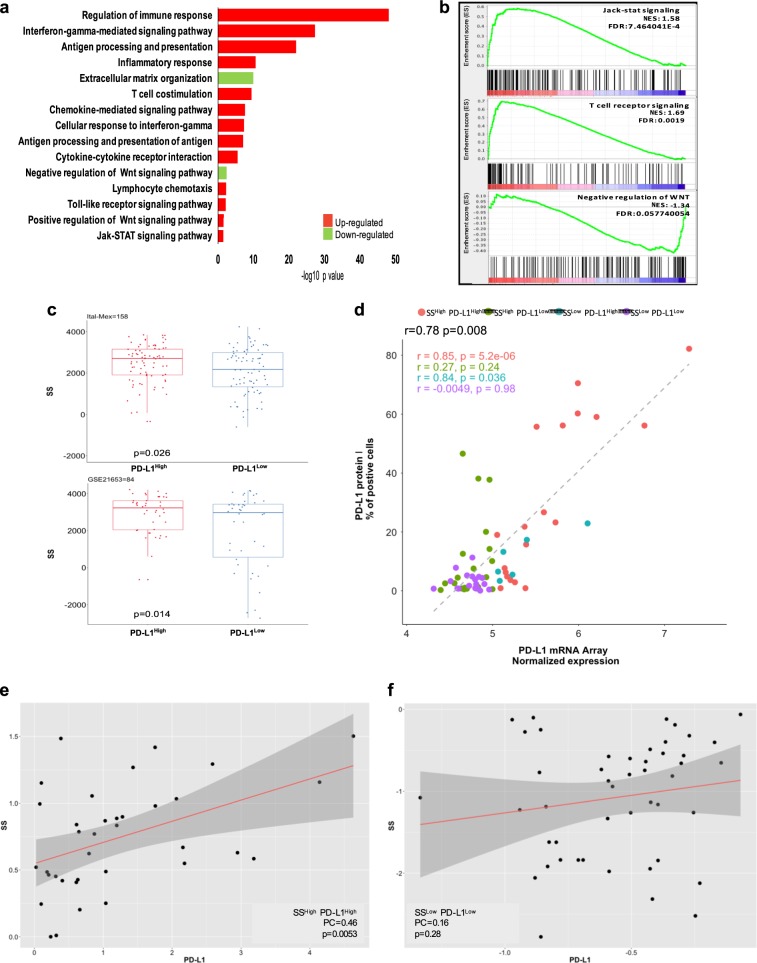
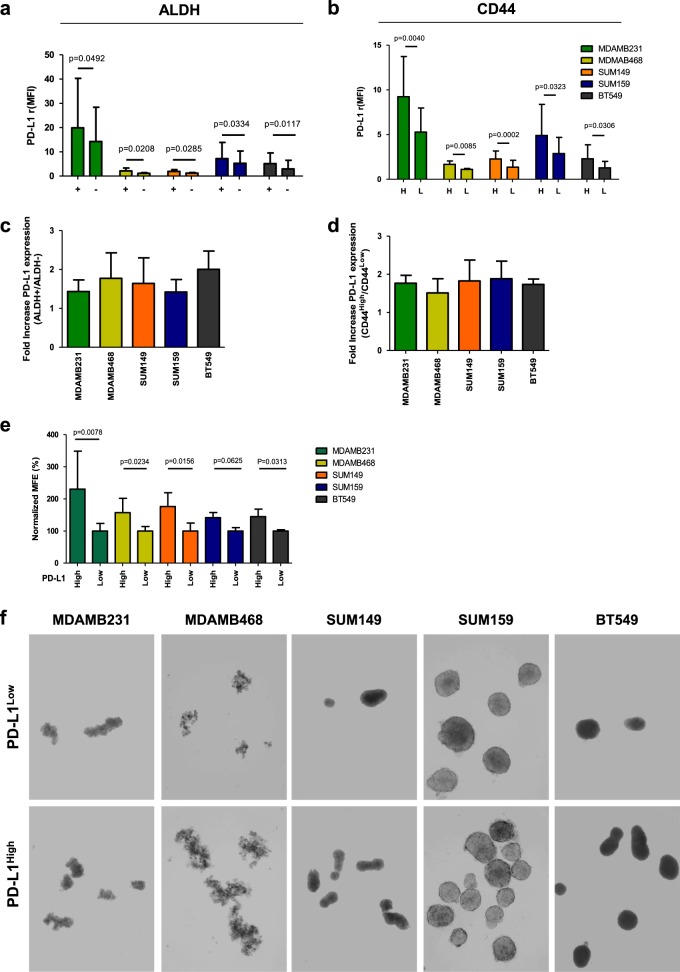
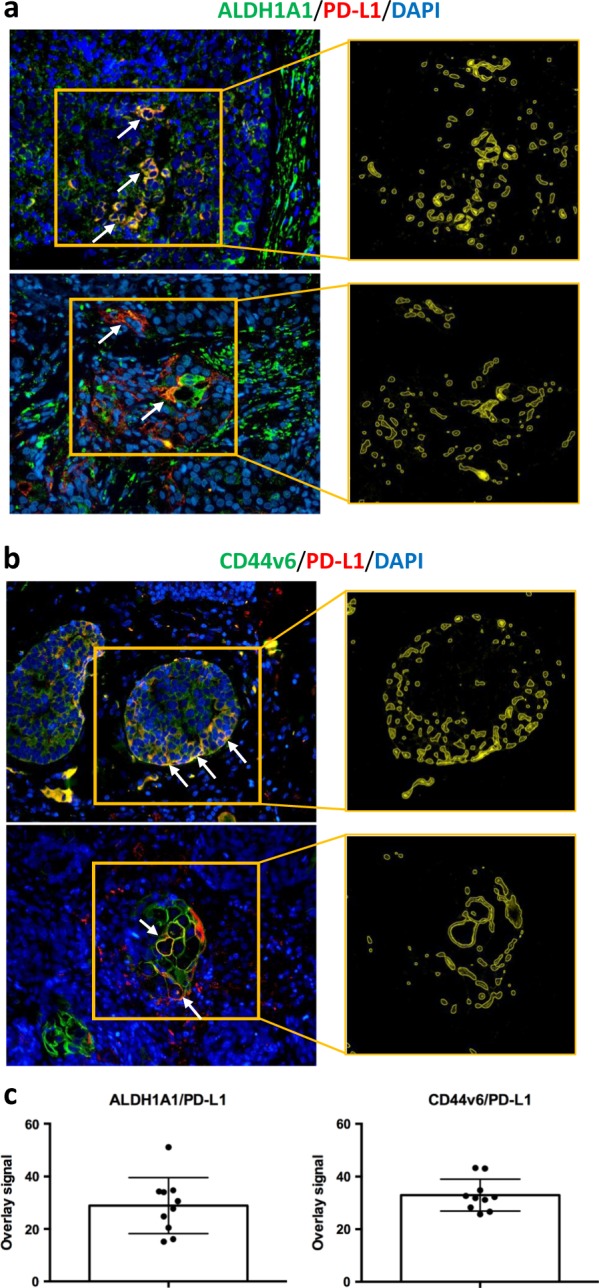
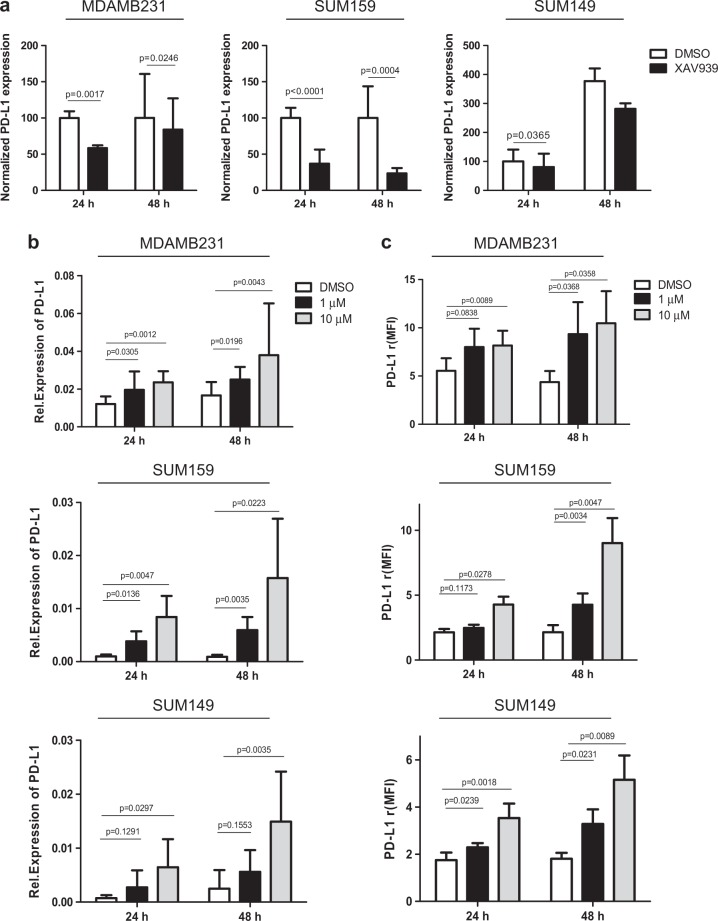
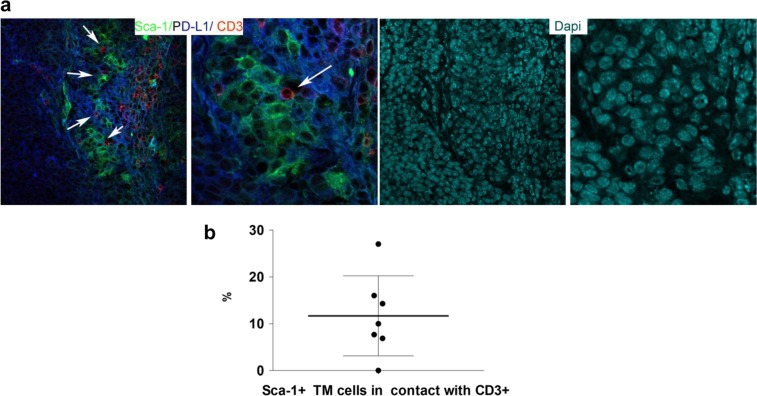
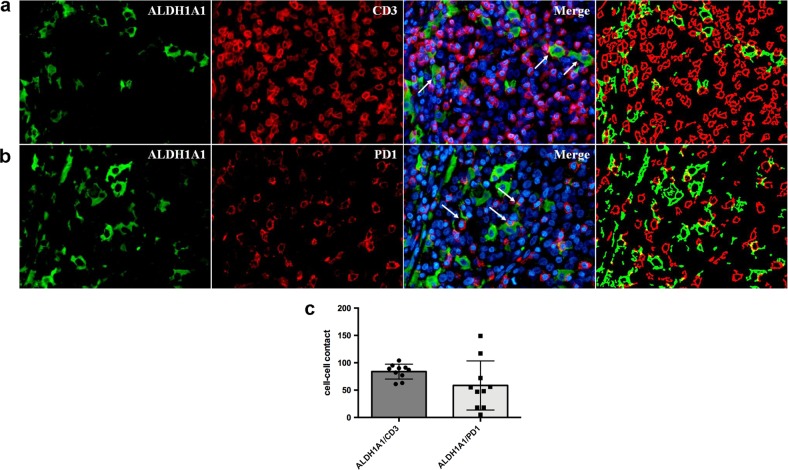
Triple-negative breast cancers (TNBCs) are characterized by a poor prognosis and lack of targeted treatments, and thus, new therapeutic strategies are urgently needed. Inhibitors against programmed death-1 (PD-1)/PD-1 ligand (PD-L1) have shown significant efficacy in various solid cancers, but their activity against TNBCs remains limited. Here, we report that human TNBCs molecularly stratified for high levels of PD-L1 (PD-L1 High ) showed significantly enriched expression of immune and cancer stemness pathways compared with those with low PD-L1 expression (PD-L1 Low ). In addition, the PD-L1 High cases were significantly associated with a high stemness score (SS High ) signature. TNBC cell lines gated for aldehyde dehydrogenase (ALDH) and CD44 stemness markers exhibited increased levels of PD-L1 versus their ALDH-negative and CD44 Low counterparts, and PD-L1 High cells generated significantly more mammospheres than PD-L1 Low cells. Murine mammary SCA-1-positive tumor cells with PD-L1 High expression generated tumors in vivo with higher efficacy than PD-L1 Low cells. Furthermore, treatment of TNBC cells with selective WNT inhibitors or activators downregulated or upregulated PD-L1 expression, respectively, implying a functional cross-talk between WNT activity and PD-L1 expression. Remarkably, human TNBC samples contained tumor elements co-expressing PD-L1 with ALDH1A1 and/or CD44v6. Additionally, both PD-L1-/SCA1-positive and ALDH1A1-positive tumor elements were found in close contact with CD3-, and PD-1-positive T cells in murine and human tumor samples. Overall, our study suggests that PD-L1-positive tumor elements with a stemness phenotype may participate in the complex dynamics of TNBC-related immune evasion, which might be targeted through WNT signaling inhibition.
Overview
The claims and statistics of this paper haven’t been checked yet.
Free: it reads the open-access text and checks the first 5 claims that cite a source we can check. Create a free account to check every claim.
Integrity signals
Registry
Cites
Statistics
Figures
Verification
Claims the paper makes
The claims and statistics of this paper haven’t been checked yet.
Free: it reads the open-access text and checks the first 5 claims that cite a source we can check. Create a free account to check every claim.
Claims other papers make about this one
Each is checked against this paper’s own text: does it say what the citing paper says it does?
The source backs part of the claim, not all of it — or backs it for a different population, condition or comparison.
In the citing paper
“Activating mutations in the Wnt/β-catenin pathway can also induce resistance to ICB through altering the expression of PD-L1 and PD-L2 in a broad group of tumors such as melanoma, breast cancer, adenoid cystic carcinoma, and medulloblastoma (Bockmayr et al., 2018; Castagnoli et al., 2019).”
From Hallmarks of response, resistance, and toxicity to immune checkpoint blockade (2021) · cites this paper as Castagnoli et al., 2019
Experimental — accuracy not yet measured
Self-check
Percentages, sums and reported differences re-computed from the paper’s own numbers.
The self-check needs the paper’s full text.
Citations
Cites
Hallmarks of Cancer: The Next Generation
Hanahan, D., & Weinberg, R. A. (2011) · Cell · doi:10.1016/j.cell.2011.02.013 · Cited by 66,590
Subramanian, A., Tamayo, P., Mootha, V. K., Mukherjee, S., Ebert, B. L., Gillette, M. A., Paulovich, A., Pomeroy, S. L., Golub, T. R., Lander, E. S., et al. (2005) · Proceedings of the National Academy of Sciences · doi:10.1073/pnas.0506580102 · Cited by 53,625 · cited 4×
“The bar plot shows the significant top enrichment scores (−log p value). b GSEA enrichment plots of Jak-stat signaling, T cell receptor signaling, and negative regulation of WNT gene sets in PD-L1High compared with PD-L1Low TNBC cases.”
ResultInfluentialGene Ontology: tool for the unification of biology
Ashburner, M., Ball, C. A., Blake, J. A., Botstein, D., Butler, H., Cherry, J. M., Davis, A. P., Dolinski, K., Dwight, S. S., Eppig, J. T., et al. (2000) · Nature Genetics · doi:10.1038/75556 · Cited by 43,206
Siegel, R. L., Miller, K. D., & Jemal, A. (2016) · CA: A Cancer Journal for Clinicians · doi:10.3322/caac.21332 · Cited by 16,003
The blockade of immune checkpoints in cancer immunotherapy
Pardoll, D. M. (2012) · Nature Reviews Cancer · doi:10.1038/nrc3239 · Cited by 13,838
Comprehensive molecular portraits of human breast tumours
The Cancer Genome Atlas Network (2012) · Nature · doi:10.1038/nature11412 · Cited by 12,129
Inferring tumour purity and stromal and immune cell admixture from expression data
Yoshihara, K., Shahmoradgoli, M., Martínez, E., Vegesna, R., Kim, H., Torres-Garcia, W., Treviño, V., Shen, H., Laird, P. W., Levine, D. A., et al. (2013) · Nature Communications · doi:10.1038/ncomms3612 · Cited by 9,778
Charoentong, P., Finotello, F., Angelova, M., Mayer, C., Efremova, M., Rieder, D., Hackl, H., & Trajanoski, Z. (2017) · Cell Reports · doi:10.1016/j.celrep.2016.12.019 · Cited by 5,041
Zou, W., Wolchok, J. D., & Chen, L. (2016) · Science Translational Medicine · doi:10.1126/scitranslmed.aad7118 · Cited by 2,400
Phenotypic and molecular characterization of the claudin-low intrinsic subtype of breast cancer
Prat, A., Parker, J. S., Karginova, O., Fan, C., Livasy, C., Herschkowitz, J. I., He, X., & Perou, C. M. (2010) · Breast Cancer Research · doi:10.1186/bcr2635 · Cited by 2,167
Cited by
Items 101–200 of 201
PD-1/PD-L1 pathway: Current research in breast cancer
Syamsu, S. A., Faruk, M., Smaradania, N., Sampepajung, E., Pranoto, A. S., Irsandy, F., & Tammasse, I. F. U. (2024) · Breast Disease · doi:10.3233/bd-249006 · Cited by 23
“The functional interaction between WNT activity and PD-L1 expression allows triple-negative breast cancer to be treated with specific WNT inhibitors or activators to reduce or boost PD-L1 expression, respectively [33].”
BackgroundPaul, S., Das, K., Ghosh, A., Chatterjee, A., Bhoumick, A., Basu, A., & Sen, P. (2023) · Journal of Thrombosis and Haemostasis · doi:10.1016/j.jtha.2023.08.008 · Cited by 22
Hu, X., Zhao, M., Bai, M., Xue, Z., Wang, F., Zhu, Z., Yu, J., & Yue, J. (2024) · Cancer Letters · doi:10.1016/j.canlet.2024.216676 · Cited by 22
Epigenetic control of immunoevasion in cancer stem cells
Galassi, C., Esteller, M., Vitale, I., & Galluzzi, L. (2024) · Trends in cancer · doi:10.1016/j.trecan.2024.08.004 · Cited by 22
Gong, K., Gong, Z., Lu, P., Ni, X., Shen, S., Liu, H., Wang, J., Zhang, D., Liu, H.-B., & Suo, T. (2019) · Biochemical and Biophysical Research Communications · doi:10.1016/j.bbrc.2019.06.121 · Cited by 21
Mediratta, K., El‐Sahli, S., Marotel, M., Awan, M. Z., Kirkby, M., Salkini, A., Kurdieh, R., Abdisalam, S., Shrestha, A., Censo, C. D., et al. (2024) · Frontiers in Immunology · doi:10.3389/fimmu.2024.1366197 · Cited by 20
Spiliopoulou, P., Vornicova, O., Genta, S., & Spreafico, A. (2023) · International Journal of Molecular Sciences · doi:10.3390/ijms24021294 · Cited by 20
Li, L., Wang, L., Wang, T.-L., & Zheng, F.-M. (2023) · Medical Oncology · doi:10.1007/s12032-023-01978-y · Cited by 20
“3C), WNT/β-catenin (Fig.”
BackgroundThe Role of Tumor Microenvironment in Triple-Negative Breast Cancer and Its Therapeutic Targeting
Vuletić, A. M., Martinović, K. M., & Jurišić, V. (2025) · Cells · doi:10.3390/cells14171353 · Cited by 20
Lower RNA expression of ALDH1A1 distinguishes the favorable risk group in acute myeloid leukemia
Dancik, G. M., Voutsas, I. F., & Vlahopoulos, S. (2022) · Molecular Biology Reports · doi:10.1007/s11033-021-07073-7 · Cited by 19
“However, in other cancers ALDH1A1 expression was linked to the expression of PDL1, a molecule that suppresses T-lymphocyte mediated immunity [108]; [109].”
BackgroundLiu, T., Liu, B., Liu, Y., Feng, X., Jiang, X., Long, J., Gao, Q., & Yang, Z. (2021) · Cancer Cell International · doi:10.1186/s12935-021-01991-z · Cited by 19
“Moreover, inhibiting the Wnt signaling pathway, the expression level of PD-L1 could be decreased in triplenegative breast cancer [49].”
BackgroundMezi, S., Botticelli, A., Pomati, G., Cerbelli, B., Scagnoli, S., Amirhassankhani, S., d’Amati, G., & Marchetti, P. (2021) · Cancers · doi:10.3390/cancers13051080 · Cited by 18
“Activation of Wnt pathway upregulates PD-L1 expression in human TNBC stem cells [41].”
BackgroundBai, R., Wu, D., Shi, Z., Hu, W., Li, J., Chen, Y., Ge, W., Yuan, Y., & Zheng, S. (2021) · Chinese Journal of Cancer Research · doi:10.21147/j.issn.1000-9604.2021.01.10 · Cited by 18
Breaking Immunosuppression to Enhance Cancer Stem Cell-Targeted Immunotherapy
Zheng, F., Zhang, S., Chang, A. E., Moon, J. J., Wicha, M. S., Wang, S. X., Chen, J., Liu, J., Cheng, F., & Li, Q. (2025) · International Journal of Biological Sciences · doi:10.7150/ijbs.101025 · Cited by 17
“In breast cancer, Wnt signaling pathway regulates co-expressing PD-L1 with CD44v6 and ALDH1A1, and promotes the expression of CD200 and CD276, which facilitates the immune escape [42].”
Satapathy, S. R., Ghatak, S., & Sjölander, A. (2023) · Cell Communication and Signaling · doi:10.1186/s12964-023-01157-6 · Cited by 17
“In models of triple-negative breast cancer, it was shown that high PD-L1 expression was associated with stemness owing to activated Wnt signaling [43].”
BackgroundPan, B., Ke, X., Qiu, J., Ye, D., Zhang, Z., Zhang, X., Luo, Y., Yao, Y., Wu, X., Wang, X., et al. (2024) · Cellular Signalling · doi:10.1016/j.cellsig.2024.111039 · Cited by 16
High-Dimensional Single-Cell Transcriptomics in Melanoma and Cancer Immunotherapy
Quek, C. Y. J., Bai, X., Long, G. V., Scolyer, R. A., & Wilmott, J. S. (2021) · Genes · doi:10.3390/genes12101629 · Cited by 16
Modulation of Lymphocyte Functions in the Microenvironment by Tumor Oncogenic Pathways
Seliger, B., & Massa, C. (2022) · Frontiers in Immunology · doi:10.3389/fimmu.2022.883639 · Cited by 16
“For example, it influences the tumor metabolism by inducing the Warburg effect (72) and upregulates the ICPs CTLA-4 (73) and PD-L1, either directly (74, 75) or indirectly via its target myc (76).”
BackgroundGu, W., Wang, N., Gu, W., Qiu, Y., Zhang, H., Liang, J., Zhou, T., Ma, L., Cai, W., Feng, W., et al. (2020) · Translational Lung Cancer Research · doi:10.21037/tlcr-20-457 · Cited by 15
“Some reports have also shown that the WNT pathway modulated PD-L1 expression in triple-negative breast cancer and melanoma (26,27).”
BackgroundZhou, A. L., Wang, X., Yu, W., Yang, L., Wei, F., Sun, Q., Wang, Y., Kou, F., Dong, R., Ren, X., et al. (2020) · Pathology - Research and Practice · doi:10.1016/j.prp.2020.153093 · Cited by 15
Sami, E., Bogan, D. R., Molinolo, A., Koziol, J., & ElShamy, W. M. (2021) · Cancer Gene Therapy · doi:10.1038/s41417-021-00311-x · Cited by 14
Large-Scale Analysis Reveals the Specific Clinical and Immune Features of DGCR5 in Glioma
Wu, X., Hou, P., Qiu, Y., Wang, Q., & Lu, X. (2020) · OncoTargets and Therapy · doi:10.2147/ott.s257050 · Cited by 14
Mendoza, M. S., Romero‐Garcia, S., Lemini, C., & Prado-García, H. (2021) · Journal of Immunology Research · doi:10.1155/2021/6668573 · Cited by 14
“In addition to STAT3, there are many transcription factors and miRNAs that have been closely related with the switch to EMT in breast cancer.”
BackgroundInfluentialBanerjee, M., & Rajeswari, V. D. (2022) · Critical Reviews in Oncology/Hematology · doi:10.1016/j.critrevonc.2022.103901 · Cited by 14
Pathways in small cell lung cancer and its therapeutic perspectives
Shivapriya, P. M., Singh, A. K., Pandey, P., Chhabra, N., Sahoo, A. K., Paital, B., Varadwaj, P. K., & Samanta, S. K. (2021) · Frontiers in Bioscience-Landmark · doi:10.52586/5059 · Cited by 13
Nazari, H., Cho, A., Goss, D. M., Thiery, J. P., & Warkiani, M. E. (2024) · Lab on a Chip · doi:10.1039/d4lc00296b · Cited by 12
Targeting Wnt signaling in cancer drug resistance: Insights from pre-clinical and clinical research
Hushmandi, K., Alimohammadi, M., Heiat, M., Hashemi, M., Nabavi, N., Tabari, T., Raei, M., Aref, A. R., Farahani, N., Daneshi, S., et al. (2025) · Pathology - Research and Practice · doi:10.1016/j.prp.2025.155837 · Cited by 12
Targeting oncogenic signal pathway to improve cancer immunotherapy: Insights and perspectives
Yang, Q., Sun, H., & Sun, Z. (2025) · Biochemical Pharmacology · doi:10.1016/j.bcp.2025.117043 · Cited by 12
Mao, S., Zhang, X., Zhao, Y., Li, X., Wang, Z., Zhou, P., Wang, Z., Zhang, X., Hu, X., Huang, G., et al. (2025) · Journal of Translational Medicine · doi:10.1186/s12967-025-07333-1 · Cited by 12
“Furthermore, β-catenin knockout leads to reduced PD-L1 expression in tumor cells, thereby enhancing CD8 ⁺ T cell infiltration and activation within the TME [78–82].”
Sukowati, C. H. C., El-Khobar, K. E., & Tiribelli, C. (2021) · World Journal of Stem Cells · doi:10.4252/wjsc.v13.i7.795 · Cited by 12
Malinowska, K., Kowalski, A., Merecz-Sadowska, A., Paprocka-Zjawiona, M., Sitarek, P., Kowalczyk, T., & Zielińska‐Bliźniewska, H. (2023) · Journal of Clinical Medicine · doi:10.3390/jcm12052033 · Cited by 11
“Other studies revealed the presence of WNT activity and PD-L1 expression crosstalk [47,48].”
BackgroundSokolov, P. M., Nifontova, G., Samokhvalov, P. S., Karaulov, A. V., Sukhanova, A. V., & Nabiev, I. R. (2023) · Pharmaceutics · doi:10.3390/pharmaceutics15030946 · Cited by 11
“The regulatory mechanisms of PD-L1 expression are complex and diverse and include both various processes in cancer cells and interactions between tumor and immune cells, such as the WNT signaling pathway [71] and suppression of the PD-L1 expression when ER is inhibited [72].”
BackgroundLučić, I., Kurtović, M., Mlinarić, M., Piteša, N., Gašparović, A. Č., Sabol, M., & Milković, L. (2023) · International Journal of Molecular Sciences · doi:10.3390/ijms241310683 · Cited by 11
Acetylation increases expression, interaction with TRAPPC4 and surface localization of PD-L1
Romeo, M. A., Montani, M. S. G., Santarelli, R., Benedetti, R., Arena, A., & Cirone, M. (2023) · Discover Oncology · doi:10.1007/s12672-023-00766-4 · Cited by 11
Immunotherapeutic Strategies Targeting Breast Cancer Stem Cells
Vasileiou, M., Diamantoudis, S. C., Tsianava, C., & Nguyen, N. P. (2024) · Current Oncology · doi:10.3390/curroncol31060232 · Cited by 11
“There have been findings that indicate a positive correlation between PD-L1 expression and stemness of the tumor, through markers such as ALDH1A1 and OCT3/4, thus enhancing stemness along with metastatic potential and ability to evade immune responses [50,51].”
BackgroundMechanisms and strategies to overcome immunotherapy resistance in hepatobiliary malignancies
Xiong, J., & Wang, Q. (2022) · Hepatobiliary & pancreatic diseases international · doi:10.1016/j.hbpd.2022.07.006 · Cited by 11
Ubiquilin-4 induces immune escape in gastric cancer by activating the notch signaling pathway
Jiang, Q., Chen, H., Zhou, S., Zhu, T., Liu, W., Wu, H., Zhang, Y., Liu, F., & Sun, Y. (2023) · Cellular Oncology · doi:10.1007/s13402-023-00869-8 · Cited by 10
Haist, M., Kaufmann, J., Kur, I.-M., Zimmer, S., Grabbe, S., Schmidberger, H., Weigert, A., & Mayer, A. (2023) · Frontiers in Immunology · doi:10.3389/fimmu.2023.1070203 · Cited by 10
Wang, T., Zhang, Y., He, Y., Liu, Y., & Qi, P. (2021) · BioMed Research International · doi:10.1155/2021/5575286 · Cited by 10
“found that WNT signaling regulated the expression of PD-L1 in the TNBC stem cell compartment [44].”
BackgroundDu, S., Li, P., Liu, Y., Cai, B., Li, G., Wang, W., Yan, R., Zheng, X., & Bai, T. (2025) · Molecular and Cellular Biochemistry · doi:10.1007/s11010-025-05322-y · Cited by 9
You, W., Ma, F., Zhang, Z., & Yan, J. (2022) · Pharmaceutics · doi:10.3390/pharmaceutics14061306 · Cited by 9
Sun, M., Zhu, H., Yang, Y. P., Yao, Y., Li, H., Feng, F., Wáng, Q., Liu, R., & Sun, C. (2025) · International Journal of Oncology · doi:10.3892/ijo.2025.5742 · Cited by 9
Orlistat facilitates immunotherapy via AKT-FOXO3a-FOXM1-mediated PD-L1 suppression
Tang, Q., Li, J., Zhang, L., Zeng, S., Bao, Q., Hu, W., He, L., Huang, G., Wang, L., Liu, Y., et al. (2025) · Journal for ImmunoTherapy of Cancer · doi:10.1136/jitc-2024-008923 · Cited by 9
Are Cancer Stem Cells a Suitable Target for Breast Cancer Immunotherapy?
Ruiu, R., Lorenzo, A. D., Cavallo, F., & Conti, L. (2022) · Frontiers in Oncology · doi:10.3389/fonc.2022.877384 · Cited by 9
“Indeed, BCSCs express high levels of Programmed deathligand (PD-L)1 and sometimes PD-L2 (32, 33), which, besides inhibiting NK and effector T-cell function by binding to PD1, also directly promote stemness by inducing the AKT-dependent expression of NANOG, Octamer-binding transcription factor (OCT)-4A and B lymphoma M…”
BackgroundBao, J., Wang, Y., Li, C., Yang, C., Xu, H., Liang, Q., Zhou, Y., Zhang, L.-Y., He, Y., Tong, H., et al. (2022) · Materials Today Nano · doi:10.1016/j.mtnano.2022.100211 · Cited by 9
Identification of chemical compounds regulating PD‐L1 by introducing HiBiT‐tagged cells
Uchida, Y., Matsushima, T., Kurimoto, R., Chiba, T., Inutani, Y., & Asahara, H. (2021) · FEBS Letters · doi:10.1002/1873-3468.14032 · Cited by 9
Alif, I., Utomo, R. Y., Ahlina, F. N., Nugraheni, N., Hermansyah, D., Putra, A. B., & Meiyanto, E. (2021) · Journal of Applied Pharmaceutical Science · doi:10.7324/japs.2021.1101107 · Cited by 9
“Various types of cancer cells, such as breast cancer, express PD-L1, while T-specific antigen cells express the complementary PD-1 receptor (Castagnoli et al., 2019).”
BackgroundWang, R., Huang, F., Wei, W., Zhou, Y., Ye, Z., Yu, L., Hu, J., & Cai, C. (2021) · Frontiers in Cell and Developmental Biology · doi:10.3389/fcell.2021.772669 · Cited by 9
“In triple-negative breast cancer, Wnt signaling can upregulate PD-L1 expression and significantly enrich the signal related to immunity and cancer stemness (Castagnoli et al., 2019).”
BackgroundImmune checkpoint inhibition in breast cancer: targeting PD-1/PD-L1 pathway for therapeutic advances
Shin, Y., Shin, K., Lee, S., Son, Y., & Rhee, I. (2025) · Breast Cancer · doi:10.1007/s12282-025-01793-5 · Cited by 8
“Inhibition of the Wnt pathway leads to a marked decrease in PD-L1 expression, suggesting that targeting Wnt signaling may enhance the effectiveness of PD-1/PD-L1 inhibitors [56].”
Jiang, C., Tuo, Z., Wusiman, D., Wang, J., Yao, H., Cho, W. C., Lyu, Z., Zhang, Q., & Feng, D. (2026) · International Journal of Biological Sciences · doi:10.7150/ijbs.130683 · Cited by 8
“Specifically, radiotherapy-induced senescence can significantly alter the tumor microenvironment, thereby influencing tumor progression, immune response, treatment resistance, and potential metastatic processes [11, 12].”
He, A., Tian, S., Kopper, O., Horan, D. J., Chen, P., Bronson, R. T., Sheng, R., Wu, H., Sui, L., Zhou, K., et al. (2023) · PLoS Biology · doi:10.1371/journal.pbio.3002353 · Cited by 8
Chaouat, A. E., Kalechman, Y., Ophir, H., Manoim, J. E., Tal, L., Niderberg, E., Hauschner, H., Sredni, D., Cohen, T., Schlesinger, A., et al. (2024) · International Journal of Biological Sciences · doi:10.7150/ijbs.95350 · Cited by 8
Ji-liang, F., Zhao, D., Lv, F., & Yuan, Z. (2022) · Cancer Control · doi:10.1177/10732748221078160 · Cited by 8
DLL1-responsive PD-L1 + tumor-associated macrophages promote endocrine resistance in breast cancer
Singh, S., Weindorfer, C., Nandi, A., Selvam, C. P., Götze, M. M., Das, M., Falaschini, A., Tjendra, Y., Boone, M., Dolznig, H., et al. (2025) · Science Translational Medicine · doi:10.1126/scitranslmed.adr6207 · Cited by 7
Balcioglu, H. E., Wijers, R., Smid, M., Hammerl, D., Trapman-Jansen, A., Oostvogels, A. A. M., Timmermans, M. A. M., Martens, J. W. M., & Debets, R. (2024) · npj Imaging · doi:10.1038/s44303-024-00022-6 · Cited by 7
Impact of MiRNAs on Wnt-related gene activity in breast cancer
Sirek, T., Sirek, A., Zmarzły, N., Opławski, M., Król-Jatręga, K., Boroń, D., Chalcarz, M., Ossowski, P., Dziobek, K., Strojny, D., et al. (2025) · Scientific Reports · doi:10.1038/s41598-025-00343-5 · Cited by 7
Hong, Y., Xia, Z., Sun, Y., Lan, Y., Di, T., Yang, J., Sun, J. P., Qiu, M., Luo, Q., & Yang, D. (2023) · Genes · doi:10.3390/genes14040889 · Cited by 7
“a reduced immune cells infiltration, which may mediate tumor immune evasion [25,50].”
BackgroundSun, S., Zhao, P., Wang, C., Du, J., Zhang, T., He, X., Zhibo, Z., Li, N., & Zhou, R. (2026) · Frontiers in Cell and Developmental Biology · doi:10.3389/fcell.2025.1668583 · Cited by 5
Sun, H., Song, X., Li, C., Li, Q., Liu, S., & Deng, N. (2023) · IUBMB Life · doi:10.1002/iub.2766 · Cited by 5
“STAT,(27) MAPK,(51) NF-κB,(52) and WNT signaling pathway.(53) Studies have shown that STAT3 not only regulates the expression of PD-L1, but also participates in the regulation of the EMT pathway in HCC.”
Kundu, S., & Suresh, P. K. (2025) · Current Molecular Medicine · doi:10.2174/0115665240387430250508080548 · Cited by 4
Synergistic Combinations for Improved Therapeutic Outcomes in Triple Negative Breast Cancer
Jha, A., Venkatesh, S. K. S., Singh, A., & Lakkaniga, N. R. (2026) · Cell Biology International · doi:10.1002/cbin.70157 · Cited by 4
“Sorted PD‐L1ʰⁱ ᵍ ʰ TNBC cells yield significantly more mammospheres and display superior tumour‐initiating capacity in vivo than PD‐L1ˡ ᵒ ʷ counterparts, underscoring PD‐L1 as a functional down-stream effector of Wnt‐driven stemness (Castagnoli et al. 2019).”
Chao, T., Satriyo, P. B., Yeh, C., Chen, J.-H., Aryandono, T., & Haryana, S. M. (2020) · Journal of Cancer Research and Practice · doi:10.4103/jcrp.jcrp_13_20 · Cited by 4
Deepika, G., Reddy, G., Brahmaiah, V., Kavitha, B., Nethagani, J., Palaparthi, E., & Lebaka, R. (2023) · Archives of Medicine and Health Sciences · doi:10.4103/2321-4848.379062 · Cited by 4
Zhang, Q., Fu, C., Liu, S., Leng, Y., Duan, L., Wang, N., Zhang, L., & Qiao, H. (2025) · PLoS ONE · doi:10.1371/journal.pone.0330722 · Cited by 3
Koh, S. A. (2026) · Journal of Yeungnam Medical Science · doi:10.12701/jyms.2026.43.17 · Cited by 3
Immunostimulatory lipogel implant enhances cancer immunotherapy
Zhang, Y., Wang, E., Li, S., Yao, Y., Shao, Q., Wang, Y., He, Y., Liu, M., Jin, X., Gu, Z., et al. (2026) · Nature Nanotechnology · doi:10.1038/s41565-026-02194-1 · Cited by 3
“The immunoresistant CSCs evade immune recognition and eradication by downregulating antigen processing and presentation components 23 or by overexpressing inhibitory check-point molecules 24–26 .”
Zhao, A., Yang, J., Ran, R., Zhao, S., Cui, Y., Hu, F., & Zhou, Y. (2024) · Translational Oncology · doi:10.1016/j.tranon.2024.101960 · Cited by 3
“There have also been studies reported that PD-L1 was enriched in the tissues of ALDH1A1 expressing TNBC patients, which established the relationship of ALDH1A1 with tumor immunology [34].”
ResultRoles of cancer stem cells in cancer immune surveillance
Truong, N. C., Huynh, N. T., Kmuong-Duy, P. H. A. M., & Pham, P. V. (2023) · Minerva Biotechnology and Biomolecular Research · doi:10.23736/s2724-542x.23.02944-9 · Cited by 1
Zhao, B., & Tang, X. (2025) · Frontiers in Genetics · doi:10.3389/fgene.2025.1604541 · Cited by 1
He, Q., Yang, S., Xin, Q., Jiang, Y., Jiang, L., & Xu, N. (2025) · Current Issues in Molecular Biology · doi:10.3390/cimb47120974 · Cited by 1
“BCSCs frequently depend on hyperactivated signaling pathways such as Wnt/ β - catenin for self-renewal and survival [32–34].”
Xue, J., Jian, W.-Z., Jiang, Z. M., Wang, T. F., Yang, Q.-R., Yao, Q.-Y., Bao, T.-Y., Cai, L., Gan, E.-Z., Liu, C., et al. (2026) · Acta Pharmacologica Sinica · doi:10.1038/s41401-026-01792-y · Cited by 1
“…in TNBC, as demonstrated by signi fi cantly higher PD-L1 levels in CSCs enriched from the MDA-MB-231, BT549, and 4T1 cell lines in suspension culture, which aligns with the fi ndings of a previous study showing that TNBC cells positive for either CD44 or ALDH exhibit higher PD-L1 expression [28].”
Non-coding RNAs Related to Cardiometabolic Diseases and Associated to Cancer
Holvoet, P. (2021) · Springer eBooks · doi:10.1007/978-3-030-68844-8_7 · Cited by 1
He, A., Xiang, D., Kopper, O., Horan, D. J., Chen, P., Bronson, R. T., Sheng, R., Wu, H., Sui, L., Zhou, K., et al. (2020) · Research Square · doi:10.21203/rs.3.rs-58989/v1 · Cited by 1
“Lastly, Wnt 384 signaling has been shown to contribute to immune invasion as well as systemic inflammation in 385 the tumor microenvironment that drives cancer metastasis (42-45).”
BackgroundDevelopment of WNT inhibitors as novel anti-cancer drugs
SHAW, H. V. (2020) · IRIS · Cited by 1
Carleton, N. M. (2024) · D-Scholarship@Pitt (University of Pittsburgh) · Cited by 1
Novel PD-L1 mAb HC16 reveals upregulation of PD-L1 in BAC subtype.
Su, B., Ting, C.-H., Lee, K. Y., Wu, S., Feng, P. H., Chan, Y.-F., & Chen, J. (2021) · Histology and histopathology · doi:10.14670/hh-18-272
Wu, G., Luo, Y., Xie, Y., Han, Y., Zhang, D., Han, Q., Zhao, X., Ye, Q., Li, Q., Wang, E., et al. (2020) · Research Square · doi:10.21203/rs.3.rs-74120/v1
“4 expression in triple-negative breast cancer is regulated by Wnt signaling [10].”
BackgroundQian, C., & McGonigle, P. (2019) · iDEA - Drexel University Institutional Repository · doi:10.17918/bjyq-y674
Liu, C., Qiang, J., Deng, Q., Xia, J. L., Deng, L., Zhou, L., Wang, D., He, X., Liu, Y., Zhao, B., et al. (2023) · doi:10.1158/0008-5472.c.6513462.v1
Liu, T., Liu, B., Liu, Y., Feng, X., Jiang, X., Long, J., Gao, Q., & Yang, Z. (2021) · Figshare · doi:10.6084/m9.figshare.14707777
Liu, T., Liu, B., Liu, Y., Feng, X., Jiang, X., Long, J., Gao, Q., & Yang, Z. (2021) · Figshare · doi:10.6084/m9.figshare.14707786
Liu, T., Liu, B., Liu, Y., Feng, X., Jiang, X., Long, J., Gao, Q., & Yang, Z. (2021) · Figshare · doi:10.6084/m9.figshare.14707780
Salmonella: A bacterial warrior in cancer immunotherapy
Kong, W., Fu, L., & Shi, Y. (2024) · Elsevier eBooks · doi:10.1016/b978-0-443-13827-0.00012-3
Huang, J. Z., Lei, J., Xiao, B., Kang, W., Sui, Z., Deng, Y., Jia, R., Huang, C., & Cai, S. (2025) · Respiratory Research · doi:10.1186/s12931-025-03429-w
“A prior study reported that activating mutations in the Wnt pathway influenced the ICB response by altering the expression of PD-L1 and PD-L2 in cancers [52].”
Satapathy, S. R., Ghatak, S., & Sjölander, A. (2023) · Figshare · doi:10.6084/m9.figshare.23520159
Τριπλά αρνητικός καρκίνος μαστού: μοριακές υπογραφές και νέες θεραπείες
Πουλτσίδη, Α. Α. (2023) · University of Thessaly Institutional Repository (University of Thessaly) · doi:10.26253/heal.uth.38087
liu, T., Liu, B., Liu, Y., Feng, X., Jiang, X., Long, J., Gao, Q., & Yang, Z. (2021) · Figshare · doi:10.6084/m9.figshare.14707783
Elfoly, M., Alaiya, A. A., Al-Hazzani, A. A., Al-Alwan, M. M., & Ghebeh, H. (2026) · International Journal of Molecular Sciences · doi:10.3390/ijms27062741
“Our previous work, along with others, identified PD-L1’s intrinsic role in promoting BC cell stemness and self-renewal via the PI3K/AKT pathway [6,7].”
Xue, J., Jian, W., Wang, T., Jiang, Z.-G., Hou, X., Yang, Q., Bao, T., Cai, L., Gan, E., Liu, C., et al. (2026) · CPT Pharmacometrics & Systems Pharmacology · doi:10.1002/psp4.70245
Nanomaterial-based strategies overcome PD-1 related intrinsic immune resistance
Lin, Y., & Shen, J. (2026) · Cancer Drug Resistance · doi:10.20517/cdr.2025.207
Li, Q., Yang, X. L., Wei, L., Wang, X., Wang, X., Chen, J., Zhao, L., & Wen, S. (2026) · Frontiers in Immunology · doi:10.3389/fimmu.2026.1834127
Zeng, Q., Ye, Y., Wu, K., Wang, K., Zhou, X., Zhou, W., Zhao, S., Zhang, T., & Chen, T. (2026) · Genes & Diseases · doi:10.1016/j.gendis.2026.102260
Serrano-García, L., Martínez-Salvador, E., Belda-Marco, A., Herrero-Oliva, C., Cortés, J., Llombart‐Cussac, A., & Fernández-Murga, M. L. (2026) · Gut Microbes · doi:10.1080/19490976.2026.2697600
A miniaturized-tumor culture platform for developing anti-tumor immunotherapies
Feng, Y., Li, L., Lei, J. H., Peng, Y., Wang, L., Sun, H., Tang, D., Guo, X., Chu, X., Qiao, Y., et al. (2026) · Theranostics · doi:10.7150/thno.132113
Mediratta, K., Mocăniță, M., Popatia, A. M., O’Dwyer, C., Kirkby, M., Moga, S., Han, P., Humber, J., Hu, H., Abdisalam, S., et al. (2026) · Scientific Reports · doi:10.1038/s41598-026-69314-8
Pratiwi, S., Arfianti, A., Suyanto, S., & Fidiawati, W. A. (2026) · Asian Pacific Journal of Cancer Biology · doi:10.31557/apjcb.2026.11.4.1181
“In breast cancer and other cancer types, the Wnt signaling pathway regulates the co-expression of PD-L1 with CD44 and ALDH1A1, while simultaneously increasing the expression of CD200 and CD276, all of which contribute to immune escape [35].”
Li, N., Li, Y., Zheng, P., & Zhan, X. (2021) · doi:10.3389/fendo.2021.755805.s001
Haist, M., Kaufmann, J., Kur, I.-M., Zimmer, S., Grabbe, S., Schmidberger, H., Weigert, A., & Mayer, A. (2023) · doi:10.3389/fimmu.2023.1070203.s001
Metadata
- Authors
- Castagnoli, L., Cancila, V., Cordoba-Romero, S. L., Faraci, S., Talarico, G., Belmonte, B., Iorio, M. V., Milani, M., Volpari, T., Chiodoni, C., Hidalgo-Miranda, A., Tagliabue, E., Tripodo, C., Sangaletti, S., Di Nicola, M., & Pupa, S. M.
- Affiliations
- Fondazione IRCCS Istituto Nazionale dei Tumori (IT)
- University of Palermo (IT)
- Corresponding author
- Pupa, Serenella M.
- ORCID
- Venue
- Oncogene
- Published
- 2019-01-31
- Volume
- 38
- Issue
- 21
- Pages
- 4047-4060
- ISSN
- 0950-9232 (ISSN-L)
- 1476-5594
- PMC
- PMC6755989
- OpenAlex
- W2911745810
- Cited by
- 184
- References
- 50
- Citations by year
- 2026: 11 · 2025: 15 · 2024: 19 · 2023: 24 · 2022: 23 · 2021: 41 · 2020: 31 · 2019: 20
- FWCI
- 12.31
- Type
- journal article
- Language
- en
- Open access
- hybrid
- doi.org
- Licence
- cc-by
- creativecommons.org/licenses/by/4.0 (tdm)
- Locations
- Oncogene (publishedVersion, cc-by)
- PubMed Central (publishedVersion, cc-by)
- PubMed (publishedVersion)
- Archivio Istituzionale della Ricerca (Universita Degli Studi Di Milano) (submittedVersion, other-oa)
- Nova Science Publishers (Nova Science Publishers, Inc.) (submittedVersion, other-oa)
- Funders
- Associazione Italiana per la Ricerca sul Cancro (16918)
- Topics
- Health Sciences › Medicine › Oncology › Cancer Immunotherapy and Biomarkers
- Health Sciences › Medicine › Oncology › Cancer Cells and Metastasis
- Life Sciences › Biochemistry, Genetics and Molecular Biology › Cancer Research › Breast Cancer Treatment Studies
- Keywords
- triple-negative breast cancer, PD-L1 expression, Wnt signaling, cancer stem cells, tumor immune evasion, aldehyde dehydrogenase, CD44, mammospheres, Sca-1, PD-1/PD-L1 inhibitors, stemness signature, tumor-infiltrating T cells
- MeSH terms
- Aldehyde Dehydrogenase, Animals, Female, Humans, Mice, Inbred BALB C, Stem Cells, Biomarkers, Tumor, Down-Regulation, Up-Regulation, Hyaluronan Receptors, Cell Line, Tumor, Wnt Signaling Pathway, B7-H1 Antigen, Triple Negative Breast Neoplasms
About these checks
Registry, retraction, Cites and statistics results are computed, not judged, with one exception: a printed reference that no index lists is read once by a model before it counts as a citation error. Claims are extracted by a model and kept only when their quote appears verbatim in the text; each cited source is then checked, with a model’s help, for whether it says what the claim relies on. Those verdicts can be wrong — read the claim’s quote and the cited source before relying on one.
Statistics and arithmetic are recomputed, not judged.
Confidence bands are shown only for fields calibrated on our annotated test set. None is calibrated yet, so no band is shown.
What counts as a claim ›How we measure confidence ›How we check this ›
Are you an author, or do you see a problem with this page? Request a review
Data sources
Bibliographic data: Semantic Scholar, OpenAlex, Crossref.
Contains information from the Semantic Scholar Academic Graph Datasets, made available under the ODC Attribution License (ODC-BY 1.0).
Semantic Scholar’s data is described in: Kinney, R., et al. (2023). The Semantic Scholar Open Data Platform. arXiv:2301.10140.
