

ISCA2 inhibition decreases HIF and induces ferroptosis in clear cell renal carcinoma
Open accessPublished version of a preprint
The DOI matches its Crossref record; 80 of the 81 references it cites were found in a registry or an index.
Abstract
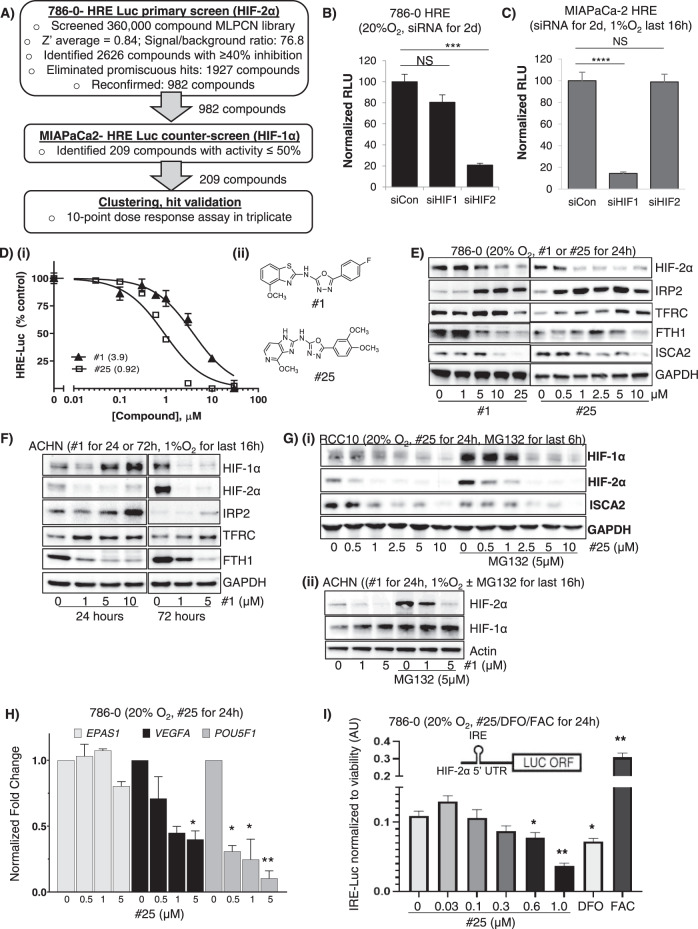
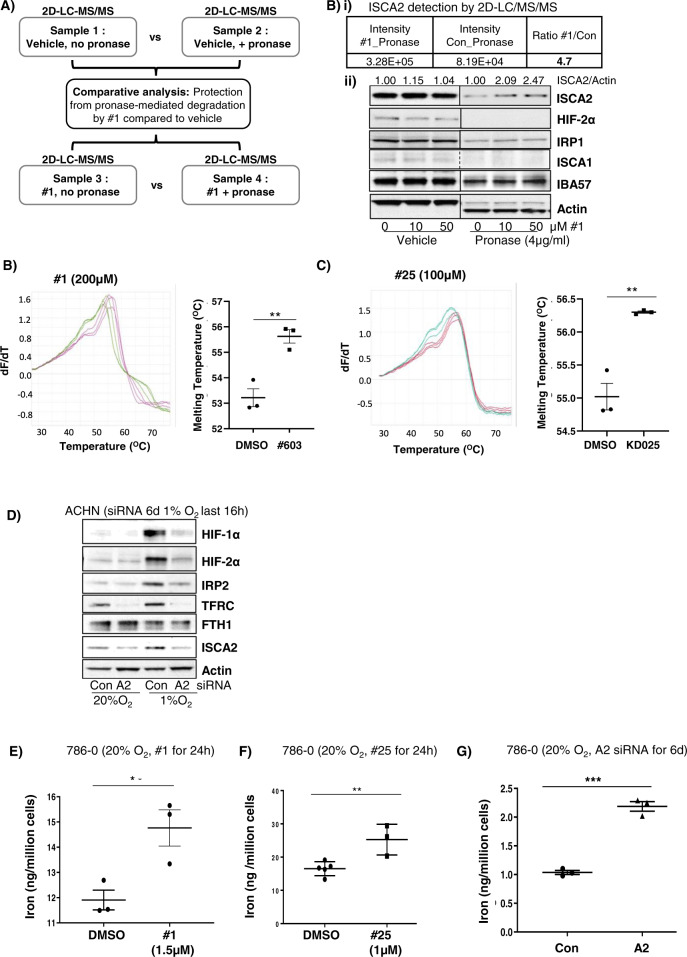
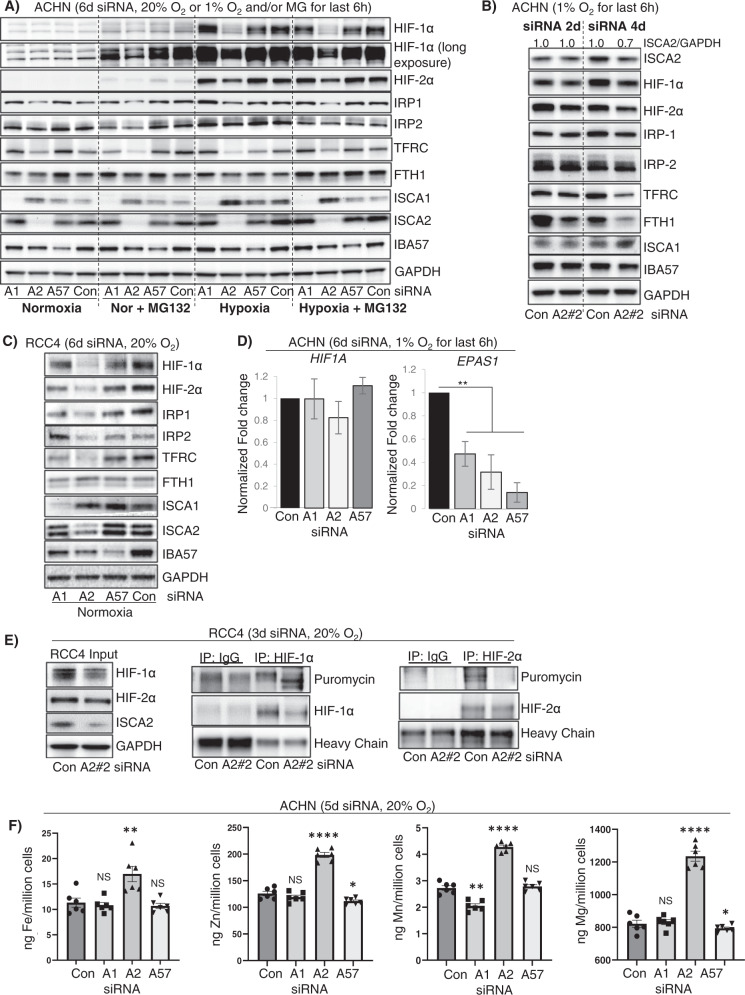
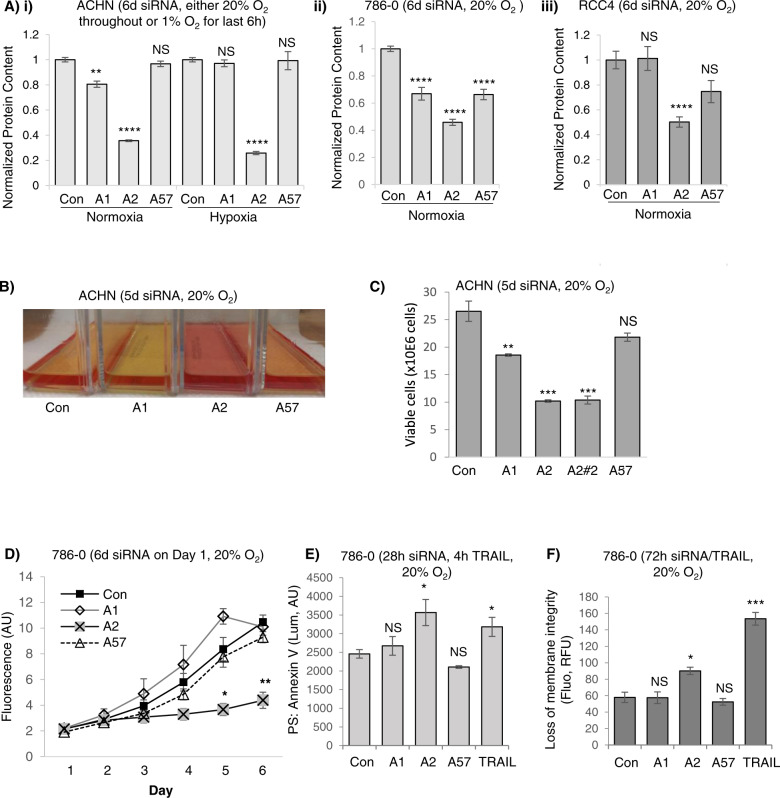
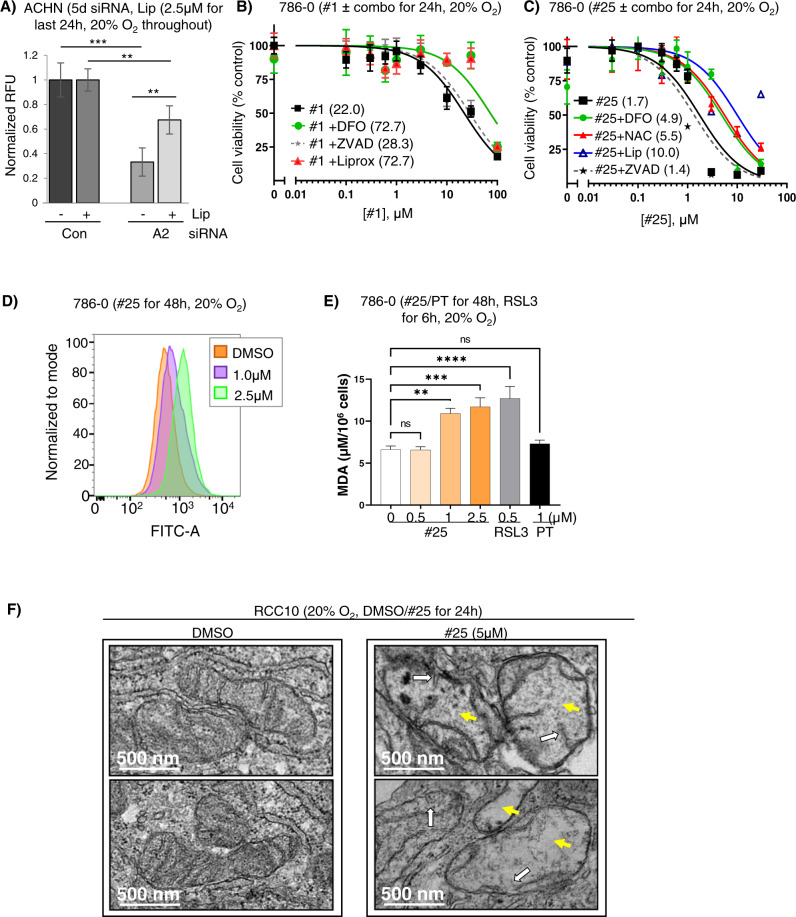
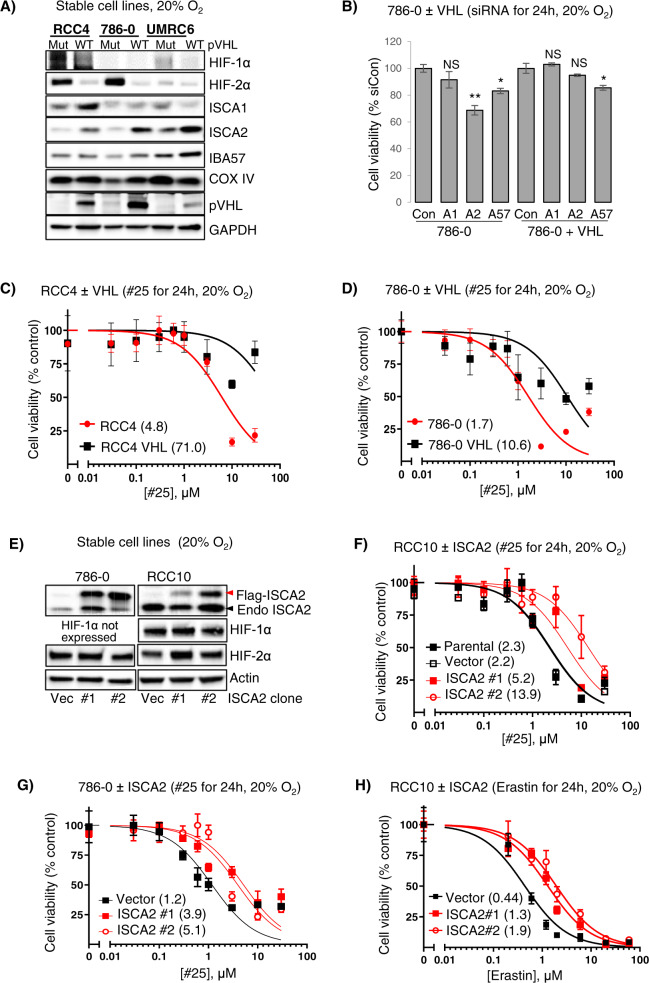
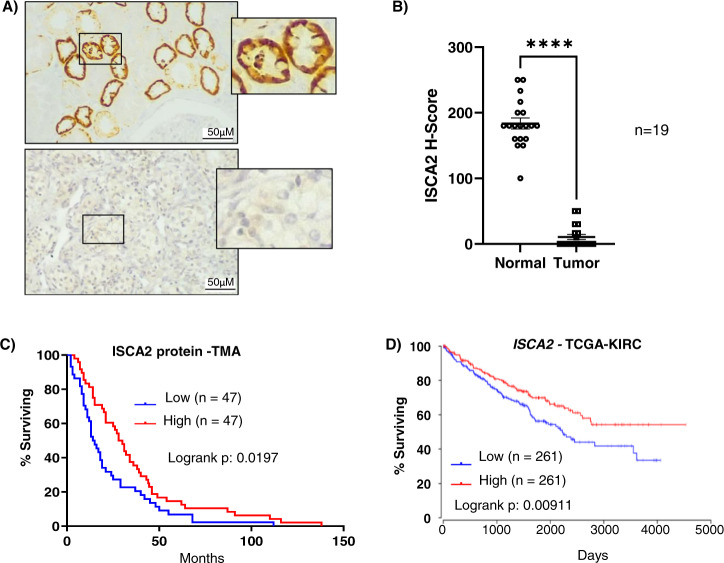
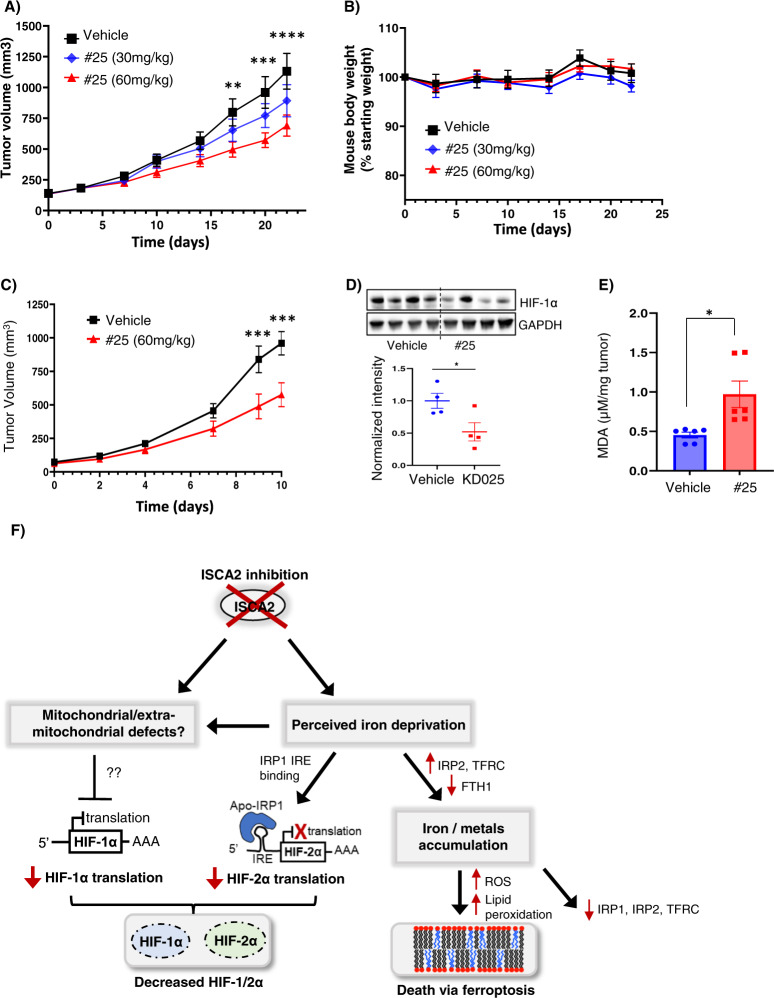
Clear cell renal cell carcinoma (ccRCC), the most common form of kidney cancer, is typically initiated by inactivation of the von Hippel Lindau ( VHL) gene, which results in the constitutive activation of the hypoxia inducible factors, HIF-1α and HIF-2α. Using a high throughput screen, we identify novel compounds that decrease HIF-1/2α levels and induce ferroptosis by targeting Iron Sulfur Cluster Assembly 2 (ISCA2), a component of the late mitochondrial Iron Sulfur Cluster (L-ISC) assembly complex. ISCA2 inhibition either pharmacologically or using siRNA decreases HIF-2α protein levels by blocking iron-responsive element (IRE)-dependent translation, and at higher concentrations, also decreases HIF-1α translation through unknown mechanisms. Additionally, ISCA2 inhibition triggers the iron starvation response, resulting in iron/metals overload and death via ferroptosis. ISCA2 levels are decreased in ccRCC compared to normal kidney, and decreased ISCA2 levels are associated with pVHL loss and with sensitivity to ferroptosis induced by ISCA2 inhibition. Strikingly, pharmacological inhibition of ISCA2 using an orally available ISCA2 inhibitor significantly reduced ccRCC xenograft growth in vivo, decreased HIF-α levels and increased lipid peroxidation, suggesting increased ferroptosis in vivo. Thus, the targeting of ISCA2 may be a promising therapeutic strategy to inhibit HIF-1/2α and to induce ferroptosis in pVHL deficient cells.
Overview
The claims and statistics of this paper haven’t been checked yet.
Free: it reads the open-access text and checks the first 5 claims that cite a source we can check. Create a free account to check every claim.
Integrity signals
Registry
Cites
Statistics
Figures
Verification
Claims the paper makes
The claims and statistics of this paper haven’t been checked yet.
Free: it reads the open-access text and checks the first 5 claims that cite a source we can check. Create a free account to check every claim.
Claims other papers make about this one
Each is checked against this paper’s own text: does it say what the citing paper says it does?
The cited source says what the claim attributes to it.
In the citing paper
“The unique regulation of HIF-2α by IRP1 provides a novel opportunity for its selective targeting independently of pVHL [24].”
From The HIF Axes in Cancer - Angiogenesis, Metabolism and Immune-Modulation (2025) · cites this paper as [24]
The cited source says what the claim attributes to it.
In the citing paper
“Consequently, agents that target HIFs have typically targeting them indirectly and non-specifically, including by inhibiting other targets that impact HIF synthesis, stability or transcriptional activity [95], or by interfering with cellular iron metabolism, which blocks HIF translation and induces ferroptosis, a form of cell death associated with iron-dependent lipid peroxidation [24].”
From The HIF Axes in Cancer - Angiogenesis, Metabolism and Immune-Modulation (2025) · cites this paper as [24]
Self-check
Percentages, sums and reported differences re-computed from the paper’s own numbers.
The self-check needs the paper’s full text.
Citations
Cites
Ferroptosis: An Iron-Dependent Form of Nonapoptotic Cell Death
Dixon, S. J., Lemberg, K. M., Lamprecht, M. R., Skouta, R., Zaitsev, E. M., Gleason, C. E., Patel, D. N., Bauer, A. J., Cantley, A. M., Yang, W. S., et al. (2012) · Cell · doi:10.1016/j.cell.2012.03.042 · Cited by 18,691 · cited 1×
“Ferroptosis is a form of necrotic cell death associated with iron-dependent oxidation of phospholipid membranes, which causes defects within the plasma and mitochondrial membranes resulting in cell death [36, 37].”
BackgroundRegulation of Ferroptotic Cancer Cell Death by GPX4
Yang, W. S., SriRamaratnam, R., Welsch, M. E., Shimada, K., Skouta, R., Viswanathan, V. S., Cheah, J. H., Clemons, P. A., Shamji, A. F., Clish, C. B., et al. (2014) · Cell · doi:10.1016/j.cell.2013.12.010 · Cited by 7,713
Wang, G. L., Jiang, B. H., Rue, E. A., & Semenza, G. L. (1995) · Proceedings of the National Academy of Sciences · doi:10.1073/pnas.92.12.5510 · Cited by 6,212
Targeting hypoxia in cancer therapy
Wilson, W. R., & Hay, M. P. (2011) · Nature Reviews Cancer · doi:10.1038/nrc3064 · Cited by 3,172 · cited 1×
“The HIF heterodimers bind to conserved hypoxia response elements (HREs) within regulatory regions of target genes to activate transcription of hundreds of genes critical for the adaptation to hypoxia, and for tumor progression, such as those promoting aerobic glycolysis, angiogenesis, and metastasis [6, 7].”
BackgroundBroadening horizons: the role of ferroptosis in cancer
Chen, X., Kang, R., Kroemer, G., & Tang, D. (2021) · Nature Reviews Clinical Oncology · doi:10.1038/s41571-020-00462-0 · Cited by 2,897 · cited 1×
“Ferroptosis induction has attracted substantial attention as a therapeutic strategy in oncology since cancer cells that are resistant to conventional therapies or have a high propensity to metastasize are particularly susceptible to ferroptosis [68].”
BackgroundFerroptosis, a new form of cell death: opportunities and challenges in cancer
Mou, Y., Wang, J., Wu, J., He, D., Zhang, C., Duan, C., & Li, B. (2019) · Journal of Hematology & Oncology · doi:10.1186/s13045-019-0720-y · Cited by 1,930 · cited 1×
“Ferroptosis is a form of necrotic cell death associated with iron-dependent oxidation of phospholipid membranes, which causes defects within the plasma and mitochondrial membranes resulting in cell death [36, 37].”
BackgroundMutations of the VHL tumour suppressor gene in renal carcinoma
Gnarra, J. R., Tory, K., Weng, Y., Schmidt, L., Wei, M. H., Li, H., Latif, F., Liu, S., Chen, F., Duh, F.-M., et al. (1994) · Nature Genetics · doi:10.1038/ng0594-85 · Cited by 1,730
SUnSET, a nonradioactive method to monitor protein synthesis
Schmidt, E. K., Clavarino, G., Ceppi, M., & Pierre, P. (2009) · Nature Methods · doi:10.1038/nmeth.1314 · Cited by 1,706 · cited 1×
“The decrease in HIF-2α translation was confirmed by decreased puromycin incorporation into immunoprecipitated HIF-2α in hypoxic ACHN cells treated with #1 using the SUnSET assay (S1D) [41].”
MethodOhh, M., Park, C. W., Ivan, M., Hoffman, M. A., Kim, T.-Y., Huang, L. E., Pavletich, N., Chau, V., & Kaelin, W. G. (2000) · Nature Cell Biology · doi:10.1038/35017054 · Cited by 1,577
Differential Roles of Hypoxia-Inducible Factor 1α (HIF-1α) and HIF-2α in Hypoxic Gene Regulation
Hu, C.-J., Wang, L.-Y., Chodosh, L. A., Keith, B., & Simon, M. C. (2003) · Molecular and Cellular Biology · doi:10.1128/mcb.23.24.9361-9374.2003 · Cited by 1,386
Cited by
Hypoxia, oxidative stress, and the interplay of HIFs and NRF2 signaling in cancer
Bae, T., Hallis, S. P., & Kwak, M.-K. (2024) · Experimental & Molecular Medicine · doi:10.1038/s12276-024-01180-8 · Cited by 354
“The pharmacological or siRNA-mediated inhibition of iron-sulfur cluster assembly 2 in mitochondria decreases HIF-1 α and HIF-2 α levels, resulting in subsequent iron overaccumulation and ferroptosis-mediated cell death in clear cell renal cell carcinoma 173 .”
BackgroundFerroptosis: when metabolism meets cell death
Zheng, J., & Conrad, M. (2025) · Physiological Reviews · doi:10.1152/physrev.00031.2024 · Cited by 246
Broadening horizons: the multifaceted functions of ferroptosis in kidney diseases
Feng, Q., Yang, Y., Ren, K., Qiao, Y., Sun, Z., Pan, S., Liu, F., Liu, Y., Huo, J., Liu, D., et al. (2023) · International Journal of Biological Sciences · doi:10.7150/ijbs.85674 · Cited by 98
“Therefore, targeting ISCA2 is a potential strategy to induce ferroptosis in ccRCC[79].”
BackgroundFerroptosis Regulated by Hypoxia in Cells
Zheng, X., Liang, Y., & Zhang, C. (2023) · Cells · doi:10.3390/cells12071050 · Cited by 83
“A recent study on clear cell renal cell carcinoma showed that the iron sulfur cluster assembly 2 (ISCA2), a component of the late mitochondrial iron sulfur cluster assembly complex, was induced by hypoxia (1% O2) to promote HIF-1α/HIF2α translation, leading to the inhibition of iron overload and erastin- or RSL3-induc…”
BackgroundFerroptosis: Promising approach for cancer and cancer immunotherapy
Zheng, S., & Guan, X. (2023) · Cancer Letters · doi:10.1016/j.canlet.2023.216152 · Cited by 76
The HIF Axes in Cancer - Angiogenesis, Metabolism and Immune-Modulation
Acuña-Pilarte, K., & Koh, M. Y. (2025) · Trends in Biochemical Sciences · doi:10.1016/j.tibs.2025.06.005 · Cited by 64
Self-citationWang, D., Zhang, H., Liao, X., Li, J., Zeng, J., Wang, Y., Zhang, M., Ma, X., Wang, X., Ren, F., et al. (2024) · Journal of Nanobiotechnology · doi:10.1186/s12951-024-02663-6 · Cited by 56
“However, HIF-1α and HIF-2α have been reported to inhibit ferroptosis in tumor and normal cells [14–18].”
BackgroundFerroptosis in Cancer and Inflammatory Diseases: Mechanisms and Therapeutic Implications
Shen, G., Liu, J., Wang, Y., Deng, Z., & Deng, F. (2025) · MedComm · doi:10.1002/mco2.70349 · Cited by 58
Liu, X., Shi, M.-Z., Bai, Y., Su, X., Liu, Y., Wu, J., & Chen, L. (2024) · Cellular Signalling · doi:10.1016/j.cellsig.2024.111328 · Cited by 55
Self-citationChen, J., Chen, P., Song, Y., Wei, J., Wu, F., Sun, J., & Xu, Z. (2024) · Journal of Biosciences · doi:10.1007/s12038-023-00381-z · Cited by 40
“…diseases, respiratory diseases, cardiovascular diseases, reproductive diseases, and tumors has been reported, whereas reports of the role of ferroptosis in renal disease have focused on acute kidney injury, renal failure, and renal tumors (Mu¨ller et al. 2017; Li et al. 2020; Green et al. 2022).”
Targeting Iron-Sulfur Clusters in Cancer: Opportunities and Challenges for Ferroptosis-Based Therapy
Lee, J., & Roh, J. (2023) · Cancers · doi:10.3390/cancers15102694 · Cited by 34
“Other ISC assembly pharmaceutical inhibitors, eprenetapopt or compound #25, reduce ISC biogenesis, restrict cancer cell proliferation, and trigger ferroptosis by inhibiting NFS1 or ISCA2 [68,78].”
BackgroundInfluentialChen, J., Chen, S., & Chen, G. (2023) · Cancer Drug Resistance · doi:10.20517/cdr.2023.78 · Cited by 33
Targeting ferroptosis in renal cell carcinoma: Potential mechanisms and novel therapeutics
Yang, L., Fan, Y., & Zhang, Q. (2023) · Heliyon · doi:10.1016/j.heliyon.2023.e18504 · Cited by 32
Xue, Z., Xie, H., Shan, Y., Zhang, L., Cheng, L., Chen, W., Zhu, R., Zhang, K., Ni, H., Zhang, Z., et al. (2024) · Cancer Science · doi:10.1111/cas.16249 · Cited by 33
Ferroptosis-associated genes and compounds in renal cell carcinoma
He, C., Li, Q., Wu, W., Liu, K., Li, X., Zheng, H., & Lai, Y. (2024) · Frontiers in Immunology · doi:10.3389/fimmu.2024.1473203 · Cited by 31
“The inhibition of ISCA2 (a component of the late mitochondrial iron-sulfur cluster assembly complex) reduces the HIF-2 a protein level and triggers an iron starvation response, leading to iron/metal overload and contributing to ferroptosis, which is more signi fi cant in VHL-defective cells (82).”
BackgroundThe potential of targeting cuproptosis in the treatment of kidney renal clear cell carcinoma
Lei, G., Tang, L., Yu, Y., Bian, W., Yu, L., Zhou, J., Li, Y., Wang, Y., & Du, J. (2023) · Biomedicine & Pharmacotherapy · doi:10.1016/j.biopha.2023.115522 · Cited by 29
Novel Insight into Ferroptosis in Kidney Diseases
Liu, Y., Liu, Y., Zhou, S., Feng, Q., Lu, Y., Liu, D., & Liu, Z. (2023) · American Journal of Nephrology · doi:10.1159/000530882 · Cited by 28
Miyahara, S., Ohuchi, M., Nomura, M., Hashimoto, E., Soga, T., Saito, R., Hayashi, K., Sato, T., Saito, M., Yamashita, Y., et al. (2024) · Journal of Biological Chemistry · doi:10.1016/j.jbc.2024.107678 · Cited by 25
Dylag, A. M., Misra, R. S., Bandyopadhyay, G. K., Poole, C., Huyck, H. L., Jehrio, M. G., Haak, J., Deutsch, G. H., Dvorak, C., Olson, H. M., et al. (2023) · American Journal of Physiology-Lung Cellular and Molecular Physiology · doi:10.1152/ajplung.00130.2023 · Cited by 23
“…lipid mediators of in fl ammation and immunity (58), ATG7 (autophagy related 7), which promotes autophagy (59), and ISCA2 (iron-sulfur cluster assembly 2 protein), which in fl uences ferroptosis through hypoxia-inducible factors (HIF) in other tissues (60) also trended up in patients with eBPD (Fig.”
BackgroundSi, Y., Ou, H., Jin, X., Gu, M., Sheng, S., Peng, W., Yang, D., Zhan, X., Zhang, L., Yu, Q., et al. (2024) · Free Radical Biology and Medicine · doi:10.1016/j.freeradbiomed.2024.06.021 · Cited by 22
Self-citationMTF1 attenuates ferroptosis and cuproptosis synergistic potentiation in gastric cancer
Luan, M., Zhu, W., Feng, Z., Jing, F., Xing, Y., Ma, X., Wang, Y., Ning, B., & Jia, Y. (2025) · Cell Death and Differentiation · doi:10.1038/s41418-025-01641-1 · Cited by 19
“ISCA2 de fi ciency has also been shown to trigger the iron starvation response, resulting in increased IRP2 and TFRC and decreased FTH1, ultimately inducing ferroptosis [40].”
Jia, H., Liu, S., Wang, W., He, P., Zhao, F., & Xu, X. (2025) · Toxicology · doi:10.1016/j.tox.2025.154197 · Cited by 18
Li, Y., Miao, Y., Feng, Q., Zhu, W., Chen, Y., Kang, Q., Wang, Z., Lu, F., & Zhang, Q. (2024) · Frontiers in Endocrinology · doi:10.3389/fendo.2024.1401531 · Cited by 18
Zheng, X., Zhang, C., Zheng, D., Guo, Q., Mijiti, M., Xue, L., Zeng, X., Wu, Y., & Gao, W. (2023) · Frontiers in Genetics · doi:10.3389/fgene.2022.1084206 · Cited by 18
PPT1 Promotes Growth and Inhibits Ferroptosis of Oral Squamous Cell Carcinoma Cells
Luo, Q., Hu, S., Tang, Y., Yang, D., & Chen, Q. (2024) · Current Cancer Drug Targets · doi:10.2174/0115680096294098240123104657 · Cited by 17
Mechanisms of ferroptosis and targeted therapeutic approaches in urological malignancies
Ma, W., Jiang, X., Jia, R., & Li, Y. (2024) · Cell Death Discovery · doi:10.1038/s41420-024-02195-w · Cited by 15
Song, Z., Zhang, Y., Luo, W., Sun, C., Lv, C., Wang, S., He, Q., Xu, R., Bai, Z., Chang, X., et al. (2024) · Current Cancer Drug Targets · doi:10.2174/0115680096279597240219055135 · Cited by 15
Li, D., Zhang, Z., & Wang, L. (2024) · Biomedicine & Pharmacotherapy · doi:10.1016/j.biopha.2024.117406 · Cited by 13
Ferroptosis in Renal Cancer Therapy: A Narrative Review of Drug Candidates
Yu, L., Qiu, Y., & Tong, X. (2024) · Cancers · doi:10.3390/cancers16183131 · Cited by 13
“Compared to normal renal cells, cancer cells exhibit higher sensitivity to ferroptosis [40].”
BackgroundZhang, J., Deng, Y., Zhang, H., Zhang, Z., Jin, X., Xuan, Y., Zhang, Z., & Ma, X. (2023) · International Journal of Molecular Sciences · doi:10.3390/ijms24109092 · Cited by 13
“This suggests that increased HIF1a activity in ccRCC may be associated with ISCA2 inhibition, beyond just VHL loss [32].”
BackgroundLiu, X., Han, Z., Huang, Y. M., Li, M., Tian, J., Zhao, S., Li, Y., Lin, J., & Li, H. (2024) · Journal of Neurorestoratology · doi:10.1016/j.jnrt.2024.100171 · Cited by 11
Self-citationXu, K., Li, D., Ji, K., Zhang, Y., Zhang, M., Zhou, H., Hou, X., Jiang, J. D., Zhang, Z., Dai, H., et al. (2024) · Biology Direct · doi:10.1186/s13062-024-00517-7 · Cited by 10
“Targeted inhibition of ISCA2 reduces HIF-1/2α levels, increases lipid peroxidation, induces iron death and inhibits tumor growth in KIRC [36].”
BackgroundZong, H., Li, A., Huang, Y., Che, X., Zhang, Y., Ma, G., & Zhou, Z. (2023) · Journal of Biochemical and Molecular Toxicology · doi:10.1002/jbt.23464 · Cited by 9
pan, B., Kang, J.-L., Zheng, R., Wei, C., & Zhi, Y. (2024) · Pathology - Research and Practice · doi:10.1016/j.prp.2024.155324 · Cited by 9
Ferroptosis in renal cell carcinoma: integrative multi-omics insights and therapeutic perspectives
Wang, X., Li, J., Zhang, Y., Huang, R., Zhang, P., & Hu, H. (2025) · International Journal of Surgery · doi:10.1097/js9.0000000000004583 · Cited by 8
“Inhibition of the iron-sulphur scaffold ISCA2 produces the opposite effect, raising labile iron, lowering HIF translation, and driving VHL-deficient tumors into ferroptosis [ 71 ] .”
Modulation of the cytoskeleton for cancer therapy
Matov, A. (2026) · Frontiers in Cell and Developmental Biology · doi:10.3389/fcell.2025.1681065 · Cited by 8
HIF2α, Hepcidin and their crosstalk as tumour-promoting signalling
Formica, V., Riondino, S., Morelli, C., Guerriero, S., D’Amore, F., Grazia, A. D., Blanco, G. D. V., Sica, G. S., Arkenau, H., Monteleone, G., et al. (2023) · British Journal of Cancer · doi:10.1038/s41416-023-02266-2 · Cited by 8
“It has also been documented that the therapeutic effect of HIF2α inhibition partly depends on intracellular iron availability since compounds that deplete HIF2α in ccRCC eventually induce apoptosis by means of iron-dependent phospholipid peroxidation, a programmed cell death called ‘ferroptosis' [70].”
BackgroundLyu, Z., Wang, H., Dai, F., Lin, Y., Wen, H., Liu, X., Feng, X., Xu, Z., & Huang, L. (2025) · Journal of Molecular Medicine · doi:10.1007/s00109-025-02543-y · Cited by 7
Self-citationLi, X., Yang, X., Xue, W., Yang, R., He, Z., Ai, L., & Liu, H. (2023) · Frontiers in Oncology · doi:10.3389/fonc.2023.1119763 · Cited by 7
“When the normoxia-hypoxia transition occurs, cells predominantly rely on HIF signaling, and they adjust to the hypoxic environment by turning on HIF signaling (16).”
BackgroundLong non-coding RNA HOTAIR: A biomarker and therapeutic target in urological tumors
Abida, A., Eltaib, L., Alhazmi, B. H., Alzahrani, A. R., Asdaq, S. M. B., Ali, A., Aldhafiri, F. J., Alruwaili, W. T., Al‐Hajeili, M., Abdulkhaliq, A. A., et al. (2024) · Pathology - Research and Practice · doi:10.1016/j.prp.2024.155549 · Cited by 7
Zhao, H., Ji, Y., & Liang, C. (2025) · CytoJournal · doi:10.25259/cytojournal_35_2025 · Cited by 6
“[21] As a novel type of cell death, ferroptosis holds great application prospect in the treatment of ccRCC. Solute carrier family 6 member 3 (SLC6A3) is a dopamine transport protein predominantly expressed in dopaminergic neurons of the central nervous system.”
Regulatory networks of iron sulfur cluster biology in cancer mechanisms and therapeutic perspectives
Yao, S., Guan, H., Jun, C., & Liu, X. (2026) · iScience · doi:10.1016/j.isci.2026.115256 · Cited by 6
Self-citationWen, X., Shen, J., Lin, H., Lin, D., Chen, M., Sechi, L. A., Miglio, M. R. D., & Zeng, D. (2025) · Discover Oncology · doi:10.1007/s12672-025-01994-6 · Cited by 5
“Our research indicates a new avenue of using risk models to differentiate prognosis outcomes among individuals, offering valuable insights for future directions in personalized medicine.”
Tan, C., Wang, Y., Zhang, X., Li, Z., & Chen, S. (2025) · PeerJ · doi:10.7717/peerj.20224 · Cited by 4
The role of ferroptosis in renal cell carcinoma: molecular mechanisms and therapeutic implications
Wang, Z., Kong, D., & Wei, W. (2026) · Journal of Molecular Medicine · doi:10.1007/s00109-025-02635-9 · Cited by 4
Wang, S., Jiang, B., Xie, D., Li, X., & Wu, G. (2023) · Frontiers in Genetics · doi:10.3389/fgene.2023.1133020 · Cited by 3
Chen, L., Zhang, H.-J., & Xiao, Q.-A. (2025) · Translational Vision Science & Technology · doi:10.1167/tvst.14.6.37 · Cited by 2
Mechanism and importance of ferroptosis in clear cell renal cell carcinoma treatment
Neeraj, M. A., Noh, S., Chae, J., & Choi, J. (2025) · Experimental and Molecular Pathology · doi:10.1016/j.yexmp.2025.105004 · Cited by 2
Liu, Y., & Li, Y. (2026) · Frontiers in Pharmacology · doi:10.3389/fphar.2026.1694895 · Cited by 2
“Inhibition of ISCA2 can reduce HIF-α levels and also trigger ferroptosis through other signaling pathways (Green et al., 2022).”
Zhao, X., Wang, Q., Jin, J., & Xiang, R. (2026) · Life Sciences · doi:10.1016/j.lfs.2026.124442 · Cited by 3
Hashimoto, E., Ohuchi, M., Nomura, M., Miyahara, S., Hayashi, K., Saito, M., Yamashita, Y., Shimada, M., Yamada, H., & Tanuma, N. (2026) · Journal of Biological Chemistry · doi:10.1016/j.jbc.2026.113200 · Cited by 2
Li, D., Yang, Y., Zhang, J., Li, L., Liu, Y., Chen, S., & Gao, M. (2026) · Journal of Fungi · doi:10.3390/jof12080585 · Cited by 2
Cuproptosis in ccRCC: key player in therapeutic and prognostic targets
Lv, Y., Li, Q., Yin, L., He, S., Qin, C., Lü, Z., & Chen, H. (2023) · Frontiers in Oncology · doi:10.3389/fonc.2023.1271864 · Cited by 2
Tao, T., Gong, H. C., & Yang, B. (2025) · Chinese Journal of Integrative Medicine · doi:10.1007/s11655-025-4140-2 · Cited by 1
“Inhibition of ISCA2 decreases HIF stability and triggers ferroptosis in ccRCC, (71) while PDIA4 confers resistance to ferroptosis through the ATF4-SLC7A11 pathway.”
Li, X., Yan, J., Xu, Y., Ling, Z., Zhang, T., Shao, X., Xia, J., Tang, L., & Mou, S. (2026) · Frontiers in Pharmacology · doi:10.3389/fphar.2026.1777367 · Cited by 1
“In recent years, ferroptosis has been increasingly recognized as an important mechanism in a wide range of kidney diseases, including AKI, CKD, and renal cell carcinoma (Green et al., 2022; Wang et al., 2022; Zhang et al., 2023).”
Guo, Y., Wang, H., Yan, P., Zhang, Y., Hu, Y. Q., Zhao, Z., Liu, C., & Liu, Y. (2026) · Biochemical Pharmacology · doi:10.1016/j.bcp.2026.118285 · Cited by 1
Xu, K., Li, D., Zhang, M., Zhou, H., Hou, X., Jiang, J. D., Zhang, Z., Dai, H., & Sun, H. (2023) · Research Square · doi:10.21203/rs.3.rs-2870664/v1 · Cited by 1
Xu, K., Li, D., Liu, H., Qian, J., Ji, K., Zhang, Y., Zhang, M., Zhou, H., Hou, X., Jiang, J. D., et al. (2024) · Research Square · doi:10.21203/rs.3.rs-3915249/v1
Yang, J., Xing, Y., Luan, J., Yang, W., Zhang, X., Tian, Y., & Zhang, H. (2025) · Discover Oncology · doi:10.1007/s12672-025-01890-z
“In ccRCC, iron sulfur cluster assembly 2 (ISCA2) was found to inhibit HIF and to induce ferroptosis in pVHL deficient cells [14].”
Wang, D., Zhang, H., Liao, X., Li, J., Zeng, J., Wang, Y., Zhang, M., Ma, X., Wang, X., Ren, F., et al. (2024) · Figshare · doi:10.6084/m9.figshare.26759510
Zhang, L., Sun, J., Ma, Y., Yan, F., & Huang, Z. (2026) · Translational Oncology · doi:10.1016/j.tranon.2026.102782
“However, it also enhances expression transferrin receptor 1 (TFR1) to maintain intracellular iron homeostasis and support energy production and biosynthesis [15 – 17].”
Zhan, S., Li, Y., Guo, Z., Li, T., Xie, C., Yang, T., Luo, Z., & Yu, Y. (2026) · Scientific Reports · doi:10.1038/s41598-026-58577-w
Fueling Death: The Metabolic Control of Ferroptosis
Carrà, G., Scalera, A., Barbieri, I., Menga, A., & Porporato, P. E. (2026) · Advances in experimental medicine and biology · doi:10.1007/978-3-032-12166-0_16
Beyond angiogenesis: integrating ferroptosis and metabolic rewiring for next-generation RCC therapy
Chen, X., Peng, Y., & Tian, Y. (2026) · Frontiers in Oncology · doi:10.3389/fonc.2026.1800566
“For instance, the inhibition of speci fi c Fe-S cluster assembly proteins, such as ISCA2, has been shown to decrease HIF levels and sensitize ccRCC cells to ferroptosis (73).”
Synthesis and Biological Evaluation of a Novel Pyridine-based Derivative as a Cytotoxic Agent
Khramchikhin, A. V., Skryl’nikova, M. A., Mikolaichuk, O. V., Самойлович, М. П., Molchanov, O., & Maystrenko, D. N. (2026) · Organic Preparations and Procedures International · doi:10.1080/00304948.2026.2711221
VHL/CDO1 axis regulates chondrocyte ferroptosis and knee osteoarthritis progression
Zhang, R., Zhang, W., Ou, S., Xu, C., Qi, Y., & Yang, Y. (2026) · Archives of Biochemistry and Biophysics · doi:10.1016/j.abb.2026.110980
Sun, L., Zhao, X., Li, X., Zhu, Z., & Wu, G. (2026) · International Journal of Nanomedicine · doi:10.2147/ijn.s590442
“116,117 These studies expand the mechanistic background beyond the GSH/GPX4 axis and suggest that ferroptosis sensitivity is shaped by a broader network involving transcriptional regulation, iron-sulfur cluster biology, HIF activity, and oxidative stress control.”
Ren, X., Huang, F., & Yao, B. (2026) · Cell Press Blue · doi:10.1016/j.cpblue.2026.100106
Zhu, G., Zhang, H., Li, Y., Ma, W., Yao, Y., Lyu, D., Lu, B., Zong, Y., Dong, K., Zhou, W., et al. (2026) · APOPTOSIS · doi:10.1007/s10495-026-02425-9
“The mitochondrial scaffold protein ISCA2 critically modulates this axis; its pharmacological blockade induces a state of perceived iron deprivation, leading to pathogenic iron accumulation via IRP2 upregulation and FTH1 downregulation [55 ].”
Ullah, M. F. (2026) · Medical Oncology · doi:10.1007/s12032-026-03432-1
Hypoxia-inducible factor 2-alpha promotes fitness of cytokine-activated human natural killer cellsPreprint
Feldman, H. A., VonHandorf, A., Alianiello, K. E., English, K. L., Reighard, S. D., Brunner, H. I., Kottyan, L. C., Weirauch, M. T., Kaufman, K. M., & Waggoner, S. N. (2026) · bioRxiv (Cold Spring Harbor Laboratory) · doi:10.64898/2026.11.05.764649
Cell death: from basic principles to translational developments
Xu, L., Liu, R., Han, Q., Wang, T., 王淑玉, Xue, L., Huanhai, L., Sun, J., Zhang, Y., & Zhuang, C. (2026) · Signal Transduction and Targeted Therapy · doi:10.1038/s41392-026-03073-w
Supporting information 7 of Cuproptosis in ccRCC: key player in therapeutic and prognostic targets
Lv, Y., Li, Q., Yin, L., He, S., Qin, C., Lu, Z., & Chen, H. (2023) · doi:10.3389/fonc.2023.1271864.s007
Li, X., Yang, X., Xue, W., Yang, R., He, Z., Ai, L., & Liu, H. (2023) · doi:10.3389/fonc.2023.1119763.s008
Metadata
- Authors
- Green, Y. S., Ferreira dos Santos, M. C., Fuja, D. G., Reichert, E. C., Campos, A. R., Cowman, S. J., Acuña Pilarte, K., Kohan, J., Tripp, S. R., Leibold, E. A., Sirohi, D., Agarwal, N., Liu, X., & Koh, M. Y.
- Affiliations
- University of Utah (US)
- Sanford Burnham Prebys Medical Discovery Institute (US)
- ARUP Institute for Clinical and Experimental Pathology (US)
- Corresponding author
- Koh, Mei Yee
- ORCID
- Venue
- Oncogene
- Published
- 2022-09-12
- Volume
- 41
- Issue
- 42
- Pages
- 4709-4723
- ISSN
- 0950-9232 (ISSN-L)
- 1476-5594
- PMC
- PMC9568429
- OpenAlex
- W4295292877
- Semantic Scholar
- f63fc72e57fc8b66b64371eef2b6d34865fa1138
- Cited by
- 69
- References
- 81
- Citations by year
- 2026: 18 · 2025: 13 · 2024: 21 · 2023: 17
- FWCI
- 8.22
- Type
- journal article
- Language
- en
- Open access
- hybrid
- doi.org
- Licence
- cc-by
- creativecommons.org/licenses/by/4.0 (tdm)
- creativecommons.org/licenses/by/4.0 (vor)
- Locations
- Oncogene (publishedVersion, cc-by)
- bioRxiv (Cold Spring Harbor Laboratory) (acceptedVersion)
- PubMed Central (publishedVersion, cc-by)
- PubMed (publishedVersion)
- Funders
- U.S. Department of Health & Human Services | NIH | National Cancer Institute (CA217905, R43 CA217385-A1)
- U.S. Department of Defense (PKG00251547)
- U.S. Department of Health & Human Services | National Institutes of Health (R43 CA217385-A1, T32DK007115)
- Topics
- Life Sciences › Biochemistry, Genetics and Molecular Biology › Cancer Research › Ferroptosis and cancer prognosis
- Life Sciences › Biochemistry, Genetics and Molecular Biology › Cancer Research › Cancer, Hypoxia, and Metabolism
- Health Sciences › Medicine › Oncology › Renal cell carcinoma treatment
- Keywords
- iron-sulfur cluster assembly, ferroptosis, clear cell renal cell carcinoma, HIF-1α, HIF-2α, VHL, iron-responsive element, iron starvation response, lipid peroxidation, iron overload, anticancer drug screening, xenograft tumor growth inhibition
- MeSH terms
- Ferroptosis, Endothelial PAS Domain-Containing Protein 1, Carcinoma, Renal Cell, Humans, Iron-Sulfur Proteins, Kidney Neoplasms, Gene Expression Regulation, Neoplastic, RNA, Small Interfering, Cell Line, Tumor, Basic Helix-Loop-Helix Proteins, Von Hippel-Lindau Tumor Suppressor Protein, Hypoxia-Inducible Factor 1, alpha Subunit
About these checks
Registry, retraction, Cites and statistics results are computed, not judged, with one exception: a printed reference that no index lists is read once by a model before it counts as a citation error. Claims are extracted by a model and kept only when their quote appears verbatim in the text; each cited source is then checked, with a model’s help, for whether it says what the claim relies on. Those verdicts can be wrong — read the claim’s quote and the cited source before relying on one.
Statistics and arithmetic are recomputed, not judged.
Confidence bands are shown only for fields calibrated on our annotated test set. None is calibrated yet, so no band is shown.
What counts as a claim ›How we measure confidence ›How we check this ›
Are you an author, or do you see a problem with this page? Request a review
Data sources
Bibliographic data: Semantic Scholar, OpenAlex, Crossref.
Contains information from the Semantic Scholar Academic Graph Datasets, made available under the ODC Attribution License (ODC-BY 1.0).
Semantic Scholar’s data is described in: Kinney, R., et al. (2023). The Semantic Scholar Open Data Platform. arXiv:2301.10140.
