

The DOI matches its Crossref record; 271 of the 272 references it cites were found in a registry or an index.
Recent advances in the development of protein–protein interactions modulators: mechanisms and clinical trials
Open accessAbstract
Protein–protein interactions (PPIs) have pivotal roles in life processes. The studies showed that aberrant PPIs are associated with various diseases, including cancer, infectious diseases, and neurodegenerative diseases. Therefore, targeting PPIs is a direction in treating diseases and an essential strategy for the development of new drugs. In the past few decades, the modulation of PPIs has been recognized as one of the most challenging drug discovery tasks. In recent years, some PPIs modulators have entered clinical studies, some of which been approved for marketing, indicating that the modulators targeting PPIs have broad prospects. Here, we summarize the recent advances in PPIs modulators, including small molecules, peptides, and antibodies, hoping to provide some guidance to the design of novel drugs targeting PPIs in the future.
Overview
The claims and statistics of this paper haven’t been checked yet.
Run the check — free, no account needed. It reads the open-access text and checks the sources it cites.
Integrity signals
Registry
Cites
Statistics
Figures
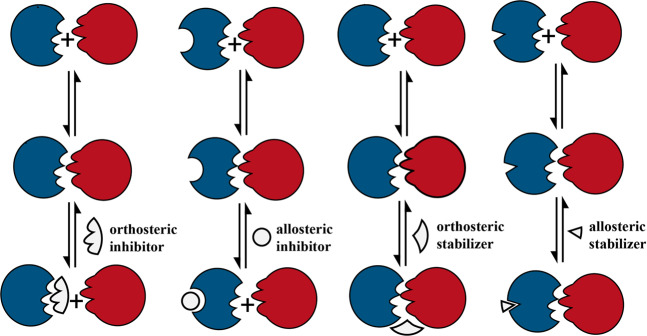
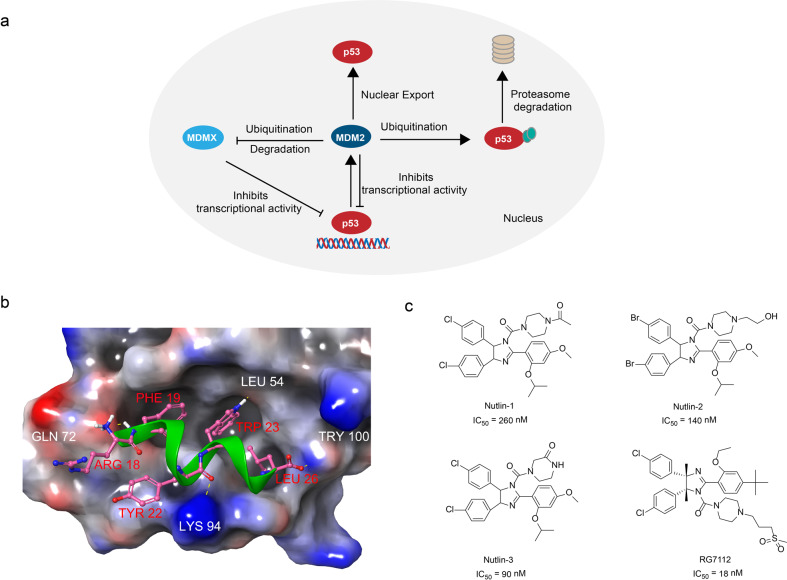
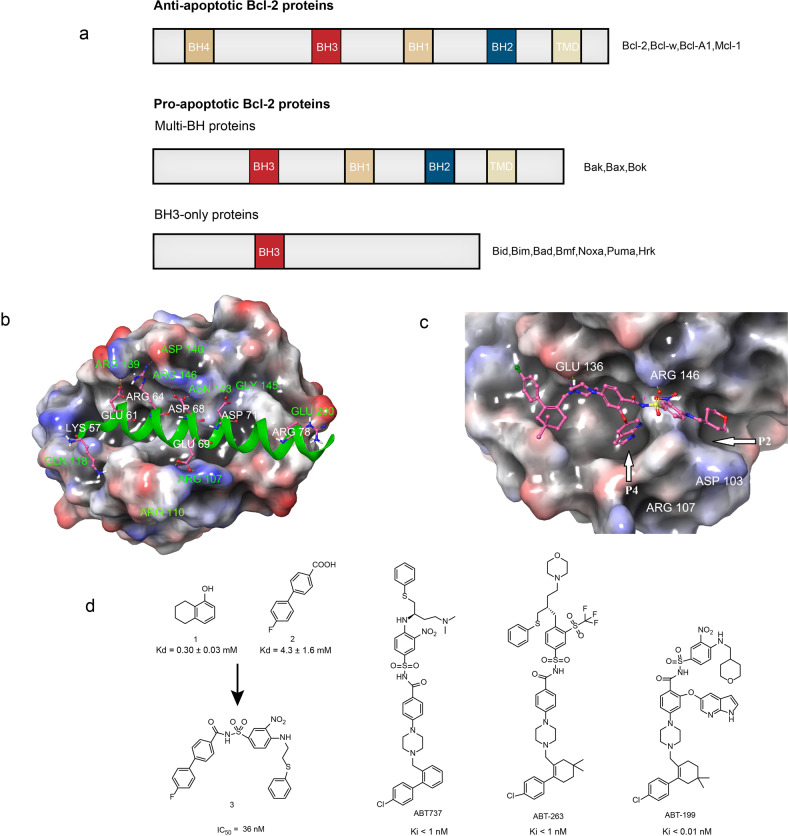
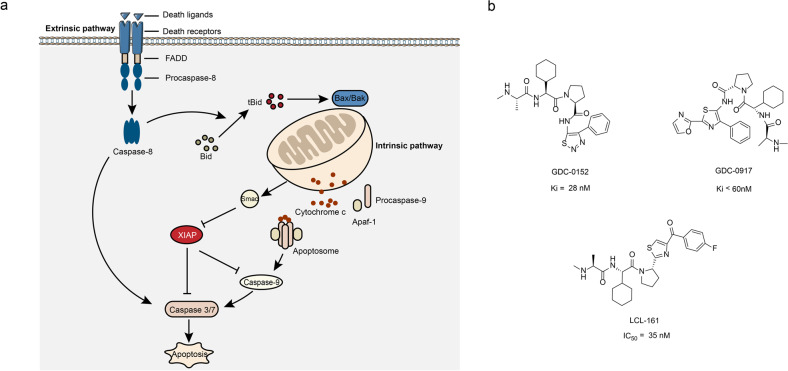
Verification
Claims the paper makes
The claims and statistics of this paper haven’t been checked yet.
Run the check — free, no account needed. It reads the open-access text and checks the sources it cites.
Claims other papers make about this one
Each is checked against this paper’s own text: does it say what the citing paper says it does?
In the citing paper
“However, peptides and proteins have general physicochemical properties, such as instability under physiological conditions, poor oral bioavailability and solubility, which make them less optimal drugs.19”
From Recent advances in targeting the “undruggable” proteins: from drug discovery to clinical trials (2023) · cites this paper as [19]
In the citing paper
“Among them, YAP/TAZ and β-catenin belong to TFs have traditionally been considered “undruggable” targets.”
From Recent advances in targeting the “undruggable” proteins: from drug discovery to clinical trials (2023) · cites this paper as [19]
In the citing paper
“There are several other undruggable proteins can be regulated by PPI modulation, such as YAP/TAZ, β-catenin, XIAP, etc.19”
From Recent advances in targeting the “undruggable” proteins: from drug discovery to clinical trials (2023) · cites this paper as [19]
Self-check
Percentages, sums and reported differences re-computed from the paper’s own numbers.
The self-check needs the paper’s full text.
Citations
Cites
PD-1 and PD-L1 Immune Checkpoint Blockade to Treat Breast Cancer
Hartkopf, A. D., Taran, F., Wallwiener, M., Walter, C. B., Krämer, B., Grischke, E., & Brucker, S. Y. (2016) · Breast Care · doi:10.1159/000453569 · Cited by 30,989
Lipinski, C. A., Lombardo, F., Dominy, B. W., & Feeney, P. J. (2001) · Advanced Drug Delivery Reviews · doi:10.1016/s0169-409x(00)00129-0 · Cited by 18,139
Adverse Renal Effects of Immune Checkpoint Inhibitors: A Narrative Review
Wanchoo, R., Karam, S., Uppal, N. N., Barta, V. S., Deray, G., Devoe, C., Launay‐Vacher, V., Jhaveri, K. D., & on behalf of Cancer and Kidney International Network Workgroup on Immune Checkpoint Inhibitors (2017) · American Journal of Nephrology · doi:10.1159/000455014 · Cited by 15,320
The blockade of immune checkpoints in cancer immunotherapy
Pardoll, D. M. (2012) · Nature Reviews Cancer · doi:10.1038/nrc3239 · Cited by 13,838
Lipinski, C. A., Lombardo, F., Dominy, B. W., & Feeney, P. J. (1997) · Advanced Drug Delivery Reviews · doi:10.1016/s0169-409x(96)00423-1 · Cited by 11,484
Pembrolizumab versus Chemotherapy for PD-L1-Positive Non-Small-Cell Lung Cancer
Reck, M., Rodríguez-Abreu, D., Robinson, A. G., Hui, R., Csőszi, T., Fülöp, A., Gottfried, M., Peled, N., Tafreshi, A., Cuffe, S., et al. (2016) · New England Journal of Medicine · doi:10.1056/nejmoa1606774 · Cited by 10,089
Nivolumab versus docetaxel in advanced nonsquamous non-small-cell lung cancer
Borghaei, H., Paz-Ares, L., Horn, L., Spigel, D. R., Steins, M., Ready, N. E., Chow, L. Q., Vokes, E. E., Felip, E., Holgado, E., et al. (2015) · New England Journal of Medicine · doi:10.1056/nejmoa1507643 · Cited by 9,335
Pembrolizumab for the Treatment of Non–Small-Cell Lung Cancer
Garon, E. B., Rizvi, N. A., Hui, R., Leighl, N., Balmanoukian, A. S., Eder, J. P., Patnaik, A., Aggarwal, C., Gubens, M., Horn, L., et al. (2015) · New England Journal of Medicine · doi:10.1056/nejmoa1501824 · Cited by 6,198
Nivolumab for Recurrent Squamous-Cell Carcinoma of the Head and Neck
Ferris, R. L., Blumenschein, G., Fayette, J., Guigay, J., Colevas, A. D., Licitra, L., Harrington, K., Kasper, S., Vokes, E. E., Even, C., et al. (2016) · New England Journal of Medicine · doi:10.1056/nejmoa1602252 · Cited by 5,101
In Vivo Activation of the p53 Pathway by Small-Molecule Antagonists of MDM2
Vassilev, L. T., Vu, B. T., Graves, B., Carvajal, D., Podlaski, F., Filipovic, Z., Kong, N., Kammlott, U., Lukacs, C., Klein, C., et al. (2004) · Science · doi:10.1126/science.1092472 · Cited by 4,661
Research works printed but not linked: 3
- Ferrari, S., Pellati, F. & Costi, M. P. Disruption of Protein-Protein Interfaces (Springer, Berlin, 2013).
- Chen, L. et al. P53 alpha-helix mimetics antagonize p53/MDM2 interaction and activate p53. Mol. Cancer Therap. 4, 1019–1025 (2005). · DOI
- Li, X., Liu, R. & Fang, H. Bcl-2: research progress from target to launched drug. Acta Pharma. Sin. 53, 509–517 (2018).
Cited by
Sorted by citations
Gene regulatory network inference in the era of single-cell multi-omics
Badia-i-Mompel, P., Wessels, L., Müller‐Dott, S., Trimbour, R., Flores, R. O. R., Argelaguet, R., & Sáez-Rodríguez, J. (2023) · Nature Reviews Genetics · doi:10.1038/s41576-023-00618-5 · Cited by 507
Advance in peptide-based drug development: delivery platforms, therapeutics and vaccines
Xiao, W., Jiang, W., Chen, Z., Huang, Y., Mao, J., Zheng, W., Hu, Y., & Shi, J. (2025) · Signal Transduction and Targeted Therapy · doi:10.1038/s41392-024-02107-5 · Cited by 449
Self-citationRecent advances in targeting the “undruggable” proteins: from drug discovery to clinical trials
Xie, X., Yu, T., Li, X., Zhang, N., Foster, L. J., Peng, C., Huang, W., & He, G. (2023) · Signal Transduction and Targeted Therapy · doi:10.1038/s41392-023-01589-z · Cited by 396
Self-citationMYC protein interactors in gene transcription and cancer
Lourenco, C., Resetca, D., Redel, C., Lin, P., MacDonald, A. S., Ciaccio, R., Kenney, T. M. G., Wei, Y., Andrews, D. W., Sunnerhagen, M., et al. (2021) · Nature reviews. Cancer · doi:10.1038/s41568-021-00367-9 · Cited by 351
PLIP 2025: introducing protein–protein interactions to the protein–ligand interaction profiler
Schake, P., Bolz, S. N., Linnemann, K. L., & Schroeder, M. (2025) · Nucleic Acids Research · doi:10.1093/nar/gkaf361 · Cited by 402
Metadata
- Authors
- Lu, H., Zhou, Q., He, J., Jiang, Z., Peng, C., Tong, R., & Shi, J.
- Affiliations
- University of Electronic Science and Technology of China (CN)
- Sichuan Academy of Medical Sciences & Sichuan Provincial People's Hospital (CN)
- Sichuan University (CN)
- University of Miami (US)
- Chengdu University of Traditional Chinese Medicine (CN)
- Corresponding author
- Peng, Cheng
- Tong, Rongsheng
- Shi, Jianyou
- Venue
- Signal Transduction and Targeted Therapy
- Published
- 2020-09-23
- Volume
- 5
- Issue
- 1
- Pages
- 213-213
- ISSN
- 2059-3635 (ISSN-L)
- PMC
- PMC7511340
- OpenAlex
- W3087769169
- Cited by
- 891
- References
- 272
- Citations by year
- 2026: 125 · 2025: 195 · 2024: 192 · 2023: 159 · 2022: 141 · 2021: 75 · 2020: 1
- FWCI
- 9.07
- Type
- journal article
- Language
- en
- Open access
- gold
- doi.org
- Locations
- Signal Transduction and Targeted Therapy (publishedVersion, cc-by)
- PubMed Central (publishedVersion, cc-by)
- PubMed (publishedVersion)
- Funders
- Chengdu Science and Technology Bureau (No. 2015-HM01-00463-SF)
- State Administration of Traditional Chinese Medicine of the People’ Republic of China (JDZX2015210)
- the Open Research Fund of Chengdu University of Traditional Chinese Medicine Key Laboratory of Systematic Research of Distinctive Chinese Medicine Resources in Southwest China
- the Key Research and Development Program of Science and Technology Department of Sichuan Provinc
- Topics
- Life Sciences › Biochemistry, Genetics and Molecular Biology › Molecular Biology › Protein Degradation and Inhibitors
- Physical Sciences › Chemistry › Organic Chemistry › Chemical Synthesis and Analysis
- Life Sciences › Pharmacology, Toxicology and Pharmaceutics › Drug Discovery › Computational Drug Discovery Methods
- Keywords
- protein-protein interaction, PPI inhibitors, drug discovery, small molecules, peptides, immunoglobulins, cancer, infectious diseases, neurodegenerative diseases, clinical trials
- MeSH terms
- Humans, Infections, Neoplasms, Drug Delivery Systems, Neurodegenerative Diseases, Drug Discovery, Protein Interaction Maps
About these checks
Registry, retraction, Cites and statistics results are computed, not judged, with one exception: a printed reference that no index lists is read once by a model before it counts as a citation error. Claims are extracted by a model and kept only when their quote appears verbatim in the text; each cited source is then checked, with a model’s help, for whether it says what the claim relies on. Those verdicts can be wrong — read the claim’s quote and the cited source before relying on one.
Statistics and arithmetic are recomputed, not judged.
Confidence bands are shown only for fields calibrated on our annotated test set. None is calibrated yet, so no band is shown.
What counts as a claim ›How we measure confidence ›How we check this ›
Are you an author, or do you see a problem with this page? Request a review
