

The DOI matches its Crossref record; 49 of the 49 references it cites were found in a registry or an index.
Severe acute respiratory syndrome coronavirus 2 (SARS-CoV-2) membrane (M) protein inhibits type I and III interferon production by targeting RIG-I/MDA-5 signaling
Open accessPublished version of a preprint
Abstract
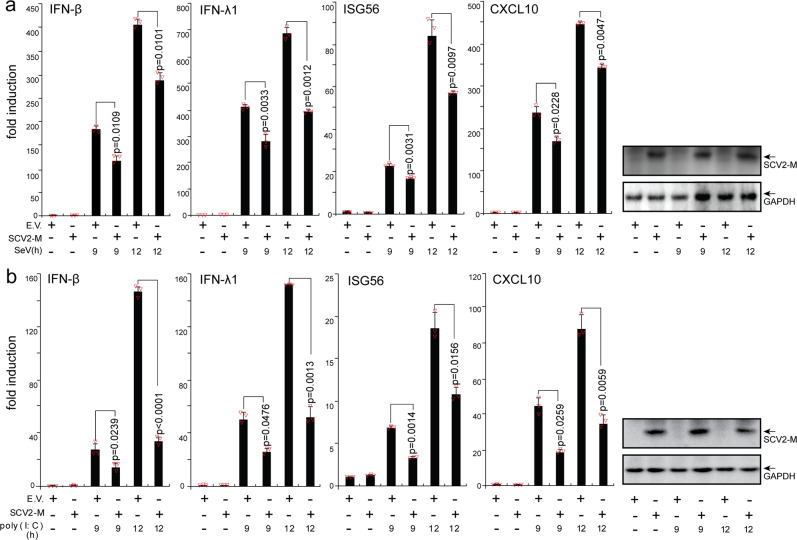
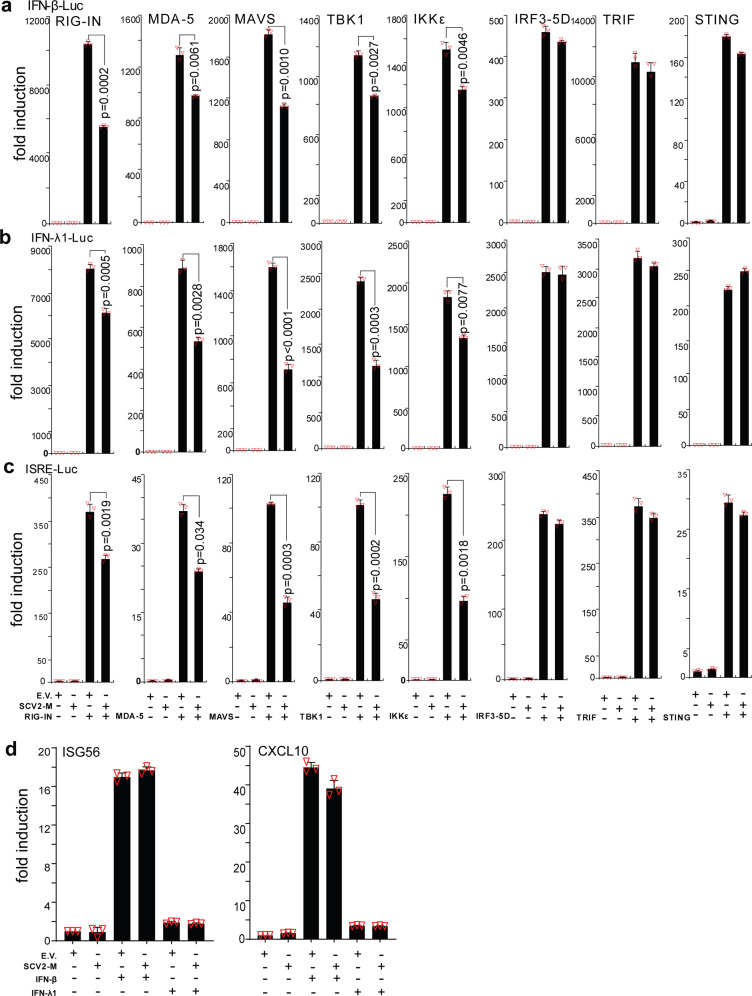
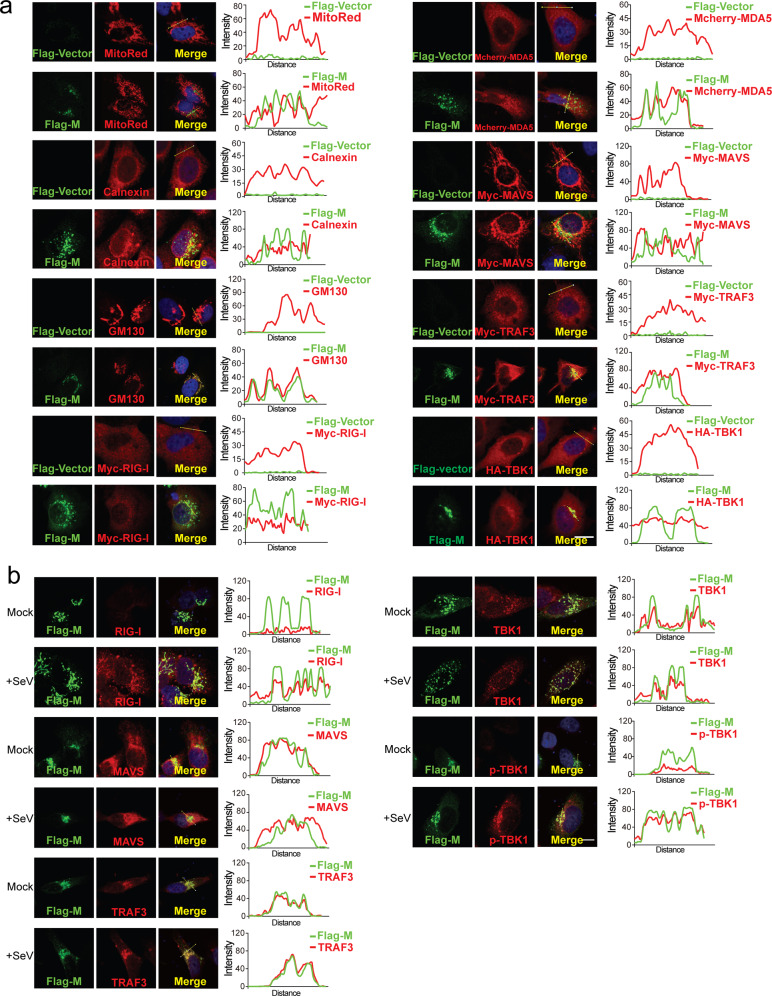
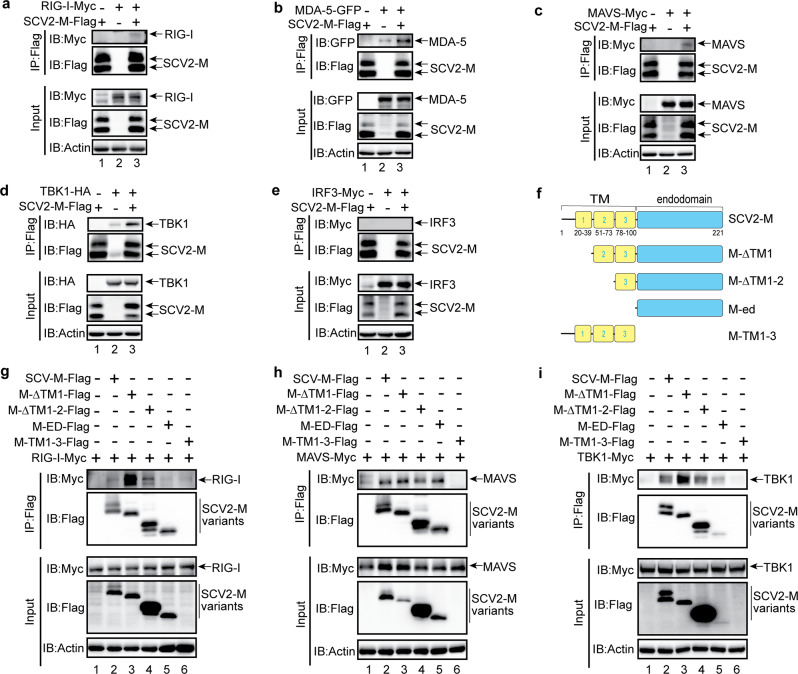
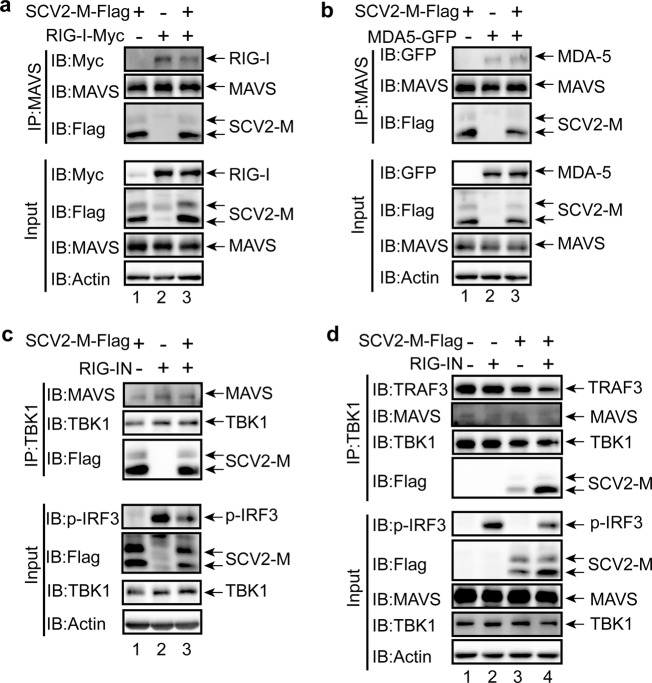
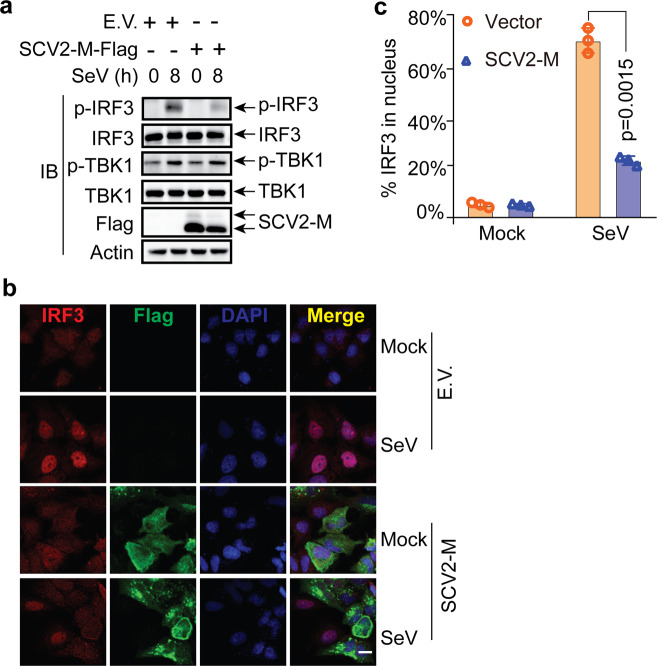
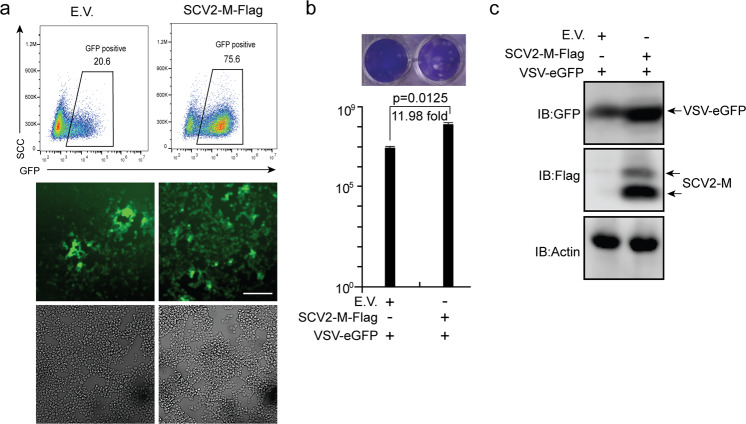
Coronavirus disease 2019 (COVID-19), caused by severe acute respiratory syndrome coronavirus 2 (SARS-CoV-2), has quickly spread worldwide and has affected more than 10 million individuals. A typical feature of COVID-19 is the suppression of type I and III interferon (IFN)-mediated antiviral immunity. However, the molecular mechanism by which SARS-CoV-2 evades antiviral immunity remains elusive. Here, we reported that the SARS-CoV-2 membrane (M) protein inhibits the production of type I and III IFNs induced by the cytosolic dsRNA-sensing pathway mediated by RIG-I/MDA-5-MAVS signaling. In addition, the SARS-CoV-2 M protein suppresses type I and III IFN induction stimulated by SeV infection or poly (I:C) transfection. Mechanistically, the SARS-CoV-2 M protein interacts with RIG-I, MAVS, and TBK1, thus preventing the formation of the multiprotein complex containing RIG-I, MAVS, TRAF3, and TBK1 and subsequently impeding the phosphorylation, nuclear translocation, and activation of IRF3. Consequently, ectopic expression of the SARS-CoV-2 M protein facilitates the replication of vesicular stomatitis virus. Taken together, these results indicate that the SARS-CoV-2 M protein antagonizes type I and III IFN production by targeting RIG-I/MDA-5 signaling, which subsequently attenuates antiviral immunity and enhances viral replication. This study provides insight into the interpretation of SARS-CoV-2-induced antiviral immune suppression and illuminates the pathogenic mechanism of COVID-19.
Overview
The claims and statistics of this paper haven’t been checked yet.
Run the check — free, no account needed. It reads the open-access text and checks the sources it cites.
Integrity signals
Registry
Cites
Statistics
Figures
Verification
Claims the paper makes
The claims and statistics of this paper haven’t been checked yet.
Run the check — free, no account needed. It reads the open-access text and checks the sources it cites.
Claims other papers make about this one
Each is checked against this paper’s own text: does it say what the citing paper says it does?
The source backs part of the claim, not all of it — or backs it for a different population, condition or comparison.
In the citing paper
“As is typical for many viruses, IFNs inhibit viral replication and are elevated during COVID-19, which helps drive Th1 and Th17 responses. 149,150”
From COVID-19, Myocarditis and Pericarditis (2023) · cites this paper as [149]
Experimental — accuracy not yet measured
Self-check
Percentages, sums and reported differences re-computed from the paper’s own numbers.
The self-check needs the paper’s full text.
Citations
Cites
A novel coronavirus from patients with pneumonia in China, 2019
Zhu, N., Zhang, D., Wang, W., Li, X., Yang, B., Song, J., Zhao, X., Huang, B., Shi, W., Lu, R., et al. (2020) · New England Journal of Medicine · doi:10.1056/nejmoa2001017 · Cited by 28,244
A pneumonia outbreak associated with a new coronavirus of probable bat origin
Zhou, P., Yang, X.-L., Wang, X.-G., Hu, B., Zhang, L., Zhang, W., Si, H.-R., Zhu, Y., Li, B., Huang, C.-L., et al. (2020) · Nature · doi:10.1038/s41586-020-2012-7 · Cited by 21,969
A new coronavirus associated with human respiratory disease in China
Wu, F., Zhao, S., Yu, B., Chen, Y.-M., Wang, W., Song, Z.-G., Hu, Y., Tao, Z.-W., Tian, J.-H., Pei, Y.-Y., et al. (2020) · Nature · doi:10.1038/s41586-020-2008-3 · Cited by 11,688
Origin and evolution of pathogenic coronaviruses
Cui, J., Li, F., & Shi, Z. (2018) · Nature Reviews Microbiology · doi:10.1038/s41579-018-0118-9 · Cited by 5,729
Cyclic GMP-AMP Synthase Is a Cytosolic DNA Sensor That Activates the Type I Interferon Pathway
Sun, L., Wu, J., Du, F., Chen, X., & Chen, Z. J. (2013) · Science · doi:10.1126/science.1232458 · Cited by 4,996
Imbalanced Host Response to SARS-CoV-2 Drives Development of COVID-19
Blanco-Melo, D., Nilsson-Payant, B. E., Liu, W.-C., Uhl, S., Hoagland, D., Møller, R., Jordan, T. X., Oishi, K., Panis, M., Sachs, D., et al. (2020) · Cell · doi:10.1016/j.cell.2020.04.026 · Cited by 4,222
Impaired type I interferon activity and inflammatory responses in severe COVID-19 patients
Hadjadj, J., Yatim, N., Barnabei, L., Corneau, A., Boussier, J., Smith, N., Péré, H., Charbit, B., Bondet, V., Chenevier-Gobeaux, C., et al. (2020) · Science · doi:10.1126/science.abc6027 · Cited by 2,984
Ziegler, C. G. K., Allon, S. J., Nyquist, S. K., Mbano, I. M., Miao, V. N., Tzouanas, C. N., Cao, Y., Yousif, A. S., Bals, J., Hauser, B. M., et al. (2020) · Cell · doi:10.1016/j.cell.2020.04.035 · Cited by 2,284
The Architecture of SARS-CoV-2 Transcriptome
Kim, D., Lee, J.-Y., Yang, J.-S., Kim, J. W., Kim, V. N., & Chang, H. (2020) · Cell · doi:10.1016/j.cell.2020.04.011 · Cited by 2,123
Longitudinal analyses reveal immunological misfiring in severe COVID-19
Lucas, C., Wong, P., Klein, J., Castro, T. B. R., Silva, J., Sundaram, M., Ellingson, M. K., Mao, T., Oh, J. E., Israelow, B., et al. (2020) · Nature · doi:10.1038/s41586-020-2588-y · Cited by 2,074
Phosphorylation of innate immune adaptor proteins MAVS, STING, and TRIF induces IRF3 activation
Liu, S., Cai, X., Wu, J., Cong, Q., Chen, X., Li, T., Du, F., Ren, J., Wu, Y.-T., Grishin, N. V., et al. (2015) · Science · doi:10.1126/science.aaa2630 · Cited by 1,927
Hung, I. F.-N., Lung, K.-C., Tso, E. Y.-K., Liu, R., Chung, T. W.-H., Chu, M.-Y., Ng, Y.-Y., Lo, J., Chan, J., Tam, A. R., et al. (2020) · The Lancet · doi:10.1016/s0140-6736(20)31042-4 · Cited by 1,455
Shared and Distinct Functions of Type I and Type III Interferons
Lazear, H. M., Schoggins, J. W., & Diamond, M. S. (2019) · Immunity · doi:10.1016/j.immuni.2019.03.025 · Cited by 1,138
Detection of SARS-CoV-2-Specific Humoral and Cellular Immunity in COVID-19 Convalescent Individuals
Ni, L., Ye, F., Cheng, M., Yu, F., Deng, Y., Zhao, H. J., Peng, W., Ge, J., Gou, M., Li, X., et al. (2020) · Immunity · doi:10.1016/j.immuni.2020.04.023 · Cited by 1,085
Self-citationHeightened Innate Immune Responses in the Respiratory Tract of COVID-19 Patients
Zhou, Z. L., Ren, L., Zhang, L., Zhong, J., Xiao, Y., Jia, Z., Guo, L., Yang, J., Wang, C., Jiang, S., et al. (2020) · Cell Host & Microbe · doi:10.1016/j.chom.2020.04.017 · Cited by 980
Activation and evasion of type I interferon responses by SARS-CoV-2
Lei, X., Dong, X., Ma, R., Wang, W., Xiao, X., Tian, Z., Wang, C., Wang, Y., Li, L., Ren, L., et al. (2020) · Nature Communications · doi:10.1038/s41467-020-17665-9 · Cited by 980
Type I and Type III Interferons – Induction, Signaling, Evasion, and Application to Combat COVID-19
Park, A., & Iwasaki, A. (2020) · Cell Host & Microbe · doi:10.1016/j.chom.2020.05.008 · Cited by 909
SARS-CoV-2 nsp13, nsp14, nsp15 and orf6 function as potent interferon antagonists
Yuen, C., Lam, J.-Y., Wong, W., Mak, L., Wang, X., Chu, H., Cai, J., Jin, D., To, K. K., Chan, J. F., et al. (2020) · Emerging Microbes & Infections · doi:10.1080/22221751.2020.1780953 · Cited by 525
Type I Interferon Susceptibility Distinguishes SARS-CoV-2 from SARS-CoV
Lokugamage, K. G., Hage, A., de Vries, M., Valero-Jimenez, A. M., Schindewolf, C., Dittmann, M., Rajsbaum, R., & Menachery, V. D. (2020) · Journal of Virology · doi:10.1128/jvi.01410-20 · Cited by 503
Antiviral activities of type I interferons to SARS-CoV-2 infection
Mantlo, E., Bukreyeva, N., Maruyama, J., Paessler, S., & Huang, C. (2020) · Antiviral Research · doi:10.1016/j.antiviral.2020.104811 · Cited by 430
SARS coronavirus pathogenesis: host innate immune responses and viral antagonism of interferon
Totura, A. L., & Baric, R. S. (2012) · Current Opinion in Virology · doi:10.1016/j.coviro.2012.04.004 · Cited by 420
Type III interferons disrupt the lung epithelial barrier upon viral recognition
Broggi, A., Ghosh, S., Sposito, B., Spreafico, R., Balzarini, F., Cascio, A. L., Clementi, N., Santis, M. D., Mancini, N., Granucci, F., et al. (2020) · Science · doi:10.1126/science.abc3545 · Cited by 403
Viral Infections Activate Types I and III Interferon Genes through a Common Mechanism
Onoguchi, K., Yoneyama, M., Takemura, A., Akira, S., Taniguchi, T., Namiki, H., & Fujita, T. (2007) · Journal of Biological Chemistry · doi:10.1074/jbc.m608618200 · Cited by 354
Stanifer, M. L., Kee, C., Cortese, M., Metz‐Zumaran, C., Triana, S., Mukenhirn, M., Kraeusslich, H.-G., Alexandrov, T., Bartenschlager, R. F. W., & Boulant, S. (2020) · Cell Reports · doi:10.1016/j.celrep.2020.107863 · Cited by 337
Liu, B., Zhang, M., Chu, H., Zhang, H., Wu, H. M., Song, G., Wang, P., Zhao, K., Hou, J., Wang, X., et al. (2016) · Nature Immunology · doi:10.1038/ni.3641 · Cited by 333
Self-citationType I and Type III Interferons Restrict SARS-CoV-2 Infection of Human Airway Epithelial Cultures
Vanderheiden, A., Ralfs, P., Chirkova, T., Upadhyay, A. A., Zimmerman, M. G., Bedoya, S., Aoued, H. S., Tharp, G., Pellegrini, K. L., Manfredi, C., et al. (2020) · Journal of Virology · doi:10.1128/jvi.00985-20 · Cited by 304
Siu, K., Kok, K., Ng, M.-H. J., Poon, V. K., Yuen, K., Zheng, B.-J., & Jin, D. (2009) · Journal of Biological Chemistry · doi:10.1074/jbc.m109.008227 · Cited by 276
Han, L., Zhuang, M., Deng, J., Zheng, Y., Zhang, J., Nan, M., Zhang, X., Gao, C., & Wang, P. (2021) · Journal of Medical Virology · doi:10.1002/jmv.27050 · Cited by 259
Self-citationIFNλ is a potent anti‐influenza therapeutic without the inflammatory side effects of IFNα treatment
Davidson, S., McCabe, T. M., Crotta, S., Gad, H. H., Hessel, E. M., Beinke, S., Hartmann, R., & Wack, A. (2016) · EMBO Molecular Medicine · doi:10.15252/emmm.201606413 · Cited by 246
Zhuang, M., Cheng, Y., Zhang, J., Jiang, X., Wang, L., Deng, J., & Wang, P. (2020) · Journal of Medical Virology · doi:10.1002/jmv.26139 · Cited by 215
Self-citationSong, G., Liu, B., Li, Z., Wu, H. M., Wang, P., Zhao, K., Jiang, G., Zhang, L., & Gao, C. (2016) · Nature Immunology · doi:10.1038/ni.3588 · Cited by 201
Self-citationType I interferon susceptibility distinguishes SARS-CoV-2 from SARS-CoVPreprint
Lokugamage, K. G., Hage, A., de Vries, M., et al. (2020) · bioRxiv (Cold Spring Harbor Laboratory) · doi:10.1101/2020.03.07.982264 · Cited by 189
Yoshikawa, T., Hill, T. E., Yoshikawa, N., Popov, V. L., Galindo, C. L., Garner, H. R., Peters, C. J., & Tseng, C.-T. K. (2010) · PLoS ONE · doi:10.1371/journal.pone.0008729 · Cited by 187
Lui, P., Wong, L.-Y. R., Fung, C.-L., Siu, K., Yeung, M. L., Yuen, K., Chan, C., Woo, P. C. Y., Yuen, K., & Jin, D. (2016) · Emerging Microbes & Infections · doi:10.1038/emi.2016.33 · Cited by 133
Meng, Z., Wang, T., Chen, L., Chen, X., Li, L., Qin, X., Li, H., & Luo, J. D. (2021) · Current Topics in Medicinal Chemistry · doi:10.2174/1568026621666210429083050 · Cited by 119
Siu, K., Chan, C., Kok, K., Woo, P. C. Y., & Jin, D. (2014) · Cellular and Molecular Immunology · doi:10.1038/cmi.2013.61 · Cited by 107
WDFY1 mediates TLR3/4 signaling by recruiting TRIF
Hu, Y., Zhang, Y., Jiang, L., Wang, S., Lei, C., Sun, M., Shu, H., & Liu, Y. (2015) · EMBO Reports · doi:10.15252/embr.201439637 · Cited by 97
Long‐term coexistence of SARS‐CoV‐2 with antibody response in COVID‐19 patients
Wang, B., Wang, L., Kong, X., Geng, J., Xiao, D., Ma, C., Jiang, X., & Wang, P. (2020) · Journal of Medical Virology · doi:10.1002/jmv.25946 · Cited by 97
Self-citationWang, P., Gu, Z.-H., Wan, D.-H., Liu, B., Huang, X., Weng, S., Yu, X., & He, J. (2013) · Cellular and Molecular Immunology · doi:10.1038/cmi.2013.30 · Cited by 94
Self-citationInhibition of AIM2 inflammasome activation by a novel transcript isoform of IFI16
Wang, P., Ye, Z., Deng, J., Siu, K., Gao, W., Chaudhary, V., Cheng, Y., Fung, S., Yuen, K., Ho, T., et al. (2018) · EMBO Reports · doi:10.15252/embr.201845737 · Cited by 94
Self-citationChang, C.-Y., Liu, H. M., Chang, M., & Chang, S. C. (2020) · Journal of Virology · doi:10.1128/jvi.00099-20 · Cited by 89
OʼBrien, T. R., Thomas, D. L., Jackson, S. S., Prokunina‐Olsson, L., Donnelly, R. P., & Hartmann, R. (2020) · Clinical Infectious Diseases · doi:10.1093/cid/ciaa453 · Cited by 88
The Golgi apparatus acts as a platform for TBK1 activation after viral RNA sensing
Pourcelot, M., Zemirli, N., da Costa, L. S., Loyant, R., Garcin, D., Vitour, D., Munitić, I., Vázquez, A., & Arnoult, D. (2016) · BMC Biology · doi:10.1186/s12915-016-0292-z · Cited by 79
Golgi Apparatus: An Emerging Platform for Innate Immunity
Tao, Y., Yang, Y., Zhou, R., & Gong, T. (2020) · Trends in Cell Biology · doi:10.1016/j.tcb.2020.02.008 · Cited by 71
Meng, Z., Wang, T., Chen, L., et al. (2020) · medRxiv · doi:10.1101/2020.04.11.20061473 · Cited by 71
Wang, P., Fung, S., Gao, W., Deng, J., Cheng, Y., Chaudhary, V., Yuen, K., Ho, T., Chan, C.-P., Zhang, Y., et al. (2018) · Nucleic Acids Research · doi:10.1093/nar/gky186 · Cited by 70
Self-citationNucleic acid-induced antiviral immunity in shrimp
Wang, P., Yang, L., Gu, Z.-H., Weng, S., Yu, X., & He, J. (2013) · Antiviral Research · doi:10.1016/j.antiviral.2013.05.016 · Cited by 45
Self-citationIrvani, S. S. N., Golmohammadi, M., Pourhoseingholi, M. A., Shokouhi, S., & Darazam, I. A. (2020) · Trials · doi:10.1186/s13063-020-04382-3 · Cited by 21
Hsin, F., Chao, T., Chan, Y.-R., Kao, H., Liu, W.-D., Wang, J., Pang, Y.-H., Lin, C.-H., Tsai, Y., Lin, J., et al. (2020) · bioRxiv (Cold Spring Harbor Laboratory) · doi:10.1101/2020.04.30.071357 · Cited by 8
Cited by
Sorted by citations
Regulation of RIG-I-like receptor-mediated signaling: interaction between host and viral factors
Onomoto, K., Onoguchi, K., & Yoneyama, M. (2021) · Cellular and Molecular Immunology · doi:10.1038/s41423-020-00602-7 · Cited by 440
Bai, Z., Cao, Y., Liu, W.-J., & Li, J. (2021) · Viruses · doi:10.3390/v13061115 · Cited by 320
Lessons learned 1 year after SARS-CoV-2 emergence leading to COVID-19 pandemic
To, K. K., Sridhar, S., Chiu, K. H., Hung, D. L. L., Li, X., Hung, I. F., Tam, A. R., Chung, T. W., Chan, J. F., Zhang, J., et al. (2021) · Emerging Microbes & Infections · doi:10.1080/22221751.2021.1898291 · Cited by 359
Self-citationInnate immune and inflammatory responses to SARS-CoV-2: Implications for COVID-19
Lowery, S. A., Sariol, A., & Perlman, S. M. (2021) · Cell Host & Microbe · doi:10.1016/j.chom.2021.05.004 · Cited by 303
SARS-CoV-2-Specific Immune Response and the Pathogenesis of COVID-19
Gusev, E., Sarapultsev, A., Владимировна, С. Л., & Черешнев, В. А. (2022) · International Journal of Molecular Sciences · doi:10.3390/ijms23031716 · Cited by 326
Metadata
- Authors
- Zheng, Y., Zhuang, M.-W., Han, L., Zhang, J., Nan, M.-L., Zhan, P., Kang, D., Liu, X., Gao, C., & Wang, P.-H.
- Affiliations
- Shandong University (CN)
- Corresponding author
- Gao, Chengjiang
- Wang, Pei-Hui
- ORCID
- Venue
- Signal Transduction and Targeted Therapy
- Published
- 2020-12-28
- Volume
- 5
- Issue
- 1
- Pages
- 299-299
- ISSN
- 2059-3635 (ISSN-L)
- PMC
- PMC7768267
- OpenAlex
- W3115832826
- Cited by
- 302
- References
- 47
- Citations by year
- 2026: 13 · 2025: 23 · 2024: 36 · 2023: 56 · 2022: 93 · 2021: 80 · 2020: 1
- FWCI
- 20.14
- Type
- journal article
- Language
- en
- Open access
- gold
- doi.org
- Locations
- Signal Transduction and Targeted Therapy (publishedVersion, cc-by)
- bioRxiv (Cold Spring Harbor Laboratory) (acceptedVersion, cc-by-nc-nd)
- PubMed Central (publishedVersion, cc-by)
- PubMed (publishedVersion)
- DOAJ (DOAJ: Directory of Open Access Journals) (submittedVersion, cc-by-sa)
- eScholarship (California Digital Library) (submittedVersion, cc-by)
- Funders
- Shandong University (2020XGB03)
- National Natural Science Foundation of China (81525012, 81930039, 31730026, 81901604, COVID-19)
- China Postdoctoral Science Foundation (2018M642662)
- Government of Jiangsu Province
- Natural Science Foundation of Jiangsu Province (SBK2020042706)
- Topics
- Life Sciences › Immunology and Microbiology › Immunology › interferon and immune responses
- Health Sciences › Medicine › Infectious Diseases › SARS-CoV-2 and COVID-19 Research
- Health Sciences › Medicine › Epidemiology › Virology and Viral Diseases
- Keywords
- SARS-CoV-2, membrane proteins, interferon evasion, type I interferon, interferon lambda, RIG-I, MDA5, MAVS, TBK1, IRF3, vesicular stomatitis virus, poly(I:C), viral replication
- MeSH terms
- DEAD Box Protein 58, Interferon-Induced Helicase, IFIH1, COVID-19, SARS-CoV-2, Coronavirus M Proteins, Interferon Lambda, Animals, Chlorocebus aethiops, HeLa Cells, Humans, Interferon Type I, Interferons, Receptors, Immunologic, Vero Cells, Viral Matrix Proteins, Signal Transduction, HEK293 Cells
About these checks
Registry, retraction, Cites and statistics results are computed, not judged, with one exception: a printed reference that no index lists is read once by a model before it counts as a citation error. Claims are extracted by a model and kept only when their quote appears verbatim in the text; each cited source is then checked, with a model’s help, for whether it says what the claim relies on. Those verdicts can be wrong — read the claim’s quote and the cited source before relying on one.
Statistics and arithmetic are recomputed, not judged.
Confidence bands are shown only for fields calibrated on our annotated test set. None is calibrated yet, so no band is shown.
What counts as a claim ›How we measure confidence ›How we check this ›
Are you an author, or do you see a problem with this page? Request a review
