

The DOI matches its Crossref record; 521 of the 522 references it cites were found in a registry or an index.
Regulating tumor suppressor genes: post-translational modifications
Open accessAbstract
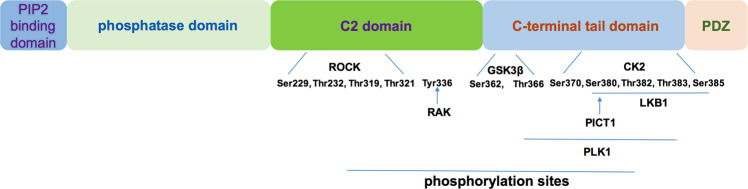
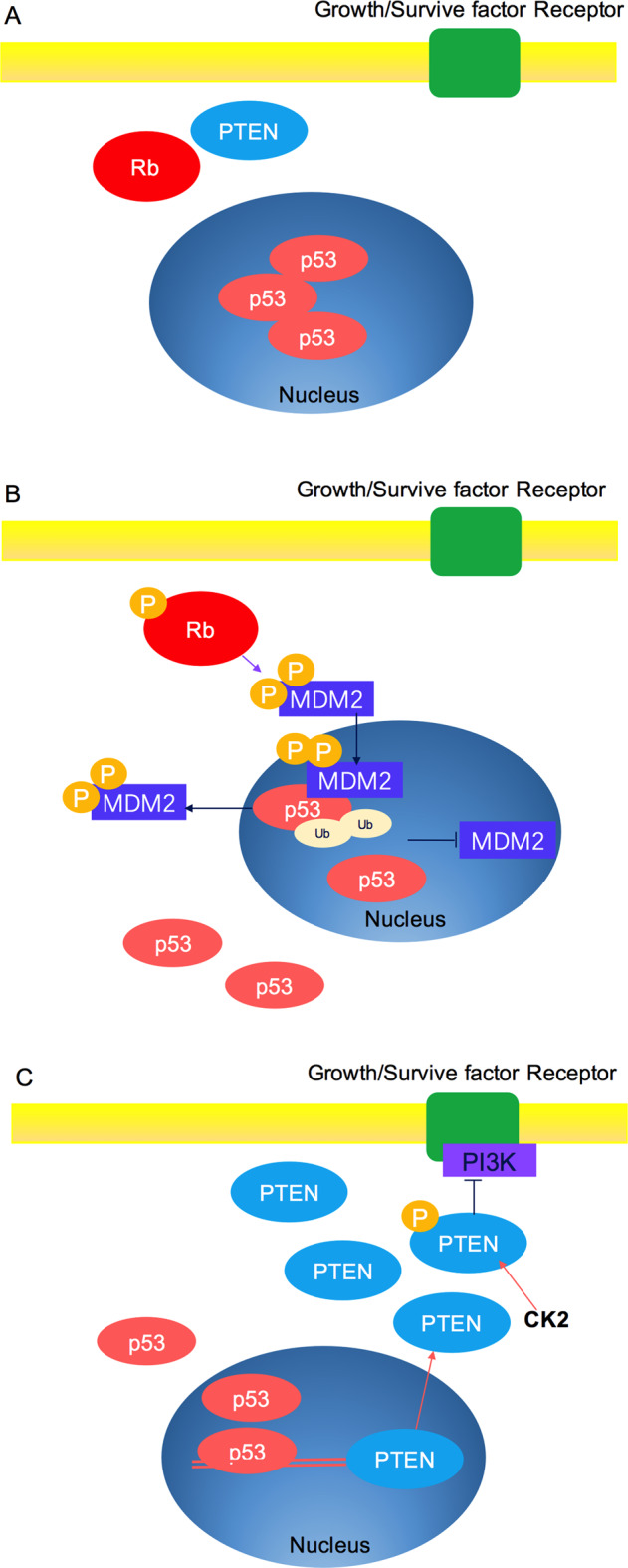
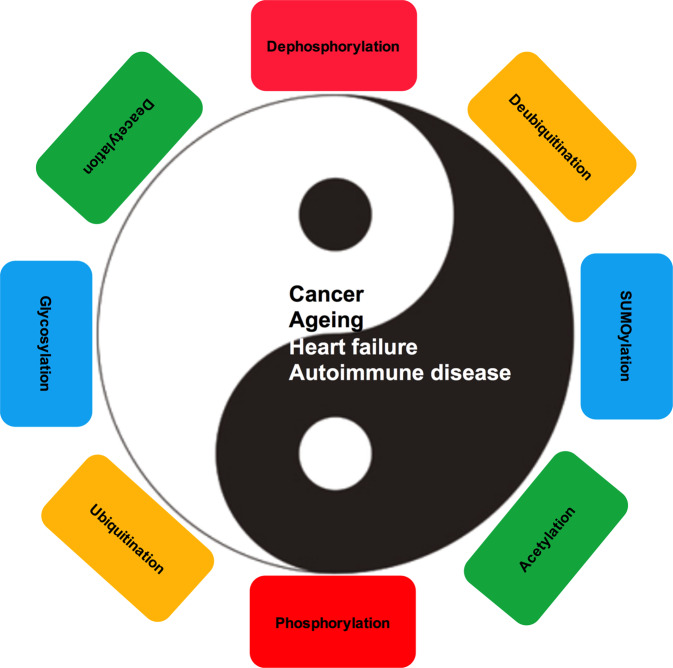
Tumor suppressor genes cooperate with each other in tumors. Three important tumor suppressor proteins, retinoblastoma (Rb), p53, phosphatase, and tensin homolog deleted on chromosome ten (PTEN) are functionally associated and they regulated by post-translational modification (PTMs) as well. PTMs include phosphorylation, SUMOylation, acetylation, and other novel modifications becoming growing appreciated. Because most of PTMs are reversible, normal cells use them as a switch to control the state of cells being the resting or proliferating, and PTMs also involve in cell survival and cell cycle, which may lead to abnormal proliferation and tumorigenesis. Although a lot of studies focus on the importance of each kind of PTM, further discoveries shows that tumor suppressor genes (TSGs) form a complex “network” by the interaction of modification. Recently, there are several promising strategies for TSGs for they change more frequently than carcinogenic genes in cancers. We here review the necessity, characteristics, and mechanisms of each kind of post-translational modification on Rb, p53, PTEN, and its influence on the precise and selective function. We also discuss the current antitumoral therapies of Rb, p53 and PTEN as predictive, prognostic, and therapeutic target in cancer.
Overview
The claims and statistics of this paper haven’t been checked yet.
Run the check — free, no account needed. It reads the open-access text and checks the sources it cites.
Integrity signals
Registry
Cites
Statistics
Figures

Verification
Claims the paper makes
The claims and statistics of this paper haven’t been checked yet.
Run the check — free, no account needed. It reads the open-access text and checks the sources it cites.
Claims other papers make about this one
Each is checked against this paper’s own text: does it say what the citing paper says it does?
The cited source says what the claim attributes to it.
In the citing paper
“PTMs are known to function as molecular switches by affecting protein-protein interactions (Chen, Liu et al., 2020, Nishi, Hashimoto et al., 2011).”
From SHARPIN S146 phosphorylation mediates ARP2/3 interaction, cancer cell invasion and metastasis (2022) · cites this paper as Chen, Liu et al., 2020
Self-check
Percentages, sums and reported differences re-computed from the paper’s own numbers.
The self-check needs the paper’s full text.
Citations
Cites
1 retracted
Song, P., Wu, Y., Xu, J., Xie, Z., Dong, Y., Zhang, M., & Zou, M. (2007) · Circulation · doi:10.1161/circulationaha.107.716498 · Cited by 144
RetractedHershko, A., & Ciechanover, A. (1998) · Annual Review of Biochemistry · doi:10.1146/annurev.biochem.67.1.425 · Cited by 8,840
p53 Mutations in Human Cancers
Hollstein, M., Sidransky, D., Vogelstein, B., & Harris, C. C. (1991) · Science · doi:10.1126/science.1905840 · Cited by 8,018
Comprehensive genomic characterization defines human glioblastoma genes and core pathways
The Cancer Genome Atlas Research Network (2008) · Nature · doi:10.1038/nature07385 · Cited by 7,735
p53, the cellular gatekeeper for growth and division
Levine, A. J. (1997) · Cell · doi:10.1016/s0092-8674(00)81871-1 · Cited by 7,693
Mutation and cancer: statistical study of retinoblastoma
Knudson, A. G. (1971) · Proceedings of the National Academy of Sciences · doi:10.1073/pnas.68.4.820 · Cited by 7,612
Nowell, P. C. (1976) · Science · doi:10.1126/science.959840 · Cited by 6,471
AKT/PKB signaling: navigating downstream
Manning, B. D., & Cantley, L. C. (2007) · Cell · doi:10.1016/j.cell.2007.06.009 · Cited by 6,115
An Integrated Genomic Analysis of Human Glioblastoma Multiforme
Parsons, D. W., Jones, S., Zhang, X., Lin, J. C.-H., Leary, R. J., Angenendt, P., Mankoo, P., Carter, H., Siu, I.-M., Gallia, G. L., et al. (2008) · Science · doi:10.1126/science.1164382 · Cited by 5,857
The retinoblastoma protein and cell cycle control
Weinberg, R. A. (1995) · Cell · doi:10.1016/0092-8674(95)90385-2 · Cited by 4,862
Cited by
Sorted by citations
Items 401–452 of 452
Kanwar, N., Kumar, A. H. S., Gupta, N., Gagneja, G., & Kanwal, A. (2025) · Elsevier eBooks · doi:10.1016/b978-0-443-33343-9.00008-9
Research Progress of Acidic Nuclear Phosphoprotein 32 in Malignant Tumor
康, 玥. (2025) · Asian Case Reports in Emergency Medicine · doi:10.12677/acrem.2025.134047
Biopolymer-based Chemotherapeutics: Combination Therapies and Synergistic Effects
Wasim, R., Mahmood, T., Parveen, S., Anwar, A., & Ahmad, A. (2025) · BENTHAM SCIENCE PUBLISHERS eBooks · doi:10.2174/9798898811419125010008
Li, T., Xiong, X., 谢婷婷, Liu, W., Feng, X., Chen, S., Hu, X., Li, R., & Fu, K. (2025) · Reproductive Biology · doi:10.1016/j.repbio.2025.101095
Role of oncogenes, proto-oncogenes, and tumor suppressor genes in cancer progression
Prasad, D. K. V., & Sitara, R. (2025) · Elsevier eBooks · doi:10.1016/b978-0-443-33302-6.00001-9
Zheng, L., Wei, J., Li, X., Li, M., Xue, C., Chen, S., Wei, Q., Fan, S., Xiong, W., Zhou, M., et al. (2025) · Cancers · doi:10.3390/cancers17243950
Post-Transcriptional Modification Integration for Ligand–Receptor Cellular Network Inference
Giroux, P., Maillard, M., & Colinge, J. (2025) · Molecular & Cellular Proteomics · doi:10.1016/j.mcpro.2025.101493
Chen, M., Liu, Y., Zuo, M., Zhang, M., Wang, Z., Li, X., Yuan, D., Xu, H., Yu, G., & Li, M. (2024) · Figshare · doi:10.6084/m9.figshare.25357899
Zhang, W., Yang, Y., Lin, L., He, J., Dong, J., Yan, B., Cai, W., Chen, Y., Yin, L., Tang, D., et al. (2022) · Figshare · doi:10.6084/m9.figshare.21261601
Chen, J., Wang, D., Wu, G., Xiong, F., Liu, W., Wang, Q., Kuai, Y., Huang, W., Qi, Y., Wang, B., et al. (2024) · Figshare · doi:10.6084/m9.figshare.27012235
Zhao, Y., Wu, D., Fu, Z., Liu, W., Yao, Y., & Liang, Y. (2024) · Figshare · doi:10.6084/m9.figshare.24934330
Chen, J., Wang, D., Wu, G., Xiong, F., Liu, W., Wang, Q., Kuai, Y., Huang, W., Qi, Y., Wang, B., et al. (2024) · Figshare · doi:10.6084/m9.figshare.27012226
Wu, Y., Chen, Z., Zheng, Z., Li, X., Shu, J., Mao, R., An, J., Fan, S., Luo, R., Guo, Y., et al. (2024) · Figshare · doi:10.6084/m9.figshare.26952322
Chen, J., Wang, D., Wu, G., Xiong, F., Liu, W., Wang, Q., Kuai, Y., Huang, W., Qi, Y., Wang, B., et al. (2024) · Figshare · doi:10.6084/m9.figshare.27012238
Ning, S., Liu, C., Wang, K., Cai, Y., Ning, Z., Li, M.-Y., & Zeng, L. (2023) · Figshare · doi:10.6084/m9.figshare.23298938
Ning, S., Liu, C., Wang, K., Cai, Y., Ning, Z., Li, M.-Y., & Zeng, L. (2023) · Figshare · doi:10.6084/m9.figshare.23298935
Chen, J., Wang, D., Wu, G., Xiong, F., Liu, W., Wang, Q., Kuai, Y., Huang, W., Qi, Y., Wang, B., et al. (2024) · Figshare · doi:10.6084/m9.figshare.27012244
Chen, J., Wang, D., Wu, G., Xiong, F., Liu, W., Wang, Q., Kuai, Y., Huang, W., Qi, Y., Wang, B., et al. (2024) · Figshare · doi:10.6084/m9.figshare.27012232
Wang, Z., Cheng, S., Liu, Y., Zhao, R., Zhang, J., Zhou, X., Shu, W., 冯地路, & Wang, H. (2023) · Figshare · doi:10.6084/m9.figshare.22603408
p53 preserves genome stability in dividing cells under hypo-osmotic stressPreprint
Wong, B. S., Ghosh, A. K., Cui, H., Li, K., Johnson, B. A., Sethi, K., Lee, Y., Zhu, J., Sun, S. X., & Li, R. (2025) · bioRxiv (Cold Spring Harbor Laboratory) · doi:10.64898/2025.12.17.694541
Kaleem, M., Gangane, P. S., Mujtaba, M. A., Kanekar, A., Shahzad, N., Alzahrani, A. R., Zafar, A., & Ahmad, A. (2025) · Pathology - Research and Practice · doi:10.1016/j.prp.2025.156338
li, Y., Zeng, J., Gong, X., Li, W., Liu, J., Li, D., Zhong, Y., Deng, J., Deng, J., Feng, H., et al. (2026) · Frontiers in Oncology · doi:10.3389/fonc.2025.1542784
Peculiar Cat with Many Lives: PUMA in Viral Infections
Wyżewski, Z., Stępkowska, J., Pruchniak, P., Niedzielska, A., Gregorczyk-Zboroch, K. P., & Mielcarska, M. B. (2026) · Cells · doi:10.3390/cells15030278
Protein Neddylation Beyond Tumor Cells is a Vital Modulator of Anticancer Immunity
Xu, M., Liu, W., Liu, F., & Xie, P. (2026) · Phenomics · doi:10.1007/s43657-025-00233-w
Oncogenes and tumor suppressor genes: A futuristic approach toward cancer
Sharma, N., Singh, S., Behl, T., Arora, S., Kumar, P., Verma, S., Gupta, S., & Kishore, L. (2026) · Elsevier eBooks · doi:10.1016/b978-0-443-31592-3.00004-2
Zhang, J., Zhang, X., Cheng, L., Su, P., Shen, L., Yin, Y., Ran, J., Bao, G., Miao, X., Yang, W., et al. (2026) · Journal of Medicinal Chemistry · doi:10.1021/acs.jmedchem.6c00277
Yan, Q., Jiang, S., Zhang, W., Sun, T., Liu, Z., Yin, X., Zheng, C., Hu, T., Zhang, H., & Xie, Y. (2026) · Critical Reviews in Oncology/Hematology · doi:10.1016/j.critrevonc.2026.105255
Differential gene regulatory network analysis reveals transcriptional disruption in opioid
Ren, J., Wang, X., Luan, F., Chen, Y., Gao, L., Ho, W., & Wei, Z. (2026) · NAR Genomics and Bioinformatics · doi:10.1093/nargab/lqag031
Overview of two similar modification: O-GlcNAc and O-GalNAc modifications
Xu, B., Zhang, T., Huang, S., Wang, Y., Wang, L., & Su, Y. (2026) · Carbohydrate Research · doi:10.1016/j.carres.2026.109905
Natural Modulators of the TP53 Pathway: Potential Herbal and Plant‐Derived Agents for Cancer Therapy
Nandi, S., Naskar, A., Khatua, S., Acharya, K., Büsselberg, D., Herrera‐Bravo, J., Arancibia‐Díaz, A., Setzer, W. N., Rotariu, L. S., Dragunescu, A. A., et al. (2026) · Phytotherapy Research · doi:10.1002/ptr.70323
Kadhim, A. H., & Mohsin, M. I. (2026) · Russian Journal of Immunology · doi:10.46235/1028-7221-17103-tca
THE EVOLUTION OF CANCER RESISTANCE AS AN INSPIRATION FOR MODERN ONCOLOGY – A REVIEW
Kapłon, G., Kapłon, K., Tomaszek, B., Blok, A., Gieroba, D., Kamieniak, A., Flakus, R., Werenkowicz, W., & Glajcar, K. (2026) · International Journal of Innovative Technologies in Social Science · doi:10.31435/ijitss.1(49).2026.4836
Du, F., Bai, Y., Bai, K., Yang, T., Chen, J., Li, T., & Dai, Y. (2026) · International Journal of Nanomedicine · doi:10.2147/ijn.s604443
Jin, Q., Liu, Q., Ruan, C., Zhen, X., Gao, X., Yanyan, J., Jiang, F., & Xie, B. (2026) · Frontiers in Pharmacology · doi:10.3389/fphar.2026.1806042
Hu, T., Yan, L., Huang, C., Zhang, H., Guo, Y., Zhang, W. X., & Jiang, C. (2026) · Journal of Translational Internal Medicine · doi:10.1515/jtim-2026-0033
Lu, H., Kong, L., Hu, S., Xie, W., Wang, Y., Wang, Y., & Dai, F. (2026) · Frontiers in Oncology · doi:10.3389/fonc.2026.1869712
AMPK/USP10 loop activation of ACE2: implications for pulmonary hypertension
Chen, Z., Ge, D., Li, X., Wei, T. W., He, F., Chao, J., 熊正琴, Yin, Q., Chen, Y., Wang, J., et al. (2026) · European Heart Journal · doi:10.1093/eurheartj/ehag568 · Cited by 1
Oxidative Post‐Translational Modifications of Insulin in Type 1 Diabetes Autoimmunity
Vinci, C., Franzese, V., Goux, N. L., Tramontana, F., Shaik, F., Massa, G., Pozzilli, P., Ludvigsson, J., Nissim, A., & Strollo, R. (2026) · Immunological Reviews · doi:10.1111/imr.70159
Targeting Aberrant Protein-Protein Interactions in Cancer and Neurodegenerative Diseases
Ball, T. D. (2025) · Digital Commons - DU (University of Denver) · doi:10.56902/etdcrp.2025.222
Peng, Y., Kang, K., Li, X., Xiang, M., Zhou, Y., Liu, S., Xiao, D., Zhu, H., Tao, Y., & Zhou, Y. (2026) · Cancer Letters · doi:10.1016/j.canlet.2026.218806
Self-citationWu, X., Zhang, L., Zhou, Y., Liu, K., Lin, B., Zhu, M., & Li, M. (2026) · Chinese Medical Journal · doi:10.1097/cm9.0000000000004225
Protein Fragments: From Biomarkers to Therapeutic Targets—A Focus on α1‐Antitrypsin‐Derived Peptides
Börner, F., Iwanicki, T., Held, J., Chorostowska‐Wynimko, J., Jezela‐Stanek, A., & Janciauskiene, S. M. (2026) · Mediators of Inflammation · doi:10.1155/mi/6516930
The two faces of Rb: from cell-cycle brake to transcriptional driver of CDK4/6 inhibitor resistance
Santulli, G. (2026) · Cell Cycle · doi:10.1080/15384101.2026.2733564
Mim, F. F., Sumiya, T. A., Khanam, R., Akter, J., Arzu, F., Haque, S., Miah, M. R., Islam, K. M. T., & Mahmud, S. (2026) · PLoS ONE · doi:10.1371/journal.pone.0358440
The Tumour-Suppressive Role of Myosin Heavy Chain 9 (MYH9) in Oral Squamous Cell Carcinoma
Chiu, T.-J., Lee, J.-C., Liu, P., Lin, I., Yang, J.-T., Chiu, C., & Chen, J. Y. (2026) · International Dental Journal · doi:10.1016/j.identj.2026.111110
de Oliveira, S. B., Alves, A. L. V., Niitsuma, B. N., Antunes, F., Marinho, G. B., Amanatidis, G. L., da Luz, J. C. D. S., BARBOSA, M. O., Zambotti, P. E. O., Rodrigues, O. A., et al. (2026) · Molecular and Cellular Biochemistry · doi:10.1007/s11010-026-05742-4
Yang, H., Yu, J., Hou, D., Lin, J., Chen, G., Yang, B., Lai, D., Han, F., & Li, H. (2026) · Cancers · doi:10.3390/cancers18193105
UFSP2 suppresses UFMylation of NONO to govern glycolysis in hepatocellular carcinoma
Xia, X., Xiang, Y., Sun, W., Chen, L., Wang, Z., Deng, Y., Guan, X., Huang, H., Liao, Y., & Zhang, J. (2026) · Life Sciences · doi:10.1016/j.lfs.2026.124711
Self-citationPost-Translational Modifications in Progression of Ovarian and Prostate Cancer
Padelkar, P. (2024) · Vidhyayana · doi:10.58213/d9gzh723
SIRT7 Mediated‐PTEN Desuccinylation Drives Gastric Tumorigenesis by Activating PI3K/AKT Pathway
Liao, B., Hu, S., Zhang, Q., Xu, Q., & Tian, T. (2026) · Journal of Biochemical and Molecular Toxicology · doi:10.1002/jbt.71144
Jyoti, T. P., Sharma, M., Sidana, K., Choudhary, S., Choudhary, N., Kumar, D., & Shivappa, P. (2026) · Advances in Cancer Biology - Metastasis · doi:10.1016/j.adcanc.2026.100222
Metadata
- Authors
- Chen, L., Liu, S., & Tao, Y.
- Affiliations
- Central South University (CN)
- Corresponding author
- Tao, Yongguang
- Venue
- Signal Transduction and Targeted Therapy
- Published
- 2020-06-10
- Volume
- 5
- Issue
- 1
- Pages
- 90-90
- ISSN
- 2059-3635 (ISSN-L)
- PMC
- PMC7293209
- OpenAlex
- W3035758066
- Cited by
- 449
- References
- 522
- Citations by year
- 2026: 52 · 2025: 89 · 2024: 110 · 2023: 87 · 2022: 65 · 2021: 38 · 2020: 3
- FWCI
- 5.23
- Type
- journal article
- Language
- en
- Open access
- gold
- doi.org
- Locations
- Signal Transduction and Targeted Therapy (publishedVersion, cc-by)
- PubMed Central (publishedVersion, cc-by)
- PubMed (publishedVersion)
- Funders
- National Natural Science Foundation of China (81672787, 111 Project, 81672991, 81874139)
- Higher Education Discipline Innovation Project
- Overseas Expertise Introduction Project for Discipline Innovation (“111” Project)
- Topics
- Health Sciences › Medicine › Oncology › Cancer-related Molecular Pathways
- Life Sciences › Biochemistry, Genetics and Molecular Biology › Molecular Biology › PI3K/AKT/mTOR signaling in cancer
- Life Sciences › Biochemistry, Genetics and Molecular Biology › Molecular Biology › Cancer-related gene regulation
- Keywords
- tumor suppressor, post-translational modification, retinoblastoma protein, p53, PTEN, phosphorylation, SUMOylation, acetylation, tumor suppressor network, cell cycle regulation, carcinogenesis, cancer therapy, therapeutic target
- MeSH terms
- Humans, Neoplasms, Protein Processing, Post-Translational, Genes, Tumor Suppressor, Tumor Suppressor Protein p53, Retinoblastoma Protein, PTEN Phosphohydrolase, Carcinogenesis
About these checks
Registry, retraction, Cites and statistics results are computed, not judged, with one exception: a printed reference that no index lists is read once by a model before it counts as a citation error. Claims are extracted by a model and kept only when their quote appears verbatim in the text; each cited source is then checked, with a model’s help, for whether it says what the claim relies on. Those verdicts can be wrong — read the claim’s quote and the cited source before relying on one.
Statistics and arithmetic are recomputed, not judged.
Confidence bands are shown only for fields calibrated on our annotated test set. None is calibrated yet, so no band is shown.
What counts as a claim ›How we measure confidence ›How we check this ›
Are you an author, or do you see a problem with this page? Request a review
