

The DOI matches its Crossref record; 521 of the 522 references it cites were found in a registry or an index.
Regulating tumor suppressor genes: post-translational modifications
Open accessAbstract
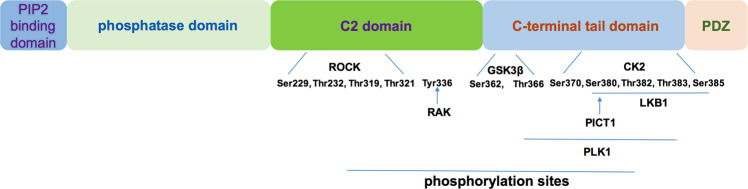
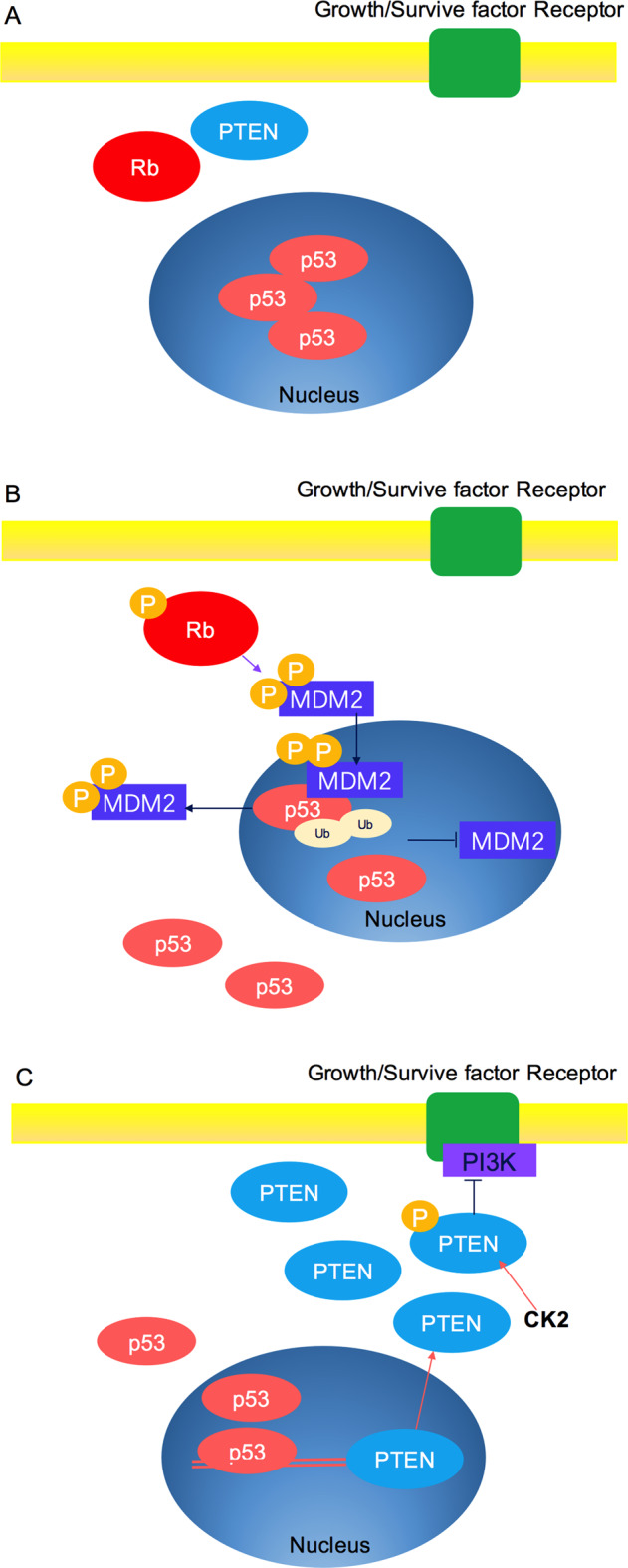
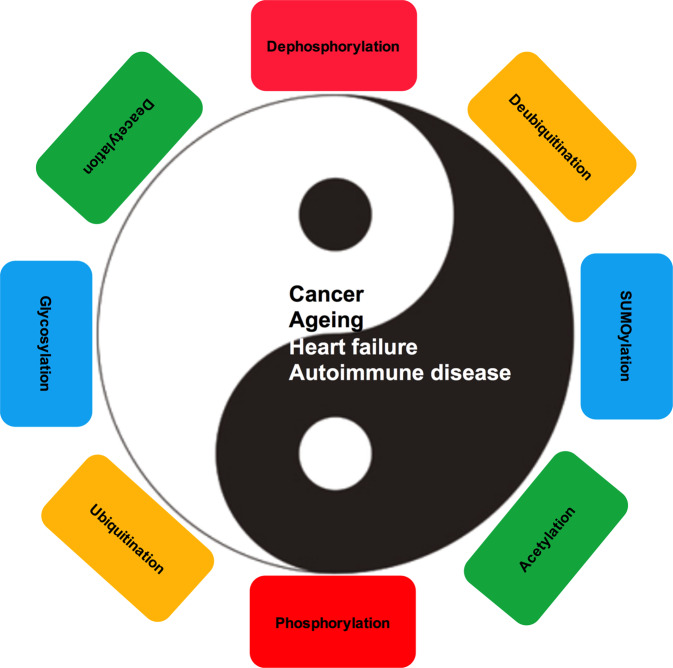
Tumor suppressor genes cooperate with each other in tumors. Three important tumor suppressor proteins, retinoblastoma (Rb), p53, phosphatase, and tensin homolog deleted on chromosome ten (PTEN) are functionally associated and they regulated by post-translational modification (PTMs) as well. PTMs include phosphorylation, SUMOylation, acetylation, and other novel modifications becoming growing appreciated. Because most of PTMs are reversible, normal cells use them as a switch to control the state of cells being the resting or proliferating, and PTMs also involve in cell survival and cell cycle, which may lead to abnormal proliferation and tumorigenesis. Although a lot of studies focus on the importance of each kind of PTM, further discoveries shows that tumor suppressor genes (TSGs) form a complex “network” by the interaction of modification. Recently, there are several promising strategies for TSGs for they change more frequently than carcinogenic genes in cancers. We here review the necessity, characteristics, and mechanisms of each kind of post-translational modification on Rb, p53, PTEN, and its influence on the precise and selective function. We also discuss the current antitumoral therapies of Rb, p53 and PTEN as predictive, prognostic, and therapeutic target in cancer.
Overview
The claims and statistics of this paper haven’t been checked yet.
Run the check — free, no account needed. It reads the open-access text and checks the sources it cites.
Integrity signals
Registry
Cites
Statistics
Figures

Verification
Claims the paper makes
The claims and statistics of this paper haven’t been checked yet.
Run the check — free, no account needed. It reads the open-access text and checks the sources it cites.
Claims other papers make about this one
Each is checked against this paper’s own text: does it say what the citing paper says it does?
The cited source says what the claim attributes to it.
In the citing paper
“PTMs are known to function as molecular switches by affecting protein-protein interactions (Chen, Liu et al., 2020, Nishi, Hashimoto et al., 2011).”
From SHARPIN S146 phosphorylation mediates ARP2/3 interaction, cancer cell invasion and metastasis (2022) · cites this paper as Chen, Liu et al., 2020
Self-check
Percentages, sums and reported differences re-computed from the paper’s own numbers.
The self-check needs the paper’s full text.
Citations
Cites
1 retracted
Items 401–521 of 521
Bourguignon, L. (2019) · Frontiers in Oncology · doi:10.3389/fonc.2019.00492 · Cited by 58
Restoring wtp53 activity in HIPK2 depleted MCF7 cells by modulating metallothionein and zinc
Puca, R., Nardinocchi, L., Bossi, G., Sacchi, A., Rechavi, G., Givol, D., & D’Orazi, G. (2008) · Experimental Cell Research · doi:10.1016/j.yexcr.2008.10.018 · Cited by 58
Lin, L., Ozaki, T., Takada, Y., Kageyama, H., Nakamura, Y., Hata, A., Zhang, J., Simonds, W. F., Nakagawara, A., & Koseki, H. (2005) · Oncogene · doi:10.1038/sj.onc.1208554 · Cited by 57
Molecular Features of Phosphatase and Tensin Homolog (PTEN) Regulation by C-terminal Phosphorylation
Chen, Z., Dempsey, D. R., Thomas, S. N., Hayward, D., Bolduc, D. M., & Cole, P. A. (2016) · Journal of Biological Chemistry · doi:10.1074/jbc.m116.728980 · Cited by 57
Control of p53 multimerization by Ubc13 is JNK-regulated
Topisirović, I., Gutierrez, G. J., Chen, M., Appella, E., Borden, K. L. B., & Ronai, Z. A. (2009) · Proceedings of the National Academy of Sciences · doi:10.1073/pnas.0900596106 · Cited by 57
Deubiquitinating enzyme regulation of the p53 pathway: A lesson from Otub1
Sun, X. (2014) · World Journal of Biological Chemistry · doi:10.4331/wjbc.v5.i2.75 · Cited by 56
Liu, X., & Klionsky, D. J. (2017) · Autophagy · doi:10.1080/15548627.2017.1386821 · Cited by 56
The E3 ligase PIRH2 polyubiquitylates CHK2 and regulates its turnover
Bohgaki, M., Hakem, A., Halaby, M. J., Bohgaki, T., Li, Q., Bissey, P.-A., Shloush, J., Kislinger, T., Sanchez, O., Sheng, Y., et al. (2013) · Cell Death and Differentiation · doi:10.1038/cdd.2013.7 · Cited by 56
Zhang, J., Biggar, K. K., & Storey, K. B. (2012) · Gene · doi:10.1016/j.gene.2012.10.049 · Cited by 56
NF1 heterozygosity fosters de novo tumorigenesis but impairs malignant transformation
Brosseau, J., Liao, C.-P., Wang, Y., Ramani, V., Vandergriff, T. W., Lee, M., Patel, A., Ariizumi, K., & Le, L. Q. (2018) · Nature Communications · doi:10.1038/s41467-018-07452-y · Cited by 56
Borges, H. L., Chao, C., Xu, Y., Linden, R., & Wang, J. Y. J. (2004) · Cell Death and Differentiation · doi:10.1038/sj.cdd.4401366 · Cited by 55
DNA methylation analysis of the mammalian PEG3 imprinted domain
Huang, J. M., & Kim, J. (2009) · Gene · doi:10.1016/j.gene.2009.04.016 · Cited by 55
Mester, J. L., & Eng, C. (2015) · Handbook of clinical neurology · doi:10.1016/b978-0-444-62702-5.00009-3 · Cited by 55
Trip12 is an E3 ubiquitin ligase for USP 7/ HAUSP involved in the DNA damage response
Liu, X., Yang, X., Li, Y., Zhao, S., Li, C., Ma, P., & Mao, B. (2016) · FEBS Letters · doi:10.1002/1873-3468.12471 · Cited by 54
Inactivation of arf-bp1 Induces p53 Activation and Diabetic Phenotypes in Mice
Kon, N., Zhong, J., Qiang, L., Accili, D., & Gu, W. J. (2011) · Journal of Biological Chemistry · doi:10.1074/jbc.m111.322867 · Cited by 54
The Deubiquitinating Enzyme USP24 Is a Regulator of the UV Damage Response
Zhang, L., Nemzow, L., Chen, H., Lubin, A., Rong, X., Sun, Z., Harris, T. K., & Gong, F. (2015) · Cell Reports · doi:10.1016/j.celrep.2014.12.024 · Cited by 53
Molecular Genetics of RB1 ——The Retinoblastoma Gene
Leiderman, Y. I., Kiss, S., & Mukai, S. (2007) · Seminars in Ophthalmology · doi:10.1080/08820530701745165 · Cited by 52
Multiple functions of DYRK2 in cancer and tissue development
Yoshida, S., & Yoshida, K. (2019) · FEBS Letters · doi:10.1002/1873-3468.13601 · Cited by 52
Heo, K., Berk, B. C., & Abe, J. (2015) · Antioxidants and Redox Signaling · doi:10.1089/ars.2015.6556 · Cited by 51
Protein import into chloroplasts and its regulation by the ubiquitin-proteasome system
Thomson, S. M., Pulido, P., & Jarvis, P. (2020) · Biochemical Society Transactions · doi:10.1042/bst20190274 · Cited by 51
Small molecule regulators of Rb–E2F pathway as modulators of transcription
Singh, S., Johnson, J. L., & Chellappan, S. (2010) · Biochimica et Biophysica Acta (BBA) - Gene Regulatory Mechanisms · doi:10.1016/j.bbagrm.2010.07.004 · Cited by 51
p53 is involved in the p120E4F-mediated growth arrest
Sandy, P., Gostissa, M., Fogal, V., Cecco, L. D., Szalay, K. S., Rooney, R. J., Schneider, C., & Sal, G. D. (2000) · Oncogene · doi:10.1038/sj.onc.1203250 · Cited by 51
Li, Y., Sun, X., Elferich, J., Shinde, U. P., David, L. L., & Dai, M. (2014) · Journal of Biological Chemistry · doi:10.1074/jbc.m113.533109 · Cited by 50
Dogliotti, G., Kullmann, L., Dhumale, P., Thiele, C., Panichkina, O., Mendl, G., Houben, R., Haferkamp, S., Püschel, A. W., & Krahn, M. P. (2017) · Nature Communications · doi:10.1038/ncomms15747 · Cited by 49
PTEN in kidney cancer: A review and meta-analysis
Que, W., Qiu, H., Cheng, Y., Liu, M., & Wu, C. (2018) · Clinica Chimica Acta · doi:10.1016/j.cca.2018.01.031 · Cited by 49
Ramaiah, M. J., & Sakthiprasad, V. (2018) · Gene · doi:10.1016/j.gene.2018.08.022 · Cited by 49
Targeting the mTOR Pathway Using Deforolimus in Cancer Therapy
Mahalingam, D., Sankhala, K. K., Mita, A. C., Giles, F. J., & Mita, M. M. (2009) · Future Oncology · doi:10.2217/fon.09.9 · Cited by 48
Post‐translational control of transcription factors: methylation ranks highly
Carr, S. M., Roworth, A. P., Chan, C. S. C., & Thangue, N. B. L. (2015) · FEBS Journal · doi:10.1111/febs.13524 · Cited by 47
Wang, B., Li, D., Filkowski, J. N., Rodriguez‐Juarez, R., Storozynsky, Q. T., Malach, M., Carpenter, E., & Kovalchuk, O. (2018) · Oncogenesis · doi:10.1038/s41389-018-0063-5 · Cited by 46
Antonucci, L., Egger, J. V., & Krucher, N. A. (2014) · Cell Cycle · doi:10.4161/15384101.2014.964093 · Cited by 45
The regulation of radiosensitivity by p53 and its acetylation
Zhang, J., Shen, L., & Sun, L. (2015) · Cancer Letters · doi:10.1016/j.canlet.2015.04.015 · Cited by 45
The PTEN protein: cellular localization and post-translational regulation
Leslie, N. R., Kriplani, N., Hermida, M. A., Garcia, V. A., & Wise, H. M. (2016) · Biochemical Society Transactions · doi:10.1042/bst20150224 · Cited by 45
Ataxia-Telangiectasia Mutated Modulation of Carbon Metabolism in Cancer
Dahl, E. S., & Aird, K. M. (2017) · Frontiers in Oncology · doi:10.3389/fonc.2017.00291 · Cited by 45
Marshall, A. E., Roes, M. V., Passos, D. T., DeWeerd, M. C., Chaikovsky, A. C., Sage, J., Howlett, C. J., & Dick, F. A. (2019) · Molecular and Cellular Biology · doi:10.1128/mcb.00105-19 · Cited by 45
miR-100 antagonism triggers apoptosis by inhibiting ubiquitination-mediated p53 degradation
Yang, G., Gong, Y., Wang, Q., Wang, L., & Zhang, X. (2016) · Oncogene · doi:10.1038/onc.2016.270 · Cited by 43
Tumor suppressor C-RASSF proteins
Iwasa, H., Hossain, S., & Hata, Y. (2018) · Cellular and Molecular Life Sciences · doi:10.1007/s00018-018-2756-5 · Cited by 43
Jung, Y.-S., Qian, Y., & Chen, X. (2011) · Journal of Biological Chemistry · doi:10.1074/jbc.m111.261537 · Cited by 42
Deubiquitylation of deubiquitylases
Haq, S., & Ramakrishna, S. (2017) · Open Biology · doi:10.1098/rsob.170016 · Cited by 42
Structural and Functional Comparison of the RING Domains of Two p53 E3 Ligases, Mdm2 and Pirh2
Shloush, J., Vlassov, J. E., Engson, I., Duan, S., Saridakis, V., Dhe-paganon, S., Raught, B., Sheng, Y., & Arrowsmith, C. H. (2011) · Journal of Biological Chemistry · doi:10.1074/jbc.m110.157669 · Cited by 42
USP49 participates in the DNA damage response by forming a positive feedback loop with p53
Tu, R., Kang, W., Yang, X.-F., Zhang, Q., Xie, X., Liu, W., Zhang, J., Zhang, X.-D., Wang, H., & Du, R. (2018) · Cell Death and Disease · doi:10.1038/s41419-018-0475-3 · Cited by 41
Novel ovarian cancer maintenance therapy targeted at mortalin and mutant p53
Ramraj, S. K., Elayapillai, S. P., Pelikan, R. C., Zhao, Y. D., Isingizwe, Z. R., Kennedy, A. L., Lightfoot, S. A., & Benbrook, D. M. (2019) · International Journal of Cancer · doi:10.1002/ijc.32830 · Cited by 41
Ubiquitin‐family modifications in the replication of DNA damage
Lehmann, A. R. (2011) · FEBS Letters · doi:10.1016/j.febslet.2011.06.005 · Cited by 40
SUMOylation of Rb enhances its binding with CDK2 and phosphorylation at early G1 phase
Meng, F., Qian, J., Yue, H., Li, X., & Xue, K. (2016) · Cell Cycle · doi:10.1080/15384101.2016.1182267 · Cited by 40
Nuclear localization of metabolic enzymes in immunity and metastasis
He, Y., Gao, M., Cao, Y., Tang, H., Liu, S., & Tao, Y. (2017) · Biochimica et Biophysica Acta (BBA) - Reviews on Cancer · doi:10.1016/j.bbcan.2017.07.002 · Cited by 40
Self-citationThe MDM2/MDMX-p53 Antagonist PM2 Radiosensitizes Wild-Type p53 Tumors
Spiegelberg, D., Mortensen, A. C. L., Lundsten, S., Brown, C. J., Lane, D. P., & Nestor, M. (2018) · Cancer Research · doi:10.1158/0008-5472.can-18-0440 · Cited by 40
Dephosphorylation of the Retinoblastoma protein (Rb) inhibits cancer cell EMT via Zeb
Egger, J. V., Lane, M. V., Antonucci, L., Dedi, B., & Krucher, N. A. (2016) · Cancer Biology & Therapy · doi:10.1080/15384047.2016.1235668 · Cited by 39
SETD3 is a positive regulator of DNA-damage-induced apoptosis
Abaev-Schneiderman, E., Lee, A.-E., & Levy, D. (2019) · Cell Death and Disease · doi:10.1038/s41419-019-1328-4 · Cited by 39
MDM2 promotes genome instability by ubiquitinating the transcription factor HBP1
Cao, Z., Xue, J., Cheng, Y., Wang, J., Liu, Y., Li, H., Jiang, W., Li, G., Gui, Y., & Zhang, X. (2019) · Oncogene · doi:10.1038/s41388-019-0761-2 · Cited by 38
Wang, Q., Feng, Y., Peng, W., Ji, D., Zhang, Z., Qian, W., Li, J., Gu, Q., Zhang, D., Tang, J., et al. (2019) · Cancer Letters · doi:10.1016/j.canlet.2019.02.041 · Cited by 38
Chen, L., Shi, Y., Liu, N., Wang, Z., Yang, R., Yan, B., Liu, X., Lai, W., Liu, Y., Xiao, D., et al. (2019) · Epigenetics & Chromatin · doi:10.1186/s13072-019-0302-9 · Cited by 38
Self-citationCARPs enhance p53 turnover by degrading 14-3-3σ and stabilizing MDM2
Yang, W., Dicker, D. T., Chen, J., & El‐Deiry, W. S. (2008) · Cell Cycle · doi:10.4161/cc.7.5.5701 · Cited by 37
Liu, S., Yan, B., Lai, W., Chen, L., Xiao, D., Xi, S., Jiang, Y., Dong, X., An, J., Chen, X., et al. (2014) · Biochimica et Biophysica Acta (BBA) - Gene Regulatory Mechanisms · doi:10.1016/j.bbagrm.2014.05.017 · Cited by 37
Self-citationp53-Induced Apoptosis and Inhibitors of p53
Nayak, S. K., Panesar, P. S., & Kumar, H. (2009) · Current Medicinal Chemistry · doi:10.2174/092986709788681976 · Cited by 37
p53-Mdm2 Interaction Inhibitors as Novel Nongenotoxic Anticancer Agents
Nayak, S. K., Khatik, G. L., Narang, R., Monga, V., & Chopra, H. K. (2017) · Current Cancer Drug Targets · doi:10.2174/1568009617666170623111953 · Cited by 37
Lee, H.-K., Lee, E., Seo, J., Jeong, M., Lee, S.-H., Kim, S., Jho, E., Choi, C. H., Chung, J., & Song, J. (2018) · Oncogene · doi:10.1038/s41388-018-0267-3 · Cited by 36
WWP2 is a physiological ubiquitin ligase for phosphatase and tensin homolog (PTEN) in mice
Li, H., Zhang, P., Zhang, Q., Li, C., Zou, W., Chang, Z., Cui, C., & Zhang, L. (2018) · Journal of Biological Chemistry · doi:10.1074/jbc.ra117.001060 · Cited by 36
Santag, S., Jäger, W., Karsten, C. B., Kati, S., Pietrek, M., Steinemann, D., Sarek, G., Ojala, P. M., & Schulz, T. F. (2012) · Oncogene · doi:10.1038/onc.2012.385 · Cited by 36
Xie, C., Lu, H., Nomura, A., Hanse, E. A., Forster, C. L., Parker, J., Linden, M. A., Karasch, C., & Hallstrom, T. C. (2015) · Molecular Cancer · doi:10.1186/s12943-015-0360-y · Cited by 35
Zou, S., Zhu, Y., Wang, B., Qian, F., Zhang, X., Wang, L., Fu, C., Bao, H., Xie, M., Gao, S., et al. (2016) · Molecular Neurobiology · doi:10.1007/s12035-016-0033-x · Cited by 35
Drake, L. E., & Macleod, K. F. (2013) · The Journal of Pathology · doi:10.1002/path.4298 · Cited by 34
Jochemsen, A. G., & Shiloh, Y. (2010) · Cell · doi:10.1016/j.cell.2010.01.034 · Cited by 34
A Designed Peptide Targets Two Types of Modifications of p53 with Anti-cancer Activity
Liang, L., Wang, H., Shi, H., Li, Z., Yao, H., Bu, Z., Song, N., Li, C., Xiang, D., Zhang, Y., et al. (2018) · Cell chemical biology · doi:10.1016/j.chembiol.2018.03.010 · Cited by 34
Ka, W. H., Cho, S. K., Chun, B. N., Byun, S. Y., & Ahn, J. C. (2018) · Breast Cancer · doi:10.1007/s12282-018-0849-5 · Cited by 32
Bulatov, E., Valiullina, A., Sayarova, R., & Rizvanov, A. A. (2018) · Immunology Letters · doi:10.1016/j.imlet.2018.08.001 · Cited by 32
The Yin and Yang of cancer genes
Bashyam, M. D., Animireddy, S., Bala, P., Naz, A., & George, S. A. (2019) · Gene · doi:10.1016/j.gene.2019.04.025 · Cited by 31
RETRA exerts anticancer activity in Ewing’s sarcoma cells independent of their TP53 status
Sonnemann, J., Grauel, D., Blümel, L., Hentschel, J., Marx, C., Blumrich, A., Focke, K., Becker, S., Wittig, S., Schinkel, S., et al. (2015) · European Journal of Cancer · doi:10.1016/j.ejca.2015.02.016 · Cited by 28
Post-translational modifications in tumor biomarkers: the next challenge for aptamers?
Díaz‐Fernández, A., Miranda‐Castro, R., de-los-Santos-Álvarez, N., & Lobo-Castañón, M. J. (2018) · Analytical and Bioanalytical Chemistry · doi:10.1007/s00216-018-0861-9 · Cited by 28
Infantile Lhermitte-Duclos Disease Treated Successfully With Rapamycin
Zak, M., Ledbetter, M., & Maertens, P. M. (2016) · Journal of Child Neurology · doi:10.1177/0883073816681340 · Cited by 28
Mutation at p53 serine 389 does not rescue the embryonic lethality in mdm2 or mdm4 null mice
Iwakuma, T., Parant, J. M., Fasulo, M., Zwart, E., Jacks, T., de Vries, A., & Lozano, G. (2004) · Oncogene · doi:10.1038/sj.onc.1207793 · Cited by 27
Wu, Z., Sun, N., Chien, K., & Chao, C. C. ‐. (2011) · Biochemical Pharmacology · doi:10.1016/j.bcp.2011.08.018 · Cited by 27
Regulatory Network of ARF in Cancer Development.
Ko, A., Han, S. Y., & Song, J. (2018) · Europe PMC (PubMed Central) · doi:10.14348/molcells.2018.0100 · Cited by 27
The role of acetylation sites in the regulation of p53 activity
Wang, Y., Chen, Y., Chen, Q., Zhang, X., Wang, H., Wang, Z., Wang, J., & Tian, C. (2019) · Molecular Biology Reports · doi:10.1007/s11033-019-05141-7 · Cited by 27
Fascaplysin Sensitizes Anti-Cancer Effects of Drugs Targeting AKT and AMPK
Oh, T.-I., Lee, J. H., Kim, S., Nam, T.-J., Kim, Y. S., Kim, B. M., Yim, W. J., & Lim, J.-H. (2017) · Molecules · doi:10.3390/molecules23010042 · Cited by 26
Sharma, P., & Kuehn, M. R. (2016) · Oncogene · doi:10.1038/onc.2016.177 · Cited by 25
Cross-Generational Effects of Alcohol Dependence in Humans on HRAS and TP53 Methylation in Offspring
Hill, S. Y., Rompala, G. R., Homanics, G. E., & Zezza, N. (2017) · Epigenomics · doi:10.2217/epi-2017-0052 · Cited by 25
Parris, G. E. (2005) · Medical Hypotheses · doi:10.1016/j.mehy.2005.08.009 · Cited by 25
Warnock, L. J., Knox, A. A., Mee, T. R., Raines, S. A., & Milner, J. (2008) · Cancer Biology & Therapy · doi:10.4161/cbt.7.9.6473 · Cited by 25
Jiang, Y., He, Y., Liu, S., & Tao, Y. (2017) · 癌症:英文版 · doi:10.1186/s40880-017-0248-x · Cited by 25
Self-citationColorectal cancer: the APC-lncRNA link
Morin, P. J. (2019) · Journal of Clinical Investigation · doi:10.1172/jci125985 · Cited by 25
The Role of RB in Prostate Cancer Progression
Burkhart, D. L., Morel, K. L., Sheahan, A. V., Richards, Z. A., & Ellis, L. (2019) · Advances in experimental medicine and biology · doi:10.1007/978-3-030-32656-2_13 · Cited by 24
Analysis of ubiquitin signaling and chain topology cross-talk
Mendes, M. L., Fougeras, M. R., & Dittmar, G. (2020) · Journal of Proteomics · doi:10.1016/j.jprot.2020.103634 · Cited by 23
Mutant p53 Sequestration of the MDM2 Acidic Domain Inhibits E3 Ligase Activity
Yang, L., Song, T., Cheng, Q., Chen, L., & Chen, J. (2018) · Molecular and Cellular Biology · doi:10.1128/mcb.00375-18 · Cited by 23
Self-citationInvolvement of USP24 in the DNA damage response
Zhang, L., & Gong, F. (2015) · Molecular & Cellular Oncology · doi:10.1080/23723556.2015.1011888 · Cited by 22
Lee, S.-Y., Park, J., Jeong, S., Kim, B., Kang, Y., Xu, Y., & Chung, S. (2018) · Oncogene · doi:10.1038/s41388-018-0542-3 · Cited by 22
R280T mutation of p53 gene promotes proliferation of human glioma cells through GSK-3β/PTEN pathway
Lin, C., Liang, Y., Zhu, H., Zhang, J., & Zhong, X. (2012) · Neuroscience Letters · doi:10.1016/j.neulet.2012.09.022 · Cited by 22
Tumor Suppressor p53-Mediated Structural Reorganization of the Transcriptional Coactivator p300
Ghosh, R., Kaypee, S., Shasmal, M., Kundu, T. K., Roy, S., & Sengupta, J. (2019) · Biochemistry · doi:10.1021/acs.biochem.9b00333 · Cited by 22
Out of the jaws of death: PRMT5 steers p53
Berger, S. L. (2008) · Nature Cell Biology · doi:10.1038/ncb1208-1389 · Cited by 21
Pintus, S. S., Ivanisenko, N. V., Сергеевич, Д. П., Ivanisenko, T., Ramachandran, S., Kolchanov, N. A., & Иванисенко, В. А. (2012) · Journal of Biomolecular Structure and Dynamics · doi:10.1080/07391102.2012.691364 · Cited by 19
P53 Tumor Suppression Network in Cancer Epigenetics
Mishra, A., Brat, D. J., & Verma, M. (2014) · Methods in molecular biology · doi:10.1007/978-1-4939-1804-1_31 · Cited by 19
Characterization of nuclear PTEN and its post translational modifications
Ho, J., Bassi, C., & Stambolic, V. (2015) · Methods · doi:10.1016/j.ymeth.2015.01.006 · Cited by 18
Wang, L., Luk, C. T., Schroer, S. A., Smith, A. M., Xie, L. P., Cai, E. P., Gaisano, H. Y., MacDonald, P. E., Hao, Z., Mak, T. W., et al. (2014) · Diabetologia · doi:10.1007/s00125-014-3295-8 · Cited by 18
Acetylation and phosphorylation of the carboxy-terminal domain of p53: regulative significance.
Chiarugi, V. P., Cinelli, M. P., & Magnelli, L. (1998) · PubMed · Cited by 18
Moscetti, I., Bizzarri, A. R., & Cannistraro, S. (2018) · International Journal of Nanomedicine · doi:10.2147/ijn.s152214 · Cited by 18
Serine 312 phosphorylation is dispensable for wild-type p53 functions in vivo
Lee, M. K., Tong, W., Wang, Z. Q., & Sabapathy, K. (2010) · Cell Death and Differentiation · doi:10.1038/cdd.2010.90 · Cited by 17
Horita, H. N., Law, A., & Middleton, K. M. (2018) · Proteomes · doi:10.3390/proteomes6020024 · Cited by 17
Kalsoom, S., Wasim, M., Afzal, S., Shahzad, M. S., Ramzan, S., Awan, A. R., Anjum, A. A., & Ramzan, K. (2015) · Europe PMC (PubMed Central) · Cited by 17
CARPs are E3 ligases that target apical caspases and p53
Yang, W., & El‐Deiry, W. S. (2007) · Cancer Biology & Therapy · doi:10.4161/cbt.6.11.4939 · Cited by 17
Lezina, L., Spriggs, R. V., Beck, D., Jones, C., Dudek, K., Bzura, A., Jones, G. D. D., Packham, G., Willis, A. E., & Wagner, S. D. (2018) · Blood Advances · doi:10.1182/bloodadvances.2017015560 · Cited by 17
Liu, H., Wang, J., Liu, Y., Hu, L., Zhang, C., Xing, B., & Du, X. (2018) · Biochimica et Biophysica Acta (BBA) - Molecular Cell Research · doi:10.1016/j.bbamcr.2018.08.016 · Cited by 17
FGFR2-mediated phosphorylation of PTEN at tyrosine 240 contributes to the radioresistance of glioma
Yan, Y., Li, Z., Zeng, S., Wang, X., Gong, Z., & Xu, Z. (2019) · Journal of Cell Communication and Signaling · doi:10.1007/s12079-019-00518-6 · Cited by 17
p53 Mutant p53N236S Induces Neural Tube Defects in Female Embryos
Zhao, J., Tian, Y., Zhang, H., Qu, L., Chen, Y., Liu, Q., Luo, Y., & Wu, X. (2019) · International Journal of Biological Sciences · doi:10.7150/ijbs.31451 · Cited by 17
Song, H., Lin, C., Yao, E., Zhang, K., Li, X., Wu, Q., & Chuang, P. (2017) · Journal of Biological Chemistry · doi:10.1074/jbc.m116.765727 · Cited by 16
Liu, L., Yang, L., Chang, H., Chen, Y., Zhang, F., Feng, S., Peng, J., Ren, C., & Zhang, X. (2019) · International Journal of Oncology · doi:10.3892/ijo.2019.4681 · Cited by 15
Kim, J., Keay, S. K., You, S., Loda, M. F., & Freeman, M. R. (2012) · PLoS ONE · doi:10.1371/journal.pone.0050392 · Cited by 14
Abramowicz, A., & Goś, M. (2015) · Postępy Higieny i Medycyny Doświadczalnej · doi:10.5604/17322693.1185213 · Cited by 14
The ASPP proteins complex and cooperate with p300 to modulate the transcriptional activity of p53
Gillotin, S., & Lü, X. (2011) · FEBS Letters · doi:10.1016/j.febslet.2011.04.012 · Cited by 13
CACUL1/CAC1 attenuates p53 activity through PML post-translational modification
Fukuda, T., Kigoshi-Tansho, Y., Naganuma, T., Kazaana, A., Okajima, T., Tsuruta, F., & Chiba, T. (2016) · Biochemical and Biophysical Research Communications · doi:10.1016/j.bbrc.2016.11.125 · Cited by 12
Yang, T., Choi, Y., Joh, J., Cho, S. K., Kim, D. S., & Park, S. (2019) · Canadian Journal of Gastroenterology and Hepatology · doi:10.1155/2019/9015453 · Cited by 12
Canfield, K., Wells, W. A., Geradts, J., Kinlaw, W. B., Cheng, C., & Kurokawa, M. (2016) · PubMed · Cited by 11
Ubiquitylation of PTEN drives fibrosis in diabetic kidney disease
Allison, S. J. (2019) · Nature Reviews Nephrology · doi:10.1038/s41581-019-0130-y · Cited by 11
Inactivation of the MDM2 RING domain enhances p53 transcriptional activity in mice
Tian, H., Tackmann, N. R., Jin, A., Zheng, J., & Zhang, Y. (2017) · Journal of Biological Chemistry · doi:10.1074/jbc.ra117.000122 · Cited by 9
A novel regulator (USP10) of p53: Implications for tumor suppression and therapeutic targeting
Reece, K. M., & Figg, W. D. (2010) · Cancer Biology & Therapy · doi:10.4161/cbt.9.8.11690 · Cited by 8
Targeting the ubiquitin proteasome system in diabetic cardiomyopathy
Bozi, L. H. M., & Campos, J. C. (2017) · Journal of Molecular and Cellular Cardiology · doi:10.1016/j.yjmcc.2017.06.009 · Cited by 7
El-Dahr, S. S., Aboudehen, K., & Dipp, S. (2008) · American Journal of Physiology-Renal Physiology · doi:10.1152/ajprenal.90378.2008 · Cited by 7
How treatments with endocrine and metabolic drugs influence pituitary cell function
Tulipano, G. (2020) · Endocrine Connections · doi:10.1530/ec-19-0482 · Cited by 6
Joyce, C., Rayi, A., & Kasi, A. (2021) · StatPearls · Cited by 6
Wang, B., Dan, J., Li, H., Hou, J. Y., Shi, M., Singh, S. K., Chang, J. T., & Luo, Y. (2018) · FEBS Letters · doi:10.1002/1873-3468.13223 · Cited by 6
Epstein, R. J. (2015) · Future Oncology · doi:10.2217/fon.14.315 · Cited by 4
The role of the cell cycle in genitourinary carcinoma
McGarvey, T. W., & Malkowicz, S. B. (1996) · World Journal of Urology · doi:10.1007/bf00184603 · Cited by 3
In Vivo Detection and Analysis of Rb Protein SUMOylation in Human Cells
Meng, F., Li, X., Ren, H., & Qian, J. (2017) · Journal of Visualized Experiments · doi:10.3791/56096 · Cited by 2
Cited by
Sorted by citations
Targeting p53 pathways: mechanisms, structures, and advances in therapy
Wang, H., Guo, M., Wei, H., & Chen, Y. (2023) · Signal Transduction and Targeted Therapy · doi:10.1038/s41392-023-01347-1 · Cited by 1,016
p53 signaling in cancer progression and therapy
Marei, H. E. S., Thani, A. A. A., Afifi, N. M., Hasan, A., Caceci, T., Pozzoli, G., Morrione, A., Giordano, A., & Cenciarelli, C. (2021) · Cancer Cell International · doi:10.1186/s12935-021-02396-8 · Cited by 628
Mutant p53 in cancer: from molecular mechanism to therapeutic modulation
Chen, X., Zhang, T., Su, W., Dou, Z., Zhao, D., Jin, X., Lei, H., Wang, J., Xie, X., Cheng, B., et al. (2022) · Cell Death & Disease · doi:10.1038/s41419-022-05408-1 · Cited by 494
Zhong, Q., Xiao, X., Qiu, Y., Xu, Z., Chen, C., Chong, B., Zhao, X., Hai, S., Li, S., An, Z., et al. (2023) · MedComm · doi:10.1002/mco2.261 · Cited by 442
Deubiquitinating enzymes (DUBs): Regulation, homeostasis, and oxidative stress response
Snyder, N. A., & Silva, G. M. (2021) · Journal of Biological Chemistry · doi:10.1016/j.jbc.2021.101077 · Cited by 371
Metadata
- Authors
- Chen, L., Liu, S., & Tao, Y.
- Affiliations
- Central South University (CN)
- Corresponding author
- Tao, Yongguang
- Venue
- Signal Transduction and Targeted Therapy
- Published
- 2020-06-10
- Volume
- 5
- Issue
- 1
- Pages
- 90-90
- ISSN
- 2059-3635 (ISSN-L)
- PMC
- PMC7293209
- OpenAlex
- W3035758066
- Cited by
- 449
- References
- 522
- Citations by year
- 2026: 52 · 2025: 89 · 2024: 110 · 2023: 87 · 2022: 65 · 2021: 38 · 2020: 3
- FWCI
- 5.23
- Type
- journal article
- Language
- en
- Open access
- gold
- doi.org
- Locations
- Signal Transduction and Targeted Therapy (publishedVersion, cc-by)
- PubMed Central (publishedVersion, cc-by)
- PubMed (publishedVersion)
- Funders
- National Natural Science Foundation of China (81672787, 111 Project, 81672991, 81874139)
- Higher Education Discipline Innovation Project
- Overseas Expertise Introduction Project for Discipline Innovation (“111” Project)
- Topics
- Health Sciences › Medicine › Oncology › Cancer-related Molecular Pathways
- Life Sciences › Biochemistry, Genetics and Molecular Biology › Molecular Biology › PI3K/AKT/mTOR signaling in cancer
- Life Sciences › Biochemistry, Genetics and Molecular Biology › Molecular Biology › Cancer-related gene regulation
- Keywords
- tumor suppressor, post-translational modification, retinoblastoma protein, p53, PTEN, phosphorylation, SUMOylation, acetylation, tumor suppressor network, cell cycle regulation, carcinogenesis, cancer therapy, therapeutic target
- MeSH terms
- Humans, Neoplasms, Protein Processing, Post-Translational, Genes, Tumor Suppressor, Tumor Suppressor Protein p53, Retinoblastoma Protein, PTEN Phosphohydrolase, Carcinogenesis
About these checks
Registry, retraction, Cites and statistics results are computed, not judged, with one exception: a printed reference that no index lists is read once by a model before it counts as a citation error. Claims are extracted by a model and kept only when their quote appears verbatim in the text; each cited source is then checked, with a model’s help, for whether it says what the claim relies on. Those verdicts can be wrong — read the claim’s quote and the cited source before relying on one.
Statistics and arithmetic are recomputed, not judged.
Confidence bands are shown only for fields calibrated on our annotated test set. None is calibrated yet, so no band is shown.
What counts as a claim ›How we measure confidence ›How we check this ›
Are you an author, or do you see a problem with this page? Request a review
