

Pseudomonas aeruginosa: pathogenesis, virulence factors, antibiotic resistance, interaction with host, technology advances and emerging therapeutics
Open accessThe DOI matches its Crossref record; 480 of the 480 references it cites were found in a registry or an index; 5 of the 160 sources its claims cite were checked for support.
Abstract
Pseudomonas aeruginosa (P. aeruginosa) is a Gram-negative opportunistic pathogen that infects patients with cystic fibrosis, burn wounds, immunodeficiency, chronic obstructive pulmonary disorder (COPD), cancer, and severe infection requiring ventilation, such as COVID-19. P. aeruginosa is also a widely-used model bacterium for all biological areas. In addition to continued, intense efforts in understanding bacterial pathogenesis of P. aeruginosa including virulence factors (LPS, quorum sensing, two-component systems, 6 type secretion systems, outer membrane vesicles (OMVs), CRISPR-Cas and their regulation), rapid progress has been made in further studying host-pathogen interaction, particularly host immune networks involving autophagy, inflammasome, non-coding RNAs, cGAS, etc. Furthermore, numerous technologic advances, such as bioinformatics, metabolomics, scRNA-seq, nanoparticles, drug screening, and phage therapy, have been used to improve our understanding of P. aeruginosa pathogenesis and host defense. Nevertheless, much remains to be uncovered about interactions between P. aeruginosa and host immune responses, including mechanisms of drug resistance by known or unannotated bacterial virulence factors as well as mammalian cell signaling pathways. The widespread use of antibiotics and the slow development of effective antimicrobials present daunting challenges and necessitate new theoretical and practical platforms to screen and develop mechanism-tested novel drugs to treat intractable infections, especially those caused by multi-drug resistance strains. Benefited from has advancing in research tools and technology, dissecting this pathogen’s feature has entered into molecular and mechanistic details as well as dynamic and holistic views. Herein, we comprehensively review the progress and discuss the current status of P. aeruginosa biophysical traits, behaviors, virulence factors, invasive regulators, and host defense patterns against its infection, which point out new directions for future investigation and add to the design of novel and/or alternative therapeutics to combat this clinically significant pathogen.
Overview
CoChat Summary
TL;DR
This review synthesizes *Pseudomonas aeruginosa* pathogenesis, virulence factors, antibiotic resistance, host immune interactions, and emerging therapeutics. It emphasizes the pathogen’s MDR clinical burden and persistent gaps in mechanistic understanding and treatment development.
Key findings
- *P. aeruginosa* is an MDR ESKAPE pathogen and WHO “critical” carbapenem-resistant threat, causing infections in cystic fibrosis, burns, COPD, cancer, sepsis, and ventilator-associated pneumonia including COVID-19. The review cites ~700,000 annual deaths from antibiotic-resistant bacterial infections; combined resistance in European populations was 12.9%, Spain hospital-acquired infection 10.5%, Europe nosocomial infections ~9% (fourth commonest pathogen), US HCAI 7.1%, and CHINET identified 301,917 clinical isolates with *P. aeruginosa* fourth at 7.96%.
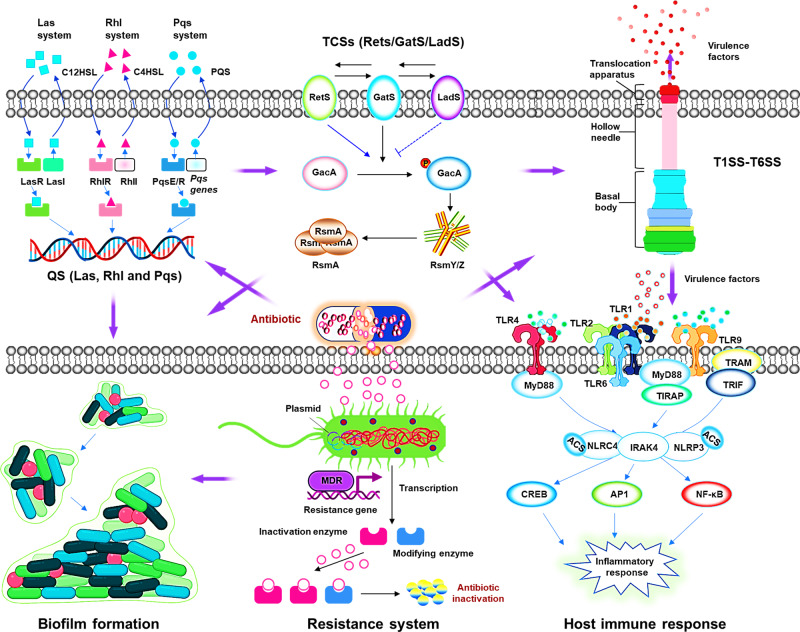
- Virulence and regulation involve LPS, OMVs, six secretion systems (T1–T6), quorum sensing (Las, Rhl, Pqs, Iqs), two-component systems (64 histidine kinases and 72 response regulators; >50% linked to virulence and/or resistance), small non-coding RNAs (573 in PAO1, 233 in PA14, 126 shared), and CRISPR-Cas. T3SS effectors include ExoS (48.3 kDa, 453 aa), ExoT (48.5 kDa, 457 aa), ExoY (41.7 kDa, 378 aa; detected in 80–100% of *P. aeruginosa*), and ExoU (73.9 kDa, 687 aa).
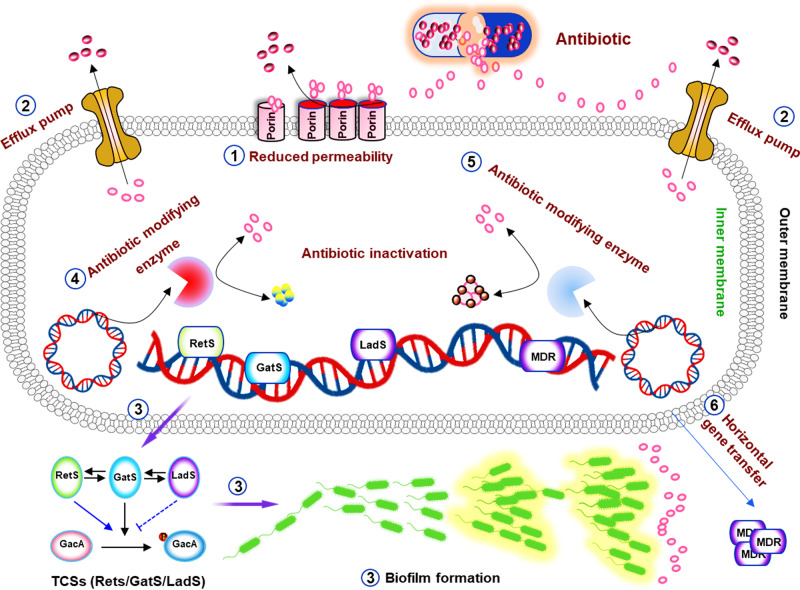
- Antibiotic resistance mechanisms include outer membrane permeability/porins, efflux systems (12 RND family pumps, including MexAB-OprM, MexCD-OprJ, MexEF-OprN, MexXY-OprM), antibiotic-inactivating/modifying enzymes (>50 enzymes), mutations and horizontal gene transfer, and adaptive biofilm/persister resistance.
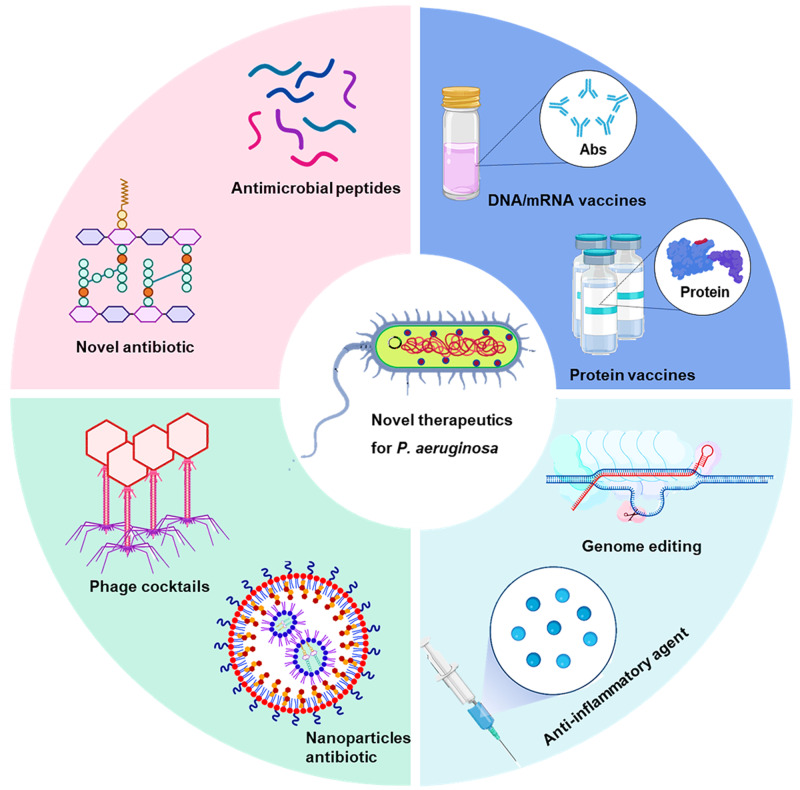
- Host interaction involves TLRs, inflammasomes (NLRC4, AIM2, NLRP3), cGAS-STING, autophagy, and non-coding RNAs. Emerging therapeutics include plazomicin (Phase III cUTI composite cure 81.7% vs meropenem 70.1%; CARE trial 23.5% vs colistin-based 50%), eravacycline (active against 90% of isolates at ≤0.008–2 μg/ml), phage therapy, nanoparticles, gene editing, and vaccines, though no *P. aeruginosa* vaccine is clinically available.
Methods
- Narrative/comprehensive review; no primary experiments. It synthesizes published literature on *P. aeruginosa* biophysical traits, virulence factors, regulatory systems, antibiotic resistance, host defense, technology advances, and therapeutics, with figures and tables.
- Data/sample: published studies and surveillance statistics cited in the text; no systematic search strategy, inclusion/exclusion criteria, or meta-analysis is described.
- Main analysis: thematic synthesis across bacterial pathogenesis, virulence regulation, resistance mechanisms, host immune responses, and therapeutic development.
Limitations
- Stated: many questions remain about emergence of drug-resistant strains, undiscovered virulence factors, immune evasion, resistance mechanisms, host factors, and systematic guidelines; understanding is still limited. The review also notes unresolved/paradoxical inflammasome roles, unsatisfactory QS-targeting therapy with limited in vivo reports, no clinically available vaccine, and phage therapy challenges including neutralizing antibodies, exotoxin safety concerns, and rapid bacterial resistance.
- Evident: as a narrative review, it lacks a described systematic search/selection method and provides no primary data; conclusions rely on cited literature and may reflect selection bias.
Model-written summary. Check it against the paper before relying on it.
Integrity signals
Registry
Cites
Statistics
Figures
Verification
Claims the paper makes
4 Valid · 8 Not valid · 100 Not checked · 19 Own results and interpretations
Every source the paper cites for this claim was checked and supports it.
In the paper
“Our follow-up studies indeed illuminate that oprC dampens host response in cells and mice to Pseudomonas infection by potently enhancing Quorum-Sensing-associated virulence.105”
§ Pseudomonas aeruginosa: pathogenesis, virulence factors, antibiotic resistance, interaction with host, technology advances and emerging therapeutics > Secretion systems, an integral part of virulence platforms and mechanisms > One-step secretion systems
What the sources say
- Supportedcites [105] Gao P oprC impairs host defense by increasing the quorum-sensing-mediated virulence of Pseudomonas aeruginosa Front. Immunol. 2020 11 1696 10.3389/fimmu.2020.01696 32849593 PMC7417366 source
The Discussion summary (p. null, 'Discussion') states that OprC 'regulates the critical QS virulence signals and thereby strongly impacts the host immune response,' matching the paper's title ('oprC Impairs Host Defense by Increasing the Quorum-Sensing-Mediated Virulence of Pseudomonas aeruginosa'). The Results back both arms: virulence/QS ('markedly declined expression of QS-associated genes (lasR, lasI, rhlR, and rhlAB) and typical virulence genes... implied that oprC may participate in bacterial virulence regulation'; reduced pyocyanin, LPS, exoproteases, alginate, rhamnolipids in Figure 2/Supplemental Figures 2A,B) and host effects in cells (MH-S macrophages: reduced GSDMD cleavage/pyroptosis, IL-1β, LDH, cleaved caspase-1) and mice (Figure 3: decreased mortality, bacterial burden, lung barrier damage and inflammation; Figure 4: dampened inflammasome formation and proinflammatory cytokines). The 'potently' qualifier is echoed by the paper's own wording ('OprC potently affected the host-pathogen interaction'; 'strongly impacts the host immune response'). (LLM, conf=0.88)
boostedstates a cause- Asserted: passes — The authors put it forward as true.
- Checkable: passes — It can be checked against evidence.
- Load-bearing: passes — The paper’s conclusions depend on it.
- Based: passes — The paper gives a reason why it holds.
- Supported
Every source the paper cites for this claim was checked and supports it.
In the paper
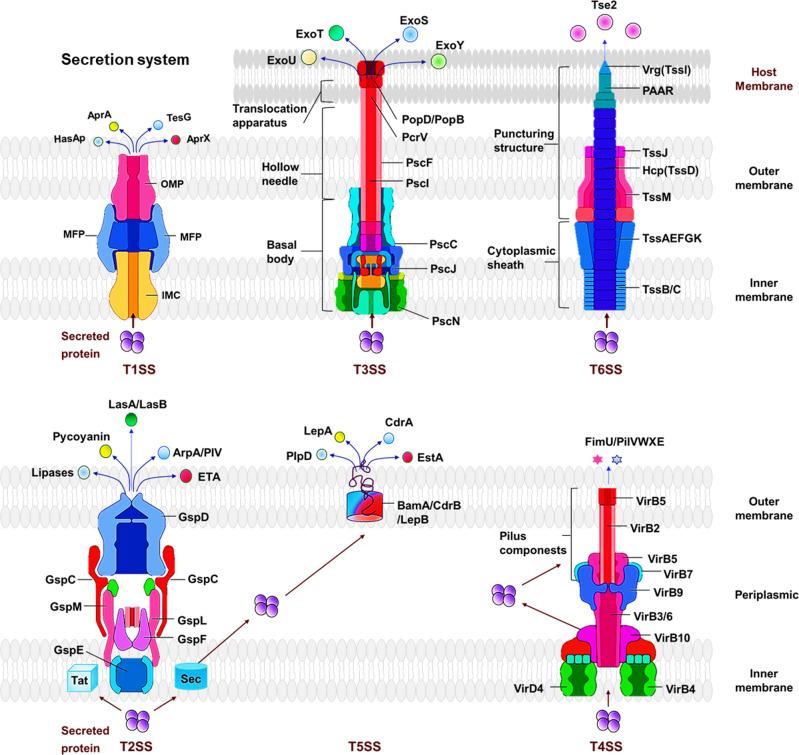
“With collaboration efforts, we characterize H2-T6SS-dependent secretomes that are related to copper (Cu2+)-binding effector azurin (Azu).104”
§ Pseudomonas aeruginosa: pathogenesis, virulence factors, antibiotic resistance, interaction with host, technology advances and emerging therapeutics > Secretion systems, an integral part of virulence platforms and mechanisms > One-step secretion systems
What the sources say
- Supportedcites [104] Han Y A Pseudomonas aeruginosa type VI secretion system regulated by CueR facilitates copper acquisition PLoS Pathog. 2019 15 e1008198 10.1371/journal.ppat.1008198 31790504 PMC6907878 source
The Introduction states the authors used mass spectrometry to compare the secretomes of the ΔretS and ΔretSΔclpV2 strains and that the analysis revealed 21 proteins whose secretion is H2-T6SS-dependent, including the Cu2+-binding protein azurin (Azu) (Introduction). The Results section 'Cu-binding protein Azu is secreted by H2-T6SS' corroborates this, noting Azu abundance was much higher in the ΔretS mutant than in the ΔretSΔclpV2 strain (S1 Table, from the MS secretome) and that Azu secretion depended on ClpV2/Hcp2/tssM2 and VgrG2b. The paraphrase therefore accurately reflects the cited work. (LLM, conf=0.92)
plainstates an association- Asserted: passes — The authors put it forward as true.
- Checkable: passes — It can be checked against evidence.
- Load-bearing: passes — The paper’s conclusions depend on it.
- Based: passes — The paper gives a reason why it holds.
- Supported
Every source the paper cites for this claim was checked and supports it.
In the paper
“we recently describe a function for H2-T6SS of P. aeruginosa for specific delivery of AmpDh3 (a paralogous zinc protease) to the periplasm of a prey bacterium upon contact.106”
§ Pseudomonas aeruginosa: pathogenesis, virulence factors, antibiotic resistance, interaction with host, technology advances and emerging therapeutics > Secretion systems, an integral part of virulence platforms and mechanisms > One-step secretion systems
What the sources say
- Supportedcites [106] Wang T A type VI secretion system delivers a cell wall amidase to target bacterial competitors Mol. Microbiol. 2020 114 308 321 10.1111/mmi.14513 32279364 PMC8011994 source
The Abstract (p. 1) states verbatim that 'the type VI secretion system locus II (H2-T6SS) of P. aeruginosa delivers AmpDh3 (but not AmpD or AmpDh2) to the periplasm of a prey bacterium upon contact', covering both the delivery and its specificity. The Discussion and Introduction reinforce this, noting AmpDh3 is one of three paralogous zinc proteases and that its deleterious activity is denied access to the donor periplasm but targets the recipient's under contact-dependent conditions. (LLM, conf=0.95)
plainstates a cause- Asserted: passes — The authors put it forward as true.
- Checkable: passes — It can be checked against evidence.
- Load-bearing: passes — The paper’s conclusions depend on it.
- Based: passes — The paper gives a reason why it holds.
- Supported
The cited sources support only part of this claim — read each source’s verdict below.
In the paper
“our studies uncover cGAS as a novel nucleic acids’ sensor to initiate immune responses against P. aeruginosa infection through a canonical pathway involving STING and IRF-1,280,309”
§ Pseudomonas aeruginosa: pathogenesis, virulence factors, antibiotic resistance, interaction with host, technology advances and emerging therapeutics > Highly complex and multiple mechanisms in host immune responses to the bacterium > Nucleic acid sensor cGAS is pivotal for eliciting immune reaction
What the sources say
- Partly supportedcites [280] Qin S Small-molecule inhibitor of 8-oxoguanine DNA glycosylase 1 regulates inflammatory responses during Pseudomonas aeruginosa infection J. Immunol. 2020 205 2231 2242 10.4049/jimmunol.1901533 32929043 PMC7541742 sourceExperimental — accuracy not yet measured
Our copy supports cGAS acting as the DNA/nucleic-acid sensor that triggers type I IFN immune responses during P. aeruginosa (PA14) infection, and it does invoke STING: the Abstract states SU0268 'induces the release of type I interferon by the mtDNA-cGAS-STING-IRF3-IFNβ axis, which decreases bacterial loads and halts disease progression,' and the Discussion (p. ~Discussion) says cytoplasmic mtDNA 'can be recognized by DNA sensor cGAS and incite innate immunity responses through the cGAS/STING signaling.' However, the interferon factor the paper actually measures and attributes the pathway to is IRF3, not IRF-1: the Results section heading and text describe the 'cGAS-TBK-IRF3-IFN-β pathway' with augmented 'nuclear transfer of IRF3' and cGAS siRNA reversing IFNβ release, and the Discussion summarizes a 'mtDNA-cGAS/TBK/IRF3/IFNβ axis.' No passage of our copy implicates IRF-1 (the only related items are STAT1 activation in the PCR-array Result and IRF7 in a cited H. pylori study in the Discussion), so the 'IRF-1' element of the claim is not supported by this source. (LLM, conf=0.78)
- Partly supportedcites [309] Zhou, C. et al. Identification of cGAS as an innate immune sensor of extracellular bacterium Pseudomonas aeruginosa. iScience. 24, 101928 (2020). PMC7772558 33385121 sourceExperimental — accuracy not yet measured
Our copy supports cGAS as the DNA sensor initiating anti-P. aeruginosa responses via the canonical cGAS-STING axis (Abstract: 'the canonical cGAS-stimulator of interferon gene (STING)-IFN axis is required for protecting mice from P. aeruginosa-induced mouse acute pulmonary infection'; Results 'cGAS is required for P. aeruginosa-induced type I IFN response in macrophages'). However, the downstream transcription factor this paper identifies is IRF3, not IRF-1: the Results section 'cGAS-IRF3-IFN axis is required for P. aeruginosa-induced unfolded protein response' and the Discussion describe cGAS acting through IRF3 (ChIP-seq/ChIP of IRF3 at BiP and ATF4 promoters) and type I IFNs, and searches for IRF-1 / interferon regulatory factor 1 returned no such pathway in our copy. The IRF-1 component of the citing sentence is therefore unattributable to this source. (LLM, conf=0.80)
plainstates a cause- Asserted: passes — The authors put it forward as true.
- Checkable: passes — It can be checked against evidence.
- Load-bearing: passes — The paper’s conclusions depend on it.
- Based: passes — The paper gives a reason why it holds.
- Partly supported
None of the sources cited for this claim have been checked yet.
In the paper
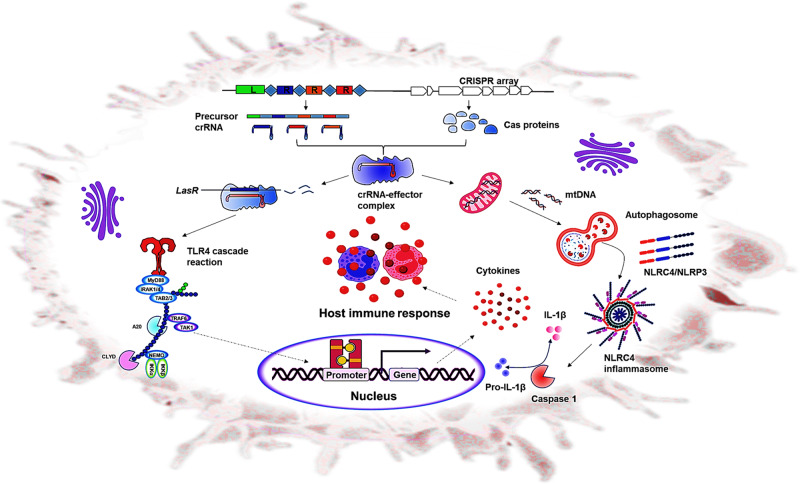
“Our research showed that type I CRISPR-Cas targeted the QS regulator LasR to inhibit toll-like receptor 4 recognition, thereby evading mammalian host immunity, suggesting that the CRISPR system is linked to host immunity modulation by targeting their own genes, potentially evading host defense mechanisms.321”
§ Pseudomonas aeruginosa: pathogenesis, virulence factors, antibiotic resistance, interaction with host, technology advances and emerging therapeutics > Highly complex and multiple mechanisms in host immune responses to the bacterium > CRISPR-mediated adaptive immunity, a double-edged sword for bacterial self-survival and invasion
What the sources say
- Not checked yetcites [321] Li R Type I CRISPR-Cas targets endogenous genes and regulates virulence to evade mammalian host immunity Cell Res. 2016 26 1273 1287 10.1038/cr.2016.135 27857054 PMC5143421 source
Checked before — its earlier verdict is held back until a new check runs.
hedgedstates a cause- Asserted: passes — The authors put it forward as true.
- Checkable: passes — It can be checked against evidence.
- Load-bearing: passes — The paper’s conclusions depend on it.
- Based: passes — The paper gives a reason why it holds.
- Not checked yet
60 more claims
Create a free account to see all 131 claims and to verify the 154 references still open.
- It may state two separate claims as one. 46
- Probably not a substantial claim. 26
Claims other papers make about this one
Each is checked against this paper’s own text: does it say what the citing paper says it does?
In the citing paper
“Across strains, QS controls a broad set of virulence traits that include secreted enzymes, surfactants, redox-active metabolites, and toxins. These traits strengthen biofilms and reduce the effectiveness of therapy. Las, Rhl, and Pqs regulate hundreds of genes, among them being LasB elastase, rhamnolipids that arise from rhlAB, several phenazines such as pyocyanin, hydrogen cyanide, and secretion”
From Understanding Pseudomonas aeruginosa Biofilms: Quorum Sensing, c-di-GMP Signaling, and Emerging Antibiofilm Approaches (2026) · cites this paper as [81]
In the citing paper
“A key factor in its ecological versatility and adaptability is quorum system, a mechanism that coordinates gene expression across populations, regulating crucial processes for pathogenesis, including virulence and antibiotic resistance25,26.”
From Pseudomonas aeruginosa: ecology, evolution, pathogenesis and antimicrobial susceptibility (2025) · cites this paper as [25]
In the citing paper
“Quorum sensing in P. aeruginosa also plays a crucial role in biofilm formation by regulating the expression of genes involved in surface attachment, extracellular matrix (ECM) production and antibiotic resistance, enabling the bacteria to coordinate their behaviour and establish resilient, structured communities25–27.”
From Pseudomonas aeruginosa: ecology, evolution, pathogenesis and antimicrobial susceptibility (2025) · cites this paper as [25]
Self-check
Percentages, sums and reported differences re-computed from the paper’s own numbers.
Each contradiction between two passages listed here was confirmed by an independent check.
Rated minor: it would not touch a result — a value no result rests on, a p-value that stays on the same side of the significance level, or a conflict that is clerical, resolved elsewhere in the paper, or outside its own findings.
In the paper
§ Pseudomonas aeruginosa: pathogenesis, virulence factors, antibiotic resistance, interaction with host, technology advances and emerging therapeutics > Secretion systems, an integral part of virulence platforms and mechanisms
“One-step secretion system exoproteins are directly absorbed into the cytoplasm through their cognate secretion mechanism.”
§ Pseudomonas aeruginosa: pathogenesis, virulence factors, antibiotic resistance, interaction with host, technology advances and emerging therapeutics > Secretion systems, an integral part of virulence platforms and mechanisms
“The one-step secretion system directly secretes proteins from bacterial cytosol to the surface”
Citations
Cites
Cleavage of GSDMD by inflammatory caspases determines pyroptotic cell death
Shi, J., Zhao, Y., Wang, K., Shi, X., Wang, Y., Huang, H., Zhuang, Y., Cai, T., Wang, F., & Shao, F. (2015) · Nature · doi:10.1038/nature15514 · Cited by 6,659 · cited 1×
“Recent work reveals that inflammasome is involved in pyroptosis dependent on the cleavage of Gasdermin D, which contributed to the formation of plasma membrane pores, and in turn promoting the release of inflammatory cytokines and pyroptosis.(288,289) Typically, inflammasome consists of cytosolic PRRs, ASC (an apoptos…”
BackgroundMartinon, F., Burns, K., & Tschopp, J. (2002) · Molecular Cell · doi:10.1016/s1097-2765(02)00599-3 · Cited by 6,066 · cited 2×
“Inflammasomes drive inflammation and pyroptosis The inflammasome is a multiprotein complex, which is attributed to the production and release of inflammatory cytokines, IL-1β and IL-18.(286,287) Recent work reveals that inflammasome is involved in pyroptosis dependent on the cleavage of Gasdermin D, which contributed…”
BackgroundCyclic GMP-AMP Synthase Is a Cytosolic DNA Sensor That Activates the Type I Interferon Pathway
Sun, L., Wu, J., Du, F., Chen, X., & Chen, Z. J. (2013) · Science · doi:10.1126/science.1232458 · Cited by 4,996 · cited 1×
“Nucleic acid sensor cGAS is pivotal for eliciting immune reaction cGAS is a recently discovered nucleic acid sensor that is initially identified to recognize viruses.(306) Typically, activation of cGAS contributes to the induction of inflammasome as a means against viral or intracellular bacterial infection.”
BackgroundThe innate immune response to bacterial flagellin is mediated by Toll-like receptor 5
Hayashi, F., Smith, K. D., Ozinsky, A., Hawn, T. R., Yi, E. C., Goodlett, D. R., Eng, J. K., Akira, S., Underhill, D. M., & Aderem, A. (2001) · Nature · doi:10.1038/35074106 · Cited by 3,601
Extended-Spectrum β-Lactamases: a Clinical Update
Paterson, D. L., & Bonomo, R. A. (2005) · Clinical Microbiology Reviews · doi:10.1128/cmr.18.4.657-686.2005 · Cited by 3,491
Inflammasome-activated gasdermin D causes pyroptosis by forming membrane pores
Liu, X., Zhang, Z., Ruan, J., Pan, Y., Magupalli, V. G., Wu, H., & Lieberman, J. (2016) · Nature · doi:10.1038/nature18629 · Cited by 3,202 · cited 1×
“Recent work reveals that inflammasome is involved in pyroptosis dependent on the cleavage of Gasdermin D, which contributed to the formation of plasma membrane pores, and in turn promoting the release of inflammatory cytokines and pyroptosis.(288,289) Typically, inflammasome consists of cytosolic PRRs, ASC (an apoptos…”
BackgroundPathogen Recognition and Inflammatory Signaling in Innate Immune Defenses
Mogensen, T. H. (2009) · Clinical Microbiology Reviews · doi:10.1128/cmr.00046-08 · Cited by 3,111
Genetic screens in human cells using the CRISPR-Cas9 system
Wang, T., Wei, J. J., Sabatini, D. M., & Lander, E. S. (2014) · Science · doi:10.1126/science.1246981 · Cited by 2,856
An updated evolutionary classification of CRISPR–Cas systems
Makarova, K. S., Wolf, Y. I., Alkhnbashi, O. S., Costa, F., Shah, S. A., Saunders, S. J., Barrangou, R., Brouns, S. J. J., Charpentier, E., Haft, D. H., et al. (2015) · Nature Reviews Microbiology · doi:10.1038/nrmicro3569 · Cited by 2,480
Signaling to NF-κB by Toll-like receptors
Kawai, T., & Akira, S. (2007) · Trends in Molecular Medicine · doi:10.1016/j.molmed.2007.09.002 · Cited by 2,388
Research works printed but not linked: 1
- Zhou, C. et al. Identification of cGAS as an innate immune sensor of extracellular bacterium Pseudomonas aeruginosa. iScience. 24, 101928 (2020). PMC7772558 33385121 · DOI · Paper page
Cited by
Urinary Tract Infections: The Current Scenario and Future Prospects
Mancuso, G., Midiri, A., Gerace, E., Marra, M., Zummo, S., & Biondo, C. (2023) · Pathogens · doi:10.3390/pathogens12040623 · Cited by 396
Elfadadny, A., Ragab, R. F., AlHarbi, M., Badshah, F., Ibáñez-Arancibia, E., Farag, A., Hendawy, A. O., De los Ríos-Escalante, P. R., Aboubakr, M., Zakai, S. A., et al. (2024) · Frontiers in Microbiology · doi:10.3389/fmicb.2024.1374466 · Cited by 340
Evaluation of Antibiotic Resistance Mechanisms in Gram-Negative Bacteria
Gauba, A., & Rahman, K. M. (2023) · Antibiotics · doi:10.3390/antibiotics12111590 · Cited by 255
Pseudomonas aeruginosa: ecology, evolution, pathogenesis and antimicrobial susceptibility
Letizia, M., Diggle, S. P., & Whiteley, M. (2025) · Nature Reviews Microbiology · doi:10.1038/s41579-025-01193-8 · Cited by 231
“As traditional P. aeruginosa virulence factors have been reviewed in depth recently 25,109 , here we will briefly outline some of the key virulence factors relevant to host infection (Fig.”
Medical Device-Associated Biofilm Infections and Multidrug-Resistant Pathogens
Bouhrour, N., Nibbering, P. H., & Bendali, F. (2024) · Pathogens · doi:10.3390/pathogens13050393 · Cited by 194
Van Nieuwenhuyse, B., Van der Linden, D., Chatzis, O., Lood, C., Wagemans, J., Lavigne, R., Schroven, K., Paeshuyse, J., de Magnée, C., Sokal, E., et al. (2022) · Nature Communications · doi:10.1038/s41467-022-33294-w · Cited by 160
Opportunistic Pathogens in Drinking Water Distribution Systems—A Review
LeChevallier, M. W., Prosser, T., & Stevens, M. A. (2024) · Microorganisms · doi:10.3390/microorganisms12050916 · Cited by 143
Development of plastic-degrading microbial consortia by induced selection in microcosms
Salinas, J., Carpena-Istán, V., Martínez-Gallardo, M. R., Segado, M., Estrella-González, M. J., Toribio, A. J., Jurado, M. M., López-González, J. A., Suárez-Estrella, F., & López, M. J. (2023) · Frontiers in Microbiology · doi:10.3389/fmicb.2023.1143769 · Cited by 125
Avakh, A., Grant, G. D., Cheesman, M. J., Kalkundri, T., & Hall, S. (2023) · Antibiotics · doi:10.3390/antibiotics12081304 · Cited by 127
Zhao, X., Wei, Y., Bu, Y., Ren, X., & Dong, Z. (2025) · Microbial Cell Factories · doi:10.1186/s12934-025-02653-9 · Cited by 103
Wang, Y., Liu, X., Huang, C., Han, W., Gu, P., Jing, R., & Yang, Q. Y. (2024) · Water Research · doi:10.1016/j.watres.2024.122896 · Cited by 94
A review of chemical signaling pathways in the quorum sensing circuit of Pseudomonas aeruginosa
Vadakkan, K., Ngangbam, A. K., Sathishkumar, K., Rumjit, N. P., & Cheruvathur, M. K. (2023) · International Journal of Biological Macromolecules · doi:10.1016/j.ijbiomac.2023.127861 · Cited by 89
Bonincontro, G., Scuderi, S. A., Marino, A., & Simonetti, G. (2023) · Pharmaceuticals · doi:10.3390/ph16111531 · Cited by 91
Zhuang, Y. L., Wang, H., Tan, F., Wu, B., Liu, L., Qin, H., Yang, Z., & He, M. (2024) · Plant Physiology and Biochemistry · doi:10.1016/j.plaphy.2024.108619 · Cited by 85
Behzadi, P., Gajdács, M., Pallós, P., Ónodi, B., Stájer, A., Matusovits, D., Kárpáti, K., Burián, K., Battah, B., Ferrari, M., et al. (2022) · Pathogens · doi:10.3390/pathogens11091015 · Cited by 82
MDR/XDR/PDR or DTR? Which definition best fits the resistance profile of Pseudomonas aeruginosa?
Cosentino, F., Viale, P., & Giannella, M. (2023) · Current Opinion in Infectious Diseases · doi:10.1097/qco.0000000000000966 · Cited by 77
Riaz, B., & Sohn, S. (2023) · Cells · doi:10.3390/cells12222621 · Cited by 83
Xia, Y., Wei, X., Gao, P., Wang, C., de Jong, A., Chen, J. H.-K., Rodríguez, M. J., Rodríguez‐Nogales, A., Diez‐Echave, P., Gálvez, J., et al. (2024) · Nature Microbiology · doi:10.1038/s41564-024-01807-6 · Cited by 80
Antibiotic-Resistant Pseudomonas aeruginosa: Current Challenges and Emerging Alternative Therapies
Hu, M., & Chua, S. L. (2025) · Microorganisms · doi:10.3390/microorganisms13040913 · Cited by 85
Pérez‐Flores, J. G., García‐Curiel, L., Pérez-Escalante, E., Contreras‐López, E., Aguilar-Lira, G. Y., Angel‐Jijón, C., González-Olivares, L. G., Santillán, E. S. B., Ocampo, I. O. S., Guerrero-Solano, J. A., et al. (2025) · Applied Sciences · doi:10.3390/app15073516 · Cited by 99
Biofilm matrix: a multifaceted layer of biomolecules and a defensive barrier against antimicrobials
Ragupathi, H., Pushparaj, M. M., Gopi, S. M., Govindarajan, D. K., & Kandaswamy, K. (2024) · Archives of Microbiology · doi:10.1007/s00203-024-04157-3 · Cited by 70
Weiner, I. N., Kahan-Hanum, M., Buchshtab, N., Zelcbuch, L., Navok, S., Sherman, I., Nicenboim, J., Axelrod, T., Berko-Ashur, D., Olshina, M. A., et al. (2025) · Nature Communications · doi:10.1038/s41467-025-60598-4 · Cited by 80
New frontiers in CRISPR: Addressing antimicrobial resistance with Cas9, Cas12, Cas13, and Cas14
Agha, A. S. A. A., Al-Samydai, A. M., & Aburjai, T. A. (2025) · Heliyon · doi:10.1016/j.heliyon.2025.e42013 · Cited by 84
Verdial, C., Serrano, I., Tavares, L., Gil, S., & Oliveira, M. (2023) · Biomedicines · doi:10.3390/biomedicines11041221 · Cited by 71
Nguyen, T. T., Zhang, P., Bi, J., Nguyen, N. H., Dang, Y., Xu, Z., Wang, H., Ninan, N., Bright, R., Pham, T., et al. (2023) · Advanced Functional Materials · doi:10.1002/adfm.202310539 · Cited by 83
Sendra, E., Fernández-Muñoz, A., Zamorano, L., Oliver, A., Horcajada, J. P., Juan, C., & Gómez-Zorrilla, S. (2024) · Infection · doi:10.1007/s15010-024-02313-x · Cited by 75
Copper‐Based Nanozymes: Potential Therapies for Infectious Wounds
Ge, H., Wang, M., Wei, X., Chen, X., & Wang, X. (2025) · Small · doi:10.1002/smll.202407195 · Cited by 72
Izzo, D., Ascione, L., Guidi, L., Marsicano, R. M., Koukoutzeli, C., Trapani, D., & Curigliano, G. (2025) · Therapeutic Advances in Medical Oncology · doi:10.1177/17588359241309461 · Cited by 71
Zhang, X., Zhang, D., Zhou, D., Zheng, S., Li, S., Hou, Q., Li, G., & Han, H. (2025) · Frontiers in Microbiology · doi:10.3389/fmicb.2025.1619626 · Cited by 66
Lu, Z., Fan, W., Ye, Y., Huang, Y., Zhou, X., Zhang, Y., Cui, W., Ji, J., Yao, K., & Han, H. (2025) · ACS Nano · doi:10.1021/acsnano.4c12195 · Cited by 69
Novel Antimicrobial Approaches to Combat Bacterial Biofilms Associated with Urinary Tract Infections
Mancuso, G., Trinchera, M., Midiri, A., Zummo, S., Vitale, G., & Biondo, C. (2024) · Antibiotics · doi:10.3390/antibiotics13020154 · Cited by 72
Training vs. Tolerance: The Yin/Yang of the Innate Immune System
Lajqi, T., Köstlin‐Gille, N., Bauer, R., Zarogiannis, S. G., Lajqi, E., Ajeti, V., Dietz, S., Kranig, S. A., Rühle, J., Demaj, A., et al. (2023) · Biomedicines · doi:10.3390/biomedicines11030766 · Cited by 64
Sikder, S., Toha, M., Anik, A. H., Sultan, M. B., Alam, M., Parvin, F., & Tareq, S. M. (2024) · Water Environment Research · doi:10.1002/wer.10987 · Cited by 70
Quercetin: a promising virulence inhibitor of Pseudomonas aeruginosa LasB in vitro
Ren, Y., Zhu, R., You, X., Li, D., Guo, M., Fei, B., Liu, Y., Yang, X. J., Liu, X., & Li, Y. (2024) · Applied Microbiology and Biotechnology · doi:10.1007/s00253-023-12890-w · Cited by 67
Naknaen, A., Samernate, T., Wannasrichan, W., Surachat, K., Nonejuie, P., & Chaikeeratisak, V. (2023) · Scientific Reports · doi:10.1038/s41598-023-36034-2 · Cited by 63
Sher, E. K., Džidić-Krivić, A., Sesar, A., Farhat, E. K., Čeliković, A., Beća-Zećo, M., Pinjić, E., & Sher, F. (2024) · Pharmacology & Therapeutics · doi:10.1016/j.pharmthera.2024.108688 · Cited by 67
Exacerbations of bronchiectasis
Angelis, A. D., Johnson, E. D., Sutharsan, S., & Aliberti, S. (2024) · European Respiratory Review · doi:10.1183/16000617.0085-2024 · Cited by 65
Al-Momani, H., Almasri, M., Balawi, D. A., Hamed, S., Albiss, B. A., Aldabaibeh, N., Ibrahim, L., Albalawi, H., Mahmoud, S. A. H., Khasawneh, A. I., et al. (2023) · Scientific Reports · doi:10.1038/s41598-023-35919-6 · Cited by 64
Phage against the Machine: The SIE-ence of Superinfection Exclusion
Bucher, M. J., & Czyż, D. M. (2024) · Viruses · doi:10.3390/v16091348 · Cited by 63
Antibiotic Resistance in Patients with Cystic Fibrosis: Past, Present, and Future
Perikleous, E. P., Gkentzi, D., Bertzouanis, A., Paraskakis, E., Sovtić, A., & Fouzas, S. (2023) · Antibiotics · doi:10.3390/antibiotics12020217 · Cited by 64
Bactericidal activity of silver nanoparticles in drug-resistant bacteria
González, C. C., García, L. I. G., Jurado, L. G. B., & Carrillo‐Castillo, A. (2023) · Brazilian Journal of Microbiology · doi:10.1007/s42770-023-00991-7 · Cited by 64
Tabassum, N., Khan, F., Jeong, G., Jo, D., & Kim, Y. (2024) · Biofilm · doi:10.1016/j.bioflm.2024.100192 · Cited by 61
Pseudomonas spp. in Canine Otitis Externa
Secker, B., Shaw, S., & Atterbury, R. J. (2023) · Microorganisms · doi:10.3390/microorganisms11112650 · Cited by 60
Razmi, N., Lazouskaya, M., Pajčin, I., Petrović, B., Grahovac, J. A., Simić, M., Willander, M., Nur, O., & Stojanović, G. M. (2023) · Results in Engineering · doi:10.1016/j.rineng.2023.101425 · Cited by 54
Elkhateeb, O., Badawy, M. E. I., Tohamy, H. G., AbuAhmed, H., Elkammar, M. H., & Elkhenany, H. A. (2023) · BMC Veterinary Research · doi:10.1186/s12917-023-03774-2 · Cited by 59
Root exudates as molecular architects shaping the rhizobacterial community: A review
Shafi, Z., & Shahid, M. (2025) · Rhizosphere · doi:10.1016/j.rhisph.2025.101212 · Cited by 56
Roque‐Borda, C. A., Zhang, Q., Nguyen, T. P. T., Nguyen, T. T. H., Medhi, H., Rodrigues, H. L. D. S., Canales, C. S. C., Sutherland, D., Helmy, N. M., Araveti, P. B., et al. (2025) · Pharmacological Reviews · doi:10.1016/j.pharmr.2025.100104 · Cited by 55
Qian, S., Wang, X., Guo, Y., He, W., Yang, J., Chen, H., Li, R., Su, L., Wang, X., Shao, Y., et al. (2025) · Advanced Materials · doi:10.1002/adma.202419209 · Cited by 50
EEF2-inactivating toxins engage the NLRP1 inflammasome and promote epithelial barrier disruption
Pinilla, M., Mazars, R., Vergé, R., Gorse, L., Paradis, M., Suire, B., Santoni, K., Robinson, K. S., Toh, G. A., Prouvensier, L., et al. (2023) · The Journal of Experimental Medicine · doi:10.1084/jem.20230104 · Cited by 49
Discovery of psoralen as a quorum sensing inhibitor suppresses Pseudomonas aeruginosa virulence
Wen, F., Wu, Y., Yuan, Y., Yang, X., Ran, Q., Gan, X., Guo, Y., Wang, X., Chu, Y., & Zhao, K. (2024) · Applied Microbiology and Biotechnology · doi:10.1007/s00253-024-13067-9 · Cited by 48
El-Sapagh, S., El‐Shenody, R. A., Pereira, L., & Elshobary, M. E. (2023) · Plants · doi:10.3390/plants12183324 · Cited by 48
Anti-Biofilm Strategies: A Focused Review on Innovative Approaches
Iaconis, A., Plano, L. M. D., Caccamo, A., Franco, D., & Conoci, S. (2024) · Microorganisms · doi:10.3390/microorganisms12040639 · Cited by 52
Pharmacological Potential of Cinnamic Acid and Derivatives: A Comprehensive Review
Tian, Y., Jiang, X., Guo, J., Lu, H., Xie, J., Zhang, F., Yao, C., & Hao, E. (2025) · Pharmaceuticals · doi:10.3390/ph18081141 · Cited by 50
Coșeriu, R. L., Vintilă, C., Pribac, M., Mare, A. D., Ciurea, C. N., Togănel, R. O., Cighir, A., Simion, A., & Man, A. (2023) · Antibiotics · doi:10.3390/antibiotics12010163 · Cited by 50
Song, Y., Wu, X., Li, Z., Ma, Q. Q., & Bao, R. (2024) · Communications Biology · doi:10.1038/s42003-024-05995-z · Cited by 48
Kang, M.-G., Khan, F., Jo, D., Oh, D. K., Tabassum, N., & Kim, Y. (2022) · Antibiotics · doi:10.3390/antibiotics11111524 · Cited by 47
Ghanem, S., El-Baky, R. M. A., Abourehab, M. A. S., Fadl, G., & Gamil, N. G. (2023) · Infection and Drug Resistance · doi:10.2147/idr.s403441 · Cited by 76
Hespanhol, J. T., Nóbrega-Silva, L., & Bayer‐Santos, E. (2023) · Microbiology · doi:10.1099/mic.0.001376 · Cited by 50
Yin, C., Alam, M. Z., Fallon, J. T., & Huang, W. (2024) · Antibiotics · doi:10.3390/antibiotics13020119 · Cited by 50
Unveiling the nanoworld of antimicrobial resistance: integrating nature and nanotechnology
Sharma, D., Gautam, S., Singh, S., Srivastava, N., Khan, A. M., & Bisht, D. (2025) · Frontiers in Microbiology · doi:10.3389/fmicb.2024.1391345 · Cited by 55
Laib, I., Mohammed, H. A., Laouini, S. E., Bouafia, A., Abdullah, M. M. S., Al‐Lohedan, H. A., Al-Essa, Q., & Trzepieciński, T. (2025) · International Journal of Food Science & Technology · doi:10.1093/ijfood/vvaf024 · Cited by 44
Multidrug resistance in Pseudomonas aeruginosa: genetic control mechanisms and therapeutic advances
Zhao, Y., Xu, H., Wang, H., Wang, P., & Chen, S. (2024) · Molecular Biomedicine · doi:10.1186/s43556-024-00221-y · Cited by 45
Synthesis of silver nanoparticles as an antimicrobial mediator
Khaldoun, K., Khizar, S., Saidi-Besbes, S., Zine, N., Errachid, A., & Elaïssari, A. (2024) · Journal of Umm Al-Qura University for Applied Sciences · doi:10.1007/s43994-024-00159-5 · Cited by 56
“Ectomosphere”: Insects and Microorganism Interactions
Picciotti, U., Dalbon, V. A., Ciancio, A., Colagiero, M., Cozzi, G., Bellis, L. D., Finetti-Sialer, M. M., Greco, D., Ippolito, A. M., Lahbib, N., et al. (2023) · Microorganisms · doi:10.3390/microorganisms11020440 · Cited by 43
Lyu, J., Chen, H., Bao, J., Liu, S., Chen, Y., Cui, X.-X., Guo, C., Gu, B., & Li, L. (2023) · Journal of Clinical Medicine · doi:10.3390/jcm12031189 · Cited by 47
Chadha, J., Ahuja, P., Mudgil, U., Khullar, L., & Harjai, K. (2024) · Archives of Microbiology · doi:10.1007/s00203-024-04059-4 · Cited by 40
Immune system dynamics in response to Pseudomonas aeruginosa biofilms
Sahu, A., & Ruhal, R. (2025) · npj Biofilms and Microbiomes · doi:10.1038/s41522-025-00738-2 · Cited by 43
Chang, Z., Xu, X., Xu, Y., Wei, X., Yang, G., Guo, P., Jia, J., Chen, Y., Song, X., Zheng, Y., et al. (2025) · Journal of Agricultural and Food Chemistry · doi:10.1021/acs.jafc.5c05587 · Cited by 42
Self-citationKanak, K. R., Dass, R. S., & Pan, A. (2023) · Frontiers in Molecular Biosciences · doi:10.3389/fmolb.2023.1203672 · Cited by 40
Teney, C., Poupelin, J.-C., Briot, T., Bouar, M. L., Fèvre, C., Brosset, S., Martin, O., Valour, F., Gaillard, T., Leboucher, G., et al. (2024) · Viruses · doi:10.3390/v16071080 · Cited by 41
Association Between Gut and Nasal Microbiota and Allergic Rhinitis: A Systematic Review
Hu, Y., Zhang, R., Li, J., Wang, H., Wang, M., Ren, Q., Fang, Y., & Tian, L. (2024) · Journal of Asthma and Allergy · doi:10.2147/jaa.s472632 · Cited by 43
Wounds and the Microbiota: The Healing Interplay Between Host and Microbial Communities
Al-Taweel, R., Hammad, A. S., Tajammul, A., Crovella, S., & Al‐Asmakh, M. (2025) · International Journal of Molecular Sciences · doi:10.3390/ijms262311365 · Cited by 43
Kang, M.-G., Khan, F., Tabassum, N., Cho, K., Jo, D., & Kim, Y. (2023) · ACS Omega · doi:10.1021/acsomega.2c06789 · Cited by 41
Ferraro, G. B., Bonomo, C., Brandtner, D., Mancini, P., Veneri, C., Briancesco, R., Coccia, A. M., Lucentini, L., Suffredini, E., Bongiorno, D., et al. (2024) · The Science of The Total Environment · doi:10.1016/j.scitotenv.2024.173217 · Cited by 48
Vadakkan, K., Sathishkumar, K., Mapranathukaran, V. O., Ngangbam, A. K., Nongmaithem, B. D., Hemapriya, J., & Nair, J. B. (2024) · Bioorganic Chemistry · doi:10.1016/j.bioorg.2024.107649 · Cited by 38
RetractedAsmare, Z., Reta, M. A., Gashaw, Y., Getachew, E., Sisay, A., Gashaw, M., Tamrat, E., Kidie, A. A., Abebe, W., Misganaw, T., et al. (2024) · PLoS ONE · doi:10.1371/journal.pone.0308946 · Cited by 42
Hfq-binding small RNA PqsS regulates Pseudomonas aeruginosa pqs quorum sensing system and virulence
Jia, T., Bi, X., Li, M., Zhang, C., Ren, A., Li, S., Zhou, T. H., Zhang, Y., Liu, Y., Liu, X., et al. (2024) · npj Biofilms and Microbiomes · doi:10.1038/s41522-024-00550-4 · Cited by 39
Pseudomonas aeruginosa: persistence beyond antibiotic resistance
Rosa, R. L., Molin, S., & Johansen, H. K. (2025) · Trends in Microbiology · doi:10.1016/j.tim.2025.05.004 · Cited by 40
Nayak, S. P. R. R., Boopathi, S., Priya, P. S., Pasupuleti, M., Pachaiappan, R., Almutairi, B. O., Arokiyaraj, S., & Arockiaraj, J. (2023) · Microbial Pathogenesis · doi:10.1016/j.micpath.2023.106123 · Cited by 39
Kar, A., Mukherjee, S. K., Barik, S., & Hossain, S. T. (2024) · ACS Infectious Diseases · doi:10.1021/acsinfecdis.3c00617 · Cited by 42
Admella, J., & Torrents, E. (2023) · Journal of Invertebrate Pathology · doi:10.1016/j.jip.2023.107975 · Cited by 42
Patil, S., Chen, X., 麦惠容, Lian, M., Lopes, B. S., Liu, S., & Wen, F. (2023) · Frontiers in Cellular and Infection Microbiology · doi:10.3389/fcimb.2023.1168096 · Cited by 38
Antibiotic resistance in Pseudomonas aeruginosa : mechanisms and emerging treatment
Yang, J., Xu, J., & Liang, S. (2024) · Critical Reviews in Microbiology · doi:10.1080/1040841x.2024.2429599 · Cited by 42
Applications and techniques of single-cell RNA sequencing across diverse species
Woo, H., & Eyun, S. (2025) · Briefings in Bioinformatics · doi:10.1093/bib/bbaf354 · Cited by 38
Abdollahi, A., Fereydouni, N., Moradi, H., Karimivaselabadi, A., Zarenezhad, E., & Osanloo, M. (2024) · BMC Complementary Medicine and Therapies · doi:10.1186/s12906-024-04435-z · Cited by 35
Jeong, G., Khan, F., Tabassum, N., & Kim, Y. (2023) · Critical Reviews in Microbiology · doi:10.1080/1040841x.2023.2282459 · Cited by 40
Elbehiry, A., Marzouk, E., Edrees, H. M., Ibrahem, M., Alzahrani, S., Anagreyyah, S., Abualola, H., Alghamdi, A., Alzahrani, A., Jaber, M., et al. (2026) · Microorganisms · doi:10.3390/microorganisms14010109 · Cited by 34
Rathna, R. P., & Kulandhaivel, M. (2024) · Archives of Microbiology · doi:10.1007/s00203-024-03910-y · Cited by 38
How Nanoparticles Help in Combating Chronic Wound Biofilms Infection?
Jing, G., Hu, C., Fang, K., Li, Y., & Wang, L. (2024) · International Journal of Nanomedicine · doi:10.2147/ijn.s484473 · Cited by 34
Modulation of the immune response by the Pseudomonas aeruginosa type-III secretion system
Jouault, A., Saliba, A. M., & Touqui, L. (2022) · Frontiers in Cellular and Infection Microbiology · doi:10.3389/fcimb.2022.1064010 · Cited by 39
Talat, A., Khan, F., & Khan, A. U. (2024) · BMC Microbiology · doi:10.1186/s12866-024-03306-4 · Cited by 35
Shleeva, M. O., Demina, G. R., & Savitsky, A. P. (2024) · Advanced Drug Delivery Reviews · doi:10.1016/j.addr.2024.115472 · Cited by 34
Advancements in Escherichia coli secretion systems for enhanced recombinant protein production
Lokireddy, S. R., Kunchala, S. R., & Vadde, R. (2025) · World Journal of Microbiology and Biotechnology · doi:10.1007/s11274-025-04302-0 · Cited by 36
Swain, J. E. V., Askenasy, I., Nazeer, R. R., Ho, P.-M., Labrini, E., Mancini, L., Xu, Q., Hollendung, F., Sheldon, I., Dickson, C., et al. (2025) · Virulence · doi:10.1080/21505594.2025.2503430 · Cited by 35
The Impact of the Virulence of Pseudomonas aeruginosa Isolated from Dogs
de Sousa, T., Garcês, A., Silva, A., Lopes, R., Alegria, N., Hébraud, M., Igrejas, G., & Poeta, P. A. C. Q. D. (2023) · Veterinary Sciences · doi:10.3390/vetsci10050343 · Cited by 37
Engineering antibacterial bioceramics: Design principles and mechanisms of action
Nguyen, N. H., Lu, Z., Elbourne, A. J., Vasilev, K. A., Roohani, I., Zreiqat, H., & Truong, V. K. (2024) · Materials Today Bio · doi:10.1016/j.mtbio.2024.101069 · Cited by 44
Pont, S., Nilly, F., Berry, L., Bonhoure, A., Alford, M. A., Louis, M., Nogaret, P., Bains, M., Lesouhaitier, O., Hancock, R. E. W., et al. (2025) · PLoS Pathogens · doi:10.1371/journal.ppat.1012922 · Cited by 34
Esnaashari, F., Nikzad, G., Zahmatkesh, H., & Zamani, H. (2025) · Bioorganic Chemistry · doi:10.1016/j.bioorg.2025.108527 · Cited by 32
Xu, Y., Zheng, Y., Ding, X., Wang, C., Hua, B., Hong, S., Huang, X., Lin, J., Zhang, P., & Chen, W. (2023) · Drug Delivery · doi:10.1080/10717544.2023.2219870 · Cited by 32
Metadata
- Authors
- Qin, S., Xiao, W., Zhou, C., Pu, Q., Deng, X., Lan, L., Liang, H., Song, X., & Wu, M.
- Affiliations
- Sichuan University (CN)
- University of North Dakota (US)
- City University of Hong Kong (HK)
- Chinese Academy of Sciences (CN)
- Northwest University (CN)
- Corresponding author
- Song, Xiangrong
- Wu, Min
- Venue
- Signal Transduction and Targeted Therapy
- Published
- 2022-06-25
- Volume
- 7
- Issue
- 1
- Pages
- 199-199
- ISSN
- 2059-3635 (ISSN-L)
- PMC
- PMC9233671
- OpenAlex
- W4283522546
- Semantic Scholar
- 091a7531d85d9a1a344fd21ca8fbc56204ff9b94
- Cited by
- 1,703
- References
- 479
- Citations by year
- 2026: 525 · 2025: 547 · 2024: 414 · 2023: 200 · 2022: 16
- FWCI
- 29.36
- Type
- journal article
- Language
- en
- Open access
- gold
- doi.org
- Licence
- cc-by
- creativecommons.org/licenses/by/4.0 (tdm)
- creativecommons.org/licenses/by/4.0 (vor)
- Locations
- Signal Transduction and Targeted Therapy (publishedVersion, cc-by)
- PubMed (publishedVersion)
- PubMed Central (publishedVersion, cc-by)
- DOAJ (DOAJ: Directory of Open Access Journals) (submittedVersion, cc-by-sa)
- CityU Scholars (submittedVersion, cc-by)
- Funders
- Foundation for the National Institutes of Health (R01 AI138203-3)
- Topics
- Life Sciences › Biochemistry, Genetics and Molecular Biology › Molecular Biology › Bacterial biofilms and quorum sensing
- Health Sciences › Medicine › Microbiology (medical) › Infections and bacterial resistance
- Life Sciences › Biochemistry, Genetics and Molecular Biology › Genetics › Bacterial Genetics and Biotechnology
- Keywords
- Pseudomonas aeruginosa, bacterial pathogenesis, virulence factors, antibiotic resistance, host-pathogen interaction, host immune response, quorum sensing, type VI secretion system, outer membrane vesicles, CRISPR-Cas, autophagy, inflammasome, cGAS, multidrug resistance, phage therapy, cystic fibrosis, chronic obstructive pulmonary disease, burn wound infection, new drugs
- MeSH terms
- COVID-19, Animals, Drug Resistance, Microbial, Humans, Mammals, Pseudomonas aeruginosa, Pseudomonas Infections, Technology, Virulence Factors
About these checks
Registry, retraction, Cites and statistics results are computed, not judged, with one exception: a printed reference that no index lists is read once by a model before it counts as a citation error. Claims are extracted by a model and kept only when their quote appears verbatim in the text; each cited source is then checked, with a model’s help, for whether it says what the claim relies on. Those verdicts can be wrong — read the claim’s quote and the cited source before relying on one.
The claim verdicts this report counts are experimental: their accuracy is not yet measured.
A language model drew the claims from the paper on 2026-11-15, under version 3 of the claim definition (model deepseek-v4.1-flash, prompt extract-v3).
A second model labelled each claim on 2026-11-15 (model jev-1.13-20260917, definition revision gold-guideline-v0.2).
Cited sources are checked with a language model’s help (qwen3.8-omni-flash).
Statistics and arithmetic are recomputed, not judged.
Confidence bands are shown only for fields calibrated on our annotated test set. None is calibrated yet, so no band is shown.
What counts as a claim ›How we measure confidence ›How we check this ›
Are you an author, or do you see a problem with this page? Request a review
Data sources
Bibliographic data: Semantic Scholar, OpenAlex, Crossref.
Contains information from the Semantic Scholar Academic Graph Datasets, made available under the ODC Attribution License (ODC-BY 1.0).
Semantic Scholar’s data is described in: Kinney, R., et al. (2023). The Semantic Scholar Open Data Platform. arXiv:2301.10140.
