

Pseudomonas aeruginosa: pathogenesis, virulence factors, antibiotic resistance, interaction with host, technology advances and emerging therapeutics
Open accessThe DOI matches its Crossref record; 480 of the 480 references it cites were found in a registry or an index; 4 of the 160 sources its claims cite were checked for support.
Abstract
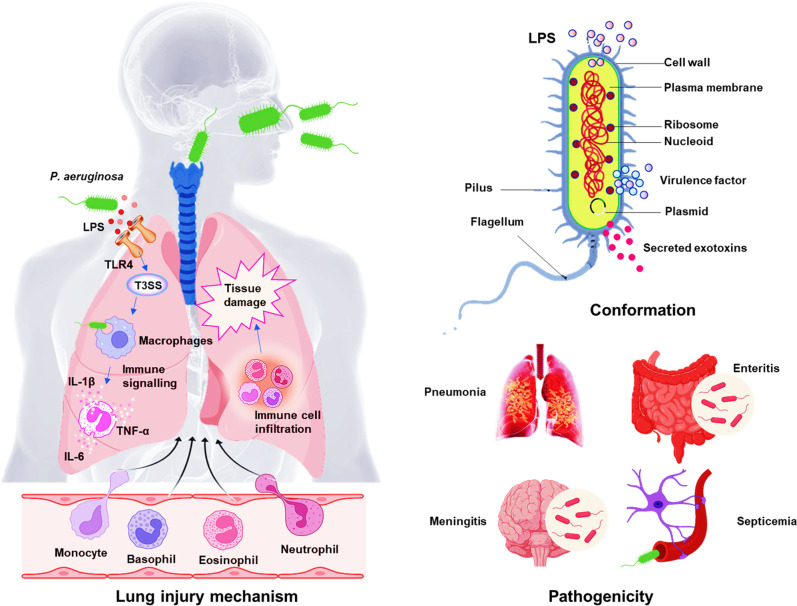
Pseudomonas aeruginosa (P. aeruginosa) is a Gram-negative opportunistic pathogen that infects patients with cystic fibrosis, burn wounds, immunodeficiency, chronic obstructive pulmonary disorder (COPD), cancer, and severe infection requiring ventilation, such as COVID-19. P. aeruginosa is also a widely-used model bacterium for all biological areas. In addition to continued, intense efforts in understanding bacterial pathogenesis of P. aeruginosa including virulence factors (LPS, quorum sensing, two-component systems, 6 type secretion systems, outer membrane vesicles (OMVs), CRISPR-Cas and their regulation), rapid progress has been made in further studying host-pathogen interaction, particularly host immune networks involving autophagy, inflammasome, non-coding RNAs, cGAS, etc. Furthermore, numerous technologic advances, such as bioinformatics, metabolomics, scRNA-seq, nanoparticles, drug screening, and phage therapy, have been used to improve our understanding of P. aeruginosa pathogenesis and host defense. Nevertheless, much remains to be uncovered about interactions between P. aeruginosa and host immune responses, including mechanisms of drug resistance by known or unannotated bacterial virulence factors as well as mammalian cell signaling pathways. The widespread use of antibiotics and the slow development of effective antimicrobials present daunting challenges and necessitate new theoretical and practical platforms to screen and develop mechanism-tested novel drugs to treat intractable infections, especially those caused by multi-drug resistance strains. Benefited from has advancing in research tools and technology, dissecting this pathogen’s feature has entered into molecular and mechanistic details as well as dynamic and holistic views. Herein, we comprehensively review the progress and discuss the current status of P. aeruginosa biophysical traits, behaviors, virulence factors, invasive regulators, and host defense patterns against its infection, which point out new directions for future investigation and add to the design of novel and/or alternative therapeutics to combat this clinically significant pathogen.
Overview
CoChat Summary
TL;DR
This review synthesizes *Pseudomonas aeruginosa* pathogenesis, virulence factors, antibiotic resistance, host immune interactions, and emerging therapeutics. It emphasizes the pathogen’s MDR clinical burden and persistent gaps in mechanistic understanding and treatment development.
Key findings
- *P. aeruginosa* is an MDR ESKAPE pathogen and WHO “critical” carbapenem-resistant threat, causing infections in cystic fibrosis, burns, COPD, cancer, sepsis, and ventilator-associated pneumonia including COVID-19. The review cites ~700,000 annual deaths from antibiotic-resistant bacterial infections; combined resistance in European populations was 12.9%, Spain hospital-acquired infection 10.5%, Europe nosocomial infections ~9% (fourth commonest pathogen), US HCAI 7.1%, and CHINET identified 301,917 clinical isolates with *P. aeruginosa* fourth at 7.96%.
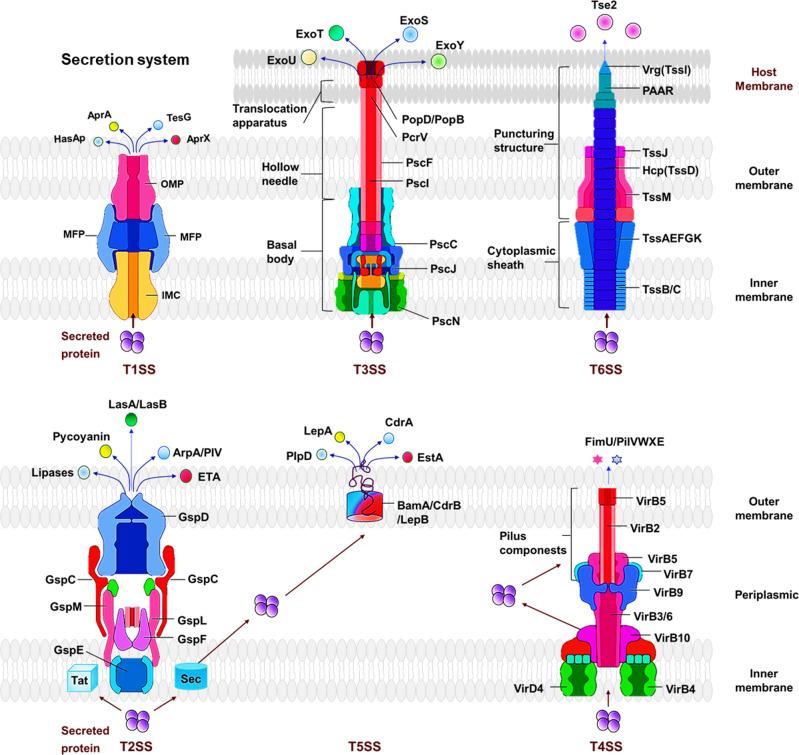
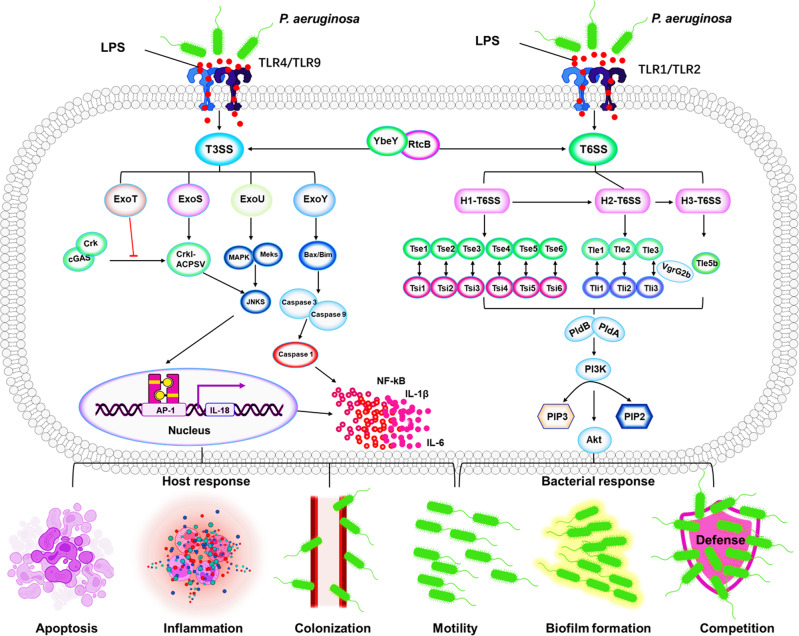
- Virulence and regulation involve LPS, OMVs, six secretion systems (T1–T6), quorum sensing (Las, Rhl, Pqs, Iqs), two-component systems (64 histidine kinases and 72 response regulators; >50% linked to virulence and/or resistance), small non-coding RNAs (573 in PAO1, 233 in PA14, 126 shared), and CRISPR-Cas. T3SS effectors include ExoS (48.3 kDa, 453 aa), ExoT (48.5 kDa, 457 aa), ExoY (41.7 kDa, 378 aa; detected in 80–100% of *P. aeruginosa*), and ExoU (73.9 kDa, 687 aa).
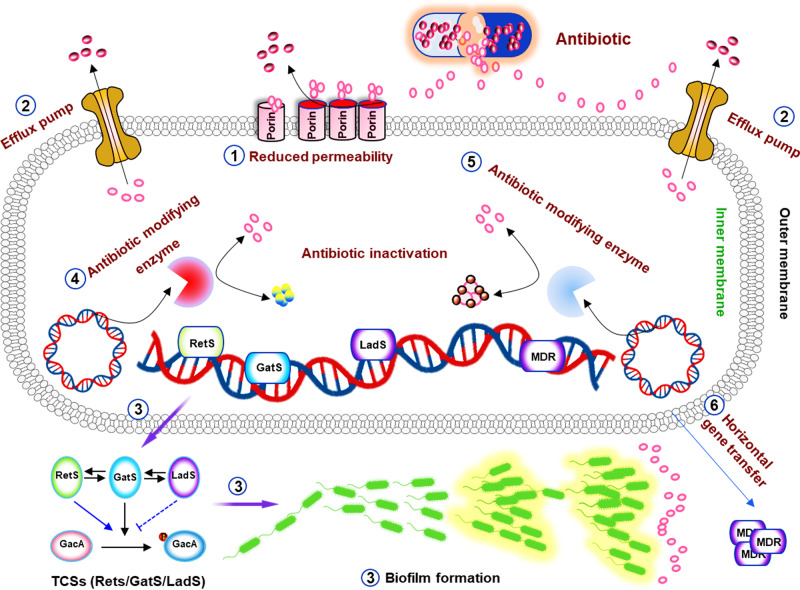
- Antibiotic resistance mechanisms include outer membrane permeability/porins, efflux systems (12 RND family pumps, including MexAB-OprM, MexCD-OprJ, MexEF-OprN, MexXY-OprM), antibiotic-inactivating/modifying enzymes (>50 enzymes), mutations and horizontal gene transfer, and adaptive biofilm/persister resistance.
- Host interaction involves TLRs, inflammasomes (NLRC4, AIM2, NLRP3), cGAS-STING, autophagy, and non-coding RNAs. Emerging therapeutics include plazomicin (Phase III cUTI composite cure 81.7% vs meropenem 70.1%; CARE trial 23.5% vs colistin-based 50%), eravacycline (active against 90% of isolates at ≤0.008–2 μg/ml), phage therapy, nanoparticles, gene editing, and vaccines, though no *P. aeruginosa* vaccine is clinically available.
Methods
- Narrative/comprehensive review; no primary experiments. It synthesizes published literature on *P. aeruginosa* biophysical traits, virulence factors, regulatory systems, antibiotic resistance, host defense, technology advances, and therapeutics, with figures and tables.
- Data/sample: published studies and surveillance statistics cited in the text; no systematic search strategy, inclusion/exclusion criteria, or meta-analysis is described.
- Main analysis: thematic synthesis across bacterial pathogenesis, virulence regulation, resistance mechanisms, host immune responses, and therapeutic development.
Limitations
- Stated: many questions remain about emergence of drug-resistant strains, undiscovered virulence factors, immune evasion, resistance mechanisms, host factors, and systematic guidelines; understanding is still limited. The review also notes unresolved/paradoxical inflammasome roles, unsatisfactory QS-targeting therapy with limited in vivo reports, no clinically available vaccine, and phage therapy challenges including neutralizing antibodies, exotoxin safety concerns, and rapid bacterial resistance.
- Evident: as a narrative review, it lacks a described systematic search/selection method and provides no primary data; conclusions rely on cited literature and may reflect selection bias.
Model-written summary. Check it against the paper before relying on it.
Integrity signals
Registry
Cites
Statistics
Figures
Verification
Claims the paper makes
3 Valid · 8 Not valid · 101 Not checked · 19 Own results and interpretations
Every source the paper cites for this claim was checked and supports it.
In the paper
“Our follow-up studies indeed illuminate that oprC dampens host response in cells and mice to Pseudomonas infection by potently enhancing Quorum-Sensing-associated virulence.105”
§ Pseudomonas aeruginosa: pathogenesis, virulence factors, antibiotic resistance, interaction with host, technology advances and emerging therapeutics > Secretion systems, an integral part of virulence platforms and mechanisms > One-step secretion systems
What the sources say
- Supportedcites [105] Gao P oprC impairs host defense by increasing the quorum-sensing-mediated virulence of Pseudomonas aeruginosa Front. Immunol. 2020 11 1696 10.3389/fimmu.2020.01696 32849593 PMC7417366 source
The Discussion summary (p. null, 'Discussion') states that OprC 'regulates the critical QS virulence signals and thereby strongly impacts the host immune response,' matching the paper's title ('oprC Impairs Host Defense by Increasing the Quorum-Sensing-Mediated Virulence of Pseudomonas aeruginosa'). The Results back both arms: virulence/QS ('markedly declined expression of QS-associated genes (lasR, lasI, rhlR, and rhlAB) and typical virulence genes... implied that oprC may participate in bacterial virulence regulation'; reduced pyocyanin, LPS, exoproteases, alginate, rhamnolipids in Figure 2/Supplemental Figures 2A,B) and host effects in cells (MH-S macrophages: reduced GSDMD cleavage/pyroptosis, IL-1β, LDH, cleaved caspase-1) and mice (Figure 3: decreased mortality, bacterial burden, lung barrier damage and inflammation; Figure 4: dampened inflammasome formation and proinflammatory cytokines). The 'potently' qualifier is echoed by the paper's own wording ('OprC potently affected the host-pathogen interaction'; 'strongly impacts the host immune response'). (LLM, conf=0.88)
boostedstates a cause- Asserted: passes — The authors put it forward as true.
- Checkable: passes — It can be checked against evidence.
- Load-bearing: passes — The paper’s conclusions depend on it.
- Based: passes — The paper gives a reason why it holds.
- Supported
Every source the paper cites for this claim was checked and supports it.
In the paper
“With collaboration efforts, we characterize H2-T6SS-dependent secretomes that are related to copper (Cu2+)-binding effector azurin (Azu).104”
§ Pseudomonas aeruginosa: pathogenesis, virulence factors, antibiotic resistance, interaction with host, technology advances and emerging therapeutics > Secretion systems, an integral part of virulence platforms and mechanisms > One-step secretion systems
What the sources say
- Supportedcites [104] Han Y A Pseudomonas aeruginosa type VI secretion system regulated by CueR facilitates copper acquisition PLoS Pathog. 2019 15 e1008198 10.1371/journal.ppat.1008198 31790504 PMC6907878 source
The Introduction states the authors used mass spectrometry to compare the secretomes of the ΔretS and ΔretSΔclpV2 strains and that the analysis revealed 21 proteins whose secretion is H2-T6SS-dependent, including the Cu2+-binding protein azurin (Azu) (Introduction). The Results section 'Cu-binding protein Azu is secreted by H2-T6SS' corroborates this, noting Azu abundance was much higher in the ΔretS mutant than in the ΔretSΔclpV2 strain (S1 Table, from the MS secretome) and that Azu secretion depended on ClpV2/Hcp2/tssM2 and VgrG2b. The paraphrase therefore accurately reflects the cited work. (LLM, conf=0.92)
plainstates an association- Asserted: passes — The authors put it forward as true.
- Checkable: passes — It can be checked against evidence.
- Load-bearing: passes — The paper’s conclusions depend on it.
- Based: passes — The paper gives a reason why it holds.
- Supported
The cited sources support only part of this claim — read each source’s verdict below.
In the paper
“our studies uncover cGAS as a novel nucleic acids’ sensor to initiate immune responses against P. aeruginosa infection through a canonical pathway involving STING and IRF-1,280,309”
§ Pseudomonas aeruginosa: pathogenesis, virulence factors, antibiotic resistance, interaction with host, technology advances and emerging therapeutics > Highly complex and multiple mechanisms in host immune responses to the bacterium > Nucleic acid sensor cGAS is pivotal for eliciting immune reaction
What the sources say
- Partly supportedcites [280] Qin S Small-molecule inhibitor of 8-oxoguanine DNA glycosylase 1 regulates inflammatory responses during Pseudomonas aeruginosa infection J. Immunol. 2020 205 2231 2242 10.4049/jimmunol.1901533 32929043 PMC7541742 sourceExperimental — accuracy not yet measured
Our copy supports cGAS acting as the DNA/nucleic-acid sensor that triggers type I IFN immune responses during P. aeruginosa (PA14) infection, and it does invoke STING: the Abstract states SU0268 'induces the release of type I interferon by the mtDNA-cGAS-STING-IRF3-IFNβ axis, which decreases bacterial loads and halts disease progression,' and the Discussion (p. ~Discussion) says cytoplasmic mtDNA 'can be recognized by DNA sensor cGAS and incite innate immunity responses through the cGAS/STING signaling.' However, the interferon factor the paper actually measures and attributes the pathway to is IRF3, not IRF-1: the Results section heading and text describe the 'cGAS-TBK-IRF3-IFN-β pathway' with augmented 'nuclear transfer of IRF3' and cGAS siRNA reversing IFNβ release, and the Discussion summarizes a 'mtDNA-cGAS/TBK/IRF3/IFNβ axis.' No passage of our copy implicates IRF-1 (the only related items are STAT1 activation in the PCR-array Result and IRF7 in a cited H. pylori study in the Discussion), so the 'IRF-1' element of the claim is not supported by this source. (LLM, conf=0.78)
- Partly supportedcites [309] Zhou, C. et al. Identification of cGAS as an innate immune sensor of extracellular bacterium Pseudomonas aeruginosa. iScience. 24, 101928 (2020). PMC7772558 33385121 sourceExperimental — accuracy not yet measured
Our copy supports cGAS as the DNA sensor initiating anti-P. aeruginosa responses via the canonical cGAS-STING axis (Abstract: 'the canonical cGAS-stimulator of interferon gene (STING)-IFN axis is required for protecting mice from P. aeruginosa-induced mouse acute pulmonary infection'; Results 'cGAS is required for P. aeruginosa-induced type I IFN response in macrophages'). However, the downstream transcription factor this paper identifies is IRF3, not IRF-1: the Results section 'cGAS-IRF3-IFN axis is required for P. aeruginosa-induced unfolded protein response' and the Discussion describe cGAS acting through IRF3 (ChIP-seq/ChIP of IRF3 at BiP and ATF4 promoters) and type I IFNs, and searches for IRF-1 / interferon regulatory factor 1 returned no such pathway in our copy. The IRF-1 component of the citing sentence is therefore unattributable to this source. (LLM, conf=0.80)
plainstates a cause- Asserted: passes — The authors put it forward as true.
- Checkable: passes — It can be checked against evidence.
- Load-bearing: passes — The paper’s conclusions depend on it.
- Based: passes — The paper gives a reason why it holds.
- Partly supported
None of the sources cited for this claim have been checked yet.
In the paper
“we recently describe a function for H2-T6SS of P. aeruginosa for specific delivery of AmpDh3 (a paralogous zinc protease) to the periplasm of a prey bacterium upon contact.106”
§ Pseudomonas aeruginosa: pathogenesis, virulence factors, antibiotic resistance, interaction with host, technology advances and emerging therapeutics > Secretion systems, an integral part of virulence platforms and mechanisms > One-step secretion systems
What the sources say
- Not checked yetcites [106] Wang T A type VI secretion system delivers a cell wall amidase to target bacterial competitors Mol. Microbiol. 2020 114 308 321 10.1111/mmi.14513 32279364 PMC8011994 source
Checked before — its earlier verdict is held back until a new check runs.
plainstates a cause- Asserted: passes — The authors put it forward as true.
- Checkable: passes — It can be checked against evidence.
- Load-bearing: passes — The paper’s conclusions depend on it.
- Based: passes — The paper gives a reason why it holds.
- Not checked yet
None of the sources cited for this claim have been checked yet.
In the paper
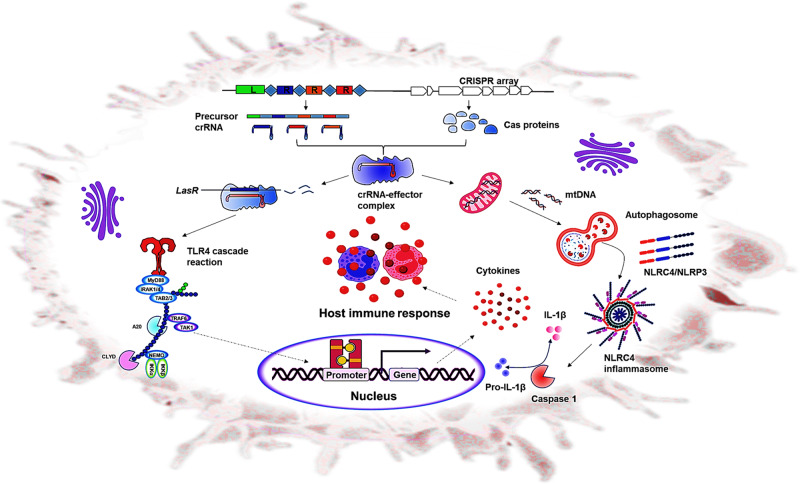
“Our research showed that type I CRISPR-Cas targeted the QS regulator LasR to inhibit toll-like receptor 4 recognition, thereby evading mammalian host immunity, suggesting that the CRISPR system is linked to host immunity modulation by targeting their own genes, potentially evading host defense mechanisms.321”
§ Pseudomonas aeruginosa: pathogenesis, virulence factors, antibiotic resistance, interaction with host, technology advances and emerging therapeutics > Highly complex and multiple mechanisms in host immune responses to the bacterium > CRISPR-mediated adaptive immunity, a double-edged sword for bacterial self-survival and invasion
What the sources say
- Not checked yetcites [321] Li R Type I CRISPR-Cas targets endogenous genes and regulates virulence to evade mammalian host immunity Cell Res. 2016 26 1273 1287 10.1038/cr.2016.135 27857054 PMC5143421 source
Checked before — its earlier verdict is held back until a new check runs.
hedgedstates a cause- Asserted: passes — The authors put it forward as true.
- Checkable: passes — It can be checked against evidence.
- Load-bearing: passes — The paper’s conclusions depend on it.
- Based: passes — The paper gives a reason why it holds.
- Not checked yet
60 more claims
Create a free account to see all 131 claims and to verify the 155 references still open.
- It may state two separate claims as one. 46
- Probably not a substantial claim. 26
Claims other papers make about this one
Each is checked against this paper’s own text: does it say what the citing paper says it does?
In the citing paper
“Across strains, QS controls a broad set of virulence traits that include secreted enzymes, surfactants, redox-active metabolites, and toxins. These traits strengthen biofilms and reduce the effectiveness of therapy. Las, Rhl, and Pqs regulate hundreds of genes, among them being LasB elastase, rhamnolipids that arise from rhlAB, several phenazines such as pyocyanin, hydrogen cyanide, and secretion”
From Understanding Pseudomonas aeruginosa Biofilms: Quorum Sensing, c-di-GMP Signaling, and Emerging Antibiofilm Approaches (2026) · cites this paper as [81]
In the citing paper
“A key factor in its ecological versatility and adaptability is quorum system, a mechanism that coordinates gene expression across populations, regulating crucial processes for pathogenesis, including virulence and antibiotic resistance25,26.”
From Pseudomonas aeruginosa: ecology, evolution, pathogenesis and antimicrobial susceptibility (2025) · cites this paper as [25]
In the citing paper
“Quorum sensing in P. aeruginosa also plays a crucial role in biofilm formation by regulating the expression of genes involved in surface attachment, extracellular matrix (ECM) production and antibiotic resistance, enabling the bacteria to coordinate their behaviour and establish resilient, structured communities25–27.”
From Pseudomonas aeruginosa: ecology, evolution, pathogenesis and antimicrobial susceptibility (2025) · cites this paper as [25]
Self-check
Percentages, sums and reported differences re-computed from the paper’s own numbers.
Each contradiction between two passages listed here was confirmed by an independent check.
Rated minor: it would not touch a result — a value no result rests on, a p-value that stays on the same side of the significance level, or a conflict that is clerical, resolved elsewhere in the paper, or outside its own findings.
In the paper
§ Pseudomonas aeruginosa: pathogenesis, virulence factors, antibiotic resistance, interaction with host, technology advances and emerging therapeutics > Secretion systems, an integral part of virulence platforms and mechanisms
“One-step secretion system exoproteins are directly absorbed into the cytoplasm through their cognate secretion mechanism.”
§ Pseudomonas aeruginosa: pathogenesis, virulence factors, antibiotic resistance, interaction with host, technology advances and emerging therapeutics > Secretion systems, an integral part of virulence platforms and mechanisms
“The one-step secretion system directly secretes proteins from bacterial cytosol to the surface”
Citations
Cites
Cleavage of GSDMD by inflammatory caspases determines pyroptotic cell death
Shi, J., Zhao, Y., Wang, K., Shi, X., Wang, Y., Huang, H., Zhuang, Y., Cai, T., Wang, F., & Shao, F. (2015) · Nature · doi:10.1038/nature15514 · Cited by 6,659 · cited 1×
“Recent work reveals that inflammasome is involved in pyroptosis dependent on the cleavage of Gasdermin D, which contributed to the formation of plasma membrane pores, and in turn promoting the release of inflammatory cytokines and pyroptosis.(288,289) Typically, inflammasome consists of cytosolic PRRs, ASC (an apoptos…”
BackgroundMartinon, F., Burns, K., & Tschopp, J. (2002) · Molecular Cell · doi:10.1016/s1097-2765(02)00599-3 · Cited by 6,066 · cited 2×
“Inflammasomes drive inflammation and pyroptosis The inflammasome is a multiprotein complex, which is attributed to the production and release of inflammatory cytokines, IL-1β and IL-18.(286,287) Recent work reveals that inflammasome is involved in pyroptosis dependent on the cleavage of Gasdermin D, which contributed…”
BackgroundCyclic GMP-AMP Synthase Is a Cytosolic DNA Sensor That Activates the Type I Interferon Pathway
Sun, L., Wu, J., Du, F., Chen, X., & Chen, Z. J. (2013) · Science · doi:10.1126/science.1232458 · Cited by 4,996 · cited 1×
“Nucleic acid sensor cGAS is pivotal for eliciting immune reaction cGAS is a recently discovered nucleic acid sensor that is initially identified to recognize viruses.(306) Typically, activation of cGAS contributes to the induction of inflammasome as a means against viral or intracellular bacterial infection.”
BackgroundThe innate immune response to bacterial flagellin is mediated by Toll-like receptor 5
Hayashi, F., Smith, K. D., Ozinsky, A., Hawn, T. R., Yi, E. C., Goodlett, D. R., Eng, J. K., Akira, S., Underhill, D. M., & Aderem, A. (2001) · Nature · doi:10.1038/35074106 · Cited by 3,601
Extended-Spectrum β-Lactamases: a Clinical Update
Paterson, D. L., & Bonomo, R. A. (2005) · Clinical Microbiology Reviews · doi:10.1128/cmr.18.4.657-686.2005 · Cited by 3,491
Inflammasome-activated gasdermin D causes pyroptosis by forming membrane pores
Liu, X., Zhang, Z., Ruan, J., Pan, Y., Magupalli, V. G., Wu, H., & Lieberman, J. (2016) · Nature · doi:10.1038/nature18629 · Cited by 3,202 · cited 1×
“Recent work reveals that inflammasome is involved in pyroptosis dependent on the cleavage of Gasdermin D, which contributed to the formation of plasma membrane pores, and in turn promoting the release of inflammatory cytokines and pyroptosis.(288,289) Typically, inflammasome consists of cytosolic PRRs, ASC (an apoptos…”
BackgroundPathogen Recognition and Inflammatory Signaling in Innate Immune Defenses
Mogensen, T. H. (2009) · Clinical Microbiology Reviews · doi:10.1128/cmr.00046-08 · Cited by 3,111
Genetic screens in human cells using the CRISPR-Cas9 system
Wang, T., Wei, J. J., Sabatini, D. M., & Lander, E. S. (2014) · Science · doi:10.1126/science.1246981 · Cited by 2,856
An updated evolutionary classification of CRISPR–Cas systems
Makarova, K. S., Wolf, Y. I., Alkhnbashi, O. S., Costa, F., Shah, S. A., Saunders, S. J., Barrangou, R., Brouns, S. J. J., Charpentier, E., Haft, D. H., et al. (2015) · Nature Reviews Microbiology · doi:10.1038/nrmicro3569 · Cited by 2,480
Signaling to NF-κB by Toll-like receptors
Kawai, T., & Akira, S. (2007) · Trends in Molecular Medicine · doi:10.1016/j.molmed.2007.09.002 · Cited by 2,388
Antibiotic resistance in Pseudomonas aeruginosa: mechanisms and alternative therapeutic strategies
Pang, Z., Raudonis, R., Glick, B. R., Lin, T.-J., & Cheng, Z. (2019) · Biotechnology Advances · doi:10.1016/j.biotechadv.2018.11.013 · Cited by 2,306
Bacterial Quorum Sensing: Its Role in Virulence and Possibilities for Its Control
Rutherford, S. T., & Bassler, B. L. (2012) · Cold Spring Harbor Perspectives in Medicine · doi:10.1101/cshperspect.a012427 · Cited by 2,129
Pattern recognition receptors in health and diseases
Li, D., & Wu, M. (2021) · Signal Transduction and Targeted Therapy · doi:10.1038/s41392-021-00687-0 · Cited by 1,787
Self-citationThe Challenge of Efflux-Mediated Antibiotic Resistance in Gram-Negative Bacteria
Li, X.-Z., Plésiat, P., & Nikaido, H. (2015) · Clinical Microbiology Reviews · doi:10.1128/cmr.00117-14 · Cited by 1,614
Microtubule nucleation by γ-tubulin complexes
Kollman, J. M., Merdes, A., Mourey, L., & Agard, D. A. (2011) · Nature Reviews Molecular Cell Biology · doi:10.1038/nrm3209 · Cited by 1,583
Biological Functions and Biogenesis of Secreted Bacterial Outer Membrane Vesicles
Kulp, A., & Kuehn, M. J. (2010) · Annual Review of Microbiology · doi:10.1146/annurev.micro.091208.073413 · Cited by 1,533
Aminoglycoside modifying enzymes
Ramirez, M. S., & Tolmasky, M. E. (2010) · Drug Resistance Updates · doi:10.1016/j.drup.2010.08.003 · Cited by 1,464
Diversity, classification and evolution of CRISPR-Cas systems
Koonin, E. V., Makarova, K. S., & Zhang, F. (2017) · Current Opinion in Microbiology · doi:10.1016/j.mib.2017.05.008 · Cited by 1,423
Dedrick, R. M., Guerrero-Bustamante, C. A., Garlena, R. A., Russell, D. A., Ford, K., Harris, K., Gilmour, K. C., Soothill, J., Jacobs-Sera, D., Schooley, R. T., et al. (2019) · Nature Medicine · doi:10.1038/s41591-019-0437-z · Cited by 1,410
Anti-virulence strategies to combat bacteria-mediated disease
Rasko, D. A., & Sperandio, V. (2010) · Nature Reviews Drug Discovery · doi:10.1038/nrd3013 · Cited by 1,373
The hierarchy quorum sensing network in Pseudomonas aeruginosa
Lee, J., & Zhang, L. (2015) · Protein & Cell · doi:10.1007/s13238-014-0100-x · Cited by 1,346
Anselmo, A. C., & Mitragotri, S. (2016) · Bioengineering & Translational Medicine · doi:10.1002/btm2.10003 · Cited by 1,321
Pseudomonas aeruginosa: all roads lead to resistance
Breidenstein, E. B. M., de la Fuente-Núñez, C., & Hancock, R. E. W. (2011) · Trends in Microbiology · doi:10.1016/j.tim.2011.04.005 · Cited by 1,286
Mechanism of Quinolone Action and Resistance
Aldred, K. J., Kerns, R. J., & Osheroff, N. (2014) · Biochemistry · doi:10.1021/bi5000564 · Cited by 1,282 · cited 1×
“aeruginosa confers resistance to carbapenems(234) and mutations of DNA gyrase (GyrA) causes resistance to quinolone antibiotics.(257) Importantly, mutations in the β-lactamase gene ampC causes a significant increase in resistance to cephalosporins.”
BackgroundThe NLRC4 inflammasome receptors for bacterial flagellin and type III secretion apparatus
Zhao, Y., Yang, J., Shi, J., Gong, Y.-N., Lu, Q., Xu, H., Liu, L., & Shao, F. (2011) · Nature · doi:10.1038/nature10510 · Cited by 1,270
Persistent bacterial infections and persister cells
Fisher, R. A., Gollan, B., & Helaine, S. (2017) · Nature Reviews Microbiology · doi:10.1038/nrmicro.2017.42 · Cited by 1,243 · cited 1×
“Persistent molecules from the persisters can maintain vitality and refill biofilms; once antibiotics are not present, bacteria will resume growth and cause chronic infections.(264) Altogether, P.”
BackgroundIron in infection and immunity
Cassat, J. E., & Skaar, E. P. (2013) · Cell Host & Microbe · doi:10.1016/j.chom.2013.04.010 · Cited by 1,214
Health care-associated infections – an overview
Haque, M., Sartelli, M., McKimm, J., & Abu Bakar, M. B. (2018) · Infection and Drug Resistance · doi:10.2147/idr.s177247 · Cited by 1,200
Secretion systems in Gram-negative bacteria: Structural and mechanistic insights
Costa, T. R. D., Felisberto-Rodrigues, C., Meir, A., Prevost, M. S., Redzej, A., Trokter, M., & Waksman, G. (2015) · Nature Reviews Microbiology · doi:10.1038/nrmicro3456 · Cited by 1,132 · cited 1×
“aeruginosa is composed of five subtypes (type Va to Ve) and exports the proteins across the inner membrane via the Sec pathway.(142) The proteins of the V-type secretion system are often referred to as autotransporters (ATs).”
BackgroundListening in on bacteria: acyl-homoserine lactone signalling
Fuqua, C., & Greenberg, E. P. (2002) · Nature Reviews Molecular Cell Biology · doi:10.1038/nrm907 · Cited by 1,079
Bacterial Secretion Systems: An Overview
Green, E. R., & Mecsas, J. (2016) · Microbiology Spectrum · doi:10.1128/microbiolspec.vmbf-0012-2015 · Cited by 1,079
Regulation of inflammasome activation
Man, S. M., & Kanneganti, T. (2015) · Immunological Reviews · doi:10.1111/imr.12296 · Cited by 1,064
Winsor, G. L., Griffiths, E. J., Lo, R., Dhillon, B. K., Shay, J. A., & Brinkman, F. S. L. (2016) · Nucleic Acids Research · doi:10.1093/nar/gkv1227 · Cited by 1,050
Simm, R., Morr, M., Kader, A., Nimtz, M., & Römling, U. (2004) · Molecular Microbiology · doi:10.1111/j.1365-2958.2004.04206.x · Cited by 1,004
Exploiting CRISPR-Cas nucleases to produce sequence-specific antimicrobials
Bikard, D., Euler, C. W., Jiang, W., Nussenzweig, P. M., Goldberg, G. W., Duportet, X., Fischetti, V. A., & Marraffini, L. A. (2014) · Nature Biotechnology · doi:10.1038/nbt.3043 · Cited by 986 · cited 1×
“Creating a synthetic phage with desired characteristics and genomic content would be a creative approach.(355) Recently, mutations in phage host-range-determining regions (HRDRs) to cope with resistance mutation of bacteria have been implemented as an effective method to prevent Escherichia coli infection.”
BackgroundGenomic islands: tools of bacterial horizontal gene transfer and evolution
Juhas, M., van der Meer, J. R., Gaillard, M., Harding, R. M., Hood, D. W., & Crook, D. W. (2009) · FEMS Microbiology Reviews · doi:10.1111/j.1574-6976.2008.00136.x · Cited by 969
The type III secretion system of Pseudomonas aeruginosa: infection by injection
Hauser, A. R. (2009) · Nature Reviews Microbiology · doi:10.1038/nrmicro2199 · Cited by 968
A Type VI Secretion System of Pseudomonas aeruginosa Targets a Toxin to Bacteria
Hood, R. D., Singh, P., Hsu, F., Güvener, T., Carl, M. A., Trinidad, R. R. S., Silverman, J. M., Ohlson, B. B., Hicks, K. G., Plemel, R. L., et al. (2010) · Cell Host & Microbe · doi:10.1016/j.chom.2009.12.007 · Cited by 932
Redox Regulation of NLRP3 Inflammasomes: ROS as Trigger or Effector?
Abais, J. M., Xia, M., Zhang, Y., Boini, K. M., & Li, P.-L. (2015) · Antioxidants & Redox Signaling · doi:10.1089/ars.2014.5994 · Cited by 928
Innate immune recognition of bacterial ligands by NAIPs determines inflammasome specificity
Kofoed, E. M., & Vance, R. E. (2011) · Nature · doi:10.1038/nature10394 · Cited by 891
Wright, A., Hawkins, C. H., Änggård, E. E., & Harper, D. R. (2009) · Clinical Otolaryngology · doi:10.1111/j.1749-4486.2009.01973.x · Cited by 864
Bacteriophage genes that inactivate the CRISPR/Cas bacterial immune system
Bondy-Denomy, J., Pawluk, A., Maxwell, K. L., & Davidson, A. R. (2013) · Nature · doi:10.1038/nature11723 · Cited by 830
CRISPR-Cas immunity in prokaryotes
Marraffini, L. A. (2015) · Nature · doi:10.1038/nature15386 · Cited by 829
Exploiting Quorum Sensing To Confuse Bacterial Pathogens
LaSarre, B., & Federle, M. J. (2013) · Microbiology and Molecular Biology Reviews · doi:10.1128/mmbr.00046-12 · Cited by 820
Horizontal transfer of antibiotic resistance genes in clinical environments
Lerminiaux, N. A., & Cameron, A. D. S. (2019) · Canadian Journal of Microbiology · doi:10.1139/cjm-2018-0275 · Cited by 802
Pathogen–Host Interactions in Pseudomonas aeruginosa Pneumonia
Sadikot, R. T., Blackwell, T. S., Christman, J. W., & Prince, A. S. (2005) · American Journal of Respiratory and Critical Care Medicine · doi:10.1164/rccm.200408-1044so · Cited by 799
Innate immune detection of the type III secretion apparatus through the NLRC4 inflammasome
Miao, E. A., Mao, D. P., Yudkovsky, N., Bonneau, R., Lorang, C. G., Warren, S. E., Leaf, I. A., & Aderem, A. (2010) · Proceedings of the National Academy of Sciences · doi:10.1073/pnas.0913087107 · Cited by 798
Pseudomonas syringae: what it takes to be a pathogen
Xin, X.-F., Kvitko, B., & He, S. Y. (2018) · Nature Reviews Microbiology · doi:10.1038/nrmicro.2018.17 · Cited by 780
Pattern Recognition Receptors and the Host Cell Death Molecular Machinery
Amarante-Mendes, G. P., Adjemian, S., Branco, L. M., Zanetti, L. C., Weinlich, R., & Bortoluci, K. R. (2018) · Frontiers in Immunology · doi:10.3389/fimmu.2018.02379 · Cited by 749
Mechanisms of Multidrug Resistance in Acinetobacter Species and Pseudomonas aeruginosa
Bonomo, R. A., & Szabo, D. (2006) · Clinical Infectious Diseases · doi:10.1086/504477 · Cited by 741
The Multiple Signaling Systems Regulating Virulence in Pseudomonas aeruginosa
Nadal Jimenez, P., Koch, G., Thompson, J. A., Xavier, K. B., Cool, R. H., & Quax, W. J. (2012) · Microbiology and Molecular Biology Reviews · doi:10.1128/mmbr.05007-11 · Cited by 736
The cell biology of inflammasomes: Mechanisms of inflammasome activation and regulation
Sharma, D., & Kanneganti, T.-D. (2016) · Journal of Cell Biology · doi:10.1083/jcb.201602089 · Cited by 728
Dietrich, L. E. P., Price‐Whelan, A., Petersen, A., Whiteley, M., & Newman, D. K. (2006) · Molecular Microbiology · doi:10.1111/j.1365-2958.2006.05306.x · Cited by 713
Mulcahy, H., Charron-Mazenod, L., & Lewenza, S. (2008) · PLoS Pathogens · doi:10.1371/journal.ppat.1000213 · Cited by 711
Type VI secretion delivers bacteriolytic effectors to target cells
Russell, A. B., Hood, R. D., Bui, N. K., LeRoux, M., Vollmer, W., & Mougous, J. D. (2011) · Nature · doi:10.1038/nature10244 · Cited by 710
Pseudomonas aeruginosa: An Audacious Pathogen with an Adaptable Arsenal of Virulence Factors
Jurado-Martín, I., Sainz-Mejías, M., & McClean, S. (2021) · International Journal of Molecular Sciences · doi:10.3390/ijms22063128 · Cited by 698
Mechanisms of antibiotic resistance in Pseudomonas aeruginosa.
Lambert, P. A. (2002) · Europe PMC (PubMed Central) · Cited by 693
Lipopolysaccharide modification in Gram-negative bacteria during chronic infection
Maldonado, R. F., Sá-Correia, I., & Valvano, M. A. (2016) · FEMS Microbiology Reviews · doi:10.1093/femsre/fuw007 · Cited by 689
The role of pyocyanin in Pseudomonas aeruginosa infection
Lau, G. W., Hassett, D. J., Ran, H., & Kong, F. (2004) · Trends in Molecular Medicine · doi:10.1016/j.molmed.2004.10.002 · Cited by 688
CRISPR/Cas9 for genome editing: progress, implications and challenges
Zhang, F., Wen, Y., & Guo, X. (2014) · Human Molecular Genetics · doi:10.1093/hmg/ddu125 · Cited by 683
Kadurugamuwa, J. L., & Beveridge, T. J. (1995) · Journal of Bacteriology · doi:10.1128/jb.177.14.3998-4008.1995 · Cited by 678
Barton, G. M., Kagan, J. C., & Medzhitov, R. (2006) · Nature Immunology · doi:10.1038/ni1280 · Cited by 670
Pseudomonas aeruginosa Twitching Motility: Type IV Pili in Action
Burrows, L. L. (2012) · Annual Review of Microbiology · doi:10.1146/annurev-micro-092611-150055 · Cited by 669
Valentini, M., & Filloux, A. (2016) · Journal of Biological Chemistry · doi:10.1074/jbc.r115.711507 · Cited by 668
Identification of FleQ from Pseudomonas aeruginosa as a c‐di‐GMP‐responsive transcription factor
Hickman, J. W., & Harwood, C. S. (2008) · Molecular Microbiology · doi:10.1111/j.1365-2958.2008.06281.x · Cited by 656
Lipopolysaccharide Is in Close Proximity to Each of the Proteins in Its Membrane Receptor Complex
da Silva Correia, J., Soldau, K., Christen, U., Tobias, P. S., & Ulevitch, R. J. (2001) · Journal of Biological Chemistry · doi:10.1074/jbc.m009164200 · Cited by 649
Type III Secretion Systems and Disease
Coburn, B., Sekirov, I., & Finlay, B. B. (2007) · Clinical Microbiology Reviews · doi:10.1128/cmr.00013-07 · Cited by 644
Role of mexA-mexB-oprM in antibiotic efflux in Pseudomonas aeruginosa
Li, X. Z., Nikaido, H., & Poole, K. (1995) · Antimicrobial Agents and Chemotherapy · doi:10.1128/aac.39.9.1948 · Cited by 643
Goodman, A. L., Kulasekara, B., Rietsch, A., Boyd, D., Smith, R. S., & Lory, S. (2004) · Developmental Cell · doi:10.1016/j.devcel.2004.08.020 · Cited by 628
Outer Membrane Vesicles (OMVs) of Gram-negative Bacteria: A Perspective Update
Jan, A. T. (2017) · Frontiers in Microbiology · doi:10.3389/fmicb.2017.01053 · Cited by 617
Bomberger, J. M., MacEachran, D. P., Coutermarsh, B. A., Ye, S., O'Toole, G. A., & Stanton, B. A. (2009) · PLoS Pathogens · doi:10.1371/journal.ppat.1000382 · Cited by 614
A dynamic and intricate regulatory network determines Pseudomonas aeruginosa virulence
Balasubramanian, D., Schneper, L., Kumari, H., & Mathee, K. (2013) · Nucleic Acids Research · doi:10.1093/nar/gks1039 · Cited by 591
Extended-spectrum ß-lactamases in gram negative bacteria
Rawat, D., & Nair, D. (2010) · Journal of Global Infectious Diseases · doi:10.4103/0974-777x.68531 · Cited by 588
Human Toll-like receptor 4 recognizes host-specific LPS modifications
Hajjar, A. M., Ernst, R. K., Tsai, J. H., Wilson, C. B., & Miller, S. I. (2002) · Nature Immunology · doi:10.1038/ni777 · Cited by 579
Acyl-Homoserine Lactone Quorum Sensing: From Evolution to Application
Schuster, M., Joseph Sexton, D., Diggle, S. P., & Peter Greenberg, E. (2013) · Annual Review of Microbiology · doi:10.1146/annurev-micro-092412-155635 · Cited by 556
Antibiotic resistance in Pseudomonas aeruginosa – Mechanisms, epidemiology and evolution
Botelho, J., Grosso, F., & Peixe, L. (2019) · Drug Resistance Updates · doi:10.1016/j.drup.2019.07.002 · Cited by 550
Regulation of quorum sensing in Pseudomonas
Venturi, V. (2006) · FEMS Microbiology Reviews · doi:10.1111/j.1574-6976.2005.00012.x · Cited by 540
Oliver, S. E., Gargano, J. W., Marin, M., Wallace, M., Curran, K. G., Chamberland, M., McClung, N., Campos-Outcalt, D., Morgan, R. L., Mbaeyi, S., et al. (2020) · MMWR. Morbidity and Mortality Weekly Report · doi:10.15585/mmwr.mm6950e2 · Cited by 536
A Novel Mechanism of Host-Pathogen Interaction through sRNA in Bacterial Outer Membrane Vesicles
Koeppen, K., Hampton, T. H., Jarek, M., Scharfe, M., Gerber, S. A., Mielcarz, D. W., Demers, E. G., Dolben, E. L., Hammond, J. H., Hogan, D. A., et al. (2016) · PLOS Pathogens · doi:10.1371/journal.ppat.1005672 · Cited by 534
Targeting virulence: can we make evolution-proof drugs?
Allen, R. C., Popat, R., Diggle, S. P., & Brown, S. P. (2014) · Nature Reviews Microbiology · doi:10.1038/nrmicro3232 · Cited by 532
Pseudomonas aeruginosa adaptation and evolution in patients with cystic fibrosis
Rossi, E., La Rosa, R., Bartell, J. A., Marvig, R. L., Haagensen, J. A. J., Sommer, L. M., Molin, S., & Johansen, H. K. (2021) · Nature Reviews Microbiology · doi:10.1038/s41579-020-00477-5 · Cited by 525
Structure of exotoxin A of Pseudomonas aeruginosa at 3.0-Angstrom resolution.
Allured, V. S., Collier, R. J., Carroll, S. F., & McKay, D. B. (1986) · Proceedings of the National Academy of Sciences · doi:10.1073/pnas.83.5.1320 · Cited by 515
Antibiotic resistance in Pseudomonas aeruginosa: mechanisms and impact on treatment
Hancock, R. E. W., & Speert, D. P. (2000) · Drug Resistance Updates · doi:10.1054/drup.2000.0152 · Cited by 515
Immune recognition of Pseudomonas aeruginosa mediated by the IPAF/NLRC4 inflammasome
Sutterwala, F. S., Mijares, L. A., Li, L., Ogura, Y., Kazmierczak, B. I., & Flavell, R. A. (2007) · The Journal of Experimental Medicine · doi:10.1084/jem.20071239 · Cited by 513
Merabishvili, M., Pirnay, J.-P., Verbeken, G., Chanishvili, N., Tediashvili, M., Lashkhi, N., Glonti, T., Krylov, V., Mast, J., Van Parys, L., et al. (2009) · PLoS ONE · doi:10.1371/journal.pone.0004944 · Cited by 511
Vesicle-Mediated Export and Assembly of Pore-Forming Oligomers of the Enterobacterial ClyA Cytotoxin
Wai, S. N., Lindmark, B., Söderblom, T., Takade, A., Westermark, M., Oscarsson, J., Jass, J., Richter-Dahlfors, A., Mizunoe, Y., & Uhlin, B. E. (2003) · Cell · doi:10.1016/s0092-8674(03)00754-2 · Cited by 509
Role of Flagella in Pathogenesis of Pseudomonas aeruginosa Pulmonary Infection
Feldman, M., Bryan, R., Rajan, S., Scheffler, L., Brunnert, S., Tang, H., & Prince, A. (1998) · Infection and Immunity · doi:10.1128/iai.66.1.43-51.1998 · Cited by 490
Specific Lipopolysaccharide Found in Cystic Fibrosis Airway Pseudomonas aeruginosa
Ernst, R. K., Yi, E. C., Guo, L., Lim, K. B., Burns, J. L., Hackett, M., & Miller, S. I. (1999) · Science · doi:10.1126/science.286.5444.1561 · Cited by 484
Functional horizontal gene transfer from bacteria to eukaryotes
Husnik, F., & McCutcheon, J. P. (2018) · Nature Reviews Microbiology · doi:10.1038/nrmicro.2017.137 · Cited by 480
Baumann, U., Wu, S., Flaherty, K. M., & McKay, D. B. (1993) · The EMBO Journal · doi:10.1002/j.1460-2075.1993.tb06009.x · Cited by 473
Aminoglycoside Resistance in Pseudomonas aeruginosa
Poole, K. (2005) · Antimicrobial Agents and Chemotherapy · doi:10.1128/aac.49.2.479-487.2005 · Cited by 470
Regulation of bacterial virulence by two-component systems
Beier, D., & Gross, R. (2006) · Current Opinion in Microbiology · doi:10.1016/j.mib.2006.01.005 · Cited by 467
Microbial Persistence and the Road to Drug Resistance
Cohen, N. R., Lobritz, M. A., & Collins, J. J. (2013) · Cell Host & Microbe · doi:10.1016/j.chom.2013.05.009 · Cited by 460
Inhibition of CRISPR-Cas9 with Bacteriophage Proteins
Rauch, B. J., Silvis, M. R., Hultquist, J. F., Waters, C. S., McGregor, M. J., Krogan, N. J., & Bondy-Denomy, J. (2017) · Cell · doi:10.1016/j.cell.2016.12.009 · Cited by 460
Dasgupta, N., Wolfgang, M. C., Goodman, A. L., Arora, S. K., Jyot, J., Lory, S., & Ramphal, R. (2003) · Molecular Microbiology · doi:10.1046/j.1365-2958.2003.03740.x · Cited by 450
BNT162b2 and mRNA-1273 COVID-19 vaccine effectiveness against the SARS-CoV-2 Delta variant in Qatar
Tang, P., Hasan, M. R., Chemaitelly, H., Yassine, H. M., Benslimane, F. M., Al Khatib, H. A., AlMukdad, S., Coyle, P., Ayoub, H. H., Al Kanaani, Z., et al. (2021) · Nature Medicine · doi:10.1038/s41591-021-01583-4 · Cited by 450
Yehl, K., Lemire, S., Yang, A. C., Ando, H., Mimee, M., Torres, M. D. T., de la Fuente-Nunez, C., & Lu, T. K. (2019) · Cell · doi:10.1016/j.cell.2019.09.015 · Cited by 437
Ventre, I., Goodman, A. L., Vallet-Gely, I., Vasseur, P., Soscia, C., Molin, S., Bleves, S., Lazdunski, A., Lory, S., & Filloux, A. (2006) · Proceedings of the National Academy of Sciences · doi:10.1073/pnas.0507407103 · Cited by 428
The emergence of antibiotic resistance by mutation
Woodford, N., & Ellington, M. J. (2007) · Clinical Microbiology and Infection · doi:10.1111/j.1469-0691.2006.01492.x · Cited by 417 · cited 1×
“Acquiring the antibiotic resistance throughout bacterial life cycle Bacteria can acquire antibiotic resistance through mutations or horizontal gene transfer.(255,256) Mutations of OprD in P.”
BackgroundBacterial Outer Membrane Vesicles: From Discovery to Applications
Sartorio, M. G., Pardue, E. J., Feldman, M. F., & Haurat, M. F. (2021) · Annual Review of Microbiology · doi:10.1146/annurev-micro-052821-031444 · Cited by 398
Naturally Occurring Off-Switches for CRISPR-Cas9
Pawluk, A., Amrani, N., Zhang, Y., Garcia, B., Hidalgo-Reyes, Y., Lee, J., Edraki, A., Shah, M., Sontheimer, E. J., Maxwell, K. L., et al. (2016) · Cell · doi:10.1016/j.cell.2016.11.017 · Cited by 391
Cyclic GMP-AMP Synthase Is an Innate Immune DNA Sensor for Mycobacterium tuberculosis
Collins, A. C., Cai, H., Li, T., Franco, L. H., Li, X.-D., Nair, V. R., Scharn, C. R., Stamm, C. E., Levine, B., Chen, Z. J., et al. (2015) · Cell Host & Microbe · doi:10.1016/j.chom.2015.05.005 · Cited by 390
Colistin kills bacteria by targeting lipopolysaccharide in the cytoplasmic membrane
Sabnis, A., Hagart, K. L., Klöckner, A., Becce, M., Evans, L. E., Furniss, R. C. D., Mavridou, D. A., Murphy, R., Stevens, M. M., Davies, J. C., et al. (2021) · eLife · doi:10.7554/elife.65836 · Cited by 389
Brencic, A., McFarland, K. A., McManus, H. R., Castang, S., Mogno, I., Dove, S. L., & Lory, S. (2009) · Molecular Microbiology · doi:10.1111/j.1365-2958.2009.06782.x · Cited by 388
Outer membrane vesicles as platform vaccine technology
van der Pol, L., Stork, M., & van der Ley, P. (2015) · Biotechnology Journal · doi:10.1002/biot.201400395 · Cited by 378
ExsE, a secreted regulator of type III secretion genes in Pseudomonas aeruginosa
Rietsch, A., Vallet-Gely, I., Dove, S. L., & Mekalanos, J. J. (2005) · Proceedings of the National Academy of Sciences · doi:10.1073/pnas.0503005102 · Cited by 374
Extracellular Toxins of Pseudomonas aeruginosa
Liu, P. V. (1974) · Journal of Infectious Diseases · doi:10.1093/infdis/130.supplement.s94 · Cited by 373
Pseudomonas aeruginosa Biofilms: Host Response and Clinical Implications in Lung Infections
Maurice, N. M., Bedi, B., & Sadikot, R. T. (2018) · American Journal of Respiratory Cell and Molecular Biology · doi:10.1165/rcmb.2017-0321tr · Cited by 373
Protein secretion systems in Pseudomonas aeruginosa: A wealth of pathogenic weapons
Bleves, S., Viarre, V., Salacha, R., Michel, G. P. F., Filloux, A., & Voulhoux, R. (2010) · International Journal of Medical Microbiology · doi:10.1016/j.ijmm.2010.08.005 · Cited by 371
Heurlier, K., Williams, F., Heeb, S., Dormond, C., Pessi, G., Singer, D., Cámara, M., Williams, P. M., & Haas, D. (2004) · Journal of Bacteriology · doi:10.1128/jb.186.10.2936-2945.2004 · Cited by 366
Papenfort, K., Pfeiffer, V., Mika, F., Lucchini, S., Hinton, J. C. D., & Vogel, J. (2006) · Molecular Microbiology · doi:10.1111/j.1365-2958.2006.05524.x · Cited by 357
Gene delivery by lentivirus vectors
Cockrell, A. S., & Kafri, T. (2007) · Molecular Biotechnology · doi:10.1007/s12033-007-0010-8 · Cited by 355
The Bacterial Twin-Arginine Translocation Pathway
Lee, P. A., Tullman-Ercek, D., & Georgiou, G. (2006) · Annual Review of Microbiology · doi:10.1146/annurev.micro.60.080805.142212 · Cited by 347
The Type VI secretion system: a versatile bacterial weapon
Coulthurst, S. (2019) · Microbiology · doi:10.1099/mic.0.000789 · Cited by 346
Requirements for Pseudomonas aeruginosa Acute Burn and Chronic Surgical Wound Infection
Turner, K. H., Everett, J., Trivedi, U., Rumbaugh, K. P., & Whiteley, M. (2014) · PLoS Genetics · doi:10.1371/journal.pgen.1004518 · Cited by 344
Kaufmann, G. F., Sartorio, R., Lee, S.-H., Rogers, C. J., Meijler, M. M., Moss, J. A., Clapham, B., Brogan, A. P., Dickerson, T. J., & Janda, K. D. (2005) · Proceedings of the National Academy of Sciences · doi:10.1073/pnas.0408639102 · Cited by 336
Chin, W., Zhong, G., Pu, Q., Yang, C., Lou, W., De Sessions, P. F., Periaswamy, B., Lee, A., Liang, Z. C., Ding, X., et al. (2018) · Nature Communications · doi:10.1038/s41467-018-03325-6 · Cited by 331
Self-citationGoodman, A. L., Merighi, M., Hyodo, M., Ventre, I., Filloux, A., & Lory, S. (2009) · Genes & Development · doi:10.1101/gad.1739009 · Cited by 325
Function of Pseudomonas Porins in Uptake and Efflux
Hancock, R. E. W., & Brinkman, F. S. L. (2002) · Annual Review of Microbiology · doi:10.1146/annurev.micro.56.012302.160310 · Cited by 319
Bauman, S. J., & Kuehn, M. J. (2006) · Microbes and Infection · doi:10.1016/j.micinf.2006.05.001 · Cited by 316
Quorum sensing controls the Pseudomonas aeruginosa CRISPR-Cas adaptive immune system
Høyland-Kroghsbo, N. M., Paczkowski, J., Mukherjee, S., Broniewski, J., Westra, E., Bondy-Denomy, J., & Bassler, B. L. (2017) · Proceedings of the National Academy of Sciences · doi:10.1073/pnas.1617415113 · Cited by 312
Inactivation of CRISPR-Cas systems by anti-CRISPR proteins in diverse bacterial species
Pawluk, A., Staals, R. H. J., Taylor, C., Watson, B. N. J., Saha, S., Fineran, P. C., Maxwell, K. L., & Davidson, A. R. (2016) · Nature Microbiology · doi:10.1038/nmicrobiol.2016.85 · Cited by 311
Protein selection and export via outer membrane vesicles
Bonnington, K. E., & Kuehn, M. J. (2014) · Biochimica et Biophysica Acta (BBA) - Molecular Cell Research · doi:10.1016/j.bbamcr.2013.12.011 · Cited by 309
Pseudomonas aeruginosa activates caspase 1 through Ipaf
Miao, E. A., Ernst, R. K., Dors, M., Mao, D. P., & Aderem, A. (2008) · Proceedings of the National Academy of Sciences · doi:10.1073/pnas.0712183105 · Cited by 297
Stephens, M., & von der Weid, P.-Y. (2020) · Gut Microbes · doi:10.1080/19490976.2019.1629235 · Cited by 295
Cady, K. C., Bondy-Denomy, J., Heussler, G. E., Davidson, A. R., & O'Toole, G. A. (2012) · Journal of Bacteriology · doi:10.1128/jb.01184-12 · Cited by 287
Type IV secretion systems: tools of bacterial horizontal gene transfer and virulence
Juhas, M., Crook, D. W., & Hood, D. W. (2008) · Cellular Microbiology · doi:10.1111/j.1462-5822.2008.01187.x · Cited by 286
Diggle, S. P., Winzer, K., Lazdunski, A., Williams, P., & Cámara, M. (2002) · Journal of Bacteriology · doi:10.1128/jb.184.10.2576-2586.2002 · Cited by 280
Discovery of widespread type I and type V CRISPR-Cas inhibitors
Marino, N. D., Zhang, J. Y., Borges, A. L., Sousa, A. A., Leon, L. M., Rauch, B. J., Walton, R. T., Berry, J. D., Joung, J. K., Kleinstiver, B. P., et al. (2018) · Science · doi:10.1126/science.aau5174 · Cited by 279
Kato, S., Kowashi, Y., & Demuth, D. R. (2002) · Microbial Pathogenesis · doi:10.1006/mpat.2001.0474 · Cited by 276
Exoenzyme S of Pseudomonas aeruginosa is secreted by a type III pathway
Yahr, T. L., Goranson, J., & Frank, D. W. (1996) · Molecular Microbiology · doi:10.1046/j.1365-2958.1996.01554.x · Cited by 275
Rao, F., Yang, Y., Qi, Y., & Liang, Z. (2008) · Journal of Bacteriology · doi:10.1128/jb.00165-08 · Cited by 274
Siderophore activity of pyoverdin for Pseudomonas aeruginosa
Cox, C. D., & Adams, P. (1985) · Infection and Immunity · doi:10.1128/iai.48.1.130-138.1985 · Cited by 271
Cell signalling by oligosaccharides. Two-component systems in Pseudomonas aeruginosa: why so many?
Rodrigue, A., Quentin, Y., Lazdunski, A., Méjean, V., & Foglino, M. (2000) · Trends in Microbiology · doi:10.1016/s0966-842x(00)01833-3 · Cited by 270
Type V secretion: mechanism(s) of autotransport through the bacterial outer membrane
Leo, J. C., Grin, I., & Linke, D. (2012) · Philosophical Transactions of the Royal Society B Biological Sciences · doi:10.1098/rstb.2011.0208 · Cited by 269 · cited 2×
“The C-terminal β-barrel domain of the Type Vd consists of 16 β-strands, similar to the β-barrel of TpsB proteins.(145) The Ve-type ATs share obvious similarities with Va-type ATs, the main difference is that Ve-type ATs have an inverted domain order, with the β-barrel at the N-terminus and the passenger at the C-termi…”
BackgroundForti, F., Roach, D. R., Cafora, M., Pasini, M. E., Horner, D. S., Fiscarelli, E. V., Rossitto, M., Cariani, L., Briani, F., Debarbieux, L., et al. (2018) · Antimicrobial Agents and Chemotherapy · doi:10.1128/aac.02573-17 · Cited by 269
Berrazeg, M., Jeannot, K., Ntsogo Enguéné, V. Y., Broutin, I., Loeffert, S., Fournier, D., & Plésiat, P. (2015) · Antimicrobial Agents and Chemotherapy · doi:10.1128/aac.00825-15 · Cited by 268
Li, H., Luo, Y.-F., Williams, B. J., Blackwell, T. S., & Xie, C.-M. (2012) · International Journal of Medical Microbiology · doi:10.1016/j.ijmm.2011.10.001 · Cited by 266
A Broad-Spectrum Inhibitor of CRISPR-Cas9
Harrington, L. B., Doxzen, K. W., Ma, E., Liu, J.-J., Knott, G. J., Edraki, A., Garcia, B., Amrani, N., Chen, J. S., Cofsky, J. C., et al. (2017) · Cell · doi:10.1016/j.cell.2017.07.037 · Cited by 262
A Hierarchical Cascade of Second Messengers Regulates Pseudomonas aeruginosa Surface Behaviors
Luo, Y., Zhao, K., Baker, A. E., Kuchma, S. L., Coggan, K. A., Wolfgang, M. C., Wong, G. C. L., & O’Toole, G. A. (2015) · mBio · doi:10.1128/mbio.02456-14 · Cited by 260
Architecture and assembly of the Type VI secretion system
Zoued, A., Brunet, Y. R., Durand, E., Aschtgen, M.-S., Logger, L., Douzi, B., Journet, L., Cambillau, C., & Cascales, E. (2014) · Biochimica et Biophysica Acta (BBA) - Molecular Cell Research · doi:10.1016/j.bbamcr.2014.03.018 · Cited by 259
PIER, G. (2007) · International Journal of Medical Microbiology · doi:10.1016/j.ijmm.2007.03.012 · Cited by 253
Adaptation in CRISPR-Cas Systems
Sternberg, S. H., Richter, H., Charpentier, E., & Qimron, U. (2016) · Molecular Cell · doi:10.1016/j.molcel.2016.01.030 · Cited by 253
Nick, J. A., Dedrick, R. M., Gray, A. L., Vladar, E. K., Smith, B. E., Freeman, K. G., Malcolm, K. C., Epperson, L. E., Hasan, N. A., Hendrix, J., et al. (2022) · Cell · doi:10.1016/j.cell.2022.04.024 · Cited by 251 · cited 1×
“Engineered bacteriophages BPsΔ33HTH_HRM10 and D29_HRMGD40 cocktail cured a cystic fibrosis patient with a disseminated drug-resistant Mycobacterium abscessus, which shows that the therapeutics of engineered phages to break the evolutionary constraints, holding great potential to create the next-generation of antibacte…”
BackgroundThe Role of CRISPR-Cas Systems in Virulence of Pathogenic Bacteria
Louwen, R., Staals, R. H. J., Endtz, H. P., van Baarlen, P., & van der Oost, J. (2014) · Microbiology and Molecular Biology Reviews · doi:10.1128/mmbr.00039-13 · Cited by 247
Bacterial Virulence Factors: Secreted for Survival
Sharma, A. K., Dhasmana, N., Dubey, N., Kumar, N., Gangwal, A., Gupta, M., & Singh, Y. (2017) · Indian Journal of Microbiology · doi:10.1007/s12088-016-0625-1 · Cited by 244
Activation of inflammasome signaling mediates pathology of acute P. aeruginosa pneumonia
Cohen, T. S., & Prince, A. S. (2013) · Journal of Clinical Investigation · doi:10.1172/jci66142 · Cited by 235
Sutcliffe, J. A., O'Brien, W., Fyfe, C., & Grossman, T. H. (2013) · Antimicrobial Agents and Chemotherapy · doi:10.1128/aac.01288-13 · Cited by 235
Alav, I., Kobylka, J., Kuth, M. S., Pos, K. M., Picard, M., Blair, J. M. A., & Bavro, V. N. (2021) · Chemical Reviews · doi:10.1021/acs.chemrev.1c00055 · Cited by 234
Reduced virulence of a hfq mutant of Pseudomonas aeruginosa O1
Sonnleitner, E., Hagens, S., Rosenau, F., Wilhelm, S., Habel, A., Jäger, K.-E., & Bläsi, U. (2003) · Microbial Pathogenesis · doi:10.1016/s0882-4010(03)00149-9 · Cited by 230
Kesty, N. C., & Kuehn, M. J. (2004) · Journal of Biological Chemistry · doi:10.1074/jbc.m307628200 · Cited by 230
Protein Secretion Systems in Pseudomonas aeruginosa: An Essay on Diversity, Evolution, and Function
Filloux, A. (2011) · Frontiers in Microbiology · doi:10.3389/fmicb.2011.00155 · Cited by 229
Antimicrobial Peptides and Nanotechnology, Recent Advances and Challenges
Biswaro, L. S., da Costa Sousa, M. G., Rezende, T. M. B., Dias, S. C., & Franco, O. L. (2018) · Frontiers in Microbiology · doi:10.3389/fmicb.2018.00855 · Cited by 227
Phylogenetic Distribution of CRISPR-Cas Systems in Antibiotic-Resistant Pseudomonas aeruginosa
van Belkum, A., Soriaga, L. B., LaFave, M. C., Akella, S., Veyrieras, J.-B., Barbu, E. M., Shortridge, D., Blanc, B., Hannum, G., Zambardi, G., et al. (2015) · mBio · doi:10.1128/mbio.01796-15 · Cited by 225
Sana, T. G., Hachani, A., Bucior, I., Soscia, C., Garvis, S., Termine, E., Engel, J., Filloux, A., & Bleves, S. (2012) · Journal of Biological Chemistry · doi:10.1074/jbc.m112.376368 · Cited by 223
Composition, function, and regulation of T6SS in Pseudomonas aeruginosa
Chen, L., Zou, Y., She, P., & Wu, Y. C. (2015) · Microbiological Research · doi:10.1016/j.micres.2015.01.004 · Cited by 219
Sarkisova, S., Patrauchan, M. A., Berglund, D., Nivens, D. E., & Franklin, M. J. (2005) · Journal of Bacteriology · doi:10.1128/jb.187.13.4327-4337.2005 · Cited by 217
Type VI secretion system: secretion by a contractile nanomachine
Basler, M. (2015) · Philosophical Transactions of the Royal Society B: Biological Sciences · doi:10.1098/rstb.2015.0021 · Cited by 215
Gene regulation of rhamnolipid production in Pseudomonas aeruginosa – A review
Reis, R. S., Pereira, A. G., Neves, B. C., & Freire, D. M. G. (2011) · Bioresource Technology · doi:10.1016/j.biortech.2011.03.074 · Cited by 214
The role of neutrophils in host defense and disease
Lehman, H. K., & Segal, B. H. (2020) · Journal of Allergy and Clinical Immunology · doi:10.1016/j.jaci.2020.02.038 · Cited by 213
The Type 1 secretion pathway — The hemolysin system and beyond
Thomas, S., Holland, I. B., & Schmitt, L. (2014) · Biochimica et Biophysica Acta (BBA) - Molecular Cell Research · doi:10.1016/j.bbamcr.2013.09.017 · Cited by 209
Lesic, B., Starkey, M., He, J., Hazan, R., & Rahme, L. G. (2009) · Microbiology · doi:10.1099/mic.0.029082-0 · Cited by 209
Wilderman, P. J., Vasil, A. I., Johnson, Z., Wilson, M. J., Cunliffe, H. E., Lamont, I. L., & Vasil, M. L. (2001) · Infection and Immunity · doi:10.1128/iai.69.9.5385-5394.2001 · Cited by 204
Bacterial Histidine Kinases as Novel Antibacterial Drug Targets
Bem, A. E., Velikova, N., Pellicer, M. T., Baarlen, P. V., Marina, A., & Wells, J. M. (2015) · ACS Chemical Biology · doi:10.1021/cb5007135 · Cited by 202
Type II secretion system: A magic beanstalk or a protein escalator
Nivaskumar, M., & Francetic, O. (2014) · Biochimica et Biophysica Acta (BBA) - Molecular Cell Research · doi:10.1016/j.bbamcr.2013.12.020 · Cited by 200
Two-component systems required for virulence in Pseudomonas aeruginosa
Francis, V. I., Stevenson, E. C., & Porter, S. L. (2017) · FEMS Microbiology Letters · doi:10.1093/femsle/fnx104 · Cited by 199
Sensational biofilms: surface sensing in bacteria
O’Toole, G. A., & Wong, G. C. (2016) · Current Opinion in Microbiology · doi:10.1016/j.mib.2016.02.004 · Cited by 198
GSP-dependent protein secretion in Gram-negative bacteria: the Xcp system of Pseudomonas aeruginosa
Filloux, A. (1998) · FEMS Microbiology Reviews · doi:10.1016/s0168-6445(98)00013-8 · Cited by 195
Systematic discovery of natural CRISPR-Cas12a inhibitors
Watters, K. E., Fellmann, C., Bai, H. B., Ren, S. M., & Doudna, J. A. (2018) · Science · doi:10.1126/science.aau5138 · Cited by 192
Mikkelsen, H., McMullan, R., & Filloux, A. (2011) · PLoS ONE · doi:10.1371/journal.pone.0029113 · Cited by 191
Garrity-Ryan, L., Kazmierczak, B., Kowal, R., Comolli, J., Hauser, A., & Engel, J. N. (2000) · Infection and Immunity · doi:10.1128/iai.68.12.7100-7113.2000 · Cited by 191
Type V Secretion Systems: An Overview of Passenger Domain Functions
Meuskens, I., Saragliadis, A., Leo, J. C., & Linke, D. (2019) · Frontiers in Microbiology · doi:10.3389/fmicb.2019.01163 · Cited by 190
Interaction of antibacterial compounds with RND efflux pumps in Pseudomonas aeruginosa
Dreier, J., & Ruggerone, P. (2015) · Frontiers in Microbiology · doi:10.3389/fmicb.2015.00660 · Cited by 189
Wilhelm, S., Gdynia, A., Tielen, P., Rosenau, F., & Jaeger, K.-E. (2007) · Journal of Bacteriology · doi:10.1128/jb.00023-07 · Cited by 189
H-NS family members function coordinately in an opportunistic pathogen
Castang, S., McManus, H. R., Turner, K. H., & Dove, S. L. (2008) · Proceedings of the National Academy of Sciences · doi:10.1073/pnas.0808215105 · Cited by 188
Pseudomonas aeruginosa ExoT ADP-ribosylates CT10 Regulator of Kinase (Crk) Proteins
Sun, J., & Barbieri, J. T. (2003) · Journal of Biological Chemistry · doi:10.1074/jbc.m304290200 · Cited by 188
Schuster, M., & Greenberg, E. P. (2007) · BMC Genomics · doi:10.1186/1471-2164-8-287 · Cited by 187
Core Principles of Bacterial Autoinducer Systems
Hense, B. A., & Schuster, M. (2015) · Microbiology and Molecular Biology Reviews · doi:10.1128/mmbr.00024-14 · Cited by 184
Engineered Bacterial Outer Membrane Vesicles with Enhanced Functionality
Kim, J.-Y., Doody, A. M., Chen, D. J., Cremona, G. H., Shuler, M. L., Putnam, D., & DeLisa, M. P. (2008) · Journal of Molecular Biology · doi:10.1016/j.jmb.2008.03.076 · Cited by 184
Sana, T. G., Baumann, C., Merdes, A., Soscia, C., Rattei, T., Hachani, A., Jones, C., Bennett, K. L., Filloux, A., Superti-Furga, G., et al. (2015) · mBio · doi:10.1128/mbio.00712-15 · Cited by 182
Hall, A. R., De Vos, D., Friman, V.-P., Pirnay, J.-P., & Buckling, A. (2012) · Applied and Environmental Microbiology · doi:10.1128/aem.00757-12 · Cited by 180
Chadha, J., Harjai, K., & Chhibber, S. (2022) · Environmental Microbiology · doi:10.1111/1462-2920.15784 · Cited by 180
Pseudomonas aeruginosa biofilms and their partners in crime
Cendra, M. D. M., & Torrents, E. (2021) · Biotechnology Advances · doi:10.1016/j.biotechadv.2021.107734 · Cited by 176
Rampioni, G., Schuster, M., Greenberg, E. P., Bertani, I., Grasso, M., Venturi, V., Zennaro, E., & Leoni, L. (2007) · Molecular Microbiology · doi:10.1111/j.1365-2958.2007.06029.x · Cited by 169
Balasubramanian, D., Schneper, L. M., Merighi, M., Smith, R. S., Narasimhan, G., Lory, S., & Mathee, K. (2012) · PLoS ONE · doi:10.1371/journal.pone.0034067 · Cited by 169
NLRC4 inflammasomes in dendritic cells regulate noncognate effector function by memory CD8+ T cells
Kupz, A., Guarda, G., Gebhardt, T., Sander, L. E., Short, K. R., Diavatopoulos, D. A., Wijburg, O. L. C., Cao, H., Waithman, J. C., Chen, W., et al. (2012) · Nature Immunology · doi:10.1038/ni.2195 · Cited by 169
Broomfield, R. J., Morgan, S. D., Khan, A., & Stickler, D. J. (2009) · Journal of Medical Microbiology · doi:10.1099/jmm.0.012419-0 · Cited by 169
Yeung, A. T. Y., Bains, M., & Hancock, R. E. W. (2010) · Journal of Bacteriology · doi:10.1128/jb.00911-10 · Cited by 168
Chambonnier, G., Roux, L., Redelberger, D., Fadel, F., Filloux, A., Sivaneson, M., de Bentzmann, S., & Bordi, C. (2016) · PLoS Genetics · doi:10.1371/journal.pgen.1006032 · Cited by 167
Type 3 secretion system of Pseudomonas aeruginosa
Horna, G., & Ruiz, J. (2021) · Microbiological Research · doi:10.1016/j.micres.2021.126719 · Cited by 167
Howe, T. R., & Iglewski, B. H. (1984) · Infection and Immunity · doi:10.1128/iai.43.3.1058-1063.1984 · Cited by 166
Assembly and Subcellular Localization of Bacterial Type VI Secretion Systems
Wang, J., Brodmann, M., & Basler, M. (2019) · Annual Review of Microbiology · doi:10.1146/annurev-micro-020518-115420 · Cited by 166
Atg7 Deficiency Intensifies Inflammasome Activation and Pyroptosis in Pseudomonas Sepsis
Pu, Q., Gan, C., Li, R., Li, Y., Tan, S., Li, X., Wei, Y., Lan, L., Deng, X., Liang, H., et al. (2017) · The Journal of Immunology · doi:10.4049/jimmunol.1601196 · Cited by 165
Self-citationType VI Secretion System Substrates Are Transferred and Reused among Sister Cells
Vettiger, A., & Basler, M. (2016) · Cell · doi:10.1016/j.cell.2016.08.023 · Cited by 164
Roles of Two-Component Systems in Pseudomonas aeruginosa Virulence
Sultan, M., Arya, R., & Kim, K. K. (2021) · International Journal of Molecular Sciences · doi:10.3390/ijms222212152 · Cited by 164
Jabir, M. S., Hopkins, L., Ritchie, N. D., Ullah, I., Bayes, H. K., Li, D., Tourlomousis, P., Lupton, A., Puleston, D., Simon, A. K., et al. (2015) · Autophagy · doi:10.4161/15548627.2014.981915 · Cited by 163
Glycine metabolism by Pseudomonas aeruginosa: hydrogen cyanide biosynthesis
Castric, P. A. (1977) · Journal of Bacteriology · doi:10.1128/jb.130.2.826-831.1977 · Cited by 161
Lau, C.-H., & Suh, Y. (2017) · F1000Research · doi:10.12688/f1000research.11243.1 · Cited by 161
Huang, H., Shao, X., Xie, Y., Wang, T., Zhang, Y., Wang, X., & Deng, X. (2019) · Nature Communications · doi:10.1038/s41467-019-10778-w · Cited by 161
Self-citationIntegration of Bacterial Small RNAs in Regulatory Networks
Nitzan, M., Rehani, R., & Margalit, H. (2017) · Annual Review of Biophysics · doi:10.1146/annurev-biophys-070816-034058 · Cited by 160
Research works printed but not linked: 1
- Zhou, C. et al. Identification of cGAS as an innate immune sensor of extracellular bacterium Pseudomonas aeruginosa. iScience. 24, 101928 (2020). PMC7772558 33385121 · DOI · Paper page
Cited by
Urinary Tract Infections: The Current Scenario and Future Prospects
Mancuso, G., Midiri, A., Gerace, E., Marra, M., Zummo, S., & Biondo, C. (2023) · Pathogens · doi:10.3390/pathogens12040623 · Cited by 396
Elfadadny, A., Ragab, R. F., AlHarbi, M., Badshah, F., Ibáñez-Arancibia, E., Farag, A., Hendawy, A. O., De los Ríos-Escalante, P. R., Aboubakr, M., Zakai, S. A., et al. (2024) · Frontiers in Microbiology · doi:10.3389/fmicb.2024.1374466 · Cited by 340
Evaluation of Antibiotic Resistance Mechanisms in Gram-Negative Bacteria
Gauba, A., & Rahman, K. M. (2023) · Antibiotics · doi:10.3390/antibiotics12111590 · Cited by 255
Pseudomonas aeruginosa: ecology, evolution, pathogenesis and antimicrobial susceptibility
Letizia, M., Diggle, S. P., & Whiteley, M. (2025) · Nature Reviews Microbiology · doi:10.1038/s41579-025-01193-8 · Cited by 231
“As traditional P. aeruginosa virulence factors have been reviewed in depth recently 25,109 , here we will briefly outline some of the key virulence factors relevant to host infection (Fig.”
Medical Device-Associated Biofilm Infections and Multidrug-Resistant Pathogens
Bouhrour, N., Nibbering, P. H., & Bendali, F. (2024) · Pathogens · doi:10.3390/pathogens13050393 · Cited by 194
Metadata
- Authors
- Qin, S., Xiao, W., Zhou, C., Pu, Q., Deng, X., Lan, L., Liang, H., Song, X., & Wu, M.
- Affiliations
- Sichuan University (CN)
- University of North Dakota (US)
- City University of Hong Kong (HK)
- Chinese Academy of Sciences (CN)
- Northwest University (CN)
- Corresponding author
- Song, Xiangrong
- Wu, Min
- Venue
- Signal Transduction and Targeted Therapy
- Published
- 2022-06-25
- Volume
- 7
- Issue
- 1
- Pages
- 199-199
- ISSN
- 2059-3635 (ISSN-L)
- PMC
- PMC9233671
- OpenAlex
- W4283522546
- Semantic Scholar
- 091a7531d85d9a1a344fd21ca8fbc56204ff9b94
- Cited by
- 1,703
- References
- 479
- Citations by year
- 2026: 525 · 2025: 547 · 2024: 414 · 2023: 200 · 2022: 16
- FWCI
- 29.36
- Type
- journal article
- Language
- en
- Open access
- gold
- doi.org
- Licence
- cc-by
- creativecommons.org/licenses/by/4.0 (tdm)
- creativecommons.org/licenses/by/4.0 (vor)
- Locations
- Signal Transduction and Targeted Therapy (publishedVersion, cc-by)
- PubMed (publishedVersion)
- PubMed Central (publishedVersion, cc-by)
- DOAJ (DOAJ: Directory of Open Access Journals) (submittedVersion, cc-by-sa)
- CityU Scholars (submittedVersion, cc-by)
- Funders
- Foundation for the National Institutes of Health (R01 AI138203-3)
- Topics
- Life Sciences › Biochemistry, Genetics and Molecular Biology › Molecular Biology › Bacterial biofilms and quorum sensing
- Health Sciences › Medicine › Microbiology (medical) › Infections and bacterial resistance
- Life Sciences › Biochemistry, Genetics and Molecular Biology › Genetics › Bacterial Genetics and Biotechnology
- Keywords
- Pseudomonas aeruginosa, bacterial pathogenesis, virulence factors, antibiotic resistance, host-pathogen interaction, host immune response, quorum sensing, type VI secretion system, outer membrane vesicles, CRISPR-Cas, autophagy, inflammasome, cGAS, multidrug resistance, phage therapy, cystic fibrosis, chronic obstructive pulmonary disease, burn wound infection, new drugs
- MeSH terms
- COVID-19, Animals, Drug Resistance, Microbial, Humans, Mammals, Pseudomonas aeruginosa, Pseudomonas Infections, Technology, Virulence Factors
About these checks
Registry, retraction, Cites and statistics results are computed, not judged, with one exception: a printed reference that no index lists is read once by a model before it counts as a citation error. Claims are extracted by a model and kept only when their quote appears verbatim in the text; each cited source is then checked, with a model’s help, for whether it says what the claim relies on. Those verdicts can be wrong — read the claim’s quote and the cited source before relying on one.
The claim verdicts this report counts are experimental: their accuracy is not yet measured.
A language model drew the claims from the paper on 2026-11-15, under version 3 of the claim definition (model deepseek-v4.1-flash, prompt extract-v3).
A second model labelled each claim on 2026-11-15 (model jev-1.13-20260917, definition revision gold-guideline-v0.2).
Cited sources are checked with a language model’s help (qwen3.8-omni-flash).
Statistics and arithmetic are recomputed, not judged.
Confidence bands are shown only for fields calibrated on our annotated test set. None is calibrated yet, so no band is shown.
What counts as a claim ›How we measure confidence ›How we check this ›
Are you an author, or do you see a problem with this page? Request a review
Data sources
Bibliographic data: Semantic Scholar, OpenAlex, Crossref.
Contains information from the Semantic Scholar Academic Graph Datasets, made available under the ODC Attribution License (ODC-BY 1.0).
Semantic Scholar’s data is described in: Kinney, R., et al. (2023). The Semantic Scholar Open Data Platform. arXiv:2301.10140.
