

Pseudomonas aeruginosa: pathogenesis, virulence factors, antibiotic resistance, interaction with host, technology advances and emerging therapeutics
Open accessThe DOI matches its Crossref record; 480 of the 480 references it cites were found in a registry or an index; 5 of the 160 sources its claims cite were checked for support.
Abstract
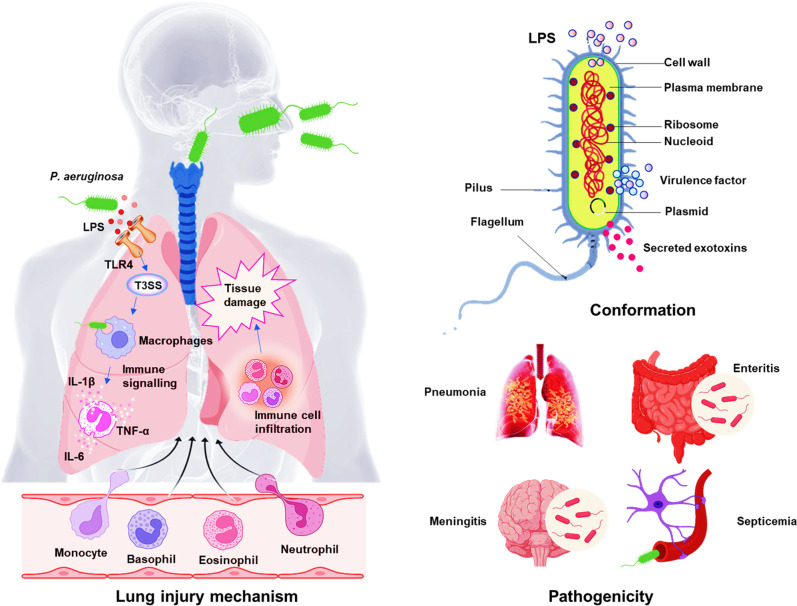
Pseudomonas aeruginosa (P. aeruginosa) is a Gram-negative opportunistic pathogen that infects patients with cystic fibrosis, burn wounds, immunodeficiency, chronic obstructive pulmonary disorder (COPD), cancer, and severe infection requiring ventilation, such as COVID-19. P. aeruginosa is also a widely-used model bacterium for all biological areas. In addition to continued, intense efforts in understanding bacterial pathogenesis of P. aeruginosa including virulence factors (LPS, quorum sensing, two-component systems, 6 type secretion systems, outer membrane vesicles (OMVs), CRISPR-Cas and their regulation), rapid progress has been made in further studying host-pathogen interaction, particularly host immune networks involving autophagy, inflammasome, non-coding RNAs, cGAS, etc. Furthermore, numerous technologic advances, such as bioinformatics, metabolomics, scRNA-seq, nanoparticles, drug screening, and phage therapy, have been used to improve our understanding of P. aeruginosa pathogenesis and host defense. Nevertheless, much remains to be uncovered about interactions between P. aeruginosa and host immune responses, including mechanisms of drug resistance by known or unannotated bacterial virulence factors as well as mammalian cell signaling pathways. The widespread use of antibiotics and the slow development of effective antimicrobials present daunting challenges and necessitate new theoretical and practical platforms to screen and develop mechanism-tested novel drugs to treat intractable infections, especially those caused by multi-drug resistance strains. Benefited from has advancing in research tools and technology, dissecting this pathogen’s feature has entered into molecular and mechanistic details as well as dynamic and holistic views. Herein, we comprehensively review the progress and discuss the current status of P. aeruginosa biophysical traits, behaviors, virulence factors, invasive regulators, and host defense patterns against its infection, which point out new directions for future investigation and add to the design of novel and/or alternative therapeutics to combat this clinically significant pathogen.
Overview
CoChat Summary
TL;DR
This review synthesizes *Pseudomonas aeruginosa* pathogenesis, virulence factors, antibiotic resistance, host immune interactions, and emerging therapeutics. It emphasizes the pathogen’s MDR clinical burden and persistent gaps in mechanistic understanding and treatment development.
Key findings
- *P. aeruginosa* is an MDR ESKAPE pathogen and WHO “critical” carbapenem-resistant threat, causing infections in cystic fibrosis, burns, COPD, cancer, sepsis, and ventilator-associated pneumonia including COVID-19. The review cites ~700,000 annual deaths from antibiotic-resistant bacterial infections; combined resistance in European populations was 12.9%, Spain hospital-acquired infection 10.5%, Europe nosocomial infections ~9% (fourth commonest pathogen), US HCAI 7.1%, and CHINET identified 301,917 clinical isolates with *P. aeruginosa* fourth at 7.96%.
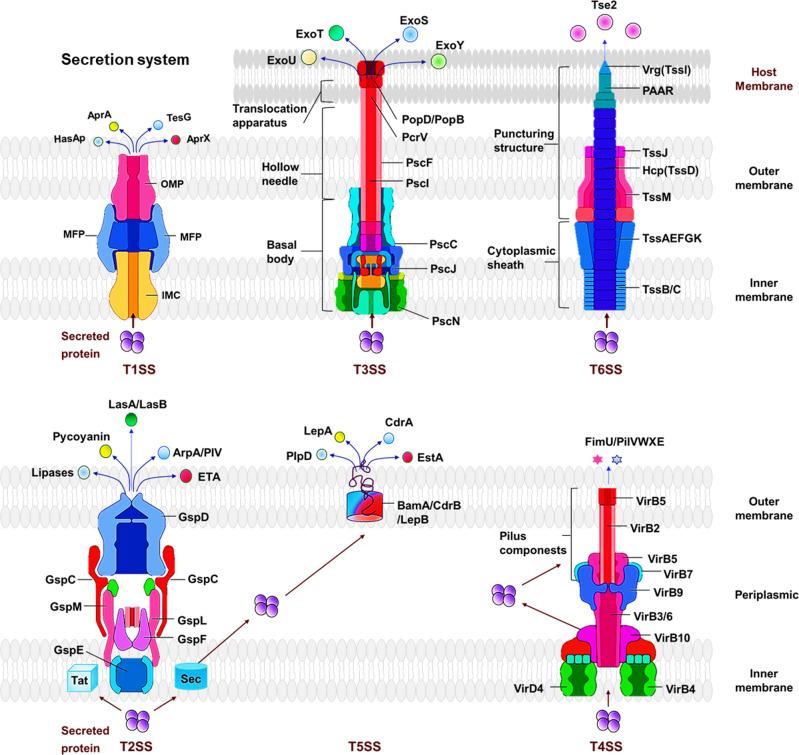
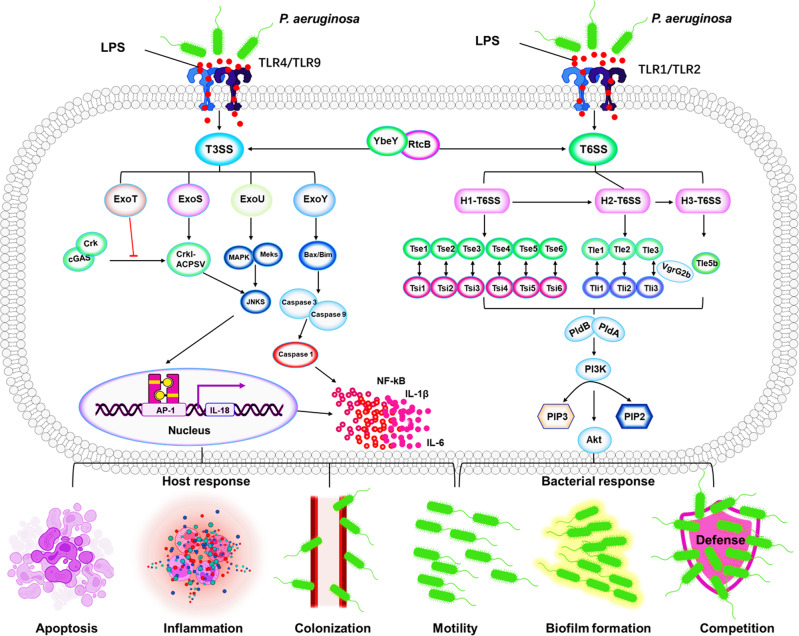
- Virulence and regulation involve LPS, OMVs, six secretion systems (T1–T6), quorum sensing (Las, Rhl, Pqs, Iqs), two-component systems (64 histidine kinases and 72 response regulators; >50% linked to virulence and/or resistance), small non-coding RNAs (573 in PAO1, 233 in PA14, 126 shared), and CRISPR-Cas. T3SS effectors include ExoS (48.3 kDa, 453 aa), ExoT (48.5 kDa, 457 aa), ExoY (41.7 kDa, 378 aa; detected in 80–100% of *P. aeruginosa*), and ExoU (73.9 kDa, 687 aa).
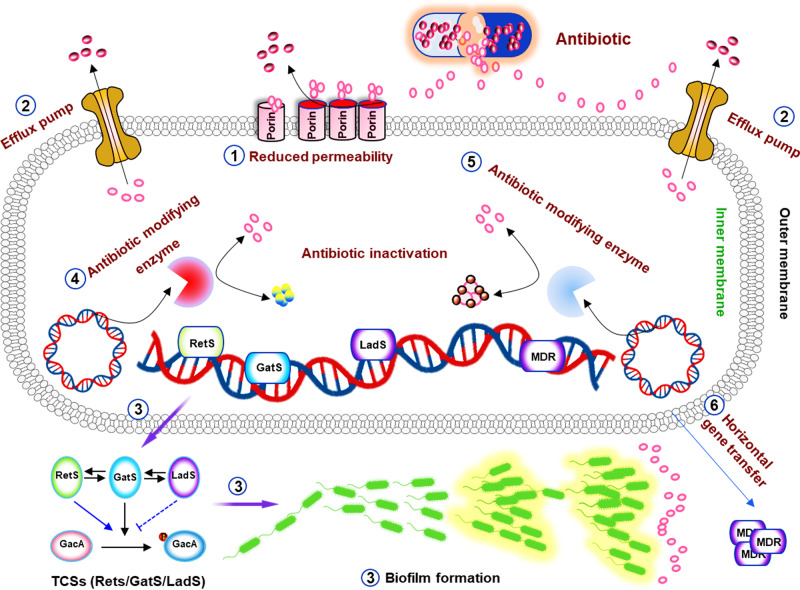
- Antibiotic resistance mechanisms include outer membrane permeability/porins, efflux systems (12 RND family pumps, including MexAB-OprM, MexCD-OprJ, MexEF-OprN, MexXY-OprM), antibiotic-inactivating/modifying enzymes (>50 enzymes), mutations and horizontal gene transfer, and adaptive biofilm/persister resistance.
- Host interaction involves TLRs, inflammasomes (NLRC4, AIM2, NLRP3), cGAS-STING, autophagy, and non-coding RNAs. Emerging therapeutics include plazomicin (Phase III cUTI composite cure 81.7% vs meropenem 70.1%; CARE trial 23.5% vs colistin-based 50%), eravacycline (active against 90% of isolates at ≤0.008–2 μg/ml), phage therapy, nanoparticles, gene editing, and vaccines, though no *P. aeruginosa* vaccine is clinically available.
Methods
- Narrative/comprehensive review; no primary experiments. It synthesizes published literature on *P. aeruginosa* biophysical traits, virulence factors, regulatory systems, antibiotic resistance, host defense, technology advances, and therapeutics, with figures and tables.
- Data/sample: published studies and surveillance statistics cited in the text; no systematic search strategy, inclusion/exclusion criteria, or meta-analysis is described.
- Main analysis: thematic synthesis across bacterial pathogenesis, virulence regulation, resistance mechanisms, host immune responses, and therapeutic development.
Limitations
- Stated: many questions remain about emergence of drug-resistant strains, undiscovered virulence factors, immune evasion, resistance mechanisms, host factors, and systematic guidelines; understanding is still limited. The review also notes unresolved/paradoxical inflammasome roles, unsatisfactory QS-targeting therapy with limited in vivo reports, no clinically available vaccine, and phage therapy challenges including neutralizing antibodies, exotoxin safety concerns, and rapid bacterial resistance.
- Evident: as a narrative review, it lacks a described systematic search/selection method and provides no primary data; conclusions rely on cited literature and may reflect selection bias.
Model-written summary. Check it against the paper before relying on it.
Integrity signals
Registry
Cites
Statistics
Figures
Verification
Claims the paper makes
4 Valid · 8 Not valid · 100 Not checked · 19 Own results and interpretations
Every source the paper cites for this claim was checked and supports it.
In the paper
“Our follow-up studies indeed illuminate that oprC dampens host response in cells and mice to Pseudomonas infection by potently enhancing Quorum-Sensing-associated virulence.105”
§ Pseudomonas aeruginosa: pathogenesis, virulence factors, antibiotic resistance, interaction with host, technology advances and emerging therapeutics > Secretion systems, an integral part of virulence platforms and mechanisms > One-step secretion systems
What the sources say
- Supportedcites [105] Gao P oprC impairs host defense by increasing the quorum-sensing-mediated virulence of Pseudomonas aeruginosa Front. Immunol. 2020 11 1696 10.3389/fimmu.2020.01696 32849593 PMC7417366 source
The Discussion summary (p. null, 'Discussion') states that OprC 'regulates the critical QS virulence signals and thereby strongly impacts the host immune response,' matching the paper's title ('oprC Impairs Host Defense by Increasing the Quorum-Sensing-Mediated Virulence of Pseudomonas aeruginosa'). The Results back both arms: virulence/QS ('markedly declined expression of QS-associated genes (lasR, lasI, rhlR, and rhlAB) and typical virulence genes... implied that oprC may participate in bacterial virulence regulation'; reduced pyocyanin, LPS, exoproteases, alginate, rhamnolipids in Figure 2/Supplemental Figures 2A,B) and host effects in cells (MH-S macrophages: reduced GSDMD cleavage/pyroptosis, IL-1β, LDH, cleaved caspase-1) and mice (Figure 3: decreased mortality, bacterial burden, lung barrier damage and inflammation; Figure 4: dampened inflammasome formation and proinflammatory cytokines). The 'potently' qualifier is echoed by the paper's own wording ('OprC potently affected the host-pathogen interaction'; 'strongly impacts the host immune response'). (LLM, conf=0.88)
boostedstates a cause- Asserted: passes — The authors put it forward as true.
- Checkable: passes — It can be checked against evidence.
- Load-bearing: passes — The paper’s conclusions depend on it.
- Based: passes — The paper gives a reason why it holds.
- Supported
Every source the paper cites for this claim was checked and supports it.
In the paper
“With collaboration efforts, we characterize H2-T6SS-dependent secretomes that are related to copper (Cu2+)-binding effector azurin (Azu).104”
§ Pseudomonas aeruginosa: pathogenesis, virulence factors, antibiotic resistance, interaction with host, technology advances and emerging therapeutics > Secretion systems, an integral part of virulence platforms and mechanisms > One-step secretion systems
What the sources say
- Supportedcites [104] Han Y A Pseudomonas aeruginosa type VI secretion system regulated by CueR facilitates copper acquisition PLoS Pathog. 2019 15 e1008198 10.1371/journal.ppat.1008198 31790504 PMC6907878 source
The Introduction states the authors used mass spectrometry to compare the secretomes of the ΔretS and ΔretSΔclpV2 strains and that the analysis revealed 21 proteins whose secretion is H2-T6SS-dependent, including the Cu2+-binding protein azurin (Azu) (Introduction). The Results section 'Cu-binding protein Azu is secreted by H2-T6SS' corroborates this, noting Azu abundance was much higher in the ΔretS mutant than in the ΔretSΔclpV2 strain (S1 Table, from the MS secretome) and that Azu secretion depended on ClpV2/Hcp2/tssM2 and VgrG2b. The paraphrase therefore accurately reflects the cited work. (LLM, conf=0.92)
plainstates an association- Asserted: passes — The authors put it forward as true.
- Checkable: passes — It can be checked against evidence.
- Load-bearing: passes — The paper’s conclusions depend on it.
- Based: passes — The paper gives a reason why it holds.
- Supported
Every source the paper cites for this claim was checked and supports it.
In the paper
“we recently describe a function for H2-T6SS of P. aeruginosa for specific delivery of AmpDh3 (a paralogous zinc protease) to the periplasm of a prey bacterium upon contact.106”
§ Pseudomonas aeruginosa: pathogenesis, virulence factors, antibiotic resistance, interaction with host, technology advances and emerging therapeutics > Secretion systems, an integral part of virulence platforms and mechanisms > One-step secretion systems
What the sources say
- Supportedcites [106] Wang T A type VI secretion system delivers a cell wall amidase to target bacterial competitors Mol. Microbiol. 2020 114 308 321 10.1111/mmi.14513 32279364 PMC8011994 source
The Abstract (p. 1) states verbatim that 'the type VI secretion system locus II (H2-T6SS) of P. aeruginosa delivers AmpDh3 (but not AmpD or AmpDh2) to the periplasm of a prey bacterium upon contact', covering both the delivery and its specificity. The Discussion and Introduction reinforce this, noting AmpDh3 is one of three paralogous zinc proteases and that its deleterious activity is denied access to the donor periplasm but targets the recipient's under contact-dependent conditions. (LLM, conf=0.95)
plainstates a cause- Asserted: passes — The authors put it forward as true.
- Checkable: passes — It can be checked against evidence.
- Load-bearing: passes — The paper’s conclusions depend on it.
- Based: passes — The paper gives a reason why it holds.
- Supported
The cited sources support only part of this claim — read each source’s verdict below.
In the paper
“our studies uncover cGAS as a novel nucleic acids’ sensor to initiate immune responses against P. aeruginosa infection through a canonical pathway involving STING and IRF-1,280,309”
§ Pseudomonas aeruginosa: pathogenesis, virulence factors, antibiotic resistance, interaction with host, technology advances and emerging therapeutics > Highly complex and multiple mechanisms in host immune responses to the bacterium > Nucleic acid sensor cGAS is pivotal for eliciting immune reaction
What the sources say
- Partly supportedcites [280] Qin S Small-molecule inhibitor of 8-oxoguanine DNA glycosylase 1 regulates inflammatory responses during Pseudomonas aeruginosa infection J. Immunol. 2020 205 2231 2242 10.4049/jimmunol.1901533 32929043 PMC7541742 sourceExperimental — accuracy not yet measured
Our copy supports cGAS acting as the DNA/nucleic-acid sensor that triggers type I IFN immune responses during P. aeruginosa (PA14) infection, and it does invoke STING: the Abstract states SU0268 'induces the release of type I interferon by the mtDNA-cGAS-STING-IRF3-IFNβ axis, which decreases bacterial loads and halts disease progression,' and the Discussion (p. ~Discussion) says cytoplasmic mtDNA 'can be recognized by DNA sensor cGAS and incite innate immunity responses through the cGAS/STING signaling.' However, the interferon factor the paper actually measures and attributes the pathway to is IRF3, not IRF-1: the Results section heading and text describe the 'cGAS-TBK-IRF3-IFN-β pathway' with augmented 'nuclear transfer of IRF3' and cGAS siRNA reversing IFNβ release, and the Discussion summarizes a 'mtDNA-cGAS/TBK/IRF3/IFNβ axis.' No passage of our copy implicates IRF-1 (the only related items are STAT1 activation in the PCR-array Result and IRF7 in a cited H. pylori study in the Discussion), so the 'IRF-1' element of the claim is not supported by this source. (LLM, conf=0.78)
- Partly supportedcites [309] Zhou, C. et al. Identification of cGAS as an innate immune sensor of extracellular bacterium Pseudomonas aeruginosa. iScience. 24, 101928 (2020). PMC7772558 33385121 sourceExperimental — accuracy not yet measured
Our copy supports cGAS as the DNA sensor initiating anti-P. aeruginosa responses via the canonical cGAS-STING axis (Abstract: 'the canonical cGAS-stimulator of interferon gene (STING)-IFN axis is required for protecting mice from P. aeruginosa-induced mouse acute pulmonary infection'; Results 'cGAS is required for P. aeruginosa-induced type I IFN response in macrophages'). However, the downstream transcription factor this paper identifies is IRF3, not IRF-1: the Results section 'cGAS-IRF3-IFN axis is required for P. aeruginosa-induced unfolded protein response' and the Discussion describe cGAS acting through IRF3 (ChIP-seq/ChIP of IRF3 at BiP and ATF4 promoters) and type I IFNs, and searches for IRF-1 / interferon regulatory factor 1 returned no such pathway in our copy. The IRF-1 component of the citing sentence is therefore unattributable to this source. (LLM, conf=0.80)
plainstates a cause- Asserted: passes — The authors put it forward as true.
- Checkable: passes — It can be checked against evidence.
- Load-bearing: passes — The paper’s conclusions depend on it.
- Based: passes — The paper gives a reason why it holds.
- Partly supported
None of the sources cited for this claim have been checked yet.
In the paper
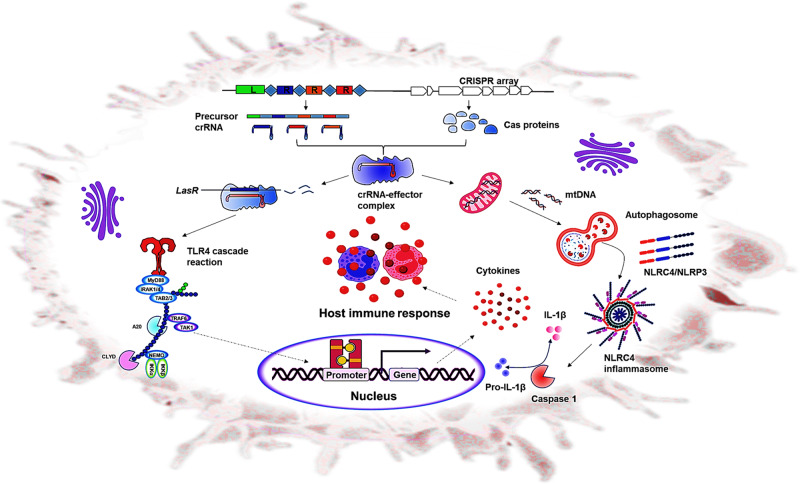
“Our research showed that type I CRISPR-Cas targeted the QS regulator LasR to inhibit toll-like receptor 4 recognition, thereby evading mammalian host immunity, suggesting that the CRISPR system is linked to host immunity modulation by targeting their own genes, potentially evading host defense mechanisms.321”
§ Pseudomonas aeruginosa: pathogenesis, virulence factors, antibiotic resistance, interaction with host, technology advances and emerging therapeutics > Highly complex and multiple mechanisms in host immune responses to the bacterium > CRISPR-mediated adaptive immunity, a double-edged sword for bacterial self-survival and invasion
What the sources say
- Not checked yetcites [321] Li R Type I CRISPR-Cas targets endogenous genes and regulates virulence to evade mammalian host immunity Cell Res. 2016 26 1273 1287 10.1038/cr.2016.135 27857054 PMC5143421 source
Checked before — its earlier verdict is held back until a new check runs.
hedgedstates a cause- Asserted: passes — The authors put it forward as true.
- Checkable: passes — It can be checked against evidence.
- Load-bearing: passes — The paper’s conclusions depend on it.
- Based: passes — The paper gives a reason why it holds.
- Not checked yet
60 more claims
Create a free account to see all 131 claims and to verify the 154 references still open.
- It may state two separate claims as one. 46
- Probably not a substantial claim. 26
Claims other papers make about this one
Each is checked against this paper’s own text: does it say what the citing paper says it does?
In the citing paper
“Across strains, QS controls a broad set of virulence traits that include secreted enzymes, surfactants, redox-active metabolites, and toxins. These traits strengthen biofilms and reduce the effectiveness of therapy. Las, Rhl, and Pqs regulate hundreds of genes, among them being LasB elastase, rhamnolipids that arise from rhlAB, several phenazines such as pyocyanin, hydrogen cyanide, and secretion”
From Understanding Pseudomonas aeruginosa Biofilms: Quorum Sensing, c-di-GMP Signaling, and Emerging Antibiofilm Approaches (2026) · cites this paper as [81]
In the citing paper
“A key factor in its ecological versatility and adaptability is quorum system, a mechanism that coordinates gene expression across populations, regulating crucial processes for pathogenesis, including virulence and antibiotic resistance25,26.”
From Pseudomonas aeruginosa: ecology, evolution, pathogenesis and antimicrobial susceptibility (2025) · cites this paper as [25]
In the citing paper
“Quorum sensing in P. aeruginosa also plays a crucial role in biofilm formation by regulating the expression of genes involved in surface attachment, extracellular matrix (ECM) production and antibiotic resistance, enabling the bacteria to coordinate their behaviour and establish resilient, structured communities25–27.”
From Pseudomonas aeruginosa: ecology, evolution, pathogenesis and antimicrobial susceptibility (2025) · cites this paper as [25]
Self-check
Percentages, sums and reported differences re-computed from the paper’s own numbers.
Each contradiction between two passages listed here was confirmed by an independent check.
Rated minor: it would not touch a result — a value no result rests on, a p-value that stays on the same side of the significance level, or a conflict that is clerical, resolved elsewhere in the paper, or outside its own findings.
In the paper
§ Pseudomonas aeruginosa: pathogenesis, virulence factors, antibiotic resistance, interaction with host, technology advances and emerging therapeutics > Secretion systems, an integral part of virulence platforms and mechanisms
“One-step secretion system exoproteins are directly absorbed into the cytoplasm through their cognate secretion mechanism.”
§ Pseudomonas aeruginosa: pathogenesis, virulence factors, antibiotic resistance, interaction with host, technology advances and emerging therapeutics > Secretion systems, an integral part of virulence platforms and mechanisms
“The one-step secretion system directly secretes proteins from bacterial cytosol to the surface”
Citations
Cites
Cleavage of GSDMD by inflammatory caspases determines pyroptotic cell death
Shi, J., Zhao, Y., Wang, K., Shi, X., Wang, Y., Huang, H., Zhuang, Y., Cai, T., Wang, F., & Shao, F. (2015) · Nature · doi:10.1038/nature15514 · Cited by 6,659 · cited 1×
“Recent work reveals that inflammasome is involved in pyroptosis dependent on the cleavage of Gasdermin D, which contributed to the formation of plasma membrane pores, and in turn promoting the release of inflammatory cytokines and pyroptosis.(288,289) Typically, inflammasome consists of cytosolic PRRs, ASC (an apoptos…”
BackgroundMartinon, F., Burns, K., & Tschopp, J. (2002) · Molecular Cell · doi:10.1016/s1097-2765(02)00599-3 · Cited by 6,066 · cited 2×
“Inflammasomes drive inflammation and pyroptosis The inflammasome is a multiprotein complex, which is attributed to the production and release of inflammatory cytokines, IL-1β and IL-18.(286,287) Recent work reveals that inflammasome is involved in pyroptosis dependent on the cleavage of Gasdermin D, which contributed…”
BackgroundCyclic GMP-AMP Synthase Is a Cytosolic DNA Sensor That Activates the Type I Interferon Pathway
Sun, L., Wu, J., Du, F., Chen, X., & Chen, Z. J. (2013) · Science · doi:10.1126/science.1232458 · Cited by 4,996 · cited 1×
“Nucleic acid sensor cGAS is pivotal for eliciting immune reaction cGAS is a recently discovered nucleic acid sensor that is initially identified to recognize viruses.(306) Typically, activation of cGAS contributes to the induction of inflammasome as a means against viral or intracellular bacterial infection.”
BackgroundThe innate immune response to bacterial flagellin is mediated by Toll-like receptor 5
Hayashi, F., Smith, K. D., Ozinsky, A., Hawn, T. R., Yi, E. C., Goodlett, D. R., Eng, J. K., Akira, S., Underhill, D. M., & Aderem, A. (2001) · Nature · doi:10.1038/35074106 · Cited by 3,601
Extended-Spectrum β-Lactamases: a Clinical Update
Paterson, D. L., & Bonomo, R. A. (2005) · Clinical Microbiology Reviews · doi:10.1128/cmr.18.4.657-686.2005 · Cited by 3,491
Inflammasome-activated gasdermin D causes pyroptosis by forming membrane pores
Liu, X., Zhang, Z., Ruan, J., Pan, Y., Magupalli, V. G., Wu, H., & Lieberman, J. (2016) · Nature · doi:10.1038/nature18629 · Cited by 3,202 · cited 1×
“Recent work reveals that inflammasome is involved in pyroptosis dependent on the cleavage of Gasdermin D, which contributed to the formation of plasma membrane pores, and in turn promoting the release of inflammatory cytokines and pyroptosis.(288,289) Typically, inflammasome consists of cytosolic PRRs, ASC (an apoptos…”
BackgroundPathogen Recognition and Inflammatory Signaling in Innate Immune Defenses
Mogensen, T. H. (2009) · Clinical Microbiology Reviews · doi:10.1128/cmr.00046-08 · Cited by 3,111
Genetic screens in human cells using the CRISPR-Cas9 system
Wang, T., Wei, J. J., Sabatini, D. M., & Lander, E. S. (2014) · Science · doi:10.1126/science.1246981 · Cited by 2,856
An updated evolutionary classification of CRISPR–Cas systems
Makarova, K. S., Wolf, Y. I., Alkhnbashi, O. S., Costa, F., Shah, S. A., Saunders, S. J., Barrangou, R., Brouns, S. J. J., Charpentier, E., Haft, D. H., et al. (2015) · Nature Reviews Microbiology · doi:10.1038/nrmicro3569 · Cited by 2,480
Signaling to NF-κB by Toll-like receptors
Kawai, T., & Akira, S. (2007) · Trends in Molecular Medicine · doi:10.1016/j.molmed.2007.09.002 · Cited by 2,388
Research works printed but not linked: 1
- Zhou, C. et al. Identification of cGAS as an innate immune sensor of extracellular bacterium Pseudomonas aeruginosa. iScience. 24, 101928 (2020). PMC7772558 33385121 · DOI · Paper page
Cited by
Items 1,401–1,500 of 1,714
Sherif, F. E., Aldayel, M. F., Younis, N. S., Althumairy, D., Alyousif, N. A., Alrajeh, H. S., Mohamed, M. E., Meligy, A. M. A., & Khattab, S. (2026) · ACS Omega · doi:10.1021/acsomega.5c11044
Gong, W., Arellano-Arriagada, L., Albarracín, L., Aybar, J. N. A., Baillo, A. A., Cisterna-Vergara, S., Nishiyama, K., Valdéz, J. C., Gobbato, N., Kitazawa, H., et al. (2026) · Frontiers in Immunology · doi:10.3389/fimmu.2026.1802599
Paialunga, E., Cancelliere, R., Licheri, A., Micelli, C., Ceccarelli, A., Sarpi, G., Albano, D., Brugnoli, B., Francolini, I., Micheli, L., et al. (2026) · Talanta · doi:10.1016/j.talanta.2026.129761
Pellegrini, A., Milli, G., Menegussi, E. B., Viglio, S., Cinaglia, P., Listro, R., Linciano, P., Collina, S., & Pietrocola, G. (2026) · ACS Omega · doi:10.1021/acsomega.5c08721 · Cited by 1
Genomic and Bioinformatics Perspectives on Multidrug Resistant Escherichia coli
(2026) · Science and Society Insights · doi:10.65822/j.sasi/2026.009
Shen, T., Zhang, L., Chen, R., Jia, S., & He, Z. (2026) · Frontiers in Microbiology · doi:10.3389/fmicb.2026.1798540
Emergence of NLRP1 inflammasome as a sensor of microbial virulence in human epithelium
Pinilla, M. (2023) · theses.fr (ABES) · doi:10.70675/1209ef79zd7c9z4b14z8a56za9b7f12b4bd0
Rôle des cellules myéloïdes suppressives dans les infections pulmonaires à Pseudomonas aeruginosa
Born-Bony, M. (2024) · theses.fr (ABES) · doi:10.70675/41183170z0b22z40c7zbd6cz776a4f32f4a1
Wallart, L. (2023) · theses.fr (ABES) · doi:10.70675/00230957zfc26z42c5zbac3zf78535abfeb8
Soria-Herrera, R. J., Muñoz-Mateo, L. F., Hernández-Mixteco, M., León‐Juárez, M., Helguera‐Repetto, A. C., Aviña, L. G. F., Robinson‐Fuentes, V. A., Angeles-Morales, E. B., Castro‐Escarpulli, G., Cortés‐Penagos, C., et al. (2026) · Environments · doi:10.3390/environments13040207
Biophysical and structural characterisation of IspG and IspH (in complex with inhibitors)
D’Auria, L. (2023) · theses.fr (ABES) · doi:10.70675/8c0aeae4zf69bz492bzbaf5zc961e271167b
Nouchikian, L. (2023) · theses.fr (ABES) · doi:10.70675/ae1b34afz3360z4758zb095z89c58db2a12f
Développement d'un outil de diagnostic ultra-rapide de l'antibiorésistance
Philip, A. (2023) · theses.fr (ABES) · doi:10.70675/4b0e6048z2846z49fez847czc176f87342b3
Aljaaidi, R. A., Alshammari, M. K., Alkhulaifi, M. M., Alrashidi, B., Alhetheel, A., Alzaidi, E., & Al-Farraj, D. A. (2026) · International Journal of Microbiology · doi:10.1155/ijm/1302634
Sharma, J. K., & Kumar, S. (2026) · Protein and Peptide Letters · doi:10.2174/0109298665415763251208083026
Rational Targeting and gRNA Design for Enhancing Quorum Quenching in Pseudomonas aeruginosa PAO1
Delgado-Nungaray, J. A., Figueroa-Yáñez, L. J., Delgado, E. R., García-Ramírez, M. A., & González‐Reynoso, O. (2026) · Computational and Structural Biotechnology Journal · doi:10.34133/csbj.0089
Maldonado, V. M. G., Rodríguez-Rangel, C., Georgellis, D., & Alvarez, A. K. (2026) · Environmental Microbiology Reports · doi:10.1111/1758-2229.70340
The potential of natural antimicrobials for cultured meat production: A literature review
Venter, C., Mariano, E., Lee, D. Y., & Hur, S. J. (2026) · Food Bioscience · doi:10.1016/j.fbio.2026.108918
Zhang, G., Xin, Q., Zhang, H., Yan, J., & Huang, W. (2026) · Frontiers in Endocrinology · doi:10.3389/fendo.2026.1719170 · Cited by 1
Ageba, S. L., Orole, O. O., Uyi, G., Muhammad, M. H., & Gbadeyan, F. (2026) · Lafia Journal of Scientific and industrial Research · doi:10.62050/ljsir2026.v4n1.824
Necel, A., Stasiłojć, M., Wesołowski, W., Narajczyk, M., Kosznik-Kwaśnicka, K., Kaźmierczak, N., Naumiuk, Ł., Loika, H., Piechowicz, L., & Żywicka, A. (2026) · Frontiers in Microbiology · doi:10.3389/fmicb.2026.1807725
Khurshid, A., Manzoor, S., & Parveen, Z. (2026) · Polyhedron · doi:10.1016/j.poly.2026.118163
Pournabi, H., Tajbakhsh, S., Rayani, M., Doroudian, M., Askari, A., & Yousefi, F. (2026) · BMC Microbiology · doi:10.1186/s12866-026-04925-9
Al-Khafaji, S. A., & Al-Mayahi, F. S. A. (2026) · Iranian Journal of Microbiology · doi:10.18502/ijm.v18i2.21300
Ghorai, M., Kumaresan, D., Gururajan, D. P., Velu, P., Venkatachalam, M., & Dorairaj, A. P. (2026) · National Academy Science Letters · doi:10.1007/s40009-026-02239-y
Banerjee, S., Bajire, S. K., Mynalli, A. B., & Shastry, R. P. (2026) · Molecular Biology Reports · doi:10.1007/s11033-026-11873-0
Genetic Diversity and Molecular Characterization of Clinically Isolated Pseudomonas aeruginosa
Hameed, A., & Arif, S. K. (2026) · Charmo Journal of Natural Sciences and Technologies · doi:10.31530/cjnst.2026.2.1.5
Zhang, B., Liu, P., Zhang, J., Chen, X., Chen, Z., Zheng, Q., Ma, P., Wang, C., Xia, X., & Hu, W. (2026) · Analytical and Bioanalytical Chemistry · doi:10.1007/s00216-026-06523-0
Alghamdi, H. S., Malak, H. A., Neyaz, L. A., Obaid, N. A., Alkhresha, M. H., AlKashkary, M. M. S., Elbanna, K., Ahmad, I., & Abulreesh, H. H. (2026) · Journal of Pure and Applied Microbiology · doi:10.22207/jpam.20.2.13 · Cited by 1
Beyond Antibiotics: AI–Nanotech Synergy for a Sustainable Antimicrobial Future
Agrawal, A., Reddy, Y. D. R., Hussain, K., Nagaraj, D. S., Dr Venkateswarlu, B., Gangula, R., Gupta, D. K., & Shrivastava, D. (2026) · Advances in computational intelligence and robotics book series · doi:10.4018/979-8-3373-5268-8.ch002
Bao, G.-M., Liang, X.-Y., Cai, Z., Zhang, Q.-Y., Zhao, Y.-S., Zhao, K., Wang, M.-K., Chen, P., He, L.-G., Zhang, Y.-Y., et al. (2026) · Colloids and Surfaces A Physicochemical and Engineering Aspects · doi:10.1016/j.colsurfa.2026.140716
Genetic Variations in Multilocus Genes of Clinical Pseudomonas aeruginosa in Al-Diwaniyah City, Iraq
Jawad, S. S., & Al-Azawi, I. H. (2026) · Medical Journal of Babylon · doi:10.4103/mjbl.mjbl_747_23
Cyclodextrin platforms for siRNA delivery: turning design into new therapies
Sonje, D. P., & Wairkar, S. (2026) · International Journal of Pharmaceutics · doi:10.1016/j.ijpharm.2026.126948
Iconaru, S. L., Ciobanu, C. S., Bleoţu, C., Motelica‐Heino, M., & Predoi, D. (2026) · Biomimetics · doi:10.3390/biomimetics11050327
Unveiling the Role of Pseudomonas aeruginosa Quorum Sensing Inhibitors: The Road So Far
Tudino, V., Rossi, S., Milioni, L., Cosenza, C., Carullo, G., Gemma, S., Butini, S., & Campiani, G. (2026) · The Chemical Record · doi:10.1002/tcr.202500359
Ulum, F. B., Setyati, D., Oktavianawati, I., Rizqoni, M. I. A., Sari, E. N., Muzakhar, K., & Su’udi, M. (2026) · Biodiversitas Journal of Biological Diversity · doi:10.13057/biodiv/d270234
Zhao, N., Ma, H., Zhu, Z., Fan, D., Dai, D., Mou, X., Zhou, J., Li, Y., Gao, M., Chenghuang, J., et al. (2026) · ACS Chemical Biology · doi:10.1021/acschembio.6c00141
Wauters, M., Bollé, L., Meester, G. D., den Bossche, S. V., Grassi, L. C., Haver, D. V., Dufour, S., Devos, S., Impens, F., Braeckel, E. V., et al. (2026) · Virulence · doi:10.1080/21505594.2026.2670050
Fleck, R. C., Gorodyna, O., Zhou, H., Bryant, H., Gadjeva, M. G., & Shea, A. E. (2026) · mSphere · doi:10.1128/msphere.00151-26 · Cited by 1
Chavan, D. R., Shinde, R. V., & Patil, S. R. (2026) · Cureus · doi:10.7759/cureus.108761
Rational Design of Resistance-Suppressing Phage-Antibiotic Cocktails via Receptor TradeoffsPreprint
Shen, X., & Gitai, Z. (2026) · bioRxiv (Cold Spring Harbor Laboratory) · doi:10.64898/2026.05.12.724642
Zhang, Q., He, G., Guo, Z., He, Y., Xiong, J., He, T., & Lee, S. L. (2026) · World Journal of Microbiology and Biotechnology · doi:10.1007/s11274-026-05008-7
Formulation and Evaluation of Polyherbal Hand Sanitizer
Venkateshwari, D., Ilango, K. B. I. D. K. B., Alageshwari, V., Kumar, N. D., Mohammed, I. M., Nithish, G., & Sekar, P. (2026) · Journal of Drug Delivery and Therapeutics · doi:10.22270/jddt.v16i5.7645
Gao, L., Wen, Y., & Jing, X. (2026) · Frontiers in Pediatrics · doi:10.3389/fped.2026.1795457
Charge-tunable hemicyanine probes for bacterial imaging and bacterial infection tracking
Wang, K., Wang, Y., Zhu, W., Wang, L., Zhang, Z., Chen, B., Luo, W., Wang, X., & Wang, Z. (2026) · The Analyst · doi:10.1039/d6an00336b
Elavarasu, S. M., & Sasikumar, K. (2026) · Frontiers in Microbiology · doi:10.3389/fmicb.2026.1813201
Design and Mode of Action of a New Synthetic Antibacterial Peptide against Pseudomonas aeruginosa.
Azadian, A., Hosseini, H. M., Mirhosseini, S. A., Khani, S., & Amani, J. (2026) · PubMed Central · doi:10.22034/ibj.30.1.81
Jiao, Y., Liu, Y., Dong, J., Tang, J., Xiao, A., Li, J., Sun, F., Li, H., Wang, W., Gao, Q., et al. (2026) · Pest Management Science · doi:10.1002/ps.70958
Göpel, L., Groth, E. E., Minke, S., Schulenburg, H., Kalsdorf, B., Kirchhoff, L., Tüeffers, L., Rabe, K. F., Boutin, S., Nurjadi, D., et al. (2026) · BMC Microbiology · doi:10.1186/s12866-026-05147-9
Herrera-Espejo, S., Findlay, J., Cisneros, J. M., Pachón-Ibáñez, M. E., & Nordmann, P. (2026) · Scientific Reports · doi:10.1038/s41598-026-53218-8
Gomez-Ramirez, U., Gonzalez, C., Villamor, P., Huante-Guido, M., Contreras-Rodríguez, A., & Velázquez‐Guadarrama, N. (2026) · Frontiers in Cellular and Infection Microbiology · doi:10.3389/fcimb.2026.1830192
Biju, B., Sawant, A. R., Maji, S., Ajith, T., Neogi, T., Chakraborty, P. D., & Ghosh, A. S. (2026) · bioRxiv (Cold Spring Harbor Laboratory) · doi:10.64898/2026.05.22.727083
Adaptive Strategies and Resistome Dynamics of Microbial Communities in an Intensive Care UnitPreprint
Qi, S., Huang, L., Huang, X., Sun, L., Chen, S., Qiao, Z., & Tong, X. (2026) · Research Square · doi:10.21203/rs.3.rs-9376613/v1
Lin, K., Liu, Y., 吕攀, & Zhou, J. (2026) · Infection and Drug Resistance · doi:10.2147/idr.s611494
Antimicrobial activity of echinacea-loaded metal-organic framework against Pseudomonas aeruginosa
Ashrafi, F., Moulavi, P., Jamalipanah, Z., Jafari, M., Zomorodi, A. R., & Asadi, S. (2026) · AMB Express · doi:10.1186/s13568-026-02073-x
Lestari, R. S., Saputro, I. D., & Nata’atmadja, B. S. (2026) · International Journal of Drug Delivery Technology · doi:10.25258/ijddt.16.34s.77
Mattar, M. A., Shah, V., & Maganga, E. E. (2026) · International Journal of Drug Delivery Technology · doi:10.25258/ijddt.16.41s.103
Snoussi, M., Alabbosh, K. F., Alzahrani, M. M., Alsenani, Q., Alshammari, M., Ceylan, O., Siddiqui, A. J., Saoudi, M., Noumi, E., & Kadri, A. (2026) · Scientific African · doi:10.1016/j.sciaf.2026.e03436
Chen, H., Xu, H., Pu, J., Lee, C., & Yang, Y. (2026) · Journal of Membrane Science · doi:10.1016/j.memsci.2026.125719
Chen, J., Wang, Z., Xu, S., Li, B., Li, J. R., Bao, R., Kong, R., & Zhang, P. (2026) · BMC Microbiology · doi:10.1186/s12866-026-05227-w
Naser, L. A. (2026) · Academia Open · doi:10.21070/acopen.11.2026.13984 · Cited by 1
Zhao, P., Wang, Z., Jia, N., Wang, X., Liu, J., & Zhu, Y. (2026) · Frontiers in Cellular and Infection Microbiology · doi:10.3389/fcimb.2026.1830404
Piccioni, M., Curcio, G., Graziani, A., & Pietrella, D. (2026) · Pharmaceutics · doi:10.3390/pharmaceutics18060686
Abdelrahim, S. S., Zaki, S., & Kotb, D. N. (2026) · Molecular Biology Reports · doi:10.1007/s11033-026-12025-0
Sadatmahale, A. P., Kararoudi, A. N., Zahmatkesh, H., Kooyshahi, H. H., Chegini, S. N., Garakoui, S. R., Shahriarinour, M., Nikpassand, M., & Ranji, N. (2026) · Current Microbiology · doi:10.1007/s00284-026-04976-1
Zwespa, R. E., Amly, D. A., & Sari, W. P. (2026) · Jurnal Kedokteran Gigi Universitas Padjadjaran · doi:10.24198/jkg.v38i1.61757
Lim, H., Yoon, J., Kim, S., Hong, S.-T., Lee, S.-G., Sohn, D. H., Jun, J.-B., Yoon, W., Park, K.-S., Lee, H., et al. (2026) · Engineering Applications of Artificial Intelligence · doi:10.1016/j.engappai.2026.115344
Zhao, Y., Niu, X., Zhao, L., Wang, R. T., Liu, Z. H., & Zhang, L. (2026) · Research Square · doi:10.21203/rs.3.rs-9489792/v1
Shakeel, F., Rind, I. A., Ijaz, Z., Kotwal, M. D., Nawaz, S., Maria, Noor, H., & Toqeer, S. R. (2026) · Wah Academia Journal of Health and Nutrition · doi:10.63954/tfnn0d05
A Recombinant OMV-Based Vaccine Elicits Potent Protective Immunity Against Pseudomonas aeruginosa
Li, J., 祁光宇, Cao, M., Wang, Z. D., Lu, G., Lang, X., Wei, F., Lu, T., Zhu, L., & Wang, X. (2026) · Vaccines · doi:10.3390/vaccines14060518
Agarwalla, S. (2026) · Archives of Microbiology · doi:10.1007/s00203-026-04980-w · Cited by 1
Wang, L., Shen, C., Yin, L., Zhang, Y., Zhang, L., Liu, S., Cheng, Z., Wu, W., Ha, U., Jin, S., et al. (2026) · Microbiology Spectrum · doi:10.1128/spectrum.04189-25
Crystal structure of the type VI secretion system adaptor protein Tla3 from Pseudomonas aeruginosa
Chakraborty, B., & Datta, S. (2026) · Acta Crystallographica Section F Structural Biology Communications · doi:10.1107/s2053230x26005765
Kadhim, Z. A., Hassan, J. S., Wahhab, R. A. S. A., & Hussein, M. A. K. (2025) · Iraqi journal of Medical Sciences · doi:10.22578/ijms.23.2.18
Rivera, G. O., & Theiss, A. L. (2026) · Microbial Cell · doi:10.15698/mic2026.06.878
Surfactant-driven quorum sensing of Pseudomonas aeruginosa in cystic fibrosis
Selvamani, P., John, J., Kumar, J. D., Gopalakrishnan, S., Mangu, J. C. K., Thangaraj, P., & Parthasarathy, K. (2026) · AMB Express · doi:10.1186/s13568-026-02083-9
Nizer, W. S. D. C., Igídio, C. E. D., Ribeiro, E. M., Andrade, A. C. O., de Oliveira, S. N., Teixeira, M. M., Souza, D. G., & Fagundes, C. T. (2026) · Archives of Microbiology · doi:10.1007/s00203-026-04995-3
Xie, X., Chen, Y., Li, X., Huang, J., Deng, Q., Qiu, Y., Huang, L., Liu, R., & Liu, Z. (2026) · International Journal of Medical Microbiology · doi:10.1016/j.ijmm.2026.151727
Mohamed, S., Reda, A., Yousef, T. A., Nada, M. G., Wizrah, M. S. I., & Mandour, S. A. (2026) · International Journal of Molecular Sciences · doi:10.3390/ijms27125407
Al-qaysi, S. M., & Al-Taai, H. R. R. (2026) · Osol journal for medical sciences. · doi:10.69946/ojms/2026.04.01.10
Antivirulent activity of macrolides against P. aeruginosa
Vrynchanu, N. O., Zelena, L. B., Humeniuk, N., & Важнича, О. М. (2026) · Pharmacology and Drug Toxicology · doi:10.33250/20.02.164
Antibacterial Coatings for the Protection of Religious Artifacts
JEŻ, K., & Gacek, M. (2026) · International Journal of Conservation Science · doi:10.36868/ijcs.2026.02.21
Zakaria, O. M., Alarfaj, H. M., Kamal, A. H., Alabdulqader, A. A., Daoud, M. Y. I., Al‐Mulhim, A. S., Aldayel, M. F., Sherif, F. E., Alghazal, H. A., Zakaria, H. M., et al. (2026) · Research Square · doi:10.21203/rs.3.rs-9279186/v1
CRISPR-Based Programmable RNA-Responsive Protein Materials
Xu, Y., Kou, S., Huang, X., Cui, D., Guo, Y., & Sun, F. (2026) · ACS Macro Letters · doi:10.1021/acsmacrolett.6c00237
Garza, H. A. G. (2026) · El Repositorio Academico Digital de la UANL (Universidad Autónoma de Nuevo León)
Highly sensitive and species-specific molecular detection of microbial pathogens
Hernández-Chávez, M. J., Juárez‐Reyes, A., Peñas, A. D. L., Merino, E., & Castaño, I. (2026) · Journal of Microbiological Methods · doi:10.1016/j.mimet.2026.107601
Al-Noaemy, M. T., Alhafidh, N. M., Al-Attar, R. M., YAHYA, R. M., & Fadhil, S. J. (2026) · Journal of Applied and Natural Science · doi:10.31018/jans.v18i2.7532
R pyocin sensitivity of Pseudomonas aeruginosa clinical isolates from different disease types
Deng, Y., Wang, M. C., Chopra, C., Shelburne, S. A., Miller, W. R., & Kirienko, N. V. (2026) · Journal of Medical Microbiology · doi:10.1099/jmm.0.002179
Yang, Y., Gao, F., Jia, X. F., Jin, D., Haddi, K., Li, Z., & Zhao, Z. (2026) · Journal of Hazardous Materials · doi:10.1016/j.jhazmat.2026.142788
Pseudomonas aeruginosa ¿Villano o Héroe?
Sánchez, P. G., & Moreno-Carrasco, S. D. C. A. (2026) · Zenodo (CERN European Organization for Nuclear Research) · doi:10.5281/zenodo.20807588
Design, synthesis, and antibacterial activity study of pyrroloquinazoline diamine derivatives
Cheng, M., Tian, Y., Shang, J., 赫卫清, Zheng, Y., Yan, C., Chen, X., Li, J., Jiang, Y., Fu, Q., et al. (2026) · Journal of Enzyme Inhibition and Medicinal Chemistry · doi:10.1080/14756366.2026.2690351
Self-citationResistome–Virulome–Pathobiome nexus in agroecosystem soils
Jacques, K. J., Hao, Y., Sun, A., Kazmi, S. S. U. H., Ihenetu, S. C., Azeem, M., Xiang, Q., & Chen, Q. (2026) · Journal of Environmental Sciences · doi:10.1016/j.jes.2026.105576
Liu, J., Fu, C., Wu, Q., Kan, J., Cui, Z., Dong, R., Zheng, Z., Kong, Y., Zhang, Y. Y., Liu, L. F., et al. (2026) · MedMat. · doi:10.1097/mm9.0000000000000049
Metadata
- Authors
- Qin, S., Xiao, W., Zhou, C., Pu, Q., Deng, X., Lan, L., Liang, H., Song, X., & Wu, M.
- Affiliations
- Sichuan University (CN)
- University of North Dakota (US)
- City University of Hong Kong (HK)
- Chinese Academy of Sciences (CN)
- Northwest University (CN)
- Corresponding author
- Song, Xiangrong
- Wu, Min
- Venue
- Signal Transduction and Targeted Therapy
- Published
- 2022-06-25
- Volume
- 7
- Issue
- 1
- Pages
- 199-199
- ISSN
- 2059-3635 (ISSN-L)
- PMC
- PMC9233671
- OpenAlex
- W4283522546
- Semantic Scholar
- 091a7531d85d9a1a344fd21ca8fbc56204ff9b94
- Cited by
- 1,703
- References
- 479
- Citations by year
- 2026: 525 · 2025: 547 · 2024: 414 · 2023: 200 · 2022: 16
- FWCI
- 29.36
- Type
- journal article
- Language
- en
- Open access
- gold
- doi.org
- Licence
- cc-by
- creativecommons.org/licenses/by/4.0 (tdm)
- creativecommons.org/licenses/by/4.0 (vor)
- Locations
- Signal Transduction and Targeted Therapy (publishedVersion, cc-by)
- PubMed (publishedVersion)
- PubMed Central (publishedVersion, cc-by)
- DOAJ (DOAJ: Directory of Open Access Journals) (submittedVersion, cc-by-sa)
- CityU Scholars (submittedVersion, cc-by)
- Funders
- Foundation for the National Institutes of Health (R01 AI138203-3)
- Topics
- Life Sciences › Biochemistry, Genetics and Molecular Biology › Molecular Biology › Bacterial biofilms and quorum sensing
- Health Sciences › Medicine › Microbiology (medical) › Infections and bacterial resistance
- Life Sciences › Biochemistry, Genetics and Molecular Biology › Genetics › Bacterial Genetics and Biotechnology
- Keywords
- Pseudomonas aeruginosa, bacterial pathogenesis, virulence factors, antibiotic resistance, host-pathogen interaction, host immune response, quorum sensing, type VI secretion system, outer membrane vesicles, CRISPR-Cas, autophagy, inflammasome, cGAS, multidrug resistance, phage therapy, cystic fibrosis, chronic obstructive pulmonary disease, burn wound infection, new drugs
- MeSH terms
- COVID-19, Animals, Drug Resistance, Microbial, Humans, Mammals, Pseudomonas aeruginosa, Pseudomonas Infections, Technology, Virulence Factors
About these checks
Registry, retraction, Cites and statistics results are computed, not judged, with one exception: a printed reference that no index lists is read once by a model before it counts as a citation error. Claims are extracted by a model and kept only when their quote appears verbatim in the text; each cited source is then checked, with a model’s help, for whether it says what the claim relies on. Those verdicts can be wrong — read the claim’s quote and the cited source before relying on one.
The claim verdicts this report counts are experimental: their accuracy is not yet measured.
A language model drew the claims from the paper on 2026-11-15, under version 3 of the claim definition (model deepseek-v4.1-flash, prompt extract-v3).
A second model labelled each claim on 2026-11-15 (model jev-1.13-20260917, definition revision gold-guideline-v0.2).
Cited sources are checked with a language model’s help (qwen3.8-omni-flash).
Statistics and arithmetic are recomputed, not judged.
Confidence bands are shown only for fields calibrated on our annotated test set. None is calibrated yet, so no band is shown.
What counts as a claim ›How we measure confidence ›How we check this ›
Are you an author, or do you see a problem with this page? Request a review
Data sources
Bibliographic data: Semantic Scholar, OpenAlex, Crossref.
Contains information from the Semantic Scholar Academic Graph Datasets, made available under the ODC Attribution License (ODC-BY 1.0).
Semantic Scholar’s data is described in: Kinney, R., et al. (2023). The Semantic Scholar Open Data Platform. arXiv:2301.10140.
