

Pseudomonas aeruginosa: pathogenesis, virulence factors, antibiotic resistance, interaction with host, technology advances and emerging therapeutics
Open accessThe DOI matches its Crossref record; 480 of the 480 references it cites were found in a registry or an index; 4 of the 160 sources its claims cite were checked for support.
Abstract
Pseudomonas aeruginosa (P. aeruginosa) is a Gram-negative opportunistic pathogen that infects patients with cystic fibrosis, burn wounds, immunodeficiency, chronic obstructive pulmonary disorder (COPD), cancer, and severe infection requiring ventilation, such as COVID-19. P. aeruginosa is also a widely-used model bacterium for all biological areas. In addition to continued, intense efforts in understanding bacterial pathogenesis of P. aeruginosa including virulence factors (LPS, quorum sensing, two-component systems, 6 type secretion systems, outer membrane vesicles (OMVs), CRISPR-Cas and their regulation), rapid progress has been made in further studying host-pathogen interaction, particularly host immune networks involving autophagy, inflammasome, non-coding RNAs, cGAS, etc. Furthermore, numerous technologic advances, such as bioinformatics, metabolomics, scRNA-seq, nanoparticles, drug screening, and phage therapy, have been used to improve our understanding of P. aeruginosa pathogenesis and host defense. Nevertheless, much remains to be uncovered about interactions between P. aeruginosa and host immune responses, including mechanisms of drug resistance by known or unannotated bacterial virulence factors as well as mammalian cell signaling pathways. The widespread use of antibiotics and the slow development of effective antimicrobials present daunting challenges and necessitate new theoretical and practical platforms to screen and develop mechanism-tested novel drugs to treat intractable infections, especially those caused by multi-drug resistance strains. Benefited from has advancing in research tools and technology, dissecting this pathogen’s feature has entered into molecular and mechanistic details as well as dynamic and holistic views. Herein, we comprehensively review the progress and discuss the current status of P. aeruginosa biophysical traits, behaviors, virulence factors, invasive regulators, and host defense patterns against its infection, which point out new directions for future investigation and add to the design of novel and/or alternative therapeutics to combat this clinically significant pathogen.
Overview
CoChat Summary
TL;DR
This review synthesizes *Pseudomonas aeruginosa* pathogenesis, virulence factors, antibiotic resistance, host immune interactions, and emerging therapeutics. It emphasizes the pathogen’s MDR clinical burden and persistent gaps in mechanistic understanding and treatment development.
Key findings
- *P. aeruginosa* is an MDR ESKAPE pathogen and WHO “critical” carbapenem-resistant threat, causing infections in cystic fibrosis, burns, COPD, cancer, sepsis, and ventilator-associated pneumonia including COVID-19. The review cites ~700,000 annual deaths from antibiotic-resistant bacterial infections; combined resistance in European populations was 12.9%, Spain hospital-acquired infection 10.5%, Europe nosocomial infections ~9% (fourth commonest pathogen), US HCAI 7.1%, and CHINET identified 301,917 clinical isolates with *P. aeruginosa* fourth at 7.96%.
- Virulence and regulation involve LPS, OMVs, six secretion systems (T1–T6), quorum sensing (Las, Rhl, Pqs, Iqs), two-component systems (64 histidine kinases and 72 response regulators; >50% linked to virulence and/or resistance), small non-coding RNAs (573 in PAO1, 233 in PA14, 126 shared), and CRISPR-Cas. T3SS effectors include ExoS (48.3 kDa, 453 aa), ExoT (48.5 kDa, 457 aa), ExoY (41.7 kDa, 378 aa; detected in 80–100% of *P. aeruginosa*), and ExoU (73.9 kDa, 687 aa).
- Antibiotic resistance mechanisms include outer membrane permeability/porins, efflux systems (12 RND family pumps, including MexAB-OprM, MexCD-OprJ, MexEF-OprN, MexXY-OprM), antibiotic-inactivating/modifying enzymes (>50 enzymes), mutations and horizontal gene transfer, and adaptive biofilm/persister resistance.
- Host interaction involves TLRs, inflammasomes (NLRC4, AIM2, NLRP3), cGAS-STING, autophagy, and non-coding RNAs. Emerging therapeutics include plazomicin (Phase III cUTI composite cure 81.7% vs meropenem 70.1%; CARE trial 23.5% vs colistin-based 50%), eravacycline (active against 90% of isolates at ≤0.008–2 μg/ml), phage therapy, nanoparticles, gene editing, and vaccines, though no *P. aeruginosa* vaccine is clinically available.
Methods
- Narrative/comprehensive review; no primary experiments. It synthesizes published literature on *P. aeruginosa* biophysical traits, virulence factors, regulatory systems, antibiotic resistance, host defense, technology advances, and therapeutics, with figures and tables.
- Data/sample: published studies and surveillance statistics cited in the text; no systematic search strategy, inclusion/exclusion criteria, or meta-analysis is described.
- Main analysis: thematic synthesis across bacterial pathogenesis, virulence regulation, resistance mechanisms, host immune responses, and therapeutic development.
Limitations
- Stated: many questions remain about emergence of drug-resistant strains, undiscovered virulence factors, immune evasion, resistance mechanisms, host factors, and systematic guidelines; understanding is still limited. The review also notes unresolved/paradoxical inflammasome roles, unsatisfactory QS-targeting therapy with limited in vivo reports, no clinically available vaccine, and phage therapy challenges including neutralizing antibodies, exotoxin safety concerns, and rapid bacterial resistance.
- Evident: as a narrative review, it lacks a described systematic search/selection method and provides no primary data; conclusions rely on cited literature and may reflect selection bias.
Model-written summary. Check it against the paper before relying on it.
Integrity signals
Registry
Cites
Statistics
Figures
Verification
Claims the paper makes
3 Valid · 8 Not valid · 101 Not checked · 19 Own results and interpretations
Every source the paper cites for this claim was checked and supports it.
In the paper
“Our follow-up studies indeed illuminate that oprC dampens host response in cells and mice to Pseudomonas infection by potently enhancing Quorum-Sensing-associated virulence.105”
§ Pseudomonas aeruginosa: pathogenesis, virulence factors, antibiotic resistance, interaction with host, technology advances and emerging therapeutics > Secretion systems, an integral part of virulence platforms and mechanisms > One-step secretion systems
What the sources say
- Supportedcites [105] Gao P oprC impairs host defense by increasing the quorum-sensing-mediated virulence of Pseudomonas aeruginosa Front. Immunol. 2020 11 1696 10.3389/fimmu.2020.01696 32849593 PMC7417366 source
The Discussion summary (p. null, 'Discussion') states that OprC 'regulates the critical QS virulence signals and thereby strongly impacts the host immune response,' matching the paper's title ('oprC Impairs Host Defense by Increasing the Quorum-Sensing-Mediated Virulence of Pseudomonas aeruginosa'). The Results back both arms: virulence/QS ('markedly declined expression of QS-associated genes (lasR, lasI, rhlR, and rhlAB) and typical virulence genes... implied that oprC may participate in bacterial virulence regulation'; reduced pyocyanin, LPS, exoproteases, alginate, rhamnolipids in Figure 2/Supplemental Figures 2A,B) and host effects in cells (MH-S macrophages: reduced GSDMD cleavage/pyroptosis, IL-1β, LDH, cleaved caspase-1) and mice (Figure 3: decreased mortality, bacterial burden, lung barrier damage and inflammation; Figure 4: dampened inflammasome formation and proinflammatory cytokines). The 'potently' qualifier is echoed by the paper's own wording ('OprC potently affected the host-pathogen interaction'; 'strongly impacts the host immune response'). (LLM, conf=0.88)
boostedstates a cause- Asserted: passes — The authors put it forward as true.
- Checkable: passes — It can be checked against evidence.
- Load-bearing: passes — The paper’s conclusions depend on it.
- Based: passes — The paper gives a reason why it holds.
- Supported
Every source the paper cites for this claim was checked and supports it.
In the paper
“With collaboration efforts, we characterize H2-T6SS-dependent secretomes that are related to copper (Cu2+)-binding effector azurin (Azu).104”
§ Pseudomonas aeruginosa: pathogenesis, virulence factors, antibiotic resistance, interaction with host, technology advances and emerging therapeutics > Secretion systems, an integral part of virulence platforms and mechanisms > One-step secretion systems
What the sources say
- Supportedcites [104] Han Y A Pseudomonas aeruginosa type VI secretion system regulated by CueR facilitates copper acquisition PLoS Pathog. 2019 15 e1008198 10.1371/journal.ppat.1008198 31790504 PMC6907878 source
The Introduction states the authors used mass spectrometry to compare the secretomes of the ΔretS and ΔretSΔclpV2 strains and that the analysis revealed 21 proteins whose secretion is H2-T6SS-dependent, including the Cu2+-binding protein azurin (Azu) (Introduction). The Results section 'Cu-binding protein Azu is secreted by H2-T6SS' corroborates this, noting Azu abundance was much higher in the ΔretS mutant than in the ΔretSΔclpV2 strain (S1 Table, from the MS secretome) and that Azu secretion depended on ClpV2/Hcp2/tssM2 and VgrG2b. The paraphrase therefore accurately reflects the cited work. (LLM, conf=0.92)
plainstates an association- Asserted: passes — The authors put it forward as true.
- Checkable: passes — It can be checked against evidence.
- Load-bearing: passes — The paper’s conclusions depend on it.
- Based: passes — The paper gives a reason why it holds.
- Supported
The cited sources support only part of this claim — read each source’s verdict below.
In the paper
“our studies uncover cGAS as a novel nucleic acids’ sensor to initiate immune responses against P. aeruginosa infection through a canonical pathway involving STING and IRF-1,280,309”
§ Pseudomonas aeruginosa: pathogenesis, virulence factors, antibiotic resistance, interaction with host, technology advances and emerging therapeutics > Highly complex and multiple mechanisms in host immune responses to the bacterium > Nucleic acid sensor cGAS is pivotal for eliciting immune reaction
What the sources say
- Partly supportedcites [280] Qin S Small-molecule inhibitor of 8-oxoguanine DNA glycosylase 1 regulates inflammatory responses during Pseudomonas aeruginosa infection J. Immunol. 2020 205 2231 2242 10.4049/jimmunol.1901533 32929043 PMC7541742 sourceExperimental — accuracy not yet measured
Our copy supports cGAS acting as the DNA/nucleic-acid sensor that triggers type I IFN immune responses during P. aeruginosa (PA14) infection, and it does invoke STING: the Abstract states SU0268 'induces the release of type I interferon by the mtDNA-cGAS-STING-IRF3-IFNβ axis, which decreases bacterial loads and halts disease progression,' and the Discussion (p. ~Discussion) says cytoplasmic mtDNA 'can be recognized by DNA sensor cGAS and incite innate immunity responses through the cGAS/STING signaling.' However, the interferon factor the paper actually measures and attributes the pathway to is IRF3, not IRF-1: the Results section heading and text describe the 'cGAS-TBK-IRF3-IFN-β pathway' with augmented 'nuclear transfer of IRF3' and cGAS siRNA reversing IFNβ release, and the Discussion summarizes a 'mtDNA-cGAS/TBK/IRF3/IFNβ axis.' No passage of our copy implicates IRF-1 (the only related items are STAT1 activation in the PCR-array Result and IRF7 in a cited H. pylori study in the Discussion), so the 'IRF-1' element of the claim is not supported by this source. (LLM, conf=0.78)
- Partly supportedcites [309] Zhou, C. et al. Identification of cGAS as an innate immune sensor of extracellular bacterium Pseudomonas aeruginosa. iScience. 24, 101928 (2020). PMC7772558 33385121 sourceExperimental — accuracy not yet measured
Our copy supports cGAS as the DNA sensor initiating anti-P. aeruginosa responses via the canonical cGAS-STING axis (Abstract: 'the canonical cGAS-stimulator of interferon gene (STING)-IFN axis is required for protecting mice from P. aeruginosa-induced mouse acute pulmonary infection'; Results 'cGAS is required for P. aeruginosa-induced type I IFN response in macrophages'). However, the downstream transcription factor this paper identifies is IRF3, not IRF-1: the Results section 'cGAS-IRF3-IFN axis is required for P. aeruginosa-induced unfolded protein response' and the Discussion describe cGAS acting through IRF3 (ChIP-seq/ChIP of IRF3 at BiP and ATF4 promoters) and type I IFNs, and searches for IRF-1 / interferon regulatory factor 1 returned no such pathway in our copy. The IRF-1 component of the citing sentence is therefore unattributable to this source. (LLM, conf=0.80)
plainstates a cause- Asserted: passes — The authors put it forward as true.
- Checkable: passes — It can be checked against evidence.
- Load-bearing: passes — The paper’s conclusions depend on it.
- Based: passes — The paper gives a reason why it holds.
- Partly supported
None of the sources cited for this claim have been checked yet.
In the paper
“we recently describe a function for H2-T6SS of P. aeruginosa for specific delivery of AmpDh3 (a paralogous zinc protease) to the periplasm of a prey bacterium upon contact.106”
§ Pseudomonas aeruginosa: pathogenesis, virulence factors, antibiotic resistance, interaction with host, technology advances and emerging therapeutics > Secretion systems, an integral part of virulence platforms and mechanisms > One-step secretion systems
What the sources say
- Not checked yetcites [106] Wang T A type VI secretion system delivers a cell wall amidase to target bacterial competitors Mol. Microbiol. 2020 114 308 321 10.1111/mmi.14513 32279364 PMC8011994 source
Checked before — its earlier verdict is held back until a new check runs.
plainstates a cause- Asserted: passes — The authors put it forward as true.
- Checkable: passes — It can be checked against evidence.
- Load-bearing: passes — The paper’s conclusions depend on it.
- Based: passes — The paper gives a reason why it holds.
- Not checked yet
None of the sources cited for this claim have been checked yet.
In the paper
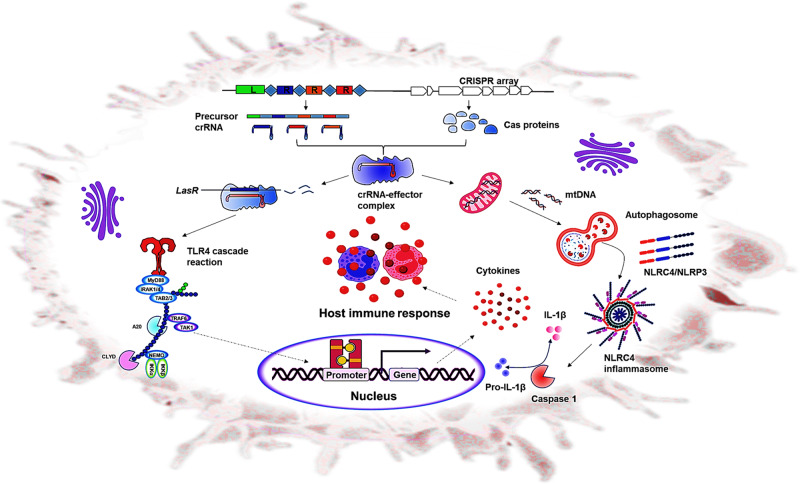
“Our research showed that type I CRISPR-Cas targeted the QS regulator LasR to inhibit toll-like receptor 4 recognition, thereby evading mammalian host immunity, suggesting that the CRISPR system is linked to host immunity modulation by targeting their own genes, potentially evading host defense mechanisms.321”
§ Pseudomonas aeruginosa: pathogenesis, virulence factors, antibiotic resistance, interaction with host, technology advances and emerging therapeutics > Highly complex and multiple mechanisms in host immune responses to the bacterium > CRISPR-mediated adaptive immunity, a double-edged sword for bacterial self-survival and invasion
What the sources say
- Not checked yetcites [321] Li R Type I CRISPR-Cas targets endogenous genes and regulates virulence to evade mammalian host immunity Cell Res. 2016 26 1273 1287 10.1038/cr.2016.135 27857054 PMC5143421 source
Checked before — its earlier verdict is held back until a new check runs.
hedgedstates a cause- Asserted: passes — The authors put it forward as true.
- Checkable: passes — It can be checked against evidence.
- Load-bearing: passes — The paper’s conclusions depend on it.
- Based: passes — The paper gives a reason why it holds.
- Not checked yet
60 more claims
Create a free account to see all 131 claims and to verify the 155 references still open.
- It may state two separate claims as one. 46
- Probably not a substantial claim. 26
Claims other papers make about this one
Each is checked against this paper’s own text: does it say what the citing paper says it does?
In the citing paper
“Across strains, QS controls a broad set of virulence traits that include secreted enzymes, surfactants, redox-active metabolites, and toxins. These traits strengthen biofilms and reduce the effectiveness of therapy. Las, Rhl, and Pqs regulate hundreds of genes, among them being LasB elastase, rhamnolipids that arise from rhlAB, several phenazines such as pyocyanin, hydrogen cyanide, and secretion”
From Understanding Pseudomonas aeruginosa Biofilms: Quorum Sensing, c-di-GMP Signaling, and Emerging Antibiofilm Approaches (2026) · cites this paper as [81]
In the citing paper
“A key factor in its ecological versatility and adaptability is quorum system, a mechanism that coordinates gene expression across populations, regulating crucial processes for pathogenesis, including virulence and antibiotic resistance25,26.”
From Pseudomonas aeruginosa: ecology, evolution, pathogenesis and antimicrobial susceptibility (2025) · cites this paper as [25]
In the citing paper
“Quorum sensing in P. aeruginosa also plays a crucial role in biofilm formation by regulating the expression of genes involved in surface attachment, extracellular matrix (ECM) production and antibiotic resistance, enabling the bacteria to coordinate their behaviour and establish resilient, structured communities25–27.”
From Pseudomonas aeruginosa: ecology, evolution, pathogenesis and antimicrobial susceptibility (2025) · cites this paper as [25]
Self-check
Percentages, sums and reported differences re-computed from the paper’s own numbers.
Each contradiction between two passages listed here was confirmed by an independent check.
Rated minor: it would not touch a result — a value no result rests on, a p-value that stays on the same side of the significance level, or a conflict that is clerical, resolved elsewhere in the paper, or outside its own findings.
In the paper
§ Pseudomonas aeruginosa: pathogenesis, virulence factors, antibiotic resistance, interaction with host, technology advances and emerging therapeutics > Secretion systems, an integral part of virulence platforms and mechanisms
“One-step secretion system exoproteins are directly absorbed into the cytoplasm through their cognate secretion mechanism.”
§ Pseudomonas aeruginosa: pathogenesis, virulence factors, antibiotic resistance, interaction with host, technology advances and emerging therapeutics > Secretion systems, an integral part of virulence platforms and mechanisms
“The one-step secretion system directly secretes proteins from bacterial cytosol to the surface”
Citations
Cites
Items 201–400 of 480
Crystal Structure of a Full-Length Autotransporter
van den Berg, B. (2010) · Journal of Molecular Biology · doi:10.1016/j.jmb.2009.12.061 · Cited by 158
Engineering Nanoparticles for Targeted Delivery of Nucleic Acid Therapeutics in Tumor
Xiao, Y., Shi, K. Y., Qu, Y., Chu, B., & Qian, Z. (2018) · Molecular Therapy — Methods & Clinical Development · doi:10.1016/j.omtm.2018.09.002 · Cited by 157
Mutation of lasA and lasB reduces Pseudomonas aeruginosa invasion of epithelial cells
Cowell, B. A., Twining, S. S., Hobden, J. A., Kwong, M. S. F., & Fleiszig, S. M. J. (2003) · Microbiology · doi:10.1099/mic.0.26280-0 · Cited by 153
Furuyama, N., & Sircili, M. P. (2021) · BioMed Research International · doi:10.1155/2021/1490732 · Cited by 152
Evaluation of Flagella and Flagellin of Pseudomonas aeruginosa as Vaccines
Campodónico, V. L., Llosa, N. J., Grout, M., Döring, G., Maira‐Litrán, T., & Pier, G. B. (2009) · Infection and Immunity · doi:10.1128/iai.00806-09 · Cited by 151
Kazmierczak, B. I., Schniederberend, M., & Jain, R. (2015) · Current Opinion in Microbiology · doi:10.1016/j.mib.2015.07.017 · Cited by 151
Pseudomonas aeruginosa Hemolytic Phospholipase C Suppresses Neutrophil Respiratory Burst Activity
Terada, L. S., Johansen, K. A., Nowbar, S., Vasil, A. I., & Vasil, M. L. (1999) · Infection and Immunity · doi:10.1128/iai.67.5.2371-2376.1999 · Cited by 150
Extracellular DNA-induced antimicrobial peptide resistance mechanisms in Pseudomonas aeruginosa
Lewenza, S. (2013) · Frontiers in Microbiology · doi:10.3389/fmicb.2013.00021 · Cited by 150
Maura, D., Hazan, R., Kitao, T., Ballok, A. E., & Rahme, L. G. (2016) · Scientific Reports · doi:10.1038/srep34083 · Cited by 150
Llanes, C., Köhler, T., Patry, I., Dehecq, B., van Delden, C., & Plésiat, P. (2011) · Antimicrobial Agents and Chemotherapy · doi:10.1128/aac.00101-11 · Cited by 149
Broder, U. N., Jaeger, T., & Jenal, U. (2016) · Nature Microbiology · doi:10.1038/nmicrobiol.2016.184 · Cited by 148
Recent developments for Pseudomonas vaccines
Sharma, A., Krause, A., & Worgall, S. (2011) · Human Vaccines · doi:10.4161/hv.7.10.16369 · Cited by 143
Phage-Encoded Anti-CRISPR Defenses
Stanley, S. Y., & Maxwell, K. L. (2018) · Annual Review of Genetics · doi:10.1146/annurev-genet-120417-031321 · Cited by 142
Tammam, S. D., Sampaleanu, L. M., Koo, J. T., Manoharan, K., Daubaras, M., Burrows, L. L., & Howell, P. L. (2013) · Journal of Bacteriology · doi:10.1128/jb.00032-13 · Cited by 141
Cathcart, G. R., Quinn, D. J., Greer, B., Harriott, P., Lynas, J. F., Gilmore, B., & Walker, B. (2011) · Antimicrobial Agents and Chemotherapy · doi:10.1128/aac.00776-10 · Cited by 138
Guérin, J., Bigot, S., Schneider, R. C., Buchanan, S. K., & Jacob‐Dubuisson, F. (2017) · Frontiers in Cellular and Infection Microbiology · doi:10.3389/fcimb.2017.00148 · Cited by 138
Ostroff, R. M., Wretlind, B., & Vasil, M. L. (1989) · Infection and Immunity · doi:10.1128/iai.57.5.1369-1373.1989 · Cited by 136
Studies of phospholipase C (heat-labile hemolysin) in Pseudomonas aeruginosa
Berka, R. M., Gray, G. L., & Vasil, M. L. (1981) · Infection and Immunity · doi:10.1128/iai.34.3.1071-1074.1981 · Cited by 136
Jeannot, K., Elsen, S., Köhler, T., Attree, I., van Delden, C., & Plésiat, P. (2008) · Antimicrobial Agents and Chemotherapy · doi:10.1128/aac.01107-07 · Cited by 136
Kierbel, A., Gassama-Diagne, A., Mostov, K., & Engel, J. N. (2005) · Molecular Biology of the Cell · doi:10.1091/mbc.e04-08-0717 · Cited by 135
Genomic and Metabolic Characteristics of the Pathogenicity in Pseudomonas aeruginosa
de Sousa, T., Hébraud, M., Dapkevicius, M. L. N. E., Maltez, L., Pereira, J. E., Capita, R., Alonso-Calleja, C., Igrejas, G., & Poeta, P. (2021) · International Journal of Molecular Sciences · doi:10.3390/ijms222312892 · Cited by 134
The protein-conducting channel SecYEG
Veenendaal, A. K. J., van der Does, C., & Driessen, A. J. M. (2004) · Biochimica et Biophysica Acta (BBA) - Molecular Cell Research · doi:10.1016/j.bbamcr.2004.02.009 · Cited by 133
Sensor Kinases RetS and LadS RegulatePseudomonas syringaeType VI Secretion and Virulence Factors
Records, A. R., & Gross, D. C. (2010) · Journal of Bacteriology · doi:10.1128/jb.00114-10 · Cited by 132
Inflammation: A Double-Edged Sword in the Response to Pseudomonas aeruginosa Infection
Lin, C. K., & Kazmierczak, B. I. (2017) · Journal of Innate Immunity · doi:10.1159/000455857 · Cited by 132
Bacterial biodiversity drives the evolution of CRISPR-based phage resistance
Alseth, E. O., Pursey, E., Luján, A. M., McLeod, I., Rollie, C., & Westra, E. R. (2019) · Nature · doi:10.1038/s41586-019-1662-9 · Cited by 132
A Pseudomonas aeruginosa type VI secretion system regulated by CueR facilitates copper acquisition
Han, Y., Wang, T., Chen, G., Pu, Q., Liu, Q., Zhang, Y., Xu, L., Wu, M., & Liang, H. (2019) · PLOS Pathogens · doi:10.1371/journal.ppat.1008198 · Cited by 130
Self-citationStructure and Function of the Type III Secretion System of Pseudomonas aeruginosa
Galle, M., Carpentier, I., & Beyaert, R. (2012) · Current Protein & Peptide Science · doi:10.2174/138920312804871210 · Cited by 129
The T6SSs of Pseudomonas aeruginosa Strain PAO1 and Their Effectors: Beyond Bacterial-Cell Targeting
Sana, T. G., Berni, B., & Bleves, S. (2016) · Frontiers in Cellular and Infection Microbiology · doi:10.3389/fcimb.2016.00061 · Cited by 127
Overview of mechanisms of antibiotic resistance in Pseudomonas aeruginosa: an ocular perspective
Subedi, D., Vijay, A. K., & Willcox, M. (2018) · Clinical and Experimental Optometry · doi:10.1111/cxo.12621 · Cited by 127
The structure and mechanism of the bacterial type II secretion system
Naskar, S., Hohl, M., Tassinari, M., & Low, H. H. (2020) · Molecular Microbiology · doi:10.1111/mmi.14664 · Cited by 127
Chemical probes of quorum sensing: from compound development to biological discovery
Welsh, M. A., & Blackwell, H. E. (2016) · FEMS Microbiology Reviews · doi:10.1093/femsre/fuw009 · Cited by 126
Mikkelsen, H., Ball, G., Giraud, C., & Filloux, A. (2009) · PLoS ONE · doi:10.1371/journal.pone.0006018 · Cited by 125
Therapeutic gene editing: delivery and regulatory perspectives
Shim, G., Kim, D., Park, G. T., Jin, H., Suh, S.-K., & Oh, Y.-K. (2017) · Acta Pharmacologica Sinica · doi:10.1038/aps.2017.2 · Cited by 121
Siehnel, R., Traxler, B. A., An, D. D., Parsek, M. R., Schaefer, A. L., & Singh, P. K. (2010) · Proceedings of the National Academy of Sciences · doi:10.1073/pnas.0908511107 · Cited by 120
Physiological roles of small RNA molecules
Michaux, C., Verneuil, N., Hartke, A., & Giard, J.-C. (2014) · Microbiology · doi:10.1099/mic.0.076208-0 · Cited by 120
Cross Talk between Type III Secretion and Flagellar Assembly Systems in Pseudomonas aeruginosa
Soscia, C., Hachani, A., Bernadac, A., Filloux, A., & Bleves, S. (2007) · Journal of Bacteriology · doi:10.1128/jb.01677-06 · Cited by 120
Guénard, S., Muller, C., Monlezun, L., Benas, P., Broutin, I., Jeannot, K., & Plésiat, P. (2014) · Antimicrobial Agents and Chemotherapy · doi:10.1128/aac.01252-13 · Cited by 119
Pseudomonas aeruginosa Effector ExoS Inhibits ROS Production in Human Neutrophils
Vareechon, C., Zmina, S. E., Karmakar, M., Pearlman, E., & Rietsch, A. (2017) · Cell Host & Microbe · doi:10.1016/j.chom.2017.04.001 · Cited by 119
The QscR Quorum-Sensing Regulon of Pseudomonas aeruginosa : an Orphan Claims Its Identity
Fuqua, C. (2006) · Journal of Bacteriology · doi:10.1128/jb.188.9.3169-3171.2006 · Cited by 118
A Pseudomonas aeruginosa Toxin that Hijacks the Host Ubiquitin Proteolytic System
Bomberger, J. M., Ye, S., MacEachran, D. P., Koeppen, K., Barnaby, R. L., O'Toole, G. A., & Stanton, B. A. (2011) · PLoS Pathogens · doi:10.1371/journal.ppat.1001325 · Cited by 118
Alves, D. R., Perez‐Esteban, P., Kot, W., Bean, J. E., Arnot, T., Hansen, L. H., Enright, M. C., & Jenkins, A. T. A. (2016) · Microbial Biotechnology · doi:10.1111/1751-7915.12316 · Cited by 118
Type I CRISPR-Cas targets endogenous genes and regulates virulence to evade mammalian host immunity
Li, R., Fang, L., Tan, S., Yu, M., Li, X., He, S., Wei, Y., Li, G., Jiang, J., & Wu, M. (2016) · Cell Research · doi:10.1038/cr.2016.135 · Cited by 118
Self-citationPseudomonas aeruginosa elastase (LasB) as a therapeutic target
Everett, M. J., & Davies, D. T. (2021) · Drug Discovery Today · doi:10.1016/j.drudis.2021.02.026 · Cited by 118
Gerdt, J. P., & Blackwell, H. E. (2014) · ACS Chemical Biology · doi:10.1021/cb5004288 · Cited by 117
Kilmury, S. L. N., & Burrows, L. L. (2018) · mBio · doi:10.1128/mbio.01310-18 · Cited by 116
The Tat system of Gram-positive bacteria
Goosens, V. J., Monteferrante, C. G., & van Dijl, J. M. (2013) · Biochimica et Biophysica Acta (BBA) - Molecular Cell Research · doi:10.1016/j.bbamcr.2013.10.008 · Cited by 112
Aminoglycoside therapy against Pseudomonas aeruginosa in cystic fibrosis: A review
Ratjen, F. A., Brockhaus, F., & Angyalosi, G. (2009) · Journal of Cystic Fibrosis · doi:10.1016/j.jcf.2009.08.004 · Cited by 112
Petrova, O. E., Schurr, J. R., Schurr, M. J., & Sauer, K. (2011) · Molecular Microbiology · doi:10.1111/j.1365-2958.2011.07733.x · Cited by 111
Outer Membrane Vesicle Induction and Isolation for Vaccine Development
Balhuizen, M. D., Veldhuizen, E. J. A., & Haagsman, H. P. (2021) · Frontiers in Microbiology · doi:10.3389/fmicb.2021.629090 · Cited by 111
Boyd, C. D., Smith, T. J., El-Kirat-Chatel, S., Newell, P. D., Dufrêne, Y. F., & O'Toole, G. A. (2014) · Journal of Bacteriology · doi:10.1128/jb.01629-14 · Cited by 110
Sader, H. S., Rhomberg, P. R., Flamm, R. K., Jones, R. N., & Castanheira, M. (2017) · Journal of Antimicrobial Chemotherapy · doi:10.1093/jac/dkx050 · Cited by 110
Regulation of type III secretion systems
Francis, M. (2002) · Current Opinion in Microbiology · doi:10.1016/s1369-5274(02)00301-6 · Cited by 109
Zhou, X., Li, X., Ye, Y., Zhao, K., Zhuang, Y., Li, Y., Wei, Y., & Wu, M. (2014) · Nature Communications · doi:10.1038/ncomms4619 · Cited by 108
Self-citationMarko, V. A., Kilmury, S. L. N., MacNeil, L. T., & Burrows, L. L. (2018) · PLoS Pathogens · doi:10.1371/journal.ppat.1007074 · Cited by 107
Li, C., Zhu, L., Wang, D., Wei, Z., Hao, X., Wang, Z., Li, T., Zhang, L., Lu, Z., Long, M., et al. (2021) · The ISME Journal · doi:10.1038/s41396-021-01093-8 · Cited by 106
Sampson, T. R., Napier, B. A., Schroeder, M. R., Louwen, R., Zhao, J., Chin, C.-Y., Ratner, H. K., Llewellyn, A. C., Jones, C. L., Laroui, H., et al. (2014) · Proceedings of the National Academy of Sciences · doi:10.1073/pnas.1323025111 · Cited by 105
Tan, X.-X., Actor, J. K., & Chen, Y. (2005) · Antimicrobial Agents and Chemotherapy · doi:10.1128/aac.49.8.3203-3207.2005 · Cited by 105
Motta, S. S., Cluzel, P., & Aldana, M. (2015) · PLOS ONE · doi:10.1371/journal.pone.0118464 · Cited by 105
Pseudomonas aeruginosa ExoT Acts In Vivo as a GTPase-Activating Protein for RhoA, Rac1, and Cdc42
Kazmierczak, B. I., & Engel, J. N. (2002) · Infection and Immunity · doi:10.1128/iai.70.4.2198-2205.2002 · Cited by 103
Laskowski, M. A., Osborn, E., & Kazmierczak, B. I. (2004) · Molecular Microbiology · doi:10.1111/j.1365-2958.2004.04331.x · Cited by 103
Artamonova, D., Datsenko, K. A., Medvedeva, S., Bondy‐Denomy, J., Savitskaya, E. E., Pougach, K., Logacheva, M. D., Wiedenheft, B., Davidson, A. R., Severinov, K., et al. (2015) · Nucleic Acids Research · doi:10.1093/nar/gkv1261 · Cited by 102
Hégerlé, N., Choi, M., Sinclair, J., Amin, M. A., Ollivault, M., Curtis, B., Laufer, R. S., Shridhar, S., Brammer, J., Toapanta, F. R., et al. (2018) · PLoS ONE · doi:10.1371/journal.pone.0203143 · Cited by 102
Intrinsic and extrinsic regulation of type III secretion gene expression in Pseudomonas aeruginosa
Diaz (2011) · Frontiers in Microbiology · doi:10.3389/fmicb.2011.00089 · Cited by 101
The Role of Potassium in Inflammasome Activation by Bacteria
Arlehamn, C. S. L., Pétrilli, V., Gross, O., Tschopp, J., & Evans, T. J. (2010) · Journal of Biological Chemistry · doi:10.1074/jbc.m109.067298 · Cited by 101
Li, R., Tan, S., Yu, M., Jundt, M. C., Zhang, S., & Wu, M. (2015) · The Journal of Immunology · doi:10.4049/jimmunol.1500967 · Cited by 100
Self-citationThe inverse autotransporter family: Intimin, invasin and related proteins
Leo, J. C., Oberhettinger, P., Schütz, M., & Linke, D. (2014) · International Journal of Medical Microbiology · doi:10.1016/j.ijmm.2014.12.011 · Cited by 100
Structure and Biology of Trimeric Autotransporter Adhesins
Łyskowski, A., Leo, J. C., & Goldman, A. (2011) · Advances in experimental medicine and biology · doi:10.1007/978-94-007-0940-9_9 · Cited by 99
Plazomicin: A Novel Aminoglycoside for the Treatment of Resistant Gram-Negative Bacterial Infections
Eljaaly, K., Alharbi, A., Alshehri, S., Ortwine, J. K., & Pogue, J. M. (2019) · Drugs · doi:10.1007/s40265-019-1054-3 · Cited by 99
N-Acylhomoserine Lactone-Mediated Quorum Sensing: A Twist in the Tail and a Blow for Host Immunity
Cooley, M. A., Chhabra, S. R., & Williams, P. M. (2008) · Chemistry & Biology · doi:10.1016/j.chembiol.2008.10.010 · Cited by 98
Faure, E., Mear, J.-B., Faure, K., Normand, S., Couturier-Maillard, A., Grandjean, T., Balloy, V., Ryffel, B., Dessein, R., Chignard, M., et al. (2014) · American Journal of Respiratory and Critical Care Medicine · doi:10.1164/rccm.201307-1358oc · Cited by 98
Lin, Y.-M., Wu, S.-J., Chang, T.-W., Wang, C., Suen, C., Hwang, M., Chang, M. D., Chen, Y.-T., & Liao, Y. (2010) · Journal of Biological Chemistry · doi:10.1074/jbc.m109.078725 · Cited by 97
Marden, J. N., Diaz, M. R., Walton, W. G., Gode, C. J., Betts, L., Urbanowski, M. L., Redinbo, M. R., Yahr, T. L., & Wolfgang, M. C. (2013) · Proceedings of the National Academy of Sciences · doi:10.1073/pnas.1307217110 · Cited by 97
Pseudomonas aeruginosa ExoT inhibits in vitro lung epithelial wound repair
Geiser, T., Kazmierczak, B. I., Garrity-Ryan, L. K., Matthay, M. A., & Engel, J. N. (2001) · Cellular Microbiology · doi:10.1046/j.1462-5822.2001.00107.x · Cited by 97
Miller, C. L., Romero, M., Karna, S. L. R., Chen, T., Heeb, S., & Leung, K. P. (2016) · BMC Microbiology · doi:10.1186/s12866-016-0771-y · Cited by 96
Motility and adhesion through type IV pili in Gram-positive bacteria
Piepenbrink, K. H., & Sundberg, E. J. (2016) · Biochemical Society Transactions · doi:10.1042/bst20160221 · Cited by 95
Garai, P., Berry, L., Moussouni, M., Bleves, S., & Blanc‐Potard, A. (2019) · PLoS Pathogens · doi:10.1371/journal.ppat.1007812 · Cited by 93
CRISPR-Cas13 Inhibitors Block RNA Editing in Bacteria and Mammalian Cells
Lin, P., Qin, S., Pu, Q., Wang, Z., Wu, Q., Gao, P., Schettler, J., Guo, K., Li, R., Li, G., et al. (2020) · Molecular Cell · doi:10.1016/j.molcel.2020.03.033 · Cited by 93
Self-citationMorris, E. R., Hall, G., Li, C., Heeb, S., Kulkarni, R., Lovelock, L., Silistre, H., Messina, M., Cámara, M., Emsley, J., et al. (2013) · Structure · doi:10.1016/j.str.2013.07.007 · Cited by 91
DsbA and DsbC Affect Extracellular Enzyme Formation in Pseudomonas aeruginosa
Urban, A., Leipelt, M., Eggert, T., & Jaeger, K. (2001) · Journal of Bacteriology · doi:10.1128/jb.183.2.587-596.2001 · Cited by 91
Adler‐Moore, J., Lewis, R. E., Brüggemann, R. J. M., Rijnders, B. J. A., Groll, A. H., & Walsh, T. J. (2019) · Clinical Infectious Diseases · doi:10.1093/cid/ciz064 · Cited by 91
Pseudomonas aeruginosa Toxin ExoU as a Therapeutic Target in the Treatment of Bacterial Infections
Foulkes, D. M., McLean, K., Haneef, A. S., Fernig, D. G., Winstanley, C., Berry, N. G., & Kaye, S. B. (2019) · Microorganisms · doi:10.3390/microorganisms7120707 · Cited by 91
Mutations affecting Leptospira interrogans lipopolysaccharide attenuate virulence
Murray, G. L., Srikram, A., Henry, R., Hartskeerl, R. A., Sermswan, R. W., & Adler, B. (2010) · Molecular Microbiology · doi:10.1111/j.1365-2958.2010.07360.x · Cited by 87
Liang, H., Deng, X., Li, X., Ye, Y., & Wu, M. (2014) · Nucleic Acids Research · doi:10.1093/nar/gku586 · Cited by 87
Self-citationBerni, B., Soscia, C., Djermoun, S., Ize, B., & Bleves, S. (2019) · Frontiers in Microbiology · doi:10.3389/fmicb.2019.01218 · Cited by 87
Pseudomonas aeruginosa in bronchiectasis: infection, inflammation, and therapies
Vidaillac, C., & Chotirmall, S. H. (2021) · Expert Review of Respiratory Medicine · doi:10.1080/17476348.2021.1906225 · Cited by 87
Dar, H. H., Anthonymuthu, T. S., Ponomareva, L. A., Souryavong, A. B., Shurin, G. V., Kapralov, A. O., Tyurin, V. A., Lee, J. S., Mallampalli, R. K., Wenzel, S. E., et al. (2021) · Redox Biology · doi:10.1016/j.redox.2021.102045 · Cited by 87
Pseudomonas aeruginosa lipopolysaccharides and pathogenesis
Goldberg, J. B., & Pier, G. B. (1996) · Trends in Microbiology · doi:10.1016/s0966-842x(97)82911-3 · Cited by 86
Actin cytoskeleton disruption by ExoY and its effects on Pseudomonas aeruginosa invasion
Cowell, B. A., Evans, D. J., & Fleiszig, S. M. J. (2005) · FEMS Microbiology Letters · doi:10.1016/j.femsle.2005.06.044 · Cited by 86
Oxygen effects on rhamnolipids production by Pseudomonas aeruginosa
Zhao, F., Shi, R., Ma, F., Han, S., & Zhang, Y. (2018) · Microbial Cell Factories · doi:10.1186/s12934-018-0888-9 · Cited by 86
Giraud, C., Bernard, C. S., Calderon, V., Yang, L., Filloux, A., Molin, S., Fichant, G., Bordi, C., & de Bentzmann, S. (2011) · Environmental Microbiology · doi:10.1111/j.1462-2920.2010.02372.x · Cited by 85
Yu, H., He, X., Xie, W., Xiong, J., Sheng, H., Guo, S., Huang, C., Zhang, D., & Zhang, K. (2014) · Canadian Journal of Microbiology · doi:10.1139/cjm-2013-0667 · Cited by 85
Marsden, A. E., Intile, P. J., Schulmeyer, K. H., Simmons-Patterson, E. R., Urbanowski, M. L., Wolfgang, M. C., & Yahr, T. L. (2016) · Journal of Bacteriology · doi:10.1128/jb.00049-16 · Cited by 85
Review of Ceftazidime-Avibactam for the Treatment of Infections Caused by Pseudomonas aeruginosa
Daikos, G. L., da Cunha, C. A., Rossolini, G. M., Stone, G. G., Baillon-Plot, N., Tawadrous, M., & Irani, P. (2021) · Antibiotics · doi:10.3390/antibiotics10091126 · Cited by 84
Young, M. L., Bains, M., Bell, A., & Hancock, R. E. W. (1992) · Antimicrobial Agents and Chemotherapy · doi:10.1128/aac.36.11.2566 · Cited by 83
Structure and function of the porin channel
Welte, W., Nestel, U., Wacker, T., & Diederichs, K. (1995) · Kidney International · doi:10.1038/ki.1995.374 · Cited by 83
Expression ofPseudomonas aeruginosaToxin ExoS Effectively Induces Apoptosis in Host Cells
Jia, J., Wang, Y., Zhou, L. J., & Jin, S. (2006) · Infection and Immunity · doi:10.1128/iai.00591-06 · Cited by 83
McIsaac, S. M., Stadnyk, A. W., & Lin, T.-J. (2012) · Journal of Leukocyte Biology · doi:10.1189/jlb.0811410 · Cited by 83
The NLRP3 Inflammasome as a Critical Actor in the Inflammaging Process
Sebastian-Valverde, M., & Pasinetti, G. M. (2020) · Cells · doi:10.3390/cells9061552 · Cited by 83
Contribution of the RsaL global regulator toPseudomonas aeruginosavirulence and biofilm formation
Rampioni, G., Schuster, M., Greenberg, E. P., Zennaro, E., & Leoni, L. (2009) · FEMS Microbiology Letters · doi:10.1111/j.1574-6968.2009.01817.x · Cited by 82
Functional Regions of thePseudomonas aeruginosaCytotoxin ExoU
Rabin, S. D. P., & Hauser, A. R. (2004) · Infection and Immunity · doi:10.1128/iai.73.1.573-582.2005 · Cited by 82
Electrochemical Detection of Pyocyanin as a Biomarker for Pseudomonas aeruginosa: A Focused Review
Alatraktchi, F. A., Svendsen, W. E., & Molin, S. (2020) · Sensors · doi:10.3390/s20185218 · Cited by 81
The Effect of pstS and phoB on Quorum Sensing and Swarming Motility in Pseudomonas aeruginosa
Blus‐Kadosh, I., Zilka, A., Yerushalmi, G., & Banin, E. (2013) · PLoS ONE · doi:10.1371/journal.pone.0074444 · Cited by 80
König, B., Jaeger, K. E., Sage, A. E., Vasil, M. L., & König, W. (1996) · Infection and Immunity · doi:10.1128/iai.64.8.3252-3258.1996 · Cited by 80
Kim, S., Rahman, M., Seol, S. Y., Yoon, S. S., & Kim, J. (2012) · Applied and Environmental Microbiology · doi:10.1128/aem.00648-12 · Cited by 79
Intile, P. J., Diaz, M. R., Urbanowski, M. L., Wolfgang, M. C., & Yahr, T. L. (2014) · Journal of Bacteriology · doi:10.1128/jb.01199-13 · Cited by 79
The Transcriptional Regulator AlgR Controls Cyanide Production in Pseudomonas aeruginosa
Carterson, A. J., Morici, L. A., Jackson, D. W., Frisk, A., Lizewski, S. E., Jupiter, R., Simpson, K., Kunz, D. A., Davis, S. H., Schurr, J. R., et al. (2004) · Journal of Bacteriology · doi:10.1128/jb.186.20.6837-6844.2004 · Cited by 79
Alternative approaches to treat bacterial infections: targeting quorum-sensing
Piewngam, P., Chiou, J., Chatterjee, P., & Otto, M. (2020) · Expert Review of Anti-infective Therapy · doi:10.1080/14787210.2020.1750951 · Cited by 79
Anti‐activator QslA defines the quorum sensing threshold and response in Pseudomonas aeruginosa
Seet, Q., & Zhang, L. (2011) · Molecular Microbiology · doi:10.1111/j.1365-2958.2011.07622.x · Cited by 78
Type 1 Does the Two-Step: Type 1 Secretion Substrates with a Functional Periplasmic Intermediate
Smith, T. J., Sondermann, H., & O’Toole, G. A. (2018) · Journal of Bacteriology · doi:10.1128/jb.00168-18 · Cited by 76
Ivanov, I. E., Boyd, C. D., Newell, P. D., Schwartz, M. E., Turnbull, L., Johnson, M. S., Whitchurch, C. B., O’Toole, G. A., & Camesano, T. A. (2012) · Research in Microbiology · doi:10.1016/j.resmic.2012.10.001 · Cited by 75
Jepkorir, G., Rodríguez, J. C., Rui, H., Im, W., Lovell, S., Battaile, K. P., Alontaga, A. Y., Yukl, E. T., Moënne-Loccoz, P., & Rivera, M. (2010) · Journal of the American Chemical Society · doi:10.1021/ja103498z · Cited by 75
Pseudomonas aeruginosa pilin activates the inflammasome
Lindestam Arlehamn, C. S., & Evans, T. J. (2011) · Cellular Microbiology · doi:10.1111/j.1462-5822.2010.01541.x · Cited by 75
Multiple Domains Are Required for the Toxic Activity of Pseudomonas aeruginosa ExoU
Finck‐Barbançon, V., & Frank, D. W. (2001) · Journal of Bacteriology · doi:10.1128/jb.183.14.4330-4344.2001 · Cited by 75
Galdino, A. C. M., Viganor, L., de Castro, A. A., da Cunha, E. F. F., de Mello, T. P., Mattos, L. M. M., Pereira, M. D., Hunt, M. C., O’Shaughnessy, M., Howe, O. L., et al. (2019) · Frontiers in Microbiology · doi:10.3389/fmicb.2019.01701 · Cited by 75
Power, M. R., Peng, Y., Maydanski, E., Marshall, J. S., & Lin, T.-J. (2004) · Journal of Biological Chemistry · doi:10.1074/jbc.m402111200 · Cited by 74
Yu, H. D., Mudd, M. H., Boucher, J. C., Schurr, M. J., & Deretic, V. P. (1997) · Journal of Bacteriology · doi:10.1128/jb.179.1.187-193.1997 · Cited by 74
Song, F., Wang, H., Sauer, K., & Ren, D. (2018) · Frontiers in Microbiology · doi:10.3389/fmicb.2018.00110 · Cited by 74
The Therapeutic Pipeline for Pseudomonas aeruginosa Infections
Burrows, L. L. (2018) · ACS Infectious Diseases · doi:10.1021/acsinfecdis.8b00112 · Cited by 74
Zhao, J., Yu, X., Zhu, M., Kang, H., Ma, J., Wu, M., Gan, J., Deng, X., & Liang, H. (2016) · PLoS Biology · doi:10.1371/journal.pbio.1002449 · Cited by 73
Self-citationThe Pseudomonas aeruginosa protease LasB directly activates IL-1β
Sun, J., LaRock, D. L., Skowronski, E. A., Kimmey, J. M., Olson, J., Jiang, Z., O’Donoghue, A. J., Nizet, V., & LaRock, C. N. (2020) · EBioMedicine · doi:10.1016/j.ebiom.2020.102984 · Cited by 73
Heussler, G. E., Cady, K. C., Koeppen, K., Bhuju, S., Stanton, B. A., & O’Toole, G. A. (2015) · mBio · doi:10.1128/mbio.00129-15 · Cited by 72
MexT Regulates the Type III Secretion System through MexS and PtrC in Pseudomonas aeruginosa
Jin, Y., Yang, H., Qiao, M., & Jin, S. (2011) · Journal of Bacteriology · doi:10.1128/jb.01079-10 · Cited by 72
Shen, D. K., Filopon, D., Kuhn, L., Polack, B., & Toussaint, B. (2006) · Infection and Immunity · doi:10.1128/iai.74.2.1121-1129.2006 · Cited by 72
Monds, R. D., Newell, P. D., Wagner, J. C., Schwartzman, J. A., Lu, W., Rabinowitz, J. D., & O’Toole, G. A. (2010) · Journal of Bacteriology · doi:10.1128/jb.01571-09 · Cited by 72
Feng, W., Sun, F., Wang, Q., Xiong, W., Qiu, X., Dai, X., & Xia, P. (2017) · Journal of Global Antimicrobial Resistance · doi:10.1016/j.jgar.2016.11.012 · Cited by 70
Chen, L., Zou, Y., Kronfl, A. A., & Wu, Y. (2020) · MicrobiologyOpen · doi:10.1002/mbo3.991 · Cited by 70
Blier, A.-S., Véron, W., Bazire, A., Gerault, E., Taupin, L., Vieillard, J., Vallée‐Rehel, K., Dufour, A., Derf, F. L., Orange, N., et al. (2011) · Microbiology · doi:10.1099/mic.0.046755-0 · Cited by 69
Gellatly, S. L., Needham, B., Madera, L., Trent, M. S., & Hancock, R. E. W. (2012) · Infection and Immunity · doi:10.1128/iai.00382-12 · Cited by 69
NOD-Like Receptor Protein 3 Inflammasome Priming and Activation in Barrett’s Epithelial Cells
Nadatani, Y., Huo, X., Zhang, X., Yu, C., Cheng, E., Zhang, Q., Dunbar, K. B., Theiss, A., Pham, T. H., Wang, D. H., et al. (2016) · Cellular and Molecular Gastroenterology and Hepatology · doi:10.1016/j.jcmgh.2016.03.006 · Cited by 69
Lipase LipC affects motility, biofilm formation and rhamnolipid production in Pseudomonas aeruginosa
Rosenau, F., Isenhardt, S., Gdynia, A., Tielker, D., Schmidt, E., Tielen, P., Schobert, M., Jahn, D., Wilhelm, S., & Jaeger, K. (2010) · FEMS Microbiology Letters · doi:10.1111/j.1574-6968.2010.02017.x · Cited by 68
Rafiee, R., Eftekhar, F., Tabatabaei, S. A., & Minai‐Tehrani, D. (2014) · Jundishapur Journal of Microbiology · doi:10.5812/jjm.16436 · Cited by 67
Yang, N., Ding, S., Chen, F., Zhang, X., Xia, Y., Di, H., Cao, Q., Deng, X., Wu, M., Wong, C. C. L., et al. (2015) · Molecular Microbiology · doi:10.1111/mmi.12954 · Cited by 67
Self-citationDevelopment of Potent Inhibitors of Pyocyanin Production inPseudomonas aeruginosa
Miller, L. C., O’Loughlin, C. T., Zhang, Z. Z., Siryaporn, A., Silpe, J. E., Bassler, B. L., & Semmelhack, M. F. (2015) · Journal of Medicinal Chemistry · doi:10.1021/jm5015082 · Cited by 66
Cadoret, F., Ball, G., Douzi, B., & Voulhoux, R. (2014) · Journal of Bacteriology · doi:10.1128/jb.01563-14 · Cited by 66
Novel therapeutic strategies for treatingPseudomonas aeruginosainfection
Shao, X., Xie, Y., Zhang, Y., Liu, J., Ding, Y., Wu, M., Wang, X., & Deng, X. (2020) · Expert Opinion on Drug Discovery · doi:10.1080/17460441.2020.1803274 · Cited by 66
Self-citationBacterial Alkyl-4-quinolones: Discovery, Structural Diversity and Biological Properties
Saalim, M., Villegas‐Moreno, J., & Clark, B. R. (2020) · Molecules · doi:10.3390/molecules25235689 · Cited by 66
Therapeutic approaches for combating Pseudomonas aeruginosa infections
Jangra, V., Sharma, N., & Chhillar, A. K. (2022) · Microbes and Infection · doi:10.1016/j.micinf.2022.104950 · Cited by 66
DeLucia, A. M., Six, D. A., Caughlan, R. E., Gee, P., Hunt, I., Lam, J. S., & Dean, C. R. (2011) · mBio · doi:10.1128/mbio.00142-11 · Cited by 65
Chambers, J. R., Cherny, K. E., & Sauer, K. (2017) · Antimicrobial Agents and Chemotherapy · doi:10.1128/aac.00846-17 · Cited by 65
Phytocompound Mediated Blockage of Quorum Sensing Cascade in ESKAPE Pathogens
Ghosh, S., Lahiri, D., Nag, M., Dey, A., Pandit, S., Sarkar, T., Pati, S., Kari, Z. A., Ishak, A. R., Edinur, H. A., et al. (2022) · Antibiotics · doi:10.3390/antibiotics11010061 · Cited by 65
Cao, Q., Wang, Y., Chen, F., Xia, Y., Lou, J., Zhang, X., Yang, N., Sun, X., Zhang, Q., Zhuo, C., et al. (2014) · PLoS Pathogens · doi:10.1371/journal.ppat.1004340 · Cited by 64
Self-citationLi, X., He, S., Li, R., Zhou, X., Zhang, S., Yu, M., Ye, Y., Wang, Y., Huang, C., & Wu, M. (2016) · Nature Microbiology · doi:10.1038/nmicrobiol.2016.132 · Cited by 64
Self-citationMattos, K. A., Sarno, E. N., Pessolani, M. C. V., & Bozza, P. T. (2012) · Memórias do Instituto Oswaldo Cruz · doi:10.1590/s0074-02762012000900023 · Cited by 63
Fimbriae (pili): molecular basis of Pseudomonas aeruginosa adherence.
PARANCHYCH, W., Pa, S., Volpel, K., Ba, L., & Speert, D. P. (1986) · PubMed · Cited by 63
An inside look at a biofilm: Pseudomonas aeruginosa flagella biotracking
Ozer, E., Yaniv, K., Chetrit, E., Boyarski, A., Meijler, M. M., Berkovich, R., Kushmaro, A., & Alfonta, L. (2021) · Science Advances · doi:10.1126/sciadv.abg8581 · Cited by 63
Perraud, Q., Kuhn, L., Fritsch, S., Graulier, G., Gasser, V., Normant, V., Hammann, P., & Schalk, I. J. (2022) · Environmental Microbiology · doi:10.1111/1462-2920.15372 · Cited by 61
Hächler, H., Santanam, P., & Kayser, F. H. (1996) · Antimicrobial Agents and Chemotherapy · doi:10.1128/aac.40.5.1254 · Cited by 59
Effector–Immunity Pairs Provide the T6SS Nanomachine its Offensive and Defensive Capabilities
Yang, X., Long, M., & Shen, X. (2018) · Molecules · doi:10.3390/molecules23051009 · Cited by 59
Mikkelsen, H., Hui, K., Barraud, N., & Filloux, A. (2013) · Molecular Microbiology · doi:10.1111/mmi.12287 · Cited by 58
The human NAIP-NLRC4-inflammasome senses the Pseudomonas aeruginosa T3SS inner-rod protein
Grandjean, T., Boucher, A., Thépaut, M., Monlezun, L., Guery, B. P., Faudry, É., Kipnis, É., & Dessein, R. (2017) · International Immunology · doi:10.1093/intimm/dxx047 · Cited by 58
Hoggarth, A., Weaver, A., Pu, Q., Huang, T. L., Schettler, J., Chen, F., Yuan, X., & Wu, M. (2019) · Drug Design Development and Therapy · doi:10.2147/dddt.s189847 · Cited by 58
Self-citationA Type I-F Anti-CRISPR Protein Inhibits the CRISPR-Cas Surveillance Complex by ADP-Ribosylation
Niu, Y., Yang, L., Gao, T., Dong, C., Zhang, B., Yin, P., Hopp, A.-K., Li, D., Gan, R., Wang, H., et al. (2020) · Molecular Cell · doi:10.1016/j.molcel.2020.09.015 · Cited by 58
Bezzerri, V., D’Adamo, P., Rimessi, A., Lanzara, C., Crovella, S., Nicolis, E., Tamanini, A., Athanasakis, E., Tebon, M., Bisoffi, G., et al. (2011) · The Journal of Immunology · doi:10.4049/jimmunol.1003535 · Cited by 57
Host DNA Repair Proteins in Response to Pseudomonas aeruginosa in Lung Epithelial Cells and in Mice
Wu, M., Huang, H., Zhang, W., Kannan, S., Weaver, A., Mckibben, M., Herington, D., Zeng, H., & Gao, H. (2010) · Infection and Immunity · doi:10.1128/iai.00815-10 · Cited by 57
Self-citationMa, S., Wozniak, D. J., & Ohman, D. E. (1997) · Journal of Biological Chemistry · doi:10.1074/jbc.272.29.17952 · Cited by 57
Yang, D., Hao, S., Zhao, L., Shi, F., Ye, G., Zou, Y., Song, X., Li, L., Yin, Z., He, X., et al. (2021) · Frontiers in Microbiology · doi:10.3389/fmicb.2021.692474 · Cited by 57
Self-citationPseudomonas aeruginosa LasA Protease in Treatment of Experimental Staphylococcal Keratitis
Barequet, I. S., Simon, G. B., Safrin, M., Ohman, D. E., & Kessler, E. (2004) · Antimicrobial Agents and Chemotherapy · doi:10.1128/aac.48.5.1681-1687.2004 · Cited by 56
Cota‐Gomez, A., Vasil, A. I., Kadurugamuwa, J. L., Beveridge, T. J., Schweizer, H. P., & Vasil, M. L. (1997) · Infection and Immunity · doi:10.1128/iai.65.7.2904-2913.1997 · Cited by 55
Ding, J., Wang, W., Han, F., Zhang, Y., & Wang, D. (2012) · Journal of Biological Chemistry · doi:10.1074/jbc.m112.368043 · Cited by 55
Ramjeet, M., Deslandes, V., St. Michael, F., Cox, A. D., Kobisch, M., Gottschalk, M., & Jacques, M. (2005) · Journal of Biological Chemistry · doi:10.1074/jbc.m502852200 · Cited by 54
Li, M., Long, Y., Liu, Y., Liu, Y., Chen, R., Shi, J., Zhang, L., Jin, Y., Yang, L., Bai, F., et al. (2016) · Frontiers in Cellular and Infection Microbiology · doi:10.3389/fcimb.2016.00125 · Cited by 53
A Pseudomonas aeruginosa TIR effector mediates immune evasion by targeting UBAP1 and TLR adaptors
Imbert, P. R. C., Louche, A., Luizet, J., Grandjean, T., Bigot, S., Wood, T. E., Gagné, S., Blanco, A., Wunderley, L., Terradot, L., et al. (2017) · The EMBO Journal · doi:10.15252/embj.201695343 · Cited by 53
Kaminski, A., Gupta, K. H., Goldufsky, J. W., Lee, H. W., Gupta, V., & Shafikhani, S. H. (2018) · Scientific Reports · doi:10.1038/s41598-018-32491-2 · Cited by 53
Refinement of OprH-LPS Interactions by Molecular Simulations
Lee, J.-S., Patel, D. S., Kucharska, I., Tamm, L. K., & Im, W. (2017) · Biophysical Journal · doi:10.1016/j.bpj.2016.12.006 · Cited by 52
Disarming the virulence arsenal of Pseudomonas aeruginosa by blocking two-component system signaling
Goswami, M., Espinasse, A., & Carlson, E. E. (2018) · Chemical Science · doi:10.1039/c8sc02496k · Cited by 52
Farjah, A., Owlia, P., Siadat, S. D., Mousavi, S. F., Ardestani, M. S., & Mohammadpour, H. K. (2014) · Apmis · doi:10.1111/apm.12337 · Cited by 51
Daddaoua, A., Molina‐Santiago, C., de la Torre, J., Krell, T., & Ramos, J. L. (2014) · Nucleic Acids Research · doi:10.1093/nar/gku496 · Cited by 51
Norepinephrine represses the expression oftoxAand the siderophore genes inPseudomonas aeruginosa
Li, W., Lyte, M., Freestone, P. P. E., Ajmal, A., Colmer‐Hamood, J. A., & Hamood, A. N. (2009) · FEMS Microbiology Letters · doi:10.1111/j.1574-6968.2009.01739.x · Cited by 50
Anti-endotoxin vaccines: Back to the future
Cross, A. S. (2013) · Virulence · doi:10.4161/viru.25965 · Cited by 49
Elshaer, S. L., & Shaaban, M. I. (2021) · Antibiotics · doi:10.3390/antibiotics10121461 · Cited by 49
Wood, S., Goldufsky, J. W., & Shafikhani, S. H. (2015) · PLoS Pathogens · doi:10.1371/journal.ppat.1004934 · Cited by 48
Effects of Pseudomonas aeruginosa on CFTR chloride secretion and the host immune response
Stanton, B. A. (2017) · American Journal of Physiology-Cell Physiology · doi:10.1152/ajpcell.00373.2016 · Cited by 48
Lin, P., Pu, Q., Wu, Q., Zhou, C., Wang, B., Schettler, J., Wang, Z., Qin, S., Gao, P., Li, R., et al. (2019) · Nature Communications · doi:10.1038/s41467-019-11695-8 · Cited by 47
Self-citationPseudomonas aeruginosa survives in epithelia by ExoS-mediated inhibition of autophagy and mTOR
Rao, L., Rosa, I. D. L., Xu, Y., Sha, Y., Bhattacharya, A., Holtzman, M. J., Gilbert, B. E., & Eissa, N. T. (2020) · EMBO Reports · doi:10.15252/embr.202050613 · Cited by 47
Intile, P. J., Balzer, G. J., Wolfgang, M. C., & Yahr, T. L. (2015) · Journal of Bacteriology · doi:10.1128/jb.00231-15 · Cited by 46
The outer membrane protein OprQ and adherence of Pseudomonas aeruginosa to human fibronectin
Arhin, A., & Boucher, C. (2010) · Microbiology · doi:10.1099/mic.0.033472-0 · Cited by 46
Getting Drugs through Small Pores: Exploiting the Porins Pathway in Pseudomonas aeruginosa
Samanta, S., Bodrenko, I. V., Acosta‐Gutiérrez, S., D’Agostino, T., Pathania, M., Ghai, I., Schleberger, C., Bumann, D., Wagner, R., Winterhalter, M., et al. (2018) · ACS Infectious Diseases · doi:10.1021/acsinfecdis.8b00149 · Cited by 46
Salman, M., Rizwana, R., Khan, H., Munir, I., Hamayun, M., Iqbal, A., Rehman, A., Amin, K., Ahmed, G., Khan, M., et al. (2019) · Artificial Cells Nanomedicine and Biotechnology · doi:10.1080/21691401.2019.1626864 · Cited by 46
ExoU Activates NF-κB and Increases IL-8/KC Secretion during Pseudomonas aeruginosa Infection
de Lima, C. D. M., Calegari-Silva, T. C., Pereira, R. M. S., Santos, S. A. D. O. L., Lopes, U. G., Plotkowski, M.-C. M., & Saliba, A. M. (2012) · PLoS ONE · doi:10.1371/journal.pone.0041772 · Cited by 45
Bulman, Z. P., Le, P., Hudson, A. O., & Savka, M. A. (2011) · Journal of Ethnopharmacology · doi:10.1016/j.jep.2011.10.029 · Cited by 45
Structure of the ExoS GTPase activating domain
Würtele, M., Renault, L., Barbieri, J. T., Wittinghofer, A., & Wolf, E. (2001) · FEBS Letters · doi:10.1016/s0014-5793(01)02105-6 · Cited by 45
Robb, C. S., Robb, M., Nano, F. E., & Boraston, A. B. (2015) · Structure · doi:10.1016/j.str.2015.11.012 · Cited by 45
Small regulatory bacterial RNAs regulating the envelope stress response
Klein, G., & Raina, S. (2017) · Biochemical Society Transactions · doi:10.1042/bst20160367 · Cited by 45
Stubenrauch, C. J., & Lithgow, T. J. (2019) · EcoSal Plus · doi:10.1128/ecosalplus.esp-0036-2018 · Cited by 45
Synthesis of magnetite hybrid nanocomplexes to eliminate bacteria and enhance biofilm disruption
Zhang, C., Du, C., Liao, J., Gu, Y., Gong, Y., Pei, J., Gu, H., Yin, D., Gao, L., & Pan, Y. (2019) · Biomaterials Science · doi:10.1039/c9bm00057g · Cited by 45
Vasquez-Rifo, A., Veksler‐Lublinsky, I., Cheng, Z., Ausubel, F. M., & Ambros, V. (2019) · Genome biology · doi:10.1186/s13059-019-1890-1 · Cited by 45
Blomquist, K. C., & Nix, D. E. (2021) · Annals of Pharmacotherapy · doi:10.1177/1060028020974003 · Cited by 45
Exotoxin S secreted by internalized Pseudomonas aeruginosa delays lytic host cell death
Kroken, A. R., Gajenthra Kumar, N., Yahr, T. L., Smith, B. E., Nieto, V., Horneman, H., Evans, D. J., & Fleiszig, S. M. J. (2022) · PLOS Pathogens · doi:10.1371/journal.ppat.1010306 · Cited by 45
Identification of cGAS as an innate immune sensor of extracellular bacterium Pseudomonas aeruginosa
Zhou, C.-M., Wang, B., Wu, Q., Lin, P., Qin, S.-G., Pu, Q.-Q., Yu, X.-J., & Wu, M. (2021) · iScience · doi:10.1016/j.isci.2020.101928 · Cited by 44
Self-citationAlkaline Proteinase Inhibitor of Pseudomonas aeruginosa
Feltzer, R. E., Gray, R. D., Dean, W. L., & Pierce, W. M. J. (2000) · Journal of Biological Chemistry · doi:10.1074/jbc.m002088200 · Cited by 43
Small Noncoding Regulatory RNAs from Pseudomonas aeruginosa and Burkholderia cepacia Complex
Pita, T., Feliciano, J. R., & Leitão, J. H. (2018) · International Journal of Molecular Sciences · doi:10.3390/ijms19123759 · Cited by 43
Ye, Y., Li, X., Wang, W., Ouedraogo, K. C., Li, Y., Gan, C., Tan, S., Zhou, X., & Wu, M. (2014) · American Journal of Physiology-Lung Cellular and Molecular Physiology · doi:10.1152/ajplung.00046.2014 · Cited by 42
Self-citationLu, D., Shang, G., Zhang, H., Yu, Q., Cong, X., Yuan, J., He, F., Zhu, C., Zhao, Y., Yin, K., et al. (2014) · Molecular Microbiology · doi:10.1111/mmi.12616 · Cited by 42
Chakravarty, S., Melton, C. N., Bailin, A., Yahr, T. L., & Anderson, G. G. (2017) · Journal of Bacteriology · doi:10.1128/jb.00268-17 · Cited by 42
Multi-drug resistant Pseudomonas aeruginosa nosocomial strains: Molecular epidemiology and evolution
Angeletti, S., Cella, E., Prosperi, M., Spoto, S., Fogolari, M., Florio, L. D., Antonelli, F., Dedej, E., Flora, C. D., Ferraro, E., et al. (2018) · Microbial Pathogenesis · doi:10.1016/j.micpath.2018.07.020 · Cited by 42
Kang, H., Gan, J., Zhao, J., Kong, W., Zhang, J., zhu, M., Li, F., Song, Y., Qin, J., & Liang, H. (2017) · Nucleic Acids Research · doi:10.1093/nar/gkw954 · Cited by 41
Self-citationZhou, X., Ye, Y., Sun, Y., Li, X., Wang, W., Privratsky, B., Tan, S., Zhou, Z., Huang, C., Wei, Y.-Q., et al. (2015) · Molecular and Cellular Biology · doi:10.1128/mcb.00256-15 · Cited by 40
Self-citationHuang, T. L., Pu, Q., Zhou, C., Lin, P., Gao, P., Zhang, X., Chu, Y., Yue, B., & Wu, M. (2020) · Frontiers in Immunology · doi:10.3389/fimmu.2020.569173 · Cited by 40
Self-citationZhao, F., Wang, Q., Zhang, Y., & Lei, L. (2021) · Microbial Cell Factories · doi:10.1186/s12934-021-01593-4 · Cited by 40
Garner, A. L., Struss, A. K., Fullagar, J. L., Agrawal, A., Moreno, A. Y., Cohen, S. M., & Janda, K. D. (2012) · ACS Medicinal Chemistry Letters · doi:10.1021/ml300128f · Cited by 39
Research works printed but not linked: 1
- Zhou, C. et al. Identification of cGAS as an innate immune sensor of extracellular bacterium Pseudomonas aeruginosa. iScience. 24, 101928 (2020). PMC7772558 33385121 · DOI · Paper page
Cited by
Urinary Tract Infections: The Current Scenario and Future Prospects
Mancuso, G., Midiri, A., Gerace, E., Marra, M., Zummo, S., & Biondo, C. (2023) · Pathogens · doi:10.3390/pathogens12040623 · Cited by 396
Elfadadny, A., Ragab, R. F., AlHarbi, M., Badshah, F., Ibáñez-Arancibia, E., Farag, A., Hendawy, A. O., De los Ríos-Escalante, P. R., Aboubakr, M., Zakai, S. A., et al. (2024) · Frontiers in Microbiology · doi:10.3389/fmicb.2024.1374466 · Cited by 340
Evaluation of Antibiotic Resistance Mechanisms in Gram-Negative Bacteria
Gauba, A., & Rahman, K. M. (2023) · Antibiotics · doi:10.3390/antibiotics12111590 · Cited by 255
Pseudomonas aeruginosa: ecology, evolution, pathogenesis and antimicrobial susceptibility
Letizia, M., Diggle, S. P., & Whiteley, M. (2025) · Nature Reviews Microbiology · doi:10.1038/s41579-025-01193-8 · Cited by 231
“As traditional P. aeruginosa virulence factors have been reviewed in depth recently 25,109 , here we will briefly outline some of the key virulence factors relevant to host infection (Fig.”
Medical Device-Associated Biofilm Infections and Multidrug-Resistant Pathogens
Bouhrour, N., Nibbering, P. H., & Bendali, F. (2024) · Pathogens · doi:10.3390/pathogens13050393 · Cited by 194
Metadata
- Authors
- Qin, S., Xiao, W., Zhou, C., Pu, Q., Deng, X., Lan, L., Liang, H., Song, X., & Wu, M.
- Affiliations
- Sichuan University (CN)
- University of North Dakota (US)
- City University of Hong Kong (HK)
- Chinese Academy of Sciences (CN)
- Northwest University (CN)
- Corresponding author
- Song, Xiangrong
- Wu, Min
- Venue
- Signal Transduction and Targeted Therapy
- Published
- 2022-06-25
- Volume
- 7
- Issue
- 1
- Pages
- 199-199
- ISSN
- 2059-3635 (ISSN-L)
- PMC
- PMC9233671
- OpenAlex
- W4283522546
- Semantic Scholar
- 091a7531d85d9a1a344fd21ca8fbc56204ff9b94
- Cited by
- 1,703
- References
- 479
- Citations by year
- 2026: 525 · 2025: 547 · 2024: 414 · 2023: 200 · 2022: 16
- FWCI
- 29.36
- Type
- journal article
- Language
- en
- Open access
- gold
- doi.org
- Licence
- cc-by
- creativecommons.org/licenses/by/4.0 (tdm)
- creativecommons.org/licenses/by/4.0 (vor)
- Locations
- Signal Transduction and Targeted Therapy (publishedVersion, cc-by)
- PubMed (publishedVersion)
- PubMed Central (publishedVersion, cc-by)
- DOAJ (DOAJ: Directory of Open Access Journals) (submittedVersion, cc-by-sa)
- CityU Scholars (submittedVersion, cc-by)
- Funders
- Foundation for the National Institutes of Health (R01 AI138203-3)
- Topics
- Life Sciences › Biochemistry, Genetics and Molecular Biology › Molecular Biology › Bacterial biofilms and quorum sensing
- Health Sciences › Medicine › Microbiology (medical) › Infections and bacterial resistance
- Life Sciences › Biochemistry, Genetics and Molecular Biology › Genetics › Bacterial Genetics and Biotechnology
- Keywords
- Pseudomonas aeruginosa, bacterial pathogenesis, virulence factors, antibiotic resistance, host-pathogen interaction, host immune response, quorum sensing, type VI secretion system, outer membrane vesicles, CRISPR-Cas, autophagy, inflammasome, cGAS, multidrug resistance, phage therapy, cystic fibrosis, chronic obstructive pulmonary disease, burn wound infection, new drugs
- MeSH terms
- COVID-19, Animals, Drug Resistance, Microbial, Humans, Mammals, Pseudomonas aeruginosa, Pseudomonas Infections, Technology, Virulence Factors
About these checks
Registry, retraction, Cites and statistics results are computed, not judged, with one exception: a printed reference that no index lists is read once by a model before it counts as a citation error. Claims are extracted by a model and kept only when their quote appears verbatim in the text; each cited source is then checked, with a model’s help, for whether it says what the claim relies on. Those verdicts can be wrong — read the claim’s quote and the cited source before relying on one.
The claim verdicts this report counts are experimental: their accuracy is not yet measured.
A language model drew the claims from the paper on 2026-11-15, under version 3 of the claim definition (model deepseek-v4.1-flash, prompt extract-v3).
A second model labelled each claim on 2026-11-15 (model jev-1.13-20260917, definition revision gold-guideline-v0.2).
Cited sources are checked with a language model’s help (qwen3.8-omni-flash).
Statistics and arithmetic are recomputed, not judged.
Confidence bands are shown only for fields calibrated on our annotated test set. None is calibrated yet, so no band is shown.
What counts as a claim ›How we measure confidence ›How we check this ›
Are you an author, or do you see a problem with this page? Request a review
Data sources
Bibliographic data: Semantic Scholar, OpenAlex, Crossref.
Contains information from the Semantic Scholar Academic Graph Datasets, made available under the ODC Attribution License (ODC-BY 1.0).
Semantic Scholar’s data is described in: Kinney, R., et al. (2023). The Semantic Scholar Open Data Platform. arXiv:2301.10140.
