

Targeting p53 pathways: mechanisms, structures, and advances in therapy
Open accessThe DOI matches its Crossref record; 586 of the 586 references it cites were found in a registry or an index; 8 of the 520 sources its claims cite were checked for support.
Abstract
The TP53 tumor suppressor is the most frequently altered gene in human cancers, and has been a major focus of oncology research. The p53 protein is a transcription factor that can activate the expression of multiple target genes and plays critical roles in regulating cell cycle, apoptosis, and genomic stability, and is widely regarded as the “guardian of the genome”. Accumulating evidence has shown that p53 also regulates cell metabolism, ferroptosis, tumor microenvironment, autophagy and so on, all of which contribute to tumor suppression. Mutations in TP53 not only impair its tumor suppressor function, but also confer oncogenic properties to p53 mutants. Since p53 is mutated and inactivated in most malignant tumors, it has been a very attractive target for developing new anti-cancer drugs. However, until recently, p53 was considered an “undruggable” target and little progress has been made with p53-targeted therapies. Here, we provide a systematic review of the diverse molecular mechanisms of the p53 signaling pathway and how TP53 mutations impact tumor progression. We also discuss key structural features of the p53 protein and its inactivation by oncogenic mutations. In addition, we review the efforts that have been made in p53-targeted therapies, and discuss the challenges that have been encountered in clinical development.
Overview
CoChat Summary
TL;DR
This review synthesizes p53 pathway biology, TP53 mutation mechanisms, p53 structural features, and therapeutic strategies targeting wild-type and mutant p53. It concludes that despite extensive drug development, no p53-targeted therapy is approved, with major challenges in reactivating mutant p53 and targeting its structural domains.
Key findings
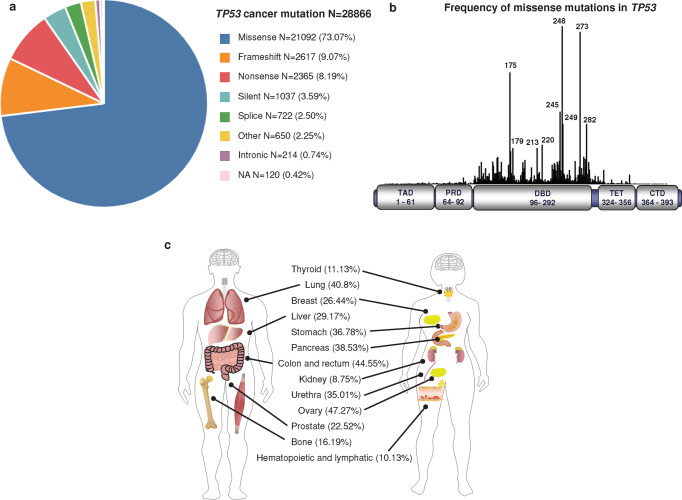
- TP53 is the most frequently altered gene in human cancers; 42% of cases carry TP53 mutations, with tissue-specific frequencies such as ovary 47.27%, colon and rectum 44.55%, lung 40.8%, esophageal carcinoma 93.77%, and small cell lung cancer 79.06%.
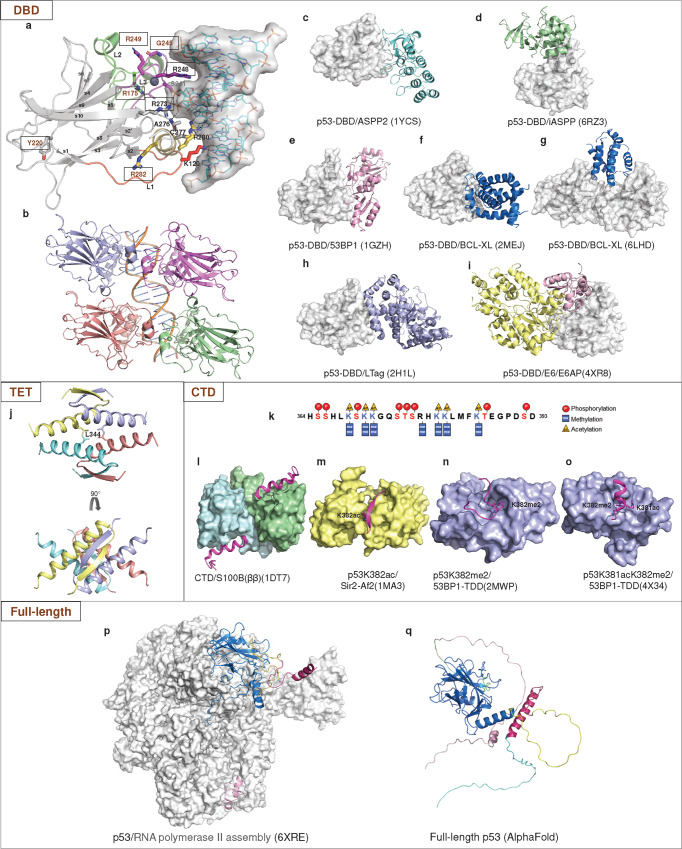
- p53 is a 393-amino-acid transcription factor with domains TAD (1–61), PRD (64–92), DBD (96–292), TET (324–356), and CTD (364–393); more than 40% of p53 is intrinsically disordered. Hotspot missense mutations in the DBD (R175, G245, R249, R282, R248, R273) cause loss-of-function, dominant-negative, and gain-of-function effects.
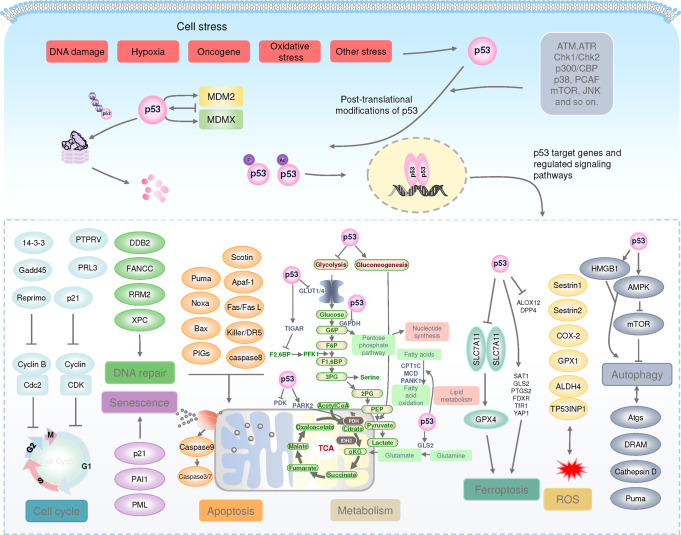
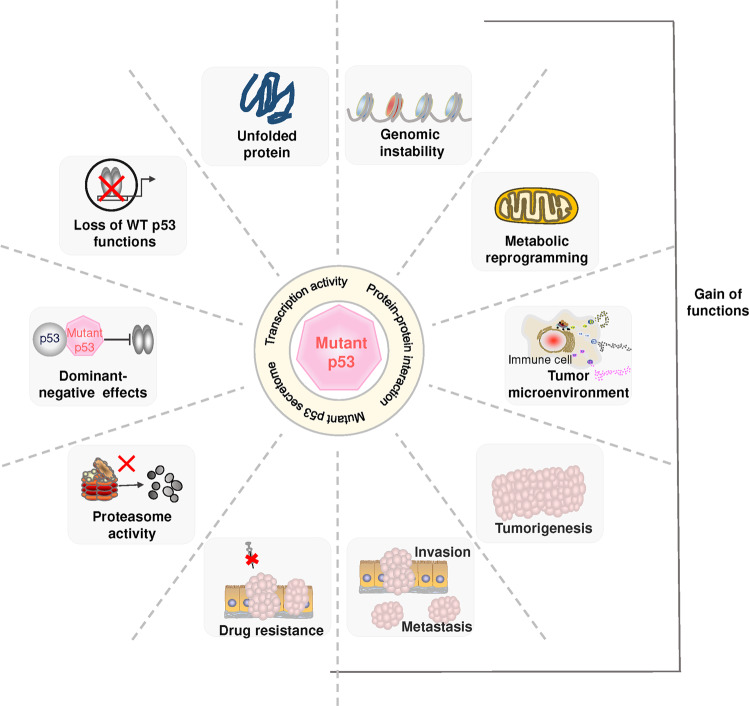
- p53 regulates classical pathways (cell cycle, apoptosis, genomic stability) and non-classical pathways (metabolism, ferroptosis, tumor microenvironment, autophagy, stem cell self-renewal); mutant p53 promotes metastasis, drug resistance, and immune evasion.
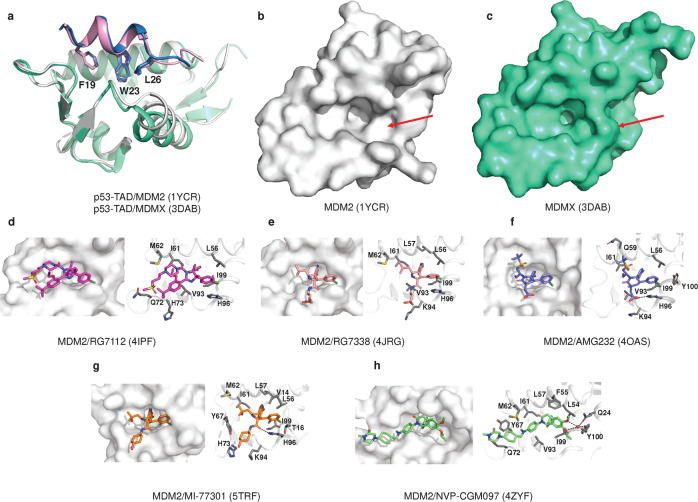
- Therapies in development include MDM2/MDMX inhibitors (RG7112 Kd = 2.9 nM; RG7388 Kd = 0.15 nM; AMG232 Kd = 0.045 nM; ALRN-6924 MDM2 Kd = 10.9 nM and MDMX Kd = 57 nM) and mutant p53 rescue compounds (APR-246 plus azacitidine phase III complete remission 33.3% vs 22.4% with azacitidine alone, not statistically significant; ATO increased thermostability by 0.9–6.5 °C and transcriptional activity up to 44-fold; PC14586 caused complete tumor regression in 80% of mice). No p53-targeted drugs are approved.
Methods
- Design: systematic review of p53 signaling, TP53 mutations, p53 structures, and p53-targeted therapies.
- Data: published literature, structural studies and PDB entries, cancer genomic databases (COSMIC, cBioPortal, TCGA), and clinical trial registries with NCT identifiers and status.
- Analysis: narrative synthesis with tables summarizing MDM2/X inhibitors, mutant p53 rescue compounds, and second-site suppressor mutations; no meta-analysis or formal quantitative pooling is described.
Limitations
- Stated: lack of an established mechanism for p53 reactivation, lack of drug-binding pockets except Y220C, resistance to TP53 mutations, off-target effects, and possible toxicity from p53 accumulation in normal tissues; full-length p53 structures and some mutant structures remain unavailable; AlphaFold2 cannot correctly predict the structural impact of missense mutations.
- Stated: many mutant p53 rescue drugs have p53-independent effects or irreproducible mechanisms, and no p53-targeted drugs are approved.
- Evident: as a narrative review, no systematic search strategy, inclusion criteria, or risk-of-bias/quality assessment is described; clinical trial data are summarized from registries and may be incomplete or heterogeneous.
Model-written summary. Check it against the paper before relying on it.
Integrity signals
Registry
Cites
Statistics
Figures
Verification
Claims the paper makes
4 Valid · 5 Not valid · 308 Not checked · 80 Own results and interpretations
The cited sources support only part of this claim — read each source’s verdict below.
In the paper
“Mutated TP53 not only lost its normal biological function, but also promoted cancer metastasis.”
§ Targeting p53 pathways: mechanisms, structures and advances in therapy > Introduction > TP53 mutations in cancer
What the sources say
- Not checked yetcites [249] Eastham, J. A. et al. Association of p53 mutations with metastatic prostate cancer. Clin. Cancer Res. 1, 1111–1118 (1995). 9815901
Checked before — its earlier verdict is held back until a new check runs.
- Partly supportedcites [250] Lang, G. A. et al. Gain of function of a p53 hot spot mutation in a mouse model of Li-Fraumeni syndrome. Cell 119, 861–872 (2004). 15607981 10.1016/j.cell.2004.11.006 sourceExperimental — accuracy not yet measured
Our copy supports the metastasis attribution, but only within this knock-in mouse model: the Results (Generation of p53 515A Knockin Mice) state 'Thus, in vivo, mutant p53 has additional properties that allow metastasis,' with osteosarcomas and carcinomas from p53 +/515A mice metastasizing (Table 1: 23%, 67%, 29% for unclassified sarcoma, adenocarcinoma and squamous carcinoma; no metastasis in lymphomas or in homozygous mutants), and the paper credits corroboration to a separate hypomorphic-allele study (Liu et al., 2000). The same section supports loss of normal function, noting 'almost a complete absence of apoptosis' in p53 +/515A embryos and a dominant-negative effect of p53R172H on wild-type p53. What the source does not establish is the claim's general form — promotion of cancer metastasis in human cancers; the evidence is a single murine p53 hot spot (R172H/515A) model, so the species/tumor-type scope of the citing sentence goes beyond this paper. (LLM, conf=0.72)
- Not checked yetcites [251] Olive, K. P. et al. Mutant p53 gain of function in two mouse models of Li-Fraumeni syndrome. Cell 119, 847–860 (2004). 15607980 10.1016/j.cell.2004.11.004 source
Checked before — its earlier verdict is held back until a new check runs.
plainstates a cause- Asserted: passes — The authors put it forward as true.
- Checkable: passes — It can be checked against evidence.
- Load-bearing: passes — The paper’s conclusions depend on it.
- Based: passes — The paper gives a reason why it holds.
- Rests on an assumption not shown here.
- Not checked yet
The sources with a verdict support this claim; the rest weren’t checked yet, have no full text we could read, or their verdicts aren’t rated yet.
In the paper
“TP53 R175H and R273H mutations occurred in more metastatic tumors than in TP53 knockout mice.250,251”
§ Targeting p53 pathways: mechanisms, structures and advances in therapy > Introduction > TP53 mutations in cancer
What the sources say
- Supportedcites [250] Lang, G. A. et al. Gain of function of a p53 hot spot mutation in a mouse model of Li-Fraumeni syndrome. Cell 119, 861–872 (2004). 15607981 10.1016/j.cell.2004.11.006 source
Our copy of Lang et al. (2004) describes a knock-in of the mouse equivalent of the human p53 R175H hot spot mutation (arginine-to-histidine at residue 172, the p53 515A allele) and reports that, unlike p53 null/knockout mice, these mice developed osteosarcomas and carcinomas that metastasized at high frequency to lymph nodes, lung, liver and brain ('mutant p53 has additional properties that allow metastasis'; Table 1, 'Tumor Spectrum and Metastatic Potential in p53 Mutant Mice'). That directly supports the R175H-versus-knockout part of the sentence attributed to this reference. The R273H half of the sentence is not this paper's finding — our copy contains no R273H/R272H mouse work; the companion knock-in study is named in its references (Olive et al., 'Mutant p53 gain-of-function in two mouse models of Li-Fraumeni syndrome,' Cell 119, this issue), i.e. the other citation attached to the sentence. (LLM, conf=0.85)
- Not checked — no full text of the sourcecites [251] Olive, K. P. et al. Mutant p53 gain of function in two mouse models of Li-Fraumeni syndrome. Cell 119, 847–860 (2004). 15607980 10.1016/j.cell.2004.11.004 source
plainstates an association- Asserted: passes — The authors put it forward as true.
- Checkable: passes — It can be checked against evidence.
- Load-bearing: unclear — It is unclear whether the paper’s conclusions depend on it.
- Based: passes — The paper gives a reason why it holds.
- Supported
The cited sources support only part of this claim — read each source’s verdict below.
In the paper
“The activity of the p53 mutant GOF has been reported to be associated with cellular physiopathology and poor clinical outcomes in cancer patients236–246 (Fig. 5).”
§ Targeting p53 pathways: mechanisms, structures and advances in therapy > Introduction > TP53 mutations in cancer
What the sources say
- Partly supportedcites [236] Zhu, J. et al. Gain-of-function p53 mutants co-opt chromatin pathways to drive cancer growth. Nature 525, 206–211 (2015). 26331536 10.1038/nature15251 PMC4568559 sourceExperimental — accuracy not yet measured
The introduction/Abstract section of our copy supports the 'cellular physiopathology' half: it states that prevalent p53 missense mutants 'gain neomorphic oncogenic functions, including altered cancer spectrum, deregulated metabolic pathways, increased metastasis and enhanced chemotherapy resistance,' and that GOF p53 'promotes cancer.' However, nothing in our copy links GOF p53 activity to poor clinical outcomes in cancer patients: the human-tumor component (COMPASS inhibitors reduce GOF p53 cell growth, Fig. 5g / Extended Data Fig. 9) is a TCGA RNA-expression comparison of MLL1/MLL2/MOZ across p53 WT, GOF and null groups, with no survival, prognosis or clinical-endpoint analysis, and the Discussion only speculates that MLL pathways 'may contribute to GOF p53 oncogenic phenotypes and therefore cancer progression.' The clinical-outcome portion attributed to this source is therefore unsupported. (LLM, conf=0.72)
- Supportedcites [237] Xiong, S. et al. Differential gain-of-function activity of three p53 hotspot mutants in vivo. Cancer Res 82, 1926–1936 (2022). 35320355 10.1158/0008-5472.CAN-21-3376 PMC9117479 source
The Abstract states that TP53 missense mutations identified in cancer patients 'demonstrate gain-of-function (GOF) activities characterized by increased metastasis, poor prognosis, and drug resistance,' which covers the poor-clinical-outcome half of the claim. The Introduction (and its cited reviews 13,16,17) supplies the cellular half: mutant p53 proteins 'have novel GOF activities that contribute to tumorigenesis and metastasis' by interacting with other cellular proteins or usurping their transcriptional functions to alter the transcriptome, in a cancer type- and cell context-dependent manner. The attribution is a broad background statement and our copy treats the topic that way, though its own experimental data are from mouse models rather than patients. (LLM, conf=0.85)
- Not checked yetcites [238] Song, H., Hollstein, M. & Xu, Y. p53 gain-of-function cancer mutants induce genetic instability by inactivating ATM. Nat. Cell Biol. 9, 573–580 (2007). 17417627 10.1038/ncb1571 source
Checked before — its earlier verdict is held back until a new check runs.
- Partly supportedcites [239] Restle, A. et al. Dissecting the role of p53 phosphorylation in homologous recombination provides new clues for gain-of-function mutants. Nucleic Acids Res 36, 5362–5375 (2008). 18697815 10.1093/nar/gkn503 PMC2532731 sourceExperimental — accuracy not yet measured
Our copy supports the cellular/pathophysiological half of the claim: the Discussion ('Gain-of-function in p53 mutants and genome destabilization') states that cancer-related p53 mutants 'acquired additional oncogenic activities' and that GOF effects on genomic instability are 'manifested by aberrant ploidy, increased mutation and gene amplification rates', and that cyclin A1 overexpression (as 'in tumors') reveals mutant-p53 GOF; the Results also note mutants p53(248W)/p53(273H) 'displayed tumor-promoting characteristics in a humanized p53 knockin mouse model'. However, no passage in our copy links mutant p53 gain-of-function activity to poor clinical outcomes in cancer patients — searches for prognosis, survival, clinical outcome and patient outcome returned only tumour-marker correlations (topo I in melanomas, cyclin A1 levels in germ cell tumours/breast cancer/AML, cyclin A1 hypermethylation vs p53 mutation in head and neck cancer), never patient outcome data. That clinical half of the attributed claim is therefore unsupported by this source. (LLM, conf=0.72)
- Partly supportedcites [240] Dong, P. et al. Elevated expression of p53 gain-of-function mutation R175H in endometrial cancer cells can increase the invasive phenotypes by activation of the EGFR/PI3K/AKT pathway. Mol. Cancer 8, 103 (2009). 19917135 10.1186/1476-4598-8-103 PMC2779797 sourceExperimental — accuracy not yet measured
Our copy supports the 'cellular physiopathology' half: the Abstract/Background (p. 1) says several p53 mutants 'can gain novel oncogenic functions (gain-of-function, GOF) that actively regulate cancer development and progression', and the Introduction plus Results (p. 1; Abstract Results) show GOF effects on proliferation, invasion and migration via EGFR/PI3K/AKT. The clinical-outcome half is narrower and hedged than the claim: the Discussion states these GOF activities 'may account for the close correlation between the expression of p53 mutants and the poor prognosis of patients with EC [26]', i.e. endometrial cancer only, and the prognostic correlation itself is credited to another work (ref 26, Jones et al., Int J Gynecol Pathol 1997) rather than reported here. So the extension to 'poor clinical outcomes in cancer patients' generally is not what this source states. (LLM, conf=0.72)
- Partly supportedcites [241] Powell, E., Piwnica-Worms, D. & Piwnica-Worms, H. Contribution of p53 to metastasis. Cancer Disco. 4, 405–414 (2014). 10.1158/2159-8290.CD-13-0136 PMC4063123 24658082 sourceExperimental — accuracy not yet measured
Our copy supports the cellular-physiopathology half: 'Mutant p53 helps drive cell migration and invasion' states that hotspot missense mutations 'give p53 a gain-of-function role in the context of tumorigenesis, invasion, and metastasis,' acting through Twist/Slug to induce EMT-like E-cadherin suppression, and the Conclusions affirm mutant p53 'through its gain-of-function activities, induces the metastatic phenotype both in vitro and in vivo.' The clinical-outcome half is not stated for GOF activity in cancer patients generally: the prognosis evidence in 'TP53 expression and mutation are correlated with poor prognosis in breast cancer patients' ties TP53 mutation status (loss as well as substitution) to aggressive, high-grade disease chiefly in breast cancer subtypes, and 'p53 as a clinical target for metastasis prevention' refers only to 'the correlation between TP53 mutation and poor prognosis.' The Conclusions hedge the GOF–outcome link prospectively, saying distinguishing a 'mutated gain-of-function phenotype' 'may help predict tumor behavior and aid clinicians in their prognostic, diagnostic, and treatment decisions' — so the part of the claim attributing a reported association between mutant p53 GOF activity and poor clinical outcomes across cancer patients is not supported by our copy. (LLM, conf=0.72)
- Not checked yetcites [242] Brosh, R. & Rotter, V. When mutants gain new powers: news from the mutant p53 field. Nat. Rev. Cancer 9, 701–713 (2009). 19693097 10.1038/nrc2693 source
Checked before — its earlier verdict is held back until a new check runs.
- Not checked yetcites [243] Oren, M. & Kotler, E. p53 mutations promote proteasomal activity. Nat. Cell Biol. 18, 833–835 (2016). 27463250 10.1038/ncb3392 source
Checked before — its earlier verdict is held back until a new check runs.
- Not checked yetcites [244] van Oijen, M. & Slootweg, P. Gain-of-function mutations in the tumor suppressor gene p53. Clin. Cancer Res. 6, 2138–2145 (2000). 10873062
Checked before — its earlier verdict is held back until a new check runs.
- Not checked yetcites [245] Halevy, O., Michalovitz, D. & Oren, M. Different tumor-derived p53 mutants exhibit distinct biological activities. Science 250, 113–116 (1990). 2218501 10.1126/science.2218501 source
Checked before — its earlier verdict is held back until a new check runs.
hedgedstates an association- Asserted: passes — The authors put it forward as true.
- Checkable: passes — It can be checked against evidence.
- Load-bearing: passes — The paper’s conclusions depend on it.
- Based: passes — The paper gives a reason why it holds.
- Partly supported
Every source the paper cites for this claim was checked and supports it.
In the paper
“Decitabine alone (a hypomethylating agent, similar to AZA) was able to produce a very high response rate (100%) in patients with AML or MDS carrying a TP53 mutation.421”
§ Targeting p53 pathways: mechanisms, structures and advances in therapy > Structure-based p53 targeting > Tackling the p53 mutation
What the sources say
- Supportedcites [421] Welch, J. S. et al. TP53 and decitabine in acute myeloid leukemia and myelodysplastic syndromes. N. Engl. J. Med. 375, 2023–2036 (2016). 27959731 10.1056/NEJMoa1605949 PMC5217532 source
The DISCUSSION (p. 1) of our copy states clinical responses correlated with TP53 mutations: 'bone marrow blast clearance ... in 21 of 21 patients with TP53 mutations (100%) versus 32 of 78 patients with wild-type TP53 (41%)' in this single-institution trial of single-agent decitabine (20 mg/m2/day x 10 days), and the Abstract RESULTS (p. 1) repeat 21 of 21 [100%]. The CONCLUSION adds that 'all patients with a TP53 mutation had a response to 10-day courses of decitabine in this trial,' matching the cited claim of a 100% response rate with decitabine alone in AML/MDS with TP53 mutation. The paper qualifies durability (remissions short-lived, resistant subclones), but the citing sentence attributes only the response rate, which is stated. (LLM, conf=0.92)
plainstates a cause- Asserted: passes — The authors put it forward as true.
- Checkable: passes — It can be checked against evidence.
- Load-bearing: passes — The paper’s conclusions depend on it.
- Based: passes — The paper gives a reason why it holds.
- Supported
None of the sources cited for this claim have been checked yet.
In the paper
“Missense mutations in TP53 were associated with lymph node metastasis in prostate cancer patients.249”
§ Targeting p53 pathways: mechanisms, structures and advances in therapy > Introduction > TP53 mutations in cancer
What the sources say
- Not checked yetcites [249] Eastham, J. A. et al. Association of p53 mutations with metastatic prostate cancer. Clin. Cancer Res. 1, 1111–1118 (1995). 9815901
Checked before — its earlier verdict is held back until a new check runs.
plainstates an association- Asserted: passes — The authors put it forward as true.
- Checkable: passes — It can be checked against evidence.
- Load-bearing: unclear — It is unclear whether the paper’s conclusions depend on it.
- Based: passes — The paper gives a reason why it holds.
- Not checked yet
196 more claims
Create a free account to see all 397 claims and to verify the 511 references still open.
- It may state two separate claims as one. 173
- Probably not a substantial claim. 36
- The quote only partly states this claim. 2
Claims other papers make about this one
Each is checked against this paper’s own text: does it say what the citing paper says it does?
The source backs part of the claim, not all of it — or backs it for a different population, condition or comparison.
In the citing paper
“By blocking MDM2-mediated degradation, MDM2 inhibitor therapy increases endogenous p53 levels and drives p53-dependent transcriptional programs; thus, these drugs are only active in TP53-wild-type tumors.6”
From Pharmacokinetic-pharmacodynamic-efficacy modeling of the MDM2 inhibitor brigimadlin in glioblastoma patient-derived xenografts (2026) · cites this paper as [6]
Experimental — accuracy not yet measuredThe source backs part of the claim, not all of it — or backs it for a different population, condition or comparison.
In the citing paper
“Across tumor types, MDM2-amplified tumors are typically very sensitive to MDM2 inhibition, while non-amplified tumors have a more variable and less dramatic response.6”
From Pharmacokinetic-pharmacodynamic-efficacy modeling of the MDM2 inhibitor brigimadlin in glioblastoma patient-derived xenografts (2026) · cites this paper as [6]
Experimental — accuracy not yet measuredIn the citing paper
“The TP53 mutation rate exceeds 70% in certain subtypes of cancers, including squamous esophageal cancer, small-cell lung cancer, squamous cell lung cancer, and complex karyotype acute myeloid leukemia (AML), and is lower in partial tumors such as lymphoma, melanoma, and overall AML.8–11”
From p53: from understanding its structure to advances in therapeutic targeting (2026) · cites this paper as [11]
In the citing paper
“Nevertheless, missense mutations constitute the primary type of TP53 mutation11”
From p53: from understanding its structure to advances in therapeutic targeting (2026) · cites this paper as [11]
3 more claims about this paper
Create a free account to see every claim other papers make about this one.
Self-check
Percentages, sums and reported differences re-computed from the paper’s own numbers.
Each contradiction between two passages listed here was confirmed by an independent check.
Rated minor: it would not touch a result — a value no result rests on, a p-value that stays on the same side of the significance level, or a conflict that is clerical, resolved elsewhere in the paper, or outside its own findings.
In the paper
§ Targeting p53 pathways: mechanisms, structures and advances in therapy > Structure-based p53 targeting > MDM2/MDMX-p53, a central hub for p53 activation
“| RG7388 | Imidazoline(2013) |”
§ Targeting p53 pathways: mechanisms, structures and advances in therapy > Structure-based p53 targeting > MDM2/MDMX-p53, a central hub for p53 activation
“The MDM2 inhibitor RG7388, which was subsequently designed and synthesized, is a class of pyrrolidine derivatives.344”
Rated minor: it would not touch a result — a value no result rests on, a p-value that stays on the same side of the significance level, or a conflict that is clerical, resolved elsewhere in the paper, or outside its own findings.
In the paper
§ Targeting p53 pathways: mechanisms, structures and advances in therapy > The structures of p53 > Tetramerization domain
“an α-helix linked by hinge residue Gly344313–315”
§ Targeting p53 pathways: mechanisms, structures and advances in therapy > The structures of p53 > Tetramerization domain
“The dimer-dimer interactions are primarily mediated by hydrophobic contacts (Met340, Phe341, Leu344, Ala347, Leu348 and Leu350).35”
Rated minor: it would not touch a result — a value no result rests on, a p-value that stays on the same side of the significance level, or a conflict that is clerical, resolved elsewhere in the paper, or outside its own findings.
In the paper
§ Targeting p53 pathways: mechanisms, structures and advances in therapy > Abstract
“Since p53 is mutated and inactivated in most malignant tumors, it has been a very attractive target for developing new anti-cancer drugs.”
§ Targeting p53 pathways: mechanisms, structures and advances in therapy > Introduction > TP53 mutations in cancer
“Genome sequencing of different human cancer cells showed that 42% of cases carry TP53 mutations.”
Citations
Cites
Highly accurate protein structure prediction with AlphaFold
Jumper, J., Evans, R., Pritzel, A., Green, T., Figurnov, M., Ronneberger, O., Tunyasuvunakool, K., Bates, R., Žídek, A., Potapenko, A., et al. (2021) · Nature · doi:10.1038/s41586-021-03819-2 · Cited by 43,764
Ferroptosis: An Iron-Dependent Form of Nonapoptotic Cell Death
Dixon, S. J., Lemberg, K. M., Lamprecht, M. R., Skouta, R., Zaitsev, E. M., Gleason, C. E., Patel, D. N., Bauer, A. J., Cantley, A. M., Yang, W. S., et al. (2012) · Cell · doi:10.1016/j.cell.2012.03.042 · Cited by 18,691 · cited 1×
“123 – 125 p53 was reported to inhibit cystine uptake and promote ferroptosis by transcriptional repression the expression of SLC7A11 which is a key component of the cystine-glutamate antiporter.”
BackgroundRepertoires of Autophagy in the Pathogenesis of Ocular Diseases
Li, Y.-J., Jiang, Q., Cao, G.-F., Yao, J., & Yan, B. (2015) · Cellular Physiology and Biochemistry · doi:10.1159/000373980 · Cited by 16,304
WAF1, a potential mediator of p53 tumor suppression
El-Deiry, W. S., Tokino, T., Velculescu, V. E., Levy, D. B., Parsons, R., Trent, J. M., Lin, D., Mercer, W. E., Kinzler, K. W., & Vogelstein, B. (1993) · Cell · doi:10.1016/0092-8674(93)90500-p · Cited by 8,321 · cited 1×
“55 58 Hypopho-sphorylated Rb forms a complex with the E2F transcription factor, which inhibits the transcriptional activity of E2F and leads to G1 phase block.”
BackgroundAMPK and mTOR regulate autophagy through direct phosphorylation of Ulk1
Kim, J., Kundu, M., Viollet, B., & Guan, K.-L. (2011) · Nature Cell Biology · doi:10.1038/ncb2152 · Cited by 7,227 · cited 1×
“176 177 – 179 The p53 target genes Sestrin1 and Sestrin2 phosphorylate and activate AMPK and promote autophagy.”
BackgroundThe p21 Cdk-interacting protein Cip1 is a potent inhibitor of G1 cyclin-dependent kinases.
Wade Harper, J. (1993) · Cell · doi:10.1016/0092-8674(93)90499-g · Cited by 5,651 · cited 1×
“55 58 Hypopho-sphorylated Rb forms a complex with the E2F transcription factor, which inhibits the transcriptional activity of E2F and leads to G1 phase block.”
BackgroundMice deficient for p53 are developmentally normal but susceptible to spontaneous tumours
Donehower, L. A., Harvey, M., Slagle, B. L., McArthur, M. J., Montgomery, C. A., Butel, J. S., & Bradley, A. (1992) · Nature · doi:10.1038/356215a0 · Cited by 4,649
Mutational landscape and significance across 12 major cancer types
Kandoth, C., McLellan, M. D., Vandin, F., Ye, K., Niu, B., Lu, C., Xie, M., Zhang, Q., McMichael, J. F., Wyczalkowski, M. A., et al. (2013) · Nature · doi:10.1038/nature12634 · Cited by 4,419 · cited 1×
“198 The major type of mutation in TP53 is a missense mutation, a single amino acid substitution and the DNA binding domain (DBD) is the most common mutated region 199,200 (Fig.”
BackgroundThe metabolism of tumors in the body
Warburg, O., Wind, F., & Negelein, E. (1927) · Journal of General Physiology · doi:10.1085/jgp.8.6.519 · Cited by 4,416 · cited 1×
“The Warburg effect, 90 which was fi rst proposed, states that tumor cells metabolize glucose differently than normal cells, as evidenced by enhanced glycolysis and increased lactate production.”
BackgroundGenetic instabilities in human cancers
Lengauer, C., Kinzler, K. W., & Vogelstein, B. (1998) · Nature · doi:10.1038/25292 · Cited by 4,168 · cited 1×
“associated with enhanced chromosomal instability,(226,227) and are accompanied by amplification of oncogenes and deletion of suppressor genes.(227,228) Significant upregulation of proteins associated with cell cycle progression was also observed in p53 mutant cancers, which may be due to loss of control of cell cycle…”
Background
Cited by
Items 1,201–1,256 of 1,256
Human foetal cortical slice cultures: A translational platform for studying early neurodevelopment
McLeod, F., Dimtsi, A., Savage, M. A., Hedley, A., Clowry, G. J., & Trevelyan, A. J. (2026) · Journal of Anatomy · doi:10.1111/joa.70276
Alwohhaib, M. A., Al-Waheeb, S., & Alshammari, G. E. (2025) · Medical & Clinical Research · doi:10.33140/mcr.10.05.03
Spector, D. V., Zharova, A., Kazora, T. B., Karetnikov, G. L., Kuzmichev, I. A., Isaeva, Y. A., Akasov, R. A., Stepanov, M. E., Egorova, T. V., Родин, И. А., et al. (2026) · ChemRxiv · doi:10.26434/chemrxiv.15012242/v1
Targeting mutant p53 aggregates in pancreatic cancer using an autophagy-targeting chimera
Lee, S. J., Pham, T. M., Lee, M. J., Kim, S., Najy, A. J., Heo, A. J., Singh, S., Kim, S., Boggula, R., Polin, L., et al. (2026) · Cell Death and Disease · doi:10.1038/s41419-026-09396-4
Molecular Landscape of Small Lymphocytic Lymphoma: Mechanisms and Therapeutic ApproachesPreprint
Mahdavy, S. (2025) · doi:10.58445/rars.2879
Putri, R. A. R. K., Herdiansyah, M. A., Rohmatika, A. U., Rahayu, S., & Darmanto, W. (2026) · Trends in Sciences · doi:10.48048/tis.2026.13059
Cancer-Causing Viruses: A Comprehensive Review of Oncogenic Mechanisms and Clinical Implications
Salman, A. D., & Jameel, Z. J. (2025) · Journal of University of Babylon for Pure and Applied Sciences · doi:10.29196/jubpas.v33i4.6206
Investigating the Δ133p53 isoforms in drug tolerant persister cells
Bone, K. (2025) · Otago University Research Archive (University of Otago)
Lin, X., Yang, H., Wang, R., & Song, S. (2026) · Research Square · doi:10.21203/rs.3.rs-10020822/v1
Investigating the effects of drug combinations and loss of the PRH/Hhex oncoprotein in CCA cells
Martin, G. (2025) · Nottingham ePrints (University of Nottingham)
Determining the role of inverted repeat sequences in the 3’UTR of MDM2
Darwish, W. (2025) · Carleton University's Institutional Repository (MacOdrum Library, Carleton University) · doi:10.22215/etd/2025-16767
CONTRIBUTION OF THE GUT MICROBIOME TO OBESITY-DRIVEN TRIPLE-NEGATIVE BREAST CANCER
Carson, M. S. (2025) · Carolina Digital Repository (University of North Carolina at Chapel Hill) · doi:10.17615/dyjj-m040
Abusabha, A. Y., Alhawamdeh, M., Buasedah, S. A. A., Alhammadi, S. M., Alshehri, R. J., Alwadai, A. M., zamanan, F. H. A., Alyami, M. A., Mohamed, M. O., Mekkaw, S. A., et al. (2026) · International Journal of Drug Delivery Technology · doi:10.25258/ijddt.16.48s.139
Una visión holística y dinámica de la carcinogénesis gástrica
Portillo‐Miño, J. D., Guzman, K. A., Pazos, A. J., Carlosama-Rosero, Y. H., Ordoñez, J. S. F., Regino, W. O., Roa, J. C., & Riquelme, A. J. (2026) · Universidad y Salud · doi:10.22267/rus.2628s1.10135
Expert consensus on the diagnosis and treatment of EGFR gene mutation non-small cell lung cancer
Meng, R., Xu, C., Wang, W., Wang, Q., Dong, Y., Zhang, Y., Song, Z., Li, Z., Yu, J., Zhong, W., et al. (2026) · International Open Medical Journal (IOMJ) · doi:10.65364/iomj.2026.15
Self-citationDevelopment of a novel tool for effective personalized medicine
Bendixen, K. (2025) · University of Southern Denmark Research Portal (University of Southern Denmark) · doi:10.21996/613c2978-40d2-4130-acf2-decf55773b3a
Ameji, P. J., Osigbemhe, I. G., Okpanachi, C. B., Kabiru, H. D., Khan, M. E., Okpala, E. O., Ekuli, O. M., Ameh, O. S., Anthony, W. O., & Ebune, A. O. (2026) · Discover Chemistry. · doi:10.1007/s44371-026-01081-x
Perspective of Bionanocarriers in Leukemia Treatments
Kelkar, A., & Pachimiriyam, S. (2026) · The Bombay Technologist · doi:10.36664/bt/2026/v72i1/173244
Leucémies aiguës myéloïdes : mécanismes de résistance à l’Azacitidine et Venetoclax
Madaci, L. (2024) · HAL
Beesetti, S. (2026) · Zenodo (CERN European Organization for Nuclear Research) · doi:10.5281/zenodo.22537184
Saini, Y., Sharma, S., & Prakash, G. (2026) · Nucleosides Nucleotides & Nucleic Acids · doi:10.1080/15257770.2026.2738367
SENSITIZING TUMOR CELLS VIA RESCUE OF NONSENSE DRIVER MUTATIONS: A PROMISING THERAPEUTIC STRATEGY
Menditto, M., Ricci, D., Ciulla, E., Pibiri, I., Pace, A., & Lentini, L. (2025) · Nova Science Publishers (Nova Science Publishers, Inc.) · doi:10.13140/rg.2.2.25070.16960
Shalev, G., Shraibman, B., Lin, A., Masarwa, A., Savchuk, A., Tendler, Y., Volokh, L., & Tendler, A. (2025) · Medical Research Archives · doi:10.18103/mra.v13i7.6725
The role of TP53 mutations in oral cancer: molecular mechanisms and prognostic implications
Ma, L., Liu, Z., Huang, K., Xiao, J., Zhao, S., Li, Y., Duan, Q., Kim, M. O., & Zhu, F. (2026) · Advanced Cancer Research · doi:10.55092/acr20260008
Development of GPCR-based yeast biosensors towards biomedical applications
Lind, A. C. (2025) · Chalmers Research (Chalmers University of Technology)
Wright, F. (2026) · Open Access at Essex (University of Essex) · doi:10.5526/err-00044159
Influences of Umbilical Cord Mesenchymal Stem Cells and Their Exosomes on Tumor Cell Phenotype
Guoqing, L. (2024) · Gredos (University of Salamanca) · doi:10.14201/gredos.158796
AI-based Structural Study of CDKN2A Inhibiting MDM2-p53 via AlphaFold2
Zhang, W. (2025) · Theoretical and Natural Science · doi:10.54254/2753-8818/2025.21546
THOROUGH BIOINFORMATICS EXAMINATION REVEALS NOC4L AS A PROGNOSTIC INDICATOR IN LUNG ADENOCARCINOMA
Al-Zaalan, A. R. (2025) · Journal of Medical Genetics and Clinical Biology · doi:10.61796/jmgcb.v2i12.1498
Upregulation of Apoptotic Markers p53 and Caspase-3 in Cardiac Tissue of Diabetic Rats
(2025) · Jordan Journal of Biological Sciences · doi:10.54319/jjbs/180412
The Impact of Y Chromosome Loss on Drug Sensitivity and Gene Essentiality in Cancer Cell Lines
Yetbarek, D. (2025) · eScholarship (California Digital Library)
Іваненко, Т. В., Kolesnyk, Y. M., & Абрамов, А. В. (2025) · Modern medical technology · doi:10.14739/mmt.2025.4.339276
Glutamine metabolism and DNA repair in breast cancer
Fakroun, A. (2025) · Nottingham ePrints (University of Nottingham)
Lu, J., Zhao, N., Niu, Y., Ma, T., Dong, C., Wang, L., Gao, Z., Zhang, J., Fang, R., Cao, Y., et al. (2026) · European Journal of Integrative Medicine · doi:10.1016/j.eujim.2026.102794
Caracterização radiómica e neuroimagiologia comparada dos gliomas no cão e glioblastomas em humanos
Faustino, R. (2025) · Portuguese National Funding Agency for Science, Research and Technology (RCAAP Project by FCT)
Pooten, E. E., Cruz, K. J., Abella, E. A., Laserna, A. K. C., Khademul, A. B. M. M., & Watanabe, K. (2026) · Research Square · doi:10.21203/rs.3.rs-9133073/v1
TRIDs therapy for restoring p53 expression on stop mutated cells
Menditto, M., Ricci, D., Ciulla, E., Pibiri, I., Pace, A., & Lentini, L. (2025) · IRIS UniPA (University of Palermo) · doi:10.13140/rg.2.2.15003.84005
The feasibility of transaldolase inhibitors as anti-cancer therapeutics
Baer, D. S. (2025) · ScholarWorks - UA (University of Alaska System)
Identification of new targets for improving abiotic stress tolerance in plants
González-Bermúdez, M. R., Chini, A., & Lozano‐Juste, J. (2025) · DIGITAL.CSIC (Spanish National Research Council (CSIC))
Using artificial intelligence to improve drought resistance in crop plants
Ruiz-Partida, R., Subramanian, N., Maignan, N., Martin, S., & Lozano‐Juste, J. (2025) · DIGITAL.CSIC (Spanish National Research Council (CSIC))
Infantes, L., Carreira, M., Jiménez-Árias, D., Ruiz-Partida, R., González-Bermúdez, M. R., Colomer, A., Rodríguez-García, S., Orea-Ordóñez, L., Donderis-Fagoaga, C., Pau, E., et al. (2025) · DIGITAL.CSIC (Spanish National Research Council (CSIC))
Descubrimiento de fármacos para mejorar la tolerancia a la sequia de los cultivos
Lozano‐Juste, J. (2025) · DIGITAL.CSIC (Spanish National Research Council (CSIC))
Abo-Ghneim, F. D. F., Al-Koofee, D. A. F., & Mohammed, H. J. (2026) · Al- Anbar Medical Journal · doi:10.33091/amj.2026.166477.2498
Ambreen, Khurram, I., Khan, T., & Batool, H. (2026) · UCP Journal of Science & Technology · doi:10.24312/ucp-jst.03.02.523
Hussein, Z. M. J., & Alameedy, F. M. M. (2026) · Adolescencia e Saude · doi:10.67440/ahj.v21i6s.1757
Multicomponent Reactions Toward Peptidomimetics
Trabocchi, A. (2026) · Wiley eBooks · doi:10.1002/9781394326259.ch2
Flow Cytometric Panel and Liquid Biopsy to Identify Neoplastic Conditions in Canine Effusions
Sini, F. (n.d.) · Institutional Research Information System University of Turin (University of Turin)
基于网络药理学的半夏泻心汤治疗抗生素相关胃肠道不良反应作用机制研究
Sungthong, T., & Chiaopromkun, T. (2026) · Thailand Journal of Traditional Chinese Medicine
Assessment of Differential Regulation of p53 Isoforms by miRNAs in Melanoma
Stanners, D. (2024) · Otago University Research Archive (University of Otago)
Chen, X., Zhao, Q., Wang, H., Qiu, K., Deng, X., & Xu, F. (2023) · doi:10.3389/fmolb.2023.1264553.s010
Self-citationNemoto, Y., Kuroda, K., Oyama, R., Mori, M., Shimajiri, S., & Tanaka, F. (2024) · doi:10.3389/fonc.2024.1290757.s001
Qiu, C., Høgdall, C., Yang, H., Yang, W., Poulsen, T. S., Anderson, K. S., Lu, Z., Bast, R. C., & Høgdall, E. (2026) · Cancer · doi:10.1002/cncr.70672
Tramadol potentiates chemotherapy efficacy in hepatocellular carcinoma cells
Fan, H., Liu, S., Wu, Z.-S., Huang, Y., Huang, S.-M., Chen, T.-W., & Wu, Z.-F. (2026) · Journal of Enzyme Inhibition and Medicinal Chemistry · doi:10.1080/14756366.2026.2755636
Li, J., Fitzpatrick, S. G., Laser, J. S., Das, I., Thomas, R. E., Islam, M. N., Bhattacharyya, I., & Ko, Y. C. K. (2026) · Head and Neck Pathology · doi:10.1007/s12105-026-01986-0
The p53 Pathway in Malignant Primary CNS Tumors: From Molecular Biology to Therapeutic Opportunities
Rangno, D., Nguyen, T. S., Nguyen, M. L. T., Tran, A. T. T., Nham, P. L. T., Tran, V. H., Nguyen, L. T., Bożko, M., Bùi, K. C., & Bozko, P. M. (2026) · Brain Sciences · doi:10.3390/brainsci16111268
Metadata
- Authors
- Wang, H., Guo, M., Wei, H., & Chen, Y.
- Affiliations
- Central South University (CN)
- Corresponding author
- Wei, Hudie
- Chen, Yongheng
- Venue
- Signal Transduction and Targeted Therapy
- Published
- 2023-03-01
- Volume
- 8
- Issue
- 1
- Pages
- 92-92
- ISSN
- 2059-3635 (ISSN-L)
- PMC
- PMC9977964
- OpenAlex
- W4322743974
- Semantic Scholar
- 3459a24d6957af5343fb63cba3b29795434b4a54
- Cited by
- 1,016
- References
- 584
- Citations by year
- 2026: 308 · 2025: 419 · 2024: 243 · 2023: 43
- FWCI
- 32.84
- Type
- journal article
- Language
- en
- Open access
- gold
- doi.org
- Licence
- cc-by
- creativecommons.org/licenses/by/4.0 (tdm)
- creativecommons.org/licenses/by/4.0 (vor)
- Locations
- Signal Transduction and Targeted Therapy (publishedVersion, cc-by)
- PubMed Central (publishedVersion, cc-by)
- PubMed (publishedVersion)
- DOAJ (DOAJ: Directory of Open Access Journals) (submittedVersion, cc-by-sa)
- Funders
- National Natural Science Foundation of China (81570537, 81974074, 82172654, 82273496, 31900880)
- Hunan Provincial Science and Technology Department (2018RS3026, 2021RC4012)
- Topics
- Health Sciences › Medicine › Oncology › Cancer-related Molecular Pathways
- Life Sciences › Biochemistry, Genetics and Molecular Biology › Molecular Biology › PI3K/AKT/mTOR signaling in cancer
- Life Sciences › Biochemistry, Genetics and Molecular Biology › Molecular Biology › Cell death mechanisms and regulation
- Keywords
- TP53, p53, p53 pathway, TP53 mutation, p53-targeted therapy, tumor suppression, cellular metabolism, ferroptosis, tumor microenvironment, autophagy, apoptosis, cell cycle regulation, genome stability, anticancer drug development
- MeSH terms
- Ferroptosis, Autophagy, Cell Cycle, Humans, Tumor Suppressor Protein p53, Apoptosis
About these checks
Registry, retraction, Cites and statistics results are computed, not judged, with one exception: a printed reference that no index lists is read once by a model before it counts as a citation error. Claims are extracted by a model and kept only when their quote appears verbatim in the text; each cited source is then checked, with a model’s help, for whether it says what the claim relies on. Those verdicts can be wrong — read the claim’s quote and the cited source before relying on one.
The claim verdicts this report counts are experimental: their accuracy is not yet measured.
A language model drew the claims from the paper on 2026-11-15, under version 3 of the claim definition (model deepseek-v4.1-flash, prompt extract-v3).
A second model labelled each claim on 2026-11-15 (model jev-1.13-20260917, definition revision gold-guideline-v0.2).
Cited sources are checked with a language model’s help (qwen3.8-omni-flash).
Statistics and arithmetic are recomputed, not judged.
Confidence bands are shown only for fields calibrated on our annotated test set. None is calibrated yet, so no band is shown.
What counts as a claim ›How we measure confidence ›How we check this ›
Are you an author, or do you see a problem with this page? Request a review
Data sources
Bibliographic data: Semantic Scholar, OpenAlex, Crossref.
Contains information from the Semantic Scholar Academic Graph Datasets, made available under the ODC Attribution License (ODC-BY 1.0).
Semantic Scholar’s data is described in: Kinney, R., et al. (2023). The Semantic Scholar Open Data Platform. arXiv:2301.10140.
