

Tumor cell plasticity in targeted therapy-induced resistance: mechanisms and new strategies
Open accessThe DOI matches its Crossref record; 374 of the 374 references it cites were found in a registry or an index.
Abstract
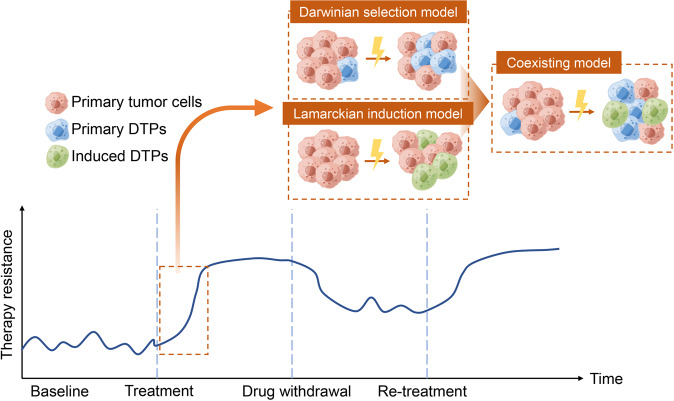
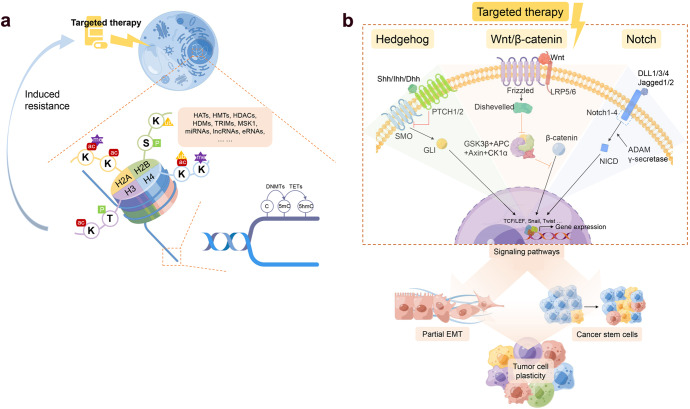
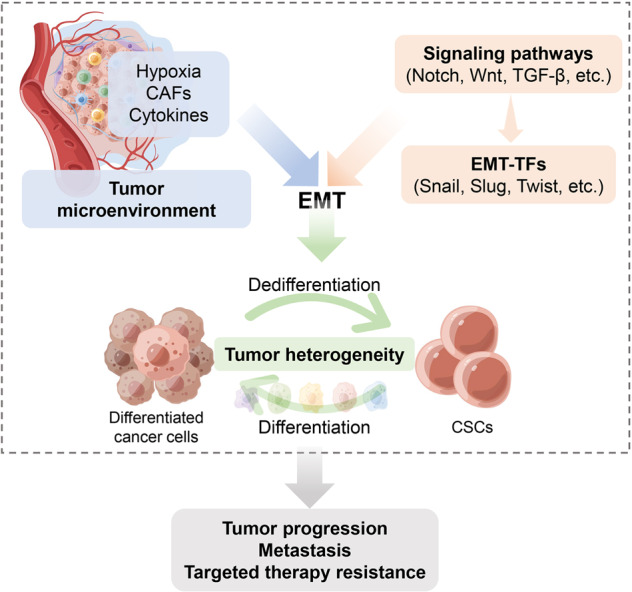
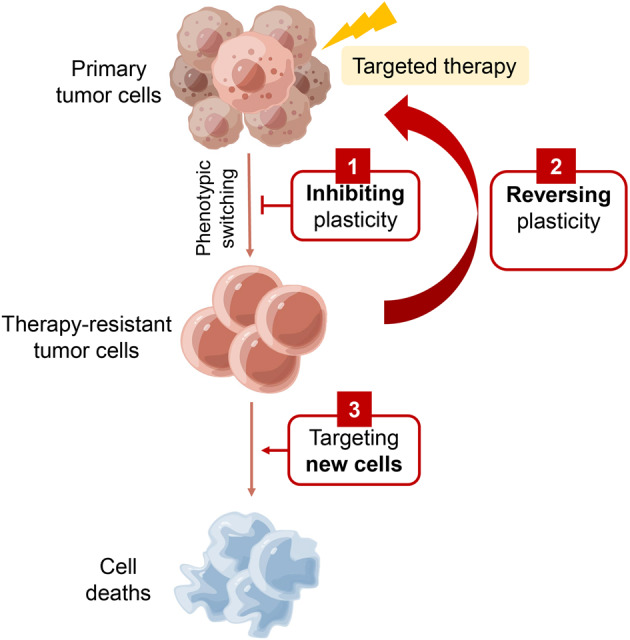
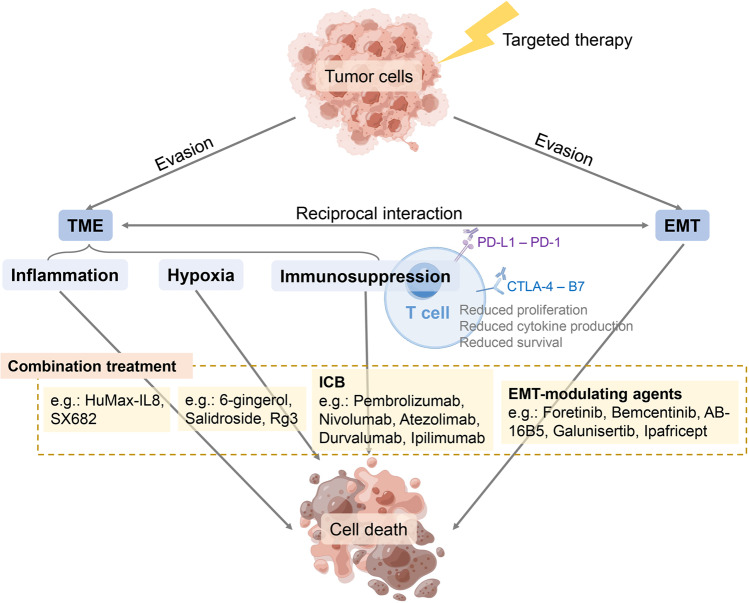
Despite the success of targeted therapies in cancer treatment, therapy-induced resistance remains a major obstacle to a complete cure. Tumor cells evade treatments and relapse via phenotypic switching driven by intrinsic or induced cell plasticity. Several reversible mechanisms have been proposed to circumvent tumor cell plasticity, including epigenetic modifications, regulation of transcription factors, activation or suppression of key signaling pathways, as well as modification of the tumor environment. Epithelial-to-mesenchymal transition, tumor cell and cancer stem cell formation also serve as roads towards tumor cell plasticity. Corresponding treatment strategies have recently been developed that either target plasticity-related mechanisms or employ combination treatments. In this review, we delineate the formation of tumor cell plasticity and its manipulation of tumor evasion from targeted therapy. We discuss the non-genetic mechanisms of targeted drug-induced tumor cell plasticity in various types of tumors and provide insights into the contribution of tumor cell plasticity to acquired drug resistance. New therapeutic strategies such as inhibition or reversal of tumor cell plasticity are also presented. We also discuss the multitude of clinical trials that are ongoing worldwide with the intention of improving clinical outcomes. These advances provide a direction for developing novel therapeutic strategies and combination therapy regimens that target tumor cell plasticity.
Overview
The claims and statistics of this paper haven’t been checked yet.
Free: it reads the open-access text and checks the first 5 claims that cite a source we can check. Create a free account to check every claim.
Integrity signals
Registry
Cites
Statistics
Figures
Verification
Claims the paper makes
The claims and statistics of this paper haven’t been checked yet.
Free: it reads the open-access text and checks the first 5 claims that cite a source we can check. Create a free account to check every claim.
Claims other papers make about this one
Each is checked against this paper’s own text: does it say what the citing paper says it does?
The check wasn’t confident either way, so it gives no verdict — never disputed.
In the citing paper
“Induction can be achieved with ketamine or AMPA-potentiating ampakines of the CX series, which rapidly boost Ca2+-permeable AMPAR drive, elevate BDNF, and engage mTOR-ERK pathways while sparing Hebbian learning capacity [341,342].”
From Synaptic Plasticity—Intrinsic Excitability and Antidepressant Discovery (2026) · cites this paper as [342]
Experimental — accuracy not yet measuredThe check wasn’t confident either way, so it gives no verdict — never disputed.
In the citing paper
“In chronic stress paradigms, (R)-ketamine co-administered with LY341495, a selective group II mGlu2/3 antagonist, yields rapid and long-lasting behavioral improvement through BDNF-TrkB and AMPAR mechanisms, with synaptogenesis that outlasts single-agent effects [342,345].”
From Synaptic Plasticity—Intrinsic Excitability and Antidepressant Discovery (2026) · cites this paper as [342]
Experimental — accuracy not yet measured
Self-check
Percentages, sums and reported differences re-computed from the paper’s own numbers.
The self-check needs the paper’s full text.
Citations
Cites
2 retracted
Zeng, D., Liang, Y., Xiao, Y., Wei, X., Lin, H., Wu, Y., Bai, J., Chen, M., & Zhang, G. (2020) · International Journal of Cancer · doi:10.1002/ijc.32911 · Cited by 71
RetractedmiRNA‑490‑3p promotes the metastatic progression of invasive ductal carcinoma
Lü, N., Zhang, M., Lu, L., Liu, Y., Zhang, H., & Liu, X. (2020) · Oncology Reports · doi:10.3892/or.2020.7880 · Cited by 10 · cited 1×
“Other newly identified EMT-related miRNAs include miR-27b3p,(206) which promotes the generation of circulating tumor cells, and miRNA-490-3p, which promotes the metastasis of invasive ductal carcinoma.(207) Nonetheless, recent studies have reported that some miRNAs, such as miRNA-128 MiRNA-155-5p,(208,209) are able to…”
BackgroundRetractedInduction of Pluripotent Stem Cells from Adult Human Fibroblasts by Defined Factors
Takahashi, K., Tanabe, K., Ohnuki, M., Narita, M., Ichisaka, T., Tomoda, K., & Yamanaka, S. (2007) · Cell · doi:10.1016/j.cell.2007.11.019 · Cited by 20,221
Shrestha, S., & Offer, S. M. (2016) · Medical Epigenetics · doi:10.1159/000444713 · Cited by 8,914
Overall Survival with Combined Nivolumab and Ipilimumab in Advanced Melanoma
Wolchok, J. D., Chiarion-Sileni, V., Gonzalez, R., Rutkowski, P., Grob, J.-J., Cowey, C. L., Lao, C. D., Wagstaff, J., Schadendorf, D., Ferrucci, P. F., et al. (2017) · New England Journal of Medicine · doi:10.1056/nejmoa1709684 · Cited by 5,357
Accessories to the Crime: Functions of Cells Recruited to the Tumor Microenvironment
Hanahan, D., & Coussens, L. M. (2012) · Cancer Cell · doi:10.1016/j.ccr.2012.02.022 · Cited by 4,632
Kalluri, R., & Zeisberg, M. (2006) · Nature Reviews Cancer · doi:10.1038/nrc1877 · Cited by 4,538
Atezolizumab and nab-paclitaxel in advanced triple-negative breast cancer
Schmid, P., Adams, S., Rugo, H. S., Schneeweiss, A., Barrios, C. H., Iwata, H., Diéras, V., Hegg, R., Im, S.-A., Shaw Wright, G., et al. (2018) · New England Journal of Medicine · doi:10.1056/nejmoa1809615 · Cited by 4,350
Twist, a Master Regulator of Morphogenesis, Plays an Essential Role in Tumor Metastasis
Yang, J., Mani, S. A., Donaher, J. L., Ramaswamy, S., Itzykson, R. A., Come, C., Savagner, P., Gitelman, I., Richardson, A., & Weinberg, R. A. (2004) · Cell · doi:10.1016/j.cell.2004.06.006 · Cited by 3,855
Tumour heterogeneity and resistance to cancer therapies
Dagogo-Jack, I., & Shaw, A. T. (2018) · Nature Reviews Clinical Oncology · doi:10.1038/nrclinonc.2017.166 · Cited by 3,846 · cited 1×
“Heterogeneity may lead to divergent sensitivity to treatment and facilitate the development of drug resistance.(210) The most recent tumor heterogeneity model is known as the CSC plasticity model.”
Background
Research works printed but not linked: 1
- Yingling JM Preclinical assessment of galunisertib (LY2157299 monohydrate), a first-in-class transforming growth factor-beta receptor type I inhibitor Oncotarget 2018 9 6659 6677 10.18632/oncotarget.23795 29467918 PMC5805504 · DOI · Paper page
Cited by
Items 201–287 of 287
Engineering principles for rationally design therapeutic strategies against hepatocellular carcinoma
Hernández-Magaña, A., Bensussen, A., Martínez‐García, J. C., & Alvarez-Buylla, E. R. (2024) · Frontiers in Molecular Biosciences · doi:10.3389/fmolb.2024.1404319
Biological Characterization of CD44 and Progress in Malignant Tumors
田, 思. (2024) · Advances in Clinical Medicine · doi:10.12677/acm.2024.1461940
Mapping of Multilineage Tumor Cell Populations in Mouse Bladder CancerPreprint
Schrode, N., Hu, Y., Yu, H., Galsky, M. D., Sfakianos, J., Sebra, R., Beaumont, K. G., & Mulholland, D. J. (2024) · bioRxiv (Cold Spring Harbor Laboratory) · doi:10.1101/2024.12.04.626806
UNRESOLVED ISSUES AND PERSPECTIVES OF ANTICANCER DRUG THERAPY С
Tjulandin, S. А., & Kuznetsova, O. (2024) · Practical oncology · doi:10.31917/2504303
Locking the Fate: How PROX1 Represses Plasticity and Liver Cancer
Lee, S.-W., & Kim, J. (2025) · Cellular Reprogramming · doi:10.1089/cell.2025.0013
“Despite their distinct cellular origins, tumor cell plasticity allows HCC cells to transdifferentiate into a CCA-like state, a phenomenon associated with more aggressive tumor behavior and therapy resistance (Shi et al., 2023).”
Liu, S., Xu, X., He, M., Zhao, J.-D., & Pei, L. (2025) · World Journal of Gastrointestinal Surgery · doi:10.4240/wjgs.v17.i4.103483
PATHOGENESIS AND MOLECULAR-GENETIC ASPECTS OF SALIVARY GLAND TUMORS
Rizaev, J., & Akhrorov, A. (2025) · Medical science of Uzbekistan · doi:10.56121/2181-3612-2025-2-155-160
“Среди них наибольшее значение имеют PLAG1, HMGA2 и CTNNB1, которые участвуют в регуляции клеточного цикла, дифференцировки и межклеточных взаимодействий [5,6].”
Sameri, S., Das, D., Materna‐Reichelt, S., Gužvić, N. S., Wöhrl, L., Hoffmann, M., & Hosseini, H. (2025) · bioRxiv (Cold Spring Harbor Laboratory) · doi:10.1101/2025.05.28.656591
“Given the clinical relevance of EMT-mediated plasticity in therapeutic resistance [50–52], Plastimos may aid in identifying strategies to counteract resistance by targeting EMT dynamics [53–55].”
Huang, C.-S., Khatri‐Chhetri, R., Wu, P.-H., Wang, Y., WU, M. C., & Lo, D. (2025) · Food Science and Applied Biotechnology · doi:10.30721/fsab2025.v8.i2.455
Ma, S., Zhao, G., Zhang, X., Ge, Z., He, R. Q., Wang, Z., Wang, Y., Xu, W., Wu, J., Yan, T., et al. (2025) · Acta Biomaterialia · doi:10.1016/j.actbio.2025.10.028
Self-citationSingle-cell transcriptomics reveals a conserved embryonic progenitor in different human cancersPreprint
Khozyainova, A. A., Subrakova, V. G., Menyailo, M. E., Жигалина, Д. И., Kireeva, T. N., Galiakberova, A. A., Berestovoy, M. A., Kopantseva, E., Korobeynikova, A. A., Dashinimaev, E. B., et al. (2025) · bioRxiv (Cold Spring Harbor Laboratory) · doi:10.64898/2025.12.11.693590
Panina, S., Schweer, J. V., Zhang, Q., Raina, G., Hardtke, H. A., Kim, S., Yang, W., Siegel, D., & Zhang, Y. (2024) · Figshare · doi:10.6084/m9.figshare.26705832
Panina, S., Schweer, J. V., Zhang, Q., Raina, G., Hardtke, H. A., Kim, S., Yang, W., Siegel, D., & Zhang, Y. (2024) · Figshare · doi:10.6084/m9.figshare.25596566
Panina, S., Schweer, J. V., Zhang, Q., Raina, G., Hardtke, H. A., Kim, S., Yang, W., Siegel, D., & Zhang, Y. (2024) · Figshare · doi:10.6084/m9.figshare.26705823
Panina, S., Schweer, J. V., Zhang, Q., Raina, G., Hardtke, H. A., Kim, S., Yang, W., Siegel, D., & Zhang, Y. (2024) · Figshare · doi:10.6084/m9.figshare.26705814
Panina, S., Schweer, J. V., Zhang, Q., Raina, G., Hardtke, H. A., Kim, S., Yang, W., Siegel, D., & Zhang, Y. (2024) · Figshare · doi:10.6084/m9.figshare.26705811
Panina, S., Schweer, J. V., Zhang, Q., Raina, G., Hardtke, H. A., Kim, S., Yang, W., Siegel, D., & Zhang, Y. (2024) · Figshare · doi:10.6084/m9.figshare.26705820
Panina, S., Schweer, J. V., Zhang, Q., Raina, G., Hardtke, H. A., Kim, S., Yang, W., Siegel, D., & Zhang, Y. J. (2024) · Figshare · doi:10.6084/m9.figshare.26705835
Ju, M., Gao, Z., Gu, G., Huang, H., Sun, A., Zheng, C., Li, H., Zhang, Y., & Li, K. (2023) · Figshare · doi:10.6084/m9.figshare.24797911
Panina, S., Schweer, J. V., Zhang, Q., Raina, G., Hardtke, H. A., Kim, S., Yang, W., Siegel, D., & Zhang, Y. (2024) · Figshare · doi:10.6084/m9.figshare.26705838
Panina, S., Schweer, J. V., Zhang, Q., Raina, G., Hardtke, H. A., Kim, S., Yang, W., Siegel, D., & Zhang, Y. (2024) · Figshare · doi:10.6084/m9.figshare.26705829
Panina, S., Schweer, J. V., Zhang, Q., Raina, G., Hardtke, H. A., Kim, S., Yang, W., Siegel, D., & Zhang, Y. (2024) · Figshare · doi:10.6084/m9.figshare.26705817
Role of Survivin as a Resistor against Nanotoxicity in Cancer Cells -Autophagy as a Key Mechanism-
Breder, C. (2024) · Gutenberg Open Science · doi:10.25358/openscience-10486
Panina, S., Schweer, J. V., Zhang, Q., Raina, G., Hardtke, H. A., Kim, S., Yang, W., Siegel, D., & Zhang, Y. (2024) · Figshare · doi:10.6084/m9.figshare.26705826
Panina, S., Schweer, J. V., Zhang, Q., Raina, G., Hardtke, H. A., Kim, S., Yang, W., Siegel, D., & Zhang, Y. J. (2024) · Figshare · doi:10.6084/m9.figshare.25596450
Zhang, Y., Li, C., Wang, B., & Lei, J. (2025) · SSRN Electronic Journal · doi:10.2139/ssrn.5390872
Kuchenov, D., Ziebell, F., Salopiata, F., Thomas, A., Citir, M., Klingmüller, U., Huber, W., & Schultz, C. (2025) · bioRxiv (Cold Spring Harbor Laboratory) · doi:10.1101/2025.10.21.683831
SO‘LAK BEZLARI O‘SMALARINING PATOGENEZI VA MOLEKULAR-GENETIK JIHATLARI
O‘g‘li, E. Z. N. (2025) · Research Focus International Scientific Journal · doi:10.66073/researchfocus.v4i6.1712 · Cited by 1
Gu, Y., Chen, Z., Fang, Q., & Li, Q. (2026) · Frontiers in Oncology · doi:10.3389/fonc.2026.1697015
“Many studies have con fi rmed that cancer treatment imposes strong selective pressures on the tumor cell populations, driving a variety of non-genetic and genetic adaptations that enable them to evade treatments and relapse via phenotypic switching (7).”
Self-citationEvolutionary dynamics of acid resistance in tumors: A mathematical model
Anickode, P., & Milner, F. A. (2026) · Mathematical Biosciences & Engineering · doi:10.3934/mbe.2026023
Sun, L., Zhang, H., Kang, K., Wang, X., Zhang, L., Cai, Y., Zhang, L., & Zhuge, C. (2026) · Mathematical Modelling of Natural Phenomena · doi:10.1051/mmnp/2026010 · Cited by 1
Molecular therapy of glioblastoma, IDH-wildtype
Lee, E. Q. (2026) · Elsevier eBooks · doi:10.1016/b978-0-443-27356-8.00034-6
Hoang, B. X., Hoang, T. X., Hoang, C., & Han, B. (2026) · Biomedicine & Pharmacotherapy · doi:10.1016/j.biopha.2026.119230 · Cited by 1
Non-genetic regulation of chemopersistence in Triple Negative Breast Cancers
Baudre, L. (2024) · theses.fr (ABES) · doi:10.70675/6422f0bbza832z4dcfza920zaa55605f8a31
Guégan, N. (2024) · theses.fr (ABES) · doi:10.70675/ec31ff94zb0e6z403ez9f71zfa026392bcb2
Lineage Specific signaling and targeting of PI3Kγ in myeloid malignancies
Kelly, L. M. (2025) · theses.fr (ABES) · doi:10.70675/125db7d3z063bz4467zb1b2z7c1472b6513d
Epithelial-mesenchymal transition and its role in drug resistance of cervical cancer
Cheraghi, P., Khalaj‐Kondori, M., & Moqadami, A. (2026) · Molecular Biology Reports · doi:10.1007/s11033-026-11632-1
Chen, H., Li, B., Guo, Y., & Zhang, R. (2026) · International Journal of Biological Macromolecules · doi:10.1016/j.ijbiomac.2026.152078
A prospective for TCR-T therapy in solid tumors: Pushing the boundaries of immunotherapy
Wang, S., Zhang, T., & Xiao, Q. (2026) · The Innovation Medicine · doi:10.59717/j.xinn-med.2026.100212
A navigating nanoplatform enables precision siRNA delivery for potent glioblastoma therapy
Wei, M., Wang, G., Ouyang, Y., Zhang, X., Li, R. H., Han, J., Wang, H., Yin, Q., He, J. F., & Li, Y. (2026) · Nano Today · doi:10.1016/j.nantod.2026.103153
Kariya, Y., Suzuki, H., Yukiko, K., & Nishita, M. (2026) · Journal of Experimental & Clinical Cancer Research · doi:10.1186/s13046-026-03718-2
“We subsequently investigated whether GEM resistance affects the stemness of cells because CSCs are resistant to chemotherapy [20].”
Yang, X., Mingye, Z., Lu, X., & Li, Y. (2026) · Human Mutation · doi:10.1155/humu/9790288
“…of radioresistance and enhanced migration in CES1-deficient cells is consistent with the broader concept that therapy-induced stress drives tumor cell plasticity and selects for more aggressive, EMT-like or stem-like clones, thereby linking treatment escape with metastatic competence [49, 50].”
Mechanisms of Cell Plasticity during Injury-Induced Epithelial Reprogramming
Mazzarelli, E., & Lovisa, S. (2026) · Cells Tissues Organs · doi:10.1159/000552260
Cancer Evolvability Determines Therapy Outcomes
Bhattacharya, R., Bukkuri, A., Gatenby, R. A., & Brown, J. S. (2026) · Evolutionary Applications · doi:10.1111/eva.70320
Zhou, D., Li, Y., Yan, Z., Huang, J., Bao, Y., Gao, C., Tang, C., Wu, X., Wang, S., Tang, D., et al. (2026) · Nature Communications · doi:10.1038/s41467-026-73632-w
“Analysis of the transcriptomic pro fi le revealed that IGFBP5 de fi ciency downregulated the expression of squamous differentiation-associated genes ( IVL, SPRR2A/D/E/G , and TGM4/5 ) (Fig.”
InfluentialCAR-T cells and cancer nanovaccines: Comparative insights into advances and translational challenges
Zaccariotto, G. D. C., & Zucolotto, V. (2026) · Biotechnology Advances · doi:10.1016/j.biotechadv.2026.108942
FGFR inhibitor resistance in cervical cancer: a role for integrin α2 and mTOR signalling
Antoun, N. B., Grose, R. P., Walker, A. J., Modjtahedi, H., & Chioni, A. (2026) · Frontiers in Cell and Developmental Biology · doi:10.3389/fcell.2026.1863679
New and emerging strategies for targeting cancers: Challenges and opportunities (Review)
Chinni, S. R., Rishi, A. K., & Reddy, K. B. (2026) · Oncology Letters · doi:10.3892/ol.2026.15735
“However, it is proving difficult due to redundancy and overlap among pathways regulating tumor cell plasticity (74,75).”
Lu, Y., Boswell, W., Carroll, R. A., Maggs, X., Xing, Y., Warren, W. C., & Schartl, M. (2026) · Pigment Cell & Melanoma Research · doi:10.1111/pcmr.70106
Circular RNA dynamics in breast-to-brain metastatic cascade
Szczepaniak, A., Karwowski, J., Bronisz, A., & Godlewski, J. (2026) · BMC Biology · doi:10.1186/s12915-026-02666-9
Cancer Signaling Pathways and Cancer Biology
Nair, A., Prasad, A. P., Anand, A. V., Shyl, D., & Yesupatham, S. K. (2026) · Studies in Rhythm Engineering · doi:10.1007/978-981-95-8938-8_7
Azvudine enhances durable tumor control with sotorasib in a CT26-mKRAS G12C syngeneic model
Jia, L., Qin, Z., & Li, P. (2026) · Academia oncology. · doi:10.20935/acadonco8419
Advances in precision brain tumor care: From intelligent diagnostics to transformative therapies
Choudhary, N., Faiyazuddin, M., Singh, S., Kaur, A., Kumar, D., & Webster, T. J. (2026) · Advances in Cancer Biology - Metastasis · doi:10.1016/j.adcanc.2026.100198 · Cited by 4
Jl, H., Xu, S., & Jiang, Y. (2026) · Frontiers in Cell and Developmental Biology · doi:10.3389/fcell.2026.1894699
“Consistent with this rationale, CMA-associated molecular programs may contribute to cellular state remodeling during therapeutic challenge (Shi et al., 2023; Hosaka et al., 2021).”
Ávalos-Moreno, M., Vigato, A., Moresi, F., Japon-Ruiz, D., Beck, B., & Bisteau, X. (2026) · bioRxiv (Cold Spring Harbor Laboratory) · doi:10.64898/2026.07.17.738886
Li, T., Du, W., Wang, R., Yu, X., Zhang, B., Wang, W., Xu, J., Hq, C., Tang, D., & Liu, N. (2026) · International Journal of Molecular Sciences · doi:10.3390/ijms27146481
“In addition, studies have shown that cells with acquired resistance often evade the therapy-induced cell death through sustained activation of multiple pro-survival signaling pathways [17–19].”
Self-citationTumor Plasticity and Microenvironmental Crosstalk as Drivers of Metastasis and Therapy Resistance
Dagar, G., Dagar, M., Gupta, A., Surendranath, A., Das, S. K., Rehmani, M. U., Tanwar, M., Mirza, S., Macha, M. A., Akil, A. S. A.-S., et al. (2026) · MedComm · doi:10.1002/mco2.70836 · Cited by 2
“Clinical translation is advancing through trials combining plasticity inhibitors with standard-of-care regimens (NCT04592211, NCT05232675) [ 104 ], showing delayed resistance and improved outcomes in lung cancer, melanoma, and hematologic malignancies [ 105 ].”
Epigenetic-targeted nanomedicine in cancer: from molecular mechanisms to therapeutic revolution
Wang, B., Han, Y., Zhang, X., Li, Y., Cai, Z., Duan, Z., Gong, Q. H., Jiang, Y., & Luo, K. (2026) · Progress in Materials Science · doi:10.1016/j.pmatsci.2026.101789
MYC in Oncogenesis and Therapeutic Implications
Zhang, N., Wei, L., Tang, C., Pl, L., Zhong, W., & You, H. (2026) · MedComm · doi:10.1002/mco2.70893
“They share conserved domains including the bHLH-LZ DAN-binding motif and MYC boxes (MB) yet display distinct expression patterns, regulatory mechanisms, and tissue-specific oncogenic activities [ 16 ].”
Current therapeutic interventions to target cancer stem cells for metastasis
Arora, P., Bhatia, R., Sharma, S., Sharma, A., Chauhan, S. C., Singh, J., & Sharma, A. K. (2026) · International Journal of Clinical Oncology · doi:10.1007/s10147-026-03154-4
Density dependence and evolvability limit adaptive therapy in non-small cell lung cancer mouse model
Pressley, M., Cunningham, J. J., Simoes, L. S., Gatenby, R. A., Brown, J. S., & Avdieiev, S. S. (2026) · Scientific Reports · doi:10.1038/s41598-026-63987-x
“This capability has been reviewed as a cause for therapeutic resistance in many cancers 48–51 .”
Miao, R., Li, J., Ren, Y., Tan, Y., Yu, P., Wang, Y., & Lu, Y. (2026) · Array · doi:10.1016/j.array.2026.101122
The Great Escape: the systems biology of endocrine resistance and lineage plasticity
Dragnev, C. P. C., Fu, Z., Huang, S., Perry, C. J., Kahn, A. M., Dinan, M. A., Tan, W. S., Leapman, M. S., Braun, D. A., Warrick, J., et al. (2026) · Endocrine Related Cancer · doi:10.1530/erc-26-0130
“…techniques aim to override plastic tumor therapy evasion by targeting hubs that maintain undifferentiated or alternative states, most notably EZH2, LSD1, and SOX2, whose inhibition can force re-differentiation back into hormone-sensitive luminal lineages (11, 12, 35, 62, 63 (36).”
Yong-Zhuo, L. I., HUANG, C.-P., Li, J., Wang, J.-J., Yan, J., Liu, Z.-J., Ji, F., Yang, X.-M., Huang, X., Cui, J., et al. (2026) · Phytomedicine · doi:10.1016/j.phymed.2026.158703
Drug resistance in breast cancer brain metastasis: mechanisms and therapeutic strategies
Sarker, P., & Rao, S. S. (2026) · Biochimica et Biophysica Acta (BBA) - Reviews on Cancer · doi:10.1016/j.bbcan.2026.189684 · Cited by 1
Kovalyov, O., Zavhorodniy, S. M., Tolok, O. P., Anenko, A., Кубрак, М. А., Danyliuk, M. B., & Kovalyov, K. (2026) · Experimental Oncology · doi:10.15407/exp-oncology.2026.02.172
Advances in understanding the tumor microenvironment of neuroendocrine prostate cancer
Yao, N., Yang, Q., Chang, P., Wang, Y., Li, H., Wu, R., Zheng, J., & Fu, W. (2026) · Frontiers in Oncology · doi:10.3389/fonc.2026.1928713
“CAF-associated signals may maintain stem-like states in selected models (151, 157).”
Bio-inspired adaptive nanoparticles: from adaptive regulation to cancer drug delivery and therapy
Wang, X., Lin, J., & Fan, J. (2026) · Materials Horizons · doi:10.1039/d6mh00878j
Muthu, S., & Lakshmikanthan, M. (2026) · Pharmacological Research - Modern Chinese Medicine · doi:10.1016/j.prmcm.2026.100869
Malic enzyme 1 senses L-lactate to determine tumor heterogeneity
Cao, S., Hu, K., Huang, S., Guan, X.-L., Wang, J., Shen, Y., Ming, H., Gu, A., Wang, C., Shen, X., et al. (2026) · Signal Transduction and Targeted Therapy · doi:10.1038/s41392-026-02839-6 · Cited by 1
Self-citationOuardi, M. E., Vieco-Martí, I., Granados-Aparici, S., Noguera, I., Navarro, S., & Noguera, R. (2026) · Translational Oncology · doi:10.1016/j.tranon.2026.103030
“Tumor heterogeneity, cell lineage plasticity, and dynamic interactions with the tumor microenvironment (TME) play pivotal roles in driving therapy resistance and disease relapse in NB [3,4].”
Overcoming cancer resistance in pancreatic cancer: toward dynamic precision oncology
Okabayashi, T., Tabuchi, M., Tokumaru, T., Uemura, S., & Tamura, S. (2026) · Molecular Biology Reports · doi:10.1007/s11033-026-12767-x
Antal, S., Anshu, T., Goswami, P., Kumar, D., Choudhary, N., & Kadam, A. (2026) · APOPTOSIS · doi:10.1007/s10495-026-02451-7
Ebelt, N., Loganathan, S., Avsharian, L. C., Dąbrowska, K., Hansen, N., Pathak, K., Pirrotte, P., & Manuel, E. R. (2026) · bioRxiv · doi:10.64898/2026.10.01.756059
Yang, Y., Wang, L., Zhu, C., Liu, H., Ma, Y., & Qian, H. (2026) · Chemical Engineering Journal · doi:10.1016/j.cej.2026.183010
Shao, N., Gan, J., Jiang, W., Wu, Z., Cao, L., & Zhao, Y. (2026) · Chemical Engineering Journal · doi:10.1016/j.cej.2026.182984
Self-citationLiu, Q., Yu, Y., Li, W., Chen, X., Shi, Z., Li, G., Wei, S., & Luo, Z. (2026) · Frontiers in Cell and Developmental Biology · doi:10.3389/fcell.2026.1943655
“DNA methylation contributes to the stabilization of newly acquired lineage-specific transcriptional programs, whereas EZH2-mediated H3K27me3 reshapes chromatin to enhance developmental competence (Shi et al., 2023).”
Self-citationPersister cells and their effects on cancer stabilization therapyPreprint
Satouri, M., Altrock, P. M., Rezaei, J., & Staňková, K. (2026) · bioRxiv (Cold Spring Harbor Laboratory) · doi:10.64898/2026.10.15.759390
Small molecule kinase inhibitors: current status and future directions
Chandra, P., Varshney, P. K., Raghav, A., & Sachan, N. (2026) · Elsevier eBooks · doi:10.1016/b978-0-443-49074-3.00013-3
Distinct ROS-adaptive and OXPHOS-dependent cellular programs underlie Ewing sarcoma heterogeneity
Sabapathy, Y., Subramani, J., & Gopisetty, G. (2026) · Journal of Proteomics · doi:10.1016/j.jprot.2026.105752
Utami, N., Alhaq, K. F., Oktavia, N., Bashari, M. H., Usman, H. A., & Khairani, A. F. (2026) · OncoTargets and Therapy · doi:10.2147/ott.s640642
“70,71 Rather than maintaining a fixed mesenchymal phenotype, plastic cells can navigate along the EMT spectrum in response to therapy, contributing to minimal residual disease and tumor recurrence.”
Li, J., Zhang, N., Piao, M., Zhao, J., Wang, Y., Li, C., Li, S., Huang, Z., Li, Y., Xun, Z., et al. (2026) · Cancer and Metastasis Reviews · doi:10.1007/s10555-026-10392-5
“This Page 14 of 48 process is associated with epigenetic regulators such as EZH2/PRC2 and SETD2, which help establish stem-like and neuroendocrine features [61–63, 116, 215, 216].”
Thongpon, P., Kongsintaweesuk, S., Chomwong, S., Tanasuka, P., Intuyod, K., Roytrakul, S., Mahalapbutr, P., Suriya, U., Pinlaor, P., Puthongking, P., et al. (2026) · Biomedicine & Pharmacotherapy · doi:10.1016/j.biopha.2026.120003
Nussinov, R., & Jang, H. (2026) · British Journal of Cancer · doi:10.1038/s41416-026-03649-x
Dunna, M., Munagala, S., Kayastha, M., Paruchuri, S., Thomas, S. S., Chunduru, J., Chepuri, K., & Sah, N. (2026) · Receptors · doi:10.3390/receptors5040035
Li, Y., Xu, S., Xie, H., Wang, Q., Lu, L., & Ma, W. (2026) · Drug Resistance Updates · doi:10.1016/j.drup.2026.101498
Metadata
- Authors
- Shi, Z.-D., Pang, K., Wu, Z.-X., Dong, Y., Hao, L., Qin, J.-X., Wang, W., Chen, Z.-S., & Han, C.-H.
- Affiliations
- Xuzhou Medical College (CN)
- St. John's University (US)
- Southeast University (CN)
- Corresponding author
- Chen, Zhe-Sheng
- Venue
- Signal Transduction and Targeted Therapy
- Published
- 2023-03-11
- Volume
- 8
- Issue
- 1
- Pages
- 113-113
- ISSN
- 2059-3635 (ISSN-L)
- PMC
- PMC10008648
- OpenAlex
- W4323924126
- Semantic Scholar
- 418bb2e37b6efd8da9dfc6a8a68ca8cd261adb92
- Cited by
- 256
- References
- 374
- Citations by year
- 2026: 85 · 2025: 92 · 2024: 59 · 2023: 20
- FWCI
- 8.58
- Type
- journal article
- Language
- en
- Open access
- gold
- doi.org
- Licence
- cc-by
- creativecommons.org/licenses/by/4.0 (tdm)
- creativecommons.org/licenses/by/4.0 (vor)
- Locations
- Signal Transduction and Targeted Therapy (publishedVersion, cc-by)
- PubMed Central (publishedVersion, cc-by)
- PubMed (publishedVersion)
- DOAJ (DOAJ: Directory of Open Access Journals) (submittedVersion, cc-by-sa)
- Funders
- National Natural Science Foundation of China (81774089, KC19075, BE2020758, 12271467, 82004110, BE2019637)
- Government of Jiangsu Province
- Topics
- Health Sciences › Medicine › Oncology › Cancer Cells and Metastasis
- Health Sciences › Medicine › Pulmonary and Respiratory Medicine › Lung Cancer Treatments and Mutations
- Life Sciences › Biochemistry, Genetics and Molecular Biology › Molecular Biology › TGF-β signaling in diseases
- Keywords
- tumor plasticity, targeted therapy resistance, acquired drug resistance, phenotypic switching, epithelial-mesenchymal transition, cancer stem cells, epigenetic modifications, transcription factors, tumor microenvironment, combination therapy
- MeSH terms
- Cell Plasticity, Humans, Neoplasms, Signal Transduction, Drug Resistance, Neoplasm, Epithelial-Mesenchymal Transition
About these checks
Registry, retraction, Cites and statistics results are computed, not judged, with one exception: a printed reference that no index lists is read once by a model before it counts as a citation error. Claims are extracted by a model and kept only when their quote appears verbatim in the text; each cited source is then checked, with a model’s help, for whether it says what the claim relies on. Those verdicts can be wrong — read the claim’s quote and the cited source before relying on one.
Statistics and arithmetic are recomputed, not judged.
Confidence bands are shown only for fields calibrated on our annotated test set. None is calibrated yet, so no band is shown.
What counts as a claim ›How we measure confidence ›How we check this ›
Are you an author, or do you see a problem with this page? Request a review
Data sources
Bibliographic data: Semantic Scholar, OpenAlex, Crossref.
Contains information from the Semantic Scholar Academic Graph Datasets, made available under the ODC Attribution License (ODC-BY 1.0).
Semantic Scholar’s data is described in: Kinney, R., et al. (2023). The Semantic Scholar Open Data Platform. arXiv:2301.10140.
