

Cellular zinc metabolism and zinc signaling: from biological functions to diseases and therapeutic targets
Open accessThe DOI matches its Crossref record; 708 of the 708 references it cites were found in a registry or an index.
Abstract
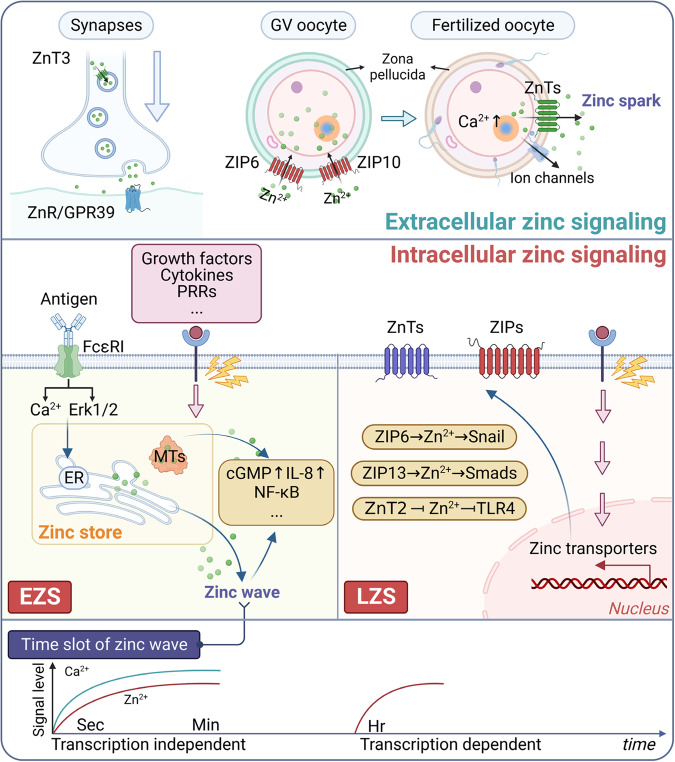
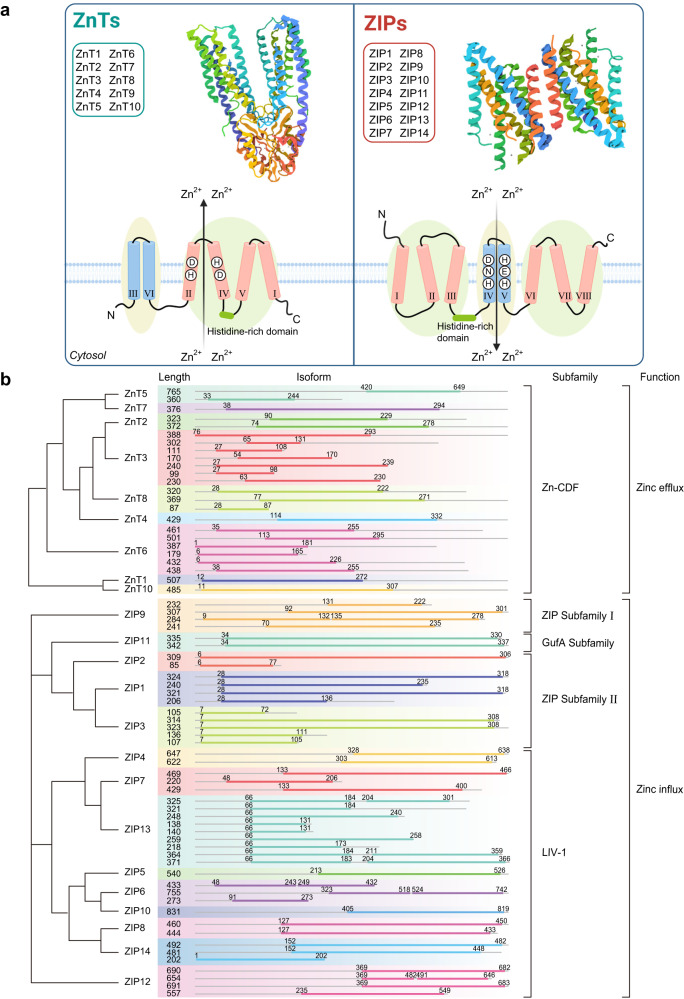
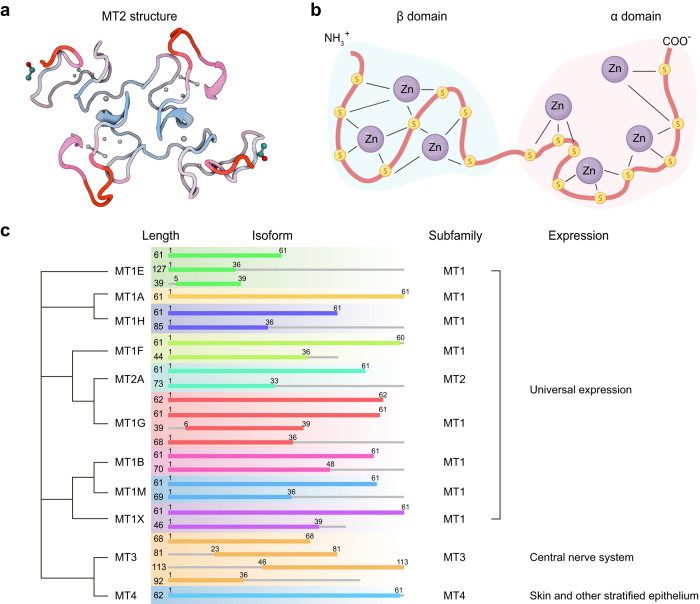
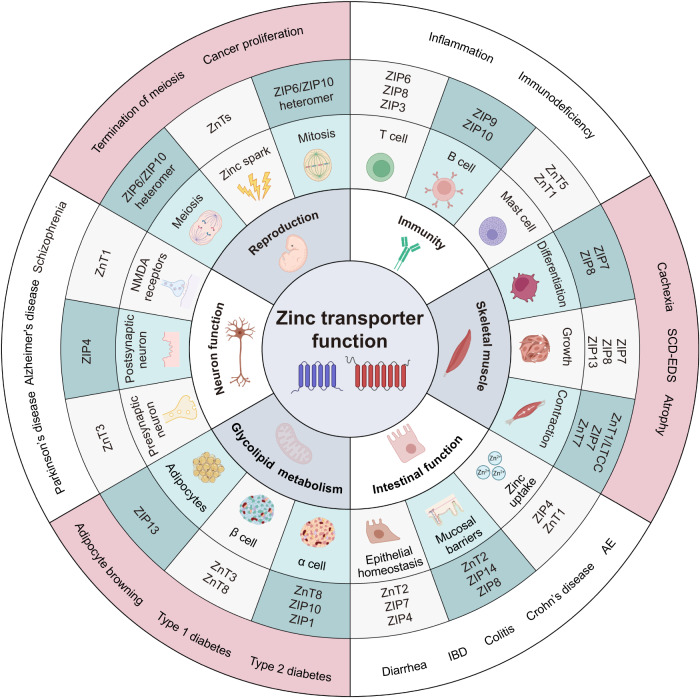
Zinc metabolism at the cellular level is critical for many biological processes in the body. A key observation is the disruption of cellular homeostasis, often coinciding with disease progression. As an essential factor in maintaining cellular equilibrium, cellular zinc has been increasingly spotlighted in the context of disease development. Extensive research suggests zinc’s involvement in promoting malignancy and invasion in cancer cells, despite its low tissue concentration. This has led to a growing body of literature investigating zinc’s cellular metabolism, particularly the functions of zinc transporters and storage mechanisms during cancer progression. Zinc transportation is under the control of two major transporter families: SLC30 (ZnT) for the excretion of zinc and SLC39 (ZIP) for the zinc intake. Additionally, the storage of this essential element is predominantly mediated by metallothioneins (MTs). This review consolidates knowledge on the critical functions of cellular zinc signaling and underscores potential molecular pathways linking zinc metabolism to disease progression, with a special focus on cancer. We also compile a summary of clinical trials involving zinc ions. Given the main localization of zinc transporters at the cell membrane, the potential for targeted therapies, including small molecules and monoclonal antibodies, offers promising avenues for future exploration.
Overview
The claims and statistics of this paper haven’t been checked yet.
Free: it reads the open-access text and checks the first 5 claims that cite a source we can check. Create a free account to check every claim.
Integrity signals
Registry
Cites
Statistics
Figures
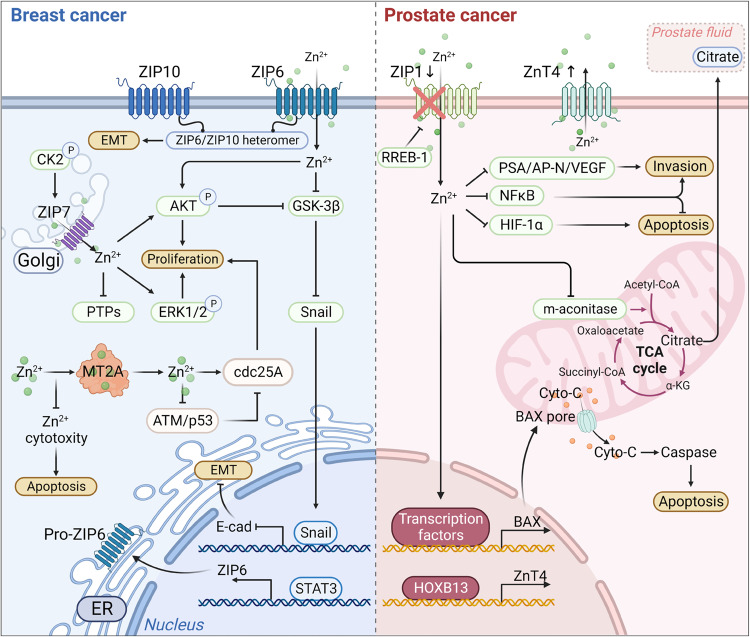
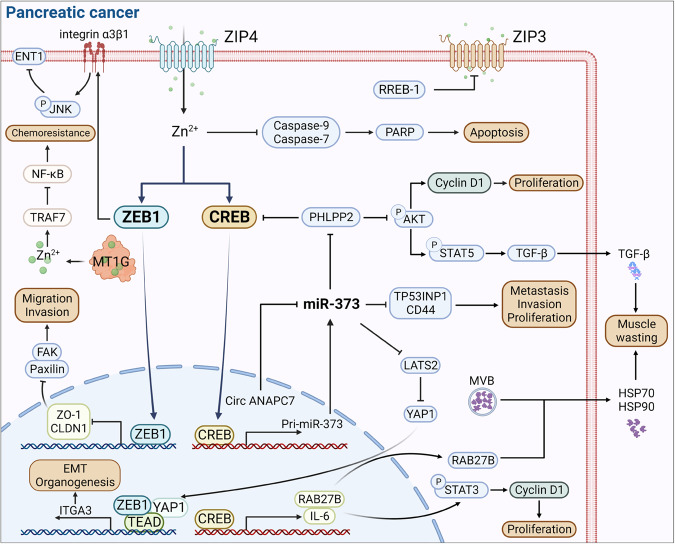
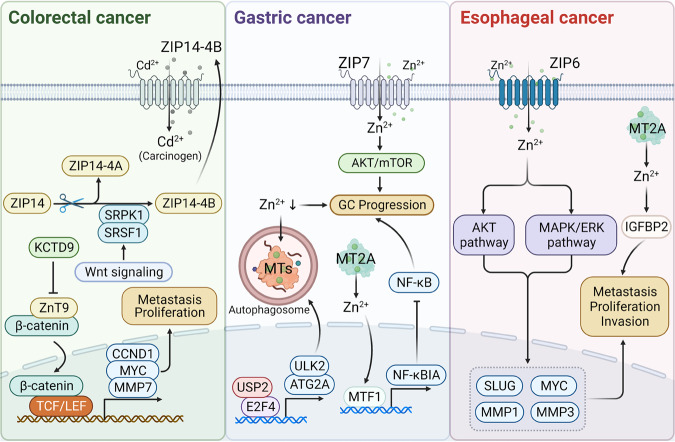
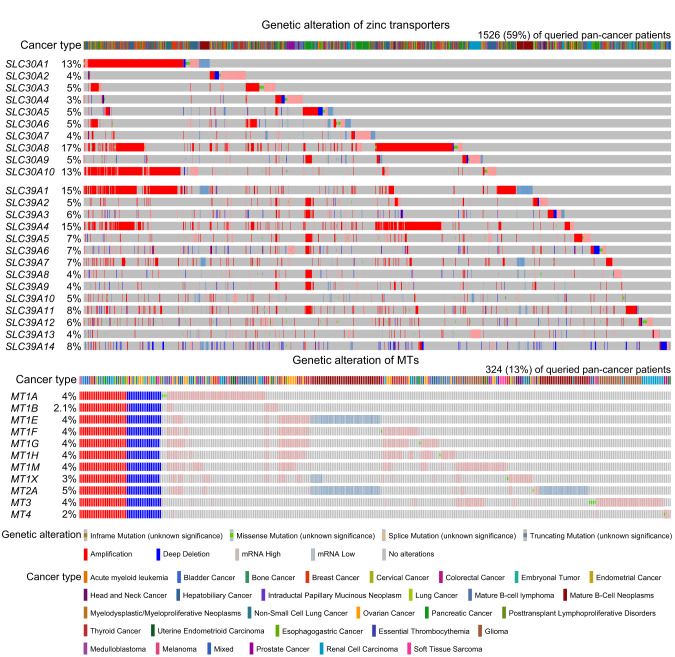
Verification
Claims the paper makes
The claims and statistics of this paper haven’t been checked yet.
Free: it reads the open-access text and checks the first 5 claims that cite a source we can check. Create a free account to check every claim.
Claims other papers make about this one
Each is checked against this paper’s own text: does it say what the citing paper says it does?
The check wasn’t confident either way, so it gives no verdict — never disputed.
In the citing paper
“Zinc strengthens tight junctions through regulation of occludin proteolysis and claudin-3 transcription [290], increases mucus production, and reduces gastric acid secretion [184,291,292], while also promoting wound healing [293].”
From Nutritional Approaches to Enhance GLP-1 Analogue Therapy in Obesity: A Narrative Review (2025) · cites this paper as [291]
Experimental — accuracy not yet measured
Self-check
Percentages, sums and reported differences re-computed from the paper’s own numbers.
The self-check needs the paper’s full text.
Citations
Cites
1 retracted
Items 601–708 of 708
Li, K., Zhang, Z., Mei, Y., Yang, Q., Qiao, S., Ni, C., Yao, Y., Li, X., Li, M., Wei, D., et al. (2021) · Theranostics · doi:10.7150/thno.51976 · Cited by 32
Li, S., Kim, M.-J., Lee, S. H., Jin, L., Cong, W., Jeong, H. G., & Lee, K.-Y. (2021) · International Journal of Molecular Sciences · doi:10.3390/ijms22094312 · Cited by 32
ZIP4 promotes non-small cell lung cancer metastasis by activating snail-N-cadherin signaling axis
Jiang, Y., Zhan, H., Zhang, Y., Yang, J., Liu, M., Xu, C., Fan, X., Zhang, J., Zhou, Z., Shi, X., et al. (2021) · Cancer Letters · doi:10.1016/j.canlet.2021.08.025 · Cited by 32
Self-citationManso, Y., Carrasco, J., Comes, G., Adlard, P. A., Bush, A. I., & Hidalgo, J. (2012) · Cellular and Molecular Life Sciences · doi:10.1007/s00018-012-1045-y · Cited by 31
Marginal Zinc Deficiency Negatively Affects Recovery from Muscle Injury in Mice
Jinno, N., Nagata, M., & Takahashi, T. (2014) · Biological Trace Element Research · doi:10.1007/s12011-014-9901-2 · Cited by 31
Hu, N., Guo, R., Han, X., Zhu, B., & Ren, J. T. (2011) · Toxicology Letters · doi:10.1016/j.toxlet.2011.01.007 · Cited by 31
Metallothionein blocks oxidative DNA damage in vitro
Qu, W., Pi, J., & Waalkes, M. P. (2012) · Archives of Toxicology · doi:10.1007/s00204-012-0927-y · Cited by 31
ZIP4 confers resistance to zinc deficiency-induced apoptosis in pancreatic cancer
Cui, X., Zhang, Y., Yang, J., Sun, X., Hagan, J. P., Guha, S., & Li, M. (2014) · Cell Cycle · doi:10.4161/cc.28111 · Cited by 31
Self-citationJin, J., Li, Z., Liu, J., Wu, Y., Gao, X., & He, Y. (2015) · Oncology Reports · doi:10.3892/or.2015.4097 · Cited by 31
Zhang, R., Zhao, G., Shi, H., Zhao, X., Wang, B., Dong, P., Watari, H., Pfeffer, L. M., & Yue, J. (2020) · Free Radical Biology and Medicine · doi:10.1016/j.freeradbiomed.2020.09.010 · Cited by 31
The Function of Transthyretin Complexes with Metallothionein in Alzheimer’s Disease
Zaręba, N., & Kepinská, M. (2020) · International Journal of Molecular Sciences · doi:10.3390/ijms21239003 · Cited by 30
Lee, K., Jung, Y., Vyas, Y., Skelton, I., Abraham, W. C., Hsueh, Y., & Montgomery, J. M. (2022) · Molecular Autism · doi:10.1186/s13229-022-00494-6 · Cited by 30
An, Y., Chang, W., Wang, W., Wu, H., Pu, K., Wu, A., Qin, Z., Tao, Y., Yue, Z., Wang, P., et al. (2020) · Journal of Advanced Research · doi:10.1016/j.jare.2020.04.008 · Cited by 30
Geles, K. G., Gao, Y., Giannakou, A., Sridharan, L., Yamin, T.-T., Zhang, J., Karim, R., Bard, J., Piche‐Nicholas, N., Charati, M. B., et al. (2021) · Cell Reports Medicine · doi:10.1016/j.xcrm.2021.100279 · Cited by 30
Ma, Z., Li, Z., Wang, S., Zhou, Q., Ma, Z., Liu, C., Huang, B., Zheng, Z., Yang, L., Zou, Y., et al. (2021) · Journal of Hepatocellular Carcinoma · doi:10.2147/jhc.s320326 · Cited by 30
Polesel, M., Inglés‐Prieto, Á., Christodoulaki, E., Ferrada, E., Doucerain, C., Altermatt, P., Knecht, M. K., Kühn, M., Steck, A., Wilhelm, M., et al. (2022) · BioMetals · doi:10.1007/s10534-022-00474-6 · Cited by 30
Gou, Y., Yang, D., Tian, T., Zhu, X., Zhang, R., Ren, J., Tu, D., Luo, Y., Miao, Y., Zhao, H., et al. (2022) · Frontiers in Immunology · doi:10.3389/fimmu.2022.725595 · Cited by 29
Wenzlau, J. M., Frisch, L. M., Hutton, J. C., Fain, P. R., & Davidson, H. W. (2015) · Diabetes Care · doi:10.2337/dcs15-2004 · Cited by 29
Fiches, G. N., Zhou, D., Kong, W., Biswas, A., Ahmed, E. H., Baiocchi, R. A., Zhu, J. K., & Santoso, N. G. (2020) · PLoS Pathogens · doi:10.1371/journal.ppat.1008778 · Cited by 29
Transmembrane 163 (TMEM163) Protein: A New Member of the Zinc Efflux Transporter Family
Styrpejko, D. J., & Cuajungco, M. P. (2021) · Biomedicines · doi:10.3390/biomedicines9020220 · Cited by 29
Korkola, N. C., & Stillman, M. J. (2023) · Journal of the American Chemical Society · doi:10.1021/jacs.2c13578 · Cited by 29
Liu, Y., Liu, H., Chen, W., Yang, T., & Zhang, W. (2014) · Molecular and Cellular Biochemistry · doi:10.1007/s11010-014-2110-7 · Cited by 28
Efficacy of zinc treatment against iron‐induced toxicity in rat hepatoma cell line H4‐II‐E‐C3
Formigari, A., Santon, A., & Irato, P. (2006) · Liver International · doi:10.1111/j.1478-3231.2006.01389.x · Cited by 28
Role of GAC63 in transcriptional activation mediated by -catenin
Chen, Y., Yang, C.-H., Xia, M., Ou, C. Y., & Stallcup, M. R. (2007) · Nucleic Acids Research · doi:10.1093/nar/gkm095 · Cited by 28
Hessels, A. M., Taylor, K. M., & Merkx, M. (2016) · Metallomics · doi:10.1039/c5mt00257e · Cited by 28
Solomou, A., Philippe, E., CHABOSSEAU, P. L., Migrenne, S., Gaitan, J., Lang, J., Magnan, C., & Rutter, G. A. (2016) · Nutrition & Metabolism · doi:10.1186/s12986-016-0104-z · Cited by 28
PET/MRI enables simultaneous in vivo quantification of β-cell mass and function
MICHELOTTI, F. C., Bowden, G. D., Küppers, A., Joosten, L., Maczewsky, J., Nischwitz, V., Drews, G., Maurer, A., Gotthardt, M., Schmid, A. M., et al. (2019) · Theranostics · doi:10.7150/thno.33410 · Cited by 28
A role of metallothionein-3 in radiation-induced autophagy in glioma cells
Cho, Y. H., Lee, S. H., Lee, S.-J., Kim, H., & Koh, J. (2020) · Scientific Reports · doi:10.1038/s41598-020-58237-7 · Cited by 28
Kim, J.-H., Aydemir, T. B., Jimenez, F. R., Ruggiero, C. H., Kim, M., & Cousins, R. J. (2020) · Scientific Reports · doi:10.1038/s41598-020-61059-2 · Cited by 28
Jin, J., Guo, Y., Dong, X., Liu, J., & He, Y. (2020) · Radiotherapy and Oncology · doi:10.1016/j.radonc.2020.06.022 · Cited by 28
Yuan, Y., Liu, T., Huang, X., Chen, Y., Zhang, W., Li, T., Yang, L., Chen, Q., Wang, Y., Wei, A., et al. (2021) · Blood · doi:10.1182/blood.2020007389 · Cited by 28
ZIP9 Is a Druggable Determinant of Sex Differences in Melanoma
Aguirre‐Portolés, C., Payne, R., Trautz, A., Foskett, J. K., Natale, C. A., Seykora, J. T., & Ridky, T. W. (2021) · Cancer Research · doi:10.1158/0008-5472.can-21-0982 · Cited by 28
Smith, M. J., Yang, F., Griffiths, A., Morrell, A. P., Chapple, S. J., Siow, R. C. M., Stewart, T. J., Maret, W., & Mann, G. E. (2023) · Redox Biology · doi:10.1016/j.redox.2023.102712 · Cited by 28
Costello, L. C. (2014) · Chemotherapy Open access · doi:10.4172/2167-7700.1000152 · Cited by 27
TNFα Post‐Translationally Targets ZnT2 to Accumulate Zinc in Lysosomes
Hennigar, S. R., & Kelleher, S. L. (2015) · Journal of Cellular Physiology · doi:10.1002/jcp.24992 · Cited by 27
Sapota, A., Daragó, A., Skrzypińska‐Gawrysiak, M., Nasiadek, M., Klimczak, M., & Kilanowicz, A. (2014) · BioMetals · doi:10.1007/s10534-014-9724-9 · Cited by 27
Cong, W., Niu, C. S., Lv, L., Ni, M., Ruan, D., Chi, L., Wang, Y., Yu, Q., Zhan, K.-G., Xuan, Y., et al. (2016) · Antioxidants and Redox Signaling · doi:10.1089/ars.2016.6648 · Cited by 27
He, Y., Jin, J., Wang, L., Hu, Y., Liang, D., Yang, H., Liu, Y., & Shan, B. (2016) · Clinical & Experimental Metastasis · doi:10.1007/s10585-016-9828-4 · Cited by 27
Adulcikas, J., Norouzi, S., Bretag, L., Sohal, S. S., & Myers, S. (2018) · Computers in Biology and Medicine · doi:10.1016/j.compbiomed.2018.07.007 · Cited by 26
Zhang, Y.-T. Y., Bai, J., Si, W., Yuan, S., Li, Y., & Chen, X. (2020) · Bioscience Reports · doi:10.1042/bsr20200041 · Cited by 26
Self-citationFaghfouri, A. H., Baradaran, B., Khabbazi, A., Shadbad, M. A., Papi, S., Faghfuri, E., Khajebishak, Y., Rahmani, S., Hayat, P. T., & Alipour, B. (2022) · International Immunopharmacology · doi:10.1016/j.intimp.2022.108825 · Cited by 26
Spiering, R., Wagenaar-Hilbers, J. P. A., Huijgen, V., van der Zee, R., van Kooten, P. J. S., van Eden, W., & Broere, F. (2013) · Toxicological Sciences · doi:10.1093/toxsci/kft268 · Cited by 25
Long, A. E., Gillespie, K. M., Aitken, R. J., Goode, J. C., Bingley, P. J., & Williams, A. J. K. (2013) · Diabetes · doi:10.2337/db12-1468 · Cited by 25
The exon‐level biomarker SLC39A14 has organ‐confined cancer‐specificity in colorectal cancer
Sveen, A., Bakken, A. C., Ågesen, T. H., Lind, G. E., Nesbakken, A., Nordgård, O., Brackmann, S., Rognum, T. O., Lothe, R. A., & Skotheim, R. I. (2011) · International Journal of Cancer · doi:10.1002/ijc.27399 · Cited by 25
Yoon, B. R., Chung, Y., Yoo, S.-J., Kawara, K., Kim, J., Yoo, I. S., Park, C., Kang, S. W., & Lee, W. (2015) · Journal of Biological Chemistry · doi:10.1074/jbc.m115.680298 · Cited by 25
Zap70 Regulates TCR-Mediated Zip6 Activation at the Immunological Synapse
Kim, B., Kim, H. Y., & Lee, W. (2021) · Frontiers in Immunology · doi:10.3389/fimmu.2021.687367 · Cited by 25
Toh, P. P. C., Li, J. J., Yip, G. W., Lo, S., Guo, C., Phan, T. T., & Bay, B. (2010) · Experimental Dermatology · doi:10.1111/j.1600-0625.2010.01124.x · Cited by 24
The Expression Profile and Prognostic Significance of Metallothionein Genes in Colorectal Cancer
Hung, K.-C., Huang, T., Cheng, C., Cheng, Y., Lin, D.-Y., Fan, J.-J., & Lee, K. (2019) · International Journal of Molecular Sciences · doi:10.3390/ijms20163849 · Cited by 24
Strategies for Delivery of siRNAs to Ovarian Cancer Cells
Farra, R., Maruna, M., Perrone, F., Grassi, M., Benedetti, F. M., Maddaloni, M., Boustani, M. E., Parisi, S., Rizzolio, F., Forte, G., et al. (2019) · Pharmaceutics · doi:10.3390/pharmaceutics11100547 · Cited by 24
Lim, W. F., Yusof, M. I. M., Teh, L. K., & Salleh, M. Z. (2020) · Nutrients · doi:10.3390/nu12102993 · Cited by 24
ZIP8 exacerbates collagen-induced arthritis by increasing pathogenic T cell responses
Kang, J., Kwak, J.-S., Park, S., Kim, S. K., Kim, S. K., Shin, Y., Jung, I. J., Yang, J.-I., Chun, J., & Park, S. (2021) · Experimental & Molecular Medicine · doi:10.1038/s12276-021-00591-1 · Cited by 24
Bogdanovic, M., Asraf, H., Gottesman, N., Sekler, I., Aizenman, E., & Hershfinkel, M. (2022) · Journal of Neuroscience · doi:10.1523/jneurosci.0908-21.2022 · Cited by 24
Zinc transport and the inhibition of the L-type calcium channel are two separable functions of ZnT-1
Shusterman, E., Beharier, O., Levy, S., Zarivach, R., Etzion, Y., Campbell, C. R., Lee, I., Dinudom, A., Cook, D. I., Peretz, A. S., et al. (2017) · Metallomics · doi:10.1039/c6mt00296j · Cited by 23
Gastric cancer burden of last 40 years in North China (Hebei Province): A population-based study
Liang, D., Liang, S.-Y., Jin, J., Li, D., Shi, J. F., & He, Y. (2017) · Medicine · doi:10.1097/md.0000000000005887 · Cited by 23
Brain Zinc Deficiency Exacerbates Cognitive Decline in the R6/1 Model of Huntington's Disease
Ayton, S., Lei, P., Appukuttan, A. T., Renoir, T., Foliaki, S. T., Chen, F., Adlard, P. A., Hannan, A. J., & Bush, A. I. (2019) · Neurotherapeutics · doi:10.1007/s13311-019-00785-6 · Cited by 23
Nutritional immunity: targeting fungal zinc homeostasis
Alamir, O., Oladele, R. O., & Ibe, C. (2021) · Heliyon · doi:10.1016/j.heliyon.2021.e07805 · Cited by 23
Chen, H.-J. C., Lee, J. K., Yip, T., Sernia, C., Lavidis, N. A., & Spiers, J. G. (2019) · Free Radical Biology and Medicine · doi:10.1016/j.freeradbiomed.2018.11.007 · Cited by 22 · cited 1×
“54,55 Furthermore, In a speci fi c cell death pathway, the release of zinc and calcium within neurons leads to the subsequent phosphorylation of the potassium channel Kv2.”
BackgroundChoi, B. Y., Kim, I. Y., Kim, J. H., Kho, A. R., Lee, S. H., Lee, B. E., Sohn, M., Koh, J., & Suh, S. W. (2016) · Neurobiology of Disease · doi:10.1016/j.nbd.2016.06.018 · Cited by 22
Cancer survival in Cixian of China, 2003–2013: a population‐based study
Li, D., Li, D., Song, G., Liang, D., Chen, C., Zhang, Y., Gao, Z., & He, Y. (2018) · Cancer Medicine · doi:10.1002/cam4.1416 · Cited by 22
Self-citationFairweather‐Tait, S. J., & de Sesmaisons, A. (2018) · Proceedings of The Nutrition Society · doi:10.1017/s0029665118000484 · Cited by 22
Nuñez, N. N., Khuu, C., Babu, C. S., Bertolani, S. J., Rajavel, A. N., Spear, J. M., Armas, J. A., Wright, J. D., Siegel, J. B., Lim, C., et al. (2018) · Journal of the American Chemical Society · doi:10.1021/jacs.8b06923 · Cited by 22
Tian, W., Ji, X., Gao, Y., Zhu, X., & Xiao, G. (2021) · Oncogene · doi:10.1038/s41388-021-01703-x · Cited by 22
Zhao, H., Liu, D., Yan, Q., Bian, X., Yu, J., Wang, J., Cheng, X., & Xu, Z. (2022) · Frontiers in Physiology · doi:10.3389/fphys.2021.736920 · Cited by 22
Self-citationUeda, S., Manabe, Y., Kubo, N., Morino, N., Yuasa, H., Shiotsu, M., Tsuji, T., Sugawara, T., & Kambe, T. (2022) · American Journal of Physiology-Cell Physiology · doi:10.1152/ajpcell.00020.2022 · Cited by 22
Zinc transporter LIV1: A promising cell surface target for triple negative breast cancer
Saravanan, R., Balasubramanian, V., Srikanth Swamy Swaroop, B., Ezhil, I., Afnaan, Z., John, J., Sundaram, S., Shanmugasundaram, G., Pakala, S. B., Rayala, S. K., et al. (2022) · Journal of Cellular Physiology · doi:10.1002/jcp.30880 · Cited by 22
Ye, W., Zhang, Y., Hu, W. X., Wang, L., Zhang, Y., & Wang, P. (2020) · Nanomaterials · doi:10.3390/nano10102044 · Cited by 21
Self-citationOestrogen-regulated protein SLC39A6: a biomarker of good prognosis in luminal breast cancer
Althobiti, M. M., Elsharawy, K. A., Joseph, C., Aleskandarany, M. A., Toss, M. S., Green, A. R., & Rakha, E. A. (2021) · Breast Cancer Research and Treatment · doi:10.1007/s10549-021-06336-y · Cited by 21
Transcriptional regulation of the major zinc uptake protein hZip1 in prostate cancer cells
Makhov, P. B., Golovine, K. V., Uzzo, R. G., Wüestefeld, T., Scoll, B. J., & Kolenko, V. M. (2008) · Gene · doi:10.1016/j.gene.2008.10.015 · Cited by 20
Crambescin C1 Exerts a Cytoprotective Effect on HepG2 Cells through Metallothionein Induction
Roel, M., Rubiolo, J. A., Ternon, E., Thomas, O., Vieytes, M. R., & Botana, L. M. (2015) · Marine Drugs · doi:10.3390/md13084633 · Cited by 20
Chen, X., Wang, Z., Zhu, G., Nordberg, G. F., Ding, X., & Jin, T. (2018) · Biological Trace Element Research · doi:10.1007/s12011-018-1304-3 · Cited by 20
Eom, K., Hyun, J. H., Lee, D.-G., Kim, S., Jeong, H., Kang, J.-S., Ho, W., & Lee, S. (2019) · Journal of Neuroscience · doi:10.1523/jneurosci.2130-18.2019 · Cited by 20
Faghfouri, A. H., Khabbazi, A., Baradaran, B., Khajebishak, Y., Baghbani, E., Noorolyai, S., Rahmani, S., Shoura, S. M. S., Alipour, M., & Alipour, B. (2022) · Clinical Nutrition · doi:10.1016/j.clnu.2022.03.019 · Cited by 20
Branch, A. H., Stoudenmire, J. L., Seib, K. L., & Cornelissen, C. N. (2022) · Frontiers in Cellular and Infection Microbiology · doi:10.3389/fcimb.2022.909888 · Cited by 20
Zinc Transport in the Mammalian Intestine
Hennigar, S. R., & McClung, J. P. (2018) · Comprehensive physiology · doi:10.1002/cphy.c180001 · Cited by 19
Ageing-associated effects of a long-term dietary modulation of four trace elements in mice
Wandt, V. K., Winkelbeiner, N., Lossow, K., Kopp, J. F., Schwarz, M., Alker, W., Nicolai, M. M., Simon, L., Dietzel, C., Hertel, B., et al. (2021) · Redox Biology · doi:10.1016/j.redox.2021.102083 · Cited by 19
Variants in the zinc transporterTMEM163cause a hypomyelinating leukodystrophy
do Rosario, M. C., Bey, G. R., Nmezi, B., Liu, F., Oranburg, T. D., Cohen, A. S. A., Coffman, K. A., Brown, M. R., Kiselyov, K. I., Waisfisz, Q., et al. (2022) · Brain · doi:10.1093/brain/awac295 · Cited by 19
Knockdown of Zinc Transporter ZIP5 by RNA Interference Inhibits Esophageal Cancer Growth In Vivo
Li, Q., Jin, J., Liu, J., Wang, L., & He, Y. (2016) · Oncology Research Featuring Preclinical and Clinical Cancer Therapeutics · doi:10.3727/096504016x14648701447896 · Cited by 18
Role of Scl39a13/ZIP13 in cardiovascular homeostasis
Hara, T., Yamada, I., Ohashi, T., Tamura, M., Hijikata, A., Watanabe, T., Gao, M., Ito, K., Kawamata, S., Azuma, S., et al. (2022) · PLoS ONE · doi:10.1371/journal.pone.0276452 · Cited by 18
Bekele, T. H., Trijsburg, L. E., Brouwer, I. D., de Vries, J. H. M., Covic, N. M., Kennedy, G., Alemayehu, D., & Feskens, E. J. M. (2023) · Advances in Nutrition · doi:10.1016/j.advnut.2023.05.005 · Cited by 18
Studies of interaction of tumor suppressor p53 with apo-MT using surface plasmon resonance
Xia, N., Liu, L., Yi, X., & Wang, J. (2009) · Analytical and Bioanalytical Chemistry · doi:10.1007/s00216-009-3174-1 · Cited by 17
Seok, J., Kwak, H. J., Kwak, Y., Lee, M., Park, K. S., Kim, A., & Cho, S. (2023) · Journal of Translational Medicine · doi:10.1186/s12967-023-03972-4 · Cited by 17
Dünkelberg, S., Maywald, M., Schmitt, A. K., Schwerdtle, T., Meyer, S., & Rink, L. (2019) · Molecular Nutrition & Food Research · doi:10.1002/mnfr.201900245 · Cited by 16
Zinc-biofortified staple food crops to improve zinc status in humans: a systematic review
Gomes, M. J. C., Martino, H. S. D., & Tako, E. (2021) · Critical Reviews in Food Science and Nutrition · doi:10.1080/10408398.2021.2010032 · Cited by 16
Prasad, R. R., Raina, K., Mishra, N., Tomar, M. S., Kumar, R., Palmer, A. E., MARONI, P. D., & Agarwal, R. (2022) · Molecular Carcinogenesis · doi:10.1002/mc.23382 · Cited by 16
Huang, J., Xiao, W., Chen, W., Lin, M., Song, Z.-X., Chen, P., Zhang, Y., Li, F.-Y., Qian, R.-Y., & Salminen, E. K. (2010) · PubMed Central · doi:10.3748/wjg.v16.i47.5975 · Cited by 15
Self-citationCancer incidence and mortality in Hebei province, 2013
He, Y., Liang, D., Li, D., Shi, J. F., Jin, J., Zhai, J., Wen, D., & Shan, B. (2017) · Medicine · doi:10.1097/md.0000000000007293 · Cited by 15
Wang, Y., Zhao, H., Nie, X., Guo, M., Jiang, G., & Xing, M. (2020) · Environmental Research · doi:10.1016/j.envres.2020.110063 · Cited by 15
Li, K., Sun, S., Lu, Y., Liang, W., Xu, X., Zhang, H., Chang, Z., Wang, C., Gao, Y., & Chen, L. (2023) · Biochemical and Biophysical Research Communications · doi:10.1016/j.bbrc.2023.05.121 · Cited by 15
Lu, Y.-J., Liu, Y.-C., Lin, M., Chen, Y., & Lin, L. (2014) · The Journal of Nutritional Biochemistry · doi:10.1016/j.jnutbio.2014.11.009 · Cited by 14
Overview of and Update on the Physiological Functions of Mammalian Zinc Transporters
Kambe, T. (2013) · Nippon Eiseigaku Zasshi (Japanese Journal of Hygiene) · doi:10.1265/jjh.68.92 · Cited by 14
Deletion of Jazf1 gene causes early growth retardation and insulin resistance in mice
Lee, H., Jang, H. R., Li, H., Samuel, V. T., Dudek, K. D., Osipovich, A. B., Magnuson, M. A., Sklar, J., & Shulman, G. I. (2022) · Proceedings of the National Academy of Sciences · doi:10.1073/pnas.2213628119 · Cited by 14
Uchida, R., Xiang, H., Arai, H., Kitamura, H., & Nishida, K. (2018) · Biological and Pharmaceutical Bulletin · doi:10.1248/bpb.b18-00565 · Cited by 13
Attenuated humoral responses in HLA-A*24-positive individuals at risk of type 1 diabetes
Ye, Y., Long, A. E., Pearson, J. A., Taylor, H., Bingley, P. J., Williams, A. J. K., & Gillespie, K. M. (2015) · Diabetologia · doi:10.1007/s00125-015-3702-9 · Cited by 12
Metallothioneins are neuroprotective agents in lysosomal storage disorders
Cavalca, E., Cesani, M., Gifford, J. C., Sena‐Esteves, M., Terreni, M. R., Leoncini, G., Peviani, M., & Biffi, A. (2018) · Annals of Neurology · doi:10.1002/ana.25161 · Cited by 12
Nazem, M. R., Asadi, M., Adelipour, M., Jabbari, N., & Allameh, A. (2022) · Postgraduate Medical Journal · doi:10.1136/postgradmedj-2021-140878 · Cited by 12
Song, L., Chen, H., Qiao, D., Zhang, B., Guo, F., Zhang, Y., Wang, C., Li, S., & Cui, H. (2023) · Frontiers in Endocrinology · doi:10.3389/fendo.2023.1139874 · Cited by 12
Self-citationRole of Metallothioneins 1 and 2 in Ocular Neovascularization
Nakamura, S., Shimazawa, M., Inoue, Y., Takata, S., Ito, Y., Tsuruma, K., Ikeda, T., Honda, A., Satoh, M., & Hara, H. (2014) · Investigative Ophthalmology & Visual Science · doi:10.1167/iovs.14-14545 · Cited by 11
Hou, L., Liu, P., & Zhu, T. (2020) · PubMed · doi:10.26355/eurrev_202006_21655 · Cited by 11
Fang, Y., Wang, S., Lv, J., Zhao, Z., Guo, N., Wu, G., Tong, J., & Wang, Z. (2021) · Frontiers in Cardiovascular Medicine · doi:10.3389/fcvm.2021.736911 · Cited by 11
The Cardiac Ryanodine Receptor Provides a Suitable Pathway for the Rapid Transport of Zinc (Zn2+)
Gaburjáková, J., & Gaburjáková, M. (2022) · Cells · doi:10.3390/cells11050868 · Cited by 11
Zinc supplementation improves markers of glucose homeostasis in thalassaemia
Fung, E. B., Ahmad, T., Killilea, D. W., Hussain, R., & Lal, A. (2020) · British Journal of Haematology · doi:10.1111/bjh.16771 · Cited by 10
McGourty, K., Vijayakumar, R., Wu, T., Gagnon, A., & Kelleher, S. L. (2022) · International Journal of Molecular Sciences · doi:10.3390/ijms231911467 · Cited by 10
Computational and Spectroscopic Analysis of β-Indandione Modified Zinc Porphyrins
Mapley, J. I., Wagner, P., Officer, D. L., & Gordon, K. C. (2018) · The Journal of Physical Chemistry A · doi:10.1021/acs.jpca.8b02746 · Cited by 7
Prognostic and Predictive Value of LIV1 Expression in Early Breast Cancer and by Molecular Subtype
de Nonneville, A. T., Finetti, P., Boudin, L., Denicolaï, E., Birnbaum, D., Mamessier, É., & Bertucci, F. (2023) · Pharmaceutics · doi:10.3390/pharmaceutics15030938 · Cited by 7
Takano, H., Satoh, M., & Inoue, K. (2008) · Thrombosis and Haemostasis · doi:10.1160/th07-10-0637 · Cited by 6
Granum, B. B. (2018) · Regulatory Toxicology and Pharmacology · doi:10.1016/j.yrtph.2018.09.007 · Cited by 5
Directed evolution of the genetically encoded zinc(II) FRET sensor ZapCY1
Wei, T., Huang, S., Hu, Q., Wang, J., Huo, Z., Liu, C., Lu, S., & Chen, H. (2022) · Biochimica et Biophysica Acta (BBA) - General Subjects · doi:10.1016/j.bbagen.2022.130201 · Cited by 5
Shruthi, S., Mohan, V., Maradana, M. R., & Aravindhan, V. (2019) · International Journal of Biological Macromolecules · doi:10.1016/j.ijbiomac.2019.01.198 · Cited by 3
Research works printed but not linked: 7
- Mulay, I. L. et al. Trace-metal analysis of cancerous and noncancerous human tissues. J. Natl Cancer Inst. 47, 1–13 (1971).
- Liu, M. J. et al. ZIP8 regulates host defense through zinc-mediated inhibition of NF-κB. Cell Rep. 3, 386–400 (2013). · DOI · Paper page
- Davidson, H. W., Wenzlau, J. M. & O’Brien, R. M. Zinc transporter 8 (ZnT8) and β cell function. Trends Endocrinol. Metab. 25, 415–424 (2014). · DOI · Paper page
- Shi, X. et al. Circular RNA ANAPC7 inhibits tumor growth and muscle wasting via PHLPP2-AKT-TGF-beta signaling axis in pancreatic cancer. Gastroenterology 162, 2004–2017.e2002 (2022). · DOI · Paper page
- Janssen, A. M. et al. Metallothionein in human gastrointestinal cancer. J. Pathol. 192, 293–300 (2000). · doi:10.1002/1096-9896(2000)9999:9999<::aid-path712>3.0.co;2-z
- Aguirre-Portolés, C. et al. ZIP9 is a druggable determinant of sex differences in melanoma. Cancer Res. 81, 5991–6003 (2021). · DOI
- Kim, B. et al. Cytoplasmic zinc promotes IL-1β production by monocytes and macrophages through mTORC1-induced glycolysis in rheumatoid arthritis. Sci. Signal. 15, eabi7400 (2022). · DOI
Cited by
Tumilaar, S. G., Hardianto, A., Dohi, H., & Kurnia, D. (2024) · Journal of Chemistry · doi:10.1155/2024/5594386 · Cited by 265
Homeostasis and metabolism of iron and other metal ions in neurodegenerative diseases
Chen, L., Shen, Q., Liu, Y., Zhang, Y., Sun, L., Ma, X., Song, N., & Xie, J. (2025) · Signal Transduction and Targeted Therapy · doi:10.1038/s41392-024-02071-0 · Cited by 242
Self-citationAntioxidants and Reactive Oxygen Species: Shaping Human Health and Disease Outcomes
Manful, C. F., Fordjour, E., Subramaniam, D., Sey, A. A., Abbey, L., & Thomas, R. (2025) · International Journal of Molecular Sciences · doi:10.3390/ijms26157520 · Cited by 216
Aggregation-Induced Emission Luminogen: Role in Biopsy for Precision Medicine
Duo, Y., Han, L., Yang, Y., Wang, Z., Wang, L., Chen, J., Xiang, Z., Yoon, J., Luo, G., & Tang, B. Z. (2024) · Chemical Reviews · doi:10.1021/acs.chemrev.4c00244 · Cited by 125
Feng, X., Luo, Z., Zhang, W., Wan, R., Chen, Y., Li, F., He, Y., Lin, Z., Hui, J. H. P., Conde, J., et al. (2025) · Advanced Functional Materials · doi:10.1002/adfm.202506476 · Cited by 76
Metadata
- Authors
- Chen, B., Yu, P., Chan, W. N., Xie, F., Zhang, Y., Liang, L., Leung, K. T., Lo, K. W., Yu, J., Tse, G. M. K., Kang, W., & To, K. F.
- Affiliations
- Chinese University of Hong Kong (HK)
- Nanfang Hospital (CN)
- Hubei University of Medicine (CN)
- Corresponding author
- Kang, Wei
- To, Ka Fai
- ORCID
- Venue
- Signal Transduction and Targeted Therapy
- Published
- 2024-01-03
- Volume
- 9
- Issue
- 1
- Pages
- 6-6
- ISSN
- 2059-3635 (ISSN-L)
- PMC
- PMC10761908
- OpenAlex
- W4390519793
- Cited by
- 420
- References
- 707
- Citations by year
- 2026: 179 · 2025: 184 · 2024: 57
- FWCI
- 22.21
- Type
- journal article
- Language
- en
- Open access
- gold
- doi.org
- Licence
- cc-by
- creativecommons.org/licenses/by/4.0 (tdm)
- creativecommons.org/licenses/by/4.0 (vor)
- Locations
- Signal Transduction and Targeted Therapy (publishedVersion, cc-by)
- PubMed Central (publishedVersion, cc-by)
- PubMed (publishedVersion)
- DOAJ (DOAJ: Directory of Open Access Journals) (submittedVersion, cc-by-sa)
- Funders
- National Natural Science Foundation of China (82272990)
- Topics
- Health Sciences › Nursing › Nutrition and Dietetics › Trace Elements in Health
- Physical Sciences › Environmental Science › Health, Toxicology and Mutagenesis › Heavy Metal Exposure and Toxicity
- Health Sciences › Medicine › Hematology › Iron Metabolism and Disorders
- Keywords
- zinc signaling, zinc transporters, metallothionein, zinc homeostasis, tumor progression, monoclonal antibodies, targeted therapy
- MeSH terms
- Biological Phenomena, Homeostasis, Humans, Zinc, Disease Progression, Membrane Transport Proteins
About these checks
Registry, retraction, Cites and statistics results are computed, not judged, with one exception: a printed reference that no index lists is read once by a model before it counts as a citation error. Claims are extracted by a model and kept only when their quote appears verbatim in the text; each cited source is then checked, with a model’s help, for whether it says what the claim relies on. Those verdicts can be wrong — read the claim’s quote and the cited source before relying on one.
Statistics and arithmetic are recomputed, not judged.
Confidence bands are shown only for fields calibrated on our annotated test set. None is calibrated yet, so no band is shown.
What counts as a claim ›How we measure confidence ›How we check this ›
Are you an author, or do you see a problem with this page? Request a review
Data sources
Bibliographic data: Semantic Scholar, OpenAlex, Crossref.
Contains information from the Semantic Scholar Academic Graph Datasets, made available under the ODC Attribution License (ODC-BY 1.0).
Semantic Scholar’s data is described in: Kinney, R., et al. (2023). The Semantic Scholar Open Data Platform. arXiv:2301.10140.
