

Major depressive disorder: hypothesis, mechanism, prevention and treatment
Open accessThe DOI matches its Crossref record; 511 of the 514 references it cites were found in a registry or an index; 260 of the 474 sources its claims cite were checked for support.
Abstract
Worldwide, the incidence of major depressive disorder (MDD) is increasing annually, resulting in greater economic and social burdens. Moreover, the pathological mechanisms of MDD and the mechanisms underlying the effects of pharmacological treatments for MDD are complex and unclear, and additional diagnostic and therapeutic strategies for MDD still are needed. The currently widely accepted theories of MDD pathogenesis include the neurotransmitter and receptor hypothesis, hypothalamic-pituitary-adrenal (HPA) axis hypothesis, cytokine hypothesis, neuroplasticity hypothesis and systemic influence hypothesis, but these hypothesis cannot completely explain the pathological mechanism of MDD. Even it is still hard to adopt only one hypothesis to completely reveal the pathogenesis of MDD, thus in recent years, great progress has been made in elucidating the roles of multiple organ interactions in the pathogenesis MDD and identifying novel therapeutic approaches and multitarget modulatory strategies, further revealing the disease features of MDD. Furthermore, some newly discovered potential pharmacological targets and newly studied antidepressants have attracted widespread attention, some reagents have even been approved for clinical treatment and some novel therapeutic methods such as phototherapy and acupuncture have been discovered to have effective improvement for the depressive symptoms. In this work, we comprehensively summarize the latest research on the pathogenesis and diagnosis of MDD, preventive approaches and therapeutic medicines, as well as the related clinical trials.
Overview
CoChat Summary
TL;DR
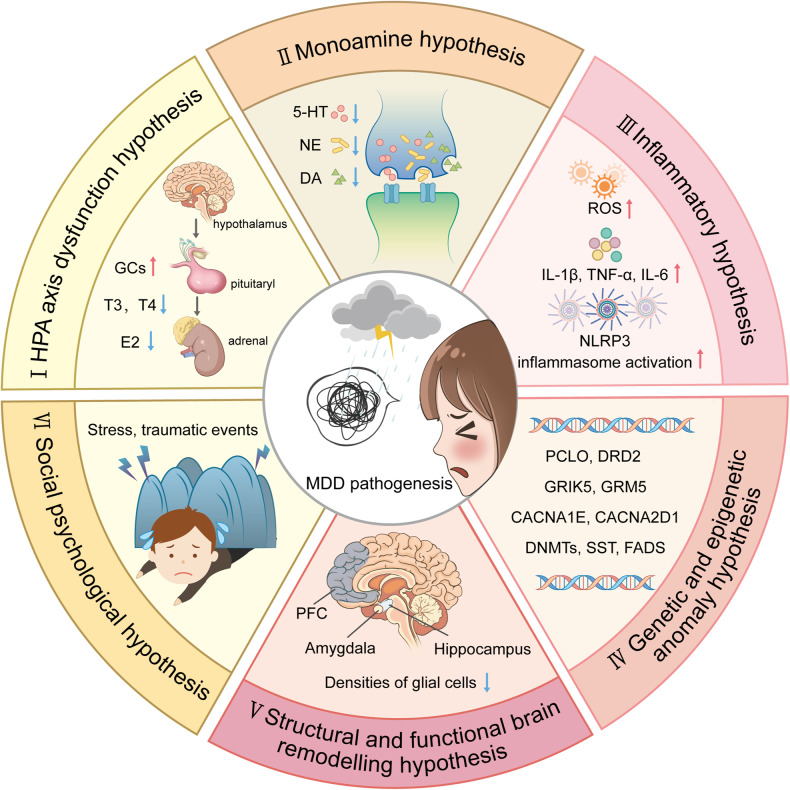
MDD is a heterogeneous, highly prevalent disorder whose pathogenesis is not fully explained by any single hypothesis; the review synthesizes evidence for monoamine, HPA-axis, inflammatory, genetic/epigenetic, brain-remodeling, and social-psychological mechanisms, with growing emphasis on astrocyte and multi-organ involvement. It also surveys diagnostic biomarkers, prevention strategies, and pharmacological and nonpharmacological treatments, noting that current antidepressants leave a substantial proportion of patients without remission.
Key findings
- MDD affects about 300 million people worldwide; it ranked third in disease burden in 2018 and is predicted to rank first by 2030. Heritability is estimated at 30–50%, and GWAS have identified 178 genetic risk loci and over 200 candidate genes, though no single genetic variation has been found to increase MDD risk.
- Women have approximately twice the incidence of MDD as men. In 2018, comorbid disorders rather than MDD itself accounted for 63% of all MDD-related costs in the United States.
- Multiple interacting mechanisms are implicated, including monoamine deficiency (5-HT, DA, NE), HPA-axis hyperactivity and glucocorticoid/GR signaling, proinflammatory cytokines (IL-1β, TNF-α, IL-6), oxidative stress, NLRP3 inflammasome activation, reduced BDNF, and astrocytic marker changes (Cx30/43, GFAP, AQP4, S100B).
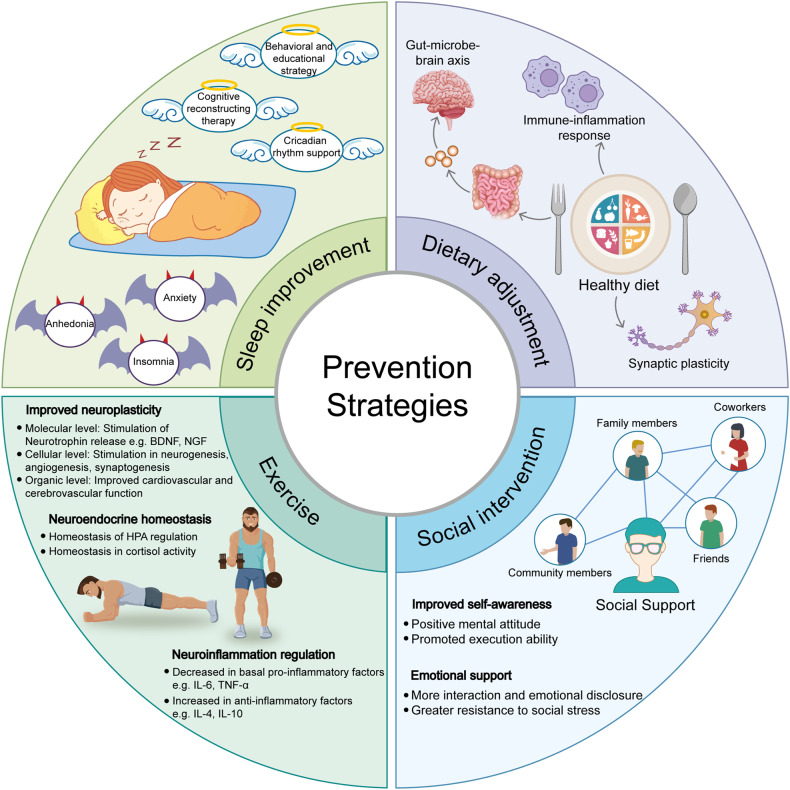
- In a 1-year follow-up, clinically significant worsening of depressive symptoms occurred in 44% of untreated patients versus 38% with circadian rhythm support (CRS), 28% with cognitive behavioral therapy for insomnia (CBT-I), and 9% with CBT-I + CRS. Even after multiple treatment attempts, almost 30% of MDD patients do not experience remission.
Methods
- Narrative review summarizing recent research on MDD etiology, pathogenesis, diagnosis, prevention, mechanisms, and pharmacological and nonpharmacological treatment, including related clinical experiments.
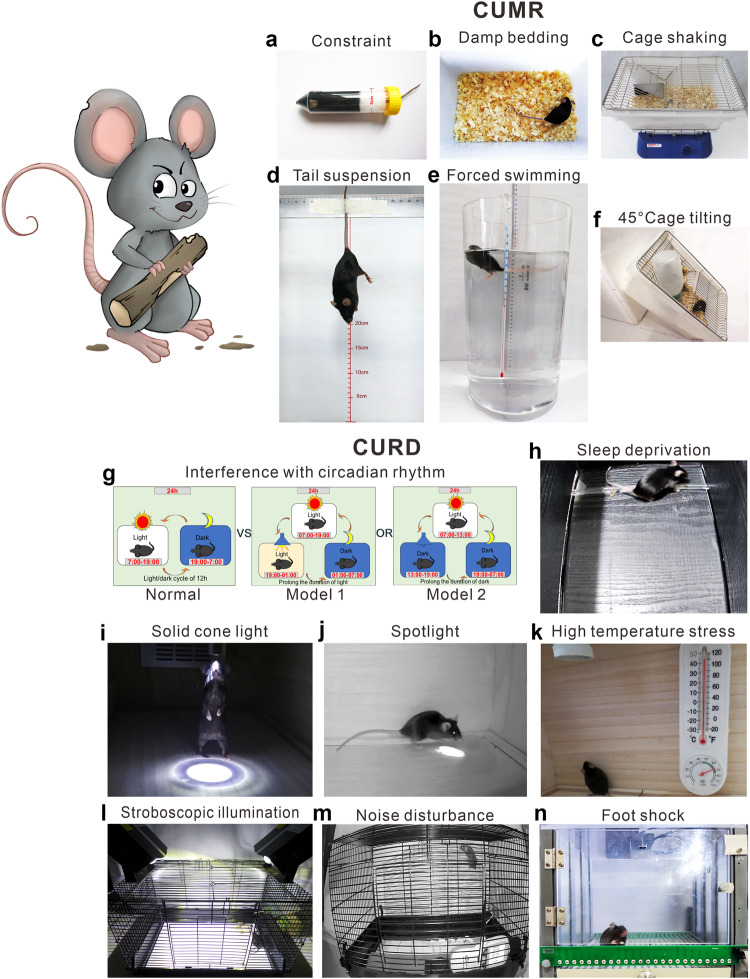
- Evidence discussed includes human postmortem tissue studies, transcriptomic and multiomics analyses, clinical imaging (MRI, R-fMRI, PET with SV2A radioligand), serum biomarker studies, randomized controlled trials, meta-analyses, and animal models such as CUMS, CUMR, CURD, CSDS, and LPS- or stress-induced depression models.
- No systematic review, meta-analysis, or primary data collection is described; the paper synthesizes and organizes findings across hypotheses and treatment categories.
Limitations
- Stated in the paper: the etiology of MDD remains unclear; no single hypothesis fully explains its pathological basis; diagnostic criteria are subjective and lack characteristic symptoms or objective diagnostic evidence; animal models of MDD and other mental diseases are lacking; most cellular and structural alterations cannot be consistently observed in vivo; existing theories cannot completely explain why almost 30% of patients do not remit after multiple treatments.
- Evident from the text: as a narrative review, it does not describe a systematic literature search, inclusion/exclusion criteria, or formal quality appraisal of the cited studies.
- Evident from the text: many proposed mechanisms and biomarkers are described as promising but not yet validated for clinical diagnosis or treatment, and the review notes inconsistent neuroimaging findings and controversy over some markers such as serum GFAP.
Model-written summary. Check it against the paper before relying on it.
Integrity signals
Registry
Cites
Statistics
Figures
Verification
Claims the paper makes
212 Valid · 21 Not valid · 143 Not checked · 25 Own results and interpretations
At least one cited source doesn’t support this claim or points to a different paper, and none confirmed it — see the verdicts below.
In the paper
“However, no single genetic variation has been found to increase the risk of MDD thus far. 26”
What the sources say
- Disputedcites [26] Kendall KM The genetic basis of major depression Psychol. Med. 2021 51 2217 2230 10.1017/S0033291721000441 33682643 sourceExperimental — accuracy not yet measured
The GWAS discussion (p. 16) says that two significant loci near SIRT1 and LHPP were identified and replicated in Han Chinese patients with recurrent MDD. It also describes European depression risk SNPs and 178 risk loci in Europeans. The paper distinguishes these findings from its narrower statement (p. 10) that a sequencing study found no association for individual rare or low-frequency variants. (LLM, conf=0.88)
Checked by a reasoning model — may be wrong.
plain- Asserted: passes — The authors put it forward as true.
- Checkable: passes — It can be checked against evidence.
- Load-bearing: unclear — It is unclear whether the paper’s conclusions depend on it.
- Based: passes — The paper gives a reason why it holds.
- Disputed
Some cited sources support this claim and some don’t — read each source’s verdict below.
In the paper
“Global topological E/I imbalance in MDD is discovered through gene and protein expression of molecules related to inhibitory GABAergic and excitatory glutamatergic signaling in the postmortem MDD brains. 22 , 208 , 209”
What the sources say
- Partly supportedcites [22] Sequeira A Global brain gene expression analysis links glutamatergic and GABAergic alterations to suicide and major depression PLoS ONE 2009 4 e6585 10.1371/journal.pone.0006585 19668376 PMC2719799 sourceExperimental — accuracy not yet measured
The Results (Pathways globally differentially expressed; page not provided) report altered expression of GABAergic and glutamatergic genes across brain regions in people who died by suicide with major depression. The paper does not establish a global topological excitation–inhibition imbalance or report protein-expression measurements; its Methods describe RNA-based expression analysis. (LLM, conf=0.87)
- Not checked — no full text of the sourcecites [208] Hu YT Tan ZL Hirjak D Northoff G Brain-wide changes in excitation-inhibition balance of major depressive disorder: a systematic review of topographic patterns of GABA- and glutamatergic alterations Mol. Psychiatry 2023 28 3257 3266 10.1038/s41380-023-02193-x 37495889 source
- Disputedcites [209] Zhao J Prefrontal alterations in GABAergic and glutamatergic gene expression in relation to depression and suicide J. Psychiatr. Res. 2018 102 261 274 10.1016/j.jpsychires.2018.04.020 29753198 sourceExperimental — accuracy not yet measured
The Discussion (p. 11) says that glutamatergic and GABAergic mRNA expression changed similarly, leaving it unclear whether the overall excitation–inhibition balance was disturbed. The Results (p. 6) report gene-expression changes in two prefrontal regions, not a discovered global topological imbalance or a measurement of protein expression. (LLM, conf=0.88)
Checked by a reasoning model — may be wrong.
plainstates a cause- Asserted: passes — The authors put it forward as true.
- Checkable: passes — It can be checked against evidence.
- Load-bearing: unclear — It is unclear whether the paper’s conclusions depend on it.
- Based: passes — The paper gives a reason why it holds.
- Partly supported
At least one cited source doesn’t support this claim or points to a different paper, and none confirmed it — see the verdicts below.
In the paper
“In individuals with MDD, aerobic exercise was found to be beneficial in ameliorating depressive symptoms, particularly in those with more severe depressive symptoms and a higher baseline RewP. 325 , 326”
What the sources say
- Not checked — no full text of the sourcecites [325] Brush CJ A randomized trial of aerobic exercise for major depression: examining neural indicators of reward and cognitive control as predictors and treatment targets Psychol. Med. 2022 52 893 903 10.1017/S0033291720002573 32838817 source
- Disputedcites [326] Kujawa A Reduced reward responsiveness predicts change in depressive symptoms in anxious children and adolescents following treatment J. Child Adolesc. Psychopharmacol. 2019 29 378 385 10.1089/cap.2018.0172 31062997 PMC6585168 sourceExperimental — accuracy not yet measured
The Results (page unavailable) report that a reduced—not higher—baseline RewP predicted greater improvement in depressive symptoms. The study examined anxious children and adolescents treated with CBT or SSRIs, not aerobic exercise in individuals with MDD; it also does not establish that those with more severe baseline symptoms benefited more. (LLM, conf=0.82)
Checked by a reasoning model — may be wrong.
plainstates a cause- Asserted: passes — The authors put it forward as true.
- Checkable: passes — It can be checked against evidence.
- Load-bearing: passes — The paper’s conclusions depend on it.
- Based: passes — The paper gives a reason why it holds.
Every source the paper cites for this claim was checked and supports it.
In the paper
“Specifically, increasing evidence suggests that astrocytic dysfunction plays a substantial role in MDD. 17”
What the sources say
- Supportedcites [17] Zhou X Astrocyte, a promising target for mood disorder interventions Front. Mol. Neurosci. 2019 12 136 10.3389/fnmol.2019.00136 31231189 PMC6560156 source
The Introduction says abnormal astrocyte function may contribute to mood-disorder pathophysiology, with particular emphasis on depression. The Human Data section reports altered astrocyte-related gene and protein expression in patients with depression and MDD. Together, these passages support the claim’s hedged description of a substantial role in MDD; page numbers were not provided. (LLM, conf=0.92)
hedgedstates an association- Asserted: passes — The authors put it forward as true.
- Checkable: passes — It can be checked against evidence.
- Load-bearing: passes — The paper’s conclusions depend on it.
- Based: passes — The paper gives a reason why it holds.
- Supported
Every source the paper cites for this claim was checked and supports it.
In the paper
“Recent family, twin, and adoption studies suggests that genetic factors play a crucial role in the occurrence of MDD. 25”
What the sources say
- Supportedcites [25] Lohoff FW Overview of the genetics of major depressive disorder Curr. Psychiatry Rep. 2010 12 539 546 10.1007/s11920-010-0150-6 20848240 PMC3077049 source
The Introduction states that genetic factors play important roles in the development of MDD, as indicated by family, twin, and adoption studies. The Twin and Family Studies section likewise says these study types consistently document a genetic component. (LLM, conf=0.94)
hedgedstates a cause- Asserted: passes — The authors put it forward as true.
- Checkable: passes — It can be checked against evidence.
- Load-bearing: unclear — It is unclear whether the paper’s conclusions depend on it.
- Based: passes — The paper gives a reason why it holds.
- Supported
189 more claims · 106 with their cited sources checked
Create a free account to see all 401 claims and to verify the 4 references still open.
- It may state two separate claims as one. 178
- Probably not a substantial claim. 47
Claims other papers make about this one
Each is checked against this paper’s own text: does it say what the citing paper says it does?
The source backs part of the claim, not all of it — or backs it for a different population, condition or comparison.
In the citing paper
“Recent studies have revealed a close relationship between gut microbiota and mood disorders, drawing increasing attention to the role of gut microbial communities in the onset and progression of these mood disorders [5,6].”
From The Impact of Weizmannia coagulans BC99 on Anxiety and Depression: An 8-Week Clinical Pilot Study Through the Gut Microbiota–Brain Axis (2025) · cites this paper as [6]
Experimental — accuracy not yet measured
Self-check
Percentages, sums and reported differences re-computed from the paper’s own numbers.
Each contradiction between two passages listed here was confirmed by an independent check.
Rated minor: it would not touch a result — a value no result rests on, a p-value that stays on the same side of the significance level, or a conflict that is clerical, resolved elsewhere in the paper, or outside its own findings.
In the paper
“SD is found to reduce BDNF levels and induce depressive-like behaviors in the sorted astrocytes from GFAP-GFP transgenic mice by activating the NLRP3 inflammasome.”
“chronic SD can specifically activate the NLRP3 inflammasome and decrease the level of BDNF in astrocytes to ameliorate depressive-like behaviors.”
Rated minor: it would not touch a result — a value no result rests on, a p-value that stays on the same side of the significance level, or a conflict that is clerical, resolved elsewhere in the paper, or outside its own findings.
In the paper
“Estrogen therapy can decrease the quantity of 5-HT 1 and β-adrenergic receptors”
“while increasing the quantity of 5-HT 1 receptors.”
Rated minor: it would not touch a result — a value no result rests on, a p-value that stays on the same side of the significance level, or a conflict that is clerical, resolved elsewhere in the paper, or outside its own findings.
In the paper
“Over 100 gene loci, including those associated with presynaptic vesicle trafficking (PCLO), dopaminergic neurotransmission (a primary target of antipsychotics), glutamate ionotropic receptor kainate type subunit 5 (GRIK5), and metabotropic glutamate receptor 5 (GRM5), and neuronal calcium signaling such as calcium voltage-gated channel subunit alpha1 E (CACNA1E) and calcium voltage-gated channel auxiliary subunit alpha2 delta1”
“However, no single genetic variation has been found to increase the risk of MDD thus far.”
Citations
Cites
James, S. L., Abate, D., Abate, K. H., Abay, S. M., Abbafati, C., Abbasi, N., Abbastabar, H., Abd-Allah, F., Abdela, J., Abdelalim, A., et al. (2018) · The Lancet · doi:10.1016/s0140-6736(18)32279-7 · Cited by 13,867
Self-citationRNA-Seq: a revolutionary tool for transcriptomics
Wang, Z., Gerstein, M., & Snyder, M. (2009) · Nature Reviews Genetics · doi:10.1038/nrg2484 · Cited by 13,174
Kessler, R. C., Chiu, W. T., Demler, O., & Walters, E. E. (2005) · Archives of General Psychiatry · doi:10.1001/archpsyc.62.6.617 · Cited by 12,052
Molecular Mechanisms of Depression: Perspectives on New Treatment Strategies
Lang, U. E., & Borgwardt, S. (2013) · Cellular Physiology and Biochemistry · doi:10.1159/000350094 · Cited by 8,475
Scoville, W. B. (1949) · Journal of neurosurgery · doi:10.3171/jns.1949.6.1.0065 · Cited by 7,381
A Meta-Analysis of Cytokines in Major Depression
Dowlati, Y., Herrmann, N., Swardfager, W., Liu, H., Sham, L., Reim, E. K., & Lanctôt, K. L. (2010) · Biological Psychiatry · doi:10.1016/j.biopsych.2009.09.033 · Cited by 4,729 · cited 1×
“312,313 317 – 319 Furthermore, physical exercise for approximately 45 minutes per day can signi fi cantly reduce the risk of MDD. 320,321 High-intensity activity, such as aerobic exercise, dancing, and the usage of exercise machines, and low-intensity exercises, including yoga and stretching, can…”
BackgroundMalhi, G. S., & Mann, J. J. (2018) · The Lancet · doi:10.1016/s0140-6736(18)31948-2 · Cited by 4,099
Antidepressant effects of ketamine in depressed patients
Berman, R. M., Cappiello, A., Anand, A., Oren, D. A., Heninger, G. R., Charney, D. S., & Krystal, J. H. (2000) · Biological Psychiatry · doi:10.1016/s0006-3223(99)00230-9 · Cited by 3,856 · cited 1×
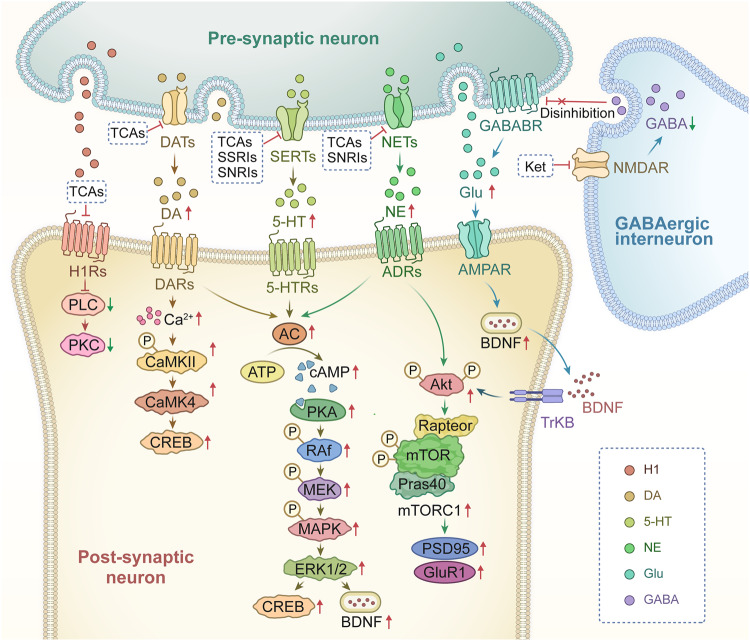
“375 Due to the rapid antidepressant effects of ketamine, unlike the delayed effects of traditional antidepressant drugs, 376 research on this drug has continued and has revealed its mechanisms of action and potential drug targets.”
BackgroundGut microbiota regulate motor deficits and neuroinflammation in a model of Parkinson's disease
Sampson, T. R., Debelius, J. W., Thron, T., Janssen, S., Shastri, G. G., Ilhan, Z. E., Challis, C., Schretter, C. E., Rocha, S., Gradinaru, V., et al. (2016) · Cell · doi:10.1016/j.cell.2016.11.018 · Cited by 3,622 · cited 1×
“241 Alterations in the gut microbiota and in fl ammatory agents have an impact on the KYN pathway, metabolism, and toxin metabolism in the periphery.”
BackgroundeQTLGen, Wray, N. R., 23andMe, the Major Depressive Disorder Working Group of the Psychiatric Genomics Consortium, Ripke, S., Mattheisen, M., Trzaskowski, M., Byrne, E. M., Abdellaoui, A., Adams, M. J., et al. (2018) · Nature Genetics · doi:10.1038/s41588-018-0090-3 · Cited by 3,005 · cited 2×
“19,27,28 In addition, rare copy number variants are also identi fi ed to be related to MDD risk, there may be three copy number variants (CNV) loci associated with Prader-Willis syndrome: 1q21.”
Self-citation
Cited by
PI3K/AKT signaling pathway: Molecular mechanisms and therapeutic potential in depression
Guo, N., Wang, X., Xu, M., Bai, J., Yu, H., & Zhang, L. (2024) · Pharmacological Research · doi:10.1016/j.phrs.2024.107300 · Cited by 218
Vagus nerve stimulation (VNS): recent advances and future directions
Austelle, C. W., Cox, S. S., Wills, K. E., & Badran, B. W. (2024) · Clinical Autonomic Research · doi:10.1007/s10286-024-01065-w · Cited by 151
“For example, major depression is associated with alterations in the brain and periphery, including immune and endocrine dysfunction [21].”
BackgroundJiao, W., Lin, J., Deng, Y., Ji, Y., Liang, C., Wei, S., Xi, J., & Yan, F. (2025) · Journal of Neuroinflammation · doi:10.1186/s12974-024-03312-3 · Cited by 144
Sharma, S., Chawla, S., Kumar, P., Ahmad, R., & Verma, P. K. (2024) · Brain Research · doi:10.1016/j.brainres.2024.149123 · Cited by 111
Kalogerakou, T., & Αντωνιάδου, Μ. (2024) · Antioxidants · doi:10.3390/antiox13121508 · Cited by 125
Faraji, N., Payami, B., Ebadpour, N., & Gorji, A. (2024) · Neuroscience & Biobehavioral Reviews · doi:10.1016/j.neubiorev.2024.105990 · Cited by 95
Omega-3 Polyunsaturated Fatty Acids in Depression
Serefko, A., Jach, M. E., Pietraszuk, M., Świąder, M., Świąder, K., & Szopa, A. (2024) · International Journal of Molecular Sciences · doi:10.3390/ijms25168675 · Cited by 87
“In a situation when cortisol levels become very high and the brain is not able to control the excessive production of cortisol, decreased concentrations of the brain-derived neurotrophic factor (BDNF) are detected [1,58].”
BackgroundChlorella vulgaris as a food substitute: Applications and benefits in the food industry
Wang, C., Onyeaka, H., Miri, T., & Soltani, F. (2024) · Journal of Food Science · doi:10.1111/1750-3841.17529 · Cited by 65
Sobral, A. F., Cunha, A., Silva, V., Gil-Martins, E., Silva, R. V. D. S., & Barbosa, D. J. (2024) · International Journal of Molecular Sciences · doi:10.3390/ijms25179339 · Cited by 82
“Although the pathogenesis of depression is complex and multifactorial, one of the most widely accepted underlying mechanisms for depression is the “monoamine hypothesis,” which posits that low levels of monoamine neurotransmitters are at the root of depressive symptoms (recently reviewed in [268]).”
BackgroundGupta, A. K., Gupta, S., Mehan, S., Khan, Z., Das Gupta, G., & Narula, A. S. (2025) · Molecular Neurobiology · doi:10.1007/s12035-025-05001-5 · Cited by 59
Liu, X., Luo, Q., Zhao, Y., Ren, P., Jin, Y., & Zhou, J. (2025) · Antioxidants · doi:10.3390/antiox14050613 · Cited by 86
“…bioenergetic failure via mPTP opening and cytochrome c efflux, culminating in BAK/BAX-mediated apoptosome activation and caspase-9-dependent apoptotic execution—a self-amplifying neurotoxic loop linking glutamate excitotoxicity, ATP synthase dysfunction, and oxidative DNA fragmentation [121–123].”
Resting-state dynamic functional connectivity in major depressive disorder: A systematic review
Sun, S., Yan, C., Qu, S., Luo, G., Liu, X., Tian, F., Dong, Q., Li, X., & Hu, B. (2024) · Progress in Neuro-Psychopharmacology and Biological Psychiatry · doi:10.1016/j.pnpbp.2024.111076 · Cited by 69
Vekhova, K. A., Namiot, E. D., Jonsson, J., & Schiöth, H. B. (2024) · Clinical Pharmacology & Therapeutics · doi:10.1002/cpt.3478 · Cited by 71
“–118 Kynurenine pathway is thought to be a link between inflammation and depression: pro-inflammatory cytokines activate tryptophan transformation into kynurenine instead of serotonin.”
Yang, B., Han, Y., Hu, S., Xie, X., Zhu, X., & Li, Y. (2024) · The Science of The Total Environment · doi:10.1016/j.scitotenv.2024.178085 · Cited by 64
Stolfi, F., Abreu, H., Sinella, R., Nembrini, S., Centonze, S., Landra, V., Brasso, C., Cappellano, G., Rocca, P., & Chiocchetti, A. (2024) · Frontiers in Psychiatry · doi:10.3389/fpsyt.2024.1422939 · Cited by 64
Han, H., Yao, J., Wu, J., Mao, S., Pan, H., Qv, L., Zhu, G., Ren, J., Yu, Y., Xuan, F., et al. (2025) · Molecular Psychiatry · doi:10.1038/s41380-025-03044-7 · Cited by 52
“The neurogenesis hypothesis, which is well-established, offers an alternative explanation [7, 8].”
Microglial‐Biomimetic Memantine‐Loaded Polydopamine Nanomedicines for Alleviating Depression
Jiang, C., Yang, X., Huang, Q., Lei, T., Luo, H., Wu, D., Yang, Z., Xu, Y., Dou, Y., Ma, X., et al. (2025) · Advanced Materials · doi:10.1002/adma.202417869 · Cited by 57
Luo, K., Zhang, M., Tu, Q., Li, J., Wang, Y., Wan, S., Li, D., Qian, Q., & Lu, X. (2025) · Journal of Neuroinflammation · doi:10.1186/s12974-025-03476-6 · Cited by 49
“It is well known that serotonin (5-HT) plays a significant role in the pathogenesis of anxiety and depression [125, 130].”
Self-citationModulation of neuroimmune cytokine networks by antidepressants: implications in mood regulation
Nava, R. G., Adri, A. S., Filgueiras, I. S., Nóbile, A. L., Barcelos, P. M., Corrêa, Y. L. G., de Oliveira, S. F., Cabral‐Miranda, G., Dias, H. D., Schimke, L. F., et al. (2025) · Translational Psychiatry · doi:10.1038/s41398-025-03532-y · Cited by 58
“Current models of MDD pathogenesis propose that it is a multifactorial condition, with at least six interrelated hypotheses that have been extensively reviewed elsewhere [6].”
InfluentialZhang, Y., Li, Z., Feng, Q., Xu, Y., Yu, R., Chen, J., Gao, Z., Miao, Z., Xu, X., & Yang, Y. M. (2025) · BMC Psychiatry · doi:10.1186/s12888-025-06772-w · Cited by 64
“Early onset of depression during these formative years is associated with significant long-term consequences, including impaired academic performance, disrupted social relationships, emotional dysregulation, and reduced quality of life [6–8].”
Richardson, E., Patterson, R., Meltzer-Brody, S. E., McClure, R. W., & Tow, A. C. (2024) · Annual Review of Medicine · doi:10.1146/annurev-med-050423-095712 · Cited by 52
Yassin, L. K., Skrabulyte-Barbulescu, J., Alshamsi, S. H., Saeed, S., Alkuwaiti, S. H., Almazrouei, S., Alnuaimi, A., BaniYas, S., Aldhaheri, D., Alderei, M., et al. (2025) · Frontiers in Aging Neuroscience · doi:10.3389/fnagi.2025.1667448 · Cited by 53
Lei, L., Wang, Y., Chen, C.-Y., Wang, Y., & Zhang, Y. (2024) · Life Sciences · doi:10.1016/j.lfs.2024.122988 · Cited by 40
Self-citationChawla, A., Cakmakci, D., Fiori, L. M., Zang, W., Maitra, M., Yang, J., Żurawek, D., Frosi, G., Rahimian, R., Mitsuhashi, H., et al. (2025) · Nature Genetics · doi:10.1038/s41588-025-02249-4 · Cited by 45
“Various neurobiological factors within diverse cell types have been linked to MDD, including mono-aminergic or glutamatergic systems 2 and abnormalities in astrocytes 3 , oligodendrocytes 4 or immune cells 5,6 .”
Chen, C., Xiao, Q., Wen, Z., Gong, F., Zhan, H., Liu, J., Li, H., & Jiao, Y. (2025) · Pharmacological Research · doi:10.1016/j.phrs.2025.107654 · Cited by 42
Alberti, A., Coelho, D. R. A., Vieira, W. F., Iser, B. P. M., Lampert, R., Traebert, E., da Silva, B. B., de Oliveira, B. H., Leão, G. M., de Souza, G., et al. (2024) · Biomedicines · doi:10.3390/biomedicines12091994 · Cited by 56
“Furthermore, the cycle of substance dependence and withdrawal often leads to severe mood swings, exacerbating emotional instability and obstructing recovery [87,88].”
BackgroundSteardo, L., D’Angelo, M., Monaco, F., Stefano, V. D., & Steardo, L. (2025) · Neuroscience & Biobehavioral Reviews · doi:10.1016/j.neubiorev.2025.106030 · Cited by 46
Neuroinflammation and Natural Antidepressants: Balancing Fire with Flora
Figueiredo Godoy, A. C., Frota, F. F., Araújo, L. P., Valenti, V. E., Pereira, E. D. S. B. M., Detregiachi, C. R. P., Galhardo, C. M., Caracio, F. C., Haber, R. S. A., Fornari Laurindo, L., et al. (2025) · doi:10.20944/preprints202504.0573.v2 · Cited by 33
Targeting glucocorticoid receptor signaling pathway for treatment of stress-related brain disorders
Göver, T., & Ślęzak, M. (2024) · Pharmacological Reports · doi:10.1007/s43440-024-00654-w · Cited by 49
Hole, C., Dhamsania, A., Brown, C., & Ryznar, R. J. (2025) · Cells · doi:10.3390/cells14080607 · Cited by 48
“The monoamine hypothesis, developed in the 1950s, was inspired by the discovery that hypertensive patients treated with reserpine, a vesicular monoamine transporter (VMAT) inhibitor which shunts monoamines towards degradation, developed depressive-like symptoms [38,39].”
Neuroinflammation and Natural Antidepressants: Balancing Fire with Flora
Figueiredo Godoy, A. C., Frota, F. F., Araújo, L. P., Valenti, V. E., Pereira, E. D. S. B. M., Detregiachi, C. R. P., Galhardi, C. M., Caracio, F. C., Haber, R. S. A., Fornari Laurindo, L., et al. (2025) · Biomedicines · doi:10.3390/biomedicines13051129 · Cited by 32
“…of MDD because of its ability to disrupt neuroplastic processes, resulting in neuronal atrophy, synaptic loss, and volumetric changes in key brain regions such as the hippocampus and prefrontal cortex, all of which contribute to the disorder’s affective, cognitive, and behavioral symptoms [10–12].”
Organ-specific proteomic aging clocks predict disease and longevity across diverse populations
Wang, Y., Xiao, S., Liu, B., Jiang, R., Liu, Y., Hang, Y., Chen, L., Chen, R., Vitiello, M. V., Bennett, D., et al. (2025) · Nature Aging · doi:10.1038/s43587-025-01016-8 · Cited by 73
“These findings align with mechanistic hypotheses for major depression, such as impaired neurogenesis and neuroplasticity, highlighting the involvement of oligodendrocyte lineage cells in maintaining myelin integrity and synaptic transmission 54,57 .”
Self-citationLefrere, A., Burtey, S., Bobot, S., Belzeaux-R, R., & Bobot, M. (2025) · Behavioural Brain Research · doi:10.1016/j.bbr.2025.115467 · Cited by 36
“A complex crosstalk between immune systems and central nervous system has also been suggested [33].”
Chi, D., Zhang, K., Zhang, J., He, Z., Zhou, H., Huang, W., Liu, Y., Huang, J., Zeng, W., Bai, X., et al. (2025) · Nature Communications · doi:10.1038/s41467-025-57924-1 · Cited by 42
“Astrocytes play a crucial role in the pathology of MDD, as astrocytes regulate glutamatergic neurotransmission, modulate neural and synaptic plasticity through the secretion of growth factors such as brain-derived neurotrophic factor (BDNF), and mediate neuroin fl ammation 49 .”
Self-citationZhao, K., Zhang, Y., Yang, S., Xiang, L., Wu, S., Dong, J., Li, H., Yu, H., & Hu, W. (2025) · Frontiers in Cellular Neuroscience · doi:10.3389/fncel.2025.1538026 · Cited by 45
The central role of microglia in major depressive disorder and its potential as a therapeutic target
Xia, X., Li, K., Zou, W., & Wang, L. (2025) · Frontiers in Behavioral Neuroscience · doi:10.3389/fnbeh.2025.1598178 · Cited by 32
Bi, Y., Li, M., Wang, Y., Yao, J., Wang, Y., Wang, S., Zhuang, L., Liu, S., Li, Z., Hao, Z., et al. (2024) · Phytomedicine · doi:10.1016/j.phymed.2024.156240 · Cited by 33
Self-citationBleibel, L., Sokołowska, P., Henrykowska, G. A., Owczarek, J., & Wiktorowska‐Owczarek, A. (2025) · Pharmaceuticals · doi:10.3390/ph18060867 · Cited by 40
Neuroinflammation and major depressive disorder: astrocytes at the crossroads
Puentes-Orozco, M., Albarracín, S. L., & Toledo, M. M. V. (2024) · Frontiers in Cellular Neuroscience · doi:10.3389/fncel.2024.1504555 · Cited by 35
“However, the complete pathophysiology of the disorder remains poorly understood, and none of these hypotheses alone sufficiently explain its multidimensional phenotype (Cui et al., 2024).”
Li, Y., Dang, X., Chen, R., Teng, Z., Wang, J., Li, S., Yue, Y., Mitchell, B. L., Zeng, Y., Yao, Y.-G., et al. (2025) · Nature Human Behaviour · doi:10.1038/s41562-024-02073-6 · Cited by 30
“…mouse orthologue of human TMEM106B , Ensembl ID: ENSMUSG00000029571) in the mouse hippocampus, a brain region that has been previously reported to have a critical role in depression on the basis of mouse models and human studies 32–35 and where Tmem106b is highly expressed 36 (Supplementary Fig.”
Self-citationNew insights into anti-depression effects of bioactive phytochemicals
Zhao, R., Wang, J., Chung, S. K., & Xu, B. (2024) · Pharmacological Research · doi:10.1016/j.phrs.2024.107566 · Cited by 32
Atta, M. H. R., El-Gueneidy, M., & Lachine, O. A. R. (2024) · BMC Psychology · doi:10.1186/s40359-024-01949-6 · Cited by 36
Deciphering Depression: Epigenetic Mechanisms and Treatment Strategies
Aljabali, A. A. A., Alkaraki, A. K., Gammoh, O., Tambuwala, M. M., Mishra, V. K., Mishra, Y., Hassan, S. S., & El‐Tanani, M. (2024) · Biology · doi:10.3390/biology13080638 · Cited by 33
“Other types of depression, besides MDD, include dysthymic and bipolar disorders [2,3].”
BackgroundLinking Environmental Exposures to Depression: Insights from Epidemiology, Biology, and Methodology
Zhang, Z., Zhao, Q., Xu, J., Yang, K., Wu, Y., Lei, M., Wu, Q., Wang, H., Cai, W., An, Q., et al. (2025) · Brain Conflux · doi:10.71321/ymyc0370 · Cited by 26
“Depression is one of the most prevalent and debilitating mental disorders globally, significantly contributing to the overall burden of disease and disability [1] .”
Self-citationShokr, M. M., Eladawy, R. M., Azar, Y. O., & Raish, S. M. A. (2025) · Foods · doi:10.3390/foods14172926 · Cited by 29
“Swollen astrocytes’ withdrawal and decreased BDNF release directly compromise synaptic health and neuro-plasticity, compromising mood stability and seizure control [44].”
Exercise and the organ-brain axis: Regulation of neurological disorders by emerging exerkines
Dai, Y., Dou, X., Nie, B., Sun, Y., Chen, P., Fu, C., Zhang, X., Chu, Y., Gao, Q., Ge, Y., et al. (2025) · Pharmacological Research · doi:10.1016/j.phrs.2025.107913 · Cited by 29
Zhang, H., Zhang, G., & Fu, J. (2024) · Journal of Affective Disorders · doi:10.1016/j.jad.2024.05.073 · Cited by 21
Yang, Q., Tao, J., Xin, X., Zhang, J., & Fan, Z. (2024) · Lipids in Health and Disease · doi:10.1186/s12944-024-02164-3 · Cited by 26
“Previous studies have emphasized the pivotal role of the hypothalamic ‒ pituitary ‒ adrenal (HPA) axis in the pathogenesis of depression, with aberrant activation leading to corticotropin-releasing hormone (CRH) release and elevated plasma cortisol [24, 31].”
BackgroundResveratrol alleviates depression-like behaviors by inhibiting ferroptosis via AKT/NRF2 pathway
Li, C., Ge, H., Huang, J., Si, L., Sun, L., Wu, L., Xiao, L., Xie, Y., & Wang, G. (2024) · Brain Research Bulletin · doi:10.1016/j.brainresbull.2024.111136 · Cited by 24
Dai, F., Cai, Y., Chen, M., & Dai, Y. (2025) · BMC Psychiatry · doi:10.1186/s12888-025-06697-4 · Cited by 28
“This pattern highlights the complex nature of depression [34], driven by both socio-economic status and access to mental health resources, and underscores the need for context-specific mental health research.”
Peng, S., Su, P., Liu, L., Li, Z., Liu, Y., Tian, L., Bai, M., Xu, E., & Li, Y. (2025) · Molecular Medicine · doi:10.1186/s10020-025-01217-2 · Cited by 24
“Recently, accumulating evidence reveals that neuroinflammation has critical roles in the pathological consequences of stress exposure, and is tightly associated with onset of depression (Cui et al. 2024; Guo et al. 2023; Tayab et al. 2022).”
Self-citationSalivary Biomarkers as a Predictive Factor in Anxiety, Depression, and Stress
Budală, D. G., Luchian, I. A., Virvescu, D. I., Tudorici, T. A., Constantin, V., Surlari, Z., Butnaru, O., Bosînceanu, D. N., Bida, F. C., & Hăncianu, M. (2025) · Current Issues in Molecular Biology · doi:10.3390/cimb47070488 · Cited by 38
“Given their high prevalence and frequent comorbidity, depression and anxiety are increasingly being studied together, particularly in relation to physiological biomarkers that might support better screening, diagnosis, and treatment personalization [2].”
InfluentialMilic, J., Jovic, S., & Sapic, R. (2025) · Genes · doi:10.3390/genes16050487 · Cited by 19
“Dopamine activity is also diminished in untreated or early-stage depression [34].”
Jiang, J., Ferraro, S., Zhao, Y., Wu, B., Lin, J., Chen, T., Gao, J., & Li, L. (2024) · Psychoradiology · doi:10.1093/psyrad/kkae022 · Cited by 23
Ju, M., Zhang, Z., Gao, F., Chen, G., Zhao, S., Wang, D., Wang, H., Jia, Y., Shen, L., Yuan, Y., et al. (2024) · Advanced Healthcare Materials · doi:10.1002/adhm.202402219 · Cited by 23
Computational insights into the adsorption of norepinephrine neurotransmitter onto B12N12 nanocage
Yadav, T., Shakerzadeh, E., Goswami, S., et al. (2024) · Diamond and Related Materials · doi:10.1016/j.diamond.2024.111600 · Cited by 19
GABAB modulate NF-κB/NLRP3 pathways in electroacupuncture prevention of depression in CUMS rats
Li, J., Dong, Y., Zhang, T., Tong, T., Shen, J., Yan, S., Zeng, J., Aslam, M. S., Li, M., You, Z., et al. (2024) · Brain Research Bulletin · doi:10.1016/j.brainresbull.2024.111108 · Cited by 24
“The etiology of depression is complex, encompassing genetic, biochemical, psychological, and environmental factors (L. Cui et al., 2024; Niciu et al., 2015).”
BackgroundLin, C., Zhou, X., Li, M., Zhang, C., Zhai, H., Li, H., Wang, H., & Wang, X. (2025) · Advanced Science · doi:10.1002/advs.202416481 · Cited by 35
Singh, N., Hazari, P. P., Mittal, P., Yadav, S. K., Kumar, N., Mishra, G., Dahiya, S., & Mishra, A. K. (2025) · European Journal of Pharmacology · doi:10.1016/j.ejphar.2025.177737 · Cited by 24
Karad, V., & Gupta, G. L. (2025) · Naunyn-Schmiedeberg s Archives of Pharmacology · doi:10.1007/s00210-025-04298-2 · Cited by 24
“Major depressive disorder (MDD) is a heterogeneous and disabling mental illness characterized by a persistent loss of interest or pleasure in activities, feelings of hopeless-ness, and cognitive or physical impairments (Cui et al. 2024; Marx et al. 2023; Palazidou 2012).”
Morena, D., Lippi, M., Scopetti, M., Turillazzi, E., & Fineschi, V. (2025) · Diagnostics · doi:10.3390/diagnostics15131683 · Cited by 25
“Its pathogenic mechanisms are increasingly recognized as complex and multifactorial [3].”
Neuroprotective potential of hispidulin and diosmin: a review of molecular mechanisms
Singh, A., Singh, L., & Dalal, D. (2025) · Metabolic Brain Disease · doi:10.1007/s11011-025-01615-9 · Cited by 20
“Depression is often associated with dysregulation of monoamine neurotransmitters and the hypothalamic-pituitary-adrenal (HPA) axis (Cui et al. 2024).”
Feng, J., Hu, X., Liu, J., Wang, W., Chen, L., Pang, R., & Zhang, A. (2025) · Frontiers in Neuroscience · doi:10.3389/fnins.2025.1650807 · Cited by 26
“Serotonin (5-HT), an important monoamine neurotransmitter and a critical gut–brain axis signaling molecule involved in neural plasticity regulation, is also found at lower concentrations in depression patients (Cui et al., 2024).”
Li, Q., Li, H., Long, F., Chen, Y., Wang, Y., Yang, B., DelBello, M. P., McNamara, R. K., Li, F. Y., & Gong, Q. (2025) · Psychological Medicine · doi:10.1017/s0033291725102171 · Cited by 22
“Major depressive disorder (MDD) is one of the most prevalent psychiatric disorders worldwide, with considerable heterogeneity in clinical symptoms and treatment outcomes (Cui et al., 2024).”
Self-citationAdvances in capsule-based fecal microbiota transplantation: clinical applications and innovations
He, Y., Zhang, Y., Yang, D., Luo, H., & Zhou, Y. (2025) · Journal of Translational Medicine · doi:10.1186/s12967-025-07407-0 · Cited by 20
“Its main clinical features are low mood, anhedonia, and cognitive symptoms such as difficulty concentrating, loss of interest, suicidal ideation, and changes in appetite and sleep [83].”
Li, S., Sabbah, S. G., Kwan, A. T. H., & McIntyre, R. S. (2025) · European Neuropsychopharmacology · doi:10.1016/j.euroneuro.2025.08.002 · Cited by 19
Self-citationXia, Z., Yang, P., Chen, S., Zhou, H., & Yan, C. (2024) · Cerebral Cortex · doi:10.1093/cercor/bhae252 · Cited by 24
Inflammation and psychomotor retardation in depression: The moderating role of glymphatic system
Liang, Q., Peng, B., Chen, S., Wei, H., Lin, S., Lin, X., Li, Y., Zhang, Y., Zhou, Z., Xu, Z., et al. (2025) · Brain Behavior and Immunity · doi:10.1016/j.bbi.2025.03.024 · Cited by 22
Carrera‐Bastos, P., Silva, B. M. B. D. M., Stults‐Kolehmainen, M., Schuch, F. B., Ordóñez, F. M., Müller, P. D. T., Blanco, J. R., & Boullosa, D. A. (2025) · Frontiers in Psychology · doi:10.3389/fpsyg.2025.1554062 · Cited by 23
“A recent meta-analysis of 10 studies investigating the inflammatory response to exercise in people with MDD found no significant acute effects of diverse exercise interventions on IL-6, IL-10, or IL-8.”
InfluentialFang, Y., Yang, R., Song, R., Gu, Y., Lu, X., Chen, Z., Hu, W., Cao, Z., Sun, M., Wang, H., et al. (2025) · International Immunopharmacology · doi:10.1016/j.intimp.2025.115060 · Cited by 18
Meshkat, S., Kwan, A. T. H., Le, G. H., Wong, S., Teopiz, K. M., Wang, L., Rosenblat, J. D., Rhee, T. G., Cao, B., & McIntyre, R. S. (2024) · Journal of Affective Disorders · doi:10.1016/j.jad.2024.12.008 · Cited by 18
Cui, J., Wang, W., Tang, Y., Feng, S., Liu, H., & Hao, Z. (2025) · Interdisciplinary medicine · doi:10.1002/inmd.20240041 · Cited by 27
Self-citationMao, Y., Fan, L., Feng, C., & Dai, Z. (2025) · Neuroscience & Biobehavioral Reviews · doi:10.1016/j.neubiorev.2025.106120 · Cited by 16
Mujtaba, M. A., Rashid, M. A., Godbole, M. D., Alhamhoom, Y., Shende, D. S., Alshehri, S., Akbar, M. J., Kaleem, M., Mahajan, U. N., & Shahzad, N. (2025) · Frontiers in Pharmacology · doi:10.3389/fphar.2025.1577331 · Cited by 20
Liang, J., Zhang, J., Sun, J., Liang, Q., Zhan, Y., Yang, Z., Zhang, Y., Jin, L., Hu, C., & Zhao, Y. (2025) · Food & Function · doi:10.1039/d5fo00226e · Cited by 19
Wu, W., Yang, X., Xie, M., et al. (2026) · ACS Applied Materials & Interfaces · doi:10.1021/acsami.5c21550 · Cited by 15
Küçükosmanoğlu, H. S., Cramer, H., Tavakoly, R., Moosburner, A., & Bîlc, M. I. (2024) · Current Psychiatry Reports · doi:10.1007/s11920-024-01548-7 · Cited by 17
“Other studies have suggested that depression is caused by disruption of homeostatic mechanisms in the brain that control synaptic plasticity, including decreased neurotrophic factors as well as reduced synaptic connections between the frontal lobe and other brain regions [ 47 , 48].”
Kong, Y., Zhang, X., Li, L., Zhao, T., Huang, Z., Zhang, A., Sun, Y., Jiao, J., Zhang, G., Liu, M., et al. (2024) · Advanced Science · doi:10.1002/advs.202410273 · Cited by 21
Lai, W., Liao, Y., Zhang, H., Zhao, H., Li, Y., Chen, R., Shi, G., Liu, Y., Hao, J., Li, Z., et al. (2025) · BMC Psychiatry · doi:10.1186/s12888-025-06743-1 · Cited by 18
“Dysregulation of these systems may contribute to the severity and persistence of depressive symptoms, as well as the associated decline in quality of life [4, 56].”
Self-citationChen, M., Jin, J., Bi, H., Zhang, Y., Sun, M., Li, X., & Wang, Y. (2025) · Asian Journal of Psychiatry · doi:10.1016/j.ajp.2025.104502 · Cited by 14
Self-citationType 2 diabetes mellitus, cerebral small vessel disease and depressive disorders
Serhiyenko, V. A., Чемерис, О. М., Pankiv, V. І., & Serhiyenko, A. A. (2025) · INTERNATIONAL NEUROLOGICAL JOURNAL · doi:10.22141/2224-0713.21.3.2025.1178 · Cited by 21
Zhang, B., Ji, J., Zhang, X., Yu, X., Hu, X., Liu, J., Wang, P., & Lan, Z. (2025) · Phytomedicine · doi:10.1016/j.phymed.2025.157018 · Cited by 17
Nose‐to‐Brain Delivery of Chlorella vulgaris Extracellular Vesicles for Antidepressant Effects
Jin, K., Wang, R., Chen, B., Zhong, D., Cheng, S., Tong, A., Qi, Y., Lü, J., & Zhou, M. (2025) · Journal of Extracellular Vesicles · doi:10.1002/jev2.70198 · Cited by 19
Phytochemicals in the treatment of patients with depression: a systemic review
Picheta, N., Piekarz, J., Daniłowska, K., Mazur, K., Piecewicz‐Szczęsna, H., & Smoleń, A. (2024) · Frontiers in Psychiatry · doi:10.3389/fpsyt.2024.1509109 · Cited by 25
Sun, L., Wang, P., Zheng, Y., Wang, J., Wang, J., & Xue, S. (2025) · Journal of Affective Disorders · doi:10.1016/j.jad.2025.02.033 · Cited by 17
Xu, H., Wang, Y., Geng, D., Chen, F., Chen, Y., Niwenahisemo, L. C., Shi, L., Du, N., He, Z., Xu, X., et al. (2025) · Food Science & Nutrition · doi:10.1002/fsn3.70003 · Cited by 17
Self-citationRecent developments in omics studies and artificial intelligence in depression and suicide
Wang, Q., & Dwivedi, Y. (2025) · Translational Psychiatry · doi:10.1038/s41398-025-03497-y · Cited by 18
“At present, treating and preventing depression and suicide pose signi fi cant challenges, largely due to the unclear pathogenesis and the absence of objective clinical diagnostic criteria [11].”
Alam-ElDein, K. M., Faraag, A. H. I., El-Yamany, N. A., Moneim, A. E. A., Abdelfattah, M. S., El‐Khadragy, M. F., & Elmasry, H. A. (2026) · Frontiers in Pharmacology · doi:10.3389/fphar.2025.1691567 · Cited by 19
“Chronic psychosocial stress can also modulate the expression of GFAP in the hippocampus, further supporting the link between astrocyte alterations and depression (Li Y. et al., 2024).”
InfluentialYu, H., Li, R., Liang, X., Yang, W., Guo, L., Liu, L., Tan, Q., & Peng, Z. (2024) · BMC Psychiatry · doi:10.1186/s12888-024-06277-y · Cited by 15
Satpute, R., Salve, P. S., Qutub, M., Hussain, U., & Gadge, J. R. (2025) · Next Nanotechnology · doi:10.1016/j.nxnano.2025.100151 · Cited by 13
Wang, N., Zhu, S., Chen, S., Zou, J., Zeng, P., & Tan, S. (2025) · Reviews in the Neurosciences · doi:10.1515/revneuro-2024-0147 · Cited by 12
Bai, Y., Liu, W., Zhang, F., Zheng, Y., Guo, Q., Hu, H., Hu, Y. F., Chen, H., Li, G., Tang, Y., et al. (2025) · Journal of Affective Disorders · doi:10.1016/j.jad.2025.04.066 · Cited by 13
Self-citationMDD-LLM: Towards accuracy large language models for major depressive disorder diagnosis
Sha, Y., Pan, H., Xu, W., Meng, W., Luo, G., Du, X., Zhai, X., Tong, H. H. Y., Shi, C., & Li, K. (2025) · Journal of Affective Disorders · doi:10.1016/j.jad.2025.119774 · Cited by 17
When the Stars Misfire: Astrocytic Dysfunctions in Major Depressive Disorder
González-Arias, C., & Perea, G. (2025) · Neurochemical Research · doi:10.1007/s11064-025-04483-y · Cited by 16
“This psychiatric condition is characterized by cognitive and psychosocial impairments, leading to reduced social interaction and altered emotional information processing [ 3 ].”
Qian, Y. N., Chen, Y., Liu, L., Wu, T., Chen, X.-H., & Ma, G. (2025) · Frontiers in Immunology · doi:10.3389/fimmu.2025.1676160 · Cited by 14
Malhi, G. S., Bell, E., Stavdal, A., Wu, C., Naylor, A., & Kumari, V. (2026) · The Lancet · doi:10.1016/s0140-6736(26)00201-1 · Cited by 23
The protective effects of gastrodin on neurological disorders: an update and future perspectives
Shi, Z., Zhang, Y., Xiao, Y., Shi, Z., Wei, X., Wang, B., Yuan, Y. H., & Li, P. (2024) · Frontiers in Pharmacology · doi:10.3389/fphar.2024.1494277 · Cited by 21
Kamp, M., Lo, C. W. H., Kokkinidis, G., Chauhan, M., Gillett, A. C., McIntosh, A. M., Pain, O., & Lewis, C. M. (2025) · Psychological Medicine · doi:10.1017/s0033291725000388 · Cited by 15
“In 2018, the World Health Organization (WHO) ranked MDD third in global disease burden and predicted it will be the leading cause by 2030 (Cui et al., 2024).”
InfluentialPark, B., & Choi, G. E. (2025) · Progress in Neurobiology · doi:10.1016/j.pneurobio.2025.102786 · Cited by 16
Tie, S., Pan, Y., Pang, C., Saman, A., Dong, Y., Fang, S., Zhu, J., Wu, Y., & Gu, S. (2025) · Nutrients · doi:10.3390/nu17193087 · Cited by 11
“Recent studies have revealed a close relationship between gut microbiota and mood disorders, drawing increasing attention to the role of gut microbial communities in the onset and progression of these mood disorders [5,6].”
Metadata
- Authors
- Cui, L., Li, S., Wang, S., Wu, X., Liu, Y., Yu, W., Wang, Y., Tang, Y., Xia, M., & Li, B.
- Affiliations
- China Medical University (CN)
- Chengdu University (CN)
- First Hospital of China Medical University (CN)
- Corresponding author
- Xia, Maosheng
- Li, Baoman
- ORCID
- Venue
- Signal Transduction and Targeted Therapy
- Published
- 2024-02-09
- Volume
- 9
- Issue
- 1
- Pages
- 30-30
- ISSN
- 2059-3635 (ISSN-L)
- PMC
- PMC10853571
- OpenAlex
- W4392731282
- Semantic Scholar
- e69e2e42bcc9396c4df790e7a320846a0aa10211
- Cited by
- 1,244
- References
- 514
- Citations by year
- 2026: 536 · 2025: 570 · 2024: 138
- FWCI
- 60.09
- Type
- journal article
- Language
- en
- Open access
- gold
- doi.org
- Licence
- cc-by
- creativecommons.org/licenses/by/4.0 (tdm)
- creativecommons.org/licenses/by/4.0 (vor)
- Locations
- Signal Transduction and Targeted Therapy (publishedVersion, cc-by)
- PubMed Central (publishedVersion, cc-by)
- PubMed (publishedVersion)
- DOAJ (DOAJ: Directory of Open Access Journals) (submittedVersion)
- Funders
- National Natural Science Foundation of China (81871852, 32271038)
- Topics
- Health Sciences › Medicine › Pharmacology (medical) › Treatment of Major Depression
- Life Sciences › Neuroscience › Biological Psychiatry › Tryptophan and brain disorders
- Life Sciences › Neuroscience › Cellular and Molecular Neuroscience › Neurotransmitter Receptor Influence on Behavior
- Keywords
- major depressive disorder, pathogenesis, neurotransmitter hypothesis, hypothalamic-pituitary-adrenal axis, neuroplasticity, antidepressants, therapeutic target, phototherapy, acupuncture, depression prevention, depression diagnosis
- MeSH terms
- Major Depressive Disorder, Humans, Hypothalamo-Hypophyseal System, Pituitary-Adrenal System
About these checks
Registry, retraction, Cites and statistics results are computed, not judged, with one exception: a printed reference that no index lists is read once by a model before it counts as a citation error. Claims are extracted by a model and kept only when their quote appears verbatim in the text; each cited source is then checked, with a model’s help, for whether it says what the claim relies on. Those verdicts can be wrong — read the claim’s quote and the cited source before relying on one.
The claim verdicts this report counts are experimental: their accuracy is not yet measured.
A language model drew the claims from the paper on 2026-09-28, under version 3 of the claim definition (prompt extract-v3).
A second model labelled each claim on 2026-09-28 (model jev-1.13-20260917, definition revision gold-guideline-v0.2).
Cited sources are checked with a language model’s help (gpt-6-sol).
Statistics and arithmetic are recomputed, not judged.
Confidence bands are shown only for fields calibrated on our annotated test set. None is calibrated yet, so no band is shown.
What counts as a claim ›How we measure confidence ›How we check this ›
Are you an author, or do you see a problem with this page? Request a review
Data sources
Bibliographic data: Semantic Scholar, OpenAlex, Crossref.
Contains information from the Semantic Scholar Academic Graph Datasets, made available under the ODC Attribution License (ODC-BY 1.0).
Semantic Scholar’s data is described in: Kinney, R., et al. (2023). The Semantic Scholar Open Data Platform. arXiv:2301.10140.
