

Major depressive disorder: hypothesis, mechanism, prevention and treatment
Open accessThe DOI matches its Crossref record; 511 of the 514 references it cites were found in a registry or an index; 260 of the 474 sources its claims cite were checked for support.
Abstract
Worldwide, the incidence of major depressive disorder (MDD) is increasing annually, resulting in greater economic and social burdens. Moreover, the pathological mechanisms of MDD and the mechanisms underlying the effects of pharmacological treatments for MDD are complex and unclear, and additional diagnostic and therapeutic strategies for MDD still are needed. The currently widely accepted theories of MDD pathogenesis include the neurotransmitter and receptor hypothesis, hypothalamic-pituitary-adrenal (HPA) axis hypothesis, cytokine hypothesis, neuroplasticity hypothesis and systemic influence hypothesis, but these hypothesis cannot completely explain the pathological mechanism of MDD. Even it is still hard to adopt only one hypothesis to completely reveal the pathogenesis of MDD, thus in recent years, great progress has been made in elucidating the roles of multiple organ interactions in the pathogenesis MDD and identifying novel therapeutic approaches and multitarget modulatory strategies, further revealing the disease features of MDD. Furthermore, some newly discovered potential pharmacological targets and newly studied antidepressants have attracted widespread attention, some reagents have even been approved for clinical treatment and some novel therapeutic methods such as phototherapy and acupuncture have been discovered to have effective improvement for the depressive symptoms. In this work, we comprehensively summarize the latest research on the pathogenesis and diagnosis of MDD, preventive approaches and therapeutic medicines, as well as the related clinical trials.
Overview
CoChat Summary
TL;DR
MDD is a heterogeneous, highly prevalent disorder whose pathogenesis is not fully explained by any single hypothesis; the review synthesizes evidence for monoamine, HPA-axis, inflammatory, genetic/epigenetic, brain-remodeling, and social-psychological mechanisms, with growing emphasis on astrocyte and multi-organ involvement. It also surveys diagnostic biomarkers, prevention strategies, and pharmacological and nonpharmacological treatments, noting that current antidepressants leave a substantial proportion of patients without remission.
Key findings
- MDD affects about 300 million people worldwide; it ranked third in disease burden in 2018 and is predicted to rank first by 2030. Heritability is estimated at 30–50%, and GWAS have identified 178 genetic risk loci and over 200 candidate genes, though no single genetic variation has been found to increase MDD risk.
- Women have approximately twice the incidence of MDD as men. In 2018, comorbid disorders rather than MDD itself accounted for 63% of all MDD-related costs in the United States.
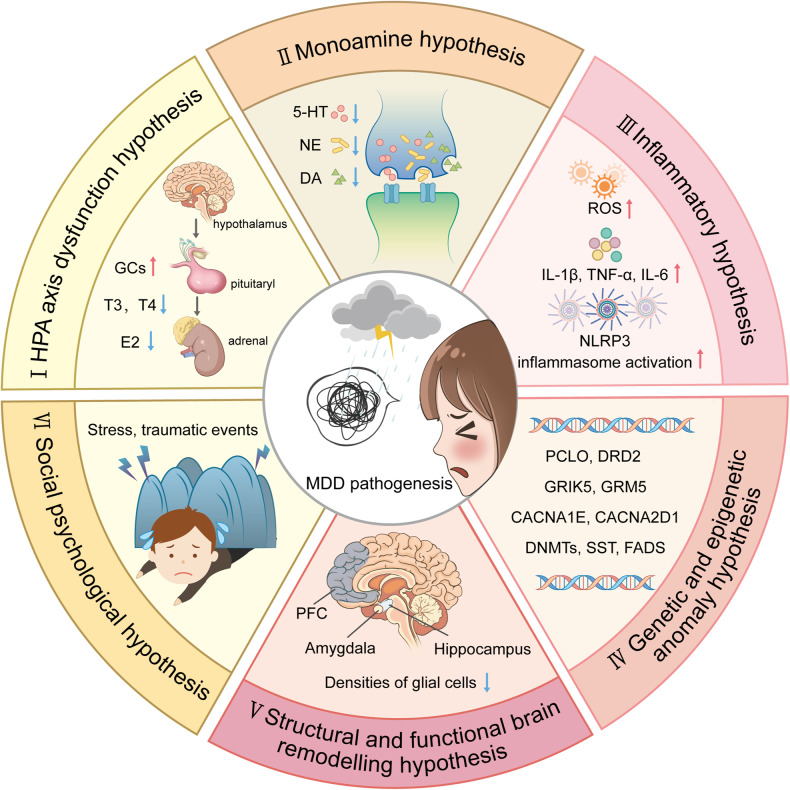
- Multiple interacting mechanisms are implicated, including monoamine deficiency (5-HT, DA, NE), HPA-axis hyperactivity and glucocorticoid/GR signaling, proinflammatory cytokines (IL-1β, TNF-α, IL-6), oxidative stress, NLRP3 inflammasome activation, reduced BDNF, and astrocytic marker changes (Cx30/43, GFAP, AQP4, S100B).
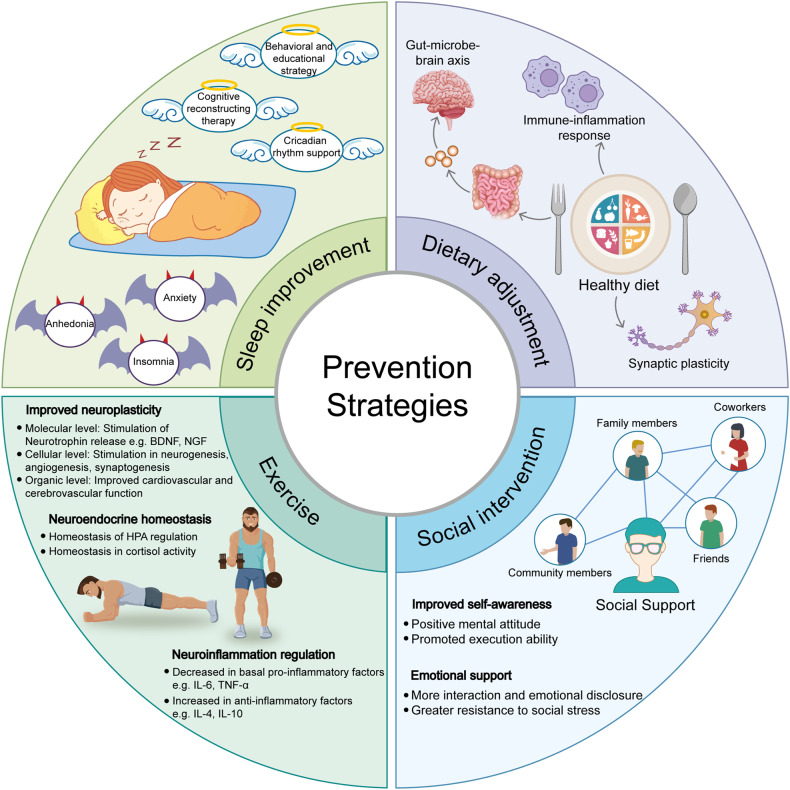
- In a 1-year follow-up, clinically significant worsening of depressive symptoms occurred in 44% of untreated patients versus 38% with circadian rhythm support (CRS), 28% with cognitive behavioral therapy for insomnia (CBT-I), and 9% with CBT-I + CRS. Even after multiple treatment attempts, almost 30% of MDD patients do not experience remission.
Methods
- Narrative review summarizing recent research on MDD etiology, pathogenesis, diagnosis, prevention, mechanisms, and pharmacological and nonpharmacological treatment, including related clinical experiments.
- Evidence discussed includes human postmortem tissue studies, transcriptomic and multiomics analyses, clinical imaging (MRI, R-fMRI, PET with SV2A radioligand), serum biomarker studies, randomized controlled trials, meta-analyses, and animal models such as CUMS, CUMR, CURD, CSDS, and LPS- or stress-induced depression models.
- No systematic review, meta-analysis, or primary data collection is described; the paper synthesizes and organizes findings across hypotheses and treatment categories.
Limitations
- Stated in the paper: the etiology of MDD remains unclear; no single hypothesis fully explains its pathological basis; diagnostic criteria are subjective and lack characteristic symptoms or objective diagnostic evidence; animal models of MDD and other mental diseases are lacking; most cellular and structural alterations cannot be consistently observed in vivo; existing theories cannot completely explain why almost 30% of patients do not remit after multiple treatments.
- Evident from the text: as a narrative review, it does not describe a systematic literature search, inclusion/exclusion criteria, or formal quality appraisal of the cited studies.
- Evident from the text: many proposed mechanisms and biomarkers are described as promising but not yet validated for clinical diagnosis or treatment, and the review notes inconsistent neuroimaging findings and controversy over some markers such as serum GFAP.
Model-written summary. Check it against the paper before relying on it.
Integrity signals
Registry
Cites
Statistics
Figures
Verification
Claims the paper makes
212 Valid · 21 Not valid · 143 Not checked · 25 Own results and interpretations
At least one cited source doesn’t support this claim or points to a different paper, and none confirmed it — see the verdicts below.
In the paper
“However, no single genetic variation has been found to increase the risk of MDD thus far. 26”
What the sources say
- Disputedcites [26] Kendall KM The genetic basis of major depression Psychol. Med. 2021 51 2217 2230 10.1017/S0033291721000441 33682643 sourceExperimental — accuracy not yet measured
The GWAS discussion (p. 16) says that two significant loci near SIRT1 and LHPP were identified and replicated in Han Chinese patients with recurrent MDD. It also describes European depression risk SNPs and 178 risk loci in Europeans. The paper distinguishes these findings from its narrower statement (p. 10) that a sequencing study found no association for individual rare or low-frequency variants. (LLM, conf=0.88)
Checked by a reasoning model — may be wrong.
plain- Asserted: passes — The authors put it forward as true.
- Checkable: passes — It can be checked against evidence.
- Load-bearing: unclear — It is unclear whether the paper’s conclusions depend on it.
- Based: passes — The paper gives a reason why it holds.
- Disputed
Some cited sources support this claim and some don’t — read each source’s verdict below.
In the paper
“Global topological E/I imbalance in MDD is discovered through gene and protein expression of molecules related to inhibitory GABAergic and excitatory glutamatergic signaling in the postmortem MDD brains. 22 , 208 , 209”
What the sources say
- Partly supportedcites [22] Sequeira A Global brain gene expression analysis links glutamatergic and GABAergic alterations to suicide and major depression PLoS ONE 2009 4 e6585 10.1371/journal.pone.0006585 19668376 PMC2719799 sourceExperimental — accuracy not yet measured
The Results (Pathways globally differentially expressed; page not provided) report altered expression of GABAergic and glutamatergic genes across brain regions in people who died by suicide with major depression. The paper does not establish a global topological excitation–inhibition imbalance or report protein-expression measurements; its Methods describe RNA-based expression analysis. (LLM, conf=0.87)
- Not checked — no full text of the sourcecites [208] Hu YT Tan ZL Hirjak D Northoff G Brain-wide changes in excitation-inhibition balance of major depressive disorder: a systematic review of topographic patterns of GABA- and glutamatergic alterations Mol. Psychiatry 2023 28 3257 3266 10.1038/s41380-023-02193-x 37495889 source
- Disputedcites [209] Zhao J Prefrontal alterations in GABAergic and glutamatergic gene expression in relation to depression and suicide J. Psychiatr. Res. 2018 102 261 274 10.1016/j.jpsychires.2018.04.020 29753198 sourceExperimental — accuracy not yet measured
The Discussion (p. 11) says that glutamatergic and GABAergic mRNA expression changed similarly, leaving it unclear whether the overall excitation–inhibition balance was disturbed. The Results (p. 6) report gene-expression changes in two prefrontal regions, not a discovered global topological imbalance or a measurement of protein expression. (LLM, conf=0.88)
Checked by a reasoning model — may be wrong.
plainstates a cause- Asserted: passes — The authors put it forward as true.
- Checkable: passes — It can be checked against evidence.
- Load-bearing: unclear — It is unclear whether the paper’s conclusions depend on it.
- Based: passes — The paper gives a reason why it holds.
- Partly supported
At least one cited source doesn’t support this claim or points to a different paper, and none confirmed it — see the verdicts below.
In the paper
“In individuals with MDD, aerobic exercise was found to be beneficial in ameliorating depressive symptoms, particularly in those with more severe depressive symptoms and a higher baseline RewP. 325 , 326”
What the sources say
- Not checked — no full text of the sourcecites [325] Brush CJ A randomized trial of aerobic exercise for major depression: examining neural indicators of reward and cognitive control as predictors and treatment targets Psychol. Med. 2022 52 893 903 10.1017/S0033291720002573 32838817 source
- Disputedcites [326] Kujawa A Reduced reward responsiveness predicts change in depressive symptoms in anxious children and adolescents following treatment J. Child Adolesc. Psychopharmacol. 2019 29 378 385 10.1089/cap.2018.0172 31062997 PMC6585168 sourceExperimental — accuracy not yet measured
The Results (page unavailable) report that a reduced—not higher—baseline RewP predicted greater improvement in depressive symptoms. The study examined anxious children and adolescents treated with CBT or SSRIs, not aerobic exercise in individuals with MDD; it also does not establish that those with more severe baseline symptoms benefited more. (LLM, conf=0.82)
Checked by a reasoning model — may be wrong.
plainstates a cause- Asserted: passes — The authors put it forward as true.
- Checkable: passes — It can be checked against evidence.
- Load-bearing: passes — The paper’s conclusions depend on it.
- Based: passes — The paper gives a reason why it holds.
Every source the paper cites for this claim was checked and supports it.
In the paper
“Specifically, increasing evidence suggests that astrocytic dysfunction plays a substantial role in MDD. 17”
What the sources say
- Supportedcites [17] Zhou X Astrocyte, a promising target for mood disorder interventions Front. Mol. Neurosci. 2019 12 136 10.3389/fnmol.2019.00136 31231189 PMC6560156 source
The Introduction says abnormal astrocyte function may contribute to mood-disorder pathophysiology, with particular emphasis on depression. The Human Data section reports altered astrocyte-related gene and protein expression in patients with depression and MDD. Together, these passages support the claim’s hedged description of a substantial role in MDD; page numbers were not provided. (LLM, conf=0.92)
hedgedstates an association- Asserted: passes — The authors put it forward as true.
- Checkable: passes — It can be checked against evidence.
- Load-bearing: passes — The paper’s conclusions depend on it.
- Based: passes — The paper gives a reason why it holds.
- Supported
Every source the paper cites for this claim was checked and supports it.
In the paper
“Recent family, twin, and adoption studies suggests that genetic factors play a crucial role in the occurrence of MDD. 25”
What the sources say
- Supportedcites [25] Lohoff FW Overview of the genetics of major depressive disorder Curr. Psychiatry Rep. 2010 12 539 546 10.1007/s11920-010-0150-6 20848240 PMC3077049 source
The Introduction states that genetic factors play important roles in the development of MDD, as indicated by family, twin, and adoption studies. The Twin and Family Studies section likewise says these study types consistently document a genetic component. (LLM, conf=0.94)
hedgedstates a cause- Asserted: passes — The authors put it forward as true.
- Checkable: passes — It can be checked against evidence.
- Load-bearing: unclear — It is unclear whether the paper’s conclusions depend on it.
- Based: passes — The paper gives a reason why it holds.
- Supported
189 more claims · 106 with their cited sources checked
Create a free account to see all 401 claims and to verify the 4 references still open.
- It may state two separate claims as one. 178
- Probably not a substantial claim. 47
Claims other papers make about this one
Each is checked against this paper’s own text: does it say what the citing paper says it does?
The source backs part of the claim, not all of it — or backs it for a different population, condition or comparison.
In the citing paper
“Recent studies have revealed a close relationship between gut microbiota and mood disorders, drawing increasing attention to the role of gut microbial communities in the onset and progression of these mood disorders [5,6].”
From The Impact of Weizmannia coagulans BC99 on Anxiety and Depression: An 8-Week Clinical Pilot Study Through the Gut Microbiota–Brain Axis (2025) · cites this paper as [6]
Experimental — accuracy not yet measured
Self-check
Percentages, sums and reported differences re-computed from the paper’s own numbers.
Each contradiction between two passages listed here was confirmed by an independent check.
Rated minor: it would not touch a result — a value no result rests on, a p-value that stays on the same side of the significance level, or a conflict that is clerical, resolved elsewhere in the paper, or outside its own findings.
In the paper
“SD is found to reduce BDNF levels and induce depressive-like behaviors in the sorted astrocytes from GFAP-GFP transgenic mice by activating the NLRP3 inflammasome.”
“chronic SD can specifically activate the NLRP3 inflammasome and decrease the level of BDNF in astrocytes to ameliorate depressive-like behaviors.”
Rated minor: it would not touch a result — a value no result rests on, a p-value that stays on the same side of the significance level, or a conflict that is clerical, resolved elsewhere in the paper, or outside its own findings.
In the paper
“Estrogen therapy can decrease the quantity of 5-HT 1 and β-adrenergic receptors”
“while increasing the quantity of 5-HT 1 receptors.”
Rated minor: it would not touch a result — a value no result rests on, a p-value that stays on the same side of the significance level, or a conflict that is clerical, resolved elsewhere in the paper, or outside its own findings.
In the paper
“Over 100 gene loci, including those associated with presynaptic vesicle trafficking (PCLO), dopaminergic neurotransmission (a primary target of antipsychotics), glutamate ionotropic receptor kainate type subunit 5 (GRIK5), and metabotropic glutamate receptor 5 (GRM5), and neuronal calcium signaling such as calcium voltage-gated channel subunit alpha1 E (CACNA1E) and calcium voltage-gated channel auxiliary subunit alpha2 delta1”
“However, no single genetic variation has been found to increase the risk of MDD thus far.”
Citations
Cites
James, S. L., Abate, D., Abate, K. H., Abay, S. M., Abbafati, C., Abbasi, N., Abbastabar, H., Abd-Allah, F., Abdela, J., Abdelalim, A., et al. (2018) · The Lancet · doi:10.1016/s0140-6736(18)32279-7 · Cited by 13,867
Self-citationRNA-Seq: a revolutionary tool for transcriptomics
Wang, Z., Gerstein, M., & Snyder, M. (2009) · Nature Reviews Genetics · doi:10.1038/nrg2484 · Cited by 13,174
Kessler, R. C., Chiu, W. T., Demler, O., & Walters, E. E. (2005) · Archives of General Psychiatry · doi:10.1001/archpsyc.62.6.617 · Cited by 12,052
Molecular Mechanisms of Depression: Perspectives on New Treatment Strategies
Lang, U. E., & Borgwardt, S. (2013) · Cellular Physiology and Biochemistry · doi:10.1159/000350094 · Cited by 8,475
Scoville, W. B. (1949) · Journal of neurosurgery · doi:10.3171/jns.1949.6.1.0065 · Cited by 7,381
A Meta-Analysis of Cytokines in Major Depression
Dowlati, Y., Herrmann, N., Swardfager, W., Liu, H., Sham, L., Reim, E. K., & Lanctôt, K. L. (2010) · Biological Psychiatry · doi:10.1016/j.biopsych.2009.09.033 · Cited by 4,729 · cited 1×
“312,313 317 – 319 Furthermore, physical exercise for approximately 45 minutes per day can signi fi cantly reduce the risk of MDD. 320,321 High-intensity activity, such as aerobic exercise, dancing, and the usage of exercise machines, and low-intensity exercises, including yoga and stretching, can…”
BackgroundMalhi, G. S., & Mann, J. J. (2018) · The Lancet · doi:10.1016/s0140-6736(18)31948-2 · Cited by 4,099
Antidepressant effects of ketamine in depressed patients
Berman, R. M., Cappiello, A., Anand, A., Oren, D. A., Heninger, G. R., Charney, D. S., & Krystal, J. H. (2000) · Biological Psychiatry · doi:10.1016/s0006-3223(99)00230-9 · Cited by 3,856 · cited 1×
“375 Due to the rapid antidepressant effects of ketamine, unlike the delayed effects of traditional antidepressant drugs, 376 research on this drug has continued and has revealed its mechanisms of action and potential drug targets.”
BackgroundGut microbiota regulate motor deficits and neuroinflammation in a model of Parkinson's disease
Sampson, T. R., Debelius, J. W., Thron, T., Janssen, S., Shastri, G. G., Ilhan, Z. E., Challis, C., Schretter, C. E., Rocha, S., Gradinaru, V., et al. (2016) · Cell · doi:10.1016/j.cell.2016.11.018 · Cited by 3,622 · cited 1×
“241 Alterations in the gut microbiota and in fl ammatory agents have an impact on the KYN pathway, metabolism, and toxin metabolism in the periphery.”
BackgroundeQTLGen, Wray, N. R., 23andMe, the Major Depressive Disorder Working Group of the Psychiatric Genomics Consortium, Ripke, S., Mattheisen, M., Trzaskowski, M., Byrne, E. M., Abdellaoui, A., Adams, M. J., et al. (2018) · Nature Genetics · doi:10.1038/s41588-018-0090-3 · Cited by 3,005 · cited 2×
“19,27,28 In addition, rare copy number variants are also identi fi ed to be related to MDD risk, there may be three copy number variants (CNV) loci associated with Prader-Willis syndrome: 1q21.”
Self-citationmTOR-Dependent Synapse Formation Underlies the Rapid Antidepressant Effects of NMDA Antagonists
Li, N., Lee, B., Liu, R.-J., Banasr, M., Dwyer, J. M., Iwata, M., Li, X.-Y., Aghajanian, G., & Duman, R. S. (2010) · Science · doi:10.1126/science.1190287 · Cited by 2,881 · cited 1×
“378,379 Keta-mine may induce the activation of mTOR by the upstream kinase Akt, regulate the phosphorylation of GSK-3 β , and exert anti-depressant effects.”
BackgroundBaglioni, C., Battagliese, G., Feige, B., Spiegelhalder, K., Nissen, C., Voderholzer, U., Lombardo, C., & Riemann, D. (2011) · Journal of Affective Disorders · doi:10.1016/j.jad.2011.01.011 · Cited by 2,779 · cited 1×
“290,291 One study suggests that disrupted sleep may affect monoamine function and the HPA axis, 292 even causing hyperarousal and in fl ammation.”
BackgroundThe physiology, signaling, and pharmacology of dopamine receptors
Beaulieu, J.-M., & Gainetdinov, R. R. (2011) · Pharmacological Reviews · doi:10.1124/pr.110.002642 · Cited by 2,763
Salk, R. H., Hyde, J. S., & Abramson, L. Y. (2017) · Psychological Bulletin · doi:10.1037/bul0000102 · Cited by 2,622 · cited 1×
“446 Compared with male patients, female patients with MDD have symptoms that manifest sooner in the disease course, last longer, and are more severe; in addition, they experience hunger changes, weight fl uctuations, and sleep dif fi culties more frequently.”
BackgroundKaiser, R. H., Andrews-Hanna, J. R., Wager, T. D., & Pizzagalli, D. A. (2015) · JAMA Psychiatry · doi:10.1001/jamapsychiatry.2015.0071 · Cited by 2,281 · cited 1×
“267,268 Furthermore, resting-state functional magnetic resonance imaging (R-fMRI) is an emerging neuroimaging technique used to study functional connectivity in the brain and holds great potential in aiding clinical diagnosis.”
MethodAltered fecal microbiota composition in patients with major depressive disorder
Jiang, H., Ling, Z., Zhang, Y., Mao, H., Ma, Z., Yin, Y., Wang, W., Tang, W., Tan, Z., Shi, J., et al. (2015) · Brain, Behavior, and Immunity · doi:10.1016/j.bbi.2015.03.016 · Cited by 2,275 · cited 1×
“…pathophysiology of MDD. 301 Because the interaction of bacteria of some taxa in the gut with peripheral in fl ammation with the brain may be related to depression pathophysiology, 302,303 regulating the gut-microbe-brain axis may be a therapeutic and preventive strategy for psychiatric disorders.”
BackgroundResting-state connectivity biomarkers define neurophysiological subtypes of depression
Drysdale, A. T., Grosenick, L., Downar, J., Dunlop, K., Mansouri, F., Meng, Y., Fetcho, R. N., Zebley, B., Oathes, D. J., Etkin, A., et al. (2017) · Nature Medicine · doi:10.1038/nm.4246 · Cited by 2,170 · cited 1×
“…a signi fi cant role in MDD research and is a superior technique for researching MDD pathogenesis and identifying neuroimaging markers for MDD. 271 Thus, indicators such as amplitude of low-frequency fl uctuation (ALFF), fractional amplitude of low-frequency fl uctuation (fALFF), regional…”
MethodEuropean guideline for the diagnosis and treatment of insomnia
Riemann, D., Baglioni, C., Bassetti, C., Bjorvatn, B., Dolenc Groselj, L., Ellis, J. G., Espie, C. A., Garcia‐Borreguero, D., Gjerstad, M., Gonçalves, M., et al. (2017) · Journal of Sleep Research · doi:10.1111/jsr.12594 · Cited by 2,049 · cited 1×
“282,285 CBT-I can also lead to sustained remission of insomnia-related disorders, and continuous treatment of insomnia with CBT-I can also reduce the occurrence and recurrence of MDD. 286 Circadian rhythm support (CRS) can strengthen the circadian rhythm by means of scheduled bright light exposure,…”
BackgroundZheng, P., Zeng, B., Zhou, C., Liu, M., Fang, Z., Xu, X., Zeng, L., Chen, J., Fan, S., Du, X., et al. (2016) · Molecular Psychiatry · doi:10.1038/mp.2016.44 · Cited by 2,023 · cited 1×
“…pathophysiology of MDD. 301 Because the interaction of bacteria of some taxa in the gut with peripheral in fl ammation with the brain may be related to depression pathophysiology, 302,303 regulating the gut-microbe-brain axis may be a therapeutic and preventive strategy for psychiatric disorders.”
BackgroundQaseem, A., Kansagara, D., Forciea, M. A., Cooke, M., Denberg, T. D., & for the Clinical Guidelines Committee of the American College of Physicians* (2016) · Annals of Internal Medicine · doi:10.7326/m15-2175 · Cited by 1,965 · cited 1×
“282,285 CBT-I can also lead to sustained remission of insomnia-related disorders, and continuous treatment of insomnia with CBT-I can also reduce the occurrence and recurrence of MDD. 286 Circadian rhythm support (CRS) can strengthen the circadian rhythm by means of scheduled bright light exposure,…”
BackgroundThe Economic Burden of Adults With Major Depressive Disorder in the United States (2005 and 2010)
Greenberg, P. E., Fournier, A.-A., Sisitsky, T., Pike, C. T., & Kessler, R. C. (2015) · The Journal of Clinical Psychiatry · doi:10.4088/jcp.14m09298 · Cited by 1,779 · cited 1×
“46,47 Furthermore, compared to people without depression, patients with MDD have been demonstrated to have a shorter life expectancy.”
BackgroundMayerhoefer, M. E., Materka, A., Langs, G., Häggström, I., Szczypiński, P., Gibbs, P., & Cook, G. (2020) · Journal of Nuclear Medicine · doi:10.2967/jnumed.118.222893 · Cited by 1,777 · cited 1×
“277 Additionally, omics and neuroimaging techniques can be combined to construct models for diagnosing MDD; speci fi cally, 5-hydroxytryptamine receptor 1 A/1B methylation data can be integrated with resting-state functional connectivity (rsFC) data.”
Physical Activity and Incident Depression: A Meta-Analysis of Prospective Cohort Studies
Schuch, F. B., Vancampfort, D., Firth, J., Rosenbaum, S., Ward, P. B., Silva, E. S., Hallgren, M., Ponce De Leon, A., Dunn, A. L., Deslandes, A. C., et al. (2018) · American Journal of Psychiatry · doi:10.1176/appi.ajp.2018.17111194 · Cited by 1,763
Synaptic plasticity and depression: new insights from stress and rapid-acting antidepressants
Duman, R. S., Aghajanian, G. K., Sanacora, G., & Krystal, J. H. (2016) · Nature Medicine · doi:10.1038/nm.4050 · Cited by 1,750
Epidemiology of Adult DSM-5 Major Depressive Disorder and Its Specifiers in the United States
Hasin, D. S., Sarvet, A. L., Meyers, J. L., Saha, T. D., Ruan, W. J., Stohl, M., & Grant, B. F. (2018) · JAMA Psychiatry · doi:10.1001/jamapsychiatry.2017.4602 · Cited by 1,737 · cited 1×
“12 In addition to the criteria listed in the DSM-5, the criteria reported in the International Classi fi cation of Diseases (ICD-10) are also used to guide clinical diagnosis.”
MethodMetabolism and functions of glutathione in brain
Dringen, R. (2000) · Progress in Neurobiology · doi:10.1016/s0301-0082(99)00060-x · Cited by 1,702 · cited 1×
“133 Adults with MDD exhibit ROS-mediated reductions in nitric oxide (NO)-dependent dilation.”
BackgroundNMDAR inhibition-independent antidepressant actions of ketamine metabolites
Zanos, P., Moaddel, R., Morris, P. J., Georgiou, P., Fischell, J., Elmer, G. I., Alkondon, M., Yuan, P., Pribut, H. J., Singh, N. S., et al. (2016) · Nature · doi:10.1038/nature17998 · Cited by 1,609 · cited 3×
“377 Studies have suggested that ketamine can increase the synthesis of synaptic proteins through BDNF signaling dependent on the activate protein kinase B (Akt) and mammalian target of rapamycin complex 1 (mTORC1) signaling cascades.”
BackgroundStress Effects on Neuronal Structure: Hippocampus, Amygdala, and Prefrontal Cortex
McEwen, B. S., Nasca, C., & Gray, J. D. (2016) · Neuropsychopharmacology · doi:10.1038/npp.2015.171 · Cited by 1,574 · cited 1×
“It has been proved that the changes in the structure and function of neurons may occur under the chronic stress and lead to the occurrence of MDD. 37,38 In some MDD patients, stress leads to long-term elevated glucocorticoids, resulting in synaptic structural changes and remodeling, and the…”
BackgroundExercise as a treatment for depression: a meta-analysis adjusting for publication bias
Schuch, F. B., Vancampfort, D., Richards, J., Rosenbaum, S., Ward, P. B., & Stubbs, B. (2016) · Journal of Psychiatric Research · doi:10.1016/j.jpsychires.2016.02.023 · Cited by 1,529 · cited 1×
“280,309 This fi nding suggests that physical exercise may be able to prevent MDD.”
BackgroundPeripheral cytokine and chemokine alterations in depression: a meta‐analysis of 82 studies
Köhler, C. A., Freitas, T. H., Maes, M., de Andrade, N. Q., Liu, C. S., Fernandes, B. S., Stubbs, B., Solmi, M., Veronese, N., Herrmann, N., et al. (2017) · Acta Psychiatrica Scandinavica · doi:10.1111/acps.12698 · Cited by 1,443
Astrocytes mediate synapse elimination through MEGF10 and MERTK pathways
Chung, W.-S., Clarke, L. E., Wang, G. X., Stafford, B. K., Sher, A., Chakraborty, C., Joung, J., Foo, L. C., Thompson, A., Chen, C., et al. (2013) · Nature · doi:10.1038/nature12776 · Cited by 1,377 · cited 1×
“221,222 Under physiological conditions, microglia can play a neuroprotective role by producing cytokines.”
BackgroundDepression and cardiovascular disease: a clinical review
Hare, D. L., Toukhsati, S. R., Johansson, P., & Jaarsma, T. (2014) · European Heart Journal · doi:10.1093/eurheartj/eht462 · Cited by 1,362 · cited 1×
“42,43 The relationship between the onset of MDD and several diseases is complex and potentially bidirectional in nature.”
Backgroundfor the ENIGMA-Major Depressive Disorder Working Group, Schmaal, L., Hibar, D. P., Sämann, P. G., Hall, G. B., Baune, B. T., Jahanshad, N., Cheung, J. W., van Erp, T. G. M., Bos, D., et al. (2017) · Molecular Psychiatry · doi:10.1038/mp.2016.60 · Cited by 1,330
Astrocyte Control of Synaptic Transmission and Neurovascular Coupling
Haydon, P. G., & Carmignoto, G. (2006) · Physiological Reviews · doi:10.1152/physrev.00049.2005 · Cited by 1,323 · cited 1×
“161 The blood-brain barrier (BBB) consists of endothelial cells tight junctions, a continuous basement membrane and astrocytic end-feet.”
BackgroundKandola, A., Ashdown-Franks, G., Hendrikse, J., Sabiston, C. M., & Stubbs, B. (2019) · Neuroscience & Biobehavioral Reviews · doi:10.1016/j.neubiorev.2019.09.040 · Cited by 1,309
Zhan, Y., Paolicelli, R. C., Sforazzini, F., Weinhard, L., Bolasco, G., Pagani, F., Vyssotski, A. L., Bifone, A., Gozzi, A., Ragozzino, D., et al. (2014) · Nature Neuroscience · doi:10.1038/nn.3641 · Cited by 1,236
Pascual-Leone, A., Rubio, B., Pallardó, F., & Catalá, M. D. (1996) · The Lancet · doi:10.1016/s0140-6736(96)01219-6 · Cited by 1,229
Murrough, J. W., Iosifescu, D. V., Chang, L. C., Al Jurdi, R. K., Green, C. E., Perez, A. M., Iqbal, S., Pillemer, S., Foulkes, A., Shah, A., et al. (2013) · American Journal of Psychiatry · doi:10.1176/appi.ajp.2013.13030392 · Cited by 1,205
Stetler, C., & Miller, G. E. (2011) · Psychosomatic Medicine · doi:10.1097/psy.0b013e31820ad12b · Cited by 1,123 · cited 2×
“15 Additionally, one prospective cohort study reported that a history of sleep disorders can increase the risk of depression later in life and that subjective sleep problems are associated with clinically signi fi cant depressive symptoms.”
BackgroundLi, N., Liu, R.-J., Dwyer, J. M., Banasr, M., Lee, B., Son, H., Li, X.-Y., Aghajanian, G., & Duman, R. S. (2011) · Biological Psychiatry · doi:10.1016/j.biopsych.2010.12.015 · Cited by 1,082 · cited 1×
“378,379 Keta-mine may induce the activation of mTOR by the upstream kinase Akt, regulate the phosphorylation of GSK-3 β , and exert anti-depressant effects.”
BackgroundIndoleamine 2,3 dioxygenase and metabolic control of immune responses
Munn, D. H., & Mellor, A. L. (2013) · Trends in Immunology · doi:10.1016/j.it.2012.10.001 · Cited by 1,037 · cited 1×
“236 In the brain, KYN is metabolized to the neurotoxic substance quinolinic acid (QUIN).”
BackgroundSleep and inflammation: partners in sickness and in health
Irwin, M. R. (2019) · Nature Reviews Immunology · doi:10.1038/s41577-019-0190-z · Cited by 1,031
Risk for recurrence in depression
Burcusa, S. L., & Iacono, W. G. (2007) · Clinical Psychology Review · doi:10.1016/j.cpr.2007.02.005 · Cited by 1,023
CRP, IL-6 and depression: a systematic review and meta-analysis of longitudinal studies.
Valkanova, V., Ebmeier, K. P., & Allan, C. L. (2013) · Journal of Affective Disorders · doi:10.1016/j.jad.2013.06.004 · Cited by 972
Vancampfort, D., Firth, J., Schuch, F. B., Rosenbaum, S., Mugisha, J., Hallgren, M., Probst, M., Ward, P. B., Gaughran, F., De Hert, M., et al. (2017) · World Psychiatry · doi:10.1002/wps.20458 · Cited by 957
Burokas, A., Arboleya, S., Moloney, R. D., Peterson, V. L., Murphy, K., Clarke, G., Stanton, C., Dinan, T. G., & Cryan, J. F. (2017) · Biological Psychiatry · doi:10.1016/j.biopsych.2016.12.031 · Cited by 952 · cited 2×
“304 Restoration of the gut eubiosis can prevent the occurrence of MDD, and probiotics can normalize the gut ecosystem.”
BackgroundMoffitt, T. E., Caspi, A., Taylor, A., Kokaua, J., Milne, B. J., Polanczyk, G., & Poulton, R. (2010) · Psychological Medicine · doi:10.1017/s0033291709991036 · Cited by 938
Keller, J., Gomez, R., Williams, G., Lembke, A., Lazzeroni, L., Murphy, G. M., & Schatzberg, A. F. (2017) · Molecular Psychiatry · doi:10.1038/mp.2016.120 · Cited by 922 · cited 2×
“39 Studies on damage to microglia and astrocytes suggest the signi fi cance of glial cells in the development of environmental factor-induced depression-like behaviors in mice.”
BackgroundYan, C.-G., Chen, X., Li, L., Castellanos, F. X., Bai, T.-J., Bo, Q.-J., Cao, J., Chen, G.-M., Chen, N.-X., Chen, W., et al. (2019) · Proceedings of the National Academy of Sciences · doi:10.1073/pnas.1900390116 · Cited by 895 · cited 1×
“…MDD. 272 Another study based on the largest R-fMRI database of MDD patients con fi rmed that the DMN plays a crucial role in MDD diagnosis, as DMN FC is reduced in patients with recurrent MDD. 273 These fi ndings also suggest that the DMN should continue to be a prominent focus of MDD research.”
BackgroundSelf-citationThe Economic Burden of Adults with Major Depressive Disorder in the United States (2010 and 2018)
Greenberg, P. E., Fournier, A.-A., Sisitsky, T., Simes, M., Berman, R., Koenigsberg, S. H., & Kessler, R. C. (2021) · PharmacoEconomics · doi:10.1007/s40273-021-01019-4 · Cited by 838 · cited 1×
“46,47 Furthermore, compared to people without depression, patients with MDD have been demonstrated to have a shorter life expectancy.”
BackgroundDecreased expression of synapse-related genes and loss of synapses in major depressive disorder
Kang, H. J., Voleti, B., Hajszan, T., Rajkowska, G., Stockmeier, C. A., Licznerski, P., Lepack, A., Majik, M. S., Jeong, L. S., Banasr, M., et al. (2012) · Nature Medicine · doi:10.1038/nm.2886 · Cited by 808
Meltzer-Brody, S., Colquhoun, H., Riesenberg, R., Epperson, C. N., Deligiannidis, K. M., Rubinow, D. R., Li, H., Sankoh, A. J., Clemson, C., Schacterle, A., et al. (2018) · The Lancet · doi:10.1016/s0140-6736(18)31551-4 · Cited by 795
Zhai, L., Zhang, H., & Zhang, D. (2015) · Depression and Anxiety · doi:10.1002/da.22386 · Cited by 786 · cited 2×
“288,289 Disrupted sleep is a common symptom of depressive episodes and increases the risk of MDD, 290 but the correlation between the onset of sleep disturbance and MDD is still unclear.”
BackgroundThe neurobiology of depression: An integrated view
Dean, J., & Keshavan, M. (2017) · Asian Journal of Psychiatry · doi:10.1016/j.ajp.2017.01.025 · Cited by 765 · cited 1×
“48 Additionally, the worsening of comorbidities could be a factor in the premature mortality of MDD patients.”
BackgroundCleare, A., Pariante, C., Young, A., Anderson, I., Christmas, D., Cowen, P., Dickens, C., Ferrier, I., Geddes, J., Gilbody, S., et al. (2015) · Journal of Psychopharmacology · doi:10.1177/0269881115581093 · Cited by 759
Antoniuk, S., Bijata, M., Ponimaskin, E., & Wlodarczyk, J. (2019) · Neuroscience & Biobehavioral Reviews · doi:10.1016/j.neubiorev.2018.12.002 · Cited by 750 · cited 1×
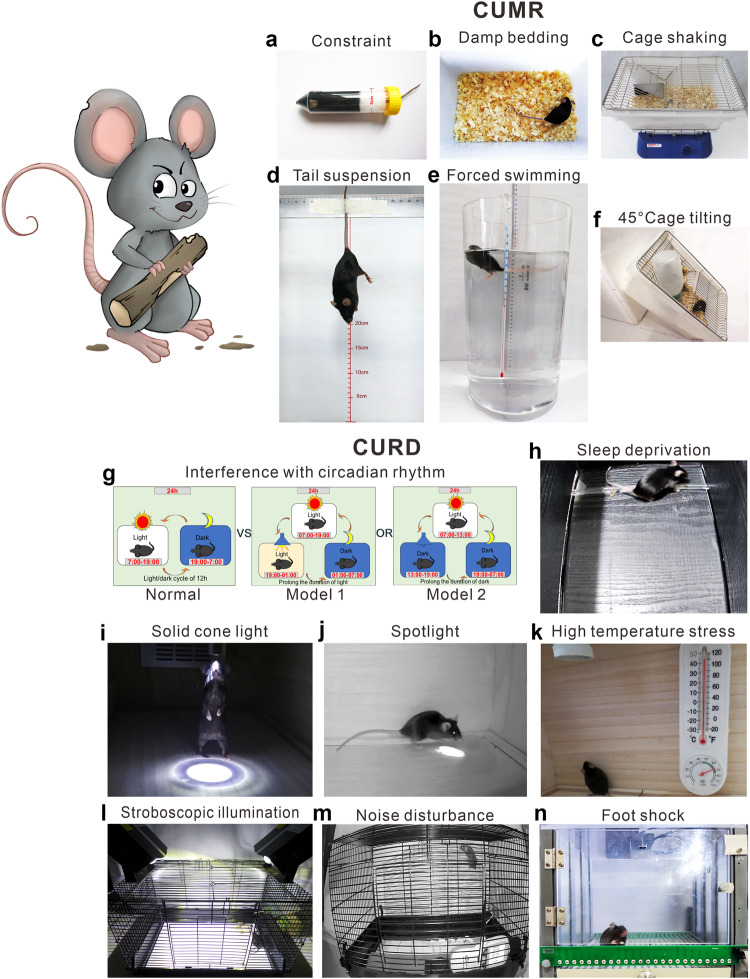
“398 Recently, we constructed an improved depression model named the chronic unpredictable mild restraint (CUMR) model by using environmental interference.”
MethodSex-specific transcriptional signatures in human depression
Labonté, B., Engmann, O., Purushothaman, I., Menard, C., Wang, J., Tan, C., Scarpa, J. R., Moy, G., Loh, Y.-H. E., Cahill, M., et al. (2017) · Nature Medicine · doi:10.1038/nm.4386 · Cited by 748 · cited 1×
“33 In addition, studies of drug gene interactions, transcriptional genes associated with the risk of MDD are also reported, such as D2 subtype of the dopamine receptor (DRD2) and fatty acid desaturase (FADS), 34 which may serve as promising new targets for therapeutic intervention points.”
BackgroundChoi, K. W., Chen, C.-Y., Stein, M. B., Klimentidis, Y. C., Wang, M.-J., Koenen, K. C., Smoller, J. W., & Major Depressive Disorder Working Group of the Psychiatric Genomics Consortium (2019) · JAMA Psychiatry · doi:10.1001/jamapsychiatry.2018.4175 · Cited by 744 · cited 1×
“312,313 317 – 319 Furthermore, physical exercise for approximately 45 minutes per day can signi fi cantly reduce the risk of MDD. 320,321 High-intensity activity, such as aerobic exercise, dancing, and the usage of exercise machines, and low-intensity exercises, including yoga and stretching, can…”
BackgroundAstrocyte function from information processing to cognition and cognitive impairment
Santello, M., Toni, N., & Volterra, A. (2019) · Nature Neuroscience · doi:10.1038/s41593-018-0325-8 · Cited by 737 · cited 1×
“159 To explore ef fi cient treatments for MDD, it is important to focus on how to regulate the E/I balance and neuronal remodeling.”
BackgroundDaly, E. J., Singh, J. B., Fedgchin, M., Cooper, K., Lim, P., Shelton, R. C., Thase, M. E., Winokur, A., Van Nueten, L., Manji, H., et al. (2018) · JAMA Psychiatry · doi:10.1001/jamapsychiatry.2017.3739 · Cited by 718
Tricyclic antidepressant pharmacology and therapeutic drug interactions updated
Gillman, P. K. (2007) · British Journal of Pharmacology · doi:10.1038/sj.bjp.0707253 · Cited by 694 · cited 1×
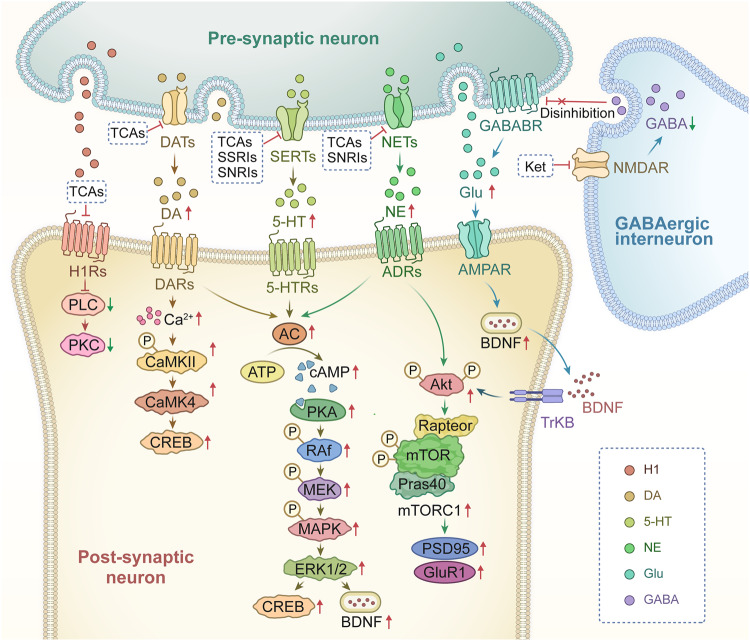
“…SNRIs can all inhibit the reuptake of 5-HT by SERTs, specially SSRIs have the selective inhibition on SERTs, which increase the concentration of 5-HT in the synaptic gap and play antidepressive roles by effecting on 5-HTRs in postsynaptic membrane, 343,344 which also activate the cAMP-PKA pathway.”
BackgroundMonroe, S. M., & Harkness, K. L. (2005) · Psychological Review · doi:10.1037/0033-295x.112.2.417 · Cited by 693
McClintock, S. M., Reti, I. M., Carpenter, L. L., McDonald, W. M., Dubin, M., Taylor, S. F., Cook, I. A., O’Reardon, J., Husain, M. M., Wall, C., et al. (2018) · The Journal of Clinical Psychiatry · doi:10.4088/jcp.16cs10905 · Cited by 693
Galland, L. (2010) · Nutrition in Clinical Practice · doi:10.1177/0884533610385703 · Cited by 677
Chiba, S., Numakawa, T., Ninomiya, M., Richards, M. C., Wakabayashi, C., & Kunugi, H. (2012) · Progress in Neuro-Psychopharmacology and Biological Psychiatry · doi:10.1016/j.pnpbp.2012.05.018 · Cited by 673
Prefrontal cortex and depression
Pizzagalli, D. A., & Roberts, A. C. (2022) · Neuropsychopharmacology · doi:10.1038/s41386-021-01101-7 · Cited by 667 · cited 1×
“New multi-modal evaluation scales Given that structural and functional abnormalities are associated with MDD, 274 using multimodal approaches is more appropriate than relying on a single feature for the diagnosis of MDD.”
MethodAntidepressant drugs act by directly binding to TRKB neurotrophin receptors
Casarotto, P. C., Girych, M., Fred, S. M., Kovaleva, V., Moliner, R., Enkavi, G., Biojone, C., Cannarozzo, C., Sahu, M. P., Kaurinkoski, K., et al. (2021) · Cell · doi:10.1016/j.cell.2021.01.034 · Cited by 663
Psilocybin induces rapid and persistent growth of dendritic spines in frontal cortex in vivo
Shao, L.-X., Liao, C., Gregg, I., Davoudian, P. A., Savalia, N. K., Delagarza, K., & Kwan, A. C. (2021) · doi:10.1101/2021.02.17.431629 · Cited by 628 · cited 1×
“388 To further dissociate the hallucinogens effects from the psychedelics can be bene fi cial to develop more speci fi c antidepressants with better therapeutic capacities.”
Psilocybin induces rapid and persistent growth of dendritic spines in frontal cortex in vivo
Shao, L.-X., Liao, C., Gregg, I., Davoudian, P. A., Savalia, N. K., Delagarza, K., & Kwan, A. C. (2021) · Neuron · doi:10.1016/j.neuron.2021.06.008 · Cited by 626
Astrocyte-derived ATP modulates depressive-like behaviors
Cao, X., Li, L.-P., Wang, Q., Wu, Q., Hu, H.-H., Zhang, M., Fang, Y.-Y., Zhang, J., Li, S.-J., Xiong, W.-C., et al. (2013) · Nature Medicine · doi:10.1038/nm.3162 · Cited by 615
Self-citationHoward, D. M., Adams, M. J., Shirali, M., Clarke, T.-K., Marioni, R. E., Davies, G., Coleman, J. R. I., Alloza, C., Shen, X., Barbu, M. C., et al. (2018) · Nature Communications · doi:10.1038/s41467-018-03819-3 · Cited by 612
Major Depression and Its Recurrences: Life Course Matters
Monroe, S. M., & Harkness, K. L. (2022) · Annual Review of Clinical Psychology · doi:10.1146/annurev-clinpsy-072220-021440 · Cited by 608 · cited 2×
“…role in MDD. 17 Pharmacological ablation of astrocytes in the medial prefrontal cortex (mPFC) causes depressive-like symptoms in experimental animals, 18 and postmortem studies of patients with MDD have shown reduced densities of glial cells in the prefrontal cortex (PFC), hippocampus and amygdala.”
BackgroundWise, T., Radua, J., Via, E., Cardoner, N., Abe, O., Adams, T. M., Amico, F., Cheng, Y., Cole, J. H., de Azevedo Marques Périco, C., et al. (2017) · Molecular Psychiatry · doi:10.1038/mp.2016.72 · Cited by 606 · cited 1×
“264 It has been reported that abnormal gray matter volume (GMV) in several brain regions is positively correlated with MDD. 265,266 Regarding functional MRI, recent studies have revealed that cerebral functional abnormalities are not limited to speci fi c brain regions in patients with MDD.”
BackgroundA brief history of the development of antidepressant drugs: From monoamines to glutamate.
Hillhouse, T. M., & Porter, J. H. (2015) · Experimental and Clinical Psychopharmacology · doi:10.1037/a0038550 · Cited by 605 · cited 1×
“342 TCAs have a common three-ring chemical structure, and the main TCAs are imipramine, amitriptyline, clomipramine, desipramine and doxepin.”
BackgroundAstrocyte Pathology in Major Depressive Disorder: Insights from Human Postmortem Brain Tissue
Rajkowska, G., & Stockmeier, C. (2013) · Current Drug Targets · doi:10.2174/13894501113149990156 · Cited by 603 · cited 10×
“171 In our previous study, we reported that the expression of AQP4 was decreased by exposure to CUMS, which contributed to dysfunction of glymphatic circulation and depressive-like behaviors in mice.”
BackgroundInfluentialAstroglial Kir4.1 in the lateral habenula drives neuronal bursts in depression
Cui, Y., Yang, Y., Ni, Z., Dong, Y., Cai, G., Foncelle, A., Ma, S., Sang, K., Tang, S., Li, Y., et al. (2018) · Nature · doi:10.1038/nature25752 · Cited by 597 · cited 1×
“73 Astrocytes in the lateral habeula are involved in regulating depressive-like behavior, 74 whereas the reward circuit is mediated by the striatum.”
BackgroundMetabolomics enables precision medicine: “A White Paper, Community Perspective”
for “Precision Medicine and Pharmacometabolomics Task Group”-Metabolomics Society Initiative, Beger, R. D., Dunn, W., Schmidt, M. A., Gross, S. S., Kirwan, J. A., Cascante, M., Brennan, L., Wishart, D. S., Oresic, M., et al. (2016) · Metabolomics · doi:10.1007/s11306-016-1094-6 · Cited by 592 · cited 1×
“466 It is often used to analyze the mechanisms underlying disease occurrence and progression and the effects of small-molecule compounds.”
BackgroundNorden, D. M., Trojanowski, P. J., Villanueva, E., Navarro, E., & Godbout, J. P. (2016) · Glia · doi:10.1002/glia.22930 · Cited by 590 · cited 1×
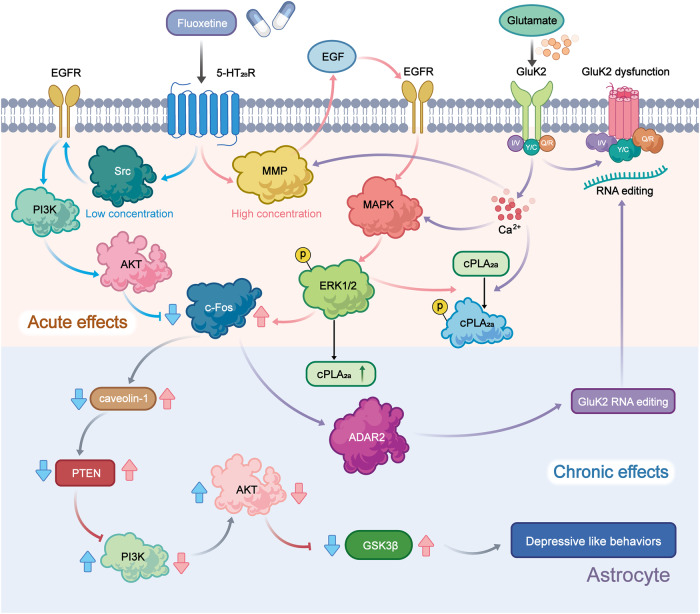
“146 According to previous studies, fl uoxetine stimulates c-Fos expression and ERK 1/2 phosphorylation, which in turn promotes BDNF production in astrocytes sorting from GFAP-GFP transgenic mice.”
Effect of sunlight and season on serotonin turnover in the brain
Lambert, G., Reid, C., Kaye, D., Jennings, G., & Esler, M. (2002) · The Lancet · doi:10.1016/s0140-6736(02)11737-5 · Cited by 587
5-HT1A receptor function in major depressive disorder
Savitz, J., Lucki, I., & Drevets, W. C. (2009) · Progress in Neurobiology · doi:10.1016/j.pneurobio.2009.01.009 · Cited by 574
Inflammasome signaling affects anxiety- and depressive-like behavior and gut microbiome composition
Wong, M.-L., Inserra, A., Lewis, M. D., Mastronardi, C. A., Leong, L., Choo, J., Kentish, S., Xie, P., Morrison, M., Wesselingh, S. L., et al. (2016) · Molecular Psychiatry · doi:10.1038/mp.2016.46 · Cited by 568 · cited 2×
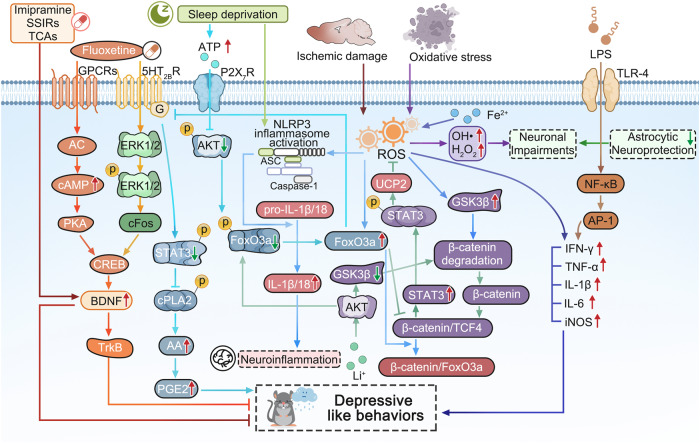
“156,157 Research on the effect of astrocyte-speci fi c NLRP3 knockout suggests that the astrocytic NLRP3 in fl ammasome exerts a signi fi cant effect on astrocytic pyroptosis via the Casp-1/GSDMD pathway in depression.”
BackgroundExercise induces cerebral VEGF and angiogenesis via the lactate receptor HCAR1
Morland, C., Andersson, K. A., Haugen, Ø. P., Hadzic, A., Kleppa, L., Gille, A., Rinholm, J. E., Palibrk, V., Diget, E. H., Kennedy, L. H., et al. (2017) · Nature Communications · doi:10.1038/ncomms15557 · Cited by 559 · cited 1×
“…can effectively prevent depression by affecting many molecular and cellular pathways; for instance, physical exercise can stimulate VEGF expression, 310,311 leading to cellular level changes, such as stimulation of angiogenesis, increased delivery of neurotrophic factors and oxygen by the vascular…”
BackgroundZhang, J.-C., Yao, W., & Hashimoto, K. (2016) · Current Neuropharmacology · doi:10.2174/1570159x14666160119094646 · Cited by 538
Nagy, C., Maitra, M., Tanti, A., Suderman, M., Théroux, J.-F., Davoli, M. A., Perlman, K., Yerko, V., Wang, Y. C., Tripathy, S. J., et al. (2020) · Nature Neuroscience · doi:10.1038/s41593-020-0621-y · Cited by 532
Self-citationLocal Ca2+ detection and modulation of synaptic release by astrocytes
Di Castro, M. A., Chuquet, J., Liaudet, N., Bhaukaurally, K., Santello, M., Bouvier, D., Tiret, P., & Volterra, A. (2011) · Nature Neuroscience · doi:10.1038/nn.2929 · Cited by 529
Nagy, C., Maitra, M., Tanti, A., Suderman, M., Théroux, J.-F., Mechawar, N., Ragoussis, J., & Turecki, G. (2018) · doi:10.1101/384479 · Cited by 523
Arioz, B. I., Tastan, B., Tarakcioglu, E., Tufekci, K. U., Olcum, M., Ersoy, N., Bagriyanik, A., Genc, K., & Genc, S. (2019) · Frontiers in Immunology · doi:10.3389/fimmu.2019.01511 · Cited by 516 · cited 1×
“224 In addition, the extracellular matrix (ECM) plays a signi fi cant role in maintaining normal communication in mature neural networks, which can limit the synaptic restriction of glutamate.”
BackgroundMode of action of antidepressant drugs
Sulser, F., Vetulani, J., & Mobley, P. L. (1978) · Biochemical Pharmacology · doi:10.1016/0006-2952(78)90226-5 · Cited by 515 · cited 2×
“…SNRIs can all inhibit the reuptake of 5-HT by SERTs, specially SSRIs have the selective inhibition on SERTs, which increase the concentration of 5-HT in the synaptic gap and play antidepressive roles by effecting on 5-HTRs in postsynaptic membrane, 343,344 which also activate the cAMP-PKA pathway.”
BackgroundLight Affects Mood and Learning through Distinct Retina-Brain Pathways
Fernandez, D. C., Fogerson, P. M., Lazzerini Ospri, L., Thomsen, M. B., Layne, R. M., Severin, D., Zhan, J., Singer, J. H., Kirkwood, A., Zhao, H., et al. (2018) · Cell · doi:10.1016/j.cell.2018.08.004 · Cited by 505
Molecular pathways of major depressive disorder converge on the synapse
Fries, G. R., Saldana, V. A., Finnstein, J., & Rein, T. (2023) · Molecular Psychiatry · doi:10.1038/s41380-022-01806-1 · Cited by 504 · cited 1×
“It has been proved that the changes in the structure and function of neurons may occur under the chronic stress and lead to the occurrence of MDD. 37,38 In some MDD patients, stress leads to long-term elevated glucocorticoids, resulting in synaptic structural changes and remodeling, and the…”
BackgroundOverview of the Genetics of Major Depressive Disorder
Lohoff, F. W. (2010) · Current Psychiatry Reports · doi:10.1007/s11920-010-0150-6 · Cited by 498 · cited 1×
“24 Recent family, twin, and adoption studies suggests that genetic factors play a crucial role in the occurrence of MDD. 25 As a genetically diverse illness, MDD has a heritability of 30 – 50%.”
BackgroundMalison, R. T., Price, L. H., Berman, R., van Dyck, C. H., Pelton, G. H., Carpenter, L., Sanacora, G., Owens, M. J., Nemeroff, C. B., Rajeevan, N., et al. (1998) · Biological Psychiatry · doi:10.1016/s0006-3223(98)00272-8 · Cited by 496
Adult hippocampal neurogenesis is regulated by the microbiome
Ogbonnaya, E. S., Clarke, G., Shanahan, F., Dinan, T. G., Cryan, J. F., & O’Leary, O. F. (2015) · Biological Psychiatry · doi:10.1016/j.biopsych.2014.12.023 · Cited by 491 · cited 1×
“…fi ed the importance of the interaction among the microbiota, gut permeability, and immune-in fl ammatory processes in the pathophysiology of MDD. 301 Because the interaction of bacteria of some taxa in the gut with peripheral in fl ammation with the brain may be related to depression…”
BackgroundLower synaptic density is associated with depression severity and network alterations
Holmes, S. E., Scheinost, D., Finnema, S. J., Naganawa, M., Davis, M. T., DellaGioia, N., Nabulsi, N., Matuskey, D., Angarita, G. A., Pietrzak, R. H., et al. (2019) · Nature Communications · doi:10.1038/s41467-019-09562-7 · Cited by 484
Soh, H. L., Ho, R. C., Ho, C. S., & Tam, W. W. (2020) · Sleep Medicine · doi:10.1016/j.sleep.2020.08.020 · Cited by 482
Psychedelics promote plasticity by directly binding to BDNF receptor TrkB
Moliner, R., Girych, M., Brunello, C. A., Kovaleva, V., Biojone, C., Enkavi, G., Antenucci, L., Kot, E. F., Goncharuk, S. A., Kaurinkoski, K., et al. (2023) · Nature Neuroscience · doi:10.1038/s41593-023-01316-5 · Cited by 478 · cited 2×
“384 Psilocybin, a classical psychedelic, can play its antidepressant roles by activating 5-HT 2A receptors (5-HT 2A R).”
BackgroundGender differences in depression: Findings from the STAR*D study
Marcus, S. M., Young, E. A., Kerber, K. B., Kornstein, S., Farabaugh, A. H., Mitchell, J., Wisniewski, S. R., Balasubramani, G. K., Trivedi, M. H., & Rush, A. J. (2005) · Journal of Affective Disorders · doi:10.1016/j.jad.2004.09.008 · Cited by 456 · cited 1×
“447,448 In postmortem samples of patients who committed suicide due to MDD, the expression of DNA methyltransferases (DNMTs) in the frontopolar cortex was found to be more signi fi cantly increased in women than in men; elevated methylation is associated with decreased levels of the GABA A receptor…”
BackgroundImmune mechanisms linked to depression via oxidative stress and neuroprogression
Bakunina, N., Pariante, C. M., & Zunszain, P. A. (2015) · Immunology · doi:10.1111/imm.12443 · Cited by 444 · cited 1×
“140 Evidence suggests that MDD is associated with the immune response, as shown by increased levels of IL-1 β , TNF-α , and IL-6.”
BackgroundProspective biomarkers of major depressive disorder: A systematic review and meta-analysis
Kennis, M., Gerritsen, L., van Dalen, M., Williams, A., Cuijpers, P., & Bockting, C. (2020) · Molecular Psychiatry · doi:10.1038/s41380-019-0585-z · Cited by 435 · cited 1×
“145 Under normal conditions, astrocytes release various nutrients and cytokines.”
BackgroundMutz, J., Vipulananthan, V., Carter, B., Hurlemann, R., Fu, C. H. Y., & Young, A. H. (2019) · BMJ · doi:10.1136/bmj.l1079 · Cited by 427
Depression Heterogeneity and Its Biological Underpinnings: Toward Immunometabolic Depression
Milaneschi, Y., Lamers, F., Berk, M., & Penninx, B. W. J. H. (2020) · Biological Psychiatry · doi:10.1016/j.biopsych.2020.01.014 · Cited by 425 · cited 1×
“…‒ pituitary ‒ adrenal (HPA) axis dysfunction hypothesis, (ii) the monoamine hypothesis, (iii) the in fl ammatory hypothesis, (iv) the genetic and epigenetic anomaly hypothesis, (v) the structural and functional brain remodeling hypothesis, and (vi) the social psychological hypothesis 3,15,16 (Fig.”
BackgroundSocial relationships and depression: ten-year follow-up from a nationally representative study
Teo, A. R., Choi, H., & Valenstein, M. (2013) · PLoS ONE · doi:10.1371/journal.pone.0062396 · Cited by 423 · cited 1×
“331,335 Social support itself, especially emotional support, 340 may alleviate and prevent depressive symptoms, and support from family members or friends can replace formal health care.”
BackgroundLevey, D. F., Stein, M. B., Wendt, F. R., Pathak, G. A., Zhou, H., Aslan, M., Quaden, R., Harrington, K. M., Nuñez, Y. Z., Overstreet, C., et al. (2021) · Nature Neuroscience · doi:10.1038/s41593-021-00860-2 · Cited by 422 · cited 1×
“33 In addition, studies of drug gene interactions, transcriptional genes associated with the risk of MDD are also reported, such as D2 subtype of the dopamine receptor (DRD2) and fatty acid desaturase (FADS), 34 which may serve as promising new targets for therapeutic intervention points.”
BackgroundAdolescent and adult differences in major depression symptom profiles
Rice, F., Riglin, L., Lomax, T., Souter, E., Potter, R., Smith, D. J., Thapar, A. K., & Thapar, A. (2019) · Journal of Affective Disorders · doi:10.1016/j.jad.2018.09.015 · Cited by 421
Pan, Y., Chen, X.-Y., Zhang, Q.-Y., & Kong, L.-D. (2014) · Brain, Behavior, and Immunity · doi:10.1016/j.bbi.2014.04.007 · Cited by 405 · cited 1×
“244 In particular, microglia and astrocytes are activated and undergo atrophy, respectively.”
BackgroundAkhondzadeh, S., Jafari, S., Raisi, F., Nasehi, A. A., Ghoreishi, A., Salehi, B., Mohebbi-Rasa, S., Raznahan, M., & Kamalipour, A. (2009) · Depression and Anxiety · doi:10.1002/da.20589 · Cited by 397
The role of astroglia in neuroprotection
Bélanger, M., & Magistretti, P. J. (2009) · Dialogues in Clinical Neuroscience · doi:10.31887/dcns.2009.11.3/mbelanger · Cited by 396 · cited 3×
“135 Astrocytes are the major producers of glutathione in the brain because they express a system xc-cyttine/glutamate antiporter, which does not exist in neurons; hence, neurons cannot synthesize glutathione.”
InfluentialRonaldson, P. T., & Davis, T. P. (2020) · Journal of Cerebral Blood Flow & Metabolism · doi:10.1177/0271678x20951995 · Cited by 392 · cited 1×
“231 The stress response is a complex array of behavioral, neuroendocrine, autonomic, and immunological responses that enable adaptation to unpleasant psychological and physiological stimuli.”
BackgroundCircadian clock protein BMAL1 regulates IL-1β in macrophages via NRF2
Early, J. O., Menon, D., Wyse, C. A., Cervantes-Silva, M. P., Zaslona, Z., Carroll, R. G., Palsson-McDermott, E. M., Angiari, S., Ryan, D. G., Corcoran, S. E., et al. (2018) · Proceedings of the National Academy of Sciences · doi:10.1073/pnas.1800431115 · Cited by 389 · cited 3×
“138 Neuroendocrine-immune activities can be compromised by in fl ammation, which can also result in numerous disorders, such as MDD. Proin fl ammatory cytokines have become pathological indicators of MDD, and using the right antioxidants to combat ROS may be a useful method for treating MDD. Proin fl…”
BackgroundMethodSequeira, A., Mamdani, F., Ernst, C., Vawter, M. P., Bunney, W. E., Lebel, V., Rehal, S., Klempan, T., Gratton, A., Benkelfat, C., et al. (2009) · PLoS ONE · doi:10.1371/journal.pone.0006585 · Cited by 388 · cited 2×
“22, 208,209 It shows the imbalance in cortical-subcortical limbic regions with decreased GABAergic signaling and increased glutamatergic signaling.”
BackgroundIwata, M., Ota, K. T., Li, X.-Y., Sakaue, F., Li, N., Dutheil, S., Banasr, M., Duric, V., Yamanashi, T., Kaneko, K., et al. (2016) · Biological Psychiatry · doi:10.1016/j.biopsych.2015.11.026 · Cited by 387 · cited 1×
“197 ,198 Regulated in development and DNA damage response-1 (REDD1) is a stress response gene that can regulate development and the response to DNA damage.”
BackgroundSlavich, G. M., & Sacher, J. (2019) · Psychopharmacology · doi:10.1007/s00213-019-05326-9 · Cited by 383 · cited 1×
“36 The exact pathological mechanism by which social stress results in the development of MDD is still not known, mainly due to the dif fi culty of separating social factors from genetic factors in patients and the impracticality of exposing disease model animals to relevant environmental factors.”
BackgroundHesselgrave, N., Troppoli, T. A., Wulff, A. B., Cole, A. B., & Thompson, S. M. (2021) · Proceedings of the National Academy of Sciences · doi:10.1073/pnas.2022489118 · Cited by 378 · cited 1×
“386 This proposes 5-HT 2A R may not be the real pharmacological target for its antidepressant effects.”
BackgroundThe recent progress in animal models of depression
Wang, Q., Timberlake, M. A., Prall, K., & Dwivedi, Y. (2017) · Progress in Neuro-Psychopharmacology and Biological Psychiatry · doi:10.1016/j.pnpbp.2017.04.008 · Cited by 370
Deng, Y., Zhou, M., Wang, J., Yao, J., Yu, J., Liu, W., Wu, L., Wang, J., & Gao, R. (2021) · Gut Microbes · doi:10.1080/19490976.2020.1869501 · Cited by 362
High-Fat Diet Induced Anxiety and Anhedonia: Impact on Brain Homeostasis and Inflammation
Dutheil, S., Ota, K. T., Wohleb, E. S., Rasmussen, K., & Duman, R. S. (2016) · Neuropsychopharmacology · doi:10.1038/npp.2015.357 · Cited by 355
Smolders, K. C. H. J., de Kort, Y. A. W., & Cluitmans, P. J. M. (2012) · Physiology & Behavior · doi:10.1016/j.physbeh.2012.04.028 · Cited by 353
Abbasi, S.-H., Hosseini, F., Modabbernia, A., Ashrafi, M., & Akhondzadeh, S. (2012) · Journal of Affective Disorders · doi:10.1016/j.jad.2012.03.033 · Cited by 339
Yue, N., Huang, H., Zhu, X., Han, Q., Wang, Y., Li, B., Liu, Q., Wu, G., Zhang, Y., & Yu, J. (2017) · Journal of Neuroinflammation · doi:10.1186/s12974-017-0865-y · Cited by 334 · cited 1×
“94 Polimorphisms at P2X 7 R increase vulnerability to mood disorders whereas P2X 2 R-mediated neuronal activity is decreased in mice exposed to chronic stress due to insuf fi cient ATP release from astrocytes.”
BackgroundSelf-citationEstrogen, Stress, and Depression: Cognitive and Biological Interactions
Albert, K. M., & Newhouse, P. A. (2019) · Annual Review of Clinical Psychology · doi:10.1146/annurev-clinpsy-050718-095557 · Cited by 334 · cited 1×
“8 Additionally, autumn and winter have been reported to be associated with a high incidence of MDD, namely, seasonal depression.”
BackgroundPoulter, M. O., Du, L., Weaver, I. C. G., Palkovits, M., Faludi, G., Merali, Z., Szyf, M., & Anisman, H. (2008) · Biological Psychiatry · doi:10.1016/j.biopsych.2008.05.028 · Cited by 331 · cited 1×
“449 A gene array meta-analysis also revealed sex differences in MDD, with depressed females being more likely than depressed men to have lower production of somatostatin, a GABA neuron biomarker in corticolimbic brain regions according to postmortem analysis.”
BackgroundCoelho, F. G. D. M., Gobbi, S., Andreatto, C. A. A., Corazza, D. I., Pedroso, R. V., & Santos-Galduróz, R. F. (2013) · Archives of Gerontology and Geriatrics · doi:10.1016/j.archger.2012.06.003 · Cited by 327
Dopamine-Evoked Synaptic Regulation in the Nucleus Accumbens Requires Astrocyte Activity
Corkrum, M., Covelo, A., Lines, J., Bellocchio, L., Pisansky, M., Loke, K., Quintana, R., Rothwell, P. E., Lujan, R., Marsicano, G., et al. (2020) · Neuron · doi:10.1016/j.neuron.2019.12.026 · Cited by 327 · cited 1×
“79 Sulpiride is an antidepressant that blocks the ability of the GLT-1 inhibitor TFB-TBOA to induce synaptic depression 80 and partly attenuates the impact of fl uorocitrate (a metabolic uncoupler that blocks aconitase in the tricarboxylic acid (TCA) cycle) on synaptic output.”
BackgroundAssociation of high-sensitivity C-reactive protein with de novo major depression
Pasco, J. A., Nicholson, G. C., Williams, L. J., Jacka, F. N., Henry, M. J., Kotowicz, M. A., Schneider, H. G., Leonard, B. E., & Berk, M. (2010) · British Journal of Psychiatry · doi:10.1192/bjp.bp.109.076430 · Cited by 321 · cited 1×
“138,139 Although depression can cause in fl ammation, its cause is still unclear and may be in fl uenced and regulated by immune cells, in fl ammatory cytokines, and the nervous system.”
BackgroundPro- and Anti-Inflammatory Cytokine Balance in Major Depression: Effect of Sertraline Therapy
Sutcigil, L., Oktenli, C., Musabak, U., Bozkurt, A., Cansever, A., Uzun, O., Sanisoglu, S. Y., Yesilova, Z., Ozmenler, N., Ozsahin, A., et al. (2007) · Clinical and Developmental Immunology · doi:10.1155/2007/76396 · Cited by 315 · cited 1×
“391,392 Venlafaxine has also been reported to exert neuroprotection by increasing the production of FGF-2 and TGF-β 1 in astrocytes following stroke.”
BackgroundKaster, M. P., Machado, N. J., Silva, H. B., Nunes, A., Ardais, A. P., Santana, M., Baqi, Y., Müller, C. E., Rodrigues, A. L. S., Porciúncula, L. O., et al. (2015) · Proceedings of the National Academy of Sciences · doi:10.1073/pnas.1423088112 · Cited by 312 · cited 1×
“102 Additionally, neuronal A1 receptors exhibit hypofunction caused by a decrease in astrocyte-derived adenosine levels; 103 this decrease, as well as depressive-like behavior, can be reversed by certain antidepressants.”
BackgroundStructure-based discovery of nonhallucinogenic psychedelic analogs
Cao, D., Yu, J., Wang, H., Luo, Z., Liu, X., He, L., Qi, J., Fan, L., Tang, L., Chen, Z., et al. (2022) · Science · doi:10.1126/science.abl8615 · Cited by 312 · cited 1×
“387 Thus, the administration of psilocybin can rapidly and persistently induce neuronal dendritic remodeling in the medial frontal cortex of mice, and the psilocybin-induced newly formed dendritic spines can successfully transform functional synapses, suggesting that synaptic rewiring may also be…”
BackgroundSelf-citationSocial support moderates stress effects on depression
Wang, X., Cai, L., Qian, J., & Peng, J. (2014) · International Journal of Mental Health Systems · doi:10.1186/1752-4458-8-41 · Cited by 309 · cited 1×
“331,335 Social support itself, especially emotional support, 340 may alleviate and prevent depressive symptoms, and support from family members or friends can replace formal health care.”
BackgroundAltered Brain Activity in Unipolar Depression Revisited: Meta-analyses of Neuroimaging Studies
Müller, V. I., Cieslik, E. C., Serbanescu, I., Laird, A. R., Fox, P. T., & Eickhoff, S. B. (2017) · JAMA Psychiatry · doi:10.1001/jamapsychiatry.2016.2783 · Cited by 304 · cited 1×
“275 This may be attributed to variations in the types of structural and functional features examined; however, more importantly, very few studies have used multimodal approaches to diagnose MDD. 276 Recently, in a study utilizing multimodal MRI data, patients with MDD were successfully…”
BackgroundFrank, M. G., Miguel, Z. D., Watkins, L. R., & Maier, S. F. (2010) · Brain, Behavior, and Immunity · doi:10.1016/j.bbi.2009.07.008 · Cited by 303
Origin and function of stress-induced IL-6 in murine models
Qing, H., Desrouleaux, R., Israni-Winger, K., Mineur, Y. S., Fogelman, N., Zhang, C., Rashed, S., Palm, N. W., Sinha, R., Picciotto, M. R., et al. (2020) · Cell · doi:10.1016/j.cell.2020.05.054 · Cited by 303 · cited 1×
“232 The HPA axis is a crucial endocrine system that orchestrates this response.”
BackgroundA Visual Circuit Related to Habenula Underlies the Antidepressive Effects of Light Therapy
Huang, L., Xi, Y., Peng, Y., Yang, Y., Huang, X., Fu, Y., Tao, Q., Xiao, J., Yuan, T., An, K., et al. (2019) · Neuron · doi:10.1016/j.neuron.2019.01.037 · Cited by 300
Sun, L., Ma, W., Gao, W., Xing, Y., Chen, L., Xia, Z., Zhang, Z., & Dai, Z. (2019) · Cell Death & Disease · doi:10.1038/s41419-019-1761-4 · Cited by 296 · cited 1×
“152 The sensitization of the NLRP3 in fl ammasome and the suppression of BDNF synthesis result in MDD. 153 In our research, SD is found to reduce BDNF levels and induce depressive-like behaviors in the sorted astrocytes from GFAP-GFP transgenic mice by activating the NLRP3 in fl ammasome.”
BackgroundCavanagh, A., Wilson, C. J., Kavanagh, D. J., & Caputi, P. (2017) · Harvard Review of Psychiatry · doi:10.1097/hrp.0000000000000128 · Cited by 295 · cited 1×
“447,448 In postmortem samples of patients who committed suicide due to MDD, the expression of DNA methyltransferases (DNMTs) in the frontopolar cortex was found to be more signi fi cantly increased in women than in men; elevated methylation is associated with decreased levels of the GABA A receptor…”
BackgroundThe influence of a short-term gluten-free diet on the human gut microbiome
Bonder, M. J., Tigchelaar, E. F., Cai, X., Trynka, G., Cenit, M. C., Hrdlickova, B., Zhong, H., Vatanen, T., Gevers, D., Wijmenga, C., et al. (2016) · Genome Medicine · doi:10.1186/s13073-016-0295-y · Cited by 286
Self-citationBurgdorf, J., Zhang, X.-L., Nicholson, K. L., Balster, R. L., David Leander, J., Stanton, P. K., Gross, A. L., Kroes, R. A., & Moskal, J. R. (2013) · Neuropsychopharmacology · doi:10.1038/npp.2012.246 · Cited by 284 · cited 1×
“482,483 The S-enantiomer of ketamine, esketamine, has been approved by the U.S. Food and Drug Administration (FDA) for depression treatment.”
BackgroundFaecal short chain fatty acids profile is changed in Polish depressive women
Skonieczna-Żydecka, K., Grochans, E., Maciejewska, D., Szkup, M., Schneider-Matyka, D., Jurczak, A., Łoniewski, I., Kaczmarczyk, M., Marlicz, W., Czerwińska-Rogowska, M., et al. (2018) · Nutrients · doi:10.3390/nu10121939 · Cited by 284 · cited 1×
“240 The increased level of in fl ammatory cytokines may be caused by disturbance of the gut microbiota, which may also disrupt the gut barrier.”
BackgroundShawcross, D. L., Sharifi, Y., Canavan, J. B., Yeoman, A. D., Abeles, R. D., Taylor, N. J., Auzinger, G., Bernal, W., & Wendon, J. A. (2011) · Journal of Hepatology · doi:10.1016/j.jhep.2010.07.045 · Cited by 283 · cited 1×
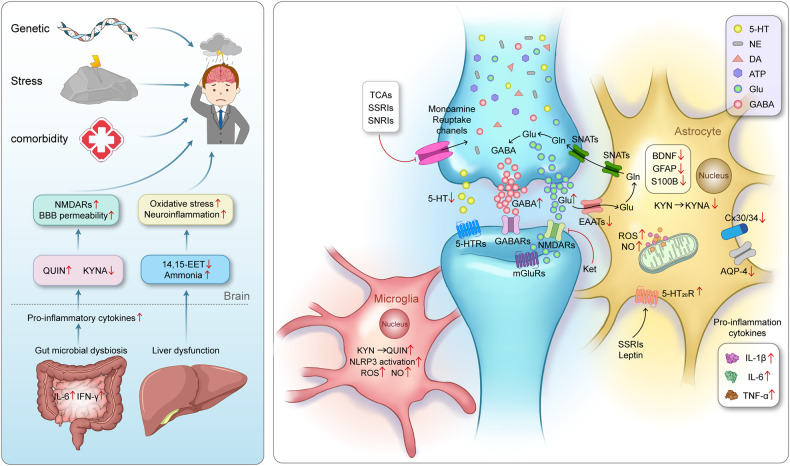
“…axis is clearly disrupted in MDD. 243,248 When liver dysfunction occurs and causes OS and neuroin fl ammation in the brain, which also contribute to the pathophysiology of MDD. 497 Adobe Illustrator was used to generate this fi gure neuroimaging techniques in diagnosing MDD remain inconsistent.”
MethodBeckwith, K. S., Beckwith, M. S., Ullmann, S., Sætra, R. S., Kim, H., Marstad, A., Åsberg, S. E., Strand, T. A., Haug, M., Niederweis, M., et al. (2020) · Nature Communications · doi:10.1038/s41467-020-16143-6 · Cited by 282 · cited 1×
“154,155 The release of proin fl ammatory cytokines is the primary consequence of the activation of caspase-1, a component of the NLRP3 in fl ammasome.”
BackgroundQaseem, A., Barry, M. J., Kansagara, D., & for the Clinical Guidelines Committee of the American College of Physicians (2016) · Annals of Internal Medicine · doi:10.7326/m15-2570 · Cited by 279
Lam, R. W., Levitt, A. J., Levitan, R. D., Michalak, E. E., Cheung, A. H., Morehouse, R., Ramasubbu, R., Yatham, L. N., & Tam, E. M. (2016) · JAMA Psychiatry · doi:10.1001/jamapsychiatry.2015.2235 · Cited by 275
Coffee, Caffeine, and Risk of Depression Among Women
Lucas, M. (2011) · Archives of Internal Medicine · doi:10.1001/archinternmed.2011.393 · Cited by 270 · cited 1×
“100 Since A 2A R polymorphisms are associated with emotional problems, adenosine A 2A R overexpression leads to emotional dysfunction, and A 2A R blockade protects against the persistent emotional disturbance brought on by stress.”
BackgroundLarsen, B. R., Assentoft, M., Cotrina, M. L., Hua, S. Z., Nedergaard, M., Kaila, K., Voipio, J., & MacAulay, N. (2014) · Glia · doi:10.1002/glia.22629 · Cited by 269 · cited 1×
“218 In addition, it also plays an important role in maintaining transmitter homeostasis, in which glutamate and GABA play particularly important roles.”
BackgroundREDD1 is essential for stress-induced synaptic loss and depressive behavior
Ota, K. T., Liu, R.-J., Voleti, B., Maldonado-Aviles, J. G., Duric, V., Iwata, M., Dutheil, S., Duman, C., Boikess, S., Lewis, D. A., et al. (2014) · Nature Medicine · doi:10.1038/nm.3513 · Cited by 267 · cited 1×
“199 According to postmortem studies, the volume of the dlPFC is smaller and the density of neurons in the dlPFC is lower in MDD. 200 BDNF can modulate synaptic plasticity in the brain.”
BackgroundAstroglial cradle in the life of the synapse
Verkhratsky, A., & Nedergaard, M. (2014) · Philosophical Transactions of the Royal Society B: Biological Sciences · doi:10.1098/rstb.2013.0595 · Cited by 266 · cited 1×
“219 In addition to the tripartite synapse, the more recent concepts of the four-part extracellular matrix and the microglial fi ve-part synapse 220 also support the idea that glial dysfunction plays key roles in the early pathological features common to psychiatric disorders.”
BackgroundLarge-Scale Calcium Waves Traveling through Astrocytic Networks In Vivo
Kuga, N., Sasaki, T., Takahara, Y., Matsuki, N., & Ikegaya, Y. (2011) · The Journal of Neuroscience · doi:10.1523/jneurosci.5319-10.2011 · Cited by 261 · cited 1×
“…increase of neurotransmitters in the synaptic cleft, such as glutamate, GABA and ATP, has the high relationship with the pathogenesis of MDD. 41,496 The interaction between neurons and glial cells can induce the oxidative stress, pro-in fl ammatory cytokines released, the reduction of…”
BackgroundGap Junction Dysfunction in the Prefrontal Cortex Induces Depressive-Like Behaviors in Rats
Sun, J.-D., Liu, Y., Yuan, Y.-H., Li, J., & Chen, N.-H. (2012) · Neuropsychopharmacology · doi:10.1038/npp.2011.319 · Cited by 258 · cited 2×
“71 In a randomized controlled trial, MRI scan were taken after treatment with duloxetine and desvenlafaxine, and the results showed that the thalamo-cortico-periaqueductal network, which is associated with the experience of pain, may be an important target of action of antidepressant drugs.”
BackgroundSelf-citationThe Role of Estrogen in Brain and Cognitive Aging
Russell, J. K., Jones, C. K., & Newhouse, P. A. (2019) · Neurotherapeutics · doi:10.1007/s13311-019-00766-9 · Cited by 257 · cited 1×
“118 E2 has been demonstrated in numerous studies to alter systems involved in the pathophysiology of depression, including the serotonin and norepinephrine systems, and to considerably alleviate depressive symptoms in animal models.”
BackgroundDysregulated relationship of inflammation and oxidative stress in major depression
Rawdin, B. J., Mellon, S. H., Dhabhar, F. S., Epel, E. S., Puterman, E., Su, Y., Burke, H. M., Reus, V. I., Rosser, R., Hamilton, S. P., et al. (2013) · Brain, Behavior, and Immunity · doi:10.1016/j.bbi.2012.11.011 · Cited by 255 · cited 1×
“131,132 The brain is particularly sensitive to OS due to numerous variables, including rapid oxidative energy metabolism (a process through which ROS, which are harmful molecules, are constantly produced), high levels of unsaturated fatty acids (which are vulnerable to lipid peroxidation), and…”
BackgroundGrimm, S., Ernst, J., Boesiger, P., Schuepbach, D., Hell, D., Boeker, H., & Northoff, G. (2009) · Human Brain Mapping · doi:10.1002/hbm.20693 · Cited by 255
Cobb, J. A., O’Neill, K., Milner, J., Mahajan, G. J., Lawrence, T. J., May, W. L., Miguel-Hidalgo, J., Rajkowska, G., & Stockmeier, C. A. (2016) · Neuroscience · doi:10.1016/j.neuroscience.2015.12.044 · Cited by 254 · cited 1×
“…a decreased astrocyte density, the levels of GFAP and the GFAP intermediate fi lament domain are also reduced in brain samples from patients with MDD. 167 Researchers have even proposed that the GFAP content in serum can be used to determine the severity of MDD, 168 but this point is controversial.”
BackgroundHellwig, S., Brioschi, S., Dieni, S., Frings, L., Masuch, A., Blank, T., & Biber, K. (2016) · Brain, Behavior, and Immunity · doi:10.1016/j.bbi.2015.11.008 · Cited by 252 · cited 1×
“185 The level of CX3CL1 in the serum is increased in patients with moderate-severe depression compared with healthy subjects; thus, CX3CL1 could be used as a target for depression treatment.”
BackgroundSex differences in glutamate receptor gene expression in major depression and suicide
Gray, A. L., Hyde, T. M., Deep-Soboslay, A., Kleinman, J. E., & Sodhi, M. S. (2015) · Molecular Psychiatry · doi:10.1038/mp.2015.91 · Cited by 250
Biegon, A., Reches, A., Snyder, L., & McEwen, B. S. (1983) · Life Sciences · doi:10.1016/0024-3205(83)90053-x · Cited by 246 · cited 1×
“119 In addition, estradiol may in fl uence the pathogenesis of male MDD patients.”
BackgroundDour, H. J., Wiley, J. F., Roy-Byrne, P., Stein, M. B., Sullivan, G., Sherbourne, C. D., Bystritsky, A., Rose, R. D., & Craske, M. G. (2014) · Depression and Anxiety · doi:10.1002/da.22216 · Cited by 243 · cited 1×
“335 ,339 Studies have reported that when controlling for all other variables, each aspect of social support is clearly associated with MDD, and to some extent, the occurrence of panic disorder in patients with MDD is more strongly associated with poor functional support.”
BackgroundThe S100B protein in biological fluids: more than a lifelong biomarker of brain distress
Michetti, F., Corvino, V., Geloso, M. C., Lattanzi, W., Bernardini, C., Serpero, L., & Gazzolo, D. (2012) · Journal of Neurochemistry · doi:10.1111/j.1471-4159.2011.07612.x · Cited by 242 · cited 2×
“177 S100B secreted by damaged astrocytes can enter the extracellular space and CSF, 178 and the level of S100B is increased in the dorsolateral prefrontal cortex (dlPFC) of patients with MDD. 179 S100B levels are elevated in the CSF or serum of patients with MDD, 180 which suggests that S100B is a…”
BackgroundDepression: An Important Comorbidity With Metabolic Syndrome in a General Population
Dunbar, J. A., Reddy, P., Davis-Lameloise, N., Philpot, B., Laatikainen, T., Kilkkinen, A., Bunker, S. J., Best, J. D., Vartiainen, E., Kai Lo, S., et al. (2008) · Diabetes Care · doi:10.2337/dc08-0175 · Cited by 241 · cited 3×
“42,43 The relationship between the onset of MDD and several diseases is complex and potentially bidirectional in nature.”
BackgroundExercise moderates age-related atrophy of the medial temporal lobe
Bugg, J. M., & Head, D. (2011) · Neurobiology of Aging · doi:10.1016/j.neurobiolaging.2009.03.008 · Cited by 239
Quesseveur, G., David, D. J., Gaillard, M. C., Pla, P., Wu, M. V., Nguyen, H. T., Nicolas, V, Auregan, G., David, I., Dranovsky, A., et al. (2013) · Translational Psychiatry · doi:10.1038/tp.2013.30 · Cited by 235 · cited 2×
“150 In addition, astrocyte-secreted BDNF can stimulate adult hippocampal neurogenesis and may contribute to synaptic and structural plasticity that underlies the long-lasting behavioral effects of antidepressants.”
BackgroundNettis, M. A., Lombardo, G., Hastings, C., Zajkowska, Z., Mariani, N., Nikkheslat, N., Worrell, C., Enache, D., McLaughlin, A., Kose, M., et al. (2021) · Neuropsychopharmacology · doi:10.1038/s41386-020-00948-6 · Cited by 235
Yoshimura, S., Okamoto, Y., Onoda, K., Matsunaga, M., Okada, G., Kunisato, Y., Yoshino, A., Ueda, K., Suzuki, S.-I., & Yamawaki, S. (2014) · Social Cognitive and Affective Neuroscience · doi:10.1093/scan/nst009 · Cited by 229
Pantazatos, S. P., Huang, Y.-Y., Rosoklija, G. B., Dwork, A. J., Arango, V, & Mann, J. J. (2017) · Molecular Psychiatry · doi:10.1038/mp.2016.130 · Cited by 229 · cited 1×
“…H Member 1 (SERPINH1), IL-8, humanin like-8 (MTRNRL8), and chemokine ligand 4 (CCL4) are among the genes whose expression is altered in MDD. 460,461 According to Gene Ontology (GO) enrichment analysis, MDD is related to decreased expression of genes related to oligodendrocyte development,…”
BackgroundDeletion of Astroglial Connexins Weakens the Blood–Brain Barrier
Ezan, P., André, P., Cisternino, S., Saubaméa, B., Boulay, A.-C., Doutremer, S., Thomas, M.-A., Quenech'du, N., Giaume, C., & Cohen-Salmon, M. (2012) · Journal of Cerebral Blood Flow & Metabolism · doi:10.1038/jcbfm.2012.45 · Cited by 223 · cited 1×
“165 In addition to being an essential component of the developing astrocyte cytoskeleton, GFAP serves as the main intermediate fi lament protein in adult astrocytes.”
BackgroundAn astroglial basis of major depressive disorder? An overview
Wang, Q., Jie, W., Liu, J., Yang, J., & Gao, T. (2017) · Glia · doi:10.1002/glia.23143 · Cited by 222 · cited 1×
“193 In a mouse model of chronic social defeat stress (CSDS), which causes depression, mGluR5 was shown to induce long-term depression (LTD).”
BackgroundGlial and glutamatergic markers in depression, alcoholism, and their comorbidity
Miguel-Hidalgo, J. J., Waltzer, R., Whittom, A. A., Austin, M. C., Rajkowska, G., & Stockmeier, C. A. (2010) · Journal of Affective Disorders · doi:10.1016/j.jad.2010.06.003 · Cited by 218 · cited 1×
“…to generate this fi gure addition, glial fi brillary acidic protein (GFAP), one of the markers of astrocytes, is expressed at various levels, 20 and the levels of connexins, 21 glutamine synthase (GS), glutamate transporter-1 (GLT-1), 21,22 and aquaporin-4 (AQP4) 23 are reduced in patients with MDD.”
BackgroundStructural basis of ketamine action on human NMDA receptors
Zhang, Y., Ye, F., Zhang, T., Lv, S., Zhou, L., Du, D., Lin, H., Guo, F., Luo, C., & Zhu, S. (2021) · Nature · doi:10.1038/s41586-021-03769-9 · Cited by 218 · cited 2×
“192 In a clinical experiment, the effect of supplementary injection of subanes-thetic doses of ketamine on thoughts of suicide in MDD patients was evaluated, and the results showed that the reduction in thoughts of suicide among MDD patients receiving ketamine was mostly sustained.”
BackgroundResultGABA-related transcripts in the dorsolateral prefrontal cortex in mood disorders
Sibille, E., Morris, H. M., Kota, R. S., & Lewis, D. A. (2011) · International Journal of Neuropsychopharmacology · doi:10.1017/s1461145710001616 · Cited by 217 · cited 2×
“212 ,213 Stimulating P2X 7 R in neocortical nerve terminals can block the reuptake of GABA and glutamate by the presynaptic membrane and promote the release of these two neurotransmitters in the cerebral cortex of rats and humans, 214,215 and activation of P2X 7 R reduces the expression of GLAST.”
BackgroundLeclercq, S., De Saeger, C., Delzenne, N., de Timary, P., & Stärkel, P. (2014) · Biological Psychiatry · doi:10.1016/j.biopsych.2014.02.003 · Cited by 216 · cited 2×
“227 In comparison with the healthy population, MDD patients have a much higher incidence and prevalence of chronic liver disease.”
BackgroundMori, K., Ozaki, E., Zhang, B., Yang, L., Yokoyama, A., Takeda, I., Maeda, N., Sakanaka, M., & Tanaka, J. (2002) · Neuropharmacology · doi:10.1016/s0028-3908(02)00211-3 · Cited by 215
Tolkien, K., Bradburn, S., & Murgatroyd, C. (2019) · Clinical Nutrition · doi:10.1016/j.clnu.2018.11.007 · Cited by 215
Halberstadt, A. L., Koedood, L., Powell, S. B., & Geyer, M. A. (2011) · Journal of Psychopharmacology · doi:10.1177/0269881110388326 · Cited by 213 · cited 1×
“385 Thus, to block the 5-HT 2A R can not produce the antidepressant effects of psilocybin, only induce the hallucinogenic-like behaviors in mice.”
BackgroundPage, C. E., & Coutellier, L. (2019) · Neuroscience & Biobehavioral Reviews · doi:10.1016/j.neubiorev.2019.07.024 · Cited by 213 · cited 1×
“158 Astrocytes are recognized to be essential for controlling neural network activity and to take part in higher brain activities.”
BackgroundThe genetic basis of major depression
Kendall, K. M., Van Assche, E., Andlauer, T. F. M., Choi, K. W., Luykx, J. J., Schulte, E. C., & Lu, Y. (2021) · Psychological Medicine · doi:10.1017/s0033291721000441 · Cited by 213 · cited 3×
“26 Genome Wide Association Studies (GWAS) identi fi ed 178 genetic risk loci and proposed over 200 candidate gene, using of biobank data, novel imputation methods, combined with clinical cases improved the ability to identify MDD speci fi c pathways.”
BackgroundSerchov, T., Clement, H.-W., Schwarz, M. K., Iasevoli, F., Tosh, D. K., Idzko, M., Jacobson, K. A., de Bartolomeis, A., Normann, C., Biber, K., et al. (2015) · Neuron · doi:10.1016/j.neuron.2015.07.010 · Cited by 210 · cited 1×
“104,105 HPA axis hypothesis Stress and MDD are closely related, and stressful life events can often lead to depressive episodes.”
BackgroundCoverage of Blood Vessels by Astrocytic Endfeet Is Reduced in Major Depressive Disorder
Rajkowska, G., Hughes, J., Stockmeier, C. A., Javier Miguel-Hidalgo, J., & Maciag, D. (2013) · Biological Psychiatry · doi:10.1016/j.biopsych.2012.09.024 · Cited by 209 · cited 2×
“169 In another postmortem study, it was found that the coverage of blood vessels by AQP4-positive astrocyte terminals was reduced in the OFC of MDD patients.”
BackgroundLuo, Y., Kataoka, Y., Ostinelli, E. G., Cipriani, A., & Furukawa, T. A. (2020) · Frontiers in Psychiatry · doi:10.3389/fpsyt.2020.00035 · Cited by 206 · cited 1×
“Currently, new SNRIs, including duloxetine (DXT), 68 desvenlafaxine (DVS), 69 and venlafaxine, 70 are widely used in MDD patients resistant to other treatments.”
BackgroundSu, K.-P., Lai, H.-C., Yang, H.-T., Su, W.-P., Peng, C.-Y., Chang, J. P.-C., Chang, H.-C., & Pariante, C. M. (2014) · Biological Psychiatry · doi:10.1016/j.biopsych.2014.01.008 · Cited by 205
Power, R. A., Tansey, K. E., Buttenschøn, H. N., Cohen-Woods, S., Bigdeli, T., Hall, L. S., Kutalik, Z., Lee, S. H., Ripke, S., Steinberg, S., et al. (2017) · Biological Psychiatry · doi:10.1016/j.biopsych.2016.05.010 · Cited by 205
Reduced level of glutamic acid decarboxylase-67 kDa in the prefrontal cortex in major depression
Karolewicz, B., Maciag, D., O'Dwyer, G., Stockmeier, C. A., Feyissa, A. M., & Rajkowska, G. (2010) · The International Journal of Neuropsychopharmacology · doi:10.1017/s1461145709990587 · Cited by 203 · cited 1×
“…Decreased cortical levels of GABA and speci fi c populations of GABA neurons have been reported in investigations of postmortem MDD patient tissues, 440 and the SST mRNA level is speci fi cally decreased in patients with MDD. 213 The DR nucleus is the largest and most signi fi cant conduit of…”
BackgroundIrwin, M. R., Carrillo, C., Sadeghi, N., Bjurstrom, M. F., Breen, E. C., & Olmstead, R. (2022) · JAMA Psychiatry · doi:10.1001/jamapsychiatry.2021.3422 · Cited by 203 · cited 1×
“…remission of insomnia-related disorders, and continuous treatment of insomnia with CBT-I can also reduce the occurrence and recurrence of MDD. 286 Circadian rhythm support (CRS) can strengthen the circadian rhythm by means of scheduled bright light exposure, physical activity, and body…”
BackgroundMiller, O. H., Moran, J. T., & Hall, B. J. (2016) · Neuropharmacology · doi:10.1016/j.neuropharm.2015.07.028 · Cited by 200 · cited 1×
“381,382 Furthermore, by inhibiting NMDARs, ketamine can reduce the excitation of speci fi c cortical GABAergic interneurons, resulting in a temporary increase in glutamate release that stimulates postsynaptic AMPA glutamate receptors.”
Background5-HT1A receptors on mature dentate gyrus granule cells are critical for the antidepressant response
Samuels, B. A., Anacker, C., Hu, A., Levinstein, M. R., Pickenhagen, A., Tsetsenis, T., Madroñal, N., Donaldson, Z. R., Drew, L. J., Dranovsky, A., et al. (2015) · Nature Neuroscience · doi:10.1038/nn.4116 · Cited by 200 · cited 1×
“357 Second, SSRIs can impact the 5-HT signaling pathway, activating 5-HT 1A.358,359 In addition, studies have shown that antagonism of 5-HT 2A/2C receptors can enhance the effects of SSRIs such as fl uoxetine.”
BackgroundThe role of microglial P2X7: modulation of cell death and cytokine release
He, Y., Taylor, N., Fourgeaud, L., & Bhattacharya, A. (2017) · Journal of Neuroinflammation · doi:10.1186/s12974-017-0904-8 · Cited by 194 · cited 1×
“197 ,198 Regulated in development and DNA damage response-1 (REDD1) is a stress response gene that can regulate development and the response to DNA damage.”
BackgroundLiu, X., Zheng, P., Zhao, X., Zhang, Y., Hu, C., Li, J., Zhao, J., Zhou, J., Xie, P., & Xu, G. (2015) · Journal of Proteome Research · doi:10.1021/acs.jproteome.5b00144 · Cited by 193
Reduced somatostatin in subgenual anterior cingulate cortex in major depression
Tripp, A., Kota, R. S., Lewis, D. A., & Sibille, E. (2011) · Neurobiology of Disease · doi:10.1016/j.nbd.2011.01.014 · Cited by 190 · cited 1×
“…MDD transcriptome, there are defects in the transcription levels of somatostatin (SST) in the subgenus anterior cingulate cortex and amygdala of MDD patients, 30,31 and SST levels are directly involved in the cellular processes that affect the synaptic output of intermediate neuronal circuits.”
BackgroundMechanisms of action of antidepressants: from neurotransmitter systems to signaling pathways
Taylor, C., Fricker, A. D., Devi, L. A., & Gomes, I. (2005) · Cellular Signalling · doi:10.1016/j.cellsig.2004.12.007 · Cited by 186
Winter, N. R., Leenings, R., Ernsting, J., Sarink, K., Fisch, L., Emden, D., Blanke, J., Goltermann, J., Opel, N., Barkhau, C., et al. (2022) · JAMA Psychiatry · doi:10.1001/jamapsychiatry.2022.1780 · Cited by 186 · cited 1×
“263 Structural MRI techniques, such as voxel-based morphometry (VBM), can be used to detect volume changes in gray matter.”
MethodThe circadian basis of mood disorders: Recent developments and treatment implications
Monteleone, P., & Maj, M. (2008) · European Neuropsychopharmacology · doi:10.1016/j.euroneuro.2008.06.007 · Cited by 185 · cited 1×
“10 The clinical symptoms of MDD include a depressed mood, loss of interest, changes in weight or appetite, and increased likelihood of committing suicide.”
BackgroundSerotonin neurons, neuroplasticity, and homeostasis of neural tissue
Azmitia, E. (1999) · Neuropsychopharmacology · doi:10.1016/s0893-133x(99)00022-6 · Cited by 184 · cited 1×
“441 In postmortem samples of the human brain, several transcriptional regulators are dysregulated within the DR, including transcription-related elements (such as EGR1, TOB1, and CSDA), which bind to genes to stimulate their expression directly or in response to environmental cues, and NRs (NR4A2,…”
BackgroundAlt, S. R., Turner, J. D., Klok, M. D., Meijer, O. C., Lakke, E. A. J. F., DeRijk, R. H., & Muller, C. P. (2010) · Psychoneuroendocrinology · doi:10.1016/j.psyneuen.2009.09.001 · Cited by 184 · cited 2×
“444 Moreover, in postmortem MDD patients, total GR levels are unchanged, while level of GR α in the amygdala and cingulate gyrus is decreased.”
BackgroundPlasma L -Tryptophan Concentration in Major Depressive Disorder: New Data and Meta-Analysis
Ogawa, S., Fujii, T., Koga, N., Hori, H., Teraishi, T., Hattori, K., Noda, T., Higuchi, T., Motohashi, N., & Kunugi, H. (2014) · The Journal of Clinical Psychiatry · doi:10.4088/jcp.13r08908 · Cited by 183 · cited 1×
“53 In addition, low levels of 5-HT and L-tryptophan, which is a precursor of 5-HT, 54 in blood platelets are also found in depressed people.”
BackgroundZhang, J.-C., Yao, W., Dong, C., Yang, C., Ren, Q., Ma, M., & Hashimoto, K. (2017) · Translational Psychiatry · doi:10.1038/tp.2017.112 · Cited by 182 · cited 3×
“243 This increases the levels of cytokines such as IL-1 β and IL-6 and NLRP3 in fl ammasome activation in brain-resident cells.”
BackgroundMethodZou, J., Wang, Y.-X., Dou, F.-F., Lü, H.-Z., Ma, Z.-W., Lu, P.-H., & Xu, X.-M. (2010) · Neurochemistry International · doi:10.1016/j.neuint.2009.12.021 · Cited by 181 · cited 1×
“88,89 In the classic glutamate-glutamine cycle, astrocytes and neurons convert glutamate to the nonexcitatory amino acid glutamine, which is then released back into the extracellular space and absorbed by neurons.”
BackgroundSelf-citationAntidepressant effects of ERβ-selective estrogen receptor modulators in the forced swim test
Walf, A. A., Rhodes, M. E., & Frye, C. A. (2004) · Pharmacology Biochemistry and Behavior · doi:10.1016/j.pbb.2004.03.023 · Cited by 179
Ketamine elicits sustained antidepressant-like activity via a serotonin-dependent mechanism
Gigliucci, V., O’Dowd, G., Casey, S., Egan, D., Gibney, S., & Harkin, A. (2013) · Psychopharmacology · doi:10.1007/s00213-013-3024-x · Cited by 177 · cited 1×
“482,483 The S-enantiomer of ketamine, esketamine, has been approved by the U.S. Food and Drug Administration (FDA) for depression treatment.”
BackgroundOddy, W. H., Allen, K. L., Trapp, G. S. A., Ambrosini, G. L., Black, L. J., Huang, R.-C., Rzehak, P., Runions, K. C., Pan, F., Beilin, L. J., et al. (2018) · Brain, Behavior, and Immunity · doi:10.1016/j.bbi.2018.01.002 · Cited by 176 · cited 1×
“…and saturated fat and low in fi ber and omega-3 fatty acids, 296 which can promote the occurrence of in fl ammation to increase the risk of MDD. 297 One study reported that the chance of being diagnosed with depression is higher among individuals who consume a proin fl ammtory diet than among…”
BackgroundBiesheuvel-Leliefeld, K. E. M., Kok, G. D., Bockting, C. L. H., Cuijpers, P., Hollon, S. D., van Marwijk, H. W. J., & Smit, F. (2015) · Journal of Affective Disorders · doi:10.1016/j.jad.2014.12.016 · Cited by 175
Zrenner, B., Zrenner, C., Gordon, P. C., Belardinelli, P., McDermott, E. J., Soekadar, S. R., Fallgatter, A. J., Ziemann, U., & Müller-Dahlhaus, F. (2020) · Brain Stimulation · doi:10.1016/j.brs.2019.10.007 · Cited by 175
Kaster, T. S., Daskalakis, Z. J., Noda, Y., Knyahnytska, Y., Downar, J., Rajji, T. K., Levkovitz, Y., Zangen, A., Butters, M. A., Mulsant, B. H., et al. (2018) · Neuropsychopharmacology · doi:10.1038/s41386-018-0121-x · Cited by 174
Frye, C. A., & Walf, A. A. (2004) · Behavioral Neuroscience · doi:10.1037/0735-7044.118.2.306 · Cited by 172
Cited by
PI3K/AKT signaling pathway: Molecular mechanisms and therapeutic potential in depression
Guo, N., Wang, X., Xu, M., Bai, J., Yu, H., & Zhang, L. (2024) · Pharmacological Research · doi:10.1016/j.phrs.2024.107300 · Cited by 218
Vagus nerve stimulation (VNS): recent advances and future directions
Austelle, C. W., Cox, S. S., Wills, K. E., & Badran, B. W. (2024) · Clinical Autonomic Research · doi:10.1007/s10286-024-01065-w · Cited by 151
“For example, major depression is associated with alterations in the brain and periphery, including immune and endocrine dysfunction [21].”
BackgroundJiao, W., Lin, J., Deng, Y., Ji, Y., Liang, C., Wei, S., Xi, J., & Yan, F. (2025) · Journal of Neuroinflammation · doi:10.1186/s12974-024-03312-3 · Cited by 144
Sharma, S., Chawla, S., Kumar, P., Ahmad, R., & Verma, P. K. (2024) · Brain Research · doi:10.1016/j.brainres.2024.149123 · Cited by 111
Kalogerakou, T., & Αντωνιάδου, Μ. (2024) · Antioxidants · doi:10.3390/antiox13121508 · Cited by 125
Metadata
- Authors
- Cui, L., Li, S., Wang, S., Wu, X., Liu, Y., Yu, W., Wang, Y., Tang, Y., Xia, M., & Li, B.
- Affiliations
- China Medical University (CN)
- Chengdu University (CN)
- First Hospital of China Medical University (CN)
- Corresponding author
- Xia, Maosheng
- Li, Baoman
- ORCID
- Venue
- Signal Transduction and Targeted Therapy
- Published
- 2024-02-09
- Volume
- 9
- Issue
- 1
- Pages
- 30-30
- ISSN
- 2059-3635 (ISSN-L)
- PMC
- PMC10853571
- OpenAlex
- W4392731282
- Semantic Scholar
- e69e2e42bcc9396c4df790e7a320846a0aa10211
- Cited by
- 1,244
- References
- 514
- Citations by year
- 2026: 536 · 2025: 570 · 2024: 138
- FWCI
- 60.09
- Type
- journal article
- Language
- en
- Open access
- gold
- doi.org
- Licence
- cc-by
- creativecommons.org/licenses/by/4.0 (tdm)
- creativecommons.org/licenses/by/4.0 (vor)
- Locations
- Signal Transduction and Targeted Therapy (publishedVersion, cc-by)
- PubMed Central (publishedVersion, cc-by)
- PubMed (publishedVersion)
- DOAJ (DOAJ: Directory of Open Access Journals) (submittedVersion)
- Funders
- National Natural Science Foundation of China (81871852, 32271038)
- Topics
- Health Sciences › Medicine › Pharmacology (medical) › Treatment of Major Depression
- Life Sciences › Neuroscience › Biological Psychiatry › Tryptophan and brain disorders
- Life Sciences › Neuroscience › Cellular and Molecular Neuroscience › Neurotransmitter Receptor Influence on Behavior
- Keywords
- major depressive disorder, pathogenesis, neurotransmitter hypothesis, hypothalamic-pituitary-adrenal axis, neuroplasticity, antidepressants, therapeutic target, phototherapy, acupuncture, depression prevention, depression diagnosis
- MeSH terms
- Major Depressive Disorder, Humans, Hypothalamo-Hypophyseal System, Pituitary-Adrenal System
About these checks
Registry, retraction, Cites and statistics results are computed, not judged, with one exception: a printed reference that no index lists is read once by a model before it counts as a citation error. Claims are extracted by a model and kept only when their quote appears verbatim in the text; each cited source is then checked, with a model’s help, for whether it says what the claim relies on. Those verdicts can be wrong — read the claim’s quote and the cited source before relying on one.
The claim verdicts this report counts are experimental: their accuracy is not yet measured.
A language model drew the claims from the paper on 2026-09-28, under version 3 of the claim definition (prompt extract-v3).
A second model labelled each claim on 2026-09-28 (model jev-1.13-20260917, definition revision gold-guideline-v0.2).
Cited sources are checked with a language model’s help (gpt-6-sol).
Statistics and arithmetic are recomputed, not judged.
Confidence bands are shown only for fields calibrated on our annotated test set. None is calibrated yet, so no band is shown.
What counts as a claim ›How we measure confidence ›How we check this ›
Are you an author, or do you see a problem with this page? Request a review
Data sources
Bibliographic data: Semantic Scholar, OpenAlex, Crossref.
Contains information from the Semantic Scholar Academic Graph Datasets, made available under the ODC Attribution License (ODC-BY 1.0).
Semantic Scholar’s data is described in: Kinney, R., et al. (2023). The Semantic Scholar Open Data Platform. arXiv:2301.10140.
