

The DOI matches its Crossref record; 833 of the 833 references it cites were found in a registry or an index.
Molecular mechanisms in liver repair and regeneration: from physiology to therapeutics
Open accessAbstract
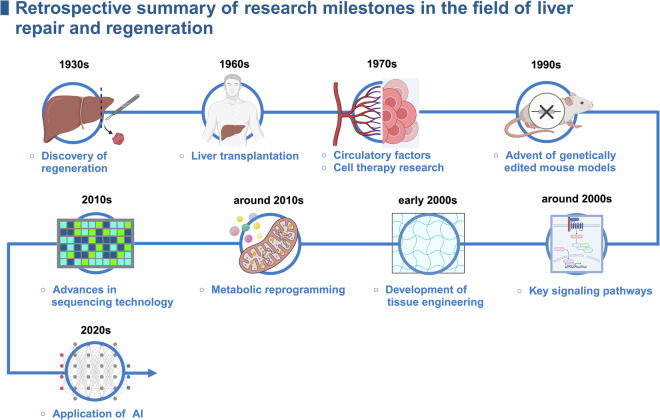
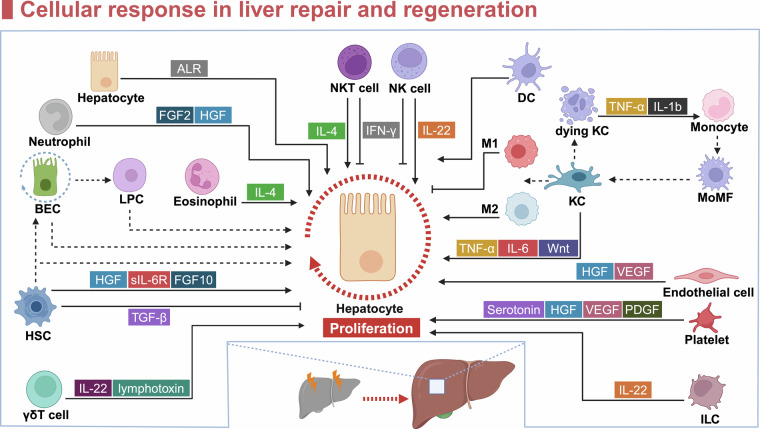
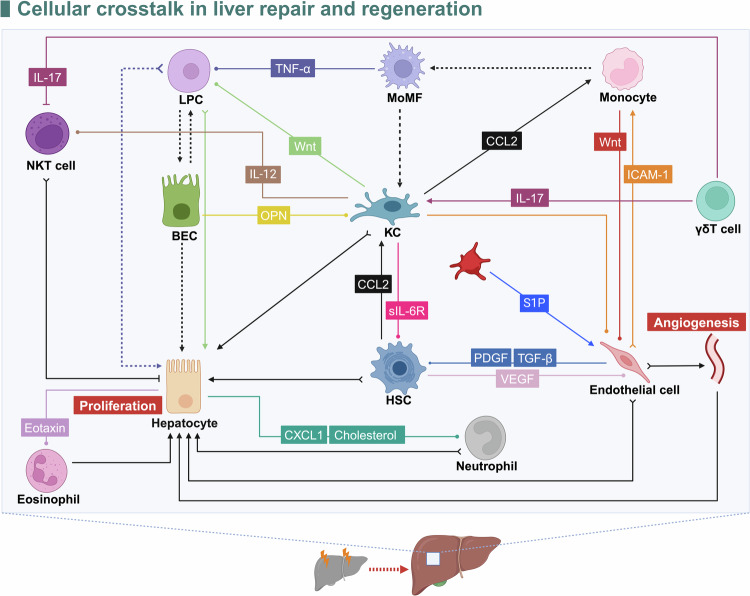
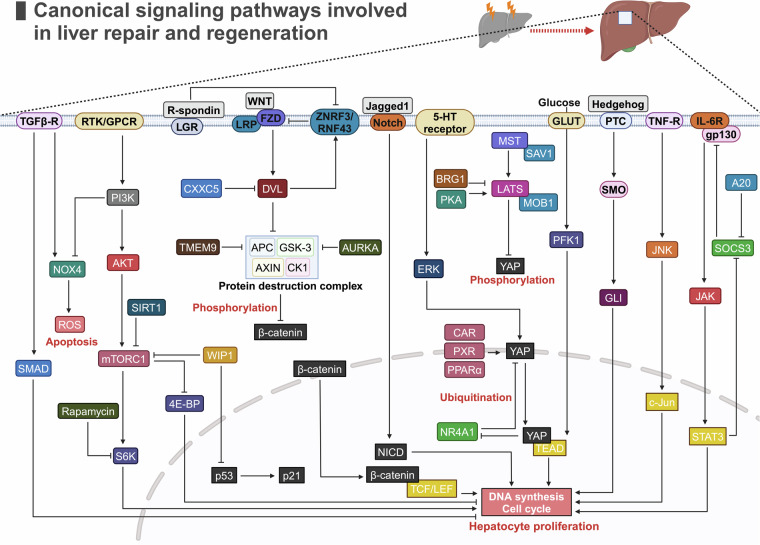
Liver repair and regeneration are crucial physiological responses to hepatic injury and are orchestrated through intricate cellular and molecular networks. This review systematically delineates advancements in the field, emphasizing the essential roles played by diverse liver cell types. Their coordinated actions, supported by complex crosstalk within the liver microenvironment, are pivotal to enhancing regenerative outcomes. Recent molecular investigations have elucidated key signaling pathways involved in liver injury and regeneration. Viewed through the lens of metabolic reprogramming, these pathways highlight how shifts in glucose, lipid, and amino acid metabolism support the cellular functions essential for liver repair and regeneration. An analysis of regenerative variability across pathological states reveals how disease conditions influence these dynamics, guiding the development of novel therapeutic strategies and advanced techniques to enhance liver repair and regeneration. Bridging laboratory findings with practical applications, recent clinical trials highlight the potential of optimizing liver regeneration strategies. These trials offer valuable insights into the effectiveness of novel therapies and underscore significant progress in translational research. In conclusion, this review intricately links molecular insights to therapeutic frontiers, systematically charting the trajectory from fundamental physiological mechanisms to innovative clinical applications in liver repair and regeneration.
Overview
The claims and statistics of this paper haven’t been checked yet.
Run the check — free, no account needed. It reads the open-access text and checks the sources it cites.
Integrity signals
Registry
Cites
Statistics
Figures
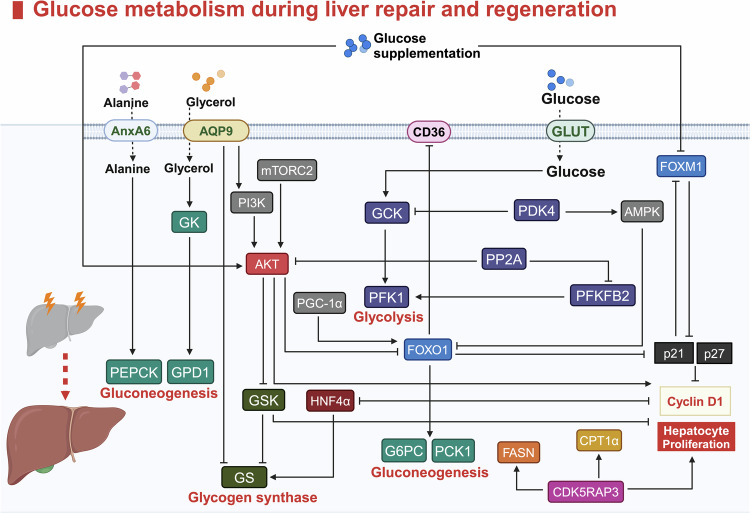
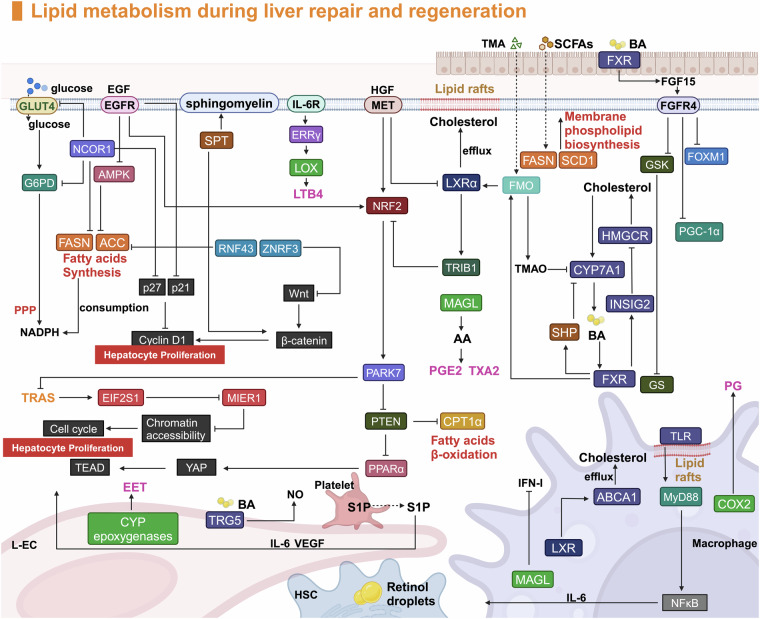
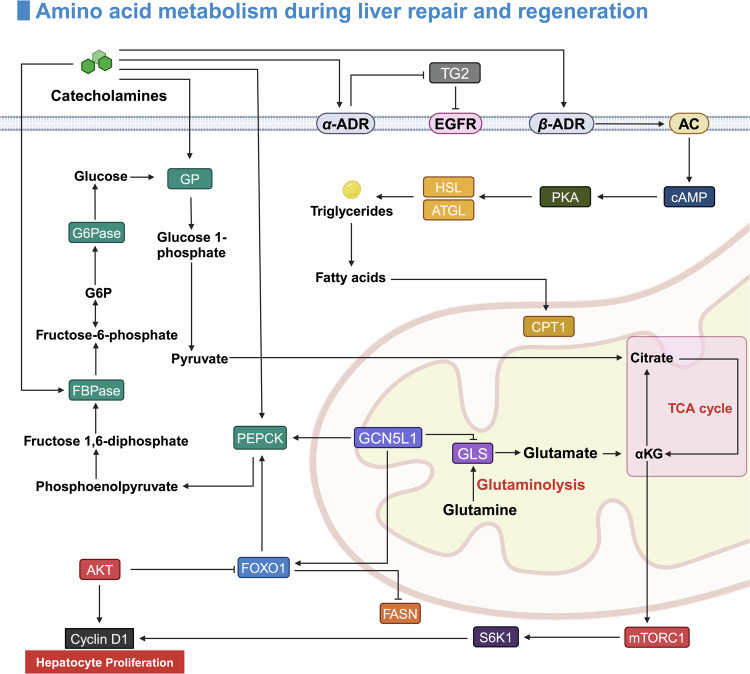
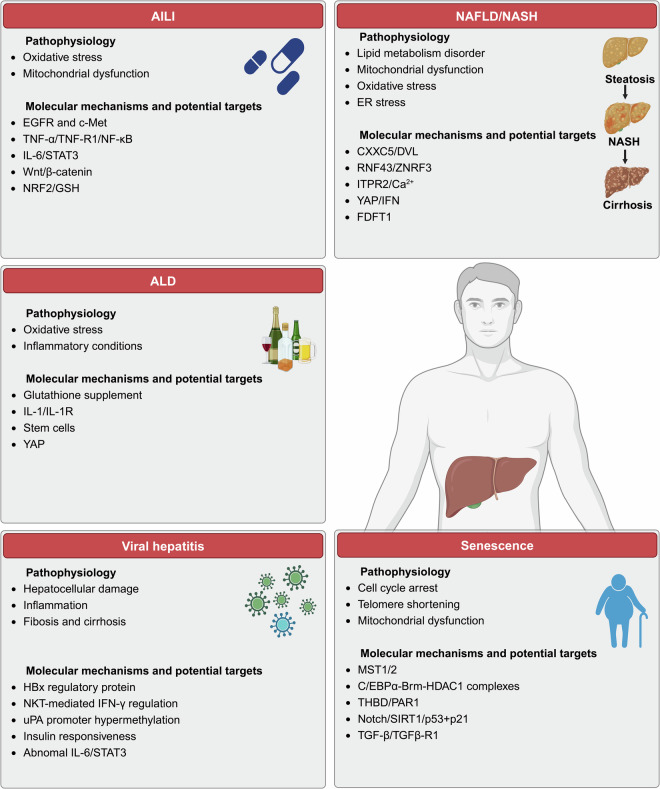
Verification
Claims the paper makes
The claims and statistics of this paper haven’t been checked yet.
Run the check — free, no account needed. It reads the open-access text and checks the sources it cites.
Claims other papers make about this one
Each is checked against this paper’s own text: does it say what the citing paper says it does?
The cited source says what the claim attributes to it.
In the citing paper
“Consistent with prior reports of transient hypoglycemia,34,35 hepatic steatosis,34,53 and BA overload4,34 occurring after PHx”
From Constitutive Androstane Receptor Regulates Bile Acid Homeostasis and Metabolism During Liver Regeneration (2026) · cites this paper as [34]
Self-check
Percentages, sums and reported differences re-computed from the paper’s own numbers.
The self-check needs the paper’s full text.
Citations
Cites
Functional rafts in cell membranes
Simons, K., & Ikonen, E. (1997) · Nature · doi:10.1038/42408 · Cited by 9,757
The role of pattern-recognition receptors in innate immunity: update on Toll-like receptors
Kawai, T., & Akira, S. (2010) · Nature Immunology · doi:10.1038/ni.1863 · Cited by 9,304
Chronic inflammation in the etiology of disease across the life span
Furman, D., Campisi, J., Verdin, E., Carrera-Bastos, P., Targ, S., Franceschi, C., Ferrucci, L., Gilroy, D. W., Fasano, A., Miller, G. W., et al. (2019) · Nature Medicine · doi:10.1038/s41591-019-0675-0 · Cited by 4,915
Intestinal microbiota metabolism of l-carnitine, a nutrient in red meat, promotes atherosclerosis
Koeth, R. A., Wang, Z., Levison, B. S., Buffa, J. A., Org, E., Sheehy, B. T., Britt, E. B., Fu, X., Wu, Y., Li, L., et al. (2013) · Nature Medicine · doi:10.1038/nm.3145 · Cited by 4,386
Self-citationTerrault, N. A., Lok, A. S. F., McMahon, B. J., Chang, K., Hwang, J. P., Jonas, M. M., Brown, R. S., Bzowej, N. H., & Wong, J. B. (2018) · Hepatology · doi:10.1002/hep.29800 · Cited by 4,306
A guide to immunometabolism for immunologists
O'Neill, L. A. J., Kishton, R. J., & Rathmell, J. (2016) · Nature Reviews Immunology · doi:10.1038/nri.2016.70 · Cited by 3,315
Zhao, B., Wei, X., Li, W., Udan, R. S., Yang, Q., Kim, J., Xie, J., Ikenoue, T., Yu, J., Li, L., et al. (2007) · Genes & Development · doi:10.1101/gad.1602907 · Cited by 3,092
Srimaroeng, C., Cecile, J. P., Walden, R., & Pritchard, J. B. (2013) · Cellular Physiology and Biochemistry · doi:10.1159/000350077 · Cited by 2,989
Mechanisms of hepatic stellate cell activation
Tsuchida, T., & Friedman, S. L. (2017) · Nature Reviews Gastroenterology & Hepatology · doi:10.1038/nrgastro.2017.38 · Cited by 2,909
Requirement for Generation of H 2 O 2 for Platelet-Derived Growth Factor Signal Transduction
Sundaresan, M., Yu, Z.-X., Ferrans, V. J., Irani, K., & Finkel, T. (1995) · Science · doi:10.1126/science.270.5234.296 · Cited by 2,520
Research works printed but not linked: 1
- Higgins, G. M. & Anderson, R. M. Experimental pathology of the liver. I. Restoration of the liver of the white rat following partial surgical removal. Arch. Pathol. 12, 186–202 (1931).
Cited by
Sorted by citations
Felli, É., Nulan, Y., Ortega‐Ribera, M., Fernández‐Iglesias, A., & Gracia‐Sancho, J. (2025) · Journal of Hepatology · doi:10.1016/j.jhep.2025.10.017 · Cited by 33
Beyond M1/M2: The role of reactive oxygen species in liver fibrosis and immune modulation
Lu, H., Huang, J., Wang, Y.-C., Casals, E., Casals, G., & Zeng, M. (2025) · Redox Biology · doi:10.1016/j.redox.2025.103933 · Cited by 19
Self-citationWidowati, W., Sabrina, A. H. N., Sutendi, A. F., Zahiroh, F. H., Nurjamil, A. M., Wargasetia, T. L., Nainggolan, I. M., Azis, R., Rismani, E., & Vosough, M. (2026) · Journal of Immunology Research · doi:10.1155/jimr/2656395 · Cited by 17
Macrophage heterogeneity and plasticity in liver injury and repair mechanisms
Zhang, T., Horn, P., Peiseler, M., & Tacke, F. (2025) · Stem Cells · doi:10.1093/stmcls/sxaf072 · Cited by 14
Llorens‐Giralt, P., Ruiz‐Romero, M., Nurtdinov, R., Herranz‐Itúrbide, M., Vicent, G. P., Serras, F., Fabregat, I., & Corominas, M. (2025) · Cell Genomics · doi:10.1016/j.xgen.2025.100887 · Cited by 10
Metadata
- Authors
- Ma, X., Huang, T., Chen, X., Li, Q., Liao, M., Fu, L., Huang, J., Yuan, K., Wang, Z., & Zeng, Y.
- Affiliations
- Sichuan University (CN)
- Corresponding author
- Wang, Zhen
- Zeng, Yong
- Venue
- Signal Transduction and Targeted Therapy
- Published
- 2025-02-08
- Volume
- 10
- Issue
- 1
- Pages
- 63-63
- ISSN
- 2059-3635 (ISSN-L)
- PMC
- PMC11806117
- OpenAlex
- W4407274978
- Cited by
- 133
- References
- 832
- Citations by year
- 2026: 83 · 2025: 50
- FWCI
- 19.43
- Type
- journal article
- Language
- en
- Open access
- gold
- doi.org
- Locations
- Signal Transduction and Targeted Therapy (publishedVersion, cc-by)
- PubMed Central (publishedVersion, cc-by)
- PubMed (publishedVersion)
- DOAJ (DOAJ: Directory of Open Access Journals) (submittedVersion, cc-by-sa)
- Funders
- National Natural Science Foundation of China (ZYJC18008, 82270643, 82170,621, 82070644)
- Sichuan University (ZYJC18008)
- West China Hospital, Sichuan University (ZYJC18008, ZYGD22006, 1.3.5)
- Topics
- Health Sciences › Medicine › Hepatology › Liver physiology and pathology
- Health Sciences › Medicine › Surgery › Tissue Engineering and Regenerative Medicine
- Health Sciences › Medicine › Surgery › Organ Transplantation Techniques and Outcomes
- Keywords
- liver regeneration, liver repair, liver injury, liver microenvironment, cell-cell crosstalk, signaling pathways, metabolic reprogramming, glucose metabolism, lipid metabolism, amino acid metabolism, clinical trials
- MeSH terms
- Animals, Humans, Liver, Liver Diseases, Liver Regeneration, Signal Transduction
About these checks
Registry, retraction, Cites and statistics results are computed, not judged, with one exception: a printed reference that no index lists is read once by a model before it counts as a citation error. Claims are extracted by a model and kept only when their quote appears verbatim in the text; each cited source is then checked, with a model’s help, for whether it says what the claim relies on. Those verdicts can be wrong — read the claim’s quote and the cited source before relying on one.
Statistics and arithmetic are recomputed, not judged.
Confidence bands are shown only for fields calibrated on our annotated test set. None is calibrated yet, so no band is shown.
What counts as a claim ›How we measure confidence ›How we check this ›
Are you an author, or do you see a problem with this page? Request a review
