

The DOI matches its Crossref record; 611 of the 611 references it cites were found in a registry or an index.
Phototherapy in cancer treatment: strategies and challenges
Open accessAbstract
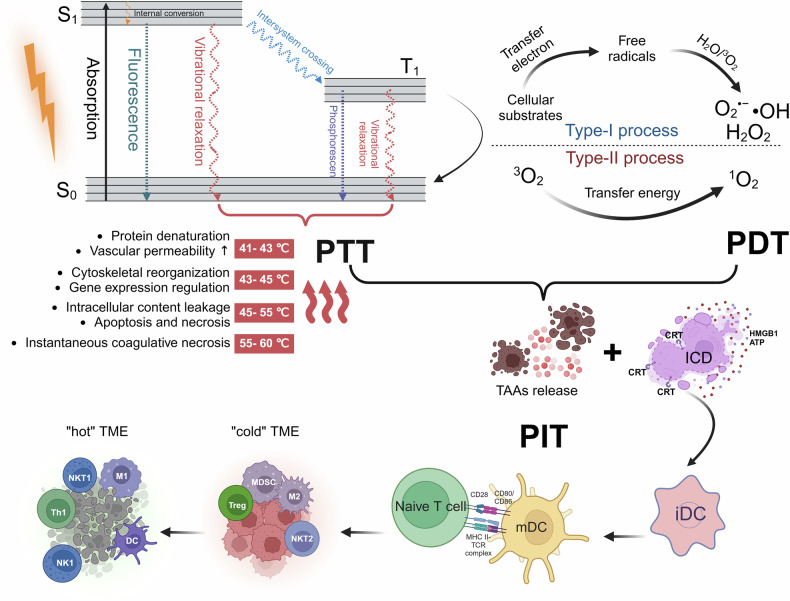
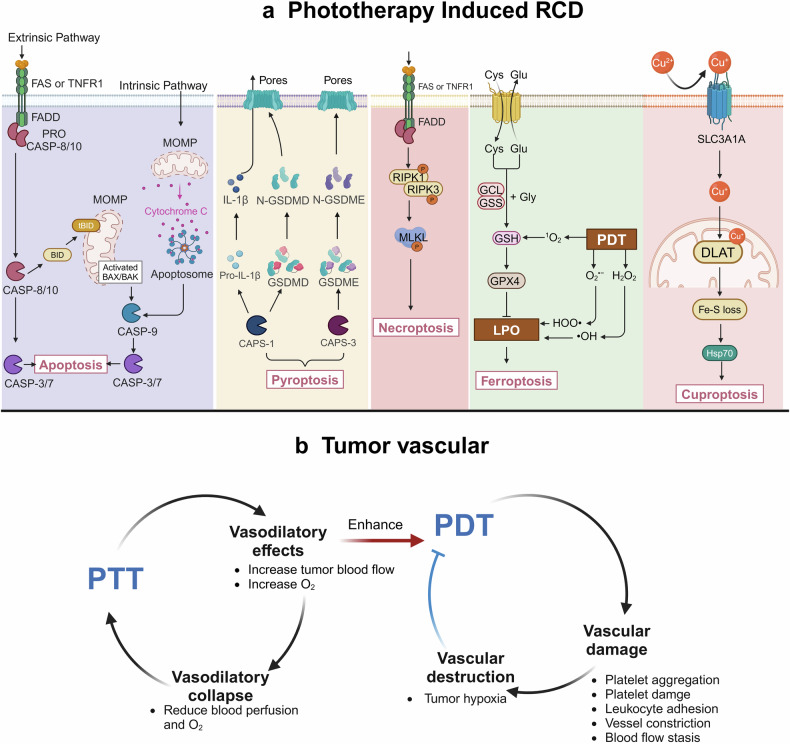
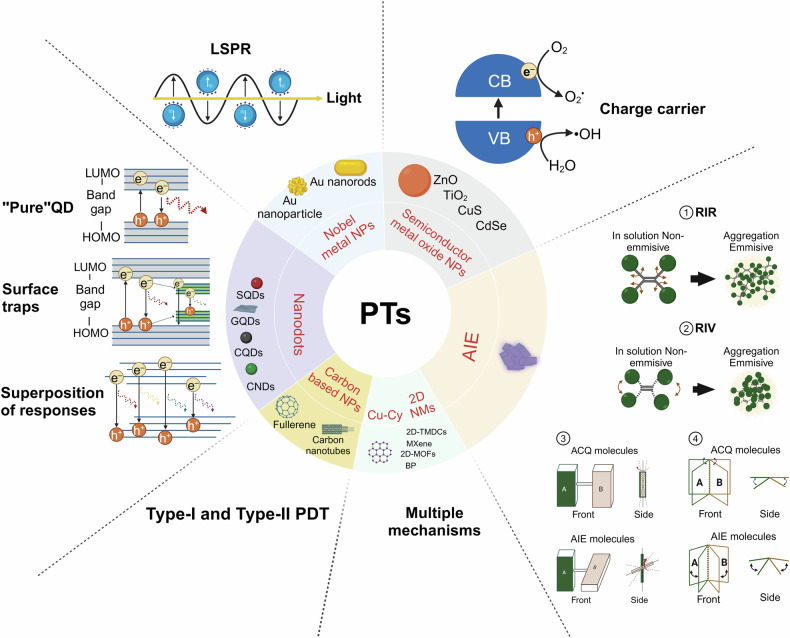
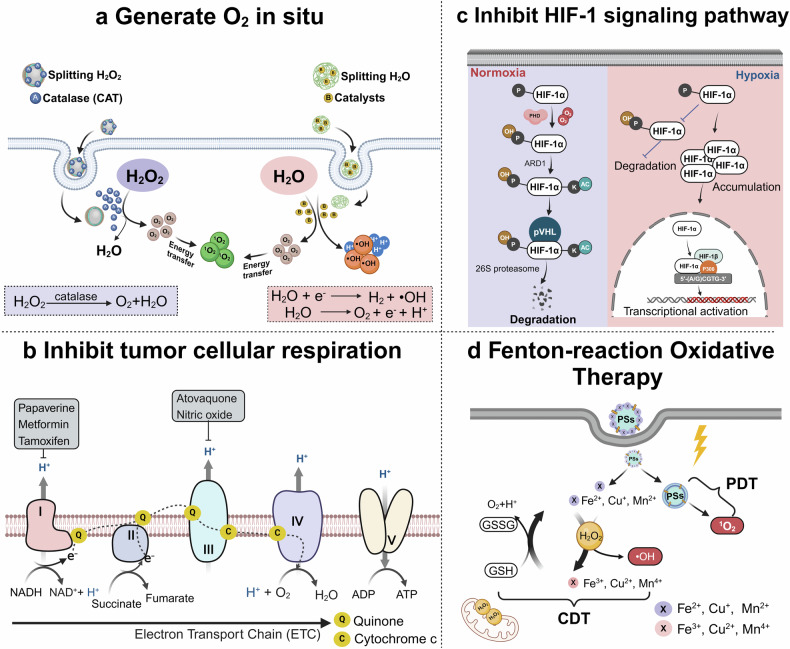
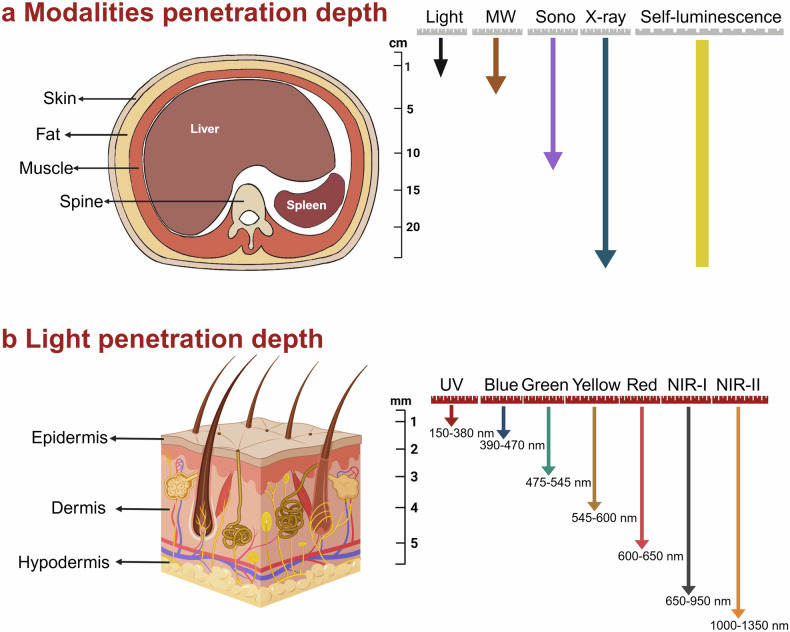
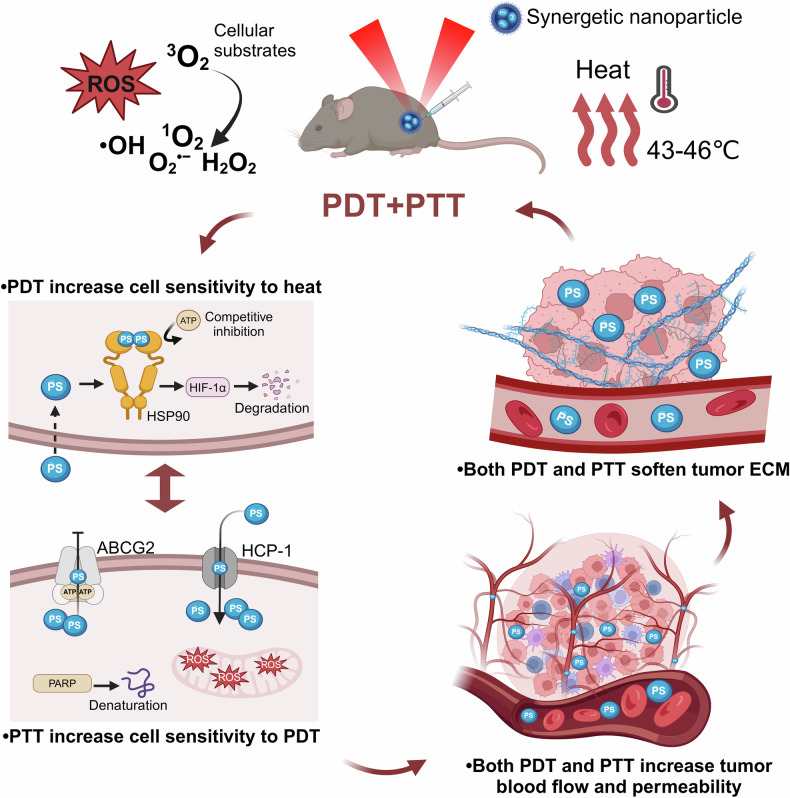
Phototherapy has emerged as a promising modality in cancer treatment, garnering considerable attention for its minimal side effects, exceptional spatial selectivity, and optimal preservation of normal tissue function. This innovative approach primarily encompasses three distinct paradigms: Photodynamic Therapy (PDT), Photothermal Therapy (PTT), and Photoimmunotherapy (PIT). Each of these modalities exerts its antitumor effects through unique mechanisms—specifically, the generation of reactive oxygen species (ROS), heat, and immune responses, respectively. However, significant challenges impede the advancement and clinical application of phototherapy. These include inadequate ROS production rates, subpar photothermal conversion efficiency, difficulties in tumor targeting, and unfavorable physicochemical properties inherent to traditional phototherapeutic agents (PTs). Additionally, the hypoxic microenvironment typical of tumors complicates therapeutic efficacy due to limited agent penetration in deep-seated lesions. To address these limitations, ongoing research is fervently exploring innovative solutions. The unique advantages offered by nano-PTs and nanocarrier systems aim to enhance traditional approaches’ effectiveness. Strategies such as generating oxygen in situ within tumors or inhibiting mitochondrial respiration while targeting the HIF-1α pathway may alleviate tumor hypoxia. Moreover, utilizing self-luminescent materials, near-infrared excitation sources, non-photoactivated sensitizers, and wireless light delivery systems can improve light penetration. Furthermore, integrating immunoadjuvants and modulating immunosuppressive cell populations while deploying immune checkpoint inhibitors holds promise for enhancing immunogenic cell death through PIT. This review seeks to elucidate the fundamental principles and biological implications of phototherapy while discussing dominant mechanisms and advanced strategies designed to overcome existing challenges—ultimately illuminating pathways for future research aimed at amplifying this intervention’s therapeutic efficacy.
Overview
The claims and statistics of this paper haven’t been checked yet.
Run the check — free, no account needed. It reads the open-access text and checks the sources it cites.
Integrity signals
Registry
Cites
Statistics
Figures
Verification
Claims the paper makes
The claims and statistics of this paper haven’t been checked yet.
Run the check — free, no account needed. It reads the open-access text and checks the sources it cites.
Claims other papers make about this one
Each is checked against this paper’s own text: does it say what the citing paper says it does?
The source backs part of the claim, not all of it — or backs it for a different population, condition or comparison.
In the citing paper
“Moreover, most existing PSs are limited by excitation in tissue penetration-restricted regions, low ROS yields, and the absence of real-time therapeutic monitoring226.”
From Organic small-molecule NIR-II fluorophores for tumor phototheranostics (2026) · cites this paper as [226]
Experimental — accuracy not yet measuredThe source backs part of the claim, not all of it — or backs it for a different population, condition or comparison.
In the citing paper
“Furthermore, hyperthermia (HT), although rarely used as a primary treatment, can enhance the selectivity and efficacy of chemotherapy or radiotherapy by inducing heat shock protein (HSP) expression and modulating the TME226.”
From Organic small-molecule NIR-II fluorophores for tumor phototheranostics (2026) · cites this paper as [226]
Experimental — accuracy not yet measured
Self-check
Percentages, sums and reported differences re-computed from the paper’s own numbers.
The self-check needs the paper’s full text.
Citations
Cites
1 retracted
Items 601–611 of 611
Chen, Z., Zhang, D., Huang, H., Chen, J., Li, Z., Hu, Y., & Liu, R. (2024) · Small · doi:10.1002/smll.202400361 · Cited by 12
Wang, H., Wang, P., Zhang, K., et al. (2015) · Laser Physics Letters · doi:10.1088/1612-2011/12/3/035603 · Cited by 9
Lee, J., Han, S., Magar, T. B. T., Gurung, P., Lee, J., Seong, D., Park, S., Kim, Y.-W., Jeon, M., & Kim, J. (2024) · International Journal of Molecular Sciences · doi:10.3390/ijms25063457 · Cited by 9
Han, L., Huang, X., Zhao, B., Zhu, H., Wang, R., Liu, S., Lin, H., Feng, F., Ma, X., Liu, F., et al. (2023) · Cancer Immunology Immunotherapy · doi:10.1007/s00262-023-03479-3 · Cited by 8
Tumor-Localized Insult Delivered by Photodynamic Therapy and the Breakdown of Tumor Immunotolerance
Korbelik, M. (2012) · Springer eBooks · doi:10.1007/978-94-007-4694-7_7 · Cited by 7
Zolottsev, V. А., Ponomarev, G. V., Taratynova, M. O., et al. (2018) · Steroids · doi:10.1016/j.steroids.2018.06.011 · Cited by 7
Ambulatory Photodynamic Therapy for Superficial Basal Cell Carcinoma: An Effective Light Source?
Kessels, J. P. H. M., Dzino, N., Nelemans, P. J., Mosterd, K., & Kelleners-Smeets, N. W. J. (2017) · Acta Dermato Venereologica · doi:10.2340/00015555-2610 · Cited by 6
Cell-Level Analysis Visualizing Photodynamic Therapy with Porphylipoprotein and Talaporphyrin Sodium
Kamiyanagi, M., Taninaka, A., Ugajin, S., Nagoshi, Y., Kurokawa, H., Ochiai, T., Arashida, Y., 武内, 修., Matsui, H., & Shigekawa, H. (2022) · International Journal of Molecular Sciences · doi:10.3390/ijms232113140 · Cited by 6
Polarography of Copper (II)-(I) Cysteamine-Cystamine Systems
Matrana, B. A., Bordelon, W. R., & Davis, D. G. (1971) · Analytical Letters · doi:10.1080/00032717108058634 · Cited by 5
Arba, M., Ruslin, R., Kartasasmita, R. E., SURANTAATMADJA, S. I., & Tjahjono, D. H. (2018) · Journal of Mathematical and Fundamental Sciences · doi:10.5614/j.math.fund.sci.2018.50.3.6 · Cited by 5
Palanikumar, L., Kalmouni, M., Houhou, T., et al. (2023) · bioRxiv (Cold Spring Harbor Laboratory) · doi:10.1101/2023.05.22.541491 · Cited by 1
Research works printed but not linked: 2
- Chudal, L. et al. Copper-cysteamine nanoparticles as a heterogeneous Fenton-like catalyst for highly selective cancer treatment. ACS Appl Bio Mater. 3, 1804–1814 (2020). · DOI
- Desouky, O., Ding, N. & Zhou, G. Targeted and non-targeted effects of ionizing radiation. J. Radiat. Res. Appl. Sci. 8, 247–254 (2015).
Cited by
Sorted by citations
Organic small-molecule NIR-II fluorophores for tumor phototheranostics
Xiang, D., Wang, Z., Zheng, H., Tang, Y., & Li, Q. (2026) · Light: Science & Applications · doi:10.1038/s41377-026-02212-w · Cited by 22
“However, the ef fi cacy of monotherapies is often restricted by the complex TME.”
Influential
Metadata
- Authors
- Cai, Y., Chai, T., Nguyen, W., Liu, J., Xiao, E., Ran, X., Ran, Y., Du, D., Chen, W., & Chen, X.
- Affiliations
- Second Xiangya Hospital of Central South University (CN)
- Tang Du Hospital (CN)
- Xi’an Jiaotong-Liverpool University (CN)
- Sichuan University (CN)
- Corresponding author
- Chen, Wei
- Chen, Xiangyu
- Venue
- Signal Transduction and Targeted Therapy
- Published
- 2025-04-02
- Volume
- 10
- Issue
- 1
- Pages
- 115-115
- ISSN
- 2059-3635 (ISSN-L)
- PMC
- PMC11961771
- OpenAlex
- W4409119844
- Cited by
- 453
- References
- 611
- Citations by year
- 2026: 319 · 2025: 134
- FWCI
- 36.48
- Type
- journal article
- Language
- en
- Open access
- gold
- doi.org
- Locations
- Signal Transduction and Targeted Therapy (publishedVersion, cc-by)
- Europe PMC (PubMed Central) (publishedVersion, cc-by)
- PubMed Central (publishedVersion, cc-by)
- PubMed (publishedVersion)
- DOAJ (DOAJ: Directory of Open Access Journals) (submittedVersion, cc-by-sa)
- Topics
- Physical Sciences › Engineering › Biomedical Engineering › Nanoplatforms for cancer theranostics
- Life Sciences › Biochemistry, Genetics and Molecular Biology › Cancer Research › Photodynamic Therapy Research Studies
- Health Sciences › Medicine › Oncology › Cancer Immunotherapy and Biomarkers
- Keywords
- phototherapy, photodynamic therapy, photothermal therapy, photoimmunotherapy, reactive oxygen species, tumor hypoxia, photothermal conversion efficiency, tumor targeting, nanocarriers, HIF-1α pathway, mitochondrial respiration inhibition, near-infrared excitation, immunoadjuvant, immunosuppressive cells, immune checkpoint inhibitors, immunogenic cell death, antitumor immunity
- MeSH terms
- Photothermal Therapy, Animals, Humans, Immunotherapy, Neoplasms, Photochemotherapy, Phototherapy, Photosensitizing Agents, Reactive Oxygen Species, Tumor Microenvironment
About these checks
Registry, retraction, Cites and statistics results are computed, not judged, with one exception: a printed reference that no index lists is read once by a model before it counts as a citation error. Claims are extracted by a model and kept only when their quote appears verbatim in the text; each cited source is then checked, with a model’s help, for whether it says what the claim relies on. Those verdicts can be wrong — read the claim’s quote and the cited source before relying on one.
Statistics and arithmetic are recomputed, not judged.
Confidence bands are shown only for fields calibrated on our annotated test set. None is calibrated yet, so no band is shown.
What counts as a claim ›How we measure confidence ›How we check this ›
Are you an author, or do you see a problem with this page? Request a review
