

Conversion of marginal land into switchgrass conditionally accrues soil carbon but reduces methane consumption
Open accessPublished version of a preprint
The DOI matches its Crossref record; 84 of the 88 references it cites were found in a registry or an index.
Abstract
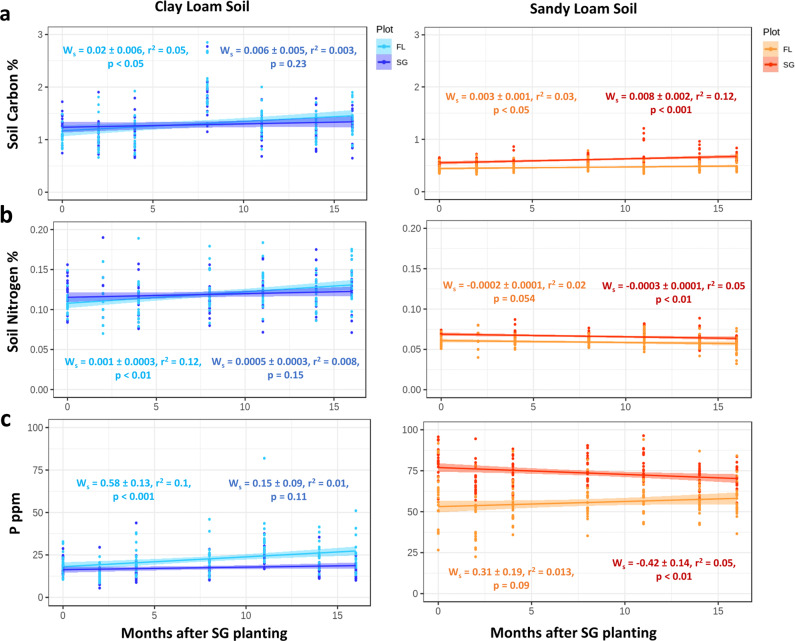
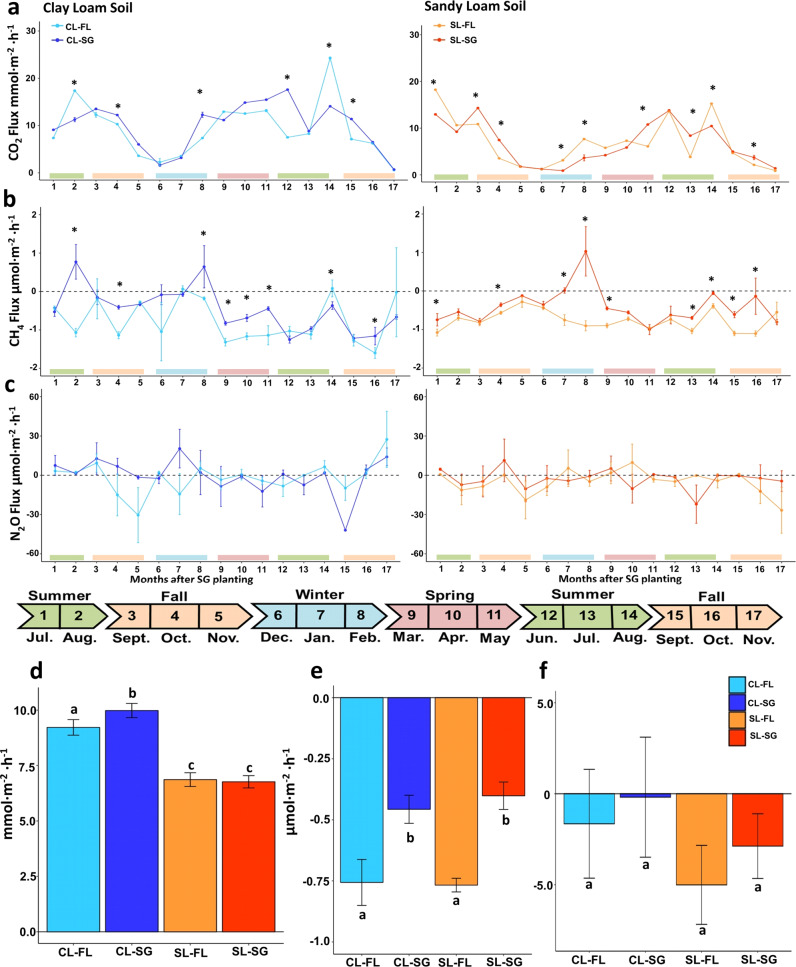
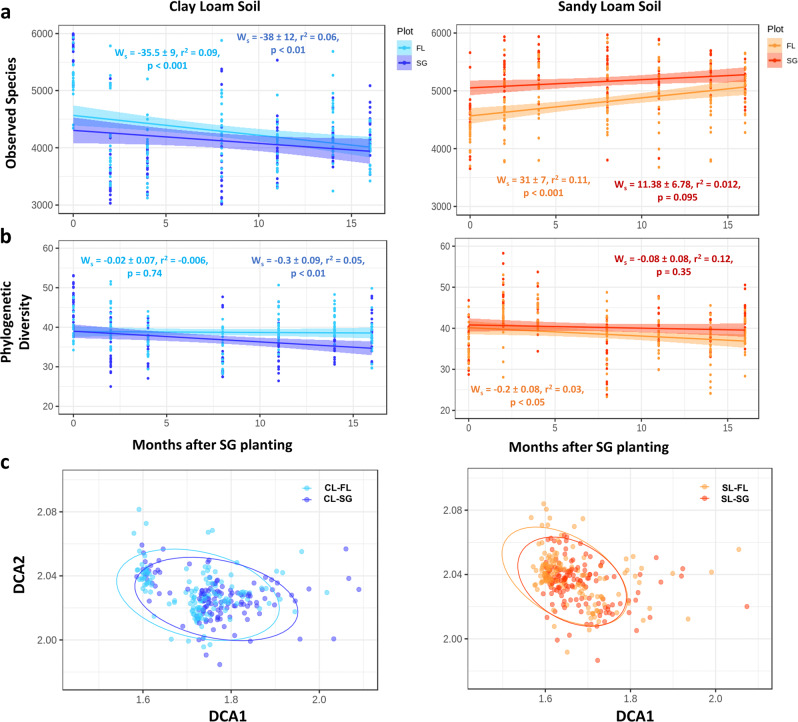
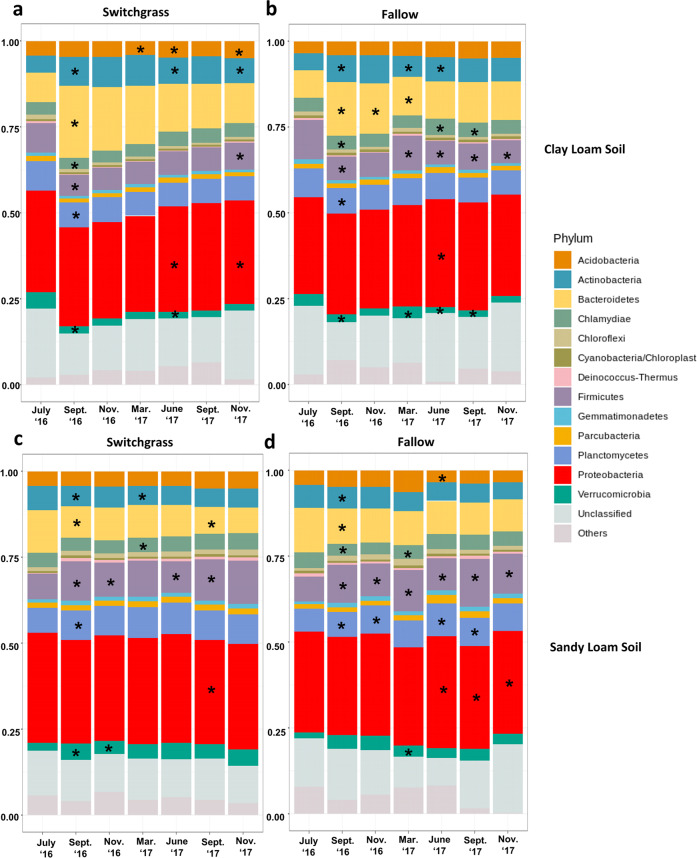
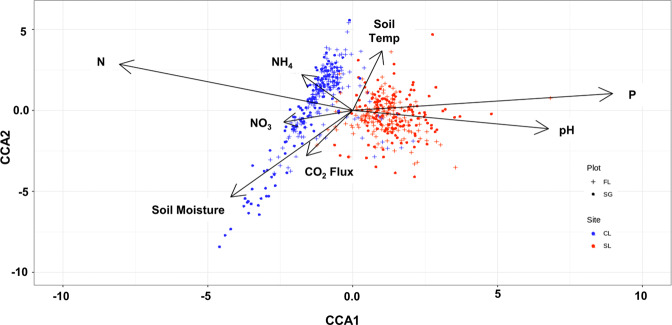
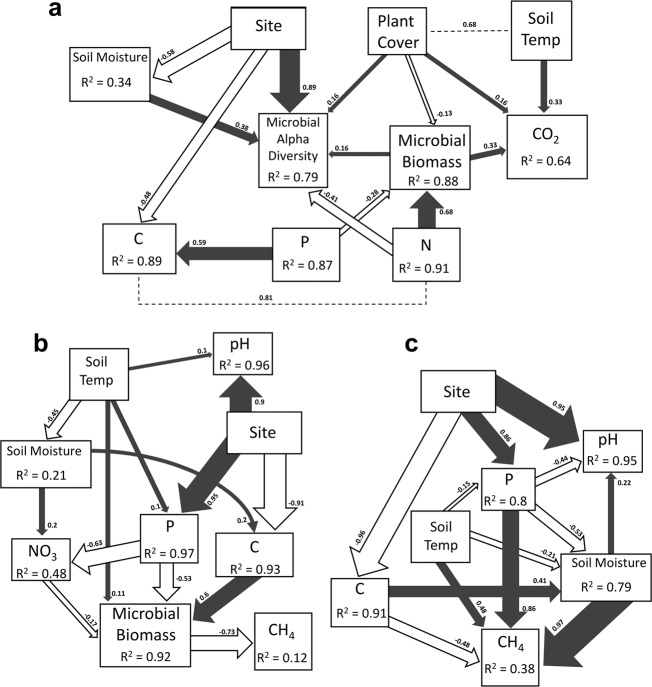
Switchgrass is a deep-rooted perennial native to the US prairies and an attractive feedstock for bioenergy production; when cultivated on marginal soils it can provide a potential mechanism to sequester and accumulate soil carbon (C). However, the impacts of switchgrass establishment on soil biotic/abiotic properties are poorly understood. Additionally, few studies have reported the effects of switchgrass cultivation on marginal lands that have low soil nutrient quality (N/P) or in areas that have experienced high rates of soil erosion. Here, we report a comparative analyses of soil greenhouse gases (GHG), soil chemistry, and microbial communities in two contrasting soil types (with or without switchgrass) over 17 months (1428 soil samples). These soils are highly eroded, ‘Dust Bowl’ remnant field sites in southern Oklahoma, USA. Our results revealed that soil C significantly increased at the sandy-loam (SL) site, but not at the clay-loam (CL) site. Significantly higher CO2 flux was observed from the CL switchgrass site, along with reduced microbial diversity (both alpha and beta). Strikingly, methane (CH4) consumption was significantly reduced by an estimated 39 and 47% at the SL and CL switchgrass sites, respectively. Together, our results suggest that soil C stocks and GHG fluxes are distinctly different at highly degraded sites when switchgrass has been cultivated, implying that carbon balance considerations should be accounted for to fully evaluate the sustainability of deep-rooted perennial grass cultivation in marginal lands.
Overview
The claims and statistics of this paper haven’t been checked yet.
Free: it reads the open-access text and checks the first 5 claims that cite a source we can check. Create a free account to check every claim.
Integrity signals
Registry
Cites
Statistics
Figures
Verification
Claims the paper makes
The claims and statistics of this paper haven’t been checked yet.
Free: it reads the open-access text and checks the first 5 claims that cite a source we can check. Create a free account to check every claim.
Claims other papers make about this one
Each is checked against this paper’s own text: does it say what the citing paper says it does?
The source backs part of the claim, not all of it — or backs it for a different population, condition or comparison.
In the citing paper
“They found that when the marginal land was converted into switchgrass land, the Shannon index increased significantly over time and the community composition changed [28].”
From Effects of Biofuel Crop Switchgrass (Panicum virgatum) Cultivation on Soil Carbon Sequestration and Greenhouse Gas Emissions: A Review (2022) · cites this paper as [28]
Experimental — accuracy not yet measuredThe cited source says what the claim attributes to it.
In the citing paper
“However, a recent study [28] shows that under the condition of planting switchgrass, CH4 consumption per year is 39–47% less than that of unplanted plots.”
From Effects of Biofuel Crop Switchgrass (Panicum virgatum) Cultivation on Soil Carbon Sequestration and Greenhouse Gas Emissions: A Review (2022) · cites this paper as [28]
The cited source says what the claim attributes to it.
In the citing paper
“Moreover, the switchgrass cultivation can increase the operational taxonomic unit (OTU) richness of marginal land [28].”
From Effects of Biofuel Crop Switchgrass (Panicum virgatum) Cultivation on Soil Carbon Sequestration and Greenhouse Gas Emissions: A Review (2022) · cites this paper as [28]
Self-check
Percentages, sums and reported differences re-computed from the paper’s own numbers.
The self-check needs the paper’s full text.
Citations
Cites
R: A Language and Environment for Statistical Computing
R Core Team (2025) · doi:10.32614/r.manuals · Cited by 352,181
Fitting Linear Mixed-Effects Models Using lme4
Bates, D., Mächler, M., Bolker, B., & Walker, S. (2015) · Journal of Statistical Software · doi:10.18637/jss.v067.i01 · Cited by 86,835 · cited 1×
“We tested for differences between plots in GHG flux and microbial alpha diversity by using linear mixed models to correct for repeated measurements (i.e. collars within plots) and to analyze the data over time (R package lme4, Bates et al., 2015).”
MethodQIIME allows analysis of high-throughput community sequencing data
Caporaso, J. G., Kuczynski, J., Stombaugh, J., Bittinger, K., Bushman, F. D., Costello, E. K., Fierer, N., Peña, A. G., Goodrich, J. K., Gordon, J. I., et al. (2010) · Nature Methods · doi:10.1038/nmeth.f.303 · Cited by 34,887 · cited 4×
“The program split libraries_fastq.py from the QIIME package (Kuczynski et al., 2012) (version 1.9.1) was used to assign reads to each sample (demultiplexing) based on the barcodes for each individual sample with a maximum allowed barcode error of 0 and the trimming quality score set to 20.”
MethodInfluentiallavaan : An R Package for Structural Equation Modeling
Rosseel, Y. (2012) · Journal of Statistical Software · doi:10.18637/jss.v048.i02 · Cited by 27,955 · cited 1×
“The SEM-related analysis was performed using the lavaan R package (Rosseel, 2012).”
MethodSearch and clustering orders of magnitude faster than BLAST
Edgar, R. C. (2010) · Bioinformatics · doi:10.1093/bioinformatics/btq461 · Cited by 20,826
Naïve Bayesian Classifier for Rapid Assignment of rRNA Sequences into the New Bacterial Taxonomy
Wang, Q., Garrity, G. M., Tiedje, J. M., & Cole, J. R. (2007) · Applied and Environmental Microbiology · doi:10.1128/aem.00062-07 · Cited by 19,885 · cited 1×
“Each representative sequence for each OTU was classified with the RDP Classifier (Wang et al., 2007) (16S: training set 16, June 2016) with the confidence cutoff set to 0.8.”
MethodInfluentialMAFFT: a novel method for rapid multiple sequence alignment based on fast Fourier transform
Katoh, K. (2002) · Nucleic Acids Research · doi:10.1093/nar/gkf436 · Cited by 17,027 · cited 2×
“Sequences were then aligned using MAFFT [69] (version”
MethodInfluentialUPARSE: highly accurate OTU sequences from microbial amplicon reads
Edgar, R. C. (2013) · Nature Methods · doi:10.1038/nmeth.2604 · Cited by 16,707 · cited 2×
“Operational Taxonomic Units (OTUs) were clustered using UPARSE, with the OTU identity threshold set to 0.97 and the singletons/chimeric sequences removed (Edgar, 2013).”
MethodInfluentialggplot2: Elegant Graphics for Data Analysis
Wickham, H. (2009) · doi:10.1007/978-0-387-98141-3 · Cited by 14,447
Selection of Conserved Blocks from Multiple Alignments for Their Use in Phylogenetic Analysis
Castresana, J. (2000) · Molecular Biology and Evolution · doi:10.1093/oxfordjournals.molbev.a026334 · Cited by 10,508 · cited 2×
“31) and alignments were filtered using Gblocks [70] (version 0.”
MethodInfluentialTotal Carbon, Organic Carbon, and Organic Matter
Nelson, D. W., & Sommers, L. E. (1996) · SSSA Book Series · doi:10.2136/sssabookser5.3.c34 · Cited by 10,491
FastTree: Computing Large Minimum Evolution Trees with Profiles instead of a Distance Matrix
Price, M. N., Dehal, P. S., & Arkin, A. P. (2009) · Molecular Biology and Evolution · doi:10.1093/molbev/msp077 · Cited by 5,602 · cited 2×
“=3 and -b5=h. FastTree (Price et al., 2009) was used for constructing the phylogenetic tree using the filtered alignments.”
MethodPEAR: a fast and accurate Illumina Paired-End reAd mergeR
Zhang, J., Kobert, K., Flouri, T., & Stamatakis, A. (2014) · Bioinformatics · doi:10.1093/bioinformatics/btt593 · Cited by 4,497 · cited 2×
“Amplicon sequence data were analyzed using an internal pipeline known as the Amplicon Sequencing Analysis Pipeline [64] (ASAP, version 1.”
MethodInfluentialDistance‐Based Tests for Homogeneity of Multivariate Dispersions
Anderson, M. J. (2006) · Biometrics · doi:10.1111/j.1541-0420.2005.00440.x · Cited by 3,304 · cited 1×
“We used PERMDISP [76], a distance-based test for homogeneity of multivariate dispersion, to assess differences in beta diversity between treatments using the ‘betadisper’ function (vegan R package).”
MethodDNA recovery from soils of diverse composition
Zhou, J., Bruns, M. A., & Tiedje, J. M. (1996) · Applied and Environmental Microbiology · doi:10.1128/aem.62.2.316-322.1996 · Cited by 2,880 · cited 2×
“A freeze grinding method [62] was combined with the Powersoil DNA extraction kit (Qiagen, Venlo, Netherlands) to extract DNA from a total of 1428 soil samples, which yielded soil DNA of both high quantity and quality.”
MethodSelf-citationThe Global Methane Budget 2000–2017
Saunois, M., Stavert, A. R., Poulter, B., Bousquet, P., Canadell, J. G., Jackson, R. B., Raymond, P. A., Dlugokencky, E. J., Houweling, S., Patra, P. K., et al. (2019) · doi:10.5194/essd-2019-128 · Cited by 2,760 · cited 1×
“from both agriculture and waste sources were estimated to be 206 Tg CH4 y , which represents 56% of the total anthropogenic emissions [86].”
BackgroundThe Global Methane Budget 2000–2017
Saunois, M., Stavert, A. R., Poulter, B., Bousquet, P., Canadell, J. G., Jackson, R. B., Raymond, P. A., Dlugokencky, E. J., Houweling, S., Patra, P. K., et al. (2020) · Earth System Science Data · doi:10.5194/essd-12-1561-2020 · Cited by 2,711
Stability of organic carbon in deep soil layers controlled by fresh carbon supply
Fontaine, S., Barot, S., Barré, P., Bdioui, N., Mary, B., & Rumpel, C. (2007) · Nature · doi:10.1038/nature06275 · Cited by 2,279 · cited 3×
“We expected higher root respiration and the potential for deep C mineralization to enhance soil respiration at both sites after switchgrass establishment (Shahzad et al., 2018; Fontaine et al., 2007).”
BackgroundCarbon-Negative Biofuels from Low-Input High-Diversity Grassland Biomass
Tilman, D., Hill, J., & Lehman, C. (2006) · Science · doi:10.1126/science.1133306 · Cited by 1,813 · cited 1×
“This enthusiasm for switchgrass stems from its excellent ability to exhibit high biomass even on low-quality soils unfit for traditional agricultural practices, with little to no additional inputs (Tilman et al., 2006).”
BackgroundPlant diversity increases soil microbial activity and soil carbon storage
Lange, M., Eisenhauer, N., Sierra, C. A., Bessler, H., Engels, C., Griffiths, R. I., Mellado-Vázquez, P. G., Malik, A. A., Roy, J., Scheu, S., et al. (2015) · Nature Communications · doi:10.1038/ncomms7707 · Cited by 1,742
Mineral control of soil organic carbon storage and turnover
Torn, M. S., Trumbore, S. E., Chadwick, O. A., Vitousek, P. M., & Hendricks, D. M. (1997) · Nature · doi:10.1038/38260 · Cited by 1,603 · cited 1×
“response depends on the mineral composition [25], nutrient content [26], and microorganism present [27].”
BackgroundLeff, J. W., Jones, S. E., Prober, S. M., Barberán, A., Borer, E. T., Firn, J. L., Harpole, W. S., Hobbie, S. E., Hofmockel, K. S., Knops, J. M. H., et al. (2015) · Proceedings of the National Academy of Sciences · doi:10.1073/pnas.1508382112 · Cited by 1,452 · cited 2×
“which led to changes in functionality [83].”
BackgroundBridgham, S. D., Cadillo‐Quiroz, H., Keller, J. K., & Zhuang, Q. (2013) · Global Change Biology · doi:10.1111/gcb.12131 · Cited by 1,231 · cited 1×
“…here were expectedly lower than those reported for natural systems with anaerobic, water-logged conditions like peatlands (Dise, 1993) and wetlands (Bridgham et al., 2013; Bartlett and Harriss, 1993), our findings challenged the notion that CH4 emissions has negligible effects on GHG budgets…”
ResultDevelopment of switchgrass (Panicum virgatum) as a bioenergy feedstock in the United States
McLaughlin, S. B., & Adams Kszos, L. (2005) · Biomass and Bioenergy · doi:10.1016/j.biombioe.2004.05.006 · Cited by 1,091 · cited 4×
“Switchgrass is also known to be highly drought tolerant (Barney et al., 2009) and can prevent topsoil erosion-two major problems in the Central and Southwestern USA including states of OK, TX, KS, CO, and NM.”
BackgroundInfluentialPlant diversity predicts beta but not alpha diversity of soil microbes across grasslands worldwide
Prober, S. M., Leff, J. W., Bates, S. T., Borer, E. T., Firn, J., Harpole, W. S., Lind, E. M., Seabloom, E. W., Adler, P. B., Bakker, J. D., et al. (2015) · Ecology Letters · doi:10.1111/ele.12381 · Cited by 766
Review and assessment of methane emissions from wetlands
Bartlett, K. B., & Harriss, R. C. (1993) · Chemosphere · doi:10.1016/0045-6535(93)90427-7 · Cited by 745 · cited 2×
“Although the CH4 emission rates in this relatively mesic landscape were far lower than those reported for systems with anaerobic, waterlogged conditions like peatlands [78] and wetlands [79], CH4 emission effects may not be negligible during marginal Conversion of marginal land into switchgrass conditionally accrues s…”
BackgroundSustainable bioenergy production from marginal lands in the US Midwest
Gelfand, I., Sahajpal, R., Zhang, X., Izaurralde, R. C., Gross, K. L., & Robertson, G. P. (2013) · Nature · doi:10.1038/nature11811 · Cited by 736 · cited 6×
“Long-term cultivation experiments suggest that switchgrass can provide a net input of C into soil [4, 12, 13].”
BackgroundInfluentialUsing QIIME to Analyze 16S rRNA Gene Sequences from Microbial Communities
Kuczynski, J., Stombaugh, J., Walters, W. A., González, A., Caporaso, J. G., & Knight, R. (2012) · Current Protocols in Microbiology · doi:10.1002/9780471729259.mc01e05s27 · Cited by 660
Synthesis and modeling perspectives of rhizosphere priming
Cheng, W., Parton, W. J., Gonzalez‐Meler, M. A., Phillips, R., Asao, S., McNickle, G. G., Brzostek, E., & Jastrow, J. D. (2014) · New Phytologist · doi:10.1111/nph.12440 · Cited by 606 · cited 1×
“Potential C accrual due to increased root inputs may be offset by higher soil CO2 production arising from stimulated microbial C mineralization, the so-called ‘rhizosphere priming’ effect [22].”
BackgroundIncreasing anthropogenic methane emissions arise equally from agricultural and fossil fuel sources
Jackson, R. B., Saunois, M., Bousquet, P., Canadell, J. G., Poulter, B., Stavert, A. R., Bergamaschi, P., Niwa, Y., Segers, A., & Tsuruta, A. (2020) · Environmental Research Letters · doi:10.1088/1748-9326/ab9ed2 · Cited by 595 · cited 1×
“7 ppb [87], respectively, prompting the need for future mitigation, since CH4 has 28 to 34 times the global warming potential (GWP) over a 100-year time”
BackgroundSoil Reaction and Exchangeable Acidity
Hendershot, W., Lalande, H., & Duquette, M. (2007) · Soil Sampling and Methods of Analysis, Second Edition · doi:10.1201/9781420005271.ch16 · Cited by 567 · cited 1×
“Soil geochemistry, pH, and moisture Soil pH, moisture, total available C, N, P, nitrate (NO3), and ammonium (NH4) were measured following as described elsewhere (Hendershot et al., 2007).”
MethodOn the Cause of the 1930s Dust Bowl
Schubert, S. D., Suarez, M. J., Pegion, P. J., Koster, R. D., & Bacmeister, J. T. (2004) · Science · doi:10.1126/science.1095048 · Cited by 557
Meta-analysis shows positive effects of plant diversity on microbial biomass and respiration
Chen, C., Chen, H. Y. H., Chen, X., & Huang, Z. (2019) · Nature Communications · doi:10.1038/s41467-019-09258-y · Cited by 452 · cited 1×
“, microbial) ground biodiversity [41] and biomass [42, 43] are related, and edaphic conditions can influence these relationships.”
BackgroundChanges in soil organic carbon under biofuel crops
ANDERSON‐TEIXEIRA, K. J., DAVIS, S. C., MASTERS, M. D., & DELUCIA, E. H. (2009) · GCB Bioenergy · doi:10.1111/j.1757-1707.2008.01001.x · Cited by 391
Soil sampling and methods of analysis
Carter, M. R., & Gregorich, E. G. (2008) · Cited by 318
Phasing amplicon sequencing on Illumina Miseq for robust environmental microbial community analysis
Wu, L., Wen, C., Qin, Y., Yin, H., Tu, Q., Van Nostrand, J. D., Yuan, T., Yuan, M., Deng, Y., & Zhou, J. (2015) · BMC Microbiology · doi:10.1186/s12866-015-0450-4 · Cited by 290 · cited 2×
“For microbial community profiling, a two-step PCR method [63] was used for amplification of the V4 region of the bacterial 16 S rRNA gene using the 515 F, 5′-GTGCCAGCMGCCGC GGTAA-3′ and 806 R, 5′-GGACTACHVGGGTWTCTAA T-3′ primers.”
MethodSelf-citationSpontaneous reaction for acid dissolution of biological tissues in closed vessels
Sah, R. N., & Miller, R. O. (1992) · Analytical Chemistry · doi:10.1021/ac00026a026 · Cited by 250
Biomass and Carbon Partitioning in Switchgrass
Frank, A. B., Berdahl, J. D., Hanson, J. D., Liebig, M. A., & Johnson, H. A. (2004) · Crop Science · doi:10.2135/cropsci2004.1391 · Cited by 243 · cited 1×
“Like other perennial crops, Switchgrass has been broadly associated with increases in soil C at many different sites in the central and northern Great American Plains (Liebig et at., 2008; Zan et al., 2001; Frank et al., 2004; Dabney et al., 2004).”
BackgroundLange, M., Habekost, M., Eisenhauer, N., Roscher, C., Bessler, H., Engels, C., Oelmann, Y., Scheu, S., Wilcke, W., Schulze, E.-D., et al. (2014) · PLoS ONE · doi:10.1371/journal.pone.0096182 · Cited by 233 · cited 1×
“, microbial) ground biodiversity [41] and biomass [42, 43] are related, and edaphic conditions can influence these relationships.”
BackgroundCline, L. C., & Zak, D. R. (2015) · Ecology · doi:10.1890/15-0184.1 · Cited by 228 · cited 2×
“Analogous to secondary plant successional dynamics, the microbial community at the CL site may be more influenced by the change from short rooted annuals to the monoculture of deep-rooted perennial switchgrass, causing a loss in microbial diversity [82], with a lower number of taxa and more homogeneous community compo…”
BackgroundCarbon sequestration in perennial bioenergy, annual corn and uncultivated systems in southern Quebec
Zan, C. S., Fyles, J. W., Girouard, P., & Samson, R. A. (2001) · Agriculture, Ecosystems & Environment · doi:10.1016/s0167-8809(00)00273-5 · Cited by 218 · cited 1×
“Like other perennial crops, Switchgrass has been broadly associated with increases in soil C at many different sites in the central and northern Great American Plains (Liebig et at., 2008; Zan et al., 2001; Frank et al., 2004; Dabney et al., 2004).”
BackgroundMolecular breeding of switchgrass for use as a biofuel crop
Bouton, J. H. (2007) · Current Opinion in Genetics & Development · doi:10.1016/j.gde.2007.08.012 · Cited by 214 · cited 2×
“It is estimated that 15 million hectares of arable land would need to be converted into biofuel crop in order to meet the US Department of Energy’s plan to replace 30% of transportation fossil fuels with biofuels by 2030 (Bouton, 2007; Bouton, 2008).”
BackgroundSoil Carbon Storage by Switchgrass Grown for Bioenergy
Liebig, M. A., Schmer, M. R., Vogel, K. P., & Mitchell, R. B. (2008) · BioEnergy Research · doi:10.1007/s12155-008-9019-5 · Cited by 203
Basic Edta as an Extractant for Soil Organic Phosphorus
Bowman, R. A., & Moir, J. O. (1993) · Soil Science Society of America Journal · doi:10.2136/sssaj1993.03615995005700060020x · Cited by 199
Thakur, M. P., Milcu, A., Manning, P., Niklaus, P. A., Roscher, C., Power, S., Reich, P. B., Scheu, S., Tilman, D., Ai, F., et al. (2015) · Global Change Biology · doi:10.1111/gcb.13011 · Cited by 194 · cited 1×
“, microbial) ground biodiversity [41] and biomass [42, 43] are related, and edaphic conditions can influence these relationships.”
BackgroundFritsche, U. R., Sims, R. E. H., & Monti, A. (2010) · Biofuels, Bioproducts and Biorefining · doi:10.1002/bbb.258 · Cited by 187 · cited 2×
“However, the relative impact of methane (CH4) emissions during land conversions are not yet fully understood (Monti et al., 2012; Robertson and Grace, 2004; Fritsche et al., 2010).”
BackgroundTolerance of switchgrass to extreme soil moisture stress: Ecological implications
Barney, J. N., Mann, J. J., Kyser, G. B., Blumwald, E., Van Deynze, A., & DiTomaso, J. M. (2009) · Plant Science · doi:10.1016/j.plantsci.2009.09.003 · Cited by 176 · cited 2×
“Switchgrass is also known to be highly drought tolerant (Barney et al., 2009) and can prevent topsoil erosion-two major problems in the Central and Southwestern USA including states of OK, TX, KS, CO, and NM.”
BackgroundMulkey, V. R., Owens, V. N., & Lee, D. K. (2006) · Crop Science · doi:10.2135/cropsci2005.04-0007 · Cited by 173 · cited 1×
“For instance, it was shown that N fertilization, at least at some sites, did not increase soil-surface carbon dioxide (CO2) emissions despite increases in above (Mulkey et al., 2006; Lee at al., 2007) and below ground biomass (Sher et al., 2020).”
BackgroundSoil management impacts on soil carbon sequestration by switchgrass
Ma, Z., Wood, C. W., & Bransby, D. I. (2000) · Biomass and Bioenergy · doi:10.1016/s0961-9534(00)00013-1 · Cited by 166 · cited 2×
“Long-term cultivation experiments have suggested that switchgrass can improve soil productivity through the net input of soil C (Gelfand et al., 2013, Ma et al., 2000).”
BackgroundRobertson, G. P., & Grace, P. R. (2004) · Environment, Development and Sustainability · doi:10.1023/b:envi.0000003629.32997.9e · Cited by 166 · cited 1×
“However, the relative impact of methane (CH4) emissions during land conversions are not yet fully understood (Monti et al., 2012; Robertson and Grace, 2004; Fritsche et al., 2010).”
BackgroundRobertson, G. P., & Grace, P. R. (2004) · Tropical Agriculture in Transition — Opportunities for Mitigating Greenhouse Gas Emissions? · doi:10.1007/978-94-017-3604-6_3 · Cited by 164
Methane emission from Minnesota peatlands: Spatial and seasonal variability
Dise, N. B. (1993) · Global Biogeochemical Cycles · doi:10.1029/92gb02299 · Cited by 156 · cited 2×
“Although the CH4 emission rates in this relatively mesic landscape were far lower than those reported for systems with anaerobic, waterlogged conditions like peatlands [78] and wetlands [79], CH4 emission effects may not be negligible during marginal Conversion of marginal land into switchgrass conditionally accrues s…”
BackgroundRenewable energy potential on marginal lands in the United States
Milbrandt, A. R., Heimiller, D., Perry, A. D., & Field, C. B. (2013) · Renewable and Sustainable Energy Reviews · doi:10.1016/j.rser.2013.08.079 · Cited by 152 · cited 2×
“An estimated 11% of the contiguous US is considered nutrient-poor or ‘marginal’ land (Milbrandt et al., 2014) and currently represent an under-utilized resource that may be well suited for switchgrass cultivation (Stoof et al., 2015).”
BackgroundKim, S.-H., Lowman, S., Hou, G., Nowak, J., Flinn, B. S., & Mei, C. (2012) · Biotechnology for Biofuels · doi:10.1186/1754-6834-5-37 · Cited by 137 · cited 1×
“…revealed mechanistic understanding of the ways it enhances ecosystem services such as C sequestration, soil fertility, and GHG emissions (McLaughlin and Kszos, 2005; Ker et al., 2014; Clarck et al., 2005; Bahulikar et al., 2014; Ghirmire et al., 2009; Kim et al., 2012; Ghimire and Craven, 2011).”
BackgroundRoot penetration in deep soil layers stimulates mineralization of millennia-old organic carbon
Shahzad, T., Rashid, M. I., Maire, V., Barot, S., Perveen, N., Alvarez, G., Mougin, C., & Fontaine, S. (2018) · Soil Biology and Biochemistry · doi:10.1016/j.soilbio.2018.06.010 · Cited by 137 · cited 3×
“response depends on the mineral composition [25], nutrient content [26], and microorganism present [27].”
BackgroundChristiansen, J. R., Outhwaite, J., & Smukler, S. (2015) · Agricultural and Forest Meteorology · doi:10.1016/j.agrformet.2015.06.004 · Cited by 136 · cited 2×
“Flux estimations for each of the gases were then calculated using the following equation (Christiansen et al., 2015): Where is the slope of the best fitted model at t = 0, V is the chamber volume (L), A is the chamber area (m2), R is the gas constant in L atm K−1 mol−1, T is the temperature in…”
MethodPoeplau, C., Helfrich, M., Dechow, R., Szoboszlay, M., Tebbe, C. C., Don, A., Greiner, B., Zopf, D., Thumm, U., Korevaar, H., et al. (2018) · Soil Biology and Biochemistry · doi:10.1016/j.soilbio.2018.12.019 · Cited by 136 · cited 1×
“response depends on the mineral composition [25], nutrient content [26], and microorganism present [27].”
BackgroundSher, Y., Baker, N. R., Herman, D., Fossum, C., Hale, L., Zhang, X., Nuccio, E., Saha, M., Zhou, J., Pett-Ridge, J., et al. (2020) · Soil Biology and Biochemistry · doi:10.1016/j.soilbio.2020.107742 · Cited by 134
Self-citationSoil carbon dioxide fluxes in established switchgrass land managed for biomass production
Lee, D., Doolittle, J. J., & Owens, V. N. (2006) · Soil Biology and Biochemistry · doi:10.1016/j.soilbio.2006.07.004 · Cited by 131 · cited 1×
“For instance, it has been shown that N fertilization, at least at some sites, did not increase soil-surface carbon dioxide (CO2) emissions despite promoting above- [35, 36] and below-ground biomass [37].”
BackgroundWagai, R., Brye, K. R., Gower, S. T., Norman, J. M., & Bundy, L. G. (1998) · Soil Biology and Biochemistry · doi:10.1016/s0038-0717(98)00041-8 · Cited by 129 · cited 1×
“Our SEM model revealed direct linkages between microbial biomass and CO2 production, suggesting that the amount of microbes in the soil play an important role in regulating CO2 flux and has long been linked to land usage and environmental variables that influence CO2 flux [85].”
BackgroundShi, Z. J., Yin, H., Nostrand, J. D. V., Voordeckers, J. W., Tu, Q., Deng, Y., Yuan, M., Zhou, A., Zhang, P., Xiao, N., et al. (2019) · mSystems · doi:10.1128/msystems.00296-19 · Cited by 120 · cited 1×
“In the future, GeoChip-based functional microarray (Shi et al., 2019) as well as, RT-qPCR of CH4 monooxygenase and methyl-coenzyme M reductase genes may help provide us with specific linkages between microbial functionality potential and our reported CH4 emissions at key time points during our…”
Self-citationThe contribution of switchgrass in reducing GHG emissions
Monti, A., Barbanti, L., Zatta, A., & Zegada‐Lizarazu, W. (2012) · GCB Bioenergy · doi:10.1111/j.1757-1707.2011.01142.x · Cited by 119
Mechanisms of soil carbon accrual and storage in bioenergy cropping systems
Tiemann, L. K., & Grandy, A. S. (2015) · GCB Bioenergy · doi:10.1111/gcbb.12126 · Cited by 119 · cited 1×
“Switchgrass is also known to be highly drought tolerant [15] and can prevent topsoil erosion owing to its high root biomass, which increases the surface area for exudation, and can further improve soil C stability and aggregate formation [16, 17].”
BackgroundHartman, J. C., Nippert, J. B., Orozco, R. A., & Springer, C. J. (2011) · Biomass and Bioenergy · doi:10.1016/j.biombioe.2011.04.055 · Cited by 112
Stoof, C. R., Richards, B. K., Woodbury, P. B., Fabio, E. S., Brumbach, A. R., Cherney, J., Das, S., Geohring, L., Hansen, J., Hornesky, J., et al. (2015) · BioEnergy Research · doi:10.1007/s12155-014-9515-8 · Cited by 111 · cited 1×
“nutrient-poor or ‘marginal’ land [7] and currently represents an under-utilized resource that may be well suited for cultivation of switchgrass or other deep-rooted perennials [8].”
BackgroundGhimire, S. R., & Craven, K. D. (2011) · Applied and Environmental Microbiology · doi:10.1128/aem.05225-11 · Cited by 99 · cited 1×
“…revealed mechanistic understanding of the ways it enhances ecosystem services such as C sequestration, soil fertility, and GHG emissions (McLaughlin and Kszos, 2005; Ker et al., 2014; Clarck et al., 2005; Bahulikar et al., 2014; Ghirmire et al., 2009; Kim et al., 2012; Ghimire and Craven, 2011).”
BackgroundSelf-citationJesus, E. D. C., Liang, C., Quensen, J. F., Susilawati, E., Jackson, R. D., Balser, T. C., & Tiedje, J. M. (2016) · GCB Bioenergy · doi:10.1111/gcbb.12289 · Cited by 91
Impact of different bioenergy crops on N‐cycling bacterial and archaeal communities in soil
Mao, Y., Yannarell, A. C., Davis, S. C., & Mackie, R. I. (2013) · Environmental Microbiology · doi:10.1111/j.1462-2920.2012.02844.x · Cited by 88 · cited 1×
“have revealed differences in nitrogen-fixing bacterial communities [45], seasonal dynamics [46], and core micro-”
BackgroundGhimire, S. R., Charlton, N. D., & Craven, K. D. (2009) · BioEnergy Research · doi:10.1007/s12155-009-9033-2 · Cited by 84
Self-citationBahulikar, R. A., Torres-Jerez, I., Worley, E., Craven, K., & Udvardi, M. K. (2014) · Applied and Environmental Microbiology · doi:10.1128/aem.02091-14 · Cited by 83 · cited 1×
“…revealed mechanistic understanding of the ways it enhances ecosystem services such as C sequestration, soil fertility, and GHG emissions (McLaughlin and Kszos, 2005; Ker et al., 2014; Clarck et al., 2005; Bahulikar et al., 2014; Ghirmire et al., 2009; Kim et al., 2012; Ghimire and Craven, 2011).”
BackgroundSelf-citationIsotopic evidence for episodic nitrogen fixation in switchgrass (Panicum virgatum L.)
Roley, S. S., Xue, C., Hamilton, S. K., Tiedje, J. M., & Robertson, G. P. (2019) · Soil Biology and Biochemistry · doi:10.1016/j.soilbio.2018.11.006 · Cited by 65 · cited 2×
“For example, a spike in soil NH4 levels (Figure S4b) was detected during October of 2016 and June of 2017, which could be the signature of episodic N fixation events occurring in switchgrass during/before flowering as reported previously (Roley et al., 2019).”
BackgroundDirect field method for root biomass quantification in agroecosystems
Frasier, I., Noellemeyer, E. J., Fernandez, R. D., & Quiroga, A. R. (2016) · MethodsX · doi:10.1016/j.mex.2016.08.002 · Cited by 58 · cited 2×
“In May 2017, the total belowground root biomass was estimated using a method accounting for differences in root density between the plants in each row [48].”
MethodSlessarev, E. W., Nuccio, E. E., McFarlane, K. J., Ramon, C. E., Saha, M., Firestone, M. K., & Pett‐Ridge, J. (2020) · GCB Bioenergy · doi:10.1111/gcbb.12729 · Cited by 51
Self-citationThe Switchgrass Microbiome: A Review of Structure, Function, and Taxonomic Distribution
Hestrin, R., Lee, M. R., Whitaker, B. K., & Pett‐Ridge, J. (2020) · Phytobiomes Journal · doi:10.1094/pbiomes-04-20-0029-fi · Cited by 50 · cited 2×
“microbiomes suggests that mycorrhizal fungi, associated N-fixing bacteria, and fungal endophytes play particularly key roles in increasing switchgrass biomass, providing a substantial portion of the plant’s nitrogen demand, and improving drought tolerance [28].”
BackgroundSelf-citationLiang, C. C., Jesus, E. D. C., Duncan, D. S., Quensen, J. F., Jackson, R. D., Balser, T. C., & Tiedje, J. M. (2015) · Soil Biology and Biochemistry · doi:10.1016/j.soilbio.2015.11.020 · Cited by 48
Abraha, M., Gelfand, I., Hamilton, S. K., Chen, J., & Robertson, G. P. (2019) · Environmental Research Letters · doi:10.1088/1748-9326/aafc10 · Cited by 46 · cited 1×
“soil C stocks in a relatively short amount of time [13, 80].”
BackgroundKer, K., Séguin, P., Driscoll, B. T., Fyles, J. W., & Smith, D. L. (2014) · Archives of Agronomy and Soil Science · doi:10.1080/03650340.2014.898840 · Cited by 28 · cited 1×
“…revealed mechanistic understanding of the ways it enhances ecosystem services such as C sequestration, soil fertility, and GHG emissions (McLaughlin and Kszos, 2005; Ker et al., 2014; Clarck et al., 2005; Bahulikar et al., 2014; Ghirmire et al., 2009; Kim et al., 2012; Ghimire and Craven, 2011).”
BackgroundEROSION PROCESSES IN GULLIES MODIFIED BY ESTABLISHING GRASS HEDGES
Dabney, S. M., Shields, F. D., Jr., Temple, D. M., & Langendoen, E. J. (2004) · Transactions of the ASAE · doi:10.13031/2013.17634 · Cited by 28
Liang, T., Yang, G., Ma, Y., Yao, Q., Ma, Y., Ma, H., Hu, Y., Yang, Y., Wang, S., Pan, Y., et al. (2019) · PeerJ · doi:10.7717/peerj.7526 · Cited by 25 · cited 1×
“have revealed differences in nitrogen-fixing bacterial communities [45], seasonal dynamics [46], and core micro-”
BackgroundSelf-citationResponse of forest soil respiration to nutrient addition depends on site fertility
Kang, H., Fahey, T. J., Bae, K., Fisk, M. C., Sherman, R. E., Yanai, R. D., & See, C. R. (2015) · Biogeochemistry · doi:10.1007/s10533-015-0172-6 · Cited by 24 · cited 1×
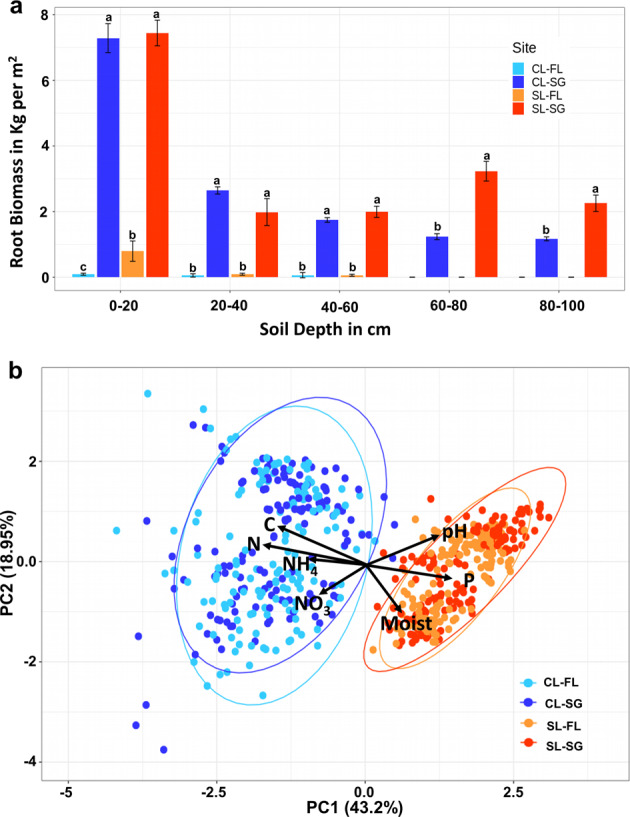
“This response may be mediated by the relatively higher preexisting C content found at this CL site [84], since root biomass levels were estimated to be similar at each site.”
BackgroundResponse of Mycorrhizal Switchgrass to Phosphorus Fractions in Acidic Soil
Clark, R. B., Baligar, V. C., & Zobel, R. W. (2005) · Communications in Soil Science and Plant Analysis · doi:10.1081/css-200056950 · Cited by 19
Ashiq, M. W., Bazrgar, A. B., Fei, H., Coleman, B., Vessey, J. K., Gordon, A., Sidders, D., Keddy, T., & Thevathasan, N. V. (2018) · Canadian Journal of Plant Science · doi:10.1139/cjps-2017-0220 · Cited by 16
Sher, Y., Baker, N. R., Herman, D. J., Fossum, C. A., Hale, L. E., Zhang, X., Nuccio, E., Saha, M. C., Zhou, J. Z., Pett‐Ridge, J., et al. (2020) · Soil Biology and Biochemistry · doi:10.1016/j.soilbio.2020.107907 · Cited by 3
Self-citation
Research works printed but not linked: 8
- Worster D. Dust bowl: the Southern plains in the 1930s (Oklahoma and Kansas). Dust bowl South Plains 1930s (Oklahoma Kansas). Oxford University Press; 1982; p. 15–50.
- Bouton, J. Genetic improvement of bioenergy crops. In: Vermerris W editors. Springer Science and Business Media; 2008. p. 295–308.
- Ditomaso JM, Barney JN, Mann JJ, Kyser G. For switchgrass cultivated as biofuel in California, invasiveness limited by several steps. Calif. Agric. 2013;67:96–103.
- McLean, E. Soil pH and lime requirement. Methods of soil analysis. Part 2. Chemical and microbiological properties, American Society of Agronomy, Soil Science Society of America. 1982;
- AOAC Official Method 972.43, Microchemical Determination of Carbon, Hydrogen, and Nitrogen, Automated Method, in Official Methods of Analysis of AOAC International, 16th ed. Chapter 12, pp. 5–6, AOAC International, Arlington, VA; 1997.
- Olsen SR, Sommers LE. Phosphorus. In: AL Page, et al. (eds.) Methods of soil analysis: Part 2. Chemical and microbiological properties p. 403–30. Agron. Mongr. 9. 2nd edition. ASA and SSA, Madison, WI; 1982.
- Prokopy WR Phopshorus in 0.5 M sodium bicarbonate soil extracts. 1995 Milwaukee, WI QuikChem Method 12-115-01-1-B. Lachat Instruments
- Mehra OP and Jackson ML. Iron oxide remobal from soils and clays by a dithionite-citrate system buffered with sodium bicarbonate. In Clays and clay materials (pp. 317–27). Pergamon; 2013.
Cited by
Button, E. S., Pett-Ridge, J., Murphy, D. V., Kuzyakov, Y., Chadwick, D. R., & Jones, D. L. (2022) · Soil Biology and Biochemistry · doi:10.1016/j.soilbio.2022.108697 · Cited by 327
Self-citationOkolo, C. C., Gebresamuel, G., Zenebe, A., Haile, M. T., Orji, J. E., Okebalama, C. B., Eze, C. E., Eze, E. I., & Eze, P. N. (2023) · Scientific Reports · doi:10.1038/s41598-023-28276-x · Cited by 61
Ouyang, Y., Chen, D., Fu, Y., Shi, W., Provin, T. L., Han, A., van Schaik, E. J., Samuel, J. E., de Figueiredo, P., Zhou, A., et al. (2021) · Soil Biology and Biochemistry · doi:10.1016/j.soilbio.2021.108178 · Cited by 54
Self-citationBai, J., Luo, L., Li, A., Lai, X., Zhang, X., Yu, Y., Wang, H., Wu, N., & Zhang, L. (2022) · Life · doi:10.3390/life12122105 · Cited by 24
“They found that when the marginal land was converted into switchgrass land, the Shannon index increased significantly over time and the community composition changed [28].”
InfluentialLee, J. H., Ulbrich, T. C., Lucas, M., Robertson, G. P., Guber, A. K., & Kravchenko, A. (2024) · Soil Biology and Biochemistry · doi:10.1016/j.soilbio.2024.109610 · Cited by 21
Metadata
- Authors
- Bates, C. T., Escalas, A., Kuang, J., Hale, L., Wang, Y., Herman, D., Nuccio, E. E., Wan, X., Bhattacharyya, A., Fu, Y., Tian, R., Wang, G., Ning, D., Yang, Y., Wu, L., Pett-Ridge, J., Saha, M., Craven, K., Brodie, E. L., Firestone, M., & Zhou, J.
- Affiliations
- University of Oklahoma (US)
- Université de Montpellier (FR)
- Agricultural Research Service (US)
- Noble Research Institute (US)
- Physical and Life Sciences Directorate, Lawrence Livermore National Laboratory , Livermore, CA, USA
- Lawrence Livermore National Laboratory (US)
- Chinese Academy of Sciences (CN)
- State Key Joint Laboratory of Environment Simulation and Pollution Control (CN)
- Lawrence Berkeley National Laboratory (US)
- Corresponding author
- Zhou, Jizhong
- ORCID
- Venue
- The ISME Journal
- Publisher
- Oxford University Press (OUP)
- Published
- 2021-07-01
- Volume
- 16
- Issue
- 1
- Pages
- 10-25
- ISSN
- 1751-7362 (ISSN-L)
- 1751-7370
- PMC
- PMC8692414
- OpenAlex
- W3175705123
- Cited by
- 17
- References
- 88
- Citations by year
- 2026: 3 · 2025: 3 · 2024: 3 · 2023: 4 · 2022: 2 · 2021: 2
- FWCI
- 1.60
- Type
- journal article
- Language
- en
- Open access
- hybrid
- doi.org
- Licence
- cc-by
- creativecommons.org/licenses/by/4.0/ (vor, 923 d)
- creativecommons.org/licenses/by/4.0 (tdm)
- creativecommons.org/licenses/by/4.0 (vor)
- Locations
- The ISME Journal (publishedVersion, cc-by)
- bioRxiv (Cold Spring Harbor Laboratory) (acceptedVersion)
- PubMed Central (publishedVersion, cc-by)
- PubMed (publishedVersion)
- HAL (submittedVersion, cc-by)
- eScholarship (California Digital Library) (submittedVersion)
- Institutional Archive of Ifremer (French Research Institute for Exploitation of the Sea) (submittedVersion, other-oa)
- OSTI OAI (U.S. Department of Energy Office of Scientific and Technical Information) (submittedVersion)
- Funders
- U.S. Department of Energy (DE-SC0014079)
- Topics
- Life Sciences › Agricultural and Biological Sciences › Soil Science › Soil Carbon and Nitrogen Dynamics
- Life Sciences › Agricultural and Biological Sciences › Agronomy and Crop Science › Bioenergy crop production and management
- Physical Sciences › Environmental Science › Ecology › Peatlands and Wetlands Ecology
- Keywords
- switchgrass, marginal land, soil carbon sequestration, methane uptake, soil greenhouse gas fluxes, soil erosion, Dust Bowl, soil microbial diversity, soil chemistry, sandy loam soil, clay loam soil, biomass feedstock, carbon balance
- MeSH terms
- Carbon, Carbon Dioxide, Methane, Panicum, Nitrous Oxide, Soil
About these checks
Registry, retraction, Cites and statistics results are computed, not judged, with one exception: a printed reference that no index lists is read once by a model before it counts as a citation error. Claims are extracted by a model and kept only when their quote appears verbatim in the text; each cited source is then checked, with a model’s help, for whether it says what the claim relies on. Those verdicts can be wrong — read the claim’s quote and the cited source before relying on one.
Statistics and arithmetic are recomputed, not judged.
Confidence bands are shown only for fields calibrated on our annotated test set. None is calibrated yet, so no band is shown.
What counts as a claim ›How we measure confidence ›How we check this ›
Are you an author, or do you see a problem with this page? Request a review
Data sources
Bibliographic data: Semantic Scholar, OpenAlex, Crossref.
Contains information from the Semantic Scholar Academic Graph Datasets, made available under the ODC Attribution License (ODC-BY 1.0).
Semantic Scholar’s data is described in: Kinney, R., et al. (2023). The Semantic Scholar Open Data Platform. arXiv:2301.10140.
