

The role of anxious distress in immune dysregulation in patients with major depressive disorder
Open accessThe DOI matches its Crossref record; 68 of the 68 references it cites were found in a registry or an index.
Abstract
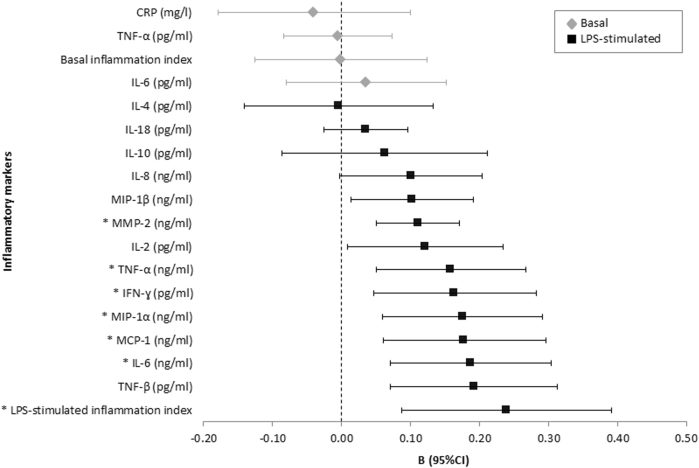
Although depression with anxious distress appears to be a clinically relevant subtype of major depressive disorder (MDD), whether it involves specific pathophysiology remains unclear. Inflammation has been implicated, but not comprehensively studied. We examined within a large MDD sample whether anxious distress and related anxiety features are associated with differential basal inflammation and innate cytokine production capacity. Data are from 1078 MDD patients from the Netherlands Study of Depression and Anxiety. In addition to the DSM-5 anxious distress specifier, we studied various dimensional anxiety scales (e.g. Inventory of Depressive Symptomatology anxiety arousal subscale [IDS-AA], Beck Anxiety Inventory [BAI], Mood and Anxiety Symptoms Questionnaire Anxious Arousal scale [MASQ-AA]). The specifier was constructed using five self-report items from the IDS and BAI. Basal inflammatory markers included C-reactive protein (CRP), interleukin (IL)-6 and tumor necrosis factor (TNF)-α. Innate production capacity was assessed by 13 lipopolysaccharide (LPS)-stimulated inflammatory markers. Basal and LPS-stimulated inflammation index scores were created. Basal inflammation was not associated with anxious distress (prevalence = 54.3%) in MDD patients, except for a modest positive association for BAI score. However, anxious distress was associated with higher LPS-stimulated levels (interferon-γ, IL-6, monocyte chemotactic protein (MCP)-1, macrophage inflammatory protein (MIP)-1α, matrix metalloproteinase (MMP)-2, TNF-α, LPS-stimulated index). Other anxiety indicators (anxious distress specifier score, BAI, MASQ-AA) were also associated with increased innate production capacity. Within a large MDD sample, the anxious distress specifier was associated with increased innate cytokine production capacity but not with basal inflammation. Results from dimensional anxiety indicators largely confirm these results. These findings provide new insight into the pathophysiology of anxious depression.
Overview
The claims and statistics of this paper haven’t been checked yet.
Free: it reads the open-access text and checks the first 5 claims that cite a source we can check. Create a free account to check every claim.
Integrity signals
Registry
Cites
Statistics
Figures
Verification
Claims the paper makes
The claims and statistics of this paper haven’t been checked yet.
Free: it reads the open-access text and checks the first 5 claims that cite a source we can check. Create a free account to check every claim.
Claims other papers make about this one
Each is checked against this paper’s own text: does it say what the citing paper says it does?
The cited source says what the claim attributes to it.
In the citing paper
“Depression with anxious distress is a clinically relevant subtype of MDD associated with higher levels of lipopolysaccharide-stimulated inflammatory markers, including MIP-1α [185].”
From Selected biomarkers of depression: what are the effects of cytokines and inflammation (2022) · cites this paper as [185]
In the citing paper
“neuroinflammation has recently been recognized as a potential pathophysiological mechanism contributing to the onset and/or maintenance at least in subgroups of anxiety patients, opening the possibility to propose immune-targeting interventions as complementary or alternative routes of treatment (Furtado & Katzman, 2015;Gaspersz et al., 2017;Kim & Jeon, 2018).”
From Novel pharmacological targets in drug development for the treatment of anxiety and anxiety-related disorders (2019) · cites this paper as Gaspersz et al., 2017
Self-check
Percentages, sums and reported differences re-computed from the paper’s own numbers.
The self-check needs the paper’s full text.
Citations
Cites
International physical activity questionnaire: 12-country reliability and validity
CRAIG, C. L., MARSHALL, A. L., SJ??STR??M, M., BAUMAN, A. E., BOOTH, M. L., AINSWORTH, B. E., PRATT, M., EKELUND, U., YNGVE, A., SALLIS, J. F., et al. (2003) · Medicine & Science in Sports & Exercise · doi:10.1249/01.mss.0000078924.61453.fb · Cited by 21,619
An inventory for measuring clinical anxiety: Psychometric properties.
Beck, A. T., Epstein, N., Brown, G., & Steer, R. A. (1988) · Journal of Consulting and Clinical Psychology · doi:10.1037/0022-006x.56.6.893 · Cited by 14,407
The control of the false discovery rate in multiple testing under dependency
Benjamini, Y., & Yekutieli, D. (2001) · The Annals of Statistics · doi:10.1214/aos/1013699998 · Cited by 10,490
Molecular Mechanisms of Depression: Perspectives on New Treatment Strategies
Lang, U. E., & Borgwardt, S. (2013) · Cellular Physiology and Biochemistry · doi:10.1159/000350094 · Cited by 8,475
Development and validation of the Penn State Worry Questionnaire
Meyer, T. J., Miller, M. L., Metzger, R. L., & Borkovec, T. D. (1990) · Behaviour Research and Therapy · doi:10.1016/0005-7967(90)90135-6 · Cited by 5,099
A Meta-Analysis of Cytokines in Major Depression
Dowlati, Y., Herrmann, N., Swardfager, W., Liu, H., Sham, L., Reim, E. K., & Lanctôt, K. L. (2010) · Biological Psychiatry · doi:10.1016/j.biopsych.2009.09.033 · Cited by 4,729
Overweight, Obesity, and Depression: A Systematic Review and Meta-analysis of Longitudinal Studies
Luppino, F. S., de Wit, L. M., Bouvy, P. F., Stijnen, T., Cuijpers, P., Penninx, B. W. J. H., & Zitman, F. G. (2010) · Archives of General Psychiatry · doi:10.1001/archgenpsychiatry.2010.2 · Cited by 4,322
Self-citationThe role of inflammation in depression: from evolutionary imperative to modern treatment target
Miller, A. H., & Raison, C. L. (2016) · Nature Reviews Immunology · doi:10.1038/nri.2015.5 · Cited by 3,942
Inflammation and Its Discontents: The Role of Cytokines in the Pathophysiology of Major Depression
Miller, A. H., Maletic, V., & Raison, C. L. (2009) · Biological Psychiatry · doi:10.1016/j.biopsych.2008.11.029 · Cited by 3,848
Rush, A. J., Trivedi, M. H., Ibrahim, H. M., Carmody, T. J., Arnow, B., Klein, D. N., Markowitz, J. C., Ninan, P. T., Kornstein, S., Manber, R., et al. (2003) · Biological Psychiatry · doi:10.1016/s0006-3223(02)01866-8 · Cited by 3,829
Cited by
Immune targets for therapeutic development in depression: towards precision medicine
Drevets, W. C., Wittenberg, G. M., Bullmore, E. T., & Manji, H. K. (2022) · Nature Reviews Drug Discovery · doi:10.1038/s41573-021-00368-1 · Cited by 348
Self-citationComorbid Anxiety and Depression: Clinical and Conceptual Consideration and Transdiagnostic Treatment
Choi, K. W., Kim, Y.-K., & Jeon, H. J. (2020) · Advances in Experimental Medicine and Biology · doi:10.1007/978-981-32-9705-0_14 · Cited by 304
Selected biomarkers of depression: what are the effects of cytokines and inflammation
Harsanyi, S., Kupcova, I., Danisovic, L., & Klein, M. (2022) · International Journal of Molecular Sciences · doi:10.3390/ijms24010578 · Cited by 299
Sartori, S. B., & Singewald, N. (2019) · Pharmacology & Therapeutics · doi:10.1016/j.pharmthera.2019.107402 · Cited by 236
Inflammation-Related Functional and Structural Dysconnectivity as a Pathway to Psychopathology
Goldsmith, D. R., Bekhbat, M., Mehta, N. D., & Felger, J. C. (2023) · Biological Psychiatry · doi:10.1016/j.biopsych.2022.11.003 · Cited by 214
“between CRP/cytokines and anxiety (62-64), including longitudinally (65) and depression (66).”
Depression profilers and immuno-metabolic dysregulation: Longitudinal results from the NESDA study
Lamers, F., Milaneschi, Y., Vinkers, C. H., Schoevers, R. A., Giltay, E. J., & Penninx, B. W. J. H. (2020) · Brain, Behavior, and Immunity · doi:10.1016/j.bbi.2020.04.002 · Cited by 151
Self-citationMohamed, A. A., & Alawna, M. (2020) · Diabetes & Metabolic Syndrome Clinical Research & Reviews · doi:10.1016/j.dsx.2020.04.038 · Cited by 171
“The negative effects of anxiety and depression on immunity have been demonstrated in several studies [21,76,77].”
Grief, depressive symptoms, and inflammation in the spousally bereaved
Fagundes, C. P., Brown, R. L., Chen, M. A., Murdock, K. W., Saucedo, L., LeRoy, A., Wu, E. L., Garcini, L. M., Shahane, A. D., Baameur, F., et al. (2019) · Psychoneuroendocrinology · doi:10.1016/j.psyneuen.2018.10.006 · Cited by 85
Basal and LPS-stimulated inflammatory markers and the course of individual symptoms of depression
van Eeden, W. A., van Hemert, A. M., Carlier, I. V. E., Penninx, B. W. J. H., Lamers, F., Fried, E. I., Schoevers, R., & Giltay, E. J. (2020) · Translational Psychiatry · doi:10.1038/s41398-020-00920-4 · Cited by 82
Self-citationMilaneschi, Y., Allers, K. A., Beekman, A. T. F., Giltay, E. J., Keller, S., Schoevers, R. A., Süßmuth, S. D., Niessen, H. G., & Penninx, B. W. J. H. (2021) · Brain Behavior and Immunity · doi:10.1016/j.bbi.2021.07.007 · Cited by 75
Self-citationImmune remodeling and atrial fibrillation
Yao, Y., Yang, M., Liu, D., & Zhao, Q. (2022) · Frontiers in Physiology · doi:10.3389/fphys.2022.927221 · Cited by 85
“In major depressive disorder patients, anxious distress was highly associated with innate immune activation including higher levels of IL-6, TNF-α, monocyte chemoattractant protein-1 and increased number of activated monocytes in circulation (Gaspersz et al., 2017; Nowak et al., 2019).”
BackgroundDefault Mode Network Connectivity and Social Dysfunction in Major Depressive Disorder
Saris, I. M. J., Penninx, B. W. J. H., Dinga, R., van Tol, M., Veltman, D. J., van der Wee, N. J. A., & Aghajani, M. (2020) · Scientific Reports · doi:10.1038/s41598-019-57033-2 · Cited by 65
Self-citationChildhood trauma dependent anxious depression sensitizes HPA axis function
Menke, A., Lehrieder, D., Fietz, J., Leistner, C., Wurst, C., Stonawski, S., Reitz, J., Lechner, K., Busch, Y., Weber, H., et al. (2018) · Psychoneuroendocrinology · doi:10.1016/j.psyneuen.2018.07.025 · Cited by 55
“Within the Netherlands Study of Depression and Anxiety (NESDA), anxious depression was not associated with basal, but with higher lipopolysaccharide(LPS)-stimulated levels of inflammatory markers (Gaspersz et al., 2017).”
Scudiero, O., Lombardo, B., Brancaccio, M., Mennitti, C., Cesaro, A., Fimiani, F., Gentile, L., Moscarella, E., Amodio, F., Ranieri, A., et al. (2021) · International Journal of Environmental Research and Public Health · doi:10.3390/ijerph18030904 · Cited by 56
“The aerobic exercise that physiotherapists undergo post COVID-19 patients can cause a decrease in serum corticosteroids and catecholamine hormones, restoring the proper functioning of the immune system by restoring the T-helper-1/T-helper-2 relationship [116].”
BackgroundLiu, W., Zhou, Y., Zheng, W., Wang, C., Zhan, Y., Lan, X., Zhang, B., Li, H., Chen, L., & Ning, Y. (2019) · Journal of Affective Disorders · doi:10.1016/j.jad.2019.08.012 · Cited by 45
Daytime melatonin levels in saliva are associated with inflammatory markers and anxiety disorders
Sundberg, I., Rasmusson, A. J., Ramklint, M., Just, D., Ekselius, L., & Cunningham, J. L. (2019) · Psychoneuroendocrinology · doi:10.1016/j.psyneuen.2019.104514 · Cited by 43
“The three markers associated with daytime postprandial melatonin levels in this study (VEGF-A, CCL2/MCP-1 and CCL3/MIP-1α) have been linked to depression and anxiety (Gaspersz et al., 2017; Leighton et al., 2018).”
Wang, X., Lin, J., Liu, Q., Lv, X., Wang, G., Wei, J., Zhu, G., Chen, Q., Tian, H., Zhang, K., et al. (2022) · Journal of Psychiatric Research · doi:10.1016/j.jpsychires.2022.02.013 · Cited by 46
Role of Exercise Intensity on Th1/Th2 Immune Modulations During the COVID-19 Pandemic
Supriya, R., Gao, Y., Gu, Y., & Baker, J. S. (2021) · Frontiers in Immunology · doi:10.3389/fimmu.2021.761382 · Cited by 39
Chen, X., Cui, Q., Hu, X.-H., Ye, J., Liu, Z.-C., Mei, Y.-X., Wang, F., Hu, Z., & Chen, J. (2023) · Journal of Neuroinflammation · doi:10.1186/s12974-023-02836-4 · Cited by 38
“Patients with chronic inflammation often have depressive symptoms [8], and high levels of inflammatory markers, such as interleukin-6 (IL-6), have been found in MDD patients [9, 10].”
BackgroundThe (neuro)inflammatory system in anxiety disorders and PTSD: Potential treatment targets
Sah, A., & Singewald, N. (2025) · Pharmacology & Therapeutics · doi:10.1016/j.pharmthera.2025.108825 · Cited by 48
Basal and LPS-stimulated inflammatory markers and the course of anxiety symptoms
van Eeden, W. A., Filali, E. E., van Hemert, A. M., Carlier, I. V. E., Penninx, B. W. J. H., Lamers, F., Schoevers, R. A., & Giltay, E. J. (2021) · Brain Behavior and Immunity · doi:10.1016/j.bbi.2021.09.001 · Cited by 34
“, 2013), as well as LPS-induced inflammatory markers (Gaspersz et al., 2017; Vogelzangs, de Jonge, Smit, Bahn, & Penninx, 2016), were positively associated with anxiety”
Self-citationAl‐Hakeim, H. K., Al-Fadhel, S. Z., Al-Dujaili, A. H., & Maes, M. H. J. (2020) · Acta Neuropsychiatrica · doi:10.1017/neu.2019.47 · Cited by 31
“Furthermore, due to lowered dynorphin/KOR signaling, heavy smokers may show lowered antiinflammatory protection and, therefore, may be more vulnerable to the detrimental effects of smoking-induced IL-6 and TNF-α signaling (Lesperance et al., 2004; Nunes et al., 2012; Gaspersz et al., 2017).”
BackgroundLiu, H., Wu, X., Wang, Y., Liu, X., Peng, D., Wu, Y., Chen, J., Su, Y., Xu, J., Ma, X., et al. (2022) · General Psychiatry · doi:10.1136/gpsych-2022-100844 · Cited by 32
“19 Other reports involved only the function of the HPA axis and the association of cortisol with anxious depression.”
Association between hs-CRP and depressive symptoms: a cross-sectional study
Ji, Y., Wang, J., Chen, H., Li, J., & Chen, M. (2024) · Frontiers in Psychiatry · doi:10.3389/fpsyt.2024.1339208 · Cited by 31
An exploratory study of the gut microbiota in major depression with anxious distress
Ritchie, G., Strodl, E. S., Parham, S. C., Bambling, M., Cramb, S. M., & Vitetta, L. (2022) · Journal of Affective Disorders · doi:10.1016/j.jad.2022.10.001 · Cited by 26
The multifaceted effects of fluoxetine treatment on cognitive functions
Ampuero, E., Luarte, A., Flores, F. S., Soto, A. I., Pino, C. H., Silva, V., Erlandsen, M., Concha, T., & Wyneken, Ú. (2024) · Frontiers in Pharmacology · doi:10.3389/fphar.2024.1412420 · Cited by 27
Fateh, A. A., Huang, W., Hassan, M. H. U. H., Zhuang, Y., Lin, J., Luo, Y., Yang, B., & Zeng, H. (2023) · International Journal of Clinical and Health Psychology · doi:10.1016/j.ijchp.2023.100393 · Cited by 18
Masih, J., Belschak, F. D., & Verbeke, W. (2019) · PLoS ONE · doi:10.1371/journal.pone.0216232 · Cited by 20
“Negative moods, for instance, are related to a higher lymphocyte cell count [3], higher basophilic granulocyte cell count [4, 5] and higher thrombocyte cell count [6, 7].”
BackgroundWhite matter architecture in major depression with anxious distress symptoms
Heij, J., Penninx, B. W. J. H., van Velzen, L. S., van Tol, M., van der Wee, N. J. A., Veltman, D. J., & Aghajani, M. (2019) · Progress in Neuro-Psychopharmacology and Biological Psychiatry · doi:10.1016/j.pnpbp.2019.109664 · Cited by 18
“limbic system dysfunction that is commonly hypothesized in affective psychopathologies, and in specific MDD/AD+ (Gaspersz et al., 2017b; Gaspersz et al., 2017; Gaspersz et al., 2018; Phillips et al., 2015).”
Self-citationKatamanin, O. M., Tan, I. J., Barry, J., & Jafferany, M. (2024) · American Journal of Clinical Dermatology · doi:10.1007/s40257-024-00905-9 · Cited by 18
Bao, Y., Li, L., Guan, Y., Liu, Y., Wang, W., Zhao, D., Tao, S., Ling, Y., Wang, Y., Bi, B., et al. (2018) · Supportive Care in Cancer · doi:10.1007/s00520-018-4321-z · Cited by 21
Grzesińska, A. D., & Ogłodek, E. A. (2025) · International Journal of Molecular Sciences · doi:10.3390/ijms26125662 · Cited by 14
“The infiltration of blood-derived elements into neural tissue may occur directly—via disruption of the blood–brain barrier—or indirectly through stimulation of cerebral endothelial cells and the release of the soluble form of the vascular cell adhesion molecule 1 (VCAM-1) [43–46].”
Firoozeei, T. S., Barekatain, M., Karimi, M., Zargaran, A., Akhondzadeh, S., & Rezaeizadeh, H. (2020) · Journal of Chinese Integrative Medicine · doi:10.1016/j.joim.2020.06.002 · Cited by 19
Microglial sex differences in innate high anxiety and modulatory effects of minocycline
Ugursu, B., Sah, A., Sartori, S. B., Popp, O., Mertins, P., Dunay, I. R., Kettenmann, H., Singewald, N., & Wolf, S. A. (2024) · Brain Behavior and Immunity · doi:10.1016/j.bbi.2024.03.035 · Cited by 14
“We therefore next tested the in vivo effects of minocycline on microglia of HAB male and HAB female mice by supplying it in the drinking water for 4 weeks (Figure 6a).”
Yang, J., Ke, S., Qiao, Z., Yang, X., Qiu, X., Song, X., Zhao, E., Zhou, J., Zhao, M., Yang, Y., et al. (2021) · Frontiers in Psychiatry · doi:10.3389/fpsyt.2020.503477 · Cited by 14
Cao, F., Yang, M., Cheng, Y., Zhang, X., Shi, L., & Li, N. (2023) · Frontiers in Aging Neuroscience · doi:10.3389/fnagi.2023.1081393 · Cited by 17
Li, Q. S., Tian, C., McIntyre, M. H., Sun, Y., Hinds, D. A., & Narayan, V. A. (2019) · Psychiatry Research · doi:10.1016/j.psychres.2019.06.011 · Cited by 14
Shan, L.-L., Wang, Y., Qiao, T., Bian, Y., Huo, Y., Guo, C., Liu, Q., Yang, Z., Li, Z., Liu, M., et al. (2022) · Frontiers in Neurology · doi:10.3389/fneur.2022.938655 · Cited by 8
“Frontiers in Neurology | www.frontiersin.org 4 July 2022 | Volume 13 | Article 938655 TNF-α, tumor necrosis factor α; CRP, C-reactive protein; IL, interleukin; SAA, serum amyloid A; hs-CRP, high-sensitivity C-reactive protein; ESR, erythrocyte sedimentation rate; Statistically significant values are identified in bold…”
BackgroundInfluentialWu, Y.-C., Yu, H., Yen, C., Yeh, Y., Jian, C.-R., Lin, C.-W., & Lin, I. (2024) · Journal of Affective Disorders · doi:10.1016/j.jad.2024.01.020 · Cited by 7
Wang, P., Chang, Y., Tsai, C., & Yen, C. (2024) · Journal of the Formosan Medical Association · doi:10.1016/j.jfma.2024.02.013 · Cited by 7
Zhao, B., Li, Z., Shi, C., Liu, Y., Sun, Y., Li, B., Zhang, J., Gong, Z., Wang, Y., Ma, X., et al. (2024) · Neuropsychiatric Disease and Treatment · doi:10.2147/ndt.s446034 · Cited by 7
Schwarz, J. M. (2019) · Hormones and Behavior · doi:10.1016/j.yhbeh.2019.04.008 · Cited by 7
Deconstructing depression by machine learning: the POKAL-PSY study
Eder, J., Pfeiffer, L., Wichert, S. P., Keeser, B., Simon, M. S., Popovic, D., Glocker, C., Brunoni, A. R., Schneider, A., Gensichen, J. S., et al. (2023) · European Archives of Psychiatry and Clinical Neuroscience · doi:10.1007/s00406-023-01720-9 · Cited by 7
“The link between increased body fat percentage and chronic low-level inflammation [22], childhood trauma, depression, and low physical activity is well documented [22–24].”
BackgroundMartino, P., Pulopulos, M. M., Canto, C. D., Dupanlou, M. L., Rubio, S. M., & Bonet, J. L. (2021) · Revista de Psiquiatría y Salud Mental · doi:10.1016/j.rpsm.2021.10.002 · Cited by 6
Oginga, F. O., Magwai, T., Shangase, K. B., Xulu, K. R., & Mpofana, T. (2022) · NeuroSci · doi:10.3390/neurosci3010008 · Cited by 8
“Underscoring the centrality of stress to depression, many candidate biomarkers of depression, including smaller hippocampal volume [18], [19], disruptions in HPA-axis functioning [20,21] and elevated peripheral inflammation [22,23], are also linked with exposure to early adversity.”
BackgroundFelger, J. C. (2023) · Advances in neurobiology · doi:10.1007/978-3-031-21054-9_16 · Cited by 6
Lee, S., Lee, K. H., Han, T. S., Han, C., Bahk, W., Lee, S.-J., Patkar, A. A., Masand, P. S., & Pae, C. (2024) · Clinical Psychopharmacology and Neuroscience · doi:10.9758/cpn.23.1106 · Cited by 8
Luo, G., Jing, Y., Yang, J., Wang, S., Xuekelaiti, Z., Yao, C., Gao, Y. H., Chen, H., Sun, D., Li, J., et al. (2024) · Journal of Neural Transmission · doi:10.1007/s00702-024-02781-3 · Cited by 5
“Secondly, depression severity is positively associated with innate cytokine production capacity (Vogelzangs et al. 2016), and increased innate cytokine production capacity is related to anxiety in MDD (Gaspersz et al. 2017).”
Wei, J., Wang, M., Dou, Y., Wang, Y., Du, Y., Zhao, L., Ni, R., Yang, X., & Ma, X. (2024) · Journal of Psychiatric Research · doi:10.1016/j.jpsychires.2024.01.021 · Cited by 5
Effects of elevated emotional symptoms on metabolic disease development: a 10-year follow-up study
Sánchez‐Carro, Y., de la Torre‐Luque, A., Vassou, C., López-García, P., Georgousopoulou, E. N., Pitsavos, C. E., Ayuso‐Mateos, J. L., & Panagiotakos, D. B. (2023) · Frontiers in Psychiatry · doi:10.3389/fpsyt.2023.1148643 · Cited by 4
Adolescent-Onset Depressive Disorders and Inflammation
Hickie, I. B., Carpenter, J. S., & Scott, E. M. (2018) · Elsevier eBooks · doi:10.1016/b978-0-12-811073-7.00024-6 · Cited by 3
Elevated TNIP3 mRNA Expression in TNF-α-Secreting Cells from Patients with Major Depressive Disorder
Huang, K.-W., Wu, M., & Hung, Y.-Y. (2019) · NeuroImmunoModulation · doi:10.1159/000501083 · Cited by 5
Gomułka, K., Liebhart, J., & Mędrala, W. (2021) · Journal of Clinical Medicine · doi:10.3390/jcm10225301 · Cited by 5
Neuro-modulatory targets of aggression, depression and suicidal behaviour
Borkar, D. S., Pande, D., & Yadav, R. S. (2025) · Neuroscience · doi:10.1016/j.neuroscience.2025.06.054 · Cited by 2
Beckett, C. W., & Lawson, R. P. (2025) · Journal of Affective Disorders · doi:10.1016/j.jad.2025.120731 · Cited by 5
Anxiety and Depression During the COVID-19 Pandemic and Their Impact on Sleep
Maqbali, M. A. H. A. (2023) · Progress in Sleep Research · doi:10.1007/978-981-99-0240-8_3 · Cited by 3
Furtak, G., Lerch, N., Kozłowski, M., Tkacz, P., Piekara, E., Łagódka, M., Durys, D., Gutowska, I., Widecka, K., Marchelek‐Myśliwiec, M., et al. (2024) · International Journal of Molecular Sciences · doi:10.3390/ijms252413449 · Cited by 3
“CCL2/MCP-1 has been linked to anxiety and depression [20].”
Kapfhammer, H. (2022) · Springer eBooks · doi:10.1007/978-3-662-65873-4_1 · Cited by 1
Chou, C.-T., & Lin, I. (2024) · Psychiatry Research Neuroimaging · doi:10.1016/j.pscychresns.2024.111913 · Cited by 1
Hu, S., Zhu, L., & Zhang, X. (2025) · Frontiers in Psychiatry · doi:10.3389/fpsyt.2025.1589040 · Cited by 2
“The differential characteristics between AD and NAD have been extensively examined across multiple domains, encompassing neurobiological mechanisms, phenotypic expressions, and molecular biomarkers (11, 12).”
Anxiety and Depression in Psoriatic Arthritis: A Cross Sectional Study in Brazilian Patients
Cipriani Luiza, M., Campos Ana, P. B., Simioni, J. A., Nisihara, R., & Skare Thelma, L. (2021) · Journal of Rheumatic Diseases and Treatment · doi:10.23937/2469-5726/1510091 · Cited by 1
Do baseline anxiety symptoms impact response to IV Ketamine in treatment resistant depression?
Schreiber, Z., Wang, C., Tan, A. C., Riva‐Posse, P., McDonald, W. M., Crowell, A. L., Hermida, A. P., & Hershenberg, R. (2021) · Journal of Affective Disorders Reports · doi:10.1016/j.jadr.2021.100253
Basolateral amygdala volume in affective disorders using 7T MRI in vivo
Kürzinger, B., Schindler, S., Meffert, M., Rosenhahn, A., Trampel, R., Turner, R., & Schoenknecht, P. (2025) · Frontiers in Psychiatry · doi:10.3389/fpsyt.2024.1404594 · Cited by 1
Tiwari, S., Mohammed, Z., Yadav, E., Atta, S. R., Kaushik, S., Tiwari, A., Chopra, A., Singh, I., & Ghosh, S. (2025) · bioRxiv (Cold Spring Harbor Laboratory) · doi:10.1101/2025.02.02.636090
USO DE ANTIDEPRESSIVOS E ANSIOLÍTICOS PÓS PANDEMIA E SEUS IMPACTOS: REVISÃO DE LITERATURA
de Oliveira, F. S., Lins, F. S. V., Galvão, J. G. F. M., de Araújo, D. I. A. F., & Nóbrega, R. D. O. (2025) · Revista Multidisciplinar do Nordeste Mineiro · doi:10.61164/rmnm.v10i1.4026
Chen, X., Cui, Q.-Q., Hu, X.-H., Ye, J., Liu, Z.-C., Mei, Y.-X., Wang, F., Hu, Z.-L., & Chen, J.-G. (2023) · Figshare · doi:10.6084/m9.figshare.23612412
Tiwari, S., Mohammed, Z., Tiwari, A., Yadav, E., Atta, S. R., Kaushik, S., Chopra, A., Singh, I., & Ghosh, S. (2026) · Neurochemistry International · doi:10.1016/j.neuint.2026.106139
Neuroinflammation and treatment resistance in major depressive disorder
Miyata, S., Ishino, Y., & Shimizu, S. (2026) · Frontiers in Pharmacology · doi:10.3389/fphar.2026.1838472
“Meta-analyses have consistently demonstrated that the levels of inflammatory markers, such as IL-6, TNF-α , and CRP, are significantly increased in the blood of a subset of patients with MDD (Gaspersz et al., 2017; Min et al., 2023).”
McIntyre, R. S., Kato, M., Thase, M. E., Therrien, F., Marrache, A. M., Ikehara, K., Ardic, F. C., & Boucher, M. (2026) · CNS Drugs · doi:10.1007/s40263-026-01315-7 · Cited by 1
“It is considered a simple method of assessing anxiety in MDD in clinical practice and facilitates treatment planning and assessment of treatment outcomes [11, 26, 27].”
Dolgopolova, Y. V., Лежейко, Т. В., Голимбет, В. Е., Kostyuk, G. P., Ivanets, N. N., Kinkulkina, M. A., Tikhonova, Y. G., Avdeeva, T. I., Sorokina, O. Y., & Volel, B. A. (2026) · Psikhiatriya · doi:10.30629/2618-6667-2026-24-3-31-43
Biological heterogeneity of melancholic, atypical, anxious, and psychotic depression
Nadei, O. V., & Ternovaya, E. V. (2026) · Progress in Neuro-Psychopharmacology and Biological Psychiatry · doi:10.1016/j.pnpbp.2026.111923
Metadata
- Authors
- Gaspersz, R., Lamers, F., Wittenberg, G., Beekman, A. T. F., van Hemert, A. M., Schoevers, R. A., & Penninx, B. W. J. H.
- Affiliations
- Amsterdam Public Health (NL)
- Amsterdam UMC Location Vrije Universiteit Amsterdam (NL)
- University Medical Center Groningen (NL)
- Corresponding author
- Gaspersz, Roxanne
- ORCID
- Venue
- Translational Psychiatry
- Published
- 2017-12-08
- Volume
- 7
- Issue
- 12
- Pages
- 1268-1268
- ISSN
- 2158-3188 (ISSN-L)
- PMC
- PMC5802575
- OpenAlex
- W2773099978
- Cited by
- 71
- References
- 68
- Citations by year
- 2026: 5 · 2025: 8 · 2024: 12 · 2023: 8 · 2022: 10 · 2021: 9 · 2020: 6 · 2019: 9 · 2018: 4
- FWCI
- 1.73
- Type
- journal article
- Language
- en
- Open access
- gold
- doi.org
- Licence
- cc-by
- creativecommons.org/licenses/by/4.0 (tdm)
- creativecommons.org/licenses/by/4.0 (vor)
- Locations
- Translational Psychiatry (publishedVersion, cc-by)
- PubMed Central (publishedVersion, cc-by)
- PubMed (publishedVersion)
- Amsterdam UMC (VU Amsterdam) - Institutional Repository (publishedVersion)
- Leiden Repository (Leiden University) (submittedVersion)
- Data Archiving and Networked Services (DANS) (submittedVersion, other-oa)
- DOAJ (DOAJ: Directory of Open Access Journals) (submittedVersion)
- Pure Amsterdam UMC (submittedVersion, other-oa)
- University of Groningen research database (University of Groningen / Centre for Information Technology) (submittedVersion, cc-by)
- Data Archiving and Networked Services (DANS) (submittedVersion)
- Funders
- Universiteit Leiden (10‐000‐1002)
- ZonMw (10‐000‐1002)
- Vrije Universiteit Amsterdam
- Topics
- Life Sciences › Neuroscience › Biological Psychiatry › Tryptophan and brain disorders
- Life Sciences › Neuroscience › Behavioral Neuroscience › Stress Responses and Cortisol
- Health Sciences › Medicine › Pharmacology (medical) › Treatment of Major Depression
- Keywords
- major depressive disorder, anxious distress, anxious depression, immune dysregulation, inflammation, lipopolysaccharide stimulation, C-reactive protein, interleukin-6, TNF-α, interferon-gamma, depression pathophysiology
- MeSH terms
- Adult, Anxiety, Major Depressive Disorder, Female, Humans, Immune System, Inflammation, Male, Middle Aged, Tumor Necrosis Factor-alpha, Interleukin-6
About these checks
Registry, retraction, Cites and statistics results are computed, not judged, with one exception: a printed reference that no index lists is read once by a model before it counts as a citation error. Claims are extracted by a model and kept only when their quote appears verbatim in the text; each cited source is then checked, with a model’s help, for whether it says what the claim relies on. Those verdicts can be wrong — read the claim’s quote and the cited source before relying on one.
Statistics and arithmetic are recomputed, not judged.
Confidence bands are shown only for fields calibrated on our annotated test set. None is calibrated yet, so no band is shown.
What counts as a claim ›How we measure confidence ›How we check this ›
Are you an author, or do you see a problem with this page? Request a review
Data sources
Bibliographic data: Semantic Scholar, OpenAlex, Crossref.
Contains information from the Semantic Scholar Academic Graph Datasets, made available under the ODC Attribution License (ODC-BY 1.0).
Semantic Scholar’s data is described in: Kinney, R., et al. (2023). The Semantic Scholar Open Data Platform. arXiv:2301.10140.
