

Targeting glucocorticoid receptors prevents the effects of early life stress on amyloid pathology and cognitive performance in APP/PS1 mice
Open accessThe DOI matches its Crossref record; 53 of the 53 references it cites were found in a registry or an index.
Abstract
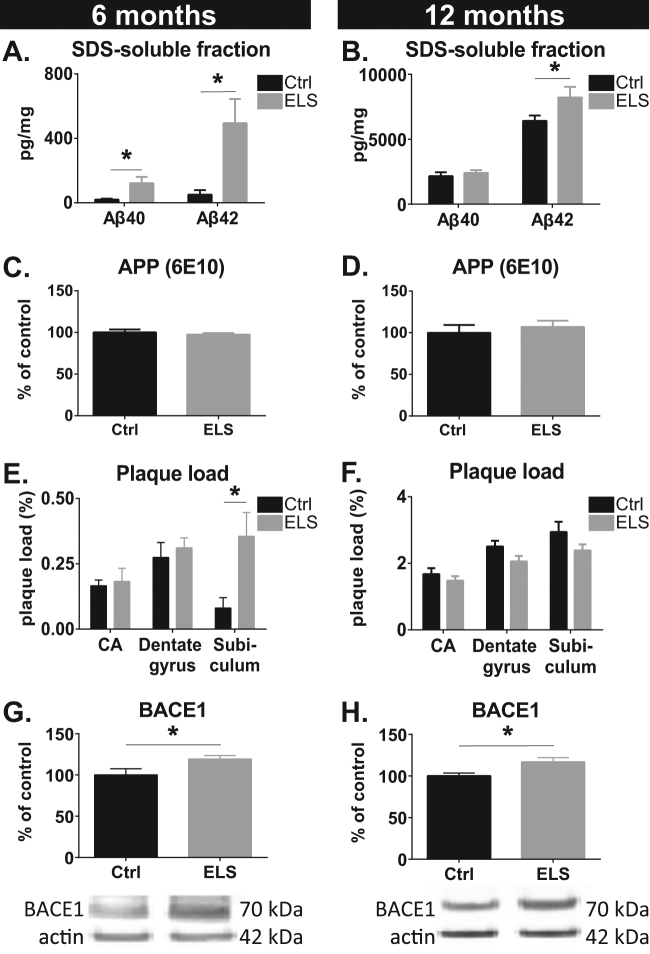
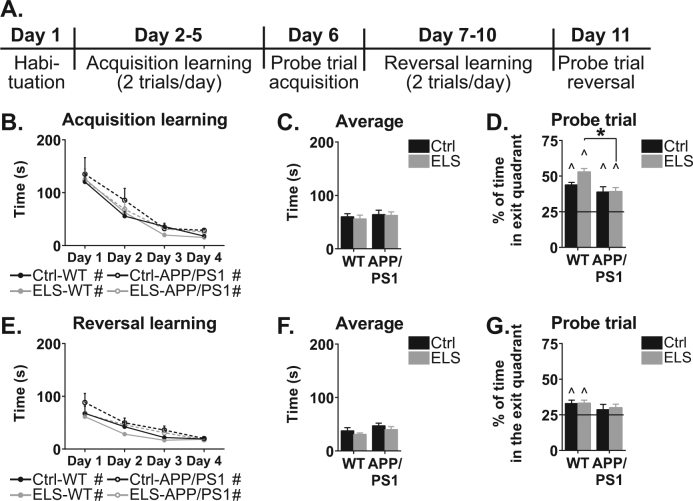
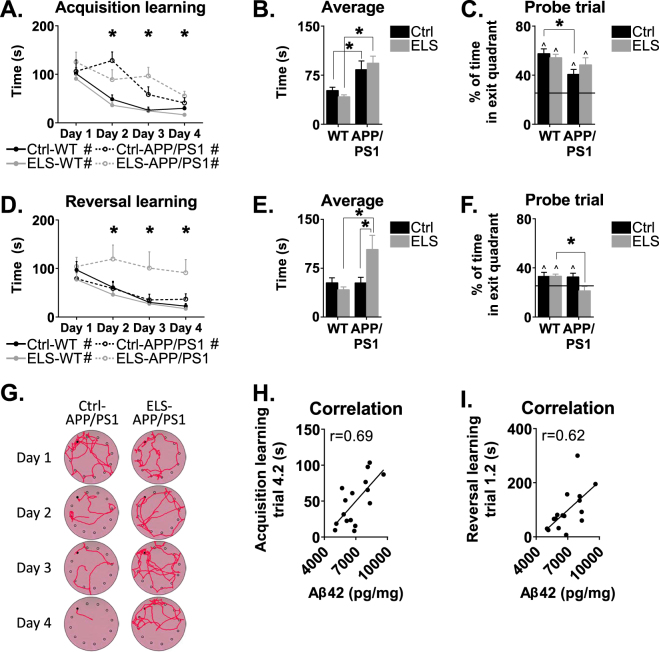
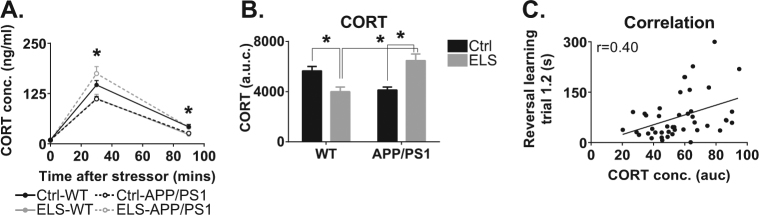
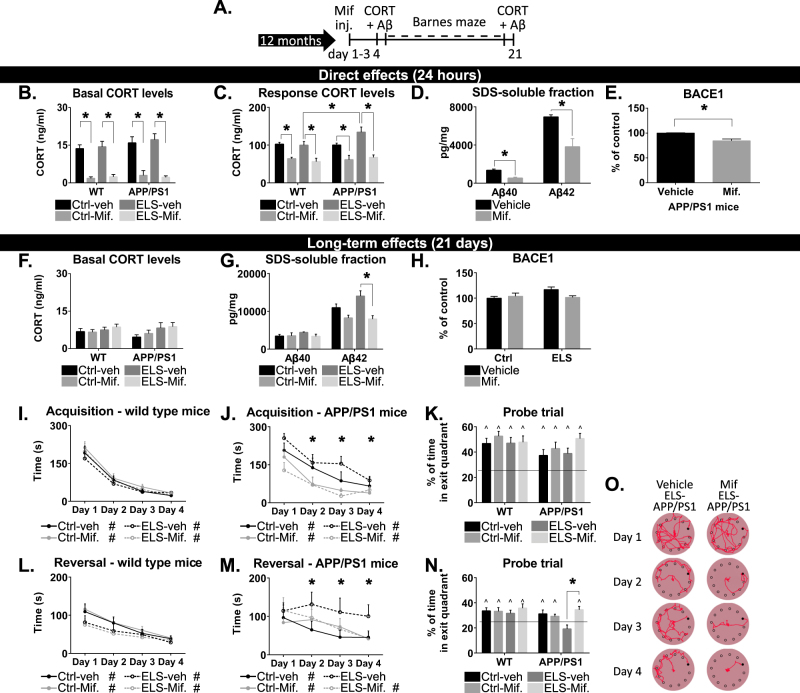
Exposure to chronic stress or elevated glucocorticoid hormone levels in adult life has been associated with cognitive deficits and an increased risk for Alzheimer’s disease (AD). Since exposure to stress during early life enhances stress-responsiveness and lastingly affects cognition in adult life, we here investigated; (i) whether chronic early life stress (ELS) affects AD pathology and cognition in middle-aged APPswe/PS1dE9 mice, and (ii) whether it is still possible to rescue these late effects by briefly blocking glucocorticoid receptors (GRs) at a translationally relevant, middle age. Transgenic APPswe/PS1dE9 mice were subjected to ELS by housing dams and pups with limited nesting and bedding material from postnatal days 2–9 only. In 6- and 12-month-old offspring, this resulted in enhanced hippocampal amyloid-β (Aβ)-40 and -42 levels, and in reduced cognitive flexibility, that correlated well with the Aβ42 levels. In parallel, CORT levels and BACE1 levels were significantly elevated. Surprisingly, blocking GRs for only 3 days at 12 months of age reduced CORT levels, reduced hippocampal Aβ40 and -42, and β-site APP-cleaving enzyme 1 (BACE1) levels, and notably rescued the cognitive deficits in 12-month-old APPswe/PS1dE9 mice. These mouse data demonstrate that exposure to stress during the sensitive period early in life influences later amyloid pathology and cognition in genetically predisposed, mutant mice, and as such, may increase AD vulnerability. The fact that a short treatment with a GR antagonist at middle age lastingly reduced Aβ levels and rescued the cognitive deficits after ELS, highlights the therapeutic potential of this drug for reducing amyloid pathology.
Overview
The claims and statistics of this paper haven’t been checked yet.
Free: it reads the open-access text and checks the first 5 claims that cite a source we can check. Create a free account to check every claim.
Integrity signals
Registry
Cites
Statistics
Figures
Verification
Claims the paper makes
The claims and statistics of this paper haven’t been checked yet.
Free: it reads the open-access text and checks the first 5 claims that cite a source we can check. Create a free account to check every claim.
Claims other papers make about this one
Each is checked against this paper’s own text: does it say what the citing paper says it does?
The source backs part of the claim, not all of it — or backs it for a different population, condition or comparison.
In the citing paper
“In rat research, the administration of a glucocorticoid receptor antagonist resulted in improved cognition and reduced AD pathologies [83].”
From The Role of Cortisol in Chronic Stress, Neurodegenerative Diseases, and Psychological Disorders (2023) · cites this paper as [83]
Experimental — accuracy not yet measuredThe cited source says what the claim attributes to it.
In the citing paper
“This evidence indicates that glucocorticoid signaling influences the likelihood and the extent of AD pathologies.”
From The Role of Cortisol in Chronic Stress, Neurodegenerative Diseases, and Psychological Disorders (2023) · cites this paper as [83]
Self-check
Percentages, sums and reported differences re-computed from the paper’s own numbers.
The self-check needs the paper’s full text.
Citations
Cites
Querfurth, H. W., & LaFerla, F. M. (2010) · New England Journal of Medicine · doi:10.1056/nejmra0909142 · Cited by 4,569
Scheltens, P., Blennow, K., Breteler, M. M. B., de Strooper, B., Frisoni, G. B., Salloway, S., & Van der Flier, W. M. (2016) · The Lancet · doi:10.1016/s0140-6736(15)01124-1 · Cited by 3,125
Baumgart, M., Snyder, H. M., Carrillo, M. C., Fazio, S., Kim, H., & Johns, H. (2015) · Alzheimer's & Dementia · doi:10.1016/j.jalz.2015.05.016 · Cited by 1,660
Matthews, F. E., Arthur, A., Barnes, L. E., Bond, J., Jagger, C., Robinson, L., & Brayne, C. (2013) · The Lancet · doi:10.1016/s0140-6736(13)61570-6 · Cited by 1,155
The stress system in the human brain in depression and neurodegeneration
Swaab, D. F., Bao, A.-M., & Lucassen, P. J. (2005) · Ageing Research Reviews · doi:10.1016/j.arr.2005.03.003 · Cited by 984 · cited 1×
“Notwithstanding, HPA dysfunction does not seem to worsen further with disease progression in patients 43,44 , implying that early alterations in HPA axis, likely acting via glucocorticoids, contribute to the onset and subsequent acceleration of AD pathogenesis.”
BackgroundSelf-citationCo-expression of multiple transgenes in mouse CNS: a comparison of strategies
Jankowsky, J. L., Slunt, H. H., Ratovitski, T., Jenkins, N. A., Copeland, N. G., & Borchelt, D. R. (2001) · Biomolecular Engineering · doi:10.1016/s1389-0344(01)00067-3 · Cited by 746 · cited 1×
“…decline 19,20 , we tested the hypothesis that ELS — induced by housing mice with limited nesting and bedding material from postnatal days (PND) 2 – 9 21 – 24 — increases the development of AD pathology and cognitive decline in APPswe/ PS1dE9 mice, a classic mouse model for amyloid pathology 25 .”
BackgroundGlucocorticoids increase amyloid-β and tau pathology in a mouse model of alzheimer’s disease
Green, K. N., Billings, L. M., Roozendaal, B., McGaugh, J. L., & LaFerla, F. M. (2006) · The Journal of Neuroscience · doi:10.1523/jneurosci.2797-06.2006 · Cited by 623 · cited 1×
“At 12 months of age, when the amyloid plaque pathology had progressed substantially, SDS-soluble Aβ42, but not Aβ40, levels were significantly elevated in ELS-APPswe/PS1dE9 mice (Aβ40: t(16)= SDS-soluble fraction”
BackgroundMeta-analysis of modifiable risk factors for Alzheimer's disease
Xu, W., Tan, L., Wang, H.-F., Jiang, T., Tan, M.-S., Tan, L., Zhao, Q.-F., Li, J.-Q., Wang, J., & Yu, J.-T. (2015) · Journal of Neurology, Neurosurgery & Psychiatry · doi:10.1136/jnnp-2015-310548 · Cited by 573
A Novel Mouse Model for Acute and Long-Lasting Consequences of Early Life Stress
Rice, C. J., Sandman, C. A., Lenjavi, M. R., & Baram, T. Z. (2008) · Endocrinology · doi:10.1210/en.2008-0633 · Cited by 521 · cited 1×
“…decline 19,20 , we tested the hypothesis that ELS — induced by housing mice with limited nesting and bedding material from postnatal days (PND) 2 – 9 21 – 24 — increases the development of AD pathology and cognitive decline in APPswe/ PS1dE9 mice, a classic mouse model for amyloid pathology 25 .”
BackgroundToward understanding how early-life stress reprograms cognitive and emotional brain networks
Chen, Y., & Baram, T. Z. (2016) · Neuropsychopharmacology · doi:10.1038/npp.2015.181 · Cited by 474 · cited 2×
“001), while Aβ40 levels were comparable between vehicle and mifepristone-treated APPswe/PS1dE9 mice (treatment effect: F(1,20)= 0.”
BackgroundResult
Cited by
The Role of Cortisol in Chronic Stress, Neurodegenerative Diseases, and Psychological Disorders
Knezevic, E., Nenic, K., Milanovic, V., & Knezevic, N. N. (2023) · Cells · doi:10.3390/cells12232726 · Cited by 564
“In rat research, the administration of a glucocorticoid receptor antagonist resulted in improved cognition and reduced AD pathologies [83].”
BackgroundHigh Cortisol and the Risk of Dementia and Alzheimer’s Disease: A Review of the Literature
Ouanes, S., & Popp, J. (2019) · Frontiers in Aging Neuroscience · doi:10.3389/fnagi.2019.00043 · Cited by 470
“In a similar way, mifepristone has been shown to reduce the hippocampal Aβ levels and rescue the cognitive deficits induced by early life stress in APP/PS1 transgenic mice (Lesuis et al., 2018).”
Glial Cell-Mediated Neuroinflammation in Alzheimer’s Disease
Al-Ghraiybah, N. F., Wang, J., Alkhalifa, A. E., Roberts, A. B., Raj, R., Yang, E., & Kaddoumi, A. (2022) · International Journal of Molecular Sciences · doi:10.3390/ijms231810572 · Cited by 202
“APPswe/PS1dE9 mouse models of AD increased the brain levels of Aβ40 and Aβ42 in the hippocampus, and reduced cognitive abilities, an effect alleviated by the glucocorticoid receptors blocker, mifepristone [47].”
BackgroundLesuis, S. L., Hoeijmakers, L., Korosi, A., de Rooij, S. R., Swaab, D. F., Kessels, H. W., Lucassen, P. J., & Krugers, H. J. (2018) · Alzheimer's Research & Therapy · doi:10.1186/s13195-018-0422-7 · Cited by 115
Self-citationMilligan Armstrong, A., Porter, T., Quek, H., White, A., Haynes, J., Jackaman, C., Villemagne, V., Munyard, K., Laws, S. M., Verdile, G., et al. (2021) · Biological Reviews · doi:10.1111/brv.12750 · Cited by 116
Early life adversity as a risk factor for cognitive impairment and Alzheimer’s disease
Huang, Z., Jordan, J. D., & Zhang, Q. (2023) · Translational Neurodegeneration · doi:10.1186/s40035-023-00355-z · Cited by 101
de Vries, L. E., Huitinga, I., Kessels, H. W., Swaab, D. F., & Verhaagen, J. (2024) · Molecular Neurodegeneration · doi:10.1186/s13024-024-00719-7 · Cited by 72
“The influence of positive novel experiences (such as enriched environment) or negative experiences (stress, early life adversity) on cognition has been well established in rodents [38–41].”
BackgroundEarly life stress impairs fear memory and synaptic plasticity; a potential role for GluN2B
Lesuis, S. L., Lucassen, P. J., & Krugers, H. J. (2019) · Neuropharmacology · doi:10.1016/j.neuropharm.2019.01.010 · Cited by 73
Self-citationMelchiorri, D., Merlo, S., Micallef, B., Borg, J.-J., & Dráfi, F. (2023) · Frontiers in Pharmacology · doi:10.3389/fphar.2023.1196413 · Cited by 70
Corticosteroid Action in the Brain: The Potential of Selective Receptor Modulation
Viho, E. M. G., Buurstede, J. C., Mahfouz, A., Koorneef, L. L., van Weert, L. T. C. M., Houtman, R., Hunt, H. J., Kroon, J., & Meijer, O. C. (2019) · Neuroendocrinology · doi:10.1159/000499659 · Cited by 58
Programming of Stress-Sensitive Neurons and Circuits by Early-Life Experiences
Bolton, J. L., Short, A. K., Simeone, K. A., Daglian, J., & Baram, T. Z. (2019) · Frontiers in Behavioral Neuroscience · doi:10.3389/fnbeh.2019.00030 · Cited by 56
Pillai, A. G., Arp, M., Velzing, E., Lesuis, S. L., Schmidt, M. V., Holsboer, F., Joëls, M., & Krugers, H. J. (2018) · Neuropharmacology · doi:10.1016/j.neuropharm.2018.02.001 · Cited by 45
“A decrease in NMDAR function alongside enhanced synaptic facilitation in ELS animals, as we observed, might be a result of reduced glutamate availability at CA1 synapses.”
InfluentialSelf-citationFKBP5 and early life stress affect the hippocampus by an age-dependent mechanism
Criado‐Marrero, M., Smith, T. M., Gould, L. A., Kim, S., Penny, H. J., Sun, Z., Gulick, D., Dickey, C. A., & Blair, L. J. (2020) · Brain Behavior & Immunity - Health · doi:10.1016/j.bbih.2020.100143 · Cited by 54
Uses for humanised mouse models in precision medicine for neurodegenerative disease
Nair, R., Corrochano, S., Gasco, S., Tibbit, C., Thompson, D., Maduro, C., Ali, Z., Fratta, P., Acevedo‐Arozena, A., Cunningham, T. J., et al. (2019) · Mammalian Genome · doi:10.1007/s00335-019-09807-2 · Cited by 44
Lesuis, S. L., Kaplick, P. M., Lucassen, P. J., & Krugers, H. J. (2019) · Neuropharmacology · doi:10.1016/j.neuropharm.2019.02.023 · Cited by 41
“Previous studies have reported that early life stress can alter flexible spatial learning, synaptic plasticity and amyloid levels in 12-month-old APPswe/PS1dE9 mice (Lesuis et al., 2018).”
InfluentialSelf-citationBolton, J. L., Schulmann, A., Curran, M. M., Regev, L., Chen, Y., Kamei, N., Shao, M., Singh-Taylor, A., Jiang, S., Noam, Y., et al. (2020) · Cell Reports · doi:10.1016/j.celrep.2020.108511 · Cited by 52
“, 2016) and addressed mechanistically (Arp et al., 2016; Lesuis et al., 2018; Loi et al., 2017).”
Canet, G., Pineau, F., Zussy, C., Hernandez, C., Hunt, H., Chevallier, N., Perrier, V., Torrent, J., Belanoff, J. K., Meijer, O. C., et al. (2019) · The FASEB Journal · doi:10.1096/fj.201900723rrr · Cited by 39
Transcriptional glucocorticoid effects in the brain: Finding the relevant target genes
Meijer, O. C., Buurstede, J. C., Viho, E. M. G., Amaya, J. M., Koning, A.-S. C. A. M., van der Meulen, M., van Weert, L. T. C. M., Paul, S. N., Kroon, J., & Koorneef, L. L. (2022) · Journal of Neuroendocrinology · doi:10.1111/jne.13213 · Cited by 41
“CORT108297 in rats acted like corticosterone with respect to enhanced memory consoli- dation, whereas CORT118335 acted like the classical GR/PR antagonist RU486.”
BackgroundTranslational models of stress and resilience: An applied neuroscience methodology review
Albayrak, Z. S., Vaz, A., Bordes, J., Ünlü, S., Sep, M. S. C., Vinkers, C. H., Pinto, L., & Eser, H. Y. (2024) · Neuroscience Applied · doi:10.1016/j.nsa.2024.104064 · Cited by 48
“Notably, the repeatability and predictability of the chronic stress model have been emphasized in both rat and mouse models (Molet et al., 2014; Lesuis et al., 2018).”
Synaptic Alterations in Mouse Models for Alzheimer Disease—A Special Focus on N-Truncated Abeta 4-42
Dietrich, K., Bouter, Y., Müller, M., & Bayer, T. A. (2018) · Molecules · doi:10.3390/molecules23040718 · Cited by 31
“For example, exposure to early life stress has recently been shown to influence synaptic plasticity after induction of epileptic activity [76], and more specifically, early life stress may alter amyloid-β processing and cognition in transgenic Alzheimer mice [77].”
BackgroundGut feelings: the microbiota-gut-brain axis on steroids
So, S. Y., & Savidge, T. (2021) · American Journal of Physiology-Gastrointestinal and Liver Physiology · doi:10.1152/ajpgi.00294.2021 · Cited by 29
Mposhi, A., & Turner, J. D. (2023) · Frontiers in Immunology · doi:10.3389/fimmu.2023.1215544 · Cited by 31
“Similarly, in other genetic models of Alzheimer’s disease exposure to maternal separation of limited bedding and nursing increases the rate of cognitive decline, increased plaque deposition and reduced life expectancy (2, 141).”
BackgroundEarly predation risk shapes adult learning and cognitive flexibility
Pouca, C. V., Mitchell, D. J., Lefèvre, J., Vega‐Trejo, R., & Kotrschal, A. (2021) · Oikos · doi:10.1111/oik.08481 · Cited by 34
Late glucocorticoid receptor antagonism changes the outcome of adult life stress
Ding, J., da Silva, M. S., Lingeman, J., Chen, X., Shi, Y., Han, F., & Meijer, O. C. (2019) · Psychoneuroendocrinology · doi:10.1016/j.psyneuen.2019.05.014 · Cited by 26
Extracorporeal apheresis therapy for Alzheimer disease—targeting lipids, stress, and inflammation
Bornstein, S. R., Voit-Bak, K., Rosenthal, P., Tselmin, S., Julius, U., Schatz, U., Boehm, B. O., Thuret, S., Kempermann, G., Reichmann, H., et al. (2019) · Molecular Psychiatry · doi:10.1038/s41380-019-0542-x · Cited by 28
Early Adversity and Accelerated Brain Aging: A Mini-Review
Chaudhari, P. R., Singla, A., & Vaidya, V. A. (2022) · Frontiers in Molecular Neuroscience · doi:10.3389/fnmol.2022.822917 · Cited by 26
Ghosh, C., Hossain, M. K., Mishra, S., Khan, S. M., Gonzalez-Martinez, J. A., Marchi, N., Janigro, D., Bingaman, W. E., & Najm, I. (2018) · Epilepsia · doi:10.1111/epi.14567 · Cited by 23
Yang, L., Zhou, H., Huang, L., Su, Y., Kong, L., Ji, P., Sun, R., Wang, C., Li, W., & Li, W. (2022) · International Immunopharmacology · doi:10.1016/j.intimp.2022.108972 · Cited by 26
Dromard, Y., Arango-Lievano, M., Borie, A. M., Dedin, M., Fontanaud, P., Torrent, J., Garabedian, M. J., Ginsberg, S. D., & Jeanneteau, F. D. (2022) · Acta Neuropathologica Communications · doi:10.1186/s40478-022-01396-7 · Cited by 20
Glucocorticoids, synaptic plasticity and Alzheimer’s disease
Klyubin, I., Ondrejcak, T., Hu, N.-W., & Rowan, M. J. (2022) · Current Opinion in Endocrine and Metabolic Research · doi:10.1016/j.coemr.2022.100365 · Cited by 16
Pecher, H., Storch, M., Beyer, F., Witte, A. V., Baasner, C.-F., Schönknecht, P. O. D., & Weise, C. M. (2024) · NeuroImage Clinical · doi:10.1016/j.nicl.2024.103687 · Cited by 19
“…disrupted hypothalamic pathways in AD mouse models, like leptin therapy (Tezapsidis et al. 2009; Greco et al. 2010), glucocorticoid receptor antagonists (Lesuis et al. 2018) or light flicker stimulation of the central clock in suprachiasmatic neurons (Yao et al. 2020), promising studies in…”
Neonatal Maternal Separation Modifies Proteostasis Marker Expression in the Adult Hippocampus
Sierra-Fonseca, J. A., Hamdan, J. N., Cohen, A. A., Cardenas, S. M., Saucedo, S., Lodoza, G. A., & Gosselink, K. L. (2021) · Frontiers in Molecular Neuroscience · doi:10.3389/fnmol.2021.661993 · Cited by 17
Watermeyer, T., Robb, C. E., Gregory, S., & Udeh‐Momoh, C. T. (2020) · Frontiers in Neuroendocrinology · doi:10.1016/j.yfrne.2020.100877 · Cited by 16
Early-life stress induces persistent astrocyte dysfunction associated with fear generalisationPreprint
Guayasamin, M., Depaauw-Holt, L. R., Adedipe, I. I., Ghenissa, O., Vaugeois, J., Duquenne, M., Rogers, B., Latraverse-Arquilla, J., Peyrard, S., Bosson, A., et al. (2025) · eLife · doi:10.7554/elife.99988 · Cited by 20
Kotah, J. M., Kater, M. S. J., Brosens, N., Lesuis, S. L., Tandari, R., Blok, T. M., Marchetto, L., Yusaf, E., Koopmans, F., Smit, A. B., et al. (2023) · Alzheimer s & Dementia · doi:10.1002/alz.13569 · Cited by 16
“others have reported age-dependent alterations in plaque load 16 and neuroinflammation, 16,17 aswellasdeficitsincognitiveflexibility, 18 fear learning, 19,20 postsynaptic receptor protein expression, 20 and long term potentiation.”
BackgroundSelf-citationHossain, M. K., Williams, S., Ferguson, L., Bingaman, W. E., Ghosh, A., Najm, I., & Ghosh, C. (2020) · Molecular Neurobiology · doi:10.1007/s12035-020-02043-9 · Cited by 14
Tian, R., Han, K., Geng, Y., Yang, C., Shi, C., Thomas, P. B., Pearce, C., Moffatt, K., Ma, S., Xu, S., et al. (2021) · Molecular Ecology Resources · doi:10.1111/1755-0998.13501 · Cited by 15
Baram, T. Z., & Birnie, M. T. (2024) · Neurobiology of Stress · doi:10.1016/j.ynstr.2024.100669 · Cited by 18
“Probing of upstream ‘master regulators ’ of these persistent changes identified GR as a driving transcription factor (Lambert et al., 2013; Lesuis et al., 2018), as expected, but also a second potent transcription factor, neuronal restrictive silencing factor, (NRSF or REST) (Singh-Taylor et al.,…”
Early life stress induces visual dysfunction and retinal structural alterations in adult mice
Calanni, J. S., Diéguez, H. H., Fleitas, M. F. G., Cánepa, E. T., Berardino, B. G., Repetto, E. M., Villarreal, A., Dorfman, D., & Rosenstein, R. E. (2023) · Journal of Neurochemistry · doi:10.1111/jnc.15752 · Cited by 13
Zhang, S.-Q., Cao, L., Liang, Y.-Y., & Wang, P. (2021) · Frontiers in Molecular Neuroscience · doi:10.3389/fnmol.2020.613421 · Cited by 18
Lesuis, S. L., Lucassen, P. J., & Krugers, H. J. (2019) · Neuroscience · doi:10.1016/j.neuroscience.2019.07.012 · Cited by 14
“While genetic mutations result in familial forms of AD (Querfurth and LaFerla, 2010; Scheltens et al., 2016), environmental factors may contribute to the progression of AD pathology in sporadic AD (Lesuis et al., 2018a).”
BackgroundMethodResultInfluentialSelf-citationPakdeepak, K., Chokchaisiri, R., Tocharus, J., Jearjaroen, P., Tocharus, C., & Suksamrarn, A. (2020) · EXCLI journal · doi:10.17179/excli2019-1940 · Cited by 12
BACE1 as an early biomarker and its relevance to risk factors for Alzheimer’s disease
Ohno, M. (2025) · Brain Research Bulletin · doi:10.1016/j.brainresbull.2025.111475 · Cited by 13
Wang, Y., Meng, L., Zhuang, Q., & Shen, L. (2021) · Journal of Alzheimer s Disease · doi:10.3233/jad-201336 · Cited by 11
“Further studies in AD mice demonstrated that targeting glucocorticoid receptors could prevent amyloid lesions, ameliorate inflammatory responses and cognitive function, indicating that glucocorticoid receptor was a promising target for AD treatment [38, 39].”
Bashir, M. I., Aziz, N. H. K. A., & Noor, D. A. M. (2022) · Behavioral Sciences · doi:10.3390/bs12060196 · Cited by 14
“The chamber was removed and the subject was fully allowed to explore the area for sharp 90 s after the subject was returned and the surface was cleaned with 70% alcohol [28].”
MethodCreutzberg, K. C., Kestering-Ferreira, É., Viola, T. W., Wearick‐Silva, L. E., Orso, R., Heberle, B. A., Albrechet‐Souza, L., de Almeida, R. M. M., & Grassi‐Oliveira, R. (2020) · Scientific Reports · doi:10.1038/s41598-020-77118-7 · Cited by 10
Shade, R. D., Ross, J. A., & Bockstaele, E. J. V. (2022) · Frontiers in Aging Neuroscience · doi:10.3389/fnagi.2022.949361 · Cited by 9
“It was also reported that the overactivation of the HPA axis can eventually increase the risk for developing senile plaques (Lesuis et al., 2018).”
BackgroundZhang, X., Huang, S., Xu, H., Hu, Y., & Gao, L. (2025) · Frontiers in Pharmacology · doi:10.3389/fphar.2025.1666082 · Cited by 12
“In addition, exogenous factors include chronic stress-induced activation of the hypothalamic – pituitary – adrenal (HPA) axis (Justice, 2018; Lesuis et al., 2018; Carroll et al., 2011), heavy metal exposure (Teleanu et al., 2022; Bondy, 2021; Harischandra et al., 2019), metabolic disorders (e.g.,…”
Gentenaar, M., Meulmeester, F. L., van der Burg, X. R., Hoekstra, A. T., Hunt, H., Kroon, J., van Roon‐Mom, W., & Meijer, O. C. (2024) · Experimental Neurology · doi:10.1016/j.expneurol.2024.114675 · Cited by 9
“Mifepristone showed striking effects in animal models for other neurodegenerative diseases, but the lack of selectivity precludes formal conclusions on GR involvement in such settings (Baglietto-Vargas et al., 2013; Lesuis et al., 2018).”
BackgroundLucassen, P. J., Kőrösi, A., de Rooij, S. R., Smit, A. B., van Dam, A., Daskalakis, N. P., van Kesteren, R. E., Verheijen, M. H. G., Lesuis, S. L., Kessels, H. W. H. G., et al. (2024) · Biological Psychiatry · doi:10.1016/j.biopsych.2024.11.007 · Cited by 9
Self-citationEarly-life stress induces persistent astrocyte dysfunction associated with fear generalisation
Guayasamin, M., Depaauw-Holt, L. R., Adedipe, I. I., Ghenissa, O., Vaugeois, J., Duquenne, M., Rogers, B., Latraverse-Arquilla, J., Peyrard, S., Bosson, A., et al. (2025) · eLife · doi:10.7554/elife.99988.3 · Cited by 12
Hendrickx, J. O., Moudt, S. D., Dam, D. V., Deyn, P. P. D., Fransen, P. F., & Meyer, G. R. Y. D. (2021) · American Journal of Physiology-Heart and Circulatory Physiology · doi:10.1152/ajpheart.00254.2021 · Cited by 7
“Previous studies reported the contribution of elevated circulating glucocorticoid levels early on in the pathogenesis of AD in both rodents (39, 40) and humans (41), and argue for a potential neuroprotective therapy by addressing stress in patients with AD risk.”
BackgroundDo, A. N., Ali, M., Timsina, J., Wang, L., Western, D., Liu, M., Sanford, J., Rosende-Roca, M., Boada, M., Puerta, R., et al. (2024) · medRxiv · doi:10.1101/2024.03.15.24304164 · Cited by 7
Cunliffe, G., Lim, Y. T., Chae, W., & Jung, S. (2022) · Biomedicines · doi:10.3390/biomedicines10123064 · Cited by 7
Tiwari, P., Kumar, P., Srikrishna, S., Siddiqi, N. J., & Sharma, B. (2025) · Toxics · doi:10.3390/toxics13100897 · Cited by 5
Brosens, N., Simon, C., Kessels, H. W. H. G., Lucassen, P. J., & Krugers, H. J. (2023) · Journal of Neuroendocrinology · doi:10.1111/jne.13346 · Cited by 9
“13,36,37 As shown previously, 13,36,37 this model leads to a significant lower gain in body-weight from P2 – 9 compared with the control pups that were housed under normal conditions (T[57] = 7.99, p .001) (Figure 1B).”
BackgroundMethodInfluentialSelf-citationGlucocorticoid hormone as regulator and readout of resilience
de Kloet, E. R., & Meijer, O. C. (2024) · Current Opinion in Behavioral Sciences · doi:10.1016/j.cobeha.2024.101439 · Cited by 11
“However, the action of the GR antagonists is rapid, while the signs of inflammation slowly develop over days and weeks in the disease models [57,61,62].”
BackgroundStress and the risk of Alzheimer dementia: Can deconstructed engrams be rebuilt?
Jeanneteau, F. D. (2023) · Journal of Neuroendocrinology · doi:10.1111/jne.13235 · Cited by 4
“115 Therefore, glucocorticoids have robust mnemonic effects, and strategies to limit their actions should be carefully planned according to the memory phases using behavioral therapy.”
Ferrari, L., & Rüdiger, S. (2019) · Heat shock proteins · doi:10.1007/978-3-030-23158-3_21 · Cited by 3
Brosens, N., Samouil, D., Stolker, S., Katsika, E. V., Weggen, S., Lucassen, P. J., & Krugers, H. J. (2023) · Journal of Alzheimer s Disease · doi:10.3233/jad-230727 · Cited by 4
“This resulted in a significantly lower body weight gain from P2-9 in the ELS group (T(38) = 4.36, p 0.001) (Table 1), as reported previously [13, 34, 35].”
BackgroundMethodResultInfluentialSelf-citationAlzheimer’s Disease: Causes, Mechanisms, and Steps Toward Prevention
Choi, S. H., & Tanzi, R. E. (2020) · Oxford University Press eBooks · doi:10.1093/oxfordhb/9780190069162.013.18 · Cited by 3
Schulmann, A., Bolton, J. L., Curran, M. M., Regev, L., Kamei, N., Singh-Taylor, A., Jiang, S., Molet, J., Mortazavi, A., & Baram, T. Z. (2018) · SSRN Electronic Journal · doi:10.2139/ssrn.3284454 · Cited by 3
Early-life stress induces persistent astrocyte dysfunction resulting in fear generalisationPreprint
Guayasamin, M., Depaauw-Holt, L. R., Adedipe, I. I., Ghenissa, O., Vaugeois, J., Duquenne, M., Rogers, B., Latraverse-Arquilla, J., Peyrard, S., Bosson, A., et al. (2024) · eLife · doi:10.7554/elife.99988.1 · Cited by 4
Tian, R., Han, K., Geng, Y., Yang, C., Thomas, P., Pearce, C., Moffatt, K., Ma, S., Xu, S., Yang, G., et al. (2021) · doi:10.22541/au.162324962.27977404/v1 · Cited by 1
Early-life stress induces persistent astrocyte dysfunction associated with fear generalisationPreprint
Guayasamin, M., Depaauw-Holt, L. R., Adedipe, I. I., Ghenissa, O., Vaugeois, J., Duquenne, M., Rogers, B., Latraverse-Arquilla, J., Peyrard, S., Bosson, A., et al. (2025) · eLife · doi:10.7554/elife.99988.2 · Cited by 3
S.21.04 Early life experiences, amyloid pathology and cognitive function
Krugers, H. J., Lesuis, S. L., & Lucassen, P. J. (2019) · European Neuropsychopharmacology · doi:10.1016/j.euroneuro.2018.11.961
Self-citationGPCR and RTK Regulation in Neurons: The Impact of Stress on GPCR and RTK signalling and Crosstalk
Gondora, N. (2020) · UWSpace (University of Waterloo) · Cited by 1
Sigala, M., Mitsis, Τ., Papageorgiou, L., Papakonstantinou, E., Diakou, I., Pierouli, K., Dragoumani, K., Spandidos, D. A., Bacopoulou, F., Chrousos, G. P., et al. (2022) · World Academy of Sciences Journal · doi:10.3892/wasj.2022.180
“Treatment with a GR antagonist in middle‑aged mice has been shown to result in lower amyloid‑ β levels and recovery from the cognitive defects (60).”
The COVID-19–related neuroinflammation model may reveal relevant information on healthy longevity
Luiz, M. V. D. S. J., Silva, J. D. N., Andreotti, D. Z., Mello, P. S. D., Nagy, G. S., Filho, O. P. D. A., & Kawamoto, E. M. (2023) · Elsevier eBooks · doi:10.1016/b978-0-323-85841-0.00008-0
Effects of environmental enrichment on the behavioural consequences of early-life stress in rats
Dief, A. E., Ezz, Y., Elshorbagy, A. K., Deacon, R. M. J., Alrifaee, A., Eltahan, A., Mansour, C. W., & Shaheen, A. (2023) · Bulletin of Egyptian Society for Physiological Sciences · doi:10.21608/besps.2023.211010.1143
Zheng, X.-Y., Zhang, H.-C., Wei, Z.-W., Lv, Y., Jin, F., Zhu, J., & Ruan, Y. (2023) · Research Square · doi:10.21203/rs.3.rs-3517043/v1
Microglia-driven neuroinflammation: A pivotal player in brain disorders
Vale, A. M., & Bernardino, L. I. (2024) · Elsevier eBooks · doi:10.1016/b978-0-443-22268-9.00017-x
Dromard, Y., Arango-Lievano, M., Borie, A. M., Dedin, M., Fontanaud, P., Torrent, J., Garabedian, M. J., Ginsberg, S. D., & Jeanneteau, F. D. (2022) · Figshare · doi:10.6084/m9.figshare.20131435
Age-specific Aβ-Tau interactions underlie spatial memory deficits in an APP/PS1 amyloidosis modelPreprint
Metaxas, A., Anzalone, M., Vaitheeswaran, R., Tejsi, V., Li, S., Mitilineou, G., Lambertsen, K. L., Audrain, H., Brooks, D. J., Landau, A. M., et al. (2025) · bioRxiv (Cold Spring Harbor Laboratory) · doi:10.64898/2025.12.06.689974
Moien, M. A. S., Saghravanian, S. J., & Fereidoni, M. (2025) · IBRO Neuroscience Reports · doi:10.1016/j.ibneur.2025.12.012 · Cited by 1
“Genetic studies also suggest a link between glucocorticoid function and the risk of developing Alzheimer's disease (de Quervain et al., 2004; van Rossum et al., 2008; Lesuis et al., 2018).”
Zhao, Z., Song, Y., Yu, X., Gao, Q., Wang, B., & Sun, M. (2026) · The FASEB Journal · doi:10.1096/fj.202502736r
“Accumulating evidence indicates that MIF, a potent GR antagonist, can target the HPA axis to ameliorate the cognitive impairment [41, 42].”
Rôle central des glucocorticoïdes et de leurs récepteurs dans l’étiologie de la Maladie d’Alzheimer
Canet, G. (2020) · theses.fr (ABES) · doi:10.70675/c46cedbczd8bbz4a8eza301z82de5785048c
Chronic stress and glucocorticoid actions in brain plasticity and Tau pathology
Dioli, C. (2021) · theses.fr (ABES) · doi:10.70675/b812791ezcc0az4036zb746z0d9b5daacfab
Early-life adversity in rodents: Experimental design is of the essence
van der Veen, R., Joëls, M., & Kőrösi, A. (2026) · Neurobiology of Stress · doi:10.1016/j.ynstr.2026.100813 · Cited by 1
“Similar beneficial effects were observed following adult mifepristone treatment on the ELS-induced effects in APP-mutant mice on cognitive flexibility (Lesuis et al., 2018).”
Neurotrophic Glucocorticoid Signalling
Jeanneteau, F. D. (2026) · Receptors · doi:10.3390/receptors5030024
“The ability of antidepressant drugs to boost the neurotrophic glucocorticoid pathway [18,68] and decrease amyloid-β concentrations in humans and animal models indicates that a significant proportion of dementia cases might be preventable [153–157].”
Stress and glucocorticoid exposure as a critical environmental risk factor for Alzheimer's disease
Li, X., Greenstein, A., Munro, C. A., Tamashiro, K. L., & Lee, R. S. (2026) · Journal of Neuroimmunology · doi:10.1016/j.jneuroim.2026.579073
Bhattacharya, H., Chakraborty, P., & Dewanjee, S. (2026) · International review of neurobiology · doi:10.1016/bs.irn.2026.08.022
Metadata
- Authors
- Lesuis, S. L., Weggen, S., Baches, S., Lucassen, P. J., & Krugers, H. J.
- Affiliations
- University of Amsterdam (NL)
- Heinrich Heine University Düsseldorf (DE)
- Corresponding author
- Lesuis, Sylvie L
- Venue
- Translational Psychiatry
- Published
- 2018-03-01
- Volume
- 8
- Issue
- 1
- Pages
- 53-53
- ISSN
- 2158-3188 (ISSN-L)
- PMC
- PMC5830444
- OpenAlex
- W2802451112
- Semantic Scholar
- b2f7b7063e614a266affeea3342d5180ddc77e1b
- Cited by
- 85
- References
- 52
- Citations by year
- 2026: 5 · 2025: 7 · 2024: 14 · 2023: 11 · 2022: 12 · 2021: 10 · 2020: 8 · 2019: 13 · 2018: 5
- FWCI
- 6.19
- Type
- journal article
- Language
- en
- Open access
- gold
- doi.org
- Licence
- cc-by
- creativecommons.org/licenses/by/4.0 (tdm)
- creativecommons.org/licenses/by/4.0 (vor)
- Locations
- Translational Psychiatry (publishedVersion, cc-by)
- Europe PMC (PubMed Central) (publishedVersion, cc-by)
- PubMed Central (publishedVersion, cc-by)
- PubMed (publishedVersion)
- UvA-DARE (University of Amsterdam) (publishedVersion, cc-by)
- DOAJ (DOAJ: Directory of Open Access Journals) (submittedVersion)
- Data Archiving and Networked Services (DANS) (submittedVersion, other-oa)
- Funders
- Internationale Stichting Alzheimer Onderzoek (12534)
- Alzheimer Nederland (12534)
- Topics
- Life Sciences › Neuroscience › Cellular and Molecular Neuroscience › Alzheimer's disease research and treatments
- Life Sciences › Neuroscience › Behavioral Neuroscience › Stress Responses and Cortisol
- Health Sciences › Medicine › Psychiatry and Mental health › Dementia and Cognitive Impairment Research
- Keywords
- early life stress, glucocorticoid receptor antagonism, Alzheimer's disease, amyloid-beta, APP/PS1 mice, cognitive flexibility, hippocampus, BACE1, corticosterone, glucocorticoid stress response
- MeSH terms
- Age Factors, Animals, Behavior, Animal, Corticosterone, Disease Models, Animal, Female, Hippocampus, Hormone Antagonists, Male, Mice, Inbred C57BL, Mice, Transgenic, Peptide Fragments, Receptors, Glucocorticoid, Stress, Psychological, Mifepristone, Amyloid beta-Peptides, Aspartic Acid Endopeptidases, Mice, Amyloid Precursor Protein Secretases, Cognitive Dysfunction
About these checks
Registry, retraction, Cites and statistics results are computed, not judged, with one exception: a printed reference that no index lists is read once by a model before it counts as a citation error. Claims are extracted by a model and kept only when their quote appears verbatim in the text; each cited source is then checked, with a model’s help, for whether it says what the claim relies on. Those verdicts can be wrong — read the claim’s quote and the cited source before relying on one.
Statistics and arithmetic are recomputed, not judged.
Confidence bands are shown only for fields calibrated on our annotated test set. None is calibrated yet, so no band is shown.
What counts as a claim ›How we measure confidence ›How we check this ›
Are you an author, or do you see a problem with this page? Request a review
Data sources
Bibliographic data: Semantic Scholar, OpenAlex, Crossref.
Contains information from the Semantic Scholar Academic Graph Datasets, made available under the ODC Attribution License (ODC-BY 1.0).
Semantic Scholar’s data is described in: Kinney, R., et al. (2023). The Semantic Scholar Open Data Platform. arXiv:2301.10140.
