

Recommendations and future directions for supervised machine learning in psychiatry
Open accessThe DOI matches its Crossref record; 61 of the 62 references it cites were found in a registry or an index.
Abstract
Machine learning methods hold promise for personalized care in psychiatry, demonstrating the potential to tailor treatment decisions and stratify patients into clinically meaningful taxonomies. Subsequently, publication counts applying machine learning methods have risen, with different data modalities, mathematically distinct models, and samples of varying size being used to train and test models with the promise of clinical translation. Consequently, and in part due to the preliminary nature of such works, many studies have reported largely varying degrees of accuracy, raising concerns over systematic overestimation and methodological inconsistencies. Furthermore, a lack of procedural evaluation guidelines for non-expert medical professionals and funding bodies leaves many in the field with no means to systematically evaluate the claims, maturity, and clinical readiness of a project. Given the potential of machine learning methods to transform patient care, albeit, contingent on the rigor of employed methods and their dissemination, we deem it necessary to provide a review of current methods, recommendations, and future directions for applied machine learning in psychiatry. In this review we will cover issues of best practice for model training and evaluation, sources of systematic error and overestimation, model explainability vs. trust, the clinical implementation of AI systems, and finally, future directions for our field.
Overview
The claims and statistics of this paper haven’t been checked yet.
Free: it reads the open-access text and checks the first 5 claims that cite a source we can check. Create a free account to check every claim.
Integrity signals
Registry
Cites
Statistics
Figures
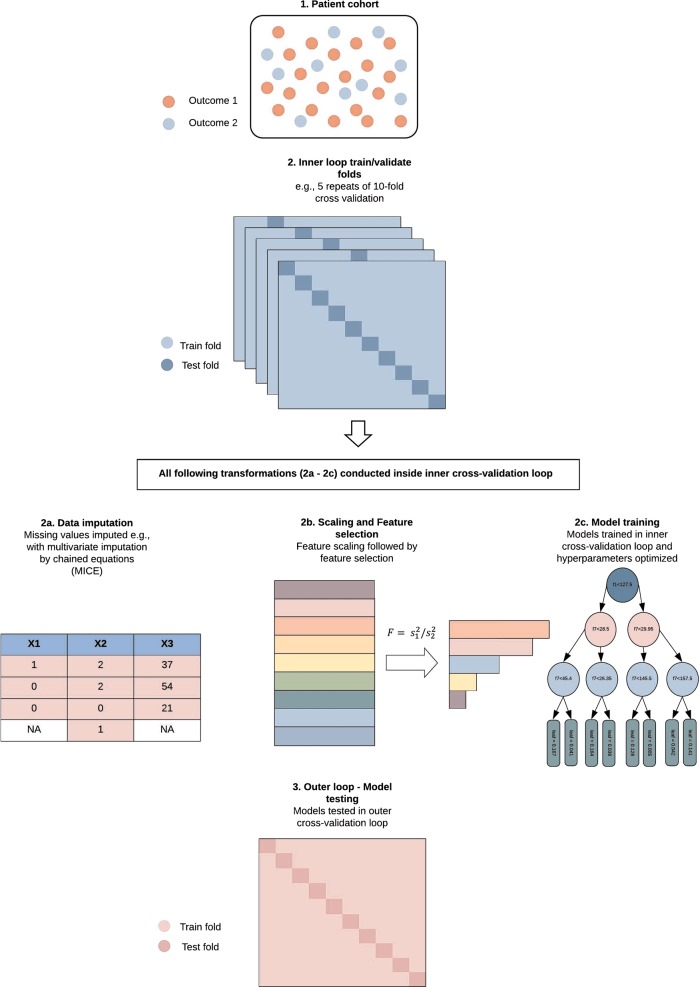
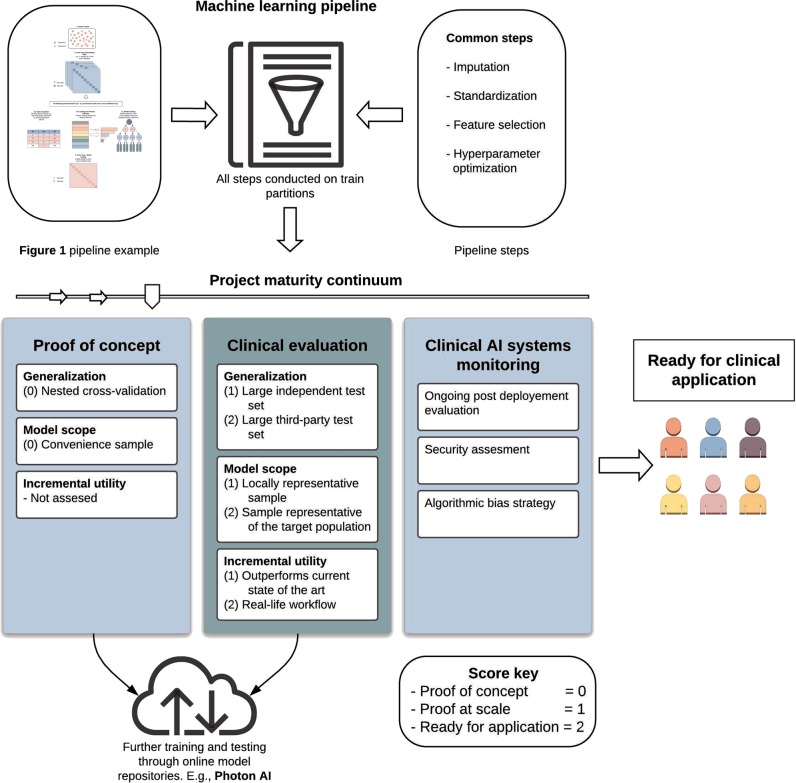
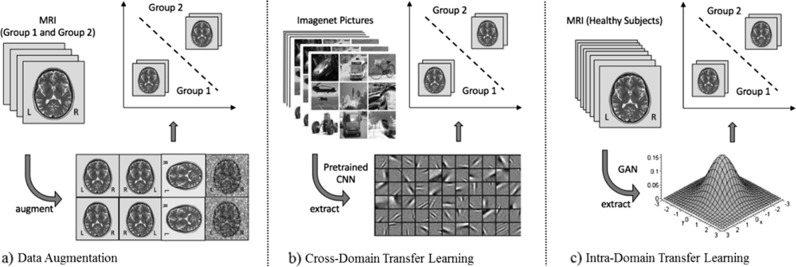
Verification
Claims the paper makes
The claims and statistics of this paper haven’t been checked yet.
Free: it reads the open-access text and checks the first 5 claims that cite a source we can check. Create a free account to check every claim.
Claims other papers make about this one
Each is checked against this paper’s own text: does it say what the citing paper says it does?
The cited source doesn’t support the claim as written.
In the citing paper
“for which it is explicitly recommended that selection should work independently of model training (unlike in methods as forward and backward selection)”
From Guidelines and quality criteria for artificial intelligence-based prediction models in healthcare: a scoping review (2022) · cites this paper as [27]
Checked by a reasoning model — may be wrong.
Experimental — accuracy not yet measuredThe source backs part of the claim, not all of it — or backs it for a different population, condition or comparison.
In the citing paper
“One commonly referred strategy is feature selection13,15,27,47,76, for which it is explicitly recommended that selection should work independently of model training (unlike in methods as forward and backward selection) and is best informed - a priori - by medical expert knowledge or existing literature13,17,76.”
From Guidelines and quality criteria for artificial intelligence-based prediction models in healthcare: a scoping review (2022) · cites this paper as [27]
Experimental — accuracy not yet measuredThe source backs part of the claim, not all of it — or backs it for a different population, condition or comparison.
In the citing paper
“It is therefore considered important to compose a diverse development team17,22–25, create awareness and involve stakeholders in design choices22,24,26,27,72.”
From Guidelines and quality criteria for artificial intelligence-based prediction models in healthcare: a scoping review (2022) · cites this paper as [27]
Experimental — accuracy not yet measuredThe source backs part of the claim, not all of it — or backs it for a different population, condition or comparison.
In the citing paper
“although this may not eliminate the bias altogether.”
From Guidelines and quality criteria for artificial intelligence-based prediction models in healthcare: a scoping review (2022) · cites this paper as [27]
Experimental — accuracy not yet measuredThe source backs part of the claim, not all of it — or backs it for a different population, condition or comparison.
In the citing paper
“Code for the complete model building pipeline should be published in well-documented scripts with computer environment requirements when possible7,8,13,14,16,19,20,24,25,27,33,50,62,64,65, including statements about any restrictions to access or re-use.”
From Guidelines and quality criteria for artificial intelligence-based prediction models in healthcare: a scoping review (2022) · cites this paper as [27]
Experimental — accuracy not yet measured
11 more claims about this paper
Create a free account to see every claim other papers make about this one.
Self-check
Percentages, sums and reported differences re-computed from the paper’s own numbers.
The self-check needs the paper’s full text.
Citations
Cites
ImageNet classification with deep convolutional neural networks
Krizhevsky, A., Sutskever, I., & Hinton, G. E. (2017) · Communications of the ACM · doi:10.1145/3065386 · Cited by 112,155
The Elements of Statistical Learning
Hastie, T., Friedman, J., & Tibshirani, R. (2001) · Springer Series in Statistics · doi:10.1007/978-0-387-21606-5 · Cited by 24,162
A Unified Approach to Interpreting Model Predictions
Lundberg, S., & Lee, S.-I. (2017) · arXiv · doi:10.48550/arxiv.1705.07874 · Cited by 23,707
Advances in neural information processing systems 7
Cios, K., & Shields, M. (1997) · Neurocomputing · doi:10.1016/s0925-2312(97)90018-7 · Cited by 22,059
Dermatologist-level classification of skin cancer with deep neural networks
Esteva, A., Kuprel, B., Novoa, R. A., Ko, J., Swetter, S. M., Blau, H. M., & Thrun, S. (2017) · Nature · doi:10.1038/nature21056 · Cited by 14,362
A Study of Cross-Validation and Bootstrap for Accuracy Estimation and Model Selection
Kohavi, R. (1995) · Zenodo · doi:10.5281/zenodo.19712698 · Cited by 10,909
Estimating the reproducibility of psychological science
Open Science Collaboration (2015) · Science · doi:10.1126/science.aac4716 · Cited by 8,515
On Pixel-Wise Explanations for Non-Linear Classifier Decisions by Layer-Wise Relevance Propagation
Bach, S., Binder, A., Montavon, G., Klauschen, F., Müller, K.-R., & Samek, W. (2015) · PLOS ONE · doi:10.1371/journal.pone.0130140 · Cited by 4,524
Cross‐validation strategies for data with temporal, spatial, hierarchical, or phylogenetic structure
Roberts, D. R., Bahn, V., Ciuti, S., Boyce, M. S., Elith, J., Guillera‐Arroita, G., Hauenstein, S., Lahoz‐Monfort, J. J., Schröder, B., Thuiller, W., et al. (2017) · Ecography · doi:10.1111/ecog.02881 · Cited by 3,689 · cited 1×
“Here, the solution is leave-group out cross-validation, also known as Monte Carlo or leave site out cross-validation 34,35 .”
MethodGenetic relationship between five psychiatric disorders estimated from genome-wide SNPs
Cross-Disorder Group of the Psychiatric Genomics Consortium (2013) · Nature Genetics · doi:10.1038/ng.2711 · Cited by 2,263
Research works printed but not linked: 2
- Goodfellow, I, Bengio, Y, Courville, A. Deep Learning (MIT press, 2016).
- Inoue, H. Data augmentation by pairing samples for images classification. Preprint at arXiv:180102929 (2018).
Cited by
Items 101–147 of 147
Min, H., Guo, F., Sun, T., Liu, M., & Oswald, F. L. (2026) · Advances in Methods and Practices in Psychological Science · doi:10.1177/25152459261419816 · Cited by 1
Supervised machine learning in psychiatry: towards application in clinical practice
Grassi, M. (2022) · Research Publications (Maastricht University) · doi:10.26481/dis.20220919mg · Cited by 1
Integrating the Hierarchical Taxonomy of Psychopathology and computational psychiatry
Allen, T. A., Schreiber, A., Blain, S. D., Carlisi, C. O., DeYoung, C. G., Fornito, A., Gillan, C. M., Goghari, V. M., Hall, N. T., Homan, P., et al. (2026) · Nature Reviews Psychology · doi:10.1038/s44159-026-00621-7 · Cited by 1
A review of face expression recognition system recommendation for psychiatric disease
Ilham, A., Suryono, S., & Widodo, C. E. (2023) · AIP conference proceedings · doi:10.1063/5.0125595 · Cited by 1
Engineering the Mind: Actionable Technical Requirements for Innovation in Clinical NeurosciencePreprint
Jamalabadi, H., Koppe, G., Nozari, E., & Hahn, T. (2023) · PsyArXiv (OSF Preprints) · doi:10.31234/osf.io/mh26v · Cited by 1
Self-citationDetecting Careless Responding in Survey Data Using Stochastic Gradient BoostingPreprint
Schroeders, U., Schmidt, C. Μ., & Gnambs, T. (2020) · PsyArXiv (OSF Preprints) · doi:10.31234/osf.io/f94zk · Cited by 1
Sadowski, L. M., Lalk, C., Hofschröer, V., Dietel, F. A., Tanck, J. A., Rubel, J. A., Hartmann, A. S., & Vocks, S. (2025) · International Journal of Eating Disorders · doi:10.1111/eat.70007 · Cited by 1
Comparison of rTMS and dTMS in TRD: evidence gaps, cost-effectiveness, and ethical priorities
Paganin, W. (2026) · Frontiers in Psychiatry · doi:10.3389/fpsyt.2025.1722486 · Cited by 1
Machine Learning Methods and Schizophrenia Spectrum Disorders: A Scoping Review (Preprint)Preprint
Rivera, L. A., Costa-Dookhan, K. A., Dissanayake, J., Siddiqui, I., Rotenberg, M., Hahn, M., Maslej, M. M., & Foussias, G. (2025) · doi:10.2196/preprints.72036 · Cited by 1
Miley, K. (2022) · University of Minnesota Digital Conservancy (University of Minnesota) · Cited by 1
Rahman, M. T., Orka, N. A., Khan, A., & Moni, M. A. (2026) · arXiv (Cornell University) · doi:10.48550/arxiv.2609.33422 · Cited by 1
Understanding as a bottleneck for the data-driven approach to psychiatric science
Crook, B. (2023) · Philosophy and the Mind Sciences · doi:10.33735/phimisci.2023.9658 · Cited by 1
Shi, Z., Youngstrom, E. A., Liu, Y., Youngstrom, J. K., & Findling, R. L. (2026) · Journal of Affective Disorders · doi:10.1016/j.jad.2026.122378
Xin, W., Li, X., Qu, W., Nie, W., Zhao, Y., Wang, H., Yi, H., & Tan, S. (2026) · doi:10.2196/preprints.110943
Connecting needs and care in psychosis: an illustration of decision support in psychosis care
Roebroek, L. O. (2022) · University of Groningen research database (University of Groningen / Centre for Information Technology) · doi:10.33612/diss.207593828
Assessing Professional Readiness and Ethical Challenges for AI Integration in Mental Health Services
Chakraborthy, M., & Memon, H. (2026) · Springer eBooks · doi:10.1007/978-981-96-9650-5_27
Regression to the mean inflates accuracy in machine learning prediction of symptom change
Raduà, J., Oliva, V., Vieta, E., & Prisco, M. D. (2026) · Nature Mental Health · doi:10.1038/s44220-026-00686-6
Artificial Intelligence and the Future of Employment in the World
Maity, I., Mandal, A., Roy, P., & Ghosh, S. (2025) · Advances in computational intelligence and robotics book series · doi:10.4018/979-8-3693-9795-4.ch016
Querengässer, J., & Bezzel, A. (2025) · Psychiatry Psychology and Law · doi:10.1080/13218719.2025.2549827
Gépi tanulás alkalmazása a magatartástudományban és a pszichológiában: előnyök és hátrányok
Matuz, A. (2025) · Mentálhigiéné és Pszichoszomatika · doi:10.1556/0406.2025.00077
Rickelt, J. (2022) · Research Publications (Maastricht University) · doi:10.26481/dis.20221215jr
Hilbert, K. (2021) · Springer eBooks · doi:10.1007/978-3-030-58080-3_212-2
Hilbert, K. (2022) · Springer eBooks · doi:10.1007/978-3-030-64573-1_212
Immel, D., Menne, F., Schulze, J., Dörr, F., Tröger, J., König, A., Linz, N., Schwarz, P., Hein, A., Hurlemann, R., et al. (2026) · doi:10.2196/preprints.104492
Machine learning methods for predicting postpartum depression: A scoping review (Preprint)Preprint
Saqib, K., Khan, A. F., & Butt, Z. A. (2021) · doi:10.2196/preprints.29765
Understanding and the Black Box Problem in Artificial Intelligence
Crook, B. (2025) · EPub Bayreuth (University of Bayreuth) · doi:10.15495/epub_ubt_00008992
Machine Learning Methods and Schizophrenia Spectrum Disorders: A Scoping Review (Preprint)Preprint
Rivera, L. A., Costa-Dookhan, K. A., Dissanayake, J., Siddiqui, I., Rotenberg, M., Hahn, M., Maslej, M. M., & Foussias, G. (2025) · doi:10.2196/preprints.82492
Machine learning methods and schizophrenia spectrum disorders: a scoping review
Rivera, L., Costa-Dookhan, K. A., Raj, V., Dissanayake, J., Siddiqui, I., Hahn, M., Rotenberg, M., Maslej, M. M., & Foussias, G. (2026) · BMJ Open · doi:10.1136/bmjopen-2025-112849
The path toward generalizable clinical prediction modelsPreprint
Hieronymus, F., Hieronymus, M., Sjöstedt, A., Nilsson, S., Näslund, J., Lisinski, A., & Østergaard, S. D. (2024) · medRxiv · doi:10.1101/2024.04.16.24305902
Multimodal machine learning for precision psychiatry
Cearns, M. L. D. (2021) · Adelaide Research & Scholarship (AR&S) (University of Adelaide)
Self-citationSukhenko, Y. (2025) · Bulletin of Postgraduate education (Social and Behavioral Sciences Series Psychological economics public administration) · doi:10.58442/3041-1858-2025-32(61)-177-199
Internet of Medical Things and Computational Intelligence in Healthcare 4.0
(2024) · Frontiers research topics · doi:10.3389/978-2-8325-5595-8
Nouveaux biomarqueurs vocaux pour la détection automatique de la somnolence
Martin, V. (2022) · theses.fr (ABES) · doi:10.70675/e8669cefz980fz4fc6zbc44z07ad3ca56810
Transkranielle Gleichstromtherapie des präfrontalen Kortex als neue Therapieform bei Depressionen
Burkhardt, G. (2025) · Electronic Theses of LMU Munich (Ludwig-Maximilians-Universität München) · doi:10.5282/edoc.36257
Advancing Precision Treatment Selection for Post-traumatic Stress Disorder
Tait, J. (2024) · White Rose eTheses Online (University of Leeds, The University of Sheffield, University of York)
Plessas, A., Bensemann, J., Ramos, J. I. E., Cowie, S., Landon, J., & Parry, D. S. (2026) · The Psychological Record · doi:10.1007/s40732-026-00682-3
Hudon, A. (2024) · Papyrus : Institutional Repository (Université de Montréal) · doi:10.71781/26391
Machine Learning Approaches for Predictive and Early Detection of Mental Health Disorders
Malhotra, M., Bajaj, A., & Bansal, N. (2026) · Lecture notes in networks and systems · doi:10.1007/978-3-032-08243-5_3
Discovering insights with machine learning: Lessons learned from case studies in mental healthcare
van Mens, K. (2023) · Radboud Repository (Radboud University)
Editorial: Machine learning and big data analytics in mood disorders
Yang, L., & Chen, J. (2024) · Frontiers in Psychiatry · doi:10.3389/fpsyt.2024.1406826
ARTIFICIAL INTELLIGENCE IN PSYCHIATRIC DIAGNOSIS AND TREATMENT
Pradhiba, S. P. M. (2026) · International Journal of Drug Delivery Technology · doi:10.25258/ijddt.16.49s.46
Multimodal markers of emerging and early-stage psychosis
Brunner, G. (2024) · Enlighten: Theses (The University of Glasgow) · doi:10.5525/gla.thesis.84567
Performance Analysis of Predicting Brain Age Using Deep Learning Algorithms
Priya, K. S., Balasubramanian, C. M., Ramathilagam, A., Palanikumar, R., Gopikannan, P., & Raghavan, P. (2025) · Smart innovation, systems and technologies · doi:10.1007/978-981-96-2124-8_50
PREDICTING BRAIN AGE USING MACHINE LEARNING ALGORITHMS: A COMPREHENSIVE EVALUATION
GANGARAJU, S. A. R. (2026) · International Journal of Data Science and IoT Management System
Beyond Chronological Age: A Comprehensive Assessment of Machine Learning Predictors in Neuroimaging
KRISHNA, T. B., Kumar, M. V., KAVITHA, J., & NANCHARI, Y. (2026) · International Journal of Engineering Research and Science & Technology
Metadata
- Authors
- Cearns, M., Hahn, T., & Baune, B. T.
- Affiliations
- The University of Adelaide (AU)
- University of Münster (DE)
- The University of Melbourne (AU)
- Corresponding author
- Baune, Bernhard T.
- Venue
- Translational Psychiatry
- Published
- 2019-10-22
- Volume
- 9
- Issue
- 1
- Pages
- 271-271
- ISSN
- 2158-3188 (ISSN-L)
- PMC
- PMC6805872
- OpenAlex
- W2982007782
- Cited by
- 127
- References
- 62
- Citations by year
- 2026: 12 · 2025: 19 · 2024: 19 · 2023: 17 · 2022: 27 · 2021: 22 · 2020: 11
- FWCI
- 0.72
- Type
- journal article
- Language
- en
- Open access
- gold
- doi.org
- Licence
- cc-by
- creativecommons.org/licenses/by/4.0 (tdm)
- creativecommons.org/licenses/by/4.0 (vor)
- Locations
- Translational Psychiatry (publishedVersion, cc-by)
- PubMed Central (publishedVersion, cc-by)
- PubMed (publishedVersion)
- Minerva Access (University of Melbourne) (submittedVersion, cc-by)
- DOAJ (DOAJ: Directory of Open Access Journals) (submittedVersion)
- Funders
- Australian Government
- Topics
- Health Sciences › Medicine › Health Informatics › Artificial Intelligence in Healthcare and Education
- Physical Sciences › Computer Science › Artificial Intelligence › Machine Learning in Healthcare
- Health Sciences › Health Professions › Health Information Management › Artificial Intelligence in Healthcare
- Keywords
- supervised learning, personalized treatment, clinical translation, model evaluation, methodological quality, model explainability, clinical implementation of AI, clinical preparedness, best practices
- MeSH terms
- Supervised Machine Learning, Mental Disorders, Humans, Psychiatry, Practice Guidelines as Topic
About these checks
Registry, retraction, Cites and statistics results are computed, not judged, with one exception: a printed reference that no index lists is read once by a model before it counts as a citation error. Claims are extracted by a model and kept only when their quote appears verbatim in the text; each cited source is then checked, with a model’s help, for whether it says what the claim relies on. Those verdicts can be wrong — read the claim’s quote and the cited source before relying on one.
Statistics and arithmetic are recomputed, not judged.
Confidence bands are shown only for fields calibrated on our annotated test set. None is calibrated yet, so no band is shown.
What counts as a claim ›How we measure confidence ›How we check this ›
Are you an author, or do you see a problem with this page? Request a review
Data sources
Bibliographic data: Semantic Scholar, OpenAlex, Crossref.
Contains information from the Semantic Scholar Academic Graph Datasets, made available under the ODC Attribution License (ODC-BY 1.0).
Semantic Scholar’s data is described in: Kinney, R., et al. (2023). The Semantic Scholar Open Data Platform. arXiv:2301.10140.
