

Recommendations and future directions for supervised machine learning in psychiatry
Open accessThe DOI matches its Crossref record; 61 of the 62 references it cites were found in a registry or an index.
Abstract
Machine learning methods hold promise for personalized care in psychiatry, demonstrating the potential to tailor treatment decisions and stratify patients into clinically meaningful taxonomies. Subsequently, publication counts applying machine learning methods have risen, with different data modalities, mathematically distinct models, and samples of varying size being used to train and test models with the promise of clinical translation. Consequently, and in part due to the preliminary nature of such works, many studies have reported largely varying degrees of accuracy, raising concerns over systematic overestimation and methodological inconsistencies. Furthermore, a lack of procedural evaluation guidelines for non-expert medical professionals and funding bodies leaves many in the field with no means to systematically evaluate the claims, maturity, and clinical readiness of a project. Given the potential of machine learning methods to transform patient care, albeit, contingent on the rigor of employed methods and their dissemination, we deem it necessary to provide a review of current methods, recommendations, and future directions for applied machine learning in psychiatry. In this review we will cover issues of best practice for model training and evaluation, sources of systematic error and overestimation, model explainability vs. trust, the clinical implementation of AI systems, and finally, future directions for our field.
Overview
The claims and statistics of this paper haven’t been checked yet.
Free: it reads the open-access text and checks the first 5 claims that cite a source we can check. Create a free account to check every claim.
Integrity signals
Registry
Cites
Statistics
Figures
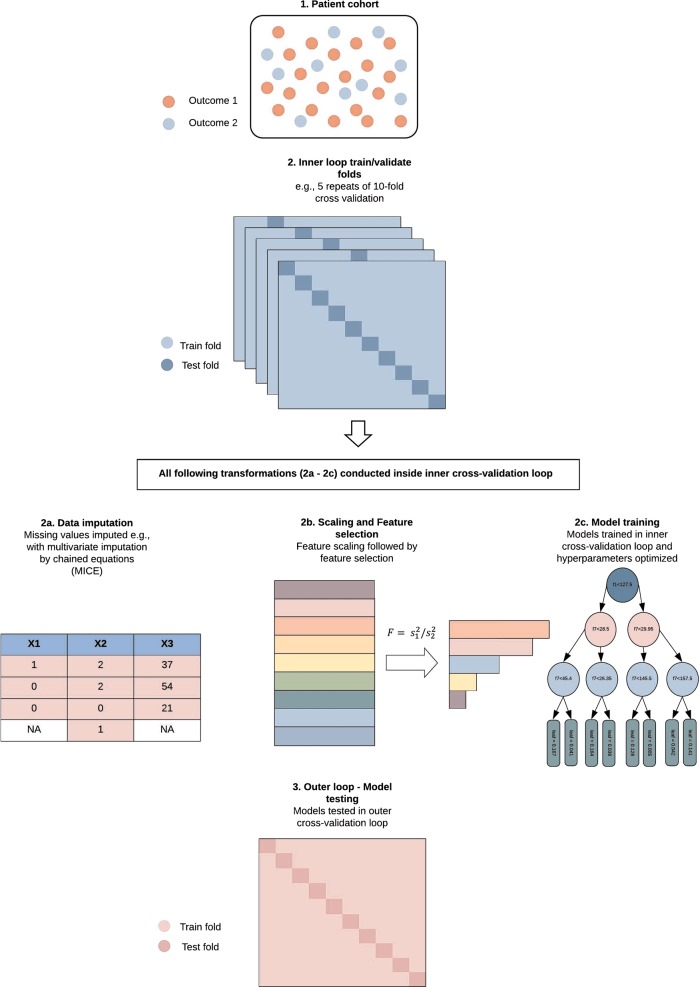
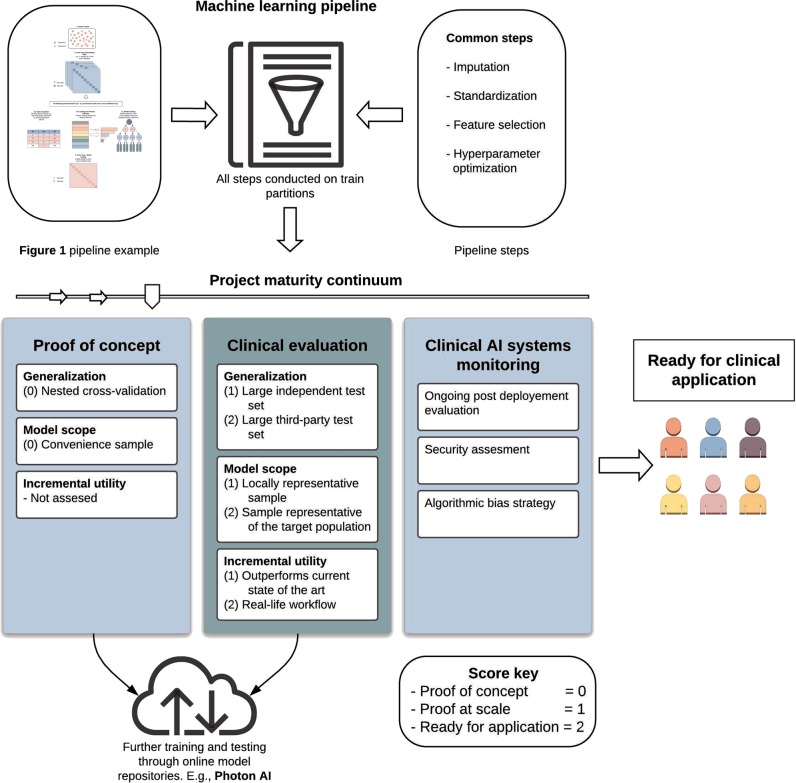
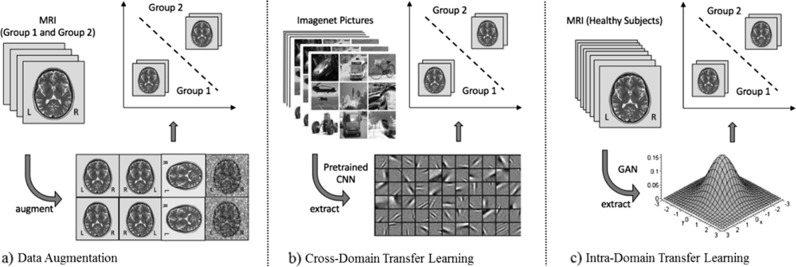
Verification
Claims the paper makes
The claims and statistics of this paper haven’t been checked yet.
Free: it reads the open-access text and checks the first 5 claims that cite a source we can check. Create a free account to check every claim.
Claims other papers make about this one
Each is checked against this paper’s own text: does it say what the citing paper says it does?
The cited source doesn’t support the claim as written.
In the citing paper
“for which it is explicitly recommended that selection should work independently of model training (unlike in methods as forward and backward selection)”
From Guidelines and quality criteria for artificial intelligence-based prediction models in healthcare: a scoping review (2022) · cites this paper as [27]
Checked by a reasoning model — may be wrong.
Experimental — accuracy not yet measuredThe source backs part of the claim, not all of it — or backs it for a different population, condition or comparison.
In the citing paper
“One commonly referred strategy is feature selection13,15,27,47,76, for which it is explicitly recommended that selection should work independently of model training (unlike in methods as forward and backward selection) and is best informed - a priori - by medical expert knowledge or existing literature13,17,76.”
From Guidelines and quality criteria for artificial intelligence-based prediction models in healthcare: a scoping review (2022) · cites this paper as [27]
Experimental — accuracy not yet measuredThe source backs part of the claim, not all of it — or backs it for a different population, condition or comparison.
In the citing paper
“It is therefore considered important to compose a diverse development team17,22–25, create awareness and involve stakeholders in design choices22,24,26,27,72.”
From Guidelines and quality criteria for artificial intelligence-based prediction models in healthcare: a scoping review (2022) · cites this paper as [27]
Experimental — accuracy not yet measuredThe source backs part of the claim, not all of it — or backs it for a different population, condition or comparison.
In the citing paper
“although this may not eliminate the bias altogether.”
From Guidelines and quality criteria for artificial intelligence-based prediction models in healthcare: a scoping review (2022) · cites this paper as [27]
Experimental — accuracy not yet measuredThe source backs part of the claim, not all of it — or backs it for a different population, condition or comparison.
In the citing paper
“Code for the complete model building pipeline should be published in well-documented scripts with computer environment requirements when possible7,8,13,14,16,19,20,24,25,27,33,50,62,64,65, including statements about any restrictions to access or re-use.”
From Guidelines and quality criteria for artificial intelligence-based prediction models in healthcare: a scoping review (2022) · cites this paper as [27]
Experimental — accuracy not yet measured
11 more claims about this paper
Create a free account to see every claim other papers make about this one.
Self-check
Percentages, sums and reported differences re-computed from the paper’s own numbers.
The self-check needs the paper’s full text.
Citations
Cites
ImageNet classification with deep convolutional neural networks
Krizhevsky, A., Sutskever, I., & Hinton, G. E. (2017) · Communications of the ACM · doi:10.1145/3065386 · Cited by 112,155
The Elements of Statistical Learning
Hastie, T., Friedman, J., & Tibshirani, R. (2001) · Springer Series in Statistics · doi:10.1007/978-0-387-21606-5 · Cited by 24,162
A Unified Approach to Interpreting Model Predictions
Lundberg, S., & Lee, S.-I. (2017) · arXiv · doi:10.48550/arxiv.1705.07874 · Cited by 23,707
Advances in neural information processing systems 7
Cios, K., & Shields, M. (1997) · Neurocomputing · doi:10.1016/s0925-2312(97)90018-7 · Cited by 22,059
Dermatologist-level classification of skin cancer with deep neural networks
Esteva, A., Kuprel, B., Novoa, R. A., Ko, J., Swetter, S. M., Blau, H. M., & Thrun, S. (2017) · Nature · doi:10.1038/nature21056 · Cited by 14,362
A Study of Cross-Validation and Bootstrap for Accuracy Estimation and Model Selection
Kohavi, R. (1995) · Zenodo · doi:10.5281/zenodo.19712698 · Cited by 10,909
Estimating the reproducibility of psychological science
Open Science Collaboration (2015) · Science · doi:10.1126/science.aac4716 · Cited by 8,515
On Pixel-Wise Explanations for Non-Linear Classifier Decisions by Layer-Wise Relevance Propagation
Bach, S., Binder, A., Montavon, G., Klauschen, F., Müller, K.-R., & Samek, W. (2015) · PLOS ONE · doi:10.1371/journal.pone.0130140 · Cited by 4,524
Cross‐validation strategies for data with temporal, spatial, hierarchical, or phylogenetic structure
Roberts, D. R., Bahn, V., Ciuti, S., Boyce, M. S., Elith, J., Guillera‐Arroita, G., Hauenstein, S., Lahoz‐Monfort, J. J., Schröder, B., Thuiller, W., et al. (2017) · Ecography · doi:10.1111/ecog.02881 · Cited by 3,689 · cited 1×
“Here, the solution is leave-group out cross-validation, also known as Monte Carlo or leave site out cross-validation 34,35 .”
MethodGenetic relationship between five psychiatric disorders estimated from genome-wide SNPs
Cross-Disorder Group of the Psychiatric Genomics Consortium (2013) · Nature Genetics · doi:10.1038/ng.2711 · Cited by 2,263
Research works printed but not linked: 2
- Goodfellow, I, Bengio, Y, Courville, A. Deep Learning (MIT press, 2016).
- Inoue, H. Data augmentation by pairing samples for images classification. Preprint at arXiv:180102929 (2018).
Cited by
de Hond, A. A. H., Leeuwenberg, A. M., Hooft, L., Kant, I. M. J., Nijman, S. W. J., van Os, H. J. A., Aardoom, J. J., Debray, T. P. A., Schuit, E., van Smeden, M., et al. (2022) · npj Digital Medicine · doi:10.1038/s41746-021-00549-7 · Cited by 499
“…with a possibility to discuss whether the associations on which the AIPM relies are likely to remain stable 8,27,61 , help to identify algorithmic bias 7,22,24,27,40,43 , provide information on where the AIPM could be most easily attacked 27 , or how the AIPM may behave under dataset shift 7 .”
BackgroundMethodInfluentialModern views of machine learning for precision psychiatry
Chen, Z. S., Kulkarni, P. (., Galatzer-Levy, I. R., Bigio, B., Nasca, C., & Zhang, Y. (2022) · Patterns · doi:10.1016/j.patter.2022.100602 · Cited by 210
Flooding and its relationship with land cover change, population growth, and road density
Rahman, M., Ningsheng, C., Mahmud, G. I., Islam, M. M., Pourghasemi, H. R., Ahmad, H., Habumugisha, J. M., Washakh, R. M. A., Alam, M., Liu, E., et al. (2021) · Geoscience Frontiers · doi:10.1016/j.gsf.2021.101224 · Cited by 191
Deep learning for small and big data in psychiatry
Koppe, G., Meyer-Lindenberg, A., & Durstewitz, D. (2021) · Neuropsychopharmacology · doi:10.1038/s41386-020-0767-z · Cited by 189
“None-theless, leaking data used for model selection into the model assessment step is perhaps the most common mistake made in the literature (see also [77]).”
BackgroundMethodBickman, L. (2020) · Administration and Policy in Mental Health and Mental Health Services Research · doi:10.1007/s10488-020-01065-8 · Cited by 184
“More suggestions for improving the quality of research on supervised machine learning can be found in the paper by Cearns et al. (2019).”
BackgroundA Scoping Review of Machine Learning in Psychotherapy Research
Aafjes-van Doorn, K., Kamsteeg, C., Bate, J., & Aafjes, M. (2021) · Psychotherapy Research · doi:10.1080/10503307.2020.1808729 · Cited by 179
Deep learning for brain age estimation: A systematic review
Tanveer, M., Ganaie, M. A., Beheshti, I., Goel, T., Ahmad, N., Lai, K.-T., Huang, K., Zhang, Y., Ser, J. D., & Lin, C. (2023) · Information Fusion · doi:10.1016/j.inffus.2023.03.007 · Cited by 175
Neuroprediction and A.I. in Forensic Psychiatry and Criminal Justice: A Neurolaw Perspective
Tortora, L., Meynen, G., Bijlsma, J., Tronci, E., & Ferracuti, S. (2020) · Frontiers in Psychology · doi:10.3389/fpsyg.2020.00220 · Cited by 123
Detecting Careless Responding in Survey Data Using Stochastic Gradient Boosting
Schroeders, U., Schmidt, C., & Gnambs, T. (2021) · Educational and Psychological Measurement · doi:10.1177/00131644211004708 · Cited by 122
Mongan, D., Föcking, M., Healy, C., Susai, S. R., Heurich, M., Wynne, K. J., Nelson, B., McGorry, P. D., Amminger, G. P., Nordentoft, M., et al. (2020) · JAMA Psychiatry · doi:10.1001/jamapsychiatry.2020.2459 · Cited by 111
Machine Learning Methods for Predicting Postpartum Depression: Scoping Review
Saqib, K., Khan, A. F., & Butt, Z. A. (2021) · JMIR Mental Health · doi:10.2196/29838 · Cited by 111
Translating promise into practice: a review of machine learning in suicide research and prevention
Kirtley, O. J., van Mens, K., Hoogendoorn, M., Kapur, N., & de Beurs, D. (2022) · The Lancet Psychiatry · doi:10.1016/s2215-0366(21)00254-6 · Cited by 100
Psychiatry in the Digital Age: A Blessing or a Curse?
Roth, C. B., Papassotiropoulos, A., Brühl, A. B., Lang, U. E., & Huber, C. G. (2021) · International Journal of Environmental Research and Public Health · doi:10.3390/ijerph18168302 · Cited by 83
Explaining AI through mechanistic interpretability
Kästner, L., & Crook, B. (2024) · European Journal for Philosophy of Science · doi:10.1007/s13194-024-00614-4 · Cited by 79
Gutierrez, G., Stephenson, C., Eadie, J., Asadpour, K., & Alavi, N. (2024) · Frontiers in Psychiatry · doi:10.3389/fpsyt.2024.1356773 · Cited by 71
Zhang‐James, Y., Helminen, E. C., Liu, J., The ENIGMA-ADHD Working Group, Busatto, G. F., Calvo, A., Cercignani, M., Chaim‐Avancini, T. M., Gabel, M. C., Harrison, N. A., et al. (2021) · Translational Psychiatry · doi:10.1038/s41398-021-01201-4 · Cited by 70
El–Sappagh, S., Alonso, J. M., Abuhmed, T., Ali, F., & Bugarín, A. (2023) · Artificial Intelligence Review · doi:10.1007/s10462-023-10415-5 · Cited by 70
Artificial intelligence in mental healthcare: an overview and future perspectives
Jin, K. W., Li, Q., Xie, Y., & Xiao, G. (2023) · British Journal of Radiology · doi:10.1259/bjr.20230213 · Cited by 62
Cearns, M., Amare, A. T., Schubert, K. O., Thalamuthu, A., Frank, J., Streit, F., Adli, M., Akula, N., Akiyama, K., Ardau, R., et al. (2022) · The British Journal of Psychiatry · doi:10.1192/bjp.2022.28 · Cited by 62
Self-citationAn advanced Artificial Intelligence platform for a personalised treatment of Eating Disorders
Monaco, F., Vignapiano, A., Piacente, M., Pagano, C., Mancuso, C., Steardo, L., Marenna, A., Farina, F., Petrillo, G., Leo, S., et al. (2024) · Frontiers in Psychiatry · doi:10.3389/fpsyt.2024.1414439 · Cited by 62
de Hond, A., Kant, I. M. J., Honkoop, P., Smith, A. D., Steyerberg, E. W., & Sont, J. K. (2022) · Scientific Reports · doi:10.1038/s41598-022-24909-9 · Cited by 57
Artificial intelligence and future perspectives in Forensic Medicine: a systematic review.
Volonnino, G., Paola, L. D., Spadazzi, F., Serri, F., Ottaviani, M., Zamponi, M. V., Arcangeli, M., & RUSSA, R. L. (2024) · PubMed · doi:10.7417/ct.2024.5062 · Cited by 57
Ambrosen, K. S., Skjerbæk, M. W., Foldager, J., Axelsen, M. C., Bak, N., Arvastson, L., Christensen, S. R., Johansen, L. B., Raghava, J. M., Oranje, B., et al. (2020) · Translational Psychiatry · doi:10.1038/s41398-020-00962-8 · Cited by 54
Bahameish, M., Stockman, T., & Carrión, J. R. (2024) · Sensors · doi:10.3390/s24103210 · Cited by 53
Worthington, M., & Cannon, T. D. (2021) · Frontiers in Psychiatry · doi:10.3389/fpsyt.2021.770774 · Cited by 48
Understanding the brain with attention: A survey of transformers in brain sciences
Chen, C., Wang, H., Chen, Y., Yin, Z., Yang, X., Ning, H., Zhang, Q., Li, W., Xiao, R., & Zhao, J. (2023) · Brain‐X · doi:10.1002/brx2.29 · Cited by 47
An uncertainty-aware, shareable, and transparent neural network architecture for brain-age modeling
Hahn, T., Ernsting, J., Winter, N. R., Holstein, V., Leenings, R., Beisemann, M., Fisch, L., Sarink, K., Emden, D., Opel, N., et al. (2022) · Science Advances · doi:10.1126/sciadv.abg9471 · Cited by 47
Self-citationUsing preregistration as a tool for transparent fNIRS study design
Schroeder, P. A., Artemenko, C., Kosie, J. E., Cockx, H., Stute, K., Pereira, J., Klein, F., & Mehler, D. M. A. (2023) · Neurophotonics · doi:10.1117/1.nph.10.2.023515 · Cited by 44
Pharmacogenomic scores in psychiatry: systematic review of current evidence
Sharew, N. T., Clark, S. R., Schubert, K. O., & Amare, A. T. (2024) · Translational Psychiatry · doi:10.1038/s41398-024-02998-6 · Cited by 40
Classification of amyotrophic lateral sclerosis by brain volume, connectivity, and network dynamics
Thome, J., Steinbach, R., Großkreutz, J., Durstewitz, D., & Koppe, G. (2021) · Human Brain Mapping · doi:10.1002/hbm.25679 · Cited by 39
Machine learning to advance the prediction, prevention and treatment of eating disorders
Wang, S. B. (2021) · European Eating Disorders Review · doi:10.1002/erv.2850 · Cited by 38
Machine Learning Techniques for the Diagnosis of Schizophrenia Based on Event-Related Potentials
Febles, E. S., Ontivero-Ortega, M., Sosa, M. V., & Sahli, H. (2022) · Frontiers in Neuroinformatics · doi:10.3389/fninf.2022.893788 · Cited by 38
Thong, E. P., Ghelani, D. P., Manoleehakul, P., Yesmin, A., Slater, K., Taylor, R., Collins, C. E., Hutchesson, M., Lim, S. S., Teede, H. J., et al. (2022) · Journal of Cardiovascular Development and Disease · doi:10.3390/jcdd9020055 · Cited by 36
Chen, Z., Hu, B., Liu, X., Becker, B., Eickhoff, S. B., Miao, K., Gu, X., Tang, Y., Dai, X., Li, C., et al. (2023) · BMC Medicine · doi:10.1186/s12916-023-02941-4 · Cited by 35
Maslej, M. M., Kloiber, S. M., Ghassemi, M., Yu, J., & Hill, S. (2023) · Translational Psychiatry · doi:10.1038/s41398-023-02509-z · Cited by 35
Predicting treatment response using machine learning: A registered report
Jankowsky, K., Krakau, L., Schroeders, U., Zwerenz, R., & Beutel, M. E. (2023) · British Journal of Clinical Psychology · doi:10.1111/bjc.12452 · Cited by 32
Zheng, H., Zhou, T., Han, T., Li, S., & Yu, C. (2024) · Advanced Engineering Informatics · doi:10.1016/j.aei.2024.102683 · Cited by 32
Morandé, S. (2022) · International Journal of Information Management Data Insights · doi:10.1016/j.jjimei.2022.100124 · Cited by 31
Computational Analysis of Spoken Language in Acute Psychosis and ManiaPreprint
Girard, J. M., Vail, A. K., Liebenthal, E., Brown, K., Kilçiksiz, C. M., Pennant, L., Liebson, E. S., Öngür, D., Morency, L., & Baker, J. T. (2021) · PsyArXiv (OSF Preprints) · doi:10.1016/j.schres.2021.06.040 · Cited by 29
Lee, L., Chen, C.-H., Chang, W., Lee, P., Shyu, K., Chen, M., Hsu, J.-W., Bai, Y., Su, T., & Tu, P. (2021) · European Psychiatry · doi:10.1192/j.eurpsy.2021.2248 · Cited by 28
Starke, G., Schmidt, B. R., Clercq, E. D., & Elger, B. S. (2022) · AI and Ethics · doi:10.1007/s43681-022-00177-1 · Cited by 27
Niklason, G. R., Rawls, E., Ma, S., Kummerfeld, E., Maxwell, A. M., Brucar, L. R., Drossel, G., & Zilverstand, A. (2022) · Scientific Reports · doi:10.1038/s41598-022-19804-2 · Cited by 25
Enriching CBT by Neuroscience: Novel Avenues to Achieve Personalized Treatments
Månsson, K. N. T., Lueken, U., & Frick, A. (2020) · International Journal of Cognitive Therapy · doi:10.1007/s41811-020-00089-0 · Cited by 26
From multivariate methods to an AI ecosystem
Winter, N. R., Cearns, M., Clark, S. R., Leenings, R., Dannlowski, U., Baune, B. T., & Hahn, T. (2021) · Molecular Psychiatry · doi:10.1038/s41380-021-01116-y · Cited by 23
Self-citationMultimodal deep learning: An improvement in prognostication or a reflection of batch effect?
Howard, F. M., Kather, J. N., & Pearson, A. T. (2022) · Cancer Cell · doi:10.1016/j.ccell.2022.10.025 · Cited by 23
Suppressed activity of the rostral anterior cingulate cortex as a biomarker for depression remission
Davey, C. G., Cearns, M., Jamieson, A. J., & Harrison, B. J. (2021) · Psychological Medicine · doi:10.1017/s0033291721004323 · Cited by 22
Self-citationThe ABC recommendations for validation of supervised machine learning results in biomedical sciences
Chicco, D., & Jurman, G. (2022) · Frontiers in Big Data · doi:10.3389/fdata.2022.979465 · Cited by 22
Enrico, P., Delvecchio, G., Turtulici, N., Pigoni, A., Villa, F. M., Perlini, C., Rossetti, M. G., Bellani, M., Lasalvia, A., Bonetto, C., et al. (2021) · Schizophrenia Bulletin · doi:10.1093/schbul/sbaa190 · Cited by 21
Ricci, F., Giallanella, D., Gaggiano, C., Torales, J. C., Castaldelli-Maia, J. M., Liebrenz, M., Bener, A., & Ventriglio, A. (2024) · International Review of Psychiatry · doi:10.1080/09540261.2024.2384727 · Cited by 20
Erdoğan, S. B., & Yükselen, G. (2022) · Sensors · doi:10.3390/s22145407 · Cited by 19
Perkins, D. O., Jeffries, C. D., Clark, S. R., Upthegrove, R., Wannan, C., Wray, N. R., Li, Q. S., Kim, Q., Walker, E. F., Amminger, G. P., et al. (2025) · Schizophrenia · doi:10.1038/s41537-025-00610-4 · Cited by 16
Roebroek, L. O., Bruins, J., Delespaul, P., Boonstra, A., & Castelein, S. (2020) · BMC Medical Informatics and Decision Making · doi:10.1186/s12911-020-01251-6 · Cited by 16
Classification of Depressive and Schizophrenic Episodes Using Night-Time Motor Activity Signal
Rodríguez-Ruiz, J. G., Galvan-Tejada, C. E., Luna-García, H., Gamboa-Rosales, H., Celaya-Padilla, J. M., Arceo-Olague, J. G., & Galván-Tejada, J. I. (2022) · Healthcare · doi:10.3390/healthcare10071256 · Cited by 16
Watts, D., Mамак, М., Moulden, H. M., Upfold, C., Cardoso, T. D. A., Kapczinski, F. P., & Chaimowitz, G. A. (2023) · Journal of Psychiatric Research · doi:10.1016/j.jpsychires.2023.02.030 · Cited by 15
Gado, S., Lingelbach, K., Wirzberger, M., & Vukelić, M. (2023) · Sensors · doi:10.3390/s23146546 · Cited by 14
Fisch, L., Ernsting, J., Winter, N. R., Holstein, V., Leenings, R., Beisemann, M., Sarink, K., Emden, D., Opel, N., Redlich, R., et al. (2021) · arXiv (Cornell University) · doi:10.48550/arxiv.2103.11695 · Cited by 14
Self-citationShevchenko, V., Benn, R. A., Scholz, R., Wei, W., Pallavicini, C., Klatzmann, U., Alberti, F., Satterthwaite, T. D., Wassermann, D., Bazin, P., et al. (2025) · Scientific Reports · doi:10.1038/s41598-024-84152-2 · Cited by 14
Grassi, M., Rickelt, J., Caldirola, D., Eikelenboom, M., van Oppen, P., Dumontier, M., Perna, G., & Schruers, K. R. J. (2021) · Journal of Affective Disorders · doi:10.1016/j.jad.2021.09.042 · Cited by 14
Otsuka, N., Kawanishi, Y., Doi, F., Takeda, T., Okumura, K., Yamauchi, T., Yada, S., Wakamiya, S., Aramaki, E., & Makinodan, M. (2023) · Psychiatry and Clinical Neurosciences · doi:10.1111/pcn.13580 · Cited by 13
Barruel, D., Hilbey, J., Charlet, J., Chaumette, B., Krebs, M., & Masson, V. D. (2024) · Schizophrenia Research · doi:10.1016/j.schres.2024.05.011 · Cited by 13
Jahanshad, N., Lenzini, P., & Bijsterbosch, J. (2025) · Neuropsychopharmacology · doi:10.1038/s41386-024-01938-8 · Cited by 12
Evaluation of Task fMRI Decoding With Deep Learning on a Small Sample Dataset
Yotsutsuji, S., Lei, M., & Akama, H. (2021) · Frontiers in Neuroinformatics · doi:10.3389/fninf.2021.577451 · Cited by 12
Accelerated aging signatures in subjects with schizophrenia and their unaffected siblings
Rebouças, D. B., Sartori, J., Librenza‐Garcia, D., Rabelo‐da‐Ponte, F. D., Massuda, R., Czepielewski, L. S., Passos, I. C., & Gama, C. S. (2021) · Journal of Psychiatric Research · doi:10.1016/j.jpsychires.2021.04.029 · Cited by 12
A cautionary tale for AI and machine learning in psychiatry
Chen, Z. S., Schultebraucks, K., & Wu, W. (2026) · Translational Psychiatry · doi:10.1038/s41398-026-03930-w · Cited by 11
Philosophy of Science for Machine Learning: Core Issues and New Perspectives
Durán, J. M., & Pozzi, G. (2025) · Synthese Library/Synthese library · doi:10.1007/978-3-032-03083-2 · Cited by 11
Improving Psychiatry Services with Artificial Intelligence: Opportunities and Challenges
Eser, H. Y., BALLI, M., & DOĞAN, A. E. (2024) · Turkish Journal of Psychiatry · doi:10.5080/u27604 · Cited by 10
Ophey, A., Wenzel, J., Paul, R., Giehl, K., Rehberg, S., Eggers, C., Reker, P., van Eimeren, T., Kalbe, E., & Kambeitz‐Ilankovic, L. (2022) · Journal of Parkinson s Disease · doi:10.3233/jpd-223448 · Cited by 9
Sergounioti, A., Rigas, D. I., Zoitopoulos, V., & Kalles, D. (2025) · Journal of Personalized Medicine · doi:10.3390/jpm15050200 · Cited by 9
Alrubaian, A. (2025) · Clinical Psychology & Psychotherapy · doi:10.1002/cpp.70077 · Cited by 8
Itani, S., & Rossignol, M. (2020) · Frontiers in Psychiatry · doi:10.3389/fpsyt.2020.552262 · Cited by 8
Chafkin, J. E., O’Brien, J., Medrano, F. N., Lee, H. Y., Josephs, R. A., & Yeager, D. S. (2022) · Developmental Cognitive Neuroscience · doi:10.1016/j.dcn.2022.101158 · Cited by 7
Predicting Mental Health Outcomes Using Wearable Device Data and Machine Learning
Suryawanshi, N. S. (2024) · International Journal of Innovative Science and Research Technology (IJISRT) · doi:10.38124/ijisrt/ijisrt21mar587 · Cited by 7
Svendsen, V. G., Wijnen, B., de Vos, J. D., Veenstra, R., Evers, S., & Lokkerbol, J. (2023) · Expert review of pharmacoeconomics & outcomes research · doi:10.1080/14737167.2023.2230368 · Cited by 5
Li, Z., Li, J., Li, J., Wang, M., Xu, A., Huang, Y., Yu, Q., Zhang, L., Li, Y., Li, Z., et al. (2025) · JMIR Aging · doi:10.2196/73004 · Cited by 7
Préfontaine, I., Lanovaz, M. J., & Rivard, M. (2022) · Journal of Autism and Developmental Disorders · doi:10.1007/s10803-022-05641-9 · Cited by 7
Crook, B., & Kästner, L. (2025) · Synthese Library/Synthese library · doi:10.1007/978-3-032-03083-2_20 · Cited by 6
Slot, M. I. E., Urquijo-Castro, M. F., Rossum, I. W.-V., van Hell, H. H., Dwyer, D., Dazzan, P., Maat, A., de Haan, L., Crespo‐Facorro, B., Glenthoj, B. Y., et al. (2024) · Schizophrenia · doi:10.1038/s41537-024-00505-w · Cited by 6
Machine-Learning Applications in Eating-Disorder-Outcome Prediction: A Systematic Scoping Review
McClure, Z., Fuller‐Tyszkiewicz, M., Messer, M., & Linardon, J. (2025) · Clinical Psychological Science · doi:10.1177/21677026251340348 · Cited by 6
Miley, K. M., Michalowski, M., Yu, F., Leng, E., McMorris, B. J., & Vinogradov, S. (2022) · Social Neuroscience · doi:10.1080/17470919.2022.2132285 · Cited by 6
Dufford, A. J., Kimble, V. M., Tejavibulya, L., Dadashkarimi, J., Ibrahim, K., Sukhodolsky, D. G., & Scheinost, D. (2022) · Biological Psychiatry · doi:10.1016/j.biopsych.2022.02.234 · Cited by 6
Miley, K. M., Bronstein, M. V., Ma, S., Lee, H., Green, M. F., Ventura, J., Hooker, C. I., Nahum, M., & Vinogradov, S. (2024) · Schizophrenia Research · doi:10.1016/j.schres.2024.02.027 · Cited by 6
Using preregistration as a tool for transparent fNIRS study designPreprint
Schroeder, P. A., Artemenko, C., Kosie, J. E., Cockx, H., Stute, K., Pereira, J., Klein, F., & Mehler, D. M. A. (2022) · MetArXiv (OSF Preprints) · doi:10.31222/osf.io/zfawx · Cited by 5
Uludağ, K. (2024) · Advances in medical technologies and clinical practice book series · doi:10.4018/979-8-3693-2703-6.ch011 · Cited by 5
Wang, T.-F., Chen, D., Zhu, J.-W., Zhu, B., Wang, Z., Cao, J., Feng, C.-H., & Zhao, J.-W. (2021) · Risk Management and Healthcare Policy · doi:10.2147/rmhp.s330555 · Cited by 5
Langhammer, T., Unterfeld, C., Blankenburg, F., Erk, S., Fehm, L., Haynes, J., Heinzel, S., Hilbert, K., Jacobi, F., Kathmann, N., et al. (2025) · BMJ Open · doi:10.1136/bmjopen-2024-094110 · Cited by 4
Tait, J., Kellett, S., & Delgadillo, J. (2025) · Journal of Anxiety Disorders · doi:10.1016/j.janxdis.2025.103003 · Cited by 4
Music Recommendation System using Collaborative Filtering with SVD
Suriya, S., & Muthu Virumeshwaran, T. (2023) · Journal of Information Technology and Digital World · doi:10.36548/jitdw.2023.2.002 · Cited by 4
Wang, J., Black, M. M., Rankin, D., Wallace, J. G., Hughes, C., Hoey, L., Moore, A., Tobin, J., Zhang, M., Ng, J., et al. (2023) · Irish Conference on Artificial Intelligence and Cognitive Science (AICS) · doi:10.1109/aics60730.2023.10470782 · Cited by 3
Perna, G., Cuniberti, F., & Nemeroff, C. B. (2021) · Personalized Medicine in Psychiatry · doi:10.1016/j.pmip.2021.100077 · Cited by 3
Why the grass isn't always greener on the machine learning side
de Hond, A., Huisman, M. V., & van Smeden, M. (2023) · European Journal of Internal Medicine · doi:10.1016/j.ejim.2023.10.005 · Cited by 3
Roger, É., Attyé, A., Renard, F., & Baciu, M. (2022) · NeuroImage Clinical · doi:10.1016/j.nicl.2022.103209 · Cited by 3
Tiwari, S., & Gupta, A. (2026) · Metals · doi:10.3390/met16030320 · Cited by 3
Dickey, L., Murch, G. B., Pegg, S. L., Dao, A., Venanzi, L., Politte‐Corn, M., Abitante, G., & Kujawa, A. (2025) · JAACAP Open · doi:10.1016/j.jaacop.2025.04.008 · Cited by 2
Teghipco, A., Kim, H., Rorden, C., Newman‐Norlund, R., Sharif, M. S., Sikorski, D., & Hillis, A. E. (2023) · medRxiv · doi:10.1101/2023.09.13.23295370 · Cited by 2
Mood Disorders: Predictors of tDCS Response
Burkhardt, G., Goerigk, S. A., & Padberg, F. (2021) · Springer eBooks · doi:10.1007/978-3-030-76136-3_22 · Cited by 2
Hieronymus, F., Hieronymus, M., Sjöstedt, A., Nilsson, S., Näslund, J., Lisinski, A., & Østergaard, S. D. (2025) · Acta Psychiatrica Scandinavica · doi:10.1111/acps.70037 · Cited by 2
Translational potential of RNA biomarkers in mental health: A narrative review
Lim, E. C. N., & Lim, C. E. D. (2025) · NeuroMarkers. · doi:10.1016/j.neumar.2025.100127 · Cited by 2
Foysal, A. A., & de Filippis, R. (2025) · OALib · doi:10.4236/oalib.1113954 · Cited by 2
Improved Estimation of Correlation Accuracy for Machine Learning Brain-Phenotype AssociationsPreprint
Jones, M. T., Gadiyar, I., Zhang, X., Kang, K., Liu, J., Chen, A. A., Seidlitz, J., Alexander‐Bloch, A. F., Kennedy, E. H., & Vandekar, S. (2025) · bioRxiv (Cold Spring Harbor Laboratory) · doi:10.1101/2025.11.26.690778 · Cited by 2
Applying Machine Learning to Predict Complex Clinical Course in Youth With Eating Disorders
Ryall, S., Bradley, A. H. M., Emam, K. E., & Obeid, N. (2025) · International Journal of Eating Disorders · doi:10.1002/eat.24570 · Cited by 1
Metadata
- Authors
- Cearns, M., Hahn, T., & Baune, B. T.
- Affiliations
- The University of Adelaide (AU)
- University of Münster (DE)
- The University of Melbourne (AU)
- Corresponding author
- Baune, Bernhard T.
- Venue
- Translational Psychiatry
- Published
- 2019-10-22
- Volume
- 9
- Issue
- 1
- Pages
- 271-271
- ISSN
- 2158-3188 (ISSN-L)
- PMC
- PMC6805872
- OpenAlex
- W2982007782
- Cited by
- 127
- References
- 62
- Citations by year
- 2026: 12 · 2025: 19 · 2024: 19 · 2023: 17 · 2022: 27 · 2021: 22 · 2020: 11
- FWCI
- 0.72
- Type
- journal article
- Language
- en
- Open access
- gold
- doi.org
- Licence
- cc-by
- creativecommons.org/licenses/by/4.0 (tdm)
- creativecommons.org/licenses/by/4.0 (vor)
- Locations
- Translational Psychiatry (publishedVersion, cc-by)
- PubMed Central (publishedVersion, cc-by)
- PubMed (publishedVersion)
- Minerva Access (University of Melbourne) (submittedVersion, cc-by)
- DOAJ (DOAJ: Directory of Open Access Journals) (submittedVersion)
- Funders
- Australian Government
- Topics
- Health Sciences › Medicine › Health Informatics › Artificial Intelligence in Healthcare and Education
- Physical Sciences › Computer Science › Artificial Intelligence › Machine Learning in Healthcare
- Health Sciences › Health Professions › Health Information Management › Artificial Intelligence in Healthcare
- Keywords
- supervised learning, personalized treatment, clinical translation, model evaluation, methodological quality, model explainability, clinical implementation of AI, clinical preparedness, best practices
- MeSH terms
- Supervised Machine Learning, Mental Disorders, Humans, Psychiatry, Practice Guidelines as Topic
About these checks
Registry, retraction, Cites and statistics results are computed, not judged, with one exception: a printed reference that no index lists is read once by a model before it counts as a citation error. Claims are extracted by a model and kept only when their quote appears verbatim in the text; each cited source is then checked, with a model’s help, for whether it says what the claim relies on. Those verdicts can be wrong — read the claim’s quote and the cited source before relying on one.
Statistics and arithmetic are recomputed, not judged.
Confidence bands are shown only for fields calibrated on our annotated test set. None is calibrated yet, so no band is shown.
What counts as a claim ›How we measure confidence ›How we check this ›
Are you an author, or do you see a problem with this page? Request a review
Data sources
Bibliographic data: Semantic Scholar, OpenAlex, Crossref.
Contains information from the Semantic Scholar Academic Graph Datasets, made available under the ODC Attribution License (ODC-BY 1.0).
Semantic Scholar’s data is described in: Kinney, R., et al. (2023). The Semantic Scholar Open Data Platform. arXiv:2301.10140.
