

Molecular and cellular mechanisms underlying the antidepressant effects of ketamine enantiomers and its metabolites
Open accessThe DOI matches its Crossref record; 136 of the 136 references it cites were found in a registry or an index.
Abstract
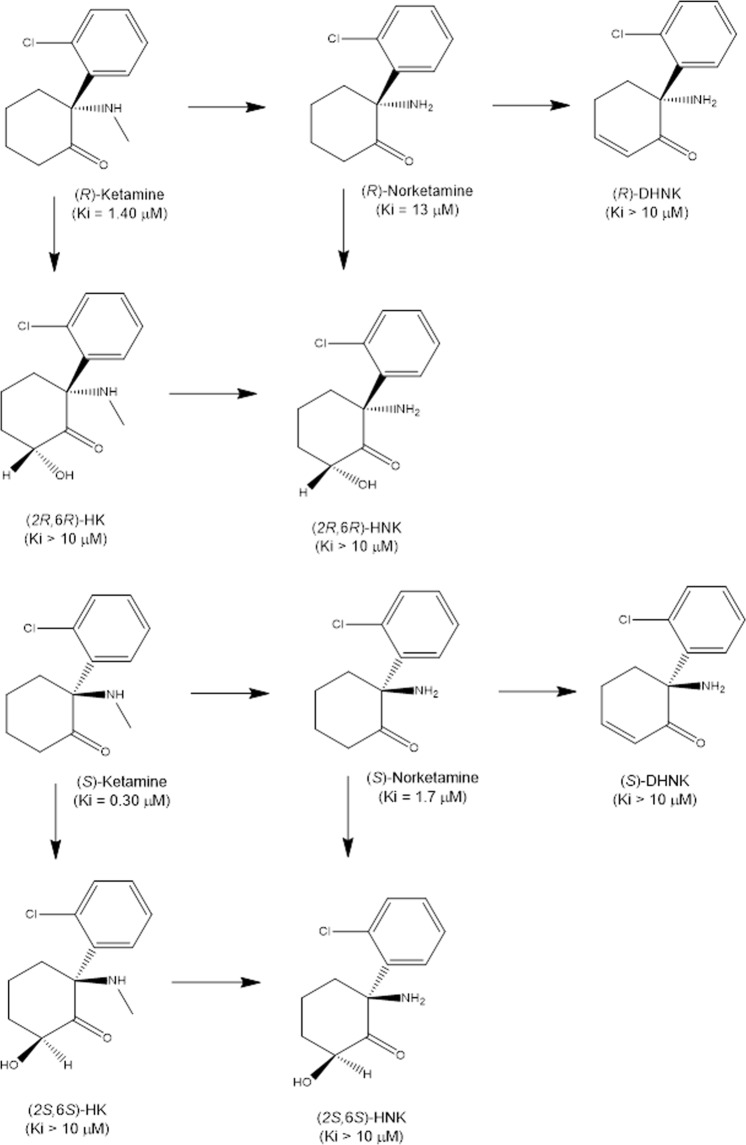
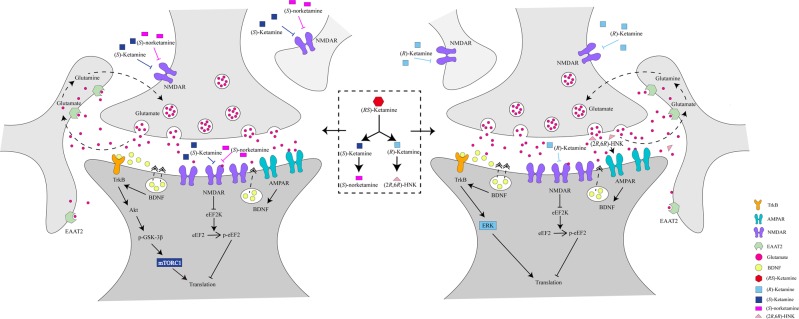
Although the robust antidepressant effects of the N-methyl-d-aspartate receptor (NMDAR) antagonist ketamine in patients with treatment-resistant depression are beyond doubt, the precise molecular and cellular mechanisms underlying its antidepressant effects remain unknown. NMDAR inhibition and the subsequent α-amino-3-hydroxy-5-methyl-4-isoxazolepropionic acid receptor (AMPAR) activation are suggested to play a role in the antidepressant effects of ketamine. Although (R)-ketamine is a less potent NMDAR antagonist than (S)-ketamine, (R)-ketamine has shown more marked and longer-lasting antidepressant-like effects than (S)-ketamine in several animal models of depression. Furthermore, non-ketamine NMDAR antagonists do not exhibit robust ketamine-like antidepressant effects in patients with depression. These findings suggest that mechanisms other than NMDAR inhibition play a key role in the antidepressant effects of ketamine. Duman’s group demonstrated that the activation of mammalian target of rapamycin complex 1 (mTORC1) in the medial prefrontal cortex is reportedly involved in the antidepressant effects of ketamine. However, we reported that mTORC1 serves a role in the antidepressant effects of (S)-ketamine, but not of (R)-ketamine, and that extracellular signal-regulated kinase possibly underlie the antidepressant effects of (R)-ketamine. Several lines of evidence have demonstrated that brain-derived neurotrophic factor (BDNF) and its receptor, tyrosine kinase receptor B (TrkB), are crucial in the antidepressant effects of ketamine and its two enantiomers, (R)-ketamine and (S)-ketamine, in rodents. In addition, (2 R,6 R)-hydroxynormetamine [a metabolite of (R)-ketamine] and (S)-norketamine [a metabolite of (S)-ketamine] have been shown to exhibit antidepressant-like effects on rodents through the BDNF–TrkB cascade. In this review, we discuss recent findings on the molecular and cellular mechanisms underlying the antidepressant effects of enantiomers of ketamine and its metabolites. It may be time to reconsider the hypothesis of NMDAR inhibition and the subsequent AMPAR activation in the antidepressant effects of ketamine.
Overview
The claims and statistics of this paper haven’t been checked yet.
Free: it reads the open-access text and checks the first 5 claims that cite a source we can check. Create a free account to check every claim.
Integrity signals
Registry
Cites
Statistics
Figures
Verification
Claims the paper makes
The claims and statistics of this paper haven’t been checked yet.
Free: it reads the open-access text and checks the first 5 claims that cite a source we can check. Create a free account to check every claim.
Claims other papers make about this one
Each is checked against this paper’s own text: does it say what the citing paper says it does?
The cited source says what the claim attributes to it.
In the citing paper
“However, the literature on the antidepressant effects of 2R,6R-HNK is controversial, with several contradictory reports.41,48–52”
From Ketamine as an antidepressant: Overview of its mechanisms of action and potential predictive biomarkers (2020) · cites this paper as [41]
In the citing paper
“In animal studies, R-ketamine has been reported to have a rapid onset of antidepressant effects and a better side-effect profile than esketamine34–41”
From Ketamine as an antidepressant: Overview of its mechanisms of action and potential predictive biomarkers (2020) · cites this paper as [41]
In the citing paper
“Importantly, large head-to-head clinical comparisons of esketamine with R-ketamine and racemic ketamine have not yet been reported.41,43”
From Ketamine as an antidepressant: Overview of its mechanisms of action and potential predictive biomarkers (2020) · cites this paper as [41]
In the citing paper
“For now, the therapeutic primacy of NMDAR inhibition and resultant AMPAR potentiation appears a temporary frontrunner in the dynamic glutamatergic antidepressant landscape [75,76].”
From Pharmacotherapies Targeting GABA-Glutamate Neurotransmission for Treatment-Resistant Depression (2023) · cites this paper as [76]
Self-check
Percentages, sums and reported differences re-computed from the paper’s own numbers.
The self-check needs the paper’s full text.
Citations
Cites
mTOR Signaling in Growth, Metabolism, and Disease
Saxton, R. A., & Sabatini, D. M. (2017) · Cell · doi:10.1016/j.cell.2017.02.004 · Cited by 7,555
Trivedi, M. H., Rush, A. J., Wisniewski, S. R., Nierenberg, A. A., Warden, D., Ritz, L., Norquist, G., Howland, R. H., Lebowitz, B., McGrath, P. J., et al. (2006) · American Journal of Psychiatry · doi:10.1176/appi.ajp.163.1.28 · Cited by 3,879
Antidepressant effects of ketamine in depressed patients
Berman, R. M., Cappiello, A., Anand, A., Oren, D. A., Heninger, G. R., Charney, D. S., & Krystal, J. H. (2000) · Biological Psychiatry · doi:10.1016/s0006-3223(99)00230-9 · Cited by 3,856
A randomized trial of an N-methyl-D-aspartate antagonist in treatment-resistant major depression.
Zarate, C. A., Singh, J. B., Carlson, P. J., Brutsche, N. E., Ameli, R., Luckenbaugh, D. A., Charney, D. S., & Manji, H. K. (2006) · Archives of General Psychiatry · doi:10.1001/archpsyc.63.8.856 · Cited by 3,766
A Neurotrophic Model for Stress-Related Mood Disorders
Duman, R. S., & Monteggia, L. M. (2006) · Biological Psychiatry · doi:10.1016/j.biopsych.2006.02.013 · Cited by 3,375
Krystal, J. H. (1994) · Archives of General Psychiatry · doi:10.1001/archpsyc.1994.03950030035004 · Cited by 3,330
Nestler, E. J., Barrot, M., DiLeone, R. J., Eisch, A. J., Gold, S. J., & Monteggia, L. M. (2002) · Neuron · doi:10.1016/s0896-6273(02)00653-0 · Cited by 3,217
Recent advances in the phencyclidine model of schizophrenia
(1991) · American Journal of Psychiatry · doi:10.1176/ajp.148.10.1301 · Cited by 2,904
mTOR-Dependent Synapse Formation Underlies the Rapid Antidepressant Effects of NMDA Antagonists
Li, N., Lee, B., Liu, R.-J., Banasr, M., Dwyer, J. M., Iwata, M., Li, X.-Y., Aghajanian, G., & Duman, R. S. (2010) · Science · doi:10.1126/science.1190287 · Cited by 2,881
NMDA receptor blockade at rest triggers rapid behavioural antidepressant responses
Autry, A. E., Adachi, M., Nosyreva, E., Na, E. S., Los, M. F., Cheng, P.-F., Kavalali, E. T., & Monteggia, L. M. (2011) · Nature · doi:10.1038/nature10130 · Cited by 1,926
Cited by
Items 101–199 of 199
Głuch‐Lutwin, M., Sałaciak, K., Pytka, K., Gawalska, A., Jamrozik, M., Śniecikowska, J., Kołaczkowski, M., Depoortère, R., & Newman‐Tancredi, A. (2022) · Behavioural Brain Research · doi:10.1016/j.bbr.2022.114207 · Cited by 17
Zhao, M., Zhu, T., Xu, D., Wan, X., Liu, G., Murayama, R., Cai, Y., Yue, Y., Wang, X.-M., Yang, J., et al. (2024) · European Journal of Pharmacology · doi:10.1016/j.ejphar.2024.177096 · Cited by 17
Self-citationCaffino, L., Mottarlini, F., Piva, A., Rizzi, B., Fumagalli, F., & Chiamulera, C. (2023) · Neuropharmacology · doi:10.1016/j.neuropharm.2023.109767 · Cited by 17
Guo, H., Tang, L., He, M., Tang, W., Liu, J., Wu, S., Yuan, S., Wang, J., & Tang, X. (2025) · Frontiers in Pharmacology · doi:10.3389/fphar.2025.1681060 · Cited by 16
Novel uses of ketamine in the emergency department
Corwell, B. N., Motov, S. M., Davis, N. L., & Kim, H. (2022) · Expert Opinion on Drug Safety · doi:10.1080/14740338.2022.2100883 · Cited by 16
Distinct cognitive and discriminative stimulus effects of ketamine enantiomers in rats
Popik, P., Khoo, S. Y., Kuziak, A., Gołębiowska, J., Potasiewicz, A., Hogendorf, A. S., Popik, O., Matłoka, M., Moszczyński-Pętkowski, R., Nikiforuk, A., et al. (2020) · Pharmacology Biochemistry and Behavior · doi:10.1016/j.pbb.2020.173011 · Cited by 14
Ketamine and its enantiomers for depression: a bibliometric analysis from 2000 to 2023
Zhao, L.-Y., Zhang, G.-F., Lou, X.-J., Hashimoto, K., & Yang, J. (2024) · European Archives of Psychiatry and Clinical Neuroscience · doi:10.1007/s00406-024-01809-9 · Cited by 13
Self-citationDai, J., Lü, Y., Zou, Z., & Wu, Z. (2024) · Psychopharmacology · doi:10.1007/s00213-024-06673-y · Cited by 13
Process Research and Impurity Control Strategy of Esketamine
Gao, S., Gao, X., Yang, Z., & Zhang, F. (2020) · Organic Process Research & Development · doi:10.1021/acs.oprd.9b00553 · Cited by 13
Liang, H., Tang, W. K., Chu, C. W., Ernst, T., Chen, R., & Chang, L. (2020) · Drug and Alcohol Dependence · doi:10.1016/j.drugalcdep.2020.108063 · Cited by 13
Estrada‐Reyes, R., Quero-Chávez, D. B., Alarcón-Elizalde, S., Cercós, M. G., Trueta, C., Constantino-Jonapa, L. A., Oikawa‐Sala, J., Argueta, J., Cruz‐Garduño, R., Dubocovich, M. L., et al. (2022) · Molecules · doi:10.3390/molecules27175650 · Cited by 12
Ma, L., Eguchi, A., Liu, G., Qu, Y., Wan, X., Murayama, R., Mori, C., & Hashimoto, K. (2024) · Pharmacology Biochemistry and Behavior · doi:10.1016/j.pbb.2024.173736 · Cited by 12
Self-citationSha, H., Peng, P., Li, B., Wei, G., Wang, J., Wu, Y., & Huang, H. (2021) · Frontiers in Pediatrics · doi:10.3389/fped.2021.649284 · Cited by 12
Souza‐Marques, B., Telles, M., Leal, G. C.-G., Faria-Guimarães, D., Correia‐Melo, F. S., Jesus‐Nunes, A. P., Vieira, F., Souza, L. S., Lins-Silva, D. H., Mello, R. P., et al. (2022) · Journal of Clinical Psychopharmacology · doi:10.1097/jcp.0000000000001571 · Cited by 13
Matsuzaka, Y., & Yashiro, R. (2025) · Biologics · doi:10.3390/biologics5010007 · Cited by 11
Phillips, K. F., & Deshpande, L. S. (2020) · Neuroscience Insights · doi:10.1177/2633105520979841 · Cited by 11
Hashimoto, K. (2020) · European Archives of Psychiatry and Clinical Neuroscience · doi:10.1007/s00406-020-01095-1 · Cited by 10
Self-citationTrauma and Remembering: From Neuronal Circuits to Molecules
Kéri, S. (2022) · Life · doi:10.3390/life12111707 · Cited by 9
Perspectives in treatment-resistant depression: esketamine and electroconvulsive therapy
Baldinger, P., Spies, M., Bozic, I., Kasper, S. F., Rujescu, D., & Frey, R. (2024) · Wiener klinische Wochenschrift · doi:10.1007/s00508-024-02358-w · Cited by 9
Lu, C., Liu, X., Li, J., Huang, Y., Huang, X., Dai, G., & Wu, L. (2021) · ACS Chemical Neuroscience · doi:10.1021/acschemneuro.1c00546 · Cited by 9
Basic metabolic and vascular effects of ketamine and its interaction with fentanyl
Irwin, M. R., Curay, C. M., Choi, S., & Kiyatkin, E. A. (2023) · Neuropharmacology · doi:10.1016/j.neuropharm.2023.109465 · Cited by 9
Antipanic-like effect of esketamine and buprenorphine in rats exposed to acute hypoxia
Maraschin, J. C., Frias, A. T., Hernandes, P. M., Batistela, M. F., Martinez, L. M., Joca, S. R. L., Graeff, F. G., Audi, E. A., de Andrade, T. G. C. S., & Zangrossi, H. (2021) · Behavioural Brain Research · doi:10.1016/j.bbr.2021.113651 · Cited by 8
Electrophysiological phenotypes of suicidality predict prolonged response to oral ketamine treatment
Can, A., Schwenn, P., Isbel, B., Beaudequin, D. A., Bouças, A. P., Dutton, M., Jones, M., Gallay, C. C., Forsyth, G., Bennett, M. R., et al. (2022) · Progress in Neuro-Psychopharmacology and Biological Psychiatry · doi:10.1016/j.pnpbp.2022.110701 · Cited by 8
Identification of New Ketamine Metabolites and Their Detailed Distribution in the Mammalian Brain
Vallianatou, T., Anselmo, C. D. S., Tsiara, I., Bèchet, N. B., Lundgaard, I., & Globisch, D. (2024) · ACS Chemical Neuroscience · doi:10.1021/acschemneuro.4c00051 · Cited by 7
Zhu, T., Zhao, M., Xu, D., Cai, Y., Liu, G., Murayama, R., Yue, Y., Yang, J., & Hashimoto, K. (2024) · Progress in Neuro-Psychopharmacology and Biological Psychiatry · doi:10.1016/j.pnpbp.2024.111228 · Cited by 7
Self-citationMyelin Repair as a Novel Mechanism for Ketamine’s Sustained Antidepressant Effects
Wang, S., Huang, C., Wang, M., Di, L., Liu, C., Hashimoto, K., & Yang, C. (2025) · Current Neuropharmacology · doi:10.2174/011570159x349856241213144902 · Cited by 7
Self-citationKoutrouli, I. R. A., Mazochová, K., & Horsley, R. R. (2025) · European Journal of Pharmacology · doi:10.1016/j.ejphar.2025.177604 · Cited by 8
KETAMINE AS A NOVEL DRUG FOR DEPRESSION TREATMENT
Kaczmarek, B., Kowalski, K. E., Bogudzińska, B., & Piotrowski, P. (2021) · Psychiatria Danubina · doi:10.24869/psyd.2021.468 · Cited by 7
Targeting Affective Mood Disorders With Ketamine to Prevent Chronic Postsurgical Pain
Willis, D. E., & Goldstein, P. A. (2022) · Frontiers in Pain Research · doi:10.3389/fpain.2022.872696 · Cited by 7
Targeting NMDA receptor signaling for therapeutic intervention in brain disorders
Chen, H., Dong, Y., Wu, Y. J., & Yi, F. (2023) · Reviews in the Neurosciences · doi:10.1515/revneuro-2022-0096 · Cited by 7
Silberbauer, L., Eggerstorfer, B., Michenthaler, P., Reichel, S., Stimpfl, T., Vanicek, T., Naderi‐Heiden, A., Kasper, S. F., Lanzenberger, R. R., & Gryglewski, G. (2025) · Journal of Affective Disorders · doi:10.1016/j.jad.2025.120466 · Cited by 7
Levinstein, M. R., Schoenborn, I., Manza, P., Schatzberg, A. F., Zarate, C. A., Bonaventura, J., & Michaelides, M. (2025) · Biological Psychiatry · doi:10.1016/j.biopsych.2025.11.021 · Cited by 6
Impact of age on optimal dose of antidepressants
Hashimoto, K. (2020) · EClinicalMedicine · doi:10.1016/j.eclinm.2019.12.003 · Cited by 6
Self-citationPochwat, B., Domin, H., Rafało-Ulińska, A., Szewczyk, B., & Nowak, G. (2020) · International Journal of Molecular Sciences · doi:10.3390/ijms21134791 · Cited by 6
Cao, Q., Xu, X., Wang, X., He, F., Lin, Y., Guo, D., Bai, W., Guo, B., Zheng, X., & Liu, T. (2025) · Translational Psychiatry · doi:10.1038/s41398-025-03375-7 · Cited by 6
Ploppert, E., Jacob, J. C., Deutsch, A., Watanabe, S., Gillenwater, K., Choe, A., Cruz, G. B., Cabañas, E., Vasquez, M. A., Ayaz, Z., et al. (2022) · Neuroscience · doi:10.1016/j.neuroscience.2022.08.002 · Cited by 5
Yokoyama, R., Higuchi, M., Tanabe, W., Tsukada, S., Igarashi, H., Seiriki, K., Nakazawa, T., Kasai, A., Ago, Y., & Hashimoto, H. (2023) · Journal of Pharmacological Sciences · doi:10.1016/j.jphs.2023.12.005 · Cited by 5
Dahlgren, C., Tverrli, E., & Stewart, L. (2025) · Journal of Eating Disorders · doi:10.1186/s40337-025-01313-y · Cited by 4
Process for (S)-Ketamine and (S)-Norketamine via Resolution Combined with Racemization
Gao, S., Gao, X., Wu, Z., Li, H., Yang, Z., & Zhang, F. (2020) · The Journal of Organic Chemistry · doi:10.1021/acs.joc.0c01090 · Cited by 4
Insights for the Next Generation of Ketamine for the Treatment of Depressive Disorder
Martins, A. C. F., Badenoch, B., & Gomes, R. D. S. (2025) · Journal of Medicinal Chemistry · doi:10.1021/acs.jmedchem.4c02467 · Cited by 4
Paškanová, N., Vágnerová, M., Jurásek, B., Mazochová, K., Olejníková, L., Páleníček, T., Kohout, M., Sýkora, D., & Kuchař, M. (2025) · Journal of Chromatography B · doi:10.1016/j.jchromb.2025.124613 · Cited by 4
da Silveira, C. C. S. D. M., Cartágenes, S. D. C., Kobayashi, N. H. C., Farias, S. V., de Souza-Júnior, F. J. C., Fernandes, L. M. P., do Prado, A. F., Aragão, W. A. B., Lima, R. R., Ferreira, W. A. S., et al. (2023) · Biomedicine & Pharmacotherapy · doi:10.1016/j.biopha.2023.114641 · Cited by 4
Gonadotropin-Dependent Precocious Puberty: Single-Center Experience From Western India
Phadte, A., Sarathi, V., Budyal, S. R., Lila, A. R., Memon, S. S., Karlekar, M. P., Patil, V. A., Shah, N. S., & Bandgar, T. (2023) · Indian Pediatrics · doi:10.1007/s13312-023-2909-y · Cited by 4
Drozd, U. S., Lanshakov, D. A., & Дыгало, Н. Н. (2023) · Neurochemical Journal · doi:10.1134/s181971242303008x · Cited by 4
Vaz, A., Salgado, A. J., Patrício, P., & Pinto, L. (2024) · Psychiatry Research · doi:10.1016/j.psychres.2024.116033 · Cited by 4
Liu, G., Ma, L., Sakamoto, A., Fujimura, L., Xu, D., Zhao, M., Wan, X., Murayama, R., Anzai, N., & Hashimoto, K. (2024) · Pharmacology Biochemistry and Behavior · doi:10.1016/j.pbb.2024.173906 · Cited by 4
Self-citationKetamine: An emerging agent in the management of neuropsychiatric disorders
Menke, N. B., Hoffman, E., Gaylor, K., & Shobassy, A. (2024) · Asian Journal of Psychiatry · doi:10.1016/j.ajp.2024.104351 · Cited by 4
Beneficial effects of Esketamine on Morphine preference reacquisition in male rats
Fontoura, M. B., da Rosa, J. L. O., Rossato, D. R., de Souza, L. E. M., Frozi, E., Ribeiro, M. E. M., de Souza, A. R., & Bürger, M. E. (2025) · Neuroscience · doi:10.1016/j.neuroscience.2025.03.011 · Cited by 4
Ella, F. A., Fewou, S. N., Koloko, M. R. D., Owona, P. E., Njayou, F. N., & Moundipa, P. F. (2022) · American Journal of Biomedical and Life Sciences · doi:10.11648/j.ajbls.20221003.15 · Cited by 4
Research Progress on the Mechanism of Ketamine in Neuropathic Pain Comorbid Depression
Li, Q., Liu, S., Qin, B., & Liu, X. (2025) · Neuropsychiatric Disease and Treatment · doi:10.2147/ndt.s534938 · Cited by 3
Ketamine as a Bridge Therapy: Reducing Acute Suicidality in Hospital Settings
Lie, P. E., Lie, T., Nguyen, M., & Lie, D. Y. C. (2026) · Healthcare · doi:10.3390/healthcare14050634 · Cited by 3
Živanović, A., Mitić, M., Lukić, I., Glavonic, E., Adžić, M., & Ivković, S. (2026) · International Journal of Molecular Sciences · doi:10.3390/ijms27062815 · Cited by 3
Ketamine in Psychiatric Disorders
Danyeli, L. V., Götting, F. N., Şen, Z. D., Li, M., & Walter, M. (2021) · Springer eBooks · doi:10.1007/978-3-319-56015-1_420-1 · Cited by 2
Coutellier, L. D., Musazzi, L., & Pavlovic, Z. M. (2022) · Springer eBooks · doi:10.1007/978-3-030-87480-3_4 · Cited by 2
Pałucha-Poniewiera, A., Rafało-Ulińska, A., Faron‐Górecka, A., Pabian, P., & Kaczorowska, K. (2025) · Psychopharmacology · doi:10.1007/s00213-025-06803-0 · Cited by 2
Bahi, C. (2020) · arXiv (Cornell University) · doi:10.48550/arxiv.2007.08429 · Cited by 2
Wang, Z., He, X., Vo, K. L. L., & Ewing, A. G. (2021) · Analysis & Sensing · doi:10.1002/anse.202100026 · Cited by 2
Handschuh, P. A., Konadu, M. E., Spurny‐Dworak, B., Silberbauer, L., Murgaš, M., & Lanzenberger, R. R. (2022) · Neuromethods · doi:10.1007/978-1-0716-2083-0_18 · Cited by 2
Scotton, E., Ziani, P. R., Wilges, R. L. B., Correa, P. H. D. R., Giordano, L. A., Goularte, J. F., Schons, T., Almeida, F. B., Stein, D. J., de Castro, J. M., et al. (2024) · Pharmacology Biochemistry and Behavior · doi:10.1016/j.pbb.2024.173882 · Cited by 1
Wang, R., Jin, Y., Zou, B., & Ding, L. (2025) · Frontiers in Pharmacology · doi:10.3389/fphar.2025.1699304 · Cited by 1
Xie, J.-X., & Zhou, L.-W. (2025) · Molecular Biology Reports · doi:10.1007/s11033-025-11357-7 · Cited by 1
Feeding site selection in Rhodnius prolixus nymphs, American trypanosomiasis vector
Azeredo, L. S., Pereira, M. H., & Guarneri, A. A. (2026) · Journal of Insect Physiology · doi:10.1016/j.jinsphys.2026.104960 · Cited by 1
Mansari, M. E., Okamoto, N., & Blier, P. (2026) · The International Journal of Neuropsychopharmacology · doi:10.1093/ijnp/pyag020 · Cited by 1
Depression in neurodegenerative disease: neurobiological mechanisms and emerging treatments
Costello, H., Reeves, S., Glue, P., Young, A. H., & Howard, R. J. (2026) · Molecular Psychiatry · doi:10.1038/s41380-026-03728-8 · Cited by 3
Increase in Blood Pressure by Local Injection of Ketamine into the Amygdala in Rats
Morimoto, I., Koyama, Y., & Murakawa, M. (2021) · Biological and Pharmaceutical Bulletin · doi:10.1248/bpb.b20-00881 · Cited by 1
Intra-prefrontal cyclosporine potentiates ketamine-induced fear extinction in rats
Mohammadi-Farani, A., Tamasoki, N., & Rahimian, R. (2021) · Experimental Brain Research · doi:10.1007/s00221-021-06050-7 · Cited by 1
(R)-Ketamine: A New Rapid-Acting Antidepressant
Zhang, K., & Hashimoto, K. (2021) · Contemporary clinical neuroscience · doi:10.1007/978-3-030-79790-4_1 · Cited by 1
Self-citationPredictable Biomarkers for Rapid-Acting Antidepressant Response to Ketamine
Tan, Y., & Hashimoto, K. (2021) · Contemporary clinical neuroscience · doi:10.1007/978-3-030-79790-4_3 · Cited by 1
Self-citationKetamine in Psychiatric Disorders
Danyeli, L. V., Götting, F. N., Şen, Z. D., Li, M., & Walter, M. (2022) · Springer eBooks · doi:10.1007/978-3-030-62059-2_420 · Cited by 1
Czora-Poczwardowska, K., Kujawski, R., Jaworska, J., Mikołajczak, P. Ł., & Szulc, M. (2024) · Pharmacotherapy in Psychiatry and Neurology · doi:10.5114/fpn.2024.147494 · Cited by 1
The Multifaceted Role of Low Dose IV Ketamine to Control Debilitating Neuropathic Pain Conditions
Shah, N., Sabia, M., Mathur, R., Goldberg, M., Wainer, I. W., & Torjman, M. C. (2020) · Internal Medicine Review · doi:10.18103/imr.v6i3.853
Linking 5-hydroxytryptamine to antidepressant actions of (R)-ketamine and social stress model
Zhang, K., & Hashimoto, K. (2021) · Elsevier eBooks · doi:10.1016/b978-0-12-817933-8.00056-6
Self-citationKetamine: an «atypical» antidepressant, a new effect of the old analgesic
Churyukanov, V. V., & Churyukanov, M. V. (2021) · Russian Journal of Pain · doi:10.17116/pain20211901140
Niittymäki, E. (2021) · Helda - University of Helsinki Institutional Repository
Emergence of Ketamine as a Rapid Acting Antidepressant: Mechanistic Insights and Future Directions
Singh, A., & Bedi, P. M. S. (2022) · IntechOpen eBooks · doi:10.5772/intechopen.99765
Sex Differences in the Antidepressant Effects of Ketamine
Myers, M. (2023) · Carleton University's Institutional Repository (MacOdrum Library, Carleton University) · doi:10.22215/etd/2023-15485
The Latest Research Progress of Ketamine in the Field of Antidepressant Treatment
周, 小. (2023) · Advances in Clinical Medicine · doi:10.12677/acm.2023.13112403
The Role of Rapid-Acting Antidepressants in Suicidal Crisis Management
Lengvenytė, A., Sarchiapone, M., Iosue, M., & Courtet, P. (2024) · Cambridge University Press eBooks · doi:10.1017/9781009067287.016
Drozd, U. S., Lanshakov, D. A., & Дыгало, Н. Н. (2023) · Нейрохимия · doi:10.31857/s1027813323030081
Chapter 21. Ketamine and Esketamine
Mathai, D. S., & Mathew, S. J. (2024) · American Psychiatric Association Publishing eBooks · doi:10.1176/appi.books.9781615375523.as21
Chapter 2. Neurotransmitters, Receptors, and Transporters
Berg, K. A., Clarke, W. P., Daws, L. C., Frazer, A., Girotti, M., & Lodge, D. J. (2024) · American Psychiatric Association Publishing eBooks · doi:10.1176/appi.books.9781615375523.as02
赵, 鹏. (2025) · Advances in Clinical Medicine · doi:10.12677/acm.2025.151110
Uso da cetamina em saúde mental: uma revisão bibliométrica
Viana-Ferreira, K. (2024) · Digital Library of Theses and Dissertations (Universidade de São Paulo) · doi:10.11606/d.5.2024.tde-06022025-132449
Arketamine: Unapproved but Promising Antidepressant with Multiple Brain Benefits
Wan, X., & Hashimoto, K. (2025) · Neuromethods · doi:10.1007/978-1-0716-4599-4_15
Self-citationAlbanna, A. K., Alnefaie, Z. M., Saleh, A. M., Alsayedeash, F. H., Almejmaj, L. S., Alturki, A. I., Alnwagha, R. K., Deraa, F. N. A., Sabaa, N. A., Obaid, A. A., et al. (2025) · International Journal of Community Medicine and Public Health · doi:10.18203/2394-6040.ijcmph20252181
Ciccocioppo, E., Massetti, S., Meinhardt, M. W., Fumagalli, F., Romualdi, P., Roberto, M., Spanagel, R., Ciccocioppo, R., & Domi, E. (2025) · Psychopharmacology · doi:10.1007/s00213-025-06964-y · Cited by 1
Ketamine as a prophylactic agent against post-traumatic stress disorder
Peavey, J. (2023) · Journal of High School Science · doi:10.64336/001c.87422
Effects of Ketamine and Related New Psychoactive Substances in Rat Urinary Bladder
Gant, A. (2024) · University of Hertfordshire Research Archive (University of Hertfordshire) · doi:10.18745/th.27978
Ju, L., Yang, J., Zhu, T., Liu, P., & Yang, J. (2022) · Figshare · doi:10.6084/m9.figshare.19367716
Self-citationJu, L., Yang, J., Zhu, T., Liu, P., & Yang, J. (2022) · Figshare · doi:10.6084/m9.figshare.19367719
Self-citationJu, L., Yang, J., Zhu, T., Liu, P., & Yang, J. (2022) · Figshare · doi:10.6084/m9.figshare.19367713
Self-citationFrancija Žerajić, E. (2023) · National Repository of Dissertations in Serbia
Decoding the molecular network communication mechanism of ketamine’s antidepressant effects
Li, Y., Cheng, Q., Lin, G., Duan, K., & Wang, S. (2026) · Psychopharmacology · doi:10.1007/s00213-026-07028-5
Molecular mechanisms for prophylactic effects of arketamine in inflammation model of depression
Li, M. A. (2023) · Institutional Repositories DataBase (IRDB) · doi:10.20776/900122559
Ding, X., Hashimoto, K., & Yang, J.-J. (2026) · Progress in Neuro-Psychopharmacology and Biological Psychiatry · doi:10.1016/j.pnpbp.2026.111727
Self-citationLiyanage, W., Vyas, P., Kale, N. R., Labastida, J. A., Keuthan, C. J., Mehta, K., Berlinicke, C. A., Pokala, S., Kathuria, A., Zack, D. J., et al. (2026) · Nano Today · doi:10.1016/j.nantod.2026.103193
Živanović, A., Lukić, I., Glavonic, E., Brkic, Z., Mitić, M., Ivković, S., & Adžić, M. (2026) · International Journal of Molecular Sciences · doi:10.3390/ijms27209126
Li, Q., Liu, S., Chen, H., Liang, G., Song, Z., Liu, Y., Liu, X., & Qin, B. (2026) · Frontiers in Pharmacology · doi:10.3389/fphar.2026.1873924
Sulej, Z., & Zielińska, M. (2026) · Frontiers in Molecular Neuroscience · doi:10.3389/fnmol.2026.1950244
Metadata
- Authors
- Yang, C., Yang, J., Luo, A., & Hashimoto, K.
- Affiliations
- Jiangsu Province Hospital (CN)
- First Affiliated Hospital of Zhengzhou University (CN)
- Tongji Hospital (CN)
- Chiba University (JP)
- Corresponding author
- Hashimoto, Kenji
- Venue
- Translational Psychiatry
- Published
- 2019-11-07
- Volume
- 9
- Issue
- 1
- Pages
- 280-280
- ISSN
- 2158-3188 (ISSN-L)
- PMC
- PMC6838457
- OpenAlex
- W2986257172
- Cited by
- 190
- References
- 136
- Citations by year
- 2026: 11 · 2025: 17 · 2024: 24 · 2023: 28 · 2022: 34 · 2021: 38 · 2020: 34 · 2019: 4
- FWCI
- 3.52
- Type
- journal article
- Language
- en
- Open access
- gold
- doi.org
- Licence
- cc-by
- creativecommons.org/licenses/by/4.0 (tdm)
- creativecommons.org/licenses/by/4.0 (vor)
- Locations
- Translational Psychiatry (publishedVersion, cc-by)
- PubMed Central (publishedVersion, cc-by)
- PubMed (publishedVersion)
- DOAJ (DOAJ: Directory of Open Access Journals) (submittedVersion)
- Funders
- National Natural Science Foundation of China (1703482, 81771159, 81571047)
- Topics
- Health Sciences › Medicine › Pharmacology (medical) › Treatment of Major Depression
- Life Sciences › Neuroscience › Cellular and Molecular Neuroscience › Neuroscience and Neuropharmacology Research
- Life Sciences › Neuroscience › Biological Psychiatry › Tryptophan and brain disorders
- Keywords
- ketamine, ketamine enantiomers, antidepressant mechanism, treatment-resistant depression, NMDA receptor antagonism, mTORC1, medial prefrontal cortex, ERK, BDNF/TrkB signaling, ketamine metabolites
- MeSH terms
- Animals, Antidepressive Agents, Depression, Disease Models, Animal, Hippocampus, Humans, Ketamine, Stress, Psychological, Receptors, N-Methyl-D-Aspartate, Prefrontal Cortex, Receptors, AMPA, Brain-Derived Neurotrophic Factor
About these checks
Registry, retraction, Cites and statistics results are computed, not judged, with one exception: a printed reference that no index lists is read once by a model before it counts as a citation error. Claims are extracted by a model and kept only when their quote appears verbatim in the text; each cited source is then checked, with a model’s help, for whether it says what the claim relies on. Those verdicts can be wrong — read the claim’s quote and the cited source before relying on one.
Statistics and arithmetic are recomputed, not judged.
Confidence bands are shown only for fields calibrated on our annotated test set. None is calibrated yet, so no band is shown.
What counts as a claim ›How we measure confidence ›How we check this ›
Are you an author, or do you see a problem with this page? Request a review
Data sources
Bibliographic data: Semantic Scholar, OpenAlex, Crossref.
Contains information from the Semantic Scholar Academic Graph Datasets, made available under the ODC Attribution License (ODC-BY 1.0).
Semantic Scholar’s data is described in: Kinney, R., et al. (2023). The Semantic Scholar Open Data Platform. arXiv:2301.10140.
