

Molecular and cellular mechanisms underlying the antidepressant effects of ketamine enantiomers and its metabolites
Open accessThe DOI matches its Crossref record; 136 of the 136 references it cites were found in a registry or an index.
Abstract
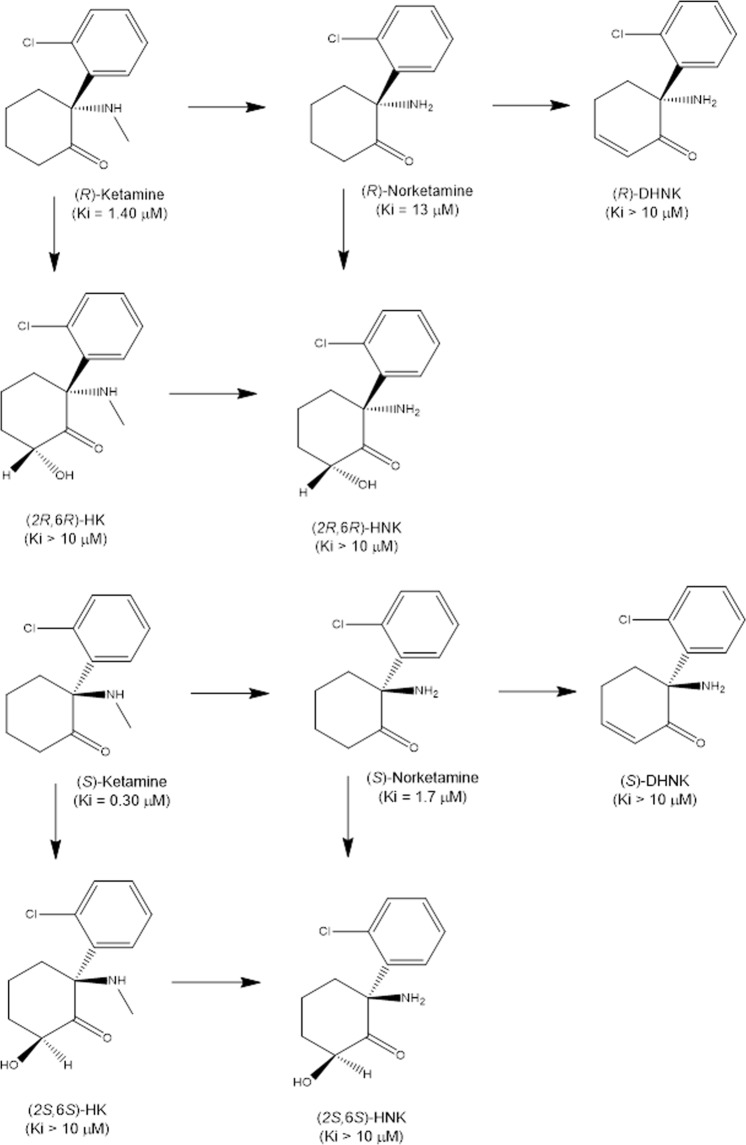
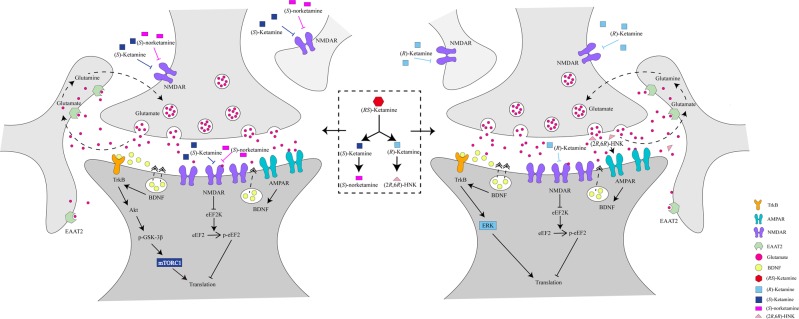
Although the robust antidepressant effects of the N-methyl-d-aspartate receptor (NMDAR) antagonist ketamine in patients with treatment-resistant depression are beyond doubt, the precise molecular and cellular mechanisms underlying its antidepressant effects remain unknown. NMDAR inhibition and the subsequent α-amino-3-hydroxy-5-methyl-4-isoxazolepropionic acid receptor (AMPAR) activation are suggested to play a role in the antidepressant effects of ketamine. Although (R)-ketamine is a less potent NMDAR antagonist than (S)-ketamine, (R)-ketamine has shown more marked and longer-lasting antidepressant-like effects than (S)-ketamine in several animal models of depression. Furthermore, non-ketamine NMDAR antagonists do not exhibit robust ketamine-like antidepressant effects in patients with depression. These findings suggest that mechanisms other than NMDAR inhibition play a key role in the antidepressant effects of ketamine. Duman’s group demonstrated that the activation of mammalian target of rapamycin complex 1 (mTORC1) in the medial prefrontal cortex is reportedly involved in the antidepressant effects of ketamine. However, we reported that mTORC1 serves a role in the antidepressant effects of (S)-ketamine, but not of (R)-ketamine, and that extracellular signal-regulated kinase possibly underlie the antidepressant effects of (R)-ketamine. Several lines of evidence have demonstrated that brain-derived neurotrophic factor (BDNF) and its receptor, tyrosine kinase receptor B (TrkB), are crucial in the antidepressant effects of ketamine and its two enantiomers, (R)-ketamine and (S)-ketamine, in rodents. In addition, (2 R,6 R)-hydroxynormetamine [a metabolite of (R)-ketamine] and (S)-norketamine [a metabolite of (S)-ketamine] have been shown to exhibit antidepressant-like effects on rodents through the BDNF–TrkB cascade. In this review, we discuss recent findings on the molecular and cellular mechanisms underlying the antidepressant effects of enantiomers of ketamine and its metabolites. It may be time to reconsider the hypothesis of NMDAR inhibition and the subsequent AMPAR activation in the antidepressant effects of ketamine.
Overview
The claims and statistics of this paper haven’t been checked yet.
Free: it reads the open-access text and checks the first 5 claims that cite a source we can check. Create a free account to check every claim.
Integrity signals
Registry
Cites
Statistics
Figures
Verification
Claims the paper makes
The claims and statistics of this paper haven’t been checked yet.
Free: it reads the open-access text and checks the first 5 claims that cite a source we can check. Create a free account to check every claim.
Claims other papers make about this one
Each is checked against this paper’s own text: does it say what the citing paper says it does?
The cited source says what the claim attributes to it.
In the citing paper
“However, the literature on the antidepressant effects of 2R,6R-HNK is controversial, with several contradictory reports.41,48–52”
From Ketamine as an antidepressant: Overview of its mechanisms of action and potential predictive biomarkers (2020) · cites this paper as [41]
In the citing paper
“In animal studies, R-ketamine has been reported to have a rapid onset of antidepressant effects and a better side-effect profile than esketamine34–41”
From Ketamine as an antidepressant: Overview of its mechanisms of action and potential predictive biomarkers (2020) · cites this paper as [41]
In the citing paper
“Importantly, large head-to-head clinical comparisons of esketamine with R-ketamine and racemic ketamine have not yet been reported.41,43”
From Ketamine as an antidepressant: Overview of its mechanisms of action and potential predictive biomarkers (2020) · cites this paper as [41]
In the citing paper
“For now, the therapeutic primacy of NMDAR inhibition and resultant AMPAR potentiation appears a temporary frontrunner in the dynamic glutamatergic antidepressant landscape [75,76].”
From Pharmacotherapies Targeting GABA-Glutamate Neurotransmission for Treatment-Resistant Depression (2023) · cites this paper as [76]
Self-check
Percentages, sums and reported differences re-computed from the paper’s own numbers.
The self-check needs the paper’s full text.
Citations
Cites
mTOR Signaling in Growth, Metabolism, and Disease
Saxton, R. A., & Sabatini, D. M. (2017) · Cell · doi:10.1016/j.cell.2017.02.004 · Cited by 7,555
Trivedi, M. H., Rush, A. J., Wisniewski, S. R., Nierenberg, A. A., Warden, D., Ritz, L., Norquist, G., Howland, R. H., Lebowitz, B., McGrath, P. J., et al. (2006) · American Journal of Psychiatry · doi:10.1176/appi.ajp.163.1.28 · Cited by 3,879
Antidepressant effects of ketamine in depressed patients
Berman, R. M., Cappiello, A., Anand, A., Oren, D. A., Heninger, G. R., Charney, D. S., & Krystal, J. H. (2000) · Biological Psychiatry · doi:10.1016/s0006-3223(99)00230-9 · Cited by 3,856
A randomized trial of an N-methyl-D-aspartate antagonist in treatment-resistant major depression.
Zarate, C. A., Singh, J. B., Carlson, P. J., Brutsche, N. E., Ameli, R., Luckenbaugh, D. A., Charney, D. S., & Manji, H. K. (2006) · Archives of General Psychiatry · doi:10.1001/archpsyc.63.8.856 · Cited by 3,766
A Neurotrophic Model for Stress-Related Mood Disorders
Duman, R. S., & Monteggia, L. M. (2006) · Biological Psychiatry · doi:10.1016/j.biopsych.2006.02.013 · Cited by 3,375
Krystal, J. H. (1994) · Archives of General Psychiatry · doi:10.1001/archpsyc.1994.03950030035004 · Cited by 3,330
Nestler, E. J., Barrot, M., DiLeone, R. J., Eisch, A. J., Gold, S. J., & Monteggia, L. M. (2002) · Neuron · doi:10.1016/s0896-6273(02)00653-0 · Cited by 3,217
Recent advances in the phencyclidine model of schizophrenia
(1991) · American Journal of Psychiatry · doi:10.1176/ajp.148.10.1301 · Cited by 2,904
mTOR-Dependent Synapse Formation Underlies the Rapid Antidepressant Effects of NMDA Antagonists
Li, N., Lee, B., Liu, R.-J., Banasr, M., Dwyer, J. M., Iwata, M., Li, X.-Y., Aghajanian, G., & Duman, R. S. (2010) · Science · doi:10.1126/science.1190287 · Cited by 2,881
NMDA receptor blockade at rest triggers rapid behavioural antidepressant responses
Autry, A. E., Adachi, M., Nosyreva, E., Na, E. S., Los, M. F., Cheng, P.-F., Kavalali, E. T., & Monteggia, L. M. (2011) · Nature · doi:10.1038/nature10130 · Cited by 1,926
Synaptic plasticity and depression: new insights from stress and rapid-acting antidepressants
Duman, R. S., Aghajanian, G. K., Sanacora, G., & Krystal, J. H. (2016) · Nature Medicine · doi:10.1038/nm.4050 · Cited by 1,750
Synaptic Dysfunction in Depression: Potential Therapeutic Targets
Duman, R. S., & Aghajanian, G. K. (2012) · Science · doi:10.1126/science.1222939 · Cited by 1,651
NMDAR inhibition-independent antidepressant actions of ketamine metabolites
Zanos, P., Moaddel, R., Morris, P. J., Georgiou, P., Fischell, J., Elmer, G. I., Alkondon, M., Yuan, P., Pribut, H. J., Singh, N. S., et al. (2016) · Nature · doi:10.1038/nature17998 · Cited by 1,609
Ketamine and Ketamine Metabolite Pharmacology: Insights into Therapeutic Mechanisms
Zanos, P., Moaddel, R., Morris, P. J., Riggs, L. M., Highland, J. N., Georgiou, P., Pereira, E. F. R., Albuquerque, E. X., Thomas, C. J., Zarate, C. A., et al. (2018) · Pharmacological Reviews · doi:10.1124/pr.117.015198 · Cited by 1,260
Maeng, S., Zarate, C. A., Du, J., Schloesser, R. J., McCammon, J., Chen, G., & Manji, H. K. (2008) · Biological Psychiatry · doi:10.1016/j.biopsych.2007.05.028 · Cited by 1,103
Diazgranados, N., Ibrahim, L., Brutsche, N. E., Newberg, A., Kronstein, P., Khalife, S., Kammerer, W. A., Quezado, Z., Luckenbaugh, D. A., Salvadore, G., et al. (2010) · Archives of General Psychiatry · doi:10.1001/archgenpsychiatry.2010.90 · Cited by 963
BDNF - a key transducer of antidepressant effects
Björkholm, C., & Monteggia, L. M. (2016) · Neuropharmacology · doi:10.1016/j.neuropharm.2015.10.034 · Cited by 958
Zarate, C. A., Brutsche, N. E., Ibrahim, L., Franco-Chaves, J., Diazgranados, N., Cravchik, A., Selter, J., Marquardt, C. A., Liberty, V., & Luckenbaugh, D. A. (2012) · Biological Psychiatry · doi:10.1016/j.biopsych.2011.12.010 · Cited by 811
Functional antagonists at the NMDA receptor complex exhibit antidepressant actions
Trullas, R., & Skolnick, P. (1990) · European Journal of Pharmacology · doi:10.1016/0014-2999(90)90204-j · Cited by 785
Wilkinson, S. T., Ballard, E. D., Bloch, M. H., Mathew, S. J., Murrough, J. W., Feder, A., Sos, P., Wang, G., Zarate, C. A., & Sanacora, G. (2018) · American Journal of Psychiatry · doi:10.1176/appi.ajp.2017.17040472 · Cited by 696
Sustained rescue of prefrontal circuit dysfunction by antidepressant-induced spine formation
Moda-Sava, R. N., Murdock, M. H., Parekh, P. K., Fetcho, R. N., Huang, B. S., Huynh, T. N., Witztum, J., Shaver, D. C., Rosenthal, D. L., Alway, E. J., et al. (2019) · Science · doi:10.1126/science.aat8078 · Cited by 643
R-ketamine: a rapid-onset and sustained antidepressant without psychotomimetic side effects
Yang, C., Shirayama, Y., Zhang, J.-C., Ren, Q., Yao, W., Ma, M., Dong, C., & Hashimoto, K. (2015) · Translational Psychiatry · doi:10.1038/tp.2015.136 · Cited by 605
Self-citationPrice, R. B., Nock, M. K., Charney, D. S., & Mathew, S. J. (2009) · Biological Psychiatry · doi:10.1016/j.biopsych.2009.04.029 · Cited by 600
Ketamine and other NMDA antagonists: early clinical trials and possible mechanisms in depression.
Newport, D. J., Carpenter, L. L., McDonald, W. M., Potash, J. B., Tohen, M., Nemeroff, C. B., & The APA Council of Research Task Force on Novel Biomarkers and Treatments (2015) · American Journal of Psychiatry · doi:10.1176/appi.ajp.2015.15040465 · Cited by 598
A Consensus Statement on the Use of Ketamine in the Treatment of Mood Disorders
Sanacora, G., Frye, M. A., McDonald, W., Mathew, S. J., Turner, M. S., Schatzberg, A. F., Summergrad, P., Nemeroff, C. B., & for the American Psychiatric Association (APA) Council of Research Task Force on Novel Biomarkers and Treatments (2017) · JAMA Psychiatry · doi:10.1001/jamapsychiatry.2017.0080 · Cited by 576
Side-effects associated with ketamine use in depression: a systematic review
Short, B., Fong, J., Galvez, V., Shelker, W., & Loo, C. K. (2018) · The Lancet Psychiatry · doi:10.1016/s2215-0366(17)30272-9 · Cited by 558
Zhang, J.-C., Yao, W., & Hashimoto, K. (2016) · Current Neuropharmacology · doi:10.2174/1570159x14666160119094646 · Cited by 538
Self-citationCritical Role of Brain-Derived Neurotrophic Factor in Mood Disorders
Hashimoto, K., Shimizu, E., & Iyo, M. (2004) · Brain Research Reviews · doi:10.1016/j.brainresrev.2004.02.003 · Cited by 522
Self-citationDomino, E. F., & Warner, D. S. (2010) · Anesthesiology · doi:10.1097/aln.0b013e3181ed09a2 · Cited by 520
Attenuation of Antidepressant Effects of Ketamine by Opioid Receptor Antagonism
Williams, N. R., Heifets, B. D., Blasey, C., Sudheimer, K., Pannu, J., Pankow, H., Hawkins, J., Birnbaum, J., Lyons, D. M., Rodriguez, C. I., et al. (2018) · American Journal of Psychiatry · doi:10.1176/appi.ajp.2018.18020138 · Cited by 519
Targeting glutamate signalling in depression: progress and prospects
Murrough, J. W., Abdallah, C. G., & Mathew, S. J. (2017) · Nature Reviews Drug Discovery · doi:10.1038/nrd.2017.16 · Cited by 482
Ketamine: A Paradigm Shift for Depression Research and Treatment
Krystal, J. H., Abdallah, C. G., Sanacora, G., Charney, D. S., & Duman, R. S. (2019) · Neuron · doi:10.1016/j.neuron.2019.02.005 · Cited by 455
Fava, M., Freeman, M. P., Flynn, M., Judge, H., Hoeppner, B. B., Cusin, C., Ionescu, D. F., Mathew, S. J., Chang, L. C., Iosifescu, D. V., et al. (2020) · Molecular Psychiatry · doi:10.1038/s41380-018-0256-5 · Cited by 433
Grunebaum, M. F., Galfalvy, H. C., Choo, T.-H., Keilp, J. G., Moitra, V. K., Parris, M. S., Marver, J. E., Burke, A. K., Milak, M. S., Sublette, M. E., et al. (2018) · American Journal of Psychiatry · doi:10.1176/appi.ajp.2017.17060647 · Cited by 431
Vollenweider, F. X., Leenders, K. L., Øye, I., Hell, D., & Angst, J. (1997) · European Neuropsychopharmacology · doi:10.1016/s0924-977x(96)00042-9 · Cited by 413
Ketamine: its mechanism(s) of action and unusual clinical uses
Hirota, K., & Lambert, D. G. (1996) · British Journal of Anaesthesia · doi:10.1093/bja/77.4.441 · Cited by 391
Zhou, W., Wang, N., Yang, C., Li, X.-M., Zhou, Z.-Q., & Yang, J.-J. (2014) · European Psychiatry · doi:10.1016/j.eurpsy.2013.10.005 · Cited by 390
Self-citationHashimoto, K. (2010) · Psychiatry and Clinical Neurosciences · doi:10.1111/j.1440-1819.2010.02113.x · Cited by 388
Self-citationMolecular neurobiology of mTOR
Switon, K., Kotulska, K., Janusz-Kaminska, A., Zmorzynska, J., & Jaworski, J. (2017) · Neuroscience · doi:10.1016/j.neuroscience.2016.11.017 · Cited by 387
Emerging role of glutamate in the pathophysiology of major depressive disorder
Hashimoto, K. (2009) · Brain Research Reviews · doi:10.1016/j.brainresrev.2009.05.005 · Cited by 381
Self-citationGlutamate-based antidepressants: 20 years on
Skolnick, P., Popik, P., & Trullas, R. (2009) · Trends in Pharmacological Sciences · doi:10.1016/j.tips.2009.09.002 · Cited by 380
Kishimoto, T., Chawla, J. M., Hagi, K., Zarate, C. A., Kane, J. M., Bauer, M., & Correll, C. U. (2016) · Psychological Medicine · doi:10.1017/s0033291716000064 · Cited by 359
R (−)-ketamine shows greater potency and longer lasting antidepressant effects than S (+)-ketamine
Zhang, J.-C., Li, S.-X., & Hashimoto, K. (2014) · Pharmacology Biochemistry and Behavior · doi:10.1016/j.pbb.2013.11.033 · Cited by 357
Self-citationHashimoto, K. (2019) · Psychiatry and Clinical Neurosciences · doi:10.1111/pcn.12902 · Cited by 335
Self-citationDeakin, J. F. W., Lees, J., McKie, S., Hallak, J. E. C., Williams, S. R., & Dursun, S. M. (2008) · Archives of General Psychiatry · doi:10.1001/archgenpsychiatry.2007.37 · Cited by 311
Ketamine for rapid reduction of suicidal ideation: a randomized controlled trial
Murrough, J. W., Soleimani, L., DeWilde, K. E., Collins, K. A., Lapidus, K. A., Iacoviello, B. M., Lener, M., Kautz, M., Kim, J., Stern, J. B., et al. (2015) · Psychological Medicine · doi:10.1017/s0033291715001506 · Cited by 297
Do the dissociative side effects of ketamine mediate its antidepressant effects?
Luckenbaugh, D. A., Niciu, M. J., Ionescu, D. F., Nolan, N. M., Richards, E. M., Brutsche, N. E., Guevara, S., & Zarate, C. A. (2014) · Journal of Affective Disorders · doi:10.1016/j.jad.2014.02.017 · Cited by 283
Zarate, C. A., Brutsche, N., Laje, G., Luckenbaugh, D. A., Venkata, S. L. V., Ramamoorthy, A., Moaddel, R., & Wainer, I. W. (2012) · Biological Psychiatry · doi:10.1016/j.biopsych.2012.03.004 · Cited by 282
Ebert, B., Mikkelsen, S., Thorkildsen, C., & Borgbjerg, F. M. (1997) · European Journal of Pharmacology · doi:10.1016/s0014-2999(97)01116-3 · Cited by 270
Spine synapse remodeling in the pathophysiology and treatment of depression
Duman, C. H., & Duman, R. S. (2015) · Neuroscience Letters · doi:10.1016/j.neulet.2015.01.022 · Cited by 257
Ketamine abuse potential and use disorder
Liu, Y., Lin, D., Wu, B., & Zhou, W. (2016) · Brain Research Bulletin · doi:10.1016/j.brainresbull.2016.05.016 · Cited by 256
Antidepressant Potential of (R)-Ketamine in Rodent Models: Comparison with (S)-Ketamine
Fukumoto, K., Toki, H., Iijima, M., Hashihayata, T., Yamaguchi, J.-I., Hashimoto, K., & Chaki, S. (2017) · The Journal of Pharmacology and Experimental Therapeutics · doi:10.1124/jpet.116.239228 · Cited by 252
Self-citationKetamine has distinct electrophysiological and behavioral effects in depressed and healthy subjects
Nugent, A. C., Ballard, E. D., Gould, T. D., Park, L. T., Moaddel, R., Brutsche, N. E., & Zarate, C. A. (2019) · Molecular Psychiatry · doi:10.1038/s41380-018-0028-2 · Cited by 250
Yang, C., Ren, Q., Qu, Y., Zhang, J.-C., Ma, M., Dong, C., & Hashimoto, K. (2018) · Biological Psychiatry · doi:10.1016/j.biopsych.2017.05.016 · Cited by 250
Self-citationEffect of ketamine, an NMDA receptor inhibitor, in acute and chronic orofacial pain
Mathisen, L. C., Skjelbred, P., Skoglund, L. A., & Øye, I. (1995) · Pain · doi:10.1016/0304-3959(94)00170-j · Cited by 245
Abdallah, C. G., Sanacora, G., Duman, R. S., & Krystal, J. H. (2018) · Pharmacology & Therapeutics · doi:10.1016/j.pharmthera.2018.05.010 · Cited by 219
Hare, B. D., Shinohara, R., Liu, R. J., Pothula, S., DiLeone, R. J., & Duman, R. S. (2019) · Nature Communications · doi:10.1038/s41467-018-08168-9 · Cited by 217
Ketamine and rapid-acting antidepressants: a new era in the battle against depression and suicide
Duman, R. S. (2018) · F1000Research · doi:10.12688/f1000research.14344.1 · Cited by 207
Fukumoto, K., Fogaça, M. V., Liu, R.-J., Duman, C., Kato, T., Li, X.-Y., & Duman, R. S. (2019) · Proceedings of the National Academy of Sciences · doi:10.1073/pnas.1814709116 · Cited by 188
Clinical role of brain-derived neurotropic factor in mood disorders
Hashimoto, K. (2004) · Medical Entomology and Zoology · Cited by 183
Self-citationZheng, W., Zhou, Y.-L., Liu, W.-J., Wang, C.-Y., Zhan, Y.-N., Li, H.-Q., Chen, L.-J., Li, M. D., & Ning, Y.-P. (2018) · Journal of Psychiatric Research · doi:10.1016/j.jpsychires.2018.09.013 · Cited by 180
Effects of a ketamine metabolite on synaptic NMDAR function
Suzuki, K., Nosyreva, E., Hunt, K. W., Kavalali, E. T., & Monteggia, L. M. (2017) · Nature · doi:10.1038/nature22084 · Cited by 180
Chang, L., Zhang, K., Pu, Y., Qu, Y., Wang, S.-M., Xiong, Z., Ren, Q., Dong, C., Fujita, Y., & Hashimoto, K. (2019) · Pharmacology Biochemistry and Behavior · doi:10.1016/j.pbb.2019.04.008 · Cited by 176
Self-citationAttenuation of antidepressant and antisuicidal effects of ketamine by opioid receptor antagonism
Williams, N. R., Heifets, B. D., Bentzley, B. S., Blasey, C., Sudheimer, K. D., Hawkins, J., Lyons, D. M., & Schatzberg, A. F. (2019) · Molecular Psychiatry · doi:10.1038/s41380-019-0503-4 · Cited by 174
Yang, C., Hu, Y.-M., Zhou, Z.-Q., Zhang, G.-F., & Yang, J.-J. (2013) · Upsala Journal of Medical Sciences · doi:10.3109/03009734.2012.724118 · Cited by 173
Self-citationLiu, W., Wang, J., Xie, Z.-M., Xu, N., Zhang, G.-F., Jia, M., Zhou, Z., Hashimoto, K., & Yang, J. (2015) · Psychopharmacology · doi:10.1007/s00213-015-4128-2 · Cited by 169
Self-citationGlutamatergic Neurotransmission: Pathway to Developing Novel Rapid-Acting Antidepressant Treatments
Kadriu, B., Musazzi, L., Henter, I. D., Graves, M., Popoli, M., & Zarate, C. A. (2019) · International Journal of Neuropsychopharmacology · doi:10.1093/ijnp/pyy094 · Cited by 165
Yang, C., Qu, Y., Abe, M., Nozawa, D., Chaki, S., & Hashimoto, K. (2017) · Biological Psychiatry · doi:10.1016/j.biopsych.2016.12.020 · Cited by 162
Self-citationKetamine treatment for depression: opportunities for clinical innovation and ethical foresight
Singh, I., Morgan, C., Curran, V., Nutt, D., Schlag, A., & McShane, R. (2017) · The Lancet Psychiatry · doi:10.1016/s2215-0366(17)30102-5 · Cited by 160
Lumsden, E. W., Troppoli, T. A., Myers, S. J., Zanos, P., Aracava, Y., Kehr, J., Lovett, J., Kim, S., Wang, F.-H., Schmidt, S., et al. (2019) · Proceedings of the National Academy of Sciences · doi:10.1073/pnas.1816071116 · Cited by 158
Yoon, G., Petrakis, I. L., & Krystal, J. H. (2019) · JAMA Psychiatry · doi:10.1001/jamapsychiatry.2018.3990 · Cited by 155
Neurobiology of rapid-acting antidepressants: convergent effects on GluA1-synaptic function
Duman, R. S., Shinohara, R., Fogaça, M. V., & Hare, B. (2019) · Molecular Psychiatry · doi:10.1038/s41380-019-0400-x · Cited by 154
( 2R,6R )-hydroxynorketamine exerts mGlu 2 receptor-dependent antidepressant actions
Zanos, P., Highland, J. N., Stewart, B. W., Georgiou, P., Jenne, C. E., Lovett, J., Morris, P. J., Thomas, C. J., Moaddel, R., Zarate, C. A., et al. (2019) · Proceedings of the National Academy of Sciences · doi:10.1073/pnas.1819540116 · Cited by 152
The critical importance of basic animal research for neuropsychiatric disorders
Bale, T. L., Abel, T. G., Akil, H., Carlezon, W. A., Moghaddam, B., Nestler, E. J., Ressler, K. J., & Thompson, S. M. (2019) · Neuropsychopharmacology · doi:10.1038/s41386-019-0405-9 · Cited by 150
Antidepressant actions of ketamine: from molecular mechanisms to clinical practice
Monteggia, L. M., & Zarate, C. (2015) · Current Opinion in Neurobiology · doi:10.1016/j.conb.2014.12.004 · Cited by 149
Molecular Pharmacology and Neurobiology of Rapid-Acting Antidepressants
Gould, T. D., Zarate, C. A., & Thompson, S. M. (2019) · Annual Review of Pharmacology and Toxicology · doi:10.1146/annurev-pharmtox-010617-052811 · Cited by 133
An update on ketamine and its two enantiomers as rapid-acting antidepressants
Zhang, K., & Hashimoto, K. (2019) · Expert Review of Neurotherapeutics · doi:10.1080/14737175.2019.1554434 · Cited by 132
Self-citationPham, T. H., Defaix, C., Xu, X., Deng, S.-X., Fabresse, N., Alvarez, J.-C., Landry, D. W., Brachman, R. A., Denny, C. A., & Gardier, A. M. (2018) · Biological Psychiatry · doi:10.1016/j.biopsych.2017.10.020 · Cited by 131
Hashimoto, K., Kakiuchi, T., Ohba, H., Nishiyama, S., & Tsukada, H. (2017) · European Archives of Psychiatry and Clinical Neuroscience · doi:10.1007/s00406-016-0692-7 · Cited by 127
Self-citationQu, Y., Yang, C., Ren, Q., Ma, M., Dong, C., & Hashimoto, K. (2017) · Scientific Reports · doi:10.1038/s41598-017-16060-7 · Cited by 127
Self-citationA Survey of the Clinical, Off-Label Use of Ketamine as a Treatment for Psychiatric Disorders
Wilkinson, S. T., Toprak, M., Turner, M. S., Levine, S. P., Katz, R. B., & Sanacora, G. (2017) · American Journal of Psychiatry · doi:10.1176/appi.ajp.2017.17020239 · Cited by 125
AMPA Receptor Activation–Independent Antidepressant Actions of Ketamine Metabolite (S)-Norketamine
Yang, C., Kobayashi, S., Nakao, K., Dong, C., Han, M., Qu, Y., Ren, Q., Zhang, J.-C., Ma, M., Toki, H., et al. (2018) · Biological Psychiatry · doi:10.1016/j.biopsych.2018.05.007 · Cited by 125
Self-citationKetamine as a rapid-acting agent for suicidal ideation: A meta-analysis
Bartoli, F., Riboldi, I., Crocamo, C., Brita, C. D., Clerici, M., & Carrà, G. (2017) · Neuroscience & Biobehavioral Reviews · doi:10.1016/j.neubiorev.2017.03.010 · Cited by 121
Sanacora, G., Johnson, M. R., Khan, A., Atkinson, S. D., Riesenberg, R. R., Schronen, J. P., Burke, M. A., Zajecka, J. M., Barra, L., Su, H.-L., et al. (2017) · Neuropsychopharmacology · doi:10.1038/npp.2016.224 · Cited by 120
Dong, C., Zhang, J.-C., Yao, W., Ren, Q., Ma, M., Yang, C., Chaki, S., & Hashimoto, K. (2016) · International Journal of Neuropsychopharmacology · doi:10.1093/ijnp/pyw089 · Cited by 116
Self-citationPaul, R. K., Singh, N. S., Khadeer, M., Moaddel, R., Sanghvi, M., Green, C. E., O’Loughlin, K., Torjman, M. C., Bernier, M., & Wainer, I. W. (2014) · Anesthesiology · doi:10.1097/aln.0000000000000285 · Cited by 115
Shirayama, Y., & Hashimoto, K. (2018) · International Journal of Neuropsychopharmacology · doi:10.1093/ijnp/pyx108 · Cited by 111
Self-citationAdministration of ketamine for unipolar and bipolar depression
Kraus, C., Rabl, U., Vanicek, T., Carlberg, L., Popovic, A., Spies, M., Bartova, L., Gryglewski, G., Papageorgiou, K., Lanzenberger, R., et al. (2017) · International Journal of Psychiatry in Clinical Practice · doi:10.1080/13651501.2016.1254802 · Cited by 110
Ohgi, Y., Futamura, T., & Hashimoto, K. (2015) · Current Molecular Medicine · doi:10.2174/1566524015666150330143008 · Cited by 107
Self-citation(2R,6R)-Hydroxynorketamine is not essential for the antidepressant actions of (R)-ketamine in mice
Yamaguchi, J.-I., Toki, H., Qu, Y., Yang, C., Koike, H., Hashimoto, K., Mizuno-Yasuhira, A., & Chaki, S. (2018) · Neuropsychopharmacology · doi:10.1038/s41386-018-0084-y · Cited by 105
Self-citationTornese, P., Sala, N., Bonini, D., Bonifacino, T., La Via, L., Milanese, M., Treccani, G., Seguini, M., Ieraci, A., Mingardi, J., et al. (2019) · Neurobiology of Stress · doi:10.1016/j.ynstr.2019.100160 · Cited by 101
Ago, Y., Tanabe, W., Higuchi, M., Tsukada, S., Tanaka, T., Yamaguchi, T., Igarashi, H., Yokoyama, R., Seiriki, K., Kasai, A., et al. (2019) · International Journal of Neuropsychopharmacology · doi:10.1093/ijnp/pyz041 · Cited by 92
Self-citationYang, B., Zhang, J.-C., Han, M., Yao, W., Yang, C., Ren, Q., Ma, M., Chen, Q.-X., & Hashimoto, K. (2016) · Psychopharmacology · doi:10.1007/s00213-016-4399-2 · Cited by 91
Self-citationYang, C., Han, M., Zhang, J.-C., Ren, Q., & Hashimoto, K. (2016) · Psychiatry Research · doi:10.1016/j.psychres.2016.03.034 · Cited by 91
Self-citationZanos, P., Highland, J. N., Liu, X., Troppoli, T. A., Georgiou, P., Lovett, J., Morris, P. J., Stewart, B. W., Thomas, C. J., Thompson, S. M., et al. (2019) · British Journal of Pharmacology · doi:10.1111/bph.14683 · Cited by 82 · cited 3×
“A recent study from Zanos et al.(121) showed that (R)-ketamine may exert antidepressant-like effects partly via conversion to (2R,6R)-HNK.”
BackgroundInfluentialRisks Associated with Misuse of Ketamine as a Rapid-Acting Antidepressant
Zhu, W., Ding, Z., Zhang, Y., Shi, J., Hashimoto, K., & Lu, L. (2016) · Neuroscience Bulletin · doi:10.1007/s12264-016-0081-2 · Cited by 80
Self-citationShirayama, Y., & Hashimoto, K. (2016) · European Archives of Psychiatry and Clinical Neuroscience · doi:10.1007/s00406-016-0718-1 · Cited by 79
Self-citationLi, Y., Zhu, Z. R., Ou, B. C., Wang, Y. Q., Tan, Z. B., Deng, C. M., Gao, Y., Tang, M., So, J. H., Mu, Y., et al. (2014) · Behavioural Brain Research · doi:10.1016/j.bbr.2014.11.016 · Cited by 76
Nations, K. R., Dogterom, P., Bursi, R., Schipper, J., Greenwald, S., Zraket, D., Gertsik, L., Johnstone, J., Lee, A., Pande, Y., et al. (2012) · Journal of Psychopharmacology · doi:10.1177/0269881112458728 · Cited by 74
Treccani, G., Ardalan, M., Chen, F., Musazzi, L., Popoli, M., Wegener, G., Nyengaard, J. R., & Müller, H. K. (2019) · Molecular Neurobiology · doi:10.1007/s12035-019-1613-3 · Cited by 73
Lack of Opioid System in the Antidepressant Actions of Ketamine
Zhang, K., & Hashimoto, K. (2019) · Biological Psychiatry · doi:10.1016/j.biopsych.2018.11.006 · Cited by 71
Self-citationKetamine’s antidepressant action: beyond NMDA receptor inhibition
Hashimoto, K. (2016) · Expert Opinion on Therapeutic Targets · doi:10.1080/14728222.2016.1238899 · Cited by 68
Self-citationChiu, C.-T., Scheuing, L., Liu, G., Liao, H.-M., Linares, G. R., Lin, D., & Chuang, D.-M. (2015) · International Journal of Neuropsychopharmacology · doi:10.1093/ijnp/pyu102 · Cited by 66
Denk, M. C., Rewerts, C., Holsboer, F., Erhardt, A., & Turck, C. W. (2011) · American Journal of Psychiatry · doi:10.1176/appi.ajp.2011.11010128 · Cited by 62
Tian, Z., Dong, C., Fujita, A., Fujita, Y., & Hashimoto, K. (2018) · Pharmacology Biochemistry and Behavior · doi:10.1016/j.pbb.2018.07.003 · Cited by 62
Self-citationYang, C., Zhou, Z.-Q., Gao, Z.-Q., Shi, J.-Y., & Yang, J.-J. (2013) · Biological Psychiatry · doi:10.1016/j.biopsych.2012.07.022 · Cited by 55
Self-citationZhang, J., Qu, Y., Chang, L., Pu, Y., & Hashimoto, K. (2019) · International Journal of Neuropsychopharmacology · doi:10.1093/ijnp/pyz048 · Cited by 55
Self-citationHashimoto, K. (2016) · Psychological Medicine · doi:10.1017/s0033291716000969 · Cited by 54
Self-citationMarton, T., Barnes, D. E., Wallace, A., & Woolley, J. D. (2019) · Biological Psychiatry · doi:10.1016/j.biopsych.2019.02.008 · Cited by 49
Xiong, Z., Fujita, Y., Zhang, K., Pu, Y., Chang, L., Ma, M., Chen, J., & Hashimoto, K. (2019) · Behavioural Brain Research · doi:10.1016/j.bbr.2019.111904 · Cited by 49
Self-citationLack of metabolism in (R)-ketamine’s antidepressant actions in a chronic social defeat stress model
Zhang, K., Fujita, Y., & Hashimoto, K. (2018) · Scientific Reports · doi:10.1038/s41598-018-22449-9 · Cited by 49
Self-citationZhang, K., Dong, C., Fujita, Y., Fujita, A., & Hashimoto, K. (2018) · International Journal of Neuropsychopharmacology · doi:10.1093/ijnp/pyx100 · Cited by 48
Self-citationAcute systemic rapamycin induces neurobehavioral alterations in rats
Hadamitzky, M., Herring, A., Keyvani, K., Doenlen, R., Krügel, U., Bösche, K., Orlowski, K., Engler, H., & Schedlowski, M. (2014) · Behavioural Brain Research · doi:10.1016/j.bbr.2014.06.056 · Cited by 48
Rapid antidepressant effects and abuse liability of ketamine
Yang, C., & Hashimoto, K. (2014) · Psychopharmacology · doi:10.1007/s00213-014-3543-0 · Cited by 46
Self-citationWitkin, J. M., Knutson, D. E., Rodriguez, G. J., & Shi, S. (2018) · Current Pharmaceutical Design · doi:10.2174/1381612824666180730104707 · Cited by 44
(R)‐ and (S)‐ketamine induce differential fMRI responses in conscious rats
Masaki, Y., Kashiwagi, Y., Watabe, H., & Abe, K. (2019) · Synapse · doi:10.1002/syn.22126 · Cited by 44
Abelaira, H. M., Réus, G. Z., Ignácio, Z. M., dos Santos, M. A. B., de Moura, A. B., Matos, D., Demo, J. P., da Silva, J. B. I., Michels, M., Abatti, M. R., et al. (2016) · Journal of Psychiatric Research · doi:10.1016/j.jpsychires.2016.12.002 · Cited by 40
Wong, J. J., O’Daly, O., Mehta, M. A., Young, A. H., & Stone, J. M. (2016) · PeerJ · doi:10.7717/peerj.1710 · Cited by 39
Is (S)-norketamine an alternative antidepressant for esketamine?
Hashimoto, K., & Yang, C. (2019) · European Archives of Psychiatry and Clinical Neuroscience · doi:10.1007/s00406-018-0922-2 · Cited by 37
Self-citationDetrimental Side Effects of Repeated Ketamine Infusions in the Brain
Hashimoto, K. (2016) · American Journal of Psychiatry · doi:10.1176/appi.ajp.2016.16040411 · Cited by 35
Self-citationYe, L., Ko, C.-Y., Huang, Y., Zheng, C., Zheng, Y., & Chou, D. (2019) · Neuropharmacology · doi:10.1016/j.neuropharm.2019.107667 · Cited by 34
Llamosas, N., Pérez-Caballero, L., Berrocoso, E., Bruzos-Cidón, C., Ugedo, L., & Torrecilla, M. (2018) · Progress in Neuro-Psychopharmacology and Biological Psychiatry · doi:10.1016/j.pnpbp.2018.07.022 · Cited by 34
Zhang, K., Toki, H., Fujita, Y., Ma, M., Chang, L., Qu, Y., Harada, S., Nemoto, T., Mizuno‐Yasuhira, A., Yamaguchi, J., et al. (2018) · Psychopharmacology · doi:10.1007/s00213-018-5017-2 · Cited by 33
Self-citationWhat Are the Causes for Discrepancies of Antidepressant Actions of (2R,6R)-Hydroxynorketamine?
Hashimoto, K., & Shirayama, Y. (2017) · Biological Psychiatry · doi:10.1016/j.biopsych.2017.12.007 · Cited by 32
Self-citationZhan, G., Huang, N., Li, S., Hua, D., Zhang, J., Fang, X., Yang, N., Luo, A., & Yang, C. (2018) · Psychopharmacology · doi:10.1007/s00213-018-5041-2 · Cited by 32
Self-citationAbdallah, C., Averill, L. A., Gueorguieva, R., Goktas, S., Purohit, P., Ranganathan, M., D'Souza, D. C., Formica, R., Southwick, S. M., Duman, R. S., et al. (2018) · doi:10.1101/500959 · Cited by 30
Yang, C., Li, W.-Y., Yu, H.-Y., Gao, Z.-Q., Liu, X.-L., Zhou, Z.-Q., & Yang, J.-J. (2012) · Journal of Biomedicine and Biotechnology · doi:10.1155/2012/175619 · Cited by 29
Self-citationKohtala, S., Theilmann, W., Rosenholm, M., Müller, H. K., Kiuru, P. S., Wegener, G., Yli‐Kauhaluoma, J. T., & Rantamäki, T. (2019) · Neuropharmacology · doi:10.1016/j.neuropharm.2019.107684 · Cited by 29
Heifets, B. D., & Malenka, R. C. (2019) · JAMA Psychiatry · doi:10.1001/jamapsychiatry.2019.1145 · Cited by 29
Pharmacological evaluation of clinically relevant concentrations of (2R,6R)-hydroxynorketamine
Shaffer, C. L., Dutra, J. K., Tseng, W. C., Weber, M. L., Bogart, L. J., Hales, K., Pang, J., Volfson, D., am Ende, C. W., Green, M. E., et al. (2019) · Neuropharmacology · doi:10.1016/j.neuropharm.2019.04.019 · Cited by 28
Chang, L., Toki, H., Qu, Y., Fujita, Y., Mizuno-Yasuhira, A., Yamaguchi, J.-I., Chaki, S., & Hashimoto, K. (2018) · International Journal of Neuropsychopharmacology · doi:10.1093/ijnp/pyy053 · Cited by 25
Self-citationShen, M., Lv, D., Liu, X., Li, S., Chen, Y., Zhang, Y., Wang, Z., & Wang, C. (2018) · Brain Research Bulletin · doi:10.1016/j.brainresbull.2018.10.004 · Cited by 25
Abelaira, H. M., Réus, G. Z., Ignácio, Z. M., dos Santos, M. A. B., de Moura, A. B., Matos, D., Demo, J. P., da Silva, J. B. I., Danielski, L. G., Petronilho, F. C., et al. (2016) · Molecular Neurobiology · doi:10.1007/s12035-016-0071-4 · Cited by 23
Chang, L., Zhang, K., Pu, Y., Qu, Y., Wang, S., Xiong, Z., Shirayama, Y., & Hashimoto, K. (2019) · European Archives of Psychiatry and Clinical Neuroscience · doi:10.1007/s00406-019-01012-1 · Cited by 20
Self-citationIs Metabolism of (R)-Ketamine Essential for the Antidepressant Effects?
Chaki, S. (2018) · International Journal of Neuropsychopharmacology · doi:10.1093/ijnp/pyx120 · Cited by 17
Now is the time for (2R,6R)-hydroxynorketamine to be viewed independently from its parent drug
Chaki, S., & Yamaguchi, J. (2018) · Pharmacology Biochemistry and Behavior · doi:10.1016/j.pbb.2018.09.005 · Cited by 6
Cited by
Structure, Function, and Pharmacology of Glutamate Receptor Ion Channels
Hansen, K. B., Wollmuth, L. P., Bowie, D., Furukawa, H., Menniti, F. S., Sobolevsky, A. I., Swanson, G. T., Swanger, S. A., Greger, I. H., Nakagawa, T., et al. (2021) · Pharmacological Reviews · doi:10.1124/pharmrev.120.000131 · Cited by 686
Molecular mechanisms underlying the antidepressant actions of arketamine: beyond the NMDA receptor
Wei, Y., Chang, L., & Hashimoto, K. (2022) · Molecular Psychiatry · doi:10.1038/s41380-021-01121-1 · Cited by 248
Self-citationMolecular mechanisms of the rapid-acting and long-lasting antidepressant actions of (R)-ketamine
Hashimoto, K. (2020) · Biochemical Pharmacology · doi:10.1016/j.bcp.2020.113935 · Cited by 236
Self-citationMicroglial ERK-NRBP1-CREB-BDNF Signaling in Sustained Antidepressant Actions of (R)-Ketamine
Yao, W., Cao, Q., Luo, S., He, L., Yang, C., Chen, J., Qi, Q., Hashimoto, K., & Zhang, J.-C. (2022) · Molecular Psychiatry · doi:10.1038/s41380-021-01377-7 · Cited by 216
Self-citationMatveychuk, D., Thomas, R. K., Swainson, J., Khullar, A., MacKay, M.-A., Baker, G. B., & Dursun, S. M. (2020) · Therapeutic Advances in Psychopharmacology · doi:10.1177/2045125320916657 · Cited by 209
Metadata
- Authors
- Yang, C., Yang, J., Luo, A., & Hashimoto, K.
- Affiliations
- Jiangsu Province Hospital (CN)
- First Affiliated Hospital of Zhengzhou University (CN)
- Tongji Hospital (CN)
- Chiba University (JP)
- Corresponding author
- Hashimoto, Kenji
- Venue
- Translational Psychiatry
- Published
- 2019-11-07
- Volume
- 9
- Issue
- 1
- Pages
- 280-280
- ISSN
- 2158-3188 (ISSN-L)
- PMC
- PMC6838457
- OpenAlex
- W2986257172
- Cited by
- 190
- References
- 136
- Citations by year
- 2026: 11 · 2025: 17 · 2024: 24 · 2023: 28 · 2022: 34 · 2021: 38 · 2020: 34 · 2019: 4
- FWCI
- 3.52
- Type
- journal article
- Language
- en
- Open access
- gold
- doi.org
- Licence
- cc-by
- creativecommons.org/licenses/by/4.0 (tdm)
- creativecommons.org/licenses/by/4.0 (vor)
- Locations
- Translational Psychiatry (publishedVersion, cc-by)
- PubMed Central (publishedVersion, cc-by)
- PubMed (publishedVersion)
- DOAJ (DOAJ: Directory of Open Access Journals) (submittedVersion)
- Funders
- National Natural Science Foundation of China (1703482, 81771159, 81571047)
- Topics
- Health Sciences › Medicine › Pharmacology (medical) › Treatment of Major Depression
- Life Sciences › Neuroscience › Cellular and Molecular Neuroscience › Neuroscience and Neuropharmacology Research
- Life Sciences › Neuroscience › Biological Psychiatry › Tryptophan and brain disorders
- Keywords
- ketamine, ketamine enantiomers, antidepressant mechanism, treatment-resistant depression, NMDA receptor antagonism, mTORC1, medial prefrontal cortex, ERK, BDNF/TrkB signaling, ketamine metabolites
- MeSH terms
- Animals, Antidepressive Agents, Depression, Disease Models, Animal, Hippocampus, Humans, Ketamine, Stress, Psychological, Receptors, N-Methyl-D-Aspartate, Prefrontal Cortex, Receptors, AMPA, Brain-Derived Neurotrophic Factor
About these checks
Registry, retraction, Cites and statistics results are computed, not judged, with one exception: a printed reference that no index lists is read once by a model before it counts as a citation error. Claims are extracted by a model and kept only when their quote appears verbatim in the text; each cited source is then checked, with a model’s help, for whether it says what the claim relies on. Those verdicts can be wrong — read the claim’s quote and the cited source before relying on one.
Statistics and arithmetic are recomputed, not judged.
Confidence bands are shown only for fields calibrated on our annotated test set. None is calibrated yet, so no band is shown.
What counts as a claim ›How we measure confidence ›How we check this ›
Are you an author, or do you see a problem with this page? Request a review
Data sources
Bibliographic data: Semantic Scholar, OpenAlex, Crossref.
Contains information from the Semantic Scholar Academic Graph Datasets, made available under the ODC Attribution License (ODC-BY 1.0).
Semantic Scholar’s data is described in: Kinney, R., et al. (2023). The Semantic Scholar Open Data Platform. arXiv:2301.10140.
