

Serotonin depletion amplifies distinct human social emotions as a function of individual differences in personality
Open accessPublished version of a preprint
The DOI matches its Crossref record; 90 of the 90 references it cites were found in a registry or an index.
Abstract
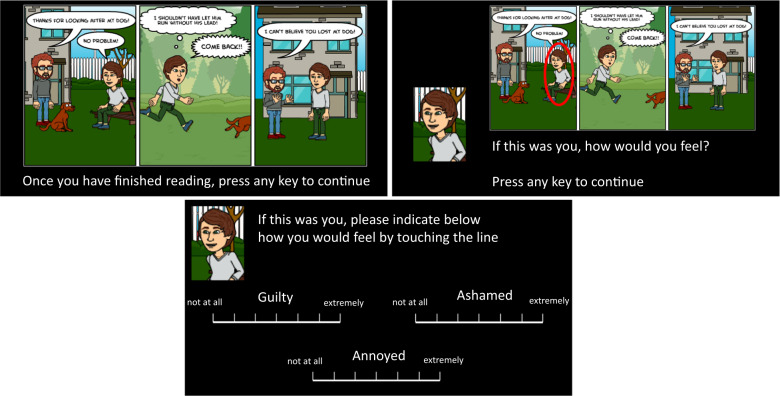
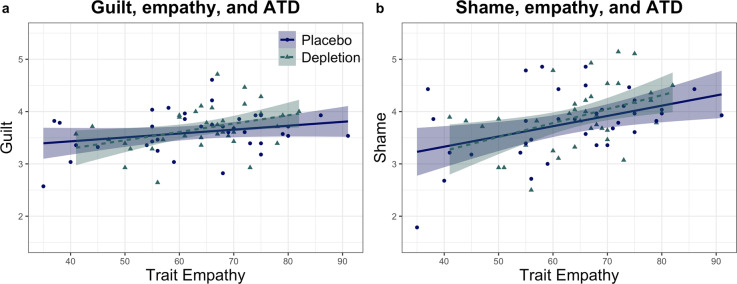
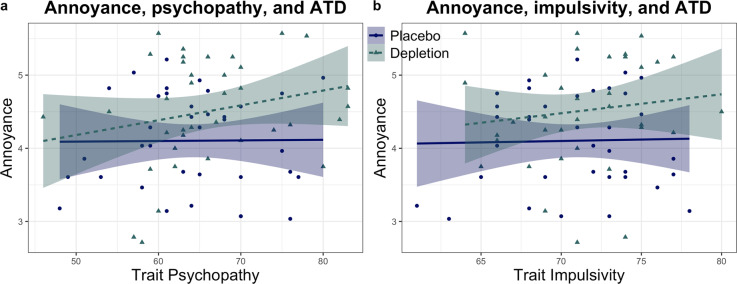
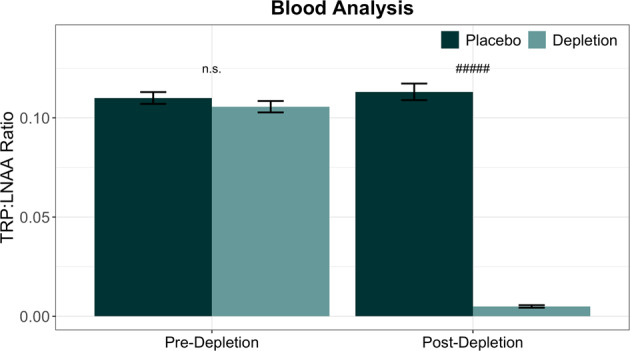
Serotonin is involved in a wide range of mental capacities essential for navigating the social world, including emotion and impulse control. Much recent work on serotonin and social functioning has focused on decision-making. Here we investigated the influence of serotonin on human emotional reactions to social conflict. We used a novel computerised task that required mentally simulating social situations involving unjust harm and found that depleting the serotonin precursor tryptophan—in a double-blind randomised placebo-controlled design—enhanced emotional responses to the scenarios in a large sample of healthy volunteers ( n = 73), and interacted with individual differences in trait personality to produce distinctive human emotions. Whereas guilt was preferentially elevated in highly empathic participants, annoyance was potentiated in those high in trait psychopathy, with medium to large effect sizes. Our findings show how individual differences in personality, when combined with fluctuations of serotonin, may produce diverse emotional phenotypes. This has implications for understanding vulnerability to psychopathology, determining who may be more sensitive to serotonin-modulating treatments, and casts new light on the functions of serotonin in emotional processing.
Overview
The claims and statistics of this paper haven’t been checked yet.
Free: it reads the open-access text and checks the first 5 claims that cite a source we can check. Create a free account to check every claim.
Integrity signals
Registry
Cites
Statistics
Figures
Verification
Claims the paper makes
The claims and statistics of this paper haven’t been checked yet.
Free: it reads the open-access text and checks the first 5 claims that cite a source we can check. Create a free account to check every claim.
Claims other papers make about this one
Each is checked against this paper’s own text: does it say what the citing paper says it does?
The cited source says what the claim attributes to it.
In the citing paper
“ATD has been shown to affect measures of both ‘cold’ (rational and non-emotional), and ‘hot’ (social and emotional) cognition [13–18].”
From Chronic escitalopram in healthy volunteers has specific effects on reinforcement sensitivity: a double-blind, placebo-controlled semi-randomised study (2023) · cites this paper as [17]
Self-check
Percentages, sums and reported differences re-computed from the paper’s own numbers.
The self-check needs the paper’s full text.
Citations
Cites
Diagnostic and Statistical Manual of Mental Disorders
American Psychiatric Association (2013) · doi:10.1176/appi.books.9780890425596 · Cited by 116,369
(1998) · The Journal of Clinical Psychiatry · Cited by 19,139
(1998) · PubMed · Cited by 10,216
Comparison of Beck Depression Inventories -IA and -II in psychiatric outpatients
Beck, A. T., Steer, R. A., Ball, R., & Ranieri, W. F. (1996) · Journal of Personality Assessment · doi:10.1207/s15327752jpa6703_13 · Cited by 5,965
(1980) · Medical Entomology and Zoology · Cited by 4,712
Moral Emotions and Moral Behavior
Tangney, J. P., Stuewig, J., & Mashek, D. J. (2007) · Annual Review of Psychology · doi:10.1146/annurev.psych.56.091103.070145 · Cited by 3,222
Toward the future of psychiatric diagnosis: the seven pillars of RDoC
Cuthbert, B. N., & Insel, T. R. (2013) · BMC Medicine · doi:10.1186/1741-7015-11-126 · Cited by 3,053
Assessing psychopathic attributes in a noninstitutionalized population.
Levenson, M. R., Kiehl, K. A., & Fitzpatrick, C. M. (1995) · Journal of Personality and Social Psychology · doi:10.1037//0022-3514.68.1.151 · Cited by 1,768
Linnoila, M., Virkkunen, M., Scheinin, M., Nuutila, A., Rimon, R., & Goodwin, F. K. (1983) · Life Sciences · doi:10.1016/0024-3205(83)90344-2 · Cited by 1,308
Differences between males and females in rates of serotonin synthesis in human brain
Nishizawa, S., Benkelfat, C., Young, S. N., Leyton, M., Mzengeza, S., de Montigny, C., Blier, P., & Diksic, M. (1997) · Proceedings of the National Academy of Sciences · doi:10.1073/pnas.94.10.5308 · Cited by 900
Cited by
Alcohol, Aggression, and Violence: From Public Health to Neuroscience
Sontate, K. V., Rahim Kamaluddin, M., Naina Mohamed, I., Mohamed, R. M. P., Shaikh, M. F., Kamal, H., & Kumar, J. (2021) · Frontiers in Psychology · doi:10.3389/fpsyg.2021.699726 · Cited by 161
“Aggression is a complex behavior involving interactions between the gene, environment, personality, and physiology (Armstrong et al., 2017; Zhang et al., 2017; Kanen et al., 2021).”
BackgroundPark, J.-I., Lee, I.-H., Lee, S., Kwon, R.-W., Choo, E.-A., Nam, H.-W., & Lee, J. (2023) · BMC Complementary Medicine and Therapies · doi:10.1186/s12906-022-03832-6 · Cited by 133
Serotonin regulation of behavior via large-scale neuromodulation of serotonin receptor networks
Salvan, P., Fonseca, M., Winkler, A. M., Beauchamp, A., Lerch, J. P., & Johansen-Berg, H. (2023) · Nature Neuroscience · doi:10.1038/s41593-022-01213-3 · Cited by 101
Langley, C., Cirstea, B. I., Cuzzolin, F., & Sahakian, B. J. (2022) · Frontiers in Artificial Intelligence · doi:10.3389/frai.2022.778852 · Cited by 61
“Serotonin has also been implicated in ToM abilities, specifically in moral judgements (Crockett et al., 2010, 2015; Kanen et al., 2021).”
BackgroundSelf-citationLangley, C., Armand, S., Luo, Q., Savulich, G., Segerberg, T., Søndergaard, A., Pedersen, E. B., Svart, N., Overgaard-Hansen, O., Johansen, A., et al. (2023) · Neuropsychopharmacology · doi:10.1038/s41386-022-01523-x · Cited by 58
“Effects of ATD have also been seen on reinforcement behaviour [13], reversal learning [9, 14], learning and memory [15], affective and social cognition [9, 16, 17] and moral judgement [18].”
BackgroundSelf-citationNeural circuit control of innate behaviors
Wei, X., Jiao, Z., Senol, E., Yao, J., Zhao, M., Zhao, Z., Chen, X., Cao, P., Fu, Y., Gao, Z., et al. (2021) · Science China Life Sciences · doi:10.1007/s11427-021-2043-2 · Cited by 41
“Nevertheless, several neuromodulators, such as serotonin, dopamine, overarchingly regulate diverse aspects of many social interactions (Dai et al., 2021; Kanen et al., 2021).”
BackgroundZamoscik, V., Schmidt, S. N. L., Bravo, R., Ugartemendia, L., Plieger, T., Rodríguez, A. B., Reuter, M., & Kirsch, P. (2021) · Scientific Reports · doi:10.1038/s41598-021-01164-y · Cited by 42
Serotonin depletion impairs both Pavlovian and instrumental reversal learning in healthy humans
Kanen, J. W., Apergis-Schoute, A. M., Yellowlees, R., Arntz, F. E., van der Flier, F. E., Price, A., Cardinal, R. N., Christmas, D. M., Clark, L., Sahakian, B. J., et al. (2021) · Molecular Psychiatry · doi:10.1038/s41380-021-01240-9 · Cited by 34
“In the afternoon participants completed the deterministic reversal learning task, along with several other tasks reported elsewhere [65, 99, 100].”
BackgroundSelf-citationEarly neurotransmitters changes in prodromal frontotemporal dementia: A GENFI study
Premi, E., Pengo, M., Mattioli, I., Cantoni, V., Dukart, J., Gasparotti, R., Buratti, E., Padovani, A., Bocchetta, M., Todd, E. G., et al. (2023) · Neurobiology of Disease · doi:10.1016/j.nbd.2023.106068 · Cited by 35
Molecular signatures of cortical expansion in the human foetal brain
Ball, G., Oldham, S., Kyriakopoulou, V., Williams, L. Z. J., Karolis, V. R., Price, A. N., Hutter, J. M., Seal, M. L., Alexander‐Bloch, A. F., Hajnal, J. V., et al. (2024) · Nature Communications · doi:10.1038/s41467-024-54034-2 · Cited by 33
Self-citationKim, H., Kim, J., Lee, H., Shin, E., Kang, H., Jeon, J., & Youn, B. (2021) · Neurobiology of Stress · doi:10.1016/j.ynstr.2021.100423 · Cited by 24
Beigloo, F., Davidson, C. J., Gjonaj, J., Perrine, S. A., & Kenney, J. W. (2024) · Journal of Experimental Biology · doi:10.1242/jeb.247483 · Cited by 20
“…of different serotonergic drugs on time to enter the open arms of an elevated T -maze (Verheij et al., 2009), and in humans, where the acute effects of modifying serotonergic function on moral judgment and social emotions depended on personality traits (Crockett et al., 2010; Kanen et al., 2021).”
BackgroundZheng, X., Wang, J., Yang, X., Xu, L., Becker, B., Sahakian, B. J., Robbins, T. W., & Kendrick, K. M. (2024) · Molecular Psychiatry · doi:10.1038/s41380-024-02590-w · Cited by 18
Self-citationWhat is next for the neurobiology of temperament, personality and psychopathology?
Trofimova, I. N., Bajaj, S., Bashkatov, S. A., Blair, J., Brandt, A., Chan, R. C. K., Clemens, B., Corr, P. J., Cyniak‐Cieciura, M., Demidova, L. Y., et al. (2022) · Current Opinion in Behavioral Sciences · doi:10.1016/j.cobeha.2022.101143 · Cited by 17
“The differential responsiveness of the same individual to different contexts is a well-documented phenomenon [3,10,19,37,78] (Figure 1).”
BackgroundSelf-citationBîlc, M. I., Iacob, A., Szekely‐Copîndean, R. D., Kiss, B., Ștefan, M.-G., Muresan, R. C., Pop, C. F., Pițur, S., Szentágotai-Tătar, A., Vulturar, R., et al. (2023) · Cognitive Affective & Behavioral Neuroscience · doi:10.3758/s13415-023-01116-1 · Cited by 14
“Kanen et al. (2021b) induced emotion through social scenarios that involved unjust harm and found that ATD potentiated guilt and shame when participants imagined that they were the victim of harm, and annoyance with oneself when they imagined that it was them who inflicted harm.”
BackgroundInfluentialZhukov, I. S., Alnefeesi, Y., Krotova, N. A., Nemets, V. V., Demin, K. A., Karpenko, M. N., Budygin, E. A., Kanov, E. V., Kalueff, A. V., Shabanov, P. D., et al. (2024) · Frontiers in Psychiatry · doi:10.3389/fpsyt.2024.1484925 · Cited by 12
“Taken together, these fi ndings imply that 5-HT depletion can trigger aggression both inwardly (i.e., self-harm or suicide), and outwardly (i.e., emotional abuse or physical attacks); this aligns well with experimental results on 5-HT depletion in humans (55).”
Schönthaler, E. M. D., Dalkner, N., Schwalsberger, K., Reininghaus, E. Z., & Reininghaus, B. (2023) · Frontiers in Psychiatry · doi:10.3389/fpsyt.2023.1061642 · Cited by 9
“Moreover, PPT are assumed to be associated with imbalances in the neurotransmitter system (53), among others they are connected to serotonin pathways (54, 55), which also have been shown to be altered in depression (e.”
BackgroundPreclinical and Prodromal Frontotemporal Dementia: Challenges and Opportunities
Palacino, F., Manganotti, P., & Benussi, A. (2025) · International Journal of Translational Medicine · doi:10.3390/ijtm5040052 · Cited by 7
Yokomori, T., Tozaki, T., Ohnuma, A., ISHIMARU, M., Satō, F., Hori, Y., Segawa, T., & Itou, T. (2024) · Behavior Genetics · doi:10.1007/s10519-024-10186-x · Cited by 7
“Additionally, serotonin is involved in emotion processing and is associated with a wide range of cognitive abilities (Kanen et al. 2021).”
Benedict, J., Cudmore, R. H., Oden, D., Spruell, A., & Linden, D. J. (2024) · eNeuro · doi:10.1523/eneuro.0092-24.2024 · Cited by 8
Harnessing temperament to elucidate the complexities of serotonin function
Kanen, J. W., Robbins, T. W., & Trofimova, I. N. (2022) · Current Opinion in Behavioral Sciences · doi:10.1016/j.cobeha.2022.101108 · Cited by 8
Self-citationNeuronal and therapeutic perspectives on empathic pain: A rational insight
Kujur, P. P., Ellappan, S., & Mondal, A. C. (2025) · Neuropharmacology · doi:10.1016/j.neuropharm.2025.110414 · Cited by 5
Liu, C., Li, K., Fu, M., Zhang, Y., Sindermann, C., Montag, C., Zheng, X., Zhang, H., Yao, S., Wang, Z., et al. (2023) · European Neuropsychopharmacology · doi:10.1016/j.euroneuro.2023.08.484 · Cited by 4
Kanch, Z., Bekele, H., Kashfi, A., & Semework, M. (2023) · Journal of Student Research · doi:10.47611/jsr.v12i4.2281 · Cited by 4
The Intersection of Personality Traits and Social Media Use: Implications for Adolescent Happiness
Christiaan, T. G., & Murti, H. A. S. (2025) · G-Couns Jurnal Bimbingan dan Konseling · doi:10.31316/g-couns.v10i01.8003 · Cited by 3
Cognitive Behavioral Therapy - Basic Principles and Application Areas
Hocaoğlu, Ç., Rodríguez, C., Areces, D., & Калинин, В. В. (2022) · IntechOpen eBooks · doi:10.5772/intechopen.102251 · Cited by 3
The long and the short of it: 5-HTTLPR and moral judgement
Armbruster, D., Lesch, K., & Strobel, A. (2023) · Behavioural Brain Research · doi:10.1016/j.bbr.2023.114524 · Cited by 2
Brain Chemicals That Make Us Happy Or Sad
Kim, A. M., Sutthipong, P., LeVaughn, M., & Osier, N. D. (2023) · Frontiers for Young Minds · doi:10.3389/frym.2023.1023491 · Cited by 2
Kusuma, A. N. H., Pudjonarko, D., & Sujianto, U. (2025) · JKG (JURNAL KEPERAWATAN GLOBAL) · doi:10.37341/jkg.v9i2.1103 · Cited by 2
Portillo, R., Synova, T., & Štaud, F. (2025) · Drug and Alcohol Dependence · doi:10.1016/j.drugalcdep.2025.112579 · Cited by 2
Gerges, M. M., & Kosonogov, V. (2025) · OBM Neurobiology · doi:10.21926/obm.neurobiol.2504310 · Cited by 3
Kanen, J. W., Luo, Q., Yellowlees, R., Arntz, F. E., Christmas, D. M. B., Sahakian, B. J., Apergis-Schoute, A. M., Cardinal, R. N., & Robbins, T. W. (2021) · bioRxiv (Cold Spring Harbor Laboratory) · doi:10.1101/2021.04.05.437619 · Cited by 2
“In the context of PRL, this would manifest as overly exploratory responses, consistent with low stimulus stickiness as seen here in individuals with high subclinical OCD symptoms, and in clinical OCD (Kanen et al. 2019).”
BackgroundMethodResultInfluentialSelf-citationPlini, E. R. G., Robertson, I. H., Brosnan, M. B., & Dockree, P. M. (2025) · Journal of Cognitive Neuroscience · doi:10.1162/jocn_a_02245 · Cited by 3
Smith, H. N., Jones, D. N., Munger, E. L., Hof, P. R., Sherwood, C. C., & Raghanti, M. A. (2025) · The Journal of Comparative Neurology · doi:10.1002/cne.70083 · Cited by 1
“Differential serotonergic innervation of regions of the striatum is implicated in impulse control (Miyazaki et al. 2014; Raleigh and McGuire 1991), personality style (Erritzoe et al. 2019; Kanen et al. 2021; Plieger et al. 2014), and aggression (Higley et al. 1996; Weld et al. 1998).”
Cell-to-cell communication: from physical calling to remote emotional touching
Far, S. B., Qazani, M. R. C., & Rad, A. I. (2025) · Discover Nano · doi:10.1186/s11671-025-04363-y · Cited by 1
“This is supported by evidence that serotonin depletion alters social emotion processing, highlighting how molecular fidelity preserves emergent emotional integrity [26].”
Park, J.-I., Lee, S., Choo, E.-A., Kim, S.-J., Kim, S. S., Na, S. H., Lee, S. I., & Lee, J. (2026) · BMC Complementary Medicine and Therapies · doi:10.1186/s12906-026-05392-5 · Cited by 1
“Serotonin is a neurotransmitter associated with empathy and social-emotional functioning [31], and changes in the serotonergic system have been reported to be related to depression [6].”
Suzauddula, M., Wang, W., & Shi, Y. (2026) · Nutrients · doi:10.3390/nu18162682 · Cited by 1
“There is also room for discovery by exploring underutilized botanical sources of HAS and by testing synergies with other fibers, polyphenols, and probiotics/symbiotics that may amplify benefits.”
Gestational Tryptophan Fluctuation Underlying Ontogenetic Origin of Neuropsychiatric Disorders
Huang, X., Li, X., & Cheng, H. W. (2023) · IntechOpen eBooks · doi:10.5772/intechopen.106421 · Cited by 1
Acute lorazepam administration does not significantly affect moral attitudes or judgments
Martínez, R. M., Wei, L., Fan, Y., Chen, Y., Goh, K. K., Lin, Y.-N., Yang, C.-T., Cheng, Y., & Chen, C. (2025) · Scientific Reports · doi:10.1038/s41598-025-01109-9 · Cited by 1
“These findings suggest that serotonin fluctuation interacts with personality differences to produce diverse emotional responses 41 .”
(n.d.) · Progress in Neuro-Psychopharmacology and Biological Psychiatry / PsyPost · doi:10.1016/j.pnpbp.2026.111679
The long and the short of it: 5-HTTLPR and moral judgementPreprint
Armbruster, D., Lesch, K., & Strobel, A. (2021) · PsyArXiv (OSF Preprints) · doi:10.31234/osf.io/9uzng
Neuroscience for AI: The importance of theory of mind
Langley, C., Cuzzolin, F., & Sahakian, B. J. (2024) · Developments in neuroethics and bioethics · doi:10.1016/bs.dnb.2024.03.001 · Cited by 1
Self-citationNeoh, M. J. Y. (2024) · DR-NTU (Nanyang Technological University) · doi:10.32657/10356/174933
Shevlin, B. R. K., Fu, Q. X., Batten, S. R., Kopell, B. H., Davis, A. N., Heflin, M., Heisig, S., Rozell, C. J., Kato, A., Kulkarni, K. R., et al. (2026) · Biological Psychiatry · doi:10.1016/j.biopsych.2026.03.353
Wang, L., Liu, C., Gan, X., Kendrick, K. M., Zhao, W. G. W., Montag, C., Xu, T., & Becker, B. (2026) · Psychopharmacology · doi:10.1007/s00213-026-07029-4
Oliveira, M. C. D., Santos, T. F. F., & Santos, J. D. S. G. D. (2026) · Revista Contexto & Saúde · doi:10.21527/2176-7114.2026.51.15651
“Deficiência de serotonina pode potencializar emoções negativas 13,14 .”
Tully, J., & Hind, E. (2026) · Aggression and Violent Behavior · doi:10.1016/j.avb.2026.102144
Avanesyan, H., Parsadanyan, M. A., Shahinyan, M. A., Багдасарович, Л. А., Mikaelyan, M. S., Grigoryan, S. V., & Vardevanyan, P. O. (2025) · Neurophysiology · doi:10.1007/s11062-026-10001-9 · Cited by 1
Heddy, B. C., Casey, E. M., Brown, C. L., Bhuiyan, M., Gill, K. S., & Nguyen, B. (2026) · Frontiers in Education · doi:10.3389/feduc.2026.1896240
Farooqui, M. R., Fatima, M., Khan, S., Singh, S., Choudhary, F., Farooq, T., Khan, A. M. A., Sarwat, M., & Farooqi, H. (2026) · ACS Chemical Neuroscience · doi:10.1021/acschemneuro.6c00406
Xuan, P., Wang, L., & Li, D. (2026) · Frontiers in Psychology · doi:10.3389/fpsyg.2026.1911494
Psychopathy and reinforcement sensitivity theory
Dickison, E. (2024) · Otago University Research Archive (University of Otago)
Stucky, C. S., Lounce, D., Shrestha, K., Tian, J., Gomez, E., Du, H., Fleming, K., & Johnson, M. A. (2026) · Analysis & Sensing · doi:10.1002/anse.70141
Metadata
- Authors
- Kanen, J. W., Arntz, F. E., Yellowlees, R., Cardinal, R. N., Price, A., Christmas, D. M., Apergis-Schoute, A. M., Sahakian, B. J., & Robbins, T. W.
- Affiliations
- University of Cambridge (GB)
- Leiden University (NL)
- King's College London (GB)
- University of Leicester (GB)
- Corresponding author
- Kanen, Jonathan W.
- ORCID
- Venue
- Translational Psychiatry
- Published
- 2021-02-01
- Volume
- 11
- Issue
- 1
- Pages
- 81-81
- ISSN
- 2158-3188 (ISSN-L)
- PMC
- PMC7847998
- OpenAlex
- W3128854223
- Cited by
- 50
- References
- 90
- Citations by year
- 2026: 9 · 2025: 9 · 2024: 9 · 2023: 10 · 2022: 6 · 2021: 7
- FWCI
- 3.69
- Type
- journal article
- Language
- en
- Open access
- gold
- doi.org
- Licence
- cc-by
- creativecommons.org/licenses/by/4.0 (tdm)
- creativecommons.org/licenses/by/4.0 (vor)
- Locations
- Translational Psychiatry (publishedVersion, cc-by)
- bioRxiv (Cold Spring Harbor Laboratory) (acceptedVersion, cc-by-nc-nd)
- Europe PMC (PubMed Central) (publishedVersion, other-oa)
- PubMed Central (publishedVersion, cc-by)
- PubMed (publishedVersion)
- DOAJ (DOAJ: Directory of Open Access Journals) (submittedVersion, cc-by-sa)
- Apollo (University of Cambridge) (submittedVersion, cc-by)
- Apollo (cc-by)
- Funders
- Gates Cambridge Trust
- Wellcome Trust (104631/Z/14/Z)
- Topics
- Life Sciences › Neuroscience › Cellular and Molecular Neuroscience › Neurotransmitter Receptor Influence on Behavior
- Life Sciences › Neuroscience › Cognitive Neuroscience › Neural and Behavioral Psychology Studies
- Life Sciences › Neuroscience › Biological Psychiatry › Tryptophan and brain disorders
- Keywords
- serotonin, tryptophan depletion, social emotions, guilt, annoyance, empathy, personality differences, social conflict, emotional processing
- MeSH terms
- Double-Blind Method, Emotions, Empathy, Humans, Individuality, Personality, Serotonin, Tryptophan, Healthy Volunteers
About these checks
Registry, retraction, Cites and statistics results are computed, not judged, with one exception: a printed reference that no index lists is read once by a model before it counts as a citation error. Claims are extracted by a model and kept only when their quote appears verbatim in the text; each cited source is then checked, with a model’s help, for whether it says what the claim relies on. Those verdicts can be wrong — read the claim’s quote and the cited source before relying on one.
Statistics and arithmetic are recomputed, not judged.
Confidence bands are shown only for fields calibrated on our annotated test set. None is calibrated yet, so no band is shown.
What counts as a claim ›How we measure confidence ›How we check this ›
Are you an author, or do you see a problem with this page? Request a review
Data sources
Bibliographic data: Semantic Scholar, OpenAlex, Crossref.
Contains information from the Semantic Scholar Academic Graph Datasets, made available under the ODC Attribution License (ODC-BY 1.0).
Semantic Scholar’s data is described in: Kinney, R., et al. (2023). The Semantic Scholar Open Data Platform. arXiv:2301.10140.
