

ADHD and ASD: distinct brain patterns of inhibition-related activation?
Open accessThe DOI matches its Crossref record; 50 of the 51 references it cites were found in a registry or an index.
Abstract
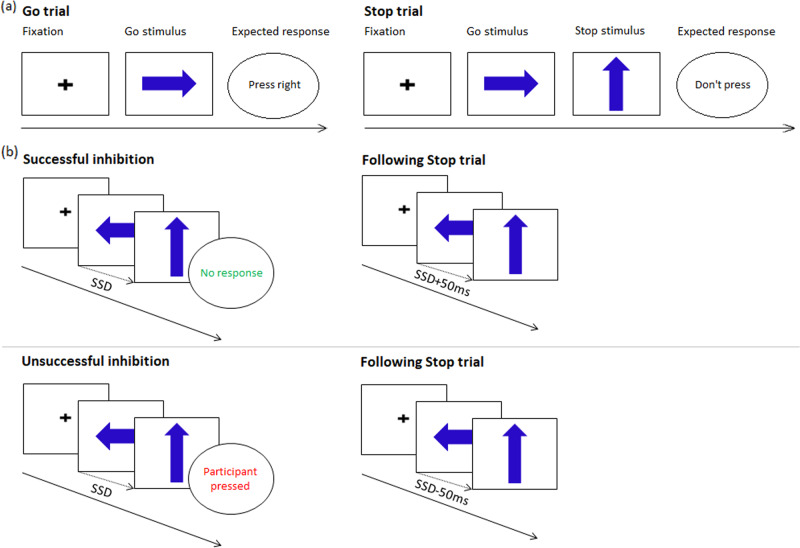
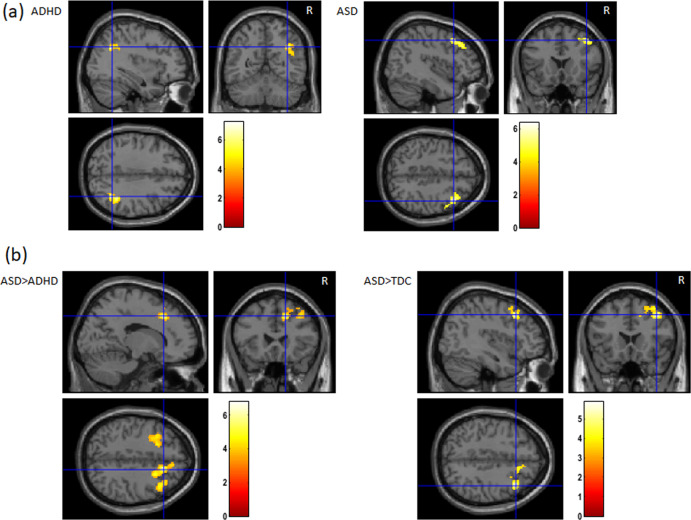
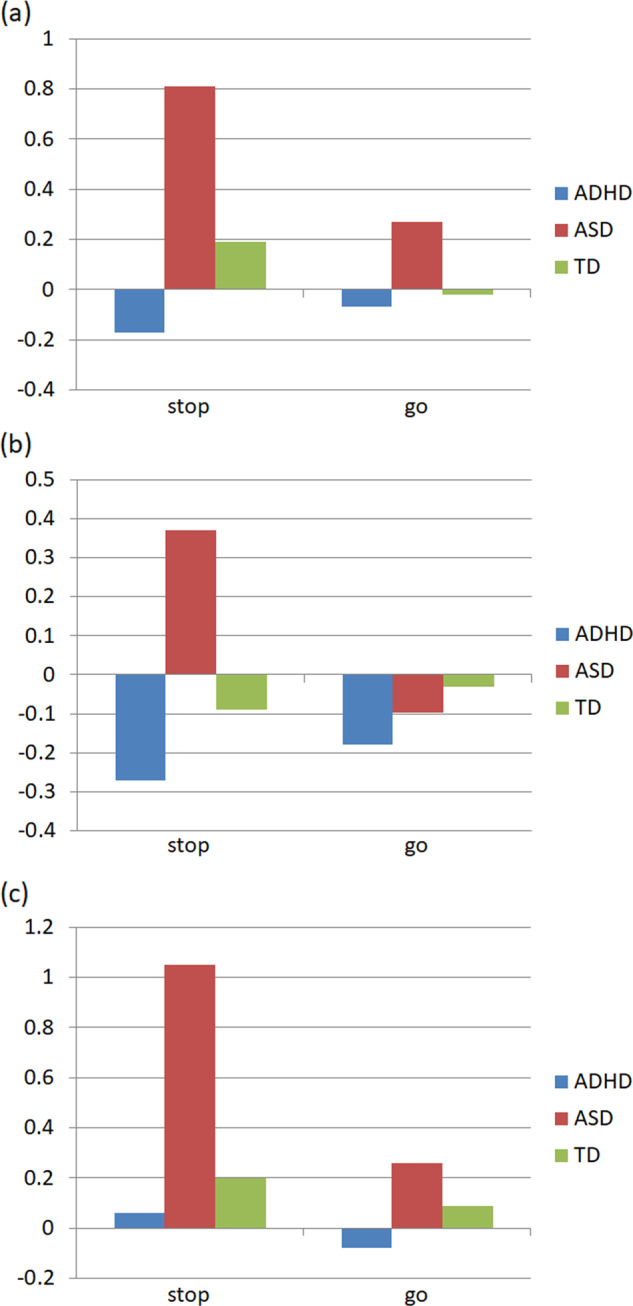
Attention-deficit/hyperactivity (ADHD) and autism spectrum (ASD) disorders often co-occur. In both cases, response inhibition deficits and inhibition-related atypical brain activation have been reported, although less consistently in ASD. Research exploring the overlap/distinctiveness between ADHD and ASD has significantly increased in recent years, but direct comparison of the inhibition-related neuronal correlates between these disorders are scarce in the literature. This study aimed at disentangling the shared and specific inhibitory brain dysfunctions in ASD and ADHD. Using functional magnetic resonance imaging (fMRI), brain activity was compared between children with ADHD, ASD and typically developing (TD) children aged 8–12 years during an inhibition stop-signal task, using stringent inclusion criteria. At the behavioural level, only children with ADHD exhibited inhibition deficits when compared with the TD group. Distinct patterns of brain activity were observed during successful inhibition. In children with ADHD, motor inhibition was associated with right inferior parietal activation, whereas right frontal regions were activated in children with ASD. Between-group comparisons disclosed higher middle frontal activation in the ASD group compared with the ADHD and the TD groups. Our results evidence different patterns of activation during inhibition in these two disorders, recruiting different regions of the fronto-parietal network associated to inhibition. Besides brain activity differences, behavioural inhibition deficits found only in children with ADHD further suggest that reactive inhibition is one of the core deficits in ADHD, but not in ASD. Our findings provide further evidence contributing to disentangle the shared and specific inhibitory dysfunctions in ASD and ADHD.
Overview
The claims and statistics of this paper haven’t been checked yet.
Free: it reads the open-access text and checks the first 5 claims that cite a source we can check. Create a free account to check every claim.
Integrity signals
Registry
Cites
Statistics
Figures
Verification
Claims the paper makes
The claims and statistics of this paper haven’t been checked yet.
Free: it reads the open-access text and checks the first 5 claims that cite a source we can check. Create a free account to check every claim.
Claims other papers make about this one
Each is checked against this paper’s own text: does it say what the citing paper says it does?
The source backs part of the claim, not all of it — or backs it for a different population, condition or comparison.
In the citing paper
“Previous studies found both structural and functional brain abnormalities in ADHD and ASD [15, 16].”
From Confound Controlled Multimodal Neuroimaging Data Fusion and Its Application to Developmental Disorders (2025) · cites this paper as [16]
Experimental — accuracy not yet measured
Self-check
Percentages, sums and reported differences re-computed from the paper’s own numbers.
The self-check needs the paper’s full text.
Citations
Cites
Diagnostic and Statistical Manual of Mental Disorders
American Psychiatric Association (2013) · doi:10.1176/appi.books.9780890425596 · Cited by 116,369
Tzourio-Mazoyer, N., Landeau, B., Papathanassiou, D., Crivello, F., Etard, O., Delcroix, N., Mazoyer, B., & Joliot, M. (2002) · NeuroImage · doi:10.1006/nimg.2001.0978 · Cited by 16,319
KAUFMAN, J., BIRMAHER, B., BRENT, D., RAO, U., FLYNN, C., MORECI, P., WILLIAMSON, D., & RYAN, N. (1997) · Journal of the American Academy of Child & Adolescent Psychiatry · doi:10.1097/00004583-199707000-00021 · Cited by 10,148
Lord, C., Rutter, M., & Le Couteur, A. (1994) · Journal of Autism and Developmental Disorders · doi:10.1007/bf02172145 · Cited by 9,065
Lord, C., Risi, S., Lambrecht, L., Cook, E. H., Leventhal, B. L., DiLavore, P. C., Pickles, A., & Rutter, M. (2000) · Journal of Autism and Developmental Disorders · doi:10.1023/a:1005592401947 · Cited by 7,520
Movement‐Related effects in fMRI time‐series
Friston, K. J., Williams, S., Howard, R., Frackowiak, R. S. J., & Turner, R. (1996) · Magnetic Resonance in Medicine · doi:10.1002/mrm.1910350312 · Cited by 3,774
Statistical Parametric Mapping: The Analysis of Functional Brain Images
Penny, W. D., Friston, K. J., Ashburner, J., Kiebel, S. J., & Thomas, N. (2007) · UCL Discovery (University College London) · Cited by 3,674
On the ability to inhibit thought and action: a theory of an act of control
Logan, G. D., & Cowan, W. B. (1984) · Psychological Review · doi:10.1037/0033-295x.91.3.295 · Cited by 2,590
Toward objective classification of childhood autism: Childhood Autism Rating Scale (CARS)
Schopler, E., Reichler, R. J., DeVellis, R. F., & Daly, K. (1980) · Journal of Autism and Developmental Disorders · doi:10.1007/bf02408436 · Cited by 2,432
Wechsler Intelligence Scale for Children, Fourth Edition
Wechsler, D. (2012) · PsycTESTS Dataset · doi:10.1037/t15174-000 · Cited by 1,577
Research works printed but not linked: 2
- DuPaul G Power T Anastopoulos A Reid R ADHD Rating Scale - IV 1998 New York The Guilford Press
- Logan, G. D. In: Dagenbach, D. & Carr, T. H. (eds). Inhibitory Processes in Attention, Memory and Language. p. 189–239 (Academic Press, San Diego, CA, USA, 1994).
Cited by
Yu, M., Gao, X., Niu, X., Zhang, M., Yang, Z., Han, S., Cheng, J., & Zhang, Y. (2023) · Frontiers in Psychiatry · doi:10.3389/fpsyt.2022.1070142 · Cited by 124
Maron, D., Bowe, S. J., Spencer‐Smith, M. M., Mellahn, O. J., Perrykkad, K., Bellgrove, M. A., & Johnson, B. P. (2021) · Neuroscience & Biobehavioral Reviews · doi:10.1016/j.neubiorev.2021.10.012 · Cited by 63
Gao, X., Zhang, M., Yang, Z., Wen, M., Huang, H., Zheng, R., Wang, W., Wei, Y., Cheng, J., Han, S., et al. (2021) · Frontiers in Psychiatry · doi:10.3389/fpsyt.2021.679437 · Cited by 67
Mengi, M., & Malhotra, D. (2021) · Archives of Computational Methods in Engineering · doi:10.1007/s11831-021-09682-8 · Cited by 48
Dawi, N. M., Kuča, K., Krejcar, O., & Namazi, H. (2021) · Fractals · doi:10.1142/s0218348x21502029 · Cited by 39
Schachar, R. J., Dupuis, A., Arnold, P. D., Anagnostou, E., Kelley, E., Georgiades, S., Nicolson, R., Townes, P., Burton, C. L., & Crosbie, J. (2023) · Research on Child and Adolescent Psychopathology · doi:10.1007/s10802-022-00958-6 · Cited by 30
Hollestein, V., Buitelaar, J. K., Brandeis, D., Banaschewski, T., Kaiser, A., Hohmann, S., Oranje, B., Gooskens, B., Durston, S., Williams, S., et al. (2021) · NeuroImage Clinical · doi:10.1016/j.nicl.2021.102622 · Cited by 31
Schachar, R. J. (2023) · Neuroscience & Biobehavioral Reviews · doi:10.1016/j.neubiorev.2023.105461 · Cited by 34
Sáenz, A. A., Villemonteix, T., Schuerbeek, P. V., Baijot, S., Septier, M., Defresne, P., Delvenne, V., Passeri, G., Raeymaekers, H., Victoor, L., et al. (2021) · Frontiers in Neurology · doi:10.3389/fneur.2021.666980 · Cited by 28
“ADHD is associated with motor inhibition deficits (38, 39) and motor impairments in ADHD are characterised by fidgeting and restlessness, possibly explaining the association between motor impairments and GMV in the superior frontal gyrus found in our study.”
BackgroundSelf-citationDistinct Frontoparietal Brain Dynamics Underlying the Co-Occurrence of Autism and ADHD
Watanabe, D., & Watanabe, T. (2023) · eNeuro · doi:10.1523/eneuro.0146-23.2023 · Cited by 28
“…Chantiluke et al., 2014; Aoki et al., 2017; Dajani et al., 2019; Lake et al., 2019; Lau-Zhu et al., 2019; Yerys et al., 2019b; Boedhoe et al., 2020; Ohta et al., 2020; Sáenz et al., 2020; Harikumar et al., 2021; Curtin et al., 2022; Hansen et al., 2022; Hoogman et al., 2022; Safar et al., 2022).”
Thalamic functional connectivity and sensorimotor processing in neurodevelopmental disorders
Achuthan, S. K., Stavrinos, D., Argueta, P., Vanderburgh, C., Bednarz, H. M., & Kana, R. K. (2023) · Frontiers in Neuroscience · doi:10.3389/fnins.2023.1279909 · Cited by 23
Chu, K., Lu, H.-K., Huang, M.-C., Lin, S.-J., Liu, W., Huang, Y., Hsu, J., & Wang, C.-H. (2020) · JMIR Mental Health · doi:10.2196/12158 · Cited by 16
Doi, H., Kanai, C., & Ohta, H. (2022) · Autism Research · doi:10.1002/aur.2712 · Cited by 15
“Many studies have shown a distinct pattern of neural activation between ASD and ADHD (Albajara S aenz et al., 2020; Doi & Shinohara, 2017; Lau-Zhu et al., 2019).”
BackgroundJiang, D. Q. Y., & Guo, T. L. (2024) · Toxics · doi:10.3390/toxics12010039 · Cited by 14
“It was reported that youths with ASD exhibit comorbidity rates with 71% having ADHD, whereas 12.4% of children with ADHD were reported to display ASD traits [92].”
BackgroundInfluentialYasunaga, M., Miyaguchi, H., Ishizuki, C., Kita, Y., & Nakai, A. (2024) · Children · doi:10.3390/children11080899 · Cited by 14
Pan, L., Liu, J., Shi, M., Wong, C. W., & Chan, K. H. K. (2021) · arXiv (Cornell University) · doi:10.48550/arxiv.2109.09129 · Cited by 14
“This inflexible Euclidean representation of brain imaging did not only ignore the details of regional signals, which are believed to relate to ASD [16, 17, 18, 19], but also omit the latent interaction among the connections.”
Sadat-Nejad, Y., Vandewouw, M. M., Cardy, R. E., Lerch, J. P., Taylor, M. J., Iaboni, A., Hammill, C. F., Syed, B., Brian, J. A., Kelley, E. A., et al. (2023) · Frontiers in Child and Adolescent Psychiatry · doi:10.3389/frcha.2023.1171337 · Cited by 13
“Decreased response inhibition is a well-established neurocognitive feature of ADHD (80), but the fi ndings in autism have been mixed (81).”
Lukito, S., Lam, S.-L., Criaud, M., Westwood, S. J., Kowalczyk, O. S., Curran, S. R., Barrett, N., Abbott, C., Liang, H., Simonoff, E. A., et al. (2024) · Philosophical Transactions of the Royal Society B Biological Sciences · doi:10.1098/rstb.2023.0097 · Cited by 11
Mozhdehfarahbakhsh, A., Moloodi, A., Chakrabarti, P., Rao, K. S. J., Kateb, B., & Nami, M. (2021) · OSF Preprints (OSF Preprints) · doi:10.31219/osf.io/6rksw · Cited by 11
Sun, W., Ma, L., Feng, X., Fan, Y., Cai, Y., & Li, X. (2025) · Psychology Health & Medicine · doi:10.1080/13548506.2025.2565181 · Cited by 11
Lukito, S., O’Daly, O., Lythgoe, D. J., Hodsoll, J. P., Maltezos, S., Pitts, M. E., Simonoff, E. A., & Rubia, K. (2023) · Translational Psychiatry · doi:10.1038/s41398-023-02431-4 · Cited by 11
Achuthan, S. K., Stavrinos, D., Bednarz, H. M., Anteraper, S. A., & Kana, R. K. (2023) · Brain Connectivity · doi:10.1089/brain.2023.0006 · Cited by 9
“ADHD is characterized by symptoms of inattention and/or hyperactivity-impulsivity (Albajara Sa´enz et al., 2020).”
Stop-signal delay reflects response selection duration in stop-signal task
Aksiotis, V., Myachykov, A., & Tumyalis, A. V. (2023) · Attention Perception & Psychophysics · doi:10.3758/s13414-023-02752-y · Cited by 9
Do ADHD and SLD children differ in executive functions and behavioural problems? A comparative study
Sharifi, A., & Asanjarani, F. (2023) · Journal of Research in Special Educational Needs · doi:10.1111/1471-3802.12633 · Cited by 7
Masklavanou, C., Triantafyllou, K., Paparrigopoulos, T. J., Sypsa, V., & Pehlivanidis, A. (2022) · Psychiatriki · doi:10.22365/jpsych.2022.098 · Cited by 11
Bustos-Valenzuela, P., Romeo, A., Boxhoorn, S., Helfer, B., Freitag, C. M., Asherson, P. J., & Supèr, H. (2022) · Psychiatry Research Communications · doi:10.1016/j.psycom.2022.100045 · Cited by 7
Suicide risk with ASD traits or ADHD traits in non-clinical young adults
Sun, Y., Huang, Z., Xu, S., Wang, Y., Wang, J., Chang, L., Li, W., Wang, Y., Qu, D., & Chen, R. (2024) · Humanities and Social Sciences Communications · doi:10.1057/s41599-024-03578-1 · Cited by 8
“…at the cognitive, clinical, and neuropsychological level, for example, shared genetic risk factors (Reiersen et al. 2008; Pol-derman et al. 2014; Ronald et al. 2014), copy number variants (CNVs) (Martin et al. 2014; Williams et al. 2012), or inhibition de fi cits (Albajara Sáenz et al. 2020).”
Cerebral blood flow in attention deficit hyperactivity disorder: A systematic review
Berthier, J., Endomba, F. T., Lecendreux, M., Mauries, S., & Geoffroy, P. A. (2024) · Neuroscience · doi:10.1016/j.neuroscience.2024.11.075 · Cited by 8
Gooskens, B., Bos, D. J., Naaijen, J., Akkermans, S. E. A., Kaiser, A., Hohmann, S., Bruchhage, M. M. K., Banaschewski, T., Brandeis, D., Williams, S., et al. (2021) · Neuroimage Reports · doi:10.1016/j.ynirp.2021.100015 · Cited by 7
BRIEF-P: Trastornos por Déficit de Atención Hiperactividad versus Trastorno del Espectro Autista
Herreras, E. B. (2020) · Revista de Psiquiatría Infanto-Juvenil · doi:10.31766/revpsij.v37n1a3 · Cited by 5
“Las dificultades en las funciones ejecutivas en este trastorno del neurodesarrollo pueden ir vinculados a diferentes dimensiones ejecutivas: inhibición (9) (10), autorregulación (11), memoria de trabajo (12) y flexibilidad cognitiva (13).”
BackgroundJi, J., & Wang, X. (2023) · Applied Soft Computing · doi:10.1016/j.asoc.2023.111049 · Cited by 4
He, W., Liu, W., Mao, M., Cui, X., Yan, T., Xiang, J., Wang, B., & Li, D. (2022) · Journal of Attention Disorders · doi:10.1177/10870547221085505 · Cited by 4
“Some studies also found that some brain regions in TC module of ADHD are abnormal (Albajara Sáenz et al., 2020; Dibbets et al., 2010; Hilger & Fiebach, 2019; Rubia et al., 2019).”
BackgroundKujala, J., Matveinen, S., van Bijnen, S., & Parviainen, T. M. (2024) · Brain and Cognition · doi:10.1016/j.bandc.2024.106220 · Cited by 4
“In other cases, problems in inhibitory control are occasionally observed, and it has been proposed that neural activation patterns could be used to help distinguish, e.g., ADHD from autism spectrum disorder (Albajara S ´ aenz et al., 2020).”
BackgroundThis Is Your Brain on Irritability
Dickstein, D. P., Barthelemy, C. M., Jenkins, G. A., DeYoung, L. L. A., Gilbert, A. C., Radoeva, P. D., Kim, K. L., & MacPherson, H. A. (2021) · Child and Adolescent Psychiatric Clinics of North America · doi:10.1016/j.chc.2021.04.013 · Cited by 5
Muna, N. R., Jatnika, R., Purwono, U., & Siregar, J. R. (2021) · The Open Psychology Journal · doi:10.2174/1874350102114010329 · Cited by 5
Liang, C., Silva, R. F., Adali, T., Jiang, R., Zhang, D., Qi, S., & Calhoun, V. D. (2025) · IEEE Transactions on Image Processing · doi:10.1109/tip.2025.3597045 · Cited by 3
“Previous studies found both structural and functional brain abnormalities in ADHD and ASD [15], [16].”
Daviddi, S., & Santangelo, V. (2025) · European Journal of Neuroscience · doi:10.1111/ejn.70244 · Cited by 3
Attention Deficit Hyperactivity Disorder: Identifying Approaches for Early Diagnosis, a Pilot Study
Lyakso, E. E., Frolova, O. V., Matveev, A., Shabanov, P. D., Aa, L., Nikolaev, A., Kleshnev, E. A., Гречаный, С. В., & Nersisson, R. (2025) · Lecture notes in computer science · doi:10.1007/978-3-032-07956-5_13 · Cited by 3
Boxberger, A., Chen, B., Olson, L., Cordova, M., Mahmalji, J., Ríos, A., Linke, A. C., & Fishman, I. (2025) · Journal of Neurodevelopmental Disorders · doi:10.1186/s11689-025-09650-4 · Cited by 4
“…line with evidence of differential brain function and structure in brain inhibitory circuits observed between children with ASD and ADHD, including unique patterns of brain activation during inhibition tasks [2] and distinct cortical morphology patterns, including cortical thickness and volume [4].”
Chinese Music Therapy and Clinical Music Education in Attention Deficit Hyperactivity Disorder
Mastnak, W. (2022) · MODERN APPLIED MEDICAL RESEARCH · doi:10.36099/mamr.210122 · Cited by 3
Identification of autism spectrum disorder based on MEWISPool and multi-modal learning
Shen, G., Wang, Y., & Geng, X. (2023) · SPIE Medical Imaging: Computer-Aided Diagnosis · doi:10.1117/12.2654488 · Cited by 3
“Although reasonable diagnostic accuracy has been reported in these studies, regional activation signals have been ignored, which are shown to relate to ASD 10-11 .”
BackgroundKatsarou, D. V. (2024) · Advances in psychology, mental health, and behavioral studies (APMHBS) book series · doi:10.4018/979-8-3693-4022-6.ch008 · Cited by 4
Greydanus, D. E., Patel, D. R., & Rowland, D. C. (2021) · Elsevier eBooks · doi:10.1016/b978-0-12-820472-6.00085-2 · Cited by 4
Jeon, S., Kang, J.-E., Hwang, J., Calhoun, V. D., & Lee, J. (2025) · Biological Psychiatry Cognitive Neuroscience and Neuroimaging · doi:10.1016/j.bpsc.2025.06.002 · Cited by 4
Simon, C., Bolton, D. A. E., Meaney, J. F., Kenny, R. A., Simon, V. A., Looze, C. D., Knight, S. P., & Ruddy, K. L. (2024) · European Journal of Neuroscience · doi:10.1111/ejn.16327 · Cited by 2
Yi, X., Huang, J. V., Akinwunmi, B. O., & Ming, W.-K. (2026) · Medical & Biological Engineering & Computing · doi:10.1007/s11517-026-03530-2 · Cited by 1
Application of neurofeedback in autism spectrum disorder: a systematic review and meta-analysis
Alhwaiti, M. (2026) · International Journal of Developmental Disabilities · doi:10.1080/20473869.2026.2651406 · Cited by 1
Artificial Intelligence and Machine Learning in Autism Detection: From Common to Rare Disorders
Gupta, A., & Malhotra, D. (2024) · Lecture notes in networks and systems · doi:10.1007/978-981-97-2550-2_38 · Cited by 1
Cortical Thickness and Curvature in Autism and ADHD: A Mega-AnalysisPreprint
Mahmoudi, M., Moore, L. A., Lundquist, J. T., Stier, A., Anderson, M., Fayzullobekova, B., Hermosillo, R. J. M., Houghton, A., Madison, T. J., McCOLLUM, R. E., et al. (2026) · bioRxiv (Cold Spring Harbor Laboratory) · doi:10.64898/2026.01.05.697782 · Cited by 2
“For example, autistic individuals show greater impairments in visual and sustained attention, while individuals with ADHD often show greater difficulties in auditory attention 6 .”
Sterling, K. (2020) · York University Digital Library (York University)
Rebecchi, K. (2023) · PsyArXiv (OSF Preprints) · doi:10.31234/osf.io/egv2p
Currie, P. (2023) · The Research Repository @ WVU (West Virginia University) · doi:10.33915/etd.11889
“Additionally, the activation of the inferior parietal lobe has been shown to differ across individuals with ADHD and ASD relative to individuals who are typically developing (Sáenz et al., 2020).”
BackgroundThe many faces of control: brain-behavior interactions in development
Gooskens, B. (2024) · Utrecht University Repository (Utrecht University) · doi:10.33540/1183
NEUROBIOLOGICAL FACTORS OF EXECUTIVE DYSFUNCTION IN AUTISM SPECTRUM DISORDERS
Kozunova, G. L., Zakirov, F., Rytikova, A. M., Stroganova, T. A., & Chernyshev, B. (2023) · Журнал высшей нервной деятельности им И П Павлова · doi:10.31857/s0044467723020077
O'Brien, M., & Lee, N. (2024) · iDEA - Drexel University Institutional Repository · doi:10.17918/00001953
Estimating differing causal roles of glutamate and GABA genes on brain and behavior in autism
Hollestein, V., Claassen, T., Naaijen, J., Poelmans, G., Ruisch, I. H., Witte, W. D., Beckmann, C. F., Ecker, C., Baumeister, S., Aggensteiner, P.-M., et al. (2026) · Translational Psychiatry · doi:10.1038/s41398-026-04361-3
Explorations of the E/I imbalance framework of autism
Hollestein, V. (2025) · Radboud University Press eBooks · doi:10.54195/9789465150819
(2025) · Wiley eBooks · doi:10.1002/9781118941430.refs
Cupertino, R. B. (2025) · Biological Psychiatry Cognitive Neuroscience and Neuroimaging · doi:10.1016/j.bpsc.2025.08.003
Roussat, M., Gao, Z., Cai, W., Vaidya, C. J., & Supekar, K. (2025) · bioRxiv (Cold Spring Harbor Laboratory) · doi:10.1101/2025.10.10.681732
Ramos, I. M. (2022) · Portuguese National Funding Agency for Science, Research and Technology (RCAAP Project by FCT) · doi:10.34626/35fg-0q18
Pollé, S., Huizinga, M., Sankalaite, S., Weeda, W. D., & Baeyens, D. (2024) · Lirias · Cited by 1
進化遺伝学的手法によるヒトの神経発達症および精神疾患感受性多型の適応的意義の探索
林, 実. (2025) · Institutional Repositories DataBase (IRDB)
Inhibitory control in children with ADHD, SLD, and comorbid conditions
Rafikhah, M., & Pourmohamad, S. P. (2026) · Child Neuropsychology · doi:10.1080/09297049.2026.2659058 · Cited by 1
“This aligns with prior evidence establishing impaired reactive inhibition, particularly the ability to cancel an already-initiated response, as a core feature of ADHD (Albajara Sáenz et al., 2020; Senderecka et al., 2012).”
Johnson-Constantin, M., François-Sévigny, J., Cimon‐Paquet, C., & Pilon, M. (2026) · Gifted Child Quarterly · doi:10.1177/00169862261448142
Li, Y. D., Feng, Y., Wu, Y., Kong, Q., Zhang, B., Liu, Y., Yu, S., Liu, J., Cao, J., Jeong, P., et al. (2026) · ALPHA PSYCHIATRY · doi:10.31083/ap45940
Li, H., Zhang, M.-J., Zhu, T., Yu, J.-Y., Zhou, J., & Yang, C. (2026) · Frontiers in Psychiatry · doi:10.3389/fpsyt.2026.1843959
Metadata
- Authors
- Albajara Sáenz, A., Septier, M., Van Schuerbeek, P., Baijot, S., Deconinck, N., Defresne, P., Delvenne, V., Passeri, G., Raeymaekers, H., Salvesen, L., Victoor, L., Villemonteix, T., Willaye, E., Peigneux, P., & Massat, I.
- Affiliations
- Inserm (FR)
- Université Libre de Bruxelles (BE)
- Queen Fabiola Children's University Hospital (BE)
- University of Mons (BE)
- Vrije Universiteit Brussel (BE)
- Corresponding author
- Massat, Isabelle
- ORCID
- Venue
- Translational Psychiatry
- Published
- 2020-01-22
- Volume
- 10
- Issue
- 1
- Pages
- 24-24
- ISSN
- 2158-3188 (ISSN-L)
- PMC
- PMC7026183
- OpenAlex
- W3002063081
- Semantic Scholar
- a7b7a0e422a9d57461170c142e79a6c8745b0636
- Cited by
- 62
- References
- 51
- Citations by year
- 2026: 7 · 2025: 10 · 2024: 10 · 2023: 14 · 2022: 6 · 2021: 12 · 2020: 3
- FWCI
- 6.38
- Type
- journal article
- Language
- en
- Open access
- gold
- doi.org
- Licence
- cc-by
- creativecommons.org/licenses/by/4.0 (tdm)
- creativecommons.org/licenses/by/4.0 (vor)
- Locations
- Translational Psychiatry (publishedVersion, cc-by)
- PubMed Central (publishedVersion, cc-by)
- PubMed (publishedVersion)
- HAL (submittedVersion, other-oa)
- Dépôt institutionnel de l'Université libre de Bruxelles (Université Libre de Bruxelles) (submittedVersion, other-oa)
- VUBIR (Vrije Universiteit Brussel) (submittedVersion)
- Funders
- Universitaire Stichting
- Fonds Erasme
- Fonds De La Recherche Scientifique - FNRS
- Topics
- Health Sciences › Medicine › Psychiatry and Mental health › Attention Deficit Hyperactivity Disorder
- Life Sciences › Neuroscience › Cognitive Neuroscience › Autism Spectrum Disorder Research
- Life Sciences › Neuroscience › Cognitive Neuroscience › Neural and Behavioral Psychology Studies
- Keywords
- attention deficit hyperactivity disorder, autism spectrum disorder, response inhibition, stop-signal task, motor inhibition, frontoparietal network, inferior parietal cortex, frontal cortex activation, children, inhibitory dysfunction, comorbidities
- MeSH terms
- Autism Spectrum Disorder, Attention Deficit Disorder with Hyperactivity, Brain, Brain Mapping, Child, Humans, Inhibition, Psychological, Magnetic Resonance Imaging
About these checks
Registry, retraction, Cites and statistics results are computed, not judged, with one exception: a printed reference that no index lists is read once by a model before it counts as a citation error. Claims are extracted by a model and kept only when their quote appears verbatim in the text; each cited source is then checked, with a model’s help, for whether it says what the claim relies on. Those verdicts can be wrong — read the claim’s quote and the cited source before relying on one.
Statistics and arithmetic are recomputed, not judged.
Confidence bands are shown only for fields calibrated on our annotated test set. None is calibrated yet, so no band is shown.
What counts as a claim ›How we measure confidence ›How we check this ›
Are you an author, or do you see a problem with this page? Request a review
Data sources
Bibliographic data: Semantic Scholar, OpenAlex, Crossref.
Contains information from the Semantic Scholar Academic Graph Datasets, made available under the ODC Attribution License (ODC-BY 1.0).
Semantic Scholar’s data is described in: Kinney, R., et al. (2023). The Semantic Scholar Open Data Platform. arXiv:2301.10140.
