

Essential role of microglial transforming growth factor-β1 in antidepressant actions of (R)-ketamine and the novel antidepressant TGF-β1
Open accessThe DOI matches its Crossref record; 63 of the 63 references it cites were found in a registry or an index.
Abstract
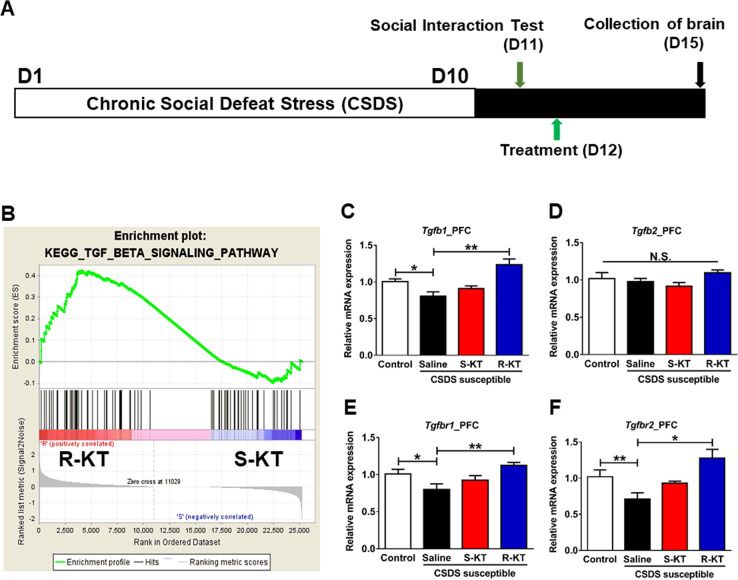
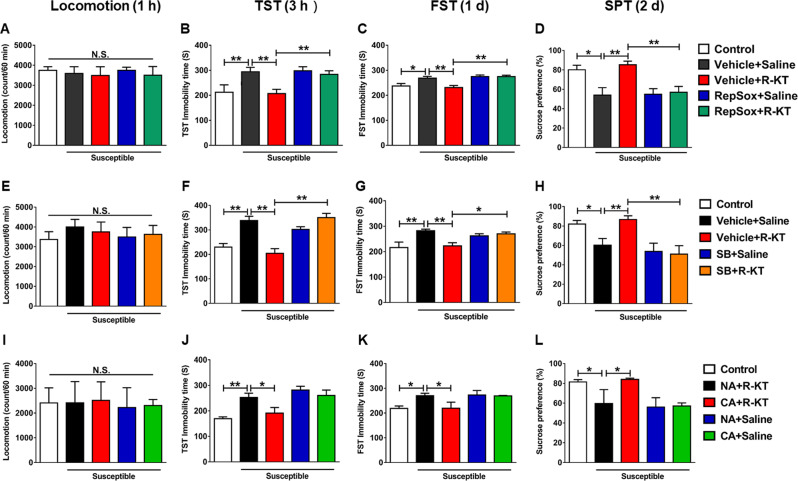
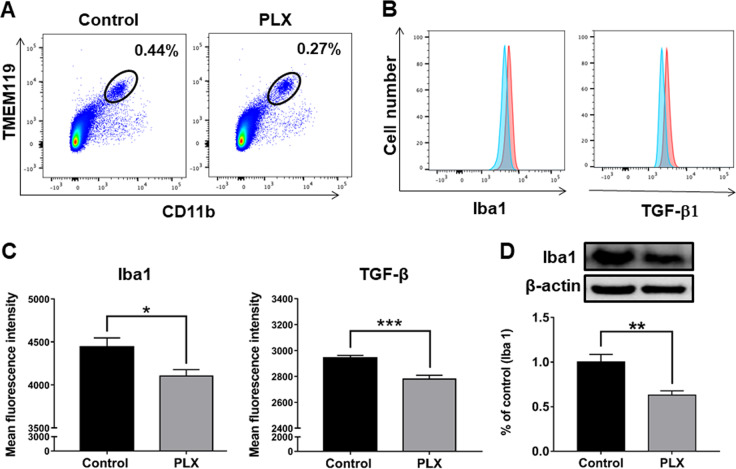
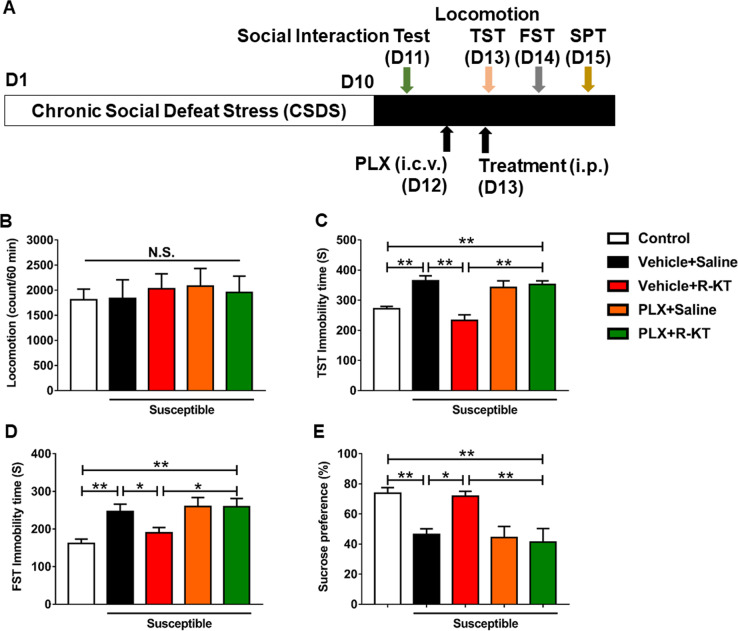
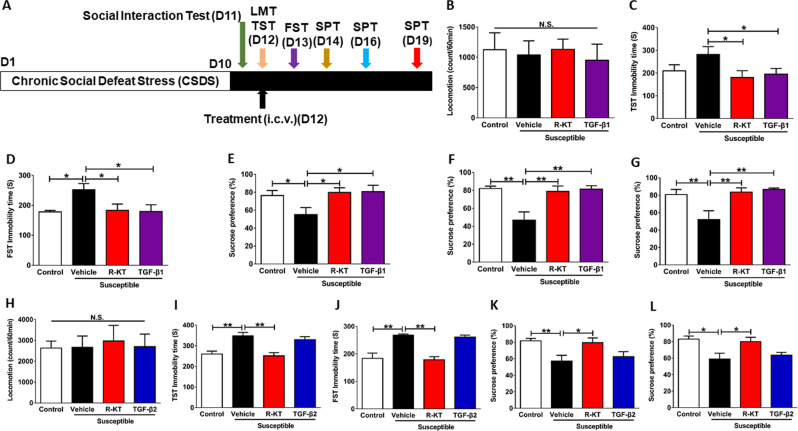
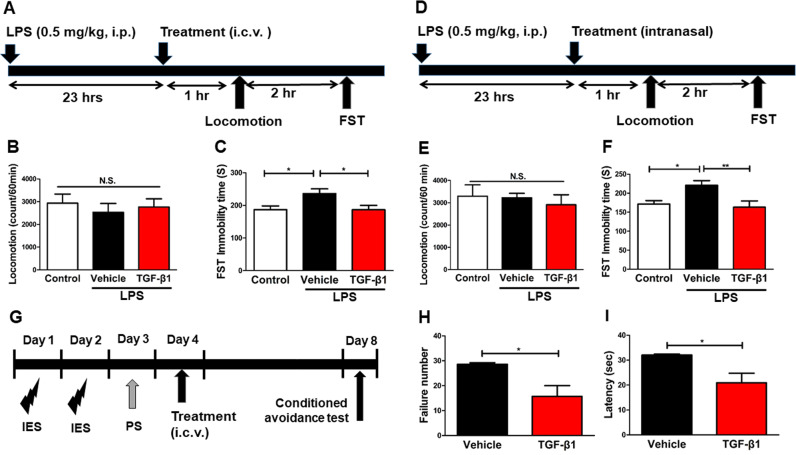
In rodent models of depression, (R)-ketamine has greater potency and longer-lasting antidepressant effects than (S)-ketamine; however, the precise molecular mechanisms underlying the antidepressant actions of (R)-ketamine remain unknown. Using RNA-sequencing analysis, we identified novel molecular targets that contribute to the different antidepressant effects of the two enantiomers. Either (R)-ketamine (10 mg/kg) or (S)-ketamine (10 mg/kg) was administered to susceptible mice after chronic social defeat stress (CSDS). RNA-sequencing analysis of prefrontal cortex (PFC) and subsequent GSEA (gene set enrichment analysis) revealed that transforming growth factor (TGF)-β signaling might contribute to the different antidepressant effects of the two enantiomers. (R)-ketamine, but not (S)-ketamine, ameliorated the reduced expressions of Tgfb1 and its receptors (Tgfbr1 and Tgfbr2) in the PFC and hippocampus of CSDS susceptible mice. Either pharmacological inhibitors (i.e., RepSox and SB431542) or neutralizing antibody of TGF-β1 blocked the antidepressant effects of (R)-ketamine in CSDS susceptible mice. Moreover, depletion of microglia by the colony-stimulating factor 1 receptor (CSF1R) inhibitor PLX3397 blocked the antidepressant effects of (R)-ketamine in CSDS susceptible mice. Similar to (R)-ketamine, the recombinant TGF-β1 elicited rapid and long-lasting antidepressant effects in animal models of depression. Our data implicate a novel microglial TGF-β1-dependent mechanism underlying the antidepressant effects of (R)-ketamine in rodents with depression-like phenotype. Moreover, TGF-β1 and its receptor agonists would likely constitute a novel rapid-acting and sustained antidepressant in humans.
Overview
The claims and statistics of this paper haven’t been checked yet.
Free: it reads the open-access text and checks the first 5 claims that cite a source we can check. Create a free account to check every claim.
Integrity signals
Registry
Cites
Statistics
Figures
Verification
Claims the paper makes
The claims and statistics of this paper haven’t been checked yet.
Free: it reads the open-access text and checks the first 5 claims that cite a source we can check. Create a free account to check every claim.
Claims other papers make about this one
Each is checked against this paper’s own text: does it say what the citing paper says it does?
The cited source says what the claim attributes to it.
In the citing paper
“Zhang and colleagues reported that administering neutralizing antibodies to TGF-β1 blocked the antidepressant effects of (R)-ketamine in chronic social defeat stress mouse models (178).”
From Chronic stress, neuroinflammation, and depression: an overview of pathophysiological mechanisms and emerging anti-inflammatories (2023) · cites this paper as [178]
The cited source says what the claim attributes to it.
In the citing paper
“Moreover, a growing body of research suggests that the antidepressant effects underlying r-ketamine are dependent on microglial TGFβ1.”
From Chronic stress, neuroinflammation, and depression: an overview of pathophysiological mechanisms and emerging anti-inflammatories (2023) · cites this paper as [178]
Self-check
Percentages, sums and reported differences re-computed from the paper’s own numbers.
The self-check needs the paper’s full text.
Citations
Cites
Antidepressant effects of ketamine in depressed patients
Berman, R. M., Cappiello, A., Anand, A., Oren, D. A., Heninger, G. R., Charney, D. S., & Krystal, J. H. (2000) · Biological Psychiatry · doi:10.1016/s0006-3223(99)00230-9 · Cited by 3,856
A randomized trial of an N-methyl-D-aspartate antagonist in treatment-resistant major depression.
Zarate, C. A., Singh, J. B., Carlson, P. J., Brutsche, N. E., Ameli, R., Luckenbaugh, D. A., Charney, D. S., & Manji, H. K. (2006) · Archives of General Psychiatry · doi:10.1001/archpsyc.63.8.856 · Cited by 3,766
Identification of a unique TGF-β–dependent molecular and functional signature in microglia
Butovsky, O., Jedrychowski, M. P., Moore, C. S., Cialic, R., Lanser, A. J., Gabriely, G., Koeglsperger, T., Dake, B., Wu, P. M., Doykan, C. E., et al. (2014) · Nature Neuroscience · doi:10.1038/nn.3599 · Cited by 2,543
Elmore, M. R. P., Najafi, A. R., Koike, M. A., Dagher, N. N., Spangenberg, E. E., Rice, R. A., Kitazawa, M., Matusow, B., Nguyen, H., West, B. L., et al. (2014) · Neuron · doi:10.1016/j.neuron.2014.02.040 · Cited by 1,968
NMDAR inhibition-independent antidepressant actions of ketamine metabolites
Zanos, P., Moaddel, R., Morris, P. J., Georgiou, P., Fischell, J., Elmer, G. I., Alkondon, M., Yuan, P., Pribut, H. J., Singh, N. S., et al. (2016) · Nature · doi:10.1038/nature17998 · Cited by 1,609
A standardized protocol for repeated social defeat stress in mice
Golden, S. A., Covington, H. E., Berton, O., & Russo, S. J. (2011) · Nature Protocols · doi:10.1038/nprot.2011.361 · Cited by 1,581
Ketamine and Ketamine Metabolite Pharmacology: Insights into Therapeutic Mechanisms
Zanos, P., Moaddel, R., Morris, P. J., Riggs, L. M., Highland, J. N., Georgiou, P., Pereira, E. F. R., Albuquerque, E. X., Thomas, C. J., Zarate, C. A., et al. (2018) · Pharmacological Reviews · doi:10.1124/pr.117.015198 · Cited by 1,260
Murrough, J. W., Iosifescu, D. V., Chang, L. C., Al Jurdi, R. K., Green, C. E., Perez, A. M., Iqbal, S., Pillemer, S., Foulkes, A., Shah, A., et al. (2013) · American Journal of Psychiatry · doi:10.1176/appi.ajp.2013.13030392 · Cited by 1,205
Self-citationSocial stress induces neurovascular pathology promoting depression
Menard, C., Pfau, M. L., Hodes, G. E., Kana, V., Wang, V. X., Bouchard, S., Takahashi, A., Flanigan, M. E., Aleyasin, H., LeClair, K. B., et al. (2017) · Nature Neuroscience · doi:10.1038/s41593-017-0010-3 · Cited by 1,028
Diazgranados, N., Ibrahim, L., Brutsche, N. E., Newberg, A., Kronstein, P., Khalife, S., Kammerer, W. A., Quezado, Z., Luckenbaugh, D. A., Salvadore, G., et al. (2010) · Archives of General Psychiatry · doi:10.1001/archgenpsychiatry.2010.90 · Cited by 963
Cited by
Microglia in depression: an overview of microglia in the pathogenesis and treatment of depression
Wang, H., He, Y., Sun, Z., Ren, S., Liu, M., Wang, G., & Yang, J. (2022) · Journal of Neuroinflammation · doi:10.1186/s12974-022-02492-0 · Cited by 571
“Partial depletion of microglia with PLX3397 blocked the rapid and sustained antidepressant effects of (R)-ketamine (an isomer of ketamine), suggesting that antidepressant effects of ketamine may be partly attributed to microglial activation [161].”
BackgroundHassamal, S. (2023) · Frontiers in Psychiatry · doi:10.3389/fpsyt.2023.1130989 · Cited by 578
“Zhang and colleagues reported that administering neutralizing antibodies to TGF-β1 blocked the antidepressant effects of (R)-ketamine in chronic social defeat stress mouse models (178).”
BackgroundBrain–gut–microbiota axis in depression: A historical overview and future directions
Chang, L., Wei, Y., & Hashimoto, K. (2022) · Brain Research Bulletin · doi:10.1016/j.brainresbull.2022.02.004 · Cited by 377
Self-citationMicroglia in depression: current perspectives
Jia, X., Gao, Z., & Hu, H. (2021) · Science China Life Sciences · doi:10.1007/s11427-020-1815-6 · Cited by 282
“…both the rapid (within 3 hours) and sustained (up to 2 days) antidepressant effects of (R)-ketamine, an isomer of ketamine with potent antidepressant effects, suggesting that the antidepressant effects of ketamine may be partly attributed to microglia-related mechanisms (Zhang et al., 2020).”
BackgroundKetamine: A tale of two enantiomers
Jelen, L. A., Young, A. H., & Stone, J. M. (2021) · Journal of Psychopharmacology · doi:10.1177/0269881120959644 · Cited by 246
“…have demonstrated increases in cAMP through translocation of Gαs from lipid raft domains into non-raft regions, augmenting interaction between Gαs and adenylyl cyclase, following administration of various classes of antidepressants (Czysz et al., 2015; Toki et al., 1999; Zhang and Rasenick, 2010).”
BackgroundMolecular mechanisms underlying the antidepressant actions of arketamine: beyond the NMDA receptor
Wei, Y., Chang, L., & Hashimoto, K. (2022) · Molecular Psychiatry · doi:10.1038/s41380-021-01121-1 · Cited by 248
Self-citationMolecular mechanisms of the rapid-acting and long-lasting antidepressant actions of (R)-ketamine
Hashimoto, K. (2020) · Biochemical Pharmacology · doi:10.1016/j.bcp.2020.113935 · Cited by 236
Self-citationMicroglial ERK-NRBP1-CREB-BDNF Signaling in Sustained Antidepressant Actions of (R)-Ketamine
Yao, W., Cao, Q., Luo, S., He, L., Yang, C., Chen, J., Qi, Q., Hashimoto, K., & Zhang, J.-C. (2022) · Molecular Psychiatry · doi:10.1038/s41380-021-01377-7 · Cited by 216
“We found that partial depletion of microglia in the mPFC by PLX3397 blocked antidepressant-like effects of (R)-ketamine in CSDS susceptible mice, consistent with recent report [64].”
BackgroundMethodResultSelf-citationWang, S., Ishima, T., Zhang, J., Qu, Y., Chang, L., Pu, Y., Fujita, Y., Tan, Y., Wang, X., & Hashimoto, K. (2020) · Journal of Neuroinflammation · doi:10.1186/s12974-020-01916-z · Cited by 171
Self-citationA historical review of antidepressant effects of ketamine and its enantiomers
Wei, Y., Chang, L., & Hashimoto, K. (2020) · Pharmacology Biochemistry and Behavior · doi:10.1016/j.pbb.2020.172870 · Cited by 157
Self-citationThe molecular pathophysiology of depression and the new therapeutics
Tian, H., Hu, Z., Xu, J., & Wang, C. (2022) · MedComm · doi:10.1002/mco2.156 · Cited by 122
The antidepressant actions of ketamine and its enantiomers
Johnston, J. N., Henter, I. D., & Zarate, C. A. (2023) · Pharmacology & Therapeutics · doi:10.1016/j.pharmthera.2023.108431 · Cited by 108
Arketamine, a new rapid-acting antidepressant: A historical review and future directions
Zhang, J.-C., Yao, W., & Hashimoto, K. (2022) · Neuropharmacology · doi:10.1016/j.neuropharm.2022.109219 · Cited by 99
“Collectively, it is likely that arketamine would be a new rapid-acting antidepressant without the side effects of esketamine (Hashimoto, 2016b, 2019, 2020a; Yang et al., 2019; Wei et al., 2020, 2022a; Zhang and Hashimoto, 2019a).”
InfluentialSelf-citationXu, X., Xiao, X., Yan, Y., & Zhang, T. (2021) · Brain, Behavior, and Immunity · doi:10.1016/j.bbi.2021.02.026 · Cited by 74
Wen, Y., Xu, J., Shen, J., Tang, Z., Li, S., Zhang, Q., Li, J., & Sun, J. (2024) · Molecular Neurobiology · doi:10.1007/s12035-023-03860-4 · Cited by 79
Ketamine and its metabolites: Potential as novel treatments for depression
Zhang, K., Yao, Y., & Hashimoto, K. (2022) · Neuropharmacology · doi:10.1016/j.neuropharm.2022.109305 · Cited by 72
Self-citationWang, X., Chang, L., Wan, X., Tan, Y., Qu, Y., Shan, J., Yang, Y., Ma, L., & Hashimoto, K. (2022) · Neurobiology of Disease · doi:10.1016/j.nbd.2022.105635 · Cited by 64
Self-citationInflammation, stress and depression: An exploration of ketamine’s therapeutic profile
Johnston, J. N., Greenwald, M. S., Henter, I. D., Kraus, C., Mkrtchian, A., Clark, N. G., Park, L. T., Gold, P. W., Zarate, C. A., & Kadriu, B. (2023) · Drug Discovery Today · doi:10.1016/j.drudis.2023.103518 · Cited by 80
(R)-ketamine as prophylactic and therapeutic drug for neurological disorders: Beyond depression
Wang, X., Yang, J., & Hashimoto, K. (2022) · Neuroscience & Biobehavioral Reviews · doi:10.1016/j.neubiorev.2022.104762 · Cited by 63
“A study using RNA-sequencing analysis showed that transforming growth factor β1 (TGF-β1) was involved in the antidepressant-like effects of (R)-ketamine compared with (S)-ketamine in rodents (Wei et al., 2022; Zhang et al., 2020).”
BackgroundSelf-citationGuerrera, C. S., Furneri, G., Grasso, M., Caruso, G., Castellano, S., Drago, F., Di Nuovo, S., & Caraci, F. (2020) · Frontiers in Psychology · doi:10.3389/fpsyg.2020.00857 · Cited by 58
“Recent studies have demonstrated the rapid and long-lasting antidepressant effects of TGF-β1 as well as the key role of TGF-β1 released from microglia in mediating the antidepressant activity of (R)-ketamine (10 mg/kg) in a mouse model of depression (Zhang et al., 2020).”
BackgroundVekhova, K. A., Namiot, E. D., Jonsson, J., & Schiöth, H. B. (2024) · Clinical Pharmacology & Therapeutics · doi:10.1002/cpt.3478 · Cited by 71
Stress, pain, anxiety, and depression in endometriosis–Targeting glial activation and inflammation
Mokhtari, T., Irandoost, E., & Sheikhbahaei, F. (2024) · International Immunopharmacology · doi:10.1016/j.intimp.2024.111942 · Cited by 69
Chen, T., Cheng, L., Ma, J., Yuan, J., Pi, C., Xiong, L., Chen, J., Liu, H., Tang, J., Zhong, Y., et al. (2023) · Pharmacological Research · doi:10.1016/j.phrs.2023.106837 · Cited by 52
Hashimoto, K. (2024) · European Archives of Psychiatry and Clinical Neuroscience · doi:10.1007/s00406-024-01770-7 · Cited by 63
Self-citationMa, L., Zhang, J., Fujita, Y., Qu, Y., Shan, J., Wan, X., Wang, X., Ishima, T., Kobayashi, K., Wang, L., et al. (2022) · Translational Psychiatry · doi:10.1038/s41398-022-01803-6 · Cited by 57
Self-citationHuang, C., Wu, Z., Wang, D., Qu, Y., Zhang, J., Jiang, R., Xu, X., Xu, X., Wang, Y., Liu, H., et al. (2023) · Molecular Psychiatry · doi:10.1038/s41380-023-02288-5 · Cited by 55
“The drug doses used in this study were selected according to previous studies [5, 19, 22].”
Self-citationDeyama, S., & Kaneda, K. (2022) · Neuropharmacology · doi:10.1016/j.neuropharm.2022.109335 · Cited by 49
Ma, L., Wang, L., Chang, L., Shan, J., Qu, Y., Wang, X., Wan, X., Fujita, Y., & Hashimoto, K. (2022) · Translational Psychiatry · doi:10.1038/s41398-022-02192-6 · Cited by 45
“TGF-β1 binds to TGFBR1 (transforming growth factor beta receptor 1) and TGFBR2 (transforming growth factor beta receptor 2) [32].”
BackgroundSelf-citationThe role of immunomodulators in treatment-resistant depression: case studies
Beckett, C. W., & Niklison-Chirou, M. V. (2022) · Cell Death Discovery · doi:10.1038/s41420-022-01147-6 · Cited by 45
Qu, Y., Chang, L., Ma, L., Wan, X., & Hashimoto, K. (2022) · Pharmacology Biochemistry and Behavior · doi:10.1016/j.pbb.2022.173500 · Cited by 48
Self-citationMurayama, R., Cai, Y., Nakamura, H., & Hashimoto, K. (2025) · Neuroscience & Biobehavioral Reviews · doi:10.1016/j.neubiorev.2025.106209 · Cited by 45
“Together, TGF-β 1 appears to play a crucial role in the antidepressant and beneficial effects of arketamine across several models of demyelination (D. Xu et al., 2024; Zhang et al., 2020; Zhao et al., 2024; Zhu et al., 2025).”
Self-citationTGF-β Signaling in Microglia: A Key Regulator of Development, Homeostasis and Reactivity
Li, L., Sun, B., Harris, O. A., & Luo, J. (2024) · Biomedicines · doi:10.3390/biomedicines12112468 · Cited by 38
Hashimoto, K., Zhao, M., Zhu, T., Wang, X., & Yang, J. (2024) · Journal of Anesthesia and Translational Medicine · doi:10.1016/j.jatmed.2024.07.001 · Cited by 43
“121,122 Intriguingly, the TrkB antagonist ANA-12 blocked the antidepressant effects of TGF-β1 in a CSDS model.”
Self-citationXiong, Z., Chang, L., Qu, Y., Pu, Y., Wang, S., Fujita, Y., Ishima, T., Chen, J., & Hashimoto, K. (2020) · Pharmacology Biochemistry and Behavior · doi:10.1016/j.pbb.2020.172904 · Cited by 41
Self-citationGan, S.-L., Long, Y.-Q., Wang, Q., Feng, C.-D., Lai, C.-X., Liu, C., Ding, Y.-Y., Liu, H., Peng, K., & Ji, F. (2023) · Frontiers in Psychiatry · doi:10.3389/fpsyt.2023.1128406 · Cited by 37
“Preclinical studies suggested that those side effects of ketamine may be attributed to S-ketamine, but not R-ketamine (7, 13).”
BackgroundInfluentialScotton, E., Antqueviezc, B., Vasconcelos, M., Dalpiaz, G., Géa, L. P., Goularte, J. F., Colombo, R., & Rosa, A. R. (2022) · Biochemical Pharmacology · doi:10.1016/j.bcp.2022.114963 · Cited by 40
Drug repositioning for treatment-resistant depression: Hypotheses from a pharmacogenomic study
Fabbri, C., Kasper, S., Zohar, J., Souery, D., Montgomery, S., Albani, D., Forloni, G., Ferentinos, P. P., Rujescu, D., Mendlewicz, J., et al. (2020) · Progress in Neuro-Psychopharmacology and Biological Psychiatry · doi:10.1016/j.pnpbp.2020.110050 · Cited by 39
Yang, Y. H., Ishima, T., Wan, X., Wei, Y., Chang, L., Zhang, J., Qu, Y., & Hashimoto, K. (2021) · European Archives of Psychiatry and Clinical Neuroscience · doi:10.1007/s00406-021-01325-0 · Cited by 33
Self-citationDu, W. J., Wang, J., Kuo, T., Wang, L., McKimpson, W. M., Son, J., Watanabe, H., Kitamoto, T., Lee, Y., Creusot, R. J., et al. (2022) · Journal of Clinical Investigation · doi:10.1172/jci162720 · Cited by 37
Molecular, Circuit, and Stress Response Characterization of Ventral Pallidum Npas1-Neurons
Morais‐Silva, G., Campbell, R. R., Nam, H., Basu, M., Pagliusi, M., Fox, M. E., Chan, C. S., Iñiguez, S. D., Ament, S. A., Cramer, N., et al. (2022) · Journal of Neuroscience · doi:10.1523/jneurosci.0971-22.2022 · Cited by 37
Wei, Y., Chang, L., & Hashimoto, K. (2021) · European Neuropsychopharmacology · doi:10.1016/j.euroneuro.2021.04.010 · Cited by 30
Self-citationMicroglia Sing the Prelude of Neuroinflammation-Associated Depression
Li, Q., Xie, Y., Lin, J., Li, M., Gu, Z., Xin, T., Zhang, Y., Lu, Q., Guo, Y., Xing, Y., et al. (2024) · Molecular Neurobiology · doi:10.1007/s12035-024-04575-w · Cited by 33
“…a blocker of NMDA receptors at glutamate receptors in the brain, can rapidly improve depressive symptoms and suicidal ideation within hours after a single dose, and its antidepressant action may be mediated by microglial production of QUIN [128, 134], the BDNF pathway [135], and TGF-β1 [136].”
miR-98-5p plays a critical role in depression and antidepressant effect of ketamine
Huang, C., Wang, Y. Y., Wu, Z., Xu, J., Zhou, L., Wang, D., Yang, L., Zhu, B., Chen, G., Liu, C., et al. (2021) · Translational Psychiatry · doi:10.1038/s41398-021-01588-0 · Cited by 30
“The dose was selected as reported previously [3, 15].”
MethodSelf-citationChaki, S., & Watanabe, M. (2022) · Neuropharmacology · doi:10.1016/j.neuropharm.2022.109348 · Cited by 30
An integrative view on the cell-type-specific mechanisms of ketamine's antidepressant actions
Lewis, V., Rurak, G. M., Salmaso, N., & Aguilar‐Valles, A. (2024) · Trends in Neurosciences · doi:10.1016/j.tins.2023.12.004 · Cited by 33
Linking depression and neuroinflammation: Crosstalk between glial cells
Yang, X., Wang, H., Wang, Z.-Z., & Chen, N. (2025) · European Journal of Pharmacology · doi:10.1016/j.ejphar.2025.177408 · Cited by 30
VanderZwaag, J., Halvorson, T., Dolhan, K., Šimončičová, E., Ben‐Azu, B., & Tremblay, M. (2022) · Neurochemical Research · doi:10.1007/s11064-022-03772-0 · Cited by 30
Ma, L., Wang, L., Qu, Y., Wan, X., & Hashimoto, K. (2023) · Translational Psychiatry · doi:10.1038/s41398-023-02564-6 · Cited by 28
Self-citationChang, L., Wei, Y., Qu, Y., Zhao, M., Zhou, X., Long, Y., & Hashimoto, K. (2024) · Neurobiology of Disease · doi:10.1016/j.nbd.2024.106573 · Cited by 27
Self-citationRepurposing of pexidartinib for microglia depletion and renewal
Weyer, M.-P., Strehle, J., Schäfer, M. K. E., & Tegeder, I. (2023) · Pharmacology & Therapeutics · doi:10.1016/j.pharmthera.2023.108565 · Cited by 25
Xu, D., Liu, G., Zhao, M., Wan, X., Qu, Y., Murayama, R., & Hashimoto, K. (2024) · Journal of Affective Disorders · doi:10.1016/j.jad.2024.08.222 · Cited by 23
Self-citationMicroglia as a Hub for Suicide Neuropathology: Future Investigation and Prevention Targets
de Andrade, E. G., Ibáñez, F. G., & Tremblay, M. (2022) · Frontiers in Cellular Neuroscience · doi:10.3389/fncel.2022.839396 · Cited by 22
New investigational agents for the treatment of major depressive disorder
Pochwat, B., Krupa, A. J., Siwek, M., & Szewczyk, B. (2022) · Expert Opinion on Investigational Drugs · doi:10.1080/13543784.2022.2113376 · Cited by 23
“(TGF-β1 factor) in the mechanism of action of (R)-ketamine [42].”
BackgroundThe role and mechanism of TGF-β1 in the antidepressant-like effects of tetrahydrocurcumin
Yang, Y. W., Yang, J., Ma, T., Yang, X., Yuan, Y., & Guo, Y. (2023) · European Journal of Pharmacology · doi:10.1016/j.ejphar.2023.176075 · Cited by 22
Tan, Y., Fujita, Y., Pu, Y., Chang, L., Qu, Y., Wang, X., & Hashimoto, K. (2022) · European Archives of Psychiatry and Clinical Neuroscience · doi:10.1007/s00406-021-01365-6 · Cited by 22
Self-citationApplication of Small Molecules in the Central Nervous System Direct Neuronal Reprogramming
Wang, J., Chen, S., Pan, C., Li, G., & Tang, Z. (2022) · Frontiers in Bioengineering and Biotechnology · doi:10.3389/fbioe.2022.799152 · Cited by 20
Ketamine, benzoate, and sarcosine for treating depression
Cheng, Y., Lin, C., & Lane, H. (2022) · Neuropharmacology · doi:10.1016/j.neuropharm.2022.109351 · Cited by 21
Quintanilla, B., Zarate, C. A., & Pillai, A. (2024) · Molecular Psychiatry · doi:10.1038/s41380-024-02507-7 · Cited by 23
Ni, R., 四川大学华西医院精神卫生中心和精神医学研究室, 四. 成. 6., Wang, Y., Gao, T.-H., Wang, Q., Wei, J., Zhao, L., Ma, Y.-R., Ma, X., Li, T., et al. (2023) · 动物学研究 · doi:10.24272/j.issn.2095-8137.2022.389 · Cited by 19
Liu, G., Ma, L., Qu, Y., Wan, X., Xu, D., Zhao, M., Murayama, R., & Hashimoto, K. (2023) · Pharmacology Biochemistry and Behavior · doi:10.1016/j.pbb.2023.173659 · Cited by 19
Self-citationPang, L., Cui, M., Dai, W., Kong, J., Chen, H., & Wu, S. (2020) · Frontiers in Pharmacology · doi:10.3389/fphar.2020.586104 · Cited by 19
“…is affected by baseline inflammation levels, metabolic pathway activation levels (Ionescu et al., 2014; Zhou et al., 2020), immune status (Zhang et al., 2020), baseline depression levels (Pal et al., 2015; Stoker et al., 2019), baseline functional connectivity of the brain (Li et al.,…”
BackgroundThe role of NMDARs in the anesthetic and antidepressant effects of ketamine
Zhou, L., & Duan, J. (2023) · CNS Neuroscience & Therapeutics · doi:10.1111/cns.14464 · Cited by 17
Zhao, M., Zhu, T., Xu, D., Wan, X., Liu, G., Murayama, R., Cai, Y., Yue, Y., Wang, X.-M., Yang, J., et al. (2024) · European Journal of Pharmacology · doi:10.1016/j.ejphar.2024.177096 · Cited by 17
Self-citationMicroglial BDNF modulates arketamine’s antidepressant-like effects through cortico-accumbal pathways
He, L., Wang, X., Luo, S., Jiang, N., Yan, Y., Xie, M., Chen, Y., Yang, C., Yao, W., Hashimoto, K., et al. (2025) · Science Advances · doi:10.1126/sciadv.adv5986 · Cited by 18
Self-citationExploring the multifaceted potential of (R)-ketamine beyond antidepressant applications
Zhang, S., Pu, Y., Liu, J., Li, L., An, C., Wu, Y., Zhang, W., Zhang, W., Qu, S., & Yan, W. (2024) · Frontiers in Pharmacology · doi:10.3389/fphar.2024.1337749 · Cited by 18
Self-citationMa, L., Eguchi, A., Liu, G., Qu, Y., Wan, X., Murayama, R., Mori, C., & Hashimoto, K. (2024) · Pharmacology Biochemistry and Behavior · doi:10.1016/j.pbb.2024.173736 · Cited by 12
Self-citationDon’t know what you got till it’s gone: microglial depletion and neurodegeneration
Graykowski, D. R., & Cudaback, E. (2021) · Neural Regeneration Research · doi:10.4103/1673-5374.308078 · Cited by 14
“…has been generated from models of stroke (Szalay et al., 2016; Otxoa-de-Amezaga et al., 2019), depression (Cai et al., 2020; Wang et al., 2020b; Zhang et al., 2020), epilepsy (Feng et al., 2019; Liu et al., 2020), spinal cord injury (Gerber et al., 2018), glioblastoma (Butowski et al., 2016)…”
Scotton, E., Casa, P. L., de Abreu, F. P., Silva, S. D. Á. E., Wilges, R. L. B., Rossetto, M. V., Géa, L. P., Rosa, A. R., & Colombo, R. (2023) · Pharmacology Biochemistry and Behavior · doi:10.1016/j.pbb.2023.173523 · Cited by 12
BioM2: biologically informed multi-stage machine learning for phenotype prediction using omics data
Zhang, S., Li, P., Wang, S., Zhu, J., Huang, Z., Cai, F., Freidel, S., Ling, F., Schwarz, E., & Chen, J. (2024) · Briefings in Bioinformatics · doi:10.1093/bib/bbae384 · Cited by 13
Self-citationTowards Novel Potential Molecular Targets for Antidepressant and Antipsychotic Pharmacotherapies
Kositsyn, Y. M., de Abreu, M. S., Kolesnikova, T. O., Lagunin, A. A., Poroikov, V., Harutyunyan, H. S., Yenkoyan, K. B., & Kalueff, A. V. (2023) · International Journal of Molecular Sciences · doi:10.3390/ijms24119482 · Cited by 12
“While antiinflammatory effects of ketamine are reduced by a colony stimulating factor 1 receptor (CSF1R) antagonist PLX3397, its antidepressant action is modulated by transforming growth factor TGF-β1-dependent mechanisms [61].”
BackgroundKetamine and its enantiomers for depression: a bibliometric analysis from 2000 to 2023
Zhao, L.-Y., Zhang, G.-F., Lou, X.-J., Hashimoto, K., & Yang, J. (2024) · European Archives of Psychiatry and Clinical Neuroscience · doi:10.1007/s00406-024-01809-9 · Cited by 13
Self-citationGao, S., Chen, J.-Q., Zhou, H.-Y., Luo, L., Zhang, B.-Y., Li, M., He, H., Chen, C., & Guo, Y. (2023) · iScience · doi:10.1016/j.isci.2023.106488 · Cited by 11
Zhang, Y., Xie, B., Yuan, Y., Zhou, T., Xiao, P., Wu, Y., Shang, Y., Yuan, S., & Zhang, J. (2021) · Biological Psychiatry Global Open Science · doi:10.1016/j.bpsgos.2021.04.002 · Cited by 11
“One study has demonstrated that one single dose of (R)-ketamine could alleviate depression-like behaviors in a mouse stress model of depression via cerebral TGF-b1 (67).”
BackgroundEffect of ketamine on gene expression in zebrafish embryos
Gu, Q., & Kanungo, J. (2021) · Journal of Applied Toxicology · doi:10.1002/jat.4199 · Cited by 10
“Antidepressant effects of subanesthetic doses of ketamine have been shown to be mediated by TGFβ (Zhang et al., 2020).”
BackgroundInfluentialChang, H.-X., Dai, W., Bao, J.-H., Li, J., Zhang, J.-G., & Li, Y. (2023) · Frontiers in Pharmacology · doi:10.3389/fphar.2023.1122541 · Cited by 10
“Some studies indicated that the activation of CSF-1R and TGF-β1 signaling were crucial for maintaining microglial survival (Zhang et al., 2020; Zhang et al., 2022).”
BackgroundKong, S., Huang, Z., & Fang, Y. (2026) · Neuroscience Bulletin · doi:10.1007/s12264-025-01571-5 · Cited by 10
Lin, D., Sun, Y., Wang, Y., Yang, D., Shui, M., Wang, Y., Xue, Z., Huang, X. D., Zhang, Y., Wu, A., et al. (2023) · Neurochemical Research · doi:10.1007/s11064-023-03994-w · Cited by 10
“TGF-β1 was administered intranasally as previously described [ 21].”
MethodThe Impact of Physical Activity on Depression Treatment: A Literature Review
Sieniawska, D., Sieniawska, J., & Proszowska, P. (2024) · Quality in Sport · doi:10.12775/qs.2024.16.52858 · Cited by 13
Velden, J. W. V., & Osborne, D. M. (2021) · Nutrients · doi:10.3390/nu13041201 · Cited by 9
“It is necessary in mediating microglial quiescence, while suppression of TGFβ1 expression and signaling is a commonality across Alzheimer’s Disease (human and mouse models), amyotrophic lateral sclerosis, multiple sclerosis [10], and depression [54,55].”
BackgroundMicroglia in the pathogenesis of depression, insomnia and their comorbidity
Liu, F., Guo, D., Gao, T., Diao, M., & Han, Y. (2023) · Brain Behavior and Immunity Integrative · doi:10.1016/j.bbii.2023.100030 · Cited by 11
Zhu, T., Zhao, M., Xu, D., Cai, Y., Liu, G., Murayama, R., Yue, Y., Yang, J., & Hashimoto, K. (2024) · Progress in Neuro-Psychopharmacology and Biological Psychiatry · doi:10.1016/j.pnpbp.2024.111228 · Cited by 7
Self-citationKetamine induces apical extracellular matrix modifications in Caenorhabditis elegans
Yücel, D. (2022) · Scientific Reports · doi:10.1038/s41598-022-24632-5 · Cited by 8
Arketamine: a scoping review of its use in humans
Leal, G. C.-G., Lima-Araújo, I., Roiter, D. G., Caliman‐Fontes, A. T., Mello, R. P., Kapczinski, F. P., Lacerda, A. L. T., & Quarantini, L. C. (2024) · European Archives of Psychiatry and Clinical Neuroscience · doi:10.1007/s00406-024-01945-2 · Cited by 8
Wang, Q., Wang, Y., Pu, W., Ma, X., & Ni, R. (2023) · Journal of Anatomy · doi:10.1111/joa.13874 · Cited by 9
Bao, J.-P., & Yang, S. (2023) · Journal of Orthopaedic Surgery and Research · doi:10.1186/s13018-023-04195-5 · Cited by 9
Pérez‐Pereira, A., Maia, A. S., Gonçalves, V. M. F., Ribeiro, C. M. R., & Tiritan, M. E. (2021) · Chemosensors · doi:10.3390/chemosensors9090242 · Cited by 7
“In addition, recent studies in rodent models of depression demonstrated that (R)-K has greater potency and longer-lasting antidepressant effects than (S)-K; however, the precise molecular mechanisms underlying the antidepressant actions of (R)-K remain unknown [22].”
BackgroundIntegrating Clinical and Genomic Analyses of Hippocampal-Prefrontal Circuit Disorder in Depression
Yuan, N., Tang, K., Da, X., Gan, H. T., He, L., Li, X., Ma, Q., & Chen, J. (2021) · Frontiers in Genetics · doi:10.3389/fgene.2020.565749 · Cited by 8
A synopsis of multitarget therapeutic effects of anesthetics on depression
Wu, G., & Xu, H. (2023) · European Journal of Pharmacology · doi:10.1016/j.ejphar.2023.176032 · Cited by 7
Qiao, Y., Yu, J., Zhang, Z., Hou, Q., Guo, Z., & Wang, Y. (2025) · Food & Function · doi:10.1039/d4fo04542d · Cited by 8
ATP-binding cassette transporter 13 mRNA expression level in schizophrenia patients
Qian, L., Yu, Q., Chen, X., Zhang, F., Yang, B., Dong, K., Wang, Z., & Zhang, K. (2020) · Scientific Reports · doi:10.1038/s41598-020-78530-9 · Cited by 7
Self-citationPleiotropic modulation of the gut-brain-lung axis by ketamine and its enantiomers
Zhao, X., Zhang, X., Yuan, S., Hashimoto, K., & Zhang, J. (2026) · Molecular Psychiatry · doi:10.1038/s41380-026-03590-8 · Cited by 6
Self-citationLiu, G., Ma, L., Sakamoto, A., Fujimura, L., Xu, D., Zhao, M., Wan, X., Murayama, R., Anzai, N., & Hashimoto, K. (2024) · Pharmacology Biochemistry and Behavior · doi:10.1016/j.pbb.2024.173906 · Cited by 4
Self-citationCaraci, F., & Drago, F. (2024) · European Neuropsychopharmacology · doi:10.1016/j.euroneuro.2024.05.013 · Cited by 4
Bulek, D., & BaDour, S. (2026) · Journal of Neurophysiology · doi:10.1152/jn.00516.2025 · Cited by 3
Cui, L.-Y., Duan, J.-Y., Yan, J., Wang, J.-Y., Ren, P., Zhang, L., Guo, W.-Z., Dai, W., & Li, Y. (2025) · Metabolic Brain Disease · doi:10.1007/s11011-025-01565-2 · Cited by 2
“(Zhang et al. 2018, 2020; Lai et al. 2023 )”
Two epigenetic markers of the fibromyalgia syndrome: A matched case-control study
DeLay, M., Macian, N., Dualé, C., Pereira, B., Aissouni, Y., Lippi, Y., & Pickering, G. P. (2025) · Journal of Pain · doi:10.1016/j.jpain.2025.105630 · Cited by 4
Cai, Y., Zhu, T., Zhao, M., Xu, D., Murayama, R., Liu, G., Yue, Y., Yang, J.-J., Nakamura, H., & Hashimoto, K. (2026) · European Journal of Pharmacology · doi:10.1016/j.ejphar.2026.178915 · Cited by 2
Self-citationCoutellier, L. D., Musazzi, L., & Pavlovic, Z. M. (2022) · Springer eBooks · doi:10.1007/978-3-030-87480-3_4 · Cited by 2
Li, Y., Wang, H., Zhou, J., & Wang, C. (2023) · Journal of Zhejiang University (Medical Sciences) · doi:10.3724/zdxbyxb-2023-0269 · Cited by 4
Rapamycin Augmentation of Chronic Ketamine as a Novel Treatment for Complex Regional Pain Syndrome
Sharma, A., Tajerian, M., & Berner, J. E. (2023) · Cureus · doi:10.7759/cureus.43715 · Cited by 2
“transforming growth factor-beta, whose downregulation in the prefrontal cortex was restored by (R)ketamine in a mouse model of depression [15].”
Metadata
- Authors
- Zhang, K., Yang, C., Chang, L., Sakamoto, A., Suzuki, T., Fujita, Y., Qu, Y., Wang, S., Pu, Y., Tan, Y., Wang, X., Ishima, T., Shirayama, Y., Hatano, M., Tanaka, K. F., & Hashimoto, K.
- Affiliations
- Chiba University (JP)
- Keio University (JP)
- Corresponding author
- Hashimoto, Kenji
- ORCID
- Venue
- Translational Psychiatry
- Published
- 2020-01-27
- Volume
- 10
- Issue
- 1
- Pages
- 32-32
- ISSN
- 2158-3188 (ISSN-L)
- PMC
- PMC7026089
- OpenAlex
- W3001997868
- Cited by
- 119
- References
- 63
- Citations by year
- 2026: 8 · 2025: 13 · 2024: 25 · 2023: 24 · 2022: 25 · 2021: 13 · 2020: 11
- FWCI
- 10.94
- Type
- journal article
- Language
- en
- Open access
- gold
- doi.org
- Licence
- cc-by
- creativecommons.org/licenses/by/4.0 (tdm)
- creativecommons.org/licenses/by/4.0 (vor)
- Locations
- Translational Psychiatry (publishedVersion, cc-by)
- PubMed Central (publishedVersion, cc-by)
- PubMed (publishedVersion)
- Funders
- Japan Agency for Medical Research and Development (JP19dm0107119)
- MEXT | Japan Society for the Promotion of Science (19K17054)
- Topics
- Health Sciences › Medicine › Pharmacology (medical) › Treatment of Major Depression
- Life Sciences › Neuroscience › Biological Psychiatry › Tryptophan and brain disorders
- Life Sciences › Neuroscience › Cellular and Molecular Neuroscience › Neuroscience and Neuropharmacology Research
- Keywords
- (R)-ketamine, esketamine, enantioselectivity, antidepressant effects, TGF-β1, microglia, chronic social defeat stress, depression, prefrontal cortex, hippocampus, TGF-beta receptor, CSF1R inhibition, PLX3397, RepSox, SB431542, rapid-acting antidepressants
- MeSH terms
- Animals, Antidepressive Agents, Depression, Disease Models, Animal, Ketamine, Mice, Inbred C57BL, Stress, Psychological, Microglia, Mice, Transforming Growth Factor beta1
About these checks
Registry, retraction, Cites and statistics results are computed, not judged, with one exception: a printed reference that no index lists is read once by a model before it counts as a citation error. Claims are extracted by a model and kept only when their quote appears verbatim in the text; each cited source is then checked, with a model’s help, for whether it says what the claim relies on. Those verdicts can be wrong — read the claim’s quote and the cited source before relying on one.
Statistics and arithmetic are recomputed, not judged.
Confidence bands are shown only for fields calibrated on our annotated test set. None is calibrated yet, so no band is shown.
What counts as a claim ›How we measure confidence ›How we check this ›
Are you an author, or do you see a problem with this page? Request a review
Data sources
Bibliographic data: Semantic Scholar, OpenAlex, Crossref.
Contains information from the Semantic Scholar Academic Graph Datasets, made available under the ODC Attribution License (ODC-BY 1.0).
Semantic Scholar’s data is described in: Kinney, R., et al. (2023). The Semantic Scholar Open Data Platform. arXiv:2301.10140.
