

Essential role of microglial transforming growth factor-β1 in antidepressant actions of (R)-ketamine and the novel antidepressant TGF-β1
Open accessThe DOI matches its Crossref record; 63 of the 63 references it cites were found in a registry or an index.
Abstract
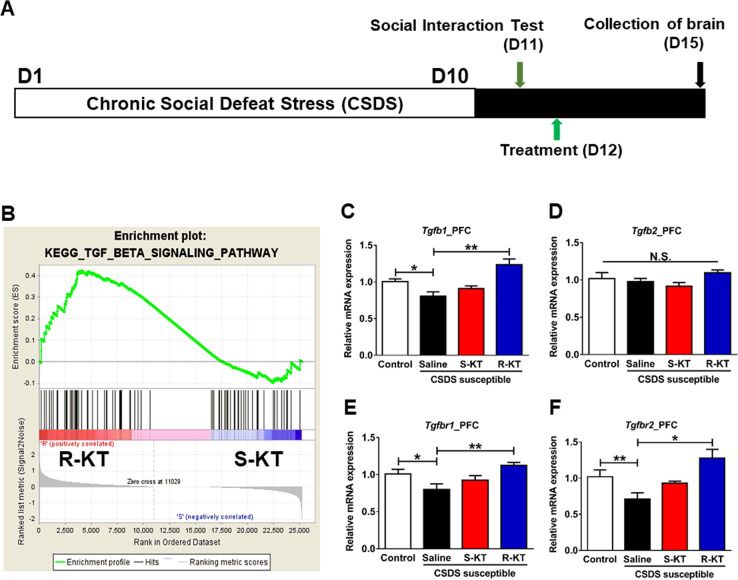
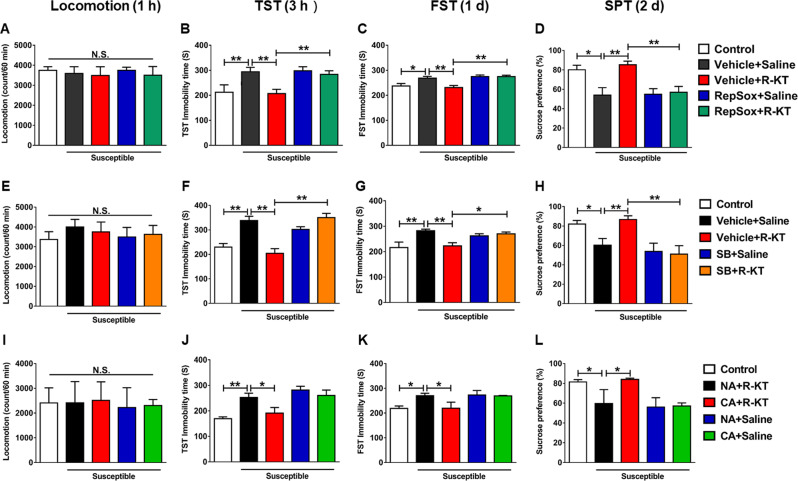
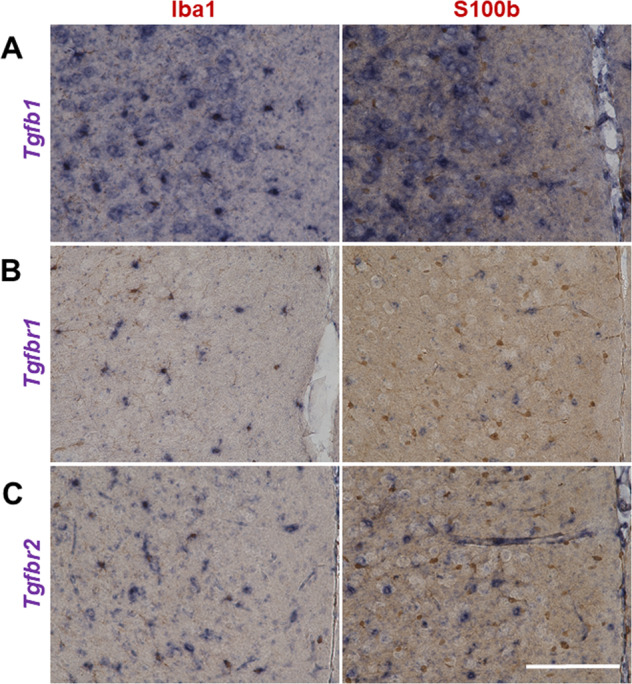
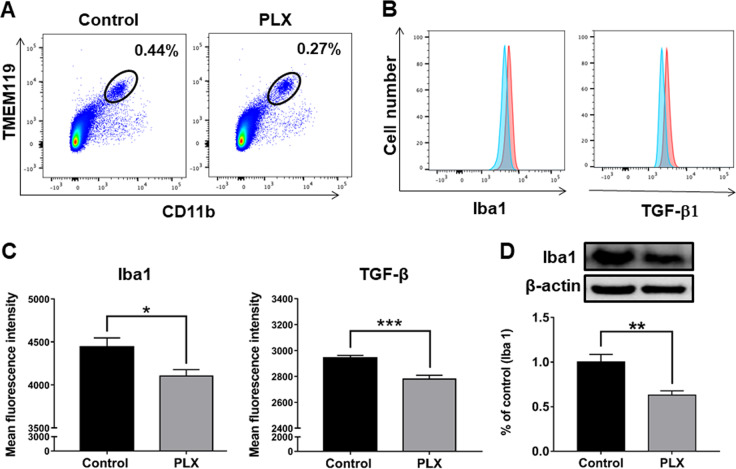
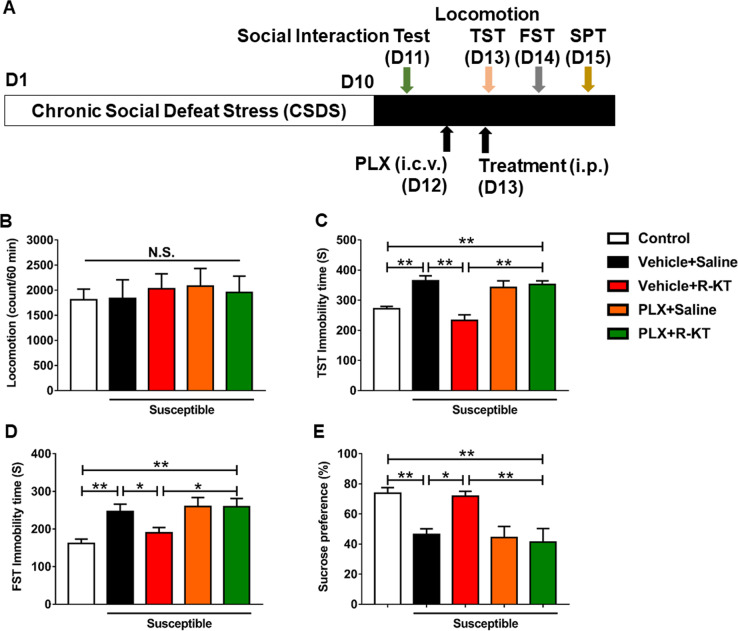
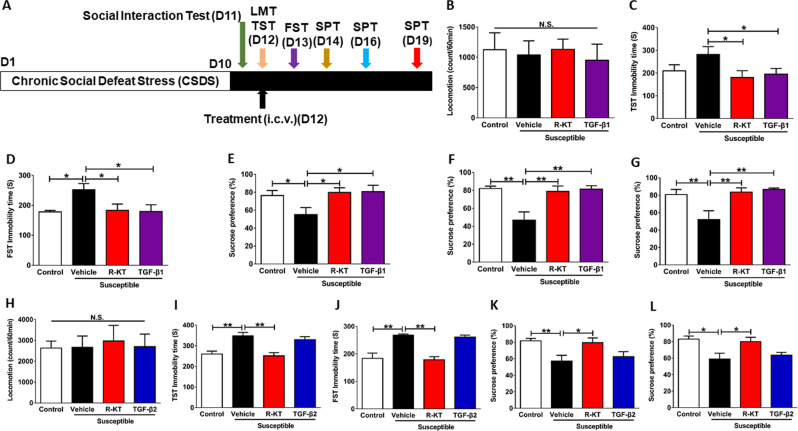
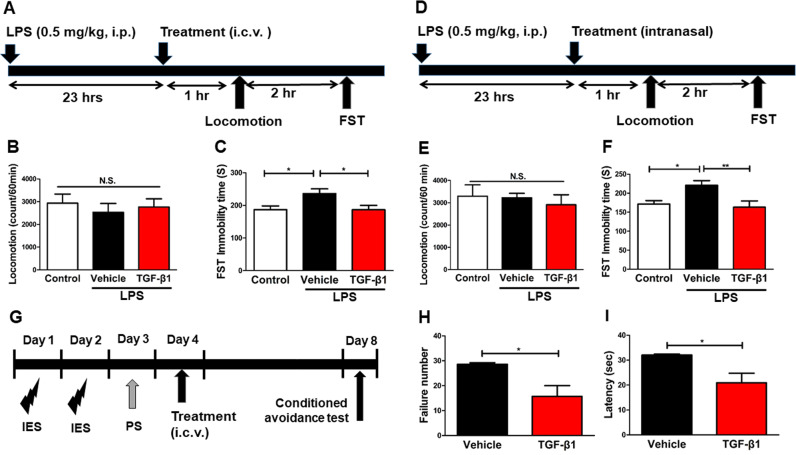
In rodent models of depression, (R)-ketamine has greater potency and longer-lasting antidepressant effects than (S)-ketamine; however, the precise molecular mechanisms underlying the antidepressant actions of (R)-ketamine remain unknown. Using RNA-sequencing analysis, we identified novel molecular targets that contribute to the different antidepressant effects of the two enantiomers. Either (R)-ketamine (10 mg/kg) or (S)-ketamine (10 mg/kg) was administered to susceptible mice after chronic social defeat stress (CSDS). RNA-sequencing analysis of prefrontal cortex (PFC) and subsequent GSEA (gene set enrichment analysis) revealed that transforming growth factor (TGF)-β signaling might contribute to the different antidepressant effects of the two enantiomers. (R)-ketamine, but not (S)-ketamine, ameliorated the reduced expressions of Tgfb1 and its receptors (Tgfbr1 and Tgfbr2) in the PFC and hippocampus of CSDS susceptible mice. Either pharmacological inhibitors (i.e., RepSox and SB431542) or neutralizing antibody of TGF-β1 blocked the antidepressant effects of (R)-ketamine in CSDS susceptible mice. Moreover, depletion of microglia by the colony-stimulating factor 1 receptor (CSF1R) inhibitor PLX3397 blocked the antidepressant effects of (R)-ketamine in CSDS susceptible mice. Similar to (R)-ketamine, the recombinant TGF-β1 elicited rapid and long-lasting antidepressant effects in animal models of depression. Our data implicate a novel microglial TGF-β1-dependent mechanism underlying the antidepressant effects of (R)-ketamine in rodents with depression-like phenotype. Moreover, TGF-β1 and its receptor agonists would likely constitute a novel rapid-acting and sustained antidepressant in humans.
Overview
The claims and statistics of this paper haven’t been checked yet.
Free: it reads the open-access text and checks the first 5 claims that cite a source we can check. Create a free account to check every claim.
Integrity signals
Registry
Cites
Statistics
Figures
Verification
Claims the paper makes
The claims and statistics of this paper haven’t been checked yet.
Free: it reads the open-access text and checks the first 5 claims that cite a source we can check. Create a free account to check every claim.
Claims other papers make about this one
Each is checked against this paper’s own text: does it say what the citing paper says it does?
The cited source says what the claim attributes to it.
In the citing paper
“Zhang and colleagues reported that administering neutralizing antibodies to TGF-β1 blocked the antidepressant effects of (R)-ketamine in chronic social defeat stress mouse models (178).”
From Chronic stress, neuroinflammation, and depression: an overview of pathophysiological mechanisms and emerging anti-inflammatories (2023) · cites this paper as [178]
The cited source says what the claim attributes to it.
In the citing paper
“Moreover, a growing body of research suggests that the antidepressant effects underlying r-ketamine are dependent on microglial TGFβ1.”
From Chronic stress, neuroinflammation, and depression: an overview of pathophysiological mechanisms and emerging anti-inflammatories (2023) · cites this paper as [178]
Self-check
Percentages, sums and reported differences re-computed from the paper’s own numbers.
The self-check needs the paper’s full text.
Citations
Cites
Antidepressant effects of ketamine in depressed patients
Berman, R. M., Cappiello, A., Anand, A., Oren, D. A., Heninger, G. R., Charney, D. S., & Krystal, J. H. (2000) · Biological Psychiatry · doi:10.1016/s0006-3223(99)00230-9 · Cited by 3,856
A randomized trial of an N-methyl-D-aspartate antagonist in treatment-resistant major depression.
Zarate, C. A., Singh, J. B., Carlson, P. J., Brutsche, N. E., Ameli, R., Luckenbaugh, D. A., Charney, D. S., & Manji, H. K. (2006) · Archives of General Psychiatry · doi:10.1001/archpsyc.63.8.856 · Cited by 3,766
Identification of a unique TGF-β–dependent molecular and functional signature in microglia
Butovsky, O., Jedrychowski, M. P., Moore, C. S., Cialic, R., Lanser, A. J., Gabriely, G., Koeglsperger, T., Dake, B., Wu, P. M., Doykan, C. E., et al. (2014) · Nature Neuroscience · doi:10.1038/nn.3599 · Cited by 2,543
Elmore, M. R. P., Najafi, A. R., Koike, M. A., Dagher, N. N., Spangenberg, E. E., Rice, R. A., Kitazawa, M., Matusow, B., Nguyen, H., West, B. L., et al. (2014) · Neuron · doi:10.1016/j.neuron.2014.02.040 · Cited by 1,968
NMDAR inhibition-independent antidepressant actions of ketamine metabolites
Zanos, P., Moaddel, R., Morris, P. J., Georgiou, P., Fischell, J., Elmer, G. I., Alkondon, M., Yuan, P., Pribut, H. J., Singh, N. S., et al. (2016) · Nature · doi:10.1038/nature17998 · Cited by 1,609
A standardized protocol for repeated social defeat stress in mice
Golden, S. A., Covington, H. E., Berton, O., & Russo, S. J. (2011) · Nature Protocols · doi:10.1038/nprot.2011.361 · Cited by 1,581
Ketamine and Ketamine Metabolite Pharmacology: Insights into Therapeutic Mechanisms
Zanos, P., Moaddel, R., Morris, P. J., Riggs, L. M., Highland, J. N., Georgiou, P., Pereira, E. F. R., Albuquerque, E. X., Thomas, C. J., Zarate, C. A., et al. (2018) · Pharmacological Reviews · doi:10.1124/pr.117.015198 · Cited by 1,260
Murrough, J. W., Iosifescu, D. V., Chang, L. C., Al Jurdi, R. K., Green, C. E., Perez, A. M., Iqbal, S., Pillemer, S., Foulkes, A., Shah, A., et al. (2013) · American Journal of Psychiatry · doi:10.1176/appi.ajp.2013.13030392 · Cited by 1,205
Self-citationSocial stress induces neurovascular pathology promoting depression
Menard, C., Pfau, M. L., Hodes, G. E., Kana, V., Wang, V. X., Bouchard, S., Takahashi, A., Flanigan, M. E., Aleyasin, H., LeClair, K. B., et al. (2017) · Nature Neuroscience · doi:10.1038/s41593-017-0010-3 · Cited by 1,028
Diazgranados, N., Ibrahim, L., Brutsche, N. E., Newberg, A., Kronstein, P., Khalife, S., Kammerer, W. A., Quezado, Z., Luckenbaugh, D. A., Salvadore, G., et al. (2010) · Archives of General Psychiatry · doi:10.1001/archgenpsychiatry.2010.90 · Cited by 963
Zarate, C. A., Brutsche, N. E., Ibrahim, L., Franco-Chaves, J., Diazgranados, N., Cravchik, A., Selter, J., Marquardt, C. A., Liberty, V., & Luckenbaugh, D. A. (2012) · Biological Psychiatry · doi:10.1016/j.biopsych.2011.12.010 · Cited by 811
Functional antagonists at the NMDA receptor complex exhibit antidepressant actions
Trullas, R., & Skolnick, P. (1990) · European Journal of Pharmacology · doi:10.1016/0014-2999(90)90204-j · Cited by 785
Wilkinson, S. T., Ballard, E. D., Bloch, M. H., Mathew, S. J., Murrough, J. W., Feder, A., Sos, P., Wang, G., Zarate, C. A., & Sanacora, G. (2018) · American Journal of Psychiatry · doi:10.1176/appi.ajp.2017.17040472 · Cited by 696
Erblich, B., Zhu, L., Etgen, A. M., Dobrenis, K., & Pollard, J. W. (2011) · PLoS ONE · doi:10.1371/journal.pone.0026317 · Cited by 649
R-ketamine: a rapid-onset and sustained antidepressant without psychotomimetic side effects
Yang, C., Shirayama, Y., Zhang, J.-C., Ren, Q., Yao, W., Ma, M., Dong, C., & Hashimoto, K. (2015) · Translational Psychiatry · doi:10.1038/tp.2015.136 · Cited by 605
Self-citationKetamine and other NMDA antagonists: early clinical trials and possible mechanisms in depression.
Newport, D. J., Carpenter, L. L., McDonald, W. M., Potash, J. B., Tohen, M., Nemeroff, C. B., & The APA Council of Research Task Force on Novel Biomarkers and Treatments (2015) · American Journal of Psychiatry · doi:10.1176/appi.ajp.2015.15040465 · Cited by 598
A Consensus Statement on the Use of Ketamine in the Treatment of Mood Disorders
Sanacora, G., Frye, M. A., McDonald, W., Mathew, S. J., Turner, M. S., Schatzberg, A. F., Summergrad, P., Nemeroff, C. B., & for the American Psychiatric Association (APA) Council of Research Task Force on Novel Biomarkers and Treatments (2017) · JAMA Psychiatry · doi:10.1001/jamapsychiatry.2017.0080 · Cited by 576
Singh, J. B., Fedgchin, M., Daly, E. J., De Boer, P., Cooper, K., Lim, P., Pinter, C., Murrough, J. W., Sanacora, G., Shelton, R. C., et al. (2016) · American Journal of Psychiatry · doi:10.1176/appi.ajp.2016.16010037 · Cited by 525
Targeting glutamate signalling in depression: progress and prospects
Murrough, J. W., Abdallah, C. G., & Mathew, S. J. (2017) · Nature Reviews Drug Discovery · doi:10.1038/nrd.2017.16 · Cited by 482
Ketamine: A Paradigm Shift for Depression Research and Treatment
Krystal, J. H., Abdallah, C. G., Sanacora, G., Charney, D. S., & Duman, R. S. (2019) · Neuron · doi:10.1016/j.neuron.2019.02.005 · Cited by 455
Fava, M., Freeman, M. P., Flynn, M., Judge, H., Hoeppner, B. B., Cusin, C., Ionescu, D. F., Mathew, S. J., Chang, L. C., Iosifescu, D. V., et al. (2020) · Molecular Psychiatry · doi:10.1038/s41380-018-0256-5 · Cited by 433
Self-citationGrunebaum, M. F., Galfalvy, H. C., Choo, T.-H., Keilp, J. G., Moitra, V. K., Parris, M. S., Marver, J. E., Burke, A. K., Milak, M. S., Sublette, M. E., et al. (2018) · American Journal of Psychiatry · doi:10.1176/appi.ajp.2017.17060647 · Cited by 431
Phillips, J. L., Norris, S., Talbot, J., Birmingham, M., Hatchard, T., Ortiz, A., Owoeye, O., Batten, L. A., & Blier, P. (2019) · American Journal of Psychiatry · doi:10.1176/appi.ajp.2018.18070834 · Cited by 418
Vollenweider, F. X., Leenders, K. L., Øye, I., Hell, D., & Angst, J. (1997) · European Neuropsychopharmacology · doi:10.1016/s0924-977x(96)00042-9 · Cited by 413
Kishimoto, T., Chawla, J. M., Hagi, K., Zarate, C. A., Kane, J. M., Bauer, M., & Correll, C. U. (2016) · Psychological Medicine · doi:10.1017/s0033291716000064 · Cited by 359
R (−)-ketamine shows greater potency and longer lasting antidepressant effects than S (+)-ketamine
Zhang, J.-C., Li, S.-X., & Hashimoto, K. (2014) · Pharmacology Biochemistry and Behavior · doi:10.1016/j.pbb.2013.11.033 · Cited by 357
Self-citationHashimoto, K. (2019) · Psychiatry and Clinical Neurosciences · doi:10.1111/pcn.12902 · Cited by 335
Self-citationKetamine for rapid reduction of suicidal ideation: a randomized controlled trial
Murrough, J. W., Soleimani, L., DeWilde, K. E., Collins, K. A., Lapidus, K. A., Iacoviello, B. M., Lener, M., Kautz, M., Kim, J., Stern, J. B., et al. (2015) · Psychological Medicine · doi:10.1017/s0033291715001506 · Cited by 297
Zhang, J.-C., Wu, J., Fujita, Y., Yao, W., Ren, Q., Yang, C., Li, S.-X., Shirayama, Y., & Hashimoto, K. (2015) · International Journal of Neuropsychopharmacology · doi:10.1093/ijnp/pyu077 · Cited by 289
Self-citationTGF-β1 modulates microglial phenotype and promotes recovery after intracerebral hemorrhage
Taylor, R. A., Chang, C.-F., Goods, B. A., Hammond, M. D., Grory, B. M., Ai, Y., Steinschneider, A. F., Renfroe, S. C., Askenase, M. H., McCullough, L. D., et al. (2016) · Journal of Clinical Investigation · doi:10.1172/jci88647 · Cited by 274
Fuchikami, M., Thomas, A., Liu, R., Wohleb, E. S., Land, B. B., DiLeone, R. J., Aghajanian, G. K., & Duman, R. S. (2015) · Proceedings of the National Academy of Sciences · doi:10.1073/pnas.1414728112 · Cited by 265
Antidepressant Potential of (R)-Ketamine in Rodent Models: Comparison with (S)-Ketamine
Fukumoto, K., Toki, H., Iijima, M., Hashihayata, T., Yamaguchi, J.-I., Hashimoto, K., & Chaki, S. (2017) · The Journal of Pharmacology and Experimental Therapeutics · doi:10.1124/jpet.116.239228 · Cited by 252
Self-citationYang, C., Ren, Q., Qu, Y., Zhang, J.-C., Ma, M., Dong, C., & Hashimoto, K. (2018) · Biological Psychiatry · doi:10.1016/j.biopsych.2017.05.016 · Cited by 250
Self-citationEffect of ketamine, an NMDA receptor inhibitor, in acute and chronic orofacial pain
Mathisen, L. C., Skjelbred, P., Skoglund, L. A., & Øye, I. (1995) · Pain · doi:10.1016/0304-3959(94)00170-j · Cited by 245
Yang, C., Qu, Y., Fujita, Y., Ren, Q., Ma, M., Dong, C., & Hashimoto, K. (2017) · Translational Psychiatry · doi:10.1038/s41398-017-0031-4 · Cited by 223
Self-citationSu, T.-P., Chen, M.-H., Li, C.-T., Lin, W.-C., Hong, C.-J., Gueorguieva, R., Tu, P.-C., Bai, Y.-M., Cheng, C.-M., & Krystal, J. H. (2017) · Neuropsychopharmacology · doi:10.1038/npp.2017.94 · Cited by 209
Ketamine and rapid-acting antidepressants: a new era in the battle against depression and suicide
Duman, R. S. (2018) · F1000Research · doi:10.12688/f1000research.14344.1 · Cited by 207
Yang, C., Yang, J., Luo, A., & Hashimoto, K. (2019) · Translational Psychiatry · doi:10.1038/s41398-019-0624-1 · Cited by 190
Self-citationChang, L., Zhang, K., Pu, Y., Qu, Y., Wang, S.-M., Xiong, Z., Ren, Q., Dong, C., Fujita, Y., & Hashimoto, K. (2019) · Pharmacology Biochemistry and Behavior · doi:10.1016/j.pbb.2019.04.008 · Cited by 176
Self-citationYang, C., Qu, Y., Abe, M., Nozawa, D., Chaki, S., & Hashimoto, K. (2017) · Biological Psychiatry · doi:10.1016/j.biopsych.2016.12.020 · Cited by 162
Self-citationChen, J.-H., Ke, K.-F., Lu, J.-H., Qiu, Y.-H., & Peng, Y.-P. (2015) · PLOS ONE · doi:10.1371/journal.pone.0116549 · Cited by 151
Antidepressant actions of ketamine: from molecular mechanisms to clinical practice
Monteggia, L. M., & Zarate, C. (2015) · Current Opinion in Neurobiology · doi:10.1016/j.conb.2014.12.004 · Cited by 149
Transforming growth factor‐β1: A lesion‐associated cytokine of the nervous system
Kiefer, R., Streit, W. J., Toyka, K. V., Kreutzberg, G. W., & Hartung, H. (1995) · International Journal of Developmental Neuroscience · doi:10.1016/0736-5748(94)00074-d · Cited by 148
Anhedonia as a clinical correlate of suicidal thoughts in clinical ketamine trials
Ballard, E. D., Wills, K., Lally, N., Richards, E. M., Luckenbaugh, D. A., Walls, T., Ameli, R., Niciu, M. J., Brutsche, N. E., Park, L., et al. (2017) · Journal of Affective Disorders · doi:10.1016/j.jad.2017.04.057 · Cited by 146
Molecular Pharmacology and Neurobiology of Rapid-Acting Antidepressants
Gould, T. D., Zarate, C. A., & Thompson, S. M. (2019) · Annual Review of Pharmacology and Toxicology · doi:10.1146/annurev-pharmtox-010617-052811 · Cited by 133
An update on ketamine and its two enantiomers as rapid-acting antidepressants
Zhang, K., & Hashimoto, K. (2019) · Expert Review of Neurotherapeutics · doi:10.1080/14737175.2019.1554434 · Cited by 132
Self-citationHashimoto, K., Kakiuchi, T., Ohba, H., Nishiyama, S., & Tsukada, H. (2017) · European Archives of Psychiatry and Clinical Neuroscience · doi:10.1007/s00406-016-0692-7 · Cited by 127
Self-citationShirayama, Y., & Hashimoto, K. (2018) · International Journal of Neuropsychopharmacology · doi:10.1093/ijnp/pyx108 · Cited by 111
Self-citationTargeting microglia in brain disorders
Priller, J., & Prinz, M. (2019) · Science · doi:10.1126/science.aau9100 · Cited by 109
Yang, C., Han, M., Zhang, J.-C., Ren, Q., & Hashimoto, K. (2016) · Psychiatry Research · doi:10.1016/j.psychres.2016.03.034 · Cited by 91
Self-citationTang, Y., Liu, L., Xu, D., Zhang, W., Zhang, Y., Zhou, J., & Huang, W. (2017) · Brain Behavior and Immunity · doi:10.1016/j.bbi.2017.10.023 · Cited by 87
Shirayama, Y., & Hashimoto, K. (2016) · European Archives of Psychiatry and Clinical Neuroscience · doi:10.1007/s00406-016-0718-1 · Cited by 79
Self-citationTGF-β1 Neuroprotection via Inhibition of Microglial Activation in a Rat Model of Parkinson’s Disease
Chen, X., Liu, Z., Cao, B., Qiu, Y., & Peng, Y.-P. (2017) · Journal of Neuroimmune Pharmacology · doi:10.1007/s11481-017-9732-y · Cited by 79
Lack of Opioid System in the Antidepressant Actions of Ketamine
Zhang, K., & Hashimoto, K. (2019) · Biological Psychiatry · doi:10.1016/j.biopsych.2018.11.006 · Cited by 71
Self-citationMa, M., Ren, Q., Yang, C., Zhang, J.-C., Yao, W., Dong, C., Ohgi, Y., Futamura, T., & Hashimoto, K. (2017) · Psychopharmacology · doi:10.1007/s00213-016-4483-7 · Cited by 69
Self-citationKetamine’s antidepressant action: beyond NMDA receptor inhibition
Hashimoto, K. (2016) · Expert Opinion on Therapeutic Targets · doi:10.1080/14728222.2016.1238899 · Cited by 68
Self-citationTian, Z., Dong, C., Fujita, A., Fujita, Y., & Hashimoto, K. (2018) · Pharmacology Biochemistry and Behavior · doi:10.1016/j.pbb.2018.07.003 · Cited by 62
Self-citationGuerrera, C. S., Furneri, G., Grasso, M., Caruso, G., Castellano, S., Drago, F., Di Nuovo, S., & Caraci, F. (2020) · Frontiers in Psychology · doi:10.3389/fpsyg.2020.00857 · Cited by 58
Intranasally delivered TGF-β1 enters brain and regulates gene expressions of its receptors in rats
Ma, Y., Ma, M., Song, G., Guo, R., Zhang, H., Frey, W. H., Xu, G., & Liu, X. (2007) · Brain Research Bulletin · doi:10.1016/j.brainresbull.2007.06.021 · Cited by 54
Hashimoto, K. (2016) · Psychological Medicine · doi:10.1017/s0033291716000969 · Cited by 54
Self-citationLack of metabolism in (R)-ketamine’s antidepressant actions in a chronic social defeat stress model
Zhang, K., Fujita, Y., & Hashimoto, K. (2018) · Scientific Reports · doi:10.1038/s41598-018-22449-9 · Cited by 49
Self-citationLiang, Y., Feng, S., Qi, Y.-P., Li, K., Jin, Z., Jing, H., Liu, L., Cai, J., Xing, G., & Fu, K. (2019) · Brain Behavior and Immunity · doi:10.1016/j.bbi.2019.05.026 · Cited by 40
'Party drug' turned antidepressant approaches approval
Reardon, S. (2018) · Nature Reviews Drug Discovery · doi:10.1038/nrd.2018.187 · Cited by 11
Cited by
Microglia in depression: an overview of microglia in the pathogenesis and treatment of depression
Wang, H., He, Y., Sun, Z., Ren, S., Liu, M., Wang, G., & Yang, J. (2022) · Journal of Neuroinflammation · doi:10.1186/s12974-022-02492-0 · Cited by 571
“Partial depletion of microglia with PLX3397 blocked the rapid and sustained antidepressant effects of (R)-ketamine (an isomer of ketamine), suggesting that antidepressant effects of ketamine may be partly attributed to microglial activation [161].”
BackgroundHassamal, S. (2023) · Frontiers in Psychiatry · doi:10.3389/fpsyt.2023.1130989 · Cited by 578
“Zhang and colleagues reported that administering neutralizing antibodies to TGF-β1 blocked the antidepressant effects of (R)-ketamine in chronic social defeat stress mouse models (178).”
BackgroundBrain–gut–microbiota axis in depression: A historical overview and future directions
Chang, L., Wei, Y., & Hashimoto, K. (2022) · Brain Research Bulletin · doi:10.1016/j.brainresbull.2022.02.004 · Cited by 377
Self-citationMicroglia in depression: current perspectives
Jia, X., Gao, Z., & Hu, H. (2021) · Science China Life Sciences · doi:10.1007/s11427-020-1815-6 · Cited by 282
“…both the rapid (within 3 hours) and sustained (up to 2 days) antidepressant effects of (R)-ketamine, an isomer of ketamine with potent antidepressant effects, suggesting that the antidepressant effects of ketamine may be partly attributed to microglia-related mechanisms (Zhang et al., 2020).”
BackgroundKetamine: A tale of two enantiomers
Jelen, L. A., Young, A. H., & Stone, J. M. (2021) · Journal of Psychopharmacology · doi:10.1177/0269881120959644 · Cited by 246
“…have demonstrated increases in cAMP through translocation of Gαs from lipid raft domains into non-raft regions, augmenting interaction between Gαs and adenylyl cyclase, following administration of various classes of antidepressants (Czysz et al., 2015; Toki et al., 1999; Zhang and Rasenick, 2010).”
Background
Metadata
- Authors
- Zhang, K., Yang, C., Chang, L., Sakamoto, A., Suzuki, T., Fujita, Y., Qu, Y., Wang, S., Pu, Y., Tan, Y., Wang, X., Ishima, T., Shirayama, Y., Hatano, M., Tanaka, K. F., & Hashimoto, K.
- Affiliations
- Chiba University (JP)
- Keio University (JP)
- Corresponding author
- Hashimoto, Kenji
- ORCID
- Venue
- Translational Psychiatry
- Published
- 2020-01-27
- Volume
- 10
- Issue
- 1
- Pages
- 32-32
- ISSN
- 2158-3188 (ISSN-L)
- PMC
- PMC7026089
- OpenAlex
- W3001997868
- Cited by
- 119
- References
- 63
- Citations by year
- 2026: 8 · 2025: 13 · 2024: 25 · 2023: 24 · 2022: 25 · 2021: 13 · 2020: 11
- FWCI
- 10.94
- Type
- journal article
- Language
- en
- Open access
- gold
- doi.org
- Licence
- cc-by
- creativecommons.org/licenses/by/4.0 (tdm)
- creativecommons.org/licenses/by/4.0 (vor)
- Locations
- Translational Psychiatry (publishedVersion, cc-by)
- PubMed Central (publishedVersion, cc-by)
- PubMed (publishedVersion)
- Funders
- Japan Agency for Medical Research and Development (JP19dm0107119)
- MEXT | Japan Society for the Promotion of Science (19K17054)
- Topics
- Health Sciences › Medicine › Pharmacology (medical) › Treatment of Major Depression
- Life Sciences › Neuroscience › Biological Psychiatry › Tryptophan and brain disorders
- Life Sciences › Neuroscience › Cellular and Molecular Neuroscience › Neuroscience and Neuropharmacology Research
- Keywords
- (R)-ketamine, esketamine, enantioselectivity, antidepressant effects, TGF-β1, microglia, chronic social defeat stress, depression, prefrontal cortex, hippocampus, TGF-beta receptor, CSF1R inhibition, PLX3397, RepSox, SB431542, rapid-acting antidepressants
- MeSH terms
- Animals, Antidepressive Agents, Depression, Disease Models, Animal, Ketamine, Mice, Inbred C57BL, Stress, Psychological, Microglia, Mice, Transforming Growth Factor beta1
About these checks
Registry, retraction, Cites and statistics results are computed, not judged, with one exception: a printed reference that no index lists is read once by a model before it counts as a citation error. Claims are extracted by a model and kept only when their quote appears verbatim in the text; each cited source is then checked, with a model’s help, for whether it says what the claim relies on. Those verdicts can be wrong — read the claim’s quote and the cited source before relying on one.
Statistics and arithmetic are recomputed, not judged.
Confidence bands are shown only for fields calibrated on our annotated test set. None is calibrated yet, so no band is shown.
What counts as a claim ›How we measure confidence ›How we check this ›
Are you an author, or do you see a problem with this page? Request a review
Data sources
Bibliographic data: Semantic Scholar, OpenAlex, Crossref.
Contains information from the Semantic Scholar Academic Graph Datasets, made available under the ODC Attribution License (ODC-BY 1.0).
Semantic Scholar’s data is described in: Kinney, R., et al. (2023). The Semantic Scholar Open Data Platform. arXiv:2301.10140.
