

Canonical TGF-β signaling regulates the relationship between prenatal maternal depression and amygdala development in early life
Open accessThe DOI matches its Crossref record; 53 of the 53 references it cites were found in a registry or an index.
Abstract
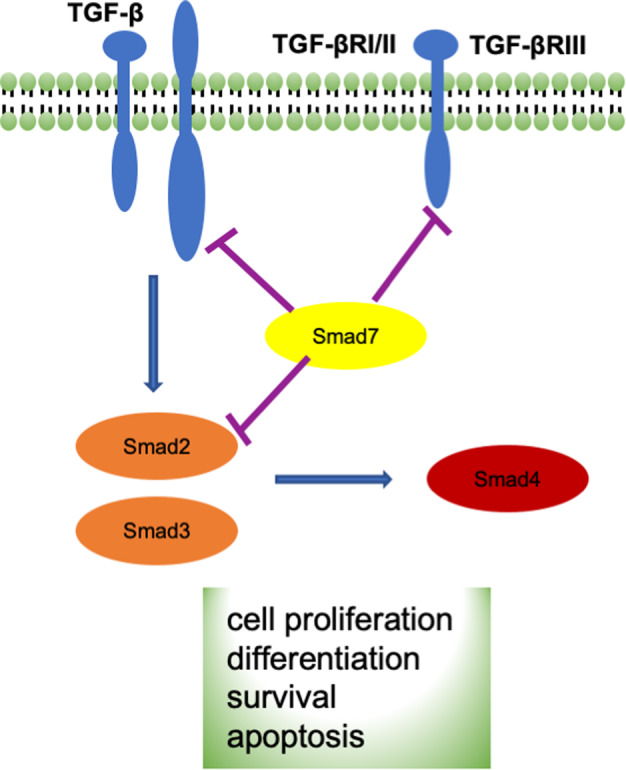
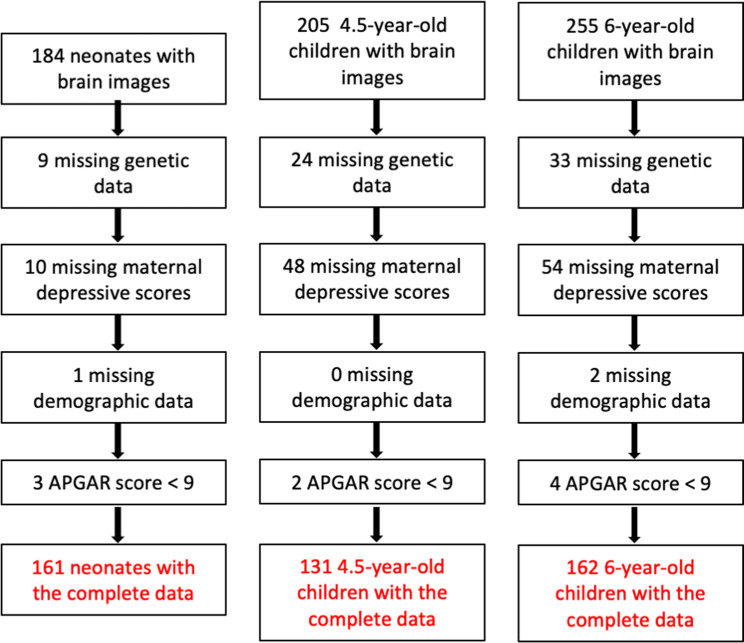
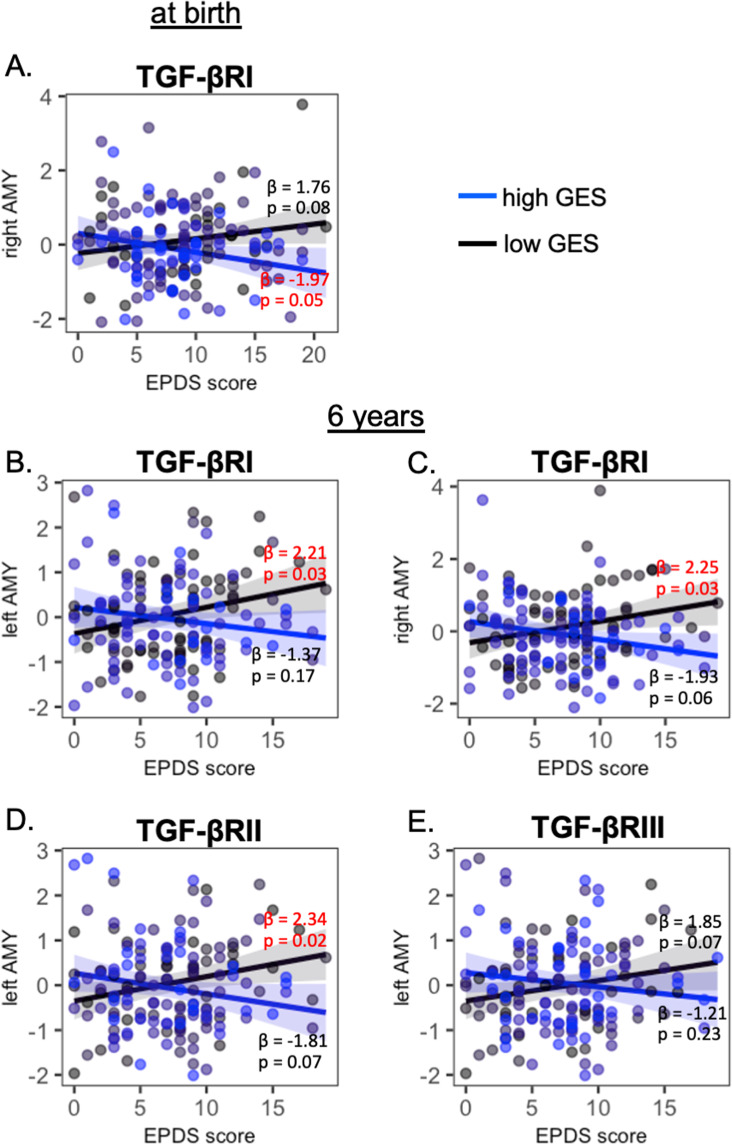
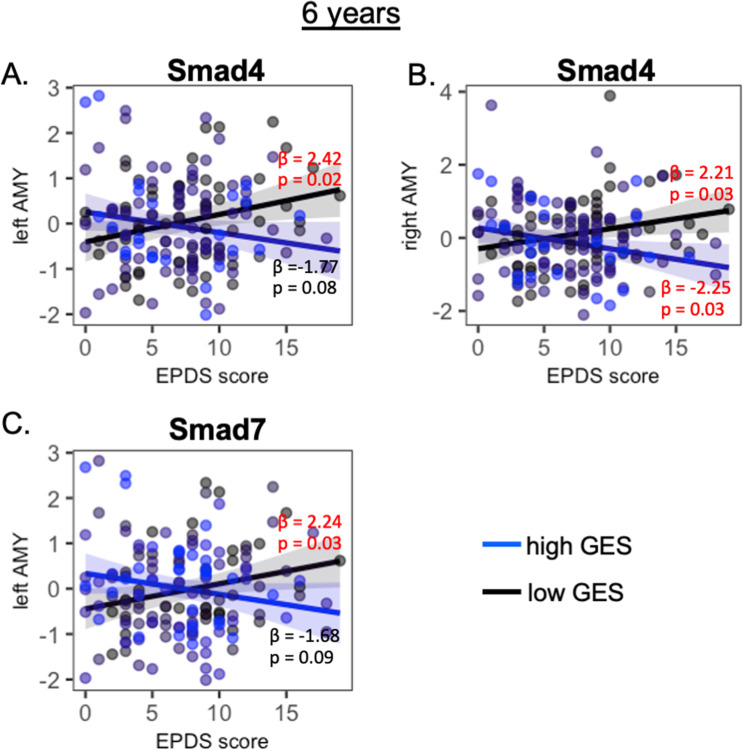
Canonical transforming growth factor-beta (TGF-β) signaling exerts neuroprotection and influences memory formation and synaptic plasticity. It has been considered as a new target for the prevention and treatment of depression. This study aimed to examine its modulatory role in linking prenatal maternal depressive symptoms and the amygdala volumes from birth to 6 years of age. We included mother–child dyads (birth: n = 161; 4.5 years: n = 131; 6 years: n = 162) and acquired structural brain images of children at these three time points. Perinatal maternal depressive symptoms were assessed using the Edinburgh Postnatal Depression Scale (EPDS) questionnaire to mothers at 26 weeks of pregnancy and 3 months postpartum. Our findings showed that the genetic variants of TGF-β type I transmembrane receptor (TGF-βRI) modulated the association between prenatal maternal depressive symptoms and the amygdala volume consistently from birth to 6 years of age despite a trend of significance at 4.5 years of age. Children with a lower gene expression score (GES) of TGF-βRI exhibited larger amygdala volumes in relation to greater prenatal maternal depressive symptoms. Moreover, children with a lower GES of the TGF-β type II transmembrane receptor (TGF-βRII), Smad4, and Smad7 showed larger amygdala volumes at 6 years of age in relation to greater prenatal maternal depressive symptoms. These findings support the involvement of the canonical TGF-β signaling pathway in the brain development of children in the context of in utero maternal environment. Such involvement is age-dependent.
Overview
The claims and statistics of this paper haven’t been checked yet.
Free: it reads the open-access text and checks the first 5 claims that cite a source we can check. Create a free account to check every claim.
Integrity signals
Registry
Cites
Statistics
Figures
Verification
Claims the paper makes
The claims and statistics of this paper haven’t been checked yet.
Free: it reads the open-access text and checks the first 5 claims that cite a source we can check. Create a free account to check every claim.
Claims other papers make about this one
Each is checked against this paper’s own text: does it say what the citing paper says it does?
The source backs part of the claim, not all of it — or backs it for a different population, condition or comparison.
In the citing paper
“Interestingly, lower gene expression of TGF-β was linked to larger amygdala volumes in these children.”
From Selected biomarkers of depression: what are the effects of cytokines and inflammation (2022) · cites this paper as [217]
Experimental — accuracy not yet measured
Self-check
Percentages, sums and reported differences re-computed from the paper’s own numbers.
The self-check needs the paper’s full text.
Citations
Cites
An inventory for measuring depression
BECK, A. T. (1961) · Archives of General Psychiatry · doi:10.1001/archpsyc.1961.01710120031004 · Cited by 38,032
Detection of Postnatal Depression: Development of the 10-item Edinburgh Postnatal Depression Scale
Cox, J. L., Holden, J. M., & Sagovsky, R. (1987) · British Journal of Psychiatry · doi:10.1192/bjp.150.6.782 · Cited by 14,183
Fischl, B., Salat, D. H., Busa, E., Albert, M., Dieterich, M., Haselgrove, C., van der Kouwe, A., Killiany, R., Kennedy, D., Klaveness, S., et al. (2002) · Neuron · doi:10.1016/s0896-6273(02)00569-x · Cited by 8,610
Massagué, J. (1998) · Annual Review of Biochemistry · doi:10.1146/annurev.biochem.67.1.753 · Cited by 7,556
The role of inflammation in depression: from evolutionary imperative to modern treatment target
Miller, A. H., & Raison, C. L. (2016) · Nature Reviews Immunology · doi:10.1038/nri.2015.5 · Cited by 3,942
Howie, B. N., Donnelly, P., & Marchini, J. (2009) · PLoS Genetics · doi:10.1371/journal.pgen.1000529 · Cited by 3,928
The Transcriptional Landscape of the Mammalian Genome
Carninci, P., Kasukawa, T., Katayama, S., Gough, J., Frith, M. C., Maeda, N., Oyama, R., Ravasi, T., Lenhard, B., Wells, C., et al. (2005) · Science · doi:10.1126/science.1112014 · Cited by 3,499
Massagué, J. (2000) · Nature Reviews Molecular Cell Biology · doi:10.1038/35043051 · Cited by 1,899
Buss, C., Davis, E. P., Shahbaba, B., Pruessner, J. C., Head, K., & Sandman, C. A. (2012) · Proceedings of the National Academy of Sciences · doi:10.1073/pnas.1201295109 · Cited by 652
Longitudinal Study of Maternal Depressive Symptoms and Child Well-Being
LUOMA, I., TAMMINEN, T., KAUKONEN, P., LAIPPALA, P., PUURA, K., SALMELIN, R., & ALMQVIST, F. (2001) · Journal of the American Academy of Child & Adolescent Psychiatry · doi:10.1097/00004583-200112000-00006 · Cited by 490 · cited 1×
“This study aimed to answer two questions: (1) does the canonical TGF-β signaling pathway play a role in modulating the link between pregnancy depression and child amygdala development in early childhood? (2) Is there any specific timing (e.”
Background
Cited by
Selected biomarkers of depression: what are the effects of cytokines and inflammation
Harsanyi, S., Kupcova, I., Danisovic, L., & Klein, M. (2022) · International Journal of Molecular Sciences · doi:10.3390/ijms24010578 · Cited by 299
Genetic Influences on the Developing Young Brain and Risk for Neuropsychiatric Disorders
Alex, A. M., Buß, C., Davis, E. P., Campos, G. D. L., Donald, K. A., Fair, D. A., Gaab, N., Gao, W., Gilmore, J. H., Girault, J. B., et al. (2023) · Biological Psychiatry · doi:10.1016/j.biopsych.2023.01.013 · Cited by 49
“Y neonatal brain volume in singletons and offspring of multiple pregnancies with a history of early-life complications Qiu et al., 2021 (76) 162 (GUSTO) Birth–6 years Asian A GES was calculated for individuals by summing the number of alleles across the SNPs of the gene that was correlated with…”
BackgroundMethodSelf-citationTGF-β Signaling in Microglia: A Key Regulator of Development, Homeostasis and Reactivity
Li, L., Sun, B., Harris, O. A., & Luo, J. (2024) · Biomedicines · doi:10.3390/biomedicines12112468 · Cited by 38
“Lower TGF-β 1 levels may significantly contribute to treatment resistance in MDD. Genetic variation in TGFBR1 influences the association between amygdala volume and prenatal depressive symptoms [90].”
Xia, J., Wang, H., Zhang, C., Liu, B., Li, Y., Li, K., Li, P., & Song, C. (2023) · Frontiers in Behavioral Neuroscience · doi:10.3389/fnbeh.2022.1059594 · Cited by 40
Cattarinussi, G., Aarabi, M. H., Moghaddam, H. S., Homayoun, M., Ashrafi, M., Soltanian-Zadeh, H., & Sambataro, F. (2021) · Neuroscience & Biobehavioral Reviews · doi:10.1016/j.neubiorev.2021.09.046 · Cited by 31
Neuroadaptations and TGF-β signaling: emerging role in models of neuropsychiatric disorders
Mitra, S., Werner, C. T., & Dietz, D. (2021) · Molecular Psychiatry · doi:10.1038/s41380-021-01186-y · Cited by 30
Zhu, X., Zhang, F., You, Y., Wang, H., Yuan, S., Wu, B., Zhu, R., Liu, D., Yan, F., & Wang, Z. (2022) · Cellular and Molecular Neurobiology · doi:10.1007/s10571-021-01180-6 · Cited by 26
Fidilio, A., Grasso, M., Caruso, G., Musso, N., Begni, V., Privitera, A., Torrisi, S. A., Campolongo, P., Schiavone, S., Tascedda, F., et al. (2022) · Frontiers in Pharmacology · doi:10.3389/fphar.2022.1075746 · Cited by 20
“depressed patients suggest that TGF-β1 receptor genes play a central role in the pathogenesis of child and adolescent depression (Qiu et al., 2021).”
BackgroundInfluentialJovanovic, A. M., Mitkovic-Voncina, M., Kostic, M., Jeremic, M., Todorovic, J., Popadic, D., Tosevski, D. L., & Markovic, I. (2021) · Psychiatry Research · doi:10.1016/j.psychres.2021.113987 · Cited by 16
Pantović-Stefanović, M., Velimirović, M., Jurišić, V., Puric, M., Gostiljac, M., Dodić, S., Minic, I., Nesic, M. J., Nikolić, T., Petronijević, N., et al. (2024) · Scientific Reports · doi:10.1038/s41598-024-73937-0 · Cited by 20
“Notably, the TGF-β signaling pathway plays an important role in neurodevelopment of amygdala, a prime center of subcortical emotional regulation 79 .”
BackgroundWang, Q., Zhong, Y., Chen, N., & Chen, J. (2023) · Frontiers in Cellular and Infection Microbiology · doi:10.3389/fcimb.2023.1078984 · Cited by 12
“Frontiers in Cellular and Infection Microbiology 08 found that TGF-b could regulate MDD during pregnancy, optimize the development of the amygdala in offspring, and reduce the incidence of MDD in offspring (Qiu et al., 2021).”
Backgroundvan Dijk, M. T., Talati, A., Gonzalez-Barrios, P., Crandall, A. J., & Lugo-Candelas, C. I. (2024) · Seminars in Perinatology · doi:10.1016/j.semperi.2024.151948 · Cited by 10
Gut–brain–immune axis implications for mental health and disease
Nasiri, H., Valedkarimi, Z., & Akbari, M. (2025) · Molecular and Cellular Biochemistry · doi:10.1007/s11010-025-05325-9 · Cited by 7
“TGF-β’s ability to offset the harmful consequences of pro-inflammatory cytokines on the brain emphasizes its relevance in preserving mental health stability [73, 74].”
Ota, V., de Oliveira, A. M., Bugiga, A., Conceição, H. B., Galante, P. A. F., Asprino, P. F., Schäfer, J., Hoffmann, M. S., Bressan, R. A., Brietzke, E. M., et al. (2025) · Frontiers in Psychiatry · doi:10.3389/fpsyt.2025.1505421 · Cited by 6
Mucignat‐Caretta, C., & Soravia, G. (2023) · Frontiers in Neuroscience · doi:10.3389/fnins.2023.1266766 · Cited by 7
Cao, P., Shen, S., Fang, Z., Tan, J., Wang, J., & Pan, N. (2025) · IBRO Neuroscience Reports · doi:10.1016/j.ibneur.2025.12.003 · Cited by 1
“Chronic neuroinflammation and glial dysfunction are implicated in the pathophysiology of depression (Luo, 2022; Qiu et al., 2021).”
Neuroinflammatory Mechanisms in Depression: From Biomarkers to Anti-Inflammatory Therapy
Li, S., Wang, Q., Li, J., & Luo, Q. (2026) · Brain Sciences · doi:10.3390/brainsci16060632 · Cited by 4
Integrated Analysis and Identification of Genetic Risk Alleles Related to Autism Spectrum Disorder
Wu, Y., & Wang, P. (2023) · International Conference on Bioinformatics and Computational Biology (ICBCB) · doi:10.1109/icbcb57893.2023.10246743 · Cited by 1
Self-citationEbrahimi, S. A. S., Goli, Z. S., Mirseify, L. S., & Seirafi, M. (2022) · Disease and Diagnosis · doi:10.34172/ddj.2023.425
Li, Y., Wang, H., Zhou, J., & Wang, C. (2023) · Journal of Zhejiang University (Medical Sciences) · doi:10.3724/zdxbyxb-2023-0269 · Cited by 4
Self-citationWang, X., Kong, Y., Xiang, J., Jiang, Z., Wang, Y., Chen, X., Wan, L., Hong, S. L., & Kuang, L. (2025) · Frontiers in Psychiatry · doi:10.3389/fpsyt.2025.1655332 · Cited by 2
Huang, Z., Li, W., Liu, W., Lei, S., Shi, W., Han, T., & Gao, J. (2026) · Research Square · doi:10.21203/rs.3.rs-8387516/v1
Prenatal stress shapes discrete responses during early recovery from repeated adult stress
Verosky, B. G., Anderson, J., Chen, H. J., Rajasekera, T. A., Yang, F., & Gur, T. (2026) · Frontiers in Cellular Neuroscience · doi:10.3389/fncel.2026.1793298
“…these endocrine associations by linking antenatal maternal aective symptoms to altered amygdala development (Buss et al., 2012; Wen et al., 2017; Qiu et al., 2021) and amygdala–prefrontal connectivity (Posner et al., 2016), suggesting potential neural changes for the altered stress responsivity.”
Metadata
- Authors
- Qiu, A., Zhang, H., Wang, C., Chong, Y.-S., Shek, L. P., Gluckman, P. D., Meaney, M. J., Fortier, M. V., & Wu, Y.
- Affiliations
- Johns Hopkins University (US)
- National University of Singapore (SG)
- Singapore Institute for Clinical Sciences (SG)
- KK Women's and Children's Hospital (SG)
- Corresponding author
- Qiu, Anqi
- ORCID
- Venue
- Translational Psychiatry
- Published
- 2021-03-15
- Volume
- 11
- Issue
- 1
- Pages
- 170-170
- ISSN
- 2158-3188 (ISSN-L)
- PMC
- PMC7961018
- OpenAlex
- W3137140894
- Cited by
- 23
- References
- 53
- Citations by year
- 2026: 3 · 2025: 4 · 2024: 3 · 2023: 6 · 2022: 4 · 2021: 3
- FWCI
- 3.46
- Type
- journal article
- Language
- en
- Open access
- gold
- doi.org
- Licence
- cc-by
- creativecommons.org/licenses/by/4.0 (tdm)
- creativecommons.org/licenses/by/4.0 (vor)
- Locations
- Translational Psychiatry (publishedVersion, cc-by)
- PubMed Central (publishedVersion, cc-by)
- PubMed (publishedVersion)
- National University of Singapore (submittedVersion, cc-by)
- DOAJ (DOAJ: Directory of Open Access Journals) (submittedVersion, cc-by-sa)
- eScholarship@McGill (McGill) (submittedVersion)
- Funders
- National Research Foundation Singapore (NMRC/TCR/004-NUS/2008; NMRC/TCR/012-NUHS/2014)
- Topics
- Health Sciences › Medicine › Public Health, Environmental and Occupational Health › Maternal Mental Health During Pregnancy and Postpartum
- Social Sciences › Psychology › Clinical Psychology › Child and Adolescent Psychosocial and Emotional Development
- Life Sciences › Neuroscience › Behavioral Neuroscience › Stress Responses and Cortisol
- Keywords
- TGF-beta signaling, maternal depression, antenatal depression, amygdala volume, brain development, TGF-βRII, SMAD4, Smad7, gene expression score, mother-child dyads, early childhood, neuroprotection, synaptic plasticity
- MeSH terms
- Amygdala, Child, Child, Preschool, Depression, Female, Humans, Mothers, Pregnancy, Signal Transduction, Transforming Growth Factor beta, Depression, Postpartum
About these checks
Registry, retraction, Cites and statistics results are computed, not judged, with one exception: a printed reference that no index lists is read once by a model before it counts as a citation error. Claims are extracted by a model and kept only when their quote appears verbatim in the text; each cited source is then checked, with a model’s help, for whether it says what the claim relies on. Those verdicts can be wrong — read the claim’s quote and the cited source before relying on one.
Statistics and arithmetic are recomputed, not judged.
Confidence bands are shown only for fields calibrated on our annotated test set. None is calibrated yet, so no band is shown.
What counts as a claim ›How we measure confidence ›How we check this ›
Are you an author, or do you see a problem with this page? Request a review
Data sources
Bibliographic data: Semantic Scholar, OpenAlex, Crossref.
Contains information from the Semantic Scholar Academic Graph Datasets, made available under the ODC Attribution License (ODC-BY 1.0).
Semantic Scholar’s data is described in: Kinney, R., et al. (2023). The Semantic Scholar Open Data Platform. arXiv:2301.10140.
