

Gut microbiota signature in treatment-naïve attention-deficit/hyperactivity disorder
Open accessThe DOI matches its Crossref record; 66 of the 66 references it cites were found in a registry or an index.
Abstract
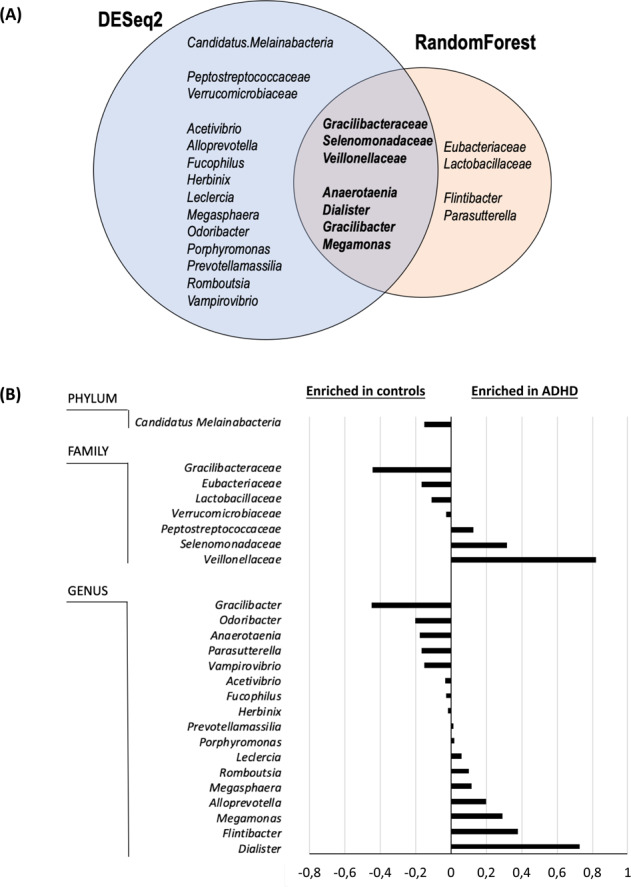
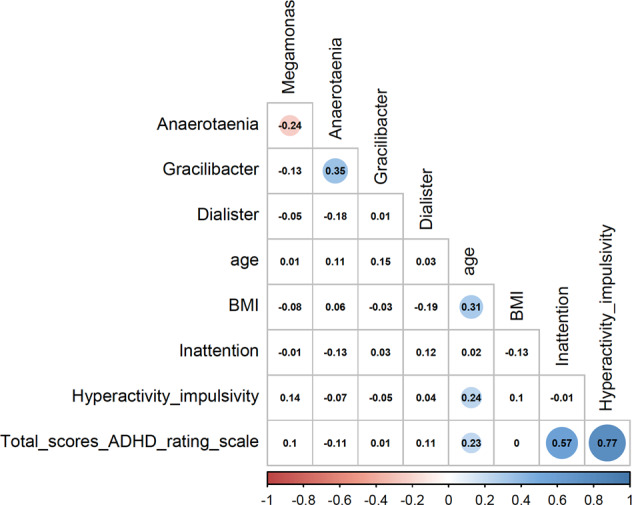
Compelling evidence supports alterations in gut microbial diversity, bacterial composition, and/or relative abundance of several bacterial taxa in attention-deficit/hyperactivity disorder (ADHD). However, findings for ADHD are inconsistent among studies, and specific gut microbiome signatures for the disorder remain unknown. Given that previous studies have mainly focused on the pediatric form of the disorder and involved small sample sizes, we conducted the largest study to date to compare the gastrointestinal microbiome composition in 100 medication-naïve adults with ADHD and 100 sex-matched healthy controls. We found evidence that ADHD subjects have differences in the relative abundance of several microbial taxa. At the family level, our data support a lower relative abundance of Gracilibacteraceae and higher levels of Selenomonadaceae and Veillonellaceae in adults with ADHD. In addition, the ADHD group showed higher levels of Dialister and Megamonas and lower abundance of Anaerotaenia and Gracilibacter at the genus level. All four selected genera explained 15% of the variance of ADHD, and this microbial signature achieved an overall sensitivity of 74% and a specificity of 71% for distinguishing between ADHD patients and healthy controls. We also tested whether the selected genera correlate with age, body mass index (BMI), or scores of the ADHD rating scale but found no evidence of correlation between genera relative abundance and any of the selected traits. These results are in line with recent studies supporting gut microbiome alterations in neurodevelopment disorders, but further studies are needed to elucidate the role of the gut microbiota on the ADHD across the lifespan and its contribution to the persistence of the disorder from childhood to adulthood.
Overview
The claims and statistics of this paper haven’t been checked yet.
Free: it reads the open-access text and checks the first 5 claims that cite a source we can check. Create a free account to check every claim.
Integrity signals
Registry
Cites
Statistics
Figures
Verification
Claims the paper makes
The claims and statistics of this paper haven’t been checked yet.
Free: it reads the open-access text and checks the first 5 claims that cite a source we can check. Create a free account to check every claim.
Claims other papers make about this one
Each is checked against this paper’s own text: does it say what the citing paper says it does?
The source backs part of the claim, not all of it — or backs it for a different population, condition or comparison.
In the citing paper
“Alterations in gut microbiome in ADHD were reported in previous studies, with ADHD group showing higher level of Dialister and Megamonas and lower abundance of Anaerotaenia and Gracilibacter at the genus level57, and Bacteroides species correlating with levels of hyperactivity and impulsivity58.”
From Association between attention-deficit/hyperactivity disorders and intestinal disorders: A systematic review and Meta-analysis (2025) · cites this paper as [57]
Experimental — accuracy not yet measured
Self-check
Percentages, sums and reported differences re-computed from the paper’s own numbers.
The self-check needs the paper’s full text.
Citations
Cites
Cutadapt removes adapter sequences from high-throughput sequencing reads
Martin, M. (2011) · EMBnet.journal · doi:10.14806/ej.17.1.200 · Cited by 33,889
phyloseq: An R Package for Reproducible Interactive Analysis and Graphics of Microbiome Census Data
McMurdie, P. J., & Holmes, S. (2013) · PLoS ONE · doi:10.1371/journal.pone.0061217 · Cited by 21,322
UCHIME improves sensitivity and speed of chimera detection
Edgar, R. C., Haas, B. J., Clemente, J. C., Quince, C., & Knight, R. (2011) · Bioinformatics · doi:10.1093/bioinformatics/btr381 · Cited by 15,114
Cd-hit: a fast program for clustering and comparing large sets of protein or nucleotide sequences
Li, W., & Godzik, A. (2006) · Bioinformatics · doi:10.1093/bioinformatics/btl158 · Cited by 11,410
Klindworth, A., Pruesse, E., Schweer, T., Peplies, J., Quast, C., Horn, M., & Glöckner, F. O. (2013) · Nucleic Acids Research · doi:10.1093/nar/gks808 · Cited by 8,850 · cited 1×
“We used the same workflow as described elsewhere [36] to perform cluster generation, template hybridization, isothermal amplification, linearization, blocking and denaturation, and hybridization of the sequencing primers.”
MethodThe worldwide prevalence of ADHD: a systematic review and metaregression analysis
Polanczyk, G., de Lima, M. S., Horta, B. L., Biederman, J., & Rohde, L. A. (2007) · American Journal of Psychiatry · doi:10.1176/ajp.2007.164.6.942 · Cited by 5,346 · cited 1×
“3%, and of these, 50−70% will still show symptoms in adulthood [4].”
BackgroundPEAR: a fast and accurate Illumina Paired-End reAd mergeR
Zhang, J., Kobert, K., Flouri, T., & Stamatakis, A. (2014) · Bioinformatics · doi:10.1093/bioinformatics/btt593 · Cited by 4,497 · cited 1×
“1, providing a single FASTQ file for each of the samples [37].”
BackgroundThe gut microbiota--masters of host development and physiology
Sommer, F., & Bäckhed, F. (2013) · Nature Reviews Microbiology · doi:10.1038/nrmicro2974 · Cited by 3,681
Host microbiota constantly control maturation and function of microglia in the CNS
Erny, D., Hrabě de Angelis, A. L., Jaitin, D., Wieghofer, P., Staszewski, O., David, E., Keren-Shaul, H., Mahlakoiv, T., Jakobshagen, K., Buch, T., et al. (2015) · Nature Neuroscience · doi:10.1038/nn.4030 · Cited by 3,569
The role of short-chain fatty acids in microbiota–gut–brain communication
Dalile, B., Van Oudenhove, L., Vervliet, B., & Verbeke, K. (2019) · Nature Reviews Gastroenterology & Hepatology · doi:10.1038/s41575-019-0157-3 · Cited by 3,357 · cited 1×
“neuronal cells and afferent pathways that signal directly to the brain [13].”
Background
Cited by
The gut microbiome and mental health: advances in research and emerging priorities
Shoubridge, A. P., Choo, J. M., Martin, A. M., Keating, D. J., Wong, M., Licinio, J., & Rogers, G. B. (2022) · Molecular Psychiatry · doi:10.1038/s41380-022-01479-w · Cited by 145
“For example, recent studies have reported relationships between intestinal microbiology and neurodegenerative disorders, such as Huntington’s disease (HD) [2] and multiple sclerosis [3]; psychiatric conditions, such as schizophrenia [4–7] and major depressive disorder (MDD) [8–11]; and behavioural conditions, includin…”
ResultGut microbiota and plasma cytokine levels in patients with attention-deficit/hyperactivity disorder
Wang, L., Li, S., Li, S.-W., Kuo, H., Lee, S.-Y., Huang, L., Chin, C.-Y., & Yang, C. (2022) · Translational Psychiatry · doi:10.1038/s41398-022-01844-x · Cited by 78
Bundgaard‐Nielsen, C., Lauritsen, M. B., Knudsen, J. K., Rold, L. S., Larsen, M. H., Hindersson, P., Villadsen, A. B., Leutscher, P. D. C., Hagstrøm, S., Nyegaard, M., et al. (2023) · Gut Microbes · doi:10.1080/19490976.2023.2211923 · Cited by 77
Singh, J., Vanlallawmzuali, Singh, A. K., Biswal, S., Zomuansangi, R., Lalbiaktluangi, C., Singh, B. P., Singh, P. K., Vellingiri, B., Iyer, M., et al. (2024) · Asian Journal of Psychiatry · doi:10.1016/j.ajp.2024.104068 · Cited by 76
Wang, N., Gao, X., Zhang, Z., & Yang, L. (2022) · Frontiers in Endocrinology · doi:10.3389/fendo.2022.838941 · Cited by 56
“Three of the included records consisted of medication-naïve participants to compare ADHD patients and HCs (12, 13, 16), one study asked patients to discontinue taking medicine for at least 48 h prior to sampling collection (11), and one explored the effect of medication by removing 19 medicated cases from a regression…”
BackgroundResultInfluentialPeng, Y., Lu, J., Fan, L., Dong, W., & Jiang, M. (2024) · Food and Chemical Toxicology · doi:10.1016/j.fct.2024.114474 · Cited by 56
Ferreira, A. S., Borgonovi, T. F., de Salis, L. V. V., Leite, A. Z., Dantas, A. S., Salis, G. V. V. D., Cruz, G. N. F., de Oliveira, L. F. V., Gomes, E., Penna, A. L. B., et al. (2022) · International Journal of Environmental Research and Public Health · doi:10.3390/ijerph191610189 · Cited by 51
Li, Y., Sun, H., Huang, Y., Yin, A., Zhang, L., Han, J., Lyu, Y., Xu, X., Zhai, Y., Sun, H., et al. (2022) · Gut Microbes · doi:10.1080/19490976.2022.2125747 · Cited by 49
“There were also no significant differences observed in alpha diversity between patients with ADHD and HCs in some previous studies.(21,22,26,48) Regarding beta diversity, the current study revealed that the gut microbiota in patients with C-ADHD can be effectively distinguished from that of HCs, but those of patients…”
ResultYang, L. L., Stiernborg, M., Skott, E., Xu, J., Wu, Y., Landberg, R., Arefin, S., Kublickiene, K., Millischer, V., Nilsson, I. A. K., et al. (2023) · Nutrients · doi:10.3390/nu15051293 · Cited by 42
Caputi, V., Hill, L., Figueiredo, M., Popov, J., Hartung, E., Margolis, K. G., Baskaran, K., Joharapurkar, P., Moshkovich, M., & Pai, N. (2024) · Frontiers in Neuroscience · doi:10.3389/fnins.2024.1341656 · Cited by 41
The Role of Gut Microbiota-Brain Axis in Pathophysiology of ADHD: A Systematic Review
Shirvani-Rad, S., Ejtahed, H., Marvasti, F. E., Taghavi, M., Sharifi, F., Arzaghi, S. M., & Larijani, B. A. (2022) · Journal of Attention Disorders · doi:10.1177/10870547211073474 · Cited by 50
“Studies had average age range from 6 to 27.1, investigating correlations between gut microbiota composition and ADHD (Aarts et al., 2017; Cheng et al., 2020; Jiang et al., 2018; Prehn-Kristensen et al., 2018; Richarte et al., 2021; Szopinska-Tokov et al., 2020; Wan et al., 2020; Wang et al., 2020).”
BackgroundMethodResultInfluentialNeurodevelopmental Disorders Associated with Gut Microbiome Dysbiosis in Children
Borrego-Ruiz, A., & Borrego, J. J. (2024) · Children · doi:10.3390/children11070796 · Cited by 48
“In another study, the species Allisonella histaminiformans , Bacteroides coprocola , Catenibacterium mitsuokai , Dialister succinatiphilus , Holdemanella biformis , and Roseburia faecis showed lower abundance in the GM of the TS individuals, while only Bacteroides vulgates increased [202].”
BackgroundMaes, M. H. J., Vasupanrajit, A., Jirakran, K., Klomkliew, P., Chanchaem, P., Tunvirachaisakul, C., & Payungporn, S. (2023) · Cells · doi:10.3390/cells12091240 · Cited by 45
“formicillis (production of SCFA; depletion is associated with inflammatory bowel disease) [37-47, 66].”
BackgroundLower plasma concentrations of short-chain fatty acids (SCFAs) in patients with ADHD
Yang, L. L., Stiernborg, M., Skott, E., Gillberg, T., Landberg, R., Giacobini, M., & Lavebratt, C. (2022) · Journal of Psychiatric Research · doi:10.1016/j.jpsychires.2022.09.042 · Cited by 39
Stiernborg, M., Debelius, J. W., Yang, L. L., Skott, E., Millischer, V., Giacobini, M., Melas, P. A., Boulund, F., & Lavebratt, C. (2023) · Brain Behavior and Immunity · doi:10.1016/j.bbi.2023.03.012 · Cited by 32
“One study used an adult population, which consisted of 100 treatment-naïve ADHD patients (Richarte et al., 2021) where no differences were found in alpha or beta diversity compared to healthy controls.”
BackgroundMethodResultInfluentialChen, X., Liu, S., Song, H., Yuan, C., & Li, J. (2024) · Food Chemistry · doi:10.1016/j.foodchem.2024.139015 · Cited by 28
Lewis, N., Villani, A., & Lagopoulos, J. (2025) · Neuroscience · doi:10.1016/j.neuroscience.2025.01.031 · Cited by 25
“…combined (Prehn-Kristensen et al., 2018; Li et al., 2022; Bundgaard-Nielsen et al., 2023; Lee et al., 2022; Wang et al., 2022; Wang et al., 2020), adolescents and adults combined (Aarts et al., 2017; Szopinska-Tokov et al., 2020), and adults alone (Stiernborg et al., 2023; Richarte et al., 2021).”
InfluentialDiamanti, T., Prete, R., Battista, N., Corsetti, A., & Jaco, A. D. (2022) · Antibiotics · doi:10.3390/antibiotics11121767 · Cited by 32
Gulumbe, B. H., & Abdulrahim, A. (2023) · Future Science OA · doi:10.2144/fsoa-2023-0089 · Cited by 24
Kurokawa, S., 野村, 健., Sanada, K., Miyaho, K., Ishii, C., Fukuda, S., Iwamoto, C., Naraoka, M., Yoneda, S., Imafuku, M., et al. (2024) · Journal of Child Psychology and Psychiatry · doi:10.1111/jcpp.13962 · Cited by 23
Lewis, N., Lagopoulos, J., & Villani, A. M. (2025) · Metabolites · doi:10.3390/metabo15050335 · Cited by 21
“Studies have identified differences in gut microbiota between individuals with ADHD and healthy controls, with some variations associated with the severity of ADHD symptoms [189–195].”
Gut microbiota composition may be an indicator of erectile dysfunction
Qiao, Y., Chen, J., Jiang, Y., Zhang, Z., Wang, H., Liu, T., Yang, Z., Fu, G., & Chen, Y. (2024) · Microbial Biotechnology · doi:10.1111/1751-7915.14403 · Cited by 17
“Fusobacterium has also been identified as an opportunistic pathogen that can cause opportunistic infections and induce the expression of pro-inflammatory cytokines (Richarte et al., 2021).”
BackgroundVolpedo, G., Riva, A., Nobili, L., Zara, F., Ravizza, T., & Striano, P. (2025) · BMC Medicine · doi:10.1186/s12916-025-04093-z · Cited by 23
“Furthermore, [138] demonstrated increased Dialister and Megamonas , and reduced Anaerotaenia and Gracilibacter in over 100 untreated adult ADHD patients.”
Wang, X., Wang, N., Gao, T., Zhang, Y., Fu, Z., Zhao, Y., Huang, Y., Zheng, X., Gao, X., Lü, L., et al. (2025) · Gut Microbes · doi:10.1080/19490976.2025.2537755 · Cited by 17
Luo, Y., Adamek, J. H., Crocetti, D., Mostofsky, S. H., & Ewen, J. B. (2022) · Frontiers in Neuroscience · doi:10.3389/fnins.2022.893239 · Cited by 13
The effect of microbiome composition on impulsive and violent behavior: A systematic review
Langmajerová, M., Roubalová, R., Šebela, A., & Vevera, J. (2022) · Behavioural Brain Research · doi:10.1016/j.bbr.2022.114266 · Cited by 16
Metagenomic Analysis Reveals Difference of Gut Microbiota in ADHD
Wang, N., Wang, H., Bai, Y., Zhao, Y., Zheng, X., Gao, X., Zhang, Z., & Yang, L. (2024) · Journal of Attention Disorders · doi:10.1177/10870547231225491 · Cited by 12
“Other studies did not observed difference between ADHD group and healthy controls (HCs) in alpha or beta diversity (Aarts et al., 2017; Jiang et al., 2018; Y. Li et al., 2022; Richarte et al., 2021; Szopinska-Tokov et al., 2020; Wan et al., 2020; Wang et al., 2022).”
BackgroundResultInfluentialArteaga-Henríquez, G., Ramos-Sayalero, C., Ibañez-Jiménez, P., Rosales-Ortiz, S. K., Kilencz, T., Schiweck, C., Schnorr, I., Siegl, A., Vásquez, A. A., Bitter, I., et al. (2024) · Brain Behavior and Immunity · doi:10.1016/j.bbi.2024.06.012 · Cited by 19
“In support of such view, an increased Bacteroidetes-to-Firmicutes ratio and bacterial gut microbiome abnormalities have been repeatedly re-ported in individuals diagnosed with both conditions (Richarte et al., 2021; R ¨ ossler et al., 2022; Wang et al., 2022a,b).”
Self-citationThe gut-microbiome in adult Attention-deficit/hyperactivity disorder - A Meta-analysis
Jakobi, B., Vlaming, P., Mulder, D., Ribasés, M., Richarte, V., Ramos‐Quiroga, J. A., Tendolkar, I., van Eijndhoven, P., Vrijsen, J. N., Buitelaar, J. K., et al. (2024) · European Neuropsychopharmacology · doi:10.1016/j.euroneuro.2024.07.004 · Cited by 20
Self-citationNg, R. W. Y., Chen, Z., Yang, L., Wong, O. W. H., Leung, A. S. Y., Tsui, K. W., Kwok, N. M. W., Tang, L. H. Y., Cheung, P. M. H., Chan, P. K. S., et al. (2025) · Scientific Reports · doi:10.1038/s41598-025-04303-x · Cited by 13
“Alterations in gut microbiome in ADHD were reported in previous studies, with ADHD group showing higher level of Dialister and Megamonas and lower abundance of Anaerotaenia and Gracilibacter at the genus level 57 , and Bacteroides species correlating with levels of hyperactivity and impulsivity 58 .”
Schleupner, H. V., & Carmichael, M. J. (2022) · Women · doi:10.3390/women2030023 · Cited by 11
Panpetch, J., Kiatrungrit, K., Tuntipopipat, S., Tangphatsornruang, S., Mhuantong, W., & Chongviriyaphan, N. (2024) · Journal of Personalized Medicine · doi:10.3390/jpm14070739 · Cited by 9
Microbiota-gut-brain axis in binge-eating disorder: Towards microbiome-based therapies
Schneider, E., Leigh, S., Lynch, C. M. K., Hilbert, A., Clarke, G. A., Higgs, S., & Cryan, J. F. (2024) · Neuroscience Applied · doi:10.1016/j.nsa.2024.104088 · Cited by 12
“While individual taxa were not associated with ADHD symptoms, statistical models were able to discriminate between patients and controls with high accuracy using microbial signatures (Richarte et al., 2021).”
The Land That Time Forgot? Planetary Health and the Criminal Justice System
Logan, A. C., Berryessa, C. M., Callender, J. S., Caruso, G. D., Hagenbeek, F. A., Mishra, P., & Prescott, S. L. (2025) · Challenges · doi:10.3390/challe16020029 · Cited by 14
Han, D., Zhang, Y., Liu, W., Wan, R., Hu, J., Pan, F., Pan, X., Weng, W., Wang, Y., Ma, Z., et al. (2025) · BMC Microbiology · doi:10.1186/s12866-025-04048-7 · Cited by 9
“Nevertheless, consistent with our findings, a notable increase in Veillonella [41] and Lachnospira-cea [42] was observed in previous studies.”
Weyns, A.-S., Ahannach, S., Rillaer, T. V., Bruyne, T. D., Lebeer, S., & Hermans, N. (2024) · Frontiers in Nutrition · doi:10.3389/fnut.2024.1422253 · Cited by 7
“Moreover, an association between the gut microbiota and several neuropsychiatric conditions including ADHD has been demonstrated (49, 50).”
BackgroundA closer look at the role of nutrition in children and adults with ADHD and neurodivergence
Hunter, C., Smith, C., Davies, E., Dyall, S. C., & Gow, R. V. (2025) · Frontiers in Nutrition · doi:10.3389/fnut.2025.1586925 · Cited by 10
“The link between gut health and ADHD and neurodivergent conditions warrant further exploration (157–159).”
Cho, Y. J., Shin, B., Lee, S., Park, S. M., Kim, Y., Kim, J., & Kim, E. J. (2023) · Microorganisms · doi:10.3390/microorganisms11082063 · Cited by 7
“Altered gut microbiota affect the integrity of the gut barrier, leading to variations in the bacterial metabolite absorption and excretion of neurotransmitter precursors into urine [29].”
BackgroundDias, M. F., Nogueira, Y. J. D. A., de Albuquerque, G. S., Romano‐Silva, M. A., & de Miranda, D. M. (2025) · Journal of Psychiatric Research · doi:10.1016/j.jpsychires.2025.10.008 · Cited by 6
Yang, H., Wang, A., Yang, J., Luo, R., & Yang, Y. (2025) · Frontiers in Microbiology · doi:10.3389/fmicb.2025.1650212 · Cited by 6
“Spain (Plaza-Diaz et al., 2019; Richarte et al., 2021) and the Netherlands (Aarts et al., 2017; Szopinska-Tokov et al., 2020) provided 2 studies each (4.4%), with single studies from Australia (Wang et al., 2011), America (Kang et al., 2013), India (Pulikkan et al., 2018), Russia (Kovtun et al.,…”
InfluentialStiernborg, M., Yang, L. L., Skott, E., Giacobini, M., Melas, P. A., Debelius, J. W., & Lavebratt, C. (2026) · Brain Behavior and Immunity · doi:10.1016/j.bbi.2026.106259 · Cited by 6
Davias, A., Verghese, M., Bridgman, S. L., Tun, H. M., Field, C. J., Hicks, M., Pei, J. R., Hicks, A., Moraes, T. J., Simons, E., et al. (2025) · Brain Behavior & Immunity - Health · doi:10.1016/j.bbih.2025.100946 · Cited by 7
“…that the gut microbiota is altered in children with neurodevelopmental disorders such as ASD (Dan et al., 2020; Finegold et al., 2010; Hsiao et al., 2013; Tomova et al., 2015; Wang et al., 2013) or ADHD (Jiang et al., 2018; Richarte et al., 2021; Szopinska-Tokov et al., 2020; Wang et al., 2022).”
The gut-microbiome in adult Attention-deficit/hyperactivity disorder - A Meta-analysisPreprint
Jakobi, B., Vlaming, P., Mulder, D., Ribasés, M., Richarte, V., Ramos-Quiroga, J., Tendolkar, I., van Eijndhoven, P. V., Vrijsen, J., Buitelaar, J., et al. (2023) · medRxiv · doi:10.1101/2023.12.18.23300126 · Cited by 12
“The three studies published on adults so far showed no overlap in results, despite a substantial overlap in samples and wet-lab procedures between Aarts et al. (2017) and Szopinska-Tokov et al. (2020) (Aarts et al., 2017; Richarte et al., 2021; Szopinska-Tokov et al., 2021).”
InfluentialSelf-citationLuyens, B., Felgueroso-Bueno, F., Everard, A., & Massat, I. (2026) · Journal of Psychiatric Research · doi:10.1016/j.jpsychires.2026.01.038 · Cited by 5
Beyond the Brain: Attention Deficit/Hyperactivity Disorder and the Gut-Brain Axis
Gandhi, D. N., Pande, D., Harikrishna, A., Advilkar, A., Basavan, I., & Ansari, R. (2024) · Cureus · doi:10.7759/cureus.76291 · Cited by 12
Salmerón, A. D. M., Fernández‐Martín, P., Rodríguez‐Herrera, R., Campos, F. M. A., Abreu, A. C., Fernández, I., & Flores, P. (2025) · NMR in Biomedicine · doi:10.1002/nbm.70088 · Cited by 6
“While we did not directly assess microbial composition, the consistent downregulation of key microbial-derived metabolites (e.g., 3-indoxylsulfate, N - phenylacetylglycine, and 3- methyl- 2-oxovalerate) may reflect functional consequences of microbial dysbiosis—previously described in ADHD [69, 70].”
Logan, A. C., Cordell, B., Pillai, S. D., Robinson, J. M., & Prescott, S. L. (2025) · Brain Sciences · doi:10.3390/brainsci15090984 · Cited by 8
“Recent evidence indicates that microbial signatures have the potential to identify persons living with schizophrenia or bipolar disorder [107], autism spectrum disorders [108], or ADHD [109].”
Meta-analysis of the Microbial Diversity Cultured in Bioreactors Simulating the Gut Microbiome
Mendez, D. F. G., Egan, S. L., Wist, J., Holmes, E. C., & Sanabria, J. (2024) · Microbial Ecology · doi:10.1007/s00248-024-02369-0 · Cited by 7
“Although some of the families detected in the in vitro models were not found in GMRepo, a further literature search found documentation of Gracilibacteraceae , Muri-baculaceae , Defluviitaleaceae , and Vallitaleaceae families identified in faecal microbiota samples [36–39].”
ResultGenetische Grundlagen der ADHS – ein Update
Hohmann, S., Häge, A., Millenet, S., & Banaschewski, T. (2022) · Zeitschrift für Kinder- und Jugendpsychiatrie und Psychotherapie · doi:10.1024/1422-4917/a000868 · Cited by 5
Salamon, A., Szabó, A., Felföldi, T., Rhali, S. B., Andics, A., Miklósi, Á., Kubinyi, E., & Gácsi, M. (2025) · BMC Biology · doi:10.1186/s12915-025-02410-9 · Cited by 3
Wang, M., Zhu, S., Ye, X. Y., Huang, S., Yanghua, Chen, Y., Li, J., Peng, Y., & Wu, J. (2026) · Journal of Agriculture and Food Research · doi:10.1016/j.jafr.2026.102884 · Cited by 3
Davias, A., Lyon-Caen, S., Iszatt, N., Monot, C., Rayah, Y., Ilhan, Z. E., Guichardet, K., Bayat, S., Valmary‐Degano, S., Muckle, G., et al. (2025) · Brain Behavior & Immunity - Health · doi:10.1016/j.bbih.2025.101063 · Cited by 7
“…either no associations (Dan et al., 2020; Ding et al., 2021; Ha et al., 2021; Jiang et al., 2018; Kushak et al., 2017; Pulikkan et al., 2018; Richarte et al., 2021; Szopinska-Tokov et al., 2020; Wang et al., 2020, 2022; Zhang et al., 2018), positive associations (Chen et al., 2020; Ding et…”
Spaceflight redefines ageing‐associated microbiota
Sun, Y., Liu, S., Chen, L., Zhou, Z., Ma, M., Li, J., Lü, Y., Shi, Y., Yao, T., Feng, R., et al. (2025) · iMeta · doi:10.1002/imt2.70023 · Cited by 3
“Conversely, the upregulation of M. funiformis , associated with various diseases, suggests a potential negative impact on health during ageing [13, 14].”
Maes, M. H. J., Vasupanrajit, A., Jirakran, K., Klomkliew, P., Chanchaem, P., Tunvirachaisakul, C., & Payungporn, S. (2022) · medRxiv · doi:10.1101/2022.11.06.22282014 · Cited by 3
Wang, L., Yan, J., Liu, H., Zhao, X., Song, H., & Yang, J. (2023) · Neurodegenerative Diseases · doi:10.1159/000538023 · Cited by 2
“…absorbed by the gut and eventually excreted in the urine [26]; Megamonas had high abundance levels in attention-de fi cit/hyperactivity disorder [27]; Ruminococcaceae was negatively associated with chronic insomnia, possibly related to host glucose homeostasis and lipid metabolism [28];…”
BackgroundSoltanian, M., Rajabalinejad, A., Rajabi, R., & Mousavi, M.-M. (2025) · Journal of Microbiota · doi:10.5812/jmb-159824 · Cited by 3
Li, H., Yu, W., & Yang, T. (2025) · Food Bioscience · doi:10.1016/j.fbio.2025.106947 · Cited by 3
Carretta, L. T. A., Teixeira, P. R., Faria, L. C., Valbão, N. P., de Oliveira, V. C. R., Neto, C. D., & Duarte, S. K. A. (2024) · Brazilian Journal of Health Review · doi:10.34119/bjhrv7n9-458 · Cited by 1
Liu, L., Guo, L., Dai, J., Cai, X., & Wu, B. (2025) · Frontiers in Cellular and Infection Microbiology · doi:10.3389/fcimb.2025.1530653 · Cited by 2
Legalomics: why microbiology matters to the promotion of just societies
Prescott, S. L., Logan, A. C., & Robinson, J. M. (2025) · Sustainable Microbiology · doi:10.1093/sumbio/qvaf027 · Cited by 4
“Research is progressing toward identifying microbial signatures associated with neuropsychiatric conditions (Richarte et al. 2021 , Ioannou et al. 2024 , Peralta-Marzal et al. 2024 ), and non-invasive tools—such as breathomics (metabolomics captured via exhaled breath condensate)—are rapidly…”
The gut is guilty! Will legalomics transform forensic and legal psychology?
Mishra, P., Prescott, S. L., & Logan, A. C. (2026) · Frontiers in Psychology · doi:10.3389/fpsyg.2026.1739593 · Cited by 4
A comprehensive overview of the biological foundations of ADHD
Folego-Temoteo, I., Lima, Y. C., Grevet, E. H., Vidor, M. V., Tavares, M. E., da Silva, B. S., Bau, C. H. D., & Rovaris, D. L. (2026) · Bioscience Reports · doi:10.1042/bsr20254061 · Cited by 1
Stanković, V. V., Jovic, D. P., & Rancic, N. K. (2026) · Microbiology Research · doi:10.3390/microbiolres17070124 · Cited by 1
“A microbiome-informed approach does not imply a universal ADHD diet, but rather structured assessment of dietary quality, fiber intake, ultra-processed food consumption, omega-3 intake, micronutrient sufficiency, and metabolic vulnerability [10,18–24].”
Influentialzhou, Y. (2024) · Research Square · doi:10.21203/rs.3.rs-3836815/v1 · Cited by 1
ADHS und Ernährung: Ein relevanter Umweltfaktor, den die Patienten selbst steuern können
Kömen, W. (2022) · Pädiatrie · doi:10.1007/s15014-022-4720-y
Wu, H., Yu, M., Huang, S., Peng, Y., Guo, W., & Huang, C. (2026) · Biological Psychiatry Global Open Science · doi:10.1016/j.bpsgos.2026.100717
Ichikawa, S., Shimura, A., Kikuchi, A., Sanda, R., Sasayama, K., Nonoue, K., Tamura, H., Kano, T., & Shimada, Y. (2026) · Scientific Reports · doi:10.1038/s41598-026-59018-4
“Case–control studies in children and adolescents with clinically diagnosed attention-deficit/hyperactivity disorder (ADHD) variably report reduced α-diversity or no consistent differences 33,34 .”
Reassessing ADHD Management: Integrating Gut Microbiome Insights and Herbal Nutritional Strategies
Elkalla, W. S., Salah, A. N., Mahmoud, N. A., AbdelRazek, M. M. M., Kotb, S. S., Elshami, N. H., AlFarsi, K., Waseem, A. M., Bogari, H. A., Malatani, R. T., et al. (2026) · Bratislavské lekárske listy/Bratislava medical journal · doi:10.1007/s44411-026-00712-0 · Cited by 1
“It is worth mentioning that an environmental-genetics lineage can co-modulate the disease expressions and severity states the thing that can fur - ther complicate the efforts for identifying the uniform causal mechanistic action [23].”
Gut Microbiome and ADHD: A Narrative Review of Clinical Evidence and Practice Implications
Sadowska, K., & Hart, K. H. (2026) · Journal of Human Nutrition and Dietetics · doi:10.1111/jhn.70327
“We also considered observational evidence: cross‐sectional microbiome studies [19, 22, 37], birth cohort investigations linking infant microbiome patterns to later ADHD [25, 26], systematic reviews of microbiome findings [20, 21, 27, 28], and one case report of symptom improvement after fecal…”
易, 媛. (2026) · Advances in Clinical Medicine · doi:10.12677/acm.2026.1682912
Gut microbiota profiles and potential biomarkers in pre-pubertal females with ADHD
Bao, G., Tan, S., An, Y., & Luo, Y. (2026) · Frontiers in Microbiology · doi:10.3389/fmicb.2026.1894383
Bodziony, K., Pszonka, A., Gajewski, M., Grobelny, A., Wodziak, D., Filip, K., Dudek, J., Sochań, G., Tyniec, M., & Morshed, K. (2026) · Biuletyn Głównej Biblioteki Lekarskiej · doi:10.2478/bgbl-2026-0013
Lewis, N., Levenstein, J. M., & Villani, A. M. (2026) · Journal of Psychiatric Research · doi:10.1016/j.jpsychires.2026.10.006
Gut microbiome, diet, and attention-deficit/hyperactivity disorder
Stanković, V. V., Jovic, D. P., & Rancic, N. K. (2026) · Naucni casopis urgentne medicine - Halo 194 · doi:10.5937/halo19432-69992
Metadata
- Authors
- Richarte, V., Sánchez-Mora, C., Corrales, M., Fadeuilhe, C., Vilar-Ribó, L., Arribas, L., Garcia, E., Rosales-Ortiz, S. K., Arias-Vasquez, A., Soler-Artigas, M., Ribasés, M., & Ramos-Quiroga, J. A.
- Affiliations
- Universitat Autònoma de Barcelona (ES)
- Corresponding author
- Ribasés, Marta
- ORCID
- Venue
- Translational Psychiatry
- Published
- 2021-07-08
- Volume
- 11
- Issue
- 1
- Pages
- 382-382
- ISSN
- 2158-3188 (ISSN-L)
- PMC
- PMC8266901
- OpenAlex
- W3181011075
- Cited by
- 75
- References
- 66
- Citations by year
- 2026: 15 · 2025: 20 · 2024: 18 · 2023: 8 · 2022: 14
- FWCI
- 3.14
- Type
- journal article
- Language
- en
- Open access
- gold
- doi.org
- Licence
- cc-by
- creativecommons.org/licenses/by/4.0 (tdm)
- creativecommons.org/licenses/by/4.0 (vor)
- Locations
- Translational Psychiatry (publishedVersion, cc-by)
- PubMed Central (publishedVersion, cc-by)
- PubMed (publishedVersion)
- Radboud Repository (Radboud University) (submittedVersion)
- Dipòsit Digital de Documents de la UAB (Universitat Autònoma de Barcelona) (submittedVersion, cc-by)
- DOAJ (DOAJ: Directory of Open Access Journals) (submittedVersion, cc-by-sa)
- Radboud Repository (Radboud University) (submittedVersion, other-oa)
- Funders
- European Commission (728018, H2020/2014-2020, 092330/31)
- Ministerio de Economía y Competitividad (PI17/00289, PI15/01789, PI16/01505, PI20/00041, PI19/01224, PI18/01788, PI19/00721)
- Ministerio de Asuntos Económicos y Transformación Digital, Gobierno de España
- Instituto de Salud Carlos III (CD15/00199)
- Topics
- Life Sciences › Biochemistry, Genetics and Molecular Biology › Molecular Biology › Gut microbiota and health
- Health Sciences › Medicine › Psychiatry and Mental health › Attention Deficit Hyperactivity Disorder
- Health Sciences › Medicine › Gastroenterology › Gastrointestinal motility and disorders
- Keywords
- attention deficit hyperactivity disorder, gut microbiota, adult ADHD, treatment-naive patients, microbial signatures, Veillonellaceae, Dialister, Megamonas, microbial biomarkers, neurodevelopmental disorders
- MeSH terms
- Gastrointestinal Microbiome, Adolescent, Adult, Attention, Attention Deficit Disorder with Hyperactivity, Child, Humans, Body Mass Index, Young Adult, Neurodevelopmental Disorders
About these checks
Registry, retraction, Cites and statistics results are computed, not judged, with one exception: a printed reference that no index lists is read once by a model before it counts as a citation error. Claims are extracted by a model and kept only when their quote appears verbatim in the text; each cited source is then checked, with a model’s help, for whether it says what the claim relies on. Those verdicts can be wrong — read the claim’s quote and the cited source before relying on one.
Statistics and arithmetic are recomputed, not judged.
Confidence bands are shown only for fields calibrated on our annotated test set. None is calibrated yet, so no band is shown.
What counts as a claim ›How we measure confidence ›How we check this ›
Are you an author, or do you see a problem with this page? Request a review
Data sources
Bibliographic data: Semantic Scholar, OpenAlex, Crossref.
Contains information from the Semantic Scholar Academic Graph Datasets, made available under the ODC Attribution License (ODC-BY 1.0).
Semantic Scholar’s data is described in: Kinney, R., et al. (2023). The Semantic Scholar Open Data Platform. arXiv:2301.10140.
