

Gut microbiota signature in treatment-naïve attention-deficit/hyperactivity disorder
Open accessThe DOI matches its Crossref record; 66 of the 66 references it cites were found in a registry or an index.
Abstract
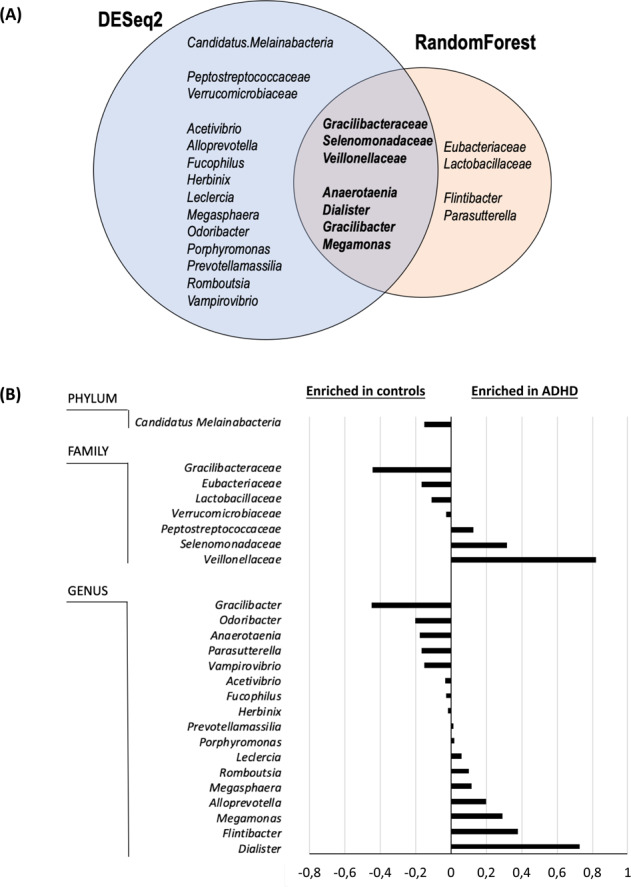
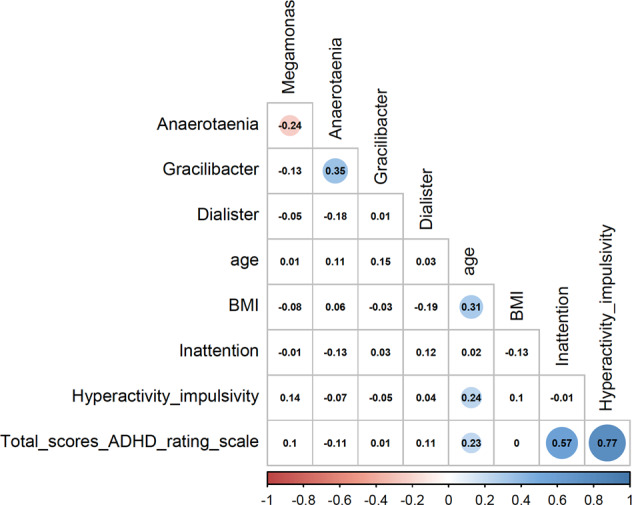
Compelling evidence supports alterations in gut microbial diversity, bacterial composition, and/or relative abundance of several bacterial taxa in attention-deficit/hyperactivity disorder (ADHD). However, findings for ADHD are inconsistent among studies, and specific gut microbiome signatures for the disorder remain unknown. Given that previous studies have mainly focused on the pediatric form of the disorder and involved small sample sizes, we conducted the largest study to date to compare the gastrointestinal microbiome composition in 100 medication-naïve adults with ADHD and 100 sex-matched healthy controls. We found evidence that ADHD subjects have differences in the relative abundance of several microbial taxa. At the family level, our data support a lower relative abundance of Gracilibacteraceae and higher levels of Selenomonadaceae and Veillonellaceae in adults with ADHD. In addition, the ADHD group showed higher levels of Dialister and Megamonas and lower abundance of Anaerotaenia and Gracilibacter at the genus level. All four selected genera explained 15% of the variance of ADHD, and this microbial signature achieved an overall sensitivity of 74% and a specificity of 71% for distinguishing between ADHD patients and healthy controls. We also tested whether the selected genera correlate with age, body mass index (BMI), or scores of the ADHD rating scale but found no evidence of correlation between genera relative abundance and any of the selected traits. These results are in line with recent studies supporting gut microbiome alterations in neurodevelopment disorders, but further studies are needed to elucidate the role of the gut microbiota on the ADHD across the lifespan and its contribution to the persistence of the disorder from childhood to adulthood.
Overview
The claims and statistics of this paper haven’t been checked yet.
Free: it reads the open-access text and checks the first 5 claims that cite a source we can check. Create a free account to check every claim.
Integrity signals
Registry
Cites
Statistics
Figures
Verification
Claims the paper makes
The claims and statistics of this paper haven’t been checked yet.
Free: it reads the open-access text and checks the first 5 claims that cite a source we can check. Create a free account to check every claim.
Claims other papers make about this one
Each is checked against this paper’s own text: does it say what the citing paper says it does?
The source backs part of the claim, not all of it — or backs it for a different population, condition or comparison.
In the citing paper
“Alterations in gut microbiome in ADHD were reported in previous studies, with ADHD group showing higher level of Dialister and Megamonas and lower abundance of Anaerotaenia and Gracilibacter at the genus level57, and Bacteroides species correlating with levels of hyperactivity and impulsivity58.”
From Association between attention-deficit/hyperactivity disorders and intestinal disorders: A systematic review and Meta-analysis (2025) · cites this paper as [57]
Experimental — accuracy not yet measured
Self-check
Percentages, sums and reported differences re-computed from the paper’s own numbers.
The self-check needs the paper’s full text.
Citations
Cites
Cutadapt removes adapter sequences from high-throughput sequencing reads
Martin, M. (2011) · EMBnet.journal · doi:10.14806/ej.17.1.200 · Cited by 33,889
phyloseq: An R Package for Reproducible Interactive Analysis and Graphics of Microbiome Census Data
McMurdie, P. J., & Holmes, S. (2013) · PLoS ONE · doi:10.1371/journal.pone.0061217 · Cited by 21,322
UCHIME improves sensitivity and speed of chimera detection
Edgar, R. C., Haas, B. J., Clemente, J. C., Quince, C., & Knight, R. (2011) · Bioinformatics · doi:10.1093/bioinformatics/btr381 · Cited by 15,114
Cd-hit: a fast program for clustering and comparing large sets of protein or nucleotide sequences
Li, W., & Godzik, A. (2006) · Bioinformatics · doi:10.1093/bioinformatics/btl158 · Cited by 11,410
Klindworth, A., Pruesse, E., Schweer, T., Peplies, J., Quast, C., Horn, M., & Glöckner, F. O. (2013) · Nucleic Acids Research · doi:10.1093/nar/gks808 · Cited by 8,850 · cited 1×
“We used the same workflow as described elsewhere [36] to perform cluster generation, template hybridization, isothermal amplification, linearization, blocking and denaturation, and hybridization of the sequencing primers.”
MethodThe worldwide prevalence of ADHD: a systematic review and metaregression analysis
Polanczyk, G., de Lima, M. S., Horta, B. L., Biederman, J., & Rohde, L. A. (2007) · American Journal of Psychiatry · doi:10.1176/ajp.2007.164.6.942 · Cited by 5,346 · cited 1×
“3%, and of these, 50−70% will still show symptoms in adulthood [4].”
BackgroundPEAR: a fast and accurate Illumina Paired-End reAd mergeR
Zhang, J., Kobert, K., Flouri, T., & Stamatakis, A. (2014) · Bioinformatics · doi:10.1093/bioinformatics/btt593 · Cited by 4,497 · cited 1×
“1, providing a single FASTQ file for each of the samples [37].”
BackgroundThe gut microbiota--masters of host development and physiology
Sommer, F., & Bäckhed, F. (2013) · Nature Reviews Microbiology · doi:10.1038/nrmicro2974 · Cited by 3,681
Host microbiota constantly control maturation and function of microglia in the CNS
Erny, D., Hrabě de Angelis, A. L., Jaitin, D., Wieghofer, P., Staszewski, O., David, E., Keren-Shaul, H., Mahlakoiv, T., Jakobshagen, K., Buch, T., et al. (2015) · Nature Neuroscience · doi:10.1038/nn.4030 · Cited by 3,569
The role of short-chain fatty acids in microbiota–gut–brain communication
Dalile, B., Van Oudenhove, L., Vervliet, B., & Verbeke, K. (2019) · Nature Reviews Gastroenterology & Hepatology · doi:10.1038/s41575-019-0157-3 · Cited by 3,357 · cited 1×
“neuronal cells and afferent pathways that signal directly to the brain [13].”
BackgroundHsiao, E. Y., McBride, S. W., Hsien, S., Sharon, G., Hyde, E. R., McCue, T., Codelli, J. A., Chow, J., Reisman, S. E., Petrosino, J. F., et al. (2013) · Cell · doi:10.1016/j.cell.2013.11.024 · Cited by 3,283
Current understanding of the human microbiome
Gilbert, J. A., Blaser, M. J., Caporaso, J. G., Jansson, J. K., Lynch, S. V., & Knight, R. (2018) · Nature Medicine · doi:10.1038/nm.4517 · Cited by 2,609
Population-level analysis of gut microbiome variation
Falony, G., Joossens, M., Vieira-Silva, S., Wang, J., Darzi, Y., Faust, K., Kurilshikov, A., Bonder, M. J., Valles-Colomer, M., Vandeputte, D., et al. (2016) · Science · doi:10.1126/science.aad3503 · Cited by 2,400
Altered fecal microbiota composition in patients with major depressive disorder
Jiang, H., Ling, Z., Zhang, Y., Mao, H., Ma, Z., Yin, Y., Wang, W., Tang, W., Tan, Z., Shi, J., et al. (2015) · Brain, Behavior, and Immunity · doi:10.1016/j.bbi.2015.03.016 · Cited by 2,275
ADHD Working Group of the Psychiatric Genomics Consortium (PGC), Demontis, D., Early Lifecourse & Genetic Epidemiology (EAGLE) Consortium, 23andMe Research Team, Walters, R. K., Martin, J., Mattheisen, M., Als, T. D., Agerbo, E., Baldursson, G., et al. (2019) · Nature Genetics · doi:10.1038/s41588-018-0269-7 · Cited by 2,203 · cited 1×
“Evidence for a strong genetic component of common variants in the polygenic architecture of ADHD was found, with an SNP-based heritability of 22% [6].”
BackgroundThe gut microbiota–brain axis in behaviour and brain disorders
Morais, L. H., Schreiber, H. L., & Mazmanian, S. K. (2021) · Nature Reviews Microbiology · doi:10.1038/s41579-020-00460-0 · Cited by 2,149
Normalization and microbial differential abundance strategies depend upon data characteristics
Weiss, S., Xu, Z. Z., Peddada, S., Amir, A., Bittinger, K., Gonzalez, A., Lozupone, C., Zaneveld, J. R., Vázquez-Baeza, Y., Birmingham, A., et al. (2017) · Microbiome · doi:10.1186/s40168-017-0237-y · Cited by 2,051
Zheng, P., Zeng, B., Zhou, C., Liu, M., Fang, Z., Xu, X., Zeng, L., Chen, J., Fan, S., Du, X., et al. (2016) · Molecular Psychiatry · doi:10.1038/mp.2016.44 · Cited by 2,023
Population-based metagenomics analysis reveals markers for gut microbiome composition and diversity
Zhernakova, A., Kurilshikov, A., Bonder, M. J., Tigchelaar, E. F., Schirmer, M., Vatanen, T., Mujagic, Z., Vila, A. V., Falony, G., Vieira-Silva, S., et al. (2016) · Science · doi:10.1126/science.aad3369 · Cited by 1,914
Clarke, G., Grenham, S., Scully, P., Fitzgerald, P., Moloney, R. D., Shanahan, F., Dinan, T. G., & Cryan, J. F. (2013) · Molecular Psychiatry · doi:10.1038/mp.2012.77 · Cited by 1,893
Attention-deficit/hyperactivity disorder
Faraone, S. V., Asherson, P., Banaschewski, T., Biederman, J., Buitelaar, J. K., Ramos-Quiroga, J. A., Rohde, L. A., Sonuga-Barke, E. J. S., Tannock, R., & Franke, B. (2015) · Nature Reviews Disease Primers · doi:10.1038/nrdp.2015.20 · Cited by 1,479
Self-citationGenetics of attention deficit hyperactivity disorder
Faraone, S. V., & Larsson, H. (2019) · Molecular Psychiatry · doi:10.1038/s41380-018-0070-0 · Cited by 1,338
Human Gut Microbiota from Autism Spectrum Disorder Promote Behavioral Symptoms in Mice
Sharon, G., Cruz, N. J., Kang, D.-W., Gandal, M. J., Wang, B., Kim, Y.-M., Zink, E. M., Casey, C. P., Taylor, B. C., Lane, C. J., et al. (2019) · Cell · doi:10.1016/j.cell.2019.05.004 · Cited by 1,182
Microbiota and neurodevelopmental windows: implications for brain disorders
Borre, Y. E., O’Keeffe, G. W., Clarke, G., Stanton, C., Dinan, T. G., & Cryan, J. F. (2014) · Trends in Molecular Medicine · doi:10.1016/j.molmed.2014.05.002 · Cited by 1,089
Attention deficit hyperactivity disorder
Thapar, A., & Cooper, M. (2016) · The Lancet · doi:10.1016/s0140-6736(15)00238-x · Cited by 1,043
New evidences on the altered gut microbiota in autism spectrum disorders
Strati, F., Cavalieri, D., Albanese, D., De Felice, C., Donati, C., Hayek, J., Jousson, O., Leoncini, S., Renzi, D., Calabrò, A., et al. (2017) · Microbiome · doi:10.1186/s40168-017-0242-1 · Cited by 1,040
Pyrosequencing study of fecal microflora of autistic and control children
Finegold, S. M., Dowd, S. E., Gontcharova, V., Liu, C., Henley, K. E., Wolcott, R. D., Youn, E., Summanen, P. H., Granpeesheh, D., Dixon, D., et al. (2010) · Anaerobe · doi:10.1016/j.anaerobe.2010.06.008 · Cited by 977
From gut dysbiosis to altered brain function and mental illness: mechanisms and pathways
Rogers, G. B., Keating, D. J., Young, R. L., Wong, M.-L., Licinio, J., & Wesselingh, S. (2016) · Molecular Psychiatry · doi:10.1038/mp.2016.50 · Cited by 969
Factors affecting the composition of the gut microbiota, and its modulation
Hasan, N., & Yang, H. (2019) · PeerJ · doi:10.7717/peerj.7502 · Cited by 755
Impact of microbiota on central nervous system and neurological diseases: the gut-brain axis
Ma, Q., Xing, C., Long, W., Wang, H. Y., Liu, Q., & Wang, R.-F. (2019) · Journal of Neuroinflammation · doi:10.1186/s12974-019-1434-3 · Cited by 748
Live fast, die young? A review on the developmental trajectories of ADHD across the lifespan
Franke, B., Michelini, G., Asherson, P., Banaschewski, T., Bilbow, A., Buitelaar, J. K., Cormand, B., Faraone, S. V., Ginsberg, Y., Haavik, J., et al. (2018) · European Neuropsychopharmacology · doi:10.1016/j.euroneuro.2018.08.001 · Cited by 643
Self-citationAltered gut microbiota and short chain fatty acids in Chinese children with autism spectrum disorder
Liu, S., Li, E., Sun, Z., Fu, D., Duan, G., Jiang, M., Yu, Y., Mei, L., Yang, P., Tang, Y., et al. (2019) · Scientific Reports · doi:10.1038/s41598-018-36430-z · Cited by 457
Altered gut microbiota and activity in a murine model of autism spectrum disorders
de Theije, C. G. M., Wopereis, H., Ramadan, M., van Eijndthoven, T., Lambert, J., Knol, J., Garssen, J., Kraneveld, A. D., & Oozeer, R. (2014) · Brain Behavior and Immunity · doi:10.1016/j.bbi.2013.12.005 · Cited by 433
Smoking Cessation Induces Profound Changes in the Composition of the Intestinal Microbiota in Humans
Biedermann, L., Zeitz, J., Mwinyi, J., Sutter-Minder, E., Rehman, A., Ott, S. J., Steurer-Stey, C., Frei, A., Frei, P., Scharl, M., et al. (2013) · PLoS ONE · doi:10.1371/journal.pone.0059260 · Cited by 404
Pärtty, A., Kalliomäki, M., Wacklin, P., Salminen, S., & Isolauri, E. (2015) · Pediatric Research · doi:10.1038/pr.2015.51 · Cited by 397 · cited 1×
“Additionally, clinical evidence shows that probiotic intervention in early life may improve later outcomes and reduce the risk of neuropsychiatric disorders [29], and mice colonized by microbiota from subjects with ADHD displayed altered microbial composition and behavioral and brain abnormalities compared with mice t…”
BackgroundFlandroy, L., Poutahidis, T., Berg, G., Clarke, G., Dao, M.-C., Decaestecker, E., Furman, E., Haahtela, T., Massart, S., Plovier, H., et al. (2018) · Science of The Total Environment · doi:10.1016/j.scitotenv.2018.01.288 · Cited by 394
Relationship between the gut microbiome and brain function
Mohajeri, M. H., La Fata, G., Steinert, R. E., & Weber, P. (2018) · Nutrition Reviews · doi:10.1093/nutrit/nuy009 · Cited by 376
Gut microbiome in ADHD and its relation to neural reward anticipation
Aarts, E., Ederveen, T. H. A., Naaijen, J., Zwiers, M. P., Boekhorst, J., Timmerman, H. M., Smeekens, S. P., Netea, M. G., Buitelaar, J. K., Franke, B., et al. (2017) · PLOS ONE · doi:10.1371/journal.pone.0183509 · Cited by 350 · cited 1×
“reported a nominal increase in Bifidobacterium in individuals with ADHD, changes that were associated with a significantly enhanced predicted synthesis of the dopamine precursor phenylalanine [22].”
BackgroundGoebel, B. M., & Stackebrandt, E. (1994) · Applied and Environmental Microbiology · doi:10.1128/aem.60.5.1614-1621.1994 · Cited by 294 · cited 1×
“1% were clustered into OTUs based on 97% sequence similarity [40] using the CD-HIT package [41] and the BLAST search against the NCBI 16S rRNA reference database (September 2019) with bastn v.”
MethodReduced microbiome alpha diversity in young patients with ADHD
Prehn-Kristensen, A., Zimmermann, A., Tittmann, L., Lieb, W., Schreiber, S., Baving, L., & Fischer, A. (2018) · PLOS ONE · doi:10.1371/journal.pone.0200728 · Cited by 292 · cited 2×
“observed decreased alpha diversity in ADHD patients and differences in beta diversity between patients and controls [23].”
BackgroundCross talk: the microbiota and neurodevelopmental disorders
Kelly, J. R., Minuto, C., Cryan, J. F., Clarke, G., & Dinan, T. G. (2017) · Frontiers in Neuroscience · doi:10.3389/fnins.2017.00490 · Cited by 271
Lee, S., Yun, Y., Kim, S., Lee, E.-J., Chang, Y., Ryu, S., Shin, H., Kim, H.-L., Kim, H.-N., & Lee, J. (2018) · Journal of Clinical Medicine · doi:10.3390/jcm7090282 · Cited by 255
Hughes, D. A., Bacigalupe, R., Wang, J., Rühlemann, M. C., Tito, R. Y., Falony, G., Joossens, M., Vieira-Silva, S., Henckaerts, L., Rymenans, L., et al. (2020) · Nature Microbiology · doi:10.1038/s41564-020-0743-8 · Cited by 247
Changes in the Gut Microbiota of Children with Autism Spectrum Disorder
Zou, R., Xu, F., Wang, Y., Duan, M., Guo, M., Zhang, Q., Zhao, H., & Zheng, H. (2020) · Autism Research · doi:10.1002/aur.2358 · Cited by 198
Gut microbiome composition is associated with temperament during early childhood
Christian, L. M., Galley, J. D., Hade, E. M., Schoppe-Sullivan, S., Kamp Dush, C., & Bailey, M. T. (2015) · Brain, Behavior, and Immunity · doi:10.1016/j.bbi.2014.10.018 · Cited by 191 · cited 1×
“Although the mechanistic explanation for these associations remains unknown, a positive correlation between Dialister abundance and activity level has been described in toddlers [44].”
BackgroundGut microbiota and dietary patterns in children with attention-deficit/hyperactivity disorder
Wang, L.-J., Yang, C.-Y., Chou, W.-J., Lee, M.-J., Chou, M.-C., Kuo, H.-C., Yeh, Y.-M., Lee, S.-Y., Huang, L.-H., & Li, S.-C. (2020) · European Child & Adolescent Psychiatry · doi:10.1007/s00787-019-01352-2 · Cited by 174 · cited 2×
“compared the fecal microbiota composition between medication-naïve children with ADHD and healthy controls and found Fusobacterium genus as a marker for ADHD as well as enrichment of Lactobacillus in the control group [28].”
BackgroundCriteria and Concurrent Validity of DIVA 2.0: A Semi-Structured Diagnostic Interview for Adult ADHD
Ramos-Quiroga, J. A., Nasillo, V., Richarte, V., Corrales, M., Palma, F., Ibáñez, P., Michelsen, M., Van de Glind, G., Casas, M., & Kooij, J. J. S. (2019) · Journal of Attention Disorders · doi:10.1177/1087054716646451 · Cited by 168
Self-citationCheca-Ros, A., Jeréz-Calero, A., Molina-Carballo, A., Campoy, C., & Muñoz-Hoyos, A. (2021) · Nutrients · doi:10.3390/nu13010249 · Cited by 164
Gut microbiota profiles in treatment-naïve children with attention deficit hyperactivity disorder
Jiang, H.-Y., Zhou, Y.-Y., Zhou, G.-L., Li, Y.-C., Yuan, J., Li, X.-H., & Ruan, B. (2018) · Behavioural Brain Research · doi:10.1016/j.bbr.2018.03.036 · Cited by 161 · cited 2×
“Additionally, decreased levels of Dialister were found in autism spectrum disorder (ASD) patients [45,46,] or in treatmentnaïve children with ADHD [27] compared with healthy controls and in ADHD individuals on medication compared with nonmedicated individuals [24].”
BackgroundWan, L., Ge, W.-R., Zhang, S., Sun, Y.-L., Wang, B., & Yang, G. (2020) · Frontiers in Neuroscience · doi:10.3389/fnins.2020.00127 · Cited by 147 · cited 1×
“, which also detected a reduced relative abundance of Faecalibacterium, as well as higher amounts of Odoribacter and Enterococcus, in ADHD patients [20].”
BackgroundGut microbiota from persons with attention-deficit/hyperactivity disorder affects the brain in mice
Tengeler, A. C., Dam, S. A., Wiesmann, M., Naaijen, J., van Bodegom, M., Belzer, C., Dederen, P. J., Verweij, V., Franke, B., Kozicz, T., et al. (2020) · Microbiome · doi:10.1186/s40168-020-00816-x · Cited by 146
Sharp, K. H., Pratte, Z. A., Kerwin, A. H., Rotjan, R., & Stewart, F. J. (2017) · Microbiome · doi:10.1186/s40168-017-0329-8 · Cited by 145
Szopinska-Tokov, J., Dam, S., Naaijen, J., Konstanti, P., Rommelse, N., Belzer, C., Buitelaar, J., Franke, B., Bloemendaal, M., Aarts, E., et al. (2020) · Microorganisms · doi:10.3390/microorganisms8030406 · Cited by 113
KUWAHARA, A., MATSUDA, K., KUWAHARA, Y., ASANO, S., INUI, T., & MARUNAKA, Y. (2020) · Biomedical Research · doi:10.2220/biomedres.41.199 · Cited by 112
Shared genetic background between children and adults with attention deficit/hyperactivity disorder
Rovira, P., Demontis, D., Sánchez-Mora, C., Zayats, T., Klein, M., Mota, N. R., Weber, H., Garcia-Martínez, I., Pagerols, M., Vilar-Ribó, L., et al. (2020) · Neuropsychopharmacology · doi:10.1038/s41386-020-0664-5 · Cited by 111
Self-citationHost and Microbiome Genome-Wide Association Studies: Current State and Challenges
Awany, D., Allali, I., Dalvie, S., Hemmings, S., Mwaikono, K. S., Thomford, N. E., Gomez, A., Mulder, N., & Chimusa, E. R. (2019) · Frontiers in Genetics · doi:10.3389/fgene.2018.00637 · Cited by 109
Chi, L., Mahbub, R., Gao, B., Bian, X., Tu, P., Ru, H., & Lü, K. (2017) · Chemical Research in Toxicology · doi:10.1021/acs.chemrestox.7b00162 · Cited by 95
Boonchooduang, N., Louthrenoo, O., Chattipakorn, N., & Chattipakorn, S. C. (2020) · European Journal of Nutrition · doi:10.1007/s00394-020-02383-1 · Cited by 87
Systematic review of gut microbiota and attention-deficit hyperactivity disorder (ADHD)
Sukmajaya, A. C., Lusida, M. I., Soetjipto, & Setiawati, Y. (2021) · Annals of General Psychiatry · doi:10.1186/s12991-021-00330-w · Cited by 74
Changes in the intestinal microbiota from adulthood through to old age
O’Toole, P. W. (2012) · Clinical Microbiology and Infection · doi:10.1111/j.1469-0691.2012.03867.x · Cited by 73
Chio, J. C. T., Wang, J., Badner, A., Hong, J., Surendran, V., & Fehlings, M. G. (2019) · Journal of Neuroinflammation · doi:10.1186/s12974-019-1518-0 · Cited by 65
The Role of the Gut-Brain Axis in Attention-Deficit/Hyperactivity Disorder
Dam, S. A., Mostert, J. C., Szopinska-Tokov, J. W., Bloemendaal, M., Amato, M., & Arias-Vasquez, A. (2019) · Gastroenterology Clinics of North America · doi:10.1016/j.gtc.2019.05.001 · Cited by 64
A Systematic Review of the Microbiome in Children With Neurodevelopmental Disorders
Lacorte, E., Gervasi, G., Bacigalupo, I., Vanacore, N., Raucci, U., & Parisi, P. (2019) · Frontiers in Neurology · doi:10.3389/fneur.2019.00727 · Cited by 57
Vitamin D Receptor (VDR) Gene Polymorphism in Patients Diagnosed with Colorectal Cancer
Latacz, M., Rozmus, D., Fiedorowicz, E., Snarska, J., Jarmołowska, B., Kordulewska, N. K., Savelkoul, H. F. J., & Cieślińska, A. (2021) · Nutrients · doi:10.3390/nu13010200 · Cited by 39
Jurek, L., Sevil, M., Jay, A., Schroder, C. M., Baghdadli, A., Héry-Arnaud, G., & Geoffray, M. (2020) · European Child & Adolescent Psychiatry · doi:10.1007/s00787-020-01544-1 · Cited by 27
Library Quantification Using PicoGreen FluorometryPreprint
Mardis, E. R., & McCombie, W. R. (2016) · Cold Spring Harbor Protocols · doi:10.1101/pdb.prot094722 · Cited by 3 · cited 2×
“The isolated DNA was quantified using PicoGreenTM dsDNA Assay Kit [35].”
Method
Cited by
The gut microbiome and mental health: advances in research and emerging priorities
Shoubridge, A. P., Choo, J. M., Martin, A. M., Keating, D. J., Wong, M., Licinio, J., & Rogers, G. B. (2022) · Molecular Psychiatry · doi:10.1038/s41380-022-01479-w · Cited by 145
“For example, recent studies have reported relationships between intestinal microbiology and neurodegenerative disorders, such as Huntington’s disease (HD) [2] and multiple sclerosis [3]; psychiatric conditions, such as schizophrenia [4–7] and major depressive disorder (MDD) [8–11]; and behavioural conditions, includin…”
ResultGut microbiota and plasma cytokine levels in patients with attention-deficit/hyperactivity disorder
Wang, L., Li, S., Li, S.-W., Kuo, H., Lee, S.-Y., Huang, L., Chin, C.-Y., & Yang, C. (2022) · Translational Psychiatry · doi:10.1038/s41398-022-01844-x · Cited by 78
Bundgaard‐Nielsen, C., Lauritsen, M. B., Knudsen, J. K., Rold, L. S., Larsen, M. H., Hindersson, P., Villadsen, A. B., Leutscher, P. D. C., Hagstrøm, S., Nyegaard, M., et al. (2023) · Gut Microbes · doi:10.1080/19490976.2023.2211923 · Cited by 77
Singh, J., Vanlallawmzuali, Singh, A. K., Biswal, S., Zomuansangi, R., Lalbiaktluangi, C., Singh, B. P., Singh, P. K., Vellingiri, B., Iyer, M., et al. (2024) · Asian Journal of Psychiatry · doi:10.1016/j.ajp.2024.104068 · Cited by 76
Wang, N., Gao, X., Zhang, Z., & Yang, L. (2022) · Frontiers in Endocrinology · doi:10.3389/fendo.2022.838941 · Cited by 56
“Three of the included records consisted of medication-naïve participants to compare ADHD patients and HCs (12, 13, 16), one study asked patients to discontinue taking medicine for at least 48 h prior to sampling collection (11), and one explored the effect of medication by removing 19 medicated cases from a regression…”
BackgroundResultInfluential
Metadata
- Authors
- Richarte, V., Sánchez-Mora, C., Corrales, M., Fadeuilhe, C., Vilar-Ribó, L., Arribas, L., Garcia, E., Rosales-Ortiz, S. K., Arias-Vasquez, A., Soler-Artigas, M., Ribasés, M., & Ramos-Quiroga, J. A.
- Affiliations
- Universitat Autònoma de Barcelona (ES)
- Corresponding author
- Ribasés, Marta
- ORCID
- Venue
- Translational Psychiatry
- Published
- 2021-07-08
- Volume
- 11
- Issue
- 1
- Pages
- 382-382
- ISSN
- 2158-3188 (ISSN-L)
- PMC
- PMC8266901
- OpenAlex
- W3181011075
- Cited by
- 75
- References
- 66
- Citations by year
- 2026: 15 · 2025: 20 · 2024: 18 · 2023: 8 · 2022: 14
- FWCI
- 3.14
- Type
- journal article
- Language
- en
- Open access
- gold
- doi.org
- Licence
- cc-by
- creativecommons.org/licenses/by/4.0 (tdm)
- creativecommons.org/licenses/by/4.0 (vor)
- Locations
- Translational Psychiatry (publishedVersion, cc-by)
- PubMed Central (publishedVersion, cc-by)
- PubMed (publishedVersion)
- Radboud Repository (Radboud University) (submittedVersion)
- Dipòsit Digital de Documents de la UAB (Universitat Autònoma de Barcelona) (submittedVersion, cc-by)
- DOAJ (DOAJ: Directory of Open Access Journals) (submittedVersion, cc-by-sa)
- Radboud Repository (Radboud University) (submittedVersion, other-oa)
- Funders
- European Commission (728018, H2020/2014-2020, 092330/31)
- Ministerio de Economía y Competitividad (PI17/00289, PI15/01789, PI16/01505, PI20/00041, PI19/01224, PI18/01788, PI19/00721)
- Ministerio de Asuntos Económicos y Transformación Digital, Gobierno de España
- Instituto de Salud Carlos III (CD15/00199)
- Topics
- Life Sciences › Biochemistry, Genetics and Molecular Biology › Molecular Biology › Gut microbiota and health
- Health Sciences › Medicine › Psychiatry and Mental health › Attention Deficit Hyperactivity Disorder
- Health Sciences › Medicine › Gastroenterology › Gastrointestinal motility and disorders
- Keywords
- attention deficit hyperactivity disorder, gut microbiota, adult ADHD, treatment-naive patients, microbial signatures, Veillonellaceae, Dialister, Megamonas, microbial biomarkers, neurodevelopmental disorders
- MeSH terms
- Gastrointestinal Microbiome, Adolescent, Adult, Attention, Attention Deficit Disorder with Hyperactivity, Child, Humans, Body Mass Index, Young Adult, Neurodevelopmental Disorders
About these checks
Registry, retraction, Cites and statistics results are computed, not judged, with one exception: a printed reference that no index lists is read once by a model before it counts as a citation error. Claims are extracted by a model and kept only when their quote appears verbatim in the text; each cited source is then checked, with a model’s help, for whether it says what the claim relies on. Those verdicts can be wrong — read the claim’s quote and the cited source before relying on one.
Statistics and arithmetic are recomputed, not judged.
Confidence bands are shown only for fields calibrated on our annotated test set. None is calibrated yet, so no band is shown.
What counts as a claim ›How we measure confidence ›How we check this ›
Are you an author, or do you see a problem with this page? Request a review
Data sources
Bibliographic data: Semantic Scholar, OpenAlex, Crossref.
Contains information from the Semantic Scholar Academic Graph Datasets, made available under the ODC Attribution License (ODC-BY 1.0).
Semantic Scholar’s data is described in: Kinney, R., et al. (2023). The Semantic Scholar Open Data Platform. arXiv:2301.10140.
