

Machine-learning-based diagnosis of drug-naive adult patients with attention-deficit hyperactivity disorder using mismatch negativity
Open accessThe DOI matches its Crossref record; 105 of the 105 references it cites were found in a registry or an index.
Abstract
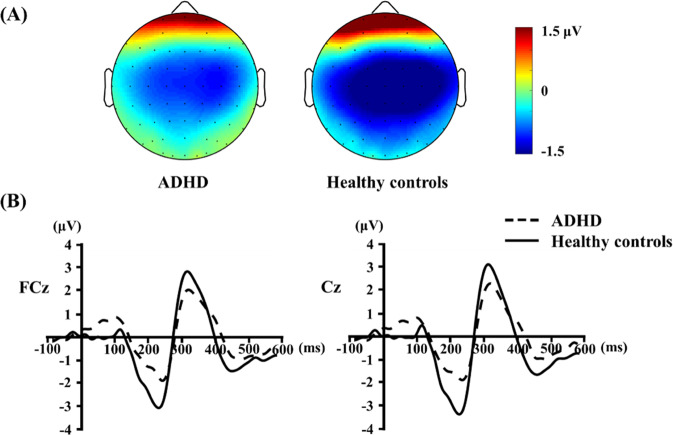
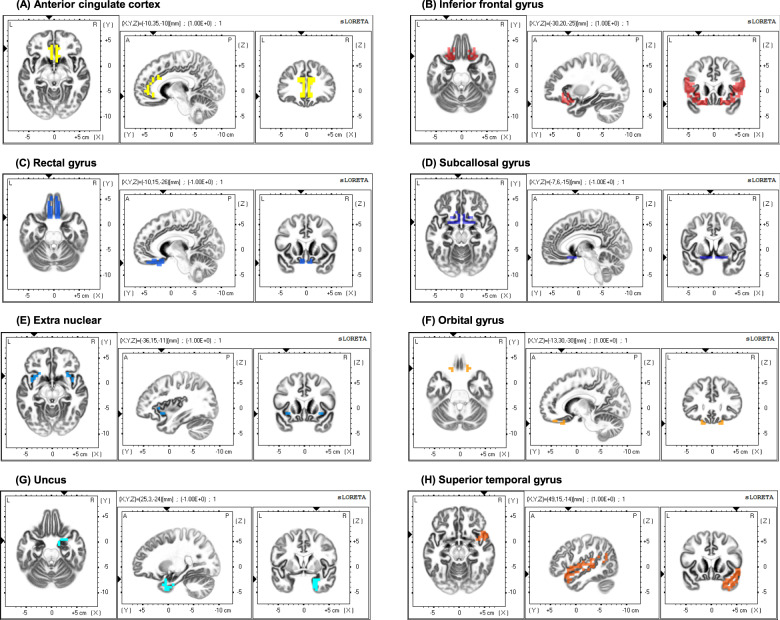
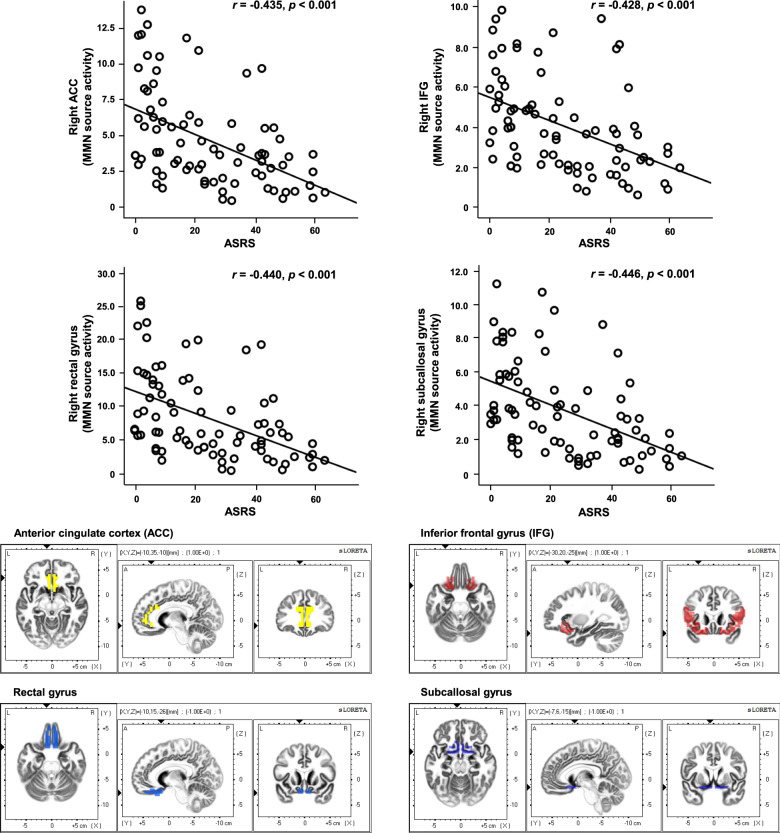
Relatively little is investigated regarding the neurophysiology of adult attention-deficit/hyperactivity disorder (ADHD). Mismatch negativity (MMN) is an event-related potential component representing pre-attentive auditory processing, which is closely associated with cognitive status. We investigated MMN features as biomarkers to classify drug-naive adult patients with ADHD and healthy controls (HCs). Sensor-level features (amplitude and latency) and source-level features (source activation) of MMN were investigated and compared between the electroencephalograms of 34 patients with ADHD and 45 HCs using a passive auditory oddball paradigm. Correlations between MMN features and ADHD symptoms were analyzed. Finally, we applied machine learning to differentiate the two groups using sensor- and source-level features of MMN. Adult patients with ADHD showed significantly lower MMN amplitudes at the frontocentral electrodes and reduced MMN source activation in the frontal, temporal, and limbic lobes, which were closely associated with MMN generators and ADHD pathophysiology. Source activities were significantly correlated with ADHD symptoms. The best classification performance for adult ADHD patients and HCs showed an 81.01% accuracy, 82.35% sensitivity, and 80.00% specificity based on MMN source activity features. Our results suggest that abnormal MMN reflects the adult ADHD patients’ pathophysiological characteristics and might serve clinically as a neuromarker of adult ADHD.
Overview
The claims and statistics of this paper haven’t been checked yet.
Free: it reads the open-access text and checks the first 5 claims that cite a source we can check. Create a free account to check every claim.
Integrity signals
Registry
Cites
Statistics
Figures
Verification
Claims the paper makes
The claims and statistics of this paper haven’t been checked yet.
Free: it reads the open-access text and checks the first 5 claims that cite a source we can check. Create a free account to check every claim.
Claims other papers make about this one
Each is checked against this paper’s own text: does it say what the citing paper says it does?
The source backs part of the claim, not all of it — or backs it for a different population, condition or comparison.
In the citing paper
“First, both auditory and visual oddball paradigms revealed decreased mismatch negativity amplitudes in adults with ADHD compared with adults without ADHD (Dang et al., 2024; Hsieh et al., 2021; Kim et al., 2021)”
From Are prediction error modifications domain specific in autism but domain general in ADHD? (2025) · cites this paper as Kim et al., 2021
Experimental — accuracy not yet measured
Self-check
Percentages, sums and reported differences re-computed from the paper’s own numbers.
The self-check needs the paper’s full text.
Citations
Cites
Re-epithelialization and immune cell behaviour in an ex vivo human skin model
Rakita, A., Nikolić, N., Mildner, M., Matiasek, J., & Elbe-Bürger, A. (2020) · Scientific Reports · doi:10.1038/s41598-019-56847-4 · Cited by 8,228
Dissociable intrinsic connectivity networks for salience processing and executive control
Seeley, W. W., Menon, V., Schatzberg, A. F., Keller, J., Glover, G. H., Kenna, H., Reiss, A. L., & Greicius, M. D. (2007) · The Journal of Neuroscience · doi:10.1523/jneurosci.5587-06.2007 · Cited by 7,426
Standardized low-resolution brain electromagnetic tomography (sLORETA): technical details.
Pascual-Marqui, R. D. (2002) · PubMed · Cited by 4,070
Willcutt, E. G., Doyle, A. E., Nigg, J. T., Faraone, S. V., & Pennington, B. F. (2005) · Biological Psychiatry · doi:10.1016/j.biopsych.2005.02.006 · Cited by 3,568 · cited 1×
“The functions mediated by the insula are consistently impaired in ADHD, such as cognitive control, sustained attention, and saliency detection [89, 90].”
BackgroundKESSLER, R. C., ADLER, L., AMES, M., DEMLER, O., FARAONE, S., HIRIPI, E., HOWES, M. J., JIN, R., SECNIK, K., SPENCER, T., et al. (2005) · Psychological Medicine · doi:10.1017/s0033291704002892 · Cited by 3,452 · cited 1×
“The ASRS is a widely used self-reporting scale with 18 items scored on a 5-point Likert scale to screen for ADHD in the general population [29].”
MethodEarly selective-attention effect on evoked potential reinterpreted
Näätänen, R., Gaillard, A. W. K., & Mäntysalo, S. (1978) · Acta Psychologica · doi:10.1016/0001-6918(78)90006-9 · Cited by 2,706
FARAONE, S. V., BIEDERMAN, J., & MICK, E. (2006) · Psychological Medicine · doi:10.1017/s003329170500471x · Cited by 2,267 · cited 1×
“Although ADHD is known to be a disease with childhood-onset, ~15% of children with ADHD maintain their symptomatology, meeting full diagnostic criteria for adults [2].”
BackgroundA Solution for Reliable and Valid Reduction of Ocular Artifacts, Applied to the P300 ERP
Semlitsch, H. V., Anderer, P., Schuster, P., & Presslich, O. (1986) · Psychophysiology · doi:10.1111/j.1469-8986.1986.tb00696.x · Cited by 2,020 · cited 1×
“Artifacts related to eye movements or eye blinks were corrected using a covariance- and regression-based mathematical procedure implemented in the preprocessing software [30].”
MethodAttention-deficit/hyperactivity disorder is characterized by a delay in cortical maturation
Shaw, P., Eckstrand, K., Sharp, W., Blumenthal, J., Lerch, J. P., Greenstein, D., Clasen, L., Evans, A., Giedd, J., & Rapoport, J. L. (2007) · Proceedings of the National Academy of Sciences · doi:10.1073/pnas.0707741104 · Cited by 1,819 · cited 1×
“Previous studies have demonstrated that there are delays in cortical maturation in the bilaterally superior temporal gyrus of ADHD patients that could affect the control of attention [94, 95].”
BackgroundStop-signal inhibition disrupted by damage to right inferior frontal gyrus in humans
Aron, A. R., Fletcher, P. C., Bullmore, E. T., Sahakian, B. J., & Robbins, T. W. (2003) · Nature Neuroscience · doi:10.1038/nn1003 · Cited by 1,771 · cited 1×
“In addition, several studies have highlighted that the inferior frontal gyrus is crucial for inhibiting behavioral responses related to impulsivity and hyperactivity [80, 81].”
Background
Cited by
Automated detection of ADHD: Current trends and future perspective
Loh, H. W., Ooi, C. P., Barua, P. D., Palmer, E. E., Molinari, F., & Acharya, U. R. (2022) · Computers in Biology and Medicine · doi:10.1016/j.compbiomed.2022.105525 · Cited by 196
Maniruzzaman, M., Hasan, M. A. M., Asai, N., & Shin, J. (2023) · IEEE Access · doi:10.1109/access.2023.3264266 · Cited by 106
“Kim et al. [62] performed SVM with linear kernel for classification and its performance was evaluated using classification accuracy.”
MethodCao, M., Martin, E., & Li, X. (2023) · Translational Psychiatry · doi:10.1038/s41398-023-02536-w · Cited by 96
“used machine learning to validate mismatch negativity (a novel measure that contrasts activity during regular auditory stimuli and occasional novel stimuli) in differentiating adults with ADHD from controls [107].”
MethodRibas, M. O., Micai, M., Caruso, A., Fulceri, F., Fazio, M. C., & Scattoni, M. L. (2022) · Neuroscience & Biobehavioral Reviews · doi:10.1016/j.neubiorev.2022.105021 · Cited by 60
“…2021; Groeneveld, 2019; Gu, 2021; Ha, 2022; Hadas, 2021; Häger, 2021; Hasslinger et al., 2022; Johnstone, 2021; Kaur, 2019; Khan, 2021; Kiiski, 2020; Kim, 2021; Laniel, 2020; Liu, 2021; Medina, 2021; Moghaddari et al., 2020; O’Neill, 2022; Owens, 2021; Öztekin, 2021; Purper-Ouakil, 2022; Qi,…”
Wiebe, A., Selaskowski, B., Paskin, M., Asché, L., Pakos, J., Aslan, B., Lux, S., Philipsen, A., & Braun, N. (2024) · Translational Psychiatry · doi:10.1038/s41398-024-03217-y · Cited by 41
Li, S., Nair, R., & Naqvi, S. M. (2024) · IEEE Journal of Translational Engineering in Health and Medicine · doi:10.1109/jtehm.2024.3369764 · Cited by 35
Hámori, G., File, B., Fiáth, R., Pászthy, B., Réthelyi, J., Ulbert, I., & Bunford, N. (2023) · Psychiatry Research · doi:10.1016/j.psychres.2023.115139 · Cited by 28
“Accuracy, sensitivity and specificity were considered good if ≥ .80 (Kim et al., 2021; Power et al., 2013).”
BackgroundFrom neurons to brain networks, pharmacodynamics of stimulant medication for ADHD
Parlatini, V., Bellato, A., Murphy, D., & Cortese, S. (2024) · Neuroscience & Biobehavioral Reviews · doi:10.1016/j.neubiorev.2024.105841 · Cited by 26
“Increased rs-fc within the DMN has also been reported in both adolescents (Kim et al., 2021) and adults with ADHD (Picon et al., 2020).”
BackgroundSun, R., Zhang, W., Bagic, A. I., & He, B. (2023) · NeuroImage · doi:10.1016/j.neuroimage.2023.120366 · Cited by 31
Parlatini, V., Bellato, A., Gabellone, A., Margari, L., Marzulli, L., Matera, E., Petruzzelli, M. G., Solmi, M., Correll, C. U., & Cortese, S. (2024) · Expert Review of Molecular Diagnostics · doi:10.1080/14737159.2024.2333277 · Cited by 29
“Their machine learning approach identified a model with specificity and sensitivity of at least 80% based on MMN source activity features [87].”
BackgroundResultReimann, G. E., Jeong, H. J., Durham, E. L., Archer, C., Moore, T. M., Berhe, F., Dupont, R. M., & Kaczkurkin, A. N. (2024) · Human Brain Mapping · doi:10.1002/hbm.26589 · Cited by 20
“…greater endorsement of inattention is linked to smaller caudal anterior cingulate gray matter volume is in line with prior empirical studies acknowledging the anterior cingulate's potential importance in the pathophysiology of ADHD (Bernanke et al., 2022; Kim et al., 2021; Seidman et al., 2006).”
ResultDiagnosis of attention deficit hyperactivity disorder: A deep learning approach
Alsharif, N. H., Al-Adhaileh, M. H., & Al‐Yaari, M. (2024) · AIMS Mathematics · doi:10.3934/math.2024517 · Cited by 18
Choi, H., Hong, J., Kang, H. G., Park, M.-H., Ha, S., Lee, J., Yoon, S., Kim, D., Park, Y. R., & Cheon, K.-A. A. (2025) · npj Digital Medicine · doi:10.1038/s41746-025-01547-9 · Cited by 21
Zaheer, A., & Akhtar, A. (2025) · Child Neuropsychology · doi:10.1080/09297049.2025.2468411 · Cited by 19
“SVM, utilizing a kernel function to transform data into a higher-dimensional space and determining an optimal hyperplane for class separation, outperformed other classifiers in the study (Kim, Baek, et al., 2021).”
Kern, F. B., & Chao, Z. C. (2023) · PLoS Computational Biology · doi:10.1371/journal.pcbi.1011554 · Cited by 13
Ain, Q. U., Jawed, S., Subhani, A. R., Butt, W. H., & Akram, M. U. (2025) · IEEE Access · doi:10.1109/access.2025.3567427 · Cited by 13
Kim, S., Jang, K., Lee, H. S., Shim, S.-H., & Kim, J. S. (2024) · Progress in Neuro-Psychopharmacology and Biological Psychiatry · doi:10.1016/j.pnpbp.2024.110965 · Cited by 10
Self-citationGabor filter-based statistical features for ADHD detection
Sathiya, E., Rao, T. D., & Kumar, T. S. (2024) · Frontiers in Human Neuroscience · doi:10.3389/fnhum.2024.1369862 · Cited by 10
Li, Y., Chen, J., Zheng, X., Liu, J., Peng, C., Liao, Y., & Liu, Y. (2022) · Journal of Psychiatric Research · doi:10.1016/j.jpsychires.2022.07.064 · Cited by 10
Lohani, D. C., Chawla, V., & Rana, B. (2025) · Neuroscience · doi:10.1016/j.neuroscience.2025.02.019 · Cited by 9
Comparative Study of Detection of ADHD using EEG Signals
Anchana, V., & Biju, K. S. (2023) · International Conference on Control, Communication and Computing (ICCC) · doi:10.1109/iccc57789.2023.10165395 · Cited by 9
Kim, J., Lim, K. H., Kim, E., Kim, S., Kim, H. J., Lee, Y. H., Kim, S., & Choi, J. (2025) · Ear and Hearing · doi:10.1097/aud.0000000000001623 · Cited by 7
“By testing incremental numbers of features from 1 to 20, the performance of each validation dataset was assessed in terms of accuracy, sensitivity, and specificity, which were then averaged over all validation sets (Kim et al. 2021).”
Self-citationManiruzzaman, M., Hasan, M. A. M., Suzuki, T., & Shin, J. (2023) · European Workshop on Visual Information Processing · doi:10.1109/euvip58404.2023.10323044 · Cited by 7
“Previously, various linear and non-linear classifiers, including support vector machine (SVM), linear discriminant analysis, neural networks, and so on, were widely used to differentiate ADHD subjects from healthy controls [3], [8]–[10], [12], [13].”
BackgroundYang, H., Guo, J., Yin, W., Deng, Y., Fu, T., Huang, S., Huang, J., Hong, D., Zhu, Z., Yang, C., et al. (2024) · Psychological Medicine · doi:10.1017/s0033291724003076 · Cited by 6
“We found that the amplitude of MMN was reduced in children with ADHD, which was consistent with previous research (Kemner et al., 1996; Kilpeläinen et al., 1999; Kim et al., 2021; Lee et al., 2020; Rothenberger et al., 2000; Zhang et al., 2020).”
A weighted dispersion entropy based EEG analysis for ADHD diagnosis
Ullah, M. Z., Ta, N., & Yu, D. (2025) · Biomedical Signal Processing and Control · doi:10.1016/j.bspc.2025.107993 · Cited by 5
Recent Advances in Clinical Applications of P300 and MMN
Falkenstein, M. (2023) · Neuromethods · doi:10.1007/978-1-0716-3545-2_1 · Cited by 7
Dang, C., Luo, X., Zhu, Y., Li, B., Feng, Y., Xu, C., Kang, S., Yin, G., Johnstone, S. J., Wang, Y., et al. (2024) · European Archives of Psychiatry and Clinical Neuroscience · doi:10.1007/s00406-023-01695-7 · Cited by 4
A Multimodal Dataset for Neurophysiological and AI Applications
Trujillo, J. C., Ferrer‐Cascales, R., Teruel, M. Á., Ruiz‐Robledillo, N., Sanchís, J., García-Ponsoda, S., Panagiotidis-Arrizabalaga, A., Albaladejo-Blázquez, N., Martínez-Nicolás, Á., García‐Carrasco, J., et al. (2026) · Scientific Data · doi:10.1038/s41597-026-06758-7 · Cited by 5
Are prediction error modifications domain specific in autism but domain general in ADHD?
Plank, I. S., Yurova, A., Pior, A., Nowak, J., Bierlich, A. M., Papazov, B., Shi, Z., & Falter-Wagner, C. M. (2025) · Imaging neuroscience · doi:10.1162/imag.a.942 · Cited by 3
“This finding does not align with the literature showing reduced MMN in ADHD ( Cheng et al., 2016; Dang et al., 2024; Hsieh et al., 2021; Kim et al., 2021), which has been interpreted as a marker of pwPE ( Stefanics et al., 2014).”
Digital health technologies for adults with ADHD: a scoping review
Schofield, F. J., Wilkie, S., Nielsen, E. E., Brigden, A., Jones, M. W., & Isotalus, H. (2026) · Frontiers in Digital Health · doi:10.3389/fdgth.2026.1746732 · Cited by 4
Sun, R., Zhang, W., Bagic, A. I., & He, B. (2022) · bioRxiv (Cold Spring Harbor Laboratory) · doi:10.1101/2022.11.13.516312 · Cited by 3
Response inhibition deficits in unmedicated youth with ADHD: An ERP/sLORETA study
Xu, Y., Zeng, Y., Yin, W., Fu, T., Hong, D., Han, Y., Zhu, Z., Cheng, D., Dang, C.-P., Song, Y., et al. (2025) · Journal of Affective Disorders · doi:10.1016/j.jad.2025.119880 · Cited by 2
Cognitive Event-Related Potentials and ADHD Across the Lifespan
Carvalho, S., & Leite, J. (2023) · Autism and child psychopathology series · doi:10.1007/978-3-031-41709-2_6 · Cited by 2
Tan, Y. L., Ma, G., McIntyre, R. S., Teopiz, K. M., Dri, C. E., Chiang, S., Zhou, D., Hao, F., Li, Z., Zhang, Z., et al. (2025) · Psychiatry International · doi:10.3390/psychiatryint7010001 · Cited by 1
Neurophysiological Insights into ADHD: Electroencephalography Methods in Diagnosis and Treatment
Yazıcı, M. S., & Serdengeçti, N. (2024) · Springer eBooks · doi:10.1007/978-3-031-32035-4_150-1 · Cited by 1
Eggermont, J. J. (2023) · Elsevier eBooks · doi:10.1016/b978-0-443-15548-2.00008-9
Neurophysiological Insights into ADHD: Electroencephalography Methods in Diagnosis and Treatment
Yazıcı, M. S., & Serdengeçti, N. (2025) · Springer eBooks · doi:10.1007/978-3-031-73368-0_150
Castro-Verazas, E. A., Lima-Portillo, S. B., Hernández-Farías, D. I., & Reyes-Garcia, C. A. (2026) · Lecture notes in computer science · doi:10.1007/978-3-032-28393-1_30
Köse, A., & Çiftçi, B. (2026) · World Journal of Psychiatry · doi:10.5498/wjp.126199
Metadata
- Authors
- Kim, S., Baek, J. H., Kwon, Y. J., Lee, H. Y., Yoo, J. H., Shim, S.-H., & Kim, J. S.
- Affiliations
- Hanyang University (KR)
- Samsung Medical Center (KR)
- Soonchunhyang University (KR)
- The Catholic University of Korea Seoul St. Mary's Hospital (KR)
- Corresponding author
- Shim, Se-hoon
- Kim, Ji Sun
- Venue
- Translational Psychiatry
- Published
- 2021-09-18
- Volume
- 11
- Issue
- 1
- Pages
- 484-484
- ISSN
- 2158-3188 (ISSN-L)
- PMC
- PMC8449778
- OpenAlex
- W3200248055
- Cited by
- 38
- References
- 105
- Citations by year
- 2026: 3 · 2025: 10 · 2024: 10 · 2023: 11 · 2022: 4
- FWCI
- 4.48
- Type
- journal article
- Language
- en
- Open access
- gold
- doi.org
- Licence
- cc-by
- creativecommons.org/licenses/by/4.0 (tdm)
- creativecommons.org/licenses/by/4.0 (vor)
- Locations
- Translational Psychiatry (publishedVersion, cc-by)
- Europe PMC (PubMed Central) (publishedVersion, other-oa)
- PubMed Central (publishedVersion, cc-by)
- PubMed (publishedVersion)
- DOAJ (DOAJ: Directory of Open Access Journals) (submittedVersion, cc-by-sa)
- Funders
- National Research Foundation of Korea (2020R1I1A3068017)
- Topics
- Health Sciences › Medicine › Psychiatry and Mental health › Attention Deficit Hyperactivity Disorder
- Life Sciences › Neuroscience › Cognitive Neuroscience › EEG and Brain-Computer Interfaces
- Life Sciences › Neuroscience › Cognitive Neuroscience › Autism Spectrum Disorder Research
- Keywords
- adult ADHD, mismatch negativity, drug-naive patients, neuromarkers, pre-attentive auditory processing, ADHD symptom severity, machine learning classification
- MeSH terms
- Machine Learning, Adult, Attention Deficit Disorder with Hyperactivity, Auditory Perception, Pharmaceutical Preparations, Electroencephalography, Evoked Potentials, Auditory, Humans
About these checks
Registry, retraction, Cites and statistics results are computed, not judged, with one exception: a printed reference that no index lists is read once by a model before it counts as a citation error. Claims are extracted by a model and kept only when their quote appears verbatim in the text; each cited source is then checked, with a model’s help, for whether it says what the claim relies on. Those verdicts can be wrong — read the claim’s quote and the cited source before relying on one.
Statistics and arithmetic are recomputed, not judged.
Confidence bands are shown only for fields calibrated on our annotated test set. None is calibrated yet, so no band is shown.
What counts as a claim ›How we measure confidence ›How we check this ›
Are you an author, or do you see a problem with this page? Request a review
Data sources
Bibliographic data: Semantic Scholar, OpenAlex, Crossref.
Contains information from the Semantic Scholar Academic Graph Datasets, made available under the ODC Attribution License (ODC-BY 1.0).
Semantic Scholar’s data is described in: Kinney, R., et al. (2023). The Semantic Scholar Open Data Platform. arXiv:2301.10140.
