

The DOI matches its Crossref record; 6 of the 6 references it cites were found in a registry or an index.
Exercise as a model to identify microRNAs linked to human cognition: a role for microRNA-409 and microRNA-501
Abstract
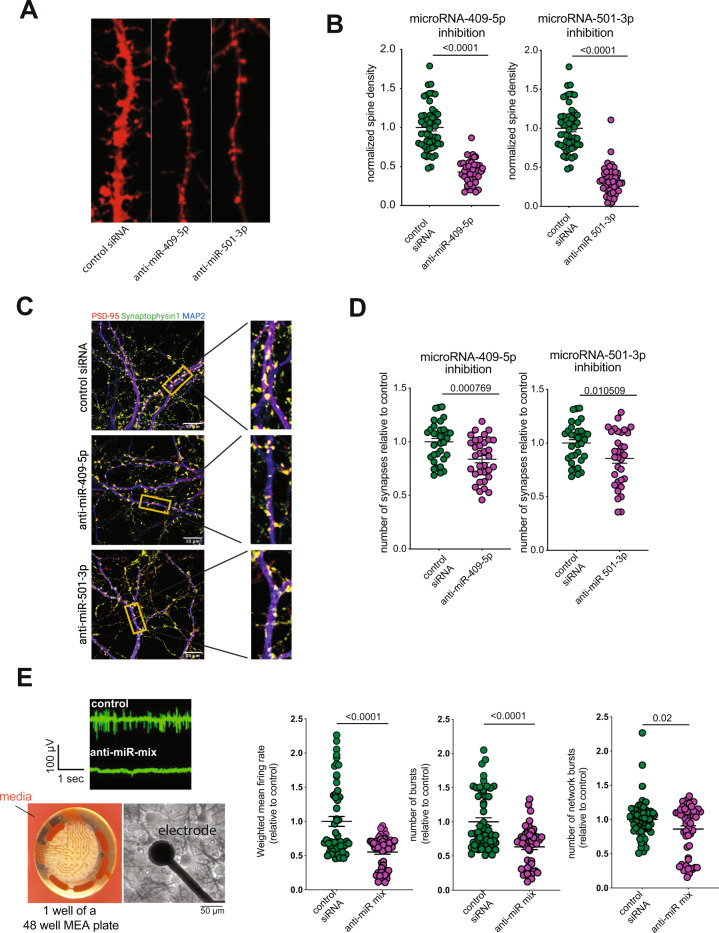
MicroRNAs have been linked to synaptic plasticity and memory function and are emerging as potential biomarkers and therapeutic targets for cognitive diseases. Most of these data stem from the analysis of model systems or postmortem tissue from patients which mainly represents an advanced stage of pathology. Due to the in-accessibility of human brain tissue upon experimental manipulation, it is still challenging to identify microRNAs relevant to human cognition, which is however a key step for future translational studies. Here, we employ exercise as an experimental model for memory enhancement in healthy humans with the aim to identify microRNAs linked to memory function. By analyzing the circulating smallRNAome we find a cluster of 18 microRNAs that are highly correlated to cognition. MicroRNA-409-5p and microRNA-501-3p were the most significantly regulated candidates. Functional analysis revealed that the two microRNAs are important for neuronal integrity, synaptic plasticity, and morphology. In conclusion, we provide a novel approach to identify microRNAs linked to human memory function.
Overview
The claims and statistics of this paper haven’t been checked yet.
Run the check — free, no account needed. It reads the open-access text and checks the sources it cites.
Integrity signals
Registry
Cites
Statistics
Figures
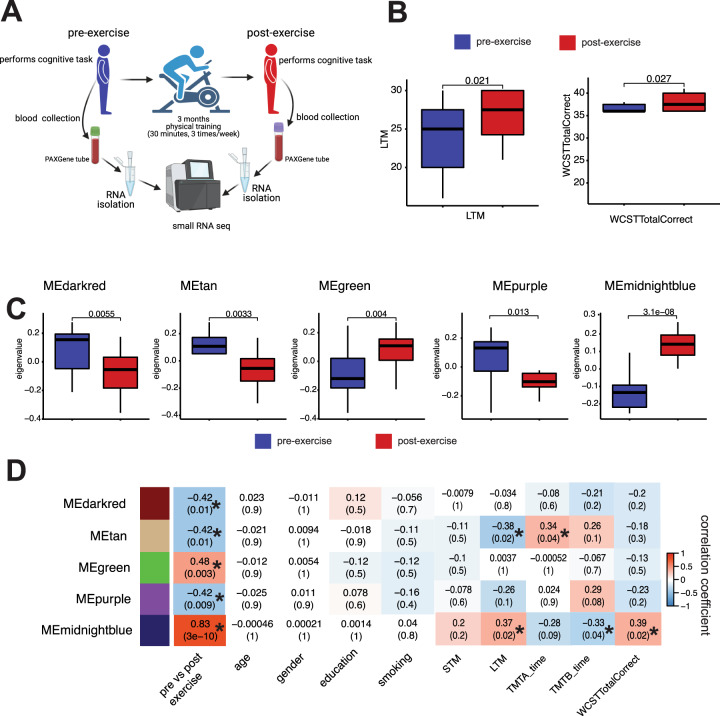
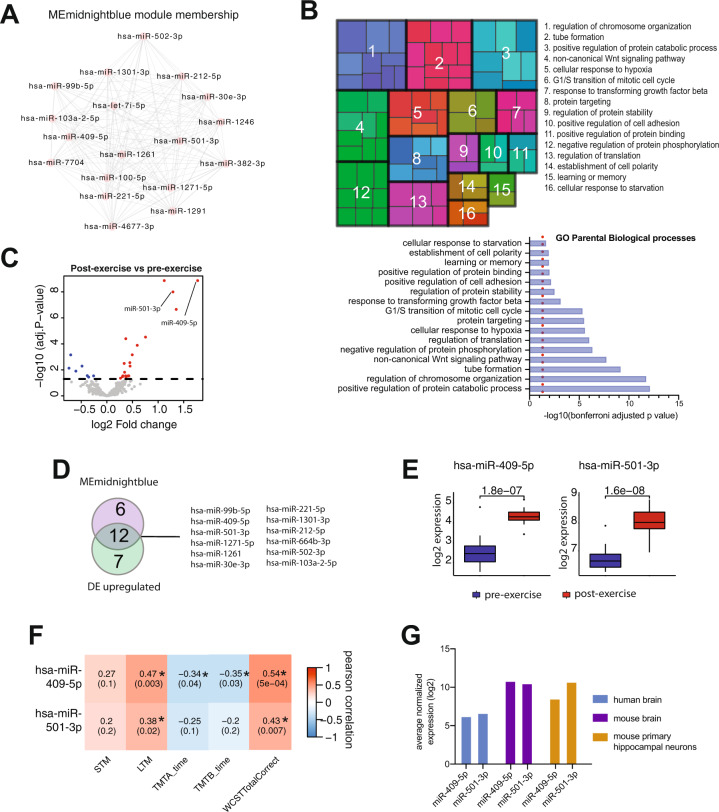
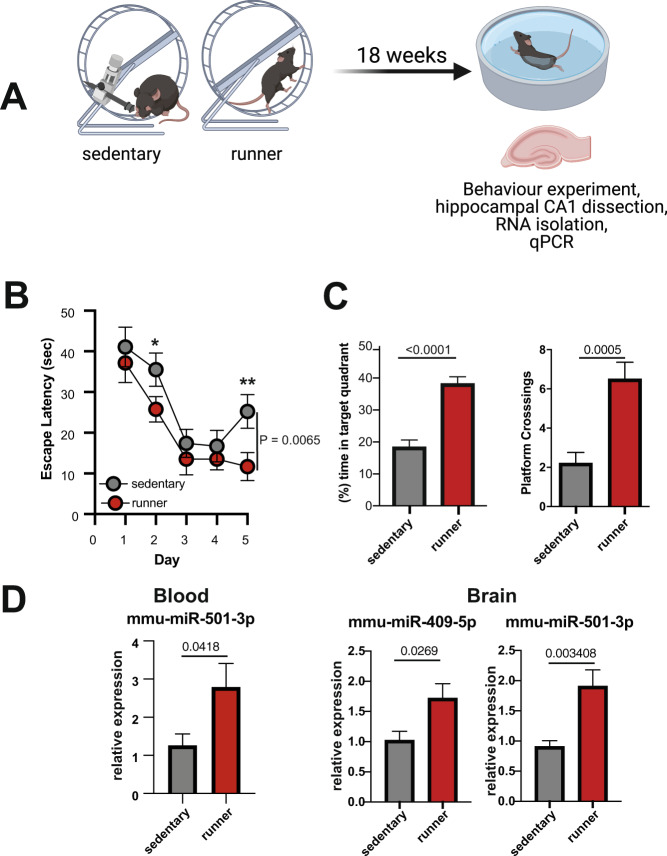
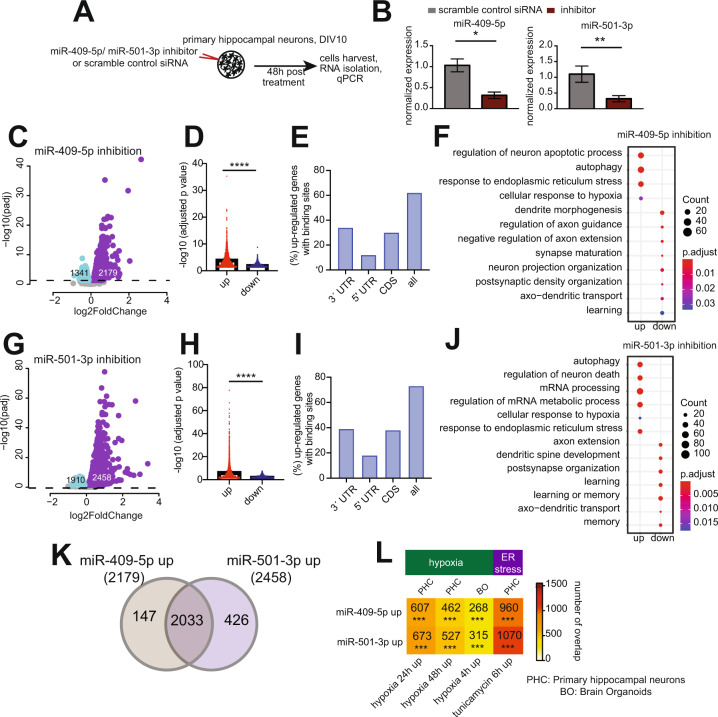
Verification
Claims the paper makes
The claims and statistics of this paper haven’t been checked yet.
Run the check — free, no account needed. It reads the open-access text and checks the sources it cites.
Claims other papers make about this one
Each is checked against this paper’s own text: does it say what the citing paper says it does?
The cited source says what the claim attributes to it.
In the citing paper
“Physical exercise has been shown to enhance cognitive function in both model organisms and humans, correlating with alterations in miRNA expression profiles [94].”
From A role for astrocytic miR-129-5p in frontotemporal dementia (2025) · cites this paper as [94]
In the citing paper
“Physical exercise has been shown to enhance cognitive function in both model organisms and humans, correlating with alterations in miRNA expression profiles [94].”
From A role for astrocytic miR-129-5p in frontotemporal dementia (2025) · cites this paper as [94]
Self-check
Percentages, sums and reported differences re-computed from the paper’s own numbers.
The self-check needs the paper’s full text.
Citations
Cites
Oxidative stress, dysfunctional glucose metabolism and Alzheimer disease
Butterfield, D. A., & Halliwell, B. (2019) · Nature Reviews Neuroscience · doi:10.1038/s41583-019-0132-6 · Cited by 1,954
Enriched environments, experience-dependent plasticity and disorders of the nervous system
Nithianantharajah, J., & Hannan, A. J. (2006) · Nature Reviews Neuroscience · doi:10.1038/nrn1970 · Cited by 1,771
Neurons secrete miR-132-containing exosomes to regulate brain vascular integrity
Xu, B., Zhang, Y., Du, X.-F., Li, J., Zi, H.-X., Bu, J.-W., Yan, Y., Han, H., & Du, J.-L. (2017) · Cell Research · doi:10.1038/cr.2017.62 · Cited by 354
Systemic factors as mediators of brain homeostasis, ageing and neurodegeneration
Pluvinage, J. V., & Wyss-Coray, T. (2020) · Nature Reviews Neuroscience · doi:10.1038/s41583-019-0255-9 · Cited by 191
KMT2A and KMT2B Mediate Memory Function by Affecting Distinct Genomic Regions
Kerimoglu, C., Sakib, M. S., Jain, G., Benito, E., Burkhardt, S., Capece, V., Kaurani, L., Halder, R., Agís-Balboa, R. C., Stilling, R., et al. (2017) · Cell Reports · doi:10.1016/j.celrep.2017.06.072 · Cited by 106
Self-citationAutophagy in Neuronal Development and Plasticity
Fleming, A., & Rubinsztein, D. C. (2020) · Trends in Neurosciences · doi:10.1016/j.tins.2020.07.003 · Cited by 93
Research works printed but not linked: 47
- Gurtan AM, Sharp PA. The role of miRNAs in regulating gene expression networks. J Mol Biol. 2013. Epub ahead of print. · DOI
- Rao P, Benito E, Fischer A. MicroRNAs as biomarkers for CNS disease. Front Mol Neurosci. 2013;26, eCollection 2013. · DOI · Paper page
- Rajman M, Schratt G. MicroRNAs in neural development: from master regulators to fine-tuners. Development. 2017;44:2310–2322. · DOI · Paper page
- Salta E, De Strooper B. Noncoding RNAs in neurodegeneration. Nat Rev Neurosci. 2017;18:627–640. · DOI · Paper page
- Galimberti D, Villa C, Fenoglio C, Serpente M, Ghezzi L, Cioffi SM, et al. Circulating miRNAs as potential biomarkers in Alzheimer’s disease. J Alzheimers Dis. 2014;42:1261–1267. · DOI · Paper page
- Kumar S, Vijayan M, Bhatti JS, Reddy PH. MicroRNAs as peripheral biomarkers in aging and age-related diseases. Prog Mol Biol Transl Sci. 2017;146:47–94. · DOI
- Roy B, Yoshino Y, Allen L, Prall K, Schell G, Dwivedi Y. Exploiting circulating MicroRNAs as biomarkers in psychiatric disorders. Mol Diagn. Ther. 2020;24:279–298. · DOI
- Bayraktar R, Van Roosbroeck K, Calin GA. Cell-to-cell communication: microRNAs as hormones. Mol Oncol. 2017;11:1673–1686. · DOI · Paper page
- Jose AM. Movement of regulatory RNA between animal cells. Genesis. 2015;53:395–416. · DOI
- Mustapic M, Eitan E, Werner, JK, Berkowitz ST, Lazaropoulos, MP, Tran J et al. Plasma extracellular vesicles enriched for neuronal origin: a potential window into brain pathologic processes. Front Neurosci. 2017. https://doi.org/10.3389/fnins.2017.00278. · DOI · Paper page
- Epple R. et al. The coding and small-non-coding hippocampal synaptic rnaome. Mol Neurobiol. 2021. in final revision. · DOI
- Jack CR Jr, Knopman DS, Jagust WJ, Petersen RC, Weiner MW, Aisen PS, et al. Tracking pathophysiological processes in Alzheimer’s disease: an updated hypothetical model of dynamic biomarkers. Lancet Neurol. 2013;12:207–216. · DOI · Paper page
- Herrera-Espejo S, Santos-Zorrozua B, Álvarez-González P, Lopez-Lopez E, Garcia-Orad Á. A systematic review of microRNA expression as biomarker of late-onset Alzheimer’s disease. Mol Neurobiol. 2019;56:8376–8391. · DOI · Paper page
- Kanach C, Blusztajn J K, Fischer A, Delalle I, Disease M. A. C. B. F. A. S. MicroRNAs as candidate biomarkers for Alzheimer’s disease. Noncoding RNA 2021;7. https://doi.org/10.3390/ncrna7010008. · DOI
- van Praag H, Christie BR, Sejnowski TJ, Gage FH. Running enhances neurogenesis, learning, and long-term potentiation in mice. Proc Natl Acad Sci USA. 1999;96:13427–13431. · DOI · Paper page
- Fischer A. Environmental enrichment as a method to improve cognitive function. What can we learn from animal models?. Neuroimage. 2016;1:42–47. · DOI
- Moon HY, Becke A, Berron D, Becker B, Sah N, Benoni G, et al. Running-induced systemic cathepsin B secretion is associated with memory function. Cell Metab. 2016;24:332–340. · DOI · Paper page
- Malchow BKK, et al. Effects of endurance training combined with cognitive remediation on everyday functioning, symptoms, and cognition in multiepisode schizophrenia patients. Schizophr Bull. 2015;41:847–858. · DOI
- Keller-Varady K, Hasan A, Schneider-Axmann T, Hillmer-Vogel U, Adomßent B, Wobrock T, et al. Endurance training in patients with schizophrenia and healthy controls: differences and similarities. Eur Arch Psychiatry Clin Neurosci. 2016;266:461–473. · DOI
- Pajonk FG, Wobrock T, Gruber O, Scherk H, Berner D, Kaizl I, et al. Hippocampal plasticity in response to exercise in schizophrenia. Arch Gen Psychiatry. 2010;67:133–143. · DOI · Paper page
- Benito E, Kerimoglu C, Ramachandran B, Pena-Centeno T, Jain G, Stilling RM, et al. RNA-dependent intergenerational inheritance of enhanced synaptic plasticity after environmental enrichment. Cell Rep. 2018;23:546–554. · DOI
- Islam MR, Lbik D, Sakib MS, Hofmann M, Berulava T, Jiménez Mausbach M, et al. Epigenetic gene expression links heart failure to memory impairment. Embo Mol Med. 2021;13. Epub ahed of print. · DOI
- Maurus I, Hasan A, Röh A, Takahashi S, Rauchmann B, Keeser D, et al. Neurobiological effects of aerobic exercise, with a focus on patients with schizophrenia. Eur Arch Psychiatry Clin Neurosci. 2019;269:499–515. · DOI
- Meng Q, Lin MS, Tzeng IS. Relationship between exercise and alzheimer’s disease: a narrative literature review. Front Neurosci. 2020;26. https://doi.org/10.3389/fnins.2020.00131. · DOI · Paper page
- Arida RM, Teixeira-Machado L. The contribution of physical exercise to brain resilience. Front Behav Neurosci. 2021;20. https://doi.org/10.3389/fnbeh.2020.626769. · DOI
- Law LLF, Mok VCT, Yau MMK. Effects of functional tasks exercise on cognitive functions of older adults with mild cognitive impairment: a randomized controlled pilot trial. Alzheimers Res Ther. 2019;11:98. · DOI
- Amjad I, Toor H, Niazi IK, Afzal H, Jochumsen M, Shafique M, et al. Therapeutic effects of aerobic exercise on EEG parameters and higher cognitive functions in mild cognitive impairment patients. Int J Neurosci. 2019;129:551–562. · DOI
- Radom-Aizik S, Zaldivar FPJ, Haddad F, Cooper DM. Impact of brief exercise on circulating monocyte gene and microRNA expression: implications for atherosclerotic vascular disease. Brain Behav Immun. 2014;39:121–129. · DOI
- Taurino C, Miller WH, McBride MW, McClure JD, Khanin R, Moreno MU, et al. ene expression profiling in whole blood of patients with coronary artery disease. Clin Sci (Lond). 2010;119:335–343. · DOI
- Banzet S, Chennaoui M, Girard O, Racinais S, Drogou C, Chalabi H, et al. Changes in circulating microRNAs levels with exercise modality. J Appl Physiol. 2013;115:1237–1244. · DOI
- Nielsen S, Åkerström T, Rinnov A, Yfanti C, Scheele C, Pedersen BK, et al. The miRNA plasma signature in response to acute aerobic exercise and endurance training. PLoS ONE. 2014;9:e87308. · DOI
- Denham J, Prestes PR. Muscle-enriched microRNAs isolated from whole blood are regulated by exercise and are potential biomarkers of cardiorespiratory fitness. Front Genet. 2016;7. https://doi.org/10.3389/fgene.2016.00196. · DOI
- Cui SF, Wang C, Yin X, Tian D, Lu QJ, Zhang, CY, et al. Similar responses of circulating microRNAs to acute high-intensity interval exercise and vigorous-intensity continuous exercise. Front Physiol. 2016;7. https://doi.org/10.3389/fphys.2016.00102. · DOI
- Shah R, Yeri A, Das A, Courtright-Lim A, Ziegler O, Gervino E, et al. Small RNA-seq during acute maximal exercise reveal RNAs involved in vascular inflammation and cardiometabolic health: brief report. Am J Physiol Heart Circ Physiol. 2017;313:H1162–H1167. · DOI
- Hernandez-Rapp J, Smith PY, Filali M, Goupil C, Planel E, Magill ST, et al. Memory formation and retention are affected in adult miR-132/212 knockout mice. Behav Brain Res. 2015;1:15–26. · DOI · Paper page
- Hansen KF, Sakamoto K, Aten S, Snider KH, Loeser J, Hesse AM, et al. deletion of miR-132/-212 impairs memory and alters the hippocampal transcriptome. Learn Mem. 2016;15:61–71. · DOI · Paper page
- Das S, Halushka MK. Extracellular vesicle microRNA transfer in cardiovascular disease. Cardiovasc Pathol. 2015;24:199–206. · DOI
- Men Y, Yelick J, Jin S, Tian Y, Chiang M, Higashimori H, et al. Exosome reporter mice reveal the involvement of exosomes in mediating neuron to astroglia communication in the CNS. Nat Commun. 2019;10:4136. · DOI · Paper page
- Feldstein CA. Association between chronic blood pressure changes and development of Alzheimer’s disease. J Alzheimers Dis. 2012;32:753–763. · DOI
- Xiang C, Wang Y, Zhang H, Han F. The role of endoplasmic reticulum stress in neurodegenerative disease. Apoptosis. 2017;22:1–26. · DOI
- Hara N, Ikuchi M, Miyashita A, Hatsuta H, Saito Y, Kasuga K, et al. Serum microRNA miR-501-3p as a potential biomarker related to the progression of Alzheimer’s disease. Acta Neuropathol Commun. 2017;5. https://doi.org/10.1186/s40478-40017-40414-z. · DOI
- Gullett JM, Chen Z, O'Shea A, Akbar M, Bian J, Rani A, et al. MicroRNA predicts cognitive performance in healthy older adults. Neurobiol Aging. 2020;95:186–194. · DOI
- Luo H, Wu Q, Ye X, Xiong Y, Zhu J, Xu J, et al. Genome-wide analysis of miRNA signature in the APPswe/PS1ΔE9 mouse model of Alzheimer’s disease. PloS ONE. 2014;9:e101725. · DOI
- Luo T, Yin S, Shi R, Xu C, Wang Y, Cai J, et al. miRNA expression profile and involvement of Let-7d-APP in aged rats with isoflurane-induced learning and memory impairment. PLoS ONE. 2015;20:e0119336. · DOI
- Cass S. P. Alzheimer’s disease and exercise: a literature review. Curr Sports Med Rep. 2017;16:19–22. · DOI
- De la Rosa A, Olaso-Gonzalez G, Arc-Chagnaud C, Millan F, Salvador-Pascual A, García-Lucerga C. et al. Physical exercise in the prevention and treatment of Alzheimer’s disease. J Sport Health Sci. 2020;9:394–404. · DOI
- Pașca AM, Park JY, Shin HW, Qi Q, Revah O, Krasnoff R. et al. Human 3D cellular model of hypoxic brain injury of prematurity. Nat Med. 2019;25:784–791. · DOI · Paper page
Cited by
Sorted by citations
A role for astrocytic miR-129-5p in frontotemporal dementia
Kaurani, L., Pradhan, R., Schröder, S., Burkhardt, S., Schuetz, A.-L., Krüger, D. M., Pena, T., Heutink, P., Sananbenesi, F., & Fischer, A. (2025) · Translational Psychiatry · doi:10.1038/s41398-025-03338-y · Cited by 10
Self-citation
Metadata
- Authors
- Goldberg, M., Islam, M. R., Kerimoglu, C., Lancelin, C., Gisa, V., Burkhardt, S., Krüger, D. M., Marquardt, T., Malchow, B., Schmitt, A., Falkai, P., Sananbenesi, F., & Fischer, A.
- Venue
- Translational Psychiatry
- Published
- 2021-10-08
- Volume
- 11
- Issue
- 1
- ISSN
- 2158-3188
- PMC
- PMC8501071
- Cited by
- 24
- References
- 6
- Language
- en
About these checks
Registry, retraction, Cites and statistics results are computed, not judged, with one exception: a printed reference that no index lists is read once by a model before it counts as a citation error. Claims are extracted by a model and kept only when their quote appears verbatim in the text; each cited source is then checked, with a model’s help, for whether it says what the claim relies on. Those verdicts can be wrong — read the claim’s quote and the cited source before relying on one.
Statistics and arithmetic are recomputed, not judged.
Confidence bands are shown only for fields calibrated on our annotated test set. None is calibrated yet, so no band is shown.
What counts as a claim ›How we measure confidence ›How we check this ›
Are you an author, or do you see a problem with this page? Request a review
