

Default-mode and fronto-parietal network connectivity during rest distinguishes asymptomatic patients with bipolar disorder and major depressive disorder
Open accessThe DOI matches its Crossref record; 40 of the 40 references it cites were found in a registry or an index.
Abstract
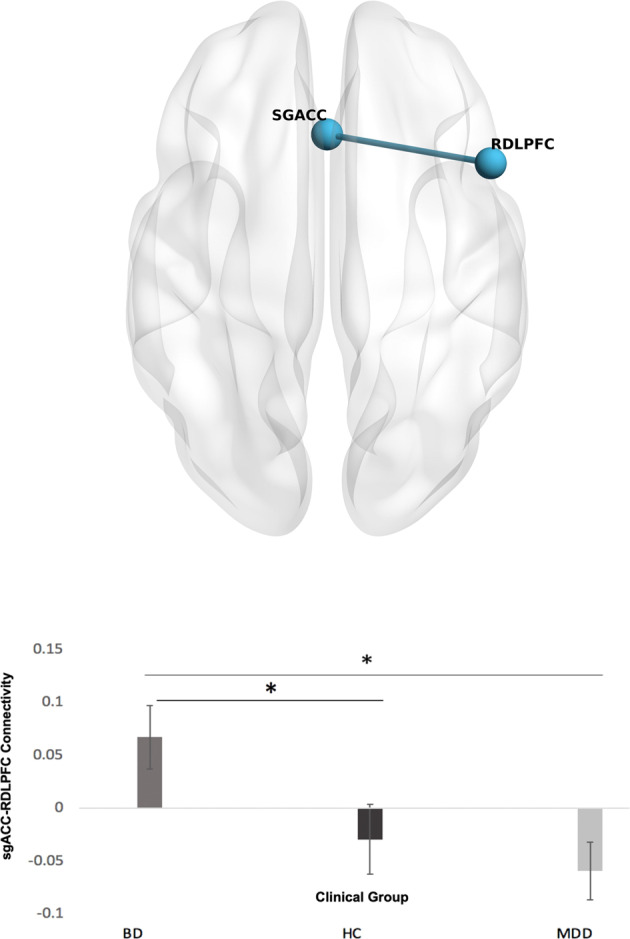
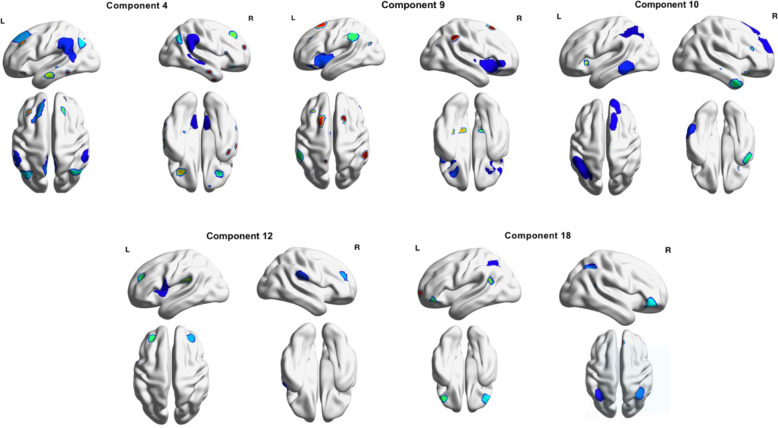
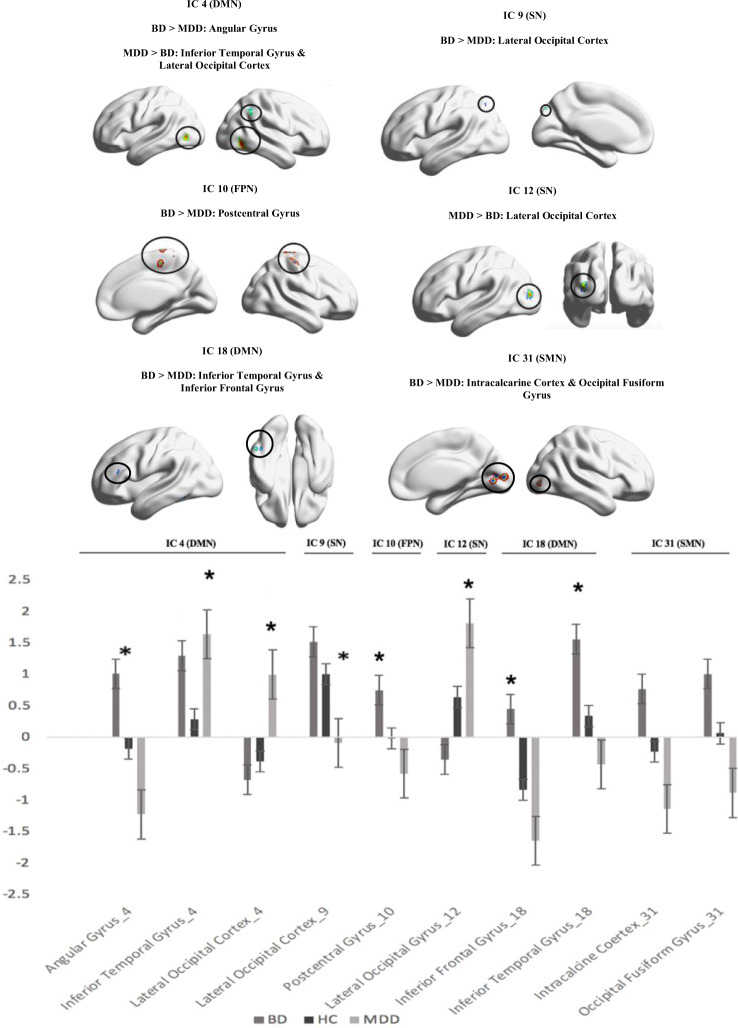
Bipolar disorder (BD) is commonly misdiagnosed as major depressive disorder (MDD). This is understandable, as depression often precedes mania and is otherwise indistinguishable in both. It is therefore imperative to identify neural mechanisms that can differentiate the two disorders. Interrogating resting brain neural activity may reveal core distinguishing abnormalities. We adopted an a priori approach, examining three key networks documented in previous mood disorder literature subserving executive function, salience and rumination that may differentiate euthymic BD and MDD patients. Thirty-eight patients with BD, 39 patients with MDD matched for depression severity, and 39 age-gender matched healthy controls, completed resting-state fMRI scans. Seed-based and data-driven Independent Component analyses (ICA) were implemented to examine group differences in resting-state connectivity (p FDR < 0.05). Seed analysis masks were target regions identified from the fronto-parietal (FPN), salience (SN) and default-mode (DMN) networks. Seed-based analyses identified significantly greater connectivity between the subgenual cingulate cortex (DMN) and right dorsolateral prefrontal cortex (FPN) in BD relative to MDD and controls. The ICA analyses also found greater connectivity between the DMN and inferior frontal gyrus, an FPN region in BD relative to MDD. There were also significant group differences across the three networks in both clinical groups relative to controls. Altered DMN–FPN functional connectivity is thought to underlie deficits in the processing, management and regulation of affective stimuli. Our results suggest that connectivity between these networks could potentially distinguish the two disorders and could be a possible trait mechanism in BD persisting even in the absence of symptoms.
Overview
The claims and statistics of this paper haven’t been checked yet.
Free: it reads the open-access text and checks the first 5 claims that cite a source we can check. Create a free account to check every claim.
Integrity signals
Registry
Cites
Statistics
Figures
Verification
Claims the paper makes
The claims and statistics of this paper haven’t been checked yet.
Free: it reads the open-access text and checks the first 5 claims that cite a source we can check. Create a free account to check every claim.
Claims other papers make about this one
Each is checked against this paper’s own text: does it say what the citing paper says it does?
The source backs part of the claim, not all of it — or backs it for a different population, condition or comparison.
In the citing paper
“Therefore, previous studies using features from other domains were conducted on relatively small sample sets, prone to over-fitting and lack of validation in large-scale populations with synthetic heterogeneity14,33–35,57,58.”
From Optimizing multi-domain hematologic biomarkers and clinical features for the differential diagnosis of unipolar depression and bipolar depression (2023) · doi:10.1038/s44184-023-00024-z · cites this paper as [33]
Experimental — accuracy not yet measured
Self-check
Percentages, sums and reported differences re-computed from the paper’s own numbers.
The self-check needs the paper’s full text.
Citations
Cites
Hamilton, M. (1960) · Journal of Neurology, Neurosurgery & Psychiatry · doi:10.1136/jnnp.23.1.56 · Cited by 32,817
Lovibond, P. F., & Lovibond, S. H. (1995) · Behaviour Research and Therapy · doi:10.1016/0005-7967(94)00075-u · Cited by 14,523
A Rating Scale for Mania: Reliability, Validity and Sensitivity
Young, R. C., Biggs, J. T., Ziegler, V. E., & Meyer, D. A. (1978) · British Journal of Psychiatry · doi:10.1192/bjp.133.5.429 · Cited by 8,744
Conn : A Functional Connectivity Toolbox for Correlated and Anticorrelated Brain Networks
Whitfield-Gabrieli, S., & Nieto-Castanon, A. (2012) · Brain Connectivity · doi:10.1089/brain.2012.0073 · Cited by 4,885
Large-scale brain networks and psychopathology: a unifying triple network model
Menon, V. (2011) · Trends in Cognitive Sciences · doi:10.1016/j.tics.2011.08.003 · Cited by 4,168
Functional and Effective Connectivity: A Review
Friston, K. J. (2011) · Brain Connectivity · doi:10.1089/brain.2011.0008 · Cited by 3,415
Subgenual prefrontal cortex abnormalities in mood disorders
Drevets, W. C., Price, J. L., Simpson, J. R., Todd, R. D., Reich, T., Vannier, M., & Raichle, M. E. (1997) · Nature · doi:10.1038/386824a0 · Cited by 2,693
A wandering mind is an unhappy mind
Killingsworth, M. A., & Gilbert, D. T. (2010) · Science · doi:10.1126/science.1192439 · Cited by 2,575
Greicius, M. D., Flores, B. H., Menon, V., Glover, G. H., Solvason, H. B., Kenna, H., Reiss, A. L., & Schatzberg, A. F. (2007) · Biological Psychiatry · doi:10.1016/j.biopsych.2006.09.020 · Cited by 2,214
Limbic-cortical dysregulation: a proposed model of depression
(1997) · The Journal of Neuropsychiatry and Clinical Neurosciences · doi:10.1176/jnp.9.3.471 · Cited by 1,585
Cited by
Bi, B., Che, D., & Bai, Y. (2022) · Translational Psychiatry · doi:10.1038/s41398-022-01917-x · Cited by 113
BrainIB: Interpretable Brain Network-Based Psychiatric Diagnosis With Graph Information Bottleneck
Zheng, K., Yu, S., Li, B., Jenssen, R., & Chen, B. (2024) · IEEE Transactions on Neural Networks and Learning Systems · doi:10.1109/tnnls.2024.3449419 · Cited by 89
“In addition, connections within the frontoparietal system of patients are significantly less than that of HCs, which is consistent with the previous studies [59].”
Yankouskaya, A., Williamson, R., Stacey, C., Totman, J. J., & Massey, H. C. (2023) · Biology · doi:10.3390/biology12020211 · Cited by 54
“, between the default mode network, salience network, and frontoparietal network) has been reported in many mood disorder conditions [36,37].”
BackgroundYu, A., Gao, Q., Deng, Z., Dang, Y., Yan, C., Chen, Z., Li, F., Zhao, S., Liu, Y., & Bo, Q. (2023) · Bipolar Disorders · doi:10.1111/bdi.13336 · Cited by 36
Li, Y., Li, Y., Wei, Q., Bai, T., Wang, K., Wang, J., & Tian, Y. (2022) · Journal of Affective Disorders · doi:10.1016/j.jad.2022.05.067 · Cited by 31
Zhang, L., Qin, K., Pan, N., Xu, H., & Gong, Q. (2024) · Journal of Affective Disorders · doi:10.1016/j.jad.2024.09.021 · Cited by 32
Shinozuka, K., Jerotic, K., Mediano, P. A. M., Zhao, A. T., Preller, K. H., Carhart-Harris, R. L., & Kringelbach, M. L. (2024) · Translational Psychiatry · doi:10.1038/s41398-024-03187-1 · Cited by 36
“…signi fi cant connections that were identi fi ed in a single study [59] between regions that are typically not considered to be core elements of the DMN yet are nevertheless classi fi ed by the Yeo parcellation as regions within the DMN, such as the frontal pole and inferior frontal gyrus [60 – 62].”
Decreased modular segregation of the frontal–parietal network in major depressive disorder
Lan, Z., Zhang, W., Wang, D., Tan, Z., Wang, Y., Pan, C., Xiao, Y., Kuai, C., & Xue, S. (2022) · Frontiers in Psychiatry · doi:10.3389/fpsyt.2022.929812 · Cited by 25
“For example, a prior restingstate fMRI study has documented aberrant connectivity of the FPN with the SN and DMN leads to imbalance of externally attention process and internally self-reference and furthermore gives rise to emotional dysregulation (21).”
BackgroundLiao, L., Zhang, L., Lv, J., Liu, Y., Fang, J., Rong, P., & Liu, Y. (2023) · Brain Sciences · doi:10.3390/brainsci13020274 · Cited by 23
“Altered DMN–FPN connectivity is thought to underlie deficits in processing and regulating affective stimuli [67].”
BackgroundMa, Y., Wang, Z., He, J., Sun, J., Guo, C., Du, Z., Chen, L., Luo, Y., Gao, D., Yang, H., et al. (2022) · Frontiers in Neurology · doi:10.3389/fneur.2022.931838 · Cited by 21
“DMN and FPCN are closely related to emotion and cognitive processing (53), Silani et al. (54) showed that the SMG is a key brain area for emotion control.”
BackgroundInfluentialLiu, R., Qi, H., Guan, L., Wu, H., Liu, J., Li, X., Huang, J., Zhang, L., Zhou, Y., & Zhou, J. (2022) · General Psychiatry · doi:10.1136/gpsych-2022-100929 · Cited by 17
Common and differential neural mechanisms underlying mood disorders
Rai, S., Griffiths, K. R., Breukelaar, I. A., Barreiros, A. R., Boyce, P. M., Hazell, P., Foster, S., Malhi, G. S., Harris, A. W. F., & Korgaonkar, M. S. (2022) · Bipolar Disorders · doi:10.1111/bdi.13248 · Cited by 15
“The resting- state scan was first in the task sequence and involved the participant focusing on a fixation cross for 8 min 12 s (only the resting- state MRI scan is analyzed and discussed here; details of the full fMRI protocol can be found in Rai et al. (2021)).”
Self-citationNeurite outgrowth deficits caused by rare PLXNB1 mutation in pediatric bipolar disorder
Yang, G., Ullah, H. M. A., Parker, E., Gorsi, B., Libowitz, M. R., Maguire, C. T., King, J. B., Coon, H. H., Lopez-Larson, M. P., Anderson, J. S., et al. (2023) · Molecular Psychiatry · doi:10.1038/s41380-023-02035-w · Cited by 15
Saccaro, L. F., Delavari, F., Ville, D. V. D., & Piguet, C. (2024) · Bipolar Disorders · doi:10.1111/bdi.13487 · Cited by 17
“33,52 These findings align with existing literature that has implicated the FPN in internally focused attention, cognitive control, and executive function, 38 which are closely related to sensorimotor processing.”
Intrinsic Organization of Occipital Hubs Predicts Depression: A Resting-State fNIRS Study
Xu, Y., Wang, Y., Hu, N., Yang, L., Yu, Z., Li, H., Xu, Q., Zhou, J., Ji, C., Mao, H., et al. (2022) · Brain Sciences · doi:10.3390/brainsci12111562 · Cited by 14
Diagnostic value of structural, functional and effective connectivity in bipolar disorder
Gencheva, T. M., Valkov, B. V., Kandilarova, S., Maes, M. H. J., & Stoyanov, D. (2024) · Acta Psychiatrica Scandinavica · doi:10.1111/acps.13742 · Cited by 12
(2023) · doi:10.1038/s44184-023-00024-z · Cited by 12
“Besides, related works proposed to use biomarkers from different domains, such as serum levels 32 , MRI (Magnetic Resonance Imaging) 33 – 35 and cognitive function 14 , for statistical and machine learning methods in the differential diagnosis of UPD and BPD.”
BackgroundBrain gyrification in bipolar disorder: a systematic review of neuroimaging studies
Miola, A., Cattarinussi, G., Loré, M. L., Ghiotto, N., Collantoni, E., & Sambataro, F. (2022) · Brain Imaging and Behavior · doi:10.1007/s11682-022-00713-x · Cited by 14
Zou, W., Song, P., Lu, W., Shao, R., Zhang, R., Yau, S., Yuan, T., Wang, Y., & Lin, K. (2022) · Asian Journal of Psychiatry · doi:10.1016/j.ajp.2022.103307 · Cited by 12
Multi-study evaluation of neuroimaging-based prediction of medication class in mood disorders
Salman, M. S., Verner, E., Bockholt, H. J., Fu, Z., Misiura, M. B., Baker, B. T., Osuch, E. A., Sui, J., & Calhoun, V. D. (2023) · Psychiatry Research Neuroimaging · doi:10.1016/j.pscychresns.2023.111655 · Cited by 13
Khan, A., Mosbacher, J. A., Vogel, S., Binder, M., Wehovz, M., Moshammer, A., Halverscheid, S., Pustelnik, K., Nitsche, M. A., Tong, R. K., et al. (2023) · Brain Structure and Function · doi:10.1007/s00429-023-02667-2 · Cited by 13
(2022) · doi:10.1101/2022.04.26.22274241 · Cited by 12
Significant age by childhood trauma interactions on grey matter volumes: A whole brain VBM analysis
Malhi, G. S., Das, P., Outhred, T., Bell, E., Gessler, D., Bryant, R. A., & Mannie, Z. N. (2023) · Bipolar Disorders · doi:10.1111/bdi.13286 · Cited by 9
Self-citationLin, S., Zhang, C., Zhang, Y., Chen, S., Lin, X., Peng, B., Xu, Z., Hou, G., & Qiu, Y. (2023) · Journal of Affective Disorders · doi:10.1016/j.jad.2023.08.139 · Cited by 10
Jiang, X., Zai, C. C. H., Sultan, A. A., Dimick, M. K., Nikolova, Y. S., Felsky, D., Young, L. T., MacIntosh, B. J., & Goldstein, B. I. (2023) · European Neuropsychopharmacology · doi:10.1016/j.euroneuro.2023.08.503 · Cited by 10
He, X., Calhoun, V. D., & Du, Y. (2024) · Neuroscience Bulletin · doi:10.1007/s12264-024-01184-4 · Cited by 9
“Although different approaches have been used to extract brain FNs [10, 11], data-driven independent component analysis (ICA) is one of the most widely applied methods for understanding healthy brain function [12, 13] as well as exploring brain disorders [14–17].”
Aberrant modular segregation of brain networks in female patients with bulimia nervosa
Lan, Z., Zhu, L.-L., Wu, Y., Yang, J., Li, J., Zeng, Y., Li, K., Kong, Q., Su, Y., & Si, T. (2023) · International Journal of Eating Disorders · doi:10.1002/eat.23939 · Cited by 10
Underlying biological mechanisms of emotion dysregulation in bipolar disorder
Durdurak, B. B., Morales‐Muñoz, I., de Cates, A. N., Wiseman, C. E., Broome, M. R., & Marwaha, S. (2025) · Frontiers in Psychiatry · doi:10.3389/fpsyt.2025.1552992 · Cited by 11
Gruzman, R., Hempel, M., Domke, A., Hartling, C., Stippl, A., Carstens, L., Bajbouj, M., Gärtner, M., & Grimm, S. (2024) · Journal of Affective Disorders · doi:10.1016/j.jad.2024.02.068 · Cited by 8
Ashrafi, M., & Soltanian-Zadeh, H. (2022) · Entropy · doi:10.3390/e24050631 · Cited by 9
“Some diseases such as schizophrenia (SZ) and autism spectrum disorder (ASD) lead to reduced interactions within the DMN [40,44].”
BackgroundChen, Z., Wu, J., Pu, L., Li, S., Zhang, Y., Yao, D., & Yan, H. (2025) · Information Processing & Management · doi:10.1016/j.ipm.2025.104524 · Cited by 13
Zhang, L., Yan, H., Zhang, C., Li, X., Liang, J., Tang, C., Wu, W., Deng, W., Xie, G., & Guo, W. (2025) · CNS Neuroscience & Therapeutics · doi:10.1111/cns.70236 · Cited by 7
Network analysis of plasma proteomes in affective disorders
Rhee, S. J., Shin, D., Shin, D., Song, Y., Joo, E.-J., Jung, H. Y., Roh, S., Lee, S.-H., Kim, H.-Y., Bang, M., et al. (2023) · Translational Psychiatry · doi:10.1038/s41398-023-02485-4 · Cited by 10
Yu, Z., Pang, H., Liu, Y., Li, X., Bu, S., Wang, J., Zhao, M., & Ren, K. (2023) · Cerebral Cortex · doi:10.1093/cercor/bhad269 · Cited by 7
Driving brain state transitions via Adaptive Local Energy Control Model
Yao, R., Shi, L., Niu, Y., Li, H., Fan, X. P., & Wang, B. (2025) · NeuroImage · doi:10.1016/j.neuroimage.2025.121023 · Cited by 5
Tamura, T., Takagi, S., Takahashi, H., & Sugihara, G. (2025) · Scientific Reports · doi:10.1038/s41598-025-88303-x · Cited by 11
Zhang, R., Ren, J., Fu, L., Lei, X., Wang, Y., Guo, C., Teng, X., Wu, Z., Yu, L., Wu, Y., et al. (2025) · Journal of Affective Disorders · doi:10.1016/j.jad.2025.119388 · Cited by 4
Nutrition and Mental Health: Advances in Nutritional Cognitive Neuroscience
Wu, J., & Barbey, A. K. (2026) · Annual Review of Food Science and Technology · doi:10.1146/annurev-food-052824-043906 · Cited by 7
Cai, W., Jing, X., Wen, Y., Sun, S., Li, G., Liu, P., Li, H., Han, M., & Liu, Z. (2026) · Journal of Affective Disorders · doi:10.1016/j.jad.2026.121217 · Cited by 5
He, Q., Zheng, H., Zhang, J., Yue, L., Kang, Q., Lian, C., Guo, L., Chen, Y., Hu, Y., Wang, Y., et al. (2024) · General Psychiatry · doi:10.1136/gpsych-2023-101389 · Cited by 4
Chen, S., Guo, X., Liu, X., Liu, S., & Ming, D. (2025) · Journal of Affective Disorders · doi:10.1016/j.jad.2025.120189 · Cited by 3
Liu, D., Lin, C., Liu, B., Zhang, Y., Jiang, Y., Gu, J., & Jin, O. (2025) · BMC Musculoskeletal Disorders · doi:10.1186/s12891-025-08322-7 · Cited by 5
Ding, Y., Li, H., Liu, F., Li, P., Zhao, J., Lv, D., & Guo, W. (2025) · Bipolar Disorders · doi:10.1111/bdi.70028 · Cited by 3
Lu, T., Hsieh, T.-H., Wang, Y.-H., Shaw, F., Chen, P. S., & Liang, S. (2025) · Psychiatry Research · doi:10.1016/j.psychres.2025.116401 · Cited by 5
Li, H., Wu, Q., Wang, J., Zhang, X., Song, H., & Wang, D. (2024) · BMC Psychiatry · doi:10.1186/s12888-024-06427-2 · Cited by 3
Sun, S., Wang, S., Gao, Y., & Cui, M. (2025) · Neuroscience · doi:10.1016/j.neuroscience.2025.05.007 · Cited by 4
Cui, X., Han, Y., Yan, H., Zhang, C., Li, X., Liang, J., Tang, C., Wu, W., Deng, W., Xie, G., et al. (2025) · Journal of Psychiatric Research · doi:10.1016/j.jpsychires.2025.05.019 · Cited by 2
Guerrero, D., Džemidžić, M., Moghaddam, M., Liu, M., Avena‐Koenigsberger, A., Harezlak, J., Kareken, D. A., Plawecki, M. H., Cyders, M. A., & Goñi, J. (2025) · NeuroImage Clinical · doi:10.1016/j.nicl.2025.103939 · Cited by 5
“In turn, a range of psychiatric disorders are thought to affect these networks (Boehm et al., 2014; Rai et al., 2021; Stern et al., 2012; Suk et al., 2021).”
Du, Y., Huang, C., & Calhoun, V. D. (2025) · IEEE Journal of Biomedical and Health Informatics · doi:10.1109/jbhi.2025.3590641 · Cited by 2
“Numerous studies have employed the aforementioned group ICA methods to investigate brain functional impairments of brain disorders as well as to explore brain function of healthy condition [8], [9].”
Baker, B. T., Salman, M. S., Fu, Z., Iraji, A., Osuch, E. A., Bockholt, H. J., & Calhoun, V. D. (2024) · IEEE International Symposium on Biomedical Imaging (ISBI) · doi:10.1109/isbi56570.2024.10635741 · Cited by 2
“Biomarkers extracted from fMRI have shown to be useful in distinguishing between MDD and BPD [9, 10, 11] as well as responsiveness to particular medication classes [5, 3, 7].”
BackgroundDefault mode network anti-correlation as a transdiagnostic biomarker of cognitive functionPreprint
Tripathi, V., Batta, I., Zamani, A., Atad, D. A., Sheth, S., Zhang, J., Wager, T. D., Whitfield, S., Uddin, L. Q., Prakash, R. S., et al. (2024) · doi:10.31234/osf.io/uhs3c · Cited by 2
Fattahi, M., Esmaeil-Zadeh, M., Soltanian-Zadeh, H., Rostami, R., Mansouri, J., & Hossein‐Zadeh, G. (2025) · Frontiers in Human Neuroscience · doi:10.3389/fnhum.2024.1427532 · Cited by 3
Taniguchi, K., Kaneko, N., Wada, M., Takano, M., Moriyama, S., Mimura, Y., Uchida, H., Nakajima, S., & Noda, Y. (2025) · Journal of Affective Disorders Reports · doi:10.1016/j.jadr.2025.100891 · Cited by 1
The Role of Temperament Traits in Bipolar Disorder: Neuroimaging Study
Markin, K. V., Trufanov, A. G., Tarumov, D. A., Krasichkov, A. S., Shichkina, Y. A., & Kupriyanov, M. S. (2025) · Depression and Anxiety · doi:10.1155/da/5974860 · Cited by 2
“Altered DMN – FPN functional connectivity is thought to underlie de fi cits in processing, managing, and regulating affective stimuli [91].”
Xiao, Q., Zhang, G., & Zhong, Y. (2024) · Psychiatry Research Neuroimaging · doi:10.1016/j.pscychresns.2024.111802 · Cited by 1
Mittal, A., & Korgaonkar, M. S. (2023) · SSRN Electronic Journal · doi:10.2139/ssrn.4535792 · Cited by 1
Self-citationHe, Q., Zheng, H., Zhang, J., Yue, L., Kang, Q., Lian, C., Guo, L., Chen, Y., Hu, Y., Wang, Y., et al. (2023) · Research Square · doi:10.21203/rs.3.rs-3218402/v1
de Freitas, M. B. L., Luna, L., Beatriz, M., Pinto, R. K., Alves, C. H. L., Bittencourt, L., Nardi, A. E., Oertel, V., Veras, A. B., de Lucena, D. F., et al. (2023) · Psychiatry Research Neuroimaging · doi:10.1016/j.pscychresns.2023.111766 · Cited by 1
Baker, B. T., Osuch, E. A., Langenecker, S. A., Fournier, J. C. J., Turner, J. A., Youngstrom, E. A., & Calhoun, V. D. (2024) · bioRxiv (Cold Spring Harbor Laboratory) · doi:10.1101/2024.10.17.618523
“Resting-state fMRI, in particular, has revealed intrinsic connectivity networks (ICNs) such as the striatum precuneus [10] and the default mode and fronto-parietal networks [12], which provide insights for further research into mood disorders and treatment responses.”
Qiu, N., Li, P., Li, Y., Li, K., Yan, H., Gan, X., Li, Y., Hu, L., Becker, B., & Yao, D. (2025) · medRxiv · doi:10.1101/2025.07.28.25332298
“…crucial for attentional control [47, 48]. fMRI studies show the importance of the fronto-parietal network in the neural circuitry of depression [49], identifying it as a key region linked to impairments in attentional regulation and executive functioning observed in depressive states [48, 50].”
Targeting replay and default mode network dynamics during rest in psychiatric disorders
Xu, J., & Liu, Y. (2025) · Current Opinion in Behavioral Sciences · doi:10.1016/j.cobeha.2025.101582
Wang, C., Liu, S., Wang, L., Yang, S., & Yang, S. (2025) · Biomedical Signal Processing and Control · doi:10.1016/j.bspc.2025.108637 · Cited by 1
Huang, H.-E., Kao, Z.-K., Bai, Y., Tu, P., Chang, W.-C., Su, T., Chen, L.-C., & Chen, M. (2025) · Psychiatry Research · doi:10.1016/j.psychres.2025.116832 · Cited by 3
Wang, R., Wang, J., Li, Y., Xu, Y., Shen, Y., Chen, J., & Li, Y. (2025) · BMC Psychiatry · doi:10.1186/s12888-025-07537-1
Baker, B. T., Osuch, E. A., Langenecker, S. A., Fournier, J. C. J., Turner, J. A., Youngstrom, E. A., & Calhoun, V. D. (2025) · Annual International Conference of the IEEE Engineering in Medicine and Biology Society (EMBC) · doi:10.1109/embc58623.2025.11254528
“Biomarkers derived from fMRI have proven useful in differentiating between MDD and BPD [10], [11], [12] as well as in predicting responses to specific medications [5], [3], [7].”
Zhang, L., Han, Y., Ding, Y., Li, T., Li, H., Liu, F., Li, P., Yuan, Y., Guo, W., & Ou, Y. (2025) · Psychiatry Research · doi:10.1016/j.psychres.2025.116901
Jung, M., Park, J., Kang, Y., Shin, D., Kang, J. C., Moon, H.-J., Jung, J., Kaiser, M., Auer, D. P., Ham, B., et al. (2026) · Neuropsychopharmacology · doi:10.1038/s41386-025-02307-9 · Cited by 2
Song, M., Liao, Q., Gong, W., Hua, L., Shen, A., Huang, Y., Yan, R., Shi, J., Tang, H., Yao, Z., et al. (2026) · Journal of Affective Disorders · doi:10.1016/j.jad.2026.121212
Branigan, K. S., Saroka, K. S., Corradini, P. L., ̈re, M. L., & Dotta, B. T. (2026) · Scientific Reports · doi:10.1038/s41598-026-42063-4
“The DIPC, encompassing the intraparietal sulcus and surrounding inferior parietal regions, plays a central role in the maintenance and manipulation of information in working memory, attentional shifting, and the integration of multimodal sensory inputs 43–45 .”
Rashmi, S., & Lakshmi Kalpana Roy, K. (2026) · International Conference on Communication, Computing and Emerging Technologies (IC3ET) · doi:10.1109/ic3et64989.2026.11467358
Hsu, T., Li, J.-R., Tsai, S., Bai, Y., Su, T., Chen, T., Hsu, J.-W., Chen, M., & Liang, C. (2026) · Psychiatry Research · doi:10.1016/j.psychres.2026.117195
Yates, J. R. (2026) · Springer eBooks · doi:10.1007/978-3-032-15602-0_9
Ji, J., Sun, H., Liu, Y., Yu, H., Zhang, X., & Xu, C. (2026) · Journal of Affective Disorders · doi:10.1016/j.jad.2026.122184
Wang, Y., Zhu, P., Xiang, J., Gu, J., Chen, X., Chen, F., Zou, L., Qin, F., Cheng, D., Guan, D., et al. (2026) · Frontiers in Psychiatry · doi:10.3389/fpsyt.2026.1809961
“…that resting-state connectivity between default-mode and fronto-parietal networks distinguished patients with BD from those with MDD, suggesting that altered coordination between internally oriented DMN processes and cognitive-control systems may be relevant to BD – MDD differentiation (19).”
Self-citationYi, L., Cao, L., Liu, Y., Li, Q., Ming, J., Liu, M., Li, J., Zhang, Y., Qu, W., & Li, R. (2026) · Research Square · doi:10.21203/rs.3.rs-10337255/v1
Punishment sensitivity and self-control: the role of motivation
Huang, J., Chen, L., Yao, Y., Feng, T., & Feng, P. (2026) · Cerebral Cortex · doi:10.1093/cercor/bhag134
Mao, J., Wang, Z., Wang, Y., Jing, Y., Wang, X., Wang, P., Kong, L., Zhou, Y., Tang, Y., & Jiang, X. (2026) · Journal of Affective Disorders · doi:10.1016/j.jad.2026.122474 · Cited by 1
Sun, G., Sun, T., Yuan, Y., Zhang, Y., Zhou, Y., Ye, S., Yue, Y., Guo, W., Jiang, W., Jiang, C., et al. (2026) · Psychiatry and Clinical Neurosciences · doi:10.1111/pcn.70137
Rocha, P. S., Amaro, J., Machado, A., Loureiro, S., Miranda, B., Novais, F., & Telles‐Correia, D. (2026) · Biological Psychiatry Global Open Science · doi:10.1016/j.bpsgos.2026.100841
EEG-VTSFN: An enhanced approach for differentiating between unipolar and bipolar mood disorders
Zhao, X., Cui, Y., Zhao, T., Wang, B., Wang, Y., Chen, F., Zhang, H., Cui, Y., Liu, Y., Zhang, Y., et al. (2026) · Journal of Affective Disorders · doi:10.1016/j.jad.2026.122655
Metadata
- Authors
- Rai, S., Griffiths, K. R., Breukelaar, I. A., Barreiros, A. R., Chen, W., Boyce, P., Hazell, P., Foster, S. L., Malhi, G. S., Harris, A. W. F., & Korgaonkar, M. S.
- Affiliations
- The University of Sydney (AU)
- Corresponding author
- Rai, Sabina
- Korgaonkar, Mayuresh S.
- ORCID
- Venue
- Translational Psychiatry
- Published
- 2021-10-23
- Volume
- 11
- Issue
- 1
- Pages
- 547-547
- ISSN
- 2158-3188 (ISSN-L)
- PMC
- PMC8542033
- OpenAlex
- W3209610684
- Cited by
- 80
- References
- 40
- Citations by year
- 2026: 16 · 2025: 24 · 2024: 13 · 2023: 17 · 2022: 10
- FWCI
- 5.26
- Type
- journal article
- Language
- en
- Open access
- gold
- doi.org
- Licence
- cc-by
- creativecommons.org/licenses/by/4.0 (tdm)
- creativecommons.org/licenses/by/4.0 (vor)
- Locations
- Translational Psychiatry (publishedVersion, cc-by)
- Europe PMC (PubMed Central) (publishedVersion, other-oa)
- PubMed Central (publishedVersion, cc-by)
- PubMed (publishedVersion)
- DOAJ (DOAJ: Directory of Open Access Journals) (submittedVersion, cc-by-sa)
- Funders
- Department of Health | National Health and Medical Research Council (APP1087560)
- Topics
- Life Sciences › Neuroscience › Cognitive Neuroscience › Functional Brain Connectivity Studies
- Health Sciences › Medicine › Psychiatry and Mental health › Bipolar Disorder and Treatment
- Social Sciences › Psychology › Experimental and Cognitive Psychology › Mental Health Research Topics
- Keywords
- bipolar disorder, major depressive disorder, resting-state functional connectivity, default mode network, frontoparietal network, salience network, subgenual anterior cingulate cortex, dorsolateral prefrontal cortex, inferior frontal gyrus, differential diagnosis, euthymic bipolar disorder, rumination, executive function
- MeSH terms
- Dorsolateral Prefrontal Cortex, Bipolar Disorder, Brain, Brain Mapping, Major Depressive Disorder, Humans, Magnetic Resonance Imaging, Neural Pathways, Rest
About these checks
Registry, retraction, Cites and statistics results are computed, not judged, with one exception: a printed reference that no index lists is read once by a model before it counts as a citation error. Claims are extracted by a model and kept only when their quote appears verbatim in the text; each cited source is then checked, with a model’s help, for whether it says what the claim relies on. Those verdicts can be wrong — read the claim’s quote and the cited source before relying on one.
Statistics and arithmetic are recomputed, not judged.
Confidence bands are shown only for fields calibrated on our annotated test set. None is calibrated yet, so no band is shown.
What counts as a claim ›How we measure confidence ›How we check this ›
Are you an author, or do you see a problem with this page? Request a review
Data sources
Bibliographic data: Semantic Scholar, OpenAlex, Crossref.
Contains information from the Semantic Scholar Academic Graph Datasets, made available under the ODC Attribution License (ODC-BY 1.0).
Semantic Scholar’s data is described in: Kinney, R., et al. (2023). The Semantic Scholar Open Data Platform. arXiv:2301.10140.
