

Peripheral immune cell reactivity and neural response to reward in patients with depression and anhedonia
Open accessThe DOI matches its Crossref record; 74 of the 74 references it cites were found in a registry or an index.
Abstract
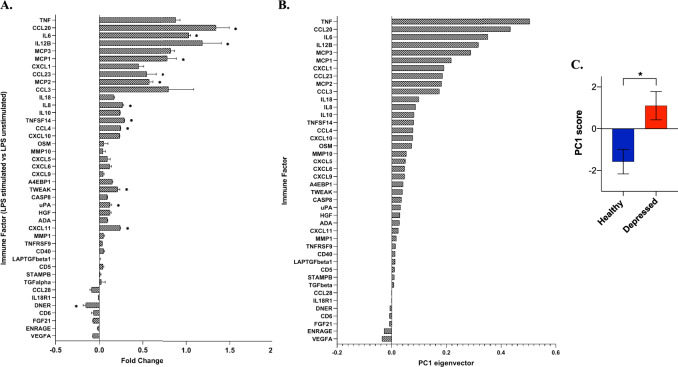
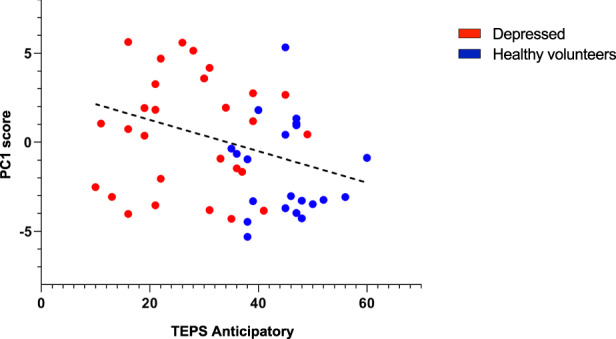
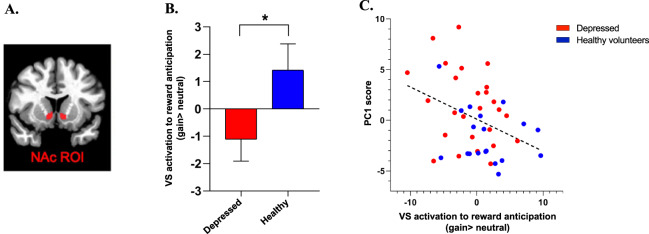
Increased levels of peripheral cytokines have been previously associated with depression in preclinical and clinical research. Although the precise nature of peripheral immune dysfunction in depression remains unclear, evidence from animal studies points towards a dysregulated response of peripheral leukocytes as a risk factor for stress susceptibility. This study examined dynamic release of inflammatory blood factors from peripheral blood mononuclear cells (PBMC) in depressed patients and associations with neural and behavioral measures of reward processing. Thirty unmedicated patients meeting criteria for unipolar depressive disorder and 21 healthy control volunteers were enrolled. PBMCs were isolated from whole blood and stimulated ex vivo with lipopolysaccharide (LPS). Olink multiplex assay was used to analyze a large panel of inflammatory proteins. Participants completed functional magnetic resonance imaging with an incentive flanker task to probe neural responses to reward anticipation, as well as clinical measures of anhedonia and pleasure including the Temporal Experience of Pleasure Scale (TEPS) and the Snaith-Hamilton Pleasure Scale (SHAPS). LPS stimulation revealed larger increases in immune factors in depressed compared to healthy subjects using an aggregate immune score (t49 = 2.83, p = 0.007). Higher peripheral immune score was associated with reduced neural responses to reward anticipation within the ventral striatum (VS) (r = −0.39, p = 0.01), and with reduced anticipation of pleasure as measured with the TEPS anticipatory sub-score (r = −0.318, p = 0.023). Our study provides new evidence suggesting that dynamic hyper-reactivity of peripheral leukocytes in depressed patients is associated with blunted activation of the brain reward system and lower subjective anticipation of pleasure.
Overview
The claims and statistics of this paper haven’t been checked yet.
Free: it reads the open-access text and checks the first 5 claims that cite a source we can check. Create a free account to check every claim.
Integrity signals
Registry
Cites
Statistics
Figures
Verification
Claims the paper makes
The claims and statistics of this paper haven’t been checked yet.
Free: it reads the open-access text and checks the first 5 claims that cite a source we can check. Create a free account to check every claim.
Claims other papers make about this one
Each is checked against this paper’s own text: does it say what the citing paper says it does?
The source backs part of the claim, not all of it — or backs it for a different population, condition or comparison.
In the citing paper
“Notably, PBMCs isolated from people with MDD exhibit greater TLR4 expression and responses to TLR4 stimulation110,111; thus, stress-induced endotoxemia may contribute to systemic inflammation that impinges on behaviour (Fig. 3).”
From Central regulation of stress-evoked peripheral immune responses (2023) · cites this paper as [110]
Experimental — accuracy not yet measured
Self-check
Percentages, sums and reported differences re-computed from the paper’s own numbers.
The self-check needs the paper’s full text.
Citations
Cites
mice: Multivariate Imputation by Chained Equations in R
Buuren, S. V., & Groothuis-Oudshoorn, K. (2011) · Journal of Statistical Software · doi:10.18637/jss.v045.i03 · Cited by 13,870
Molecular Mechanisms of Depression: Perspectives on New Treatment Strategies
Lang, U. E., & Borgwardt, S. (2013) · Cellular Physiology and Biochemistry · doi:10.1159/000350094 · Cited by 8,475
Scoville, W. B. (1949) · Journal of neurosurgery · doi:10.3171/jns.1949.6.1.0065 · Cited by 7,381
A Meta-Analysis of Cytokines in Major Depression
Dowlati, Y., Herrmann, N., Swardfager, W., Liu, H., Sham, L., Reim, E. K., & Lanctôt, K. L. (2010) · Biological Psychiatry · doi:10.1016/j.biopsych.2009.09.033 · Cited by 4,729 · cited 6×
“The use of this assay, one of the most extensive panel available for proteins associated with inflammation and related biological processes, highlighted the potential contribution of a broad range of immune and inflammatory factors to depression and anhedonia, beyond well-studied proinflammatory cytokines such as TNF-…”
ResultInfluentialThe role of inflammation in depression: from evolutionary imperative to modern treatment target
Miller, A. H., & Raison, C. L. (2016) · Nature Reviews Immunology · doi:10.1038/nri.2015.5 · Cited by 3,942
Chronic Inflammation (Inflammaging) and Its Potential Contribution to Age-Associated Diseases
Franceschi, C., & Campisi, J. (2014) · The Journals of Gerontology Series A: Biological Sciences and Medical Sciences · doi:10.1093/gerona/glu057 · Cited by 3,891
Kessler, R. C., Petukhova, M., Sampson, N. A., Zaslavsky, A. M., & Wittchen, H. (2012) · International Journal of Methods in Psychiatric Research · doi:10.1002/mpr.1359 · Cited by 2,947 · cited 1×
“INTRODUCTION Major depressive disorder (MDD) is a common, chronic and debilitating condition characterized by affective, cognitive, and behavioral symptoms [1, 2].”
BackgroundAssociations of depression with C-reactive protein, IL-1, and IL-6: a meta-analysis.
Howren, M. B., Lamkin, D. M., & Suls, J. (2009) · Psychosomatic Medicine · doi:10.1097/psy.0b013e3181907c1b · Cited by 2,766 · cited 6×
“The use of this assay, one of the most extensive panel available for proteins associated with inflammation and related biological processes, highlighted the potential contribution of a broad range of immune and inflammatory factors to depression and anhedonia, beyond well-studied proinflammatory cytokines such as TNF-…”
ResultInfluentialAnticipation of Increasing Monetary Reward Selectively Recruits Nucleus Accumbens
Knutson, B., Adams, C. M., Fong, G. W., & Hommer, D. (2001) · The Journal of Neuroscience · doi:10.1523/jneurosci.21-16-j0002.2001 · Cited by 2,244
Slavich, G. M., & Irwin, M. R. (2014) · Psychological Bulletin · doi:10.1037/a0035302 · Cited by 2,206 · cited 1×
“Further, there is evidence that childhood adversity, a well-established risk factor for depression [17], is associated with long-term inflammation [18, 19].”
Background
Cited by
Inflammation-Related Functional and Structural Dysconnectivity as a Pathway to Psychopathology
Goldsmith, D. R., Bekhbat, M., Mehta, N. D., & Felger, J. C. (2023) · Biological Psychiatry · doi:10.1016/j.biopsych.2022.11.003 · Cited by 214
Central regulation of stress-evoked peripheral immune responses
Chan, K. L., Poller, W. C., Swirski, F. K., & Russo, S. J. (2023) · Nature Reviews Neuroscience · doi:10.1038/s41583-023-00729-2 · Cited by 207
Self-citationBekhbat, M., Li, Z., Mehta, N. D., Treadway, M. T., Lucido, M. J., Woolwine, B. J., Haroon, E., Miller, A. H., & Felger, J. C. (2022) · Molecular Psychiatry · doi:10.1038/s41380-022-01715-3 · Cited by 154
Advancing an Inflammatory Subtype of Major Depression
Miller, A. H. (2025) · American Journal of Psychiatry · doi:10.1176/appi.ajp.20250289 · Cited by 100
“Increased CRP level and increased peripheral blood immune cell reactivity in patients with depression have also been associated with decreased ventral striatal responses to reward anticipation (75, 76).”
Is depression the missing link between inflammatory mediators and cancer?
Polityńska, B., Pokorska, O., Wojtukiewicz, A. M., Sawicka, M., Mysliwiec, M., Honn, K. V., Tucker, S. C., & Wojtukiewicz, M. Z. (2022) · Pharmacology & Therapeutics · doi:10.1016/j.pharmthera.2022.108293 · Cited by 89
Inflammation, stress and depression: An exploration of ketamine’s therapeutic profile
Johnston, J. N., Greenwald, M. S., Henter, I. D., Kraus, C., Mkrtchian, A., Clark, N. G., Park, L. T., Gold, P. W., Zarate, C. A., & Kadriu, B. (2023) · Drug Discovery Today · doi:10.1016/j.drudis.2023.103518 · Cited by 80
Understanding the Biological Relationship between Migraine and Depression
Viudez‐Martínez, A., Torregrosa, A. B., Navarrete, F., & García‐Gutiérrez, M. S. (2024) · Biomolecules · doi:10.3390/biom14020163 · Cited by 65
“…to note that differential changes associated with an impaired peripheral inflammatory state have been described according to symptomatology [443], including suicidal risk [444,445], as well as the severity [446,447], clinical progress [448,449], or treatment response [450–453] of the…”
BackgroundTreadway, M. T., Etuk, S., Cooper, J. A., Hossein, S., Hahn, E., Betters, S. A., Liu, S., Arulpragasam, A. R., DeVries, B. A. M., Irfan, N., et al. (2024) · Molecular Psychiatry · doi:10.1038/s41380-024-02751-x · Cited by 66
“Functional neuroimaging studies have also revealed attenuated activity in striatum during DA-sensitive processing, such as during reward anticipation or reward prediction errors following immune activation [33 – 36].”
InfluentialChen, J., Doyle, M. F., Fang, Y., Mez, J., Crane, P. K., Scollard, P., ADSP Data Harmonization Consortium Cognitive Harmonization Core, Satizabal, C. L., Alosco, M. L., Qiu, W. Q., et al. (2023) · Aging Cell · doi:10.1111/acel.13955 · Cited by 56
“Proteins with > 50% of participant values below LOD were excluded from analyses, a value suggested by OLINK and adopted by others (Costi et al., 2021; Drake et al., 2021; Harlid et al., 2021 ) leaving a total of 68 proteins for downstream analyses (see Table S2a ).”
Exaggerated amygdala response to threat and association with immune hyperactivity in depression
Boukezzi, S. C., Costi, S., Shin, L. M., Kim‐Schulze, S., Cathomas, F., Collins, A. B., Russo, S. J., Morris, L. S., & Murrough, J. W. (2022) · Brain Behavior and Immunity · doi:10.1016/j.bbi.2022.05.015 · Cited by 43
Self-citationKelly, C. A., Freeman, K. B., & Schumacher, J. A. (2022) · Neuroscience & Biobehavioral Reviews · doi:10.1016/j.neubiorev.2022.104578 · Cited by 41
Butelman, E. R., Goldstein, R. Z., Nwaneshiudu, C. A., Girdhar, K., Roussos, P., Russo, S. J., & Alia‐Klein, N. (2023) · Neuroscience · doi:10.1016/j.neuroscience.2023.07.031 · Cited by 38
Self-citationNeuroinflammation in the Amygdala Is Associated With Recent Depressive Symptoms
Zhang, W., Rutlin, J. R., Eisenstein, S. A., Wang, Y., Barch, D. M., Hershey, T. G., Bogdan, R., & Bijsterbosch, J. D. (2023) · Biological Psychiatry Cognitive Neuroscience and Neuroimaging · doi:10.1016/j.bpsc.2023.04.011 · Cited by 28
Bekhbat, M., Li, Z., Dunlop, B. W., Treadway, M. T., Mehta, N. D., Revill, K. P., Lucido, M. J., Changdo, H., Andrea, A., Wommack, E. C., et al. (2024) · Brain Behavior and Immunity · doi:10.1016/j.bbi.2024.12.026 · Cited by 23
“…illnesses (Goldsmith et al., 2023), including lower functional connectivity (FC) in key corticostriatal circuits involved in reward processing and effortful behavior (Burrows et al., 2021; Costi et al., 2021a; Felger et al., 2016; Lu et al., 2022; Rengasamy et al., 2022; Yin et al., 2019).”
Bekhbat, M., Ulukaya, G. B., Bhasin, M., Felger, J. C., & Miller, A. H. (2022) · Neurobiology of Stress · doi:10.1016/j.ynstr.2022.100462 · Cited by 22
“…motor circuits as well as circuits involving threat sensitivity that are in turn related to symptoms of anhedonia, psychomotor retardation and anxiety (Burrows et al., 2021; Felger et al., 2016; Mehta et al., 2018; Rengasamy et al., 2021; Savitz et al., 2013; Yin et al., 2019; Costi et al., 2021).”
BackgroundToenders, Y. J., Schmaal, L., Nawijn, L., Han, L. K. M., Binnewies, J., van der Wee, N. J. A., van Tol, M., Veltman, D. J., Milaneschi, Y., Lamers, F., et al. (2022) · Journal of Affective Disorders · doi:10.1016/j.jad.2022.06.056 · Cited by 22
“From research findings so far (Toenders et al., 2020; Mehler et al., 2021; Costi et al., 2021), it can be hypothesised that atypical, energy-related symptoms are associated specifically with alterations in the insula and OFC, and that immuno-metabolic dysregulations might show the same associations…”
BackgroundKetamine-Associated Change in Anhedonia and mTOR Expression in Treatment-Resistant Depression
Singh, B., Voort, J. L. V., Riva‐Posse, P., Pazdernik, V., Frye, M. A., & Tye, S. J. (2023) · Biological Psychiatry · doi:10.1016/j.biopsych.2022.10.007 · Cited by 21
Sun, Z., Zhang, B., Zhou, J., Luo, Y., Zhu, X., Wang, Y., He, Y., Zheng, P., Zhang, L., Yang, J., et al. (2024) · Advanced Science · doi:10.1002/advs.202308393 · Cited by 20
Qiao, D., Qi, Y., Zhang, X., Wen, Y., Huang, Y., Li, Y., Liu, P., Li, G., & Liu, Z. (2025) · European Child & Adolescent Psychiatry · doi:10.1007/s00787-025-02709-6 · Cited by 19
Petrican, R., & Fornito, A. (2023) · Developmental Cognitive Neuroscience · doi:10.1016/j.dcn.2023.101229 · Cited by 17
von Mücke-Heim, I.-A., Martin, J. N., Uhr, M., Ries, C., & Deussing, J. M. (2023) · Frontiers in Pharmacology · doi:10.3389/fphar.2023.1148190 · Cited by 17
“A recent study by Costi and colleagues, for instance, demonstrated a relation between elevated blood-derived immune cell reactivity in the form of cytokine release following ex vivo lipopolysaccharides (LPS) stimulation and anhedonia as well as reward anticipation in depression (Costi et al., 2021).”
BackgroundInfluentialThe Use of Ketamine for the Treatment of Anhedonia in Depression
Patarroyo-Rodríguez, L., Cavalcanti, S., Voort, J. L. V., & Singh, B. (2024) · CNS Drugs · doi:10.1007/s40263-024-01099-8 · Cited by 16
“Preclinical and clinical data suggest that ketamine modulates immune and neurotrophic signaling and increases synaptic plasticity through modulation of mTOR [88–93].”
Lubianiker, N., Koren, T., Djerassi, M., Sirotkin, M., Singer, N., Jalon, I., Lerner, A., Sar-El, R., Sharon, H., Shahar, M., et al. (2026) · Nature Medicine · doi:10.1038/s41591-025-04140-5 · Cited by 15
“In humans, correlations between reward-related neural activity measured through functional neuroimaging (for example, neural activity during reward expectation in the ventral striatum or striatal reward prediction error signals) and specific immune markers have been documented 6–8 .”
Towards a multidimensional model of inflamed depression
Wijaya, M. T., Jin, R. R., Liu, X., Zhang, R., & Lee, T. M. C. (2022) · Brain, Behavior, & Immunity - Health · doi:10.1016/j.bbih.2022.100564 · Cited by 10
Stress-activated brain-gut circuits disrupt intestinal barrier integrity and social behaviourPreprint
Russo, S. J., Chan, K. L., Li, L., Parise, L. F., Cathomas, F., LeClair, K. B., Shimo, Y., Lin, H., Cuttoli, R. D.-D., Aubry, A., et al. (2023) · Research Square · doi:10.21203/rs.3.rs-3459170/v1 · Cited by 15
Self-citationLiu, Q., Ely, B. A., Stern, E. R., Xu, J., Kim, J.-W., Pick, D., Alonso, C. M., & Gabbay, V. (2022) · NeuroImage Clinical · doi:10.1016/j.nicl.2022.103258 · Cited by 12
Self-citationUnveiling the link between chronic pain and misuse of opioids and cannabis
Dagher, M., Alayoubi, M., Sigal, G. H., & Cahill, C. M. (2024) · Journal of Neural Transmission · doi:10.1007/s00702-024-02765-3 · Cited by 12
“This study was replicated in patients with depression and anhe-donia where LPS stimulation produced greater increases in immune factors and reduced neural responses to reward anticipation within the ventral striatum (Costi et al. 2021).”
Fu, L., Ren, J., Lei, X., Wang, Y., Chen, X., Zhang, R., Li, Q., Teng, X., Guo, C., Wu, Z., et al. (2024) · Progress in Neuro-Psychopharmacology and Biological Psychiatry · doi:10.1016/j.pnpbp.2024.111023 · Cited by 12
Butelman, E. R., Huang, Y., Cathomas, F., Gaudreault, P., Roussos, P., Russo, S. J., Goldstein, R. Z., & Alia‐Klein, N. (2024) · Translational Psychiatry · doi:10.1038/s41398-024-03119-z · Cited by 11
Self-citationArgueta, D. L., Brice, K. N., Wu‐Chung, E. L., Chen, M. A., Lai, V., Paoletti, J., Denny, B. T., Green, C., Medina, L. D., Schulz, P. E., et al. (2024) · Psychoneuroendocrinology · doi:10.1016/j.psyneuen.2024.107140 · Cited by 11
Xue, H., Chen, J., & Fan, W. (2024) · Journal of Affective Disorders · doi:10.1016/j.jad.2024.04.006 · Cited by 10
Meta-Analysis of Brain Volumetric Abnormalities in Patients with Remitted Major Depressive Disorder
Xu, X., Zhou, Q., Wen, F., & Yang, M. X. (2024) · Depression and Anxiety · doi:10.1155/2024/6633510 · Cited by 10
“The low response of the ventral striatum to a rewards-anticipation task is related to a high level of peripheral blood leukocyte reactivity in patients with depression [102].”
BackgroundNguyen, T. N. B., Ely, B. A., Pick, D., Patel, M., Xie, H., Kim‐Schulze, S., & Gabbay, V. (2022) · Brain Behavior and Immunity · doi:10.1016/j.bbi.2022.07.163 · Cited by 9
Self-citationZhai, Y., Li, N., Zhang, Y., Li, H., Wu, L., Wei, C., Ji, J., & Zheng, D. (2024) · Inflammopharmacology · doi:10.1007/s10787-024-01583-z · Cited by 8
Singh, A., Bekhbat, M., Goldsmith, D. R., Le, N., Wommack, E. C., Li, Z., Haroon, E., & Felger, J. C. (2025) · Comprehensive Psychoneuroendocrinology · doi:10.1016/j.cpnec.2025.100284 · Cited by 8
Sex-specific regulation of microglial MyD88 in HMGB1-Induced anxiety phenotype in mice
Rawls, A., Dziabis, J. E., Nguyen, D. M., Anbarci, D. N., Clark, M., Zhang, G., Dzirasa, K., & Bilbo, S. D. (2025) · Neurobiology of Stress · doi:10.1016/j.ynstr.2025.100721 · Cited by 8
“Specifically, changes in the peripheral and central immune systems have been observed in patients with anxiety and comorbid depression (Costi et al., 2021; Brydges et al., 2022).”
Li, D.-X., Hu, Q.-M., Xu, C.-C., Yang, H.-Y., Liu, J.-K., Sun, Y., Wang, G., Wang, J., & Zhou, Z. (2025) · World Journal of Psychiatry · doi:10.5498/wjp.v15.i7.105249 · Cited by 8
Pizzagalli, D. A. (2026) · Nature Mental Health · doi:10.1038/s44220-026-00631-7 · Cited by 7
Self-citationImpact of St. John’s wort extract Ze 117 on stress induced changes in the lipidome of PBMC
Bussmann, H., Bremer, S., Häberlein, H., Boonen, G., Drewe, J., Butterweck, V., & Franken, S. (2023) · Molecular Medicine · doi:10.1186/s10020-023-00644-3 · Cited by 7
“It has been shown that several parallel responses in the brain and PBMC exist such as alterations of metabolism and disturbances in the main neurotransmitter and hormonal systems (Costi et al. 2021; Li et al. 2014).”
BackgroundPetrican, R., Fornito, A., Murgatroyd, C., Boyland, E. J., & Hardman, C. A. (2025) · Nature Communications · doi:10.1038/s41467-025-60686-5 · Cited by 7
“…resolutions that range from the molecular (e.g., gene expression 3,4 ) to the systemic (e.g., the maturation of large-scale brain networks 5 ; in fl ammation 6,7 ) are thought to underpin the rising differential susceptibility of males and females to mood disorders during this life stage 8,9 .”
Chat, I. K.-Y., Hansson, L. S., Lekander, M., Jacobsen, C. S., Benson, S., Hebebrand, J., Bender, V., Handke, A. E., Hasenberg, T., Treadway, M. T., et al. (2026) · Brain Behavior and Immunity · doi:10.1016/j.bbi.2026.106548 · Cited by 6
“Costi et al. (2021) reported that higher pro-inflammatory cytokine production by LPS-stimulated peripheral blood mononuclear cells was associated with reduced responses to reward anticipation within the ventral striatum and with reduced self-report anticipation of pleasure.”
Lin, S., Liu, R., Zhang, Z., Liu, F., Qin, S., Wei, Y., & Wang, F. (2023) · BMC Psychiatry · doi:10.1186/s12888-023-05378-4 · Cited by 6
“Elevated inflammatory markers (namely, CD3, CD4, and CD8) have been previously associated with anhedonia [32, 33].”
BackgroundHu, C., Vasileiou, E. S., Salter, A. R., Marrie, R. A., Kowalec, K., & Fitzgerald, K. C. (2024) · Multiple Sclerosis and Related Disorders · doi:10.1016/j.msard.2024.105866 · Cited by 6
Felger, J. C. (2023) · Advances in neurobiology · doi:10.1007/978-3-031-21054-9_16 · Cited by 6
Petrican, R., Chopra, S., Murgatroyd, C., & Fornito, A. (2024) · Biological Psychiatry · doi:10.1016/j.biopsych.2024.10.008 · Cited by 5
“This work has linked brain aging to diagnoses of anxiety, MDD, and psychosis (16,22), with cardiometabolic aging only being linked to speci fi c symptoms, such as anxious fatigue and blunted reward responsiveness in MDD (25 – 28) or negative symptoms in psychosis (29).”
InfluentialXu, C., Wang, F., Huang, Q., Lyu, D., Wu, C., Cao, T., Zhao, J., Wang, M., Zhou, N., Yang, W., et al. (2023) · Journal of Psychiatric Research · doi:10.1016/j.jpsychires.2023.07.013 · Cited by 5
Hills, C., Hernandez, C. A., Gabbay, V., & Berman, J. W. (2026) · Cells · doi:10.3390/cells15050399 · Cited by 4
“Anhedonia severity, a core symptom of depression, is also positively associated with multiple cytokines [49,50].”
FLI1 in PBMCs contributes to elevated inflammation in combat-related posttraumatic stress disorder
Li, P., Liu, L., Liu, S., Lu, Z., Halushka, P. V., Sidles, S. J., LaRue, A. C., Wang, Z., & Fan, H. (2024) · Frontiers in Psychiatry · doi:10.3389/fpsyt.2024.1436690 · Cited by 4
“PBMCs have been shown to play a signi fi cant role in elevating systemic in fl ammatory mediators in combat veterans with PTSD (8, 9).”
BackgroundKiel, M. D., Pawlak, S. A., van Dijk, S., Kirkpatrick, K., Stelzer, I. A., & Gumusoglu, S. B. (2025) · Biological Psychiatry · doi:10.1016/j.biopsych.2025.08.015 · Cited by 3
MUTUYIMANA, V., & SIKUBWABO, C. (2024) · Journal of Human Resource &Leadership · doi:10.53819/81018102t2405 · Cited by 3
Mehta, M., Paulus, M. P., & Smith, R. S. (2025) · Current topics in behavioral neurosciences · doi:10.1007/7854_2024_572 · Cited by 3
de Aquino, G. Â., de Sousa, C. N. S., Júnior, M. A. S., Cavalcante, L. R. L., Forte, A. R. C. C., Mota, M. R. L., Martinez, F. E. O., de Almeida, T. S., Leal, L. K. A. M., & Vasconcelos, S. M. M. (2025) · European Journal of Pharmacology · doi:10.1016/j.ejphar.2025.177769 · Cited by 3
Vadodaria, K. C., Serrats, J., Brubaker, W., Kangas, B. D., Pizzagalli, D. A., Garvey, D. S., Sudarsan, V., & Vanover, K. E. (2025) · Neuropsychopharmacology · doi:10.1038/s41386-025-02287-w · Cited by 2
Self-citationChen, J., Doyle, M. F., Cao, Y., Iyer, S., Ragab, A. A. Y., Murabito, J. M., & Lunetta, K. L. (2026) · Scientific Reports · doi:10.1038/s41598-026-41423-4 · Cited by 2
Towards precision psychiatry: initial foundations and future directions
Etkin, A., O’Donnell, P., Ressler, K. J., & Manji, H. K. (2026) · Nature Reviews Drug Discovery · doi:10.1038/s41573-026-01509-0 · Cited by 3
Butelman, E. R., Huang, Y., King, S. G., Gaudreault, P., Ceceli, A. O., Kronberg, G., Cathomas, F., Roussos, P., Russo, S. J., Garland, E. L., et al. (2025) · Biological Psychiatry Global Open Science · doi:10.1016/j.bpsgos.2025.100480 · Cited by 2
“Targets with $ 50% of samples below the limit of detection within either group were not analyzed (47).”
Self-citationBiological Mechanisms of Stress Resilience: Human and Animal Studies
Seeley, S. H., Boukezzi, S. C., DePierro, J. M., Charney, D. S., & Feder, A. (2025) · Oxford University Press eBooks · doi:10.1093/med/9780197640654.003.0041 · Cited by 2
Rietberg, T., Abdellati, K. E., Lucas, A., Lemarinier, M., Fried, S., Richard, J., Tamouza, R., Coppens, V., Morrens, M., Leboyer, M., et al. (2025) · Brain Behavior & Immunity - Health · doi:10.1016/j.bbih.2025.101114 · Cited by 1
“These findings align with our expectations as well as prior in vitro work (Costi et al., 2021; Vogelzangs et al., 2016) and studies on sub-clinical depressive symptoms predicting antibody response (Christian et al., 2010; Glaser et al., 2003).”
Du-xing, L., Gu, Y., Xia, W.-J., Sun, Y., Hou, L., Zhu, W.-X., & Wang, J. (2026) · World Journal of Psychiatry · doi:10.5498/wjp.v16.i3.114446 · Cited by 1
Liu, J., Liang, P., Wang, Y., Huang, H. M., Zhang, S., Li, G., & Wu, H. (2026) · Medicine · doi:10.1097/md.0000000000048110 · Cited by 1
“13] Different subtypes of immune cells release multiple cytokines that play a crucial role in infection and inflammation and serve as key mediators in the interaction between the brain and the immune system.”
Szeszko, P. R., Chan, C. C., Ramakrishnan, A., Rizk, M., Baptista, I., Alter, S., Haznedar, M. M., Chu, K.-W., Xie, H., Yehuda, R., et al. (2026) · Brain Behavior and Immunity · doi:10.1016/j.bbi.2026.106836 · Cited by 1
Self-citationStimulated cytokine production, attachment, and emotional well-being in dementia spousal caregivers.
Argueta, D. L., Roberts, S., Brice, K. N., Wu‐Chung, E. L., Lai, V. D., Paoletti, J., Denny, B. T., Green, C., Henry, S. K., Medina, L. D., et al. (2026) · Health Psychology · doi:10.1037/hea0001533 · Cited by 1
Chat, I. K.-Y., Murrough, J. W., Russo, S. J., Calabro, F. J., Luna, B., Tripathy, K., Gupta, T., Brodnick, Z. M., Julien, M. M., Jones, N., et al. (2025) · Research Square · doi:10.21203/rs.3.rs-8442008/v1 · Cited by 1
“To reduce the dimensionality of the immune protein data, a principal component analysis was conducted following prior work (38).”
Self-citationNguyen, T. N. B., Ely, B. A., Pick, D., Patel, M., Xie, H., Kim‐Schulze, S., & Gabbay, V. (2021) · bioRxiv (Cold Spring Harbor Laboratory) · doi:10.1101/2021.08.07.455522
Self-citationSocial Anhedonia: (f)MRI Studies
Мельников, М. Е. (2023) · Neuroscience and Behavioral Physiology · doi:10.1007/s11055-023-01502-9
“The purpose of the present review is to summarize Anhedonia has a number of biological correlates, such as the general reactivity of the peripheral immune system [18] and increased peripheral proin fl ammatory cytokine levels [34].”
BackgroundThe Social Anhedonia: (f)MRI Studies
Мельников, М. Е. (2023) · Успехи физиологических наук · doi:10.31857/s030117982301006x
Diagnosis and Epidemiology of Depression
Murrough, J. W. (2025) · Oxford University Press eBooks · doi:10.1093/med/9780197640654.003.0027
Self-citationImmune Mechanisms of Depression
Hodes, G. E., Ménard, C., Pfau, M. L., & Russo, S. J. (2025) · Oxford University Press eBooks · doi:10.1093/med/9780197640654.003.0032
Self-citationChen, W., & Deng, F. (2025) · Archives of Gerontology and Geriatrics Plus · doi:10.1016/j.aggp.2025.100131
Marchidan, M., Rizk, M., Karpman, E., Lizzano, A., Fremont, R., Dobbs, M. F., Lee, J. H., Irizar, H., Lyu, W., Yin, Z., et al. (2026) · Contemporary Clinical Trials · doi:10.1016/j.cct.2026.108382
Self-citationPsychedelics target neuroimmune interactions to limit fear
Alvarez, J., & Russo, S. J. (2025) · Cell Research · doi:10.1038/s41422-025-01154-z
Self-citationZhu, W., Sobue, A., Tanaka, R., Hada, K., Ibi, D., Liu, Y., Matsuzaki, T., Nagai, T., Nabeshima, T., Kaibuchi, K., et al. (2025) · Behavioural Brain Research · doi:10.1016/j.bbr.2025.115832
Yan, Y., Sagor, M. I. H., Chen, L., Lin, H., Gao, G., Lian, G., & Xie, L. (2025) · Frontiers in Psychiatry · doi:10.3389/fpsyt.2025.1670519
Chen, S., Huang, G., Lei, S., & Lin, X. (2025) · Frontiers in Psychiatry · doi:10.3389/fpsyt.2025.1655599
Lin, S., Liu, R., Zhang, Z., Liu, F., Qin, S., Wei, Y., & Wang, F. (2023) · Figshare · doi:10.6084/m9.figshare.24647146
Bussmann, H., Bremer, S., Häberlein, H., Boonen, G., Drewe, J., Butterweck, V., & Franken, S. (2024) · Figshare · doi:10.6084/m9.figshare.26581220
Bussmann, H., Bremer, S., Häberlein, H., Boonen, G., Drewe, J., Butterweck, V., & Franken, S. (2024) · Figshare · doi:10.6084/m9.figshare.26581223
Bussmann, H., Bremer, S., Häberlein, H., Boonen, G., Drewe, J., Butterweck, V., & Franken, S. (2024) · Figshare · doi:10.6084/m9.figshare.26581226
Jia, T., Yuan, C., Hu, S., Xie, L., Liu, A., Qin, F., He, Y., & Zhang, C. (2026) · Translational Psychiatry · doi:10.1038/s41398-026-03886-x
“Peripheral factors, such as altered plasma levels of growth factors [35], immune markers [36], and transcriptional changes in leukocytes [37], further underscore the importance of integrating brain and peripheral data to identify clinically relevant biomarkers.”
IMMUNITY PARAMETERS IN COMBATANTS WITH POST-TRAUMATIC STRESS DISORDERS
Фітькало, О. С. (2026) · Clinical & experimental pathology · doi:10.24061/1727-4338.xxv.2.96.2026.13
Meier, L., Mulaw, M., Durner, V., Schäfer, L., Schönfeldt‐Lecuona, C., Bopp, V., Graf, H., Otto, M., Steinacker, P., Großkopf, H., et al. (2026) · BMJ Connections Mental Health · doi:10.1136/bmjcment-2025-000016
Curzytek, K., Malicki, S., Kamińska, K., Gąsiorek, A., Wiekiera, A., Grygier, B., Muszyńska, A., Głombik, K., Dubin, G., Basta‐Kaim, A., et al. (2026) · Neurobiology of Disease · doi:10.1016/j.nbd.2026.107517
Comparative efficacy of interventions for transdiagnostic anhedonia: a network meta-analysis
Wang, Y.-M., Chen, F., Hou, Y.-W., & Zhang, M. (2026) · Psychiatry Research · doi:10.1016/j.psychres.2026.117435
Guo, Q., Yong, W., Guo, L., & Shang, S. (2026) · Interdisciplinary Nursing Research · doi:10.1097/nr9.0000000000000131
Metadata
- Authors
- Costi, S., Morris, L. S., Collins, A., Fernandez, N. F., Patel, M., Xie, H., Kim-Schulze, S., Stern, E. R., Collins, K. A., Cathomas, F., Parides, M. K., Whitton, A. E., Pizzagalli, D. A., Russo, S. J., & Murrough, J. W.
- Affiliations
- Icahn School of Medicine at Mount Sinai (US)
- Nathan Kline Institute for Psychiatric Research (US)
- Albert Einstein College of Medicine (US)
- The University of Sydney (AU)
- Harvard University (US)
- Corresponding author
- Murrough, James W.
- ORCID
- Venue
- Translational Psychiatry
- Published
- 2021-11-05
- Volume
- 11
- Issue
- 1
- Pages
- 565-565
- ISSN
- 2158-3188 (ISSN-L)
- PMC
- PMC8571388
- OpenAlex
- W3209503150
- Cited by
- 87
- References
- 73
- Citations by year
- 2026: 14 · 2025: 23 · 2024: 22 · 2023: 17 · 2022: 10 · 2021: 1
- FWCI
- 4.24
- Type
- journal article
- Language
- en
- Open access
- gold
- doi.org
- Licence
- cc-by
- creativecommons.org/licenses/by/4.0 (tdm)
- creativecommons.org/licenses/by/4.0 (vor)
- Locations
- Translational Psychiatry (publishedVersion, cc-by)
- Europe PMC (PubMed Central) (publishedVersion, other-oa)
- PubMed Central (publishedVersion, cc-by)
- PubMed (publishedVersion)
- DOAJ (DOAJ: Directory of Open Access Journals) (submittedVersion, cc-by-sa)
- Funders
- U.S. Department of Health & Human Services | NIH | National Institute of Mental Health (R21MH109771, MH068376)
- Department of Health | National Health and Medical Research Council (APP1110773)
- Topics
- Life Sciences › Neuroscience › Biological Psychiatry › Tryptophan and brain disorders
- Life Sciences › Neuroscience › Behavioral Neuroscience › Stress Responses and Cortisol
- Health Sciences › Medicine › Pharmacology (medical) › Treatment of Major Depression
- Keywords
- depression, anhedonia, peripheral blood mononuclear cells, inflammatory cytokines, lipopolysaccharide stimulation, reward anticipation, ventral striatum, anticipatory pleasure, Temporal Experience of Pleasure Scale, Snaith-Hamilton Pleasure Scale, neuroinflammation
- MeSH terms
- Depression, Humans, Leukocytes, Mononuclear, Magnetic Resonance Imaging, Reward, Anhedonia, Ventral Striatum
About these checks
Registry, retraction, Cites and statistics results are computed, not judged, with one exception: a printed reference that no index lists is read once by a model before it counts as a citation error. Claims are extracted by a model and kept only when their quote appears verbatim in the text; each cited source is then checked, with a model’s help, for whether it says what the claim relies on. Those verdicts can be wrong — read the claim’s quote and the cited source before relying on one.
Statistics and arithmetic are recomputed, not judged.
Confidence bands are shown only for fields calibrated on our annotated test set. None is calibrated yet, so no band is shown.
What counts as a claim ›How we measure confidence ›How we check this ›
Are you an author, or do you see a problem with this page? Request a review
Data sources
Bibliographic data: Semantic Scholar, OpenAlex, Crossref.
Contains information from the Semantic Scholar Academic Graph Datasets, made available under the ODC Attribution License (ODC-BY 1.0).
Semantic Scholar’s data is described in: Kinney, R., et al. (2023). The Semantic Scholar Open Data Platform. arXiv:2301.10140.
