

Peripheral immune cell reactivity and neural response to reward in patients with depression and anhedonia
Open accessThe DOI matches its Crossref record; 74 of the 74 references it cites were found in a registry or an index.
Abstract
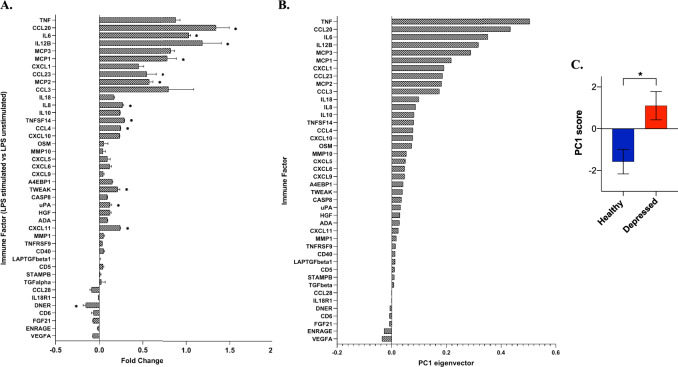
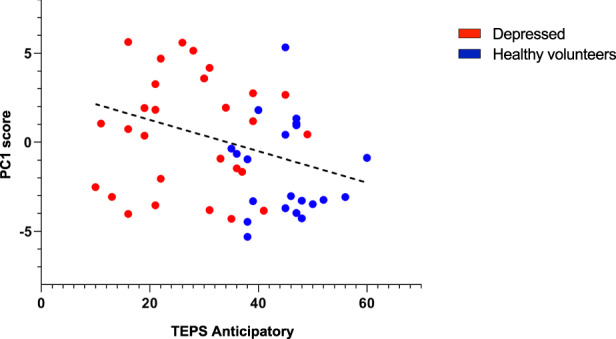
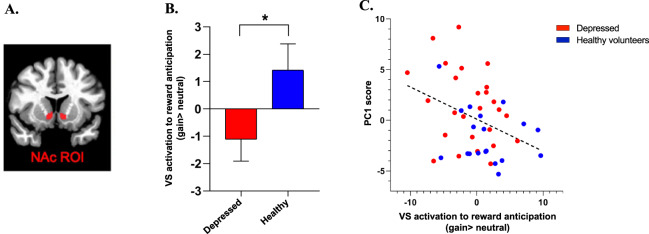
Increased levels of peripheral cytokines have been previously associated with depression in preclinical and clinical research. Although the precise nature of peripheral immune dysfunction in depression remains unclear, evidence from animal studies points towards a dysregulated response of peripheral leukocytes as a risk factor for stress susceptibility. This study examined dynamic release of inflammatory blood factors from peripheral blood mononuclear cells (PBMC) in depressed patients and associations with neural and behavioral measures of reward processing. Thirty unmedicated patients meeting criteria for unipolar depressive disorder and 21 healthy control volunteers were enrolled. PBMCs were isolated from whole blood and stimulated ex vivo with lipopolysaccharide (LPS). Olink multiplex assay was used to analyze a large panel of inflammatory proteins. Participants completed functional magnetic resonance imaging with an incentive flanker task to probe neural responses to reward anticipation, as well as clinical measures of anhedonia and pleasure including the Temporal Experience of Pleasure Scale (TEPS) and the Snaith-Hamilton Pleasure Scale (SHAPS). LPS stimulation revealed larger increases in immune factors in depressed compared to healthy subjects using an aggregate immune score (t49 = 2.83, p = 0.007). Higher peripheral immune score was associated with reduced neural responses to reward anticipation within the ventral striatum (VS) (r = −0.39, p = 0.01), and with reduced anticipation of pleasure as measured with the TEPS anticipatory sub-score (r = −0.318, p = 0.023). Our study provides new evidence suggesting that dynamic hyper-reactivity of peripheral leukocytes in depressed patients is associated with blunted activation of the brain reward system and lower subjective anticipation of pleasure.
Overview
The claims and statistics of this paper haven’t been checked yet.
Free: it reads the open-access text and checks the first 5 claims that cite a source we can check. Create a free account to check every claim.
Integrity signals
Registry
Cites
Statistics
Figures
Verification
Claims the paper makes
The claims and statistics of this paper haven’t been checked yet.
Free: it reads the open-access text and checks the first 5 claims that cite a source we can check. Create a free account to check every claim.
Claims other papers make about this one
Each is checked against this paper’s own text: does it say what the citing paper says it does?
The source backs part of the claim, not all of it — or backs it for a different population, condition or comparison.
In the citing paper
“Notably, PBMCs isolated from people with MDD exhibit greater TLR4 expression and responses to TLR4 stimulation110,111; thus, stress-induced endotoxemia may contribute to systemic inflammation that impinges on behaviour (Fig. 3).”
From Central regulation of stress-evoked peripheral immune responses (2023) · cites this paper as [110]
Experimental — accuracy not yet measured
Self-check
Percentages, sums and reported differences re-computed from the paper’s own numbers.
The self-check needs the paper’s full text.
Citations
Cites
mice: Multivariate Imputation by Chained Equations in R
Buuren, S. V., & Groothuis-Oudshoorn, K. (2011) · Journal of Statistical Software · doi:10.18637/jss.v045.i03 · Cited by 13,870
Molecular Mechanisms of Depression: Perspectives on New Treatment Strategies
Lang, U. E., & Borgwardt, S. (2013) · Cellular Physiology and Biochemistry · doi:10.1159/000350094 · Cited by 8,475
Scoville, W. B. (1949) · Journal of neurosurgery · doi:10.3171/jns.1949.6.1.0065 · Cited by 7,381
A Meta-Analysis of Cytokines in Major Depression
Dowlati, Y., Herrmann, N., Swardfager, W., Liu, H., Sham, L., Reim, E. K., & Lanctôt, K. L. (2010) · Biological Psychiatry · doi:10.1016/j.biopsych.2009.09.033 · Cited by 4,729 · cited 6×
“The use of this assay, one of the most extensive panel available for proteins associated with inflammation and related biological processes, highlighted the potential contribution of a broad range of immune and inflammatory factors to depression and anhedonia, beyond well-studied proinflammatory cytokines such as TNF-…”
ResultInfluentialThe role of inflammation in depression: from evolutionary imperative to modern treatment target
Miller, A. H., & Raison, C. L. (2016) · Nature Reviews Immunology · doi:10.1038/nri.2015.5 · Cited by 3,942
Chronic Inflammation (Inflammaging) and Its Potential Contribution to Age-Associated Diseases
Franceschi, C., & Campisi, J. (2014) · The Journals of Gerontology Series A: Biological Sciences and Medical Sciences · doi:10.1093/gerona/glu057 · Cited by 3,891
Kessler, R. C., Petukhova, M., Sampson, N. A., Zaslavsky, A. M., & Wittchen, H. (2012) · International Journal of Methods in Psychiatric Research · doi:10.1002/mpr.1359 · Cited by 2,947 · cited 1×
“INTRODUCTION Major depressive disorder (MDD) is a common, chronic and debilitating condition characterized by affective, cognitive, and behavioral symptoms [1, 2].”
BackgroundAssociations of depression with C-reactive protein, IL-1, and IL-6: a meta-analysis.
Howren, M. B., Lamkin, D. M., & Suls, J. (2009) · Psychosomatic Medicine · doi:10.1097/psy.0b013e3181907c1b · Cited by 2,766 · cited 6×
“The use of this assay, one of the most extensive panel available for proteins associated with inflammation and related biological processes, highlighted the potential contribution of a broad range of immune and inflammatory factors to depression and anhedonia, beyond well-studied proinflammatory cytokines such as TNF-…”
ResultInfluentialAnticipation of Increasing Monetary Reward Selectively Recruits Nucleus Accumbens
Knutson, B., Adams, C. M., Fong, G. W., & Hommer, D. (2001) · The Journal of Neuroscience · doi:10.1523/jneurosci.21-16-j0002.2001 · Cited by 2,244
Slavich, G. M., & Irwin, M. R. (2014) · Psychological Bulletin · doi:10.1037/a0035302 · Cited by 2,206 · cited 1×
“Further, there is evidence that childhood adversity, a well-established risk factor for depression [17], is associated with long-term inflammation [18, 19].”
BackgroundThe Economic Burden of Adults With Major Depressive Disorder in the United States (2005 and 2010)
Greenberg, P. E., Fournier, A.-A., Sisitsky, T., Pike, C. T., & Kessler, R. C. (2015) · The Journal of Clinical Psychiatry · doi:10.4088/jcp.14m09298 · Cited by 1,779
A scale for the assessment of hedonic tone the Snaith-Hamilton pleasure scale
Snaith, R. P., Hamilton, M., Morley, S., Humayan, A., Hargreaves, D., & Trigwell, P. (1995) · British Journal of Psychiatry · doi:10.1192/bjp.167.1.99 · Cited by 1,778 · cited 4×
“Anhedonia was assessed using the Snaith-Hamilton Pleasure Scale (SHAPS) [38], a well-validated self-report questionnaire assessing pleasure capacity, both consummatory and anticipatory.”
MethodInfluentialGoldsmith, D. R., Rapaport, M. H., & Miller, B. J. (2016) · Molecular Psychiatry · doi:10.1038/mp.2016.3 · Cited by 1,683 · cited 1×
“Indeed meta-analyses suggest that findings of elevated circulation inflammatory factors in patients with depression may be small and quite variable [55, 56].”
BackgroundPeripheral cytokine and chemokine alterations in depression: a meta‐analysis of 82 studies
Köhler, C. A., Freitas, T. H., Maes, M., de Andrade, N. Q., Liu, C. S., Fernandes, B. S., Stubbs, B., Solmi, M., Veronese, N., Herrmann, N., et al. (2017) · Acta Psychiatrica Scandinavica · doi:10.1111/acps.12698 · Cited by 1,443 · cited 7×
“The use of this assay, one of the most extensive panel available for proteins associated with inflammation and related biological processes, highlighted the potential contribution of a broad range of immune and inflammatory factors to depression and anhedonia, beyond well-studied proinflammatory cytokines such as TNF-…”
BackgroundResultInfluentialDissociation of reward anticipation and outcome with event-related fMRI
Knutson, B., Fong, G. W., Adams, C. M., Varner, J. L., & Hommer, D. (2001) · Neuroreport · doi:10.1097/00001756-200112040-00016 · Cited by 1,300
Inflammatory cytokines in depression: neurobiological mechanisms and therapeutic implications
Felger, J. C., & Lotrich, F. E. (2013) · Neuroscience · doi:10.1016/j.neuroscience.2013.04.060 · Cited by 1,180 · cited 2×
“Recent work has also connected peripheral immune dysfunction to brain systems that mediate key aspects of depression, such as reward processing [20, 21].”
BackgroundBacterial lipopolysaccharides and innate immunity
Alexander, C., & Rietschel, E. T. (2001) · Journal of Endotoxin Research · doi:10.1179/096805101101532675 · Cited by 1,120 · cited 1×
“LPS is a major constituent of the membrane of gram-negative bacteria and strongly stimulates innate immunity in diverse species, including humans [22].”
BackgroundLiu, Y., Ho, R. C.-M., & Mak, A. (2012) · Journal of Affective Disorders · doi:10.1016/j.jad.2011.08.003 · Cited by 948
Miller, A. H., Haroon, E., Raison, C. L., & Felger, J. C. (2013) · Depression and Anxiety · doi:10.1002/da.22084 · Cited by 892 · cited 1×
“Recent work has also connected peripheral immune dysfunction to brain systems that mediate key aspects of depression, such as reward processing [20, 21].”
BackgroundWise, R. A. (2002) · Neuron · doi:10.1016/s0896-6273(02)00965-0 · Cited by 881 · cited 1×
“These findings suggest immune reactivity in depression may be associated with a specific aspect of the hedonic experience that relies on the brain reward system centered on the VS [39, 69].”
BackgroundAnhedonia in schizophrenia: Distinctions between anticipatory and consummatory pleasure
Gard, D. E., Kring, A. M., Gard, M. G., Horan, W. P., & Green, M. F. (2007) · Schizophrenia Research · doi:10.1016/j.schres.2007.03.008 · Cited by 817 · cited 9×
“A greater PC1 score was associated with greater anticipatory anhedonia as measured by the TEPS anticipatory sub-score (r=−0.34, p= 0.016) (Fig.”
BackgroundMethodInfluentialReduced hedonic capacity in major depressive disorder: evidence from a probabilistic reward task
Pizzagalli, D. A., Iosifescu, D., Hallett, L. A., Ratner, K. G., & Fava, M. (2008) · Journal of Psychiatric Research · doi:10.1016/j.jpsychires.2008.03.001 · Cited by 780
Self-citationHarrison, N. A., Brydon, L., Walker, C., Gray, M. A., Steptoe, A., & Critchley, H. D. (2009) · Biological Psychiatry · doi:10.1016/j.biopsych.2009.03.015 · Cited by 756
Reward processing dysfunction in major depression, bipolar disorder and schizophrenia
Whitton, A. E., Treadway, M. T., & Pizzagalli, D. A. (2015) · Current Opinion in Psychiatry · doi:10.1097/yco.0000000000000122 · Cited by 739 · cited 2×
“Further, we enrolled only adult subjects diagnosed with unipolar depressive disorders to minimize heterogeneity [11, 53].”
BackgroundSelf-citationToward an objective characterization of an anhedonic phenotype: A signal-detection approach
Pizzagalli, D. A., Jahn, A. L., & O’Shea, J. P. (2005) · Biological Psychiatry · doi:10.1016/j.biopsych.2004.11.026 · Cited by 738 · cited 6×
“The probabilistic reward task (PRT) [25] is a signal detection test that provides an objective assessment of reward learning and was completed on the assessment visit.”
BackgroundMethodSelf-citationHodes, G. E., Pfau, M. L., Leboeuf, M., Golden, S. A., Christoffel, D. J., Bregman, D., Rebusi, N., Heshmati, M., Aleyasin, H., Warren, B. L., et al. (2014) · Proceedings of the National Academy of Sciences · doi:10.1073/pnas.1415191111 · Cited by 692 · cited 4×
“Depressed subjects showed increased levels of immune markers released by PBMCs stimulated ex vivo with LPS, consistent with previous work showing similar results in rodent stress models of depression [10].”
BackgroundResultSelf-citationElevated inflammation levels in depressed adults with a history of childhood maltreatment
Danese, A., Moffitt, T. E., Pariante, C. M., Ambler, A., Poulton, R., & Caspi, A. (2008) · Archives of General Psychiatry · doi:10.1001/archpsyc.65.4.409 · Cited by 641 · cited 1×
“Further, there is evidence that childhood adversity, a well-established risk factor for depression [17], is associated with long-term inflammation [18, 19].”
BackgroundPhillips, M. L., & Swartz, H. A. (2014) · American Journal of Psychiatry · doi:10.1176/appi.ajp.2014.13081008 · Cited by 636 · cited 1×
“Further, we enrolled only adult subjects diagnosed with unipolar depressive disorders to minimize heterogeneity [11, 53].”
BackgroundFelger, J. C., Li, Z., Haroon, E., Woolwine, B. J., Jung, M. Y., Hu, X., & Miller, A. H. (2016) · Molecular Psychiatry · doi:10.1038/mp.2015.168 · Cited by 620 · cited 1×
“, INF-α) or endotoxin have been shown to reduce neural responses to reward [67, 68], while the relationship between plasma high-sensitivity CRP (hs-CRP) and the brain reward circuit has been investigated in depression, at the level of resting-state functional connectivity [21, 65].”
BackgroundDifferentiating BOLD and non-BOLD signals in fMRI time series using multi-echo EPI
Kundu, P., Inati, S. J., Evans, J. W., Luh, W.-M., & Bandettini, P. A. (2012) · NeuroImage · doi:10.1016/j.neuroimage.2011.12.028 · Cited by 615 · cited 1×
“Functional scans were preprocessed and denoised for motion and physiological noise using multi-echo independent component analysis (ME-ICA) [40, 41].”
MethodInflammation-Induced Anhedonia: Endotoxin Reduces Ventral Striatum Responses to Reward
Eisenberger, N. I., Berkman, E. T., Inagaki, T. K., Rameson, L. T., Mashal, N. M., & Irwin, M. R. (2010) · Biological Psychiatry · doi:10.1016/j.biopsych.2010.06.010 · Cited by 596 · cited 1×
“, INF-α) or endotoxin have been shown to reduce neural responses to reward [67, 68], while the relationship between plasma high-sensitivity CRP (hs-CRP) and the brain reward circuit has been investigated in depression, at the level of resting-state functional connectivity [21, 65].”
BackgroundCytokines and psychopathology: Lessons from interferon-α
Capuron, L., & Miller, A. H. (2004) · Biological Psychiatry · doi:10.1016/j.biopsych.2004.02.009 · Cited by 562 · cited 1×
“Over one-third of patients treated with interferon alpha develop significant depressive symptoms and anhedonia [12, 13] and several studies and meta-analyses have reported an association between depression and increased circulating levels of pro-inflammatory cytokines, most consistently interleukin-6 (IL-6) and tumor…”
Moylan, S., Maes, M., Wray, N. R., & Berk, M. (2013) · Molecular Psychiatry · doi:10.1038/mp.2012.33 · Cited by 529 · cited 1×
“Chemokines act as chemiotactic factors and activators of peripheral immune cells that can potentially contribute to the neurodegeneration observed in depression [61, 62].”
BackgroundNeuropsychiatric Adverse Effects of Interferon-??: Recognition and Management
Raison, C. L., Demetrashvili, M., Capuron, L., & Miller, A. H. (2005) · CNS Drugs · doi:10.2165/00023210-200519020-00002 · Cited by 483
The influence of sex and gender on the immune response
Oertelt-Prigione, S. (2012) · Autoimmunity Reviews · doi:10.1016/j.autrev.2011.11.022 · Cited by 459
What does plasma CRP tell us about peripheral and central inflammation in depression?
Felger, J. C., Haroon, E., Patel, T. A., Goldsmith, D. R., Wommack, E. C., Woolwine, B. J., Le, N.-A., Feinberg, R., Tansey, M. G., & Miller, A. H. (2020) · Molecular Psychiatry · doi:10.1038/s41380-018-0096-3 · Cited by 448
Kiecolt-Glaser, J. K., Gouin, J.-P., Weng, N.-P., Malarkey, W. B., Beversdorf, D. Q., & Glaser, R. (2011) · Psychosomatic Medicine · doi:10.1097/psy.0b013e31820573b6 · Cited by 430 · cited 1×
“Further, there is evidence that childhood adversity, a well-established risk factor for depression [17], is associated with long-term inflammation [18, 19].”
BackgroundTreatment-resistant depression and peripheral C-reactive protein.
Chamberlain, S. R., Cavanagh, J., de Boer, P., Mondelli, V., Jones, D. N. C., Drevets, W. C., Cowen, P. J., Harrison, N. A., Pointon, L., Pariante, C. M., et al. (2019) · British Journal of Psychiatry · doi:10.1192/bjp.2018.66 · Cited by 400 · cited 1×
“Recent data suggest that inflammation may be prominent only in a subset of depressed patients and mostly among subjects with treatment resistant depression [57].”
BackgroundIntegrated strategy for improving functional connectivity mapping using multiecho fMRI
Kundu, P., Brenowitz, N. D., Voon, V., Worbe, Y., Vértes, P. E., Inati, S. J., Saad, Z. S., Bandettini, P. A., & Bullmore, E. T. (2013) · Proceedings of the National Academy of Sciences · doi:10.1073/pnas.1301725110 · Cited by 399 · cited 1×
“Functional scans were preprocessed and denoised for motion and physiological noise using multi-echo independent component analysis (ME-ICA) [40, 41].”
MethodCapuron, L., Pagnoni, G., Drake, D. F., Woolwine, B. J., Spivey, J. R., Crowe, R. J., Votaw, J. R., Goodman, M. M., & Miller, A. H. (2012) · Archives of General Psychiatry · doi:10.1001/archgenpsychiatry.2011.2094 · Cited by 382 · cited 1×
“, INF-α) or endotoxin have been shown to reduce neural responses to reward [67, 68], while the relationship between plasma high-sensitivity CRP (hs-CRP) and the brain reward circuit has been investigated in depression, at the level of resting-state functional connectivity [21, 65].”
BackgroundPartially parametric techniques for multiple imputation
Schenker, N., & Taylor, J. M. G. (1996) · Computational Statistics & Data Analysis · doi:10.1016/0167-9473(95)00057-7 · Cited by 334
Multi-echo fMRI: A review of applications in fMRI denoising and analysis of BOLD signals
Kundu, P., Voon, V., Balchandani, P., Lombardo, M. V., Poser, B. A., & Bandettini, P. A. (2017) · NeuroImage · doi:10.1016/j.neuroimage.2017.03.033 · Cited by 321 · cited 1×
“Removal of non-BOLD components allows robust data denoising for motion, physiological, and scanner artifacts [42].”
BackgroundImpaired lymphocyte function in depressive illness
Kronfol, Z., Silva, J., Greden, J., Dembinski, S., Gardner, R., & Carroll, B. (1983) · Life Sciences · doi:10.1016/0024-3205(83)90382-x · Cited by 285 · cited 1×
“Interestingly, in vitro lymphocytic activity has been previously explored in the context of depression with depressed subjects showing a decrease in vitro lymphocyte activity [24].”
BackgroundMaes, M., Lambrechts, J., Bosmans, E., Jacobs, J., Suy, E., Vandervorst, C., De Jonckheere, C., Minner, B., & Raus, J. (1992) · Psychological Medicine · doi:10.1017/s0033291700032712 · Cited by 275
Khaodhiar, L., Ling, P., Blackburn, G. L., & Bistrian, B. R. (2004) · Journal of Parenteral and Enteral Nutrition · doi:10.1177/0148607104028006410 · Cited by 243
Multiple Imputation for the Fatal Accident Reporting System
Heitjan, D. F., & Little, R. J. A. (1991) · Applied Statistics · doi:10.2307/2347902 · Cited by 227
fMRI clustering and false-positive rates
Cox, R. W., Chen, G., Glen, D. R., Reynolds, R. C., & Taylor, P. A. (2017) · Proceedings of the National Academy of Sciences · doi:10.1073/pnas.1614961114 · Cited by 219 · cited 1×
“005 was used plus clusterwise correction of K > 60 as calculated by AFNI’s ACF function to mitigate against spatial autocorrelation and the incidence of false-positives [49].”
MethodSyed, S. A., Beurel, E., Loewenstein, D. A., Lowell, J. A., Craighead, W. E., Dunlop, B. W., Mayberg, H. S., Dhabhar, F., Dietrich, W. D., Keane, R. W., et al. (2018) · Neuron · doi:10.1016/j.neuron.2018.08.001 · Cited by 211 · cited 10×
“The sample size was calculated using anhedonia as a continuous outcome and relying on preliminary data wherein the magnitude of association between a linear combination of immune factors provided >90% power to detect an association between immune factors and anhedonia based on a proposed sample size of n= 50 (MDD, n=…”
BackgroundInfluentialCytokine production capacity in depression and anxiety
Vogelzangs, N., de Jonge, P., Smit, J. H., Bahn, S., & Penninx, B. W. (2016) · Translational Psychiatry · doi:10.1038/tp.2016.92 · Cited by 193 · cited 1×
“A large study [51] using data from the Netherlands Study of Depression and Anxiety (NESDA) on adults with current or remitted depression or anxiety disorders and healthy controls explored the correlations between clinical symptoms of anxiety and depression and inflammatory markers that were assayed from plasma and aft…”
MethodA meta-analysis of chemokines in major depression
Eyre, H. A., Air, T., Pradhan, A., Johnston, J., Lavretsky, H., Stuart, M. J., & Baune, B. T. (2016) · Progress in Neuro-Psychopharmacology and Biological Psychiatry · doi:10.1016/j.pnpbp.2016.02.006 · Cited by 188 · cited 1×
“Interestingly, there has been increasing interest regarding the role of chemokines in the neurobiology of depression [60].”
BackgroundWeiss, J. M., Downie, S. A., Lyman, W. D., & Berman, J. W. (1998) · The Journal of Immunology · doi:10.4049/jimmunol.161.12.6896 · Cited by 186
Suarez, E. C., Lewis, J. G., Krishnan, R. R., & Young, K. H. (2004) · Psychoneuroendocrinology · doi:10.1016/j.psyneuen.2004.01.002 · Cited by 185 · cited 1×
“Similarly, others investigated the relationship between immune factors released by whole blood LPS stimulated and symptom severity [64] across a spectrum of depressive disorders and showed an association between LPS-stimulated inflammation and depression severity.”
BackgroundInflammatory markers in major depression and melancholia.
Rothermundt, M., Arolt, V., Peters, M., Gutbrodt, H., Fenker, J., Kersting, A., & Kirchner, H. (2001) · Journal of Affective Disorders · doi:10.1016/s0165-0327(00)00157-9 · Cited by 174
Systematic Review of the Neurobiological Relevance of Chemokines to Psychiatric Disorders
Stuart, M. J., Singhal, G., & Baune, B. T. (2015) · Frontiers in Cellular Neuroscience · doi:10.3389/fncel.2015.00357 · Cited by 163 · cited 1×
“Chemokines act as chemiotactic factors and activators of peripheral immune cells that can potentially contribute to the neurodegeneration observed in depression [61, 62].”
BackgroundMarshall, A., Altman, D. G., & Holder, R. L. (2010) · BMC Medical Research Methodology · doi:10.1186/1471-2288-10-112 · Cited by 146
Lipopolysaccharide Alters Motivated Behavior in a Monetary Reward Task: a Randomized Trial
Lasselin, J., Treadway, M. T., Lacourt, T. E., Soop, A., Olsson, M. J., Karshikoff, B., Göranson, S. P., Axelsson, J., Dantzer, R., & Lekander, M. (2016) · Neuropsychopharmacology · doi:10.1038/npp.2016.191 · Cited by 138 · cited 1×
“While previous studies have shown that LPS administration is capable of inducing depressive-like symptoms [23] in healthy subjects, the specific question of leukocyte cell reactivity to an immune challenge in depressed subjects has been understudied.”
ResultStern, E. R., Welsh, R. C., Fitzgerald, K. D., Gehring, W. J., Lister, J. J., Himle, J. A., Abelson, J. L., & Taylor, S. F. (2011) · Biological Psychiatry · doi:10.1016/j.biopsych.2010.09.048 · Cited by 135 · cited 1×
“The incentive flanker task (IFT) is a modification of the monetary incentive delay (MID) task [29].”
MethodSelf-citationSpijker, J., de Graaf, R., ten Have, M., Nolen, W. A., & Speckens, A. E. M. (2009) · Social Psychiatry and Psychiatric Epidemiology · doi:10.1007/s00127-009-0093-6 · Cited by 130
Malavazos, A. E., Romanelli, M. M. C., Ermetici, F., Coman, C., Sardanelli, F., Rossi, A., Morricone, L. F., & Ambrosi, B. (2006) · Nutrition Metabolism and Cardiovascular Diseases · doi:10.1016/j.numecd.2006.01.001 · Cited by 110
Rapid Habituation of Ventral Striatal Response to Reward Receipt in Postpartum Depression
Moses-Kolko, E. L., Fraser, D., Wisner, K. L., James, J. A., Saul, A. T., Fiez, J. A., & Phillips, M. L. (2011) · Biological Psychiatry · doi:10.1016/j.biopsych.2011.02.021 · Cited by 101 · cited 1×
“047), consistent with previous reports of VS habituation to reward over time [50] (Fig.”
ResultSymptom-Based Predictors of a 10-Year Chronic Course of Treated Depression
MOOS, R. H., & CRONKITE, R. C. (1999) · The Journal of Nervous & Mental Disease · doi:10.1097/00005053-199906000-00005 · Cited by 90
Maes, M. H. J., Meltzer, H. Y., Stevens, W. J., Calabrese, J. R., & Cosyns, P. R. (1994) · Progress in Neuro-Psychopharmacology and Biological Psychiatry · doi:10.1016/0278-5846(94)90079-5 · Cited by 69
The pro-inflammatory profile of depressed patients is (partly) related to obesity
Shelton, R. C., Falola, M., Li, L., Zajecka, J., Fava, M., & Papakostas, G. I. (2015) · Journal of Psychiatric Research · doi:10.1016/j.jpsychires.2015.09.001 · Cited by 57
Symptom dimensions as predictors of the two-year course of depressive and anxiety disorders
Wardenaar, K. J., Giltay, E. J., van Veen, T., Zitman, F. G., & Penninx, B. W. J. H. (2011) · Journal of Affective Disorders · doi:10.1016/j.jad.2011.11.037 · Cited by 54
Inflammation and dimensions of reward processing following exposure to the influenza vaccine
Boyle, C. C., Kuhlman, K. R., Dooley, L. N., Haydon, M. D., Robles, T. F., Ang, Y., Pizzagalli, D. A., & Bower, J. E. (2018) · Psychoneuroendocrinology · doi:10.1016/j.psyneuen.2018.11.024 · Cited by 54
Self-citationAnhedonia as a clinical correlate of inflammation in adolescents across psychiatric conditions
Freed, R. D., Mehra, L. M., Laor, D., Patel, M., Alonso, C. M., Kim‐Schulze, S., & Gabbay, V. (2018) · The World Journal of Biological Psychiatry · doi:10.1080/15622975.2018.1482000 · Cited by 46 · cited 2×
“[52], the magnitude of immune response was negatively associated with anhedonia severity.”
BackgroundSelf-citationZhang, H., Xu, Y., Li, Y., Lu, M., Shi, S., Jian-lin, J., & Wang, L. (2018) · Journal of Affective Disorders · doi:10.1016/j.jad.2017.12.099 · Cited by 44 · cited 1×
“Others [54] analyzed the levels of pro-inflammatory cytokines IL-6, TNF-alpha, and IL-1beta following LPS stimulation on isolated PBMC on depressed and healthy volunteers reporting a reduced response to LPS stimulation in depressed.”
BackgroundTreatment-resistant depression and peripheral C-reactive proteinPreprint
Chamberlain, S. R., Cavanagh, J., de Boer, P., et al. (2017) · bioRxiv (Cold Spring Harbor Laboratory) · doi:10.1101/197012 · Cited by 40
Jha, M. K., Minhajuddin, A., Chin-Fatt, C., Greer, T. L., Carmody, T. J., & Trivedi, M. H. (2019) · Journal of Psychiatric Research · doi:10.1016/j.jpsychires.2019.03.013 · Cited by 40
Increased random exploration in schizophrenia is associated with inflammation
Cathomas, F., Klaus, F., Guetter, K., Chung, H.-K., Raja Beharelle, A., Spiller, T. R., Schlegel, R., Seifritz, E., Hartmann-Riemer, M. N., Tobler, P. N., et al. (2021) · npj Schizophrenia · doi:10.1038/s41537-020-00133-0 · Cited by 36 · cited 1×
“This study is among the firsts to use Olink inflammatory panel to explore a wide range of inflammatory markers within a psychiatric population [59].”
BackgroundSelf-citationPratt, D. N., Barch, D. M., Carter, C. S., Gold, J. M., Ragland, J. D., Silverstein, S. M., & MacDonald, A. W. (2020) · Schizophrenia Bulletin · doi:10.1093/schbul/sbaa165 · Cited by 30 · cited 1×
“However, caution should be taken in generalizing these results given the limited sample size of this study and potential limitations of test-retest reliability of taskbased fMRI [70].”
BackgroundHildebrandt, C. S., Helmbold, K., Linden, M., Langen, K., Filss, C. P., Runions, K., Stewart, R. M., Rao, P., Moore, J. K., Mahfouda, S., et al. (2018) · The World Journal of Biological Psychiatry · doi:10.1080/15622975.2018.1428357 · Cited by 26
Sundkvist, A., Myte, R., Bodén, S., Enroth, S., Gyllensten, U., Harlid, S., & Guelpen, B. R. V. (2018) · Scientific Reports · doi:10.1038/s41598-018-20794-3 · Cited by 13 · cited 1×
“Outliers, defined as standard deviations >3, were excluded separately for each immune factor [43].”
BackgroundIncreased random exploration in schizophrenia is associated with inflammationPreprint
Cathomas, F., Klaus, F., Guetter, K., Chung, H.-K., Beharelle, A. R., Spiller, T. R., Schlegel, R., Seifritz, E., Hartmann-Riemer, M. N., Tobler, P. N., et al. (2020) · bioRxiv (Cold Spring Harbor Laboratory) · doi:10.1101/2020.03.15.989483 · Cited by 5
Self-citation
Cited by
Inflammation-Related Functional and Structural Dysconnectivity as a Pathway to Psychopathology
Goldsmith, D. R., Bekhbat, M., Mehta, N. D., & Felger, J. C. (2023) · Biological Psychiatry · doi:10.1016/j.biopsych.2022.11.003 · Cited by 214
Central regulation of stress-evoked peripheral immune responses
Chan, K. L., Poller, W. C., Swirski, F. K., & Russo, S. J. (2023) · Nature Reviews Neuroscience · doi:10.1038/s41583-023-00729-2 · Cited by 207
Self-citationBekhbat, M., Li, Z., Mehta, N. D., Treadway, M. T., Lucido, M. J., Woolwine, B. J., Haroon, E., Miller, A. H., & Felger, J. C. (2022) · Molecular Psychiatry · doi:10.1038/s41380-022-01715-3 · Cited by 154
Advancing an Inflammatory Subtype of Major Depression
Miller, A. H. (2025) · American Journal of Psychiatry · doi:10.1176/appi.ajp.20250289 · Cited by 100
“Increased CRP level and increased peripheral blood immune cell reactivity in patients with depression have also been associated with decreased ventral striatal responses to reward anticipation (75, 76).”
Is depression the missing link between inflammatory mediators and cancer?
Polityńska, B., Pokorska, O., Wojtukiewicz, A. M., Sawicka, M., Mysliwiec, M., Honn, K. V., Tucker, S. C., & Wojtukiewicz, M. Z. (2022) · Pharmacology & Therapeutics · doi:10.1016/j.pharmthera.2022.108293 · Cited by 89
Metadata
- Authors
- Costi, S., Morris, L. S., Collins, A., Fernandez, N. F., Patel, M., Xie, H., Kim-Schulze, S., Stern, E. R., Collins, K. A., Cathomas, F., Parides, M. K., Whitton, A. E., Pizzagalli, D. A., Russo, S. J., & Murrough, J. W.
- Affiliations
- Icahn School of Medicine at Mount Sinai (US)
- Nathan Kline Institute for Psychiatric Research (US)
- Albert Einstein College of Medicine (US)
- The University of Sydney (AU)
- Harvard University (US)
- Corresponding author
- Murrough, James W.
- ORCID
- Venue
- Translational Psychiatry
- Published
- 2021-11-05
- Volume
- 11
- Issue
- 1
- Pages
- 565-565
- ISSN
- 2158-3188 (ISSN-L)
- PMC
- PMC8571388
- OpenAlex
- W3209503150
- Cited by
- 87
- References
- 73
- Citations by year
- 2026: 14 · 2025: 23 · 2024: 22 · 2023: 17 · 2022: 10 · 2021: 1
- FWCI
- 4.24
- Type
- journal article
- Language
- en
- Open access
- gold
- doi.org
- Licence
- cc-by
- creativecommons.org/licenses/by/4.0 (tdm)
- creativecommons.org/licenses/by/4.0 (vor)
- Locations
- Translational Psychiatry (publishedVersion, cc-by)
- Europe PMC (PubMed Central) (publishedVersion, other-oa)
- PubMed Central (publishedVersion, cc-by)
- PubMed (publishedVersion)
- DOAJ (DOAJ: Directory of Open Access Journals) (submittedVersion, cc-by-sa)
- Funders
- U.S. Department of Health & Human Services | NIH | National Institute of Mental Health (R21MH109771, MH068376)
- Department of Health | National Health and Medical Research Council (APP1110773)
- Topics
- Life Sciences › Neuroscience › Biological Psychiatry › Tryptophan and brain disorders
- Life Sciences › Neuroscience › Behavioral Neuroscience › Stress Responses and Cortisol
- Health Sciences › Medicine › Pharmacology (medical) › Treatment of Major Depression
- Keywords
- depression, anhedonia, peripheral blood mononuclear cells, inflammatory cytokines, lipopolysaccharide stimulation, reward anticipation, ventral striatum, anticipatory pleasure, Temporal Experience of Pleasure Scale, Snaith-Hamilton Pleasure Scale, neuroinflammation
- MeSH terms
- Depression, Humans, Leukocytes, Mononuclear, Magnetic Resonance Imaging, Reward, Anhedonia, Ventral Striatum
About these checks
Registry, retraction, Cites and statistics results are computed, not judged, with one exception: a printed reference that no index lists is read once by a model before it counts as a citation error. Claims are extracted by a model and kept only when their quote appears verbatim in the text; each cited source is then checked, with a model’s help, for whether it says what the claim relies on. Those verdicts can be wrong — read the claim’s quote and the cited source before relying on one.
Statistics and arithmetic are recomputed, not judged.
Confidence bands are shown only for fields calibrated on our annotated test set. None is calibrated yet, so no band is shown.
What counts as a claim ›How we measure confidence ›How we check this ›
Are you an author, or do you see a problem with this page? Request a review
Data sources
Bibliographic data: Semantic Scholar, OpenAlex, Crossref.
Contains information from the Semantic Scholar Academic Graph Datasets, made available under the ODC Attribution License (ODC-BY 1.0).
Semantic Scholar’s data is described in: Kinney, R., et al. (2023). The Semantic Scholar Open Data Platform. arXiv:2301.10140.
