

Psychological and biological resilience modulates the effects of stress on epigenetic aging
Open accessThe DOI matches its Crossref record; 89 of the 89 references it cites were found in a registry or an index.
Abstract
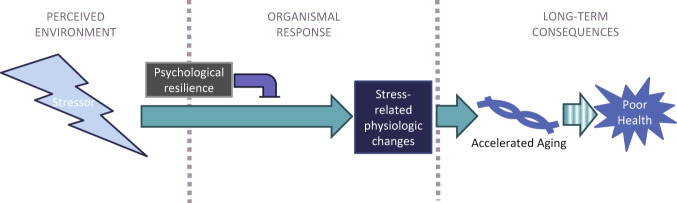
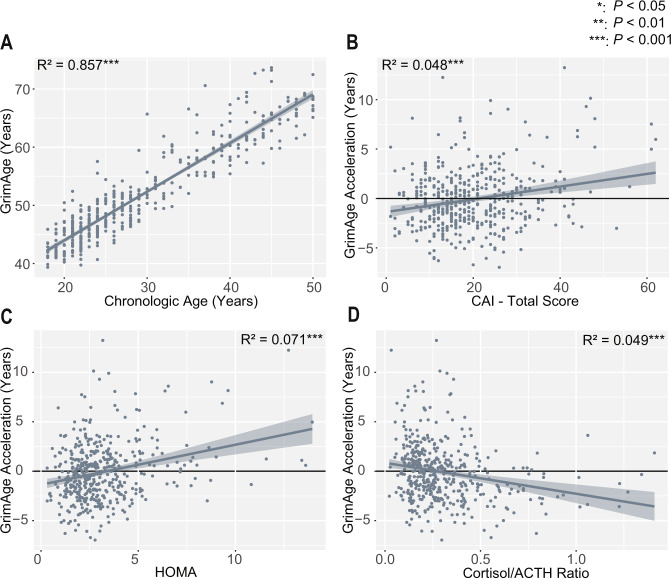
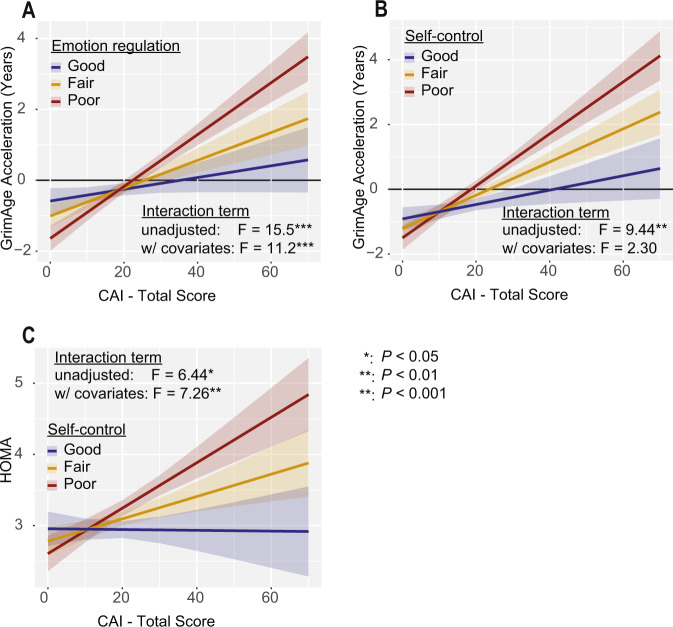
Our society is experiencing more stress than ever before, leading to both negative psychiatric and physical outcomes. Chronic stress is linked to negative long-term health consequences, raising the possibility that stress is related to accelerated aging. In this study, we examine whether resilience factors affect stress-associated biological age acceleration. Recently developed “epigenetic clocks” such as GrimAge have shown utility in predicting biological age and mortality. Here, we assessed the impact of cumulative stress, stress physiology, and resilience on accelerated aging in a community sample ( N = 444). Cumulative stress was associated with accelerated GrimAge ( P = 0.0388) and stress-related physiologic measures of adrenal sensitivity (Cortisol/ACTH ratio) and insulin resistance (HOMA). After controlling for demographic and behavioral factors, HOMA correlated with accelerated GrimAge ( P = 0.0186). Remarkably, psychological resilience factors of emotion regulation and self-control moderated these relationships. Emotion regulation moderated the association between stress and aging ( P = 8.82e−4) such that with worse emotion regulation, there was greater stress-related age acceleration, while stronger emotion regulation prevented any significant effect of stress on GrimAge. Self-control moderated the relationship between stress and insulin resistance ( P = 0.00732), with high self-control blunting this relationship. In the final model, in those with poor emotion regulation, cumulative stress continued to predict additional GrimAge Acceleration even while accounting for demographic, physiologic, and behavioral covariates. These results demonstrate that cumulative stress is associated with epigenetic aging in a healthy population, and these associations are modified by biobehavioral resilience factors.
Overview
The claims and statistics of this paper haven’t been checked yet.
Free: it reads the open-access text and checks the first 5 claims that cite a source we can check. Create a free account to check every claim.
Integrity signals
Registry
Cites
Statistics
Figures
Verification
Claims the paper makes
The claims and statistics of this paper haven’t been checked yet.
Free: it reads the open-access text and checks the first 5 claims that cite a source we can check. Create a free account to check every claim.
Claims other papers make about this one
Each is checked against this paper’s own text: does it say what the citing paper says it does?
The check wasn’t confident either way, so it gives no verdict — never disputed.
In the citing paper
“Moreover, several studies have shown that oestrogen disturbances and increased GCs elicit mitochondrial dysfunction, ultimately leading to neuronal and cognitive impairment.352,365”
From Antiageing strategy for neurodegenerative diseases: from mechanisms to clinical advances (2025) · cites this paper as [352]
Experimental — accuracy not yet measuredIn the citing paper
“Furthermore, insulin resistance has been found to reduce life expectancy through epigenetic clocks.352”
From Antiageing strategy for neurodegenerative diseases: from mechanisms to clinical advances (2025) · cites this paper as [352]
Self-check
Percentages, sums and reported differences re-computed from the paper’s own numbers.
The self-check needs the paper’s full text.
Citations
Cites
lavaan : An R Package for Structural Equation Modeling
Rosseel, Y. (2012) · Journal of Statistical Software · doi:10.18637/jss.v048.i02 · Cited by 27,955 · cited 1×
“Serial mediation was calculated via R using the Lavaan package [71], with an indirect effect defined as the product of the coefficients of the effect of stress on BMI, of BMI on HOMA, and of HOMA on GAA.”
MethodGratz, K. L., & Roemer, L. (2004) · Journal of Psychopathology and Behavioral Assessment · doi:10.1023/b:joba.0000007455.08539.94 · Cited by 8,942 · cited 3×
“First, is cumulative stress related to epigenetic markers of biological aging in a healthy young-to-middleaged community population? Second, if stress is associated with epigenetic aging, does stress-related physiology contribute to stress-associated biological aging? And finally, how do psychological factors that con…”
BackgroundMethodDNA methylation age of human tissues and cell types
Horvath, S. (2013) · Genome Biology · doi:10.1186/gb-2013-14-10-r115 · Cited by 7,075
High self-control predicts good adjustment, less pathology, better grades, and interpersonal success
Tangney, J. P., Baumeister, R. F., & Boone, A. L. (2004) · Journal of Personality · doi:10.1111/j.0022-3506.2004.00263.x · Cited by 6,557 · cited 5×
“There are no sub-scores provided by the SCS-B, and the overall SCS-B has been reported to have an alpha reliability >0.80 [66].”
BackgroundMethodInfluentialEgo depletion: Is the active self a limited resource?
Baumeister, R. F., Bratslavsky, E., Muraven, M., & Tice, D. M. (1998) · Journal of Personality and Social Psychology · doi:10.1037//0022-3514.74.5.1252 · Cited by 5,312
Self-regulation and depletion of limited resources: Does self-control resemble a muscle?
Muraven, M., & Baumeister, R. F. (2000) · Psychological Bulletin · doi:10.1037/0033-2909.126.2.247 · Cited by 4,510
mediation:R Package for Causal Mediation Analysis
Tingley, D., Yamamoto, T., Hirose, K., Keele, L., & Imai, K. (2014) · Journal of Statistical Software · doi:10.18637/jss.v059.i05 · Cited by 4,155 · cited 1×
“Simple mediation effects were calculated via R using 10,000 simulations without bootstrapping using the mediation package [79].”
MethodAn epigenetic biomarker of aging for lifespan and healthspan
Levine, M. E., Lu, A. T., Quach, A., Chen, B. H., Assimes, T. L., Bandinelli, S., Hou, L., Baccarelli, A. A., Stewart, J. D., Li, Y., et al. (2018) · Aging · doi:10.18632/aging.101414 · Cited by 3,675
Eta squared and partial eta squared as measures of effect size in educational research
Richardson, J. T. E. (2011) · Educational Research Review · doi:10.1016/j.edurev.2010.12.001 · Cited by 3,465
DNA methylation arrays as surrogate measures of cell mixture distribution
Houseman, E. A., Accomando, W. P., Koestler, D. C., Christensen, B. C., Marsit, C. J., Nelson, H. H., Wiencke, J. K., & Kelsey, K. T. (2012) · BMC Bioinformatics · doi:10.1186/1471-2105-13-86 · Cited by 3,175 · cited 1×
“The Houseman method was used to determine cell type proportion [76], and the inclusion of cell fractions as covariates in a linear model does not impact the primary conclusions of this paper (see Supplementary material).”
Method
Research works printed but not linked: 1
- Roy B Riley C Sinha R Emotion regulation moderates the association between chronic stress and cardiovascular disease risk in humans: a cross-sectional study Stress (Amst, Neth) 2018 21 548 55 10.1080/10253890.2018.1490724 PMC6367063 30084712 · DOI
Cited by
60 years of healthy aging: On definitions, biomarkers, scores and challenges
Behr, L. C., Simm, A., Kluttig, A., & Grosskopf (Großkopf), A. (2023) · Ageing Research Reviews · doi:10.1016/j.arr.2023.101934 · Cited by 160
Antiageing strategy for neurodegenerative diseases: from mechanisms to clinical advances
Jiang, Q., Liu, J., Huang, S., Wang, X.-Y., Chen, X., Liu, G.-H., Ye, K., Song, W., Masters, C. L., Wang, J., et al. (2025) · Signal Transduction and Targeted Therapy · doi:10.1038/s41392-025-02145-7 · Cited by 165
“352 Ageing-related changes in the endocrine system are linked to neurodegenerative diseases, partly because of their impacts on pathological proteins.”
Stress, epigenetics, and aging: Unraveling the intricate crosstalk
Wu, Z., Qu, J., Zhang, W., & Liu, G.-H. (2024) · Molecular Cell · doi:10.1016/j.molcel.2023.10.006 · Cited by 134
Almeida, D. M., Rush, J., Mogle, J. A., Piazza, J. R., Cerino, E. S., & Charles, S. T. (2023) · Developmental Psychology · doi:10.1037/dev0001469 · Cited by 101
Cellular allostatic load is linked to increased energy expenditure and accelerated biological aging
Bobba‐Alves, N., Sturm, G., Lin, J., Ware, S. A., Karan, K. R., Monzel, A. S., Bris, C., Procaccio, V., Lenaers, G., Higgins‐Chen, A., et al. (2023) · Psychoneuroendocrinology · doi:10.1016/j.psyneuen.2023.106322 · Cited by 99
“This feature, also known as the Hayflick limit (Hayflick, 1965; Hayflick and Moorhead, 1961), is the most closely related outcome to human longevity in this simple cellular model and could reflect allostatic overload.”
Association of Adverse Childhood Experiences With Accelerated Epigenetic Aging in Midlife
Kim, K., Yaffe, K. S., Rehkopf, D. H., Zheng, Y., Nannini, D. R., Perak, A. M., Nagata, J. M., Miller, G. E., Zhang, K., Lloyd‐Jones, D. M., et al. (2023) · JAMA Network Open · doi:10.1001/jamanetworkopen.2023.17987 · Cited by 91
Tillmon, H., Soteros, B. M., Shen, L., Cong, Q., Wollet, M., General, J., Chin, H., Lee, J. B., Carreno, F. R., Morilak, D. A., et al. (2024) · Nature Communications · doi:10.1038/s41467-024-54007-5 · Cited by 68
Galkin, F., Kochetov, K., Koldasbayeva, D., Faria, M., Fung, H. H.-L., Chen, A. X., & Zhavoronkov, A. A. (2022) · Aging · doi:10.18632/aging.204264 · Cited by 64
Epigenetic regulation of brain development, plasticity, and response to early-life stress
Peña, C. J. (2025) · Neuropsychopharmacology · doi:10.1038/s41386-025-02179-z · Cited by 69
“Just as consistent as these negative fi ndings, however, are fi ndings that interventions, social support, and psychological resilience can buffer the impact of ELS on epigenetic aging, providing hope for those who experienced childhood adversity [178].”
Dimensions of childhood adversity differentially affect biological aging in major depression
Rampersaud, R., Protsenko, E., Yang, R., Reus, V. I., Hammamieh, R., Wu, G. W. Y., Epel, E. S., Jett, M., Gautam, A., Mellon, S. H., et al. (2022) · Translational Psychiatry · doi:10.1038/s41398-022-02198-0 · Cited by 46
“We first carried out analyses with CTQ given that prior studies have examined associations between this measure of adversity and the “second-generation” clocks [48, 50] and subsequently assessed associations with the ACEs questionnaire.”
MethodMind body medicine: a modern bio-psycho-social model forty-five years after Engel
Fricchione, G. L. (2023) · BioPsychoSocial Medicine · doi:10.1186/s13030-023-00268-3 · Cited by 41
“The CAI score was associated with accelerated GrimAge and its physiological consequences on processes like adrenal sensitivity and insulin resistance, as well as psychological and biological resilience effects on accelerated aging in a community sample of 444 subjects [65].”
BackgroundQuantification of Epigenetic Aging in Public Health
Kusters, C., & Horvath, S. (2024) · Annual Review of Public Health · doi:10.1146/annurev-publhealth-060222-015657 · Cited by 46
“Cumulative stress was associated with epigenetic aging by 0.48 years, which was modulated by emotion regulation and self-control (57).”
InfluentialDutta, S., Goodrich, J. M., Dolinoy, D. C., & Ruden, D. M. (2023) · Genes · doi:10.3390/genes15010016 · Cited by 40
“A study recruited a healthy young-to-middle-aged community population ( n = 444, aged 18–50) and observed that cumulative stress was positively related with accelerated GrimAge and other stress-related physiologic measures such as adrenal sensitivity and insulin resistance [155].”
BackgroundChiou, K. L., DeCasien, A. R., Rees, K. P., Testard, C., Spurrell, C. H., Gogate, A. A., Pliner, H. A., Tremblay, S., Mercer, A., Whalen, C. J., et al. (2022) · Nature Neuroscience · doi:10.1038/s41593-022-01197-0 · Cited by 37
Müller, C., El-Ansari, K., & Ansari, W. E. (2022) · International Journal of Environmental Research and Public Health · doi:10.3390/ijerph191912670 · Cited by 42
“Hence, the mental health of university students is a public health concern [3], as it can be negatively influenced by the numerous stressors encountered during the college years and increase the risk of multiple physical and psychiatric illnesses [4].”
BackgroundEpigenetic Mechanisms in Aging: Extrinsic Factors and Gut Microbiome
Borrego-Ruiz, A., & Borrego, J. J. (2024) · Genes · doi:10.3390/genes15121599 · Cited by 36
“In a study, Harvanek et al. [258] investigated whether or not resilience factors could affect stress-associated biological age acceleration.”
The Cutting Edge of Epigenetic Clocks: In Search of Mechanisms Linking Aging and Mental Health
Harvanek, Z. M., Boks, M. P., Vinkers, C. H., & Higgins‐Chen, A. (2023) · Biological Psychiatry · doi:10.1016/j.biopsych.2023.02.001 · Cited by 37
Self-citationPsychological resilience and cortisol levels in adults: A systematic review
Aizpurua‐Perez, I., Arregi, A., Labaka, A., Martinez‐Villar, A., & Pérez-Tejada, J. (2023) · American Journal of Human Biology · doi:10.1002/ajhb.23954 · Cited by 37
“Specifically, Harvanek et al. (Harvanek et al., 2021) have suggested that, among others, psychological resilience factors may moderate the deleterious effects of cumulative stress on epigenetic aging in healthy adults, thereby emphasizing the usefulness of preventive interventions aimed at fostering resilience and red…”
BackgroundResultXu, X., Li, G., Zhang, D., Zhu, H., Liu, G., & Zhang, Z. (2023) · Advanced Science · doi:10.1002/advs.202205346 · Cited by 34
Epigenetic aging and PTSD outcomes in the immediate aftermath of trauma
Zannas, A. S., Linnstaedt, S. D., An, X., Stevens, J. S., Harnett, N. G., Roeckner, A. R., Oliver, K. I., Rubinow, D. R., Binder, E. B., Koenen, K. C., et al. (2023) · Psychological Medicine · doi:10.1017/s0033291723000636 · Cited by 32
“…has linked stress exposure and PTSD with advanced epigenetic age (Belsky et al., 2022; Boks et al., 2015; Brody et al., 2016; Copeland et al., 2022; Harvanek et al., 7174 Anthony S. Zannas et al. et al., 2022; Na et al., 2022; Wang et al., 2022; Wolf et al., 2018; Zannas et al., 2015a), but no…”
BackgroundProtsenko, E., Wolkowitz, O. M., & Yaffe, K. S. (2023) · Translational Psychiatry · doi:10.1038/s41398-023-02360-2 · Cited by 29
“In contrast, GrimAA measured at baseline was not associated with baseline PTSD symptom severity, nor did it predict PTSD symptoms after fi eldwork exposure ( p > 0.05).”
InfluentialStressful life events, social support, and epigenetic aging in the Women's Health Initiative
Skinner, H. G., Palma‐Gudiel, H., Stewart, J. D., Love, S.-A. M., Bhatti, P., Shadyab, A. H., Wallace, R. B., Salmoirago‐Blotcher, E., Manson, J. E., Kroenke, C. H., et al. (2023) · Journal of the American Geriatrics Society · doi:10.1111/jgs.18726 · Cited by 28
“27,28,46 Furthermore, our exploratory analyses suggest that these associations may vary by race/ethnicity group.”
BackgroundHansen, J. L., Carroll, J., Seeman, T. E., Cole, S. W., & Rentscher, K. E. (2024) · Brain Behavior and Immunity · doi:10.1016/j.bbi.2024.10.022 · Cited by 26
“(Harvanek et al., 2021) This pattern of findings is consistent with the idea that the anti-inflammatory properties of cortisol may act to reduce inflammation-related damage to cells and tissues that contributes to accelerated biological aging (Laberge et al., 2012); however, future research is…”
Zhang, A., Zhou, L., Meng, Y., Ji, Q., Ye, M., Liu, Q., Tan, W., Zheng, Y., Hu, Z., Liu, M., et al. (2024) · BMJ Mental Health · doi:10.1136/bmjment-2024-301064 · Cited by 25
“8 9 The relationship between psychological resilience and mortality has been examined in limited studies.”
Aizpurua‐Perez, I., Arregi, A., González, D., Urruticoechea, A., Labaka, A., Alcaide, X. M., Ugartemendia, G., Pascual‐Sagastizábal, E., Echeverria, R., & Pérez-Tejada, J. (2024) · European Journal of Oncology Nursing · doi:10.1016/j.ejon.2024.102616 · Cited by 23
Characteristic Hallmarks of Aging and the Impact on Carcinogenesis
Fiore, M., Terracina, S. A., Ferraguti, G., Petrella, C., Bruno, S. M., Blaconà, G., Certo, M. G. D., Minni, A., Greco, A., Musacchio, A., et al. (2022) · Current Cancer Drug Targets · doi:10.2174/1568009622666220816120353 · Cited by 23
ChatGPT, Help! I Am in Financial Trouble
Schlosky, M. T. T., Karadas, S., & Raskie, S. (2024) · Journal of risk and financial management · doi:10.3390/jrfm17060241 · Cited by 20
“9 Another helpful suggestion would be lifestyle changes such as more exercise so that Sally can manage her stress better and extend her life (Harvanek et al. 2021).”
BackgroundMeier, M., Kantelhardt, S., Gurri, L., Stadler, C., Schmid, M., Clemens, V., O’Donovan, A., Boonmann, C., Bürgin, D., & Unternäehrer, E. (2024) · European Journal of Psychotraumatology · doi:10.1080/20008066.2024.2379144 · Cited by 22
Germano, M. L., Gomes, C. D. S., Barbosa, J. F. D. S., Neto, N. J., Pereira, D. S., Ahmed, T., Borrero, C. L. C., & Guerra, R. O. (2023) · Archives of Gerontology and Geriatrics · doi:10.1016/j.archger.2023.104961 · Cited by 18
Zhang, A., Zhang, Y., Meng, Y., Ji, Q., Ye, M., Zhou, L., Liu, M., Yi, C., Karlsson, I., Fang, F., et al. (2023) · GeroScience · doi:10.1007/s11357-023-00940-0 · Cited by 19
“The psychosociological explanations mostly center on macro-level exposures and mediators, such as coping abilities to tackle poverty, violence, and discrimination, which could lead to a higher level of socioeconomic status followed by healthy lifestyles and slower biological age acceleration [6].”
InfluentialChildhood adversity, accelerated GrimAge, and associated health consequences
Harvanek, Z. M., Kudinova, A. Y., Wong, S., Xu, K., Brick, L. A. D., Daniels, T. E., Marsit, C. J., Burt, A., Sinha, R., & Tyrka, A. R. (2024) · Journal of Behavioral Medicine · doi:10.1007/s10865-024-00496-0 · Cited by 22
“…of adversity history did not improve prediction of the model when analyzed as either CTQ score (ANOVA: F = 0.442, p = 0.507; adjusted R 2 including CTQ In the Yale Stress Center cohort, we previously demonstrated a relationship between GrimAge Acceleration and HOMA-IR (Harvanek et al., 2021).”
InfluentialSelf-citationThe immunosenescence clock: A new method for evaluating biological age and predicting mortality risk
Li, S., Wang, K., Wu, J., & Zhu, Y. (2024) · Ageing Research Reviews · doi:10.1016/j.arr.2024.102653 · Cited by 21
“Contemporary clocks such as GrimAge and GrimAge2, which have a 10 % all-cause mortality hazard ratio for each year of epigenetic age change, provide a more relevant benchmark for comparative analysis (Harvanek et al., 2021).”
Holloway, T. D., Harvanek, Z. M., Xu, K., Gordon, D. M., & Sinha, R. (2022) · Neurobiology of Stress · doi:10.1016/j.ynstr.2023.100557 · Cited by 19
Self-citationEpigenetic age estimation of wild mice using faecal samples
Hanski, E., Joseph, S., Raulo, A., Wanelik, K. M., O’Toole, Á., Knowles, S. C. L., & Little, T. J. (2024) · Molecular Ecology · doi:10.1111/mec.17330 · Cited by 17
“Accelerated epigenetic ageing has been linked to various communicable and non-communicable diseases in both humans and laboratory mice (Ambatipudi et al., 2017; Cao et al., 2022; Harvanek et al., 2021; Joyce et al., 2021; Morales Berstein et al., 2022; Peng et al., 2019).”
BackgroundWhite, W., & Ingram, R. D. (2023) · International Journal of Educational Research · doi:10.1016/j.ijer.2022.102135 · Cited by 20
A Structural Model of Emotional Intelligence, Resilience, and Stress in University Students
Corbí, R. G., Izquierdo, A., & Costa, J. L. C. (2025) · Behavioral Sciences · doi:10.3390/bs15070894 · Cited by 19
“Meanwhile, Harvanek et al. (2021) warned that high levels of stress may increase the risk of developing physical illnesses and psychiatric disorders.”
Workplace Care for Social Worker Stress
Rine, C. M. (2023) · Health & Social Work · doi:10.1093/hsw/hlad015 · Cited by 23
Neighborhood racial income inequality and cognitive health
Zahodne, L. B., Sol, K., Scambray, K. A., Lee, J. H., Palms, J. D., Morris, E. P., Taylor, L., Ku, V., Lesniak, M., Melendez, R. A., et al. (2024) · Alzheimer s & Dementia · doi:10.1002/alz.13911 · Cited by 18
Cortisol, DHEAS, and the cortisol/DHEAS ratio as predictors of epigenetic age acceleration
Takeshita, R. S. C., Nguyen, A. T., Auger, A. P., & Chung, W. C. J. (2025) · Biogerontology · doi:10.1007/s10522-025-10307-x · Cited by 17
“…methylation rates tend to change predictably over time, they can be influenced by lifestyle, social and environmental factors (Abdul et al. 2017; Harvanek et al. 2021; Ryan et al. 2020), as well as by obesity, disease, and stress (Alasaari et al. 2012; Argentieri et al. 2017; Crujeiras and…”
The Influence of Different Types of Stress on Psychological Age
Finogenova, T. A., Berezina, T. N., Litvinova, A., & Александрович, Р. С. (2023) · Journal of Modern Foreign Psychology · doi:10.17759/jmfp.2023120304 · Cited by 17
Psychogenic Aging: A Novel Prospect to Integrate Psychobiological Hallmarks of Aging
Faria, M., Ganz, A. B., Galkin, F., Zhavoronkov, A. A., & Snyder, M. P. (2024) · Translational Psychiatry · doi:10.1038/s41398-024-02919-7 · Cited by 17
Lee, H., Chen, C.-Y., Lee, S.-J., Lee, M.-C., Tsai, C., Chen, S.-T., & Li, Y.-J. (2022) · Computers in Biology and Medicine · doi:10.1016/j.compbiomed.2022.105584 · Cited by 15
Izquierdo, A., Perez-Soto, N., Pozo-Rico, T., & Corbí, R. G. (2024) · European Journal of Education and Psychology · doi:10.32457/ejep.v17i1.2417 · Cited by 17
Psychosocial Factors Associated With Accelerated GrimAge in Male U.S. Military Veterans
Tamman, A. J. F., Nagamatsu, S. T., Krystal, J. H., Gelernter, J. E., Montalvo‐Ortiz, J. L., & Pietrzak, R. H. (2022) · American Journal of Geriatric Psychiatry · doi:10.1016/j.jagp.2022.09.002 · Cited by 15
Leveraging the Metaverse for Enhanced Longevity as a Component of Health 4.0
Pillay, S. S., Candela, P., Croghan, I. T., Hurt, R. T., Bonnes, S. L. R., Ganesh, R., & Bauer, B. A. (2024) · Mayo Clinic Proceedings Digital Health · doi:10.1016/j.mcpdig.2024.01.007 · Cited by 13
“72 72-75 In addition, genetic, epigenetic, environmental, and stochastic stresses have complex interactions.”
Markon, K. E., Mann, F. D., Freilich, C. D., Cole, S. W., & Krueger, R. F. (2024) · Social Science & Medicine · doi:10.1016/j.socscimed.2024.116990 · Cited by 17
“…or cross-sectional, often focus on general stress or event-related stress (e.g., trauma or major life events) without considering other specific forms of psychosocial stress within a unified framework, and often partial out socioeconomic variables (e.g., Harvanek et al., 2021; Vetter et al., 2022).”
BackgroundWillems, Y. E., deSteiguer, A. J., Tanksley, P. T., Vinnik, L., Fraemke, D., Okbay, A., Richter, D., Wagner, G. G., Hertwig, R., Koellinger, P., et al. (2024) · Clinical Epigenetics · doi:10.1186/s13148-024-01637-7 · Cited by 17
“Recent research based on blood samples suggests that lower self-control is associated with accelerated biological age and earlier mortality as indicated by GrimAge Acceleration in 17–50 years old adults [21, 29].”
BackgroundAssociation between childhood exposure to family violence and telomere length: a meta-analysis
Chen, X. Y., Lo, C. K. M., Chan, K. L., Leung, W. C., & Ip, P. (2022) · International Journal of Environmental Research and Public Health · doi:10.3390/ijerph191912151 · Cited by 12
“02) [67] A community study found that emotional regulation and self-control moderated the association between stress and aging [68].”
BackgroundWang, P., Li, R., & Chen, Y. (2025) · The Journals of Gerontology Series B · doi:10.1093/geronb/gbaf035 · Cited by 12
On the road to resilience: Epigenetic effects of meditation
Verdone, L., Caserta, M., Ben‐Soussan, T. D., & Venditti, S. (2023) · Vitamins and hormones · doi:10.1016/bs.vh.2022.12.009 · Cited by 12
Quarato, E. R., Salama, N., & Calvi, L. M. (2024) · Current Osteoporosis Reports · doi:10.1007/s11914-024-00874-2 · Cited by 11
Impact of acute stress exposure on genome-wide DNA methylation
Miller, M., McAfee, C. A., Brown, R., Sears, S., Krautkramer, C., Gogia, R., Wylie, D., Josephs, R. A., & Champagne, F. A. (2025) · Scientific Reports · doi:10.1038/s41598-025-09299-y · Cited by 15
“Another important consideration is how the experience of cumulative stressors interacts with acute stress responses to predict epigenetic aging 18 .”
Shi, C., Long, X., Xia, S., Zhao, H., Wu, C., Zhang, Y., Tang, X., & Li, C. (2025) · BMC Geriatrics · doi:10.1186/s12877-025-06081-7 · Cited by 12
“Psychological resilience could protect individuals from the negative effects of stress on ageing [91] and is positively associated with health-related quality of life [92] and life satisfaction [93].”
Russell, H., Angus, G., Singleton, S., Bell, C. G., & Hales, T. G. (2026) · Clinical Epigenetics · doi:10.1186/s13148-025-02047-z · Cited by 12
“The narrative review indicated that clocks predicting biological age are more likely to predict age accelerating effects of ACE exposure, which agrees with previous literature indicating clocks such as GrimAge to be responsive to psychosocial stressors [66, 67].”
Borgschulte, M., Guenzel, M., Liu, C., & Malmendier, U. M. (2025) · The Journal of Finance · doi:10.1111/jofi.13497 · Cited by 18
Life stressors and immune aging: Protective effects of cognitive reappraisal
Reed, R. G., Presnell, S. R., Al‐Attar, A., Lutz, C. T., & Segerstrom, S. C. (2023) · Brain Behavior and Immunity · doi:10.1016/j.bbi.2023.02.018 · Cited by 13
Smith, P. J., Whitson, H. E., Merwin, R. M., O’Hayer, C. V., & Strauman, T. J. (2023) · Frontiers in Aging Neuroscience · doi:10.3389/fnagi.2023.1256430 · Cited by 10
The psychophysiology of emotion regulation: Next generation approaches
MacNamara, A., Joyner, K. J., & Klawohn, J. (2023) · International Journal of Psychophysiology · doi:10.1016/j.ijpsycho.2023.03.003 · Cited by 9
Holmannová, D., Borský, P., Andrýs, C., Kremláček, J., Fiala, Z., Kovaříková, H., Řeháček, V., Esterková, M., Počtová, G., Maresova, T., et al. (2024) · Biomedicines · doi:10.3390/biomedicines12010242 · Cited by 12
“Biological age, as opposed to chronological age, can be influenced by many stimuli, exposure to physical and psychological stress, chemicals, infections, excessive fat intake, obesity, etc. [2,3].”
BackgroundRinggold, V., & Rohleder, N. (2024) · Current Opinion in Behavioral Sciences · doi:10.1016/j.cobeha.2024.101463 · Cited by 8
Bergquist, S. H., Wang, D., Smith, A. K., Roberts, D. L., & Moore, M. A. (2022) · Biogerontology · doi:10.1007/s10522-022-09985-8 · Cited by 8
“Even less is known about the interaction between stress and resilience on epigenetic age (Harvanek et al. 2021).”
BackgroundRahmati, D., Nikjo, P., Zahabi, H., Karimi, Z., & Solouki, L. (2025) · Asian/Pacific Island Nursing Journal · doi:10.2196/75432 · Cited by 7
“Some studies indicate that experienced nurses exhibit better self-control and composure under pressure [6], while others suggest that accumulated stress may actually erode emotional regulation over time [7].”
Chen, X., Li, Y., & Zheng, J. (2025) · Frontiers in Psychology · doi:10.3389/fpsyg.2025.1656847 · Cited by 8
Exploring the potential of epigenetic clocks in aging research
Hao, Y., Han, K., Wang, T., Yu, J., Ding, H., & Dao, F. (2024) · Methods · doi:10.1016/j.ymeth.2024.09.001 · Cited by 9
Accelerated ageing in the COVID-19 pandemic: A dilemma for healthy ageing
Guo, X., Franco, O. H., & Laine, J. E. (2021) · Maturitas · doi:10.1016/j.maturitas.2021.12.009 · Cited by 7
Yamada, H. (2026) · International Journal of Molecular Sciences · doi:10.3390/ijms27041908 · Cited by 7
“A flattened cortisol slope is associated with chronic stress and cognitive decline [29,38], aligning with findings that epigenetic acceleration predicts midlife cognitive function [39].”
Hess, J., Barnett, E. J., Hou, J., Faraone, S. V., & Glatt, S. J. (2025) · Schizophrenia Bulletin · doi:10.1093/schbul/sbae210 · Cited by 7
“We observed widespread, significant associations between ancestry-related PCs and the outcome measures included in our study (Supplementary Figures 4–9).”
Carr, D. C., Sheffler, J., Meynadasy, M. A., Schmidt, N. B., Hajcak, G., & Sachs‐Ericsson, N. (2023) · Cognitive Behaviour Therapy · doi:10.1080/16506073.2023.2191825 · Cited by 8
Inequities in the Impacts of Hurricanes and Other Extreme Weather Events for Cancer Survivors
Gudenkauf, L. M., Hathaway, C. A., Carroll, J., Small, B. J., Li, X., Hoogland, A. I., Castro, E., Armaiz-Peña, G. N., Oswald, L. B., Jim, H., et al. (2024) · Cancer Epidemiology Biomarkers & Prevention · doi:10.1158/1055-9965.epi-23-1029 · Cited by 6
Christian, L. M., Kiecolt‐Glaser, J. K., Cole, S. W., Burd, C. E., Madison, A. A., Wilson, S. J., & Rosko, A. E. (2024) · Brain Behavior and Immunity · doi:10.1016/j.bbi.2024.04.019 · Cited by 8
“Further, in a sample of paramedics in training, high levels of social support offset the link between job-related psychological distress and accelerated GrimAge (Mehta et al., 2022).”
BackgroundInfluentialRemodeling the Epigenome Through Meditation: Effects on Brain, Body, and Well-being
Venditti, S. (2025) · Sub-cellular biochemistry/Subcellular biochemistry · doi:10.1007/978-3-031-75980-2_7 · Cited by 6
Alhazzaa, O. A., Abahussin, H. M., Majrashi, M. A., Alotaibi, M. S., Alkhrayef, M. N., Alhamdan, Z. A., & Alawad, A. O. (2026) · Frontiers in Aging · doi:10.3389/fragi.2026.1743142 · Cited by 7
Saarinen, A. I. L., Marttila, S., Mishra, P. P., Leo‐Pekka, L., Mishra, B. H., Raitoharju, E., Mononen, N., Kähönen, M. A. P., Raitakari, O. T., Lehtimäki, T. J., et al. (2024) · Aging Cell · doi:10.1111/acel.14394 · Cited by 5
Religion, spirituality, and DNA methylation in HPA-axis genes among Hispanic/Latino adults
Zhen‐Duan, J., Canenguez, K. M., Wilson, A. E., Gu, Y., Valluri, H. G., Chavez, A. D., Argentieri, M. A., Schachter, A. B., Wu, H., Baccarelli, A., et al. (2024) · Epigenomics · doi:10.1080/17501911.2024.2442293 · Cited by 5
Work-related stress and burnout: Is epigenetic aging the missing link?
Eder, J., David, F. S., Illius, S., Rothe, N., Wekenborg, M., Walther, A., Penz, M. S., Jylhävä, J., Miller, R. E., Kirschbaum, C., et al. (2025) · Clinical Epigenetics · doi:10.1186/s13148-025-01968-z · Cited by 5
“This notion is supported by research demonstrating that cumulative lifetime stress, rather than short-term stress exposure, is a stronger predictor of EAA [101].”
Huang, W., Xu, R., Wu, Y., Yang, Z., Wong, E. M., Southey, M. C., Hopper, J. L., Abramson, M. J., Ritchie, E. A., Li, S., et al. (2025) · International Journal of Epidemiology · doi:10.1093/ije/dyaf189 · Cited by 4
“Although there are stressor-specific patterns observed in chronic (e.g. socioeconomic stress) versus acute (e.g. trauma) exposures [17, 18], DNAmAge integrates these diverse impacts into a composite measure of biological aging.”
Genome-wide DNA methylation profiles and breast cancer among World Trade Center survivors
Tuminello, S., Ashebir, Y. A., Schroff, C., Ramaswami, S., Durmuş, N., Chen, Y., Snuderl, M., Shao, Y., Reibman, J., & Arslan, A. A. (2024) · Environmental Epidemiology · doi:10.1097/ee9.0000000000000313 · Cited by 4
“59,60 Based on the data available, we cannot exclude the possibility that some of the observed differences in DNA methylation between WTC-exposed versus unexposed women could be due to acute and/or chronic stress.”
BackgroundGarcía, L. G., Duque, A., Molins, M., Aliño, M., Molins, F., & Mesa‐Gresa, P. (2026) · Actas Españolas de Psiquiatría · doi:10.62641/aep.v54i3.2218 · Cited by 4
“It is suggested that in adverse situations, highly resilient individuals are expected to adapt to and recover from setbacks and difficult experiences more easily [20,21].”
Polcrova, A. B., Pavlovska, I., Mechanick, J. I., Gonzalez-Rivas, J. P., & Pikhart, H. (2023) · American Journal of Lifestyle Medicine · doi:10.1177/15598276231181074 · Cited by 3
“30 Therefore, in the context of dysglycemia, having prior exposure to stressors any time earlier in the life can lead to DBCD development and progression.”
Orji, J., Chan, G., & Orji, R. (2025) · International Journal of Human-Computer Studies · doi:10.1016/j.ijhcs.2025.103600 · Cited by 3
Jiang, J., Yin, X., Kong, S., Li, X., Yang, F., Liu, X., Ge, Y., Sun, J., Chen, L., Shi, H., et al. (2025) · Annals of Medicine · doi:10.1080/07853890.2025.2603045 · Cited by 4
Multifactorial conceptual model of cancer-related accelerated aging
Lh, M., Weiss, S. M., Ritchie, C. S., Wong, M. L., Hoffmann, T. K., Wallhagen, M. L., & Miaskowski, C. A. (2026) · npj Aging · doi:10.1038/s41514-025-00328-8 · Cited by 4
“For example, in a study of the general population 86 , higher levels of resilience-related factors (i.e., emotional regulation, self-control) moderated the relationship between higher cumulative stress and increased accelerated biological aging estimated using the GrimAge epigenetic clock.”
Guo, J., Ye, K. X., Lee, T.-S., Kennedy, B. K., Suckling, J., Kua, E. H., Maier, A. B., & Feng, L. (2026) · Molecular Psychiatry · doi:10.1038/s41380-026-03588-2 · Cited by 3
“To our knowledge, and although associations with psychosocial stress were evaluated [17], no studies to date have examined the late-life anxiety-epigenetic aging association in the older Asian population.”
Blood Markers of Biological Age Evaluates Clinic Complex Medical Spa Programs
Isaev, F. I., Sadykov, A. R., & Moskalev, A. (2023) · Biomedicines · doi:10.3390/biomedicines11020625 · Cited by 3
“There is evidence that stress contributes to the acceleration of biological age, but the nature of stress-induced changes is extremely individual and depends on personality factors [14,15].”
BackgroundResilience and Chronic Disease: What’s New?
de Sá, L. D. M. R., Sousa, D. F., Glustak, M. E., & Cal, S. F. (2025) · Psychology · doi:10.4236/psych.2025.1611078 · Cited by 2
Chen, J., Lei, X., Lazhen, W., Xie, S., Qian, S., Tan, H., Li, Y., Ren, Q., Qia, D., & Zhou, Y. M. (2026) · BMC Women s Health · doi:10.1186/s12905-026-04284-7 · Cited by 2
“Moreover, some patients are able to deliberately transform infer-tility-related adversity into opportunities for personal growth and meaning-making [48].”
ACCELERATED POPULATION AGING AS A CONSEQUENCE OF THE COVID-19 PANDEMIC (review)
Михайлович, К. И., Сагинбаев, У. Р., Рукавишникова, С. А., & Ахмедов, Т. А. (2023) · Успехи геронтологии · doi:10.34922/ae.2023.36.4.005 · Cited by 2
Gaydosh, L. M., Hargrove, T. W., Kelly, A. L., Koss, K. J., Schneper, L. M., Notterman, D. A., & Mitchell, C. M. (2025) · Psychoneuroendocrinology · doi:10.1016/j.psyneuen.2025.107499 · Cited by 2
“There is also emerging evidence that self-control is associated with epigenetic aging, with higher self-control predicting decelerated aging, primarily among adults (Harvanek et al., 2021; Lei et al., 2022; Richmond-Rakerd et al., 2021; Willems et al., 2024).”
Resilience to psychosocial stress and epigenetic aging in schizophrenia: findings from a pilot study
Nader, G., Qureshi, M., Ducharme, M., Fischer, C. E., Gerretsen, P., Graff, A., Blumberger, D. M., Zomorrodi, R., Borlido, C., Remington, G. J., et al. (2024) · Journal of Neural Transmission · doi:10.1007/s00702-024-02854-3 · Cited by 1
“Furthermore, resilience has been shown to modulate this relationship between stress and DNA methylation age (Harvanek et al. 2021).”
Toward Understanding and Halting Legacies of Trauma
Taylor, W., Korobkova, L., Bhinderwala, N., & Dias, B. G. (2025) · Biological Psychiatry · doi:10.1016/j.biopsych.2025.02.010 · Cited by 1
Oran, D. S., & Eraslan, E. (2025) · General Physiology and Biophysics · doi:10.4149/gpb_2024044 · Cited by 1
Opsasnick, L. A., Zhao, W., Schmitz, L., Ratliff, S. M., Faul, J. D., Zhou, X., Needham, B. L., & Smith, J. A. (2025) · Brain Behavior & Immunity - Health · doi:10.1016/j.bbih.2025.100994 · Cited by 1
“Previous studies have identified associations between measures of psychosocial stress and EAA measured by several clocks (Zannas et al., 2015; Skinner et al., 2024; Harvanek et al., 2021).”
Chowdhary, A., Holloway, T. D., Xu, K., Sinha, R., & Harvanek, Z. M. (2025) · Psychological Trauma Theory Research Practice and Policy · doi:10.1037/tra0001888 · Cited by 2
Self-citationEpigenetic clocks moderate the impact of marital status transitions on health in older adults
Lin, M.-J. (2026) · PLoS ONE · doi:10.1371/journal.pone.0327077 · Cited by 1
“Building on these findings, researchers have increasingly framed resilience as a psychological resource that slows biological aging [44,46].”
InfluentialLow sensory responsiveness is associated with accelerated aging in midlife
Asher, M., Tzemah-Shahar, R., Hochner, H., Shapiro, I., Bar‐Shalita, T., & Agmon, M. (2025) · Scientific Reports · doi:10.1038/s41598-025-07596-0 · Cited by 1
Cui, G., Hu, M., Tang, K., & Li, S. (2025) · Social Science & Medicine · doi:10.1016/j.socscimed.2025.118758 · Cited by 1
Environmental Influences on Genetic Aging Processes: Experimental Evidence from Model Systems
Molla, A. (2025) · European Journal of Clinical and Biomedical Sciences · doi:10.11648/j.ejcbs.20251104.12 · Cited by 1
Aging anxiety and epigenetic aging in a national sample of adult women in the United States
Rodrigues, M., Bather, J. R., & Cuevas, A. G. (2025) · Psychoneuroendocrinology · doi:10.1016/j.psyneuen.2025.107704 · Cited by 2
“…responses may become biologically embedded, for instance through cumulative DNA methylation changes, contributing to a faster pace of epigenetic aging as captured by DunedinPACE (Belsky et al., 2022; Harvanek et al., 2021; O ’ Donovan et al., 2012; Stephan et al., 2021; Wu et al., 2024).”
The role of health behaviors in links between stress and epigenetic aging
Goering, M., Bourassa, K. J., Weinstein, M., Auger, A. P., & Brown, C. K. (2026) · Brain Behavior & Immunity - Health · doi:10.1016/j.bbih.2026.101194 · Cited by 1
“The present findings align with prior research showing that experiencing high levels of stress is associated with accelerated epigenetic aging (Harvanek et al., 2021).”
Perfiles de estrés académico en estudiantes de pedagogía de una universidad pública chilena
Hidalgo-Ortiz, J. P., Lagos-San-Martín, N., Mendoza-Lagos, F. I., & Sánchez-Sáez, D. E. (2026) · Formación universitaria · doi:10.4067/s0718-50062026000100065 · Cited by 1
Metadata
- Authors
- Harvanek, Z. M., Fogelman, N., Xu, K., & Sinha, R.
- Affiliations
- Yale University (US)
- Corresponding author
- Sinha, Rajita
- Venue
- Translational Psychiatry
- Published
- 2021-11-27
- Volume
- 11
- Issue
- 1
- Pages
- 601-601
- ISSN
- 2158-3188 (ISSN-L)
- PMC
- PMC8627511
- OpenAlex
- W3217148206
- Cited by
- 123
- References
- 89
- Citations by year
- 2026: 24 · 2025: 29 · 2024: 29 · 2023: 30 · 2022: 10 · 2021: 1
- FWCI
- 5.49
- Type
- journal article
- Language
- en
- Open access
- gold
- doi.org
- Licence
- cc-by
- creativecommons.org/licenses/by/4.0 (tdm)
- creativecommons.org/licenses/by/4.0 (vor)
- Locations
- Translational Psychiatry (publishedVersion, cc-by)
- PubMed Central (publishedVersion, cc-by)
- PubMed (publishedVersion)
- DOAJ (DOAJ: Directory of Open Access Journals) (submittedVersion, cc-by-sa)
- Funders
- U.S. Department of Health & Human Services | National Institutes of Health (UL1-DE019586, PL1-DA24859, R01-AA013892, R25MH071584, T32MH019961, R01DA047063)
- Topics
- Life Sciences › Biochemistry, Genetics and Molecular Biology › Molecular Biology › Epigenetics and DNA Methylation
- Life Sciences › Neuroscience › Behavioral Neuroscience › Stress Responses and Cortisol
- Social Sciences › Psychology › Clinical Psychology › Resilience and Mental Health
- Keywords
- cumulative stress, biological aging, epigenetic clocks, GrimAge, psychological resilience, emotion regulation, self-control, insulin resistance, stress physiology, accelerated aging
- MeSH terms
- Health Status, Stress, Psychological, DNA Methylation, Epigenesis, Genetic, Resilience, Psychological, Epigenomics
About these checks
Registry, retraction, Cites and statistics results are computed, not judged, with one exception: a printed reference that no index lists is read once by a model before it counts as a citation error. Claims are extracted by a model and kept only when their quote appears verbatim in the text; each cited source is then checked, with a model’s help, for whether it says what the claim relies on. Those verdicts can be wrong — read the claim’s quote and the cited source before relying on one.
Statistics and arithmetic are recomputed, not judged.
Confidence bands are shown only for fields calibrated on our annotated test set. None is calibrated yet, so no band is shown.
What counts as a claim ›How we measure confidence ›How we check this ›
Are you an author, or do you see a problem with this page? Request a review
Data sources
Bibliographic data: Semantic Scholar, OpenAlex, Crossref.
Contains information from the Semantic Scholar Academic Graph Datasets, made available under the ODC Attribution License (ODC-BY 1.0).
Semantic Scholar’s data is described in: Kinney, R., et al. (2023). The Semantic Scholar Open Data Platform. arXiv:2301.10140.
