

DMP1 prevents osteocyte alterations, FGF23 elevation and left ventricular hypertrophy in mice with chronic kidney disease
Open accessThe DOI matches its Crossref record; 48 of the 48 references it cites were found in a registry or an index.
Abstract
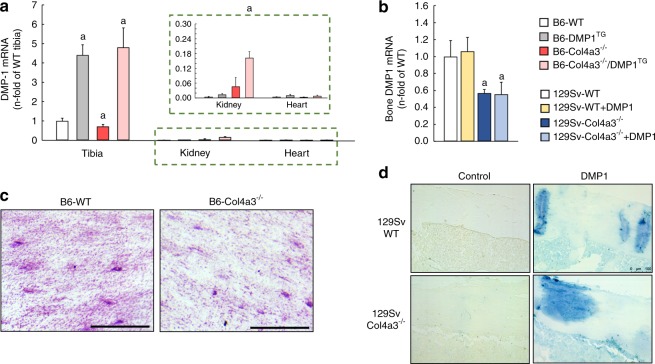
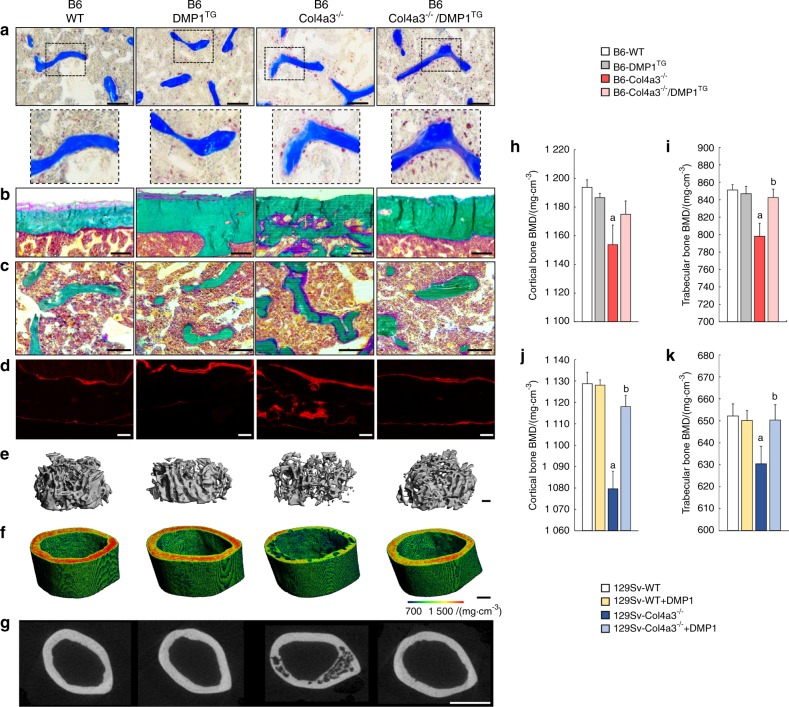
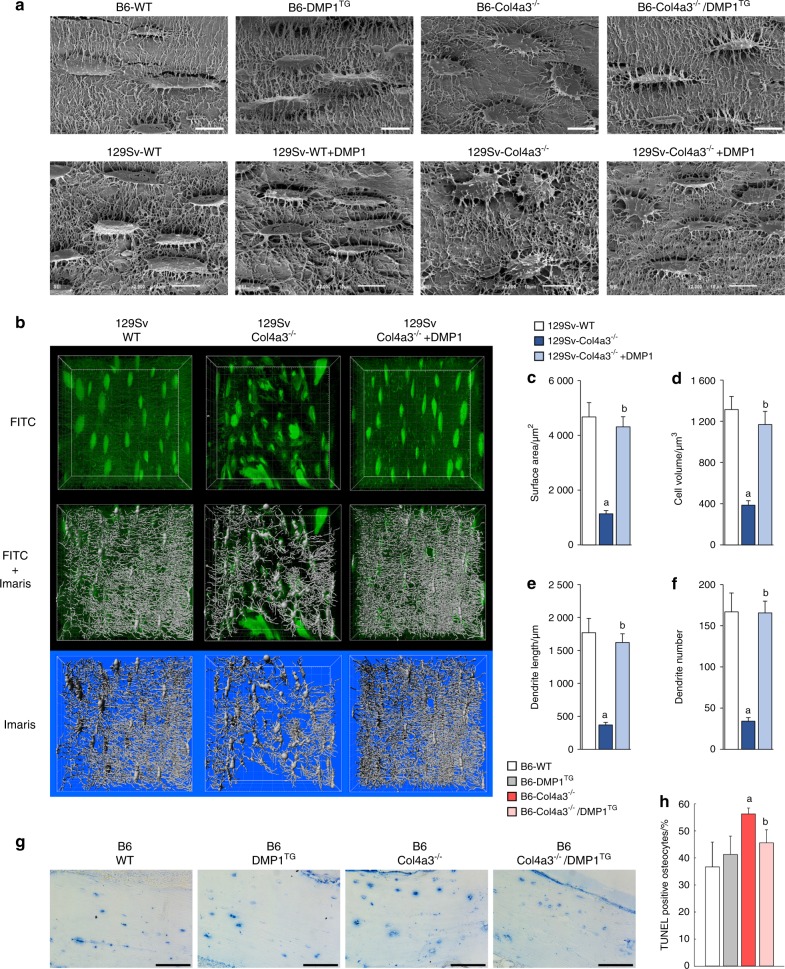
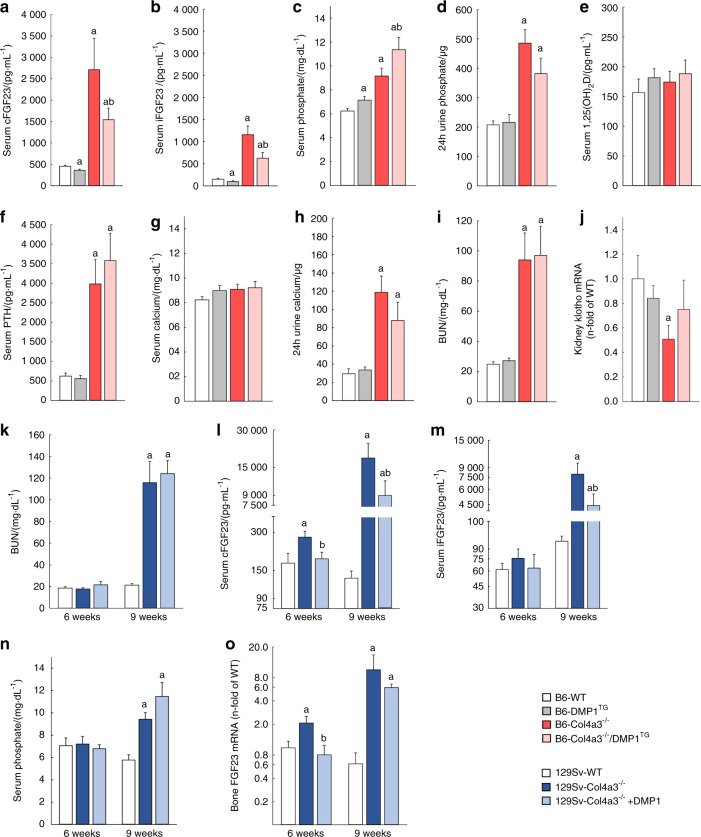
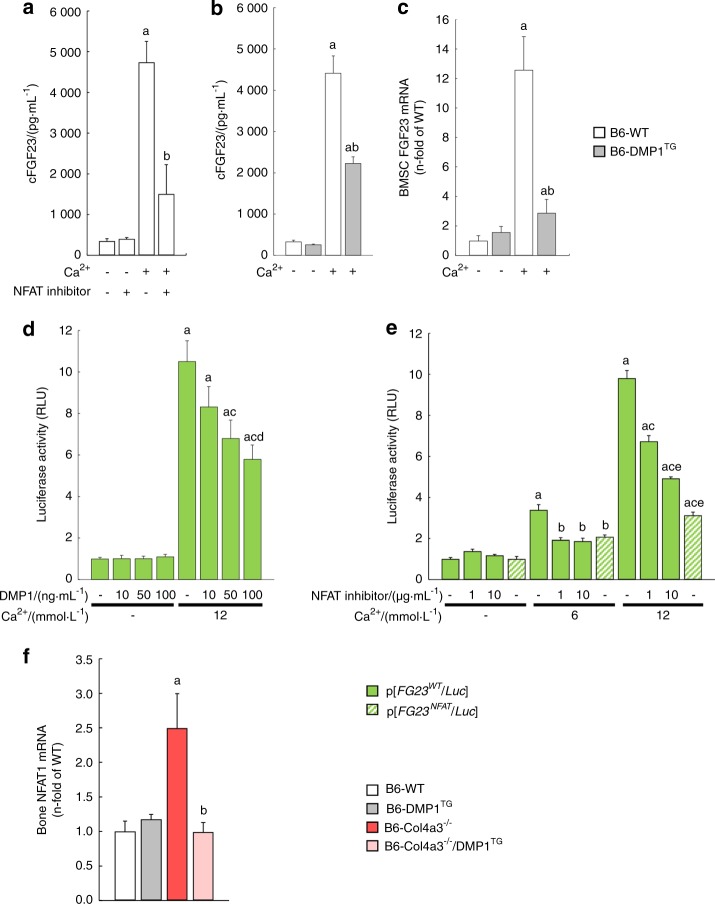
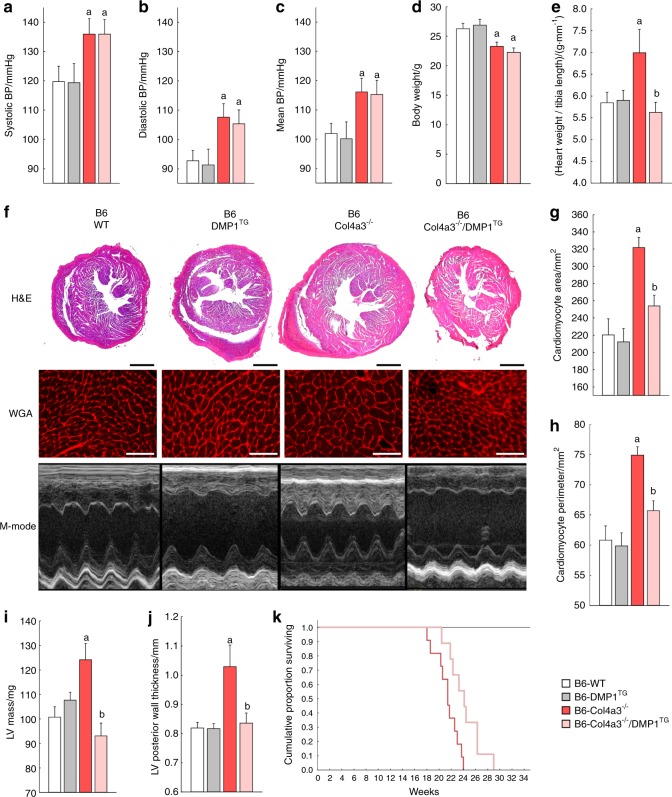
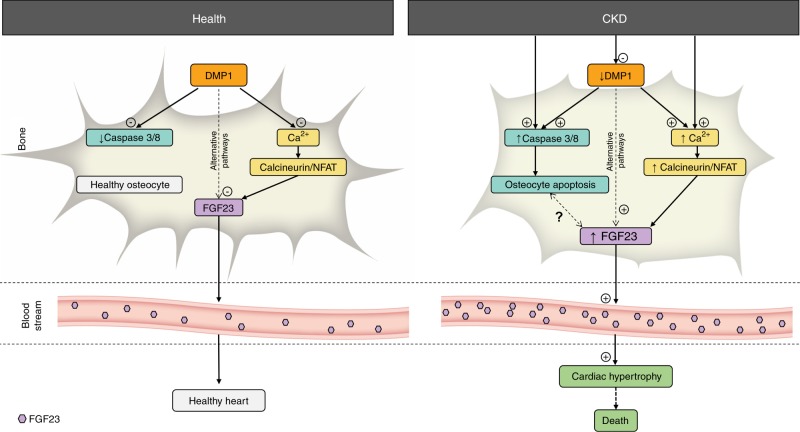
During chronic kidney disease (CKD), alterations in bone and mineral metabolism include increased production of the hormone fibroblast growth factor 23 (FGF23) that may contribute to cardiovascular mortality. The osteocyte protein dentin matrix protein 1 (DMP1) reduces FGF23 and enhances bone mineralization, but its effects in CKD are unknown. We tested the hypothesis that DMP1 supplementation in CKD would improve bone health, prevent FGF23 elevations and minimize consequent adverse cardiovascular outcomes. We investigated DMP1 regulation and effects in wild-type (WT) mice and the Col4a3−/− mouse model of CKD. Col4a3−/− mice demonstrated impaired kidney function, reduced bone DMP1 expression, reduced bone mass, altered osteocyte morphology and connectivity, increased osteocyte apoptosis, increased serum FGF23, hyperphosphatemia, left ventricular hypertrophy (LVH), and reduced survival. Genetic or pharmacological supplementation of DMP1 in Col4a3−/− mice prevented osteocyte apoptosis, preserved osteocyte networks, corrected bone mass, partially lowered FGF23 levels by attenuating NFAT-induced FGF23 transcription, and further increased serum phosphate. Despite impaired kidney function and worsened hyperphosphatemia, DMP1 prevented development of LVH and improved Col4a3−/− survival. Our data suggest that CKD reduces DMP1 expression, whereas its restoration represents a potential therapeutic approach to lower FGF23 and improve bone and cardiac health in CKD.
Overview
The claims and statistics of this paper haven’t been checked yet.
Free: it reads the open-access text and checks the first 5 claims that cite a source we can check. Create a free account to check every claim.
Integrity signals
Registry
Cites
Statistics
Figures
Verification
Claims the paper makes
The claims and statistics of this paper haven’t been checked yet.
Free: it reads the open-access text and checks the first 5 claims that cite a source we can check. Create a free account to check every claim.
Claims other papers make about this one
Each is checked against this paper’s own text: does it say what the citing paper says it does?
The cited source says what the claim attributes to it.
In the citing paper
“In addition, findings in an experimental mouse model of chronic kidney J o u r n a l P r e -p r o o f disease demonstrated that restoring DMP1 protects against the development of cardiovascular disease and improves survival 43 .”
From Sex-specific gene expression signatures of calcific aortic valve stenosis in a large collection of human tissues (2026) · cites this paper as [43]
Self-check
Percentages, sums and reported differences re-computed from the paper’s own numbers.
The self-check needs the paper’s full text.
Citations
Cites
Ahmed, A., Jorna, T., & Bhandari, S. (2016) · Nephron · doi:10.1159/000447068 · Cited by 11,717
FGF23 induces left ventricular hypertrophy
Faul, C., Amaral, A. P., Oskouei, B., Hu, M.-C., Sloan, A., Isakova, T., Gutiérrez, O. M., Aguillon-Prada, R., Lincoln, J., Hare, J. M., et al. (2011) · Journal of Clinical Investigation · doi:10.1172/jci46122 · Cited by 2,027
Self-citationFGF-23 Is a Potent Regulator of Vitamin D Metabolism and Phosphate Homeostasis
Shimada, T., Hasegawa, H., Yamazaki, Y., Muto, T., Hino, R., Takeuchi, Y., Fujita, T., Nakahara, K., Fukumoto, S., & Yamashita, T. (2004) · Journal of Bone and Mineral Research · doi:10.1359/jbmr.0301264 · Cited by 1,883
Fibroblast Growth Factor 23 and Mortality among Patients Undergoing Hemodialysis
Gutiérrez, O. M., Mannstadt, M., Isakova, T., Rauh-Hain, J. A., Tamez, H., Shah, A., Smith, K., Lee, H., Thadhani, R., Jüppner, H., et al. (2008) · New England Journal of Medicine · doi:10.1056/nejmoa0706130 · Cited by 1,727
Self-citationShimada, T., Kakitani, M., Yamazaki, Y., Hasegawa, H., Takeuchi, Y., Fujita, T., Fukumoto, S., Tomizuka, K., & Yamashita, T. (2004) · Journal of Clinical Investigation · doi:10.1172/jci19081 · Cited by 1,596
Shimada, T., Kakitani, M., Yamazaki, Y., et al. (2004) · Journal of Clinical Investigation · doi:10.1172/jci200419081 · Cited by 1,368
Isakova, T., on behalf of the Chronic Renal Insufficiency Cohort (CRIC) Study Group, Wahl, P., Vargas, G. S., Gutiérrez, O. M., Scialla, J., Xie, H., Appleby, D., Nessel, L., Bellovich, K., et al. (2011) · Kidney International · doi:10.1038/ki.2011.47 · Cited by 1,266
Self-citationFeng, J. Q., Ward, L. M., Liu, S., Lu, Y., Xie, Y., Yuan, B., Yu, X., Rauch, F., Davis, S. I., Zhang, S., et al. (2006) · Nature Genetics · doi:10.1038/ng1905 · Cited by 1,199
Self-citationIsakova, T. (2011) · JAMA · doi:10.1001/jama.2011.826 · Cited by 1,020
Self-citationFibroblast Growth Factor 23 and Left Ventricular Hypertrophy in Chronic Kidney Disease
Gutiérrez, O. M., Januzzi, J. L., Isakova, T., Laliberte, K., Smith, K., Collerone, G., Sarwar, A., Hoffmann, U., Coglianese, E., Christenson, R., et al. (2009) · Circulation · doi:10.1161/circulationaha.108.844506 · Cited by 837
Self-citation
Research works printed but not linked: 1
- Neuburg S Genetic background influences cardiac phenotype in murine chronic kidney disease Nephrol. Dial. Transplant. 2018 33 1129 1137 10.1093/ndt/gfx332 29309658 PMC6030849 · DOI
Cited by
The Bone Extracellular Matrix in Bone Formation and Regeneration
Lin, X., Patil, S., Gao, Y.-G., & Qian, A. (2020) · Frontiers in Pharmacology · doi:10.3389/fphar.2020.00757 · Cited by 762
Marcucci, G., Domazetovic, V., Nediani, C., Ruzzolini, J., Favre, C., & Brandi, M. L. (2023) · Antioxidants · doi:10.3390/antiox12020373 · Cited by 175
“Recent data have shown that, in bone and inflammatory diseases, high levels of ROS are related to increased FGF23 expression and decreased mineralization [28,31,66].”
BackgroundThe Mechanosensory Role of Osteocytes and Implications for Bone Health and Disease States
Choi, J. U. A., Kijas, A. W., Lauko, J., & Rowan, A. E. (2022) · Frontiers in Cell and Developmental Biology · doi:10.3389/fcell.2021.770143 · Cited by 157
The roles of osteocytes in alveolar bone destruction in periodontitis
Huang, X., Xie, M., Xie, Y., Feng, M., Lu, X., Li, X., & Chen, L. (2020) · Journal of Translational Medicine · doi:10.1186/s12967-020-02664-7 · Cited by 137
“In CKD, the apoptosis of osteocytes increases, and the expression of DMP1 decreases, followed by the upregulation of FGF23 in osteocytes, which contributes to phosphate wasting and osteomalacia [123].”
BackgroundCalciprotein particles regulate fibroblast growth factor-23 expression in osteoblasts
Akiyama, K.-I., Miura, Y., Hayashi, H., Sakata, A., Matsumura, Y., Kojima, M., Tsuchiya, K., Nitta, K., Shiizaki, K., Kurosu, H., et al. (2020) · Kidney International · doi:10.1016/j.kint.2019.10.019 · Cited by 107
Vitamin A and Bone Health: A Review on Current Evidence
Yee, M. M. F., Chin, K., Soelaiman, I. N., & Wong, S. K. (2021) · Molecules · doi:10.3390/molecules26061757 · Cited by 118
“Phosphate regulating endopeptidase homolog X-linked (Phex) and dentin matrix protein 1 (DMP1) negatively regulate the expression of fibroblast growth factor-23 (FGF-23), a potent regulator for phosphate and vitamin D metabolism, thus suggesting their role in bone mineralisation [48,49].”
BackgroundFGF23 and Phosphate–Cardiovascular Toxins in CKD
Vogt, I., Haffner, D., & Leifheit‐Nestler, M. (2019) · Toxins · doi:10.3390/toxins11110647 · Cited by 110
Jiang, Y., Wang, Z., Liu, X., Wan, M., Liu, Y., Jiao, B., Liao, X., Luo, Z., Wang, Y., Hong, C., et al. (2022) · Advanced Science · doi:10.1002/advs.202105316 · Cited by 86
Hyperphosphatemia and Cardiovascular Disease
Zhou, C., Shi, Z., Ouyang, N., & Ruan, X. Z. (2021) · Frontiers in Cell and Developmental Biology · doi:10.3389/fcell.2021.644363 · Cited by 113
Renal-Cardiac Crosstalk in the Pathogenesis and Progression of Heart Failure
Noels, H., van der Vorst, E. P. C., Rubin, S., Emmett, A., Marx, N., Tomaszewski, M., & Jankowski, J. (2025) · Circulation Research · doi:10.1161/circresaha.124.325488 · Cited by 104
“215 α Klotho is a transmembrane co-receptor for FGF23 and, thereby, involved in regulating phosphor homeostasis, but it is also present as soluble Klotho through which it can act independently of FGF23.”
Inflammation: a putative link between phosphate metabolism and cardiovascular disease
Voelkl, J. G. J., Egli-Spichtig, D., Alesutan, I., & Wagner, C. A. (2021) · Clinical Science · doi:10.1042/cs20190895 · Cited by 90
The regulation of FGF23 under physiological and pathophysiological conditions
Rausch, S., & Föller, M. (2022) · Pflügers Archiv - European Journal of Physiology · doi:10.1007/s00424-022-02668-w · Cited by 70
“Dentin matrix acidic phosphoprotein 1 (DMP1) is a protein produced by osteoblasts and osteocytes and regulates the mineralization of extracellular matrix [25].”
BackgroundFrancis, C. P., Courbon, G., Gerber, C., Neuburg, S., Wang, X., Dussold, C., Capella, M., Qi, L., Isakova, T., Mehta, R. C., et al. (2019) · Kidney International · doi:10.1016/j.kint.2019.07.026 · Cited by 64
Self-citationYan, Y., Wang, L., Ge, L., & Pathak, J. L. (2020) · Current Osteoporosis Reports · doi:10.1007/s11914-020-00564-9 · Cited by 70
The Osteocyte as the New Discovery of Therapeutic Options in Rare Bone Diseases
Pathak, J. L., Bravenboer, N., & Klein-Nulend, J. (2020) · Frontiers in Endocrinology · doi:10.3389/fendo.2020.00405 · Cited by 53
“Chronic kidney disease reduces DMP1 expression in osteocytes, while DMP1 supplementation prevents osteocyte apoptosis, lowers FGF23 expression, increases serum phosphate, and prevents the development of left ventricular hypertrophy in a chronic kidney disease mice model (35, 76).”
BackgroundLipocalin 2 stimulates bone fibroblast growth factor 23 production in chronic kidney disease
Courbon, G., Francis, C. P., Gerber, C., Neuburg, S., Wang, X., Lynch, E. P., Isakova, T., Babitt, J. L., Wolf, M. S., Martin, A., et al. (2021) · Bone Research · doi:10.1038/s41413-021-00154-0 · Cited by 62
“Col4a3 mouse model of CKD with increased Lipocalin 2 We reported that C57Bl6–Col4a3 mice experience progressive declines in renal function and develop LVH.(1,34) Here, we report that circulating levels of LCN2 increased in an age-dependent manner in WT and Col4a3 mice, and were higher in Col4a3 mice with CKD than in W…”
BackgroundMethodResultSelf-citationOsteocytes: master orchestrators of skeletal homeostasis, remodeling, and osteoporosis pathogenesis
Wu, Y. X., Gan, D., Liu, Z., Qiu, D., Tan, G., Xu, Z., & Xue, H. (2025) · Frontiers in Cell and Developmental Biology · doi:10.3389/fcell.2025.1670716 · Cited by 61
Regulation of FGF23: Beyond Bone
Šimić, P., & Babitt, J. L. (2021) · Current Osteoporosis Reports · doi:10.1007/s11914-021-00703-w · Cited by 44
Upstream Regulators of Fibroblast Growth Factor 23
Ratsma, D. M. A., Zillikens, M. C., & van der Eerden, B. C. J. (2021) · Frontiers in Endocrinology · doi:10.3389/fendo.2021.588096 · Cited by 45
“DMP1 overexpression in B6 DMP mice also partially prevented this increase (32).”
BackgroundInfluentialHow FGF23 shapes multiple organs in chronic kidney disease
Leifheit‐Nestler, M., & Haffner, D. (2021) · Molecular and Cellular Pediatrics · doi:10.1186/s40348-021-00123-x · Cited by 36
Bone-derived C-terminal FGF23 cleaved peptides increase iron availability in acute inflammation
Courbon, G., Thomas, J. J., Martínez‐Calle, M., Wang, X., Spindler, J. J., Drasek, J. C. V., Hunt-Tobey, B., Mehta, R. C., Isakova, T., Chang, W., et al. (2023) · Blood · doi:10.1182/blood.2022018475 · Cited by 54
Self-citationPereira, R. C., Salusky, I. B., Bowen, R. E., FREYMILLER, E. G., & Wesseling‐Perry, K. (2019) · Bone · doi:10.1016/j.bone.2019.07.026 · Cited by 35
Zheng, Y., Li, J., Li, Y., Wang, J., Suo, C., Jiang, Y., Li, J., Xu, K., & Chen, X. (2024) · Journal of Advanced Research · doi:10.1016/j.jare.2024.10.019 · Cited by 40
Self-citationEndocrine Fibroblast Growth Factors in Relation to Stress Signaling
Shimizu, M., & Sato, R. (2022) · Cells · doi:10.3390/cells11030505 · Cited by 27
“In these models, the activation of the nuclear factor of activated T-cells (NFAT) contributes to FGF23 induction [109,110].”
BackgroundAlhazmi, Y. A., Aljabri, M. Y., Raafat, S. N., Gomaa, S. M., & Shamel, M. (2023) · Applied Sciences · doi:10.3390/app13148490 · Cited by 26
“Dentin matrix protein-1 (DMP1) is yet another protein that is essential to the process of odontogenesis and has a significant impact on the mineralization of dentin [74].”
BackgroundFGF23 directly inhibits osteoprogenitor differentiation in Dmp1-knockout mice
Courbon, G., Kentrup, D., Thomas, J. J., Wang, X., Tsai, H., Spindler, J. J., Drasek, J. C. V., Ndjonko, L. C. M., Martínez‐Calle, M., Lynch, E. P., et al. (2023) · JCI Insight · doi:10.1172/jci.insight.156850 · Cited by 19
“We isolated genomic DNA and amplified the targeted Fgf23 exon on the sorted cells using the Extract-N-Amp TM Tissue PCR Kit (Sigma-Aldrich Inc., St. Louis, MO) and appropriate primer sequences.”
MethodSelf-citationDomazetovic, V., Falsetti, I., Ciuffi, S., Iantomasi, T., Marcucci, G., VINCENZINI, M. T., & Brandi, M. L. (2022) · International Journal of Molecular Sciences · doi:10.3390/ijms23042103 · Cited by 17
“In particular, DMP1 prevents FGF23 increase [55], and its levels seem to be inversely related to those of active FGF23 [1].”
BackgroundMartínez‐Calle, M., Courbon, G., Hunt-Tobey, B., Francis, C., Spindler, J. J., Wang, X., dos Reis, L. M., Martins, C. S. W., Salusky, I. B., Malluche, H. H., et al. (2023) · Journal of Clinical Investigation · doi:10.1172/jci159928 · Cited by 17
“In all cohorts, we further backcrossed the F 1 heterozygotes to generate incipient congenic strains that contained 94% C57BL/6J genome and maintained the newly created strains separately for more than 5 generations as in prior studies (33, 34).”
InfluentialSelf-citationShedding Light on the Complex Regulation of FGF23
Vervloet, M. G. (2022) · Metabolites · doi:10.3390/metabo12050401 · Cited by 16
“In a mice model of CKD, it was shown that renal failure lowered osteocyte DMP1 expression, followed by FGF23 increases, hile supplementation of DMP1 partially restored FGF23 towards the normal lower range [59].”
BackgroundLipocalin-2: a novel link between the injured kidney and the bone
Courbon, G., & David, V. (2022) · Current Opinion in Nephrology & Hypertension · doi:10.1097/mnh.0000000000000804 · Cited by 17
“In experimental animal models, increased FGF23 and FGF23 signaling lead to LVH and premature death, whereas we and others have shown that reduction of FGF23 prevents LVH and prolongs survival in mice with CKD [46,47].”
BackgroundSelf-citationSclerostin, Osteocytes, and Wnt Signaling in Pediatric Renal Osteodystrophy
Laster, M. L., Pereira, R. C., Noche, K. J., Gales, B., Salusky, I. B., & Albrecht, L. V. (2023) · Nutrients · doi:10.3390/nu15194127 · Cited by 14
Burosumab in X-linked hypophosphatemia and perspective for chronic kidney disease
Balani, S. S., & Perwad, F. (2020) · Current Opinion in Nephrology & Hypertension · doi:10.1097/mnh.0000000000000631 · Cited by 14
“Restoring bone DMP1 levels in Col4a3 knockout mice by genetic or pharmacologic means lowered FGF23 levels and improved cardiac hypertrophy and skeletal outcomes [35].”
BackgroundLuo, R., Hu, R.-N., Xu, J., Yu, P., Wu, X., Zhe, M., Liu, M., Xing, F., Xiang, Z., Zhou, C., et al. (2023) · Nanotechnology Reviews · doi:10.1515/ntrev-2023-0151 · Cited by 14
Long‐Term Effects of Sglt2 Deletion on Bone and Mineral Metabolism in Mice
Gerber, C., Wang, X., David, V., Quaggin, S. E., Isakova, T., & Martin, A. (2021) · JBMR Plus · doi:10.1002/jbm4.10526 · Cited by 15
“Whole femurs from 25-week-old mice were scanned using micro–computed tomography (μCT) with μCT40 (Scanco Medical, Brüttisellen, Switzerland) at 10 μm isotropic voxel size, energy level of 55 keV, and intensity of 145 μA to determine bone mineral density.((29)) Trabecular bone was analyzed within 1 mm of secondary spon…”
MethodSelf-citationAll the might of the osteocyte: emerging roles in chronic kidney disease
Albrecht, L. V., Pereira, R. C., & Salusky, I. B. (2023) · Kidney International · doi:10.1016/j.kint.2023.08.009 · Cited by 13
Bone and heart health in chronic kidney disease: role of dentin matrix protein 1
Martin, A. (2019) · Current Opinion in Nephrology & Hypertension · doi:10.1097/mnh.0000000000000512 · Cited by 13
Self-citationChen, N. X., O’Neill, K. D., Wilson, H. E., Srinivasan, S., Bonewald, L. F., & Moe, S. M. (2024) · JBMR Plus · doi:10.1093/jbmrpl/ziae136 · Cited by 12
“These data are inconsistent with in vivo data in CKD animals demonstrating downregulation of DMP1 associated with osteocyte abnormalities, including impaired mineralization, that are improved with DMP1 administration and lower FGF23, 41 possibly reflecting in vitro versus in vivo conditions.”
Matsugaki, A., Matsumoto, S., & Nakano, T. (2020) · International Journal of Molecular Sciences · doi:10.3390/ijms21186659 · Cited by 12
“Impaired bone cell activities are linked to various bone diseases [16,17].”
BackgroundCourbon, G., Martínez‐Calle, M., & David, V. (2020) · Current Opinion in Nephrology & Hypertension · doi:10.1097/mnh.0000000000000614 · Cited by 12
Self-citationCourbon, G., & David, V. (2024) · Current Opinion in Nephrology & Hypertension · doi:10.1097/mnh.0000000000000995 · Cited by 11
“In diseases of impaired FGF23 cleavage in bone, such as CKD, iron deficiency and inflammation contribute to disproportionately and extremely high iFGF23 levels compared to the levels of FGF23 cleaved peptides, leading to adverse outcomes [41,67–69].”
BackgroundSelf-citationWagner, S., Panzer, M., Pertler, E., Redl, S., Saretto, M., Schaefer, B., Pammer, L. M., Obholzer, L., Troppmair, M. R., Hess, M. W., et al. (2026) · Blood · doi:10.1182/blood.2025031806 · Cited by 16
Self-citationSato, M. M., & Shah, F. A. (2023) · Calcified Tissue International · doi:10.1007/s00223-022-01058-9 · Cited by 11
Mouse Models of Mineral Bone Disorders Associated with Chronic Kidney Disease
Zaloszyc, A., Bernardor, J., Bacchetta, J., LAVERNY, G., & Schmitt, C. P. (2023) · International Journal of Molecular Sciences · doi:10.3390/ijms24065325 · Cited by 11
“[61] Autosomal recessive Alport model and DMP1 treatment C57BL/6 >48 M Col4a3−/−DMP1TG 8 and 23 weeks of age Standard Osteitis fibrosa, high turnover Role of DMP1 using genetic and therapeutic approaches”
BackgroundInfluentialNovel insights into osteocyte and inter-organ/tissue crosstalk
Zhang, Y., & Chen, Q. (2024) · Frontiers in Endocrinology · doi:10.3389/fendo.2023.1308408 · Cited by 11
Erythroid-produced intact FGF23 is a paracrine inhibitor of erythropoiesis
Courbon, G., Thomas, J. J., Duque, E. J., Kentrup, D., Spindler, J. J., Semanchek, W., Tracey, E., Vaughan, D. E., Chang, W., Creemers, J. W. M., et al. (2026) · Blood · doi:10.1182/blood.2025030634 · Cited by 11
Self-citationSharma, S., Kumar, S., Tomar, M. S., Chauhan, D., Kulkarni, C., Rajput, S., Sadhukhan, S., Porwal, K., Guha, R., Shrivastava, A., et al. (2024) · Bone · doi:10.1016/j.bone.2024.117126 · Cited by 9
Emerging concepts on the FGF23 regulation and activity
Rivoira, M. A., López, M. E. P., Areco, V. A., de Barboza, G. D., Dionisi, M. P., & de Talamoni, N. T. (2024) · Molecular and Cellular Biochemistry · doi:10.1007/s11010-024-04982-6 · Cited by 12
“DMP1 supplementation partially restores the FGF23 levels, confirming the regulation of FGF23 by DMP1 [37].”
Wong, S. K., Fikri, N. I. A., Munesveran, K., Hisham, N. S. N., Lau, S. H. J., Chin, K., Fahami, N. A. M., Saad, Q. H. M., Kamisah, Y., Abdullah, A., et al. (2022) · Journal of Functional Foods · doi:10.1016/j.jff.2022.105213 · Cited by 9
Growth-related skeletal changes and alterations in phosphate metabolism
Michigami, T., Tachikawa, K., Yamazaki, M., Nakanishi, T., Kawai, M., & Ozono, K. (2022) · Bone · doi:10.1016/j.bone.2022.116430 · Cited by 9
Ji, L., Kong, R., Yu, Y., Wan, W., Zhao, D., & Gao, J. (2025) · Molecular Immunology · doi:10.1016/j.molimm.2025.06.002 · Cited by 11
Gao, Z., Liu, Q., Zhao, J., Zhao, Y., Tan, L., Zhang, S., Zhou, Y., Chen, Y., Guo, Y., & Feng, Y. (2022) · PLoS neglected tropical diseases · doi:10.1371/journal.pntd.0010379 · Cited by 10
Bogdanova, E. O., Sadykov, A., Ivanova, G. T., Михайловна, З. И., Николаевна, Б. О., Semenova, N. Y., Галкина, О. В., Parastaeva, M., Sharoyko, V. V., & Dobronravov, V. (2023) · International Journal of Molecular Sciences · doi:10.3390/ijms24087270 · Cited by 7
“The ability of osteocytes to regulate osteoblast and osteoclast function (through cWnt and nuclear factor-ÎB ligand (RANKL)/osteoprotegerin (OPG)–mediated mechanisms) suggests the principal role of the osteocyte network in coordinating bone remodeling [9,22,23].”
BackgroundTranscriptomics: a Solution for Renal Osteodystrophy?
Martin, A., & David, V. (2020) · Current Osteoporosis Reports · doi:10.1007/s11914-020-00583-6 · Cited by 7
“Among efforts made to better understand ROD pathogenesis, multiple studies have characterized and compared new animal models that can be used to determine the cell and molecular mechanisms involved in ROD [1••, 45–49]. For instance, parameters of mineral metabolism that are altered in CKD (Pi, PTH, vitamin D, calcium,…”
BackgroundSelf-citationMartin, A., & Kentrup, D. (2021) · Current Osteoporosis Reports · doi:10.1007/s11914-021-00697-5 · Cited by 8
Self-citationCorrection of Vascular Calcification and Hyperphosphatemia in CKD Rats Treated with ASARM Peptide
Rowe, P. S., McCarthy, E. M., Yu, A. S. L., & Stubbs, J. R. (2022) · Kidney360 · doi:10.34067/kid.0002782022 · Cited by 7
“Notably, Alport transgenic mice that overexpress DMP1 (Col4a3/ trgDMP1) have reduced FGF23 with improved CKD-MBD pathology (74).”
BackgroundInfluentialWang, C., Fan, M., Heo, S., Adams, S. M., Li, T., Liu, Y., Li, Q., Loebel, C., Burdick, J. A., Lu, X. L., et al. (2025) · Advanced Science · doi:10.1002/advs.202414750 · Cited by 6
Sellier, A. B., Seiler-Mußler, S., Emrich, I. E., Böhm, M., Fliser, D., Zawada, A. M., & Heine, G. H. (2021) · American Journal of Nephrology · doi:10.1159/000519274 · Cited by 7
Liu, M., Cheng, L., Ye, Q., Liu, H., Shu, C., Gao, H., Liu, X., Zhang, X., & Chen, G. (2024) · Journal of Cardiovascular Pharmacology · doi:10.1097/fjc.0000000000001559 · Cited by 6
FGF23: A player not only in bone diseases
Cifuentes, A., Laskar-Marchesseau, Z., & Courbon, G. (2025) · Joint Bone Spine · doi:10.1016/j.jbspin.2025.105988 · Cited by 5
Self-citationMartin, A., Kawaguchi, R., Wang, Q., Salusky, I. B., Pereira, R. C., & Wesseling‐Perry, K. (2024) · JBMR Plus · doi:10.1093/jbmrpl/ziad015 · Cited by 5
Self-citationWang, Y., Di, Y., Li, Y., Lu, J., Ji, B., Zhang, Y., Chen, Z., Chen, S., Liu, B., & Tang, R. (2024) · Chinese Medical Journal · doi:10.1097/cm9.0000000000003261 · Cited by 5
Fibroblast growth factor 23, the time is right for a second wind
Vervloet, M. G. (2021) · Kidney International · doi:10.1016/j.kint.2021.06.043 · Cited by 5
Huang, H., Luo, H., Wei, N., Liu, M.-L., He, F., Yang, W. C., Dong, J., Yang, X., & Li, F. (2022) · Stem Cell Research & Therapy · doi:10.1186/s13287-022-02792-5 · Cited by 5
“On the other hand, 635 circRNA genes with significantly different expression levels during osteogenesis were classified as pattern II (OS-specific), represented by COL4A [37], SULF1 [38], SLC39A8 [39], IGFBP5 [40], HOMER2 [41] and ALCAM [42], whose host genes were involved in osteogenesis (Additional file 4: Table S3;…”
BackgroundCarroll, M., Alliston, T. N., & Dole, N. S. (2023) · Current Osteoporosis Reports · doi:10.1007/s11914-023-00802-w · Cited by 5
Root, A. W., & Levine, M. A. (2023) · Journal of Pediatric Endocrinology and Metabolism · doi:10.1515/jpem-2022-0624 · Cited by 5
P62 acts as an intermediator in cadmium-induced osteocyte apoptosis and osteoporosis in mice
Fan, Y., Liu, L., Ali, W., Ma, Y., Song, R., Zhao, H., Zou, H., Bian, J., Yuan, Y., Gu, J., et al. (2025) · Biochemical Pharmacology · doi:10.1016/j.bcp.2025.117104 · Cited by 3
The bone at the intersection of kidney and heart disease
Campos, I. D., & Faul, C. (2021) · Trends in Pharmacological Sciences · doi:10.1016/j.tips.2021.11.014 · Cited by 3
Osteocytes burn out, give bone a break
Martin, A. (2025) · Kidney International · doi:10.1016/j.kint.2025.03.015 · Cited by 2
Self-citationC-C motif receptor 2 is a core profibrotic factor in uremic cardiomyopathy
Bao, J., Guo, B., Mo, J.-J., Zhu, H., Jia, N., Hou, F., Liu, Y., & Li, A. (2026) · Disease Models & Mechanisms · doi:10.1242/dmm.052395 · Cited by 2
Crespo-Golmar, A., Piñeiro-Ramil, M., Pazos‐Pérez, A., Crugeiras-Sampedro, M., Zas-Veiga, L., Eldjoudi, D. A., Suarez-Rodriguez, A., Jorge-Mora, A. A., Alonso‐Pérez, A., & Gómez, R. (2026) · Molecular Metabolism · doi:10.1016/j.molmet.2026.102353 · Cited by 2
Kentrup, D., Thomas, J. J., Courbon, G., Wang, X., Hunt-Tobey, B., White, S., Duque, E. J., Semancheck, W., Tracey, E., Kumar, R., et al. (2026) · Kidney International · doi:10.1016/j.kint.2026.03.019 · Cited by 2
Self-citationFibroblast growth factor 23 at the crossroads of mineral metabolism and bone disease
Kentrup, D., & Martin, A. (2026) · Current Opinion in Nephrology & Hypertension · doi:10.1097/mnh.0000000000001193 · Cited by 2
Self-citationGut-derived uremic toxin indoxyl sulfate and aryl hydrocarbon receptor in renal osteodystrophy
Russell, C. R., Chen, N. X., Biruete, A., Allen, M. R., Metzger, C. E., Wallace, J. M., & Moe, S. M. (2026) · Biochimie · doi:10.1016/j.biochi.2026.05.009 · Cited by 2
Jiang, J., Zhu, J., Lin, H., Jin, S., He, Q., & Ji, W. (2024) · Tissue Engineering Part C Methods · doi:10.1089/ten.tec.2024.0195 · Cited by 2
Houessou, U., Zamani, P., Manikpurage, H. D., Li, Z., Gaudreault, N., Dahmene, M., Dagenais, F., Couture, C., Clavel, M.-A., Pibarot, P., et al. (2026) · Atherosclerosis · doi:10.1016/j.atherosclerosis.2026.120791 · Cited by 1
Chen, M., Li, G., Zhang, L., Ning, K., Yang, B., Jiang, J. X., Wang, D., & Xu, H. (2021) · Frontiers in Endocrinology · doi:10.3389/fendo.2021.649994 · Cited by 1
Li, T., Li, G., Deng, X., Zhu, T., Li, J. J., Chen, C., Jia, J., Zhang, S., & Zhang, K. (2025) · The FASEB Journal · doi:10.1096/fj.202403274rr · Cited by 1
Hong, X., Xie, W., & Lin, X. (2025) · BMC Cardiovascular Disorders · doi:10.1186/s12872-025-04966-4 · Cited by 1
“CKD can lead to elevated levels of fibroblast growth factor 23, which is independently associated with increased LVM and left ventricular hypertrophy, resulting in left ventricular diastolic and systolic dysfunction [35–37].”
Fajol, A., Heitman, K., Thomas, S. M., Li, Q., Mitchell, T., Gamboa, J. L., Zarjou, A., Gutiérrez, O. M., & Faul, C. (2025) · The Journal of Physiology · doi:10.1113/jp289283 · Cited by 1
“Although we have not studied the bone in our models, calcium and phosphate for ectopic calcifications are probably derived from the bone leading to bone demineralization, which has been reported for Col4a3 − / − mice (Dussold et al., 2019).”
Toxic Effects of p-Cresyl sulfate and Indoxyl Sulfate on Bone: A Systematic Review
Narihan, M. Z. A., Jelani, A. F., Froemming, G. R. A., & Dayang, E.-Z. (2025) · Malaysian Journal of Medicine and Health Sciences · doi:10.47836/mjmhs.21.4.37 · Cited by 1
Verlinden, L., Stockmans, I., Moermans, K., & Carmeliet, G. (2026) · JBMR Plus · doi:10.1093/jbmrpl/ziag017 · Cited by 1
“Bone mass decreases progressively in Col4a3 − / − mice, paral-leling the gradual decline in renal function, which is in agr eement with previous findings of Dussold et al. 16 Trabecular bone mass is reduced and cortical bone is also affected, characterized by cortical thinning.”
InfluentialKidney to bone via bedside to bench…and back?
Grabner, A., & Wolf, M. S. (2020) · Journal of Clinical Investigation · doi:10.1172/jci135213 · Cited by 1
Self-citationChronic Kidney Disease–Mineral and Bone Disorders
Portales‐Castillo, I., Yu, E. W.-Y., Jüppner, H., & Nigwekar, S. U. (2021) · Springer eBooks · doi:10.1007/978-3-030-83082-3_14 · Cited by 1
Uremic Toxicity and Bone in CKD
Iwasaki, Y., Yamato, H., & Fukagawa, M. (2020) · Springer eBooks · doi:10.1007/978-981-15-7793-2_7
Shahsavari, N., Soori, R., Rabbani, S., Boroumand, S., & Rokhsati, S. (2023) · Comparative Clinical Pathology · doi:10.1007/s00580-023-03455-4
“Regarding new CKD-associated CVD risk factors, it has been illustrated that FGF23-Klotho axis is considered as a renowned pathway which is present in many CKD-associated CVD events (Desjardins et al. 2012; Paoli and Mitsnefes 2014; Dussold et al. 2019).”
Dusso, A., Bauerle, K. T., Zhang, R. M., & Bernal‐Mizrachi, C. (2023) · Elsevier eBooks · doi:10.1016/b978-0-323-91338-6.00029-x · Cited by 1
Kovaleva, A. A., Krasnova, O. A., & Neganova, I. E. (2025) · Translational Medicine · doi:10.18705/2311-4495-2024-11-6-532-545
Jansen's Disease: Bone Abnormalities Beyond Chondrodysplasia
Pereira, R. C., Delany, A. M., Reyes, M., Gales, B., Jüppner, H., & Salusky, I. B. (2025) · The Journal of Clinical Endocrinology & Metabolism · doi:10.1210/clinem/dgaf097
Bogdanova, E. O., Садыков, А. М., Ivanova, G. T., Михайловна, З. И., Николаевна, Б. О., Галкина, О. В., Sharoyko, V. V., Semenova, N. Y., Parastaeva, M., & Dobronravov, V. (2025) · Journal of Evolutionary Biochemistry and Physiology · doi:10.1134/s0022093025060183
“The ability of the osteocyte net(cid:2) work to regulate osteoblast and osteoclast function indicates their fundamental role in coordinating the processes of ossification [9, 27, 28].”
Betul Guzel, F., Erken, E., Altunoren, O., Gungor, O., Öztürk, I., Armagan, M., Dil, Y., Kazan, S., & Seyithanoglu, M. (2025) · Dialnet (Universidad de la Rioja)
Gao, B., Bai, J., Xiao, R., Li, J., Wang, M., Wang, Z., Feng, Z., Shi, J., & Liu, Z. (2026) · Journal of Periodontology · doi:10.1002/jper.70134
Broken signals: when the mineralostat alters the cardiovascular system
Akerman, E., Cifuentes, A., & Courbon, G. (2026) · Pediatric Nephrology · doi:10.1007/s00467-026-07283-w
Self-citationBiopolymer-based hydrogel electrostatic reinforcement for bone regeneration
Khan, A., Walid, B. M., Chowdhury, M. L., Haque, M. A., Chowdhury, M. I. S., & Hoque, M. E. (2026) · Elsevier eBooks · doi:10.1016/b978-0-443-33391-0.00019-4
Pathogenesis and management of disordered mineral metabolism in patients with chronic kidney disease
Frazier, R., Martin, A., & Isakova, T. (2026) · Elsevier eBooks · doi:10.1016/b978-0-12-815389-5.00033-2
Self-citationYan, Y., Liangqun, L. I., Luo, Z., Deng, T., Zhou, M., Yang, J., Li, Q., Yang, X., Tang, L., & Liu, H. (2026) · Journal of the Science of Food and Agriculture · doi:10.1002/jsfa.70756
Ji, L., Zhu, F., Wang, X., Wang, J., & Liu, C. (2026) · Bioactive Materials · doi:10.1016/j.bioactmat.2026.07.008
“Recent evidence suggests that the PHEX – DMP1 – MEPE pathway in osteocytes functions as an upstream regulator of FGF23 expression, adding further complexity to the bone – kidney regulatory network [123,124].”
Self-citationLu, K., Hou, Y., Wu, C., Fang, T., Hung, K.-C., & Lu, C.-L. (2026) · American Journal of Nephrology · doi:10.1159/ajn/ablag003
Metadata
- Authors
- Dussold, C., Gerber, C., White, S., Wang, X., Qi, L., Francis, C., Capella, M., Courbon, G., Wang, J., Li, C., Feng, J. Q., Isakova, T., Wolf, M., David, V., & Martin, A.
- Affiliations
- Northwestern University (US)
- Texas A&M University (US)
- Duke University (US)
- Corresponding author
- Martin, Aline
- ORCID
- Venue
- Bone Research
- Published
- 2019-04-25
- Volume
- 7
- Issue
- 1
- Pages
- 12-12
- ISSN
- 2095-4700 (ISSN-L)
- 2095-6231
- PMC
- PMC6483996
- OpenAlex
- W2941262857
- Semantic Scholar
- 9f34381d376020d0aa7b305963def9f2d615fd49
- Cited by
- 96
- References
- 47
- Citations by year
- 2026: 16 · 2025: 13 · 2024: 11 · 2023: 15 · 2022: 12 · 2021: 14 · 2020: 10 · 2019: 5
- FWCI
- 7.92
- Type
- journal article
- Language
- en
- Open access
- gold
- doi.org
- Licence
- cc-by
- creativecommons.org/licenses/by/4.0 (tdm)
- creativecommons.org/licenses/by/4.0 (vor)
- Locations
- Bone Research (publishedVersion, cc-by)
- Europe PMC (PubMed Central) (publishedVersion, cc-by)
- PubMed Central (publishedVersion, cc-by)
- PubMed (publishedVersion)
- HAL (submittedVersion)
- DOAJ (DOAJ: Directory of Open Access Journals) (submittedVersion)
- Funders
- U.S. Department of Health & Human Services | NIH | National Institute of Diabetes and Digestive and Kidney Diseases (R01DK101730, R01DK076116, R01DK102815)
- Topics
- Health Sciences › Medicine › Nephrology › Parathyroid Disorders and Treatments
- Life Sciences › Biochemistry, Genetics and Molecular Biology › Molecular Biology › Bone Metabolism and Diseases
- Health Sciences › Medicine › Orthopedics and Sports Medicine › Bone health and osteoporosis research
- Keywords
- DMP1, chronic kidney disease, fibroblast growth factor 23, osteocytes, left ventricular hypertrophy, Col4a3 knockout mice, osteocyte apoptosis, bone mineralization, hyperphosphatemia, cardiovascular mortality, bone health
About these checks
Registry, retraction, Cites and statistics results are computed, not judged, with one exception: a printed reference that no index lists is read once by a model before it counts as a citation error. Claims are extracted by a model and kept only when their quote appears verbatim in the text; each cited source is then checked, with a model’s help, for whether it says what the claim relies on. Those verdicts can be wrong — read the claim’s quote and the cited source before relying on one.
Statistics and arithmetic are recomputed, not judged.
Confidence bands are shown only for fields calibrated on our annotated test set. None is calibrated yet, so no band is shown.
What counts as a claim ›How we measure confidence ›How we check this ›
Are you an author, or do you see a problem with this page? Request a review
Data sources
Bibliographic data: Semantic Scholar, OpenAlex, Crossref.
Contains information from the Semantic Scholar Academic Graph Datasets, made available under the ODC Attribution License (ODC-BY 1.0).
Semantic Scholar’s data is described in: Kinney, R., et al. (2023). The Semantic Scholar Open Data Platform. arXiv:2301.10140.
