

Mechanical regulation of bone remodeling
Open accessThe DOI matches its Crossref record; 237 of the 238 references it cites were found in a registry or an index.
Abstract
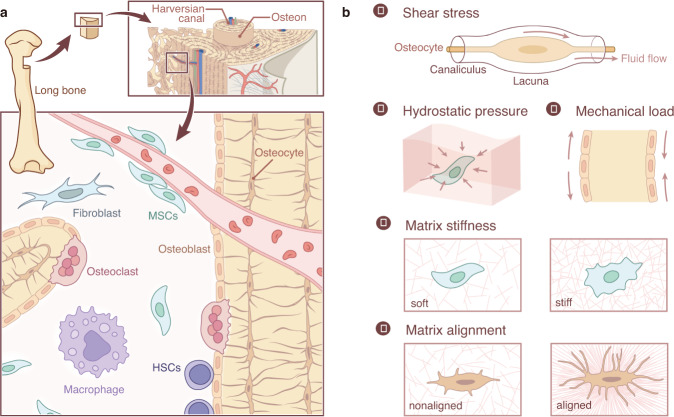
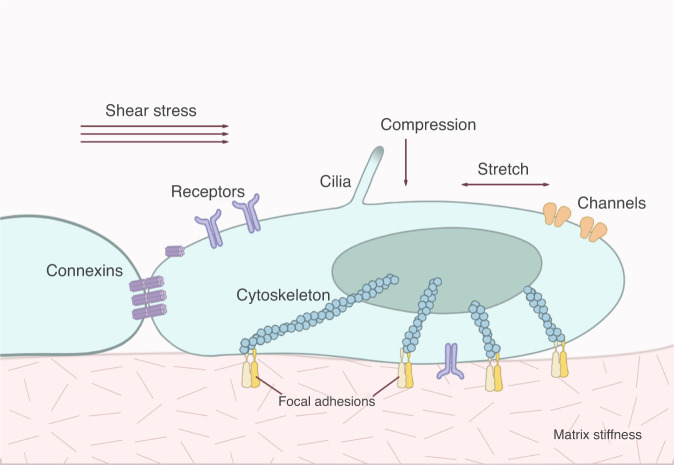
Bone remodeling is a lifelong process that gives rise to a mature, dynamic bone structure via a balance between bone formation by osteoblasts and resorption by osteoclasts. These opposite processes allow the accommodation of bones to dynamic mechanical forces, altering bone mass in response to changing conditions. Mechanical forces are indispensable for bone homeostasis; skeletal formation, resorption, and adaptation are dependent on mechanical signals, and loss of mechanical stimulation can therefore significantly weaken the bone structure, causing disuse osteoporosis and increasing the risk of fracture. The exact mechanisms by which the body senses and transduces mechanical forces to regulate bone remodeling have long been an active area of study among researchers and clinicians. Such research will lead to a deeper understanding of bone disorders and identify new strategies for skeletal rejuvenation. Here, we will discuss the mechanical properties, mechanosensitive cell populations, and mechanotransducive signaling pathways of the skeletal system.
Overview
The claims and statistics of this paper haven’t been checked yet.
Free: it reads the open-access text and checks the first 5 claims that cite a source we can check. Create a free account to check every claim.
Integrity signals
Registry
Cites
Statistics
Figures
Verification
Claims the paper makes
The claims and statistics of this paper haven’t been checked yet.
Free: it reads the open-access text and checks the first 5 claims that cite a source we can check. Create a free account to check every claim.
Claims other papers make about this one
Each is checked against this paper’s own text: does it say what the citing paper says it does?
The source backs part of the claim, not all of it — or backs it for a different population, condition or comparison.
In the citing paper
“Muscle-derived mechanical loading activates mechanosensors in osteocytes and osteoblast-lineage cells, including integrins and Piezo1, thereby inducing Ca2+-dependent signaling and Wnt/β-catenin-associated osteogenic pathways that promote osteoblast activity [47,48]”
From Interorgan Communications in Skeletal Pathophysiology: From Molecular Pathways to Multidisciplinary Therapies (2026) · cites this paper as [48]
Experimental — accuracy not yet measured
Self-check
Percentages, sums and reported differences re-computed from the paper’s own numbers.
The self-check needs the paper’s full text.
Citations
Cites
Items 201–237 of 237
Bratengeier, C., Liszka, A., Hoffman, J., Bakker, A. D., & Fahlgren, A. (2020) · The FASEB Journal · doi:10.1096/fj.201901458r · Cited by 49 · cited 1×
“Another recent study showed that fluid flow-derived mechanical stimuli can enhance or suppress the formation of osteoclasts from hematopoietic progenitor cells in a manner dependent on the shear stress rate, amplitude, and duration.(27) These observations indicate that osteoclasts and their progenitors can respond to…”
BackgroundKwon, R. Y., Meays, D. R., Meilan, A. S., Jones, J. R., Miramontes, R., Kardos, N., Yeh, J.-C., & Frangos, J. A. (2012) · PLoS ONE · doi:10.1371/journal.pone.0033336 · Cited by 48 · cited 1×
“with ablated osteocytes.(12) These mice have been shown to be resistant to unloading-induced bone loss, providing strong evidence for the role of osteocytes in mechanotransduction.”
BackgroundCxcl12/Cxcr4 signaling controls the migration and process orientation of A9-A10 dopaminergic neurons
Yang, S., Edman, L. C., Sánchez‐Alcañiz, J. A., Fritz, N., Bonilla, S., Hecht, J. H., Uhlén, P., Pleasure, S. J., Villaescusa, J. C., Marín, Ó., et al. (2013) · Journal of Cell Science · doi:10.1242/jcs.145136 · Cited by 48
Primary Cilia Exist in a Small Fraction of Cells in Trabecular Bone and Marrow
Coughlin, T. R., Voisin, M., Schaffler, M. B., Niebur, G. L., & McNamara, L. M. (2014) · Calcified Tissue International · doi:10.1007/s00223-014-9928-6 · Cited by 47
Shear Stress Modulates Osteoblast Cell and Nucleus Morphology and Volume
Jin, J., Jaspers, R. T., Wu, G., Korfage, J. A. M., Klein‐Nulend, J., & Bakker, A. D. (2020) · International Journal of Molecular Sciences · doi:10.3390/ijms21218361 · Cited by 47
Zhang, L., Li, G., Wang, K., Wang, Y., Dong, J., Wang, H., Xu, L., Shi, F., Cao, X., Hu, Z., et al. (2019) · Biochemical and Biophysical Research Communications · doi:10.1016/j.bbrc.2019.11.057 · Cited by 46 · cited 1×
“Under simulated microgravity conditions, for example, miR-139-3p and the lncRNA ODSM coordinately regulated the differentiation and apoptosis of MC3T3E1 cells,(205) while the miR-30 family (except miR-30a) inhibited their osteoblastic differentiation.(206) miR-33-5p can promote osteogenesis in vitro; osteoblast-target…”
BackgroundSelf-citationWalls, S. M., Diop, S. B., Birse, R. T., Elmeń, L., Gan, Z., Kalvakuri, S., Pineda, S. B., Reddy, C. P., Taylor, E., Trinh, B., et al. (2020) · Cell Reports · doi:10.1016/j.celrep.2020.108445 · Cited by 46
Wu, S., Yu, Q., Lai, A., & Tian, J. (2018) · Biochemical and Biophysical Research Communications · doi:10.1016/j.bbrc.2018.06.066 · Cited by 44
TRPV4 deficiency causes sexual dimorphism in bone metabolism and osteoporotic fracture risk
van der Eerden, B. C. J., Oei, L., Roschger, P., Fratzl‐Zelman, N., Hoenderop, J. G. J., van Schoor, N. M., Pettersson, U., Schreuders‐Koedam, M., Uitterlinden, A. G., Hofman, A., et al. (2013) · Bone · doi:10.1016/j.bone.2013.09.017 · Cited by 43
Pflanz, D., Birkhold, A. I., Albiol, L., Thiele, T., Julien, C., Seliger, A., Thomson, E., Kramer, I., Kneissel, M., Duda, G. N., et al. (2017) · Scientific Reports · doi:10.1038/s41598-017-09653-9 · Cited by 43 · cited 1×
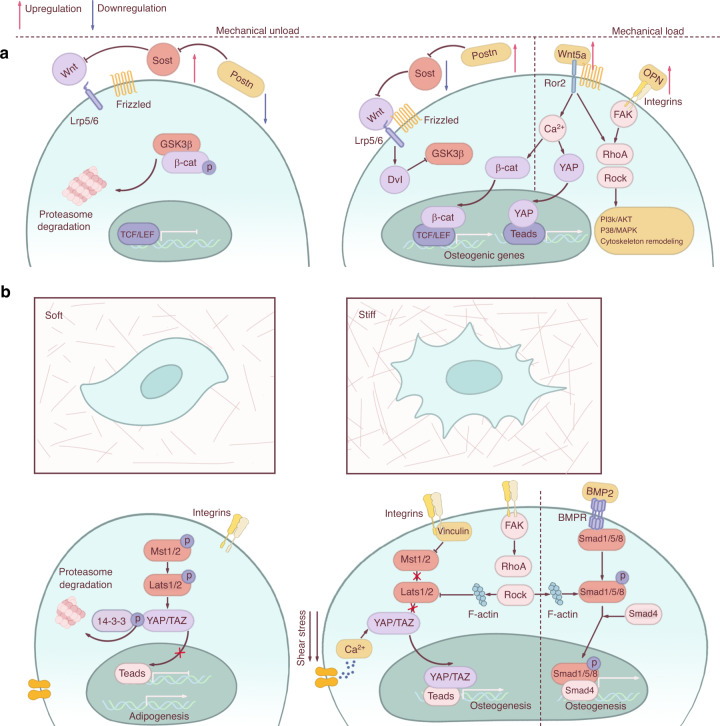
“4a).(168) Periostin (Postn), an ECM protein with important roles in osteogenesis, is highly expressed in the bone periosteum.”
BackgroundEffect of different resistance-training regimens on the WNT-signaling pathway
Leal, M. L., Lamas, L., Aoki, M. S., Ugrinowitsch, C., Carneiro‐Ramos, M. S., Tricoli, V., & Moriscot, A. S. (2011) · European Journal of Applied Physiology · doi:10.1007/s00421-011-1874-7 · Cited by 42
Induction of ligand promiscuity of αVβ3 integrin by mechanical force
Bachmann, M., Schäfer, M., Mykuliak, V. V., Ripamonti, M., Heiser, L., Weißenbruch, K., Krübel, S., Franz, C. M., Hytönen, V. P., Wehrle‐Haller, B., et al. (2020) · Journal of Cell Science · doi:10.1242/jcs.242404 · Cited by 42
Approximating bone ECM: Crosslinking directs individual and coupled osteoblast/osteoclast behavior
Hwang, M. P., Subbiah, R., Kim, I. G., Lee, K. E., Park, J., Kim, S., & Park, K. (2016) · Biomaterials · doi:10.1016/j.biomaterials.2016.06.052 · Cited by 38
Medicine and space exploration
NICOGOSSIAN, A. E. (2003) · The Lancet · doi:10.1016/s0140-6736(03)15055-6 · Cited by 37 · cited 1×
“5% of volumetric bone mineral density in the weight-bearing bones due to increased bone resorption and decreased bone formation.(3,4) In addition, longterm bed rest and paralysis can substantially reduce the mechanical stress placed on the bone, thus resulting in disuse osteoporosis.”
BackgroundCooperation between IL-7 Receptor and Integrin α2β1 (CD49b) Drives Th17-Mediated Bone Loss
Azreq, M.-A. E., Arseneault, C., Boisvert, M., Pagé, N., Allaeys, I., Poubelle, P. E., Tessier, P. A., & Aoudjit, F. (2015) · The Journal of Immunology · doi:10.4049/jimmunol.1500437 · Cited by 37
Xu, H., Wu, F., Zhang, H., Yang, C., Li, K., Wang, H., Yang, H., Liu, Y., Ding, B., Tan, Y., et al. (2017) · Biochimie · doi:10.1016/j.biochi.2017.04.015 · Cited by 37 · cited 1×
“In osteoblasts, microgravity induces actin microfilament disruption, thus reducing BMP2-induced activation and translocation of Smad1/5/8 and RUNX2 expression in MC3T3-E1 cells.(154) The cytoskeleton can transfer mechanical forces, and in turn, these forces can adjust the cytoskeletal structural configuration.”
BackgroundDisruption of Kif3a in osteoblasts results in defective bone formation and osteopenia
Qiu, N., Xiao, Z., Cao, L., Buechel, M. M., David, V., Roan, E., & Quarles, L. D. (2012) · Development · doi:10.1242/dev.084772 · Cited by 34
Modeling the effect of ascites-induced compression on ovarian cancer multicellular aggregates
Klymenko, Y., Wates, R. B., Weiss-Bilka, H., Lombard, R., Liu, Y., Campbell, L., Kim, O., Wagner, D., Ravosa, M. J., & Stack, M. S. (2018) · Disease Models & Mechanisms · doi:10.1242/dmm.034199 · Cited by 34 · cited 1×
“Cell lines can also be seeded in a culture dish with a retractable bottom to apply tension and squeezing force(225) or in a gel to apply compression force.(226) Such conditions may not reflect the in vivo mechanical environment, and most of the present studies are based on observations in 2D systems.”
Backgroundβ3 Integrin Subunit Mediates the Bone-Resorbing Function Exerted by Cultured Myeloma Plasma Cells
Tucci, M., Palma, R. D., Lombardi, L., Rodolico, G., Berrino, L., Dammacco, F., & Silvestris, F. (2009) · Cancer Research · doi:10.1158/0008-5472.can-09-0949 · Cited by 33
Moore, E. R., Chen, J. C., & Jacobs, C. R. (2019) · Stem Cells International · doi:10.1155/2019/3094154 · Cited by 33 · cited 1×
“Cilium The cilium is a microtubule-based antenna-like sensory organelle critical for transducing extracellular mechanical and chemical signals.(78) It grows from the mother centriole and projects from the cell surface in many vertebrate tissues, including the bone, nervous system, carcinoma, kidney, cartilage, and car…”
BackgroundFarley, A., Gnyubkin, V., Vanden‐Bossche, A., Laroche, N., Neefs, M., Baatout, S., Baselet, B., Vico, L., & Mastrandrea, C. J. (2020) · Calcified Tissue International · doi:10.1007/s00223-020-00708-0 · Cited by 32
Connexin 43 Channels in Osteocytes Regulate Bone Responses to Mechanical Unloading
Zhao, D., Liu, R., Li, G., Chen, M., Shang, P., Yang, H., Jiang, J. X., & Xu, H. (2020) · Frontiers in Physiology · doi:10.3389/fphys.2020.00299 · Cited by 31 · cited 3×
“Together, these results indicate that the gap junctions of Cx43 are responsible for communication between osteoblasts and osteoclasts, while Cx43 hemichannels protect osteocytes from apoptosis in response to unloading.(77) In general, it is believed that Cx43 may participate in mechanosensitive signaling pathways and…”
BackgroundInfluentialWang, H., Hu, Z., Shi, F., Dong, J., Dang, L., Wang, Y., Sun, Z., Zhou, H., Zhang, S., Cao, X., et al. (2018) · Cell Death and Disease · doi:10.1038/s41419-017-0210-5 · Cited by 30 · cited 1×
“miR-33-5p can promote osteogenesis in vitro; osteoblast-targeted delivery of this miRNA in mice partially counteracted the reduction of osteogenic genes and mineral apposition rate in the hindlimb unloading model.(207) Clinically, Mechanical regulation of bone remodeling L Wang et al.”
BackgroundPhysicochemical Niche Conditions and Mechanosensing by Osteocytes and Myocytes
Jin, J., Bakker, A. D., Wu, G., Klein‐Nulend, J., & Jaspers, R. T. (2019) · Current Osteoporosis Reports · doi:10.1007/s11914-019-00522-0 · Cited by 30 · cited 2×
“The niche is a three-dimensional structure consisting of extracellular matrix (ECM) components together with the cells they surround and connect.(28) The ECM itself is composed of collagens, fibronectin, elastin, laminin, glycosaminoglycan, and glycoproteins.”
BackgroundGαq/11-mediated intracellular calcium responses to retrograde flow in endothelial cells
Melchior, B., & Frangos, J. A. (2012) · American Journal of Physiology-Cell Physiology · doi:10.1152/ajpcell.00117.2012 · Cited by 28
Howell, M., Stonebraker, J. R., Teed, J., et al. (2020) · Carolina Digital Repository (University of North Carolina at Chapel Hill) · doi:10.17615/3nn5-1a33 · Cited by 26
Ma, C., Geng, B., Zhang, X., Li, R., Yang, X., & Xia, Y. (2020) · Medical Science Monitor · doi:10.12659/msm.918370 · Cited by 25
Effect of microgravity on immune cell viability and proliferation
Martinelli, L. K., Russomano, T., dos Santos, M. A., Falcão, F. P., Bauer, M. E., Machado, A., & Sundaresan, A. (2009) · IEEE Engineering in Medicine and Biology Magazine · doi:10.1109/memb.2009.933572 · Cited by 23
Gerbaix, M., Ammann, P., & Ferrari, S. (2020) · Journal of Bone and Mineral Research · doi:10.1002/jbmr.4193 · Cited by 21 · cited 1×
“reduces Sost expression and increases Postn expression, while the opposite is true for unloading.(169,170) Loss of Postn in mice caused bone loss, which was reversed by an anti-Sost antibody.”
BackgroundPharmacological Regulation of Primary Cilium Formation Affects the Mechanosensitivity of Osteocytes
Ding, D., Yang, X. Y., Luan, H., Wu, X., He, C., Sun, L., & Fan, Y. (2020) · Calcified Tissue International · doi:10.1007/s00223-020-00756-6 · Cited by 18 · cited 1×
“Cilium formation is positively correlated with the mechanosensitivity of osteocytes; as cilium length increases, osteocyte release of NO and ATP also increases.(85) Periosteal osteochondroprogenitors directly sense FSS and differentiate into bone-forming osteoblasts via their primary cilia, and this response is almost…”
BackgroundJia, X., Su, H., Chen, X., Huang, Y., Zheng, Y., Ji, P., Gao, C., Gong, X., Huang, Y., Jiang, L., et al. (2020) · Journal of Cellular and Molecular Medicine · doi:10.1111/jcmm.15014 · Cited by 16
TRPV4-mediated calcium influx regulates terminal differentiation of osteoclasts
Masuyama, R., Voets, T., Karashima, Y., Torrekens, S., Moermans, K., Bosch, A. V., Bouillon, R., Nilius, B., & Carmeliet, G. (2008) · Bone · doi:10.1016/j.bone.2007.12.061 · Cited by 15
Liang (2009) · Molecular Medicine Reports · doi:10.3892/mmr_00000236 · Cited by 15
Trabecular bone adaptation to loading in a rabbit model is not magnitude‐dependent
Yang, X., Willie, B. M., Beach, J. M., Wright, T. M., van der Meulen, M. C. H., & Bostrom, M. P. (2013) · Journal of Orthopaedic Research® · doi:10.1002/jor.22316 · Cited by 14 · cited 1×
“In animal models, mechanical loading and unloading can be achieved by cyclic pressure on long bones, different exercise devices, and tail suspension.(229,230) Nevertheless, these models alone are not enough to ultimately determine the changes in cell morphology, genes, and hormones in a weightless environment.”
BackgroundMACF1 promotes preosteoblast migration by mediating focal adhesion turnover through EB1
Su, P., Yin, C., Li, D., Yang, C., Wang, X., Pei, J., Tian, Y. E., & Qian, A. (2020) · Biology Open · doi:10.1242/bio.048173 · Cited by 14 · cited 1×
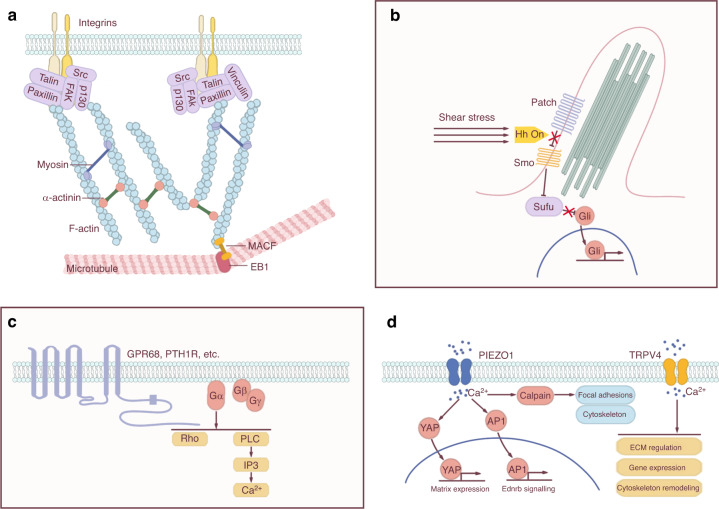
“During this process, MACF1 increases phosphorylated Src (p-Src) levels and promotes colocalization of EB1 with p-Src, resulting in EB1 phosphorylation at Y247; phosphorylated EB1 then moves along the microtubule bundle instead of being anchored at focal adhesion.(150) Previous studies have also shown that MACF1 signif…”
BackgroundOccupational Activities: Factors That Tip the Balance From Bone Accrual to Bone Loss
Barbe, M. F., & Popoff, S. N. (2020) · Exercise and Sport Sciences Reviews · doi:10.1249/jes.0000000000000217 · Cited by 13
Novel functions of the primary cilium in bone disease and cancer
Shi, W., Ma, Z., Zhang, G., Wang, C., & Jiao, Z. (2019) · Cytoskeleton · doi:10.1002/cm.21529 · Cited by 12 · cited 2×
“It grows from the mother centriole and projects from the cell surface in many vertebrate tissues, including the bone, nervous system, carcinoma, kidney, cartilage, and cardiovascular tissues.(79) Microtubules form the core of the cilium, also known as the axoneme.”
Background
Research works printed but not linked: 1
- Wolff, J. Das Gesetz der transformation der Knochen. A Hirshwald 1, 1–152 (1892).
Cited by
Ma, Q., Yang, H., Zhao, Y., Li, X., Ding, J., Qu, S., Liu, Q., Hu, Z., Li, R., Tao, Q., et al. (2025) · Advanced Science · doi:10.1002/advs.202405835 · Cited by 246
The RANK–RANKL–OPG System: A Multifaceted Regulator of Homeostasis, Immunity, and Cancer
León-Oliva, D. D., Barrena-Blázquez, S., Jiménez-Álvarez, L., Fraile‐Μartinez, O., Montero, C. G., López-González, L., Torres‐Carranza, D., García-Puente, L. M., Carranza, S. T., Álvarez-Mon, M. Á., et al. (2023) · Medicina · doi:10.3390/medicina59101752 · Cited by 192
“This helps maintain bone strength, repair microdamage, and regulate calcium levels in the body [27,28].”
BackgroundWang, T., Ouyang, H., Luo, Y., Xue, J., Wang, E., Zhang, L., Zhou, Z., Liu, Z., Li, X., Tan, S., et al. (2024) · Science Advances · doi:10.1126/sciadv.adi6799 · Cited by 161
“However, the BD area often lacks an endogenous electric field because it cannot sense mechanical stimuli, leading to disruption of the microenvironment ( 7 ).”
Self-citationFarjaminejad, S., Farjaminejad, R., Hasani, M., Garcia-Godoy, F., Abdouss, M., Marya, A., Harsoputranto, A., & Jamilian, A. (2024) · Polymers · doi:10.3390/polym16233303 · Cited by 158
Chmielewska, A., & Dean, D. (2023) · Acta Biomaterialia · doi:10.1016/j.actbio.2023.11.011 · Cited by 149
Metadata
- Authors
- Wang, L., You, X., Zhang, L., Zhang, C., & Zou, W.
- Affiliations
- Shanghai Jiao Tong University (CN)
- Chinese Academy of Sciences (CN)
- Corresponding author
- Zou, Weiguo
- Venue
- Bone Research
- Published
- 2022-02-18
- Volume
- 10
- Issue
- 1
- Pages
- 16-16
- ISSN
- 2095-4700 (ISSN-L)
- 2095-6231
- PMC
- PMC8857305
- OpenAlex
- W4212785156
- Cited by
- 641
- References
- 238
- Citations by year
- 2026: 187 · 2025: 204 · 2024: 137 · 2023: 82 · 2022: 30
- FWCI
- 11.78
- Type
- journal article
- Language
- en
- Open access
- gold
- doi.org
- Licence
- cc-by
- creativecommons.org/licenses/by/4.0 (tdm)
- creativecommons.org/licenses/by/4.0 (vor)
- Locations
- Bone Research (publishedVersion, cc-by)
- PubMed Central (publishedVersion, cc-by)
- PubMed (publishedVersion)
- DOAJ (DOAJ: Directory of Open Access Journals) (submittedVersion, cc-by-sa)
- Funders
- National Natural Science Foundation of China (81725010, 81991512, 82102554, XDB19000000, 81672119)
- Chinese Academy of Sciences (HYZHXM01025, XDB19000000)
- Topics
- Life Sciences › Biochemistry, Genetics and Molecular Biology › Molecular Biology › Bone Metabolism and Diseases
- Health Sciences › Medicine › Orthopedics and Sports Medicine › Bone health and osteoporosis research
- Life Sciences › Biochemistry, Genetics and Molecular Biology › Cell Biology › Cellular Mechanics and Interactions
- Keywords
- bone remodeling, mechanical regulation, mechanotransduction, bone homeostasis, osteoblasts, osteoclasts, bone formation, bone resorption, disuse osteoporosis, fracture risk, mechanosensitive cells, bone mechanical properties, skeletal adaptation
About these checks
Registry, retraction, Cites and statistics results are computed, not judged, with one exception: a printed reference that no index lists is read once by a model before it counts as a citation error. Claims are extracted by a model and kept only when their quote appears verbatim in the text; each cited source is then checked, with a model’s help, for whether it says what the claim relies on. Those verdicts can be wrong — read the claim’s quote and the cited source before relying on one.
Statistics and arithmetic are recomputed, not judged.
Confidence bands are shown only for fields calibrated on our annotated test set. None is calibrated yet, so no band is shown.
What counts as a claim ›How we measure confidence ›How we check this ›
Are you an author, or do you see a problem with this page? Request a review
Data sources
Bibliographic data: Semantic Scholar, OpenAlex, Crossref.
Contains information from the Semantic Scholar Academic Graph Datasets, made available under the ODC Attribution License (ODC-BY 1.0).
Semantic Scholar’s data is described in: Kinney, R., et al. (2023). The Semantic Scholar Open Data Platform. arXiv:2301.10140.
