

Hallmarks of peripheral nerve function in bone regeneration
Open accessThe DOI matches its Crossref record; 295 of the 295 references it cites were found in a registry or an index.
Abstract
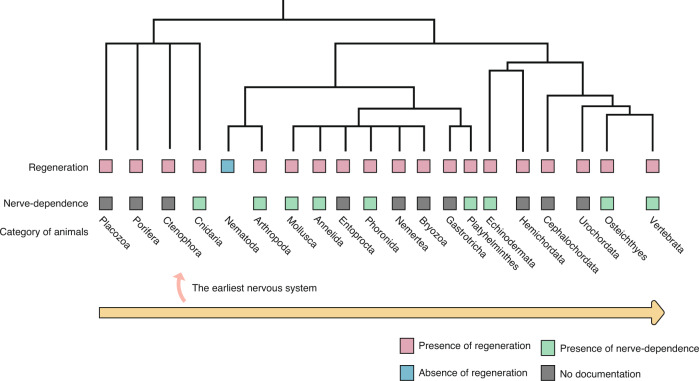
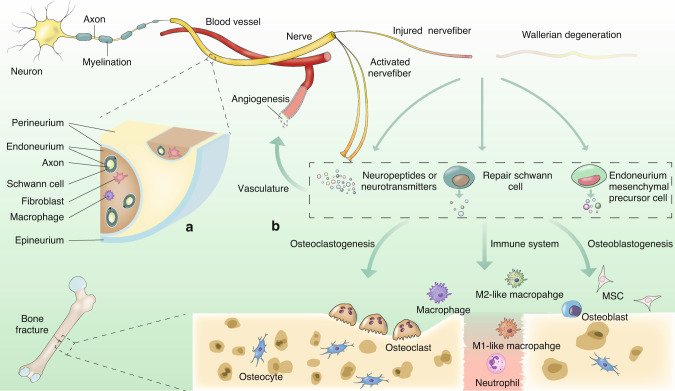
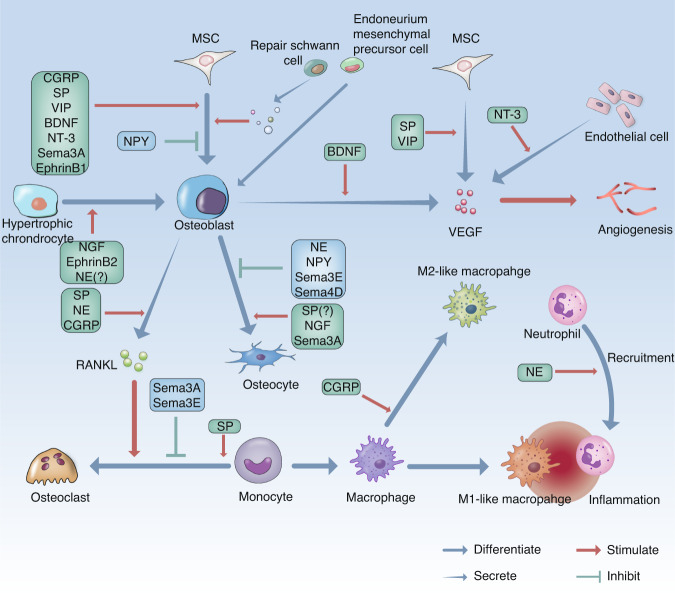
Skeletal tissue is highly innervated. Although different types of nerves have been recently identified in the bone, the crosstalk between bone and nerves remains unclear. In this review, we outline the role of the peripheral nervous system (PNS) in bone regeneration following injury. We first introduce the conserved role of nerves in tissue regeneration in species ranging from amphibians to mammals. We then present the distribution of the PNS in the skeletal system under physiological conditions, fractures, or regeneration. Furthermore, we summarize the ways in which the PNS communicates with bone-lineage cells, the vasculature, and immune cells in the bone microenvironment. Based on this comprehensive and timely review, we conclude that the PNS regulates bone regeneration through neuropeptides or neurotransmitters and cells in the peripheral nerves. An in-depth understanding of the roles of peripheral nerves in bone regeneration will inform the development of new strategies based on bone-nerve crosstalk in promoting bone repair and regeneration.
Overview
The claims and statistics of this paper haven’t been checked yet.
Free: it reads the open-access text and checks the first 5 claims that cite a source we can check. Create a free account to check every claim.
Integrity signals
Registry
Cites
Statistics
Figures
Verification
Claims the paper makes
The claims and statistics of this paper haven’t been checked yet.
Free: it reads the open-access text and checks the first 5 claims that cite a source we can check. Create a free account to check every claim.
Self-check
Percentages, sums and reported differences re-computed from the paper’s own numbers.
The self-check needs the paper’s full text.
Citations
Cites
Macrophage plasticity, polarization, and function in health and disease
Shapouri‐Moghaddam, A., Mohammadian, S., Vazini, H., Taghadosi, M., Esmaeili, S., Mardani, F., Seifi, B., Mohammadi, A., Afshari, J. T., & Sahebkar, A. (2018) · Journal of Cellular Physiology · doi:10.1002/jcp.26429 · Cited by 4,930 · cited 1×
“Macrophages are involved in all bone regenerative processes, but the underlying mechanisms that control the switch are still not clear, despite studies in this field.(271,272) The axon reflex may contribute to the neuroimmune interaction in which sensory nerves initiate the transmission of neural signals at the fractu…”
BackgroundImaging Neuronal Subsets in Transgenic Mice Expressing Multiple Spectral Variants of GFP
Feng, G., Mellor, R. H., Bernstein, M., Keller-Peck, C., Nguyen, Q. T., Wallace, M., Nerbonne, J. M., Lichtman, J. W., & Sanes, J. R. (2000) · Neuron · doi:10.1016/s0896-6273(00)00084-2 · Cited by 3,042
Basic and Therapeutic Aspects of Angiogenesis
Potente, M., Gerhardt, H., & Carmeliet, P. (2011) · Cell · doi:10.1016/j.cell.2011.08.039 · Cited by 2,771 · cited 1×
“NEUROVASCULAR INTERACTIONS IN BONE REGENERATION The vasculature develops prior to the nervous system during early embryonic development.(260) However, studies in developing limb skin during later embryonic stages show that the alignment of nerve and blood vessels occurs via mesenchymal intrinsic cues or by blood vesse…”
ResultNormal Bone Anatomy and Physiology
Clarke, B. (2008) · Clinical Journal of the American Society of Nephrology · doi:10.2215/cjn.04151206 · Cited by 2,192 · cited 1×
“The major nerves consist of mixed neural components innervating the periosteum in a meshwork pattern,(71) particularly the inner cambium layer, which possesses a high cell density consisting mainly of periosteum-derived MSCs, osteoclasts and osteoblasts.(90,91) Through nutrient canals, vertical Haversian canals, and t…”
BackgroundLeptin Inhibits Bone Formation through a Hypothalamic Relay
Ducy, P., Amling, M., Takeda, S., Priemel, M., Schilling, A. F., Beil, F. T., Shen, J., Vinson, C., Rueger, J. M., & Karsenty, G. (2000) · Cell · doi:10.1016/s0092-8674(00)81558-5 · Cited by 2,077
Neurotrophin regulation of neural circuit development and function
Park, H., & Poo, M.-M. (2013) · Nature Reviews Neuroscience · doi:10.1038/nrn3379 · Cited by 2,060 · cited 4×
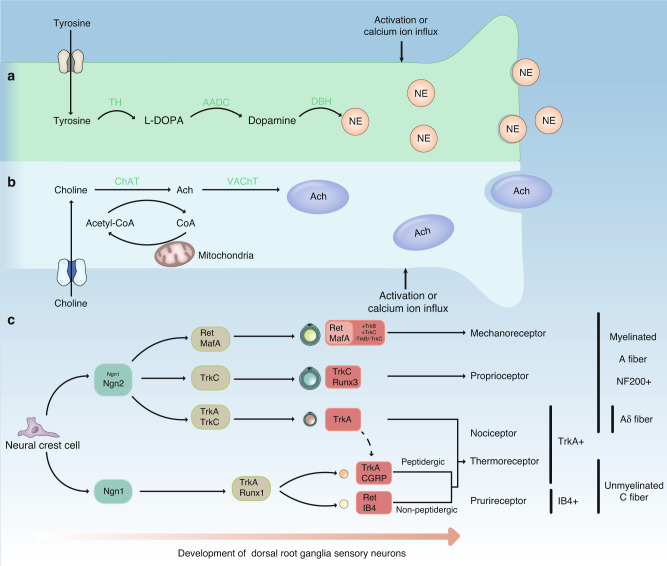
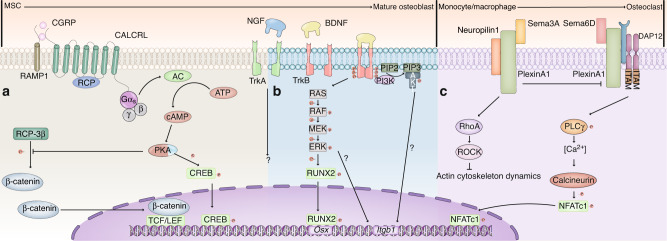
“These factors function mainly through TRK; NGF binds to TrkA, BDNF and NT-4/5 bind to TrkB, and NT-3 binds to TrkC.(201) Neurotrophins have been shown to be involved in bone regeneration through relevant receptors in recent years, especially NGF, BDNF, and NT-3.”
BackgroundInfluentialFracture healing: mechanisms and interventions
Einhorn, T. A., & Gerstenfeld, L. C. (2015) · Nature Reviews Rheumatology · doi:10.1038/nrrheum.2014.164 · Cited by 1,807
Leptin Regulates Bone Formation via the Sympathetic Nervous System
Takeda, S., Elefteriou, F., Levasseur, R., Liu, X., Zhao, L., Parker, K. L., Armstrong, D., Ducy, P., & Karsenty, G. (2002) · Cell · doi:10.1016/s0092-8674(02)01049-8 · Cited by 1,735 · cited 2×
“Further research showed that low sympathetic tone resulting from leptin deficiency increased bone mass by regulating the proliferation of osteoblasts and the expression of the osteoclast differentiation factor RANKL in osteoblasts.(144,173) Poor peripheral nerve function is also related to lower bone mineral density i…”
BackgroundAbraira, V. E., & Ginty, D. D. (2013) · Neuron · doi:10.1016/j.neuron.2013.07.051 · Cited by 1,648 · cited 1×
“Depending on their diameter and myelination, sensory nerves can also be classified into thin, nonmyelinated C fibers and myelinated A fibers.(57,58) It has been shown that pain after bone fracture is mainly detected by Aδ fibers and C fibers(59) because Aδ fibers and C fibers account for almost all sensory nerves that…”
BackgroundModulation of macrophage phenotype by cell shape
McWhorter, F. Y., Wang, T., Nguyen, P., Chung, T., & Liu, W. F. (2013) · Proceedings of the National Academy of Sciences · doi:10.1073/pnas.1308887110 · Cited by 1,482
Research works printed but not linked: 2
- Todd TJ On the process of reproduction of the members of the aquatic salamander Q. J. Sci. Lit. Arts 1823 16 84 96
- Huet M [Role of the nervous system during the regeneration of an arm in a starfish: Asterina gibbosa Penn. (Echinodermata, Asteriidae)] J. Embryol. Exp. Morphol. 1975 33 535 552 1176860
Cited by
Electrospinning and electrospun nanofibers: From academic research to industrial production
Wang, C., Wang, W., Qi, H., Dai, Y., Jiang, S., Ding, B., Wang, X., Li, C., Zeng, J., Wu, T., et al. (2025) · Progress in Materials Science · doi:10.1016/j.pmatsci.2025.101494 · Cited by 181
Self-citationNeuro–bone tissue engineering: emerging mechanisms, potential strategies, and current challenges
Sun, W., Ye, B., Chen, S., Zeng, L., Lu, H., Wan, Y., Gao, Q. H., Chen, K., Qu, Y., Wu, B., et al. (2023) · Bone Research · doi:10.1038/s41413-023-00302-8 · Cited by 149
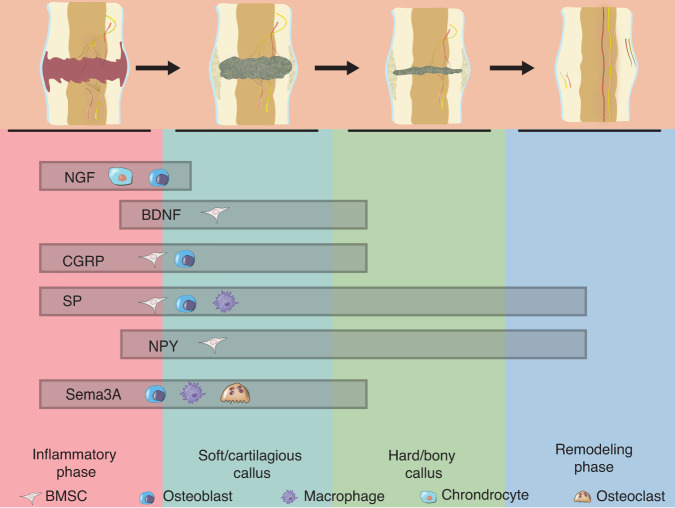
“10 The distribution of increased neuropeptides varies during the four classical phases of bone healing, namely, the in fl ammatory phase, callus formation, bone callus formation, and the remodeling phase 10,13,165 – 170 (Fig.”
BackgroundInfluentialBioactive elements manipulate bone regeneration.
Bai, L., Song, P., & Su, J. (2023) · PubMed Central · doi:10.12336/biomatertransl.2023.04.005 · Cited by 95
“42 Neuroregulation manoeuvres the balance of bone remodelling through diverse mechanisms, such as the activation of TrkA signalling pathway in osteoblastic cells, modulation of Wnt signalling pathway, and regulation of PGE2 production and secretion, thereby propelling the process of bone rebuilding.”
BackgroundMicroenvironment-responsive nanomedicines: a promising direction for tissue regeneration
Xiong, Y., Mi, B., Shahbazi, M., Xia, T., & Xiao, J. (2024) · Military Medical Research · doi:10.1186/s40779-024-00573-0 · Cited by 84
“Neurotransmitters such as acetylcholine, dopamine, and serotonin, while primarily linked to neuronal communication, also exert significant influence on the cellular and molecular mechanisms that underpin tissue repair and regeneration [107, 108].”
BackgroundSelf-citationPlant-Derived Exosome-Like Nanoparticles: Emerging Nanosystems for Enhanced Tissue Engineering
Feng, H., Yue, Y., Zhang, Y., Liang, J., Liu, L., Wang, Q., Feng, Q., & Zhao, H. (2024) · International Journal of Nanomedicine · doi:10.2147/ijn.s448905 · Cited by 79
Emerging roles of nerve‐bone axis in modulating skeletal system
Li, J., Zhang, Z., Tang, J., Hou, Z., Li, L., & Li, B. (2024) · Medicinal Research Reviews · doi:10.1002/med.22031 · Cited by 70
“15 Given the bone microenvironment, only limited bone cells directly contact nerve terminals.”
BackgroundBiomaterial design for regenerating aged bone: materiobiological advances and paradigmatic shifts
Dai, K., Geng, Z., Zhang, W., Xue, W., Wang, J., Nie, G., & Liu, C. (2024) · National Science Review · doi:10.1093/nsr/nwae076 · Cited by 67
“Innervation within the bone is crucial for the maintenance of a balanced differentiation function between osteogenesis and adipogenesis in bone marrow stromal cells (BMSCs), as well as for the energy metabolism equilibrium between bone and adipose tissue [74 ,75 ].”
BackgroundLi, S., Man, Z., Zuo, K., Zhang, L., Zhang, T., Xiao, G., Lu, Y., Li, W., & Li, N. (2025) · Bioactive Materials · doi:10.1016/j.bioactmat.2025.05.004 · Cited by 58
“Upon bone tissue injury, peripheral nerves are activated and initiate a cascade of events that contribute to both bone development and repair by releasing a myriad of signals, including neurotransmitters, neuropeptides, axon guidance factors, and neuro-trophins [373,374].”
Jiang, J., Wang, J., Fan, P., Zhao, Z., Deng, H., Li, J., Wang, Y., & Wang, Y. (2025) · Journal of Nanobiotechnology · doi:10.1186/s12951-025-03363-5 · Cited by 58
“This intricate regulatory network encompasses neuro-skeletal, neurovascular, and neuroimmune interactions at various stages of bone regeneration, involving specific nerve-associated cellular and molecular mechanisms that orchestrate osteogenesis and other essential bone formation processes [56].”
Chen, Y., Guo, B., Ma, G., & Cao, H. (2024) · Ageing Research Reviews · doi:10.1016/j.arr.2024.102372 · Cited by 53
An, Y., Zhang, H., Zhang, S., Zhang, Y., Zheng, L., Chen, X., Tong, W., Xu, J., & Qin, L. (2024) · Bioactive Materials · doi:10.1016/j.bioactmat.2024.12.020 · Cited by 48
“However, it seems alkaline pH alone has no direct effect on any ADRs and might indirectly suppress sympathetic transmitters, may because the different preferences for ADRs [83].”
Peripheral neuronal sensitization and neurovascular remodelling in osteoarthritis pain
Batchelor, V., Perry, T. A., Cader, M. Z., & Vincent, T. L. (2025) · Nature Reviews Rheumatology · doi:10.1038/s41584-025-01280-3 · Cited by 46
Wang, S., He, W., Wang, H., Liu, D., Wang, M., Yang, H., Pan, G., & Li, B. (2023) · Bioactive Materials · doi:10.1016/j.bioactmat.2023.07.018 · Cited by 43
Wang, Z., Tang, Y., Wang, P., Cheng, Z., Chen, F., Lu, Y., Wu, Y., Xie, Z., Wu, D., Cai, Z., et al. (2023) · Advanced Functional Materials · doi:10.1002/adfm.202307286 · Cited by 41
Zha, K., Hu, W., Xiong, Y., Zhang, S., Tan, M., Bu, P., Zhao, Y., Zhang, W., Lin, Z., Hu, Y., et al. (2024) · Advanced Science · doi:10.1002/advs.202406439 · Cited by 39
Self-citationHydrogel microspheres for bone regeneration through regulation of the regenerative microenvironment.
Zhang, P., Qin, Q., Cao, X., Xiang, H., Feng, D., Wusiman, D., & Li, Y. (2024) · PubMed Central · doi:10.12336/biomatertransl.2024.03.002 · Cited by 39
“34, 35 The exact mechanism needs to be further verified.”
Jiang, Q., Zhou, L., Yang, Y., Long, H., Ge, L., Li, D., Mu, C., Lai, W., Xu, Z., & Wang, Y. (2024) · Chemical Engineering Journal · doi:10.1016/j.cej.2024.154627 · Cited by 30
Effects of Innervation on Angiogenesis and Osteogenesis in Bone and Dental Tissue Engineering
Xiao, L., Zhu, M., Yu, K., Zhang, Q., Dai, Z., Weir, M. D., Zhao, Z., Bai, Y., Schneider, A., Oates, T. W., et al. (2024) · Tissue Engineering Part B Reviews · doi:10.1089/ten.teb.2023.0267 · Cited by 28
“60 SP deficiency increases age-related osteoclast formation and bone resorption.”
Gu, K., Tan, Y., Li, S., Chen, S., Lin, K., Tang, Y., & Zhu, M. (2024) · Advanced Science · doi:10.1002/advs.202400242 · Cited by 26
Liang, T., Jin, Z., Lin, Y., Chen, Z., Li, Y., Xu, J., Yang, F., & Qin, L. (2025) · Military Medical Research · doi:10.1186/s40779-025-00600-8 · Cited by 24
“…contributed to the mechanism underlying the division of sensory nerves from the DRG. Generally, DRG sensory neurons could be classified into the following characteristic subtypes: C-low threshold mechanoreceptors, Aβ-nociceptor, Aδ-nociceptors, cold nociceptors, and proprioceptors [64, 65].”
Cai, X., Yu, M., Li, B., Zhang, Y., & Han, Y. N. (2024) · Bioactive Materials · doi:10.1016/j.bioactmat.2024.08.005 · Cited by 23
“Regarding osteogenesis, besides Co 2 + [41] and M Φ s-secreted cytokines PGE 2 , NGF, VEGF-A and BMP2 [1,4,6,22,25], sensory nerve-secreted CGRP, SP and NGF [2,4,6] as well as sympathetic nerve-secreted VIP [2] were also reported to play important promoting roles.”
BackgroundInfluentialNeuronal regulation of bone and tendon injury repair: a focused review
Xu, M., Zhu, M., Qin, Q., Xing, X., Archer, M., Ramesh, S., Cherief, M., Li, Z., Lévi, B., Clemens, T. L., et al. (2024) · Journal of Bone and Mineral Research · doi:10.1093/jbmr/zjae087 · Cited by 24
Bone Marrow: The Central Immune System
Schirrmacher, V. (2023) · Immuno · doi:10.3390/immuno3030019 · Cited by 22
“It was concluded that the PNS regulates bone regeneration through neuropeptides or neurotransmitters and cells in the peripheral nerves [118].”
BackgroundInfluentialEngineering Innervated Musculoskeletal Tissues for Regenerative Orthopedics and Disease Modeling
Zhou, Z., Liu, J., Xiong, T., Liu, Y., Tuan, R. S., & Li, Z. A. (2024) · Small · doi:10.1002/smll.202310614 · Cited by 22
Biomineralization empowers bone organoids
Zhu, M., Fan, Z., Chen, M., Xu, K., Jiang, Y., & Su, J. (2025) · Biomaterials · doi:10.1016/j.biomaterials.2025.123703 · Cited by 22
The roles of the nerve-immune axis in modulating bone regeneration
Zhao, Y., Xu, K., Wu, K., Guo, Z., Li, H., Lin, N., Ye, Z., Huang, X., Xu, J., & Huang, D. (2026) · Bone Research · doi:10.1038/s41413-025-00476-3 · Cited by 23
“14 When peripheral nerves at the fracture site are injured, retrograde injury signals are transmitted along the axons to the cell bodies, initiating nerve regeneration.”
InfluentialGeometric Angles and Gene Expression in Cells for Structural Bone Regeneration
Wang, J., Yang, Q., Saiding, Q., Chen, L., Liu, M., Wang, Z., Xiang, L., Deng, L., Chen, Y., & Cui, W. (2023) · Advanced Science · doi:10.1002/advs.202304111 · Cited by 21
Selective promotion of sensory innervation–mediated immunoregulation for tissue repair
Xu, K., Wu, K.-L., Chen, L., Zhao, Y., Li, H., Lin, N., Ye, Z., Xu, J., Huang, D., & Huang, X. (2025) · Science Advances · doi:10.1126/sciadv.ads9581 · Cited by 21
“Besides, β - NGF is present at the earliest stage of bone injury, unlike other factors such as BDNF, which appear later ( 2 ).”
Moon, H., Aymon, B. F. G., Deng, J., Zhou, T., Prevosto, V., Wang, F., Wu, J., & Zhao, X. (2025) · Science Advances · doi:10.1126/sciadv.adz3668 · Cited by 22
“Peripheral nerve pathways, comprising the autonomic, somatic, and enteric nervous systems, are intimately connected to the central nervous sys-tem and extend throughout the body ( 4 , 5 ).”
Gut microbiota and bone aging: Focusing on the gut-X axis modes
Zhang, Y.-W., Li, R.-Y., Wu, Y., Wang, P., Zhou, Q., & Su, J. (2026) · Journal of Orthopaedic Translation · doi:10.1016/j.jot.2026.101064 · Cited by 20
“…hand, bone is also an active tissue that is constantly remodeled, and neuro-related molecules play a nutritional role in normal bone metabolism, among which potential neuropeptides include glutamate, calcitonin gene-related proteins, substance P, vasoactive intestinal peptides, and so on [120].”
Wu, Z., Zhu, J., Wen, Y., Lei, P., Xie, J., Shi, H., Wu, R., Lou, X., & Hu, Y. (2023) · The FASEB Journal · doi:10.1096/fj.202300488r · Cited by 20
Self-citationNeuro-Immuno-Endocrine Regulation of Bone Homeostasis
Banoriya, G. K., Singh, V. K., Maurya, R., & Kharwar, R. K. (2025) · Discovery Medicine · doi:10.24976/discov.med.202537194.39 · Cited by 19
Zhang, Q., Gao, S., Li, B., Li, Q., Li, X., Cheng, J., Peng, Z., Liang, J., Zhang, K., Hai, J., et al. (2024) · ACS Applied Materials & Interfaces · doi:10.1021/acsami.4c01520 · Cited by 18
“5 However, current materials for bone tissue regeneration exhibit only one-sided functionality, resulting in a gap in nerve-induced osteogenesis.”
BackgroundLi, Z., Li, Z., Wang, J., Liao, L., Li, X., Zhang, Z., Yang, X. M., Yu, X., Fan, B., Li, B., et al. (2024) · ACS Omega · doi:10.1021/acsomega.4c04898 · Cited by 17
Zhang, Y., Liu, F., Yang, M., He, X., Wu, B. M., Li, J. J., Tao, H., Chen, Y., Chen, J., Guan, Q., et al. (2025) · Advanced Materials · doi:10.1002/adma.202502741 · Cited by 16
Sensory nerves drive migration of dental pulp stem cells via the CGRP-Ramp1 axis in pulp repair
Wang, C., Liu, X., Zhou, J., Zhang, X., Zhou, Z., & Zhang, Q. (2024) · Cellular and Molecular Life Sciences · doi:10.1007/s00018-024-05400-2 · Cited by 15
Onoki, T., Kanczler, J. M., Rawlings, A., Smith, M. W., Kim, Y., Hashimoto, K., Aizawa, T., & Oreffo, R. O. C. (2024) · The FASEB Journal · doi:10.1096/fj.202400602r · Cited by 15
“71 It is well documented that peripheral nerves, neuropeptides, and their receptors including calcitonin gene-related peptide, substance P, norepinephrine, and brain-derived neurotrophic factor play a central role in bone repair following fracture.”
Enhancer-driven Shh signaling promotes glia-to-mesenchyme transition during bone repair
Shen, X., Zhang, H., Song, Z., Dong, Y., Ge, X., Jin, S., Guo, S., Zhang, P., Fu, Y., Zhu, Y., et al. (2025) · Bone Research · doi:10.1038/s41413-024-00396-8 · Cited by 15
Nanoparticle‐Mediated Gene Delivery for Bone Tissue Engineering
Li, G., Wu, J., Cheng, X., Pei, X., Wang, J., & Xie, W. (2024) · Small · doi:10.1002/smll.202408350 · Cited by 15
Self-citationWu, Z., Wang, X., Shi, J., Gupta, A., Zhang, Y., Zhang, B., Cao, Y., & Wang, L. (2023) · Stem Cells International · doi:10.1155/2023/1154808 · Cited by 14
Liu, Y., Li, L., Zhan, X., Hong, S., Chang, S., Huang, G., Pan, S.-T., Liu, Y., Li, L., Zhan, X., et al. (2025) · Biomaterials Advances · doi:10.1016/j.bioadv.2025.214497 · Cited by 13
Hydrogel‐Based Systems in Neuro‐Vascularized Bone Regeneration: A Promising Therapeutic Strategy
Li, X., Cui, Y., He, X., & Mao, L. (2024) · Macromolecular Bioscience · doi:10.1002/mabi.202300484 · Cited by 12
Bone-nerve crosstalk: a new state for neuralizing bone tissue engineering—A mini review
Damiati, L. A., & Soury, M. E. (2024) · Frontiers in Medicine · doi:10.3389/fmed.2024.1386683 · Cited by 12
“These molecules act as guidance for growing nerves directing them toward the regenerating bone tissue (10, 29).”
Malange, K. F., de Souza, D. M., Lemes, J. B. P., Fagundes, C. C., Oliveira, A. L. L., Pagliusi, M., Carvalho, N. S., Nishijima, C. M., da Silva, C. R. R., Consonni, S. R., et al. (2024) · Inflammation · doi:10.1007/s10753-024-02072-9 · Cited by 12
Zhao, R., Shen, Y., Deng, X., Tang, Y., Ge, Z., Wang, D., Xiong, Z., Fang, Q., Zhang, Z., Li, X., et al. (2023) · Composites Part B Engineering · doi:10.1016/j.compositesb.2023.110909 · Cited by 12
Cherief, M., Gomez-Salazar, M. A., Kang, M., Lee, S., Ramesh, S., Qin, Q., Xu, M., Kim, S., Archer, M., Zhu, M., et al. (2025) · Bone Research · doi:10.1038/s41413-025-00436-x · Cited by 11
A bone to pick-cellular and molecular mechanisms of bone pain in sickle cell disease
Gollamudi, J., Karkoska, K. A., Gbotosho, O. T., Zou, W., Hyacinth, H. I., & Teitelbaum, S. L. (2024) · Frontiers in Pain Research · doi:10.3389/fpain.2023.1302014 · Cited by 11
Sheng, N., Yang, R., Wang, J., Wu, W., Zhe, M., Zhang, Q., Nie, R., Chen, L., Xing, F., & Sun, L. J. (2025) · Materials Today Bio · doi:10.1016/j.mtbio.2025.102541 · Cited by 11
Lin, Y., Xie, Y., He, Y., Zhang, M., Li, J., & He, J. (2026) · International Journal of Nanomedicine · doi:10.2147/ijn.s568671 · Cited by 11
“111 Notably, a disruption of the inferior alveolar nerve (IAN) may lead to a reduction in the number of Schwann cells (SCs), which in turn results in inadequate bone healing due to functional deficits in skeletal stem cells.”
Huang, J., Tang, Y., Wang, P., Liang, Z. Q., Ren, H., Cheng, Z., Huang, H., Wang, Z., Wu, Y., Xie, Z., et al. (2024) · Chemical Engineering Journal · doi:10.1016/j.cej.2024.152073 · Cited by 10
Liu, C.-R., Yang, C.-Y., Sharma, D., Chen, T.-H., Huang, X.-Q., Hung, T.-M., Kuo, T. B. J., & Jou, J. (2024) · Clocks & Sleep · doi:10.3390/clockssleep6040035 · Cited by 10
“Acetylcholine neurotransmitter levels are positively correlated with PSNS activity, suggesting that reduced night-time PSNS activity serves as a key indicator of decreased dementia severity [6,14,31,32].”
BackgroundPeripheral sensory nerve regeneration: Novel target in bone tissue engineering
Xiao, L., Liu, J., Yan, F., & Xiao, Y. (2024) · Brain‐X · doi:10.1002/brx2.71 · Cited by 9
Cortical perforation promotes bone regeneration by enhancing nerve growth factor secretion
Jiao, Y., Liu, Y., Li, X., Han, N., Liu, S., Du, J., Xu, J., Li, S., Guo, L., & Liu, Y. (2025) · Biochemical and Biophysical Research Communications · doi:10.1016/j.bbrc.2025.151562 · Cited by 9
Zhao, L., Xu, Z., Zhao, P., Pang, Z., You, Y., Wu, C., Zhu, D., Su, M., Zhang, N., Luo, J., et al. (2025) · Cell Death Discovery · doi:10.1038/s41420-025-02886-y · Cited by 9
Singh, U. K., Nahak, B. K., Chowdhury, J. R., Sharma, M. K., Parashar, P., & Lin, Z. (2026) · Advanced Healthcare Materials · doi:10.1002/adhm.202505154 · Cited by 9
Du, Q., Wang, Q., Wang, Y., Zhao, C., & Pan, J. (2024) · Journal of Dental Sciences · doi:10.1016/j.jds.2024.04.016 · Cited by 9
“48 Further in vitro and in vivo experiments would be a potential direction for future research.”
Hu, H., Liu, J., Liu, W., Chen, Y., Dai, Z., Hu, Y., & Liu, Z. (2025) · Chemical Engineering Journal · doi:10.1016/j.cej.2025.163510 · Cited by 8
Self-citationGreen Light Photobiomodulation: A Systematic Review of New Approaches for Treating Bone Repair
Bao, W., Zhuang, J., Liu, F., Hu, J., Chen, X., & Jiang, Y. (2025) · Photobiomodulation, Photomedicine, and Laser Surgery · doi:10.1177/25785478251381479 · Cited by 4
“1,2 Its safety and penetration depth are superior to those of blue light; further, blue light, with a wavelength close to that of ultraviolet light, is prone to generating excessive reactive oxygen species (ROS) in target tissue.”
El‐Ghannam, A., Sultana, F., Dréau, D., Tiwari, A. P., Yang, I. H., Alfotawi, R. A., & Knabe, C. (2024) · Journal of Biomedical Materials Research Part A · doi:10.1002/jbm.a.37801 · Cited by 8
Zhu, M., Yea, J.-H., Li, Z., Qin, Q., Xu, M., Xing, X., Negri, S., Archer, M., Mittal, M., Lévi, B., et al. (2024) · Bone Research · doi:10.1038/s41413-024-00358-0 · Cited by 8
“Clinical observations have shown that nerve dysfunction can delay skeletal repair, 8 indicating a direct regulatory role of nerve signaling in bone repair.”
BackgroundSchirrmacher, V. (2025) · International Journal of Molecular Sciences · doi:10.3390/ijms26146552 · Cited by 9
“The ways in which the PNS communicates with bone-lineage cells, the vasculature, and immune cells in the bone microenvironment have been described [67].”
Ren, Z., Wu, Z., Wu, A., Zhang, H., Lu, J., Zhang, J., Weng, J., Zhang, J., Song, C., Tan, H., et al. (2025) · Advanced Science · doi:10.1002/advs.202518807 · Cited by 7
Zhu, Z., Ma, S., Ma, J., Li, J., Li, W., Wang, J., Zheng, D., Yu, X., Peng, F., & Zhong, H. (2026) · Biomaterials · doi:10.1016/j.biomaterials.2026.124122 · Cited by 7
Jóhannesdóttir, F., Tedtsen, T., Cooke, L. M., Mahar, S., Zhang, M., Nustad, J., Garrahan, M., Gehman, S., Yu, E. W.-Y., & Bouxsein, M. (2024) · Journal of Bone and Mineral Research · doi:10.1093/jbmr/zjae134 · Cited by 7
Wang, S., Chen, K., Zhang, Q., Ma, J., Zhu, L., Sun, Y., Liu, X., Wang, B., Xu, Z., You, X., et al. (2024) · Materials Science and Engineering R Reports · doi:10.1016/j.mser.2024.100884 · Cited by 7
Shi, J., Zhang, Y., Zhang, B., Wu, Z., Gupta, A., Wang, J., Sun, Q., Li, S., Dong, M., & Wang, L. (2024) · Plastic & Reconstructive Surgery · doi:10.1097/prs.0000000000011416 · Cited by 6
“25–28 The ilioinguinal nerve (IIN) governs the sensation of the iliac crest and also supplies the attached bone.”
Wang, X., Ma, C., Zhang, X., Yuan, P., Wang, Y., Fu, M., Zhang, Z., Shi, R.-Y., Wei, N., Wang, J., et al. (2024) · Regenerative Biomaterials · doi:10.1093/rb/rbae059 · Cited by 6
“Conversely, regions experiencing hypoxic conditions undergo endochondral ossification [61].”
BackgroundBionic repair strategy for craniomaxillofacial bone tissue reconstruction
Zhou, Y., You, D., Xu, M., Shao, Y., Hu, X., Xie, Y., Ma, H., Lan, R., Shen, Y., Mao, Y., et al. (2025) · Translational dental research. · doi:10.1016/j.tdr.2025.100037 · Cited by 6
Bakir, M. A., Dabaliz, A., Raddaoui, M., Fatash, H., Elsaadany, N., Al-Kattan, W., & Mohammad, K. S. (2026) · Biology · doi:10.3390/biology15040364 · Cited by 6
“…through stimulating the synthesis of receptor activator of nuclear factor κ B ligand (RANKL) [7] but also as an inducer of angiogenesis through promoting the synthesis of vascular endothelial growth factor (VEGF) [8], as well as an interferer in the antitumor immune responses within the bone [8].”
Regenerative Potential of Neural Stem/Progenitor Cells for Bone Repair
Muangsanit, P., Yuddnaraveesak, P., & Singhatanadgit, W. (2025) · Tissue Engineering Part B Reviews · doi:10.1089/ten.teb.2024.0188 · Cited by 6
“18 In injured bone tissue, there is an increased expression of CGRP, which arises from alternative splicing of the CALC gene.”
Gao, Y., Zheng, Z., Sun, Q., Zhou, H., Lv, J., Luo, E., Xu, J., & Wei, Q. (2024) · Polymer · doi:10.1016/j.polymer.2024.127091 · Cited by 7
Guo, Y., Liu, H., Hu, H., Zhao, W., Wang, L., & Bao, C. (2025) · Advanced Functional Materials · doi:10.1002/adfm.202513990 · Cited by 5
Recent advances in nanomedicine strategies for nervous system injuries biomolecular regeneration
Ye, Q., Zhang, J., Wang, X., Li, T., Xu, J. L., Ye, X., & Cai, Y. C. (2025) · Materials & Design · doi:10.1016/j.matdes.2025.115333 · Cited by 6
Tang, M., Zhang, L., Hieawy, A., Liang, S., Liu, H., & Shen, Y. (2026) · Materials & Design · doi:10.1016/j.matdes.2026.116416 · Cited by 5
Wei, X., Li, M., You, J., Luo, J., Zhai, J., Zhang, J., Feng, J., Wang, H., & Zhou, Y. (2025) · International Journal of Nanomedicine · doi:10.2147/ijn.s505677 · Cited by 5
NGF/BDNF–Trk/p75NTR signaling in osteosarcoma immunity: biomarkers and therapeutic opportunities
An, L. K., Zhuang, Y., & Sun, H. (2025) · Frontiers in Immunology · doi:10.3389/fimmu.2025.1719012 · Cited by 4
“T − cell sources of NGF have been described, indicating that adaptive lymphocytes can both sense and supply neurotrophin signals that in fl uence retention and function within the tumor bed (42 – 44).”
Agier, P., Tyszkiewicz, S., & Kozakiewicz, M. (2025) · Dentistry Journal · doi:10.3390/dj13120562 · Cited by 4
“…several essential requirements: restoration of bone continuity and stability [1], preservation of proper joint [2], muscle [3–6], and nerve function [7], achievement of satisfactory esthetic outcomes with minimal or no scarring [8], and establishment of conditions that promote complete healing [9].”
Wang, X., Wang, C., Xu, Y., Liu, H., Jiang, J., Li, Y., Sun, C., Liu, Z., Dong, Q., Shao, Y., et al. (2026) · Advanced Functional Materials · doi:10.1002/adfm.202521167 · Cited by 4
Chen, Y., Liu, X., Chen, X., Du, H., & Zhou, Z. (2026) · Theranostics · doi:10.7150/thno.129987 · Cited by 4
“Then, the new bone formation is initiated by the formation of the soft callus, and subsequently through neovascularization, and osteogenesis of bone marrow mesenchymal stem cells (BMSCs) [7].”
Developments of Thermosensitive Hydrogel for Maxillofacial Bone Regeneration
Zhang, Q., Wu, Y., Dai, J., Jia, Z., Zhu, M., Li, X., Xiao, L., Li, J., Dai, Z., Bai, Y., et al. (2025) · Small Science · doi:10.1002/smsc.202500225 · Cited by 4
An antibacterial dual-network polyelectrolyte coating for orthopedic implant
Wang, F., Jiang, C., Wang, T.-J., Pan, X., Che, B., Zhang, D., Zhang, K.-L., Zhou, P., & Ren, K. (2025) · Colloids and Surfaces B Biointerfaces · doi:10.1016/j.colsurfb.2025.115083 · Cited by 4
Neural Orchestration of Mandibular Development
Zhang, M., Wei, X., Qi, H., Wang, B., Hu, M., & Ma, J. (2025) · International Dental Journal · doi:10.1016/j.identj.2025.109317 · Cited by 3
“62,122 The mandible and its masticatory muscles are predominantly innervated by the mandibular division (V3) of the tri-geminal nerve, which provides both sensory and somatic branches.”
Immune-neural regulatory mechanism of osteoporosis induced by androgen deficiency
Zhou, J., Li, W., Yang, H., & Ma, N. (2026) · PeerJ · doi:10.7717/peerj.20737 · Cited by 3
“…pathways, notably the Wnt/ β -catenin and NF-kappaB pathways, which synergistically regulate osteoblast differentiation, osteoclast activity, and angiogenesis, thereby facilitating the establishment and repair of the bone regeneration microenvironment ( Minoia et al., 2022 ; Tao et al., 2023 ).”
Advances in biomimetic mineralized biomaterials for bone tissue engineering
Li, Z. X., Sun, W., Huang, S., Zhao, Y., Wu, X., Huang, C., & Yang, H. (2026) · Regenerative Biomaterials · doi:10.1093/rb/rbag093 · Cited by 3
“Numerous experimental studies have demonstrated that the presence of peripheral nerve fibers is critical for effective bone regeneration [248–250], with various neuropeptides and neural cells actively involved in this process [251].”
Ding, Y., Li, G., Zhang, P., & Zhang, W. (2023) · Frontiers in Neurology · doi:10.3389/fneur.2023.1160382 · Cited by 3
“Finally, in recent years, crosstalk between the nerve system and bone has drawn the attention of researchers from different specialties (4, 5).”
BackgroundSelf-citationItting, P. T., Kruppke, B., Hanke, T., Vijayan, V., Heiß, C., & Lips, K. S. (2025) · Frontiers in Bioengineering and Biotechnology · doi:10.3389/fbioe.2025.1596846 · Cited by 2
LncRNA LINC01123-mediated impaired fracture healing through miR-134-5p/XIAP axis
Zhou, S., Zheng, Z., Zhang, C., Liang, H., Chen, Q., Sun, K., & Cai, M. (2025) · Journal of Orthopaedic Surgery and Research · doi:10.1186/s13018-025-06167-3 · Cited by 2
“Fractures signify a structural disruption in bone tissue, typically resulting from mechanical trauma or pathological weakening, and represent one of the most common musculoskeletal injuries [1].”
Yin, S., Li, J., Ren, Y., Yang, H., Li, Y., & Zhang, H. (2026) · Frontiers in Cell and Developmental Biology · doi:10.3389/fcell.2026.1794273 · Cited by 2
“…survival by disrupting the cell wall and membrane, damaging genetic material, and inhibiting energy metabolism (e.g., the TCA cycle and ATP production), thereby reducing bacterial viability and persistence. sensory and sympathetic nerves) coexist and are widely distributed (Tao et al., 2023).”
Denervation induces rapid bone degeneration concurrent to neurovascular and mechanical changes
Pan, K., Cheng, X., Wu, Y., Orozco, E., Shin, S. H., Du, J., Ma, Y., Jerban, S., Hughes‐Austin, J. M., Bukata, S. V., et al. (2026) · Bone · doi:10.1016/j.bone.2026.117863 · Cited by 2
Is osteoporosis a driver or a passenger? Rethinking its role in age-related multimorbidity
Hu, C., Yin, H., Hu, X.-Y., Wang, Z., Xiao, X.-H., & Xie, H. (2026) · Advanced Orthopaedics · doi:10.1016/j.advop.2026.04.001 · Cited by 3
Cao, J., Yang, N., Gong, F., Wang, X., Qiao, X., Pan, X., Du, Q., Cai, Y., Wu, J., Huang, Y., et al. (2026) · Nature Communications · doi:10.1038/s41467-026-73543-w · Cited by 2
Srivastava, E., Qayoom, I., & Kumar, A. (2024) · ACS Applied Materials & Interfaces · doi:10.1021/acsami.4c10206 · Cited by 2
Innervating 3D in vitro models: bioengineering and design blueprints
de Carvalho, M.-T., Henriques‐Pereira, M., Monteiro, M. V., Lamghari, M., Mano, J. F., & Gaspar, V. M. (2025) · Trends in biotechnology · doi:10.1016/j.tibtech.2025.05.012 · Cited by 2
Fernandes, C. J. D. C. (2024) · Extracellular Vesicle · doi:10.1016/j.vesic.2024.100042 · Cited by 2
Gan, D., Qin, L., & Xiao, G. (2026) · Research · doi:10.34133/research.1319 · Cited by 1
“Direct nerve–bone contacts further supply neurotrophins, such as nerve growth factor (NGF) and brain-derived neurotrophic factor, which regulate local neuronal survival and actively participate in stem cell differentiation and bone regeneration [ 42 , 43 ].”
Liu, Z., Ding, Z., Wang, S., Chen, J., & Yu, L. (2026) · Advanced Optical Materials · doi:10.1002/adom.202503041 · Cited by 1
“Repair, regeneration, and functional restoration of human tissues have long been central goals in both basic biomedical research and clinical practice [ 1, 2 ].”
Zhan, N., Tian, L., Peng, L., Zhang, J., Lin, L., Zhang, X., Luo, Y., Liu, Z., Yao, X., Sun, M., et al. (2026) · Advanced Science · doi:10.1002/advs.77351 · Cited by 1
Fracture healing: from molecular and cellular mechanisms to therapeutic strategies
Staubli, F., ten Ham, R. M. T., Bergsma, J. E., Gawlitta, D., & Man, K. (2026) · Signal Transduction and Targeted Therapy · doi:10.1038/s41392-026-02967-z · Cited by 2
“38 miRNAs provide an additional post-transcriptional mechanism controlling chondrogenic and osteogenic differentiation programs.”
Molnár, I. (2023) · International Journal of Biomedical Research & Practice · doi:10.33425/2769-6294.1022
Qiu, R., Lan, Y., Liu, G., & Zeng, R. (2024) · Videosurgery and Other Miniinvasive Techniques · doi:10.20452/wiitm.2024.17886
“20 PENGB has a stronger inhibitory effect on the pain nerve directly related to the hip joint, 21 and pain trans‑ mitters increase postoperatively due to inflamma‑ tion.”
Self-citation
Metadata
- Authors
- Tao, R., Mi, B., Hu, Y., Lin, S., Xiong, Y., Lu, X., Panayi, A. C., Li, G., & Liu, G.
- Affiliations
- Wuhan Union Hospital (CN)
- Chinese University of Hong Kong (HK)
- Brigham and Women's Hospital (US)
- Corresponding author
- Li, Gang
- Liu, Guohui
- ORCID
- Venue
- Bone Research
- Published
- 2023-01-05
- Volume
- 11
- Issue
- 1
- Pages
- 6-6
- ISSN
- 2095-4700 (ISSN-L)
- 2095-6231
- PMC
- PMC9813170
- OpenAlex
- W4313544514
- Semantic Scholar
- 6fc879fd4852c7a49425cdfbd19102fee5599e99
- Cited by
- 110
- References
- 292
- Citations by year
- 2026: 30 · 2025: 31 · 2024: 38 · 2023: 11
- FWCI
- 4.23
- Type
- journal article
- Language
- en
- Open access
- gold
- doi.org
- Licence
- cc-by
- creativecommons.org/licenses/by/4.0 (tdm)
- creativecommons.org/licenses/by/4.0 (vor)
- Locations
- Bone Research (publishedVersion, cc-by)
- PubMed Central (publishedVersion, cc-by)
- PubMed (publishedVersion)
- DOAJ (DOAJ: Directory of Open Access Journals) (submittedVersion, cc-by-sa)
- Funders
- National Natural Science Foundation of China (2018YFC2001502, 82002313, 82002313 and 82072444, 82072444, 2019xhyn021, T13-402/17-N, No. 82002313, No. 82072444, 2018YFB1105705, 2020BCB004)
- University Grants Committee (C7030-18G, AoE/M‐402/20, 14121721, 14108720, T13-402/17 N)
- Research Grants Council, University Grants Committee (C7030-18G, T13-402/17-N and AoE/M-402/20, 14108720, 14120118)
- Wuhan Union Hospital (82002313, 82072444, 2019xhyn021, 2018YFC2001502, 2018YFB1105705, 2020BCB004)
- Topics
- Life Sciences › Neuroscience › Cellular and Molecular Neuroscience › Nerve injury and regeneration
- Life Sciences › Biochemistry, Genetics and Molecular Biology › Molecular Biology › Bone Metabolism and Diseases
- Health Sciences › Medicine › Orthopedics and Sports Medicine › Bone fractures and treatments
- Keywords
- peripheral nervous system, bone regeneration, fracture healing, neuropeptides, neurotransmitters, bone microenvironment, bone vascularity, immune cells
About these checks
Registry, retraction, Cites and statistics results are computed, not judged, with one exception: a printed reference that no index lists is read once by a model before it counts as a citation error. Claims are extracted by a model and kept only when their quote appears verbatim in the text; each cited source is then checked, with a model’s help, for whether it says what the claim relies on. Those verdicts can be wrong — read the claim’s quote and the cited source before relying on one.
Statistics and arithmetic are recomputed, not judged.
Confidence bands are shown only for fields calibrated on our annotated test set. None is calibrated yet, so no band is shown.
What counts as a claim ›How we measure confidence ›How we check this ›
Are you an author, or do you see a problem with this page? Request a review
Data sources
Bibliographic data: Semantic Scholar, OpenAlex, Crossref.
Contains information from the Semantic Scholar Academic Graph Datasets, made available under the ODC Attribution License (ODC-BY 1.0).
Semantic Scholar’s data is described in: Kinney, R., et al. (2023). The Semantic Scholar Open Data Platform. arXiv:2301.10140.
