

A mutation in the ZNF687 gene that is responsible for the severe form of Paget's disease of bone causes severely altered bone remodeling and promotes hepatocellular carcinoma onset in a knock-in mouse model
Open accessPublished version of a preprint
The DOI matches its Crossref record; 52 of the 54 references it cites were found in a registry or an index.
Abstract
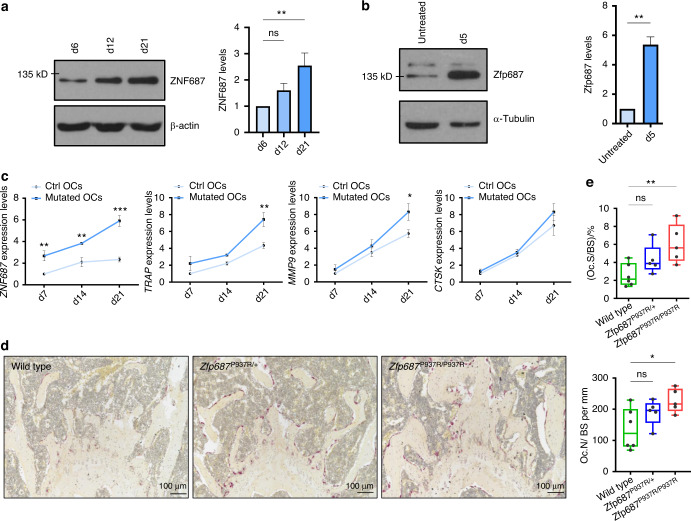
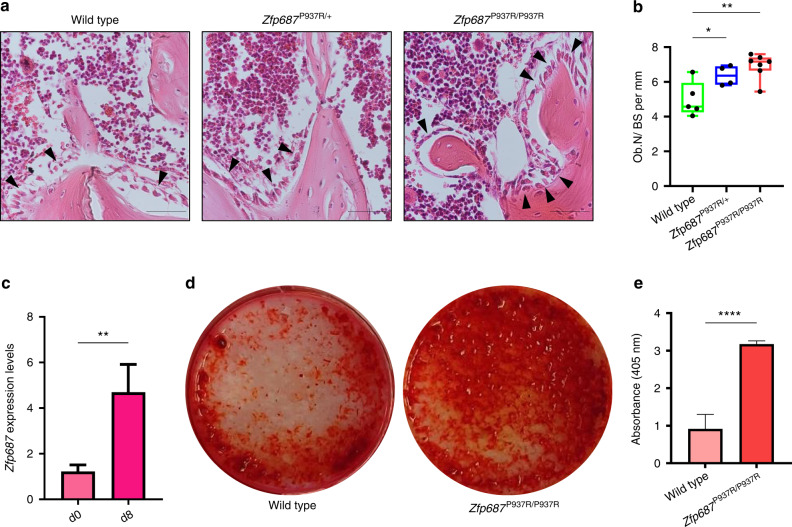
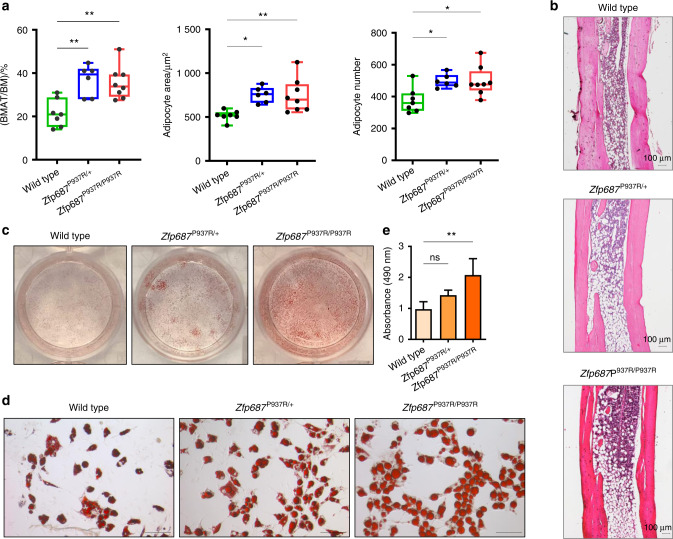
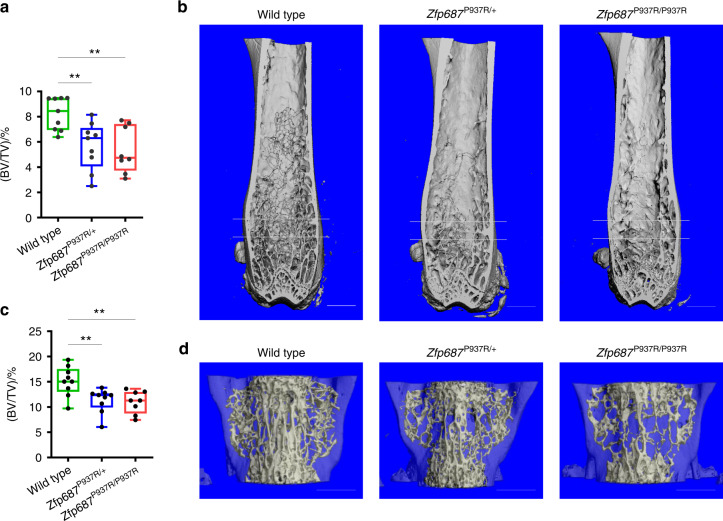
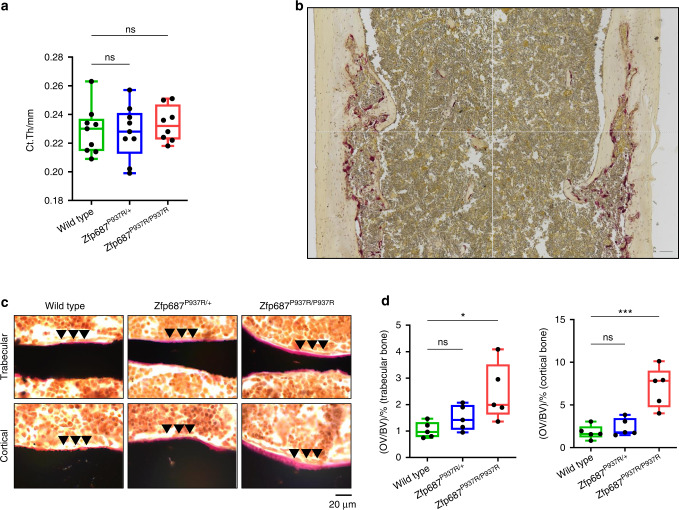
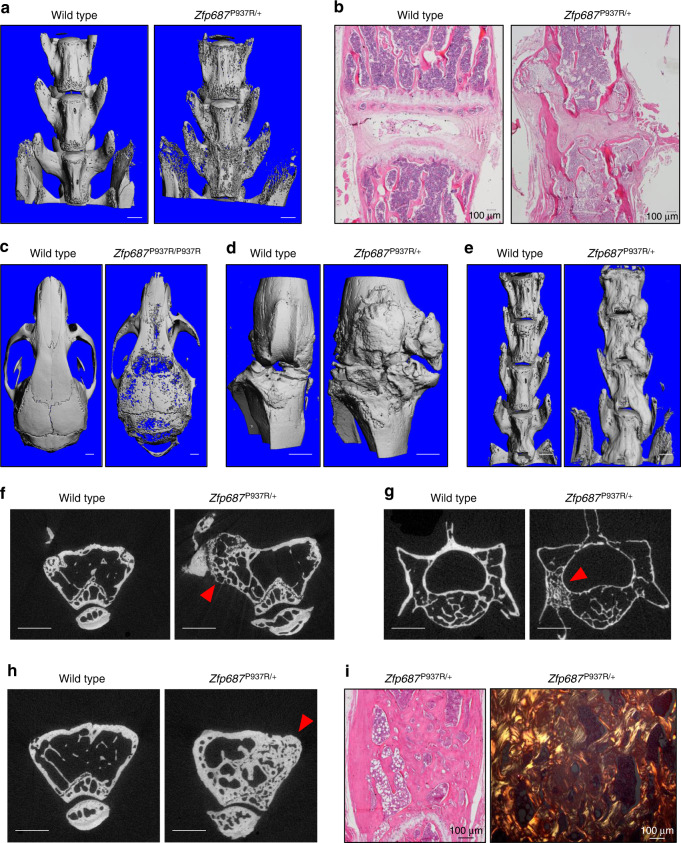
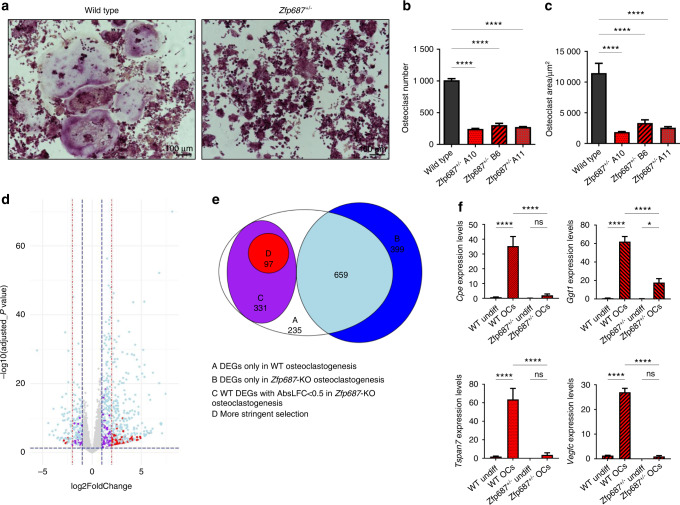
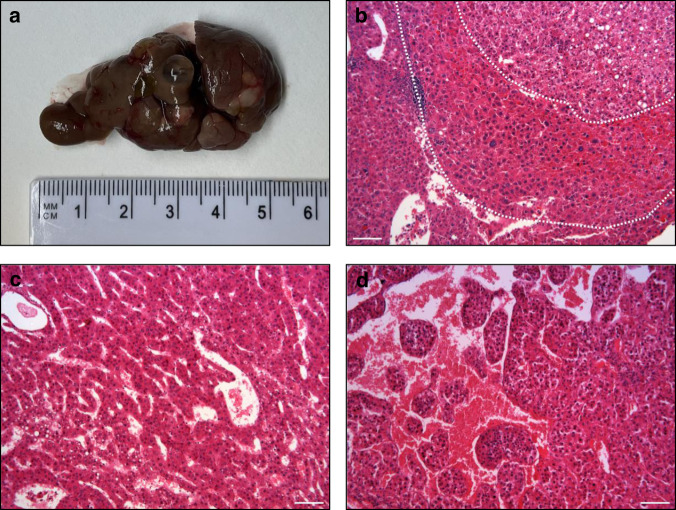
Paget's disease (PDB) is a late-onset bone remodeling disorder with a broad spectrum of symptoms and complications. One of the most aggressive forms is caused by the P937R mutation in the ZNF687 gene. Although the genetic involvement of ZNF687 in PDB has been extensively studied, the molecular mechanisms underlying this association remain unclear. Here, we describe the first Zfp687 knock-in mouse model and demonstrate that the mutation recapitulates the PDB phenotype, resulting in severely altered bone remodeling. Through microcomputed tomography analysis, we observed that 8-month-old mutant mice showed a mainly osteolytic phase, with a significant decrease in the trabecular bone volume affecting the femurs and the vertebrae. Conversely, osteoblast activity was deregulated, producing disorganized bone. Notably, this phenotype became pervasive in 16-month-old mice, where osteoblast function overtook bone resorption, as highlighted by the presence of woven bone in histological analyses, consistent with the PDB phenotype. Furthermore, we detected osteophytes and intervertebral disc degeneration, outlining for the first time the link between osteoarthritis and PDB in a PDB mouse model. RNA sequencing of wild-type and Zfp687 knockout RAW264.7 cells identified a set of genes involved in osteoclastogenesis potentially regulated by Zfp687, e.g., Tspan7, Cpe, Vegfc, and Ggt1, confirming its role in this process. Strikingly, in this mouse model, the mutation was also associated with a high penetrance of hepatocellular carcinomas. Thus, this study established an essential role of Zfp687 in the regulation of bone remodeling, offering the potential to therapeutically treat PDB, and underlines the oncogenic potential of ZNF687.
Overview
The claims and statistics of this paper haven’t been checked yet.
Free: it reads the open-access text and checks the first 5 claims that cite a source we can check. Create a free account to check every claim.
Integrity signals
Registry
Cites
Statistics
Figures
Verification
Claims the paper makes
The claims and statistics of this paper haven’t been checked yet.
Free: it reads the open-access text and checks the first 5 claims that cite a source we can check. Create a free account to check every claim.
Claims other papers make about this one
Each is checked against this paper’s own text: does it say what the citing paper says it does?
In the citing paper
“Sharon Russo [199] reported that mutations in the ZNF687 gene cause severe Paget's disease of bone, resulting in severe alterations in bone remodeling, and strikingly, in this mouse model, the mutation was also associated with high penetrance of HCC.”
From Emerging role of liver-bone axis in osteoporosis (2024) · cites this paper as [199]
Self-check
Percentages, sums and reported differences re-computed from the paper’s own numbers.
The self-check needs the paper’s full text.
Citations
Cites
Moderated estimation of fold change and dispersion for RNA-seq data with DESeq2
Love, M. I., Huber, W., & Anders, S. (2014) · Genome Biology · doi:10.1186/s13059-014-0550-8 · Cited by 95,106
The 2019 WHO classification of tumours of the digestive system
Nagtegaal, I. D., Odze, R. D., Klimstra, D., Paradis, V., Rugge, M., Schirmacher, P., Washington, K. M., Carneiro, F., Cree, I. A., & the WHO Classification of Tumours Editorial Board (2020) · Histopathology · doi:10.1111/his.13975 · Cited by 4,192
Primary carcinoma of the liver.A study of 100 cases among 48,900 necropsies
Edmondson, H. A., & Steiner, P. E. (1954) · Cancer · doi:10.1002/1097-0142(195405)7:3<462::aid-cncr2820070308>3.0.co;2-e · Cited by 2,772
Zhu, A., Ibrahim, J. G., & Love, M. I. (2019) · Bioinformatics · doi:10.1093/bioinformatics/bty895 · Cited by 2,072
Men and mice: Relating their ages
Dutta, S., & Sengupta, P. (2016) · Life Sciences · doi:10.1016/j.lfs.2015.10.025 · Cited by 1,710 · cited 1×
“Zfp687mutation causes a severe PDB-like phenotype in aged mice Next, we performed skeletal phenotyping of 16-month-old mice, the equivalent of 55-year-old humans, a state of full-blown pathology.(14,20,25) Remarkably, 87% of aged Zfp687 and Zfp687 mice developed polyostotic osteolytic-like lesions, affecting the lumba…”
MethodMapping RNA‐seq Reads with STAR
Dobin, A., & Gingeras, T. R. (2015) · Current Protocols in Bioinformatics · doi:10.1002/0471250953.bi1114s51 · Cited by 1,294
Bianco, P., Cao, X., Frenette, P. S., Mao, J. J., Robey, P. G., Simmons, P. J., & Wang, C.-Y. (2013) · Nature Medicine · doi:10.1038/nm.3028 · Cited by 1,197
Characterization of the CLEAR network reveals an integrated control of cellular clearance pathways
Palmieri, M., Impey, S., Kang, H., di Ronza, A., Pelz, C., Sardiello, M., & Ballabio, A. (2011) · Human Molecular Genetics · doi:10.1093/hmg/ddr306 · Cited by 1,022 · cited 1×
“24E-10).(27) Conversely, transcriptomic profiling of the osteoclast differentiation process in Zfp687 cells highlighted that 381 genes previously detected as upregulated in the wild-type context remained unchanged (Fig.”
BackgroundAmbrosi, T. H., Scialdone, A., Graja, A., Gohlke, S., Jank, A.-M., Bocian, C., Woelk, L., Fan, H., Logan, D. W., Schürmann, A., et al. (2017) · Cell Stem Cell · doi:10.1016/j.stem.2017.02.009 · Cited by 856
Recurrent mutation of the gene encoding sequestosome 1 (SQSTM1/p62) in Paget disease of bone.
Laurin, N., Brown, J. P., Morissette, J., & Raymond, V. (2002) · The American Journal of Human Genetics · doi:10.1086/340731 · Cited by 563 · cited 1×
“The common form of PDB is due to mutations in the SQSTM1 gene, encoding the p62 protein, which is involved in important cellular mechanisms, such as autophagy or the regulation of the NFκB signaling pathway.(12,13) Mutations in SQSTM1 lead to an impaired and continuously activated NFκB pathway, resulting in more activ…”
BackgroundOsteophytes: relevance and biology
van der Kraan, P. M., & van den Berg, W. B. (2007) · Osteoarthritis and Cartilage · doi:10.1016/j.joca.2006.11.006 · Cited by 552
Parathyroid Hormone Directs Bone Marrow Mesenchymal Cell Fate
Fan, Y., Hanai, J.-I., Le, P. T., Bi, R., Maridas, D., DeMambro, V., Figueroa, C. A., Kir, S., Zhou, X., Mannstadt, M., et al. (2017) · Cell Metabolism · doi:10.1016/j.cmet.2017.01.001 · Cited by 390
Domain-specific mutations in sequestosome 1 (SQSTM1) cause familial and sporadic Paget’s disease.
Hocking, L. J. (2002) · Human Molecular Genetics · doi:10.1093/hmg/11.22.2735 · Cited by 350 · cited 1×
“The common form of PDB is due to mutations in the SQSTM1 gene, encoding the p62 protein, which is involved in important cellular mechanisms, such as autophagy or the regulation of the NFκB signaling pathway.(12,13) Mutations in SQSTM1 lead to an impaired and continuously activated NFκB pathway, resulting in more activ…”
Backgroundp62/SQSTM1 – steering the cell through health and disease
Sánchez-Martín, P., & Komatsu, M. (2018) · Journal of Cell Science · doi:10.1242/jcs.222836 · Cited by 282
Tencerova, M., Figeac, F., Ditzel, N., Taipaleenmäki, H., Nielsen, T. K., & Kassem, M. (2018) · Journal of Bone and Mineral Research · doi:10.1002/jbmr.3408 · Cited by 251
Diagnosis and Management of Paget's Disease of Bone in Adults: A Clinical Guideline
Ralston, S. H., Corral-Gudino, L., Cooper, C., Francis, R. M., Fraser, W. D., Gennari, L., Guañabens, N., Javaid, M. K., Layfield, R., O'Neill, T. W., et al. (2019) · Journal of Bone and Mineral Research · doi:10.1002/jbmr.3657 · Cited by 225
Mouse models of osteoarthritis: modelling risk factors and assessing outcomes
Fang, H., & Beier, F. (2014) · Nature Reviews Rheumatology · doi:10.1038/nrrheum.2014.46 · Cited by 212
Yu, W., Zhong, L., Yao, L., Wei, Y., Gui, T., Li, Z., Kim, H., Holdreith, N., Jiang, X., Tong, W., et al. (2021) · Journal of Clinical Investigation · doi:10.1172/jci140214 · Cited by 208
Ralston, S. H. (2013) · New England Journal of Medicine · doi:10.1056/nejmcp1204713 · Cited by 170
Maridas, D. E., Rendina-Ruedy, E., Le, P. T., & Rosen, C. J. (2018) · Journal of Visualized Experiments · doi:10.3791/56750 · Cited by 157
RANKL from bone marrow adipose lineage cells promotes osteoclast formation and bone loss
Hu, Y., Li, X., Zhi, X., Cong, W., Huang, B., Chen, H., Wang, Y., Li, Y., Wang, L., Fang, C., et al. (2021) · EMBO reports · doi:10.15252/embr.202152481 · Cited by 143
Musculoskeletal manifestations of paget's disease of bone
Altman, R. D., & Collins, B. (1980) · Arthritis & Rheumatism · doi:10.1002/art.1780231008 · Cited by 134
Daroszewska, A., van 't Hof, R. J., Rojas, J. A., Layfield, R., Landao-Basonga, E., Rose, L., Rose, K., & Ralston, S. H. (2011) · Human Molecular Genetics · doi:10.1093/hmg/ddr172 · Cited by 131 · cited 1×
“These mutant mice displayed increased osteoclastic resorption,(17) with typical nuclear inclusion bodies in osteoclasts as well as osteolytic lesions and woven bone.(18,19) Bone alterations were exclusively detected at the appendicular skeleton, not earlier than 18 months of age.”
BackgroundRea, S. L., Walsh, J. P., Layfield, R., Ratajczak, T., & Xu, J. (2013) · Endocrine Reviews · doi:10.1210/er.2012-1034 · Cited by 123 · cited 1×
“Mutations in SQSTM1 lead to an impaired and continuously activated NFκB pathway, resulting in more activated and multinucleated osteoclasts.(16) Two Sqstm1 knock-in mouse models have been generated, harboring the most common mutation (P392L), where mutant mice developed osteolytic/osteosclerotic lesions predominantly…”
BackgroundKurihara, N., Hiruma, Y., Yamana, K., Michou, L., Rousseau, C., Morissette, J., Galson, D. L., Teramachi, J., Zhou, H., Dempster, D. W., et al. (2011) · Cell Metabolism · doi:10.1016/j.cmet.2010.12.002 · Cited by 117
Open source software for semi-automated histomorphometry of bone resorption and formation parameters
Hof, R. V., Rose, L., Landao‐Bassonga, E., & Daroszewska, A. (2017) · Bone · doi:10.1016/j.bone.2017.03.051 · Cited by 109
Kurihara, N., Zhou, H., Reddy, S. V., Palacios, V. G., Subler, M. A., Dempster, D. W., Windle, J. J., & Roodman, G. D. (2006) · Journal of Bone and Mineral Research · doi:10.1359/jbmr.051108 · Cited by 104
Identification of the skeletal progenitor cells forming osteophytes in osteoarthritis
Roelofs, A. J., Kania, K., Rafipay, A., Sambale, M., Kuwahara, S. T., Collins, F. L., Smeeton, J., Serowoky, M. A., Rowley, L., Wang, H., et al. (2020) · Annals of the Rheumatic Diseases · doi:10.1136/annrheumdis-2020-218350 · Cited by 104
Hiruma, Y., Kurihara, N., Subler, M. A., Zhou, H., Boykin, C. S., Zhang, H., Ishizuka, S., Dempster, D. W., Roodman, G. D., & Windle, J. J. (2008) · Human Molecular Genetics · doi:10.1093/hmg/ddn266 · Cited by 90
Sarcomas Arising in Paget Disease of Bone: A Clinicopathologic Analysis of 70 Cases
Deyrup, A. T., MONTAG, A. G., Inwards, C. Y., Xu, Z., Swee, R. G., & Unni, K. K. (2007) · Archives of Pathology & Laboratory Medicine · doi:10.5858/2007-131-942-saipdo · Cited by 86
Zhang, Q., Guo, R., Lu, Y., Zhao, L., Zhou, Q., Schwarz, E. M., Huang, J., Chen, D., Jin, Z.-G., Boyce, B. F., et al. (2008) · Journal of Biological Chemistry · doi:10.1074/jbc.m708055200 · Cited by 85
ZNF687 Mutations in Severe Paget Disease of Bone Associated with Giant Cell Tumor
Divisato, G., Formicola, D., Esposito, T., Merlotti, D., Pazzaglia, L., Del Fattore, A., Siris, E., Orcel, P., Brown, J. P., Nuti, R., et al. (2016) · The American Journal of Human Genetics · doi:10.1016/j.ajhg.2015.12.016 · Cited by 85
Self-citationVEGF-C promotes the development of lymphatics in bone and bone loss
Hominick, D., Silva, A., Khurana, N., Liu, Y., Dechow, P. C., Feng, J. Q., Pytowski, B., Rutkowski, J. M., Alitalo, K., & Dellinger, M. T. (2018) · eLife · doi:10.7554/elife.34323 · Cited by 83
Cundy, T. (2018) · Metabolism · doi:10.1016/j.metabol.2017.06.010 · Cited by 76
Greater Bone Marrow Adiposity Predicts Bone Loss in Older Women
Woods, G. N., Ewing, S. K., Sigurdsson, S., Kado, D. M., Eiriksdottir, G., Gudnason, V., Hue, T. F., Lang, T. F., Vittinghoff, E., Harris, T. B., et al. (2020) · Journal of Bone and Mineral Research · doi:10.1002/jbmr.3895 · Cited by 70
WALLACE, R. G. H., JOHN, R., OSTERBERG, P. H., & MOLLAN, R. A. B. (1989) · Clinical Orthopaedics and Related Research · doi:10.1097/00003086-198911000-00043 · Cited by 64
Measles virus nucleocapsid protein increases osteoblast differentiation in Paget’s disease
Teramachi, J., Nagata, Y., Mohammad, K. S., Inagaki, Y., Ohata, Y., Guise, T. A., Michou, L., Brown, J. P., Windle, J. J., Kurihara, N., et al. (2016) · Journal of Clinical Investigation · doi:10.1172/jci82012 · Cited by 53
The Osteoclast Traces the Route to Bone Tumors and Metastases
Russo, S., di Carlo, F. S., & Gianfrancesco, F. (2022) · Frontiers in Cell and Developmental Biology · doi:10.3389/fcell.2022.886305 · Cited by 53
Self-citationHiramatsu, K., Asaba, Y., Takeshita, S., Nimura, Y., Tatsumi, S., Katagiri, N., Niida, S., Nakajima, T., Tanaka, S., Ito, M., et al. (2007) · Endocrinology · doi:10.1210/en.2007-0215 · Cited by 52
The two faces of giant cell tumor of bone
di Carlo, F. S., Whyte, M. P., & Gianfrancesco, F. (2020) · Cancer Letters · doi:10.1016/j.canlet.2020.05.031 · Cited by 50
Self-citationNiida, S., Kawahara, M., Ishizuka, Y., Ikeda, Y., Kondo, T., Hibi, T., Suzuki, Y., Ikeda, K., & Taniguchi, N. (2004) · Journal of Biological Chemistry · doi:10.1074/jbc.m311905200 · Cited by 48
Clinical Guidelines on Paget's Disease of Bone
Ralston, S. H., Corral-Gudino, L., Cooper, C. C., Francis, R. M., Fraser, W. D., Gennari, L., Guañabens, N., Javaid, M. K., Layfield, R., O’Neill, T. W., et al. (2019) · Journal of Bone and Mineral Research · doi:10.1002/jbmr.3873 · Cited by 47
The Loss of Profilin 1 Causes Early Onset Paget's Disease of Bone
di Carlo, F. S., Pazzaglia, L., Esposito, T., & Gianfrancesco, F. (2020) · Journal of Bone and Mineral Research · doi:10.1002/jbmr.3964 · Cited by 40
Self-citationDivisato, G., di Carlo, F. S., Petrillo, N., Esposito, T., & Gianfrancesco, F. (2018) · Clinical Genetics · doi:10.1111/cge.13247 · Cited by 26
Self-citationZhang, T., Huang, Y., Liu, W., Meng, W., Zhao, H., Yang, Q., Gu, S.-J., Xiao, C.-C., Jia, C.-C., Zhang, B., et al. (2017) · Oncogenesis · doi:10.1038/oncsis.2017.63 · Cited by 23
Gianfrancesco, F., Rendina, D., Merlotti, D., Esposito, T., Amyere, M., Formicola, D., Muscariello, R., FILIPPO, G. D., Strazzullo, P., Nuti, R., et al. (2012) · Journal of Bone and Mineral Research · doi:10.1002/jbmr.1750 · Cited by 19
Self-citationTetraspanin 7 regulates sealing zone formation and the bone-resorbing activity of osteoclasts
Kwon, J., Lee, Y. D., Kim, H., Kim, M. K., Song, M., Lee, Z. H., & Kim, H. (2016) · Biochemical and Biophysical Research Communications · doi:10.1016/j.bbrc.2016.07.046 · Cited by 18
di Carlo, F. S., Pazzaglia, L., Mumm, S. R., Benassi, M. S., Chiara, A. D., Franchi, A., Parafioriti, A., Righi, A., Esposito, T., Whyte, M. P., et al. (2020) · Journal of Bone and Mineral Research · doi:10.1002/jbmr.3993 · Cited by 16
Self-citationCarboxypeptidase E Is a Novel Modulator of RANKL-Induced Osteoclast Differentiation
Kim, H., Hong, J.-M., Yoon, H.-J., Yoon, Y., & Kim, S. (2014) · Molecules and Cells · doi:10.14348/molcells.2014.0179 · Cited by 15
Single and Multiple Gene Manipulations in Mouse Models of Human Cancer
Lehman, H. L., & Stairs, D. B. (2015) · Cancer Growth and Metastasis · doi:10.4137/cgm.s21217 · Cited by 13
Daroszewska, A., Rose, L., Sarsam, N., Charlesworth, G., Prior, A., Rose, K., Ralston, S. H., & Hof, R. V. (2018) · Disease Models & Mechanisms · doi:10.1242/dmm.035576 · Cited by 13
Makaram, N. S., Woods, L., Beattie, N., Roberts, S. B., & Macpherson, G. J. (2020) · The Surgeon · doi:10.1016/j.surge.2019.12.002 · Cited by 13
Proft, F. N., Torğutalp, M., Weiß, A., Protopopov, M., Rodríguez, V. R., Haibel, H., Behmer, O., Sieper, J., & Poddubnyy, D. (2020) · Annals of the Rheumatic Diseases · doi:10.1136/annrheumdis-2020-eular.3136 · Cited by 12
Tetraspanin 7 regulates osteoclast function through association with the RANK/αvβ3 integrin complex
Kim, M., Lin, J., Huh, J., Park, J., Go, M., Lee, H., Hwang, D., Kim, H. S., Kim, T. S., Lee, D., et al. (2021) · Journal of Cellular Physiology · doi:10.1002/jcp.30559 · Cited by 12
Cited by
Paget’s disease: a review of the epidemiology, etiology, genetics, and treatment
Banaganapalli, B., Fallatah, I., Alsubhi, F., Shetty, P. J., Awan, Z. A., Elango, R., & Shaik, N. A. (2023) · Frontiers in Genetics · doi:10.3389/fgene.2023.1131182 · Cited by 48
Emerging role of liver-bone axis in osteoporosis
Gao, H., Peng, X., Li, N., Gou, L., Xu, T., Wang, Y., Qin, J., Liang, H., Ma, P., Li, S., et al. (2024) · Journal of Orthopaedic Translation · doi:10.1016/j.jot.2024.07.008 · Cited by 36
“Sharon Russo [199] reported that mutations in the ZNF687 gene cause severe Paget ’ s disease of bone, resulting in severe alterations in bone remodeling, and strikingly, in this mouse model, the mutation was also associated with high penetrance of HCC.”
BackgroundAutophagy: regulating the seesaw of bone–fat balance
Zhang, B., Cui, J. R., Zhang, X., Pan, Z., Du, L., Ye, R., Wen, L., Zhai, W., Huang, L. H., Li, D., et al. (2025) · Frontiers in Cell and Developmental Biology · doi:10.3389/fcell.2025.1465092 · Cited by 8
Varela, D., Varela, T., Conceição, N., & Cancela, M. L. (2025) · International Journal of Molecular Sciences · doi:10.3390/ijms26052069 · Cited by 5
Huybrechts, Y., Ridder, R. D., Steenackers, E., Devogelaer, J., Mortier, G. R., Hendrickx, G., & Hul, W. V. (2023) · Calcified Tissue International · doi:10.1007/s00223-023-01137-5 · Cited by 4
Metadata
- Authors
- Russo, S., Scotto di Carlo, F., Maurizi, A., Fortunato, G., Teti, A., Licastro, D., Settembre, C., Mello, T., & Gianfrancesco, F.
- Affiliations
- University of Campania "Luigi Vanvitelli" (IT)
- University of L'Aquila (IT)
- AREA Science Park (IT)
- Telethon Institute Of Genetics And Medicine (IT)
- University of Florence (IT)
- Istituto Neurologico Mediterraneo (IT)
- Corresponding author
- Gianfrancesco, Fernando
- ORCID
- Venue
- Bone Research
- Published
- 2023-03-14
- Volume
- 11
- Issue
- 1
- Pages
- 16-16
- ISSN
- 2095-4700 (ISSN-L)
- 2095-6231
- PMC
- PMC10014847
- OpenAlex
- W4324155152
- Cited by
- 11
- References
- 54
- Citations by year
- 2026: 3 · 2025: 5 · 2024: 1 · 2023: 2
- FWCI
- 0.98
- Type
- journal article
- Language
- en
- Open access
- gold
- doi.org
- Licence
- cc-by
- creativecommons.org/licenses/by/4.0 (tdm)
- creativecommons.org/licenses/by/4.0 (vor)
- Locations
- Bone Research (publishedVersion, cc-by)
- bioRxiv (Cold Spring Harbor Laboratory) (acceptedVersion)
- PubMed Central (publishedVersion, cc-by)
- PubMed (publishedVersion)
- Archivio Istituzionale della Ricerca - Università degli Studi dell Aquila (submittedVersion, cc-by)
- DOAJ (DOAJ: Directory of Open Access Journals) (submittedVersion, cc-by-sa)
- Florence Research (University of Florence) (submittedVersion, cc-by)
- Funders
- Associazione Italiana per la Ricerca sul Cancro (ID 25110)
- European Calcified Tissue Society
- Topics
- Life Sciences › Biochemistry, Genetics and Molecular Biology › Molecular Biology › Bone Metabolism and Diseases
- Health Sciences › Medicine › Oncology › Bone health and treatments
- Health Sciences › Medicine › Orthopedics and Sports Medicine › Bone Tumor Diagnosis and Treatments
- Keywords
- Paget's disease of bone, bone remodeling, knock-in mice, osteoclastogenesis, hepatocellular carcinoma, osteophytes, intervertebral disc degeneration, osteoarthritis, trabecular bone loss, oncogenicity, TSPAN7, VEGF-C
About these checks
Registry, retraction, Cites and statistics results are computed, not judged, with one exception: a printed reference that no index lists is read once by a model before it counts as a citation error. Claims are extracted by a model and kept only when their quote appears verbatim in the text; each cited source is then checked, with a model’s help, for whether it says what the claim relies on. Those verdicts can be wrong — read the claim’s quote and the cited source before relying on one.
Statistics and arithmetic are recomputed, not judged.
Confidence bands are shown only for fields calibrated on our annotated test set. None is calibrated yet, so no band is shown.
What counts as a claim ›How we measure confidence ›How we check this ›
Are you an author, or do you see a problem with this page? Request a review
Data sources
Bibliographic data: Semantic Scholar, OpenAlex, Crossref.
Contains information from the Semantic Scholar Academic Graph Datasets, made available under the ODC Attribution License (ODC-BY 1.0).
Semantic Scholar’s data is described in: Kinney, R., et al. (2023). The Semantic Scholar Open Data Platform. arXiv:2301.10140.
