

Increased inflammatory lipid metabolism and anaplerotic mitochondrial activation follow acquired resistance to vemurafenib in BRAF-mutant melanoma cells
Open accessThe DOI matches its Crossref record; 52 of the 54 references it cites were found in a registry or an index.
Abstract
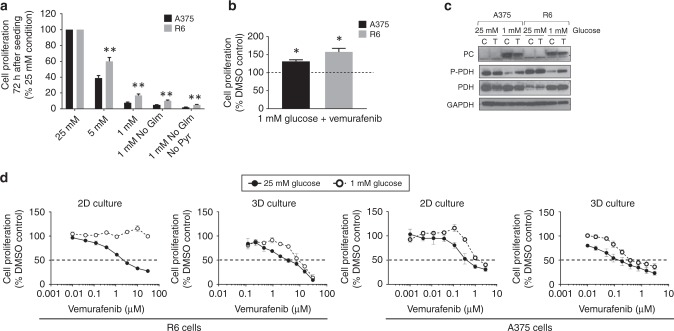
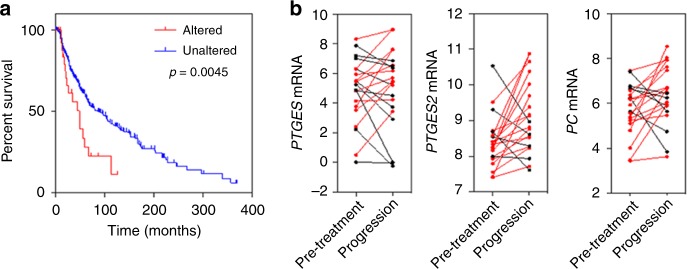
Background: BRAF inhibitors, such as vemurafenib, have shown efficacy in BRAF -mutant melanoma treatment but acquired-resistance invariably develops. Unveiling the potential vulnerabilities associated with vemurafenib resistance could provide rational strategies for combinatorial treatment. Methods: This work investigates the metabolic characteristics and vulnerabilities of acquired resistance to vemurafenib in three generated BRAF -mutant human melanoma cell clones, analysing metabolic profiles, gene and protein expression in baseline and nutrient withdrawal conditions. Preclinical findings are correlated with gene expression analysis from publicly available clinical datasets. Results: Two vemurafenib-resistant clones showed dependency on lipid metabolism and increased prostaglandin E2 synthesis and were more responsive to vemurafenib under EGFR inhibition, potentially implicating inflammatory lipid and EGFR signalling in ERK reactivation and vemurafenib resistance. The third resistant clone showed higher pyruvate-carboxylase (PC) activity indicating increased anaplerotic mitochondrial metabolism, concomitant with reduced GLUT-1, increased PC protein expression and survival advantage under nutrient-depleted conditions. Prostaglandin synthase ( PTGES ) expression was inversely correlated with melanoma patient survival. Increases in PC and PTGES gene expression were observed in some patients following progression on BRAF inhibitors. Conclusions: Altogether, our data highlight heterogeneity in metabolic adaptations during acquired resistance to vemurafenib in BRAF -mutant melanoma, potentially uncovering key clinically-relevant mechanisms for combinatorial therapeutic targeting.
Overview
The claims and statistics of this paper haven’t been checked yet.
Free: it reads the open-access text and checks the first 5 claims that cite a source we can check. Create a free account to check every claim.
Integrity signals
Registry
Cites
Statistics
Figures
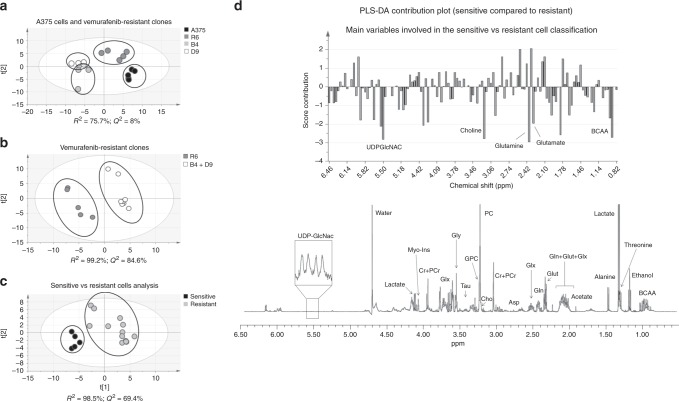
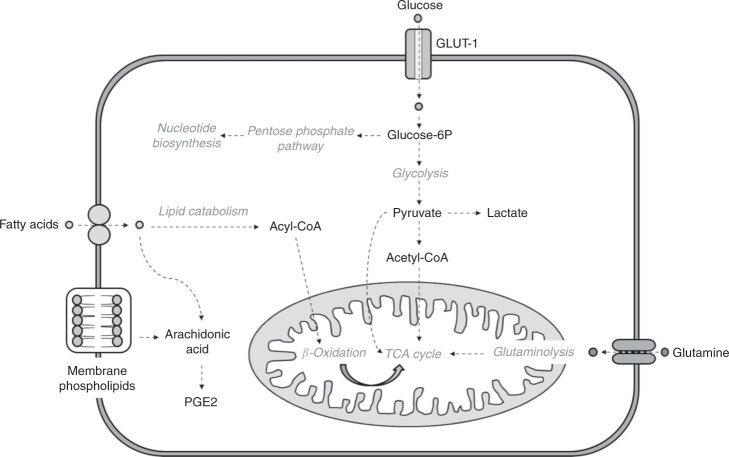
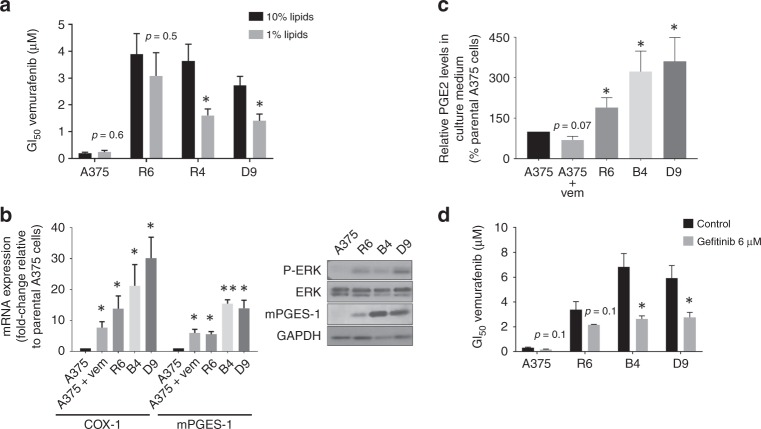
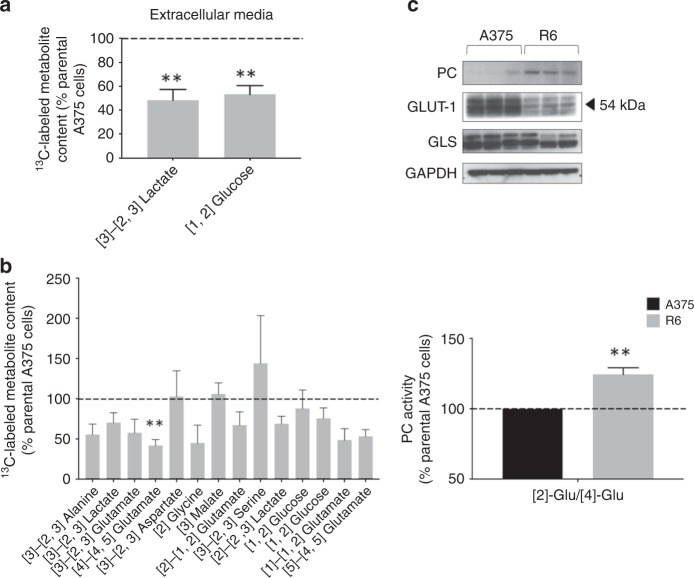
Verification
Claims the paper makes
The claims and statistics of this paper haven’t been checked yet.
Free: it reads the open-access text and checks the first 5 claims that cite a source we can check. Create a free account to check every claim.
Claims other papers make about this one
Each is checked against this paper’s own text: does it say what the citing paper says it does?
The cited source says what the claim attributes to it.
In the citing paper
“Delgado-Goñi et al. reported that increased inflammatory lipid metabolism accompanies acquired resistance to vemurafenib in BRAF-mutant melanoma cells [15].”
From Inhibition of fatty acid synthase enhances therapeutic efficacy and delays acquired resistance to BRAF-targeted therapy in colorectal cancer (2026) · cites this paper as [15]
The cited source says what the claim attributes to it.
In the citing paper
“In melanoma, resistance to vemurafenib has been linked to increased mitochondrial activity and dependence on lipid metabolism [15].”
From Inhibition of fatty acid synthase enhances therapeutic efficacy and delays acquired resistance to BRAF-targeted therapy in colorectal cancer (2026) · cites this paper as [15]
The cited source says what the claim attributes to it.
In the citing paper
“Acquired resistance to BRAF-targeted therapy is not limited to reactivation of MAPK signaling that drives aggressive cancer phenotypes, but also involves adaptive upregulation of metabolic pathways [15,46].”
From Inhibition of fatty acid synthase enhances therapeutic efficacy and delays acquired resistance to BRAF-targeted therapy in colorectal cancer (2026) · cites this paper as [15]
Self-check
Percentages, sums and reported differences re-computed from the paper’s own numbers.
The self-check needs the paper’s full text.
Citations
Cites
Hallmarks of Cancer: The Next Generation
Hanahan, D., & Weinberg, R. A. (2011) · Cell · doi:10.1016/j.cell.2011.02.013 · Cited by 66,590
Cerami, E., Gao, J., Dogrusoz, U., Gross, B. E., Sumer, S. O., Aksoy, B. A., Jacobsen, A., Byrne, C. J., Heuer, M. L., Larsson, E., et al. (2012) · Cancer Discovery · doi:10.1158/2159-8290.cd-12-0095 · Cited by 17,455
Integrative Analysis of Complex Cancer Genomics and Clinical Profiles Using the cBioPortal
Gao, J., Aksoy, B. A., Dogrusoz, U., Dresdner, G., Gross, B., Sumer, S. O., Sun, Y., Jacobsen, A., Sinha, R., Larsson, E., et al. (2013) · Science Signaling · doi:10.1126/scisignal.2004088 · Cited by 15,160 · cited 1×
“Clinical data Gene expression and patient survival data for the ‘Skin Cutaneous Melanoma’ TCGA provisional study were obtained from cBioPortal.(21,22) cBioPortal was used to query the effect of amplification or mRNA overexpression of specific genes on overall survival of 469 melanoma patients by Logrank test.”
MethodImproved survival with vemurafenib in melanoma with BRAF V600E mutation
Chapman, P. B., Hauschild, A., Robert, C., Haanen, J. B., Ascierto, P., Larkin, J., Dummer, R., Garbe, C., Testori, A., Maio, M., et al. (2011) · New England Journal of Medicine · doi:10.1056/nejmoa1103782 · Cited by 7,720
Fundamentals of Cancer Metabolism
DeBerardinis, R. J., & Chandel, N. S. (2016) · Science Advances · doi:10.1126/sciadv.1600200 · Cited by 3,013
MAP kinase signalling pathways in cancer
Dhillon, A. S., Hagan, S., Rath, O., & Kolch, W. (2007) · Oncogene · doi:10.1038/sj.onc.1210421 · Cited by 2,995
Targeting metastasis-initiating cells through the fatty acid receptor CD36
Pascual, G., Avgustinova, A., Mejetta, S., Martín, M., Castellanos, A., Attolini, C. S.-O., Berenguer, A., Prats, N., Toll, A., Hueto, J. A., et al. (2017) · Nature · doi:10.1038/nature20791 · Cited by 1,437
Targeting cancer metabolism: a therapeutic window opens
Vander Heiden, M. G. (2011) · Nature Reviews Drug Discovery · doi:10.1038/nrd3504 · Cited by 1,411
Lipid metabolic reprogramming in cancer cells
Beloribi-Djefaflia, S., Vasseur, S., & Guillaumond, F. (2016) · Oncogenesis · doi:10.1038/oncsis.2015.49 · Cited by 1,398
Villanueva, J., Vultur, A., Lee, J. T., Somasundaram, R., Fukunaga-Kalabis, M., Cipolla, A. K., Wubbenhorst, B., Xu, X., Gimotty, P. A., Kee, D., et al. (2010) · Cancer Cell · doi:10.1016/j.ccr.2010.11.023 · Cited by 1,259
Greenhough, A., Smartt, H. J. M., Moore, A. E., Roberts, H. R., Williams, A. C., Paraskeva, C., & Kaidi, A. (2009) · Carcinogenesis · doi:10.1093/carcin/bgp014 · Cited by 1,220 · cited 1×
“Moreover, extensive evidence implicates both COX and EGFR signalling in carcinogenesis.(27,28) Thus, we investigated whether the lipid dependency observed in two of the three resistant clones was concomitant with increased PGE2 synthesis.”
BackgroundCyclooxygenase-Dependent Tumor Growth through Evasion of Immunity
Zelenay, S., van der Veen, A. G., Böttcher, J. P., Snelgrove, K. J., Rogers, N., Acton, S. E., Chakravarty, P., Girotti, M. R., Marais, R., Quezada, S. A., et al. (2015) · Cell · doi:10.1016/j.cell.2015.08.015 · Cited by 1,128
Corcoran, R. B., Ebi, H., Turke, A. B., Coffee, E. M., Nishino, M., Cogdill, A. P., Brown, R. D., Della Pelle, P., Dias-Santagata, D., Hung, K. E., et al. (2012) · Cancer Discovery · doi:10.1158/2159-8290.cd-11-0341 · Cited by 1,022
Acquired Resistance and Clonal Evolution in Melanoma during BRAF Inhibitor Therapy
Shi, H., Hugo, W., Kong, X., Hong, A., Koya, R. C., Moriceau, G., Chodon, T., Guo, R., Johnson, D. B., Dahlman, K. B., et al. (2014) · Cancer Discovery · doi:10.1158/2159-8290.cd-13-0642 · Cited by 982
Targeting Metabolism for Cancer Therapy
Luengo, A., Gui, D. Y., & Vander Heiden, M. G. (2017) · Cell Chemical Biology · doi:10.1016/j.chembiol.2017.08.028 · Cited by 971
Vemurafenib: the first drug approved for BRAF-mutant cancer
Bollag, G., Tsai, J., Zhang, J., Zhang, C., Ibrahim, P., Nolop, K., & Hirth, P. (2012) · Nature Reviews Drug Discovery · doi:10.1038/nrd3847 · Cited by 822
The role of BRAF V600 mutation in melanoma
Ascierto, P. A., Kirkwood, J. M., Grob, J.-J., Simeone, E., Grimaldi, A. M., Maio, M., Palmieri, G., Testori, A., Marincola, F. M., & Mozzillo, N. (2012) · Journal of Translational Medicine · doi:10.1186/1479-5876-10-85 · Cited by 801
Roesch, A., Vultur, A., Bogeski, I., Wang, H., Zimmermann, K. M., Speicher, D., Körbel, C., Laschke, M. W., Gimotty, P. A., Philipp, S. E., et al. (2013) · Cancer Cell · doi:10.1016/j.ccr.2013.05.003 · Cited by 670 · cited 2×
“These findings are in line with previous studies reporting elevated mitochondrial bioenergy metabolism in slowcycling melanoma resistant cells characterised by an upregulation of proteins related to cell respiratory electron transport.(35) Our results also correlate with previous work reporting that BRAFmutant cells s…”
ResultMultifaceted roles of PGE2 in inflammation and cancer
Nakanishi, M., & Rosenberg, D. W. (2013) · Seminars in Immunopathology · doi:10.1007/s00281-012-0342-8 · Cited by 591
BRAF Inhibitor Resistance Mechanisms in Metastatic Melanoma: Spectrum and Clinical Impact
Rizos, H., Menzies, A. M., Pupo, G. M., Carlino, M. S., Fung, C., Hyman, J., Haydu, L. E., Mijatov, B., Becker, T. M., Boyd, S. C., et al. (2014) · Clinical Cancer Research · doi:10.1158/1078-0432.ccr-13-3122 · Cited by 547
Elevated CRAF as a Potential Mechanism of Acquired Resistance to BRAF Inhibition in Melanoma
Montagut, C., Sharma, S. V., Shioda, T., McDermott, U., Ulman, M., Ulkus, L. E., Dias-Santagata, D., Stubbs, H., Lee, D. Y., Singh, A., et al. (2008) · Cancer Research · doi:10.1158/0008-5472.can-07-6787 · Cited by 508
Pyruvate carboxylase is critical for non–small-cell lung cancer proliferation
Sellers, K., Fox, M. P., Bousamra, M., Slone, S. P., Higashi, R. M., Miller, D. M., Wang, Y., Yan, J., Yuneva, M. O., Deshpande, R., et al. (2015) · Journal of Clinical Investigation · doi:10.1172/jci72873 · Cited by 497
Pyruvate carboxylase is required for glutamine-independent growth of tumor cells
Cheng, T., Sudderth, J., Yang, C., Mullen, A. R., Jin, E. S., Matés, J. M., & DeBerardinis, R. J. (2011) · Proceedings of the National Academy of Sciences · doi:10.1073/pnas.1016627108 · Cited by 475
Adipocyte-Derived Lipids Mediate Melanoma Progression via FATP Proteins
Zhang, M., Di Martino, J. S., Bowman, R. L., Campbell, N. R., Baksh, S. C., Simon-Vermot, T., Kim, I. S., Haldeman, P., Mondal, C., Yong-Gonzales, V., et al. (2018) · Cancer Discovery · doi:10.1158/2159-8290.cd-17-1371 · Cited by 360
Resistant mechanisms to BRAF inhibitors in melanoma
Manzano, J. L., Layos, L., Bugés, C., de los Llanos Gil, M., Vila, L., Martínez-Balibrea, E., & Martínez-Cardús, A. (2016) · Annals of Translational Medicine · doi:10.21037/atm.2016.06.07 · Cited by 255
Mutant BRAF Melanomas—Dependence and Resistance
Poulikakos, P. I., & Rosen, N. (2011) · Cancer Cell · doi:10.1016/j.ccr.2011.01.008 · Cited by 250
(2013) · Science Signaling · doi:10.1126/scisignal.6273er1 · Cited by 242
Fallahi‐Sichani, M., Becker, V., Izar, B., Baker, G. J., Lin, J., Boswell, S. A., Shah, P., Rotem, A., Garraway, L. A., & Sorger, P. K. (2017) · Molecular Systems Biology · doi:10.15252/msb.20166796 · Cited by 235
Krysan, K., Reckamp, K. L., Dalwadi, H., Sharma, S., Rozengurt, E., Dohadwala, M., & Dubinett, S. M. (2005) · Cancer Research · doi:10.1158/0008-5472.can-05-0216 · Cited by 234
Resistance to combination BRAF and MEK inhibition in metastatic melanoma: Where to next?
Welsh, S. J., Rizos, H., Scolyer, R. A., & Long, G. V. (2016) · European Journal of Cancer · doi:10.1016/j.ejca.2016.04.005 · Cited by 217
Fischer, G. M., Vashisht Gopal, Y. N., McQuade, J. L., Peng, W., DeBerardinis, R. J., & Davies, M. A. (2018) · Pigment Cell & Melanoma Research · doi:10.1111/pcmr.12661 · Cited by 193
Resistance to BRAF inhibitors induces glutamine dependency in melanoma cells
Baenke, F., Chaneton, B., Smith, M., Van Den Broek, N., Hogan, K., Tang, H., Viros, A., Martin, M., Galbraith, L., Girotti, M. R., et al. (2016) · Molecular Oncology · doi:10.1016/j.molonc.2015.08.003 · Cited by 181
Molecular drivers of cellular metabolic reprogramming in melanoma
Abildgaard, C., & Guldberg, P. (2015) · Trends in Molecular Medicine · doi:10.1016/j.molmed.2014.12.007 · Cited by 160
Amaral, T. M. S., Sinnberg, T. W., Meier, F. E., Krepler, C., Levesque, M. P., Niessner, H., & Garbe, C. (2017) · European Journal of Cancer · doi:10.1016/j.ejca.2016.12.010 · Cited by 159
Sustained SREBP-1-dependent lipogenesis as a key mediator of resistance to BRAF-targeted therapy
Talebi, A., Dehairs, J., Rambow, F., Rogiers, A., Nittner, D., Derua, R., Vanderhoydonc, F., Duarte, J. A. G., Bosisio, F., Van den Eynde, K., et al. (2018) · Nature Communications · doi:10.1038/s41467-018-04664-0 · Cited by 155
COX inhibitors and breast cancer
Mazhar, D., Ang, R., & Waxman, J. H. (2006) · British Journal of Cancer · doi:10.1038/sj.bjc.6602942 · Cited by 154
Rogers, K. R., Kikawa, K. D., Mouradian, M., Hernandez, K., McKinnon, K. M., Ahwah, S. M., & Pardini, R. S. (2010) · Carcinogenesis · doi:10.1093/carcin/bgq111 · Cited by 118
Ross, K. C., Andrews, A. J., Marion, C. D., Yen, T. J., & Bhattacharjee, V. (2017) · Molecular Cancer Therapeutics · doi:10.1158/1535-7163.mct-16-0798 · Cited by 96
Magnetic Resonance Spectroscopy Monitoring of Mitogen-Activated Protein Kinase Signaling Inhibition
Beloueche-Babari, M., Jackson, L. E., Al-Saffar, N. M. S., Workman, P., Leach, M. O., & Ronen, S. M. (2005) · Cancer Research · doi:10.1158/10.1158/0008-5472.can-03-2981 · Cited by 80
Self-citationKock, A., Larsson, K., Bergqvist, F., Eissler, N., Elfman, L. H. M., Raouf, J., Korotkova, M., Johnsen, J. I., Jakobsson, P.-J., & Kogner, P. (2018) · EBioMedicine · doi:10.1016/j.ebiom.2018.05.008 · Cited by 76
Delgado‐Goñi, T., Miniotis, M. F., Wantuch, S., Parkes, H. G., Marais, R., Workman, P., Leach, M. O., & Beloueche‐Babari, M. (2016) · Molecular Cancer Therapeutics · doi:10.1158/1535-7163.mct-16-0068 · Cited by 67
Self-citationCharacterization of Microsomal Prostaglandin E Synthase 1 Inhibitors
Korotkova, M., & Jakobsson, P. (2013) · Basic & Clinical Pharmacology & Toxicology · doi:10.1111/bcpt.12162 · Cited by 65
Baudy, A. R., Dogan, T., Flores-Mercado, J. E., Hoeflich, K. P., Su, F., van Bruggen, N., & Williams, S.-P. (2012) · EJNMMI Research · doi:10.1186/2191-219x-2-22 · Cited by 62
The Crosstalk of PTGS2 and EGF Signaling Pathways in Colorectal Cancer
Wang, D., Xia, D., & DuBois, R. N. (2011) · Cancers · doi:10.3390/cancers3043894 · Cited by 58
ERK Inhibition: A New Front in the War against MAPK Pathway–Driven Cancers?
Smalley, I., & Smalley, K. S. M. (2018) · Cancer Discovery · doi:10.1158/2159-8290.cd-17-1355 · Cited by 58
Yang, C., Harrison, C., Jin, E. S., Chuang, D. T., Sherry, A. D., Malloy, C. R., Merritt, M. E., & DeBerardinis, R. J. (2014) · Journal of Biological Chemistry · doi:10.1074/jbc.m113.543637 · Cited by 51
MEK1/2 Inhibition Decreases Lactate in BRAF-Driven Human Cancer Cells
Miniotis, M. F., Arunan, V., Eykyn, T. R., Marais, R., Workman, P., Leach, M. O., & Beloueche‐Babari, M. (2013) · Cancer Research · doi:10.1158/0008-5472.can-12-1969 · Cited by 51
Self-citationHardeman, K. N., Peng, C., Paudel, B. B., Meyer, C. T., Luong, T., Tyson, D. R., Young, J. D., Quaranta, V., & Fessel, J. P. (2017) · Scientific Reports · doi:10.1038/srep42604 · Cited by 51
Metabotypes of breast cancer cell lines revealed by non-targeted metabolomics
Dubuis, S., Baenke, F., Scherbichler, N., Alexander, L. T., Schulze, A., & Zamboni, N. (2016) · Metabolic Engineering · doi:10.1016/j.ymben.2016.12.009 · Cited by 35
Beloueche‐Babari, M., Box, C., Arunan, V., Parkes, H. G., Valenti, M. R., Brandon, A. D. H., Jackson, L. E., Eccles, S. A., & Leach, M. O. (2015) · British Journal of Cancer · doi:10.1038/bjc.2015.86 · Cited by 24
Self-citationTulane's Training Program for Health Facility Surveyors
Dolson, M. T., & Hamrick, J. T. (1971) · HSMHA Health Reports · doi:10.2307/4594157 · Cited by 5
Ballester, L. Y., Aung, P. P., & Lee, C. R. (2016) · Springer eBooks · doi:10.1007/978-1-4939-3554-3_6 · Cited by 3
Cited by
Raman-guided subcellular pharmaco-metabolomics for metastatic melanoma cells
Du, J., Su, Y., Qian, C., Yuan, D., Miao, K., Lee, D., Ng, A. H. C., Wijker, R. S., Ribas, A., Levine, R. D., et al. (2020) · Nature Communications · doi:10.1038/s41467-020-18376-x · Cited by 171
Alicea, G. M., Rebecca, V. W., Goldman, A. R., Fane, M. E., Douglass, S. M., Behera, R., Webster, M. R., Kugel, C. H., Ecker, B. L., Caino, M. C., et al. (2020) · Cancer Discovery · doi:10.1158/2159-8290.cd-20-0329 · Cited by 159
The Metabolic Fates of Pyruvate in Normal and Neoplastic Cells
Prochownik, E. V., & Wang, H. (2021) · Cells · doi:10.3390/cells10040762 · Cited by 142
Pyruvate carboxylase and cancer progression
Kiesel, V. A., Sheeley, M. P., Coleman, M. F., Cotul, E. K., Donkin, S. S., Hursting, S. D., Wendt, M. K., & Teegarden, D. (2021) · Cancer & Metabolism · doi:10.1186/s40170-021-00256-7 · Cited by 123
Targeting of the Lipid Metabolism Impairs Resistance to BRAF Kinase Inhibitor in Melanoma
Vergani, E., Beretta, G. L., Aloisi, M., Costantino, M., Corno, C., Frigerio, S., Tinelli, S., Dugo, M., Accattatis, F. M., Granata, A., et al. (2022) · Frontiers in Cell and Developmental Biology · doi:10.3389/fcell.2022.927118 · Cited by 46
Metadata
- Authors
- Delgado-Goñi, T., Galobart, T. C., Wantuch, S., Normantaite, D., Leach, M. O., Whittaker, S. R., & Beloueche-Babari, M.
- Affiliations
- Royal Marsden NHS Foundation Trust (GB)
- Institute of Cancer Research (GB)
- Corresponding author
- Leach, Martin O.
- Venue
- British Journal of Cancer
- Published
- 2019-12-10
- Volume
- 122
- Issue
- 1
- Pages
- 72-81
- ISSN
- 0007-0920 (ISSN-L)
- 1532-1827
- PMC
- PMC6964672
- OpenAlex
- W2993997447
- Cited by
- 39
- References
- 54
- Citations by year
- 2026: 5 · 2025: 7 · 2024: 6 · 2023: 3 · 2022: 3 · 2021: 7 · 2020: 7 · 2019: 1
- FWCI
- 1.48
- Type
- journal article
- Language
- en
- Open access
- hybrid
- doi.org
- Licence
- cc-by
- creativecommons.org/licenses/by/4.0 (tdm)
- creativecommons.org/licenses/by/4.0 (vor)
- Locations
- British Journal of Cancer (publishedVersion, cc-by)
- PubMed Central (publishedVersion, cc-by)
- PubMed (publishedVersion)
- Funders
- RCUK | Medical Research Council (MR/K011057/1)
- Cancer Research UK (C1060/A10334, C1090/A16464)
- Start-up funds from The Institute of Cancer Research.
- Topics
- Life Sciences › Biochemistry, Genetics and Molecular Biology › Molecular Biology › Melanoma and MAPK Pathways
- Life Sciences › Biochemistry, Genetics and Molecular Biology › Cancer Research › Cancer, Lipids, and Metabolism
- Health Sciences › Medicine › Pulmonary and Respiratory Medicine › Lung Cancer Treatments and Mutations
- Keywords
- vemurafenib resistance, BRAF-mutant melanoma, acquired drug resistance, prostaglandin E2 synthesis, prostaglandin E synthase, pyruvate carboxylase, anaplerotic metabolism, mitochondrial metabolism, EGFR inhibition, GLUT1, metabolic vulnerability
- MeSH terms
- Prostaglandin-E Synthases, Gefitinib, Vemurafenib, Antineoplastic Agents, Cell Survival, Humans, Melanoma, Mitochondria, Mutation, Pyruvate Carboxylase, Skin Neoplasms, Dinoprostone, Signal Transduction, Gene Expression Regulation, Neoplastic, Drug Resistance, Neoplasm, Cell Line, Tumor, Proto-Oncogene Proteins B-raf
About these checks
Registry, retraction, Cites and statistics results are computed, not judged, with one exception: a printed reference that no index lists is read once by a model before it counts as a citation error. Claims are extracted by a model and kept only when their quote appears verbatim in the text; each cited source is then checked, with a model’s help, for whether it says what the claim relies on. Those verdicts can be wrong — read the claim’s quote and the cited source before relying on one.
Statistics and arithmetic are recomputed, not judged.
Confidence bands are shown only for fields calibrated on our annotated test set. None is calibrated yet, so no band is shown.
What counts as a claim ›How we measure confidence ›How we check this ›
Are you an author, or do you see a problem with this page? Request a review
Data sources
Bibliographic data: Semantic Scholar, OpenAlex, Crossref.
Contains information from the Semantic Scholar Academic Graph Datasets, made available under the ODC Attribution License (ODC-BY 1.0).
Semantic Scholar’s data is described in: Kinney, R., et al. (2023). The Semantic Scholar Open Data Platform. arXiv:2301.10140.
