

Autophagy role(s) in response to oncogenes and DNA replication stress
Open accessThe DOI matches its Crossref record; 74 of the 75 references it cites were found in a registry or an index.
Abstract
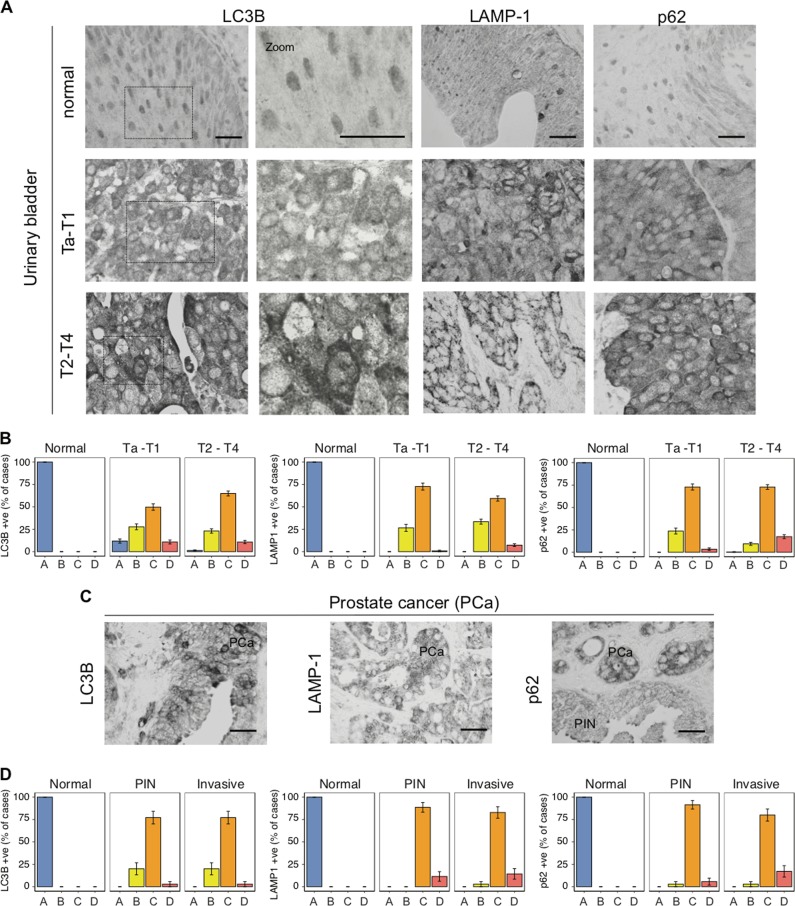
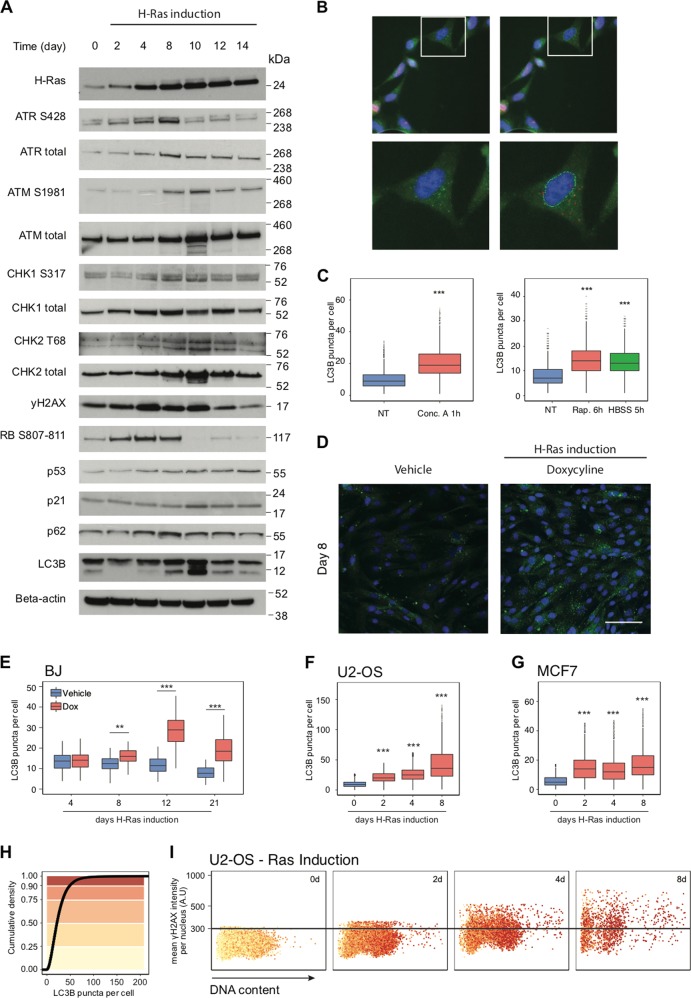
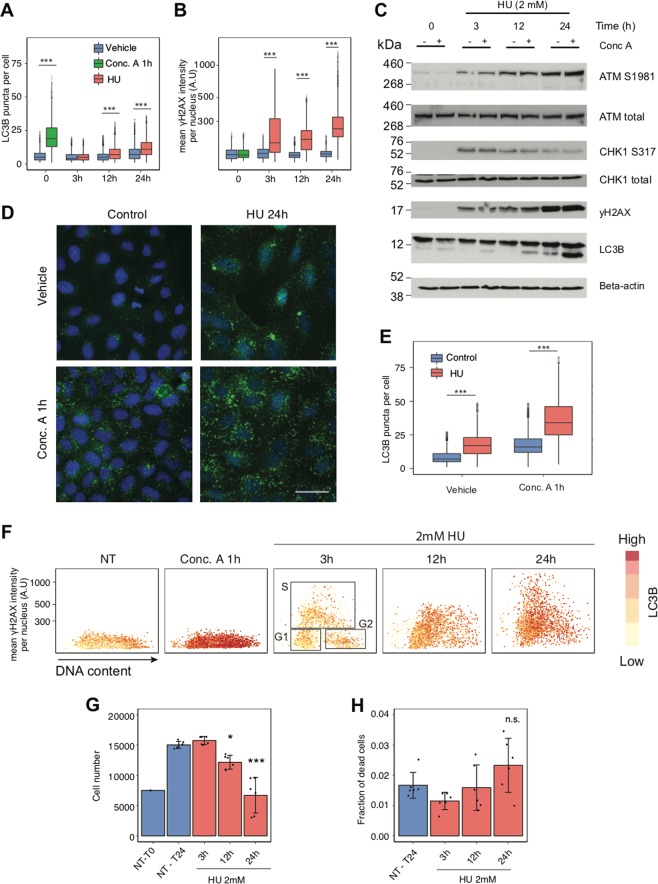
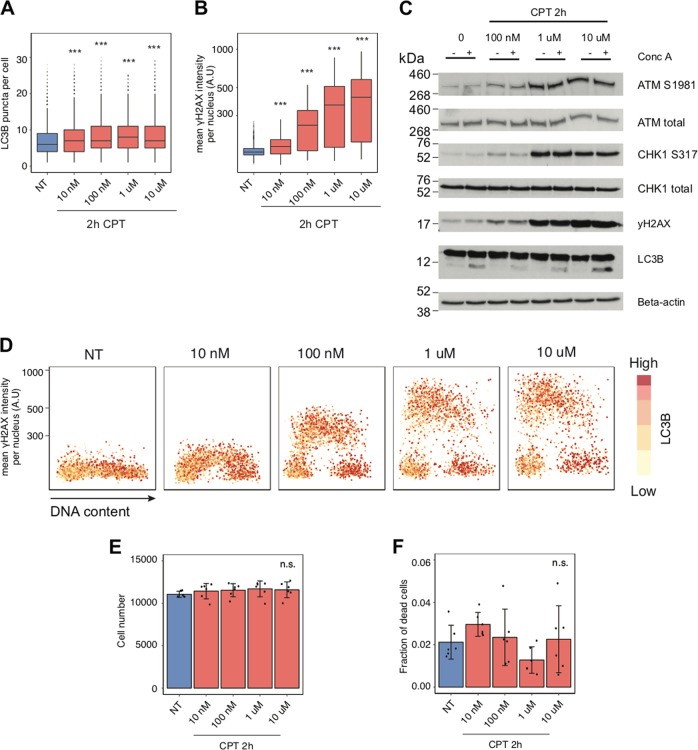
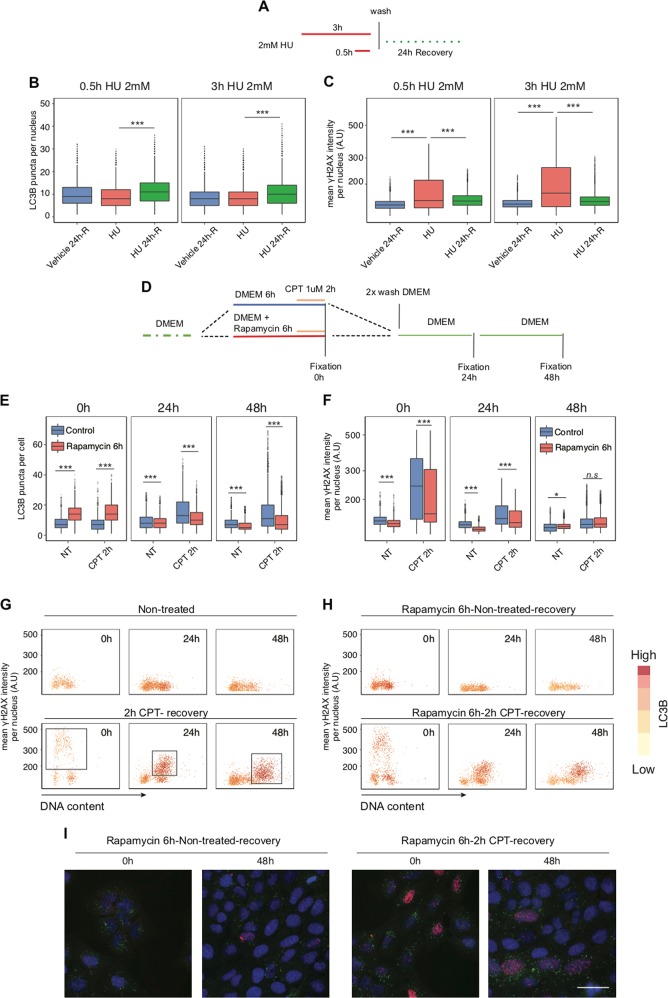
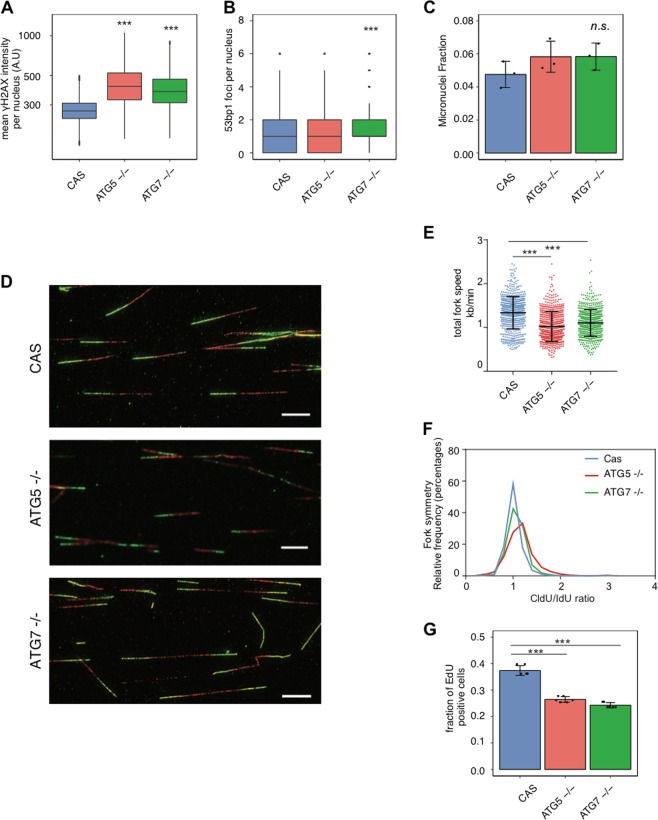
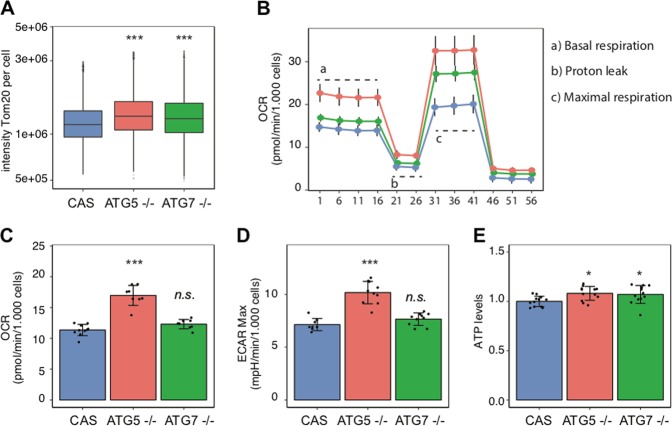
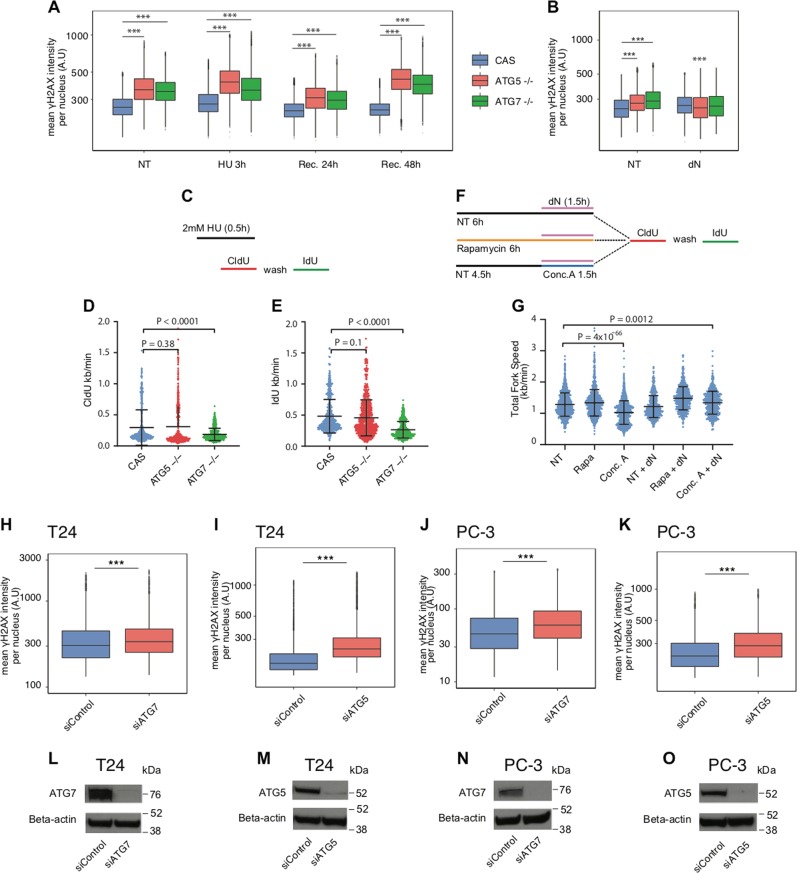
Autophagy is an evolutionarily conserved process that captures aberrant intracellular proteins and/or damaged organelles for delivery to lysosomes, with implications for cellular and organismal homeostasis, aging and diverse pathologies, including cancer. During cancer development, autophagy may play both tumour-supporting and tumour-suppressing roles. Any relationships of autophagy to the established oncogene-induced replication stress (RS) and the ensuing DNA damage response (DDR)-mediated anti-cancer barrier in early tumorigenesis remain to be elucidated. Here, assessing potential links between autophagy, RS and DDR, we found that autophagy is enhanced in both early and advanced stages of human urinary bladder and prostate tumorigenesis. Furthermore, a high-content, single-cell-level microscopy analysis of human cellular models exposed to diverse genotoxic insults showed that autophagy is enhanced in cells that experienced robust DNA damage, independently of the cell-cycle position. Oncogene- and drug-induced RS triggered first DDR and later autophagy. Unexpectedly, genetic inactivation of autophagy resulted in RS, despite cellular retention of functional mitochondria and normal ROS levels. Moreover, recovery from experimentally induced RS required autophagy to support DNA synthesis. Consistently, RS due to the absence of autophagy could be partly alleviated by exogenous supply of deoxynucleosides. Our results highlight the importance of autophagy for DNA synthesis, suggesting that autophagy may support cancer progression, at least in part, by facilitating tumour cell survival and fitness under replication stress, a feature shared by most malignancies. These findings have implications for better understanding of the role of autophagy in tumorigenesis, as well as for attempts to manipulate autophagy as an anti-tumour therapeutic strategy.
Overview
The claims and statistics of this paper haven’t been checked yet.
Free: it reads the open-access text and checks the first 5 claims that cite a source we can check. Create a free account to check every claim.
Integrity signals
Registry
Cites
Statistics
Figures
Verification
Claims the paper makes
The claims and statistics of this paper haven’t been checked yet.
Free: it reads the open-access text and checks the first 5 claims that cite a source we can check. Create a free account to check every claim.
Claims other papers make about this one
Each is checked against this paper’s own text: does it say what the citing paper says it does?
In the citing paper
“Functionally, autophagy is activated at a later stage than DDR signaling to sustain the bioenergetic needs and to supply metabolites for SASP factor synthesis [245].”
From Mechanisms and Regulation of Cellular Senescence (2021) · cites this paper as [245]
Self-check
Percentages, sums and reported differences re-computed from the paper’s own numbers.
The self-check needs the paper’s full text.
Citations
Cites
1 retracted
RETRACTED: Role of Autophagy as a Survival Mechanism for Hypoxic Cells in Tumors
Tan, Q., Wang, M., Yu, M., Zhang, J., Bristow, R. G., Hill, R. P., & Tannock, I. F. (2016) · Neoplasia · doi:10.1016/j.neo.2016.04.003 · Cited by 98
RetractedWorld Health Organization Classification of Tumours
Fletcher, C., van den Berg, A., & Molenaar, I. (2002) · Cited by 7,079
Autophagy: Renovation of Cells and Tissues
Mizushima, N., & Komatsu, M. (2011) · Cell · doi:10.1016/j.cell.2011.10.026 · Cited by 6,418
Methods in Mammalian Autophagy Research
Mizushima, N., Yoshimori, T., & Levine, B. (2010) · Cell · doi:10.1016/j.cell.2010.01.028 · Cited by 4,497
Induction of autophagy and inhibition of tumorigenesis by beclin 1
Liang, X. H., Jackson, S., Seaman, M., Brown, K., Kempkes, B., Hibshoosh, H., & Levine, B. (1999) · Nature · doi:10.1038/45257 · Cited by 3,347 · cited 1×
“Autophagy has been suggested to suppress tumour growth during early stages of cancer development [11, 12].”
BackgroundDNA damage response as a candidate anti-cancer barrier in early human tumorigenesis
Bartkova, J., Hořejší, Z., Koed, K., Krämer, A., Tort, F., Zieger, K., Guldberg, P., Sehested, M., Nesland, J. M., Lukas, C., et al. (2005) · Nature · doi:10.1038/nature03482 · Cited by 2,688
Levy, J. M. M., Towers, C. G., & Thorburn, A. (2017) · Nature Reviews Cancer · doi:10.1038/nrc.2017.53 · Cited by 2,526
Cepharanthine potently enhances the sensitivity of anticancer agents in K562 cells
Ikeda, R., Che, X., Yamaguchi, T., Ushiyama, M., Zheng, C., Okumura, H., Takeda, Y., Shibayama, Y., Nakamura, K. T., Jeung, H., et al. (2005) · Cancer Science · doi:10.1111/j.1349-7006.2005.00057.x · Cited by 2,274
A Comprehensive Survey of Ras Mutations in Cancer
Prior, I. A., Lewis, P. D., & Mattos, C. (2012) · Cancer Research · doi:10.1158/0008-5472.can-11-2612 · Cited by 2,063
Oncogene-induced senescence is part of the tumorigenesis barrier imposed by DNA damage checkpoints
Bartkova, J., Rezaei, N., Liontos, M., Karakaidos, P., Kletsas, D., Issaeva, N., Vassiliou, L.-V. F., Kolettas, E., Niforou, K., Zoumpourlis, V. C., et al. (2006) · Nature · doi:10.1038/nature05268 · Cited by 1,986 · cited 6×
“Deregulated oncogenes cause replication stress (RS) and DNA damage in cultured cells and mouse models [16], thereby triggering DNA damage response (DDR) checkpoints that provide a biological anti-cancer barrier in early stages of tumorigenesis, a concept shared by responses to diverse types of oncogenes, loss of some…”
BackgroundSelf-citation
Cited by
Role of p53 in the Regulation of Cellular Senescence
Mijit, M., Caracciolo, V., Melillo, A., Amicarelli, F., & Giordano, A. (2020) · Biomolecules · doi:10.3390/biom10030420 · Cited by 639
“Stressors include both intrinsic factors, such as oxidative damage, telomere attrition, hyperproliferation, oncogene activation, and environmental sources, including UV-light, γ-irradiation, and chemotherapeutic drugs [18,19].”
BackgroundMechanisms and Regulation of Cellular Senescence
Roger, L., Tomas, F., & Gire, V. (2021) · International Journal of Molecular Sciences · doi:10.3390/ijms222313173 · Cited by 395
“Functionally, autophagy is activated at a later stage than DDR signaling to sustain the bioenergetic needs and to supply metabolites for SASP factor synthesis [245].”
BackgroundA Compressive Review about Taxol®: History and Future Challenges
Gallego-Jara, J., Lozano-Terol, G., Sola-Martínez, R. A., Cánovas-Díaz, M., & de Diego Puente, T. (2020) · Molecules · doi:10.3390/molecules25245986 · Cited by 344
Karagöz, G. E., Acosta-Alvear, D., & Walter, P. (2019) · Cold Spring Harbor Perspectives in Biology · doi:10.1101/cshperspect.a033886 · Cited by 310
Targeting autophagy in disease: established and new strategies
Kocak, M., Ezazi Erdi, S., Jorba, G., Maestro, I., Farrés, J., Kirkin, V., Martinez, A., & Pless, O. (2022) · Autophagy · doi:10.1080/15548627.2021.1936359 · Cited by 228
Zhou, H., & Toan, S. (2020) · Biomolecules · doi:10.3390/biom10010085 · Cited by 140
Autophagy in Cancer Cell Death
Linder, B., & Kögel, D. (2019) · Biology · doi:10.3390/biology8040082 · Cited by 127
“On the other hand, it was recently proposed that autophagy may also support cancer progression by facilitating tumor cell survival and fitness under replication stress, a common feature of most malignancies [21].”
BackgroundThe p53 family member p73 in the regulation of cell stress response
Rozenberg, J. M., Zvereva, S. D., Dalina, A. A., Blatov, I., Zubarev, I. V., Luppov, D. V., Bessmertnyi, A., Romanishin, A. O., Alsoulaiman, L., Kumeiko, V. V., et al. (2021) · Biology Direct · doi:10.1186/s13062-021-00307-5 · Cited by 93
“In addition, expression of the distinct set of cell cycle related genes regulated by the p53-p21-DREAM-E2F/CHR is inhibited [178, 179].”
BackgroundStress Granules Determine the Development of Obesity-Associated Pancreatic Cancer
Fonteneau, G., Redding, A., Hoag-Lee, H., Sim, E. S., Heinrich, S., Gaida, M. M., & Grabocka, E. (2022) · Cancer Discovery · doi:10.1158/2159-8290.cd-21-1672 · Cited by 98
Kanellis, D. C., Espinoza, J. A., Zisi, A., Sakkas, E., Bártková, J., Katsori, A., Boström, J., Dyrskjøt, L., Broholm, H., Altun, M., et al. (2021) · Science Advances · doi:10.1126/sciadv.abf7561 · Cited by 80
Self-citationImpact of context-dependent autophagy states on tumor progression
Assi, M. N., & Kimmelman, A. C. (2023) · Nature Cancer · doi:10.1038/s43018-023-00546-7 · Cited by 87
NAD+ regulates nucleotide metabolism and genomic DNA replication
Munk, S. H. N., Merchut‐Maya, J. M., Adelantado-Rubio, A., Hall, A., Pappas, G. D., Milletti, G., Lee, M., Johnsen, L. G., Guldberg, P., Bártek, J., et al. (2023) · Nature Cell Biology · doi:10.1038/s41556-023-01280-z · Cited by 78
Self-citationZhu, L., Liu, J., Chen, J., & Zhou, Q. (2021) · Journal of Hematology & Oncology · doi:10.1186/s13045-021-01218-8 · Cited by 84
“Conversely, in most malignancies, autophagy can support DNA synthesis, thereby conferring survival to tumor cells under replication stress [126], whereas autophagy inhibition with niraparib treatment, a PARPi, accelerates DNA damage and cell death in laryngeal squamous cell carcinoma [127].”
Backgroundp53: From Fundamental Biology to Clinical Applications in Cancer
Capuozzo, M., Santorsola, M., Bocchetti, M., Perri, F., Cascella, M., Granata, V., Celotto, V., Gualillo, O., Cossu, A. M., Nasti, G., et al. (2022) · Biology · doi:10.3390/biology11091325 · Cited by 68
“Therefore, senescence can be intended as an adaptive response of cells and organisms to unfavorable internal or environmental conditions [76,77].”
BackgroundMAP4K4 mediates the SOX6-induced autophagy and reduces the chemosensitivity of cervical cancer
Huang, H., Han, Q., Han, Z., Liu, M., Shu, S., Zhang, T., Yang, X., Li, Z., Xu, Q., Guo, H., et al. (2021) · Cell Death and Disease · doi:10.1038/s41419-021-04474-1 · Cited by 65
“Several studies have reported the dual effects of autophagy in tumorigenesis at different stages of tumor development [21, 22].”
BackgroundVoronina, M. V., Frolova, A. S., Kolesova, E. P., Kuldyushev, N. A., Parodi, A., & Zamyatnin, A. A. (2024) · International Journal of Molecular Sciences · doi:10.3390/ijms25074087 · Cited by 67
Causes and consequences of DNA damage-induced autophagy
Juretschke, T., & Beli, P. (2021) · Matrix Biology · doi:10.1016/j.matbio.2021.02.004 · Cited by 62
Autophagy-Related Long Non-coding RNA Is a Prognostic Indicator for Bladder Cancer
Wan, J., Guo, C., Fang, H., Xu, Z., Hu, Y., & Luo, Y. (2021) · Frontiers in Oncology · doi:10.3389/fonc.2021.647236 · Cited by 74
“Moreover, autophagy is also involved in gene repair and supports the synthesis of DNA in response to oncogenes (12, 13).”
BackgroundChicote, J., Yuste, V. J., Boix, J., & Ribas, J. (2020) · Frontiers in Pharmacology · doi:10.3389/fphar.2020.580343 · Cited by 48
“Moreover, autophagy is increased in cells subjected to an intense DNA damage in response to genotoxic stressors and is necessary for the recovery from replication stress (Vanzo et al., 2020).”
BackgroundPRKAA2, MTOR, and TFEB in the regulation of lysosomal damage response and autophagy
Shariq, M., Khan, M. F., Raj, R., Ahsan, N., & Kumar, P. (2024) · Journal of Molecular Medicine · doi:10.1007/s00109-023-02411-7 · Cited by 45
Differential activation of eMI by distinct forms of cellular stress
Mesquita, A., Glenn, J., & Jenny, A. (2020) · Autophagy · doi:10.1080/15548627.2020.1783833 · Cited by 40
“On the one hand, autophagy helps to clear specific substrates to regulate genotoxic stress [37,65,66], and loss of MA causes replication stress [67].”
BackgroundAutophagy Roles in Genome Maintenance
Ambrosio, S., & Majello, B. (2020) · Cancers · doi:10.3390/cancers12071793 · Cited by 44
Wu, M., Cong, Y., Wang, K., Yu, H., Zhang, X., Ma, M., Duan, Z., & Pei, X. (2022) · Ecotoxicology and Environmental Safety · doi:10.1016/j.ecoenv.2022.113395 · Cited by 39
Bai, Z., Ding, N., Ge, J., Wang, Y., Wang, L., Wu, N., Wei, Q., Xu, S., Liu, X., & Zhou, G. (2020) · Cell Biology International · doi:10.1002/cbin.11481 · Cited by 35
“autophagy could promote the survival and growth of cancer cells by eliminating the damaged organelles and proteins, and contribute to drug‐resistance in cancer cells during chemotherapy (Moosavi et al., 2018; Naik et al., 2018; Vanzo et al., 2019).”
BackgroundWang, S., Yang, Y., Luo, D., Zhai, L., Bai, Y., Wei, W., Sun, Q., & Jia, L. (2020) · Chemosphere · doi:10.1016/j.chemosphere.2020.128837 · Cited by 37
Activation of autophagy by in situ Zn2+ chelation reaction for enhanced tumor chemoimmunotherapy
Yang, Y., Zhu, Y., Wang, K., Miao, Y., Zhang, Y., Gao, J., Qin, H., & Zhang, Y. (2023) · Bioactive Materials · doi:10.1016/j.bioactmat.2023.06.022 · Cited by 45
“As an indicator of autophagy induction, Western blot assays were also used to determine LC3 turnover to detect autophagy activation [37].”
MethodGemcitabine promotes autophagy and lysosomal function through ERK- and TFEB-dependent mechanisms
Marchand, B., Poulin, M.-A., Lawson, C., Tai, L., Jean, S., & Boucher, M. (2023) · Cell Death Discovery · doi:10.1038/s41420-023-01342-z · Cited by 36
“Noteworthy, autophagy/ lysosome function plays an important role in recovery from replication stress [55] with the latter representing the primary mechanism through which gemcitabine interferes with cell growth.”
BackgroundXu, X., Li, G., Zhang, D., Zhu, H., Liu, G., & Zhang, Z. (2023) · Advanced Science · doi:10.1002/advs.202205346 · Cited by 34
eIF4A3 regulates the TFEB-mediated transcriptional response via GSK3B to control autophagy
Sakellariou, D., Tiberti, M., Kleiber, T., Blázquez, L., López, A. R., Abildgaard, M. H., Lubas, M., Bártek, J., Papaleo, E., & Frankel, L. B. (2021) · Cell Death and Differentiation · doi:10.1038/s41418-021-00822-y · Cited by 28
“For this purpose, we established autophagy-deficient ATG5 and ATG7 MCF-7 CRISPR-cas9 knockout (KO) cells and compared them to a nontargeting (scramble) CRISPR-cas9 control cell line (NTC) [4, 29, 30].”
BackgroundMethodInfluentialSelf-citationLiang, N., Song, W., & Li, J. (2024) · Ecotoxicology and Environmental Safety · doi:10.1016/j.ecoenv.2024.116412 · Cited by 25
Ubiquilin Networking in Cancers
Jantrapirom, S., Piccolo, L. L., Pruksakorn, D., Potikanond, S., & Nimlamool, W. (2020) · Cancers · doi:10.3390/cancers12061586 · Cited by 22
“With a wide spectrum of its functions participating in stress response, hypoxia, nutrient deprivation, telomere erosion, UV light, ionized radiation and chemotherapeutic reagents and so forth [26,27], it becomes an essential interactor between extrinsic factors and intrinsic biological responses.”
BackgroundDNA damage and regulation of protein homeostasis
Paull, T. T. (2021) · DNA repair · doi:10.1016/j.dnarep.2021.103155 · Cited by 22
Signaling alterations caused by drugs and autophagy
Dent, P., Booth, L. A., Poklepovic, A. S., & Hancock, J. F. (2019) · Cellular Signalling · doi:10.1016/j.cellsig.2019.109416 · Cited by 22
Du, H., Tao, T., Xu, S., Xu, C., Li, S., Su, Q., Yan, J. Y., Liu, B., & Li, R. (2022) · Frontiers in Molecular Biosciences · doi:10.3389/fmolb.2021.789658 · Cited by 21
P53-regulated autophagy and its impact on drug resistance and cell fate
Shim, D., Duan, L., & Maki, C. G. (2021) · Cancer Drug Resistance · doi:10.20517/cdr.2020.85 · Cited by 33
“Vanzo et al.[65] recently reported that autophagy can help maintain replication forks in response to replication stressors by maintaining nucleotide levels.”
BackgroundWhen lipid homeostasis runs havoc: Lipotoxicity links lysosomal dysfunction to autophagy
Tegeder, I., & Kögel, D. (2020) · Matrix Biology · doi:10.1016/j.matbio.2020.11.005 · Cited by 22
Contrast effects of autophagy in the treatment of bladder cancer
Konaç, E., Kurman, Y., & Baltacı, S. (2020) · Experimental Biology and Medicine · doi:10.1177/1535370220959336 · Cited by 20
“Vanzo et al.(47) demonstrated that under replication stress, autophagy was activated and promoted DNA synthesis in bladder cancer cells.”
BackgroundChen, R., Liu, B., Jaślan, D., Kucej, L., Kudrina, V., Warnke, B., Klingl, Y. E., Petrauskas, A., Castro, S. P., Maeda, K., et al. (2025) · Nature Communications · doi:10.1038/s41467-025-60349-5 · Cited by 24
Self-citationRecent advances in the surgical management of hepatocellular carcinoma
Glantzounis, G. K. (2021) · Annals of Gastroenterology · doi:10.20524/aog.2021.0632 · Cited by 17
“Moreover, autophagy contributes to the chemoresistance of HCC cells [94,95].”
BackgroundYao, X., Chen, H., Xu, B., Lü, J., Gu, J., Chen, F., Ju, M., & Sun, X. (2020) · Gene · doi:10.1016/j.gene.2020.145261 · Cited by 19
Wang, X., Zhang, M., Xiong, X., Yang, H., Wang, P., Zhang, K., Awadasseid, A., Narva, S., Wu, Y., & Zhang, W. (2022) · Life Sciences · doi:10.1016/j.lfs.2022.120651 · Cited by 17
Chan, S. J. W., Zhu, J., Yip, B. R. P., Shyamasundar, S., & Bazan, G. C. (2024) · Advanced Materials · doi:10.1002/adma.202411329 · Cited by 17
Lopes, E. C., Dias, M. H., da Silva, M. S., Zeidler, J. D., Vessoni, A. T., Reis, M. S., Boccardo, E., & Armelin, H. A. (2021) · Cell Death and Disease · doi:10.1038/s41419-021-03476-3 · Cited by 16
Serine and one-carbon metabolisms bring new therapeutic venues in prostate cancer
Ganini, C., Amelio, I., Bertolo, R. G., Candi, E., Cappello, A., Cipriani, C., Mauriello, A., Marani, C., Melino, G., Montanaro, M., et al. (2021) · Discover Oncology · doi:10.1007/s12672-021-00440-7 · Cited by 17
Baker, F., Polat, I. H., Abou‐El‐Ardat, K., Alshamleh, I., Thölken, M., Hymon, D., Gubaš, A., Koschade, S. E., Vischedyk, J. B., Kaulich, M., et al. (2021) · Cancers · doi:10.3390/cancers13236142 · Cited by 15
“Loss of ATG5 and ATG7 was found to increase basal and maximal respiration as well as proton leak in cancer cells [57].”
BackgroundCheng, S. M., Shieh, M., Lin, T., & Cheung, C. H. A. (2021) · Journal of Cellular Physiology · doi:10.1002/jcp.30555 · Cited by 11
“shown to promote the survival of cells under genotoxic and DNA replication stresses (Orlotti et al., 2012; Qiang et al., 2013; Qiang et al., 2016; Vanzo et al., 2020).”
BackgroundPeng, K., Sun, A., Zhu, J., Gao, J., Li, Y., Shao, G., Yang, W., & Lin, Q. (2021) · Oncology Letters · doi:10.3892/ol.2021.12899 · Cited by 9
The multifaceted roles of nucleophagy in cancer development and therapy
Zhao, L., Li, W., Luo, X., & Sheng, S. (2020) · Cell Biology International · doi:10.1002/cbin.11504 · Cited by 10
O’Meara, M. J., Rapala, J. R., Nichols, C. B., Alexandre, C., Billmyre, R. B., Steenwyk, J. L., Alspaugh, J. A., & O’Meara, T. R. (2024) · PLoS Genetics · doi:10.1371/journal.pgen.1011158 · Cited by 8
“Autophagy is known to be induced by DNA damage, where the inhibition of autophagy can sensitize cancer cells to DNA damage [83–85].”
BackgroundThe Contribution of Lysosomes to DNA Replication
Merchut‐Maya, J. M., & Maya‐Mendoza, A. (2021) · Cells · doi:10.3390/cells10051068 · Cited by 7
“Dataset for MCF7 cells was taken from [30].”
BackgroundMethodInfluentialSelf-citationAutophagy, replication stress and DNA synthesis, an intricate relationship
Cecconi, F. (2020) · Cell Death and Differentiation · doi:10.1038/s41418-019-0479-2 · Cited by 7
“at least two important insights are reported [4]: (1) the authors bring novel proofs in favor of an autophagic role in tumor progression rather than suppression and (2), more unexpectedly, they uncover a novel role for autophagy in regulating DNA synthesis by stabilizing nucleotide pools and promoting genomic stabilit…”
They Might Cut It—Lysosomes and Autophagy in Mitotic Progression
Hämälistö, S., Stahl, J. L., & Jäättelä, M. (2021) · Frontiers in Cell and Developmental Biology · doi:10.3389/fcell.2021.727538 · Cited by 6
Self-citationMao, J., Ni, J., Chu, L., Chu, X., Xu, D., Yang, X., & Zhu, Z. (2024) · Radiation Oncology · doi:10.1186/s13014-024-02437-2 · Cited by 5
“…of the MYC family, ongoing abnormal cell growth and metabolism [16–18], accumulation of reactive oxygen species (ROS) within cancer cells [19, 20], and unconventional protein post-translational modifications [21], collectively define the distinctive biological nature of DNA replication…”
BackgroundArya, B., Mittal, S., Joshi, P., Pandey, A. K., Ramírez-Vick, J. E., Gupta, G., & Singh, S. P. (2025) · Beilstein Journal of Nanotechnology · doi:10.3762/bjnano.16.24 · Cited by 5
Stigmasterol improves diabetic retinopathy by inhibiting VAMP7-mediated autophagy/mitophagy
Wang, Q., Zhang, P., Ji, F., Li, Y., & Lu, P. (2025) · Biochemical and Biophysical Research Communications · doi:10.1016/j.bbrc.2025.152653 · Cited by 3
Ferroptosis-autophagy crosstalk in bladder cancer: mechanisms and therapeutic implications
Wang, Y., Wu, N., & Zhang, S. (2026) · Molecular Cancer · doi:10.1186/s12943-026-02608-7 · Cited by 5
“In addition, more than one gene involved in autophagy should be targeted to avoid misinterpreting indirect effects [245] microRNA Can be used to reduce the levels of target mRNA(s) or block translation [50, 246] Other signaling pathways (V-ATPase, HO1, AMPK, PIK3CA, etc.) Concanamycin A A specific…”
Yu, C., Huang, K., Chen, J., Lai, C.-T., Chen, G.-W., Huang, C.-C., Yeh, Y.-H., Lee, C., Lee, J.-J., Huang, D., et al. (2024) · Free Radical Biology and Medicine · doi:10.1016/j.freeradbiomed.2024.06.026 · Cited by 4
Gorgoulis, V. G., Evangelou, K., & Klionsky, D. J. (2024) · Autophagy · doi:10.1080/15548627.2024.2362121 · Cited by 5
“As such, autophagy seems to play a beneficial, cell-fitness supporting role allowing cells to prevent or deal with replication stress and DNA damage, thus blocking cancer progression [12].”
Self-citationNucleoporin TPR integrates MAPK signaling with mitogen-induced transcriptional programs
Liu, J., Zheng, Y., Xiong, Y., Ma, R., Lin, Z., Lin, H., Andújar-Sánchez, M., Bártková, J., Liu, J., Foiani, M., et al. (2026) · Cell Death and Disease · doi:10.1038/s41419-026-08760-8 · Cited by 2
“The spleen provides a physiologically relevant context for RAS – RAF – MEK – ERK MAPK pathway activation: although EGFR expression is almost absent — particularly in the immune cell populations that typically characterize this tissue — MAPK signaling can be robustly triggered via B cell and T cell…”
Self-citationWang, X., Yu, H., Li, X., Tian, R., Xu, C., Li, T., Fei, J., Du, X., & Yin, Z. (2024) · Reproduction · doi:10.1530/rep-24-0219 · Cited by 2
Cross-Talk Between DNA Damage and Autophagy and Its Implication in Cancer Therapy
Bellare, G. P., Gupta, P., Chakraborty, S., Tyagi, M., & Patro, B. S. (2020) · Springer eBooks · doi:10.1007/978-981-15-6930-2_3 · Cited by 2
Li, Q., Wu, J., Zhu, M., Tang, Y., Jin, L., Chen, Y., Jin, M., & Peng, Z. (2022) · Computers in Biology and Medicine · doi:10.1016/j.compbiomed.2022.106437 · Cited by 2
Hexokinase 1b is a novel target for Non–small-cell lung cancerPreprint
Yozgat, Y., Karakoç, E., Şahin, Ö., Çimen, Ş., Rabeh, W. M., Aydın, M. Ş., Mardinoğlu, A., Gürsel, İ., Çakır, A., Şensoy, Ö., et al. (2022) · bioRxiv (Cold Spring Harbor Laboratory) · doi:10.1101/2022.06.27.497447 · Cited by 2
Qiao, X., Ye, T., Wu, T., Han, X., Sun, T., Wang, H., Jia, J., Dai, Y., Yun, R., Jiang, S., et al. (2026) · APOPTOSIS · doi:10.1007/s10495-026-02324-z · Cited by 2
How Oncogenic Viruses Exploit p62-Mediated Selective Autophagy for Cancer Development
Wang, L. (2021) · Annals of Immunology & Immunotherapy · doi:10.23880/aii-16000134 · Cited by 1
“As such, oncogenic viruses are known to induce non-selective autophagy and inhibit the final stage of autophagy at their early stage of infection for optimal replication and oncogenic transformation, but induce autophagy in their latency to facilitate their persistence, as well as tumor initiation, metastasis and deve…”
BackgroundAutophagy in Hematological Malignancies
许, 晗. (2021) · World Journal of Cancer Research · doi:10.12677/wjcr.2021.114017 · Cited by 1
Stem cells, fitness, and aging
Kitaeva, K. V., Kiyasov, A. P., Rizvanov, A. A., Rutland, C. S., & Solovyeva, V. V. (2022) · Elsevier eBooks · doi:10.1016/b978-0-12-823761-8.00007-0 · Cited by 1
Sengul, G. F., Celik, F. S., & Pisiren, G. (2024) · Interdisciplinary cancer research · doi:10.1007/16833_2024_479 · Cited by 2
Yu, X.-X., Liu, Y., Luo, R.-J., Song, Z., Chen, W.-K., Mo, Z.-M., & Wang, F.-J. (2025) · Discover Oncology · doi:10.1007/s12672-025-01852-5 · Cited by 1
Zhang, N., Pan, L., Liao, Q., Lei, F., Tong, R., & Li, Y. (2025) · Comparative Biochemistry and Physiology Part C Toxicology & Pharmacology · doi:10.1016/j.cbpc.2025.110202 · Cited by 1
Autophagy Protects Integrity of Tumor Suppressors From Replication StressPreprint
Kawabata, T., Unno, R., Yamamuro, T., Kageyama, S., Akamatsu, K., Sekiya, R., Fujita, T., Sakamoto, M., Kawakatsu, M., Hamasaki, M., et al. (2021) · SSRN Electronic Journal · doi:10.2139/ssrn.3950748 · Cited by 1
Lan, M., Meng, F., Li, Q., Pang, M., Liu, F., Kong, Z., Cai, T., Yang, Z., & Cai, Y. C. (2022) · Research Square · doi:10.21203/rs.3.rs-2291061/v1 · Cited by 1
Chitikova, Z., Yartseva, N. M., Bykova, T. V., Zubova, S. G., Kochetkova, E. Y., Поспелов, В. А., & Pospelova, T. V. (2021) · Cell and Tissue Biology · doi:10.1134/s1990519x2104009x
Botelho, W. G. N., César, A. R. D. A., & Teixeira, K. N. (2021) · Research Society and Development · doi:10.33448/rsd-v10i16.24223
The role of the core autophagy gene ATG3 in leukemia cell survival and metabolism
Baker, F. M. (2023) · Publication Server of Goethe University Frankfurt am Main (Goethe University Frankfurt) · doi:10.21248/gups.73942
Akgün, S., Naren, P., Lenz, T., Zink, A., Krings, K. S., Wesselborg, S., Mendiburo, M. J., Prigione, A., Stühler, K., & Stork, B. (2026) · Scientific Reports · doi:10.1038/s41598-026-54127-6
“Several previous works indicate that DNA-damaging drugs induce an autophagic response 9,37–42 .”
Liu, W., Jiang, X., Ma, Y., Qing, H., Bao, Y., & Jiao, Z. (2025) · Medical Oncology · doi:10.1007/s12032-025-03053-0
“Accumulating evidence demonstrates that autophagy plays a pivotal role in helping cancer cells with-stand replication stress [109].”
Proteasomal Degradation of Mutant Huntingtin Exon1 Regulates Autophagy
Folger, A., Chen, C., Gonzalez, P., Owutey, S. L., & Wang, Y. (2025) · Cells · doi:10.3390/cells15010068 · Cited by 1
Wang, Y., & Qin, L. (2026) · Frontiers in Cell and Developmental Biology · doi:10.3389/fcell.2026.1974523
“Replication stress, mainly arising from conflicts between DNA replication and transcription or from insufficient replication origins, also engages the DDR in senescent cells (Zeman and Cimprich, 2014; Vanzo et al., 2020).”
SMAD3-driven cell state transitions underpin immunoresistance in bladder cancerPreprint
Kholodenko, B. Ν., Robertson, S. Y. T., Yang, J., Carragher, N. O., Munro, A. F., Rauch, N., Sevrin, T., Wynne, K., Kölch, W., & Rukhlenko, O. S. (2026) · Research Square · doi:10.21203/rs.3.rs-11470762/v1
Metadata
- Authors
- Vanzo, R., Bartkova, J., Merchut-Maya, J. M., Hall, A., Bouchal, J., Dyrskjøt, L., Frankel, L. B., Gorgoulis, V., Maya-Mendoza, A., Jäättelä, M., & Bartek, J.
- Affiliations
- Danish Cancer Society (DK)
- Institute of Molecular and Translational Medicine (CZ)
- Aarhus University Hospital (DK)
- University of Copenhagen (DK)
- National and Kapodistrian University of Athens (GR)
- Corresponding author
- Jäättelä, Marja
- ORCID
- Venue
- Cell Death & Differentiation
- Published
- 2019-08-14
- Volume
- 27
- Issue
- 3
- Pages
- 1134-1153
- ISSN
- 1350-9047 (ISSN-L)
- 1476-5403
- PMC
- PMC7206042
- OpenAlex
- W2967546237
- Cited by
- 79
- References
- 75
- Citations by year
- 2026: 5 · 2025: 7 · 2024: 10 · 2023: 6 · 2022: 9 · 2021: 24 · 2020: 15 · 2019: 3
- FWCI
- 9.70
- Type
- journal article
- Language
- en
- Open access
- hybrid
- doi.org
- Licence
- cc-by
- creativecommons.org/licenses/by/4.0 (tdm)
- creativecommons.org/licenses/by/4.0 (vor)
- Locations
- Cell Death and Differentiation (publishedVersion, cc-by)
- PubMed Central (publishedVersion, cc-by)
- PubMed (publishedVersion)
- Research at the University of Copenhagen (University of Copenhagen) (publishedVersion, cc-by)
- Funders
- Kræftens Bekæmpelse (#R204-A12617)
- Lundbeckfonden (R266-2017-4289)
- Det Frie Forskningsråd (#DFF-7016-00313)
- Vetenskapsrådet (VR-MH 2014-46602-117891-30)
- Cancerfonden (#170176)
- Danmarks Grundforskningsfond (CARD, DNRF 125)
- Topics
- Life Sciences › Biochemistry, Genetics and Molecular Biology › Cell Biology › Autophagy in Disease and Therapy
- Life Sciences › Biochemistry, Genetics and Molecular Biology › Molecular Biology › DNA Repair Mechanisms
- Life Sciences › Biochemistry, Genetics and Molecular Biology › Molecular Biology › Ubiquitin and proteasome pathways
- Keywords
- autophagy, oncogene-induced replication stress, replication stress, DNA damage response, carcinogenesis, bladder cancer, prostate cancer, DNA synthesis, deoxynucleosides, tumor cell survival, cancer therapy
- MeSH terms
- Autophagosomes, Autophagy, Camptothecin, DNA Replication, Humans, Models, Biological, Oncogenes, Stress, Physiological, Cell Line, Tumor
About these checks
Registry, retraction, Cites and statistics results are computed, not judged, with one exception: a printed reference that no index lists is read once by a model before it counts as a citation error. Claims are extracted by a model and kept only when their quote appears verbatim in the text; each cited source is then checked, with a model’s help, for whether it says what the claim relies on. Those verdicts can be wrong — read the claim’s quote and the cited source before relying on one.
Statistics and arithmetic are recomputed, not judged.
Confidence bands are shown only for fields calibrated on our annotated test set. None is calibrated yet, so no band is shown.
What counts as a claim ›How we measure confidence ›How we check this ›
Are you an author, or do you see a problem with this page? Request a review
Data sources
Bibliographic data: Semantic Scholar, OpenAlex, Crossref.
Contains information from the Semantic Scholar Academic Graph Datasets, made available under the ODC Attribution License (ODC-BY 1.0).
Semantic Scholar’s data is described in: Kinney, R., et al. (2023). The Semantic Scholar Open Data Platform. arXiv:2301.10140.
