

Autophagy role(s) in response to oncogenes and DNA replication stress
Open accessThe DOI matches its Crossref record; 74 of the 75 references it cites were found in a registry or an index.
Abstract
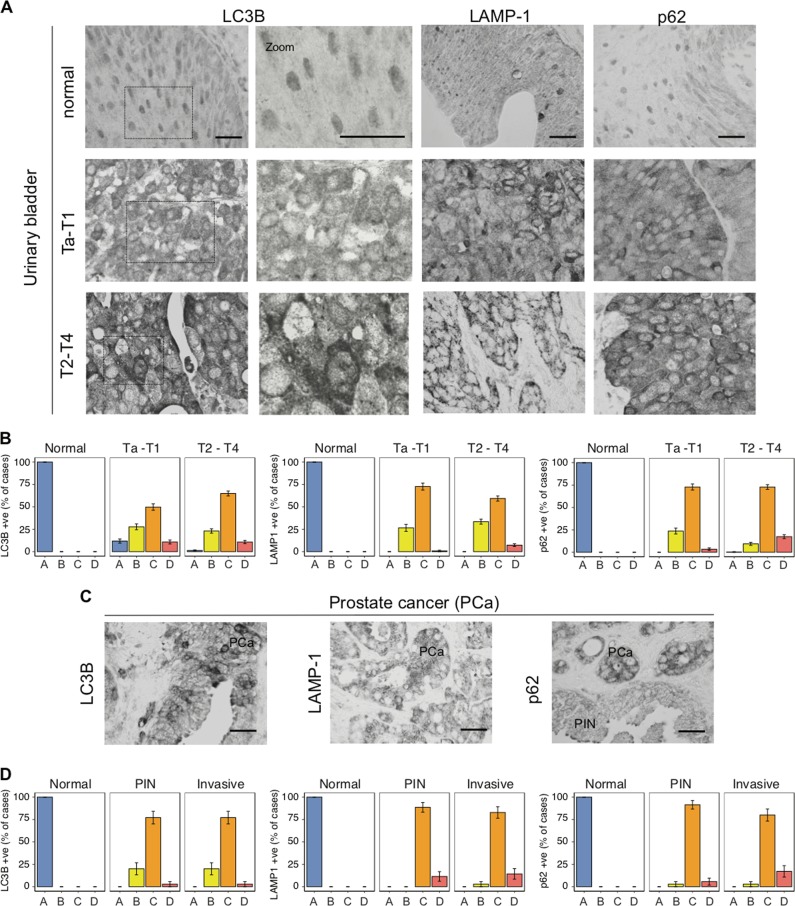
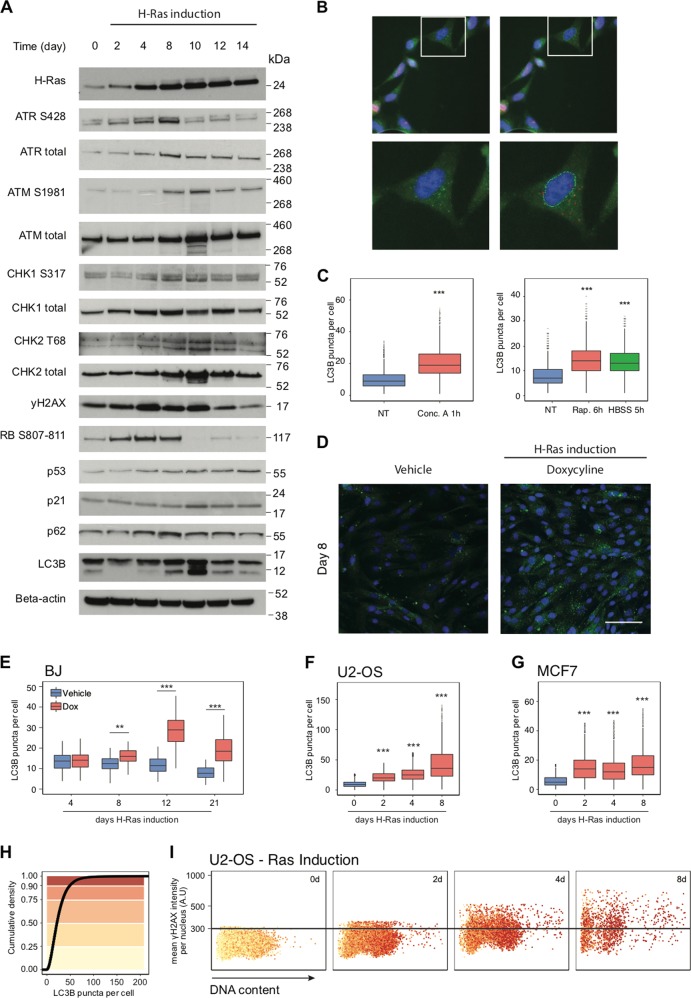
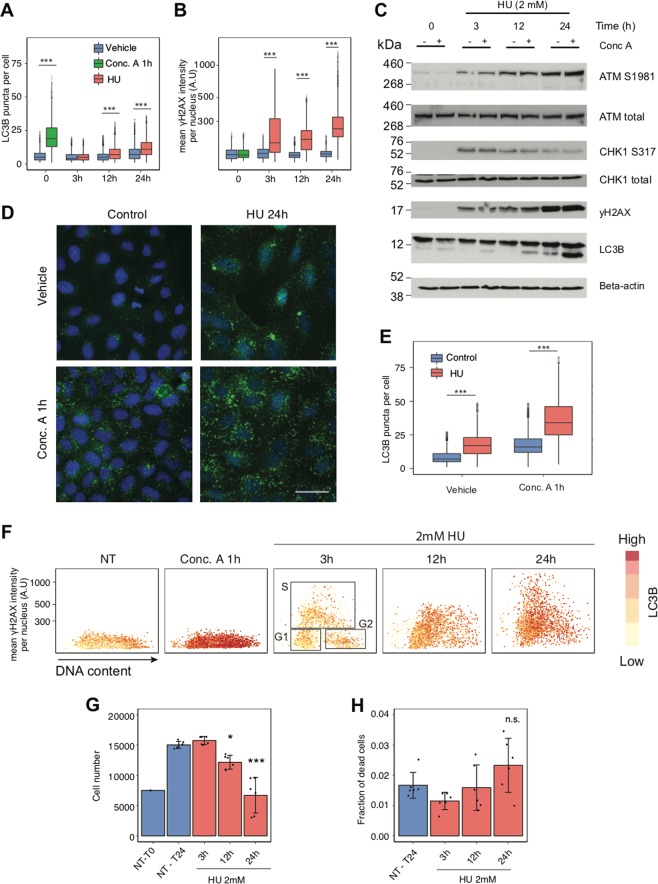
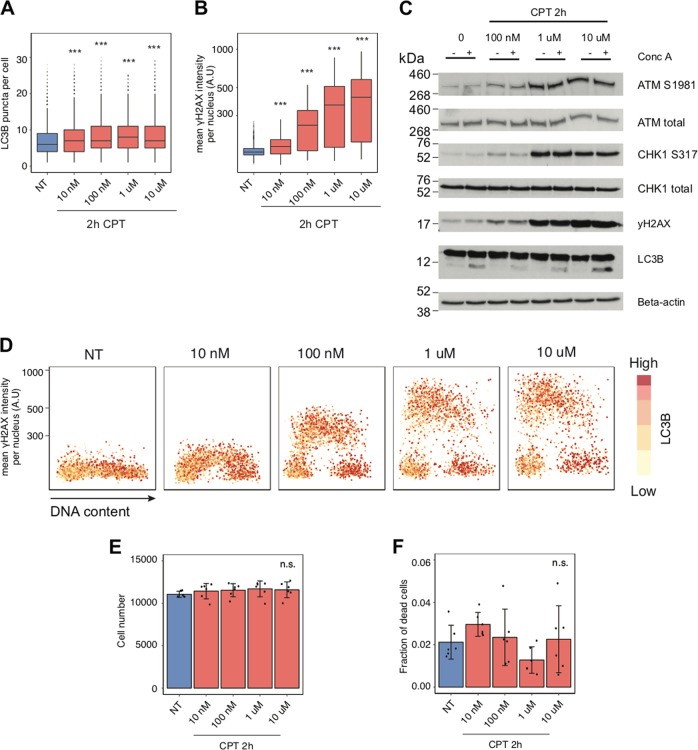
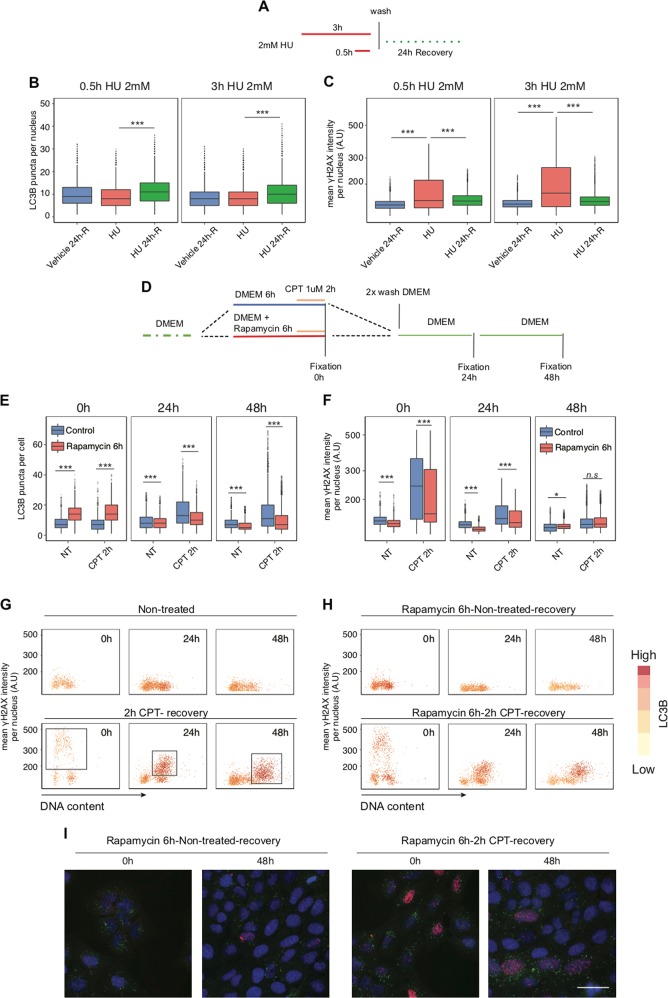
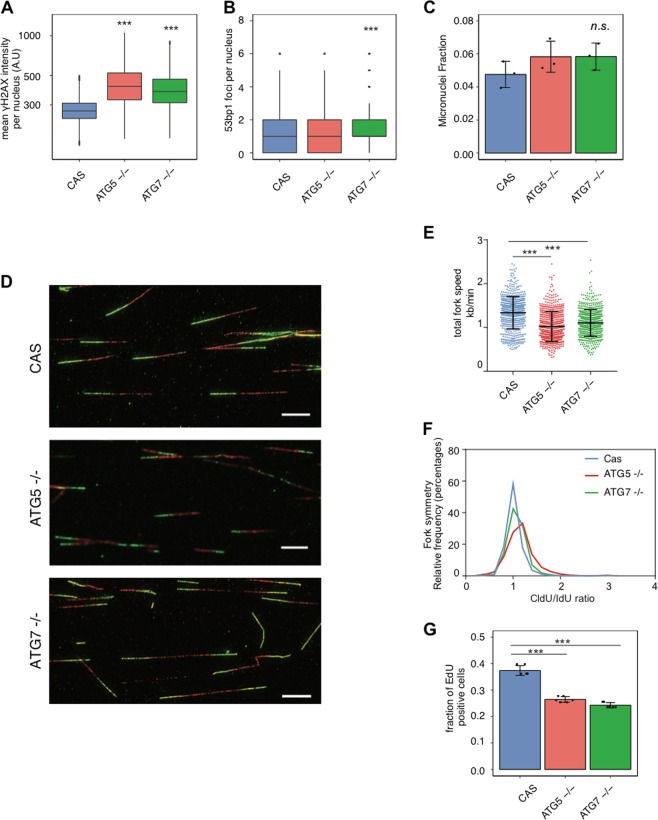
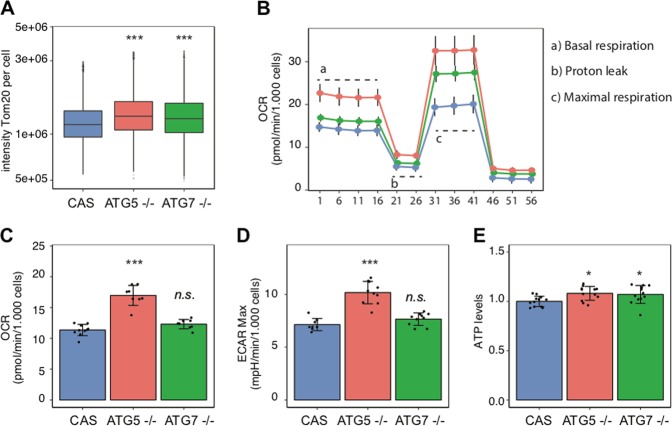
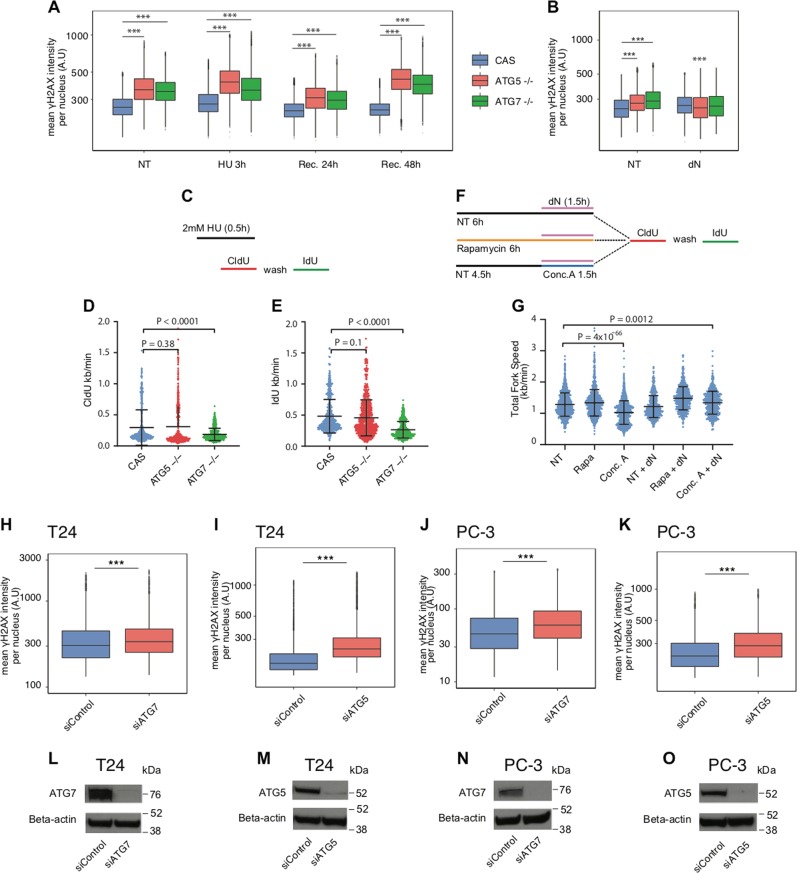
Autophagy is an evolutionarily conserved process that captures aberrant intracellular proteins and/or damaged organelles for delivery to lysosomes, with implications for cellular and organismal homeostasis, aging and diverse pathologies, including cancer. During cancer development, autophagy may play both tumour-supporting and tumour-suppressing roles. Any relationships of autophagy to the established oncogene-induced replication stress (RS) and the ensuing DNA damage response (DDR)-mediated anti-cancer barrier in early tumorigenesis remain to be elucidated. Here, assessing potential links between autophagy, RS and DDR, we found that autophagy is enhanced in both early and advanced stages of human urinary bladder and prostate tumorigenesis. Furthermore, a high-content, single-cell-level microscopy analysis of human cellular models exposed to diverse genotoxic insults showed that autophagy is enhanced in cells that experienced robust DNA damage, independently of the cell-cycle position. Oncogene- and drug-induced RS triggered first DDR and later autophagy. Unexpectedly, genetic inactivation of autophagy resulted in RS, despite cellular retention of functional mitochondria and normal ROS levels. Moreover, recovery from experimentally induced RS required autophagy to support DNA synthesis. Consistently, RS due to the absence of autophagy could be partly alleviated by exogenous supply of deoxynucleosides. Our results highlight the importance of autophagy for DNA synthesis, suggesting that autophagy may support cancer progression, at least in part, by facilitating tumour cell survival and fitness under replication stress, a feature shared by most malignancies. These findings have implications for better understanding of the role of autophagy in tumorigenesis, as well as for attempts to manipulate autophagy as an anti-tumour therapeutic strategy.
Overview
The claims and statistics of this paper haven’t been checked yet.
Free: it reads the open-access text and checks the first 5 claims that cite a source we can check. Create a free account to check every claim.
Integrity signals
Registry
Cites
Statistics
Figures
Verification
Claims the paper makes
The claims and statistics of this paper haven’t been checked yet.
Free: it reads the open-access text and checks the first 5 claims that cite a source we can check. Create a free account to check every claim.
Claims other papers make about this one
Each is checked against this paper’s own text: does it say what the citing paper says it does?
In the citing paper
“Functionally, autophagy is activated at a later stage than DDR signaling to sustain the bioenergetic needs and to supply metabolites for SASP factor synthesis [245].”
From Mechanisms and Regulation of Cellular Senescence (2021) · cites this paper as [245]
Self-check
Percentages, sums and reported differences re-computed from the paper’s own numbers.
The self-check needs the paper’s full text.
Citations
Cites
1 retracted
RETRACTED: Role of Autophagy as a Survival Mechanism for Hypoxic Cells in Tumors
Tan, Q., Wang, M., Yu, M., Zhang, J., Bristow, R. G., Hill, R. P., & Tannock, I. F. (2016) · Neoplasia · doi:10.1016/j.neo.2016.04.003 · Cited by 98
RetractedWorld Health Organization Classification of Tumours
Fletcher, C., van den Berg, A., & Molenaar, I. (2002) · Cited by 7,079
Autophagy: Renovation of Cells and Tissues
Mizushima, N., & Komatsu, M. (2011) · Cell · doi:10.1016/j.cell.2011.10.026 · Cited by 6,418
Methods in Mammalian Autophagy Research
Mizushima, N., Yoshimori, T., & Levine, B. (2010) · Cell · doi:10.1016/j.cell.2010.01.028 · Cited by 4,497
Induction of autophagy and inhibition of tumorigenesis by beclin 1
Liang, X. H., Jackson, S., Seaman, M., Brown, K., Kempkes, B., Hibshoosh, H., & Levine, B. (1999) · Nature · doi:10.1038/45257 · Cited by 3,347 · cited 1×
“Autophagy has been suggested to suppress tumour growth during early stages of cancer development [11, 12].”
BackgroundDNA damage response as a candidate anti-cancer barrier in early human tumorigenesis
Bartkova, J., Hořejší, Z., Koed, K., Krämer, A., Tort, F., Zieger, K., Guldberg, P., Sehested, M., Nesland, J. M., Lukas, C., et al. (2005) · Nature · doi:10.1038/nature03482 · Cited by 2,688
Levy, J. M. M., Towers, C. G., & Thorburn, A. (2017) · Nature Reviews Cancer · doi:10.1038/nrc.2017.53 · Cited by 2,526
Cepharanthine potently enhances the sensitivity of anticancer agents in K562 cells
Ikeda, R., Che, X., Yamaguchi, T., Ushiyama, M., Zheng, C., Okumura, H., Takeda, Y., Shibayama, Y., Nakamura, K. T., Jeung, H., et al. (2005) · Cancer Science · doi:10.1111/j.1349-7006.2005.00057.x · Cited by 2,274
A Comprehensive Survey of Ras Mutations in Cancer
Prior, I. A., Lewis, P. D., & Mattos, C. (2012) · Cancer Research · doi:10.1158/0008-5472.can-11-2612 · Cited by 2,063
Oncogene-induced senescence is part of the tumorigenesis barrier imposed by DNA damage checkpoints
Bartkova, J., Rezaei, N., Liontos, M., Karakaidos, P., Kletsas, D., Issaeva, N., Vassiliou, L.-V. F., Kolettas, E., Niforou, K., Zoumpourlis, V. C., et al. (2006) · Nature · doi:10.1038/nature05268 · Cited by 1,986 · cited 6×
“Deregulated oncogenes cause replication stress (RS) and DNA damage in cultured cells and mouse models [16], thereby triggering DNA damage response (DDR) checkpoints that provide a biological anti-cancer barrier in early stages of tumorigenesis, a concept shared by responses to diverse types of oncogenes, loss of some…”
BackgroundSelf-citationRabinowitz, J. D., & White, E. (2010) · Science · doi:10.1126/science.1193497 · Cited by 1,982
Mammalian autophagy: core molecular machinery and signaling regulation
Yang, Z., & Klionsky, D. J. (2010) · Current Opinion in Cell Biology · doi:10.1016/j.ceb.2009.11.014 · Cited by 1,956
An Oncogene-Induced DNA Damage Model for Cancer Development
Halazonetis, T. D., Gorgoulis, V. G., & Bartek, J. (2008) · Science · doi:10.1126/science.1140735 · Cited by 1,851
Self-citationActivated Ras requires autophagy to maintain oxidative metabolism and tumorigenesis
Guo, J. Y., Chen, H.-Y., Mathew, R., Fan, J., Strohecker, A. M., Karsli-Uzunbas, G., Kamphorst, J. J., Chen, G., Lemons, J. M. S., Karantza, V., et al. (2011) · Genes & Development · doi:10.1101/gad.2016311 · Cited by 1,323
Autophagy in malignant transformation and cancer progression
Galluzzi, L., Pietrocola, F., Bravo‐San Pedro, J. M., Amaravadi, R. K., Baehrecke, E. H., Cecconi, F., Codogno, P., Debnath, J., Gewirtz, D. A., Karantza, V., et al. (2015) · The EMBO Journal · doi:10.15252/embj.201490784 · Cited by 1,182
Gaillard, H., García-Muse, T., & Aguilera, A. (2015) · Nature Reviews Cancer · doi:10.1038/nrc3916 · Cited by 1,089
Autophagy mediates the mitotic senescence transition
Young, A. R. J., Narita, M., Ferreira, M., Kirschner, K., Sadaie, M., Darot, J. F. J., Tavaré, S., Arakawa, S., Shimizu, S., Watt, F. M., et al. (2009) · Genes & Development · doi:10.1101/gad.519709 · Cited by 1,078
Chapter 12 Monitoring Autophagic Degradation of p62/SQSTM1
Bjørkøy, G., Lamark, T., Pankiv, S., Øvervatn, A., Brech, A., & Johansen, T. (2009) · Methods in Enzymology · doi:10.1016/s0076-6879(08)03612-4 · Cited by 1,069 · cited 2×
“Note: dominant cytoplasmic staining for LC3B, LAMP-1, and both cytoplasmic and nuclear localization of p62 [6, 70].”
BackgroundATR prohibits replication catastrophe by preventing global exhaustion of RPA
Toledo, L. I., Altmeyer, M., Rask, M.-B., Lukas, C., Larsen, D. H., Povlsen, L. K., Bekker-Jensen, S., Mailand, N., Bartek, J., & Lukas, J. (2013) · Cell · doi:10.1016/j.cell.2013.10.043 · Cited by 911
Replication stress links structural and numerical cancer chromosomal instability
Burrell, R. A., McClelland, S. E., Endesfelder, D., Groth, P., Weller, M.-C., Shaikh, N., Domingo, E., Kanu, N., Dewhurst, S. M., Gronroos, E., et al. (2013) · Nature · doi:10.1038/nature11935 · Cited by 878
c-Myc Can Induce DNA Damage, Increase Reactive Oxygen Species, and Mitigate p53 Function
Vafa, O., Wade, M., Kern, S., Beeche, M., Pandita, T. K., Hampton, G. M., & Wahl, G. M. (2002) · Molecular Cell · doi:10.1016/s1097-2765(02)00520-8 · Cited by 876 · cited 1×
“Deregulated oncogenes cause replication stress (RS) and DNA damage in cultured cells and mouse models [16], thereby triggering DNA damage response (DDR) checkpoints that provide a biological anti-cancer barrier in early stages of tumorigenesis, a concept shared by responses to diverse types of oncogenes, loss of some…”
BackgroundAutophagy mitigates metabolic stress and genome damage in mammary tumorigenesis
Karantza-Wadsworth, V., Patel, S., Kravchuk, O., Chen, G., Mathew, R., Jin, S., & White, E. (2007) · Genes & Development · doi:10.1101/gad.1565707 · Cited by 841
Petermann, E., Orta, M. L., Issaeva, N., Schultz, N., & Helleday, T. (2010) · Molecular Cell · doi:10.1016/j.molcel.2010.01.021 · Cited by 828
DNA Replication Stress as a Hallmark of Cancer
Macheret, M., & Halazonetis, T. D. (2015) · Annual Review of Pathology: Mechanisms of Disease · doi:10.1146/annurev-pathol-012414-040424 · Cited by 823
p53 status determines the role of autophagy in pancreatic tumour development
Rosenfeldt, M. T., O’Prey, J., Morton, J. P., Nixon, C., MacKay, G., Mrowinska, A., Au, A., Rai, T. S., Zheng, L., Ridgway, R., et al. (2013) · Nature · doi:10.1038/nature12865 · Cited by 713
Mitra, K., Wunder, C., Roysam, B., Lin, G., & Lippincott-Schwartz, J. (2009) · Proceedings of the National Academy of Sciences · doi:10.1073/pnas.0904875106 · Cited by 633
Hypoxia-induced autophagy: cell death or cell survival?
Mazure, N. M., & Pouysségur, J. (2010) · Current Opinion in Cell Biology · doi:10.1016/j.ceb.2009.11.015 · Cited by 618
The Signaling Adaptor p62 Is an Important NF-κB Mediator in Tumorigenesis
Duran, A., Linares, J. F., Galvez, A. S., Wikenheiser, K., Flores, J. M., Diaz-Meco, M. T., & Moscat, J. (2008) · Cancer Cell · doi:10.1016/j.ccr.2008.02.001 · Cited by 541 · cited 1×
“On the other hand, oncogene induction can lead to p62 overexpression [7], hence enhanced abundance of p62 in cancer cells does not necessarily indicate a blockade of autophagy.”
BackgroundPhysiological significance of selective degradation of p62 by autophagy
Komatsu, M., & Ichimura, Y. (2010) · FEBS Letters · doi:10.1016/j.febslet.2010.02.017 · Cited by 517
Rosenfeld, M. R., Ye, X., Supko, J. G., Desideri, S., Grossman, S. A., Brem, S., Mikkelson, T., Wang, D., Chang, Y. C., Hu, J., et al. (2014) · Autophagy · doi:10.4161/auto.28984 · Cited by 515
High speed of fork progression induces DNA replication stress and genomic instability
Maya-Mendoza, A., Moudry, P., Merchut-Maya, J. M., Lee, M., Strauss, R., & Bartek, J. (2018) · Nature · doi:10.1038/s41586-018-0261-5 · Cited by 514
Self-citationBurrell, R. A., McClelland, S. E., Endesfelder, D., Groth, P., Weller, M.-C., Shaikh, N., Domingo, E., Kanu, N., Dewhurst, S. M., Gronroos, E., et al. (2013) · Nature · doi:10.1038/nature12369 · Cited by 451
Self-citationElgendy, M., Sheridan, C., Brumatti, G., & Martin, S. J. (2011) · Molecular Cell · doi:10.1016/j.molcel.2011.02.009 · Cited by 426
Chloroquine sensitizes breast cancer cells to chemotherapy independent of autophagy
Maycotte, P., Aryal, S., Cummings, C. T., Thorburn, J., Morgan, M. J., & Thorburn, A. (2012) · Autophagy · doi:10.4161/auto.8.2.18554 · Cited by 401
DNA Replication and Oncogene-Induced Replicative Stress
Hills, S. A., & Diffley, J. F. X. (2014) · Current Biology · doi:10.1016/j.cub.2014.04.012 · Cited by 381
Wolpin, B. M., Rubinson, D. A., Wang, X., Chan, J. A., Cleary, J. M., Enzinger, P. C., Fuchs, C. S., McCleary, N. J., Meyerhardt, J. A., Ng, K., et al. (2014) · The Oncologist · doi:10.1634/theoncologist.2014-0086 · Cited by 374
Guo, J. Y., Teng, X., Laddha, S. V., Ma, S., Van Nostrand, S. C., Yang, Y., Khor, S., Chan, C. S., Rabinowitz, J. D., & White, E. (2016) · Genes & Development · doi:10.1101/gad.283416.116 · Cited by 372
Katayama, M., Kawaguchi, T., Berger, M. S., & Pieper, R. O. (2007) · Cell Death & Differentiation · doi:10.1038/sj.cdd.4402030 · Cited by 353
Jones, R. M., Mortusewicz, O., Afzal, I., Lorvellec, M., García, P., Helleday, T., & Petermann, E. (2013) · Oncogene · doi:10.1038/onc.2012.387 · Cited by 295
Kosar, M., Bartkova, J., Hubackova, S., Hodny, Z., Lukas, J., & Bartek, J. (2011) · Cell Cycle · doi:10.4161/cc.10.3.14707 · Cited by 283
Pankiv, S., Lamark, T., Bruun, J.-A., Øvervatn, A., Bjørkøy, G., & Johansen, T. (2010) · Journal of Biological Chemistry · doi:10.1074/jbc.m109.039925 · Cited by 266
Autophagy regulation and its role in cancer
Lorin, S., Hamaï, A., Mehrpour, M., & Codogno, P. (2013) · Seminars in Cancer Biology · doi:10.1016/j.semcancer.2013.06.007 · Cited by 245
Chapter 1 Monitoring Autophagy in Mammalian Cultured Cells through the Dynamics of LC3
Kimura, S., Fujita, N., Noda, T., & Yoshimori, T. (2009) · Methods in Enzymology · doi:10.1016/s0076-6879(08)03601-x · Cited by 235
Wang, Y., Zhang, N., Zhang, L., Li, R., Fu, W., Ma, K., Li, X., Wang, L., Wang, J., Zhang, H., et al. (2016) · Molecular Cell · doi:10.1016/j.molcel.2016.05.027 · Cited by 232
Macroautophagy is dispensable for growth of KRAS mutant tumors and chloroquine efficacy
Eng, C. H., Wang, Z., Tkach, D., Toral-Barza, L., Ugwonali, S., Liu, S., Fitzgerald, S. L., George, E., Frias, E., Cochran, N., et al. (2016) · Proceedings of the National Academy of Sciences · doi:10.1073/pnas.1515617113 · Cited by 227
Autophagy and genomic integrity
Vessoni, A. T., Filippi-Chiela, E. C., Menck, C. F., & Lenz, G. (2013) · Cell Death & Differentiation · doi:10.1038/cdd.2013.103 · Cited by 211
The mTORC1 Signaling Network Senses Changes in Cellular Purine Nucleotide Levels
Hoxhaj, G., Hughes-Hallett, J., Timson, R. C., Ilagan, E., Yuan, M., Asara, J. M., Ben-Sahra, I., & Manning, B. D. (2017) · Cell Reports · doi:10.1016/j.celrep.2017.10.029 · Cited by 201
Maya-Mendoza, A., Ostrakova, J., Kosar, M., Hall, A., Duskova, P., Mistrik, M., Merchut-Maya, J. M., Hodny, Z., Bartkova, J., Christensen, C., et al. (2015) · Molecular Oncology · doi:10.1016/j.molonc.2014.11.001 · Cited by 176
Self-citationRepair, Reuse, Recycle: The Expanding Role of Autophagy in Genome Maintenance
Hewitt, G., & Korolchuk, V. I. (2017) · Trends in Cell Biology · doi:10.1016/j.tcb.2016.11.011 · Cited by 172
DNA Damage Response and Autophagy: A Meaningful Partnership
Eliopoulos, A. G., Havaki, S., & Gorgoulis, V. G. (2016) · Frontiers in Genetics · doi:10.3389/fgene.2016.00204 · Cited by 169
Self-citationLoss of autophagy causes a synthetic lethal deficiency in DNA repair
Liu, E. Y., Xu, N., O’Prey, J., Lao, L. Y., Joshi, S., Long, J. S., O’Prey, M., Croft, D. R., Beaumatin, F., Baudot, A. D., et al. (2015) · Proceedings of the National Academy of Sciences · doi:10.1073/pnas.1409563112 · Cited by 160
Schläfli, A. M., Berezowska, S., Adams, O., Langer, R., & Tschan, M. P. (2015) · European Journal of Histochemistry · doi:10.4081/ejh.2015.2481 · Cited by 158
Koundrioukoff, S., Carignon, S., Técher, H., Letessier, A., Brison, O., & Debatisse, M. (2013) · PLoS Genetics · doi:10.1371/journal.pgen.1003643 · Cited by 139
Emerging connections between RNA and autophagy
Frankel, L. B., Lubas, M., & Lund, A. H. (2017) · Autophagy · doi:10.1080/15548627.2016.1222992 · Cited by 135
Self-citationSchläfli, A. M., Adams, O., Galván, J. A., Gugger, M., Savic, S., Bubendorf, L., Schmid, R. A., Becker, K.-F., Tschan, M. P., Langer, R., et al. (2016) · Oncotarget · doi:10.18632/oncotarget.9647 · Cited by 123
Wilhelm, T., Magdalou, I., Barascu, A., Técher, H., Debatisse, M., & López, B. S. (2013) · Proceedings of the National Academy of Sciences · doi:10.1073/pnas.1311520111 · Cited by 120
Common Chemical Inductors of Replication Stress: Focus on Cell‐Based Studies
Vesela, E., Chroma, K., Turi, Z., & Mistrik, M. (2017) · Biomolecules · doi:10.3390/biom7010019 · Cited by 115
Myc induced replicative stress response: How to cope with it and exploit it
Rohban, S., & Campaner, S. (2014) · Biochimica et Biophysica Acta (BBA) - Gene Regulatory Mechanisms · doi:10.1016/j.bbagrm.2014.04.008 · Cited by 78
Reciprocal regulation of autophagy and dNTP pools in human cancer cells
Chen, W., Zhang, L., Zhang, K., Zhou, B., Kuo, M.-L., Hu, S., Chen, L., Tang, M., Chen, Y.-R., Yang, L., et al. (2014) · Autophagy · doi:10.4161/auto.28954 · Cited by 74
Parzych, K. R., Ariosa, A., Mari, M., & Klionsky, D. J. (2018) · Molecular Biology of the Cell · doi:10.1091/mbc.e17-08-0516 · Cited by 68
A pathway of targeted autophagy is induced by DNA damage in budding yeast
Eapen, V. V., Waterman, D. P., Bernard, A., Schiffmann, N., Sayas, E., Kamber, R., Lemos, B., Memisoglu, G., Ang, J., Mazella, A., et al. (2017) · Proceedings of the National Academy of Sciences · doi:10.1073/pnas.1614364114 · Cited by 62
Autophagy-Dependent Regulation of the DNA Damage Response Protein Ribonucleotide Reductase 1
Dyavaiah, M., Rooney, J. P., Chittur, S. V., Lin, Q., & Begley, T. J. (2011) · Molecular Cancer Research · doi:10.1158/1541-7786.mcr-10-0473 · Cited by 59
Choy, B. K., McClarty, G. A., Chan, A. K., Thelander, L., & Wright, J. R. (1988) · PubMed · Cited by 54
Application of CRISPR/Cas9 to Autophagy Research
O’Prey, J., Sakamaki, J.-I., Baudot, A. D., New, M., Acker, T. V., Tooze, S. A., Long, J. S., & Ryan, K. M. (2016) · Methods in enzymology on CD-ROM/Methods in enzymology · doi:10.1016/bs.mie.2016.09.076 · Cited by 48
Burdelski, C., Reiswich, V., Hube-Magg, C., Kluth, M., Minner, S., Koop, C., Graefen, M., Heinzer, H., Tsourlakis, M. C., Wittmer, C., et al. (2015) · Clinical Cancer Research · doi:10.1158/1078-0432.ccr-14-0620 · Cited by 46
Metabolic alterations accompanying oncogene-induced senescence
Aird, K. M., & Zhang, R. (2014) · Molecular & Cellular Oncology · doi:10.4161/23723548.2014.963481 · Cited by 39
Induction of autophagy promotes the growth of early preneoplastic rat liver nodules
Kowalik, M. A., Perra, A., Ledda‐Columbano, G. M., Ippolito, G., Piacentini, M., Columbano, A., & Falasca, L. (2015) · Oncotarget · doi:10.18632/oncotarget.6810 · Cited by 39
Mechanisms of oncogene-induced genomic instability
Graziano, S., & Gonzalo, S. (2016) · Biophysical Chemistry · doi:10.1016/j.bpc.2016.11.008 · Cited by 37
Sasaki, M., Nitta, T., Sato, Y., & Nakanuma, Y. (2014) · Human Pathology · doi:10.1016/j.humpath.2014.09.016 · Cited by 36
Egerod, F. L., Bartels, A., Fristrup, N., Borre, M., Orntoft, T. F., Oleksiewicz, M. B., Brünner, N., & Dyrskjøt, L. (2009) · BMC Cancer · doi:10.1186/1471-2407-9-385 · Cited by 33 · cited 1×
“We used two tissue microarrays to immunohistochemically analyze human bladder tumours collected at the Aarhus University Hospital (see [68] for additional patient information), one with 289 primary Ta/T1 early, noninvasive lesions from patients surgically treated by transurethral resection of the bladder (performed be…”
MethodSelf-citationAutophagy regulates DNA repair through SQSTM1/p62
Feng, Y., & Klionsky, D. J. (2017) · Autophagy · doi:10.1080/15548627.2017.1317427 · Cited by 33
Alternative macroautophagy and mitophagy
Shimizu, S., Honda, S., Arakawa, S., & Yamaguchi, H. (2014) · The International Journal of Biochemistry & Cell Biology · doi:10.1016/j.biocel.2014.02.016 · Cited by 29
Visualising chromosomal replication sites and replicons in mammalian cells
Maya‐Mendoza, A., Olivares‐Chauvet, P., Kohlmeier, F., & Jackson, D. A. (2012) · Methods · doi:10.1016/j.ymeth.2012.05.006 · Cited by 28
Self-citationAutophagy Detection During Oncogene-Induced Senescence Using Fluorescence Microscopy
Narita, M., & Narita, M. (2016) · Methods in molecular biology · doi:10.1007/978-1-4939-6670-7_8 · Cited by 6 · cited 1×
“Together, and consistently with another report [32], we showed that oncogenic expression induced autophagy independently of the cell type, while the strength of DDR signalling and precise kinetics of autophagy induction were oncogene- and cell type-dependent, with an”
Background
Cited by
Role of p53 in the Regulation of Cellular Senescence
Mijit, M., Caracciolo, V., Melillo, A., Amicarelli, F., & Giordano, A. (2020) · Biomolecules · doi:10.3390/biom10030420 · Cited by 639
“Stressors include both intrinsic factors, such as oxidative damage, telomere attrition, hyperproliferation, oncogene activation, and environmental sources, including UV-light, γ-irradiation, and chemotherapeutic drugs [18,19].”
BackgroundMechanisms and Regulation of Cellular Senescence
Roger, L., Tomas, F., & Gire, V. (2021) · International Journal of Molecular Sciences · doi:10.3390/ijms222313173 · Cited by 395
“Functionally, autophagy is activated at a later stage than DDR signaling to sustain the bioenergetic needs and to supply metabolites for SASP factor synthesis [245].”
BackgroundA Compressive Review about Taxol®: History and Future Challenges
Gallego-Jara, J., Lozano-Terol, G., Sola-Martínez, R. A., Cánovas-Díaz, M., & de Diego Puente, T. (2020) · Molecules · doi:10.3390/molecules25245986 · Cited by 344
Karagöz, G. E., Acosta-Alvear, D., & Walter, P. (2019) · Cold Spring Harbor Perspectives in Biology · doi:10.1101/cshperspect.a033886 · Cited by 310
Targeting autophagy in disease: established and new strategies
Kocak, M., Ezazi Erdi, S., Jorba, G., Maestro, I., Farrés, J., Kirkin, V., Martinez, A., & Pless, O. (2022) · Autophagy · doi:10.1080/15548627.2021.1936359 · Cited by 228
Metadata
- Authors
- Vanzo, R., Bartkova, J., Merchut-Maya, J. M., Hall, A., Bouchal, J., Dyrskjøt, L., Frankel, L. B., Gorgoulis, V., Maya-Mendoza, A., Jäättelä, M., & Bartek, J.
- Affiliations
- Danish Cancer Society (DK)
- Institute of Molecular and Translational Medicine (CZ)
- Aarhus University Hospital (DK)
- University of Copenhagen (DK)
- National and Kapodistrian University of Athens (GR)
- Corresponding author
- Jäättelä, Marja
- ORCID
- Venue
- Cell Death & Differentiation
- Published
- 2019-08-14
- Volume
- 27
- Issue
- 3
- Pages
- 1134-1153
- ISSN
- 1350-9047 (ISSN-L)
- 1476-5403
- PMC
- PMC7206042
- OpenAlex
- W2967546237
- Cited by
- 79
- References
- 75
- Citations by year
- 2026: 5 · 2025: 7 · 2024: 10 · 2023: 6 · 2022: 9 · 2021: 24 · 2020: 15 · 2019: 3
- FWCI
- 9.70
- Type
- journal article
- Language
- en
- Open access
- hybrid
- doi.org
- Licence
- cc-by
- creativecommons.org/licenses/by/4.0 (tdm)
- creativecommons.org/licenses/by/4.0 (vor)
- Locations
- Cell Death and Differentiation (publishedVersion, cc-by)
- PubMed Central (publishedVersion, cc-by)
- PubMed (publishedVersion)
- Research at the University of Copenhagen (University of Copenhagen) (publishedVersion, cc-by)
- Funders
- Kræftens Bekæmpelse (#R204-A12617)
- Lundbeckfonden (R266-2017-4289)
- Det Frie Forskningsråd (#DFF-7016-00313)
- Vetenskapsrådet (VR-MH 2014-46602-117891-30)
- Cancerfonden (#170176)
- Danmarks Grundforskningsfond (CARD, DNRF 125)
- Topics
- Life Sciences › Biochemistry, Genetics and Molecular Biology › Cell Biology › Autophagy in Disease and Therapy
- Life Sciences › Biochemistry, Genetics and Molecular Biology › Molecular Biology › DNA Repair Mechanisms
- Life Sciences › Biochemistry, Genetics and Molecular Biology › Molecular Biology › Ubiquitin and proteasome pathways
- Keywords
- autophagy, oncogene-induced replication stress, replication stress, DNA damage response, carcinogenesis, bladder cancer, prostate cancer, DNA synthesis, deoxynucleosides, tumor cell survival, cancer therapy
- MeSH terms
- Autophagosomes, Autophagy, Camptothecin, DNA Replication, Humans, Models, Biological, Oncogenes, Stress, Physiological, Cell Line, Tumor
About these checks
Registry, retraction, Cites and statistics results are computed, not judged, with one exception: a printed reference that no index lists is read once by a model before it counts as a citation error. Claims are extracted by a model and kept only when their quote appears verbatim in the text; each cited source is then checked, with a model’s help, for whether it says what the claim relies on. Those verdicts can be wrong — read the claim’s quote and the cited source before relying on one.
Statistics and arithmetic are recomputed, not judged.
Confidence bands are shown only for fields calibrated on our annotated test set. None is calibrated yet, so no band is shown.
What counts as a claim ›How we measure confidence ›How we check this ›
Are you an author, or do you see a problem with this page? Request a review
Data sources
Bibliographic data: Semantic Scholar, OpenAlex, Crossref.
Contains information from the Semantic Scholar Academic Graph Datasets, made available under the ODC Attribution License (ODC-BY 1.0).
Semantic Scholar’s data is described in: Kinney, R., et al. (2023). The Semantic Scholar Open Data Platform. arXiv:2301.10140.
