

A novel HIF-2α targeted inhibitor suppresses hypoxia-induced breast cancer stemness via SOD2-mtROS-PDI/GPR78-UPRER axis
Open accessThe DOI matches its Crossref record; 61 of the 64 references it cites were found in a registry or an index.
Abstract
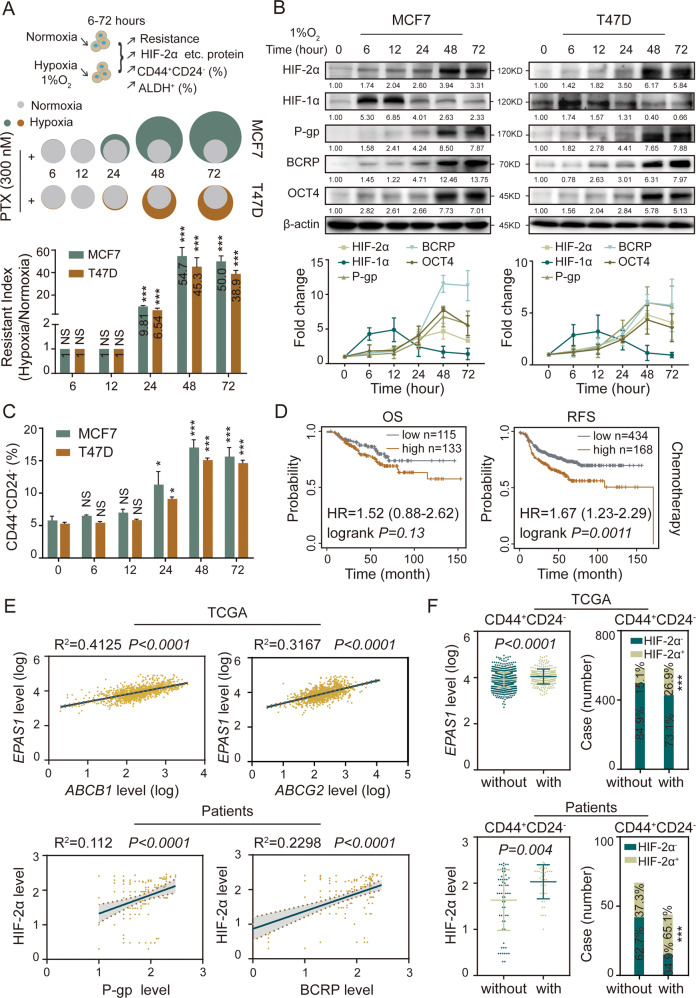
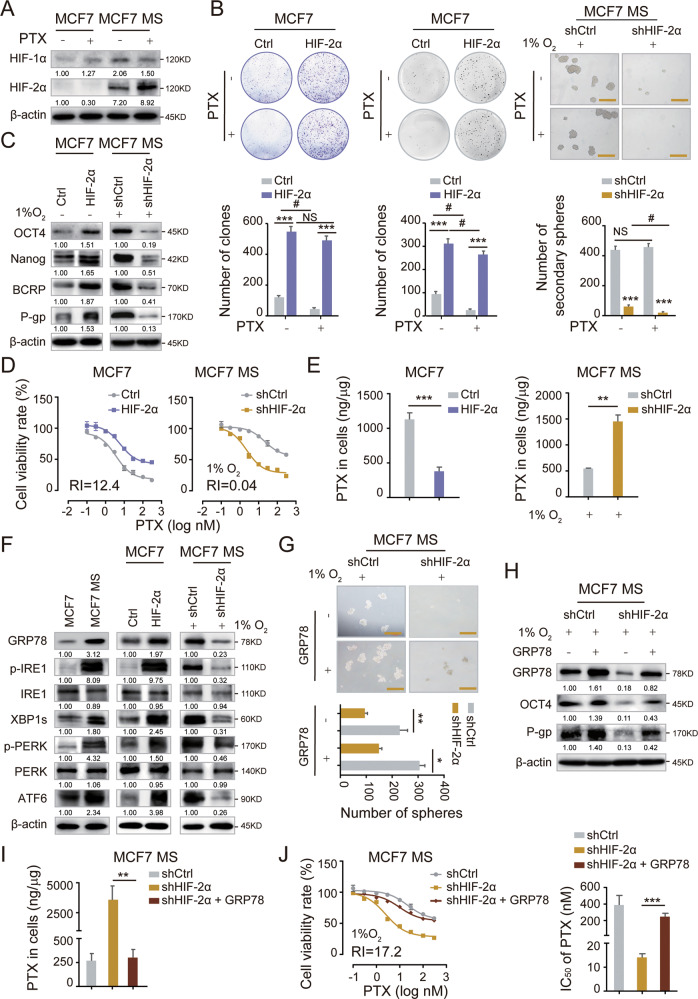
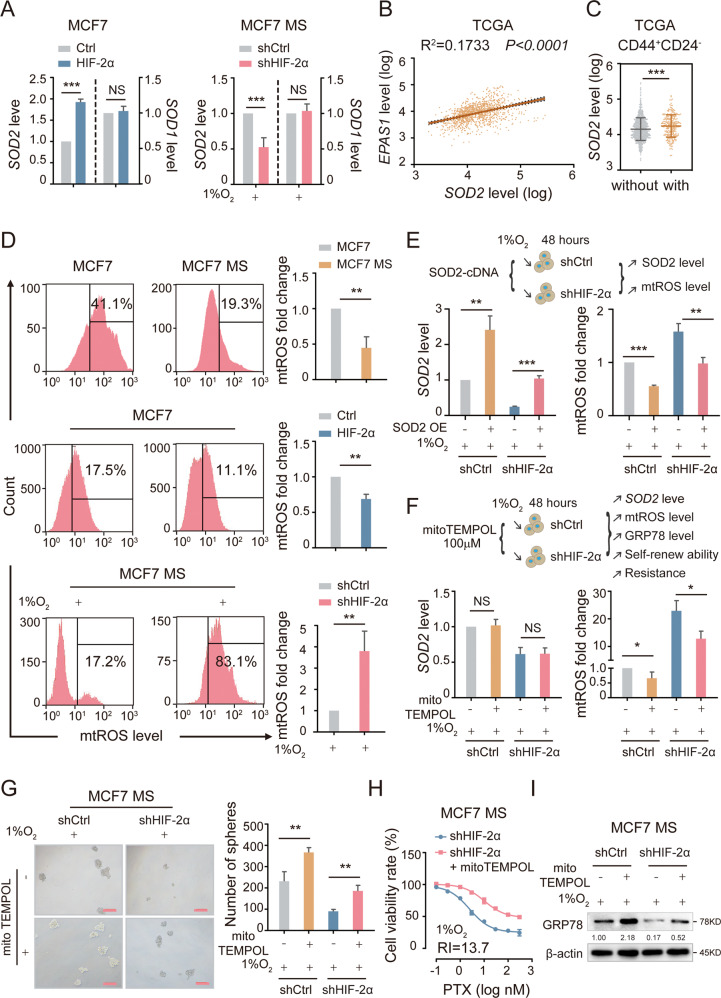
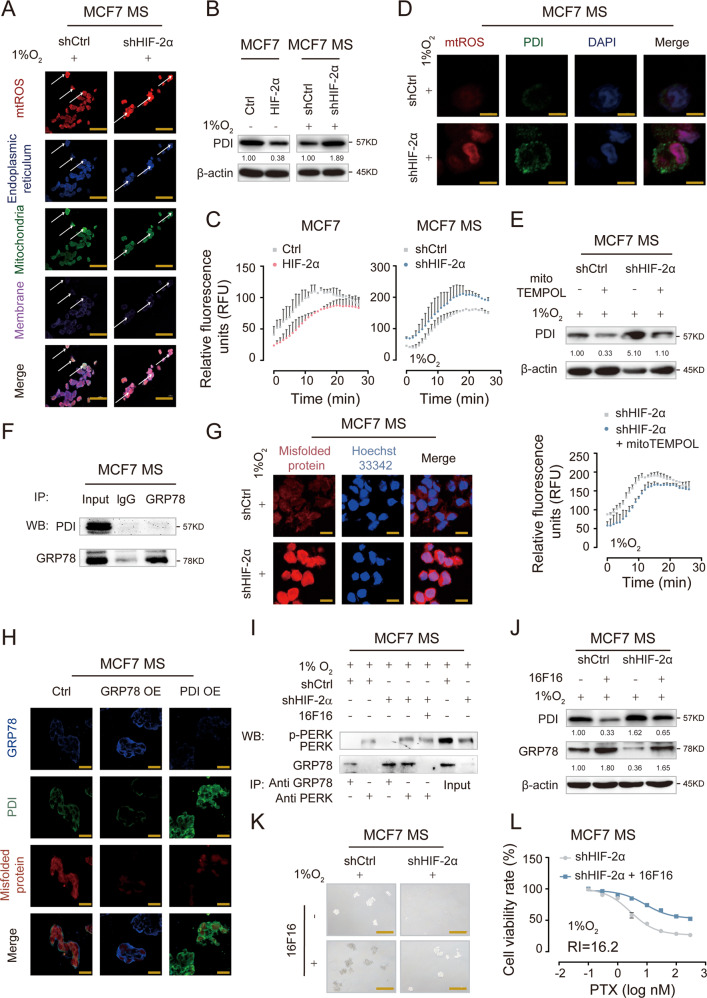
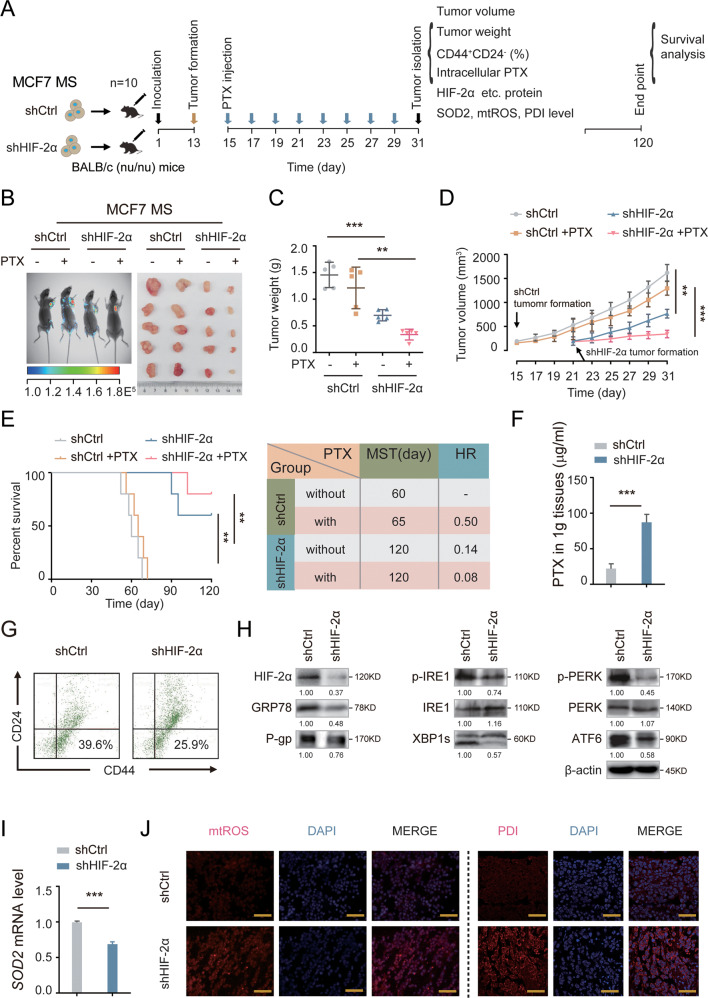
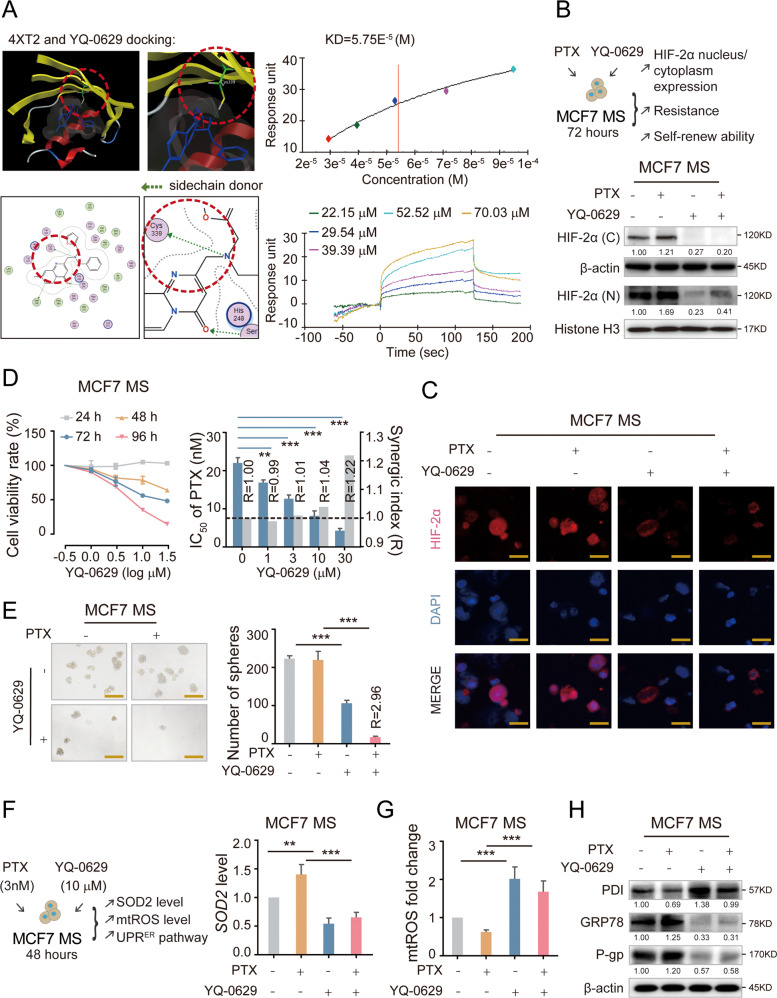
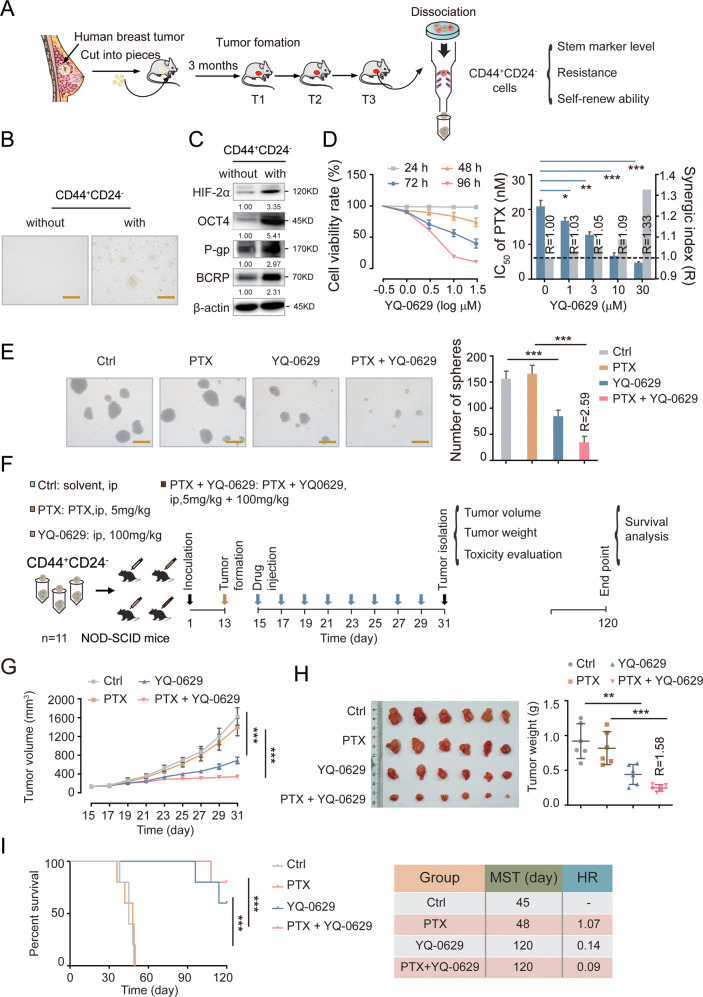
Hypoxic tumor microenvironment (TME) plays critical roles in induction of cancer stem cell-like phenotype in breast cancer and contribute to chemoresistance. However, the mechanism underlying stemness reprogramming of breast cancer cells (BCs) by hypoxic TME remains largely unknown. In the present study, we illustrated that HIF-2α, but not HIF-1α, induces stemness in BCs under hypoxia through SOD2-mtROS-PDI/GRP78-UPR ER pathway, linking mitochondrial metabolic state to endoplasmic reticulum (ER) response via mitochondrial reactive oxygen species (mtROS) level. HIF-2α activates endoplasmic reticulum unfolded protein response (UPR ER) in drug-sensitive MCF7 and T47D cells to induce drug-resistant stem-like phenotype. Genetic depletion or pharmacological inhibition (YQ-0629) of HIF-2α abolished hypoxia-induced stem-like phenotype in vitro and in vivo. Mechanistically, HIF-2α activates transcription of superoxide dismutase 2 (SOD2) under hypoxia and thereby decreases mtROS level. With less mtROS transported to endoplasmic reticulum, the expression and activity of protein disulfide isomerase (PDI) is suppressed, allowing glucose-regulated protein 78 (GRP78) to dissociate from receptor proteins of UPR ER and bind misfolded protein to activate UPR ER, which eventually confer chemoresistance and stem-like properties to BCs. Moreover, the increase in mtROS and PDI levels caused by HIF-2α knockdown and the subsequent UPR ER inhibition could be substantially rescued by mitoTEMPOL (a mtROS scavenger), 16F16 (a PDI inhibitor), or GRP78 overexpression. Overall, we reported the critical roles of HIF-2α-SOD2-mtROS-PDI/GRP78-UPR ER axis in mediating hypoxia-induced stemness in BCs, highlighting the interaction between organelles and providing evidence for further development of targeted HIF-2α inhibitor as a promising therapeutic strategy for chemoresistant breast cancer.
Overview
The claims and statistics of this paper haven’t been checked yet.
Free: it reads the open-access text and checks the first 5 claims that cite a source we can check. Create a free account to check every claim.
Integrity signals
Registry
Cites
Statistics
Figures
Verification
Claims the paper makes
The claims and statistics of this paper haven’t been checked yet.
Free: it reads the open-access text and checks the first 5 claims that cite a source we can check. Create a free account to check every claim.
Claims other papers make about this one
Each is checked against this paper’s own text: does it say what the citing paper says it does?
The source backs part of the claim, not all of it — or backs it for a different population, condition or comparison.
In the citing paper
“Continued efforts are now focused on developing next-generation HIF-2α inhibitors with enhanced selectivity and potency, such as YQ-0629 and casdatifan (AB521), both of which have shown promising preclinical and early clinical activity [[418], [419], [420]].”
From HIF inhibition: Current strategies and clinical challenges (2026) · cites this paper as [418]
Experimental — accuracy not yet measuredThe cited source says what the claim attributes to it.
In the citing paper
“HIF-2α mediated antioxidant gene expression protects pancreatic β-cells against glucotoxicity in the context of obesity, whereas in breast cancer, this HIF-2α mediated reduction in mitochondrial ROS is associated with increased chemoresistance and stem-like properties [50, 51].”
From The HIF Axes in Cancer - Angiogenesis, Metabolism and Immune-Modulation (2025) · cites this paper as [51]
Self-check
Percentages, sums and reported differences re-computed from the paper’s own numbers.
The self-check needs the paper’s full text.
Citations
Cites
1 retracted
Samanta, D., Gilkes, D. M., Chaturvedi, P., Xiang, L., & Semenza, G. L. (2014) · Proceedings of the National Academy of Sciences · doi:10.1073/pnas.1421438111 · Cited by 460
RetractedThe unfolded protein response: controlling cell fate decisions under ER stress and beyond
Hetz, C. (2012) · Nature Reviews Molecular Cell Biology · doi:10.1038/nrm3270 · Cited by 4,093 · cited 2×
“Aggregation of misfolded proteins in ER triggers ERS, and UPR is involved in this event to control cell fate [36].”
BackgroundMitochondrial ROS in cancer: initiators, amplifiers or an Achilles' heel?
Sabharwal, S. S., & Schumacker, P. T. (2014) · Nature Reviews Cancer · doi:10.1038/nrc3803 · Cited by 1,622 · cited 1×
“PDI competitively inhibits the binding of GRP78 to misfolded proteins to prevent UPR activation MtROS are mainly generated during the process of oxidative phosphorylation at the mitochondrial electron transport chain and are transported from mitochondria to multiple intracellular organelles as signaling molecules [31,…”
BackgroundHypoxia-Inducible Factors, Stem Cells, and Cancer
Keith, B., & Simon, M. C. (2007) · Cell · doi:10.1016/j.cell.2007.04.019 · Cited by 1,179
Zhang, C., Samanta, D., Lu, H., Bullen, J. W., Zhang, H., Chen, I., He, X., & Semenza, G. L. (2016) · Proceedings of the National Academy of Sciences · doi:10.1073/pnas.1602883113 · Cited by 971 · cited 1×
“For example, HIF-2α enhances ALKBH5-mediated m(6)A-demethylation of NANOG mRNA to induce the BCSC phenotype [6].”
BackgroundCovello, K. L., Kehler, J., Yu, H., Gordan, J. D., Arsham, A. M., Hu, C.-J., Labosky, P. A., Simon, M. C., & Keith, B. (2006) · Genes & Development · doi:10.1101/gad.1399906 · Cited by 821 · cited 4×
“Additionally, forced expression of GRP78 also abolished HIF-2α-knockdown-induced inhibition of OCT4 and P-gp (Fig.”
ResultInfluentialHIF-2α Promotes Hypoxic Cell Proliferation by Enhancing c-Myc Transcriptional Activity
Gordan, J. D., Bertout, J. A., Hu, C.-J., Diehl, J. A., & Simon, M. C. (2007) · Cancer Cell · doi:10.1016/j.ccr.2007.02.006 · Cited by 781
Metabolic Reprogramming: the Emerging Concept and Associated Therapeutic Strategies
Yoshida, G. J. (2015) · Journal of Experimental & Clinical Cancer Research · doi:10.1186/s13046-015-0221-y · Cited by 716 · cited 1×
“However, current studies mainly focus on changes occurring inside mitochondria, such as impairment of oxidative phosphorylation, promotion of glycolytic activity, and increase in mtROS production [47].”
BackgroundTargeting renal cell carcinoma with a HIF-2 antagonist
Chen, W., Hill, H., Christie, A., Kim, M. S., Holloman, E., Pavia-Jimenez, A., Homayoun, F., Ma, Y., Patel, N., Yell, P., et al. (2016) · Nature · doi:10.1038/nature19796 · Cited by 709
Therapeutic targeting of hypoxia and hypoxia-inducible factors in cancer
Wigerup, C., Påhlman, S., & Bexell, D. (2016) · Pharmacology & Therapeutics · doi:10.1016/j.pharmthera.2016.04.009 · Cited by 687
Cited by
Hypoxia, oxidative stress, and the interplay of HIFs and NRF2 signaling in cancer
Bae, T., Hallis, S. P., & Kwak, M.-K. (2024) · Experimental & Molecular Medicine · doi:10.1038/s12276-024-01180-8 · Cited by 354
“Moreover, evidence suggests that HIF-2 α plays a role in maintaining CSC traits through the activation of WNT and NOTCH signaling 148 by elevating superoxide dismutase (SOD) levels and by reducing mitochondrial reactive oxygen species (ROS) levels 149 .”
BackgroundRedox regulation: mechanisms, biology and therapeutic targets in diseases
Li, B., Ming, H., Qin, S., Nice, E. C., Dong, J., Du, Z., & Huang, C. (2025) · Signal Transduction and Targeted Therapy · doi:10.1038/s41392-024-02095-6 · Cited by 317
Li, G., Wang, D., Zhai, Y., Pan, C., Zhang, J., Wang, C., Huang, R., Yu, M., Li, Y., Liu, X., et al. (2024) · Cell Metabolism · doi:10.1016/j.cmet.2024.07.011 · Cited by 232
Alleviating hypoxia to improve cancer immunotherapy
Fan, P., Zhang, N., Candi, E., Agostini, M., Piacentini, M., Bernassola, F., Bove, P., Alessandro, M., Giuseppe, N., Valentina, R., et al. (2023) · Oncogene · doi:10.1038/s41388-023-02869-2 · Cited by 105
Self-citationp63: a crucial player in epithelial stemness regulation
Li, Y., Giovannini, S., Wang, T., Fang, J., Li, P., Shao, C., Wang, Y., Agostini, M., Bove, P., Mauriello, A., et al. (2023) · Oncogene · doi:10.1038/s41388-023-02859-4 · Cited by 93
Self-citationUnraveling the triad of hypoxia, cancer cell stemness, and drug resistance
Shang, T., Jia, Z., Li, J., Cao, H., Xu, H., Cong, L., Ma, D., Wang, X., & Liu, J. (2025) · Journal of Hematology & Oncology · doi:10.1186/s13045-025-01684-4 · Cited by 100
“HIF-2α stimulates the transcription of superoxide dismutase 2 (SOD2) in low-oxygen environments, leading to a decrease in mitochondrial ROS levels [265].”
Exosomal cargos-mediated metabolic reprogramming in tumor microenvironment
Tan, S., Yang, Y., Yang, W., Han, Y., Huang, L., Yang, R., Hu, Z., Tao, Y., Liu, L., Li, Y., et al. (2023) · Journal of Experimental & Clinical Cancer Research · doi:10.1186/s13046-023-02634-z · Cited by 94
Advances in targeting tumor microenvironment for immunotherapy
Wang, L., Zhang, L., Zhang, Z., Wu, P., Zhang, Y., & Chen, X. (2024) · Frontiers in Immunology · doi:10.3389/fimmu.2024.1472772 · Cited by 111
HIF-1 and HIF-2 in cancer: structure, regulation, and therapeutic prospects
Shi, Y., & Gilkes, D. M. (2025) · Cellular and Molecular Life Sciences · doi:10.1007/s00018-024-05537-0 · Cited by 80
He, J., Zhou, Y. L., & Sun, L. (2024) · Cell Communication and Signaling · doi:10.1186/s12964-023-01438-0 · Cited by 84
“Second, hypoxia promotes the expression of many components of the UPR, such as BIP [73, 74] and CHOP [75], through hypoxia-inducible factors.”
BackgroundThe HIF Axes in Cancer - Angiogenesis, Metabolism and Immune-Modulation
Acuña-Pilarte, K., & Koh, M. Y. (2025) · Trends in Biochemical Sciences · doi:10.1016/j.tibs.2025.06.005 · Cited by 64
Liu, X., Li, P., Huang, Y., Li, H., Liu, X., Du, Y., Lin, X., Chen, D., Liu, H., & Zhou, Y. (2023) · Redox Biology · doi:10.1016/j.redox.2023.102993 · Cited by 72
Tumor microenvironment of cancer stem cells: Perspectives on cancer stem cell targeting
Guo, Q., Zhou, Y., Xie, T., Yin, Y., Li, H., Shi, W., Zheng, L., Li, X., & Zhang, W. (2023) · Genes & Diseases · doi:10.1016/j.gendis.2023.05.024 · Cited by 80
“301 In addition, hypoxia can induce the CSC phenotype in a HIF-1 a - and HIF-2 a -dependent manner in breast cancer and endometrial cancer.”
BackgroundRole of HIF-1α in the Responses of Tumors to Radiotherapy and Chemotherapy
Song, C. W., Kim, H., Kim, M.-S., Park, H. J., Paek, S.-H., Terezakis, S. A., & Cho, L. C. (2024) · Cancer Research and Treatment · doi:10.4143/crt.2024.255 · Cited by 65
Lee, C., Tsai, H.-Y., Chen, C., Chen, J.-L., Lu, C.-C., Fang, Y., Wu, D., Huang, Y., & Lin, M. (2022) · Biomedicines · doi:10.3390/biomedicines10061350 · Cited by 39
Association of NRF2 with HIF-2α-induced cancer stem cell phenotypes in chronic hypoxic condition
Hallis, S. P., Kim, S. K., Lee, J., & Kwak, M. (2023) · Redox Biology · doi:10.1016/j.redox.2023.102632 · Cited by 40
“Breast cancer stemness is mediated by HIF-2α via the induction of mitochondrial reactive oxygen species (ROS) under hypoxia [23].”
BackgroundHypoxia signaling and metastatic progression
Schito, L., & Rey-Keim, S. (2023) · Seminars in Cancer Biology · doi:10.1016/j.semcancer.2023.11.001 · Cited by 37
Lee, P. W. T., Koseki, L. R., Haitani, T., Harada, H., & Kobayashi, M. (2024) · Cancers · doi:10.3390/cancers16091729 · Cited by 42
“Of note, although the majority of UPR pathways are often considered HIF-independent, accumulating evidence has shown the opposite [66,174–178].”
BackgroundNon-apoptotic cell death programs in cervical cancer with an emphasis on ferroptosis
Samare‐Najaf, M., Samareh, A. N., Savardashtaki, A., Khajehyar, N., Tajbakhsh, A., Vakili, S., Moghadam, D., Rastegar, S., Mohsenizadeh, M., Jahromi, B. N., et al. (2023) · Critical Reviews in Oncology/Hematology · doi:10.1016/j.critrevonc.2023.104249 · Cited by 34
Newsights of endoplasmic reticulum in hypoxia
Guan, L., Ge, R., & Ma, S. (2024) · Biomedicine & Pharmacotherapy · doi:10.1016/j.biopha.2024.116812 · Cited by 34
Zhong, J., & Tang, Y. J. (2024) · Progress in Biophysics and Molecular Biology · doi:10.1016/j.pbiomolbio.2024.02.005 · Cited by 34
Harnessing Antioxidants in Cancer Therapy: Opportunities, Challenges, and Future Directions
Liu, Y., Wu, G., Feng, L., Li, J., Xia, Y., Guo, W., & Zhao, K. (2025) · Antioxidants · doi:10.3390/antiox14060674 · Cited by 37
Protein disulfide isomerase family mediated redox regulation in cancer
Ye, Z., Zhang, J., Aslam, M., Blumental‐Perry, A., Tew, K. D., & Townsend, D. M. (2023) · Advances in cancer research · doi:10.1016/bs.acr.2023.06.001 · Cited by 28
Ning, W., Yang, J., Ni, R., Yin, Q., Zhang, M., Zhang, F., Yang, Y., Zhang, Y., Cao, M., Jin, L., et al. (2024) · Oncogene · doi:10.1038/s41388-024-03213-y · Cited by 25
Bergandi, L., Lucia, U., Grisolia, G., Salaroglio, I. C., Gesmundo, I., Granata, R., Borchiellini, R., Ponzetto, A., & Silvagno, F. (2022) · International Journal of Molecular Sciences · doi:10.3390/ijms23147955 · Cited by 20
“Sci. 2022, 23, 7955 11 of 19 Recognized as a hallmark of most solid tumors, hypoxia also profoundly influences multiple facets of breast cancer biology, through the Hypoxia-Inducible Factor-1 (HIF-1) mediated induction of metabolic reprogramming, neovascularization, EMT [50] and metastasis [15].”
BackgroundEmpowering hypoxia to convert cold tumors into hot tumors for breast cancer immunotherapy
Liu, L., Wu, D., Qian, Z., Ying, J., You, Y., Wang, Y., Zhang, F., Ning, X., Mei, J., Iqbal, J., et al. (2025) · Cell Death Discovery · doi:10.1038/s41420-025-02682-8 · Cited by 23
“This reduction leads to downstream biological effects, including GRP78-UPRER activation and further stemness remodeling [22].”
Self-citationA primary luminal/HER2 negative breast cancer patient with mismatch repair deficiency
Yang, X. F., Smirnov, A., Buonomo, O. C., Mauriello, A., Shi, Y., Bischof, J., Woodsmith, J., Bove, P., Rovella, V., Scimeca, M., et al. (2023) · Cell Death Discovery · doi:10.1038/s41420-023-01650-4 · Cited by 18
Self-citationA BRCA2 germline mutation and high expression of immune checkpoints in a TNBC patient
Han, Y., Rovella, V., Smirnov, A., Buonomo, O. C., Mauriello, A., Perretta, T., Shi, Y., Woodmsith, J., Bischof, J., Bove, P., et al. (2023) · Cell Death Discovery · doi:10.1038/s41420-023-01651-3 · Cited by 17
Self-citationLin, M., Mo, Y., Li, C., Liu, Y.-Z., & Feng, X. (2025) · Medical Oncology · doi:10.1007/s12032-024-02586-0 · Cited by 22
Schweickert, P. G., Piovesan, D., Mitchell, C. G., Zepeda‐Carranza, B., Zhu, W. S., Espinoza, A. Y. L., Rocha, L., Singh, J., Malgapo, M. I. P., Meleza, C., et al. (2025) · British Journal of Pharmacology · doi:10.1111/bph.70075 · Cited by 19
“…and HIF-2 α have been shown to promote CSC phenotypes in several settings (Hallis et al., 2023; Myszczyszyn et al., 2015; O'Reilly et al., 2019; Yan et al., 2022), and CSCs are regarded as critical targets for cancer treatment due to their involvement in metastasis, therapy resistance, and…”
InfluentialWen, Y., Lin, Z., Jiang, Z., Li, Y., & Wu, T. (2025) · Cell Death Discovery · doi:10.1038/s41420-025-02743-y · Cited by 21
“Notably, despite the upregulation of SOD1 in the high-ROS subgroup of ErbB2-positive breast cancer cells, normal cellular proliferation still relies on SOD1 activity, indicating its dual role in promoting cancer progression and maintaining basal metabolism [22].”
Mitochondrial and ER stress crosstalk in TBI: mechanistic insights and therapeutic opportunities
Wenzhe, L., Boyang, X., Yuchao, G., Bimcle, R., & Yue, Y. (2025) · Frontiers in Cellular Neuroscience · doi:10.3389/fncel.2025.1697060 · Cited by 19
“ROS generated by mitochondria (mtROS) serve as both intracellular messengers and pro-inflammatory triggers (Yan et al., 2022).”
Microbial metabolites in tumor epigenetic regulation
Zhang, W., Zhang, H., Liao, Y., Jiang, S., Zhang, H., Huang, C., Song, Z., Zhao, R., Lü, P., Kang, X., et al. (2026) · iMeta · doi:10.1002/imt2.70115 · Cited by 22
Self-citationMetabolite-sensing GPCRs in rheumatoid arthritis
Yang, X., Zhang, W., Wang, L., Zhao, Y., & Wei, W. (2024) · Trends in Pharmacological Sciences · doi:10.1016/j.tips.2023.12.001 · Cited by 17
Self-citationSOD2 confers anlotinib resistance via regulation of mitochondrial damage in OSCC
Li, S., Cao, C., Huang, Z., Tang, D., Chen, J., Wang, A., & He, Q. (2022) · Oral Diseases · doi:10.1111/odi.14404 · Cited by 13
Oxidative stress as the orchestrator of the HIF axis switch in intracerebral hemorrhage
Zhang, Y., Cao, L., Zhang, R., Pi, W., Yong, V. W., & Xue, M. (2025) · Free Radical Biology and Medicine · doi:10.1016/j.freeradbiomed.2025.12.011 · Cited by 12
Breast cancer stem cells as novel biomarkers
Ray, S. K., & Mukherjee, S. (2024) · Clinica Chimica Acta · doi:10.1016/j.cca.2024.117855 · Cited by 14
Cheng, J., Liu, H., Shen, Y., Ding, J., He, H., Mao, S., Chen, L., Zhang, C., & Zhou, J. (2024) · Translational Oncology · doi:10.1016/j.tranon.2024.101987 · Cited by 16
Solasodine suppresses nasopharyngeal carcinoma progression by inducing ferroptosis
Wang, J., Wang, D., Ma, S., He, B., Lu, J., & Guo, Z. (2025) · Scientific Reports · doi:10.1038/s41598-025-93834-4 · Cited by 17
Xu, M., Liu, X., Zhou, X., Qin, Y., Yang, L., Wen, S., Qiu, Y., Chen, S., Tang, R., Guo, Y., et al. (2023) · Pharmacological Research · doi:10.1016/j.phrs.2023.106964 · Cited by 14
Tumor Microenvironment Heterogeneity, Potential Therapeutic Avenues, and Emerging Therapies
Peng, X., Zheng, J., Liu, T., Zhou, Z., Chen, S., Geng, Y., Wang, Z., & Huang, Y. (2023) · Current Cancer Drug Targets · doi:10.2174/1568009623666230712095021 · Cited by 12
Shi, Q., Wang, Y., Ouyang, Y., Liu, Y., & Cai, Z. (2025) · Breast Cancer Research · doi:10.1186/s13058-025-01965-3 · Cited by 17
Self-citationZhang, H., Sun, Y., Liu, R., Hamdy, H., Shi, Z., Jiang, D., & Sun, J. (2025) · Drug Resistance Updates · doi:10.1016/j.drup.2025.101315 · Cited by 14
“Dissecting the role of T cell exhaustion in cancer progression: a multifaceted approach“
Li, X., & Song, S. (2025) · Frontiers in Immunology · doi:10.3389/fimmu.2025.1646292 · Cited by 13
Resistance to neoadjuvant chemotherapy in breast cancers: a metabolic perspective
Desgres, M., Poyraz, M., Sari, B., Duhoux, F. P., van Marcke, C., & Corbet, C. (2025) · Journal of Experimental & Clinical Cancer Research · doi:10.1186/s13046-025-03500-w · Cited by 11
HIF2α, Hepcidin and their crosstalk as tumour-promoting signalling
Formica, V., Riondino, S., Morelli, C., Guerriero, S., D’Amore, F., Grazia, A. D., Blanco, G. D. V., Sica, G. S., Arkenau, H., Monteleone, G., et al. (2023) · British Journal of Cancer · doi:10.1038/s41416-023-02266-2 · Cited by 8
“has demonstrated that HIF2α, but not HIF1α, activates an endoplasmic reticulum response that eventually converts chemosensitive breast cancer cells to chemoresistant cells with stem celllike phenotype [80].”
Ning, L., & Xie, N. (2024) · Cancer Management and Research · doi:10.2147/cmar.s445248 · Cited by 8
Oxidative Stress and DNA Epigenetic Modifications in Cancer: Mechanisms and Targeted Therapeutics
Yang, X., Chen, Q., Yu, Y., Zang, Y., Zheng, R., Zhang, Z., Lu, S., & Zhou, L. (2026) · MedComm – Oncology · doi:10.1002/mog2.70065 · Cited by 12
Hypoxia-Inducible Factor-2-Altered Urothelial Carcinoma: Clinical and Genomic Features
Vlachostergios, P. J., Tamposis, I., Αναγνώστου, Μ., Papathanassiou, M., Mitrakas, L., Zachos, I., Thodou, E., Σαμαρά, Μ., & Tzortzis, V. (2022) · Current Oncology · doi:10.3390/curroncol29110681 · Cited by 8
“6 0.73 1.1 0.74 3.785 x 10⁻⁵ 0.0205 HS3ST2 16p12.”
BackgroundInfluentialHe, H., Zhu, D., Ma, A.-Q., Ren, J., Chen, Z., Ran, H., Li, Z., Qin, R., Liang, R., Liu, L., et al. (2023) · Small Structures · doi:10.1002/sstr.202200325 · Cited by 7
Chen, L.-S., & Liu, L. (2024) · Clinical Nutrition · doi:10.1016/j.clnu.2024.07.024 · Cited by 5
Tumor Cell Plasticity in Cancer: Signaling Pathways and Pharmaceutical Interventions
Sun, S., Sun, Y., Lan, L., Luan, S., Zhou, J. R., Deng, J., Yuan, Y., & Wu, Z. (2025) · MedComm · doi:10.1002/mco2.70541 · Cited by 8
A comprehensive molecular characterization of a claudin-low luminal B breast tumor
Giovannini, S., Smirnov, A., Concetti, L., Scimeca, M., Mauriello, A., Bischof, J., Rovella, V., Melino, G., Buonomo, O. C., Candi, E., et al. (2024) · Biology Direct · doi:10.1186/s13062-024-00482-1 · Cited by 5
The signature of extracellular vesicles in hypoxic breast cancer and their therapeutic engineering
Zhu, B., Xiang, K., Li, T., Li, X., & Shi, F. (2024) · Cell Communication and Signaling · doi:10.1186/s12964-024-01870-w · Cited by 6
“An increase in the HIF-2α-related endoplasmic reticulum unfolded protein response and HIF-1α-induced antiapoptotic protein expression are mechanisms that enable tumors, including BC, to acquire resistance to Doxorubicin [191, 192].”
BackgroundYang, H., Zheng, W., Lin, H., & Huang, H. (2025) · Pharmaceutical Chemistry Journal · doi:10.1007/s11094-025-03301-7 · Cited by 5
IGFBP3 modulation of tumor pathogenesis and cell signaling pathways (Review)
Zhang, Y., & Lv, X. (2025) · Oncology Letters · doi:10.3892/ol.2025.15125 · Cited by 6
Self-citationBanerjee, M., & Rajeswari, V. D. (2023) · Medical Oncology · doi:10.1007/s12032-023-02112-8 · Cited by 5
Ai, Z., Yuan, D., Dong, R., Zhou, S., & Cao, J. (2024) · Journal of Ethnopharmacology · doi:10.1016/j.jep.2024.119297 · Cited by 5
Chen, D., & Hua, C. (2025) · Frontiers in Medicine · doi:10.3389/fmed.2025.1735808 · Cited by 7
Wang, D., Yang, Y., Yang, L., & Yang, H. (2023) · Frontiers in Endocrinology · doi:10.3389/fendo.2023.1287101 · Cited by 6
Lv, L., Che, D., Zhang, Z., Zhang, W., Zhou, Q., Li, F., & Zhou, J. (2025) · Experimental Eye Research · doi:10.1016/j.exer.2025.110485 · Cited by 4
HIF2A as a prognostic and clinical therapeutic target in ovarian clear cell carcinoma
Jiang, M., Yamaguchi, K., Hamada, K., Hosoe, Y., Mise, Y., Kitamura, S., Liu, Z., Wei, H., Gao, Z., Taki, M., et al. (2026) · International Journal of Cancer · doi:10.1002/ijc.70341 · Cited by 4
Gao, X., Li, J., Feng, X., Xie, Y., Zhang, J., Liu, P., Wang, B., & Liu, P. (2024) · The FASEB Journal · doi:10.1096/fj.202401919r · Cited by 4
Lu, H., Zhu, Y., Liu, W., Yan, Y., Jiang, X., Wang, Q., Zhao, Y., He, M., & Wei, M. (2022) · Current Medicinal Chemistry · doi:10.2174/0929867329666220829095334 · Cited by 6
Self-citationHIF inhibition: Current strategies and clinical challenges
Więch-Walów, A., Bartoszewska, S., Barton, A., Czechowicz, P., Dudzik, J., Wielockx, B., Collawn, J. F., & Bartoszewski, R. (2026) · Redox biology · doi:10.1016/j.redox.2026.104220 · Cited by 3
“Continued efforts are now focused on developing next-generation HIF-2 α inhibitors with enhanced selectivity and potency, such as YQ-0629 and casdatifan (AB521), both of which have shown promising preclinical and early clinical activity [418 – 420].”
Lin, X., Su, H., Huo, J., & Zhang, F. (2023) · Medicine · doi:10.1097/md.0000000000034045 · Cited by 4
“[12] Studies have shown that HIF-1α and HIF-2α are highly expressed in a variety of human cancers, such as oral cancer,[13] gastric cancer,[14] pancreatic cancer,[15] non-small cell lung cancer,[16] breast cancer,[17] cervical cancer,[18] prostate cancer,[19] and glioblastoma,[20] etc.”
BackgroundZhu, X.-Y., Li, P., Qu, H., Ai, X., Zhao, Z.-T., & He, J.-B. (2025) · Human Cell · doi:10.1007/s13577-025-01197-9 · Cited by 5
Zoumpoulaki, M., Chiappetta, G., Bouvet, J., John, N., Schanne, G., Gehan, P., Diebolt, S., Shakir, S., Quévrain, E., Mathieu, É., et al. (2025) · Angewandte Chemie International Edition · doi:10.1002/anie.202422644 · Cited by 4
Wang, Y., Zhu, X. F., Gu, W. J., & Zhang, G. H. (2025) · Discover Oncology · doi:10.1007/s12672-025-02164-4 · Cited by 3
Self-citationHypoxia-driven perturbations of proteostasis and therapeutic vulnerabilities in cancer
Sharma, M., Barwal, T. S., Neha, N., Yashika, Ganguly, N. K., & Mittal, S. A. (2025) · Advances in protein chemistry and structural biology · doi:10.1016/bs.apcsb.2025.11.001 · Cited by 2
The Effect of HIF‐2 α on the Development of Inflammation
Huang, J., & Zhao, D. (2025) · International Journal of Inflammation · doi:10.1155/ijin/9092758 · Cited by 6
Peng, X., Ma, L., & Chang, W. (2026) · Biomedicines · doi:10.3390/biomedicines14051126 · Cited by 2
Low Pi stress enhances the sensitivity of hepatocellular carcinoma to sorafenib
Bi, Q., Deng, Z.-Q., Lv, Y., Liu, Y., Xie, C.-S., He, Y., & Tang, Q. (2023) · Biochemical Pharmacology · doi:10.1016/j.bcp.2023.115593 · Cited by 2
Breast Cancer Stem Cell Heterogeneity, Plasticity and Treatment Strategies
Chen, M., & Liu, S. (2025) · Cancer Heterogeneity and Plasticity · doi:10.47248/chp2502010004 · Cited by 4
Dai, Q., Yang, Q., Zhang, Z., Qin, Y., Sun, X., Bao, X., Wu, L., Jiang, R., Tan, X., Ying, X., et al. (2024) · Nano Research · doi:10.26599/nr.2025.94907420 · Cited by 2
Synergistic Modulation of ER Stress and Insulin Potentiation Therapy for Enhanced Cancer Treatment
Al-Damook, N., Sakkal, M., Kremesh, S., Mousa, W. K., Khair, M., Khoder, G., & Ghemrawi, R. (2025) · Cell Therapy & Engineering Connect · doi:10.69709/cellengc.2025.115467 · Cited by 2
Gao, G., Wang, H., Ding, Y., Guo, J., Zhou, J., Ke, L., Rao, P., Zhang, S., Chen, T., Shaw, C., et al. (2025) · Bioelectricity · doi:10.1177/25763113251366197 · Cited by 1
“Meanwhile, hypoxia also upregulates mitochondrial antioxidant defenses (e.g., HIF-2 a -mediated SOD2 expression), 38 which would be complimentary to the cytoskeleton pathway, or vice versa.”
Regulation of Cancer Stem Cells in the Tumor Microenvironment
Li, A., Li, N., Yang, Y., Wang, L., Miao, J., & Wang, Q.-E. (2025) · Cancer Heterogeneity and Plasticity · doi:10.47248/chp2502040016 · Cited by 1
Yang, X., Zhao, F., Yang, J., Xia, X., Chen, L., Zeng, P., Chen, L., Hu, Y., & Sheng, X. (2026) · iMetaOmics. · doi:10.1002/imo2.70084 · Cited by 1
Yue, J., Pu, T., He, D., Luo, Y., Ruan, S., Li, H., Jianwei, Z., Su, G., Su, J., Chen, S., et al. (2026) · Frontiers in Cell and Developmental Biology · doi:10.3389/fcell.2026.1720480 · Cited by 1
“PERK is predominantly activated by endoplasmic reticulum (ER) stress, a condition frequently induced by hypoxia (Yan et al., 2022), nutrient deprivation (Marjon et al., 2004), reactive oxygen species (ROS) (Sassano et al., 2025), and high protein-folding demand.”
Wei, G., Zhu, X., Chen, X. S., Lv, J., Xiang, F., Zhang, M., Tao, K. X., Wen, W., He, D., Wu, X., et al. (2026) · Autophagy · doi:10.1080/15548627.2026.2700024 · Cited by 1
Wang, Y., Zhang, J., Yu, Y., Chen, J., Tan, F., & Zheng, J. (2024) · Heliyon · doi:10.1016/j.heliyon.2024.e34438 · Cited by 1
Self-citationQiao, J., Cheng, C., Yang, G., Zhong, C., Jin, J., & Wu, B. (2024) · Current Pharmaceutical Biotechnology · doi:10.2174/0113892010316076240924072658 · Cited by 1
Du, Y., Xu, Z., Huang, J.-X., Lyu, C., Lu, C., & Chen, J. (2023) · Preprints.org · doi:10.20944/preprints202308.1209.v1 · Cited by 1
Xu, M.-Z., Liu, M.-R., Zhou, X.-Y., Qin, Y.-L., Yang, L.-P., Wen, S., Qiu, Y., Jin, T., Chen, S., Tang, R., et al. (2023) · bioRxiv · doi:10.1101/2023.04.28.538664
“The plasticity is regulated by 89 ZEB1 transcription [6], AMPK-HIF-1α axis [7], HIF2α [8] and so on.”
BackgroundMPC1 regulates endotoxin tolerance of macrophages through mitochondrial oxidative stress resistance.
Liu, Y., Qi, F., Zeng, H.-R., Huang, D.-D., Zhang, W.-F., Zhang, Y.-F., Gong, J.-P., Xiang, L., & Yi, Z. (2026) · Cellular Immunology · doi:10.1016/j.cellimm.2026.105111
Zoumpoulaki, M., Chiappetta, G., Bouvet, J., John, N., Schanne, G., Gehan, P., Diebolt, S., Shakir, S., Quévrain, E., Mathieu, É., et al. (2025) · Angewandte Chemie · doi:10.1002/ange.202422644
Zhou, J., Lv, L., Che, D., Zhang, Z., Zhang, W., Zhou, Q., & Li, F. (2025) · SSRN Electronic Journal · doi:10.2139/ssrn.5170798
Wang, Z., Yin, H., Wu, Q., Luo, S., Du, X., & Xie, X. (2025) · Life Sciences · doi:10.1016/j.lfs.2025.123903
Shan, B., Luo, F., Fang, M., An, X., Hu, Y., Yang, H. J., Li, Q., & Du, X. (2025) · Journal of Cellular Physiology · doi:10.1002/jcp.70103
“Among them, SOD2 is responsible for scavenging superoxide anion in mitochondria, which is the first critical step in reducing ROS accumulation (Yan et al. 2022), and the abnormalities in its expression and function exacerbate cellular oxidative stress damage (Wong et al. 2021).”
Liang, H., Chen, H., Shi, G., & Li, J. (2025) · Discover Oncology · doi:10.1007/s12672-025-03964-4
Malchi, S., S, M. B., Kumar, K. N., Sreevani, N., & Devarajan, N. (2026) · Journal of Basic and Clinical Physiology and Pharmacology · doi:10.1515/jbcpp-2025-0092
Impact of hypoxia, angiogenesis, and immunosuppression in chemoresistance
Ashrai, P., Zishan, S., & Kotnis, A. L. (2026) · Elsevier eBooks · doi:10.1016/b978-0-443-45717-3.00016-7
Yılmaz, B. S., Yılmaz, S. S., & Çelik, Z. E. (2026) · International Journal of Molecular Sciences · doi:10.3390/ijms27125343
Ji, R., Mao, Z., Sun, H., Ge, F., Ju, S., Cui, M., & Jing, R. (2026) · Genes & Diseases · doi:10.1016/j.gendis.2026.102312
HIFs: The central drivers of tumors and their role as molecular switches in targeted therapy?
Peng, Y., Che, Y., Zhao, Y., Wang, Z., Pei, Z., Hu, Y., Yin, Y., Pan, X., Hu, X., Wei, M., et al. (2026) · Acta Pharmaceutica Sinica B · doi:10.1016/j.apsb.2026.06.040
“In BC, HIF-2 α drives CSC self-renewal by upregulating superoxide dismutase 2 ( SOD2 ), which mediates the mtROS — PDI/GRP78 — UPR axis and thereby couples endoplasmic reticulum and mitochondrial metabolism 5 .”
Self-citationYang, Z. L., Feng, S., Ma, X., Wang, L., Sun, S. Y., Liu, Z. H., Tian, X., Geng, Y., & Zhang, Q. (2026) · Frontiers in Public Health · doi:10.3389/fpubh.2026.1802182
“The EPAS1-targeted inhibitor YQ-0629 synergistically inhibits tumor growth with paclitaxel in vitro and in vivo (33), consistent with our findings.”
Vavrusakova, B., Bartošová, R., & Moráň, L. (2026) · IntechOpen eBooks · doi:10.5772/intechopen.1016408
Cholesterol metabolism reprogramming: shaping tumor immunity and immunotherapy
Meng, J.-W., Tan, Y.-T., Chen, S.-M., Li, T., & Wang, H. (2026) · Journal of Experimental & Clinical Cancer Research · doi:10.1186/s13046-026-03791-7
“Both hypoxia and nutrient scarcity within the TME are potent inducers of ER stress [50, 51].”
Santra, A., Maity, S., Kuruvalli, G., Arjunan, S., Selvam, S., Challaraj Emmanuel, E. S., & Reddy, V. D. (2026) · ACS Pharmacology & Translational Science · doi:10.1021/acsptsci.6c00246
Metadata
- Authors
- Yan, Y., He, M., Zhao, L., Wu, H., Zhao, Y., Han, L., Wei, B., Ye, D., Lv, X., Wang, Y., Yao, W., Zhao, H., Chen, B., Jin, Z., Wen, J., Zhu, Y., Yu, T., Jin, F., & Wei, M.
- Affiliations
- China Medical University (CN)
- Liaoning Cancer Hospital & Institute (CN)
- First Hospital of China Medical University (CN)
- Fourth Affiliated Hospital of China Medical University (CN)
- Corresponding author
- Yu, Tao
- Jin, Feng
- Wei, Minjie
- ORCID
- Venue
- Cell Death & Differentiation
- Published
- 2022-03-17
- Volume
- 29
- Issue
- 9
- Pages
- 1769-1789
- ISSN
- 1350-9047 (ISSN-L)
- 1476-5403
- PMC
- PMC9433403
- OpenAlex
- W4220868035
- Semantic Scholar
- 5c3ea9bb4aeddb08acf289b9ac471fce36c4ff19
- Cited by
- 101
- References
- 64
- Citations by year
- 2026: 19 · 2025: 35 · 2024: 21 · 2023: 21 · 2022: 5
- FWCI
- 8.62
- Type
- journal article
- Language
- en
- Open access
- hybrid
- doi.org
- Licence
- cc-by
- creativecommons.org/licenses/by/4.0 (tdm)
- creativecommons.org/licenses/by/4.0 (vor)
- Locations
- Cell Death and Differentiation (publishedVersion, cc-by)
- PubMed Central (publishedVersion, cc-by)
- PubMed (publishedVersion)
- Funders
- National Natural Science Foundation of China (81902708, 2019JH8, U20A20413, 81972794, 81373427, 81702616)
- China Medical University
- National Natural Science Foundation of China-Liaoning Joint Fund
- Topics
- Life Sciences › Biochemistry, Genetics and Molecular Biology › Cancer Research › Cancer, Hypoxia, and Metabolism
- Health Sciences › Medicine › Oncology › Cancer Cells and Metastasis
- Life Sciences › Biochemistry, Genetics and Molecular Biology › Cell Biology › Endoplasmic Reticulum Stress and Disease
- Keywords
- HIF-2α, breast cancer stemness, hypoxia, tumor microenvironment, manganese superoxide dismutase, mitochondrial reactive oxygen species, PDI, GRP78, unfolded protein response, chemoresistance, HIF-2α inhibitor, PDI inhibitors
- MeSH terms
- Superoxide Dismutase 2, Hypoxia, Endoplasmic Reticulum, Humans, Neoplasms, Superoxides, Superoxide Dismutase, Protein Disulfide-Isomerases, Basic Helix-Loop-Helix Proteins, Hypoxia-Inducible Factor 1, alpha Subunit
About these checks
Registry, retraction, Cites and statistics results are computed, not judged, with one exception: a printed reference that no index lists is read once by a model before it counts as a citation error. Claims are extracted by a model and kept only when their quote appears verbatim in the text; each cited source is then checked, with a model’s help, for whether it says what the claim relies on. Those verdicts can be wrong — read the claim’s quote and the cited source before relying on one.
Statistics and arithmetic are recomputed, not judged.
Confidence bands are shown only for fields calibrated on our annotated test set. None is calibrated yet, so no band is shown.
What counts as a claim ›How we measure confidence ›How we check this ›
Are you an author, or do you see a problem with this page? Request a review
Data sources
Bibliographic data: Semantic Scholar, OpenAlex, Crossref.
Contains information from the Semantic Scholar Academic Graph Datasets, made available under the ODC Attribution License (ODC-BY 1.0).
Semantic Scholar’s data is described in: Kinney, R., et al. (2023). The Semantic Scholar Open Data Platform. arXiv:2301.10140.
