

Jnk2 deficiency increases the rate of glaucomatous neurodegeneration in ocular hypertensive DBA/2J mice
Open accessThe DOI matches its Crossref record; 47 of the 47 references it cites were found in a registry or an index.
Abstract
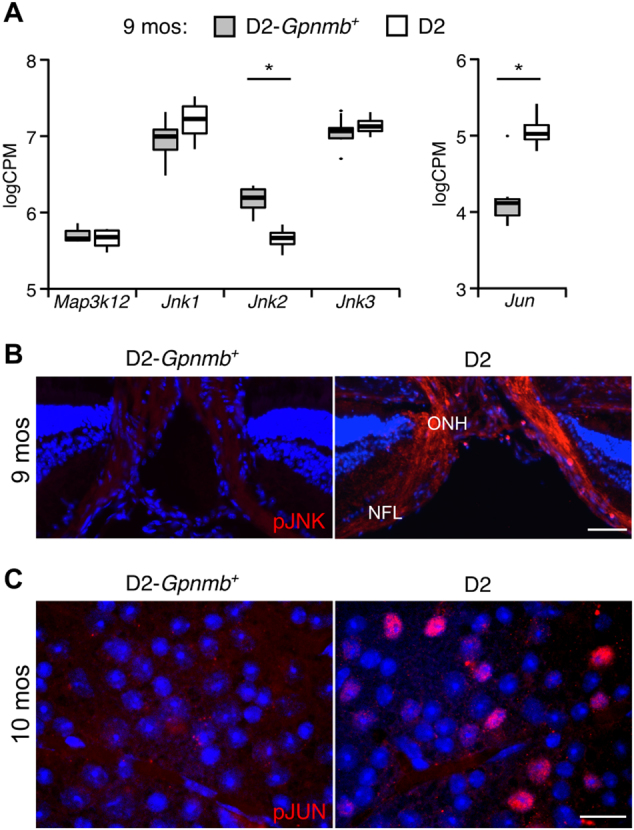
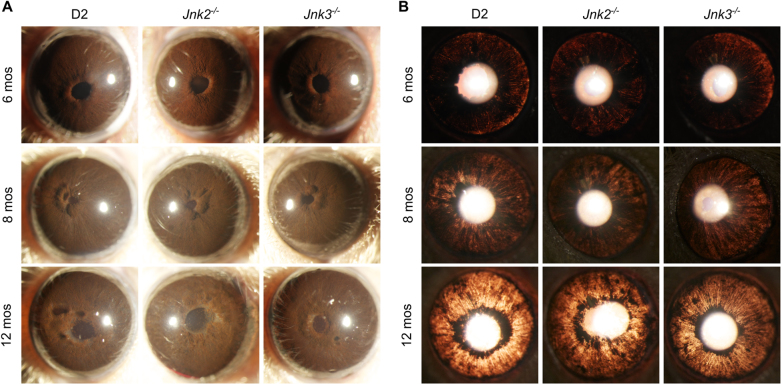
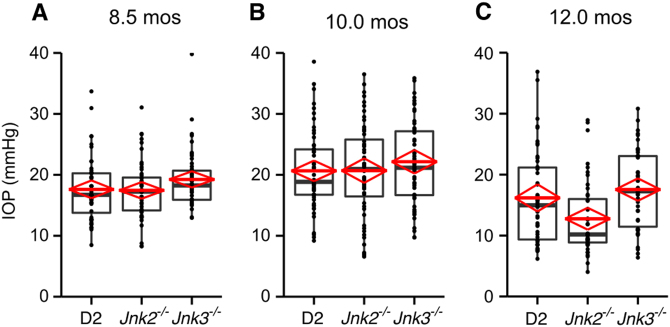
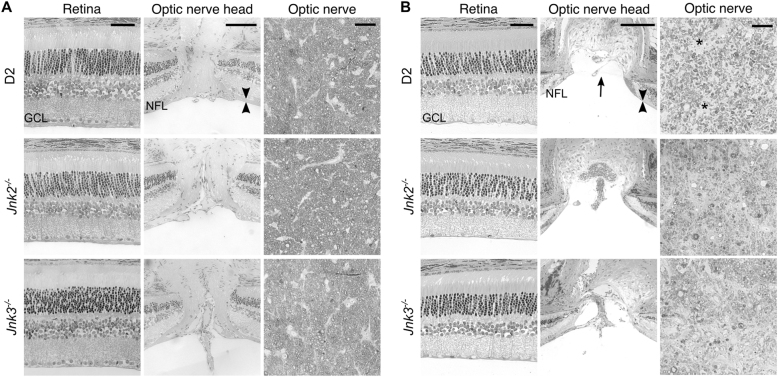
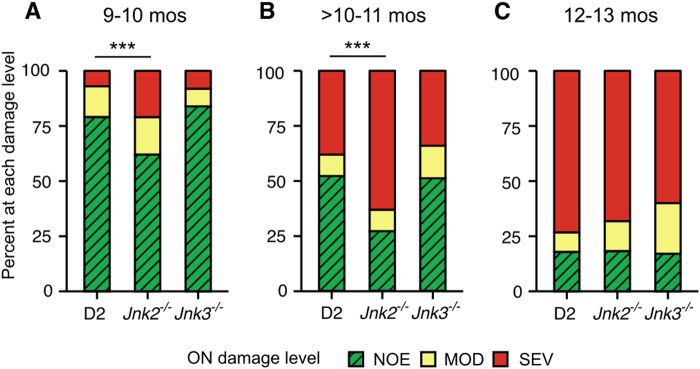
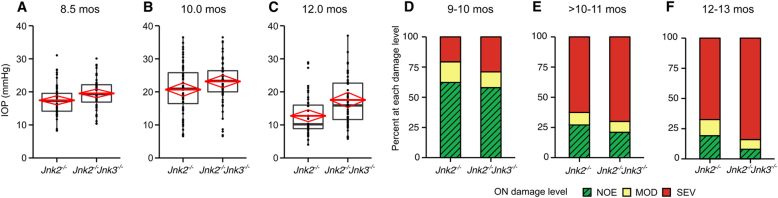
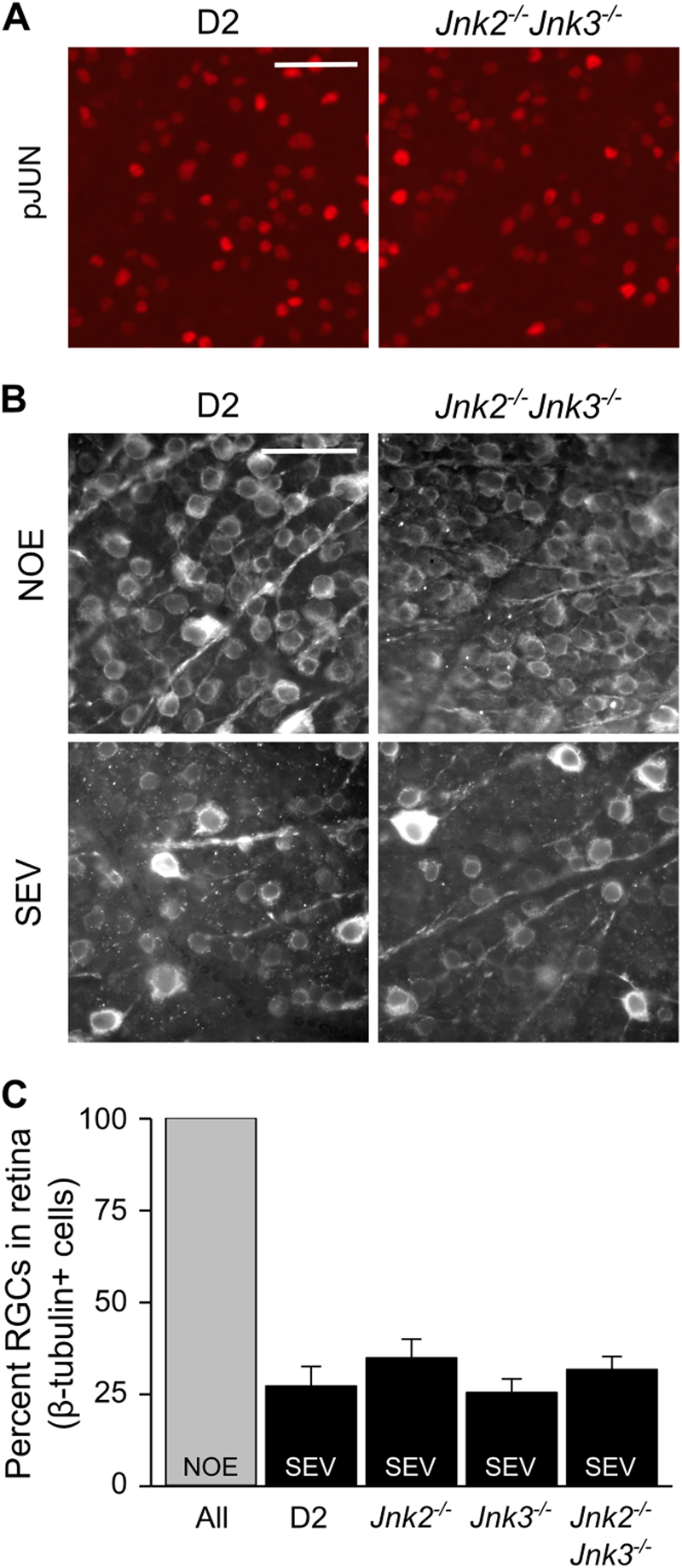
The cJun N-terminal kinases (JNKs; JNK1, JNK2, and JNK3) promote degenerative processes after neuronal injury and in disease. JNK2 and JNK3 have been shown to promote retinal ganglion cell (RGC) death after optic nerve injury. In their absence, long-term survival of RGC somas is significantly increased after mechanical optic nerve injury. In glaucoma, because optic nerve damage is thought to be a major cause of RGC death, JNKs are an important potential target for therapeutic intervention. To assess the role of JNK2 and JNK3 in an ocular hypertensive model of glaucoma, null alleles of Jnk2 and Jnk3 were backcrossed into the DBA/2J (D2) mouse. JNK activation occurred in RGCs following increased intraocular pressure in D2 mice. However, deficiency of both Jnk2 and Jnk3 together did not lessen optic nerve damage or RGC death. These results differentiate the molecular pathways controlling cell death in ocular hypertensive glaucoma compared with mechanical optic nerve injury. It is further shown that JUN, a pro-death component of the JNK pathway in RGCs, can be activated in glaucoma in the absence of JNK2 and JNK3. This implicates JNK1 in glaucomatous RGC death. Unexpectedly, at younger ages, Jnk2-deficient mice were more likely to develop features of glaucomatous neurodegeneration than D2 mice expressing Jnk2. This appears to be due to a neuroprotective effect of JNK2 and not due to a change in intraocular pressure. The Jnk2-deficient context also unmasked a lesser role for Jnk3 in glaucoma. Jnk2 and Jnk3 double knockout mice had a modestly increased risk of neurodegeneration compared with mice only deficient in Jnk2. Overall, these findings are consistent with pleiotropic effects of JNK isoforms in glaucoma and suggest caution is warranted when using JNK inhibitors to treat chronic neurodegenerative conditions.
Overview
The claims and statistics of this paper haven’t been checked yet.
Free: it reads the open-access text and checks the first 5 claims that cite a source we can check. Create a free account to check every claim.
Integrity signals
Registry
Cites
Statistics
Figures
Verification
Claims the paper makes
The claims and statistics of this paper haven’t been checked yet.
Free: it reads the open-access text and checks the first 5 claims that cite a source we can check. Create a free account to check every claim.
Claims other papers make about this one
Each is checked against this paper’s own text: does it say what the citing paper says it does?
The cited source doesn’t support the claim as written.
In the citing paper
“haploinsufficiency of JNK2, or both JNK2 and JNK3, results in an increase in ocular hypertension-induced neurodegeneration”
From MAPK Pathways in Ocular Pathophysiology: Potential Therapeutic Drugs and Challenges (2023) · cites this paper as [130]
Checked by a reasoning model — may be wrong.
Experimental — accuracy not yet measuredThe cited source says what the claim attributes to it.
In the citing paper
“suggesting JNK2 as a potential tool for glaucoma treatment [ 130 ]”
From MAPK Pathways in Ocular Pathophysiology: Potential Therapeutic Drugs and Challenges (2023) · cites this paper as [130]
Self-check
Percentages, sums and reported differences re-computed from the paper’s own numbers.
The self-check needs the paper’s full text.
Citations
Cites
Robinson, M. D., McCarthy, D. J., & Smyth, G. K. (2010) · Bioinformatics · doi:10.1093/bioinformatics/btp616 · Cited by 41,364
The number of people with glaucoma worldwide in 2010 and 2020
Quigley, H. A. (2006) · British Journal of Ophthalmology · doi:10.1136/bjo.2005.081224 · Cited by 7,394
Selective interaction of JNK protein kinase isoforms with transcription factors.
Gupta, S., Barrett, T., Whitmarsh, A. J., Cavanagh, J., Sluss, H. K., Dérijard, B., & Davis, R. J. (1996) · The EMBO Journal · doi:10.1002/j.1460-2075.1996.tb00636.x · Cited by 1,338
Burgoyne, C. F., Crawford Downs, J., Bellezza, A. J., Francis Suh, J.-K., & Hart, R. T. (2005) · Progress in Retinal and Eye Research · doi:10.1016/j.preteyeres.2004.06.001 · Cited by 1,140
JNK Expression by Macrophages Promotes Obesity-Induced Insulin Resistance and Inflammation
Han, M. S., Jung, D. Y., Morel, C., Lakhani, S. A., Kim, J. K., Flavell, R. A., & Davis, R. J. (2013) · Science · doi:10.1126/science.1227568 · Cited by 636
Vitamin B 3 modulates mitochondrial vulnerability and prevents glaucoma in aged mice
Williams, P. A., Harder, J. M., Foxworth, N. E., Cochran, K. E., Philip, V. M., Porciatti, V., Smithies, O., & John, S. W. M. (2017) · Science · doi:10.1126/science.aal0092 · Cited by 617
Self-citationEssential iris atrophy, pigment dispersion, and glaucoma in DBA/2J mice.
John, S. W. M., Smith, R. S., Savinova, O. V., Hawes, N. L., Chang, B., Turnbull, D., Davisson, M. T., Roderick, T. H., & Heckenlively, J. R. (1998) · PubMed · Cited by 603
Self-citationAxons of retinal ganglion cells are insulted in the optic nerve early in DBA/2J glaucoma
Howell, G. R., Libby, R. T., Jakobs, T. C., Smith, R. S., Phalan, F. C., Barter, J. W., Barbay, J. M., Marchant, J. K., Mahesh, N., Porciatti, V., et al. (2007) · The Journal of Cell Biology · doi:10.1083/jcb.200706181 · Cited by 596
Self-citationHowell, G. R., Macalinao, D. G., Sousa, G. L., Walden, M., Soto, I., Kneeland, S. C., Barbay, J. M., King, B. L., Marchant, J. K., Hibbs, M., et al. (2011) · Journal of Clinical Investigation · doi:10.1172/jci44646 · Cited by 473
Self-citationEffect of intraocular pressure on rapid axoplasmic transport in monkey optic nerve.
Anderson, D. R., & Hendrickson, A. E. (1974) · PubMed · Cited by 469
Mutations in genes encoding melanosomal proteins cause pigmentary glaucoma in DBA/2J mice
Anderson, M. G., Smith, R. S., Hawes, N. L., Zabaleta, A., Chang, B., Wiggs, J. L., & John, S. W. M. (2002) · Nature Genetics · doi:10.1038/ng794 · Cited by 452
Self-citationBioGPS: building your own mash-up of gene annotations and expression profiles
Wu, C., Jin, X., Tsueng, G., Afrasiabi, C., & Su, A. I. (2016) · Nucleic Acids Research · doi:10.1093/nar/gkv1104 · Cited by 436
Progressive Ganglion Cell Degeneration Precedes Neuronal Loss in a Mouse Model of Glaucoma
Buckingham, B. P., Inman, D. M., Lambert, W., Oglesby, E., Calkins, D. J., Steele, M. R., Vetter, M. L., Marsh-Armstrong, N., & Horner, P. J. (2008) · The Journal of Neuroscience · doi:10.1523/jneurosci.4443-07.2008 · Cited by 413
Inherited glaucoma in DBA/2J mice: Pertinent disease features for studying the neurodegeneration
LIBBY, R. T., ANDERSON, M. G., PANG, I.-H., ROBINSON, Z. H., SAVINOVA, O. V., COSMA, I. M., SNOW, A., WILSON, L. A., SMITH, R. S., CLARK, A. F., et al. (2005) · Visual Neuroscience · doi:10.1017/s0952523805225130 · Cited by 409
Self-citationSusceptibility to Neurodegeneration in a Glaucoma Is Modified by Bax Gene Dosage
Libby, R. T., Li, Y., Savinova, O. V., Barter, J., Smith, R. S., Nickells, R. W., & John, S. W. M. (2005) · PLoS Genetics · doi:10.1371/journal.pgen.0010004 · Cited by 358
Self-citationNuclear and cytosolic JNK signalling in neurons
Coffey, E. T. (2014) · Nature Reviews Neuroscience · doi:10.1038/nrn3729 · Cited by 338
Watkins, T. A., Wang, B., Huntwork-Rodriguez, S., Yang, J., Jiang, Z., Eastham-Anderson, J., Modrusan, Z., Kaminker, J. S., Tessier-Lavigne, M., & Lewcock, J. W. (2013) · Proceedings of the National Academy of Sciences · doi:10.1073/pnas.1211074110 · Cited by 328
Sabapathy, K., Hu, Y., Kallunki, T., Schreiber, M., David, J.-P., Jochum, W., Wagner, E. F., & Karin, M. (1999) · Current Biology · doi:10.1016/s0960-9822(99)80065-7 · Cited by 300
Smith, R. S. (2000) · Human Molecular Genetics · doi:10.1093/hmg/9.7.1021 · Cited by 297
Self-citationInteracting loci cause severe iris atrophy and glaucoma in DBA/2J mice
Chang, B., Smith, R. S., Hawes, N. L., Anderson, M. G., Zabaleta, A., Savinova, O., Roderick, T. H., Heckenlively, J. R., Davisson, M. T., & John, S. W. M. (1999) · Nature Genetics · doi:10.1038/7741 · Cited by 294
Self-citationPathological Axonal Death through a MAPK Cascade that Triggers a Local Energy Deficit
Yang, J., Wu, Z., Renier, N., Simon, D. J., Uryu, K., Park, D. S., Greer, P. A., Tournier, C., Davis, R. J., & Tessier-Lavigne, M. (2015) · Cell · doi:10.1016/j.cell.2014.11.053 · Cited by 294
c-Jun N-terminal kinases (JNKs) mediate pro-inflammatory actions of microglia
Waetzig, V., Czeloth, K., Hidding, U., Mielke, K., Kanzow, M., Brecht, S., Goetz, M., Lucius, R., Herdegen, T., & Hanisch, U.-K. (2005) · Glia · doi:10.1002/glia.20173 · Cited by 290
A reinvestigation of the multisite phosphorylation of the transcription factor c-Jun
Morton, S. (2003) · The EMBO Journal · doi:10.1093/emboj/cdg388 · Cited by 281
Norseen, J., Hosooka, T., Hammarstedt, A., Yore, M. M., Kant, S., Aryal, P., Kiernan, U. A., Phillips, D. A., Maruyama, H., Kraus, B. J., et al. (2012) · Molecular and Cellular Biology · doi:10.1128/mcb.06193-11 · Cited by 276
Mitochondrial Dysfunction and Glaucoma
Kong, G. Y. X., Van Bergen, N. J., Trounce, I. A., & Crowston, J. G. (2009) · Journal of Glaucoma · doi:10.1097/ijg.0b013e318181284f · Cited by 261
Whitmore, A. V., Libby, R. T., & John, S. W. M. (2005) · Progress in Retinal and Eye Research · doi:10.1016/j.preteyeres.2005.04.004 · Cited by 255
Self-citationWelsbie, D. S., Yang, Z., Ge, Y., Mitchell, K. L., Zhou, X., Martin, S. E., Berlinicke, C. A., Hackler, L., Fuller, J., Fu, J., et al. (2013) · Proceedings of the National Academy of Sciences · doi:10.1073/pnas.1211284110 · Cited by 246
Howell, G. R., Soto, I., Zhu, X., Ryan, M., Macalinao, D. G., Sousa, G. L., Caddle, L. B., MacNicoll, K. H., Barbay, J. M., Porciatti, V., et al. (2012) · Journal of Clinical Investigation · doi:10.1172/jci61135 · Cited by 232
Self-citationImmunohistochemical Assessment of the Glial Mitogen-Activated Protein Kinase Activation in Glaucoma
Tezel, G., Chauhan, B. C., LeBlanc, R. P., & Wax, M. B. (2003) · Investigative Opthalmology & Visual Science · doi:10.1167/iovs.02-1136 · Cited by 219
Mechanisms of retinal ganglion cell injury and defense in glaucoma
Qu, J., Wang, D., & Grosskreutz, C. L. (2010) · Experimental Eye Research · doi:10.1016/j.exer.2010.04.002 · Cited by 209
Williams, P. A., Tribble, J. R., Pepper, K. W., Cross, S. D., Morgan, B. P., Morgan, J. E., John, S. W. M., & Howell, G. R. (2016) · Molecular Neurodegeneration · doi:10.1186/s13024-016-0091-6 · Cited by 180
Self-citationQuigley, H. A., & Anderson, D. R. (1977) · PubMed · Cited by 172
Ju, W.-K., Kim, K.-Y., Lindsey, J. D., Angert, M., Duong-Polk, K. X., Scott, R. T., Kim, J. J., Kukhmazov, I., Ellisman, M. H., Perkins, G. A., et al. (2008) · Investigative Opthalmology & Visual Science · doi:10.1167/iovs.07-1661 · Cited by 172
Intraocular pressure in inbred mouse strains
Smithes, O., Hagaman, J. R., Peng, L., John, S. W. M., & MacTaggart, T. E. (2021) · PubMed · doi:10.17615/qp9a-ds02 · Cited by 168
Self-citationThe mechanism of optic nerve damage in experimental acute intraocular pressure elevation.
Quigley, H. A., Flower, R. W., Addicks, E. M., & McLeod, D. S. (1980) · PubMed · Cited by 148
JNK2 and JNK3 are major regulators of axonal injury-induced retinal ganglion cell death
Fernandes, K. A., Harder, J. M., Fornarola, L. B., Freeman, R. S., Clark, A. F., Pang, I.-H., John, S. W. M., & Libby, R. T. (2012) · Neurobiology of Disease · doi:10.1016/j.nbd.2012.02.003 · Cited by 134
Self-citationAbsence of glaucoma in DBA/2J mice homozygous for wild-type versions of Gpnmb and Tyrp1
Howell, G. R., Libby, R. T., Marchant, J. K., Wilson, L. A., Cosma, I. M., Smith, R. S., Anderson, M. G., & John, S. W. (2007) · BMC Genetics · doi:10.1186/1471-2156-8-45 · Cited by 133
Self-citationOsborne, N. N., Lascaratos, G., Bron, A. J., Chidlow, G., & Wood, J. P. M. (2006) · British Journal of Ophthalmology · doi:10.1136/bjo.2005.082230 · Cited by 122
Porciatti, V., Saleh, M., & Nagaraju, M. (2007) · Investigative Ophthalmology & Visual Science · doi:10.1167/iovs.06-0733 · Cited by 114
Harder, J. M., Braine, C. E., Williams, P. A., Zhu, X., MacNicoll, K. H., Sousa, G. L., Buchanan, R. A., Smith, R. S., Libby, R. T., Howell, G. R., et al. (2017) · Proceedings of the National Academy of Sciences · doi:10.1073/pnas.1608769114 · Cited by 114
Self-citationIOP-Dependent Retinal Ganglion Cell Dysfunction in Glaucomatous DBA/2J Mice
Nagaraju, M., Saleh, M., & Porciatti, V. (2007) · Investigative Opthalmology & Visual Science · doi:10.1167/iovs.07-0582 · Cited by 103
Fernandes, K. A., Harder, J. M., John, S. W., Shrager, P., & Libby, R. T. (2014) · Neurobiology of Disease · doi:10.1016/j.nbd.2014.05.015 · Cited by 86
Self-citationZhang, Q., Kuang, H., Chen, C., Yan, J., Do-Umehara, H. C., Liu, X.-Y., Dada, L., Ridge, K. M., Chandel, N. S., & Liu, J. (2015) · Nature Immunology · doi:10.1038/ni.3130 · Cited by 69
Impaired long‐term potentiation in c‐Jun N‐terminal kinase 2‐deficient mice
Chen, J., Lu, D., Chia, C., Ruan, D., Sabapathy, K., & Xiao, Z. (2005) · Journal of Neurochemistry · doi:10.1111/j.1471-4159.2005.03037.x · Cited by 62
JUN is important for ocular hypertension-induced retinal ganglion cell degeneration
Syc-Mazurek, S. B., Fernandes, K. A., & Libby, R. T. (2017) · Cell Death & Disease · doi:10.1038/cddis.2017.338 · Cited by 53
Self-citationDuan, X., Li, N., & Li, Y. (2014) · Neural Regeneration Research · doi:10.4103/1673-5374.137595 · Cited by 7
He, Y., Chen, J., Zhang, S.-G., Yuan, Y., Li, Y., Lv, H., & Gan, J.-H. (2015) · Neural Regeneration Research · doi:10.4103/1673-5374.153692 · Cited by 7
Research works printed but not linked: 1
- 47. Smith R. S. et al. in Systemic evaluation of the mouse eye (ed Smith R. S.) 265-297 (CRC Boca Raton, Florida Press, 2002).
Cited by
Tezel, G. (2022) · Progress in Retinal and Eye Research · doi:10.1016/j.preteyeres.2021.100998 · Cited by 163
Axon injury signaling and compartmentalized injury response in glaucoma
Syc‐Mazurek, S. B., & Libby, R. T. (2019) · Progress in Retinal and Eye Research · doi:10.1016/j.preteyeres.2019.07.002 · Cited by 99
Self-citationMAPK Pathways in Ocular Pathophysiology: Potential Therapeutic Drugs and Challenges
Moustardas, P., Aberdam, D., & Lagali, N. (2023) · Cells · doi:10.3390/cells12040617 · Cited by 63
“On the other side of the spectrum, haploinsufficiency of JNK2, or both JNK2 and JNK3, results in an increase in ocular hypertension-induced neurodegeneration, suggesting JNK2 as a potential tool for glaucoma treatment [130].”
BackgroundZhao, W., Fan, C.-L., Hu, X., Ban, X.-X., Wan, H., He, Y., Zhāng, Q., & Xiong, K. (2023) · Cellular and Molecular Neurobiology · doi:10.1007/s10571-023-01373-1 · Cited by 48
Metadata
- Authors
- Harder, J. M., Williams, P. A., Soto, I., Foxworth, N. E., Fernandes, K. A., Freeburg, N. F., Libby, R. T., & John, S. W. M.
- Affiliations
- Jackson Laboratory (US)
- Rowan University (US)
- University of Rochester Medicine (US)
- Tufts University (US)
- Corresponding author
- Libby, Richard T.
- John, Simon. W. M.
- ORCID
- Venue
- Cell Death & Disease
- Published
- 2018-06-13
- Volume
- 9
- Issue
- 6
- Pages
- 705-705
- ISSN
- 2041-4889 (ISSN-L)
- PMC
- PMC6000001
- OpenAlex
- W2808390585
- Cited by
- 23
- References
- 47
- Citations by year
- 2026: 3 · 2025: 3 · 2024: 1 · 2023: 3 · 2022: 3 · 2021: 6 · 2020: 3 · 2019: 1
- FWCI
- 2.51
- Type
- journal article
- Language
- en
- Open access
- gold
- doi.org
- Licence
- cc-by
- creativecommons.org/licenses/by/4.0 (tdm)
- creativecommons.org/licenses/by/4.0 (vor)
- Locations
- Cell Death and Disease (publishedVersion, cc-by)
- Europe PMC (PubMed Central) (publishedVersion, cc-by)
- PubMed Central (publishedVersion, cc-by)
- PubMed (publishedVersion)
- DOAJ (DOAJ: Directory of Open Access Journals) (submittedVersion)
- The Mouseion at the JAXlibrary (Jackson Laboratory) (submittedVersion, cc-by)
- Funders
- Howard Hughes Medical Institute
- Research to Prevent Blindness
- Glaucoma Foundation
- University of Rochester
- Partridge Foundation
- Medical Center, University of Rochester
- National Eye Institute (R01EY027701, R01EY018606)
- Eunice Kennedy Shriver National Institute of Child Health and Human Development (T32HD007065)
- Topics
- Health Sciences › Medicine › Ophthalmology › Glaucoma and retinal disorders
- Life Sciences › Biochemistry, Genetics and Molecular Biology › Molecular Biology › Connexins and lens biology
- Health Sciences › Medicine › Ophthalmology › Retinal Diseases and Treatments
- Keywords
- JNK2, JNK3, JNK1, glaucoma, retinal ganglion cell death, ocular hypertension, DBA/2J mice, c-Jun, neurodegeneration, intraocular pressure, optic nerve injury, JNK inhibitor, neuroprotection
- MeSH terms
- Animals, Axons, Enzyme Activation, Gene Expression Regulation, Glaucoma, Intraocular Pressure, Mice, Inbred DBA, Nerve Degeneration, Ocular Hypertension, Optic Nerve, Retina, Retinal Ganglion Cells, Cell Death, Mitogen-Activated Protein Kinase 9, Mitogen-Activated Protein Kinase 10
About these checks
Registry, retraction, Cites and statistics results are computed, not judged, with one exception: a printed reference that no index lists is read once by a model before it counts as a citation error. Claims are extracted by a model and kept only when their quote appears verbatim in the text; each cited source is then checked, with a model’s help, for whether it says what the claim relies on. Those verdicts can be wrong — read the claim’s quote and the cited source before relying on one.
Statistics and arithmetic are recomputed, not judged.
Confidence bands are shown only for fields calibrated on our annotated test set. None is calibrated yet, so no band is shown.
What counts as a claim ›How we measure confidence ›How we check this ›
Are you an author, or do you see a problem with this page? Request a review
Data sources
Bibliographic data: Semantic Scholar, OpenAlex, Crossref.
Contains information from the Semantic Scholar Academic Graph Datasets, made available under the ODC Attribution License (ODC-BY 1.0).
Semantic Scholar’s data is described in: Kinney, R., et al. (2023). The Semantic Scholar Open Data Platform. arXiv:2301.10140.
