

Autophagy attenuates tubulointerstital fibrosis through regulating transforming growth factor-β and NLRP3 inflammasome signaling pathway
Open accessThe DOI matches its Crossref record; 33 of the 34 references it cites were found in a registry or an index.
Abstract
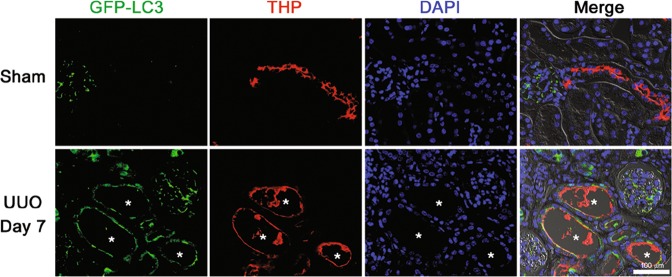
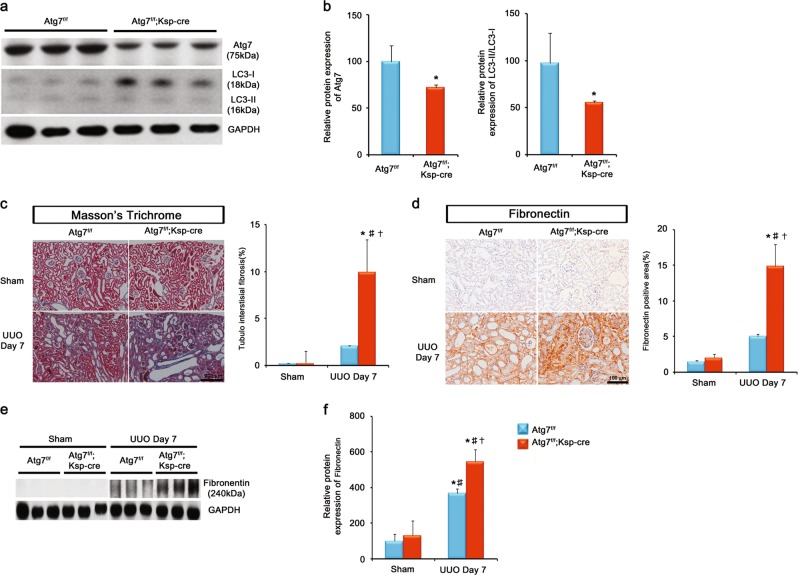
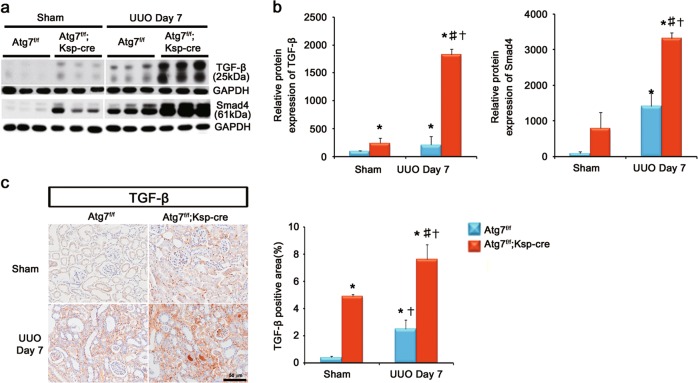
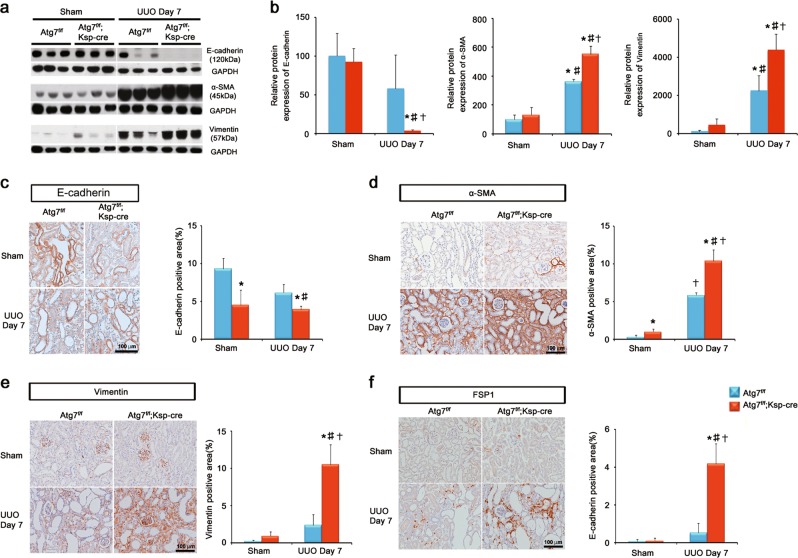
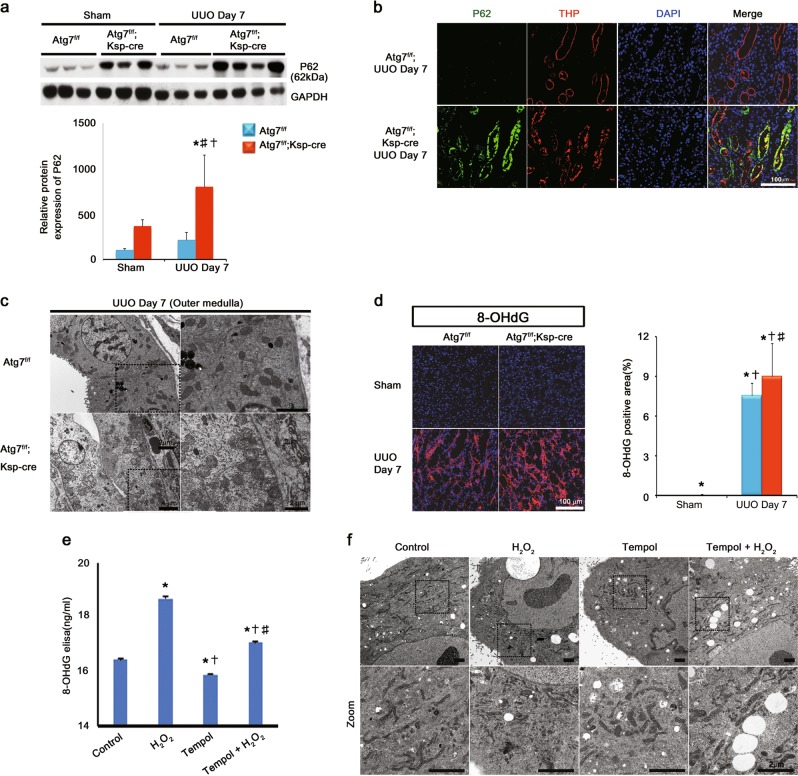
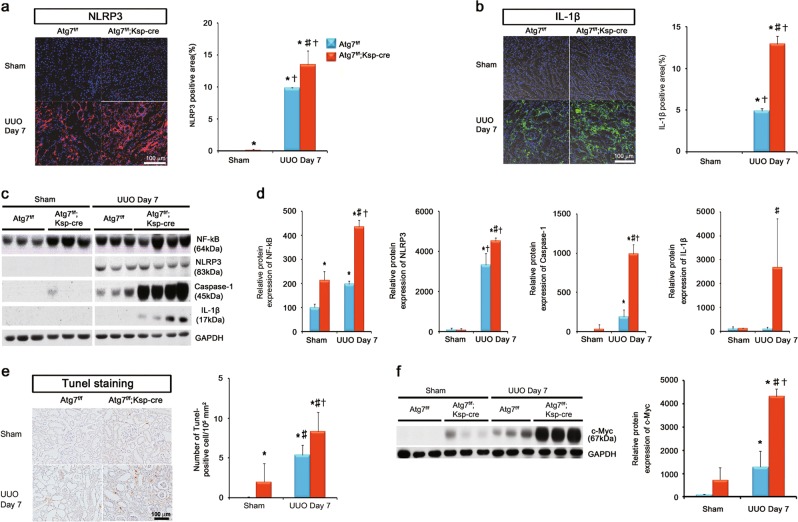
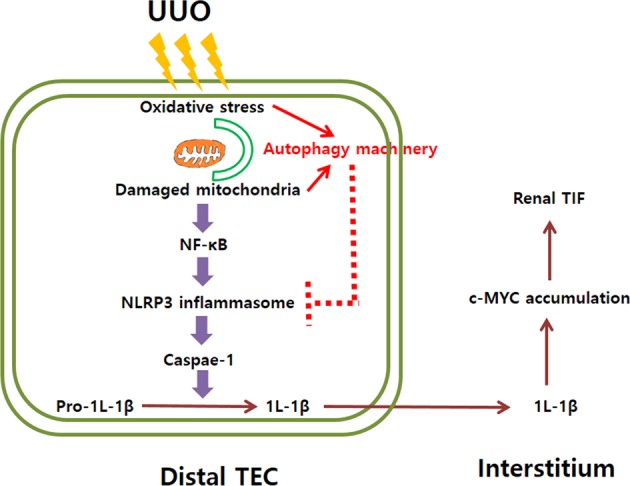
Renal fibrosis is the final common pathway of various renal injuries and it leads to chronic kidney disease. Autophagy is a cellular process of degradation of damaged cytoplasmic components and regulates cell death and proliferation. Cellular response during unilateral ureteral obstruction (UUO) is tubular segment specific. Thus the role of autophagy on renal tubulointerstitial fibrosis (TIF) after UUO may be different according to segment of nephron. The role of autophagy during UUO remains unclear especially in distal tubules. In this study, we investigated the role of autophagy in distal tubules on renal TIF using conditional knockout mice in which Atg7 was genetically ablated specifically in distal tubular epithelial cell (TEC). In green fluorescent protein (GFP)-LC3 transgenic mice, GFP-LC3 puncta was highly expressed in distal tubular cells of the obstructed kidneys after UUO. Genetic deletion of Atg7 specifically in distal TEC increased renal tubulointerstial fibrosis and epithelial-mesenchymal transition-like phenotype change after UUO through Smad4-dependent transforming growth factor (TGF)-β pathway. Distal tubule-specific autophagy-deficient mice increased the accumulation of damaged mitochondria and SQSTM1/p62-positive aggregates in the obstructed kidney and resulted in increased expression of NLRP3 inflammasome, interleukin (IL) 1-β and caspase-1. Distal TEC-specific Atg7 deletion enhanced apoptosis of TECs after UUO. In summary, our data showed that autophagy in distal TEC plays a protective role in development of renal tubulointerstial fibrosis through regulating the expression of TGF-β an IL1-β after UUO.
Overview
The claims and statistics of this paper haven’t been checked yet.
Free: it reads the open-access text and checks the first 5 claims that cite a source we can check. Create a free account to check every claim.
Integrity signals
Registry
Cites
Statistics
Figures
Verification
Claims the paper makes
The claims and statistics of this paper haven’t been checked yet.
Free: it reads the open-access text and checks the first 5 claims that cite a source we can check. Create a free account to check every claim.
Claims other papers make about this one
Each is checked against this paper’s own text: does it say what the citing paper says it does?
The source backs part of the claim, not all of it — or backs it for a different population, condition or comparison.
In the citing paper
“Autophagy induced in distal tubules and pericytes during UUO also protected against kidney interstitial fibrosis by suppressing TGFβ and NLRP3-inflammasome signalling122,123.”
From Autophagy in kidney homeostasis and disease (2020) · cites this paper as [123]
Experimental — accuracy not yet measured
Self-check
Percentages, sums and reported differences re-computed from the paper’s own numbers.
The self-check needs the paper’s full text.
Citations
Cites
Repertoires of Autophagy in the Pathogenesis of Ocular Diseases
Li, Y.-J., Jiang, Q., Cao, G.-F., Yao, J., & Yan, B. (2015) · Cellular Physiology and Biochemistry · doi:10.1159/000373980 · Cited by 16,304
Autophagy in the Pathogenesis of Disease
Levine, B., & Kroemer, G. (2008) · Cell · doi:10.1016/j.cell.2007.12.018 · Cited by 7,069
Autophagy and Viruses: Adversaries or Allies?
Dong, X., & Levine, B. (2013) · Journal of Innate Immunity · doi:10.1159/000346388 · Cited by 4,430
Biomarkers for epithelial-mesenchymal transitions
Zeisberg, M., & Neilson, E. G. (2009) · Journal of Clinical Investigation · doi:10.1172/jci36183 · Cited by 2,299
Homeostatic levels of p62 control cytoplasmic inclusion body formation in autophagy-deficient mice.
Komatsu, M., Waguri, S., Koike, M., Sou, Y.-S., Ueno, T., Hara, T., Mizushima, N., Iwata, J.-I., Ezaki, J., Murata, S., et al. (2007) · Cell · doi:10.1016/j.cell.2007.10.035 · Cited by 2,124
Self-citationMitochondria, oxidative stress and cell death
Ott, M., Gogvadze, V., Orrenius, S., & Zhivotovsky, B. (2007) · Apoptosis · doi:10.1007/s10495-007-0756-2 · Cited by 1,977
Autophagy: from phenomenology to molecular understanding in less than a decade
Klionsky, D. J. (2007) · Nature Reviews Molecular Cell Biology · doi:10.1038/nrm2245 · Cited by 1,934
Evidence that fibroblasts derive from epithelium during tissue fibrosis
Iwano, M., Plieth, D., Danoff, T. M., Xue, C., Okada, H., & Neilson, E. G. (2002) · Journal of Clinical Investigation · doi:10.1172/jci0215518 · Cited by 1,590
Cellular and molecular mechanisms of renal fibrosis
Liu, Y. (2011) · Nature Reviews Nephrology · doi:10.1038/nrneph.2011.149 · Cited by 1,446
Origin and function of myofibroblasts in kidney fibrosis
LeBleu, V. S., Taduri, G., O'Connell, J., Teng, Y., Cooke, V. G., Woda, C., Sugimoto, H., & Kalluri, R. (2013) · Nature Medicine · doi:10.1038/nm.3218 · Cited by 1,263
Cited by
Autophagy in major human diseases
Klionsky, D. J., Petroni, G., Amaravadi, R. K., Baehrecke, E. H., Ballabio, A., Boya, P., Bravo‐San Pedro, J. M., Cadwell, K., Cecconi, F., Choi, A. M. K., et al. (2021) · The EMBO Journal · doi:10.15252/embj.2021108863 · Cited by 1,585
Autophagy in kidney homeostasis and disease
Tang, C., Livingston, M. J., Liu, Z., & Dong, Z. (2020) · Nature Reviews Nephrology · doi:10.1038/s41581-020-0309-2 · Cited by 496
Metabolism at the crossroads of inflammation and fibrosis in chronic kidney disease
Miguel, V., Shaw, I. W., & Kramann, R. (2025) · Nature Reviews Nephrology · doi:10.1038/s41581-024-00889-z · Cited by 181
“However, regulatory B cells had a protective role against CKD in a high fat diet-induced kidney injury model by producing the immunomodulatory cytokine IL-10 (ref.”
InfluentialChoi, M. E. (2020) · Annual Review of Physiology · doi:10.1146/annurev-physiol-021119-034658 · Cited by 150
“These changes were associated with increased activation of the NLRP3 inflammasome, including caspase-1 activation and increased IL-1β production (104).”
BackgroundInfluentialThe Epithelial-to-Mesenchymal Transition as a Possible Therapeutic Target in Fibrotic Disorders
Di Gregorio, J., Robuffo, I., Spalletta, S., Giambuzzi, G., De Iuliis, V., Toniato, E., Martinotti, S., Conti, P., & Flati, V. (2020) · Frontiers in Cell and Developmental Biology · doi:10.3389/fcell.2020.607483 · Cited by 145
“In fact it may be insufficient and thus promotes the disease in idiopathic pulmonary fibrosis (IPF) (Araya et al., 2013) while it attenuates tubulointerstitial fibrosis in the kidney (Nam et al., 2019).”
BackgroundThe Role of Sinusoidal Endothelial Cells in the Axis of Inflammation and Cancer Within the Liver
Wilkinson, A. L., Qurashi, M., & Shetty, S. (2020) · Frontiers in Physiology · doi:10.3389/fphys.2020.00990 · Cited by 121
Interaction between autophagy and the NLRP3 inflammasome
Cao, Z., Wang, Y., Long, Z., & He, G. (2019) · Acta Biochimica et Biophysica Sinica · doi:10.1093/abbs/gmz098 · Cited by 129
Autophagy Function and Regulation in Kidney Disease
Kaushal, G. P., Chandrashekar, K., Juncos, L. A., & Shah, S. V. (2020) · Biomolecules · doi:10.3390/biom10010100 · Cited by 120
“In this model, the induction of autophagy in distal tubular epithelial cells afforded protection from renal tubulointerstitial fibrosis through the regulation of the TGF-β/signal transducers and transcriptional modulator (Smad)4 signaling pathway and NOD-LRR and pyrin domain-containing protein3 (NLRP3) inflammasome/ca…”
BackgroundSears, S. M., & Siskind, L. J. (2021) · Journal of the American Society of Nephrology · doi:10.1681/asn.2020101455 · Cited by 108
Tsuji, G., Hashimoto‐Hachiya, A., Vu, Y. H., Takemura, M., Yumine, A., Furue, K., Furue, M., & Nakahara, T. (2020) · Cell Death Discovery · doi:10.1038/s41420-020-0245-8 · Cited by 109
Effect and Regulation of the NLRP3 Inflammasome During Renal Fibrosis
Zhang, H., & Wang, Z. (2020) · Frontiers in Cell and Developmental Biology · doi:10.3389/fcell.2019.00379 · Cited by 94
Mitochondrial dysfunction and oxidative stress: Role in chronic kidney disease
Srivastava, A., Tomar, B., Sharma, D., & Rath, S. K. (2023) · Life Sciences · doi:10.1016/j.lfs.2023.121432 · Cited by 94
Strategies to improve the performance of phosphide anodes in sodium-ion batteries
Zhang, W., Liu, T., Wang, Y., Liu, Y., Nai, J., Zhang, L., Sheng, O., & Tao, X. (2021) · Nano Energy · doi:10.1016/j.nanoen.2021.106475 · Cited by 83
Hu, Z.-L., Sun, T., Lu, M., Ding, J.-H., Du, R.-H., & Hu, G. (2019) · Brain, Behavior, and Immunity · doi:10.1016/j.bbi.2019.07.009 · Cited by 79
“Defective mitophagy leads to the accumulation of ROS-producing damaged mitochondria, and as a consequence, to the activation of the NLRP3 inflammasome (Nam et al., 2019; Zhou et al., 2011).”
BackgroundTGF‑β1‑induced autophagy activates hepatic stellate cells via the ERK and JNK signaling pathways
Zhang, J., Jiang, N., Ping, J., & Xu, L. (2020) · International Journal of Molecular Medicine · doi:10.3892/ijmm.2020.4778 · Cited by 79
Lee, S., Kim, S. K., Park, H., Lee, Y. J., Park, S. H., Lee, K. J., Lee, D. G., Kang, H., & Kim, J. E. (2020) · International Journal of Molecular Sciences · doi:10.3390/ijms21218050 · Cited by 70
“A recent study has demonstrated that autophagy can decrease tubulointerstitial fibrosis by blocking NLRP3 inflammasome signaling pathway and TGF-β [22].”
BackgroundSelf-citationSelf-eating: friend or foe? The emerging role of autophagy in fibrotic diseases
Li, Y., Liu, R., Wu, J., & Li, X. (2020) · Theranostics · doi:10.7150/thno.47826 · Cited by 72
“further constructed a tubular epithelial cell-specific Atg7 deletion mouse model and demonstrated that impaired autophagy accelerated renal tubulointerstitial fibrosis and distal tubules EMT-like phenotype change via increasing the expression of TGF-β, IL-1β and NLRP3 in the kidney after UUO treatment [162].”
BackgroundThe NLRP3 inflammasome in fibrosis and aging: The known unknowns
Liu, Y., Xu, X., Lei, W., Hou, Y., Zhang, Y., Tang, R., Yang, Z. P., Tian, Y., Zhu, Y., Wang, C., et al. (2022) · Ageing Research Reviews · doi:10.1016/j.arr.2022.101638 · Cited by 66
Kidney Aging and Chronic Kidney Disease
Zhang, Y., Chen, Y., & Li, X. (2024) · International Journal of Molecular Sciences · doi:10.3390/ijms25126585 · Cited by 86
“…epithelial cells (TECs) also plays a protective role in the development of renal tubulointerstitial fibrosis through a recovery of the expression of LC-II and ATG7 and an inhibition of the protein kinase B (PKB, or AKT)-mammalian target of the rapamycin (mTOR) pathway after UUO injuries [68,69].”
BackgroundEstrogen plays an important role by influencing the NLRP3 inflammasome
Dong, W., Peng, Q., Liu, Z., Xie, Z., Guo, X., Li, Y., & Chen, C. (2023) · Biomedicine & Pharmacotherapy · doi:10.1016/j.biopha.2023.115554 · Cited by 75
Price, G. W., Chadjichristos, C. E., Kavvadas, P., Tang, S. C. W., Yiu, W. H., Green, C. R., Potter, J. A., Siamantouras, E., Squires, P. E., & Hills, C. E. (2020) · Cell Communication and Signaling · doi:10.1186/s12964-020-00558-1 · Cited by 59
Jia, Z., Wang, K., Zhang, Y., Duan, Y., Xiao, K., Liu, S., & Ding, X. (2021) · Frontiers in Pharmacology · doi:10.3389/fphar.2021.720387 · Cited by 53
“Research has shown that autophagy has obvious significance in ameliorating tubulointerstitial fibrosis (Nam et al., 2019).”
BackgroundAutophagy and mitophagy: physiological implications in kidney inflammation and diseases
Bhatia, D., & Choi, M. E. (2023) · American Journal of Physiology-Renal Physiology · doi:10.1152/ajprenal.00012.2023 · Cited by 57
Mechanisms underlying pathological scarring by fibroblasts during wound healing
Ma, Y., Liu, Z., Miao, L., Jiang, X., Ruan, H., Xuan, R., & Xu, S. (2023) · International Wound Journal · doi:10.1111/iwj.14097 · Cited by 54
“Another study showed that autophagy can inhibit the blockade of the NLRP3 inflammasome signalling pathway and TGF-β to alleviate tubulointerstitial fibrosis.(83) Whether the upregulation of autophagy promotes FB proliferation or leads to further autophagic death, and how it affects other signalling pathways in FB, nee…”
BackgroundAutophagy in kidney disease: Advances and therapeutic potential
Bhatia, D., & Choi, M. E. (2020) · Progress in molecular biology and translational science · doi:10.1016/bs.pmbts.2020.01.008 · Cited by 53
P2Y2R contributes to the development of diabetic nephropathy by inhibiting autophagy response
Dusabimana, T., Kim, S. R., Park, E., Je, J., Jeong, K., Yun, S. P., Kim, H. J., Kim, H., & Park, S. W. (2020) · Molecular Metabolism · doi:10.1016/j.molmet.2020.101089 · Cited by 44
“Autophagy was shown to attenuate tubulointerstitial fibrosis through regulating TGF-b and NLRP3 inflammasomes [63].”
BackgroundSelf-citationAlassaf, N., & Attia, H. (2023) · Frontiers in Pharmacology · doi:10.3389/fphar.2023.1103062 · Cited by 52
“Recently, autophagy has attracted unprecedented interest due to its importance in several renal diseases including AKI induced by CP (Pallet et al., 2008; Ding et al., 2014; Li T. et al., 2017; Nam et al., 2019; Shen et al., 2021).”
BackgroundZheng, C., Lee, Y., Chiu, I., Chiu, Y.-J., Sung, L.-C., Hsu, Y., & Chiu, H. (2020) · Toxics · doi:10.3390/toxics8040092 · Cited by 48
Gasotransmitters: Potential Therapeutic Molecules of Fibrotic Diseases
Chen, Y., Yuan, S., Cao, Y., Kong, G., Jiang, F., Li, Y., Wang, Q., Tang, M., Zhang, Q., Wang, Q., et al. (2021) · Oxidative Medicine and Cellular Longevity · doi:10.1155/2021/3206982 · Cited by 47
“Conditionally knocking out the autophagy-related protein 7 (Atg7) gene in the distal renal tubular epithelial cells from unilateral ureteral obstruction (UUO) mouse model can promote the activation of the TGF-β/Smad4 pathway and the NLRP3 inflammasome, as well as aggravate renal interstitial fibrosis [58].”
BackgroundShi, M., Maique, J., Shepard, S., Li, P., Seli, O., Moe, O. W., & Hu, M. C. (2021) · Kidney International · doi:10.1016/j.kint.2021.09.030 · Cited by 42
Autophagy in Cisplatin Nephrotoxicity during Cancer Therapy
Hu, X., Ma, Z., Wen, L., Li, S., & Dong, Z. (2021) · Cancers · doi:10.3390/cancers13225618 · Cited by 38
Ram, C., Gairola, S., Syed, A. M., Kulhari, U., Kundu, S., Mugale, M. N., Murty, U. S., & Sahu, B. D. (2022) · Life Sciences · doi:10.1016/j.lfs.2022.120527 · Cited by 41
Liu, B., Wang, D., Cao, Y., Wu, J., Zhou, Y., Wu, W., Wu, J., Zhou, J., & Qiu, J. (2022) · European Journal of Pharmacology · doi:10.1016/j.ejphar.2022.175136 · Cited by 35
Zheng, C., Lu, K., Chen, Y., Li, C.-Y., Lee, Y., & Chiu, H. (2022) · Biomedicine & Pharmacotherapy · doi:10.1016/j.biopha.2022.113565 · Cited by 35
The Role of Autophagy in Anti-Cancer and Health Promoting Effects of Cordycepin
Chen, Y.-Y., Chen, C.-H., Lin, W.-C., Tung, C.-W., Chen, Y., Yang, S., Huang, B., & Chen, R.-J. (2021) · Molecules · doi:10.3390/molecules26164954 · Cited by 35
“ATG7 KO mice with impaired autophagy also show accelerated renal tubulointerstitial fibrosis and the increased expression of TGF-β, interleukin-1β (IL-1β), NLRP3, endoplasmic reticulum (ER) stress, and mitochondria damage in the kidney of the UUO-treatment model [67,78].”
BackgroundLi, Z., Liu, R., Zhang, X., Guo, Z., Geng, X., Chu, D., Cui, H., Zhang, A., Li, W., Zhu, L., et al. (2024) · Journal of Controlled Release · doi:10.1016/j.jconrel.2024.04.010 · Cited by 31
Therapy Targeted to the NLRP3 Inflammasome in Chronic Kidney Disease
Ji, Y., Hu, H., Jia, Z., Zhang, A., & Ding, G. (2024) · Kidney Diseases · doi:10.1159/000539496 · Cited by 27
“…related to autophagy, authors established that autophagy in distal TECs protected the onset of renal fi brosis by regulating Smad4-dependent TGF-β pathway in the UUO model [85, 86]; and that autophagic damage also raised the expression of NLRP3, caspase-1, IL-1 β , and mitochondrial ROS [87].”
BackgroundDanggui Shaoyao San Ameliorates Renal Fibrosis via Regulation of Hypoxia and Autophagy
Zhang, M.-Y., Chen, H., Tian, J., Chen, H., Zhu, L., Zhao, P., & Zhang, T. (2019) · Evidence-based Complementary and Alternative Medicine · doi:10.1155/2019/2985270 · Cited by 28
Wu, M., Wu, C., Liu, C., Tsai, Y., Chen, C., Wang, Y.-H., & Hsieh, T. (2021) · Ecotoxicology and Environmental Safety · doi:10.1016/j.ecoenv.2021.112756 · Cited by 24
Current Status of Autophagy Enhancers in Metabolic Disorders and Other Diseases
Park, K., & Lee, M. (2022) · Frontiers in Cell and Developmental Biology · doi:10.3389/fcell.2022.811701 · Cited by 27
Self-citationJin, J.-Z., Li, H., Jin, J., Guo, P. S., Shen, X., Wu, Y., Xu, J.-C., Zhang, L.-Y., Jiang, Y.-J., Zheng, H.-L., et al. (2020) · Acta Pharmacologica Sinica · doi:10.1038/s41401-020-0393-7 · Cited by 22
“After 14 days of UUO, extensive tubular vacuolization and atrophy, massive inflammatory cell infiltration, and severe TIF were observed.”
BackgroundInfluentialRenal aging and its consequences: navigating the challenges of an aging population
Zhang, M., Ni, H.-F., Lin, Y., Wang, K., He, T., Lan, Y., Han, Z., & Zuo, X. (2025) · Frontiers in Pharmacology · doi:10.3389/fphar.2025.1615681 · Cited by 30
Pathogenesis and management of renal fibrosis induced by unilateral ureteral obstruction
Nan, Q. Y., Piao, S. G., Jin, J. Z., Chung, B. H., Yang, C. W., & Li, C. (2024) · Kidney Research and Clinical Practice · doi:10.23876/j.krcp.23.156 · Cited by 25
“In UUO, genetic ablation of Atg7 in distal tubules or pharmacological blockade of autophagy aggravates renal fibrosis, which suggests a protective role for autophagy [52].”
BackgroundSelf-citationThe role of lysosomes in airborne particulate matter-induced pulmonary toxicity
Nie, B., Liu, X., Lei, C., Liang, X., Zhang, D., & Zhang, J. (2024) · The Science of The Total Environment · doi:10.1016/j.scitotenv.2024.170893 · Cited by 20
The Complex Interplay between Autophagy and NLRP3 Inflammasome in Renal Diseases
Ding, Y. J., Fu, X., Wang, Q., Liu, H., Wang, H., & Wu, D. (2021) · International Journal of Molecular Sciences · doi:10.3390/ijms222312766 · Cited by 20
“The specific Atg7 gene deletion in renal distal TECs also promoted TEC apoptosis after UUO [17].”
BackgroundInfluentialThe role of autophagy in fibrosis: Mechanisms, progression and therapeutic potential (Review)
Chen, Y., Wang, Z., Ma, Q., & Sun, C. (2025) · International Journal of Molecular Medicine · doi:10.3892/ijmm.2025.5502 · Cited by 26
“In a study by Nam et al (174), after unilateral ureteral obstruction, autophagy induced in distal renal tubular epithelial cells was demonstrated to confer protection against renal tubular interstitial fibrosis by modu‑ lating the TGF‑ β /SMAD4 signaling pathway and the NLRP3 inflammatory vesicle/caspase‑1/IL‑1 β sign…”
Ion channels as a therapeutic target for renal fibrosis
Yan, P., Ke, B., & Fang, X. (2022) · Frontiers in Physiology · doi:10.3389/fphys.2022.1019028 · Cited by 20
“This mechanism has also been validated in the UUO model (Nam et al., 2019) (see Figure 2).”
Hsu, Y., Zheng, C., Chou, C., Chen, Y.-J., Lee, Y., Lin, Y., & Chiu, H. (2021) · Biomedicines · doi:10.3390/biomedicines9040398 · Cited by 19
“Previous research has shown that autophagy attenuates tubulointerstitial fibrosis by suppressing the NLRP3 inflammasome and transforming growth factor-β [39].”
BackgroundLiu, J., Livingston, M. J., Dong, G., Wei, Q., Zhang, M., Mei, S., Zhu, J., Zhang, C., & Dong, Z. (2024) · American Journal of Physiology-Cell Physiology · doi:10.1152/ajpcell.00458.2023 · Cited by 19
Wan, Y., Lv, Y., Li, L., & Yin, Z. (2019) · Biomedicine & Pharmacotherapy · doi:10.1016/j.biopha.2019.109548 · Cited by 19
Qi, R., Zhang, W., Zheng, L., Xu, M., Rong, R., Zhu, T., & Yang, C. (2020) · Annals of Translational Medicine · doi:10.21037/atm.2020.02.12 · Cited by 17
Self-citationOmega-3 Fatty Acids Attenuate Renal Fibrosis via AMPK-Mediated Autophagy Flux Activation
Han, S., Choi, H., Park, H., Kim, J.-J., Lee, E. J., Ham, Y. R., Na, K. R., Lee, K., Chang, Y., & Choi, D. E. (2023) · Biomedicines · doi:10.3390/biomedicines11092553 · Cited by 21
“A protective role of autophagy against renal fibrosis was reported in the UUO model [8,9].”
Self-citationRegulation of Ptch1 by miR-342-5p and FoxO3 Induced Autophagy Involved in Renal Fibrosis
Tang, S., Wang, Y., Xie, G., Li, W., Chen, Y., Liang, J., Liu, P., Song, F., & Zhou, J. (2020) · Frontiers in Bioengineering and Biotechnology · doi:10.3389/fbioe.2020.583318 · Cited by 16
“Autophagy dysfunction is implicated in the pathogenesis of acute kidney injury and RF diseases (Hartleben et al., 2010; Jiang et al., 2012; Nam et al., 2019).”
BackgroundWu, L., Wang, Z., Li, X., He, X., Han, Y., Chen, Y., Liu, L., Fu, L., & Zhang, T. (2020) · Toxicology Letters · doi:10.1016/j.toxlet.2020.06.006 · Cited by 15
Sears, S. M., Feng, J. L., Orwick, A., Vega, A. A., Krueger, A. M., Shah, P. P., Doll, M. A., Beverly, L. J., & Siskind, L. J. (2022) · American Journal of Physiology-Renal Physiology · doi:10.1152/ajprenal.00097.2022 · Cited by 16
Zhao, Y., Guo, C., Zeng, L., Li, J., Liu, X., Wang, Y., Zhao, K., & Chen, B. (2022) · International Journal of Stem Cells · doi:10.15283/ijsc22014 · Cited by 17
“Increasing evidence suggests that autophagy activity is necessary for homeostasis, survival, physiological function of renal cells, and plays a role in preventing renal fibrosis (30-32).”
BackgroundIs the proximal tubule the focus of tubulointerstitial fibrosis?
Peng, Z., Wang, H., Zheng, J., Wang, J., Xiang, Y., Liu, C., Ji, M., Liu, H., Pan, L., Qin, X., et al. (2023) · Heliyon · doi:10.1016/j.heliyon.2023.e13508 · Cited by 17
Lopez‐Soler, R. I., Nikouee, A., Kim, M. J., Khan, S., Sivaraman, L., Ding, X., & Zang, Q. S. (2023) · Frontiers in Immunology · doi:10.3389/fimmu.2023.1104652 · Cited by 14
“Our studies showed that autophagy provides protection from the development of fibrosis, consistent with previously published results (47).”
ResultCelastrol-based nanoporous membranes prevent subconjunctival fibrosis by activating autophagy
Li, Z., Guo, Z., Chu, D., Liu, R., Zhu, L., Shi, L., Li, C., Jin, L., Zhang, X., & Li, J. (2023) · Materials Today Advances · doi:10.1016/j.mtadv.2023.100356 · Cited by 13
Gui, Z., Liu, X., Xu, Z. C., Feng, D., Zhou, H., Zheng, M., Chen, H., Fei, S., Sun, L., Tao, J., et al. (2024) · Cell Proliferation · doi:10.1111/cpr.13699 · Cited by 12
“17 However, activation of autophagy persisted in kidney proximal tubules; consequently, autophagy was considered to have a profibrotic effect in renal interstitial fibrosis during UUO.”
BackgroundNon-coding RNAs regulate autophagy in kidney disease: friend or foe?
Li, Y., Ma, T., Liang, X., Jin, T., Zhao, X., Huang, J., Hao, J., Liu, H., & Wang, P. (2025) · Autophagy · doi:10.1080/15548627.2025.2551683 · Cited by 18
Molecular mechanisms and physiological functions of autophagy in kidney diseases
Yang, J., Yuan, L., Liu, F., Li, L., Liu, J., Chen, Y., Lu, Y., & Yuan, Y. (2022) · Frontiers in Pharmacology · doi:10.3389/fphar.2022.974829 · Cited by 14
“Additionally, one study further illuminated that autophagy in distal tubular epithelial cells played an antifibrotic role in renal tubulointerstitial by suppressing TGF-β and IL-1β pathways in UUO model (Nam et al., 2019).”
BackgroundMiR-126* is a novel functional target of transcription factor SMAD4 in ovarian granulosa cells
Li, Q., Du, X., Liu, L., Pan, Z., Cao, S., & Li, Q. (2019) · Gene · doi:10.1016/j.gene.2019.143953 · Cited by 11
Somparn, P., Boonkrai, C., Charngkaew, K., Chomanee, N., Hodge, K. G., Fenton, R. A., Pisitkun, T., & Khositseth, S. (2019) · American Journal of Physiology-Renal Physiology · doi:10.1152/ajprenal.00113.2019 · Cited by 9
LINC01605 knockdown induces apoptosis in human Tenon's capsule fibroblasts by inhibiting autophagy
Shang, Q.-F., Yang, Y., & Li, H. (2022) · Experimental and Therapeutic Medicine · doi:10.3892/etm.2022.11273 · Cited by 9
“TGF‐β expression and inhibit renal fibrosis (56).”
Identification of circular RNA expression profiles in renal fibrosis induced by obstructive injury
Huang, J., Zhang, Z., Liu, B., Gao, Y., Nie, J., Wen, S., Lai, X., & Liang, H. (2021) · Renal Failure · doi:10.1080/0886022x.2021.1979040 · Cited by 8
Mao, Y., Zhang, X., Wei, P., Liu, H., Zhou, X., Liang, L., Xiang, J., Zhang, H., Wang, D., Liu, L., et al. (2020) · The FASEB Journal · doi:10.1096/fj.202002089r · Cited by 8
Tubular Numb promotes renal interstitial fibrosis via modulating HIF-1α protein stability
Zhu, F., Li, H. R., Long, T., Zhou, M., Wan, J., Tian, J., Zhou, Z., Hu, Z., & Nie, J. (2021) · Biochimica et Biophysica Acta (BBA) - Molecular Basis of Disease · doi:10.1016/j.bbadis.2021.166081 · Cited by 6
Experimental Study on Danggui Shaoyao San Improving Renal Fibrosis by Promoting Autophagy
Fan, L., Chen, H., Liu, H.-J., Chen, H., Zhu, L., & Zhang, T. (2022) · Evidence-based Complementary and Alternative Medicine · doi:10.1155/2022/6761453 · Cited by 7
Autophagy Activation in Peripheral Blood Mononuclear Cells of Peritoneal Dialysis Patients
Granata, S., Bruschi, M., Verlato, A., Pontrelli, P., Gesualdo, L., Stallone, G., & Zaza, G. (2023) · Kidney International Reports · doi:10.1016/j.ekir.2023.06.017 · Cited by 6
Deng, L., Xu, G., & Huang, Q. (2022) · Frontiers in Genetics · doi:10.3389/fgene.2022.925097 · Cited by 6
“Autophagy dysfunction is implicated in the pathogenesis of acute kidney injury and RF diseases (Nam et al., 2019; Yang et al., 2020b; Tang et al., 2021).”
BackgroundAutophagy: A Silent Protagonist in Kidney Transplantation
Ponticelli, C., Reggiani, F., & Moroni, G. L. (2023) · Transplantation · doi:10.1097/tp.0000000000004862 · Cited by 5
The role of desmoglein-2 in kidney disease
Xu, T., Herkens, L., Jia, T., Klinkhammer, B. M., Kant, S., Krusche, C. A., Buhl, E. M., Hayat, S., Floege, J., Strnad, P., et al. (2024) · Kidney International · doi:10.1016/j.kint.2024.01.037 · Cited by 4
Han, J. S., Wang, J., Shen, L., Cai, Y., Wang, X., Wumaier, A., Chen, W., & Han, W. (2025) · Frontiers in Medicine · doi:10.3389/fmed.2024.1534120 · Cited by 4
Feng, J., Zhang, W., Liu, R., Xiang, T., & Wu, X. (2025) · BMC Nephrology · doi:10.1186/s12882-025-04311-z · Cited by 5
“Autophagy is a cellular process that degrades damaged cellular components and regulates cell death and proliferatio [39].”
Gao, C., Chang, H., Zhou, H., Liu, Q., Bai, Y., Liu, Q., Bai, W., & Shi, S. (2022) · Acta Pharmaceutica · doi:10.2478/acph-2022-0023 · Cited by 3
Kume, Y., Go, H., Maeda, R., Suyama, K., Mori, T., Kawasaki, Y., Hashimoto, K., & Hosoya, M. (2022) · Physiological Genomics · doi:10.1152/physiolgenomics.00124.2021 · Cited by 3
Sphingolipid Biosynthesis Inhibition As A Host Strategy Against Diverse PathogensPreprint
Kumar, S., Li, J., Park, J., Hart, S. K., Song, N., Burrow, D. T., Bean, N. L., Jacobs, N. C., Coler-Reilly, A. L. G., Onyshchenko, A., et al. (2020) · bioRxiv (Cold Spring Harbor Laboratory) · doi:10.1101/2020.04.10.035683 · Cited by 5
“SERPINE1/PAI-1 regulates sphingolipid metabolism (53) and autophagy regulates SERPINE1/PAI-1 (54).”
BackgroundInfluentialJayashree, K., Senthilkumar, G. P., Parameswaran, S., & Mehalingam, V. (2025) · Cytokine · doi:10.1016/j.cyto.2025.156999 · Cited by 2
Zeng, X., Sun, A., Cheng, W., Hou, X., Zhu, M., & Liao, Y. (2023) · Molecular and Cellular Biochemistry · doi:10.1007/s11010-023-04844-7 · Cited by 3
“This further suggested that downregulation of Others studies have found that autophagy inhibited inflammation and fibrosis and played a protection role in the kidney [33, 34].”
Zhang, K., Wu, Z., Zhao, Y., Qiu, X., Li, F., Qiu, C., & Cui, F. (2023) · Radiation Research · doi:10.1667/rade-23-00075.1 · Cited by 2
Kadry, M. O., & Megeed, R. M. A. (2024) · Toxicology Reports · doi:10.1016/j.toxrep.2024.101807 · Cited by 2
Wang, Y., Wu, Y., Ren, J., Wang, Y., Perwaiz, I., Su, H., Li, J., & Qu, P. (2024) · Clinical and Experimental Nephrology · doi:10.1007/s10157-024-02567-7 · Cited by 2
Miyano, T., Sera, T., & Sakamoto, N. (2025) · Biochemical and Biophysical Research Communications · doi:10.1016/j.bbrc.2025.151432 · Cited by 2
Raj, P. V. S., Janda, J., Scholpa, N. E., Hurtado, K. A., & Schnellmann, R. G. (2025) · American Journal of Physiology-Renal Physiology · doi:10.1152/ajprenal.00232.2025 · Cited by 1
Taşkın, R. B., Aydın, İ., Aytaç, G., Imamoglu, S., Tunçay, S. C., Bulut, İ. K., Karaca, N. E., Aksu, G., Berdeli, A., & Kütükçüler, N. (2023) · Molecular Biology Reports · doi:10.1007/s11033-023-08944-x · Cited by 1
“Regarding the proinflammatory cytokines, TGF-β and interleukin 1 beta (IL-1β) are known to mediate renal fibrosis and endothelial cell activation, which exacerbate the inflammation by recruiting immune cells, including T lymphocytes [4, 7, 8].”
Asprosin Promotes Human Renal Tubular Epithelial Cells Apoptosis by Inhibiting AutophagyPreprint
Zheng, S., Liu, W., & Du, X. (2024) · Research Square · doi:10.21203/rs.3.rs-5211042/v1
Zheng, S., Liu, W., & Du, X. (2025) · Research Square · doi:10.21203/rs.3.rs-7243474/v1
Liao, C., Lin, Y., Huang, H.-J., Liu, W.-C., Kan, W., & Chiu, H. (2025) · Biomedicine & Pharmacotherapy · doi:10.1016/j.biopha.2025.118748 · Cited by 1
The multiple roles of Ggt1-Cre in the generation of transgenic mice
Feng, Z.-S., Luo, J., Chen, X.-C., Zhao, P., Qiu, S.-T., Wu, C.-Y., Huang, X.-R., Sun, B.-C., Guo, X., Ye, Z., et al. (2026) · Cellular & Molecular Biology Letters · doi:10.1186/s11658-025-00844-1
“However, persistent stress or autophagy dysfunction disrupts tissue homeostasis, exacerbating disease progression [42–44].”
Self-citationRôle de l’autophagie dans l’ostéosarcome
Camuzard, O. (2019) · theses.fr (ABES) · doi:10.70675/db9b0551zd9a2z4cf6z8dc4zdfbbe6b4e208
Autophagy in the interplay between shear stress and kidney epithelium homeostasis
Roccio, F. (2021) · theses.fr (ABES) · doi:10.70675/899d5d97z1062z453cza091zcae756198817
Metadata
- Authors
- Nam, S. A., Kim, W.-Y., Kim, J. W., Park, S. H., Kim, H. L., Lee, M.-S., Komatsu, M., Ha, H., Lim, J. H., Park, C. W., Yang, C. W., Kim, J., & Kim, Y. K.
- Affiliations
- Catholic University of Korea (KR)
- The Catholic University of Korea Bucheon St. Mary's Hospital (KR)
- Yonsei University (KR)
- Niigata University (JP)
- Ewha Womans University (KR)
- Corresponding author
- Kim, Yong Kyun
- ORCID
- Venue
- Cell Death & Disease
- Published
- 2019-01-28
- Volume
- 10
- Issue
- 2
- Pages
- 78-78
- ISSN
- 2041-4889 (ISSN-L)
- PMC
- PMC6349890
- OpenAlex
- W2914051210
- Cited by
- 92
- References
- 34
- Citations by year
- 2026: 1 · 2025: 10 · 2024: 12 · 2023: 14 · 2022: 14 · 2021: 14 · 2020: 19 · 2019: 8
- FWCI
- 10.47
- Type
- journal article
- Language
- en
- Open access
- gold
- doi.org
- Licence
- cc-by
- creativecommons.org/licenses/by/4.0 (tdm)
- creativecommons.org/licenses/by/4.0 (vor)
- Locations
- Cell Death and Disease (publishedVersion, cc-by)
- Europe PMC (PubMed Central) (publishedVersion, other-oa)
- PubMed Central (publishedVersion, cc-by)
- PubMed (publishedVersion)
- DOAJ (DOAJ: Directory of Open Access Journals) (submittedVersion)
- YUHSpace (Yonsei University Medical Library) (submittedVersion, cc-by-nc-nd)
- Funders
- National Research Foundation
- National Research Foundation of Korea (2018R1A2B6003440, NRF-2018R1A2B6003440, NRF-2015R1D1A1A09059195)
- Ministry of Education, Science and Technology (2015R1D1A1A09059195, 2018R1A2B6003440, NRF-2015R1D1A1A09059195, NRF-2018R1A2B6003440)
- Japan Society for the Promotion of Science (16H06276)
- Topics
- Life Sciences › Biochemistry, Genetics and Molecular Biology › Cell Biology › Autophagy in Disease and Therapy
- Health Sciences › Medicine › Nephrology › Chronic Kidney Disease and Diabetes
- Life Sciences › Biochemistry, Genetics and Molecular Biology › Molecular Biology › TGF-β signaling in diseases
- Keywords
- autophagy, tubulointerstitial fibrosis, unilateral ureteral obstruction, ATG7, TGF-beta signaling, NLRP3 inflammasome, IL-1β, caspase-1, epithelial-mesenchymal transition, mitochondrial damage, p62, apoptosis, chronic kidney disease
- MeSH terms
- NLR Family, Pyrin Domain-Containing 3 Protein, Animals, Autophagy, Fibrosis, Kidney, Signal Transduction, Transforming Growth Factor beta, Mice, Knockout, Mice, Inflammasomes
About these checks
Registry, retraction, Cites and statistics results are computed, not judged, with one exception: a printed reference that no index lists is read once by a model before it counts as a citation error. Claims are extracted by a model and kept only when their quote appears verbatim in the text; each cited source is then checked, with a model’s help, for whether it says what the claim relies on. Those verdicts can be wrong — read the claim’s quote and the cited source before relying on one.
Statistics and arithmetic are recomputed, not judged.
Confidence bands are shown only for fields calibrated on our annotated test set. None is calibrated yet, so no band is shown.
What counts as a claim ›How we measure confidence ›How we check this ›
Are you an author, or do you see a problem with this page? Request a review
Data sources
Bibliographic data: Semantic Scholar, OpenAlex, Crossref.
Contains information from the Semantic Scholar Academic Graph Datasets, made available under the ODC Attribution License (ODC-BY 1.0).
Semantic Scholar’s data is described in: Kinney, R., et al. (2023). The Semantic Scholar Open Data Platform. arXiv:2301.10140.
