

Suppression of USP7 induces BCR-ABL degradation and chronic myelogenous leukemia cell apoptosis
Open accessThe DOI matches its Crossref record; 33 of the 33 references it cites were found in a registry or an index.
Abstract
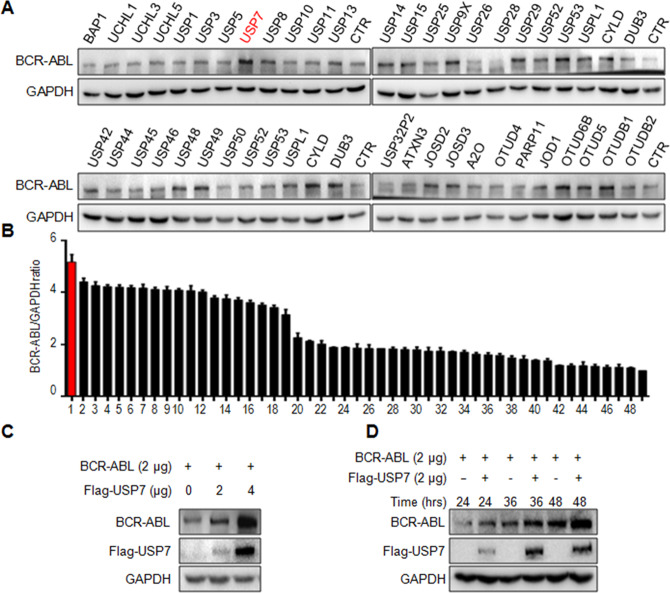
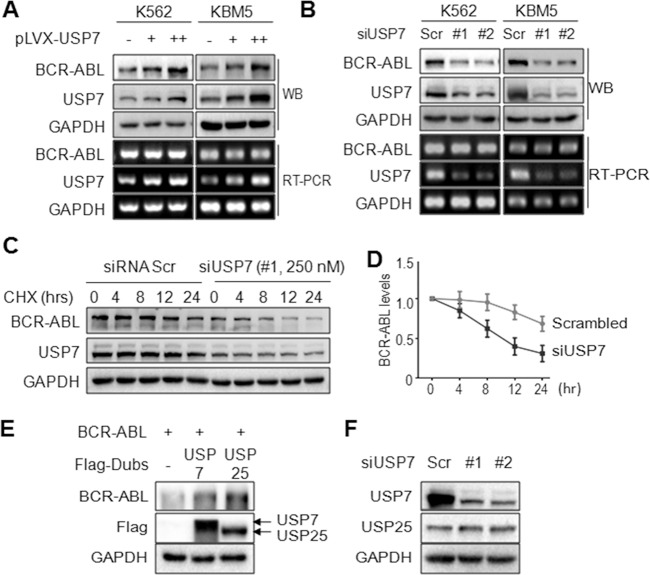
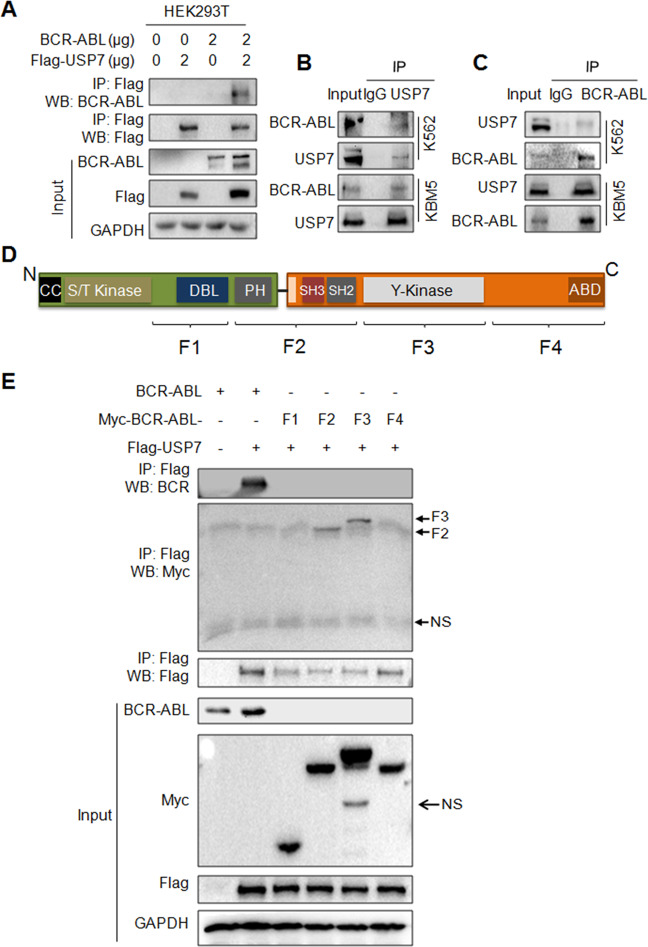
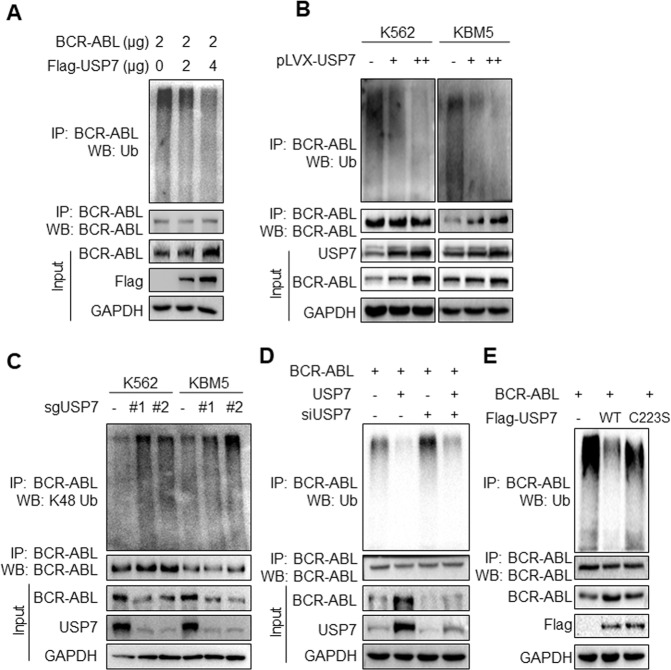
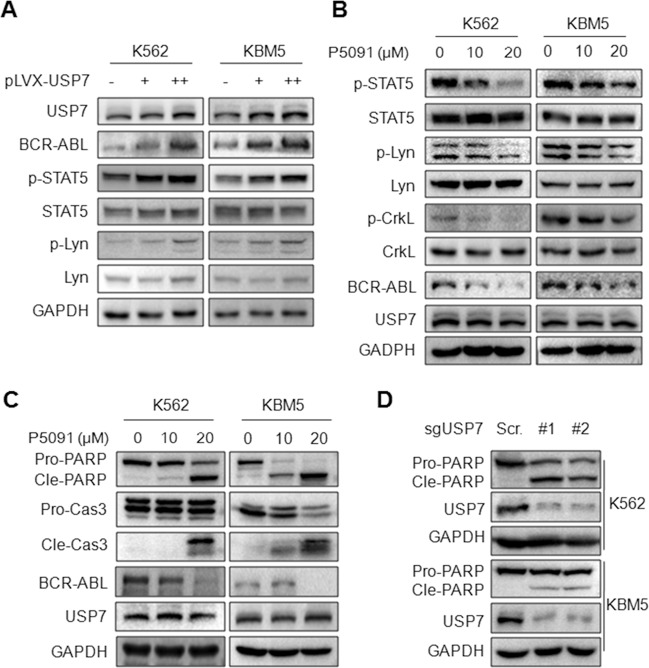
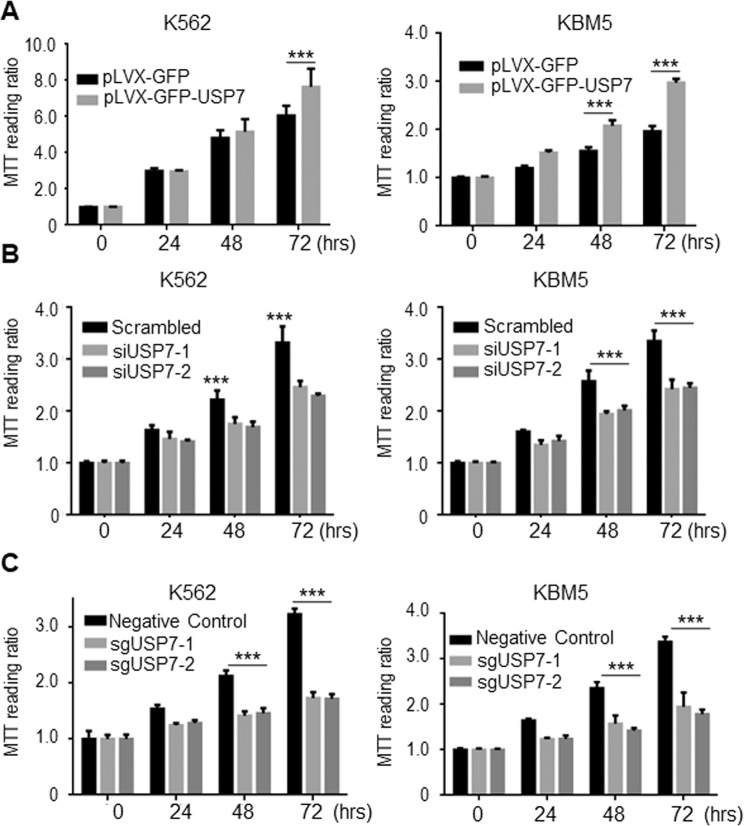
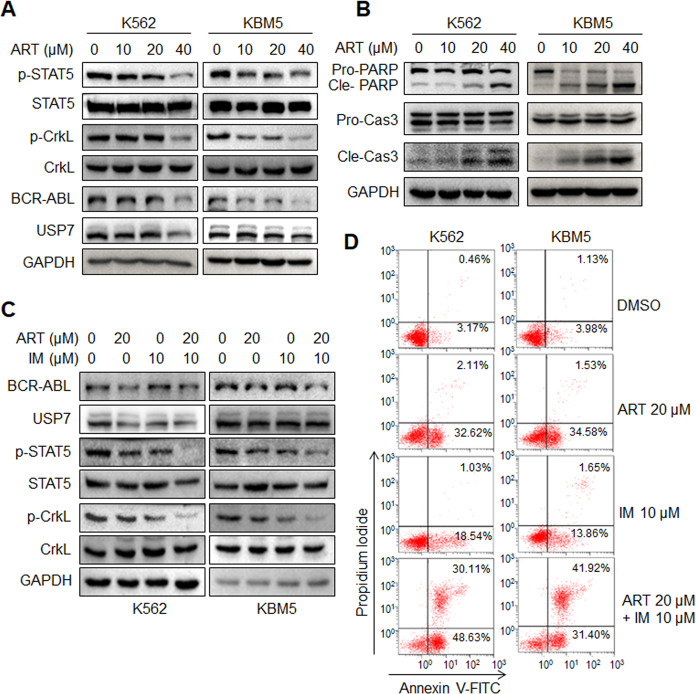
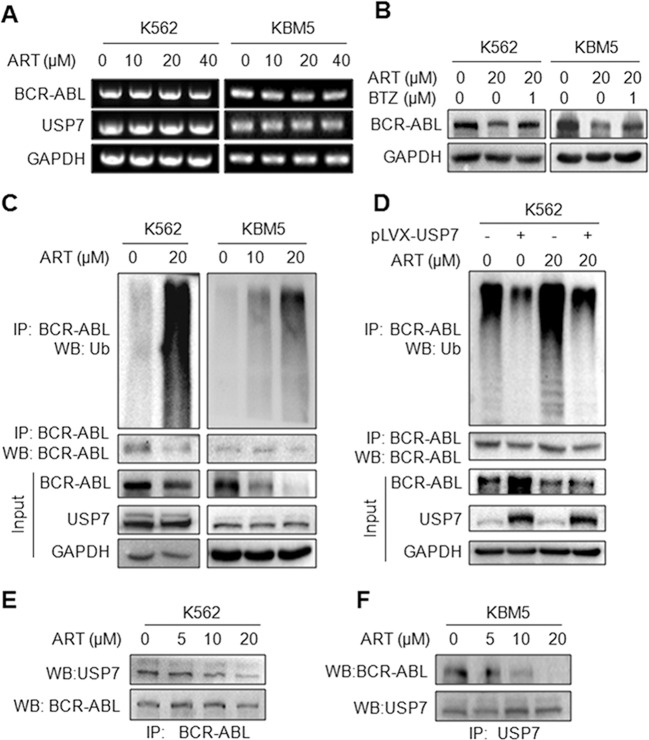
Chronic myelogenous leukemia (CML) is a clonal malignancy of hematopoietic stem cells featured with the fusion protein kinase BCR-ABL. To elicit the mechanism underlying BCR-ABL stability, we perform a screen against a panel of deubiquitinating enzymes (DUBs) and find that the ubiquitin-specific protease 7 (USP7) drastically stabilizes the BCR-ABL fusion protein. Further studies show that USP7 interacts with BCR-ABL and blocks its polyubiquitination and degradation. Moreover, USP7 knockdown triggers BCR-ABL degradation and suppresses its downstream signaling transduction. In line with this finding, genetic or chemical inhibition of USP7 leads to BCR-ABL protein degradation, suppresses BCR/ABL signaling, and induces CML cell apoptosis. Furthermore, we find the antimalarial artesunate (ART) significantly inhibits USP7/BCR-ABL interaction, thereby promoting BCR-ABL degradation and inducing CML cell death. This study thus identifies USP7 as a putative Dub of BCR-ABL and provides a rationale in targeting USP7/BCR-ABL for the treatment of CML.
Overview
The claims and statistics of this paper haven’t been checked yet.
Free: it reads the open-access text and checks the first 5 claims that cite a source we can check. Create a free account to check every claim.
Integrity signals
Registry
Cites
Statistics
Figures
Verification
Claims the paper makes
The claims and statistics of this paper haven’t been checked yet.
Free: it reads the open-access text and checks the first 5 claims that cite a source we can check. Create a free account to check every claim.
Claims other papers make about this one
Each is checked against this paper’s own text: does it say what the citing paper says it does?
The source backs part of the claim, not all of it — or backs it for a different population, condition or comparison.
In the citing paper
“the enrichment of ubiquitination-related genes among TKI-resistance hits in CRISPR screens further underscores the potential significance of targeting the ubiquitination pathway in the context of high-risk CML.”
From Integrated drug profiling and CRISPR screening identify BCR::ABL1-independent vulnerabilities in chronic myeloid leukemia (2024) · cites this paper as [63]
Experimental — accuracy not yet measured
Self-check
Percentages, sums and reported differences re-computed from the paper’s own numbers.
The self-check needs the paper’s full text.
Citations
Cites
Clinical Resistance to STI-571 Cancer Therapy Caused by BCR-ABL Gene Mutation or Amplification
Gorre, M. E., Mohammed, M., Ellwood, K., Hsu, N., Paquette, R., Rao, P. N., & Sawyers, C. L. (2001) · Science · doi:10.1126/science.1062538 · Cited by 3,104
The Biology of Chronic Myeloid Leukemia
Faderl, S., Talpaz, M., Estrov, Z., O'Brien, S., Kurzrock, R., & Kantarjian, H. M. (1999) · New England Journal of Medicine · doi:10.1056/nejm199907153410306 · Cited by 1,302
Translation of the Philadelphia chromosome into therapy for CML
Druker, B. J. (2008) · Blood · doi:10.1182/blood-2008-07-077958 · Cited by 668
Clinical Pharmacokinetics of Imatinib
Peng, B., Lloyd, P., & Schran, H. (2005) · Clinical Pharmacokinetics · doi:10.2165/00003088-200544090-00001 · Cited by 665
Chauhan, D., Tian, Z., Nicholson, B., Kumar, K. G. S., Zhou, B., Carrasco, R., McDermott, J. L., Leach, C. A., Fulcinniti, M., Kodrasov, M. P., et al. (2012) · Cancer Cell · doi:10.1016/j.ccr.2012.08.007 · Cited by 589
The deubiquitinylation and localization of PTEN are regulated by a HAUSP-PML network
Song, M. S., Salmena, L., Carracedo, A., Egia, A., Lo-Coco, F., Teruya-Feldstein, J., & Pandolfi, P. P. (2008) · Nature · doi:10.1038/nature07290 · Cited by 548
FOXO4 transcriptional activity is regulated by monoubiquitination and USP7/HAUSP
van der Horst, A., de Vries-Smits, A. M. M., Brenkman, A. B., van Triest, M. H., van den Broek, N., Colland, F., Maurice, M. M., & Burgering, B. M. T. (2006) · Nature Cell Biology · doi:10.1038/ncb1469 · Cited by 477
Cilloni, D., & Saglio, G. (2012) · Clinical Cancer Research · doi:10.1158/1078-0432.ccr-10-1613 · Cited by 274
Targeting BCR-ABL1 in Chronic Myeloid Leukemia by PROTAC-Mediated Targeted Protein Degradation
Burslem, G. M., Schultz, A. R., Bondeson, D. P., Eide, C. A., Savage Stevens, S. L., Druker, B. J., & Crews, C. M. (2019) · Cancer Research · doi:10.1158/0008-5472.can-19-1236 · Cited by 212
The minute chromosome (Ph1) in chronic granulocytic leukemia
Nowell, C. (1962) · Blut Zeitschrift für die Gesamte Blutforschung · doi:10.1007/bf01630378 · Cited by 199
Cited by
USP7 - a crucial regulator of cancer hallmarks
Saha, G., Roy, S., Basu, M., & Ghosh, M. K. (2023) · Biochimica et Biophysica Acta (BBA) - Reviews on Cancer · doi:10.1016/j.bbcan.2023.188903 · Cited by 101
He, Y., Jiang, S., Zhong, Y., Wang, X., Cui, Y., Liang, J., Sun, Y., Zhu, Z., Huang, Z., & Mao, X. (2023) · Clinical and Translational Medicine · doi:10.1002/ctm2.1509 · Cited by 58
Self-citationRecent advances of nucleic acid-based cancer biomarkers and biosensors
Zhao, J., Xia, K., He, P., Wei, G., Zhou, X., & Zhang, X. (2023) · Coordination Chemistry Reviews · doi:10.1016/j.ccr.2023.215456 · Cited by 44
Deubiquitinases in hematological malignancies
Lei, H., Wang, J., Hu, J., Zhu, Q., & Wu, Y. (2021) · Biomarker Research · doi:10.1186/s40364-021-00320-w · Cited by 46
Current and future directions of USP7 interactome in cancer study
Park, H., & Baek, K. (2023) · Biochimica et Biophysica Acta (BBA) - Reviews on Cancer · doi:10.1016/j.bbcan.2023.188992 · Cited by 38
Ubiquitin-specific peptidase 1: assessing its role in cancer therapy
Huang, P., Wang, Y., Zhang, P., & Li, Q. (2023) · Clinical and Experimental Medicine · doi:10.1007/s10238-023-01075-4 · Cited by 29
“This is an interesting finding in respect of the fact that BCR-ABL destabilization causes CML cell apoptosis [73], suggesting that USP1/BCR-ABL circuitry plausibly participates in K562 cell apoptosis, which awaits ongoing investigation.”
BackgroundLiu, Y., Li, H., Luo, Z., You, Y., Yang, J., Zhang, M., Law, B. Y. K., Huang, Z., & Li, W. (2022) · British Journal of Pharmacology · doi:10.1111/bph.15986 · Cited by 27
“The results from different research groups have also indicated that artesunate also induces apoptosis, autophagy or accumulation of reactive oxygen species (ROS) in AML cells and in animal models (Jiang et al., 2021; Kumar et al., 2017; Shen et al., 2020; Zhao et al., 2020).”
BackgroundSelf-citationZhou, L., Ouyang, T., Li, M., Hong, T., Alriashy, M. H. S., Meng, W., & Zhang, N. (2021) · Frontiers in Oncology · doi:10.3389/fonc.2021.784672 · Cited by 28
Thymoquinone Induces Downregulation of BCR-ABL/JAK/STAT Pathway and Apoptosis in K562 Leukemia Cells
Al-Rawashde, F., Taib, W. R. W., Ismail, I., Johan, M. F., Al-wajeeh, A. S., & Al‐Jamal, H. A. N. (2021) · Asian Pacific Journal of Cancer Prevention · doi:10.31557/apjcp.2021.22.12.3959 · Cited by 22
“Furthermore, apoptosis is the main mechanism of the programmed cell death and inhibited apoptosis is associated with the development of cancer (Jiang et al., 2021).”
BackgroundZhuang, H., Ren, Y., Mao, C., Zhong, Y., Zhang, Z., Cao, B., Zhang, Y., Huang, J., Xu, G., Huang, Z., et al. (2022) · Journal of Biological Chemistry · doi:10.1016/j.jbc.2022.102314 · Cited by 16
“The lentiviral USP7 and sgUSP7 plasmids were prepared as reported previously (23).”
MethodSelf-citationAdnan Awad, S., Dufva, O., Klievink, J., Karjalainen, E., Ianevski, A., Pietarinen, P., Kim, D., Potdar, S., Wolf, M., Lotfi, K., et al. (2024) · Cell Reports Medicine · doi:10.1016/j.xcrm.2024.101521 · Cited by 14
“Finally, we identified KCTD5 in mediating primary TKI resistance through regulation of BCR::ABL1 ubiquitination, which represents a promising targetable hub in CML.”
InfluentialYang, C., Kang, Y., Zhu, C.-Y., Ma, Y., Yu, P., Yang, T., Liu, Y.-Q., Zhang, Z.-Y., Suzuki, N., Ogra, Y., et al. (2025) · Leukemia · doi:10.1038/s41375-025-02709-0 · Cited by 16
Self-citationTargeting deubiquitinases for cancer therapy
Xue, Q., Tang, D., Chen, X., & Liu, J. (2023) · Clinical and Translational Discovery · doi:10.1002/ctd2.242 · Cited by 14
Self-citationLi, X., Li, W., Zhang, Y., Xu, L., & Song, Y. (2023) · Genes & Diseases · doi:10.1016/j.gendis.2023.101150 · Cited by 12
Emerging roles of the HECT-type E3 ubiquitin ligases in hematological malignancies
Delvecchio, V. S., Fierro, C., Giovannini, S., Melino, G., & Bernassola, F. (2021) · Discover Oncology · doi:10.1007/s12672-021-00435-4 · Cited by 11
Ubiquitin-specific proteases (USPs) in leukemia: a systematic review
Zangooie, A., Tavoosi, S., Arabhosseini, M., Halimi, A., Zangooie, H., Baghsheikhi, A. H., Rahgozar, S., Ahmadvand, M., Jarrahi, A. M., & Salehi, Z. (2024) · BMC Cancer · doi:10.1186/s12885-024-12614-x · Cited by 10
“The antimalarial drug artesunate (ART) effectively disrupts the interaction between USP7 and BCR-ABL, leading to the degradation of BCR-ABL and ultimately causing the death of CML cells [38].”
BackgroundJiang, L., He, Q., Chen, X., Liu, A., Ding, W., Zhang, H., Chen, X., Zhou, H., Meng, Y., Liu, B., et al. (2022) · Clinical and Translational Medicine · doi:10.1002/ctm2.1038 · Cited by 10
“p-STAT5 (#50095), anti-mouse (12-349) and anti-rabbit (AP132P) antibodies were obtained from Merk Millipore (Darmstadt, Germany).”
MethodSelf-citationUbiquitin-specific proteases as therapeutic targets in paediatric primary bone tumours?
Mullard, M., Lavaud, M., Regnier, L., Tesfaye, R. A., Ory, B., Rédiní, F., & Verrecchia, F. (2021) · Biochemical Pharmacology · doi:10.1016/j.bcp.2021.114797 · Cited by 12
Artemisia vulgaris inhibits BCR/ABL and promotes apoptosis in chronic myeloid leukemia cells
Chi, H., & Lý, B. T. K. (2022) · Biomedical Reports · doi:10.3892/br.2022.1575 · Cited by 9
“BCR/ABL activation is present in >90% of CML cases (11).”
BackgroundInfluentialPotential therapeutic targets in chronic myeloid leukemia
Bansal, M., & Verma, M. (2025) · Medical Oncology · doi:10.1007/s12032-025-02895-y · Cited by 8
“Additionally, it has been demonstrated that BCR::ABL phosphorylates USP7, increasing USP7 activity in a positive feedback loop that stabilizes BCR::ABL and encourages leukemo-genesis [114].”
Protective effect of Bosutinib with caspase inhibitors on human K562 cells
Baty, R. S. (2021) · Saudi Journal of Biological Sciences · doi:10.1016/j.sjbs.2021.11.068 · Cited by 7
Zhao, M., Dai, B., Li, X., Zhang, Y., Qiao, C., Qin, Y., Zhao, L., Li, Q., Wang, S., Yang, Y., et al. (2024) · eLife · doi:10.7554/elife.88375 · Cited by 9
Zhao, C., Feng, Y., Zhou, Y., Li, N., & Li, Z. (2024) · Toxicology and Applied Pharmacology · doi:10.1016/j.taap.2024.117075 · Cited by 5
Driving the degradation of oncofusion proteins for targeted cancer therapy
Zhang, X., Chen, Y., Yang, B., Shao, X., & Ying, M. (2023) · Drug Discovery Today · doi:10.1016/j.drudis.2023.103584 · Cited by 5
Kanan, D., Kanan, T., Doğan, B., Erol, İ., & Durdağı, S. (2025) · ACS Omega · doi:10.1021/acsomega.5c03150 · Cited by 5
Citterio, E., & Ronchi, A. E. (2024) · FEBS Letters · doi:10.1002/1873-3468.14991 · Cited by 4
Therapeutic targeting of YOD1 disrupts the PAX-FOXO1/N-Myc feedback loop in rhabdomyosarcoma
Ying, W.-W., Yu, J., Wang, X., Liu, J., Deng, B., Shao, X., Wang, J., Tao, T., Cao, J., He, Q., et al. (2025) · JCI Insight · doi:10.1172/jci.insight.193221 · Cited by 3
“Targeting the degradation of fusion oncoproteins by modulating E3 ubiquitin ligases and DUBs is a promising therapeutic strategy for cancer treatment (31, 32).”
Self-citationZinc as a potential regulator of the BCR-ABL oncogene in chronic myelocytic leukemia cells
Zhu, B., Sun, L., Li, Z., Shang, P., Yang, C., Li, K., Li, J., Zhi, Q., & Hua, Z. (2024) · Journal of Trace Elements in Medicine and Biology · doi:10.1016/j.jtemb.2024.127407 · Cited by 3
Interpreting the ubiquitin signal: Deubiquitinating enzymes in cancer and disease
Jamal, A., Kaushik, P., Husein, A., Alqurashi, Y. E., Al-Malki, E. S., Naiyer, M. M., Hussain, S. A., & Parvez, S. (2026) · Pathology - Research and Practice · doi:10.1016/j.prp.2026.156440 · Cited by 3
Ntostis, P., Swanson, G., Kokkali, G., Iles, D., Huntriss, J., Pantou, A., Tzetis, M., Pantos, K., Picton, H. M., Krawetz, S. A., et al. (2022) · Systems Biology in Reproductive Medicine · doi:10.1080/19396368.2022.2153636 · Cited by 2
“RefSeq ID Corresponding gene name logFC FC CPM p Value FDR NR_126449 LINC01224 3.37 10.31 9.38 2.26E-11 3.96E-08 NR_028346 TRIM53AP 6.06 66.81 3.34 2.38E-09 1.54E-06 NR_037923 DNAAF4-CCPG1 2.22 4.66 54.19 3.89E-08 1.88E-05 NR_110695 LOC101928372 3.35 10.22 3.92 7.69E-08 3.29E-05 NR_146772 LARP1B 1.43 2.69 23.26 3.14E-…”
InfluentialNew Approaches to the Treatment of Chronic Myeloid Leukemia
Shvachko, L. P., Antonenko, S., Zavelevich, M., Gartovska, I., Дыбков, М. В., Gur`yanov, D., & Телегеев, Г. Д. (2026) · IntechOpen eBooks · doi:10.5772/intechopen.1013747 · Cited by 1
Zhao, M., Dai, B., Li, X., Zhang, Y., Qiao, C., Qin, Y., Zhao, L., Li, Q., Wang, S., Yang, Y., et al. (2024) · eLife · doi:10.7554/elife.88375.2
Zhao, M., Dai, B., Li, X., Zhang, Y., Qiao, C., Qin, Y., Zhao, L., Li, Q., Wang, S., Yang, Y., et al. (2024) · eLife · doi:10.7554/elife.88375.3.sa3
Jiang, Q., Liu, Y., Sun, W., Liu, Z., Tao, N., Zhao, Y., Li, P., Ou, Y.-J., Sun, Y., Huang, H., et al. (2026) · Oncogene · doi:10.1038/s41388-026-03902-w
“1-Myc-USP16, PCDH-Flag-RPS15 plasmids were generated in the lab as reported previously [21].”
Self-citation
Metadata
- Authors
- Jiang, S., Wang, X., He, Y., Huang, H., Cao, B., Zhang, Z., Liu, J., Wang, Q., Huang, Z., & Mao, X.
- Affiliations
- Soochow University (CN)
- Guangzhou University of Chinese Medicine (CN)
- Guangzhou Medical University (CN)
- First Affiliated Hospital of Guangzhou Medical University (CN)
- Corresponding author
- Huang, Zhenqian
- Mao, Xinliang
- ORCID
- Venue
- Cell Death & Disease
- Published
- 2021-05-07
- Volume
- 12
- Issue
- 5
- Pages
- 456-456
- ISSN
- 2041-4889 (ISSN-L)
- PMC
- PMC8105359
- OpenAlex
- W3159744286
- Semantic Scholar
- 0f9348b21000cd4c01285347e7e68ed3ac1f152c
- Cited by
- 35
- References
- 33
- Citations by year
- 2026: 3 · 2025: 4 · 2024: 7 · 2023: 10 · 2022: 5 · 2021: 6
- FWCI
- 2.20
- Type
- journal article
- Language
- en
- Open access
- gold
- doi.org
- Licence
- cc-by
- creativecommons.org/licenses/by/4.0 (tdm)
- creativecommons.org/licenses/by/4.0 (vor)
- Locations
- Cell Death and Disease (publishedVersion, cc-by)
- PubMed Central (publishedVersion, cc-by)
- PubMed (publishedVersion)
- DOAJ (DOAJ: Directory of Open Access Journals) (submittedVersion, cc-by-sa)
- Funders
- National Natural Science Foundation of China (81770215)
- Topics
- Life Sciences › Biochemistry, Genetics and Molecular Biology › Molecular Biology › Ubiquitin and proteasome pathways
- Health Sciences › Medicine › Hematology › Chronic Myeloid Leukemia Treatments
- Life Sciences › Biochemistry, Genetics and Molecular Biology › Molecular Biology › Protein Degradation and Inhibitors
- Keywords
- USP7, BCR-ABL, chronic myeloid leukemia, protein degradation, deubiquitinase, polyubiquitination, apoptosis, artesunate
- MeSH terms
- Ubiquitin-Specific Peptidase 7, Humans, Transfection, Leukemia, Myelogenous, Chronic, BCR-ABL Positive, Fusion Proteins, bcr-abl, Apoptosis, Cell Proliferation
About these checks
Registry, retraction, Cites and statistics results are computed, not judged, with one exception: a printed reference that no index lists is read once by a model before it counts as a citation error. Claims are extracted by a model and kept only when their quote appears verbatim in the text; each cited source is then checked, with a model’s help, for whether it says what the claim relies on. Those verdicts can be wrong — read the claim’s quote and the cited source before relying on one.
Statistics and arithmetic are recomputed, not judged.
Confidence bands are shown only for fields calibrated on our annotated test set. None is calibrated yet, so no band is shown.
What counts as a claim ›How we measure confidence ›How we check this ›
Are you an author, or do you see a problem with this page? Request a review
Data sources
Bibliographic data: Semantic Scholar, OpenAlex, Crossref.
Contains information from the Semantic Scholar Academic Graph Datasets, made available under the ODC Attribution License (ODC-BY 1.0).
Semantic Scholar’s data is described in: Kinney, R., et al. (2023). The Semantic Scholar Open Data Platform. arXiv:2301.10140.
